
Five books at a minimum. Every month. A variety of topics from different genres. Here is the list from October 2026.

The Midnight Special: The Secret Prison History of American Music (2026) by Colin Asher examines how the police, courts and penitentiaries have shaped the nation’s musical culture through profiles of five artists: Lead Belly, Elmo Hope, Johnny Cash, Ike White and Tupac Shakur. Asher’s work is as unconventional as it is unexpected. The author isn’t trying to write a definitive history of American prison music but instead focuses on five albums and the lives of the musicians who made them. Asher asserts that each has something distinct to say about the ways that policing and incarceration have shaped our musical culture. As the only white man among the subjects, Johnny Cash was treated differently. Asher considers what Black artists might have achieved if granted the level of compassion and forgiveness Cash received. “The obverse is worth considering, too—the great cultural loss the world would have suffered if Johnny had been treated the way his Black peers were.”

The Bridges of Washington, D.C.: A History & Guide (2026) by Bob Dover is a treat for lovers of the city, architecture and engineering aficionados, history buffs, and just about any resident who spends time on the streets, in the parks, and crossing the rivers and creeks that make up the capital city’s unique landscape. Dover is a geologist with decades of experience studying the role geology and topography play in influencing human settlement patterns, architecture, and historic events. This perspective is evident from the book’s earliest chapters, when Dover reminds the reader that Washington, which sits on the Fall Line, straddles the boundary between two distinct geological regions: “the crystalline bedrock of the Appalachian Piedmont and the soft, unconsolidated sediments of the Coastal Plain.” This location with two different physical settings for bridges, provides many opportunities where connections across rivers, streams, and marshland are needed.

The Girl of His Dreams (2017) by Donna Leon is her seventeenth novel featuring Venetian Commissario Guido Brunetti. The story begins when a friend of Brunetti’s brother, a priest recently returned from years of missionary work in Africa, calls on the Commissario following a family funeral. It seems that he is concerned that an acquaintance is being taken advantage of by an American-style Protestant sect seeking only his money. Of course, there is always the chance that the priest may not appreciate the competition. This investigation is put on hold, however, with the discovery one cold and rainy morning of the body of a young girl found drowned in a canal. Brunetti and Inspector Vianello are pulled into life in a gypsy camp as they work to identify the girl’s parents and answer troubling questions about her brief life and how she came to end up in one of the city’s waterways. Leon has the reader considering the treatment of nomads and refugees as well as different applications of the law with various groups.
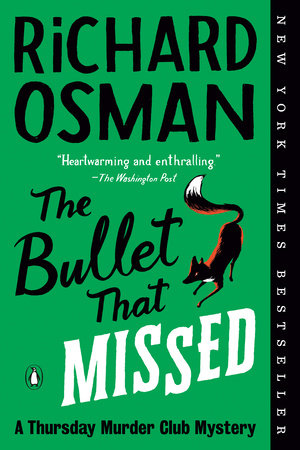
The Bullet That Missed (2023) by Richard Osman is the third installment of the five book Thursday Murder Club series. Once again we return to Coopers Chase, a high-end peaceful British retirement village on the grounds of a former convent. The four residents turned septuagenarian sleuths meet weekly to discuss unsolved crimes from old police files. They are now looking at a ten-year-old cold case which leads them to a local news legend and a murder with no body and no answers. The case turns hot when former spy Elizabeth Best and her husband Stephen are kidnapped and she is given a mission—kill or be killed. We also have returning foes, including a local drug dealer who likes to play games with the police and is now in a prison cell complete with espresso machine. Because this is the Thursday Murder Club, an upmarket spa and a penthouse with a floating swimming pool set high above the streets of London also figure into the mix.
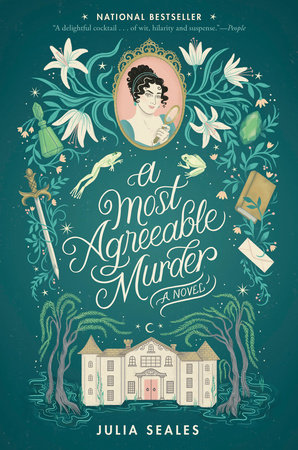
A Most Agreeable Murder: A Novel (2023) by Julia Seales is the debut for a writer who seeks to be Jane Austen with a modern twist (of the knife). Swampshire, where this tale is set, is the easily identifiable small English township. Beatrice Steele—our feisty and passionate heroine—lives a perfectly agreeable life. But Beatrice harbors a secret: “She is obsessed with murder. Not the act of committing it, but the act of solving it. . . . If anyone in her etiquette-obsessed community found out, she’d be deemed a morbid creep and banished from respectable society forever.” She gets her chance, however, when the very eligible bachelor Edmund Croaksworth shows up at the annual autumnal ball in the middle of one of Swampshire’s interminable hail storms, dances a bit, plays some cards, has a drink, and falls over dead from poisoning. Beatrice and Croaksworth’s traveling companion, Inspector Drake, form a highly unlikely partnership to get to the bottom of the mystery and find the murderer from among the hosts and guests who have been locked in the old manor house to wait out the storm.

The Shadow Puppet (1932) by Georges Simenon is the twelfth installment in the legendary Inspector Maigret series. A businessman has been shot dead in his office and the monthly payroll taken from his safe. While walking on the dimly lit Place des Vosges, Maigret hears the sound of a woman in distress. But this is deceiving, as she is giving birth in a room above. However, as the lights of the apartments across the courtyard flicker, Maigret sees shadowy figures at the windows. He soon comes to understand that behind one of those windows is the dead man and his empty safe. His job is to discover who, behind those other windows, may know of—or have committed—the murder.
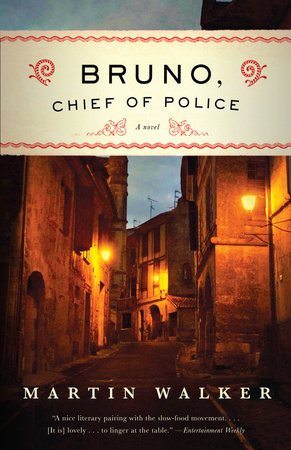
Bruno, Chief of Police: A Novel (2008) by Martin Walker is the reader’s introduction to “Benoit Courrèges, chief of police for the small commune of St. Denis and its 2,900 souls.” Universally known as Bruno, the sole policeman in this French village is single; a veteran of the war in Bosnia; the beloved coach of the youth tennis team; gourmet cook; and a defender of the old ways of gardening. Life is no more complicated than protecting his neighbors and friends from the “nuisances of Brussels” with their food inspectors and petty rules. Uncomplicated until an elderly resident—a WWII war hero who had migrated decades earlier from Algeria and was the father and grandfather to a local family of French citizens—is found brutally murdered in his isolated farmhouse, with a swastika carved in his chest.
WHAT’S ON THE NIGHTSTAND FOR NOVEMBER (Subject to change at the whims of the reader)

- Democracy in America (1835/1840; 2000 new abridged version) by Alexis De Tocqueville
- How We See It: The World Looks at America in the Age of Trump (2026) by the editors of The Dial
- The Souls of Black Folk (1903) by W.E.B. Du Bois
- The Moor’s Account (2014) by Laila Lalami
- The Ritz of the Bayou: The New Orleans Adventures of a Young Novelist Covering the Trials of the Governor of Louisiana, with digressions on smoldering … and other aspects of life in the tropic zone (1987; 40th anniversary reprint 2026) by Nancy Lemann
- Ukraine: A Nation on the Borderland (2018) by Karl Schlögel
- Redeem a Nation: The Century-Long Battle to Restore the Soul of America (2026) by Damario Solomon-Simmons
Keep reading!
More to come . . .
DJB
NOTE: Click to see the books I read in September of 2026 and to see the books I read in 2025.
Photo by Hilmarie Figueroa on Unsplash

