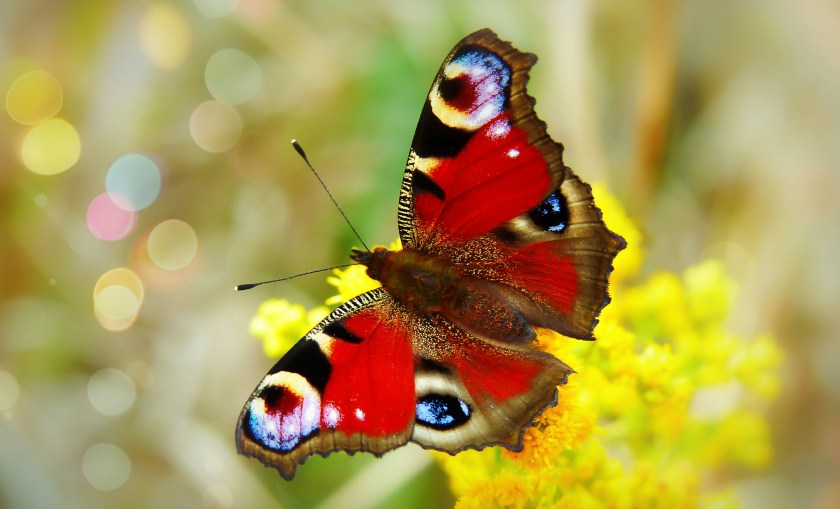
Rebecca Solnit looks at how the next era comes after the end of the last one. In between comes a lot of falling apart.
We forget our past—good and bad—at our own peril.
“If knowledge is power, memory and perspective are among its most important aspects,” writes one of our more thoughtful chroniclers of this time of turmoil. “Only in the long view can you see the patterns emerging, the way the present builds on the past, the way past surprises guarantee more surprises are coming.”
Change is all around us. “If you don’t see time on the scale of change,” however, “you don’t see change; if you don’t remember how things use to be, you don’t know they’re different than they were and how that unfolded.”
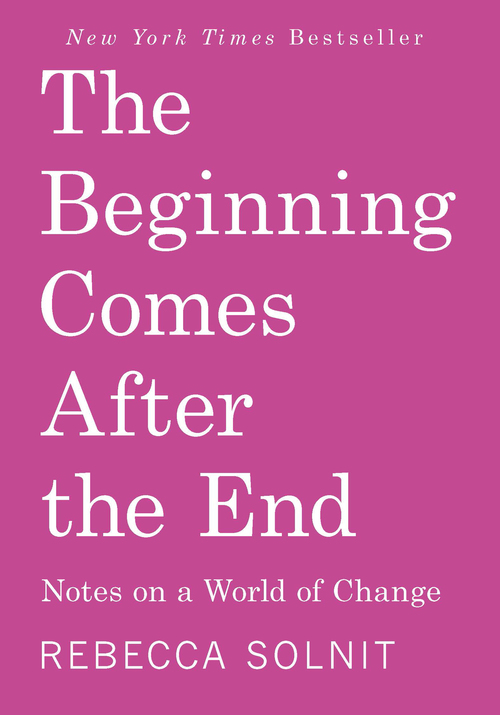
The Beginning Comes After the End: Notes on a World of Change (2026) by Rebecca Solnit is the eighth in a series of Haymarket Books by the longtime climate and human rights activist, historian, and writer. Like the others in this collection it looks back to remind us of how far we have come. It is full of insightful perspectives and clear, compelling writing. Unlike some of the others, however, this newest work reads more as a whole piece rather than a series of essays. That seems appropriate given the topic. Solnit takes the reader back to times when those pushing for change appeared to be swimming upstream. We discover how seeds are planted and nourished even in dark, difficult times. The fierce backlash that comes against the future is made by enemies who “believe in us even when we don’t believe in ourselves,” bringing confirmation that “they believe we’ve changed the world in consequential ways, and with a coherent vision.” Those who believe in an interconnected, mutually supportive, and more open world have been far more successful than we believe. And, she asserts, “people who have long been consigned to the past were charting a viable future for all of us. ‘We’re the ancestors of tomorrow,’ said Madonna Thunder Hawk . . . so we behave accordingly.'”
Early in this hope-filled and forward-facing work, Solnit uses a well-known metamorphosis from nature as a metaphor for the transformation of society.
“The beginning comes after the end. A chrysalis is the beginning of a butterfly, but in that chrysalis is no elegant transition. The caterpillar falls apart—it turns to goo, and something profoundly different reconstitutes from it, guided by the hitherto dormant imaginal cells. In that slurry, the dissolving caterpillar’s immune system perceives the imaginal cells as alien and attacks them. But they survive, multiply, and set in motion the instructions to become a butterfly. A many-legged crawler becomes a six-legged winged creature, an animal that devours leaves becomes one that sips nectar from flowers . . . A butterfly is the end of a caterpillar. The beginning—the next era—comes after the end of the last one, and in between comes a lot of falling apart.”
We are in the middle of that time of falling apart. But nature—as well as our history—tells us a new era awaits.
We forget what it takes to go from genocide of indigenous peoples to a time of rights and recognition. That transition over decades seems simple and straightforward, “but heaven and earth, law and culture, had to be moved, shaken, reimagined, dismantled, and rebuilt in order to arrive at that day.” It isn’t a straight path. Those fighting against the future can take away rights, as we’ve seen with the current Supreme Court, but they cannot take away belief in those rights. Solnit asserts that if we look at history, we will see that those beliefs will prevail.
“Ideas have power, and while those who support them often dismiss that power, those who fear them recognize they can change the world.”
For those who take the time to stop and consider where we’ve come from, we see the old orders that have fallen apart, the systems that no longer work, the assumptions that no longer fit. “Cruelty, greed, and division are not new, but when the old order that institutionalized them is threatened, its beneficiaries come out fighting to hold onto advantages that use to go unquestioned.”
It is easier to see the old world dying than the new world being born. Solnit wants us to not only see that new world, but to work together to hasten its coming.
In many of her works, Solnit writes about how memory and history pose threats to authoritarian regimes. That’s why they work so hard to control it. “Amnesia,” she writes here, “can normalize the present while erasing the changes that led to it or the possibility of changing it.” Context gives us coherence, showing the patterns into which change fits.
Both Silent Spring author Rachel Carson and civil rights leader The Rev. Dr. Martin Luther King, Jr. spoke often about how everything is connected. Solnit devotes a full chapter to that concept, with the title taken from a quote by Dr. King from Letter from a Birmingham Jail: “We are caught in an inescapable network of mutuality, tied in a single garment of destiny. Whatever affects one directly, affects all indirectly.” King, Solnit notes, “called that principle of connection and care love.”
In a recent newsletter, Solnit noted that she’s occasionally argued that the real divide in this country and beyond is better described as connectors and disconnectors, the relational and the isolated, than left and right. She builds on that distinction here. There are many who want to disconnect us from one another and from the world. The brutal politics we are experiencing is a backlash against the vision of interconnection. Solnit makes the case that the right sees “many elements—environmentalism, feminism, queer rights, equality, racial justice, and inclusion, even kindness—as related, as part of the same cosmology. The backlash seeks a return to hierarchy and segregation. To a world where some people matter more than others. Solnit wonders if this backlash is not, in fact, a supernova.
Solnit, whose first book in the Haymarket series is entitled Hope in the Dark, brings this work around to the hopeful possibilities that lay before us. As she wraps up this impressive book, she writes that “you can cut down the flowers, but you can’t stop the spring.” And because of that, we “don’t need to know the future to act in the present.”
Which is just as well since we are creating a world we’ve never seen.
More to come . . .
DJB
For my other reviews of Rebecca Solnit’s Haymarket Books, see the links below:
- Hope in the Dark: Untold Histories, Wild Possibilities
- Whose Story is This? Old Conflicts, New Chapters
- Men Explain Things to Me
- Not Too Late: Changing the Climate Story from Despair to Possibility
- No Straight Road Takes You There: Essays for Uneven Terrain
- The Mother of All Questions
- Call Them by Their True Names: American Crises (and Essays)

Photo by Krzysztof Niewolny on Unsplash


Hello David Brown:
This is your fellow traveler – DeWitt Brown. Thanks you for your pictures of our trip – Morocco to Lisbon. The pictures are super. Why is it that I was almost standing next to you taking the same scene but your photo is better by a lot?
Please keep Nancy & I on your distribution.
We will be traveling together sometime.
Thanks,
Bill Brown
Thanks for the note, Bill, and glad to know you liked the post. I have one more coming from that trip – it should go live on Wednesday morning. I’ll make sure you are on my monthly email update, but if you want to receive all my posts in real time, you can either subscribe yourself or just let me know by replying to this and I can add you to the subscriber list. As you can see from today’s post, I tend to have 5-7 book reviews each month, so that’s the majority of my online pieces. However, I write about whatever comes to mind, so be forewarned! 🙂
I’ve found on these trips that certain people have a good eye for photography, and you were one of the ones I spotted on this recent tour. I tend to walk over and see what those individuals are seeing and then take a picture! 🙂 I don’t know about mine being better . . . I tend to take a lot of shots and then you see the cream of the crop. Plus I do know a bit about editing these digital photos, so that helps as well.
Great to hear from you. Best to Nancy. At the end of Wednesday’s post I’m going to list the upcoming tours into 2027 where I’m lecturing, so you can check back there. I’ll probably also email a link to all the folks I’ve met on the travels to ensure they have that info as well.
Take care,
DJB
Pingback: Observations from . . . June 2026 | MORE TO COME...
Pingback: From the bookshelf: June 2026 | MORE TO COME...
Pingback: Why not? | MORE TO COME...
Pingback: One challenge down, two to go | MORE TO COME...
Pingback: Summer reading . . . check! | MORE TO COME...