Laila Lalami’s “The Moor’s Account” is a thoughtful work of fiction that takes on the history of New World conquest from a different point of view.
Installment #25 in my series on the region’s independent bookshops.
We live in a time of contested history and fake news. But it has always been that way. Who gets to tell the tale sets the narrative and tone.
One of the joys of my year of visiting all thirty of the region’s independent bookshops is to find stores that lift up writers and viewpoints outside the mainstream. Voices that engage the curious reader. Middle East Books, located in a quiet section of the Dupont Circle neighborhood, is one of those unexpected treasures.
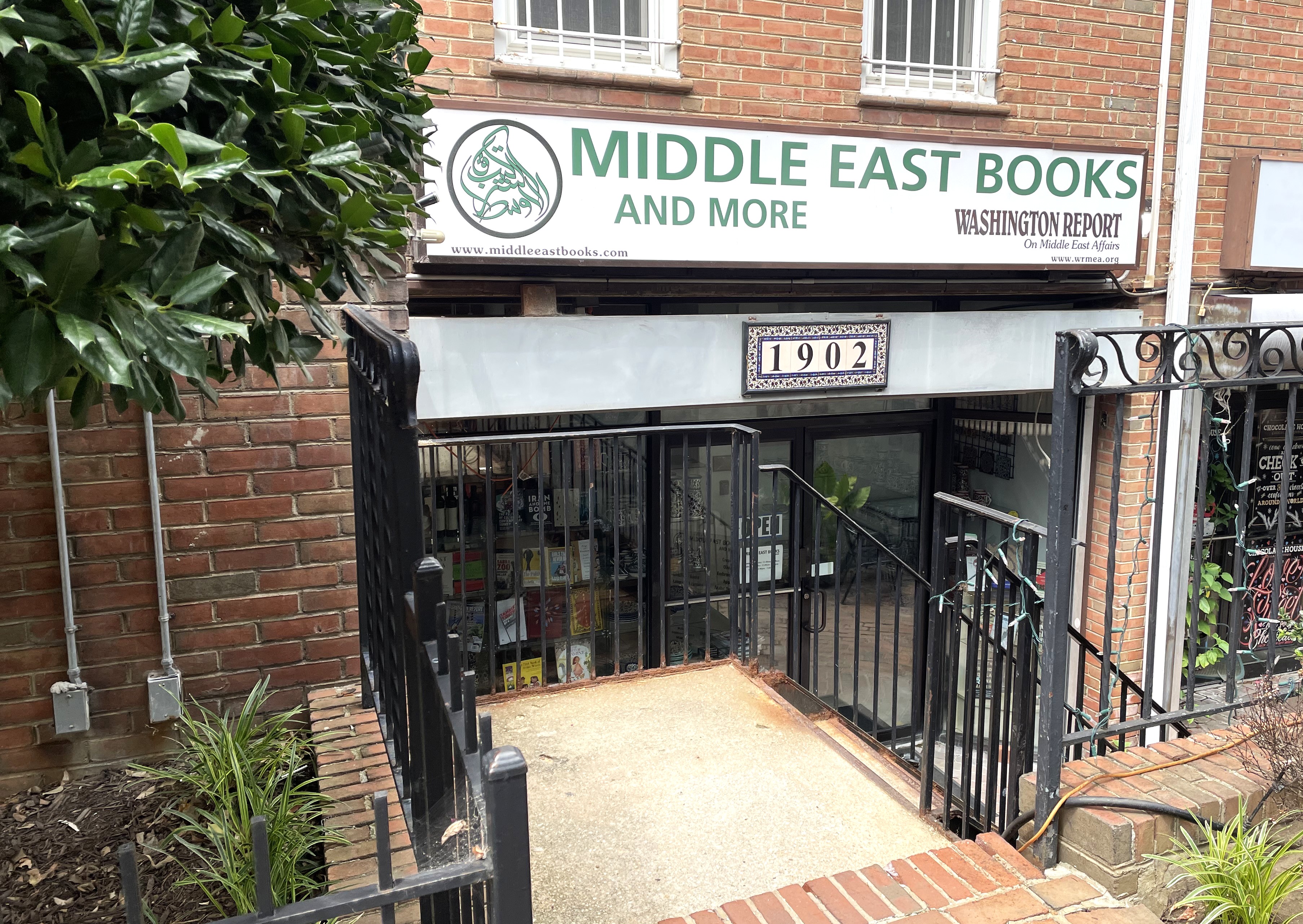
One beautiful morning in early summer I walked down the stairs from street level into the welcoming shop with well-stocked bookshelves and a recently expanded area for reading and events. Middle East Books and More (the store’s full name) . . .
“. . . is a project of the American Educational Trust, a non-profit incorporated in 1982 in Washington, DC, by Richard Curtiss and Andy Killgore. For 43 years, AET has been promoting U.S.-Middle East understanding and educating American and international audiences about the region, with a particular emphasis on Palestine. They established Middle East Books and More in 1991 to meet the recognized need for quality nonfiction and literature about the Middle East and North Africa.”
As the website suggests, there is a wide variety of both fiction and nonfiction on the shelves of the shop. I spoke with the staff about my project and spent a good half-hour looking through the selections. Palestine and the current war—begun with Hamas’s horrific October 7th attack followed by Israel’s offensive of staggering violence in Gaza—are the focus of many titles. Yet the shop has a wide variety of works that may surprise the casual visitor. For those looking for different perspectives and more in-depth understanding of a region that has long fascinated and confused Americans, Middle East Books is worth a visit.
I ended up with two books from my initial trip to the shop, one a work and author new to me and the other, which I’ve just finished reading, that has been widely acclaimed, was a finalist for the Pulitzer Prize, and came recommended by my friend and Brilliant Reader Sandy.
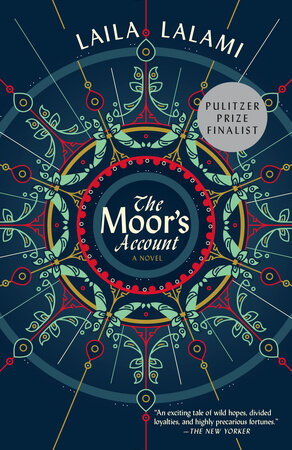
The Moor’s Account: A Novel (2014) by Laila Lalami is a fictional memoir of the Moroccan slave who survived the disastrous 1527 Narváez expedition to Florida and accompanied Cabeza de Vaca and two others as they made their way across the continent. Lalami gives the enslaved Moroccan the birth name of Mustafa ibn Muhammad ibn Abdussalam al-Zamori, but we know that he was renamed Estebanico by his Castilian master. Mustafa—the name I will use because as the text indicates, a name is a powerful and cherished belonging—is widely considered to be the first African explorer of America. Little is known about his early life except for one line in Cabeza de Vaca’s chronicle of the journey: “The fourth [survivor] is Estebanico, an Arab Negro from Azamor.” Mustafa’s voice is missing from the official report of the expedition. Lalami takes the sliver of information from de Vaca’s chronicle and weaves a fascinating tale that forces us to look at history through different eyes. The enslaved and oppressed African has a very different perspective from that of his Castilian masters who came to the New World to hunt for gold and glory.
Structured as a 16th century Arabic travelogue, The Moor’s Account uses conventions typical of the genre, such as Arabic place names and calendar references. The first half of the novel alternates between two sets of stories: some chronicling the Narváez expedition, and others narrating Mustafa’s life prior to his arrival in the New World. The second half follows the group’s harrowing travels across the Gulf Coast, the Mississippi River, and beyond.
Because Cabeza de Vaca told us nothing of Estebanico’s backstory, Lalami invents one for him: that of a prosperous merchant in a prosperous Moroccan city. But when Azemmour fell to the Portuguese in 1513 its inhabitants quickly began to starve. Desperate to save his family, Mustafa sells himself into slavery. In Lalami’s telling he is “shipped to Seville and hauled into a church, where he was christened and renamed; his faith and his identity stripped from him in a single act.”
Sarah Crown fills in the traditional history of the unfolding disaster in a review for the Guardian.
“After making landfall on the Gulf coast, near where the city of St. Petersburg stands today, the expedition’s leader, Pánfilo de Narváez, headed into the country’s unmapped interior in search of the gold he had convinced himself would be found there. Within days his men became hopelessly lost; soon after they began to die, from starvation, disease, drowning and the depredations of local tribes. In the end, of an original contingent of 300, just four survived.”
These survivors would go on to make an eight-year journey across America that would transform them from proud conquistadores to humble servants, from fearful outcasts to faith healers. In Lalami’s skillful hands we can imagine the role played by an enslaved individual in the group’s survival, their discovery by Spanish slavers in Northern Mexico, and their return to either Europe or to their people. The ability of language to shape reality is key to understanding this work, and Mustafa’s thoughts and verbal skills bring the reader along into different perspectives.
It is the enslaved member whose telling of their adventures brings signs of welcome and food from indigenous Americans. He learns the indigenous languages. Foreign folk remedies allow the four to present themselves as medicine men. Throughout, Mustafa understands the power of story.
“If I was confronted with an illness I did not recognize,” he says, “I listened to the sick man or woman and offered consolation in the guise of a long story . . . This, too, was something I learned in the markets of Azemmour: a good story can heal.”
The Moor’s Account brilliantly captures Mustafa/Estebanico’s voice and vision, giving us an alternate narrative for this disastrous but well-known expedition. We see the violence used to overwhelm the indigenous population through the eyes of someone who has also experienced pain, violence, and separation from the things he loves. “As this dramatic chronicle unfolds, we come to understand that, contrary to popular belief, black men played a significant part in New World exploration, and that Native American men and women were not merely silent witnesses to it.”
The account is vivid, harrowing, exciting, and tragic. It does not come from someone wanting to uplift their personal glory as conqueror of a new world. In the end, these perspectives of those on the margins are also worthy of our attention.
More to come . . .
DJB
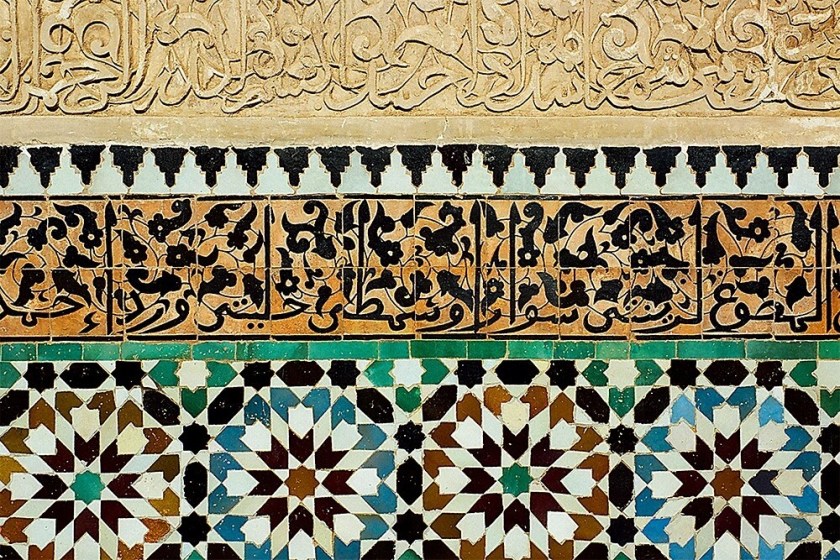
Photo of a detail from the medina in Marrakesh by DJB

