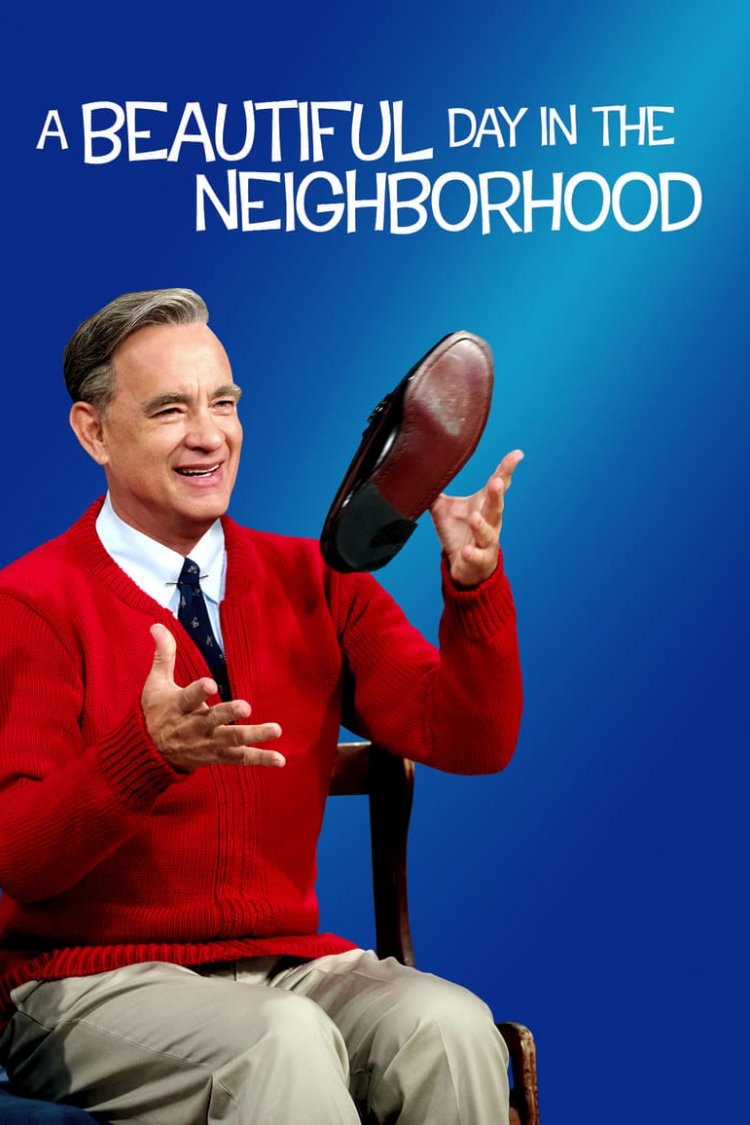
On New Year’s Day, I finally saw the delightful movie, A Beautiful Day in the Neighborhood, starring Tom Hanks as the beloved children’s television star Fred Rogers. I waited until the last day this critically acclaimed film was showing at our local theatre because we wanted to go as an entire family and needed to align multiple schedules in our short window of opportunity over the holidays. Like millions of Americans, Mister Rogers’ Neighborhood was a part of our children’s childhood, and it just seemed right to sit down together to take it in as if watching around the television set.
There is much to like about this film, from the cast to the skillful direction of Marielle Heller, from the smart screenplay to the transitional shifts taking place between the toy set and the real life scenes of Rogers and journalist Lloyd Vogel (played expertly by Matthew Rhys). Vogel is, as one reviewer notes, “a magazine writer who actually may be the one person on the planet who doesn’t love Mr. Rogers.” Rhys’ character is based on real-life journalist Tom Junod, who wrote a profile of Rogers for Esquire in 1998. If you saw the film and are at all cynical about the use of some of the scenes (such as with the children on the subway), I recommend you read the original piece, to see how much it impacts the story and script.
As we came home from the showing and sat around the dining room table over a late lunch, all agreed that we were especially taken by the pauses in Fred Rogers’ style. The most famous, of course, is the scene in the Chinese restaurant, which was based upon a real life example from Rogers’ acceptance speech upon receiving a lifetime achievement award at the 1997 Emmys. Beyond that particular instance, however, we all commented on the thoughtful—and sometimes awkward—pauses that Rogers used in everyday conversation. He would ask a question and then stop. And wait. And let you think. And then wait some more.
It just so happened that I had recently completed my New Year’s Day post, and was reminded of my Life Rule #3: Listen more than you talk. In our luncheon conversation, we discussed listening and talking as well as the value of space between the two. Our daughter mentioned that in therapy circles, there is an acronym that has proven helpful to her in thinking about when to talk and when to listen.
The acronym is W.A.I.T. It stands for: Why Am ITalking?
Why am I talking indeed? That’s a great question for therapists to ask themselves when in conversation with clients and those they are trying to help. I use to remind fundraisers who worked with me that they should stop talking after making an ask for support, and let the potential donor think and talk it through. While talking is a critical part of communication, when I find myself going on too much, it is often because I am uncomfortable or want to fill up awkward spaces. I’ve also talked when I shouldn’t because I think I may be protecting the other person in the conversation. I know someone who talks a great deal because he is hurt and is missing the regular support of someone to step in and ask questions to help him work through his pain. There are so many reasons we talk without thinking. There are many good reasons to stop and listen. Listening is, after all, an act of love.
How we talk and how we listen are both important. The next time you find yourself dominating a conversation, think about Mr. Rogers and then stop to ask yourself the question behind the acronym: W.A.I.T.
Amythyst Kiah has burst on the roots music scene in recent years with her powerful vocals and insightful songwriting. The native Tennessean is a self-described “Southern Gothic” singer of “alt-country blues” who has been receiving rave reviews and is nominated for a 2020 Grammy in the Best American Roots Song category for her spell-binding “Black Myself.”
Our Native Daughters is the name of Kiah’s recent collaboration with 2017 MacArthur Fellow Rhiannon Giddens, Leyla McCalla, and Allison Russell (from Birds of Chicago). Early last year the supergroup delivered a full-length album, Songs of Our Native Daughters, produced by Giddens and Dirk Powell. “Polly Ann’s Hammer” is a Kiah/Allison Russell song that reimagines the old John Henry tune from the point of view of his wife, and it certainly is one of the album’s standouts. “Black Myself,” the opening track, grabs the listener right from the beginning and is described by NPR as “the simmering defiance of self-respect in the face of racism.”
In the liner notes to the album, Kiah writes about “Black Myself” in saying,
“This song was inspired by a line from north Mississippi hill country musician Sid Hemphill’s ‘John Henry:’
‘I don’t like no red-black woman Black myself, black myself’
This sentiment is linked to the history of intraracial discrimination, the idea that being a lighter shade of black is more desirable because it means that you look closer to being white than black. And from that I thought about how this negative connotation of blackness was integral to slavery, segregation, and then the “white flight” to suburban neighborhoods after desegregation. I thought of my experience as a black girl in a white suburban neighborhood in the 1990s, and how, once puberty hit, the doors of my neighbors would soon be suddenly closed to me. And thus the refrain and title of this song are intended to be an anthem for those who have been alienated and othered because of the color of their skin.”
Kiah’s solo projects have been turning heads now for several years. In addition to her own songs, such as 2019’s “Firewater,” Kiah presents powerful interpretations of traditional tunes, as in “Darling Corey” from the album Dig.
Rolling Stone noted that Kiah and Our Native Daughters arrived
“…as a crucial pronouncement in folk music. It’s the culmination of a movement of 21st-century singers, artists, songwriters and instrumentalists of color who have been reclaiming the racially heterogeneous lineages of folk, country and American roots music.
‘In the past 10 or 15 years, there’s been this real sense of need to bring forth this cultural history,’ says Kiah. ‘You’ve got people now who are interested and invested in bringing attention to the history of folk music, who really bring things full circle and show that this is America’s music. This isn’t something that only black people or only white people do.'”
It is time, once again, when I first look back over the past twelve months and then think ahead to where I want to go in the year to come. This annual review is one small part of a larger practice to have an honest conversation with myself in the hopes that I’ll then be able to have real conversations with the larger world.
During 2019, I’ve thought a great deal about place, privilege, and—given the tenor of the times—paths forward individually as well as collectively.
Why place? My career has been focused on older and historic places, what those places can tell us, and how they can nurture us (or not) into the future. Although I took a gap year from full-time work in 2019, I didn’t stop thinking about my life’s work. Knowing that emotions flow through place, in my writing over this year I’ve focused more on the buildings and landscapes in our cities and towns that, while coming from my professional life, also have deep personal meaning for me.
Why privilege? In observing these special places and reflecting on the stories behind the people who shaped them, I’ve increasingly recognized the privileges I’ve been granted due to my gender, race, and economic status; privileges that are denied others for no reason other than they do not fit within the same groups.
Why paths forward? Well, by finally stepping back to give myself time to think, question, sometimes dawdle, practice, and attempt to be open to grace in a time of trouble, I am working to discover hopeful and helpful pathways forward for the years ahead.
In this reflection, I am—as always—pushed, informed, and blessed by the writers I admire. Ursula K. Le Guin, in “The Horsies Upstairs” from her collection of essays No Time to Spare: Thinking About What Matters reminds me of the richness of knowledge available throughout my life, if I’ll only take advantage of it.
“What it made me think about above all is how incredibly much we learn between our birthday and last day—from where the horsies live to the origin of the stars. How rich we are in knowledge, and in all that lies around us yet to learn. Billionaires, all of us.”
Labyrinth in memory of our family friend Andrew Lane at Trinity Church, Staunton, VA
Knowledge is acquired in multiple ways. During 2019, I was blessed to travel extensively, from Europe to Asia. However, the trick is not to require travel to open up our inner places, but to live more of our lives as we do when we travel to be moved. Or, as Marcel Proust once said, “The real voyage of discovery consists not in seeking new landscapes, but in having new eyes.” Rebecca Solnit, in “Labyrinths and Cadillacs” from her book Wanderlust, reminds me that symbolic travel, as in a labyrinth, also has important lessons for life.
“That circle became a world whose rules I lived by, and I understood the moral of mazes: sometimes you have to turn your back on your goal to get there, sometimes you’re farthest away when you’re closest, sometimes the only way is the long one.”
And in thinking ahead to paths forward in life, I—like all of you—are living in an age that some have dubbed “post-fact” or “post-truth.” How does one deal with that? Well, I’m fond of saying that while something may not be “factual,” it is still true. The trick is to understand when we are being gaslighted with false facts that don’t point to truth. Recollections have a way of changing through the years, so that the facts may shift with each telling. However, if the essential truth remains, I am inclined to cut the storyteller a great deal of slack. The late Nobel laureate Toni Morrison wrote that for her, the crucial distinction
“…is not the difference between fact and fiction, but the distinction between fact and truth. Because facts can exist without human intelligence, but truth cannot.”
I have worked for several years now with a set of life rules (rather than annual resolutions) for living the next third of my life. As I look at my eight life rules every morning, I want to use 2020 to continue to focus on ways to live with compassion, grace, insight, integrity, and love.
A fall morning in downtown Silver Spring
Rule #1. Be Grateful. Be Thankful. Be Compassionate. Every Day. This is a habit I took on several years ago, as I wanted to move beyond regret and angst to make gratitude a larger part of my life. Gratitude, while generally for something that happened in the past, says much about the present. By saying thank you to one person each day, I found that I was reminded of how much we are all connected and depend on each other. It is a habit that has also made me richer in spirit. As I transitioned out of my full-time career in 2019, I was the recipient of a great deal of thankfulness and kindness, which helped me remember how much this habit impacts more than just one individual.
There is a whole inspirational industry built up around “small acts of kindness.” I’ve come to believe that there is no such thing. Small acts have ripple effects that we can’t even imagine. You never know who is watching or who is touched and where the ripples will reach.
In today’s world, there is a great deal of emphasis put on getting all you can for yourself and your loved ones, while leaving others behind. Being grateful, thankful, and compassionate is, to me, about equality. If we are honest with ourselves, we realize that we are all in this life together.
Rule #2. Exercise six days a week for the rest of your life. This was an important goal for me as I transitioned from full-time work to my gap year and semi-retirement, in part because of the integrity required to maintain a discipline. In 2019 I knew I had to build and sustain a daily ritual of long-distance walking into my mornings. About halfway through the year, I also took on a yoga practice, where I work on flexibility, stamina, and balance. Both practices have been very satisfying. In the year ahead, I look forward to growing this exercise practice even more fully into the structure of my life.
Rule #3. Listen more than you talk. I was successful at this…except when I wasn’t. Seriously, I’ve noted in the past that this is a tough one to measure. Listening is an act of love. There is also insight to be gained as well as grace both given and received from listening. As much as I try to act out of love for others, this is obviously a part of my practice in life that needs more work.
Recognition is only part of the solution. Active, intentional listening requires more. In Rebecca Solnit’s insightful new book Whose Story is This? Old Conflicts, New Chapters, the author quotes the actor Chris Evans, in the context of the #MeToo movement, as saying of well-meaning men, “The hardest thing to reconcile is that just because you have good intentions doesn’t mean it’s your time to have a voice.”
Rule #4. Spend less than you make. 2019 was the year when the rubber met the road on this life rule. Retirement (even of the semi variety) will have that effect. It doesn’t mean that I was able to transition successfully all at once. This is a work in progress, and a late year review of how I’d done in the first eight months suggested I have more to do in this area. As I’ve noted in year’s past, when I do spend money (e.g., good restaurants, good wine, good books) I tend to treat myself and others well. Those expectations will need to continue to be adjusted.
I just counted, and I now have 48 books in my “to be read” pile. One way to spend less is not to buy a new book until I make a serious dent (or even, gulp, complete?) that pile! I’m going to start a page in my bullet journal of “books to buy…when I finish all the ones in my pile.” That should be an incentive!
Rule #5. Quit eating crap! Eat less of everything else. I need to reframe this challenging life goal in part as a way of showing love to those who care for me. Now that I’m eating more frequently at home, the quality of what I’m having has improved. “My Fitness Pal” tracker remains a good measure of my weight trend line for the year (flat for 2019) as well as for the types of food I’m eating. When I turn 65 in three months, I want to be well on my way to a new practice in this area of my life.
Rule #6. Play music. I continue to believe that the world is a better place when I play music. My music is better when I play with others. And this is one area where my gap year has brought improvement. My tracking charts for 2019 show that I pulled out my guitars an average of 6 days/week. I also began working through some on-line lessons and learning new tunes. My goal here is to learn at least one new tune each month in 2020, and share it with musical friends. Life is good.
Rule #7. Connect and commit. Again, this was an area of practice that improved with semi-retirement, in part because I quickly realized how important connection with others is to my sanity. I now have a three-month rolling schedule to remind me to get together for lunch, coffee, or dinners with friends and former colleagues. We’re also working as a family to have others over more frequently. I’m an introvert at heart, but also require the human touch.
Brené Brown has noted that her plan for reaching out to others in 2020 is to be awkward, brave, and kind, which seems to be good advice. She writes:
“These aren’t easy for me—especially if being predictable and consistent are important. But I’m going to keep crawling my way back to them in 2020. Especially when I’m tempted to act cool OR choose comfort over that crappy, hard conversation OR when I’m dying to be judge-y and blame-y instead of empathic and compassionate.“
Rule #8. Don’t be a Grumpy Old Man.Enjoy life! I’ve written in past years that this is not a concern on a daily basis, but more of a reminder that it can be easier to lose the joy of life as one moves through the years. I have had the privilege later in life to explore new practices and untapped sources of wisdom. In that work, there is the challenge of opening up our inner places to those experiences while combating the natural tendency toward rigidity in mind and spirit. We’ve all seen people who, as they move through life, fear what’s next and want to hang on to what they have and what they wish to be true. As Ursula K. Le Guin notes in No Time to Spare, these are the ones who have “given up on the long-range view.”
Fortunately, there are also those who, in Le Guin’s words, live in a country that has a future. If we are flexible enough in mind and spirit to recognize “how rich we are in knowledge,” and all that we have the opportunity to learn, we can maintain the seeking, trusting capacity for learning that we had as a two-year-old.
Author Madeleine L’Engle wrote, “I am still every age that I have been.” Even with a late-in-life gap year, there is opportunity to create something new at the intersection of experience and innovation. That’s my goal for 2020 and beyond.
Bring it on!
More to come… DJB
Installment #19 of The Gap Year Chronicles
Image of The Browns, December 2019, credit Ellen Pentz
I’ll jump on this bandwagon by highlighting the Top Ten Posts on More to Come as selected by you—the readers—in 2019. Here they are, in chronological order:
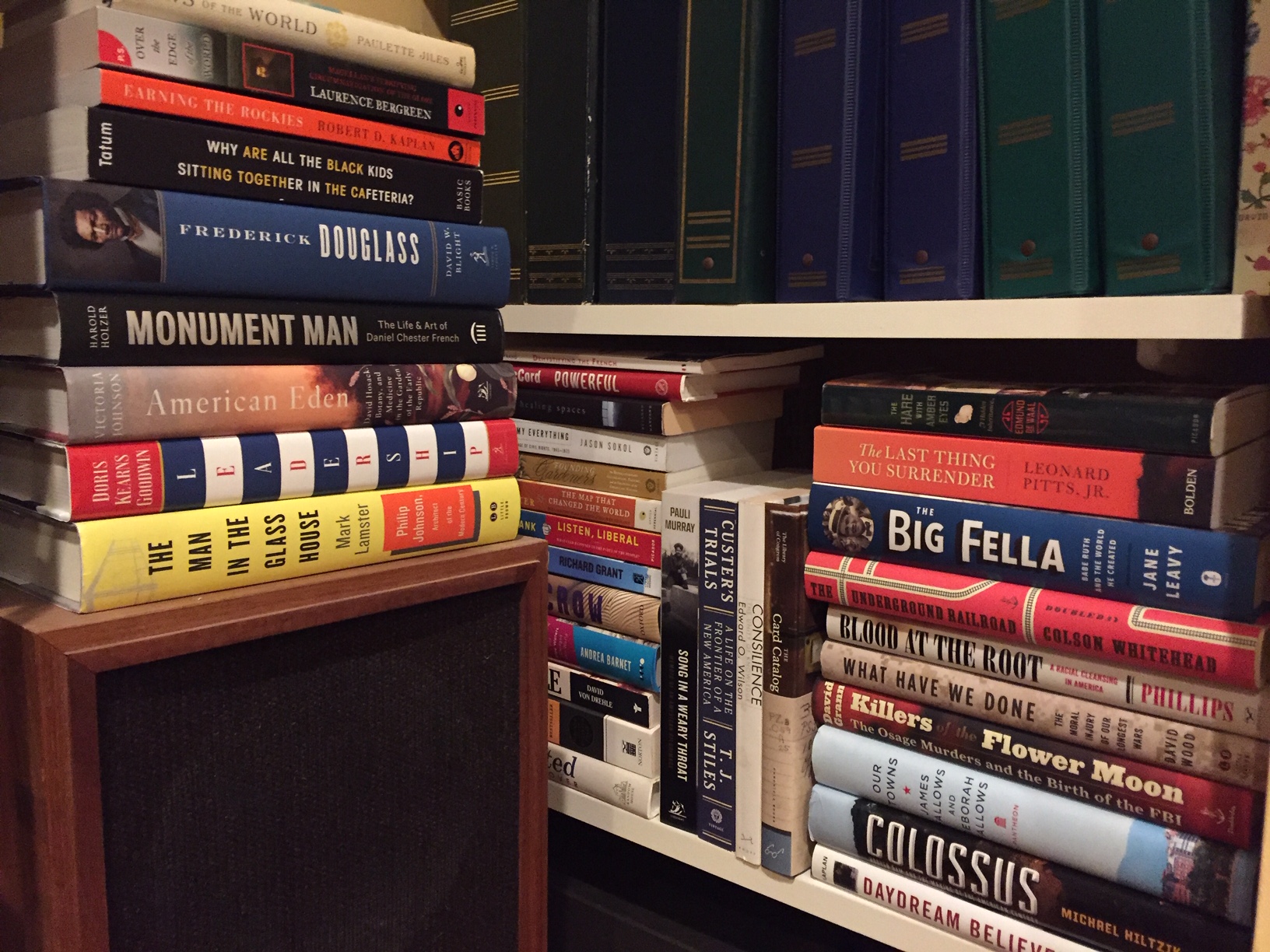
A recent view of my Reading Pile bookshelf
My 2018 Year-End Reading Listactually dates from December 29th of 2018, but the majority of the views came in this year. I have provided a short synopsis, with links to the longer posts, from the 21 books I read last year. Given that this one topped my list of views this past year, I’ve already posted the 2019 edition.
Two of the top ten posts resulted from my writings around my semi-retirement into a gap year. The first, Kindness, came about when I announced I was stepping down after 22 years from my position at the National Trust and was blown away by the kindness of the responses. As I said in the post, I felt like I woke up in the casket at my funeral and decided to stay there for a while and listen to the nice things people were saying. On Becoming Who You Arewas the post on my first day of unemployment (although planned) since 1977.
Don’t Create Followers, Create More Leaders focuses on my thoughts about the responsibilities of leaders after viewing several unexpected leadership lessons from long-time colleagues and friends in the U.K. It was management guru Tom Peters who said, “Leaders don’t create followers, they create more leaders.”
History Was All Around Me: PreserveCast podcast of my career in preservation (so far)ties to a podcast looking at my work at the National Trust for Historic Preservation and more. When PreserveCast host Nick Redding began our conversation on the award-winning Preservation Maryland podcast with a question about my path to preservation, my thoughts went to my childhood home, grandmother, and a favorite downtown theatre.
Create at the Intersection of Experience and Innovationwas a fun post, as I had a chance to highlight the creativity and thoughtfulness of singer Linda Ronstadt. Her comment in a recent documentary—“People would think I was trying to remake myself, but I never invented myself in the first place”—was the jumping-off point for this piece of writing. The documentary on Ronstadt’s life that was the source of this quote can be seen on CNN on New Year’s Day at 9 p.m. ET.
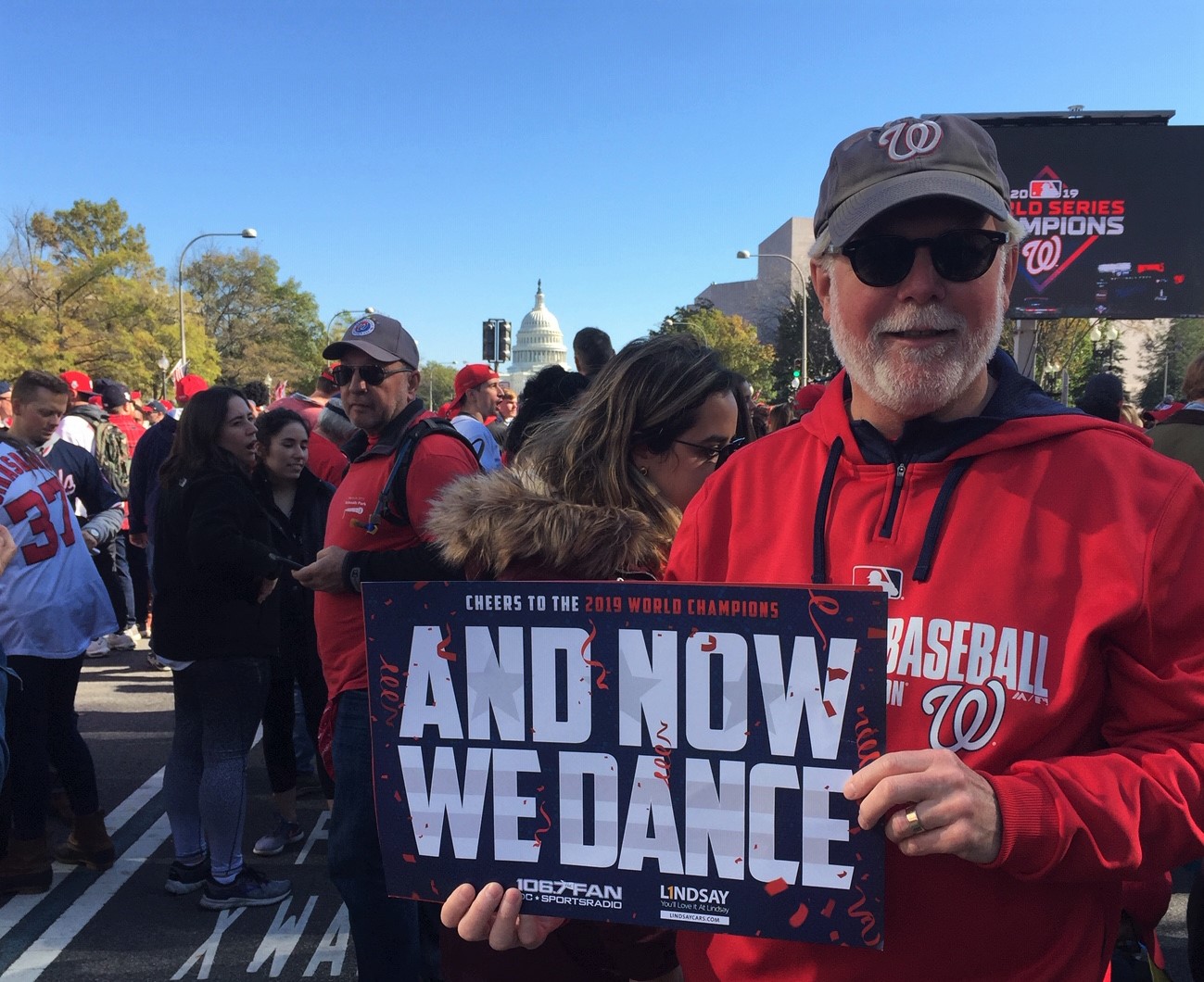
And Now We Dance
As you can imagine, I was very excited about the Washington Nationals run in the 2019 playoffs to become baseball’s World Series Champions. Apparently, my readers were as well. They Finished the Fight, the post that went up moments after the Nats won their improbable championship, was a big favorite, with comments from as far away as Red Sox Nation in Boston.
The always popular Year in Photos made the list as Our Year in Photos—2019. As I wrote in my monthly More to Come update email, this is pure “brag on the family” territory. If you like that kind of thing and want to see what the four of us have been up to for the past 12 months, revisit some of our travels, or check out the newest addition to the family (a cat, not a person), then this is the place to visit.
The Importance of Being Interestingwas a last minute addition to this list. But I’m not surprised that my friend Janet Hulstrand’s “breezy and digestible” book on how to live with the French shot up near the top of my charts. I found Janet’s take on how to understand these sometimes curious, somewhat frustrating, occasionally mystifying, but always interesting people to be delightful, informative, and useful all at once.
I hope you’ll find something among these ten posts that you missed the first time and want to read, or a favorite you’d like to revisit.
Thanks, as always, for reading, and have a good week.
Over the Thanksgiving holidays, I was listening to a live performance by blues guitarist Joe Bonamassa from Madison, Wisconsin, on the SiriusXM B.B. King’s Bluesville channel. In between songs, Bonamassa recounted a story from the band’s current tour, noting that they had recently found themselves with a rare couple of days off while staying in nearby Chicago. Instead of going to their customary Days Inn, the band decided to treat themselves to two nights at the Four Seasons.
Bonamassa said the accommodations were just what you’d expect from a luxury, four-star hotel, with the only downside being the 1200 “yuppies” who were attending a financial convention in the hotel. He ran into a group of these young, well-paid professionals at the elevator, and with his “street person” appearance and guitar case in hand, he became an instant target for a bully who clearly had more money than brains. Here’s how Bonamassa told of the interaction:
Yuppie Bully: “Hi. What’s in the case?”
Bonamassa: “‘It’s a guitar,’ I replied. ‘I wasn’t going to tell him that it was Tommy Bolin’s Les Paul‘” (one of many vintage guitars owned by Bonamassa.)*
Yuppie Bully: “‘Oh? Are you playing here at the hotel?’ he says with a smirk.”
Bonamassa: “No, I’m staying here.”
Yuppie Bully: Laughs to his gang, turns to Bonamassa, and says, “How does a guitar player afford to stay at the Four Seasons?”
Bonamassa: “Because I’m f**king good!”
It was the quietest 44-floor elevator ride imaginable.
Bonamassa is good. Scary good. He grew up listening to the British blues artists favored by his father, and his career began onstage when he was only 12 years old, opening for B.B. King in 1989. Today, he is acknowledged as one of the greatest guitar players of his generation. Bonamassa has released 21 solo albums on his own label, J&R Adventures.
Bonamassa’s country rock side comes out in this cover of Tennessee Plates, with guest vocals by the song’s writer, John Hiatt. To see Bonamassa’s work in contrast with other blues stylists, check out Going Downfrom the Rock and Roll Hall of Fame Induction of Freddie King. As one online commentator noted, Billy Gibbons (ZZ Top) plays classic Texas style blues, guitar god Derek Trucks (Tedeschi Trucks Band) is other-worldly on slide, and Bonamassa puts in more notes than should be humanly possible with his modern shred style blues.
But if you choose to only watch one Bonamassa video, make it this live version from Amsterdam of the Etta James classic I’d Rather Go Blind with the incredible blues rock singer Beth Hart. But don’t watch it in front of the kids…it gets intense, and you might have similar reactions as well!
Enjoy yourself some year-end blues.
More to come…
DJB
*Tommy Bolin was an American guitarist and songwriter who played with Zephyr (from 1969 to 1971), James Gang (from 1973 to 1974), and Deep Purple (from 1975 to 1976), in addition to maintaining a notable career as a solo artist and session musician.
Welcome to the 2019-20 college football bowl game season! Try to contain your excitement.
The only college football bowl game I ever attended was back in 1968 when Terry Bradshaw and the Louisiana Tech Bulldogs beat the Akron Zips (now there’s a great sports team name!) 33-13, in a cold and sparsely attended Grantland Rice Bowl in my hometown of Murfreesboro, Tennessee. In fact, it was the last Grantland Rice Bowl played there, as the sponsors moved the game to Baton Rouge the following year. I vaguely remember getting free tickets as a member of the 8th grade football team (yes, that was my one and only foray into the sport) and going with some friends. We knew that Bradshaw was good, but we may have paid more attention (and kept our ticket stubs) had we known that Bradshaw would be the #1 selection in the NFL draft the following year and go on to play for the Pittsburgh Steelers, winning four Super Bowl titles in a six-year period.
As for the bowl’s name, Grantland Rice, one of the first well-known sportswriters of the early 20th century, was born in Murfreesboro. Recognized especially for his elegant prose, Rice is best known for being the writer who dubbed the great backfield of the 1924 Notre Dame Fighting Irish football team the “Four Horsemen” of Notre Dame. This was a Biblical reference to the Four Horsemen of the Apocalypse. Rice’s famous account of the Notre Dame vs. Army game played at the Polo Grounds was published in the New York Herald Tribune on October 18:
Outlined against a blue-gray October sky the Four Horsemen rode again. In dramatic lore they are known as famine, pestilence, destruction and death. These are only aliases. Their real names are: Stuhldreher, Miller, Crowley and Layden. They formed the crest of the South Bend cyclone before which another fighting Army team was swept over the precipice at the Polo Grounds this afternoon as 55,000 spectators peered down upon the bewildering panorama spread out upon the green plain below.
Now that’s writing deserving of a bowl name!
I bring this up because several years ago I wrote about the rash of silly college bowl names. I was prompted to comment on this turn-of-events after my father’s alma mater had just made it to something called the “BBVA Compass Bowl.”* My father and I were clearly thinking along the same lines, because the day before he’d sent the cartoon at the top of this post along with a link to a 2014 New Year’s Day article in the LA Times entitled “Bowl names are an embarrassment to college football.”
The author of both the cartoon and the article, David Horsey, thought that perhaps 35 bowls had somehow cheapened the prize. “Being a Rose Bowl champion or an Orange Bowl victor carries a tradition that means something special,” Horsey wrote in 2014. “Winning a bowl named after yet another restaurant chain—Outback Steakhouse, for instance—seems just a bit cheap.”
Well, here we are in the 2019-20 college bowl season, and there are now 40 bowl games to choose from. And there are still sportswriters opining on the nature of the names of those bowl games.
Culpepper sees the current trend as a personal attack on our national “brand.”
So many of our bowls have clunky names, which are an inveterate threat to our national coolness, yet we sit there inertly and take it even as everyone can agree that the cool bowl names involve stuff that sprouts from the soil.
Somehow we have named only seven of the 40 current bowls (for things that grow from the ground)…thusly: Rose, Sugar, Orange, Cotton, Peach, Potato and Camellia.
Special commendation goes to the Potato and the Camellia, so named in 2011 and 2014, respectively, for laudable attempts in a modern era to stem a dreary tide that claimed even the late, great Poinsettia.”
Culpepper clearly has some favorites from the past, such as the aforementioned Poinsettia and the Tangerine, that he’d like to see resurrected. He notes that, “As names go, the Astro-Bluebonnet Bowl still ranks No. 1, lifetime, in overall funkiness.” And he clearly wouldn’t mind if the Bad Boy Mowers Gasparilla Bowl had to come up with a new name. Culpepper also has some suggestions in mind.
If I went to college and played for a team and told people later in life that I had played in a ‘Longleaf Pine Bowl,’ I would know I hailed from a country of singular vividness.
Treat yourself to a few minutes of laughter this holiday bowl season by reading Culpepper’s column. Who knows, you may decide just to skip this year’s BBVA Compass Bowl. Oh, wait. They dropped that name after 2014, and you’d actually be going to the TicketSmarter Birmingham Bowl on January 2nd.
Maybe we should all hold out until we get a Green Chile Bowl, Saguaro Bowl, Mesquite Bowl, or even a Salad Bowl.
More to come…
DJB
*BBVA Compass, for those who don’t know, is a bank holding company that is a subsidiary of the Spanish multinational Banco Bilbao Vizcaya Argentaria. You can see why they abbreviated it to BBVA for Americans!
I’ve long been a fan of the pithy proverb that contains truth in 20 words or less. Perhaps my love for the short and to-the-point adage came from my Grandmother Brown, who was known to say things such as, “The graveyard is full of people who thought the world couldn’t get along without them.”
I admit I might have heard that particular one when she thought I was getting too big for my britches.
Grandmother and Granddaddy Brown
To capture some of my favorite sayings without having to write an entire blog post about them, I created a feature on More to Come that I labeled More to Consider. (Clever, huh?) Every other week or so I update these quick bursts of truth. This section of the website is easiest to see on a laptop, where it resides near the top of the right hand column. But most people read my posts from their phones, where you have to scroll almost to the bottom before finding the saying for the week. With that in mind, I thought I’d share some of the more recent ones, with little or no additional comment.
As this is posted, the current iteration of More to Consider is from one of my favorite authors, Rebecca Solnit.
“Difficulty is always a school, though learning is optional.”
Before Solnit’s quote made it to the top of the queue, I featured a line from President John F. Kennedy, which seemed appropriate for the Thanksgiving holiday season.
“As we express our gratitude, we must never forget that the highest appreciation is not to utter words, but to live by them.”
In November, I also called on a historical figure—First Lady (and First Mother) Abigail Adams—for a reminder that we learn through difficulties, which seemed as appropriate a lesson in 2019 as it did in 1780, when she wrote to her son, the future president John Quincy Adams.
“The habits of a vigorous mind are formed in contending with difficulties. Great necessities call out great virtues.”
Far from Abigail Adams in place and time, but on the same train of thought, was Washington Nationals manager Dave Martinez. I posted his inspirational comment, which he credits to his mother, made after his team—against great odds and through a season of upheavals—won the National League championship (and then the World Series championship) in baseball.
“Bumpy roads often lead to beautiful places.”
Martinez isn’t the first baseball player/manager to make an appearance in More to Consider. I called on the great Negro League pitcher Satchel Paige in August of this year for the following:
“Ain’t no man can avoid being born average, but there ain’t no man got to be common.”
Good songwriters are masters of the pithy hook, and I’ve been known to succumb to their talents at times. Butch Hancock, Jimmie Dale Gilmore, and Joe Ely—known collectively as The Flatlanders—hit the nail on the head with,
“It’s the fearless who love and the loveless who fear.”
There’s a lot of truth for our times in that line.
There have been several instances where I’ve used the More to Consider space to highlight my love of reading and writing. First, this gem from Annie Dillard:
“Who would call a day spent reading a good day? But a life spent reading—that is a good life.”
And then this bit of advice from writer Colum McCann:
“On occasion we write a sentence that isn’t, in fact, correct, but it sings. And the question is: Would you rather be the ornithologist or the bird?”
And finally, from the late Toni Morrison:
“A writer’s life and work are not a gift to mankind; they are its necessity.”
My grandmother made it clear that complaining wasn’t allowed in her house. That may be why this George Bernard Shaw quote resonated with me the first time I saw it.
“The true joy in life is to be a force of fortune instead of a feverish, selfish little clod of ailments and grievances complaining that the world will not devote itself to making you happy.”
I’ll end with my favorite saying from Grandmother Brown, which I heard on more than one occasion. It seems especially appropriate for this time in our nation’s history. Change and progress require hard work, and cynics often want to avoid the responsibility of that work. Change and progress also require hope, and as I’ve written before, “hope demands things that despair does not.” Hope is risky. But hope is also in love with success.
We need to remember that our country’s values and ultimate success “rests on the habit of holding our fellow citizens in thoughtful regard not because they are exceptional (or famous, or beautiful, or rich) but simply because they are our fellow citizens.” And, we need to understand that “What joins the Americans one to another is not a common nationality, language, race, or ancestry (all of which testify to the burdens of the past) but rather their complicity in a shared work of the imagination.”
As we look ahead to 2020, and all the work to be done to get our country back on the right track, we could do worse than to keep Grandmother Brown’s words in mind:
Sierra Hull, who we celebrate on this Saturday Soundtrack, has been playing music professionally since before she reached her teens. Her debut on the Grand Ole Opry came at age 10, she brought her exceptional mandolin skills to Carnegie Hall at age 12, had her first deal with Rounder Records at age 13, and at age 17 became the first bluegrass musician to receive a Presidential Scholarship at the Berklee College of Music. As a 20-year-old, Hull played the White House.
The way I best remember how young she was when she burst on the music scene is from her performance at the Merlefest music festival in 2012. When introducing the band, she noted that the bass player was a good musician, but he was also “the only one of us old enough to rent a van.”
Sierra Hull and bassist Ethan Jodziewicz at the 2016 Red Wing Roots Music Festival
I’ve heard Hull play over the years at both the Merlefest and Red Wing festivals, and she’s always had the chops to play amazing bluegrass and traditional music. Her first album post-Berklee hinted at new directions, but it wasn’t until 2017’s Weighted Mind (produced by Bela Fleck) that she came into her own and broke away from the “I can play incredibly fast and clean bluegrass” camp. Hull and bassist Ethan Jodziewicz (recommended by no less a talent than Edgar Meyer) have toured together, and she’s also on the road with her multi-instrumentalist husband, Justin Moses. In a 2019 review, Rolling Stone noted “that the couple fluttered around each other with dueling mandolins, leaving the listener hanging on every single fluctuating note.”
Hull’s “Black River” video from the national show eTown is a good example of the direction of her newer stylings, while you can still catch her more traditional work on the 2011 “Bombshell” video from WAMU’s Bluegrass Country.
Regrets and grief can plague us at any time of the year. But for some individuals, the holidays are a time when regrets are easy to recall and often hard to dismiss. At this time when people around us appear happy and full of joy, grief can suddenly arise in our souls.
For too many, the darkness of the coming winter takes on personal overtones.
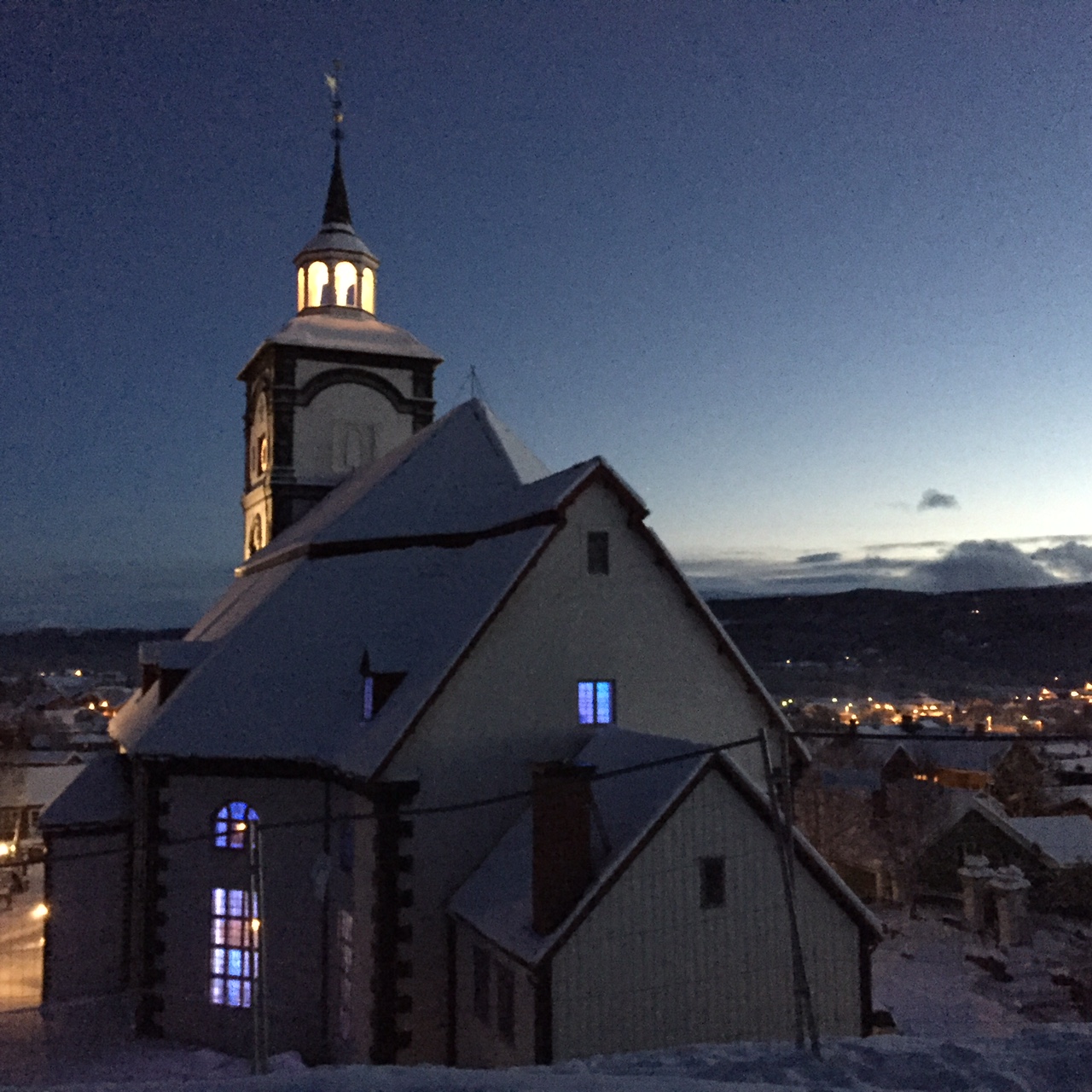
A winter nightfall in Roros, Norway (photo credit: Andrew Brown)
We may have lost a loved one and feel that emptiness deep in our being. Broken relationships or health challenges can be exacerbated in a season when society calls out for gaiety. Those seeking employment see the over-the-top consumerism of the holidays while they wonder where they’ll find next month’s rent. Depression, anxiety, and other mental illnesses can lead to an increase in suffering and grief because of the dissonance between one’s life and what one sees out in community.
I’ll be the first to admit that I can struggle to get past the regrets in my life. Likewise, I find that grief is an all-too-familiar response to the sorrows of our times. As we near the darkness of the winter solstice, I’ve been thinking about ways to live in order to emerge on the other side of regret and grief. To live with hope.
Let’s begin with regrets.
Virtually everyone has regrets. Even Frank Sinatra, although his were too few to mention. Edith Piaf, the famous French singer who sang, “Non, je ne regrette rien” (I have no regrets), may be one of the few to realize how to just live in the moment.
We should all be so lucky. Instead, too often we blame ourselves, feeling a sense of loss or sorrow over what might have been. That’s the classic definition of regret.
My regrets tend to congregate around goals not achieved through fear of failure. Corners cut when a more thorough approach was required. Relationships not built. Relationships not maintained. Acceptance of mediocrity when the occasion called for work of distinction.
Studies show that there are gender differences in the ways we experience regret. Perhaps your regrets are similar to mine; or, you may face different concerns and challenges.
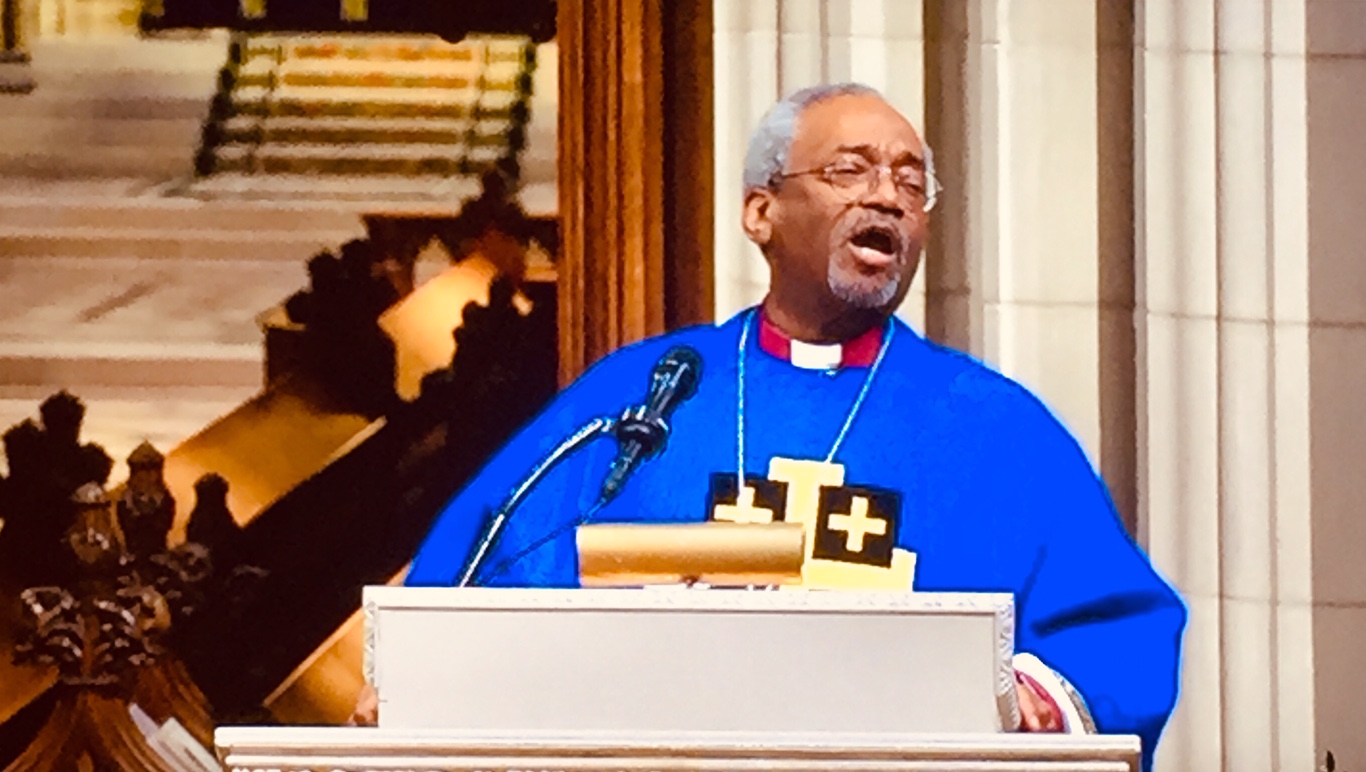
To add to our personal challenges, I—like many of my fellow citizens—head into this particular winter with some sense of dread, regret for years of complacency in the face of the growing authoritarianism in our government, and grief about life ahead. As the Presiding Bishop of the Episcopal Church, The Most Rev. Michael B. Curry, said so eloquently last Sunday during his sermon at the Washington National Cathedral, the cries that we hear in the politics of the U.S.; in the street demonstrations in Hong Kong; and in elections from the U.K. to Sri Lanka, all echo the ancient cry of John the Baptist: “Are you the one who is to come, or shall we wait for another?”
There’s certainly dread, regret, and grief in those cries, but there is also hope. We are all looking for hope.
The Most Rev. Michael B. Curry in the Canterbury Pulpit of the Washington National Cathedral on December 15, 2019
Bishop Curry phrased it as, “Dare we hope that this world will be a world where somehow we learn how to lay down our swords and shields, down by the riverside, and study war no more? Dare we hope that every man, woman, and child, everyone, will be treated as a child of God?” I would ask, dare we hope that we can pull ourselves out of the morass of our current political climate of lies, fear, and hatred and use this experience to grow closer to our ideals as a nation?
Regret and grief are very real. But there are ways to address the disconnect between our suffering and the hope and joy of the season.
For those able to step aside and see the situation through less emotional eyes, there can be value in how regret can lead to corrective action. In those instances, I try to think of life more as a journey and past decisions and losses as educational lessons. Likewise, taking actions in response to our current political upheaval has been shown to move people from grief and dread to optimism.
In my extended family, there are both mental health professionals and individuals who suffer from mental health problems. I have seen the value that comes from seeking and receiving professional treatment to address life’s challenges.
Spiritual and faith communities have also recognized they can play a role in the healing process, especially during this season. St. Albans Episcopal parish in D.C. held its annual Blue Christmas liturgy last week to acknowledge the realities of all our feelings in challenging days. Personally, I found that several phrases in the well-known and well-loved Night Prayer from the New Zealand Prayer Book—which was used to close that liturgy—spoke of ways both within and beyond the Christian tradition to respond to my regrets and grief. It begins with,
Lord, it is night. The night is for stillness. Let us be still in the presence of God.
I find that night is an especially difficult time to hold back the flood of thoughts around what could have been as well as concerns over the challenges ahead. Yet, the night can also be a time to still your mind. Or it can if we cut off our electronics, disengage with social media, and do something to slow the thoughts racing through our head. Reading can be a source of balm. Slowing down the brain may come as a result of a prayer to whoever or whatever you believe created the universe. Or it may be as simple as focusing on your breath to calm mind, body, and spirit.
The prayer continues.
It is night after a long day. What has been done has been done; what has not been done has not been done; let it be.
These two sentences spoke directly to me. First came the recognition that our days are long and our work often tiresome. Even work that we enjoy. Then, acknowledgement is followed by the recognition of reality: what has been done has been done; what has not been done has not been done. We’ve had our successes, failed, heard the accolades for our work, battled our demons. It is what it is. Now, let it be.
So easy to say. So hard to do.
But as one expert suggests, think about “what you would say to a loved one in the same situation to make them feel better. Most people have an easier time forgiving others than themselves.” We need to find a way to forgive ourselves in letting the past actions remain in the past.
The next two phrases of the Night Prayer call us to use the darkness and quiet as means to rest our fears in what’s beyond us.
The night is quiet. Let the quietness of your peace enfold us, all dear to us, and all who have no peace.
To seek a quietness in the creator, or in the vastness of the universe, is to allow it to enfold us and think beyond ourselves to those we love and to those “who have no peace.” Taking our thoughts beyond ourselves to others gives us a sense of perspective.
And finally,
The night heralds the dawn. Let us look expectantly to a new day, new joys, new possibilities.
Night leads to dawn and a new day, where new possibilities await. It will be a day different from the one just completed. And we can begin anew.
As 2019 draws to a close, I’m sharing my annual list of the books I’ve read over the past twelve months. As regular readers of More to Come know, since returning from sabbatical early in 2016 I’ve committed to reading more, and to seeking out a wider range of works beyond my favored histories and biographies. With that in mind, here—in the order I read them—are the treasures I found on my reading shelf this past year.
“Thomas Paine Enlightenment, Revolution, and the Birth of Modern Nations” by Craig Nelson
Thomas Paine: Enlightenment, Revolution, and the Birth of Modern Nations (2006)—Craig Nelson’s excellent biography of Paine captures the relevance today of the man who wrote three of the bestsellers of the eighteenth century, topped only by the Bible. Paine’s famous opening to The American Crisis—“These are the times that try men’s souls”—was written in the winter of 1776, yet it resonates today as much as it did when Washington’s small army was fighting for its life at Trenton and Princeton. The coalition that controls America today repudiates much of Paine in following the John Adams/Alexander Hamilton approach of a ruling class of multimillionaire plutocrats and their corporate sponsors. However, Adams and Hamilton would be shocked to learn that their “admired ruling elite no longer even pretends to lives of virtue.”
Field of Blood by Joanne B. Freeman
The Field of Blood: Violence in Congress and the Road to Civil War (2018)—This book by Yale Historian Joanne B. Freeman had me absorbed in the riveting tales of mortal threats, canings, flipped desks, and all-out slugfests…and that’s just on the floor of Congress! During the turbulent and violent three decades leading up to the Civil War, bowie knives and pistols were regularly drawn on members by other members. Duels happened with alarming frequency, including one that led to the death of one representative at the hand of another. All involved, with the exception of the poor victim, were handily re-elected. Slavery, and its future in America, was the key issue that led to this bullying, fighting, and total breakdown of civil discourse. Parallels to today should be heeded.
Humility Is the New Smart: Rethinking Human Excellence In the Smart Machine Age(2017)—In an era when the best research indicates that 47 percent of U.S. jobs will be replaced by technology within the next ten to twenty years, authors Edward D. Hess and Katherine Ludwig make the case that humans must change how we think, work, and communicate to survive and thrive. The authors define humility as “a mindset about oneself that is open-minded, self-accurate, and ‘not all about me,’ and that enables one to embrace the world as it ‘is’ in the pursuit of human excellence.”
The Is Not Baseball Book(2013)—This quirky little work is from the Are Not Books series, a micropublisher and academic research program. The program’s goal is to “facilitate cultural transactions that are not based on competition, measurable ‘success,’ or the accumulation of capital,” but are focused instead on a gift economy made up of “friends who care.” Whew! In any event, I think you have to love a book which begins with a first chapter of “Sports Is Not a Metaphor. It’s a Symbol.”
Hiking With Nietzsche: On BecomingWhoYouAre(2018)—John Kaag, a professor of philosophy at the University of Massachusetts Lowell, writes about two journeys he took to Piz Corvatsch, the Swiss mountain so important to the writing and life of the nineteenth-century German philosopher Friedrich Nietzsche. One journey was when he was 19 and the other came while in his 30s, with his wife and child. Kaag argues that there are lessons in Nietzsche lost on the young who don’t understand the ease with which we can be lulled into being satisfied with mediocrity or how “difficult it would be to stay alert to life.” Kaag aligns with Nietzsche’s thought that transformation into becoming who we are requires that we physically rise, stretch, and set off. It is a world view about “aims once more permitted and sought after.”
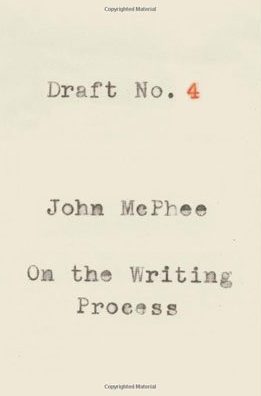
“Draft No. 4: On the Writing Process” by John McPhee
Draft No. 4: On the Writing Process (2017)—John McPhee’s book on writing examines how to get from a good first draft to a great fourth draft. As a long-time staff writer at The New Yorker, McPhee explains that, “The way to do a piece of writing is three or four times over, never once.” McPhee takes the reader on a delightful and well-considered journey from ways to structure a piece of writing to an ending chapter on omissions. That last feature is just as important as the first. A mantra McPhee continues to use with his writing students is, “A thousand details add up to one impression.”
A Crisis Wasted: Barack Obama’s Defining Decisions (2019)—Reed Hundt makes a compelling case, in the words of reviewer Steven Wiseman, that “The president-elect forgot how he got elected, and favored Wall Street over homeowners, deficit hawks over the middle class, and costly health care reforms over the chance to make a difference on climate change.” The outcome was an insufficient response to the crisis that favored banks over the middle class and, subsequently, led to the Tea Party revolution and the election of Donald Trump. Strong, provocative words.
A Gentleman in Moscow (2016)—Amor Towles novel about a Russian Count who, during the Russian Revolution, is ordered to spend the rest of his life inside a luxury hotel is a good, if light, read. Towels is a gifted writer who can turn a phrase and tell a story.
Founding Gardeners: The Revolutionary Generation, Nature, and the Shaping of the American Nation (2011)—Author Andrea Wulf’s work had me absorbed in her illuminating study of the passion for gardening, agriculture, and botany of Washington, Adams, Jefferson, and Madison—America’s best-known founding fathers. These four gentlemen (plus Abigail Adams) tied the beauty and bounty of the American landscape to their concepts of liberty and the greatness of their new country. As expected, Thomas Jefferson was a recognized leader in this work, but the surprises here are more with the passions of George Washington, John and Abagail Adams, and James Madison.
Hiroshima(1946)—John Hersey, the author of the landmark 1946 report/essay on Hiroshima in The New Yorker, once wrote that, “What has kept the world safe from the bomb since 1945 has not been deterrence, in the sense of fear of specific weapons, as much as it’s been memory. The memory of what happened at Hiroshima.” Hersey’s reporting led the U.S. government to revise its narrative about why dropping the bomb was necessary. The report was serialized in some 70+ newspapers (back before all the major newspapers were owned by a small handful of conglomerates), turned into a book (never out-of-print), produced as a national radio reading, and became a touchstone for the nuclear non-proliferation movement. I bought a copy of the book at the Hiroshima museum in Japan and finished reading it in two nights. Very powerful.
“The Strange Career of Jim Crow” by C. Vann Woodward
The Strange Career of Jim Crow(1955)—C. Vann Woodward’s seminal work has been cited by none other than The Rev. Dr. Martin Luther King, Jr. as “the historical Bible of the Civil Rights movement.” The book has stood the test of time as a landmark history that also made history. Woodward’s major thesis—that segregation and overt bigotry were relatively recent developments of the 1890s and were not inevitable—had a tremendous impact on our understanding of the South since Reconstruction and the opportunities available to the country in the 1950s and 1960s.
The Fifth Risk(2018)—Author Michael Lewis believes the rift in American life “that is now coursing through American government isn’t between Democrats and Republicans,” but “between the people who are in it for the mission, and the people who are in it for the money.” This short work—written in Lewis’s crisp, clear, yet entertaining style—shows, as others have before him, how decisions made for short-term gain are ripping apart our nation’s social compact.
Life on Earth(2018)—I read David Attenborough’s 2018 edition of his classic Life on Earth while in the U.K. And while I didn’t blog about this book, I was nonetheless taken by the strength of his positions and the clarity of his writing. Early in this work, Attenborough compresses the 4 billion years that have elapsed since the Last Universal Common Ancestor (a population of simple bacteria) lived on earth down to one year. Each day, then, represents around ten million years. In that setting, the oldest worm trails were burrowed through the mud of the Grand Canyon in the second week in November. “The first fish appeared in the limestone seas a week later. The little lizard will have scuttled across the beach during the middle of December and humans did not appear until the evening of 31 December.” Fascinating reading in a richly illustrated edition.
The Source of Self-Regard (2019)—Toni Morrison, Nobel Prize-winning author and arguably our First Lady of Letters, passed away on August 5th as this new book of essays and a recently released documentary entitled Toni Morrison: The Pieces I Am, introduced long-time fans and new readers alike to her towering intellect and broad vision. At the end of “Peril,” the very first offering of the 43 essays found here, Morrison makes the bold statement that, “A writer’s life and work are not a gift to mankind; they are its necessity.” And through 350 pages of speeches, essays, and meditations, she shows why.
“Infinite Baseball: Notes from a Philosopher at the Ballpark” by Alva Noe
Infinite Baseball: Notes from a Philosopher at the Ballpark (2019)—This short and entertaining work, written by Alva Noë, a professor of philosophy at the University of California, Berkeley, and a lifelong New York Mets fan, led me to go against my standing policy of rejecting books with jacket blurbs by George Will. Instead, I took a flyer on this set of 33 essays, most of them repurposed from National Public Radio’s discontinued science blog 13:7:Cosmos and Culture, and came away finding challenging and intriguing points-of-view on topics that every fan—philosopher or casual observer—would understand.
Between You and Me: Confessions of a Comma Queen (2015)—Long time New Yorker copy editor Mary Norris has not written a style manual, per se, but rather a memoir of a life lived with an obsession for clear writing. Her memories from The New Yorker and beyond are told with the wit of a natural-born storyteller. I am pretty confident that I’ve never laughed out loud when reading a book on grammar; yet, I did so more than once on the subway while devouring Between You and Me.
Sacred Liberty: America’s Long, Bloody, and Ongoing Struggle for Religious Freedom (2019)—Steven Waldman’s new work is a companion, of sorts, to his earlier Founding Faith, and it stands as an impressive overview of America’s long struggle to craft a new way forward in supporting religious freedom. Waldman goes into some depth to describe James Madison’s “ingenious, counterintuitive, and often-misunderstood blueprint for the religious liberty we enjoy today.” Madison argued that the best way to promote religion was to leave it alone. That was—and still is—a radical concept.
Ballpark: Baseball in the American City by Paul Goldberger
Ballpark: Baseball in the American City (2019)—This magnificent new book by Paul Goldberger—Pulitzer Prize-winning architectural critic, Trustee emeritus of the National Trust for Historic Preservation, and a personal friend—is an elegant and engaging work on a subject that’s clearly as dear to his heart as it is to mine. In slightly more than 300 pages, Goldberger takes the reader through a detailed, intriguing, often unexpected, and richly-illustrated history of the intersection of baseball parks, the American city, architecture, urbanism, business, sports, and culture. If you click through on the link, you’ll also get a detailed update on my personal quest to visit all 30 Major League ballparks.
Whose Story is This? Old Conflicts, New Chapters (2019)—Rebecca Solnit is one of my favorite essayists writing today. This collection of her most recent works includes an opening piece that ends with this equal parts hopeful and challenging observation: “This country has room for everybody who believes that there’s room for everybody. For those who don’t—well, that’s why there’s a battle about whose story it is to tell.”
“Leadership in Turbulent Times” by Doris Kearns Goodwin
Leadership in Turbulent Times (2018)—Pulitzer Prize-winning historian Doris Kearns Goodwin’s book is a study of the life of four presidents and the ways in which they addressed major issues in fractured times: Abraham Lincoln (winning the war, ending slavery and saving the union); Theodore Roosevelt (responding to the sharp inequities and unfairness of the industrial revolution); Franklin D. Roosevelt (rebuilding a country out of the Great Depression); and Lyndon B. Johnson (the fight to ensure civil rights for all Americans). As with most of Kearns Goodwin’s work, it is thoughtful, insightful, and more than timely in this day and age.
Identity: The Demand for Dignity and the Politics of Resentment (2018)—Political scientist Francis Fukuyama’s smart, insightful, and timely book is a thoughtful take on how our nation, and how much of the world, came to a place where we are identifying ourselves with a series of smaller and smaller tribes while also expanding our resentments into larger and larger grievances. I found it to be, ultimately, hopeful as well.
Demystifying the French: How to Love Them and Make Them Love You(2019)—This delightful advice manual for travelers and others interested in living more successfully with the French, was written by family friend Janet Hulstrand. After 40 years visiting and living in France, Janet has much to pass on of value, with writing that is clear, breezy, and digestible. Five essential tips for “even brief encounters” followed by ten chapters to help understand the French mentality are passed along as if you are sitting by the fireplace with a wonderful French wine and a good friend who is giving you a crash course before you venture out on your first trip to France.
How to Write a Sentence: And How to Read One (2011)—Stanley Fish has written a marvelous work, one that not only includes wonderful example after wonderful example from a wide range of writers, but one that also takes the time to teach us how to analyze a sentence in order to gain payoff and pleasure in reading.
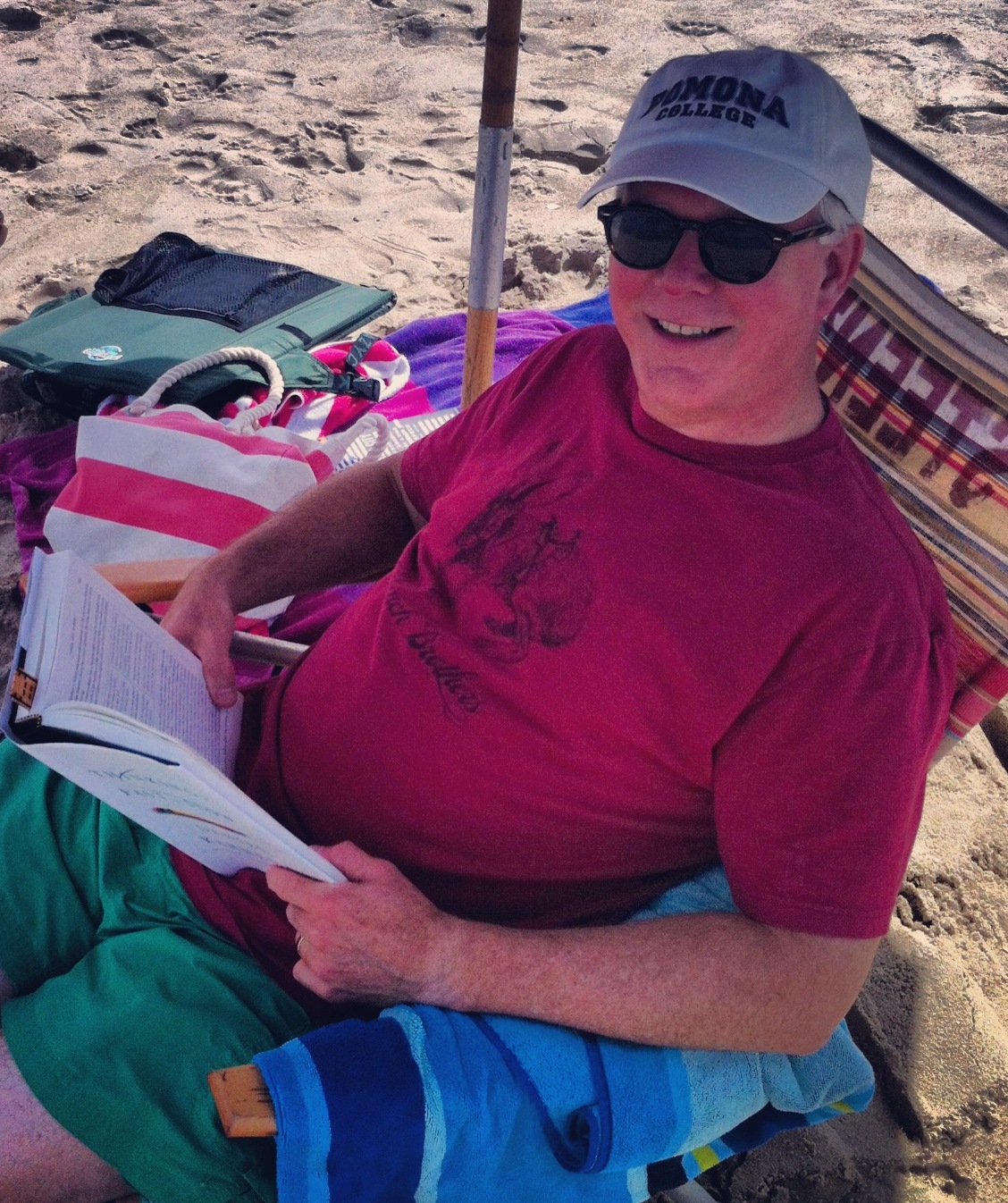
Beach Reading – the best kind
I hope you’ll find one or two things to pique your interest among this collection of works.









 MORE TO COME...