This past week the nation reached an important inflection point in our 400-year-old history with race and racism. The horrific murder of George Floyd, a 46-year-old black man who died in Minneapolis after Derek Chauvin, a white police officer, knelt on his neck for almost nine minutes while he was lying face down handcuffed on the street, touched off nationwide protests and confrontations with the police and the Trump administration. The photo showing Chauvin on Floyd’s neck while casually looking away, hand in his pocket, hit like a punch in the country’s collective gut.
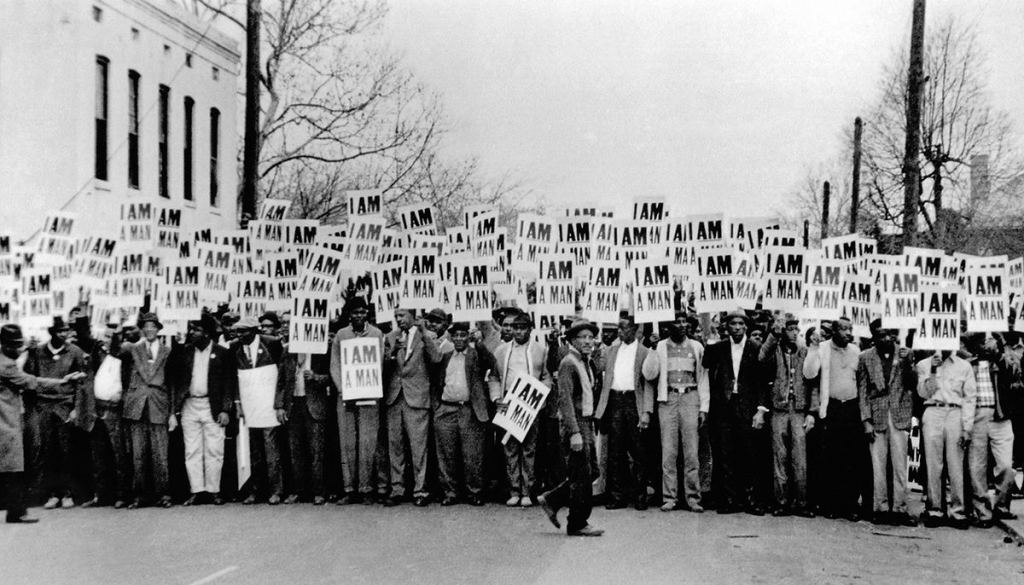
Pictures can both reflect and change history. The iconic May 1963 photographs of Bull Connor’s police dogs and officers with fire hosesattacking peaceful protesters in Birmingham depicted savage assaults that, in civil rights historian Taylor Branch’s words, “struck like lightning in the American mind.” The 1968 photos of sanitation workers, with their “I Am A Man” signs, remind us of why Dr. Martin Luther King, Jr. was in Memphis on that fateful April day. While I have no idea if it will have the same impact, the video footage and photo of a white police officer’s almost nonchalant pose while snuffing out George Floyd’s life following a complaint about a $20 counterfeit bill shows the casual nature of racism and injustice in a way that is impossible to ignore.
For those who choose not to ignore it, how we respond now and in the future will determine if change takes place.
A number of very smart commentators and activists, people of color who have worked to combat injustice their entire lives, have made various recommendations for those of us of privilege. First, while we should stand up in the moment for an end to racism, white people like me need to listen, listen, and then listen some more. Second, we need to educate ourselves about the systemic nature of racism, the ties to implicit bias, and how we can train ourselves to be anti-racist. But listening and learning, without action, will not change history. And as the first African American presiding bishop in the Episcopal Church, Michael Curry, counsels, our actions should come as we walk a path of love.
“I have been wild about (Robin) DiAngelo’s book since I read it last year because the associate professor of education at the University of Washington at Seattle is a white woman writing unflinchingly to white people about race. DiAngelo forces white people to see and understand how white supremacy permeates their lives and to recognize how they perpetuate it. More importantly, she shows them what they can do to change themselves and dismantle this pernicious system.”
For a short introduction, take a look at this four-minute video with DiAngelo talking about the paradigm shift necessary to combat racism.
Understanding how the concept of race was developed can be beneficial in understanding the context of this moment. This podcast may be helpful. Here are other works that may also be illuminating.
Dr. Jennifer Eberhardt’s powerful book Biased (2019) looks at the hidden prejudice that affects us all. Her reports on trainings she has held through the years for various police departments are especially illuminating in this moment.
The New Jim Crow: Mass Incarceration in the Age of Colorblindness(2010) by Michelle Alexander is an important and disturbing book about police brutality and mass incarceration that contends that “what has changed since the collapse of Jim Crow has less to do with the basic structure of our society than with the language we use to justify it.”
Michael Eric Dyson, in Tears We Cannot Stop: A Sermon to White America (2019), argues that Dr. Martin Luther King, Jr. remains “so important to this generation, to this time, to this nation, to our people,” because he “spoke the truth that we have yet to fully acknowledge.”
When Ta-Nehisi Coates sees hope in this current moment, as he stated on Friday in an interview with Ezra Klein, then perhaps we really are at an inflection point. And when the District’s Black Lives Matter mural can be seen from space, the social injustice that is all around us on the ground becomes harder and harder to ignore.
I’ve found myself drawn to several musical performances online this week during our troubled times. Most are covers — where musicians perform works by other musicians — and while the date of the originals range across centuries, most of the versions that have touched me were recently recorded. While some are instrumentals, knowing the lyrics to the songs has given me a context to hear the music in new ways. I want to share with you a few of my favorites from this music for troubled times.
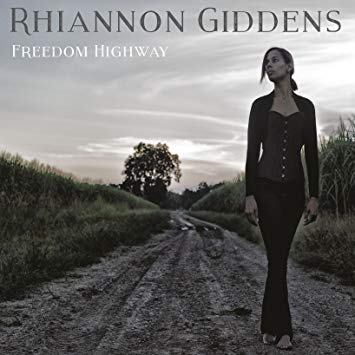
“We’re not doing my original songs,” Rhiannon Giddens says in her recent NPR Tiny Desk (Home) Concert, before she and her partner, Francesco Turrisi, launch into an old spiritual, “’cause with these kinds of emotions, the old songs say it best.” The set list for the 20 minute mini-concert, filmed at Turrisi’s home in Ireland in late May, goes back to “the origins” as Giddens says, and includes Black As Crow, Spiritual, and the tune set Carolina Gals / Last Chance. While all are wonderful, the haunting vocals and lyrics of Spiritual (at the 9:16 mark of the video) seems especially meaningful for this time:
“I’m gonna tell God of all my troubles, when I get home / I’m gonna tell God of all my troubles, when I get home / I’m gonna tell God of all my trials, my hardships, my self-denials / I’m gonna tell God of all my troubles, when I get home.
I’m gonna tell God the road was rocky, when I get home / I’m gonna tell God the road was rocky, when I get home / I’m gonna tell God the road was rocky, and my heart it is so heavy / I’m gonna tell God the road was rocky, when I get home.”
The Cranberries 1994 song Zombieis covered in a beautiful piano and cello interpretation by the Brooklyn Duo. Pianist Marnie Laird and her husband, cellist Patrick Laird, have built quite the following on YouTube with classical interpretations of popular songs. With Zombie — inspired by the IRA bombing in Warrington, Cheshire, England on March 20, 1993, where two children were killed — you have a song that Cranberries singer Dolores O’Riordan wrote as a cry against man’s inhumanity to man. The original video — with its stark depiction of both British soldiers and Irish children — was both effective and controversial. As one commentator wrote, where the original version conveys the anger against the inhumanity, the Brooklyn Duo’s version conveys the sadness in the song.
“Another head hangs lowly / Child is slowly taken / And the violence, caused such silence / Who are we mistaken?
But you see, it’s not me / It’s not my family / In your head, in your head, they are fighting / With their tanks, and their bombs / And their bombs, and their guns
In your head, in your head they are crying / In your head, in your head / Zombie, zombie, zombie-ie-ie / What’s in your head, in your head / Zombie, zombie, zombie-ie-ie, oh”
Aoife and The Jacobsens brings together the beautiful musicianship of Aoife O’Donovan with her husband, the cellist and conductor Eric Jacobsen, and his brother, violinist Colin Jacobsen, for a cover of Bob Dylan‘s Not Dark Yet. As Dylan said in 1997, “I try to live within that line between despondency and hope,” and this poignant song about the end of life certainly falls in that category. The beautiful and complex instrumental support on violin and cello — including the insertion of Franz Schubert’s An Die Musik (“To Music”) — is a great complement to Aoife’s timeless vocal.
And to come full circle, let’s return to Rhiannon Giddens singing a beautiful version of one of my favorite songs — Wayfaring Stranger— accompanied by the haunting sound of her fretless banjo and the mournful accordion played by Phil Cunningham of Silly Wizard fame. This version is from a 2017 BBC Northern Ireland program also called Wayfaring Stranger. With one of the most expressive and powerful voices in music today, Giddens transports us to a deeper spiritual place, no matter our beliefs.
It is not surprising that two women and two African American men have been the most effective religious leaders speaking truth to power to Donald Trump over the past few days.
My “Observations from” series usually includes a location. But this one doesn’t because, well, I don’t know where we are at this moment in this country. One of our most amoral presidents in history is walking and driving around the nation’s capitol looking for religious props for photo ops while he orders peaceful protesters tear-gassed and forcibly removed from his sight. Protesters who are, by the way, angry over yet another senseless and grotesque murder of a black man by a white police officer. Oh, and at the same time, his Secretary of State is tweeting about Chinese authoritarianism and meeting with Tiananmen Square survivors. Rightwing religious extremists are saying of the president’s use of the sacred symbols of Christendom, “Well, at least he’s pro-life.” Irony is apparently something that the modern-day Republican party doesn’t understand or at least doesn’t do anymore.
So just a few observations…from wherever.
A force to be reckoned with. The Rev. Gini Gerbasi is a long-time friend who was an associate rector at St. John’s Lafayette Square before moving a couple of years ago to become rector at St. John’s Episcopal Church in Georgetown.* Last evening she wrote a harrowing and moving post on her Facebook page about how she was helping to comfort the peaceful protesters at St. John’s Lafayette Square when she — along with all the other people standing in front of the church — were attacked with tear gas half an hour before the curfew set in and were forced to move a block away so that Trump could walk over from the White House and hold up a Bible in front of the church. Her post ended with her anger clear and her resolve strengthened, when she says she will be “a force to be reckoned with.” I just saw her interview with Jake Tapper on CNN. Gini is a funny, loving, and caring person. She is also a powerful witness. I’m honored to know her and call her my friend.
And our bishops are pretty wonderful as well. Today’s Washington Post story led with the observation that, “The Right Rev. Mariann Budde, the Episcopal bishop of Washington, was seething.” As she had every right to be. Federal officers had just used force to clear away peaceful protesters in front of St. John’s Episcopal Church located at Lafayette Square for Trump’s use of her church as a prop.** And her anger, in statements and interviews, is palpable. Likewise, the Presiding Bishop of the Episcopal Church, Michael Curry, spoke out powerfully about how the president used religious props for his partisan and hateful actions. Then today, Washington Roman Catholic Archbishop Wilton D. Gregory issued his own powerful statement about the president’s planned visit to Saint John Paul II National Shrine:
“I find it baffling and reprehensible that any Catholic facility would allow itself to be so egregiously misused and manipulated in a fashion that violates our religious principles, which call us to defend the rights of all people even those with whom we might disagree. Saint Pope John Paul II was an ardent defender of the rights and dignity of human beings. His legacy bears vivid witness to that truth. He certainly would not condone the use of tear gas and other deterrents to silence, scatter or intimidate them for a photo opportunity in front of a place of worship and peace.”
She’s had it. Speaking of women speaking truth to power, longtime Washington Post conservative columnist Jennifer Rubin has been fighting a years-long war against Donald Trump’s takeover of the Republican Party. Trump’s actions of the past few days led her to throw down the gauntlet and call out the entire set of enablers and urge that they be treated as pariahs after the administration leaves office (hopefully next January.) Rubin makes the righteous case that, “we should not treat former officials as respected reservoirs of historical or political wisdom. No cushy university perches….Private employers should be wary of hiring people of such low character. Yes, serving in an administration so corrupt, racist, dishonest and anti-democratic should deprive one of the benefits ex-officials of other administrations enjoy.”
Who is this person and what have they done with George Will? Long ago I used to read George Will on a regular basis, until his sanctimonious tone finally drove me away. However, I happened upon his column yesterday, and he had — at the end of this paragraph — one of the best lines about today’s Republican party I’ve read in some time.
“In life’s unforgiving arithmetic, we are the sum of our choices. Congressional Republicans have made theirs for more than 1,200 days. We cannot know all the measures necessary to restore the nation’s domestic health and international standing, but we know the first step: Senate Republicans must be routed, as condign punishment for their Vichyite collaboration, leaving the Republican remnant to wonder: Was it sensible to sacrifice dignity, such as it ever was, and to shed principles, if convictions so easily jettisoned could be dignified as principles, for . . . what? Praying people should pray, and all others should hope: May I never crave anything as much as these people crave membership in the world’s most risible deliberative body.” (my emphasis)
That’s enough for now.
More to come…
DJB
*She was not “transferred” Newsweek. Episcopalians don’t transfer their priest. She was “called” to be the rector at St. John’s Georgetown. Get your facts straight.
**In the Episcopal Church, the diocese, headed by a bishop, controls the property of the church and is ultimately responsible for those buildings. St. John’s Lafayette Square — known as the church of presidents — is one of the most historic churches in the city.
UPDATE: In the second note above, I state (correctly) that the diocese is the owner of the church property and the bishop — as the CEO of the corporation — represents the diocese as the owner. Given our First Amendment rights as Americans (i.e., “Congress shall make no law respecting an establishment of religion, or prohibiting the free exercise thereof”) — the bishop should have access to her church. But, in our new world order, Donald Trump and Bill Barr extended the barriers up to one-quarter of a mile out from the People’s House (otherwise known as the White House) and did not allow Bishop Mariann to have access to her own church buildingon Wednesday, June 3rd. While that blocked access was removed by Thursday, James Madison is rolling over in his grave as we speak. Also, when protesters pushed back on the bishop and the church as taking the focus away from the demonstrations around racial inequality and policy brutality, she sat down in the street to have an extended conversation with the protesters. Writing on the Episcopal Diocese of Washington’s website, Bishop Mariann said,
“One of our churches has been a focus of attention this week, but you have been clear that our focus is on the issues that have caused so many to engage in peaceful protest. As the Rev. Dr. Gayle Fisher Stuart said so well, ‘I hope the outrage over the continuing abuse and destruction of black lives is as great as the outrage over the president holding a bible in front of a church.”’To that I say, amen. Let’s keep our focus where it belongs.”
There’s no escaping the sense that too many things are moving backwards in America across too many fronts. Democracy is under attack. Those who benefit from discord are dividing us over matters, such as the public heath response to a pandemic, that should bring us together. Inequality continues to grow as the wealthiest take advantage of the global health crisis and the serious economic downturn to further enrich themselves. And another senseless death of a black man and the subsequent unrest it produces points to the setbacks that are too often part of our history in the long struggle for racial equality and justice.
Leadership has clearly failed. But we have to hold ourselves accountable for giving in to fear, hatred, and greed in choosing those leaders and in permitting them to divide the country. The famously acerbic newspaperman and political commentator H.L. Mencken wrote of the presidency in 1920, “As democracy is perfected, the office represents, more and more closely, the inner soul of the people. We move toward a lofty ideal. On some great and glorious day the plain folks of the land will reach their heart’s desire at last, and the White House will be adorned by a downright moron.”
The inner soul of the people in 2020 is troubled.
This is not the first time Americans have faced life-threatening crises while in the midst of a leadership vacuum. We’ve seen this sad story far too often in our past. Two of our worst presidents — James Buchanan and Herbert Hoover — lacked a strong, empathetic core and were paralyzed by events taking place around them. Yet history has also shown the positive impact effective leadership brings during times of upheaval. Resilience, reliance on a moral compass, and boldness are certainly important traits to successfully navigate rough waters.
Steven Levingston, the author of Kennedy and King: The President, the Pastor, and the Battle over Civil Rights, suggests that when facing violent unrest, presidents also need to be compassionate, flexible and well-informed. In a different era, President John F. Kennedy spoke to the nation following riots in Birmingham. He took to the airwaves to call on his fellow Americans to stop and examine their conscience, saying “The rights of every man are diminished when the rights of one man are threatened.” Effective presidents understand their place in history and their responsibilities to the larger community.
Facing a global pandemic, economic calamity, and brazen acts of racist violence, we find ourselves far from having the leadership the moment requires.
The U.S. used to be a global leader. We were the country that got things done. We were far from perfect, but the world’s leaders and the world’s poor looked to the U.S. at different times for guidance and support. That status — whether fully deserved or not — has ended under Donald Trump. Our bonds with allies are broken and our word is considered worthless. We pull out of the Paris Climate Accord and the World Health Organization at a time when the twin crises of climate change and worldwide pandemic demand a global response. Because of a botched response to COVID-19 by this administration, 100,000-plus Americans are dead in three short months from the coronavirus. We now lead the world in a statistic where you want to be anything but at the top of the charts. Yet through it all, there has been nary of word of consolation from the person who sits in the office where some of our greatest leaders have shown true, humble empathy for others. Instead, today we get constant lies, wild conspiracy theories, and personal attacks on political enemies.
Donald Trump’s stewardship of this country, supported by the wealthiest Americans and the Republicans who emulate and enable him, is reason enough to call out our failed leadership. However, racists and white supremacists, who feel released from social constraints by this administration, are now escalating an already tragic situation, making it even more dangerous to be black and be anything — birdwatcher, jogger, security guard, EMT personnel, you name it — without the threat of being killed. This past week, that awful fact of life in America exploded.
With the events arising in the past few days out of the Amy Cooper / Christian Cooper white privilege confrontation in Central Park and George Floyd’s murder by police officers in Minneapolis, we’ve seen what happens when the people choose a president utterly devoid of a moral compass and when broader leadership fails in our civic and business life. The impact comes through our news accounts, on our social media, in reflections from our parish priests, from national religious leaders, and in conversations with colleagues, family and friends. On a business site, I read one open letter to CEOs where the writer said,
“…a vast majority of employees of color would say that they work with ‘Amy Cooper.’ Amy Cooper has been our team member. Amy Cooper has been our manager. Amy Cooper has been our customer. And the dishearteningly and dangerous reality is that an Amy Cooper is what leads to a George Floyd who could have been my husband, my father, my son, my brother, my uncle — or better yet, my coworker.”
So many writers and commentators have noted that the pandemic, the economic collapse, and the rising tide of racism affects people of color disproportionately. As a result, one writer noted that she and other people of color, “are exhausted. We can’t breathe. We feel physically and psychologically unsafe both in the world and in the workplace.” To pretend not to see this pain, especially during this past week, “is not only problematic — but it is in itself part of the problem.”
All of us are responsible for where we find ourselves today. So what can we do?
We can begin, as Kennedy called us to do some fifty years ago, by taking the time to seriously examine our conscience. It is past time for white people in America to call ourselves to account, as well as those in position of power, for the racism that is our original sin and continues to wreck this country and its ideals. We need that national reckoning before we can move forward.
Some of the best suggestions I’ve read for how we can respond come from a college president who is an African American woman and a highly regarded scholar of English literature with work reaching into neuroscience and the arts. G. Gabrielle Starr called on her community to tenaciously and peacefully stand up for change. We need to turn to each other and care for our community. We need to listen. Some of us may seek out and test policies that might change the way force is used. Others will intervene in cycles of poverty. Others will be called to use art to motivate us, while others will use “the powerful tools of the law at its most just to bring aid to those who need it.”
Singer and guitarist Brooks Williams hails from Statesboro, Georgia, the town made famous by country-blues legend Blind Willie McTell. Williams’ backstory provides a bit of context as to why this Cambridge, England resident has a love for country blues — evident throughout his three decades of work — that comes so naturally.
“Ranked in the Top 100 Acoustic Guitarists, he’s a mean finger-picker and a stunning slide guitarist. Plus, ‘he has a beautiful voice,’ says Americana UK, ‘that you just melt into.’ Not one easy to pigeon-hole, Brooks’ music is the love-child of country-blues and soulful Americana.”
Williams has been playing live and releasing albums since 1990. To celebrate the 30th anniversary of the release of his first record, Williams recently recorded an album of 12 of his favorite songs from his back catalogue. Called Work My Claim, the recording features musicians John McCusker (Mark Knopfler), Christine Collister (Richard Thompson), and Aaron Catlow (Sheelanagig) in addition to Williams.
We’ll begin our tour with a soulful and bluesy version of You Don’t Know My Mindfrom Work My Claim. Williams has a fine guitar riff going on his Atkin guitar to underpin the vocals, and his fingerpicking comes to the forefront and is showcased beginning around the 1:35 mark of the video.
That strong guitar continues with the funky grove of Snake Oil, co-written with Boo Hewerdine. The guitar vibe fits perfectly with this song about what happens when the carnival comes, and then leaves, town (as in “all you got left is snake oil”). Also from Work My Claim is this lovely cover of Dave Alvin’s King of California with fiddler Aaron Catlow.
Williams 2018 album Lucky Star features the New Orleans-influenced No Easy Way Back. “I love those old Sun and Stax records,” says Williams in his notes to the official video, “and that’s the vibe I was aiming for in the studio. No isolation booths, no overdubs, no headphones, just musicians playing songs together in a way that used to be pretty common, but isn’t anymore. It makes for exciting music.”
Williams is a talented singer and guitarist who has a devoted following. To end this review with something completely different, check out this 2014 slide version of the traditional tune Sitting on Top of the World, played on an electric cigar box guitar!
Enjoy!
More to come…
DJB
Image: Brooks Williams (photo by Ira Hantz via brookswilliams.com)
Yesterday the United States passed a tragic milestone: 100,000 of our fellow citizens have died because of the COVID-19 virus. The true number is certainly much higher.
Sunday’s New York Timesfeatured a front page full of names and simple obituaries of just 1% of those who have died. They spoke of the incalculable loss we have suffered from the impact of the pandemic. Because of a botched response to the coronavirus from the administration that continues to this day, many more people died than would have with competent, credible, and empathetic leadership. The United States is, unfortunately, a world leader in an area where we once relegated so-called third world, developing nations.
We have lost our minds. But more importantly, we have lost all that those lives that are being cut short could have contributed had they not been felled by a disease that was allowed to run rampant in support of a political ideology. We have lost world-class scientific knowledge. Soul enriching music. Literature that touches our heart. Hugs and smiles from grandmothers. Fishing trips with dads. What we have lost is, truly, incalculable.
And the grief is enduring.
More — of both loss and grief, unfortunately — to come.
Last evening the History Channel began a three-part mini-series entitled Grant. The series* is based on the Ron Chernow magnificent biography of the same name. I decided to repost my 2018 review of Chernow’s work here to provide readers with some background along with encouragement to watch the mini-series.
I was thinking of the themes of hope and redemption and how much impact they can have on our lives as I’ve been reading Ron Chernow’s new biography of Ulysses S. Grant. Chernow is one of the few historians who, through deep scholarship and powerful writing, can drive the country toward a full reappraisal of a historical figure’s life and impact. David McCullough’s works on Truman and John Adams come immediately to mind as examples of this type of national reassessment, but Chernow has also worked his magic in the past with Alexander Hamilton and George Washington. He does so again with this biography of Grant.
The historical stereotype of U.S. Grant — especially if you grew up in the South — is of a failed businessman and drunkard who stumbled into military success in the Civil War by butchering his men in frontal assaults against the much greater military strategist, Robert E. Lee. The South finally had to succumb due to the North’s overwhelming forces and resources. Then, the story continues, Grant’s two terms as president were deeply mired in scandal, where ruffians stole anything that wasn’t nailed down (figuratively) from the federal government.
In 1,074 pages, Chernow not only destroys these stereotypes, but he paints a picture of a complex individual, both very wise and at the same time incredibly naïve, who played an outsized role in saving the Union during the war and in protecting African Americans and their rights during the years of Reconstruction. He was an unassuming underdog who, according to one of his generals, “talked less and thought more than any one in the service.”
When President Lincoln made Grant commander over all the Union armies in 1864, this quiet strategic sense came to the forefront in ways not always appreciated. He was, in fact, the war’s most brilliant tactician and strategist who — in the words of General William Sherman — coordinated armies across an entire continent while Lee was focused on one small state. The pleasant surprise of the book for me is Chernow’s description of Grant’s role as president during a difficult expansionist and unregulated period in the nation’s history. The South was in utter chaos when he assumed the presidency, yet Grant’s focus and convictions broke the power of the Ku Klux Klan through “legislation, military force, and prosecution” and his support for African American equality through the policies of Reconstruction has not been widely recognized. Most Americans don’t understand this entire period of our history and its lasting impact today, which is one reason we have battles in the 21st century over Confederate memorials.
There is hope in this story, hopefulness that demands things of us, just as it demanded things of Grant as he dared to hope for the future of his country. The personal redemption of Grant from his period of failed businesses and binge drinking is also key to the story. However, the ongoing redemption of Grant’s reputation remains important to all of us today, as we seek to understand our true history — the full American story — and how we have yet to face the unfinished business of race, emancipation and equality.
Hope is not easy. Redemption is not always around the corner. As in Grant’s case, it may take over a century. Yet hope that demands things that despair does not can help bring us — as individuals and as a nation — to a redemption we may not clearly understand but desperately need.
More to come…
DJB
*Available for viewing on the History Channel website
Today we pause to honor and mourn the military personnel who have given the last full measure of devotion for our country. As we fight a worldwide pandemic on this particular Memorial Day, we would do well to recognize the global identities of those American service men and women we honor.
Let us remember the more than 57,000 Filipino soldiers who died fighting as members of the U.S. Army from 1941-1945. We should add our gratitude for the 23 members of the Army’s 65th Infantry Regiment, a segregated Hispanic unit made up primarily of Puerto Ricans, who were killed in World War II while participating in the battles of Naples-Fogis, Rome-Arno, central Europe and Rhineland. And we should never forget the more than 600 soldiers who died while serving in the 442nd Regimental Combat Team — the most decorated unit for its size in U.S. military history and almost entirely composed of second-generation American soldiers of Japanese ancestry (Nisei) — fighting valiantly in Europe against the Axis powers although many had families confined to internment camps in the United States.
These men and women were U.S. citizens or U.S. nationals. Yet we seldom take the time to recognize their heroism and the sacrifice made for their country. In fact, they are often purposefully forgotten.
Stories of military heroes from the territories of the Philippines, Guam, Puerto Rico, Hawai’i, and Alaska — along with the reasons they are often overlooked — are part of the remarkable 2019 book How to Hide an Empire: A History of the Greater United Statesby Northwestern University historian Daniel Immerwahr. The “Greater United States” was a term used by some at the turn of the 20th century to describe the states and territories of the U.S. As a lifelong student of history who learned new lessons from virtually every page of this unexpected and enlightening work, I am here to say that How to Hide an Empire should be required reading for all Americans.
Immerwahr is standing on the shoulders of many scholars who have focused on aspects of U.S. imperialism in the past. Yet he brings their work together in a narrative of impressive scope and depth, changing the way one thinks about the U.S. The history we’ve learned growing up is that America is a republic, born out of a desire to overthrow an empire. When someone talks about Americans as imperialistic, it raises our hackles. But as Immerwahr writes, “At various times, the inhabitants of the U.S. Empire have been shot, shelled, starved, interned, dispossessed, tortured and experimented on. What they haven’t been, by and large, is seen.”
That blindness continues today, when barely half of mainland Americans know that Puerto Ricans are fellow citizens. And an important reason is that what we think we know as the United States, coming from what the political scientist Benedict Anderson called the “logo map,” doesn’t begin to capture the full amount of territory the United States has controlled in the past and continues to control today.
The “logo” map of the U.S. mainland at the top, and the map showing the full extent of U.S. territories in 1940 to scale. Both Alaska and Hawaii stretch almost coast to coast across the mainland.
Immerwahr’s more accurate map shows the inhabited parts of the Greater United States at the beginning of World War II at the same scale and with equal-area projections. When you do that, Alaska isn’t shrunken down to fit into a small insert, as we normally see it. Nope, it is the right size — or, to put it simply, it’s huge. The Philippines are also large and the entire Hawaiian chain — not just the eight main islands — “if superimposed on the mainland would stretch almost from Florida to California.”
Introduced in the opening section of this imminently readable work, the map is used throughout to show how little we know of our country. The “logo” map showed the true extent of American territory for only three years, from 1854-1857. We began acquiring and annexing overseas land in the middle of the 19th century, and in some ways we haven’t stopped. In 1940, one in eight of the people in the United States lived outside the mainland. They were not fully counted in the census of that year, however, which only focused on “the United States proper,” which isn’t a legal term.
And so, Immerwahr writes, “as with the logo map, the country was left with a strategically cropped family photo.”
Readers of the 1940 census were told our largest minority was African American, that our largest cities were nearly all in the East, and that the center of our population was in Indiana.
“Had overseas territories been factored in, as western territories had previously been (my emphasis), census readers would have seen a different picture. They would have seen a country whose largest minority was Asian, whose principal cities included Manila (about the size of Washington, D.C. or San Francisco), and whose center of population was in New Mexico.”
Immerwahr divides the history of the Greater United States into three periods. The first looks at our period of westward expansion and the Indian wars. Most Americans actually know at least some of this history. But by the middle of the 19th century, we’ve begun to move into the second period, as the U.S. starts to annex land overseas, including more than 100 uninhabited islands whose main attraction is bird droppings.
Yes, in a remarkable chapter entitled “Everything You Always Wanted to Know About Guano But Were Afraid to Ask,” Immerwahr demonstrates his considerable skills as a storyteller who brings his readers along with a quick pace and wry observations. It turns out that guano — or the droppings of seagulls and other feathered friends — had a wonderfully restorative effect on U.S. land that was already deteriorating due to over-farming. And while his tales of these remote “shit-spattered rocks and islands” make for some good laughs*, he points out that the legal, strategic, and agricultural legacies of these acquisitions continue to influence our country today. Soon afterwards, the U.S. was acquiring much larger land-masses, including the granddaddy of them all: Alaska. We kick into high gear with the Spanish-American War and our one president who wasn’t afraid to talk about American Empire: Teddy Roosevelt. Around the turn of the 20th century we acquire the Philippines, Guam, Cuba, Hawaii, Samoa, Wake Island, and Puerto Rico.
Immerwahr takes the reader through the arguments made at the time about the question of empire. “In essence, it was an argument about a trilemma. Republicanism, white supremacy, and overseas expansion — the country could have at most two.” The country’s anti-imperialists had generally accepted republicanism and white supremacy, noting the inconsistencies between the concepts of republicanism and empire. Imperialists such as Roosevelt were willing to sacrifice republicanism, “at least as applied to so-called backward races.” The third option — to jettison white supremacy — was never seriously considered by most mainland politicians, but it had strong support in the territories, where the multi-ethnic populations pushed for a pathway to statehood but were blocked by America’s long-held focus on maintaining a country with a racially-based hegemony and hierarchy.
There are fascinating chapters on the impact of World War II on U.S. territories and the implications of that conflict that still reverberate today. We think of Pearl Harbor as the greatest attack ever to occur in America, but Immerwahr points to the combination of American shelling and Japanese slaughter of civilians in the Philippines and rightly notes that this part of the war was “by far the most destructive event ever to take place on U.S. soil.”
The third period of this history looks at the extraordinary act of the United States to win World War II and then give up territory — most famously with the Philippines which gained independence on July 4, 1946. Again, Immerwahr takes us through the reasons why we distanced ourselves from colonial empire (including a riveting chapter — and I’m being serious — about Herbert Hoover and the standardization of screw threads). The U.S. figured out how to achieve “domination without annexation,” and took on what Immerwahr describes as a pointillist empire — small dots all over the globe where technology and man-made substitutes for raw products allowed us to maintain global advantages without having to manage enormous amounts of territory.
To maintain control of our interests, the U.S. has 800+ agreements granting us access to foreign sites for bases and other support facilities. By contrast, Britain and France have 13 such foreign bases between them, Russia has nine, and various other countries have one. But even though they are small points on a map, there were multiple unforeseen problems that arose from having even a pointillist-sized empire.
Liverpool England in the 1950s was near one of the largest U.S. bases in the world, Burtonwood, which was the gateway to Europe. The American influence on the area was enormous in all sorts of ways. One we may not immediately identify is entertainment. U.S. soldiers at Burtonwood looked for music that sounded like home (among other pleasures). Four musicians from the city were more than happy to oblige. While the rest of England was stuck in the vaudeville era, Liverpudlians had a special advantage with access to American records — especially from African American artists — and a big financial incentive to master that music. The first song that the Beatles recorded was a Buddy Holly cover. “They cut it in 1958, the same year the antinuclear marchers moved on Aldermaston” (a nearby nuclear facility in England) so that the Beatles and the peace symbol debuted within months of each other and were both side effects of the U.S. basing system.
Immerwahr also tells the story of how two enterprising Japanese men, working in a country on the brink of starvation, used contacts with American soldiers and bases to crib materials and ideas as they started a technology company in the aftermath of World War II. That company eventually became Sony — the Apple of the 1960s, 70s, and 80s — and in using Japan to launch its military campaigns in Asia, the U.S. sowed the seeds of its own deindustrialization.
“Sony’s story was similar to that of the Beatles. Enterprising young men living cheek by jowl with the U.S. military get their start by imitating what they see around them. They learn guitar licks from Buddy Holly songs or struggle with stiff paper and raccoon-hair brushes to replicate a tape recorder. But give them time, and soon enough you’re listening to Abbey Road on your Walkman.”
Most memorably, Immerwahr reminds us that the September 11th attacks were Osama bin Laden’s retaliation against the U.S. empire of bases…sites that his family’s construction company had built for the Saudi’s and the U.S. over several decades in the holiest land of Islam.
Immerwahr has written a remarkable work with the important thesis that territory matters. It matters not only for those who live there, but it matters for the entire country. World War II began for the U.S. in the territories and, Immerwahr adds, the war on terror “started with a military base.” Politicians up to and including John McCain, Sarah Palin, Barack Obama, and Donald Trump, have all been touched by colonialism.
You simply cannot understand the history of the United States without understanding territory. Because, as Immerwahr ends this highly recommended book, “The history of the United States is the history of empire.”
Remembering on this Memorial Day those U.S. citizens and U.S. nationals from the territories who died — often in obscurity — fighting for this country.
*It was no laughing matter if you were involved with Guano mining. Immerwahr suggests that the tunneling, picking, and blasting of guano, along with hauling it to waiting ships, was arguably the single worst job you could have in the nineteenth century. It featured the backbreaking labor and lung damage of coal mining, but “you had to be marooned on a hot, dry, pestilential, and foul-smelling island for months” and you were subject to shrieking seabirds who darkened the skies and unleashed “the occasional fecal rainstorm.”
Eleven years ago I posted a short series on More to Come entitled Five Albums for a Desert Island. It was a way to expand on a Facebook challenge at the time to list your five favorite albums. And while the original posts sound slightly dated, they nonetheless stand up pretty well in describing five albums that have shaped my musical interests.
I thought about these albums again in this time of global quarantine. If I had to choose only five albums to have on my live-stream for a long period of sheltering-in-place, how would these do? Well, I think I could more than live with these five…I’d still very much enjoy them! Yes, I would miss not having Nickel Creek‘s self-titled 2000 album to enjoy. (Click the link to read the recent NPR article about the album: “How Nickel Creek made Americana the new Indie Rock.”) And I love The Best of John Hiatt. Nonetheless, with the original five I would not only survive, but would thrive.
I’ll encourage you to go back and read the original reviews which go into some depth, but here are snippets about the five in the order I posted them. Feel free to use the comments section to let me know which albums would be on your playlist.
David Grisman Quintet(1977) — The David Grisman Quintet’s self-titled debut album blew me away the first time I put needle to vinyl back in the mid-70s and I still love to listen to the amazing musicianship of Grisman and his jazzy mandolin, Tony Rice on guitar, Darol Anger on fiddle, Todd Phillips on second mandolin, and Bill Amatneek on bass. CD Universe‘s review noted that the album “comes flying out of the speakers from the word go, crackling with the excitement of a group of musicians heading somewhere nobody has ever quite been before.” Watch a later version of the DGQ with Grisman, Rice, and Mark O’Connor — in a hideous pair of purple pants — play the album’s opening tune E.M.D.
Will the Circle Be Unbroken (Vol. 1) (1972) — I still remember coming home sometime in 1972 and putting Will the Circle be Unbroken on my stereo turntable. I had started focusing on acoustic music which led me to the record bin on that fateful day when I found this record with the funny looking cover by the country-rock ensemble The Nitty Gritty Dirt Band. There was a little patter to start the record, with Jimmy Martin‘s comment on John McEuen’s banjo kick-off, “Earl never did do that….” But then Martin, the Dirt Band, and their musical guests were off with a rollicking version of The Grand Ole Opry Song and they didn’t stop until you got through all 3 LPs (6 album sides)! Decades before O Brother Where Art Thou, there was Will the Circle Be Unbroken, when some long-haired hippies and rockers took country, bluegrass, and mountain music on its own terms and showed how wonderful it could be. Listen to McEuen and Earl Scruggsplay a masterful banjo duet on Nashville Blues.
Time Out (1959) — This was the first jazz album that really caught my ear, and that’s the reason it is on my top five list. Thanks to influences from my father and older brother Steve, I have come to love jazz. In Time Out I was captivated by the changes in time signature and rhythm. It all sounded so effortless and so cool. Paul Desmond was a wonderful soloist, and even my untrained ears could hear that he was special. The album was recorded when I was four years old, but the fact that I found it some ten years later — not to mention the fact that it is still in print and available — speaks to its staying power. Check out this live version of the band playing the signature Take Fivewith an amazing extended solo by Desmond.
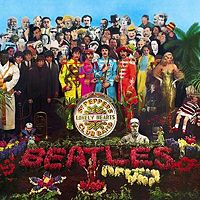
Sgt. Pepper’s Lonely Hearts Club Band(1967)— There’s not much you can add to all the words that have been written about The Beatles and their album Sgt. Pepper’s Lonely Hearts Club Band. The Wikipedia entry is one of those that drives people who hate crowd sourcing to rants, because it probably runs longer than the entry for World War II. (I haven’t actually checked that out, but it makes a good line so I’m sticking to it.) Sgt. Pepper’s has been a source of endless fascination since it was released, and I was certainly smitten as a young teenager. This is probably on my list as much for what it represents about my youth as for the album itself. The Beatles were constants in our house growing up, because Steve and I listened to them all the time. And since my kids learned about the album from U2 and similar versions, give a listen to Paul McCartney with Bono and U2 playing the title track from the Live8 concert in 2005.
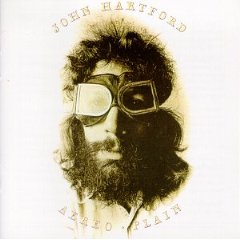
Aereo-Plain(1971) — The last in my review of top five albums may be my all-time favorite. I’ve long loved John Hartford’s quirky, hippy-bluegrass Aereo-Plain album. What do I love about this album? Let’s start with the cover. My mother hated this cover when I was a teenager. But how could a scruffy 17-year-old guitar player who was getting into bluegrass not love a picture of a scruffy, hippie, banjo picker who had just made a fortune as the writer of the monster Glen Campbell hit Gentle on My Mind. Then there are the songs. The first thing you hear is a gospel quartet led by Hartford singing a snippet of A.J. Brumley’s Turn Your Radio On. This morphs into a set of the most amazing mixture of original Hartford tunes he’s ever produced. Next, I love the production values of Aereo-Plain. David Bromberg was the album’s producer and Hartford gave him almost total authority in putting this record together. The choices were inspired. Bromberg had the band play everything live, and it was all completed in a few short takes. Finally, I love the players. Besides Hartford on banjo and guitar, Aereo-Plain featured Norman Blake on guitar and mandolin, Vassar Clements on fiddle, Tut Taylor on flat-picked dobro, and Randy Scruggs on bass. They were among the best in the bluegrass business at the time, and I’ve heard their playing on Aereo-Plain compared to that of a jazz quintet. Unfortunately, only Norman Blake is still with us. For so many people who played acoustic music, Aereo-Plain gave them permission to try new things, as Hartford showed how to mix a hip, youthful sensitivity with a love for bluegrass music. Here’s an all-star band from the 1980s playing with Hartford and Clements on the title track Steam Powered Aereo Plane.*
So there you go…influential music from the 1950s, 60s, and 70s that still shivers my spine here in the 2020 pandemic. Go figure, but go enjoy.
A friend recently raised concerns about the increase in messages when discussing the COVID-19 pandemic using an “us-vs-them” frame. His point was that in this day and age, public health emergencies should not be cast as fights between tribes. Yet, that type of framing began almost immediately after the outbreak, when some labeled COVID-19 as the Chinese virus. The attempt to separate us into groups as we consider and respond to the coronavirus has since increased in countless ways, against multiple targets.
Us-vs-them framing is dangerous. It is tribal in nature and uses fear to inflame prejudices, driving hostility and hate. Such reactionary framing, legal- and social-policy writer Stephen L. Carter noted in another context, is “designed to bypass the rational faculties of its targets.” Framing conversations and thinking as us-vs-them reduces the number of people we feel responsible for or connected to. It contracts the circle of “we,” usually by highlighting how others are different from our “tribe” and therefore not worthy of our support or concern.
I sometimes write about topics that I need to hear. This is definitely one of those times. My concern over our country’s shift into an authoritarian attitude and disregard for the rule of law drives my thinking and leads me into my own us-vs-them way of speaking. I have no doubt that others who have a different perspective feel just as passionately.
I’m not suggesting that we dismiss real conversations around policies and accountability. But at this particular moment in time, we may have the opportunity to break out of the worst habits driven by this tribal mindset. Surprising as it seems, as we shelter-in-place our circle of contacts may, in fact, be increasing.
Many of us are now talking with individuals we haven’t engaged with in recent months or even years; people outside our tribe. In the past two months, I have either been involved with — or have heard of — online Zoom conversations among families, siblings, cousins, neighborhoods, high school and college classes, fraternities and sororities, and old business teams. People are sending notes via snail mail to friends and those they have known in the past. I’ve certainly had more telephone calls of the “how are you doing” variety in recent weeks. My younger brother has taken to showcasing his grilling skills with a daily Facebook Live post. We’re all trying new ways to connect to those outside our four walls, and we’re only limited by our imaginations.
The pandemic is leading many of us to move beyond our normal circle of friends and colleagues. Pressures and calls on our time no longer seem as pertinent or simply no longer exist. As a result, many of us are at a point where we begin to think about those in our lives who were once close but who have drifted away; who perhaps helped love us into being but who we’ve lost contact with over time. As a result, in this era of polarized politics we’re talking with people outside our political tribes, people who have different perspectives about a wide variety of things that matter.
Significant majorities of Americans across the political spectrum support continued sheltering and distancing policies. What they mean by that no doubt differs, but often at the core of those feelings is the love they have for their parents and grandparents, who are most at risk. Our particular “circle of we” really matters to each of us, especially when it includes those who gave us life. In this particular crisis, we have the opportunity to use language in our conversations with friends, families, co-workers, and neighbors that takes those personal feelings and connects individual action to the common good. We can begin by using a broad “us,” and look for opportunities to talk about the positive aspects of interconnection. Rather than contracting our circles, we can talk about how this affects us all and widen our circles of “we.”
Conversations of this type can help us explore and shape meaning for ourselves and others.* Good stories can “challenge our acceptance of the world as immutable and provide both critique and optimism,” Susan Nall Bales has written in Nonprofit Quarterly. She adds that for our stories to work in moving others, they need to reveal “how they impede the outcomes we value (my emphasis). These ‘how the world works stories’ fill in missing pieces in people’s everyday repertoire. They invite what Daniel Kahneman calls ‘slow thinking,'” Bales continues, “overcoming the tendency to instantly evaluate all social issues through one’s partisan lens.”
There’s a great deal of commentary these days about how the “new normal” will need to differ from the old way of doing things; how we need to get to work “building the America we need.” One simple way is by recognizing that we have taken this significant break from our normal ways of communicating, and are having conversations with individuals outside our tribes. With some effort we can work to keep them engaged. We can widen our circle of “we.”
*While there are a number of online resources for ways to rethink our conversations in a time of crisis, one of the most effective I’ve used comes from The FrameWorks Institute. The institute is a nonprofit think tank that works with groups to frame communications in order to build public will and further public understanding…Their work is designed for organizations, but in a series of nine (to date) short papers on topics that connect people to the bigger picture around the pandemic, their advice is equally as helpful for individuals.