We have an “almost unlimited ability to ignore our ignorance.”
With that simple observation, the Nobel Laureate Daniel Kahneman, writing in his landmark book Thinking, Fast and Slow, gets at the heart of how we create an illusion of understanding even when our knowledge is limited or based on false information.
The week after the redacted Mueller report was released to the public seems an appropriate time to explore Kahneman’s assertion. Everywhere one turns there are those making stronger and stronger claims based on less and less factual evidence, even when those facts are clear and in the public realm. One of the culprits is most certainly the way we now consume news. We skim or graze over news feeds from sources chosen by tech giants’ algorithms, so that we grasp only the barest of essentials run through a filter of group think.
In The Knowledge Illusion: Why We Never Think Alone, cognitive scientists Steven Sloman and Philip Fernbach argue that we vastly overestimate what we know (a point also made by Kahneman). Quoting Sloman and Fernback in a recent New Yorker article, journalist Michael Luo suggests that “our unjustifiably strong opinions are reinforced by other people who are similarly ill-informed, creating self-reinforcing communities of misinformation.”
“When group members don’t know much but share a position, members of the group can reinforce one another’s sense of understanding, leading everyone to feel like their position is justified and their mission is clear, even when there is no real expertise to give it solid support. Everyone sees everyone else as justifying their view so that opinion rests on a mirage.”
The illusion of understanding has been around since the human race began recording history in part because tribal alliances have existed just as long. In the 21st century we simply call them by different names—economic class, ethnicity, nations, political parties, race. Or perhaps we call them our Facebook friends.
One way to break out of the group-think mold that leads to this illusion is to take the time to read and learn outside your comfort level. Molly Ivins wrote a column aimed at journalists (later reprinted in her book Molly Ivins Can’t Say That, Can She? ) that fits all of us in this age of misinformation. After calling on reporters to read at least one good newspaper a day, she then urged them to:
“Concentrate on opening your mind. If you are 55 and straight, read Rolling Stone. If you’re 25 and hip, Readers Digest. . . . You should be reading at least one good book a week—history, anthropology, sociology, politics, urban problems. If you were a fine arts major, read about economics. If you were a business major, find out about the ballet. I’m not joking about any of this. You have got to stretch your mind, further and further. The alternative is letting it congeal, harden, and contract.”
While reading a great deal, I am nonetheless susceptible to being influenced by others’ opinions and adopting them without critical thinking. In the end we are all responsible for setting our own boundaries as to what we’ll read and accept in this age when every media and tech company is using increasingly sophisticated methods to vie for our attention. Stretching your mind does require that we gather and absorb more knowledge. But whatever the approach to get there, we can all benefit by focusing on the pace and diversity of our diet of information.
In the next few days, consider cutting back on Facebook (or whatever your particular social media addiction) and pick up a good book on a topic you haven’t considered in a long time. See if it doesn’t help you stretch your mind.
Have a good week.
More to come…
DJB
Image: A portion of the current DJB “to be read” bookshelf
I’m not a Catholic and only occasionally follow news out of the Vatican, but I was taken by reports that Pope Francis had commented on driving habits during his most recent New Year’s Eve homily. As reported in the press, Francis — who is also the Bishop of Rome — included the following in his remarks:
“’I feel gratitude in my soul, thinking about the people who live with open hearts in the city,’ Francis said. As examples of that spirit, the pope began with a for-instance that will echo the frustrations of many a Roman resident – ‘those people,’ he said, ‘who move in traffic with good sense and prudence.’ By consensus, the poor state of maintenance on Rome’s roads, the lack of accessible public parking, and the city’s paralyzing traffic, are among the top complaints from locals….
The pope then went on to cite other examples of heroism from the silent majority. He praised ‘those who respect public places, and report things that aren’t right; those who are attentive to the elderly, and people in difficulty; and so on,’ Francis said. ‘These and a thousand other behaviors express concretely love for the city,’ the pope said, adding that they come ‘without giving speeches, without publicity, but with a style of practical civic education for daily life. In this way, they cooperate silently for the common good,’ the pope said.”
Helping to ensure that the places where we live contribute to community life has been a part of my work through the years as a preservationist. In an earlier note commenting on the sign in a coffee shop window to “Be Civil, Be Urban,” I suggested that how we live and work together is a key to productivity, learning, growth, and happiness. Civility is—unfortunately—in short supply in much of our national and international discourse today. I think Pope Francis was making a similar point, but with his optimistic point of view that millions are moving together with “good sense and prudence.”
It is Holy Week on the Christian calendar, so a reference to the teachings of Pope Francis—even on how we live together in cities—isn’t that far-fetched. However, if you are uncomfortable getting your urbanist insights from a world religious leader, you can always turn to the natural world. Because they give each other a lot of headway, which buys them more time to react to any incidents up ahead, “ants don’t get stuck in traffic jams.” Living and working together has its challenges, especially in these times of heated political divisions, but we can take heart in the lessons learned from the teachings of a pope or from the navigation styles of some of the smallest creatures on the planet.
Wishing you a week of civility, productivity, love for the people and places where you live and work…and no traffic jams.
More to come…
DJB
Image: Ants marching (photo credit: PSG of Mercer County)
NOTE: This post first appeared on the Preservation Leadership Forum blog. It is adapted from remarks I made at the February 23, 2019, National Trust for Historic Preservation Board of Trustees meeting, my last Board meeting after more than two decades with the National Trust.
Over the past 22 years, I made it a practice to regularly reflect on both the legacy and the promise of the National Trust for Historic Preservation. We were founded by Congressional Charter after America’s leaders had seen the destruction that war could inflict not only on people but also on a nation’s culture and heritage. Our founding chairman, David Finley, was one of the famous Monuments Men who risked their lives to save the cultural patrimony of Europe during World War II. Bill Murtagh, an early predecessor of mine in senior management, went on to a distinguished career in preservation as the first Keeper of the National Register of Historic Places, establishing the tool to tell America’s story. Clearly, we stand on the shoulders of giants.
The National Trust led the successful fight to save the West Front of the U.S. Capitol from an expansion proposal that would have desecrated one of the sacred spaces of our democracy. Great names and families from American History—Rockefeller, Gould, Woodrow Wilson—have entrusted this organization with their property and their stories. But others—who didn’t have access to wealth and power—have also turned to the National Trust to tell their stories and protect the places that matter to them.
The places we choose to preserve tell us who we are as a people and as a nation. Every one of us has personal stories that help define us, and often those stories are rooted in place.
The Franklin Theatre and the Future of Preservation
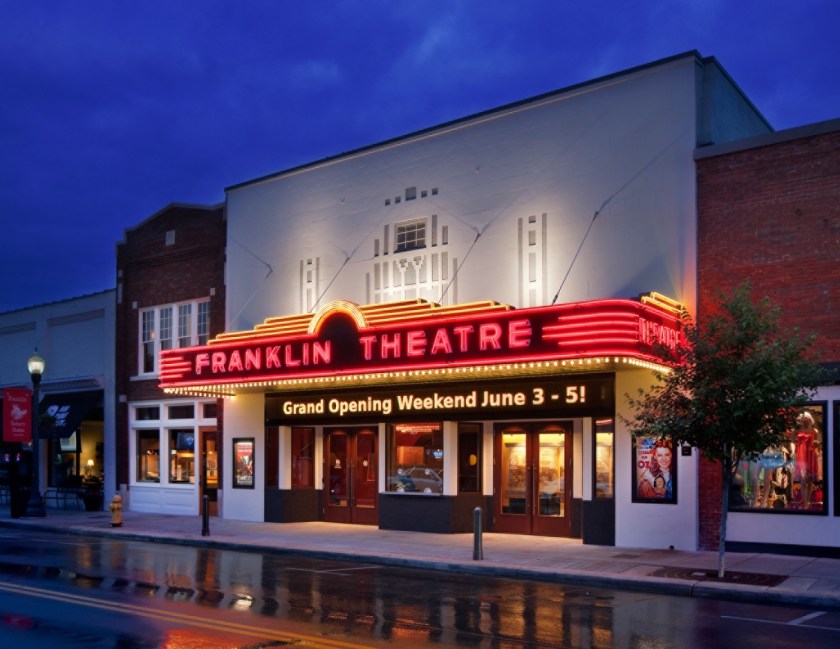
My grandmother believed that idle hands were the devil’s workshop, and I’ll never forget the times she told me, “Make yourself useful as well as ornamental!” My father, having heard those same words, got his first job when he was still a teenager. Franklin, Tennessee—my parents’ hometown—has a lively Main Street, and that is where he went to work—selling tickets, making popcorn, and serving as the back‐up projectionist at the Franklin Theatre. I’ve heard stories of that theatre all my life. My parents went there on dates. And I saw films there in the 1960s, though the area was slowly deteriorating with the arrival of the malls.
Fortunately, a dedicated group of people loved downtown Franklin and led a Main Street comeback. This Great American Main Street award–winning community is now a cultural and economic engine in Middle Tennessee, and my father’s beloved Franklin Theatre is part of that renaissance. New music stars and current films play in the same space where his generation went to dream about a brighter future during the darkest days of the Depression.
Before he passed away two years ago, my father was able to attend the re‐lighting of the marquee and to see the restored theatre. We “bought a seat” in his honor, so that Tom Brown’s name—a name from the theatre’s past—would be connected to its future.
Individual and collective memories, connecting over a continuum of time to create community and national identity, are at the heart of why we save old places—why old places matter.
As I look to the future of preservation, two key points from my family’s story stand out to me. First, relevance is more important than ever. The Franklin Theatre remains a place where entertainment, music, and stories bind us together in the 21st century, just as it was during the Great Depression and WWII.
Second, for a movement that many assume is resistant to change, the way we save places keeps changing—and that’s a good thing. The Main Street program began as a push against both modern mall development and traditional preservation practice. Main Street buildings like the Franklin Theatre weren’t the crown jewels of American architecture—but they were places that mattered to local communities for reasons that went well beyond their architectural style.
The National Trust conceived and nurtured the Main Street movement and supported the adaptive reuse of buildings for changing needs. We initially pushed for Historic Rehabilitation Tax Credits and then, just last year, led the charge to save those credits. So much of what led to the renaissance of downtown Franklin came from the work of the Trust. We are well positioned to lead future change, but we must understand how and why change is important. Saving the past has a past—and that history is worth knowing as we look to the future.
A Look at Relevance
Former New York Times architectural critic Herbert Muschamp said that “the essential feature of a landmark is not its design, but the place it holds in a city’s memory.”
The A.G. Gaston Motel was described in 1955 as the “most lavish Negro owned hotel in the nation,” but this Birmingham, Alabama, landmark was abandoned and decaying just five decades later. Built by the state’s first African American millionaire, it became the epicenter for those campaigning to break the back of segregation in 1963. The infamous bombing and murder of four young black girls at the 16th Street Baptist Church occurred one block away.
Volunteers leading the March for the Birmingham Civil Rights National Monument (Credit: Mark Sandlin)
Well-coordinated National Trust advocacy, public affairs, and legal efforts led the city to donate a portion of the motel to the Trust in 2016. We immediately transferred it to the National Park Service, which enabled President Barack Obama to create the Birmingham Civil Rights National Monument.
This is clearly a place of memory and relevance.
Over my time in the field, I’ve seen that when many people think about historic preservation, they think only of “great architecture” or places “preserved in amber.” Unfortunately, they often don’t connect the work of saving places with helping people express meaning for the present and hope for the future. Why is that? Well, we haven’t always connected places to the lives of real people. Perhaps our tools, like the National Register of Historic Places, push us to see our cultural heritage as something rare and unique to be carefully preserved, as opposed to something ubiquitous, ordinary, and everyday to be celebrated.
In preservation, we reference the “period of significance” that is always somewhere in the past. I’ve pushed our staff to answer the question, “What if the period of significance is now?” Why is the A.G. Gaston Motel significant in 2019? President Lincoln’s Cottage, where Lincoln conceived of the Emancipation Proclamation? The President Woodrow Wilson House, another National Trust Historic Site? Why is the National Trust’s headquarters, the Watergate Building, relevant to people today? These questions give our work new relevance.
The benefits of preservation extend across many areas that we would identify as relevant today—environmental sustainability, economic growth, health, and more. But to be relevant, historic preservationists need to get comfortable with the emotional ways most people see their past. Once we can understand how most people perceive and value older places, we can then make our case through their lens, not ours.
Continuing to Change the Way We Save Our Past
Fortunately, we’ve proven ourselves good at change. Forty years ago, preservation was an outsider movement with citizens working against the grain of normal policies, plans, and development practice. Many preservation tools were created as exceptions and Band-Aids, designed to give older buildings, landscapes, and neighborhoods a chance to survive in an otherwise hostile environment. Tens of thousands of citizens across the country rose up to fight the nature and pace of change in their neighborhoods. This instinct to shape the communities we want, instead of accepting what others conceive for us, remains.
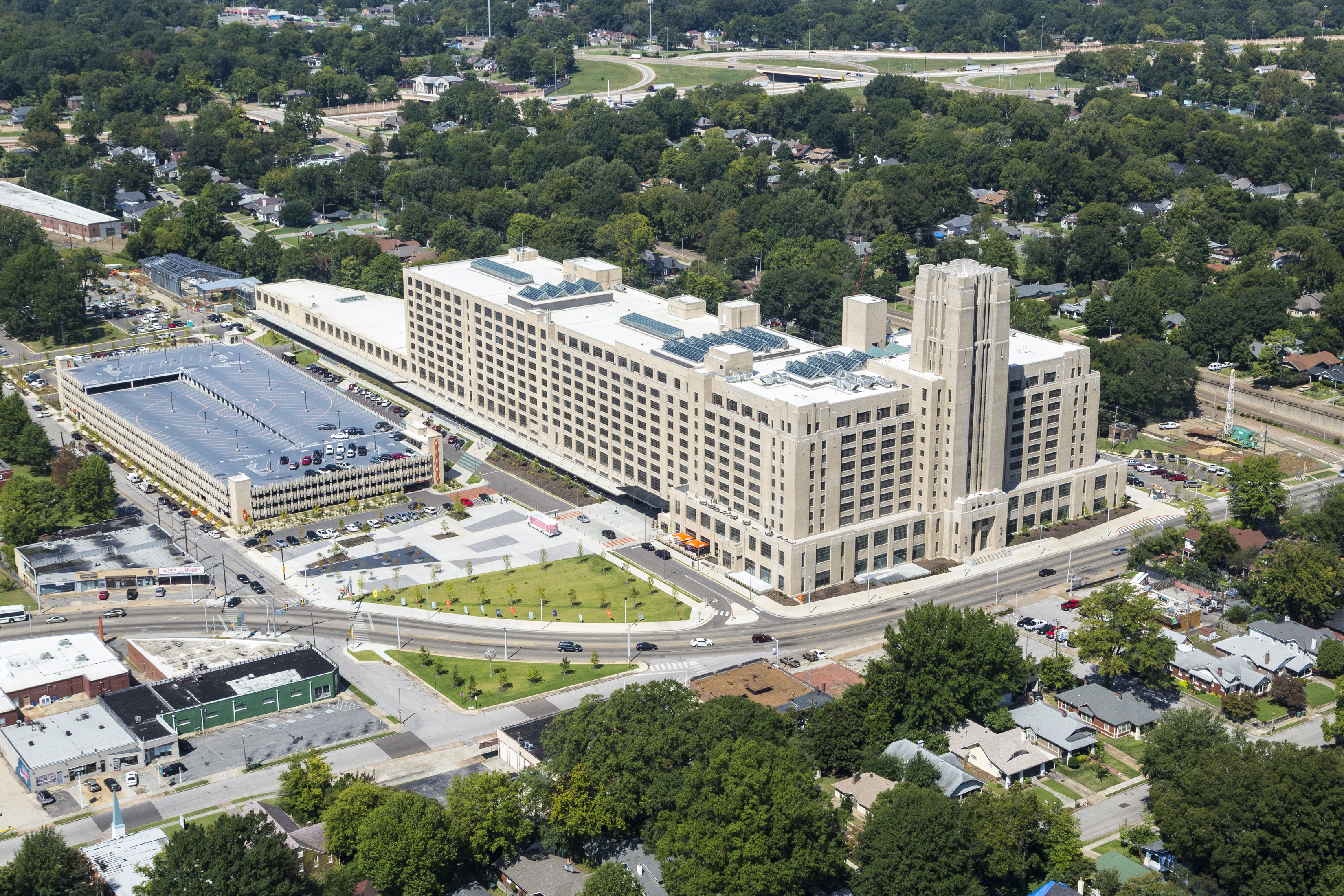
Here’s a powerful example: The residents around Memphis, Tennessee’s Crosstown Concourse recently came together to push for new zoning to preserve their neighborhood’s historic fabric. “Suddenly, the impossible has happened,” one resident said. “So let’s figure out what’s next.” What had seemed impossible? Taking a decaying 1920s former Sears distribution facility three football fields in length—filled with rats, standing water, and wild dogs—and turning it into a thriving, urban vertical village.
Crosstown Concourse (Credit: Aerial Innovations courtesy of Looney Ricks Kiss and Crosstown Concourse)
One of the largest LEED-certified rehabs ever completed, the Crosstown Concourse is almost fully occupied with hundreds of residents, an arts auditorium, school, YMCA, restaurants, and health-care providers. The National Trust Community Investment Corporation was a New Markets Tax Credits investor in this project. This is what preservation can do when the right tools are in place.
Crosstown Concourse Grand Opening (Credit: Crosstown Concourse)
But while America’s cities are now magnets for the young, the challenge for the next 50 years is taking the values and proven benefits of preservation to scale while adapting our tools for today’s environment and issues. In contrast to the amazing success story of the Crosstown Concourse, let me tell you about how America’s only World Heritage City and the birthplace of our constitution—a city rich with architectural landmarks, walkable neighborhoods, and diverse ethnic communities—is currently facing a preservation crisis.
In Philadelphia, demolition rates are climbing while the percentage of buildings protected through landmark designation is far lower than the national average. City leaders turned to the National Trust for help; working with the Mayor’s Task Force, we evaluated Philadelphia’s preservation programs, gathered national best practices, and provided data-driven research. The 2018 Task Force Report is a blueprint for preservation practice in a new urban era—one we look forward to sharing with other cities nationwide. Recommendations for advancing the future of preservation in cities include:
We are far behind in the use of technology, and we must leverage open data and geographic information system (GIS) technology to move beyond survey exclusively focused on architectural attributes and completed by preservation professionals. Let’s find out what people value in their communities and then engage with them in accessible and compelling ways to save it.
We should reconsider our one-size-fits-all classification tools. We need a variety of methods and tools to effectively encourage the preservation of a diversity of buildings.
In a country where more than half of the structures in many communities were built before WWII, but only an average of 5 percent are protected through traditional preservation tools, we need to consider alternatives to historic district zoning. Conservation and sustainability districts are not “preservation lite”—they are preservation for the future.
The change from working against to working with marginalized communities in retaining their community structures—both social and spatial—is among the central challenges for preservation today.
Finally, we need to conceptualize cultural and environmental conservation as the same thing, but along a continuum. Our ReUrbanism principles note that historic preservation is an environmentally conscious activity, but our work should also be about the conservation of landscapes, including their living components and ecological systems. That puts preservation in the mix of the efforts to address the impacts of climate change.
Pushing the Envelope for Change
Over my two decades, the National Trust—together with a variety of partners—has saved some of the country’s most important places, connecting past to present to future. The Trust also has a record of pushing the envelope for change.
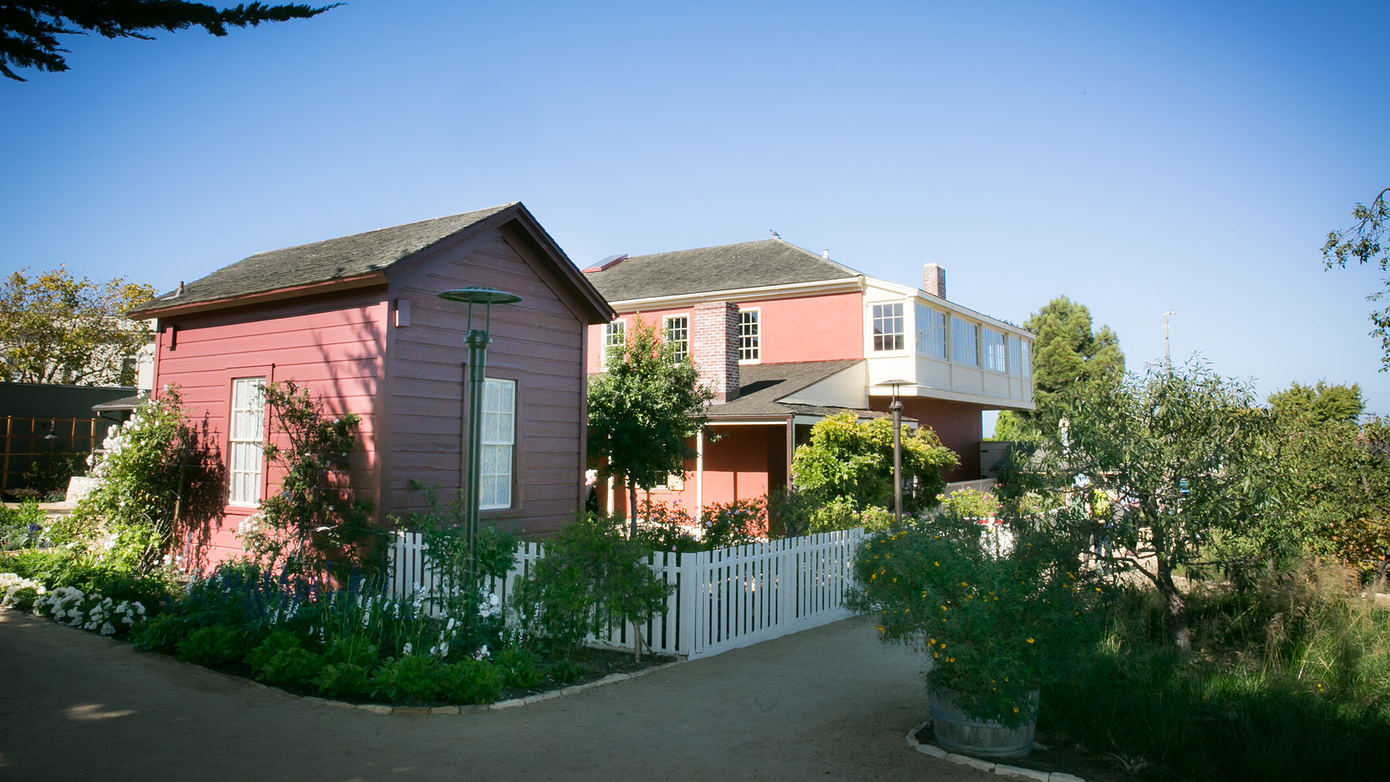
Cooper-Molera Gardens in Monterey, California (Credit: Mike Danen)
With a long history of fighting development that threatens historic properties, why would we partner with a shopping center developer to radically re-imagine a shuttered historic site? Because saving Cooper-Molera Adobe—a National Trust Historic Site that has been a locus of community and commerce in Monterey for longer than California has been a part of the United States—required new perspectives.
Alta Bakery at Cooper-Molera Adobe (Credit: Photo Courtesy of National Trust for Historic Preservation)
Today, a sign on the entrance advises visitors that “this is not your usual house museum.” At Cooper-Molera, they choose their own path through bilingual exhibits that mix historic collections with contemporary art. It is truly an astounding transformation, and—just as it did five decades ago at Drayton Hall—our work at Cooper-Molera gives other historic sites permission to try new approaches. The National Trust has been at the forefront of the effort to transform preservation through the years. Belief in, and support for, staff who are eager to test new models is necessary to stay there.
My colleagues and I have worked to share and celebrate stories from our nation’s past that opened new understandings of its history and of why we are who we are today. Together we have made the National Trust a leader in the fight to ensure that old places are part of our individual and collective memories, connecting over a continuum of time to create community and national identity. Together we have shown that there is a future for our past.
I look forward to what’s next. Thank you.
I want to extend my appreciation for the work and writings of former National Trust colleagues Tom Mayes, acting chief legal officer and general counsel, and James Lindberg, vice president of the Research and Policy Lab—as well as Jeremy C. Wells, Ph.D., assistant professor in the historic preservation program at the University of Maryland and chair of the Environmental Design Research Association.
Image: Restored Franklin Theatre (Credit: The Heritage Society of Franklin & Williamson County)
David J. Brown (hence the DJB) has been sharing stories and observations at More to Come since 2008. Originally created to capture photos and memories from a family vacation to the west, he continued writing as a way to send thoughts to friends, family, and others who may share the same passions. David’s mother was a prolific letter writer, sending long hand-written letters on a weekly basis to family members who lived away from home. He not only has acquired that gene but has cultivated and refined it for 21st century technology.
Fun fact #1: David said goodbye to Facebook in 2013 and has never been on Twitter, so except for LinkedIn which is used primarily for business-related posts, More to Come is his social media presence.
David is now retired and he uses More to Come to share encounters, discoveries, and observations made while traveling at the speed of life. With a professional background and personal passion in historic preservation, David writes to place today’s events in a historical context, highlight places that matter, and explore opportunities for learning through heritage travel. David’s mother and father were both prolific readers and his mother was also a librarian and talented amateur musician. Channeling his parents, David provides recommendations regarding books that have captured his attention and his regular Saturday Soundtrack feature explores roots music and musicians he enjoys.
David currently lives in the Washington region, and More to Come has a section for family items — where he writes about how he would be clueless without his wife of four decades, brags on their (now adult) twins, and shares stories of his parents and siblings. One of his life-long passions has been baseball (Go Nats!) so readers will find some sports-themed posts.
Several years ago David began writing a Monday email to work colleagues about things that were on his mind. This discipline continues in a regular Monday Musings feature. When he retired from full-time work after a forty-year career, David took a gap year and added a section on “what’s next” to think about the future.
There are also a significant number of topics covered under the “Random DJB Thoughts” menu item, including posts where he reflects on the lives of people who have touched his life. The quirky “Observations From…” category began as short notes from the road, but in reality can cover just about anything.
Professionally, David has a four-decade record of growing and strengthening organizations at local, state, and national levels. Throughout his career, David’s passion has revolved around connecting people in thriving, sustainable, and vibrant communities. His professional writings have been included in collections as diverse as:
While at Historic Staunton Foundation, he also served as the editor of Staunton, Virginia: A Pictorial History(1985). In addition to these books and articles, David has been quoted in and/or published op-eds in The New York Times, The Washington Post, The Richmond Times-Dispatch, The Nashville Tennessean, and other newspapers around the country.
You can learn more about David’s professional life through the Bearden Brown LLC website. He also serves as an educational expert for National Trust Tours. Check them out and come travel with us!
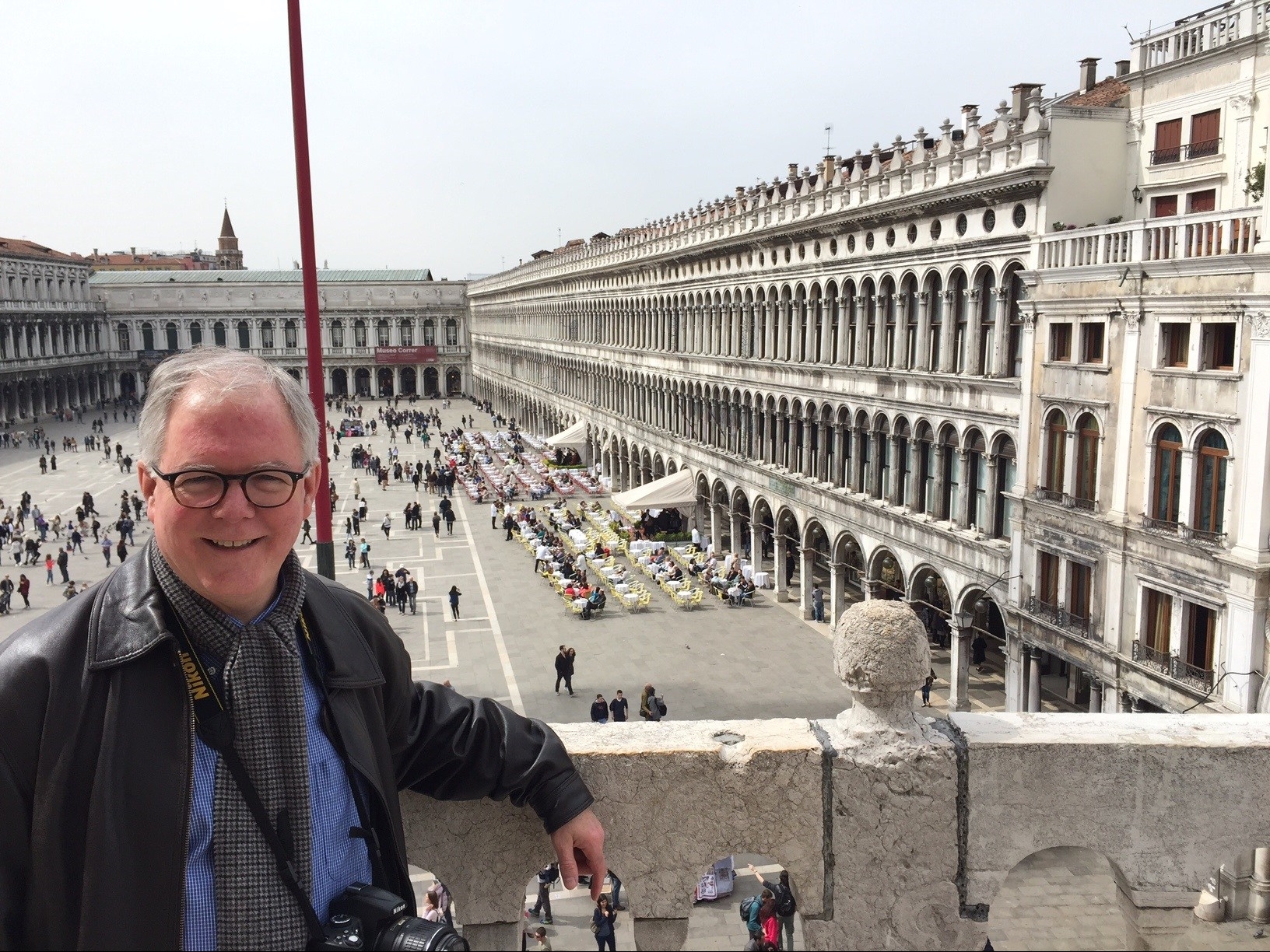
DJB in Venice (photo by Andrew Bearden Brown)
Fun Fact #3: David’s disclaimer for the politics-related posts: While I have voted for Republicans in the past (e.g., Howard Baker was one of the first votes I cast for a U.S. Senator), I’m a lifelong registered Democrat who, following in the footsteps of my late father, has become increasingly progressive as I get older. I agree with President Biden that “the government isn’t some foreign force in a distant capital. No, it’s us, all of us, we the people.” As such, government should work to better the lives of all the people, not just those with access to wealth and power. I believe we need to stop the war ON government and begin to fight FOR government. I won’t apologize for the fact that I have called out the authoritarianism of one of our political parties, the Republicans, in these pieces. Their leaders have made their goals abundantly clear. If any of that makes you uncomfortable, then I encourage you to skip these posts.
Everyone should have the right to vote
This personal newsletter covers a broad range of random topics, so other things have and will crop up. I love to hear from readers, so please feel free to respond to these posts and they’ll be posted, unless you are a troll. However, as a former colleague of mine says, if you want to disagree strongly, get your own newsletter!
As he often reminds his readers, keep some room in your heart for the unimaginable. Take time to dawdle and dream. Let yourself be bewildered!
Life is finite . . . love is not.
Try to be nice. Always be kind.
Thanks for reading.
More to come…
DJB
Image of DJB at Leon’s World Famous Custard in Milwaukee by Genell Scheurell.
Vision. Skill. Time. All are usually required to produce something of lasting value. All are at the heart of craftsmanship.
Traditionally linked to items made by hand, craftsmanship can be applied to a wider array of undertakings that benefit from an attention to detail through the application of a skill sharpened over time and practice.
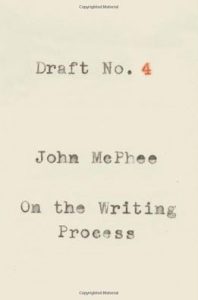
“Draft No. 4: On the Writing Process” by John McPhee
Take writing, for instance.
For several years I’ve considered how best to refine my writing skills. However, other commitments became excuses for never taking serious steps forward to actually hone that craft until a former colleague recently noted that my passion has always been best expressed in my writing. It is where I seek to tell a story or share a memory in hopes of inspiring and making a meaningful connection to colleagues and friends. One of my favorite sayings is “Let’s see how it writes.” This same colleague suggested that I may have been the best first draft writer in the organization.
I knew exactly what she meant, and it was that particular comment that led me to pick up John McPhee’s 2017 book Draft No. 4: On the Writing Process. I wanted to consider getting from a good first draft to a great fourth draft. As a long-time staff writer at the New Yorker, McPhee has some definite thoughts on how to move in that direction. Writing to his daughter, McPhee once explained that, “The way to do a piece of writing is three or four times over, never once.” Three or four revisions are not always possible in a work context with tight deadlines, but I agree with his premise that the essence of the writing process—the heart of the writing craft—is reflection and revision.
In Draft No. 4, McPhee takes the reader on a delightful and well-considered journey from ways to structure a piece of writing to an ending chapter on omissions. That last feature is just as important as the first. A mantra McPhee continues to use with his writing students is,
“A Thousand Details Add Up to One Impression.”
He notes that this is a quote from the actor Cary Grant, with the implication that “few (if any) details are individually essential, while the details collectively are absolutely essential.”
What to keep and what gets taken out are equally important. As the sculptor Michelangelo said, “I’m just taking away what doesn’t belong there.”
In the business context, I have been known to say, “Don’t let the perfect be the enemy of the good.” However, when working on your craft—be it a stone carving, your speaking skills, a handmade musical instrument, a painting, or a piece of writing—don’t let the merely good keep you from sharpening, refining, and honing the thing until you have created something worthy of the term craftsmanship.
Have a good week.
More to come…
DJB
Image: Writer’s Block (photo credit: Center for Documentary Studies)
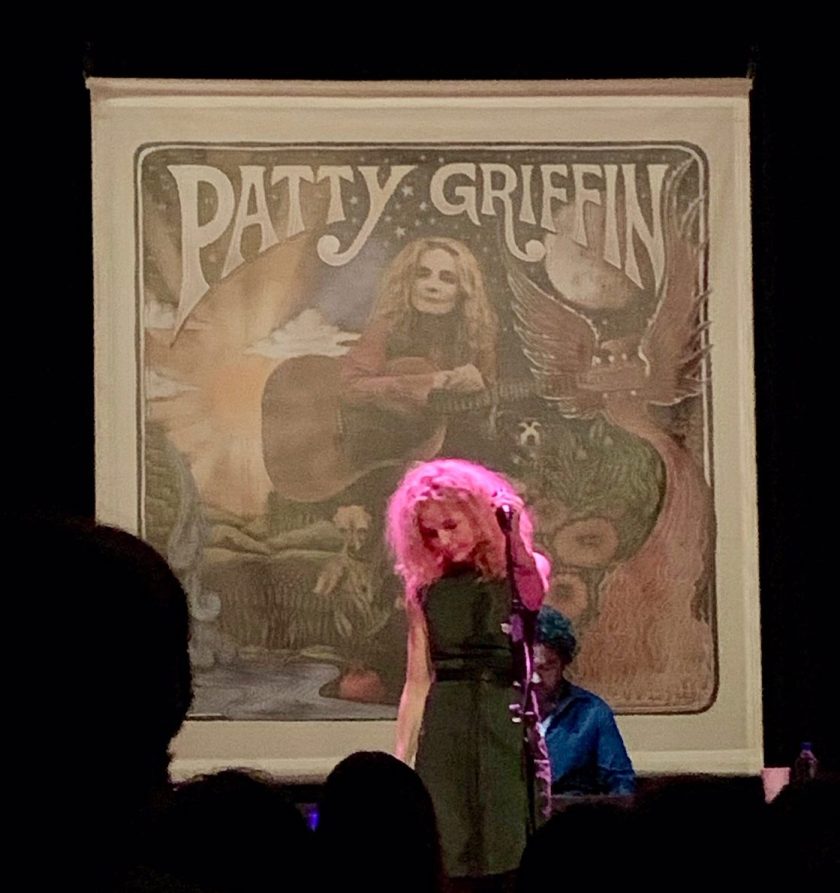
Last Wednesday, singer-songwriter Patty Griffin performed to a large and appreciative audience at Washington’s 9:30 Club. Featuring songs from her recent self-titled album, Griffin showcased her significant songwriting chops and wide-ranging musical interests from rock to Latin romanticism to gospel to beautiful acoustic folk. It was my first time to see Griffin live, but not the first time I was smitten with her work.
You’ve no doubt heard the motivational quote, “Today is the first day of the rest of your life.” Frankly, it has always struck me as excessively sentimental, or—to use my preferred description—sappy.
To help in that process, I turned to John Kaag’s recent book, Hiking With Nietzsche: On Becoming Who You Are. I’ll be honest: I know nothing about philosophy, but was simply taken by the book’s title and jacket blurbs. We buy books for all different reasons, I suppose, and I’m glad I picked this one up a few weeks ago. Kaag, a professor of philosophy at the University of Massachusetts Lowell, writes about two journeys he took to Piz Corvatsch, the Swiss mountain so important to the writing and life of the nineteenth-century German philosopher Friedrich Nietzsche. The author’s first journey to Corvatsch was when he was a youthful nineteen-year-old. The more recent one came at age 36, with wife and young daughter in tow. Both were real and philosophical in nature.
“Journey” is the appropriate word choice here, if we think of a journey as active movement where we encounter slips and falls along the way; where we find that sometimes the only way is the long one. Kaag writes:
“As it turns out, to ‘become who you are’ is not about finding a ‘who’ you have always been looking for. It is not about separating ‘you’ off from everything else. And it is not about existing as you truly ‘are’ for all time. The self does not lie passively in wait for us to discover it. Selfhood is made in the active, ongoing process, in the German verb werden, ‘to become.’ The enduring nature of being human is to turn into something else, which should not be confused with going somewhere else. This may come as a great disappointment to one who goes in search of the self. What one is, essentially, is this active transformation, nothing more, nothing less.”
Kaag chronicles how his approach to Nietzsche’s philosophy changes over time. He recognizes that some call that philosophy juvenile, but Kaag argues that there are lessons in Nietzsche lost on the young who don’t understand the ease with which we can be lulled into being satisfied with mediocrity or how “difficult it would be to stay alert to life.” Kaag suggests that he aligns with Nietzsche’s thought that transformation into becoming who we are requires that we physically rise, stretch, and set off. It is a world view about “aims once more permitted and sought after.”
More to come as the journey continues
I’ve committed to keep days free on my calendar in order to take this time of new-found unemployment to stretch, to set off, to sometimes fall backward, but always to “lean one’s present self into something unattained, attainable, yet out of view” where even “slipping can be instructive.” It isn’t what is at the top that’s important, it is about what is discovered and how we are transformed along the way.
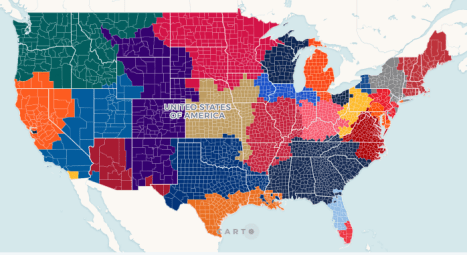
Do you have any idea what information is being conveyed? (Hint: Think about the time of year).
If you suspect you have the answer, click here to see if you are right.
This map came to me from a colleague from the National Trust, and I think I was stumped because this wasn’t what I would call “within his area of expertise” (or interest).
If you are still reading and haven’t clicked through to the website, it maps where Major League Baseball fans live in the United States, by county. Now that you know the answer, click through to the article above and learn some other fun facts, such as which MLB team’s fans live in the most counties and the most out-of-state counties, the largest land mass covered by a fan base, and the state with the most number of teams. (That last one is Pennsylvania.)
“Though it is home to only two teams, no state is the site of fiercer competition than Pennsylvania, which has its allegiance split across seven different teams. The Philadelphia Phillies and Pittsburgh Pirates hold 26 Pennsylvania counties apiece, with strongholds on their respective sides of the state (Phillies to the east, Pirates to the west). The Orioles, Indians, Yankees, Blue Jays, and Nationals split the remainder of the state.”
Opening Day is past but we are still within the window of what the MLB Network calls “Opening Week!”
NOTE: The following is adapted from a message I wrote to my colleagues at the National Trust for Historic Preservation on the Monday of my last week as the EVP and Chief Preservation Officer with the organization.
In a typical three-point sermon from the Baptist church of my youth, the preachers would: 1) tell you what they were going to say (the introduction); 2) then say it (the sermon); then 3) tell you what they had just said (the conclusion). To keep up the symmetry, the sermons themselves often had three points. The last of my Monday morning emails will be my personal three-point sermon.
The Introduction
I’m going to expand my audience beyond the Preservation Division and write to the full Trust staff along with a number of friends outside the organization. In doing so, I’ll use the first part to explain a bit about these Monday emails. Second, I want to say a few words about what the past twenty-two-plus-years at the National Trust have meant to me, both professionally and personally. Finally, I’ll end with information about how we can stay in touch after Wednesday, my last day in the office.
The Bears Ears National Monument in Southeast Utah
Point 1: So What Is the Purpose of These Monday Emails?
As I returned from sabbatical at the American Academy in Rome in 2016, I began sending an email every Monday morning to the staff in the Preservation Division as a way to connect personally with these 200+ individuals located all across the country. The topic was not always preservation. In fact, it seldom was. Instead, I used this forum to mull over conversations I’d had with colleagues and friends, comment on things that were on my mind, reflect on events in the broader world, share stories from my experience in leading teams and organizations, and provide recommendations from my reading list. I often said that I wrote about things that I needed to hear.
Over time, these Monday emails were passed around and people asked to be added to the distribution list. Now about a quarter of those who receive them are outside the Preservation Division and the National Trust. I began repurposing these emails on my personal blog site under the category of Monday Musings. If you want to go back and read several of the top ones in terms of views, here they are:
Let’s Start It Up and See Why It Doesn’t Work – A story from historian and NTHP Honorary Trustee David McCullough on the ways that failure can lead to the unpacking of assumptions, new perspectives, the acquisition of knowledge, and new paths to success.
Hope Is Grounded in Memory – This little meditation, written on the occasion of my 20th anniversary at the Trust, revolves around the idea of hope in the context of life’s milestones.
Complicity in a Shared Work of the Imagination– I wrote this post after launching the National Treasure campaign at Clayborn Temple in Memphis, the church where the Rev. Dr. Martin Luther King, Jr., spoke to the striking sanitation workers.
Be Present When Serendipity Strikes – I received wonderful (and often humorous) feedback from this story about the time I (finally) woke up on a flight home from Nashville, only to realize I was sitting next to Muriel Anderson, one of my guitar heroes.
Kindness– This is a post I wrote in January about the response I received after announcing I was stepping down from my position at the National Trust.
If you are simply interested in finally figuring out how my mind works, the best place to look is the 60 Lessons From 60 Years post that I wrote on the occasion of my 60th birthday a few years ago.
Seersucker Day at the National Trust
Point 2: These Past 22+ Years
I became a member of the National Trust in 1975, and working for the nation’s largest preservation nonprofit was a long-held dream. It has been the privilege of my professional life to help the National Trust do its vital work over the past 22 years, working alongside and learning from so many of you. I won’t name any names because I will inadvertently leave out someone who is very important to me. But I will say that together—and with partners and others outside the Trust—we saved some of the country’s most important places that continue to link past, present and future generations together—or as the poet Remo Fasani phrased this—having “the past live in the present and in the future both, to have time again vibrate as one.”
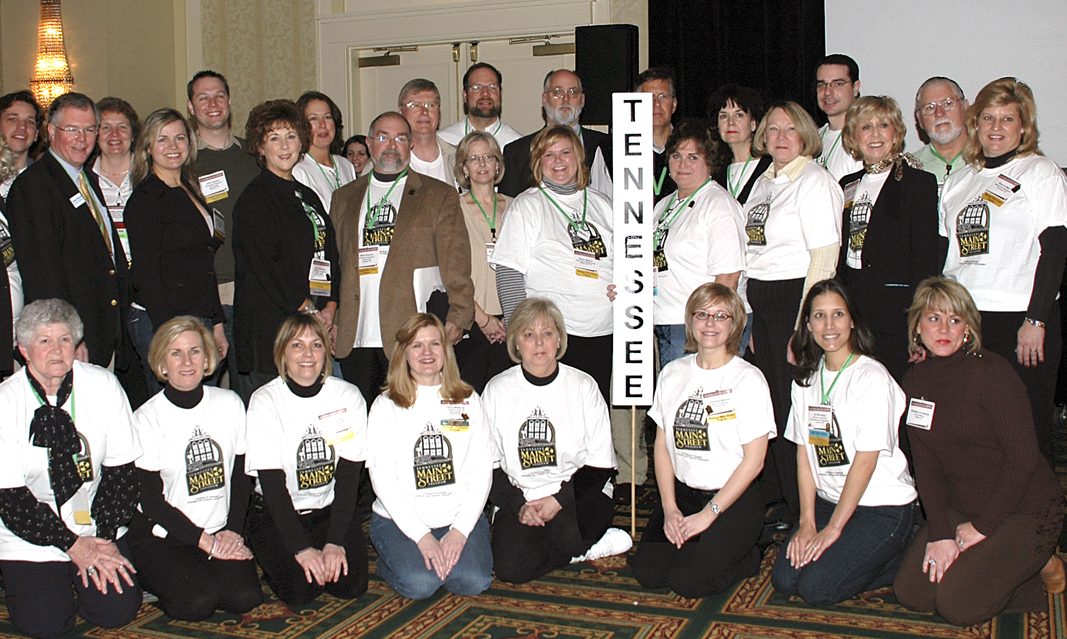
With the Tennessee Contingent at the 2008 National Main Streets Conference. I’m the only one wearing a tie!
Together we shared and celebrated stories from America’s past that opened up new understandings of the nation’s history and why we are the people we are today. Together we have worked to make the Trust a leader in the fight to ensure that old places are part of our individual and collective memories, connecting over a continuum of time, to create community and national identity. Together we have shown that there is a future for our past.
Interview with Hawaii Public Radio on Saving the Natatorium
I have also shared personal milestones and events with many of you over the years, including a great send-off party earlier this month. In a 1994 commencement address at Vassar College, Bernadine Healy, M.D. said the following;
“As a physician who has been deeply privileged to share the most profound moments of people’s lives, including their final moments, let me tell you a secret. People facing death don’t think about what degrees they have earned, what positions they have held, or how much wealth they have accumulated. At the end, what really matters is who you loved and who loved you. The circle of love is everything and is a good measure of a past life. It is the gift of greatest worth.”
Saving Music Row (Photo Credit: Rick Smith)
Point 3: Not Goodbye, But So Long
I don’t plan to retire, but I do plan to take some time to travel, reflect, and figure out what’s next. Am I finally getting a gap year forty years after graduating from college, or having an encore career? Who knows? One of our trustees recently stepped down from a high-profile position. Building on that experience, she told me, “Don’t be afraid of some blank days or weeks (on your calendar). It’s where the good things begin to happen.” That sounds like good advice.
Here is one final story of mine from 2014 that is about children, but is—in reality—about life:
“I was in the line at the pharmacy this morning, waiting to drop off a prescription. A mom with a set of boy-girl twins was in front of me, with the children in their two-seater stroller. (The heavy equipment phase of child-rearing, as we used to describe it.) The kids were beautiful, and they were having the most wonderful conversation about shoes. The mom was so patient and kind. It was a joy to simply stand there and watch the love. After passing along their prescription, the mom gathered her things to leave. I asked about the twins age. She replied that they were two-and-a-half. I smiled, and said I had 21-year old boy-girl twins, and this brought back many memories. The mom asked if I had any advice. I replied simply, ‘Savor every moment.’”
Last Friday, my colleagues at work hosted a wonderful send-off party. There was a “B” theme to evening, as we had barbecue (Rocklands, my local favorite); bourbon (with gifts of several very nice bottles of whiskey over the course of the week); and bluegrass (the latter supplied live by the By-and-By Band). The band was even kind enough to let me sit in with them on a spirited rendition of Sitting On Top of the World!
Friends, former and current colleagues, and partners came in from as far away as Los Angeles to celebrate. I used the occasion to say a few words (no surprise there), beginning with the observation that I was finding that almost anything that was said in the office brought to mind something that happened 10, 20, or 30 years ago—what I’ve dubbed the Old War Stories part of my transition.
Playing Bluegrass with the By-and-By Band. DJB is the guy in the middle trying to hang with this talented group of musicians!
I knew everyone would be thankful if I kept it short, so I brought notes. On the occasion of my 60th birthday, I composed a post entitled 60 Lessons From 60 Years and I used the send off to call out five of them.
Lesson #2: The graveyard is full of folks who thought the world couldn’t get along without them. This lesson is always a good reminder that no one is indispensable, so while I appreciated the many nice accolades that came that day, I pulled this one out in order not to get too big for my britches.
Lesson #8: I will cry at the movies, so I need to bring a handkerchief. It was an emotional day and I brought along a handkerchief, just in case. However, I used it more to wipe the sweat from my brow than for wiping tears from my eyes. It was an unseasonably warm late winter day in Washington.
Lesson#10. All things considered, I’d rather live in a community full of old buildings. I have lived in five Main Street communities during my life – including two that won our Great American Main Street Award at the National Trust. Somehow, old buildings and walkable communities are in my bloodstream. I joined the National Trust in 1975 and attended my first Trust conference in Philadelphia in 1976. As a young professional, I carried my back issues of the Trust’s newspaper from the 1970s and 1980s — Preservation News — through 3 moves. Suffice it to say that it has been the privilege of my professional life to help the National Trust do its vital work over the past 22 years.
Lesson #59: A few years ago I became intentional about saying “thank you” to someone every day. It is one of the smartest things I ever did. I thought about so many people I could thank, but that would take much too long if I were to touch on all the people who have touched and supported me. So I simply want to thank my Executive Assistants—the individuals who live with me during the work day and do so much behind the scenes to make me look good. In many ways, these individuals taught me a great deal about how to be a good boss:
Kaye Garris—My first assistant when I moved to Charleston to be the director of the Southern Regional Office. Kaye was the voice of the talented, young Southern staff (when we were all much, much younger).
Liz Welsh McGonagle—The first assistant at the Trust that I hired. Liz, a wonderfully kind and friendly Minnesotan, set the standard for the type of “public face” I wanted my EAs to have with other staff and the broader public. I went to see the Minnesota Twins at Target Field with Liz and her husband Dave and my daughter Claire on our cross-country trip back in 2014.
Susan Neumann—Susan helped me set up the Executive Office as Chief of Staff and died much too young.
Erin Dowling—When I was managing the capital campaign at the National Trust, Erin was my EA on the development side. She now works in the real estate business in Colorado, where I see her on occasion.
Amelia Sams Whittington—Amelia could write in my voice better than I could, so she quickly took on composing letters, notes, and even speeches for me. She works in development for a theatre troupe while her husband continues his life’s work as a chef in New Orleans.
Leigh Ivey—While only with me for a short while, due to a death in her family, Leigh was the first EA I had to make me feel old. Her mother went to our high school—with my younger sister!
Kelly Schindler—With an interest in museums and historic sites, Kelly worked as my EA until a better opening / opportunity came up in our historic sites department, where she continues her admirable work today.
Lisa Thompson—Lisa had worked as a Main Street Manager and for a local preservation non-profit, so when she came to work as my EA I knew I wouldn’t have her for long. Sure enough, she left in 2018 to be the National Register Coordinator for the Kentucky State Historic Preservation Office.
Chelsea Lundquist-Wentz—Chelsea is my current EA and combines many of the great traits I like from some of her predecessors. She is, quite simply, a gem.
If you do the math, you can see that I keep assistants for 2-3 years at a time. That’s because I want to hire smart people, help them move along their chosen career path, and support them after they leave. Amelia recognized the pattern and began what is officially called the Chief Preservation Officer (CPO) Operational Guide but what I took to calling The Users Guide to DJB. It is 6-7 pages of single-spaced directions on setting up “the prefect trip,” organizing meetings, writing letters, and the like. The last two pages are a grab bag with the subtitle “Miscellaneous DJB Facts and Preferences,” and I want to share a few of them with you (to see what these individuals have to put up with!
David’s wife’s name is Candice. Everyone spells it Candace, which is incorrect.
David likes to drink unsweetened iced tea at lunch, and bourbon (on the rocks) or red wine at happy hour.
David does not like beets or olives (and Lisa later added “and avocados – except in guacamole”)
David likes honesty.
David dislikes rumors and confidentiality breaches. You are going to hear a lot of confidential information. It will be tempting to spill things you know, even a little bit. Don’t do that. Keep it all to yourself, and you’ll be the most valuable assistant around.
David is on a quest to visit every major league baseball stadium in America. When thinking of trips, make suggestions of those he could visit while on work travel — he’ll love you for it!
Now you know how Liz and I ended up together with our families at Target Field in Minneapolis!
Lesson #60: Savor every moment. It passes faster than you can ever imagine. Enough said.
More to come…
DJB
Image: Several of the nice bourbons and whiskeys from friends and colleagues