What do you get when you ask the public to download a simple sign, find a place that is important to them, photograph themselves in front of that place holding the sign and then download it to the Internet?
More than 2,000 people took the National Trust for Historic Preservation (full disclosure: my employer) up on their offer, and the results are fascinating. When you have some time, go to the site, click on the slide show, and sit back and watch. I guarantee you’ll love it!
And now, the Trust is having a This Place Matters photo contest where you can go online and vote once per day for your favorite This Place Matters photo. The top three photographers win a digital camera. (Full disclosure: I am not eligible.)
You can guess which photo I’m voting for: Miller’s Grocery (shown above) in Christiana, Tennessee. (Full disclosure: I do not know the photographer or the subject.) I just love this picture. Perhaps it is because it comes from my home state (another disclosure). Perhaps I can just see myself sitting on the bench of a Tennessee country store with my dog by my side.
For whatever reason, I’m going online every day and voting for Miller’s Grocery. But you should view all 12 finalists and choose your own favorite. Perhaps you’ll fall for the kids in the Bronx. San Antonio’s old Humble Oil station may grab your heart. Or who knows, you may start crying reading the story of Hugh Smalling’s grave in Macon, Georgia.
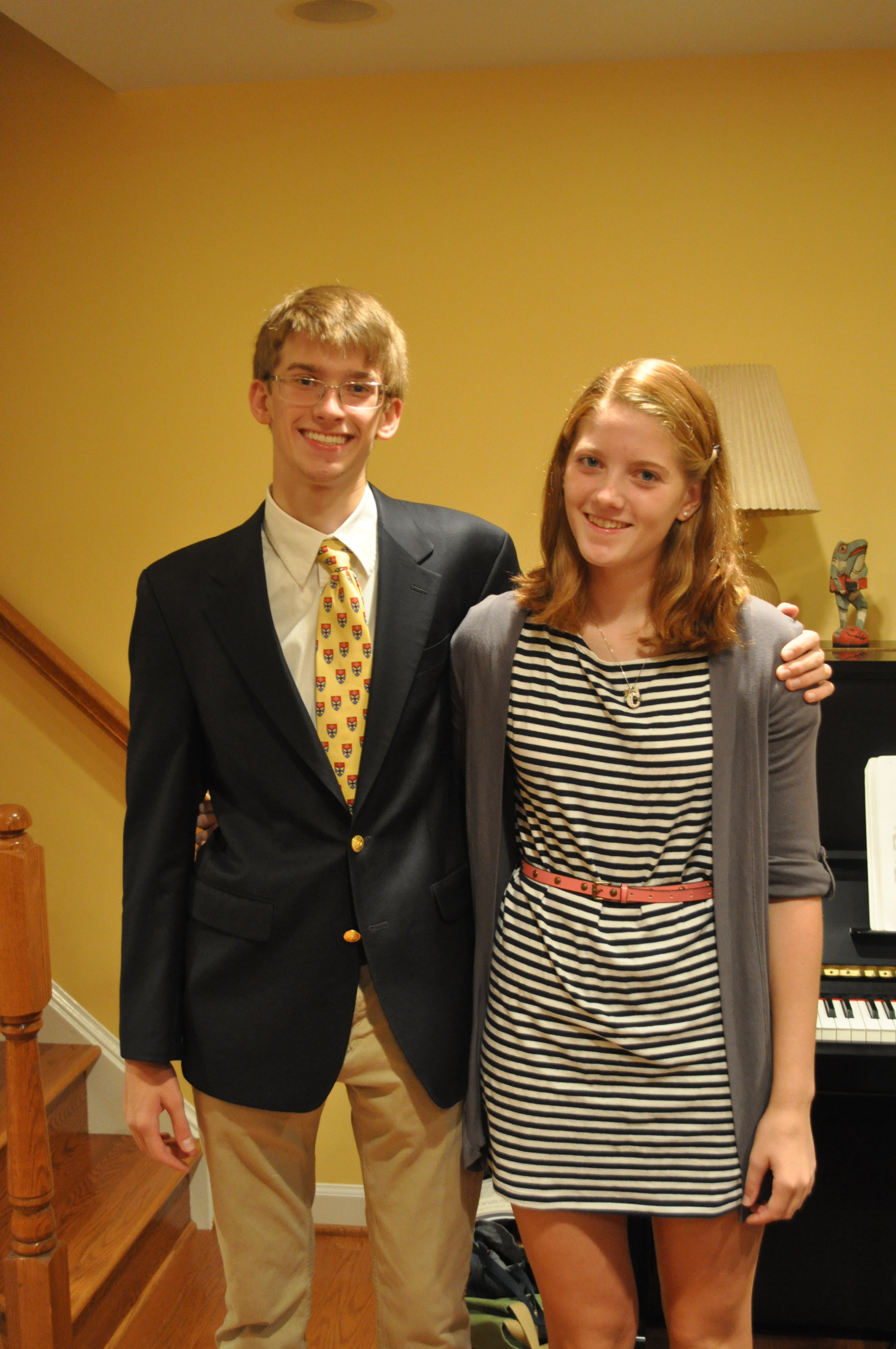
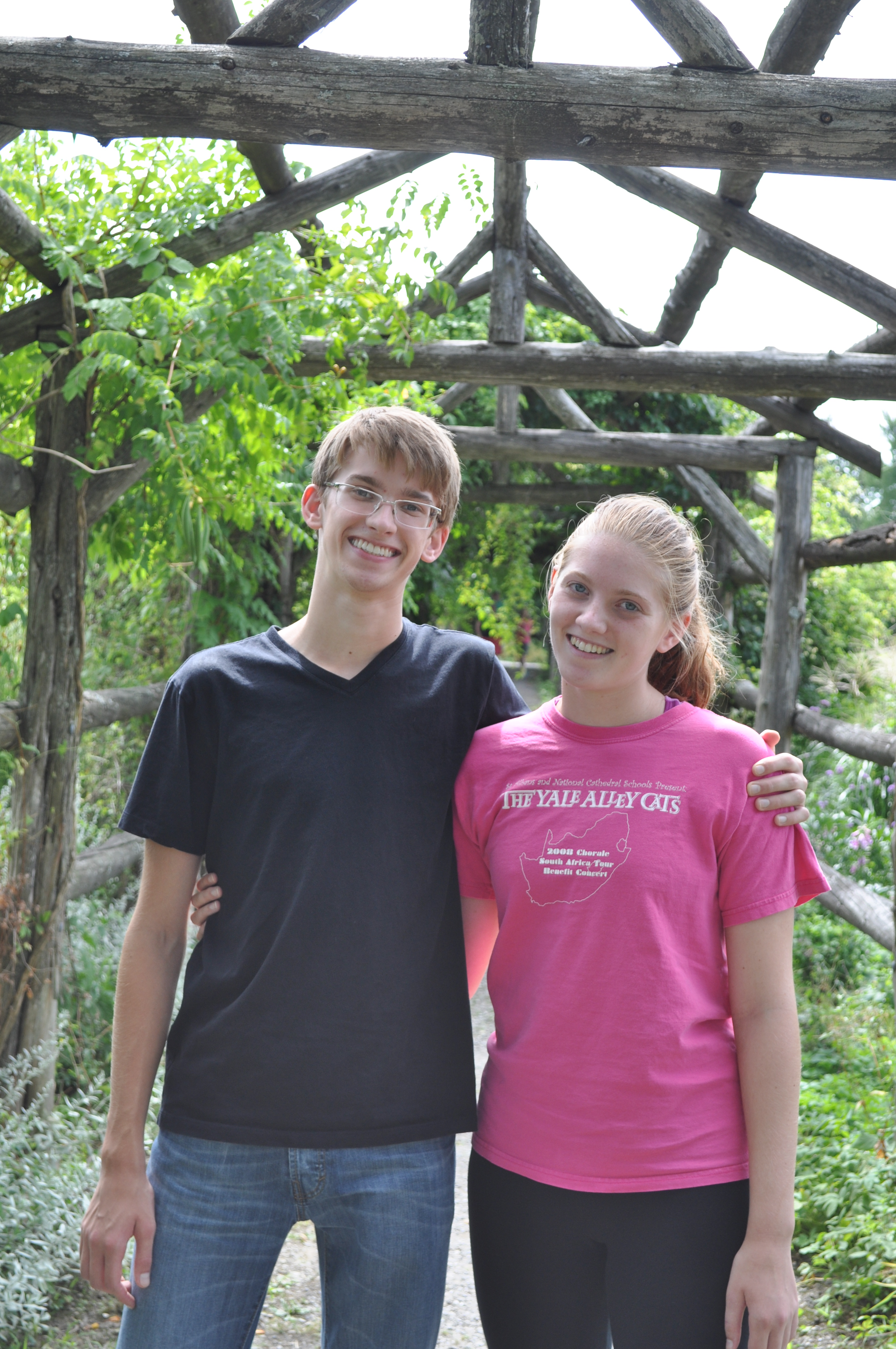
The deadline for the contest is October 9th, but it is never too late to download a This Place Matters sign, find something that has special meaning and upload a photo at www.PreservationNation.org to tell the world about a place that matters to you. (Full disclosure: That’s me to the right in the photo below. It was not chosen as a finalist.)
Last Friday as I boarded my plane in Dublin, I opened the overhead bin and came across a banjo case. A nearby passenger asked if it was mine, and I said, “No, but I was going to ask the same question.” A slight man with a female companion sitting across the aisle identified himself as the owner of the case, which he said held a bouzouki.
Well, my antennae went up and I recalled an article I read on the flight over in the new issue of my favorite magazine, The Fretboard Journal. I dug in my bag, quickly found the article about bouzouki maker Edward Victor Dick and passed it along. It came back as the bouzouki owner pointed to a picture of Tony McManus in another part of the magazine and said, “I know this guy. He’s played on some of my recordings.”
At that my new acquaintances were asked to change seats so I could enjoy having a family with two children under the age of 4 across the aisle for a seven hour flight. (I’ve been there, so I was sympathetic.) On the way out, I stopped to talk with the bouzouki owner and his companion and introduced myself. He stuck out his hand and told me he was Billy Jackson. She introduced herself as Grainne Hambly, and as Billy headed back to claim the instrument, Grainne and I headed to baggage pick-up sharing musical interests and connections. They had been to the Swannanoa Gathering, where my good friend Tom Dews spent a part of his summer, and we discussed the wonderful traditional music to be found in the Asheville and Black Mountain areas of North Carolina.
Cut to the chase. I just met internationally known harper and composer William Jackson and Irish harper Grainne Hambly who were headed to the states for a series of fall concerts. Jackson was a founding member of Ossian and he and Hambly just released a new CD, Music From Ireland and Scotland. They are playing dates in North Carolina, Tennessee, and at the Virginia Harp Center in Richmond, Virginia on October 25th. I encouraged them to push their agent to get a slot on the IMT schedule in DC and Grainne told me that she will play an Irish Christmas in America Concert at the National Geographic in Washington on December 4th with the band Teada. It is now on my schedule! Check their web sites for tour dates, and go hear them if they are in your area.
Regular readers know I love The Fretboard Journal, so I was pleased it played a small part in this serendipitous moment. The fall issue is chock full of great stories. Banjo goddesses Abigail Washburn and Alison Brown talk about five strings, running your own record company, and the feminine approach to banjo playing. A story on the little known Larson brothers – makers of fine guitars that no one’s ever heard of – makes you want to run out and find one of their early 20th century creations. Wilco fans will salivate over the article on the band’s secret hideout. (I know this last fact to be true, as a colleague – and Wilco fanatic – practically tore the magazine from my hands when she saw the cover photo.) The Editor’s Note talks about meeting up with their fans at Merlefest – and I was certainly among that group. My recommendation: get a subscription. They never disappoint.
And for my last “Irish” post of the trip, I’ll provide you with some wonderful Celtic music performed by William Jackson and Grainne Hambly. Enjoy.
We have just completed a wonderful International Conference of National Trusts here in Dublin—the 13th in the history of the National Trust movement. I suspect that when a small group of Anglophiles gathered together in the 1970s in Scotland for what became the first gathering of the world’s National Trusts, they could not have imagined either the spread of their movement or the diversity of people, countries, issues and models that we have seen this week from among the 200+ delegates in attendance.
…and other tidbits of cultural commentary from an American in Ireland.
On our second night in Dublin we were enjoying a wonderful dinner in the historic Tailors Hall headquarters of An Taisce, the National Trust for Ireland. I had the pleasure of sitting between the An Taisce past-president and a board member born in that far-away Irish town of Knoxville, Tennessee. (His wife is Irish and as a software engineer he had the freedom to work from home.) It was a delightful evening filled with laughter from the witty conversation. I was on my best behavior, so I was surprised when all of a sudden my Irish seatmate – a distinguished botanist – turns to me and says, “Why do you hate your knife?”
In typical American fashion, I was using my knife and fork to cut my food then placing the knife on the side of the plate while switching the fork to my right hand to eat. She proceeded to give me a lesson on “eating Irish style” so that the fork stayed in my left hand (and never turned over) while the knife stayed in my right. We laughed some more, and I told her that my daughter Claire ate this way (as did many of her friends). My Tennessee-born seat mate told me that his wife had been working on him to switch for 18 years, to no avail. He did, however, save me further embarrassment (and lessons) by leaning over as I picked up my dessert fork to say, “Europeans eat all desserts with their spoon.” That I could master!
While the food throughout my week was very good (thank you An Taisce), I’m not a fan of the “traditional Irish breakfast,” as was served every day in my hotel. But breakfast did give me the chance to read the Irish Independent newspaper. I love the diversity of the English language, as seen in headlines such as “Dozens left injured by bus and transit smash.” Smash. What a great, descriptive, way to talk about a crash.
The best traditional meal actually came on my last evening with a visit to Gallaghers Boxty House. The boxty – an Irish potato pancake – was filled with lamb and covered with a very tasty sauce. It was a great way to end a wonderful visit.
As part of today’s International Conference of National Trusts, I joined a tour into the countryside to explore a bit of Irish history and see rehabilitation and interpretive efforts at work.
Our host for the conference, An Taisce, the National Trust for Ireland, owns a 1748 canal running through Ireland’s valley of the kings along the River Boyne. The canal is under restoration and we had a chance to meet with the energetic project manager and learn about his work. The lock at the top is where the salt water from the sea meets the fresh water of the river. The picture below is a historical view from the An Taisce web site of the canal in operation.
This important part of the Irish attempt to capitalize on the Industrial Revolution was only one of the sites we visited. I mentioned earlier in the week about seeing the silver at Christ Church Cathedral donated by King William in honor of his victory in Ireland that solidified his hold on the English throne. Today, we visited the battlefield where that victory was won: The Battle of the Boyne. It was here in 1690 that protestant King William of Orange defeated the army of the Catholic King James II. There’s a recently opened visitors and interpretive center which we toured with a guide from the site. As An Taisce put it in the conference materials, “the outcome of this battle has been the source of much bitterness historically and the correct interpretation of the site has been integral to the Irish Peace Process.” The closing line of the center’s interpretive film put it a little more directly: Issues arose in the battle that “reverberate to today.” The good efforts to focus on how different parts of Ireland view the battle and its outcome were obvious, showing another way historic places resonate even today. You could say that Irish history isn’t even history because it is as fresh as the morning’s news.
I’ve attached a couple of photos from the center and the countryside, which also show an unfortunate highway bridge that dominates the landscape from the critical view in front of the interpretive center.
Every two years the world’s preservation and heritage conservation community comes together for the International Conference of National Trusts, a wonderful gathering of colleagues and friends working together across the globe to protect, enhance and responsibly enjoy our planet’s fragile heritage. To read my full post on the opening of ICNT13, check out the PreservationNation blog on the National Trust web site.
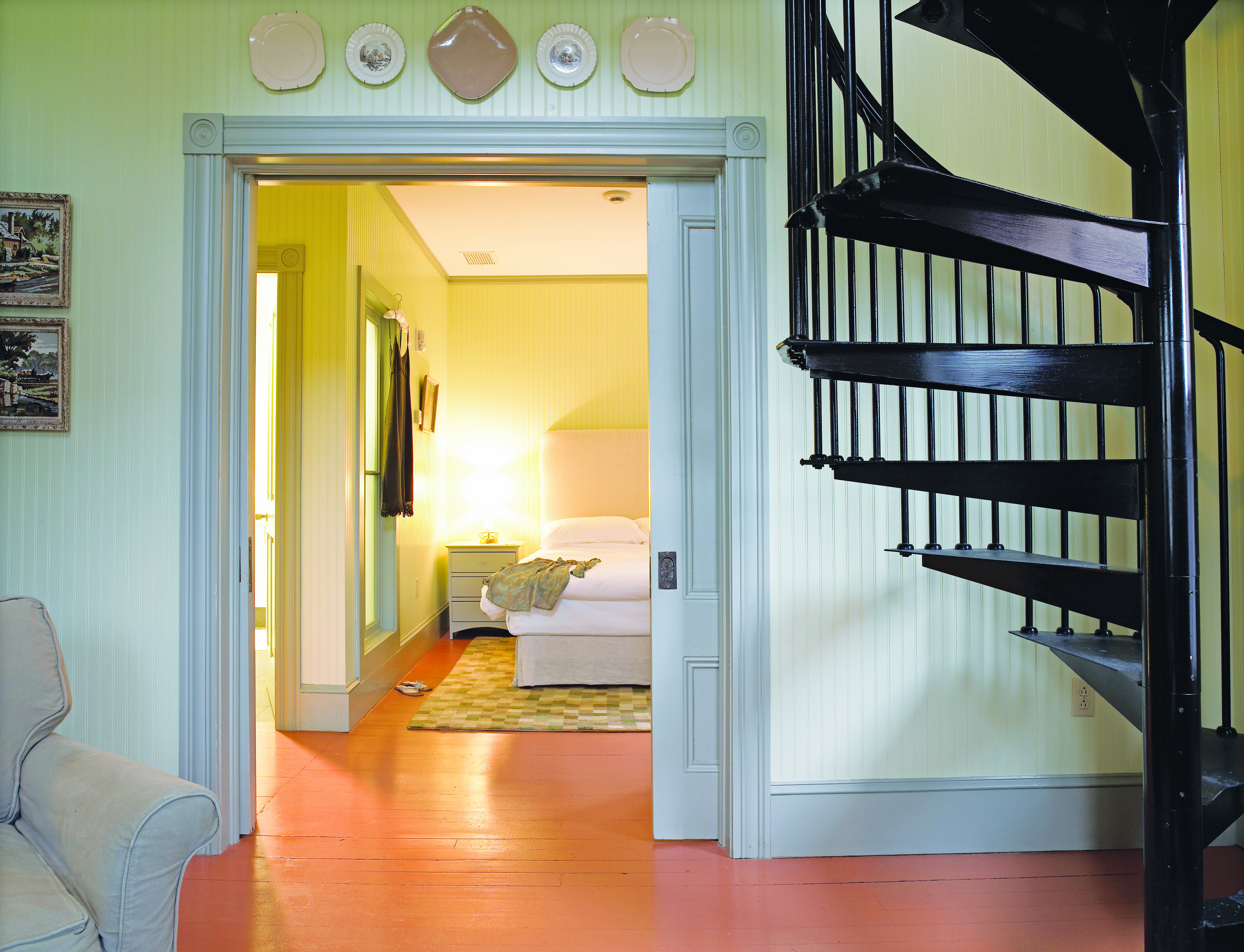
I am blessed with two talented children who teach me so much every day. Claire has an imaginative and artistic eye that she uses to great effect in her photography of buildings and landscapes. Andrew has been fascinated by architecture since he was a toddler and stood in our hall to carefully run his hand over the curved beaded siding on our wall. As a preservationist and father, I love talking with them about their passions.
So when Andrew texted me on Friday morning to say, “Dad, there are two Santiago Calatrava-designed bridges in Dublin,” I knew they must be special. I wanted to see them not only based on Andrew’s message, but because I had seen the Spanish-born Calatrava’s Milwaukee Art Museum (a building I’ll be in again in a few weeks) and was intrigued as to how he handled his designs in this city of bridges.
To make a long story short, I left in dawn’s early light this morning and went on a 1 1/2 hour walk, beginning at Calatrava’s James Joyce Bridge (2003) and ending at his still-to-be-completed Samuel Beckett Bridge (2010 – in the photo above). In between I took photos of each of the bridges on Dublin’s River Liffey. (Warning: I’m not as good a photographer as Claire.) Enjoy this look at Dublin’s River Liffey bridges – in their order on the river and in the dawn’s early light. (If you put your cursor over the picture you should see the name and date of the bridge. And keep looking, as the best – the Irish harp shaped Beckett bridge – is saved until last.)
During last evening’s three-hour ringing of the bells at Christ Church Cathedral here in Dublin (apparently, a Friday evening tradition), I looked out the window to focus on the music and noticed the beautiful sunset. I raced out of the hotel and took a few pictures to capture in my mind the wonderful juxtaposition of the bell ringing and the Irish sunset on the medieval portion of the city.
Today was all business, but we had a chance to conduct it in wonderful space. An Taisce, the National Trust for Ireland, is our host this week and our INTO meeting today was in their headquarters – the old Tailors Hall. I took a few pictures, including the view out the window from my seat. I will talk more about the meetings in follow-up posts, but wanted to include the photos of the Hall as a post for today.
I arrived in downtown Dublin mid-morning local time with the better part of the day free before my meetings began for the International National Trusts Organisation (INTO). We’re here because An Taisce, the National Trust for Ireland, is hosting the 13th International Conference of National Trusts.
So with the city’s two cathedrals located just steps from my hotel, I awoke from a short nap and headed out to explore these great historic landmarks. (And as I’m writing this, my connection with the cathedrals continue, as I’m listening to the late afternoon peal of 19 bells from the Christ Church bell tower.)
Christ Church Cathedral (pictured at the top of the post) was my first stop. This is the Anglican-Episcopalian cathedral of the Church of Ireland and it dates from 1030, when Viking Dublin’s first cathedral was built on the site. The current building took its present shape in 1180, and was extensively remodeled in the 1870s.
It is a beautiful fall day in Dublin, so the light was streaming into the building through the stained glass windows. The building is an interesting mix of periods and architectural styles, with the entire south transept dating from the 12th century. The large 11th century crypt had recently been restored and reopened and was fascinating to visit. I always find the choice of artifacts in these types of museums to be a fascinating study in and of itself. In the crypt one can see a beautiful silver service given by King William (of William and Mary fame) in thanksgiving for his victory in Ireland during the War of the Three Kings. Nearby, one finds the not quite as beautiful mummified remains of a cat and a rat which were trapped in the organ pipes in the mid-1800s. Something for everyone!
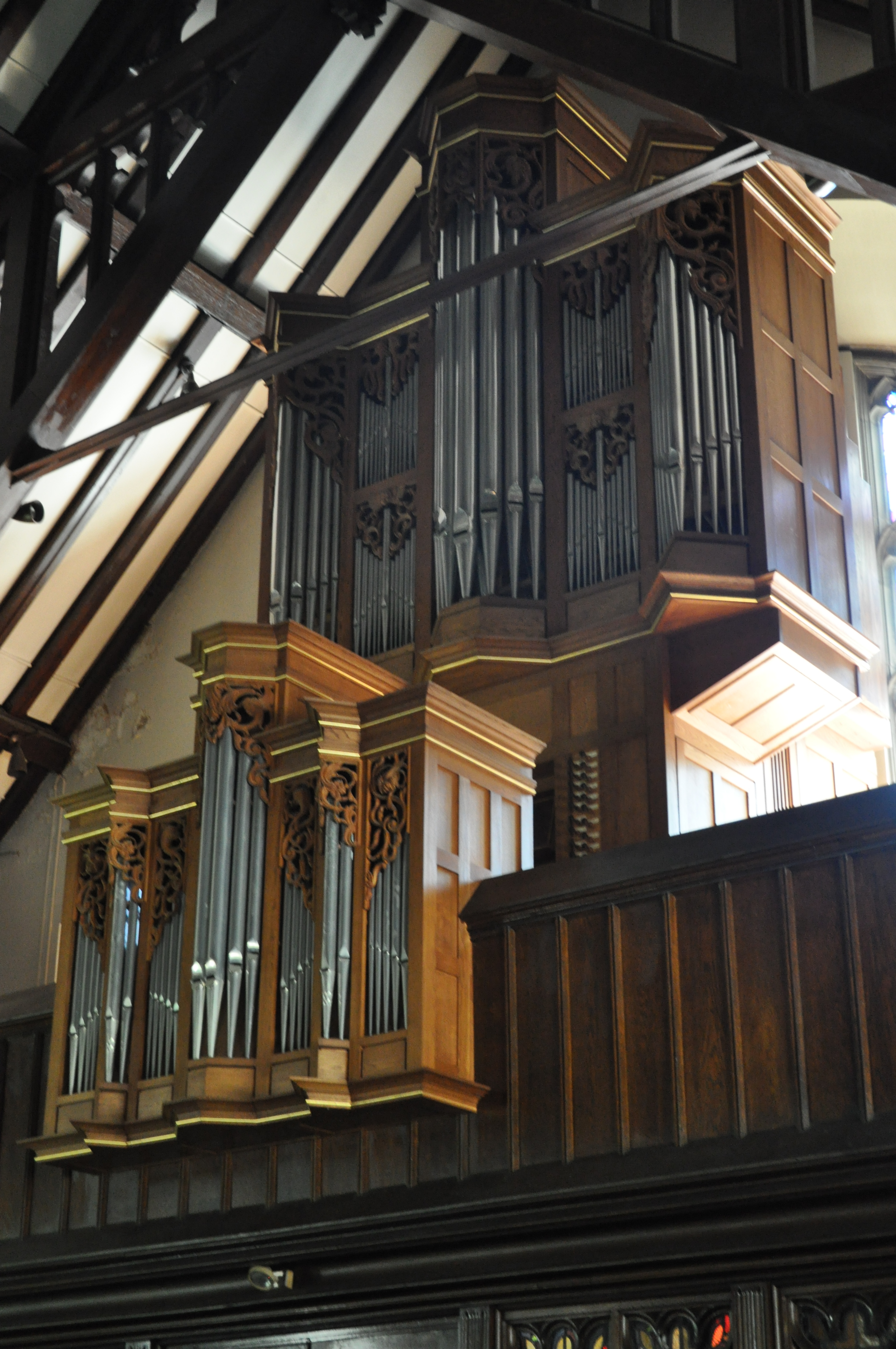
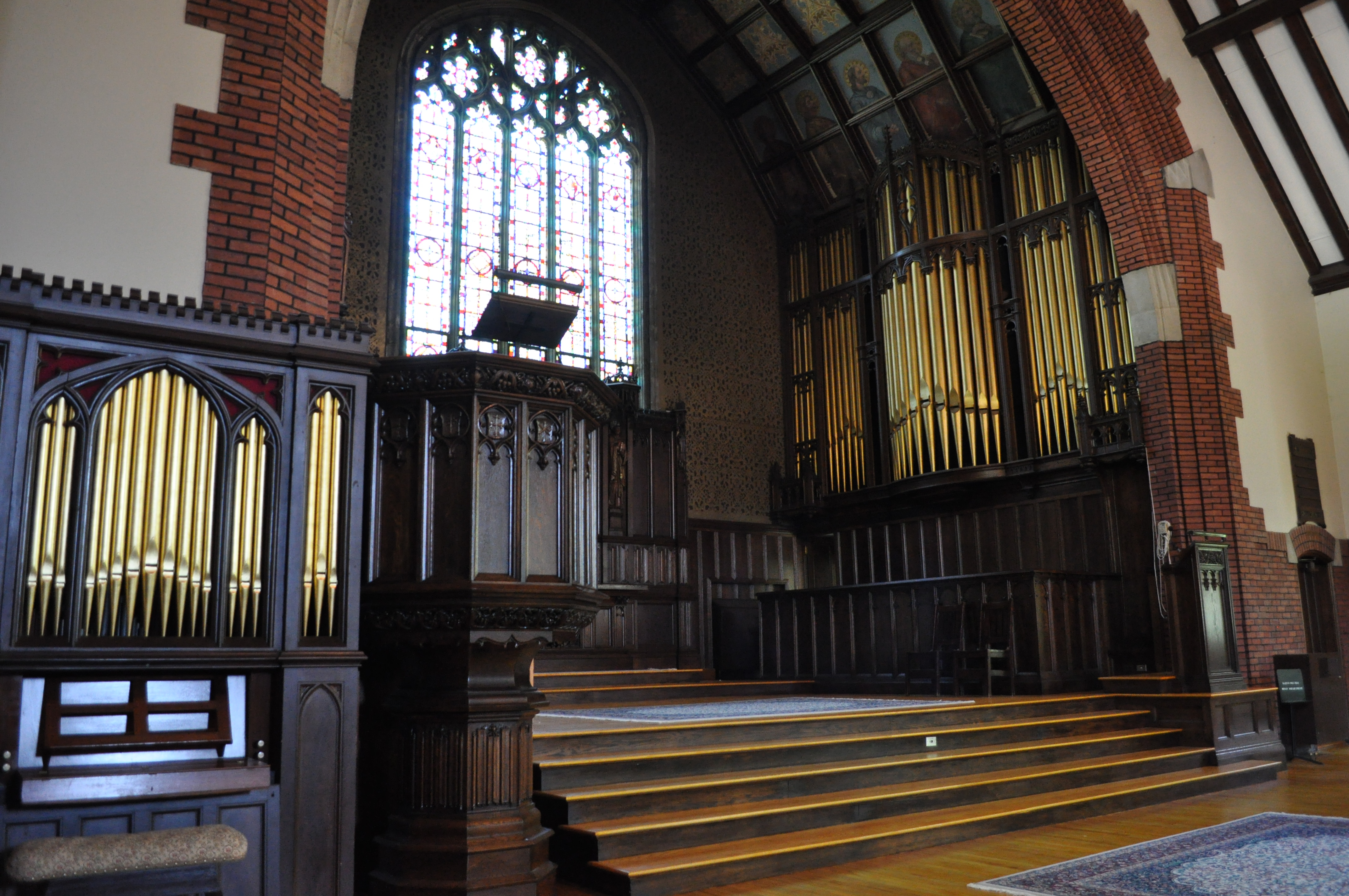
Both Christ Church and St. Patrick’s (my next stop) are known for their music programs, so I was delighted to see both the historic tracker action organ and a beautiful new modern three-manual tracker built in 1984 by Kenneth Jones of Bray, Co Wicklow. Unfortunately, I was unable to get a very clear picture, due to the lighting (or, more likely, the skill of the photographer), but I’m posting this anyway for my good friends John and George at Taylor and Boody.
I could go on, but like my schedule today I have to keep moving. A neighborhood pub provided lunch, and then I was off two blocks to see St. Patrick’s Cathedral.
One of the first things I saw as I came around the corner was a sign on the side of the building which read, “St. Patrick’s Cathedral Choir School, Founded 1432 A. D.” I had to laugh, because two days ago I was at Andrew’s school – also founded as a school for choir boys – as they celebrated their 100th anniversary. It was a great reminder of the tradition our son has been privileged to continue.
From a beautiful park, one moves inside the cathedral, which is chock-a-block full of memorials, plaques, and the like. Jonathan Swift was the dean here and there are panels devoted to his political, religious, and literary life. I was pleased to see a memorial to the great blind Irish harper Turlough Carolan, who wrote some of the most beautiful melodies in Celtic music.
It just so happened that as I was walking around St. Patrick’s, the organist began to play in anticipation of the evening’s service. If you look at the picture of the choir stalls below, you can see the back of the organist in the opening at the top. There’s nothing better than viewing a beautiful cathedral with live organ music in the air!
So, I’m wrapping up my “vacation” time in Dublin and heading off to a working dinner (where I hope to find a little Irish music in the process. But don’t worry, I’ll get out some more (Andrew just sent me an email telling me to look for the bridges in Dublin designed by Santiago Calatrava) and I’ll be posting on the PreservationNation blog as well during the coming week. After a couple of more pictures of St. Patrick’s, I’m posting a video of an English guitarist playing Turlough Carolan’s most famous melody, Si Bheag Si Mhor.
“It breaks your heart. It is designed to break your heart. The game begins in the spring, when everything else begins again, and it blossoms in the summer, filling the afternoons and evenings, and then as soon as the chill rains come, it stops and leaves you to face the fall alone.“
Giamatti – the former president of Yale and the great commissioner of baseball who banned Pete Rose for life and then died of a heart attack 8 days later – was writing about an earlier Red Sox loss on the last day of the season many years ago. But the “breaking your heart” line applies in all sorts of baseball situations.
Friday evening, on the last day of my summer vacation before heading back to work, the MLB-worst Washington Nationals played the division leading St. Louis Cardinals like they were equals. Young Nationals “ace” John Lannan matched recently acquired and crafty veteran John Smoltz pitch-for-pitch through a well-played ball game that took only a little over two hours – the perfect length for a baseball game. Lannan was virtually unhittable and baseball’s best hitter, Albert Pujols, could only manage three little dribblers off him that barely reached the pitcher’s mound. When chisled Elijah Dukes rocked a double down the left field line in the 7th and then came in to score on another double by the hobbled Josh Bard, Lannan looked on his way to a complete game victory that would move the Nats closer to catching the Kansas City Royals and thus getting rid of that “worst in baseball” tag.
But baseball is designed to break your heart.
In the 8th, a pinch hitter with a bad haircut – Khalil Greene – hit a Lannan mistake for the tying home run. The Nats let a few scoring opportunities slip through their grasp. And when manager Jim Riggleman pulled Lannan in the 9th after only 91 pitches instead of letting him face Pujols again, one sensed trouble was on the way.
Nats TV announcer Ray Knight had barely gotten the words “If you throw this guy a slider, throw it in the dirt” out of his mouth when reliever Jason Bergmann, whose best pitch is a fastball, threw a 1-1 slider. It was not in the dirt. The mighty Pujols – so glad not to be facing Lannan again – strode into that fat, middle-of-the-plate slider, and the ball game was over. As Crash Davis might have said, “Man that ball got outta here in a hurry. I mean anything travels that far oughta have a damn stewardess on it, don’t you think?”
A great game. But a heart breaker for Nats fans.
So one of the best games of the season takes place with your home town team, and where does the home town newspaper play it? On page 3 of the sports section. Because the almighty Redskins are playing a meaningless exhibition game against the New England Patriots, and by God the Washington Post – clueless in so many ways as to what really matters in life – has to have two huge pictures, the game report, and TWO columnists write about that meaningless exhibition game on page 1. As one of those columnists, Thomas Boswell, wrote in an earlier era, “Some people say football’s the best game in America…. Some people are really dumb.”
So, back to Giamatti:
“It breaks my heart because it was meant to, because it was meant to foster in me again the illusion that there was something abiding, some pattern and some impulse that could come together to make a reality that would resist the corrosion; and because, after it had fostered again that most hungered for illusion, the game was meant to stop, and betray precisely what it promised.
Of course, there are those who learn after the first few times. They grow out of sports. And there are others who were born with the wisdom to know that nothing lasts. These are the truly tough among us, the ones who can live without illusion, or without even the hope of illusion. I am not that grown-up or up-to-date. I am a simpler creature, tied to more primitive patterns and cycles. I need to think something lasts forever, and it might as well be that state of being that is a game; it might as well be that, in a green field, in the sun.“