Latest Posts

The best journeys are the long ones

The mail brought a friend’s new book about the journey from her childhood home in Minnesota to life today in a village in France. Her adventures include years in New York, working as Caroline Kennedy’s editorial assistant, and living in a gypsy caravan outside Paris. I dug in with anticipation.

A Long Way from Iowa: From the Heartland to the Heart of France (2023) by Janet Hulstrand is a delightful memoir that takes us from her grandmother’s hometown in Bonair, Iowa, to the author’s home in the French countryside. We learn much about Janet’s journey, including the complicated relationship with the two women who fueled her love for learning and exploration. A testament to family and the writing life, A Long Way from Iowa will interest those who seek to understand the people and places that shape the path they choose.

I caught up with Janet who enthusiastically agreed to chat about her newest work.


DJB: “A Long Way from Iowa” is a memoir. What’s the difference between a memoir and an autobiography?

JH: They’re both the author telling his or her own personal story. But a memoir is focused on a particular aspect of a life: it doesn’t attempt to tell the whole story, like an autobiography does. There are two main threads in my memoir: one is my coming to terms with my mostly positive, but often conflictual relationship with my mother, and to a lesser degree with my grandmother as well. And the other thread is about my becoming a writer. These two threads are very strongly interwoven, since I believe that both my mother and grandmother would have liked to be able to be writers themselves. But they didn’t have that chance; I am the lucky one who got to live out their unspoken dreams. I wanted to pay tribute to them for the legacy they left me; so I’ve tried to tell a bit of their stories, as well as mine.

You begin by writing about your grandmother. You say you didn’t really like her, yet she was a big reason you wrote this book. Why was she such an influence on you?

As a child, I thought that she didn’t like me, and as a child I felt that the only thing I could do about that was to not like her back. But then as an adult I realized, through a series of little epiphanies that I describe in the book, that she was almost certainly a frustrated writer. That gave me more sympathy for her. It also set me on a 30-year search for her lost diaries. I didn’t find them, but I did learn quite a bit more about her — about who she really was, what was important to her, and some of the frustration and loneliness I think she felt in her life — in the process of looking for them. I also realized that a large part of the reason I became a writer started with her: with her love of reading and writing, and with the way she instilled that love in her children, and indirectly in her grandchildren as well.

(Janet in her grandmother’s hometown)

Your story is grounded in place. How important are places in understanding who you are?

I think they are very important. There are three places where I feel most at home: Minnesota, Brooklyn, and France. These places are very different from each other, and yet all of them are very important to me. I want to explore the power of place even more in my next book, which is in the very hazy planning stage right now.

As a professional writer and editor, how difficult is it to write about yourself?

The writing is not difficult at all. It’s publishing that is! As an editor and writing coach, I spend a lot of time telling my clients that everyone’s story is worth telling.  And I believe this with all my heart and soul. Having said that, now that I’ve published my own memoir I find myself waiting anxiously to see how people will receive it. It’s a bit intimidating to wait for people to judge not only your writing but perhaps also the life you’ve lived and what you have to say about it.

You are very open about life’s challenges, from times of social isolation to a broken marriage. What advice would you give other writers who want to tackle sensitive subjects in their past?

I think it’s important to share the parts you feel you want to share with others, the parts that might help others in living their own lives; and then you have to have the courage to just tell the truth. But you also have to think about the repercussions for other people. What things do you have a right to tell, and what things might impinge on the privacy, or the happiness, of others? In my case, in order to tell my story I had to write about the fact that my marriage failed, but I chose to say very little about the details of it for a variety of reasons. I took great care in writing my book — and most especially in editing it — to think about how any of the personal details I revealed in telling my story might affect others. I hope I’ve been sufficiently respectful in that regard, and I hope I haven’t hurt anyone’s feelings. It can at times be tricky.

What books do you like to read?

I love reading good fiction, but I tend to spend more time reading nonfiction. It gives me the chance to fill gaps in my knowledge of history that I’d like to fill. But memoir is really my favorite genre. There are a couple of memoirs set in France — French Spirits by Jeffrey Greene, and I’ll Never Be French by Mark Greenside — that I read over and over again because I teach them. And I will be teaching an online class in April for Politics and Prose bookstore. We’ll be reading four memoirs set in the Midwest, including A Long Way from Iowa. I’m really looking forward to that.

Many thanks, Janet.

The pleasure was mine!   


More to come…

DJB

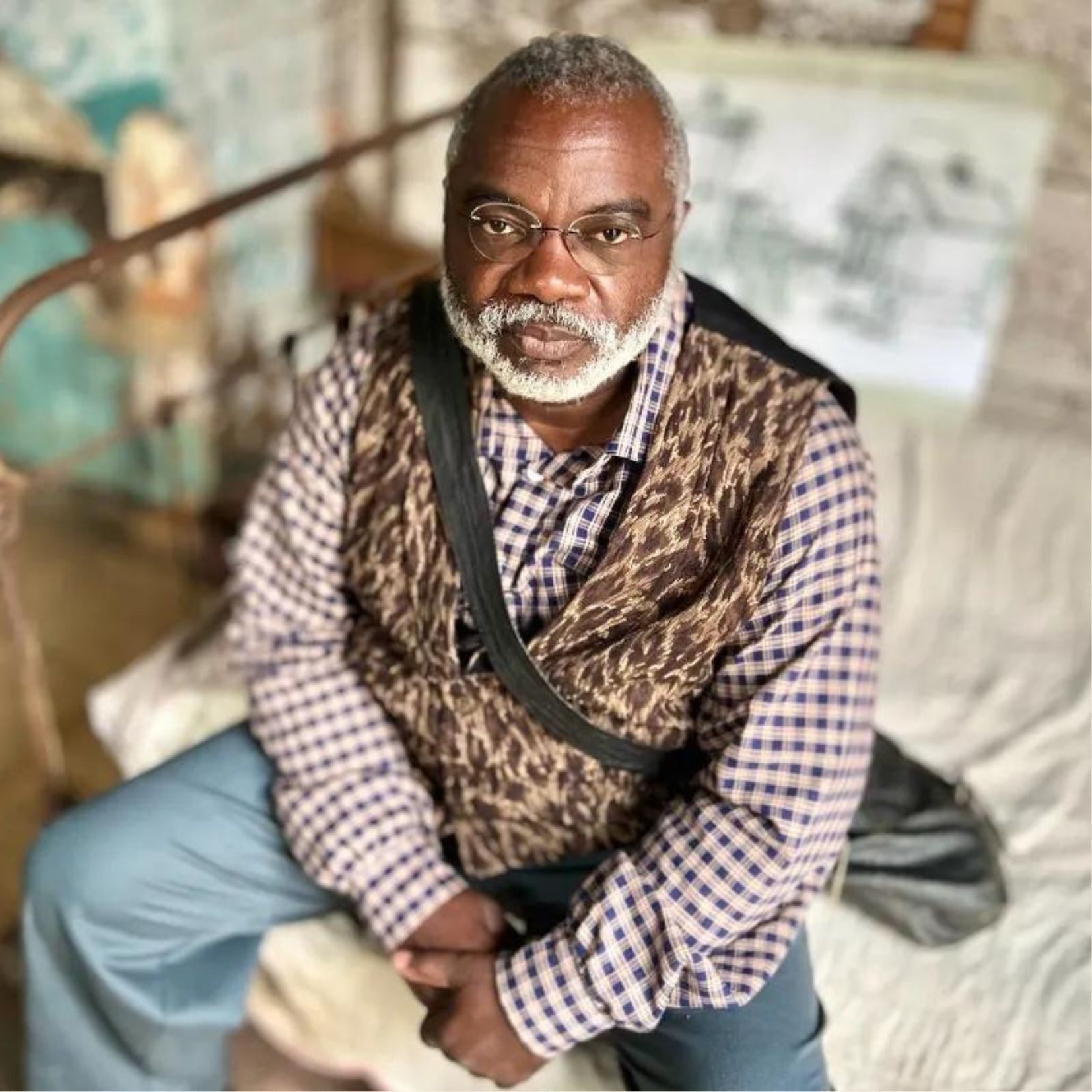
Author photo: Kevin Sisson

A new kind of American troubadour

In honor of Black History Month, I am exploring the work of musicians of color who are reclaiming their musical heritage while taking us forward musically and socially. The first two in this year’s series featured Allison Russell and Kaia Kater. For the MLK weekend, I featured the work of Ruthie Foster. Today we’ll celebrate the music of Joy Oladokun.


Nigerian American singer-songwriter Joy Oladokun was born in Delaware, raised in Arizona, and is now based in Nashville, that hotbed of country and Americana music. Yet in many ways, Oladokun reminds me of the folksingers of my youth. She has a beautiful and soulful voice, often heard over the delicate sound of her acoustic guitar. Her songs are poetry for today’s America, sung with pain and passion.

Oladokun is a Black Christian lesbian singer-songwriter who works to connect with people across the full breadth of their emotional experience. Billboard touted her album in defense of my own happiness as one of the “top 10 best LGBTQ albums of 2020.” As Nikki Birch of NPR wrote for her Tiny Desk concert, “Oladokun shines a light on the subjects of grief, politics and life in America via the lens of someone who looks and loves differently.”

Taking the Heat, performed for her Austin City Limits debut as well as in her Tiny Desk concert, is dedicated to the late rapper Mac Miller. As Birch notes, “the song examines the way we, as consumers, treat the artists who create the music that resonates with us: ‘Does anybody ever wonder when the legends die young / If there’s anything we could have done…'”

I See America (seen here from Jimmy Kimmel’s show and also on the NPR concert), is introduced on the latter with the admonition to be strapped in for a “deep dive into my mental health, or lack thereof.” The song is written as a response to “the low value placed on American lives, be they Black or other.”

Oladokun opens her Tiny Desk performance with If You Got a Problem, “a sweet ballad that pledges unconditional friendship through the lonely and the messy times.” It concludes with Sunday, a tale of identity crisis. Birch notes that “While the theme is heavy, the delivery is uplifting, once again demonstrating how Oladokun’s penetrating gaze into the human psyche yields beautiful storytelling in spite of the pain that surely inspired it.”

Oladokun’s website bio — written in her all-lower-case style — tells how Tracy Chapman changed her life.

the daughter of nigerian immigrants, she was the first in the family to be born in america. after some time in delaware, they moved to arizona. dad’s record collection included hundreds of titles, and he introduced joy to everyone from phil collins, peter gabriel, and king sunny adé to conway twitty and johnny cash. as mom and dad stressed academics, she wasn’t allowed to watch tv on weekdays. on saturday, they would “either rent a movie from blockbuster or watch the thousands of hours of concert and music video footage dad had recorded since coming to the states.” one afternoon, she witnessed tracy chapman pay homage to nelson mandela during his 70th birthday tribute at wembley arena.

it changed everything…

“i grew up in casa grande, which is in the middle of nowhere in arizona,” she goes on. “i was surrounded by images of white dudes with guitars. i was programmed to believe people around me listened if somebody had a guitar. as a shy kid and one of the only black children in town, i had a lot of social anxiety. seeing tracy chapman up there with a guitar in front of a full stadium was such an empowering moment. i ran into the next room and begged my parents to buy me a guitar for christmas—which was six months away,” she laughs.

As Oladokun has reached a wider audience, she is joined in duets and onstage by some of Nashville’s brightest artists and up-and-coming musicians. Bigger Man, performed with Maren Morris, begins with the powerful lyrics of what it means to be marginalized in America.

Here you go again | Still loud | Still right | Still not listening | How it’s always been | Doesn’t make it | Make any kind of sense

Oladokun’s duet with the always amazing Chris Stapleton, Sweet Symphony, is already becoming a classic “wedding dance” song. Not bad for a folk/soul singer-songwriter and an alt country/bluegrass legend … and you gotta love the puppets in the video.

In this 2021 concert footage from the Ryman, the uber-talented Jason Isbell stops by to play some sweet lead guitar, joining Elliott Skinner on keyboard and Jaime Woods on backing vocals, as Oladokun covers Bonnie Raitt’s I Can’t Make You Love Me.

And singing alone, with just her guitar, Oladokun does one of the most beautiful and heartfelt covers ever of Paul McCartney‘s iconic Blackbird. As the former Beatle has noted,

“You were only waiting for this moment to arise” was about, you know, the black people’s struggle in the southern states, and I was using the symbolism of a blackbird. It’s not really about a blackbird whose wings are broken, you know, it’s a bit more symbolic.

Joy Oladokun’s songwriting is “brutally honest, yet inviting, as she fearlessly tackles tough topics.” Coupled with a powerful yet welcoming voice, hers is a talent one wants to revisit again and again. And she wants us to immerse ourselves in her music. Her website biography ends with this note:

when you listen to me, i want you to feel like you’ve taken an emotional shower,” she leaves off. “that’s what i’m trying to accomplish for myself. to me, music is a vehicle of catharsis. i write a lot of sad songs, but i always push for a sliver of a silver lining or glimmer of hope it could be better. that’s why i’m writing in the first place. i want you to be changed when you hear me, and not because i’m special, but because i make music with the intention to change myself.

Let’s go out with Judas from the in defense of my own happiness album.

More to come…

DJB

Image credit Joy Oladokun

I’ll see you at the ground-breaking

The effective leaders I have worked with all have similar traits. They are good listeners. They are empathetic. They use their own histories and personalities to set an effective narrative around a positive vision. They are quick to praise others and embrace a wide circle. They are forward facing. They are optimistic but practical. They have a sense of humor. Most of all they understand how to meet the moment they are given.

Tuesday evening’s State of the Union address was just another example of how the president personifies those qualities and is meeting the moment.

In America, it is easy to get caught up in the never-ending stream of right-wing grievance. “Inflation! Recession! Balloon! Fentanyl! The Border! Hunter’s laptop! China! CRT! Antifa! Debt!” The media takes the bait and says, “Biden’s achievements are not breaking through to the public!” And they are not breaking through because the media doesn’t want you to know.

The owners of the country’s most lucrative media properties have more in common with the beneficiaries of the status quo than they have in common with you and me and everyone we know on account of their being among those who benefit from the status quo. They dislike inflation…it makes their planetary fortunes worth less.

All the while, President Biden has had one of the most consequential presidencies since FDR and the New Deal. In meeting the moment of our multiple national crises of the looming loss of democracy, heightened domestic terrorism, inflamed racial tensions, environmental degradation, falling international stature, obscene wealth inequality, inequitable application of justice, and loss of fundamental rights for more than one-half of our citizens, he has remained steady, firm, and resolute.

After graciously congratulating both Republican and Democratic members of Congress by name, Biden — unfiltered by the media for 70 minutes — laid out his promise to “continue to rebuild the middle class, hollowed out by 40 years of policies based on the idea that cutting taxes and concentrating wealth among the ‘job creators’ would feed the economy and create widespread prosperity.” He rightly noted that this has created a very biased and rigged system that protects the wealthy.

“Capitalism without competition is not capitalism,” he noted. “It’s extortion. It’s exploitation.”

Biden reminded us of this fact as he drove a stake in the heart of neo-liberalism philosophy that says government should leave the all-wise markets alone.

I’m not a big believer in trickle-down economy, (Biden said) and so everything I look at from the time I took this office, but even before that when I was a senator all those years, is what’s the best shot to grow the economy from the bottom up and the middle out because when that happens everybody does well. The wealthy do very, very well. 

Historian Heather Cox Richardson notes that the trickle-down theory never worked under Ronald Reagan and it hasn’t worked since. Biden’s vision is proven and invests in all of us.

He listed the accomplishments of his administration so far: unemployment at a 50-year low, 800,000 good manufacturing jobs, lower inflation, 10 million new small businesses, the return of the chip industry to the United States, more than $300 billion in private investment in manufacturing, more than 20,000 new infrastructure projects, lower health care costs, Medicare negotiations over drug prices, investment in new technologies to combat climate change. He promised to continue to invest in the places and people who have been forgotten.

In place of the failed economic policies begun in 1980, Biden sees a “national vision that includes everyone. It is a modernized version of President Franklin Delano Roosevelt’s New Deal.” As historian Eric Rauchway has written,

The New Deal mattered then, at the cusp of spring in 1933, because it gave Americans permission to believe in a common purpose that was not war. Neither before nor since have Americans so rallied around an essentially peaceable form of patriotism. The results of that effort remain with us, in forms both concrete and abstract.

President Biden sees the same need to have Americans believe in a common purpose. And in his address to a joint session of Congress, he repeatedly offered to work across the aisle for a range of widely popular programs with those Republicans who still believe in the American idea of democracy and freedom for all Americans.

In a key moment of setting his own narrative, President Biden thanked those Republicans who voted for the Bipartisan Infrastructure Law, “then tweaked those who had voted against it but claimed credit for funding.”

Biden said they didn’t have to worry. He had promised to be the president for all Americans, not just those in blue states. “We’ll fund your projects,” he said. Then, with a smile on his face he added the kicker:

And I’ll see you at the ground-breaking.

Joe Biden knows his ideas and plans are popular. Americans understand our roads and bridges are crumbling, and we want them to be fixed. And he knows that Republican members of Congress — who are rewarded for outrage by FOX and other media outlets — will show up at the ground-breaking for infrastructure work, after voting against the funding for those very projects. They’ll take credit to try and fool their constituents.

Mitch McConnell’s appearance at the ground-breaking for the bridge across the Ohio River that will be repaired using union labor by the “Cowboys in the Sky” is just the most obvious example of many.

And then, (Richardson writes) when he began to talk about future areas of potential cooperation, Republicans went feral. They heckled, catcalled, and booed, ignoring House speaker Kevin McCarthy’s (R-CA) attempts to shush them. At the State of the Union, in the U.S. Capitol, our lawmakers repeatedly interrupted the president with insults, yelling “liar” and “bullsh*t.” And cameras caught it all. 

Extremist Marjorie Taylor Greene (R-GA), her hands cupping her wide open mouth to scream at the president, became the face of the Republican Party.

This is NOT what leadership looks like

James Fallows wrote, “Joe Biden’s State of the Union address last night was effective — for him, for his policies, for his party, and I think for the country.”

It’s what leadership looks like.

More to come…

DJB

Image of SOTU Address from WhiteHouse.gov

In search of paradise

Paradise — that often sought-for and always-elusive vision — is integral to many religious traditions. It seems appropriate, given the elusiveness, that the culture which officially invented Paradise was, upon closer inspection, a “treasure house of riddles.”

That observation came from one of the world’s most seasoned travelers and astute cultural commentators, who set off around the globe to explore a number of our holiest, yet very troubled, sites of paradise. Almost immediately he wondered what kind of paradise could ever be found in a world of unceasing conflict. It was a question that would continue to surface throughout his travels.

The Half Known Life: In Search of Paradise (2023) by Pico Iyer — both an external odyssey and an internal journey — is the result of those travels. In a series of memorable essays, Iyer takes the reader from places like the mosques and gardens of Iran, where paradise was invented, to the lakes of Kashmir, which were part of his mother’s childhood. From what one reviewer aptly described as “the wrathful Old Testament landscape of Broome, Australia,” to the Hindu holy city of Varanasi. From the contested center of Jerusalem to the sterile towers of North Korea and the temples of Koyasan, Japan.

Iyer, as one expects from such an experienced travel writer, leads the reader with skillful and expressive descriptions of the physical places. But he also calls upon a rich array of literature to flesh out the meaning of these holy shrines while examining the conflicts — open and hidden — often found there. We learn of the contradictions of paradise, such as in Iran where passionate, holy pilgrims were eager to live their faith and dreams but who wished to have no part of religious rule.

In one essay, Iyer recalls his days traveling throughout Japan with the Dali Lama and recounts the story of how, inevitably, someone would ask what to do after having been disappointed by a dream not realized. The dreams differed but the disillusionment was always the same.

“Wrong dream!” the Dalai Lama would respond.

While he has Buddhist sensitivities, Iyer is a secular seeker at heart who invites us into a deeper spiritual meditation by using these travels to explore his personal journey toward his dreams and paradise. Why search? In one answer he quotes the Irish poet Seamus Heaney who, upon the release from prison of Nelson Mandela, wrote lines that dared to believe that longed-for possibilities can come true: “Once in a lifetime . . . hope and history rhyme.” Heaney “was wise enough to know that a life that doesn’t know possibility takes in only half the truth.”

But what we know of reality has its limits. Jerusalem, Iyer writes, “was a parable that had turned into a cautionary tale, a warning about what we do when we’re convinced we know it all.” Some aspects of paradise defy explanation. Outside the city’s Basilica of the Agony, an unintentionally ironic sign reads, “PLEASE, No Explanations Inside the Church.”

There is usually a gap between our preconceived notion of happiness and a deeper truth. “The places we avoid [are] often closer to us than the ones we eagerly seek out,” Iyer notes.

Other observers have considered the limits of our understanding of reality in this life. C.S. Lewis, for instance, has written that “he — along with every other mortal at any time — may be utterly mistaken as to the situation he is in.”

Five senses; an incurably abstract intellect; a haphazardly selective memory; a set of preconceptions and assumptions so numerous that I can never examine more than a minority of them — never become even conscious of them all. How much of total reality can such an apparatus let through?

The contradictory notions about reality are of our own making, says Lewis, and the notions will all eventually be knocked from under our feet. Lewis has the sense that “some shattering and disarming simplicity is the real answer.”

The fact of the simplicity is clear, even if the true understanding of reality remains cloudy, for some Christian and Buddhist mystics. Iyer has clearly read and embraced the work of the Christian monk and mystic Thomas Merton, who traveled to the paradise of Sri Lanka and immersed himself in Buddhist thought just weeks before he died in Bangkok. In a reflection of his time with the Dali Lama, Iyer quotes Merton approvingly when the Trappist monk says that to have all the answers might be proof that you weren’t asking the right questions. “Uncertainty was perhaps the place,” adds Iyer, “where all of us — even a monk — have to make our home.”

Iyer ends this fascinating journey in a paradise his relatives encouraged him to avoid. The holy city of Varanasi is where many Hindus are cremated on funeral pyres after death. Iyer brings it together as he quotes scholar Diana Eck: “Death is not the opposite of life. It is, rather, the opposite of birth.”

The epic poem Paradise Lost, ends with “perhaps its most beautiful line: Adam’s task, the archangel who accompanies him to the gates of Eden observes, is to find ‘a Paradise within thee, happier far.'” Reviewer Thúy Đinh writes that “Seeing the expulsion of Adam and Eve from the Garden of Eden as a necessary fall, and the Buddha’s departure from his princely estate as a conscious acceptance of human frailties, Iyer concludes that a true paradise is only attainable through displacement.”

Paradise on earth is a paradox. Often located in unimaginably beautiful landscapes or containing great holy shrines, these cities and sites have also seen incalculable suffering. Life is and. There will be good and bad. But as Merton put it, “The more you try to avoid suffering, the more you suffer.”

It is the Franciscan priest Richard Rohr, Iyer reminds us, who says, “Our goal in life is not to become more spiritual, but to become human.”

That’s where we find paradise.

More to come…

DJB


This Weekly Reader features links to recent articles, blog posts, or books that grabbed my interest or tickled my fancy. I hope you find something that makes you laugh, think, or cry. 


Image by Harkiran Kaur from Pixabay

1500 and counting

Mother was a prolific letter writer, sending long, hand-written updates on a weekly basis to her children after we moved away from home. I not only acquired her stay-in-touch gene, but I cultivated that desire to share stories, news, and observations using 21st century technology.

It was in August of 2008 that I first put fingers to keyboard in this place. Post number one was a tribute written in memory of a voice I heard way too often in my 20s and 30s. The piece you’re reading now is number 1500.

That’s an average of slightly more than nine per month. The number of words is probably somewhere north of 1.1 million.

Yes, that’s a lot of words.

If it’s any consolation, I don’t know anyone who reads them all. Not even my wife. Candice does, however, hear my opinions live and often provides real-time feedback. As a result, the worst ones never make it to you.*

I began More to Come… (MTC) to document a family vacation and kept on writing. My friend Dolores suggested the name and it stuck.

A post from 2010 tops the “most reader views” over this time period, and it features one of my favorite places on earth. Mohonk Mountain House…A place like no other is one of four pieces I’ve written about this unique spot. Claire — who is the unofficial “official photographer” of MTC — has taken a number of memorable photos at Mohonk. Her evocative picture of this iconic landmark graced the top of the home page for a long time and serves as the lead picture for this essay. Claire also captured a swimmer taking the plunge off the Mohonk high dive, another personal favorite.**

Lake at Mohonk Mountain House by Claire
Taking the plunge off the high board at the lake at Mohonk Mountain House (photo credit: Claire Brown)

More to Come was designed to capture my observations, recollections, and “occasional bursts of radical common sense” on a variety of topics. Here’s a small sampling of the things I’ve observed about our little part of the world since 2008:

  • 2009: Recently, the passage of time and the (incorrect) belief that we can master time has been on my mind. While in high school Andrew wrote an insightful piece on this topic for the St. Albans School literary magazine. I included it as 9:45:00 GMT.
  • 2010: This was the year I finally scratched that Guitar Acquisition Syndrome itch. It wouldn’t be the last. Finding my new Running Dog guitar tells the improbable story of how I came to have a guitar with “Union Forever” inlayed in pearl on the back of the headstock.
  • 2011: I combined my preservation interest with my love of baseball to respond to a really stupid suggestion to tear down Wrigley Field in What’s wrong with sports.
  • 2012: I’ve reported from the Americana festival Merlefest several times, the last being the 25th anniversary year and the final one where festival patriarch Doc Watson performed. He died about a month later. My last post (so far) for Merlefest is Oh Happy Day! — Merlefest 25 wraps up.
California or Bust
Claire and DJB on the “Not All Who Wander Are Lost” tour
Rome view
View of Rome from our window in the Chiaraviglio apartments
  • 2016: I wrote many posts from Rome during my sabbatical, but the most-read piece from that year was My favorite Tom Brown stories, which came from my father’s funeral in May. Daddy’s was an example of a life well lived…much more so than the guy who somehow managed to win the presidential election that year.
At Prospect Hill in 1982
The newlyweds on our honeymoon at Prospect Hill
  • 2018: During the years of the former guy’s administration, July 4th was a good day to think about what it means to be an American, which I did in Freedom.
  • 2019: I announced my retirement from the National Trust and was blown away by the response, which I captured in Kindness.
  • 2020: How do you describe this year of pandemic lockdown, government incompetence, racial unrest, and a democracy-saving election? One of my most-read pieces ever, Places and perspectives, came out of the protests over Confederate statues.
  • 2021: When Candice celebrated a “significant birthday” this year, I asked her family and friends for thoughts on what she meant to them. Tending the heart is a sampling of the outpouring of love and affection.
  • 2022: This newsletter has often been my attempt to capture life’s special moments before they pass into the dustbin of history. Thirty years goes by in the blink of an eye was one such occasion, when the twins turned 30.

Thanks for reading over these years. I hope we have much more to share in whatever time is left.

With hopefully lots more to come…

DJB


*Anyone who literally reads every one of my posts is welcomed to self-identify in the comments.


**See also:


NOTE: For the 1000th post I wrote The top one percent which counts down the ten most popular posts over that span. Claire’s photos from Monument Valley topped the list at that point.


Image of Mohonk Mountain House by Claire Holsey Brown

Don’t believe everything you think

Common sense is not common. Most people simply have walking around sense.

Anonymous

How do you respond when something appears too good to be true? When a rumor confirms what you already believe, even if the facts seem a bit sketchy? When you hear a good story, even if it seems a bit dubious?

Unfortunately, we too often take the bait. Hook, line, and sinker.

In Beaverland, author Leila Philip introduces us to Scott McGill of the ecological restoration firm Ecotone, Inc. and an individual known as a “beaver whisperer.” McGill is known for surfacing and challenging myths, often by telling his clients, “Don’t believe everything you think.”

It is sage advice no matter the field.

Image by Hans Benn from Pixabay

In his world, McGill fights the myth that these ecosystem engineers negatively impact trout and trout habitat. Other misunderstandings about beavers abound, some of which are pretty fantastic. One that goes back to Aesop’s fables is that beavers, when pursued, remove their testicles — or the highly prized castor sacs — and cleverly throw them at hunters to distract their assailants. Oh my!


Myths in politics and history

The upcoming Jim Jordan Investigative Circus (whose formal name is the House Select Subcommittee on the Weaponization of the Federal Government) is a great time to follow that “don’t believe everything you think (or hear)” advice.

BTW, former federal prosecutor Joyce Vance asked readers to come up with other, more imaginative names, for this subcommittee. Some of the early suggestions included:

  • The Subcommittee to Obstruct Biden, silly. Or simply put: “The SOBs.”
  • Bluster and Obstruction of Justice for Self-Service Subcommittee.

And my favorite:

  • Select Subcommittee on The Pot Calling the Kettle Black.

Politics is one area where way too many people believe things that are totally wrong. Paul Waldman, writing in the Washington Post, listed six such myths about politics, one being the old favorite, “Government should be run like a business.” The problem is that government’s purpose is nothing like that of a business. Government isn’t designed to produce a financial return. It is supposed to help and protect all our citizens. Delivering mail to “far-flung rural addresses” will never make a profit. But we shouldn’t stop doing it.

History is another fertile field in which myths run amuck. In History Myths Exploded: How Some of History’s Biggest Ideas are Wrong, Professors Fee and Webb suggest that much of what the general public knows about the history of the emancipation of the slaves is at best incomplete and at worst wrong. Why? “Although most of us recognize the value of good history,” they explain, “we often find truthful accounts of the past, frankly, less than inspiring.”

What really excites us? A tale well told.


We need new stories … and new clichés

Not all well-told tales are positive. Nesrine Malik has written that there is a malignant thread made of myths that has been running through Anglo-American history.

“These are not myths that animate believers into a shared sense of camaraderie and direction. They are myths that divide and instill a sense of superiority over others.”

Other myths survive because the more complicated truth can make us feel uncomfortable, as considered in No Cure for Being Human (And Other Truths I Need to Hear). Three from among a number of favorites off Kate Bowler‘s list are:

People SayA More Complicated Truth
Be present.We toggle between the past, present, and future for good reasons.
No regrets.Facing the past is part of facing the future.
Everyone is doing their best.The jury is still out on that.

Compassion with expectations

So what should we do in response to myths, misinformation, and uncomfortable truths? First of all, think responsibly. Think slow, as Daniel Kahneman describes it. Try to understand your biases and motives. Then work to be a good storyteller to help define reality and combat misinformation.

In the end, the response to those stories and myths is on us. And there may be times when we accept an unprovable fact or an incomplete truth for the larger good.

Just categorize these as: “True, if not always factual.”

Robyn Ryle’s recent Substack essay references a Brené Brown podcast in which she raises this question: do you believe that most of the time people are doing the best they can?

Kate Bowler gives her take in the table above.

Different people will have different answers, but Brown’s husband responded that while unsure, “he chooses to believe it because that’s the world he wants to live in. To believe in the good intentions of others is an act of faith.”

Robyn describes a recent trip where she decided to just assume that everyone is doing the best they can. She admits that it felt better and less stressful. “I was doing the best I could in the moment. So was everyone else.”

It’s so easy to pay attention to the ways in which we don’t get along. It’s so easy to assemble a litany of the annoying and the wrong.

Robyn also began to notice “the utter benevolence and cooperation of travel.” A world in which we give everyone the benefit of the doubt is such a better world to live in.

For many of the ordinary interactions of life, I fall in with Brené Brown’s husband. And as Robyn notes, we all mess up, but can always do better. “Believing people are doing the best they can most of the time doesn’t mean you can’t hold them accountable. It doesn’t mean you can’t ask and expect them to do better, especially the people you love. It’s compassion with expectations.”

I like that “compassion with expectations” approach. At the same time, we shouldn’t sugarcoat the actions of those who willfully and maliciously undermine others.

So don’t believe everything you think … unless you decide that believing a myth truly makes the world a better, fairer, more accepting place, and makes you a better person.

Putting our beliefs out for all to see

More to come…

DJB


Image by Gerd Altmann from Pixabay

The authenticity of Kaia Kater

Roots music would not exist without Black folks. Without the Black musicians, artists, creators, and storytellers, who give rise to each of these constituent genres we hold so dear.

The Bluegrass Situation

In honor of Black History Month, I am exploring the work of musicians of color who are reclaiming their musical heritage while taking us forward musically and socially. The first in this year’s series (a preview) featured Allison Russell. For the MLK weekend, I featured the work of Ruthie Foster. Today we’ll celebrate the music of Kaia Kater.


The Grenadian Canadian artist Kaia Kater is a talented young musician who brings influences and history from Canada, Grenada, and Appalachia into her music. Being biracial is part of her identity, but it was not until her most recent album, Grenades, that she deeply explored the Grenadian part of her past. Kater grew up between two worlds:

(O)ne her family’s deep ties to the Canadian folk music scene; the other the years she spent soaking up Appalachian music in West Virginia. Her father grew up in Grenada, fleeing to Canada in 1986 as part of a youth speaker program, after the U.S. invasion. 

Kaia Kater began her musical and songwriting career early, releasing her first EP Old Soul in 2013 when she was just out of high school. She then released two additional albums with similar themes and sound, 2015’s Sorrow Bound and 2016’s Nine Pin. The latter album won a Canadian Folk Music Award, a Stingray Rising Star Award, and “sent Kater on an 18-month touring journey from Ireland to Iowa.”

Saint Elizabeth and Rising Down, both from the album Nine Pin, showcase her work from this period.

Rolling Stone described Kater’s music as “plaintive, mesmerizing. … She writes and performs with the skill of a folk-circuit veteran.” You can see that folk-circuit vibe in the instrumental Fine Times at Our House and in her cover of the Frank Ocean song Swim Good.

An NPR review from 2018 speaks to the changes Kater has worked through in producing her most recent album, 2019’s Grenades which came out on Smithsonian Folkways.

During her formative years, the 25-year-old Grenadian-Canadian singer-songwriter worked at reconciling her interest in the banjo and folk festivals run by her mother with her affinity for hip-hop compilations made for her by her father. She visited his side of the family back in Grenada, served as an ambassador for Appalachian old-time music on the behalf of a West Virginia college, and toyed with applying traditional templates to the writing of original material. All the while, Kater’s awareness that she was complicating, even destabilizing, notions of cultural heritage sharpened. “Like many people, I have felt alone and out of place for most of my life, stumbling forward blind and rootless,” she reflects in the liner notes for her new album. “I wrote Grenades to trace the life line from my palm and find my way home.”

This most recent album “weaves between hard-hitting songs that touch on social issues like the Black Lives Matter movement and more personal narratives speaking to life and love in the digital age.” It is a decidedly different direction for the artist. What “started out as a search to discover the roots of her identity became a physical and emotional exploration of history, in particular her paternal ancestry, and has led to bold new heights of imagination and creative expression.” 

NPR had this description of the title track:

She has ways of invoking the past that are more impressionistic but no less affecting. In the dusky soul-jazz title track, her phrasing flits over a woozy, swinging groove. Musically, it’s supper club fare, its silky, sensual sound persuading listeners to let down their guards, but the lyrics imagine her father’s jarring experiences when military force intruded upon his childhood. Here and elsewhere, Kater favors vivid, sensory images and poetic language; she’s meditating on the ways that bodies absorb, carry and transmit memory.

The chorus is especially evocative of the disruption to her father’s young life.

Two seasons invade | Tremor and sway | With hands on grenades | Drive the light from the shade | Like an orange blockade — we always seem to get played | See the men on parade, see the men on parade

The Paste Studio session from 2019 features three songs from Grenades, interspersed with interviews with Kater. Meridian Ground is a beautiful melody that underpins the exploration of her family’s history. In between that song and Canyonland she talks about how the clawhammer banjo attracted her due to the introspective nature of the sound. Canyonland — the second song of the set — is about love and about being imperfect, and “being 25 and not knowing what life is about yet.” In between Canyonland and Everly, she speaks to the work of reclaiming the banjo by individuals who are not white Southerners. The final song of the set, Everly, is described by Kater as “a dialogue between two women.”

Kaia Kater is working on a full-length album for release in 2023. In March and April of this year, she is playing across the U.S. at venues in Colorado, Pennsylvania, and New York. Check out this impressive young artist when she comes to your city.

More to come…

DJB


Image of Kaia Kater by Raez Argulla credit KaiaKater.com

From the bookshelf: January 2023

Each month my goal is to read five books on a variety of topics and from different genres. Here are the books I read in January 2023. If you click on the title, you’ll go to the longer post on More to Come. Enjoy.

Beaverland: How One Weird Rodent Made America (2022) by Leila Philip is a fascinating look at the one animal, besides humans, that has an inordinate impact on their environment. Philip, a delightful storyteller who blends history and science in ways that make both interesting, came to her fascination with the weird rodent that scientists dub “ecosystem engineers” when she discovered a group of beavers in a pond near her home. She would visit the pond to observe them as they worked tirelessly to shape their environment; when they disappeared, she was determined to find out more about these creatures. We are all the richer for her exploration.


No Cure for Being Human (And Other Truths I Need to Hear) (2021) by Kate Bowler explores how to handle the life you’re given instead of something from an unattainable dream. The toxic positivity of the current advice and prosperity industry asks us to ignore our humanness. Bowler makes the direct, honest, and humorous case that this is bunk. Diagnosed with stage-four cancer at age 35, this professor of history at the Duke Divinity School examines in a very accessible way how she’s come to terms with her new reality, its limitations, and the knowledge that, actually, not all things are possible. “Nothing,” she writes, “will exempt me from the pain of being human.”


And Then There Were None (1939), the classic Agatha Christie mystery, is the book that made Christie the best-selling novelist of all time (her books trail only the Bible and Shakespeare in sales). The plot is a delicious puzzle that begins as ten strangers arrive on an island invited by the mysterious U.N. Owen. Each has a dark secret and a crime to hide. One by one they are picked off, with copies of an ominous nursery rhyme hanging in each room suggesting the awful fates of those who are left. There is no one else on the island, so who, exactly, is the murderer? Even if you’ve read it before, And Then There Were None holds up on repeated readings.


The Cruelty is the Point: Why Trump’s America Endures (2022) by journalist Adam Serwer takes the reader back through the unvarnished history that made Donald Trump and today’s cruelty possible while looking ahead at where we may go as a nation. Comprised of fourteen essays originally published in The Atlantic, this is a hard book, almost dark at times, as Serwer repeatedly shows how white Americans have professed a belief in racial equality while pointedly declining to put the necessary laws and policies in place to see it to fruition, what the social scientists call the “principle-implementation gap.” Perhaps most disturbingly for white readers, he demonstrates time after time how cruelty and violence have been the chosen tools for maintaining our place on the top rung of society’s ladder. 


The Card Catalog

The Card Catalog: Books, Cards, and Literary Treasures (2017) by The Library of Congress features more than 200 images of original catalog cards, first edition book covers, and photographs from the Library’s archives. It begins with the Library of Alexandria’s work to catalog the scrolls of ancient Greece and takes the reader through to the digital age, when the card catalog became obsolete. The book is a love letter to this artifact from an earlier time as well as an “ode to the enduring magic and importance of books.” At a time when libraries and librarians are under attack by the foes of democracy, we should all know the important role they have played, and will continue to play, in educating an informed citizenry. There are books about that. Just look it up!

More to come…

DJB


NOTE: To see the books I read in 2022, click here. Also check out my Ten tips for reading five books a month.


This Weekly Reader features links to recent articles, blog posts, or books that grabbed my interest or tickled my fancy. I hope you find something that makes you laugh, think, or cry. 

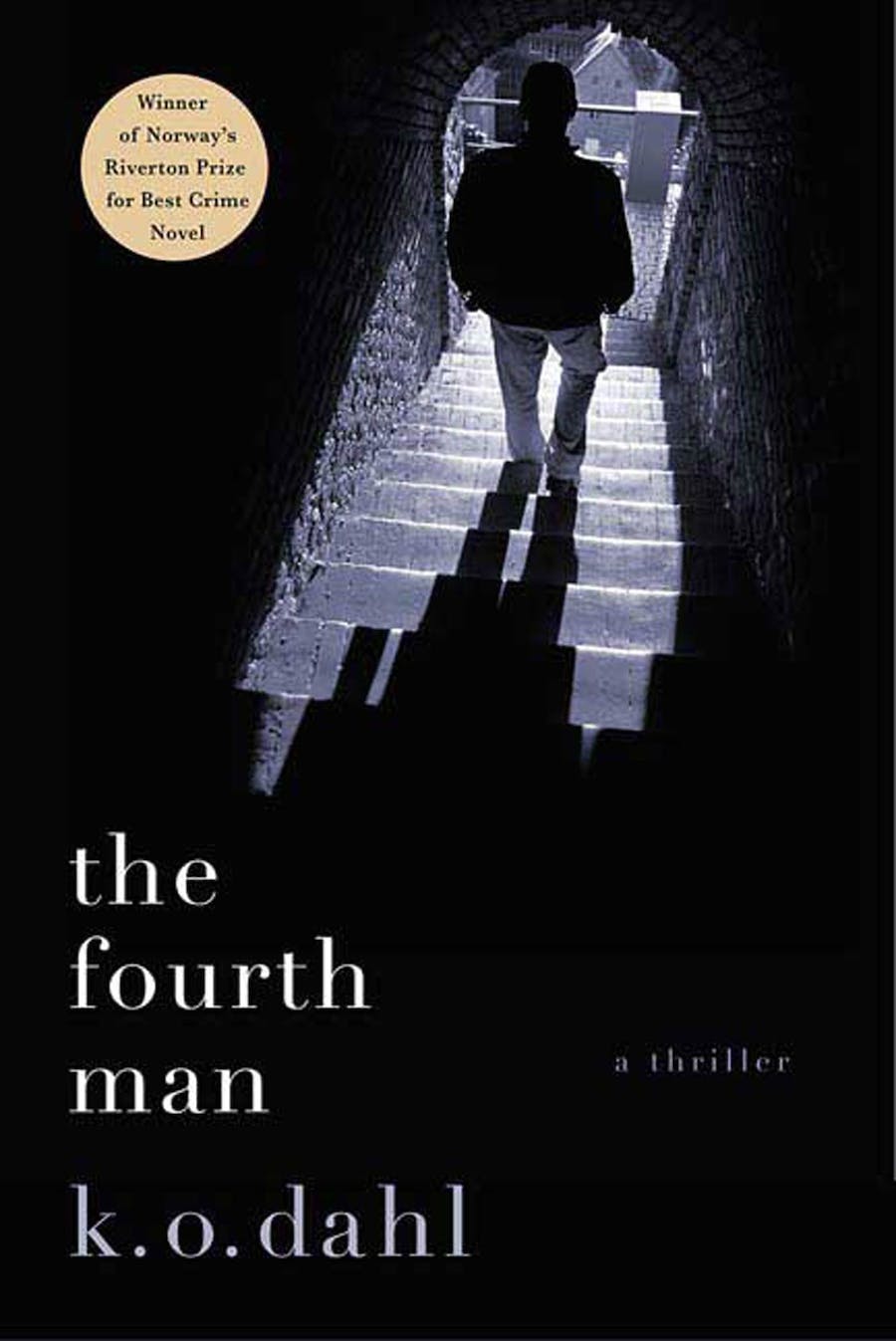
Photo of book by Blaz Photo on Unsplash

Observations from … January 2023

A summary of what was included on More to Come in the month of January 2023. If you receive my monthly email update, you can skip this post.

For many of us, winter can be a difficult time. If that’s the case with you, my hope is that one or more of the January posts on More to Come will brighten your day, help you see a small part of the exceptional in life, and prove a bit of a cure for any winter blues that may be hanging around outside your door.


TOP READER VIEWS

On the next-to-the-last day of the month, this post about our move to the Washington region twenty-five years ago took off and topped the list of monthly reader views. I’ve now lived in Washington longer than in any other community. That started me thinking about the meaning of home, and I turned to my brothers and sisters to begin this exploration.  Even though we were all born in the same town, our answers differ. I include their thoughts, along with mine, in Home is ….

We live remarkable lives, my new year post on January 2nd, was bumped down to second in reader views. In place of annual resolutions, I created eight rules for how I wanted to live my life in 2013. This essay revisits those rules and highlights eight posts from the past year, one for each rule.

A close third was A love letter to readers. I have been deeply touched by the positive feedback from friends and strangers alike who have sent comments or notes, usually through social media or email, concerning something I’ve written in recent weeks. This letter is my way of capturing a sampling of that thoughtful feedback while saying thank you to everyone who takes the time to read. As a bonus, it includes almost 40 books that readers suggested I consider for 2023. It’s a great list!


WORKING FOR FREEDOM AND JUSTICE

MLK Memorial Detail (photo credit: LuAnn Hunt from Pixabay)

January is a time when we celebrate the life and legacy of The Rev. Dr. Martin Luther King, Jr. I had two posts over the King holiday weekend, the first — Feels like freedom  — being a celebration of the music of Ruthie Foster, who builds on the musical traditions that fueled the Civil Rights movement. A long-time friend and regular reader wrote, “I was so taken by the Ruthie Foster post I listened to it twice through. What a gift to music and society!”

The second post of the King weekend was The enduring nature of America’s original sin, a review of journalist Adam Serwer’s book The Cruelty is the Point: Why Trump’s America Endures. The month we honor the work and legacy of Dr. King is also a good time to remind ourselves that cruelty in American life has been around long before now. It will continue to exist in some form well into the future until our country comes to support the policies that protect those too many of our fellow-citizens hate and fear. This post went up just days before the release of the painful and difficult video that documents Tyre Nichols’s murder at the hands of five, now former, Memphis police officers. I believe it is a time to center black voices in this conversation, and if you haven’t read it already, I encourage you to read former head of the Legal Defense Fund, Sherrilyn Ifill’s essay. Like Serwer’s book, it can be a hard, but difficult read.

Halfway around the world, Ukraine is fighting for democracy. Protecting the pearl of the Black Sea celebrates the recent inclusion of the historic center of Odesa on the UNESCO World Heritage List. I use that post to highlight the work of one of the leading scholars of authoritarianism, Timothy Snyder, on why the world needs Ukrainian victory.

Finally, to get an early start on the celebration of Black History Month, I use the January 28th Saturday Soundtrack to spotlight the music of Allison Russell, an Americana, roots, and jazz-influenced musician who is working to be “The hero of my own story.”


FROM BEAVERS TO MURDER MYSTERIES TO MORE COMPLICATED TRUTHS

I picked up in January right where I left you in December, reading five books each month. I encountered some terrific writers over the last four weeks which, as you might suspect from the subheading, cover a wide-range of topics.

  • The past and future of one weird rodent is a review of Leila Philip’s new book Beaverland: How One Weird Rodent Made America. This is a fascinating look at the one animal, besides humans, that has an inordinate impact on their environment.
  • I made the decision to read one murder mystery a month in 2023, and I began the year with Agatha Christie’s best-known work. In some cases, it is obvious who committed the crime details how I came to jump down the murder mystery rabbit hole, beginning with And Then There Were None.
  • Life is what happens as we’re working towards perfection takes a look at Kate Bowler’s 2021 book No Cure for Being Human (And Other Truths I Need to Hear). Bowler explores how to handle the life you’re given instead of something from an unattainable dream. Her work is direct, honest, and humorous.
  • If you are of a certain age, you will recall the fascination of flipping through a series of 3 X 5-inch cards looking for just the right book. If you fall into that cohort, I bet you’ll enjoy Bringing a sense of order and clarity in a chaotic world, a love letter to the card catalog as well as an “ode to the enduring magic and importance of books.”

WHATEVER ELSE TICKLED MY FANCY

We moved to what I affectionately call “the old home place” in Murfreesboro when Grandmother Brown came to live with us. She is always my inspiration for the short, to the point adage that speaks of truth, so in her memory I include I love the pithy proverb – Volume 7 ― the latest installment in my ongoing series. Here in the lead-up to the Super Bowl, it is important to remember that truth spoken by long-time Buffalo Bills coach Marv Levy: No game is a must-win. World War II was a must-win.”

I’ve noticed that we often fail in choosing leaders because we focus on the wrong strengths. Thoughtful and inclusive leadership came out of a family visit to Delaware, where we saw effective leadership in action. Poor leadership selection played out on our televisions in early January in the comical yet very sad process of choosing a new Speaker of the House. The eventual winner seems to have had lifelong ambitions to hold the position but no true principles.


CONCLUSION

Thanks, as always, for reading. As you travel life’s highways, do your best to treat others with kindness, undertake some mindful walking every day, recognize the incredible privilege that most of us have, and think about how to put that privilege to use for good. Women, people of color, LGBTQ individuals, immigrants, and others can feel especially vulnerable…because they are. Finally, work hard for justice and democracy because the fight never ends.

More to come…

DJB


You can follow More to Come by going to the small “Follow” box that is on the right-hand column of the site (on the desktop version) or at the bottom right on your mobile device. It is great to hear from readers, and if you like them feel free to share these posts on your own social media platforms. 


For the December 2022 summary, click here.


Image by Alain Audet from Pixabay

Home is …

If you live in the South, it is important to be able to answer certain questions. “Where are you from?” is the most important followed closely by, “Who are your people?” Both are really questions about home. Some also want to know, “Are you saved?” Southerners, bless their hearts, have a need to ground themselves in place, history, family, and religion. It is both a blessing and a curse.

When asked, this Southerner says, “Murfreesboro, Tennessee.” Technically I was born in Cookeville and raised in Murfreesboro but that’s my story and I’m sticking to it. My people are from Franklin, although again technically mother was born on a farm in Wilson County.

Yet, as of this weekend I’ve lived twenty-five years in the Washington region, longer than in any other community. Is this now home?
The quick response to my own question was an emphatic “no.” But it only took a moment of reflection before I realized that the answer is more complex.

A birthplace or long-time residence usually comes front-of-mind when thinking of home. But what happens when we move, perhaps due to age or health reasons? Are we homeless? Thomas Moore describes home as “an emotional state, a place in the imagination where feelings of security, belonging, placement, family protection, memory, and personal history abide.”

I’m not ready to move entirely to an emotional state, but I clearly need to think more deeply about home.


As a young couple with a growing family, Mom and Dad lived in five different houses in Cookeville. In 1966 we moved to Murfreesboro and in 1969 my parents bought 407 E. Main Street when my grandmother came to live with us. They were in this house for two decades.

My brothers and sisters were all Cookeville-born/Murfreesboro-raised, but our lives took very different paths. To start this exploration, I asked them what comes to mind when they think of home.

DJB (left) with Debbie, Steve, Carol, and Joe (l-r) — December 2015

Steve, an arts administrator in Florida, said simply,

Home is where my wife is.

Debbie, now retired from local government, responded with Murfreesboro — “as I’ve lived here for 56 years” — then added,

Home is a place for family to feel secure. A place to carry on traditions and to pass along family memories to my children and grandchildren. Home is not just a house or city but it’s the people who share it with you.

Home for Joe, the artist blacksmith, is the log house on Cripple Creek, where he and his wife Kerry, who passed away six years ago, lived. Full of memories, joy, tears, heartache, and at times loneliness, this home now “yearns for new purpose as my friends come and share it with me when we seek a deeper relationship with God.”

My home has a new life and I pray it will harbor many more times of joy, laughter, and encouragement, but this home is only temporary till God calls me “Home”.

Carol, the librarian and retired Baptist missionary, has blogged about home. She was raised on East Main and loves that place, but in recent years her view has changed. Each of the more than six countries where she has lived carries a sense of home with accompanying memories. But her “true home is not in this world.”

I’ve become a stranger in a strange land, not only because I’ve moved in and out of countries and cultures, but because any home I have here on this earth is a temporary residence. Just as that house on East Main gave me a taste of “rest,” Christ’s promise of a heavenly home is where I know true rest will be, and that’s home to me. 


407 E. Main Street
Staunton, Virginia

Tied as it is to memory and identity, home is intertwined with the cycle of life. It transcends place and time, inviting different interpretations.

Madeleine L’Engle once wrote that she was still every age she had ever been. Similarly, I am home in places and with people past, present, and future where I feel understood and loved, even with all my faults and foibles.

Home includes 407 E. Main, with its memories across multiple generations: sounds, smells, laughter, crying, loss, discoveries, birth, death. Each Thanksgiving also brings us home to Staunton, where Candice and I began our married life and our family became one. The welcoming embrace of place and friends mixes memories with present joys and sorrows.

In March we’ll celebrate our anniversary, and part of my soul will be at home as we return to the evocative landscape at Mohonk Mountain House. I look at the photographs on the wall here in Silver Spring and realize that these are the choices I’ve made and the people I’ve loved. Yes, this is home as well.

35th anniversary dinner
Celebrating an anniversary at a snowy Mohonk Mountain House

Death is part of any real discussion of home, yet no one really knows what that future will be. The old blues song — Everybody wants to go to heaven, but nobody wants to die — speaks to our fears. To those who count on meeting mom and dad, C.S. Lewis reminds us that there is nothing biblical about the comforting images of “family reunions on the further shore.” L’Engle says we must recognize that we simply do not know. “It is not in the realm of proof. It is in the realm of love.”

For me, death is not the end but just another passage in an ongoing journey. I look forward to being welcomed — warts, imperfections, and all — into a home intertwined in some unknowable way with familiar, sacred, yet perfectly ordinary places. That future home may be here now; in a reality I can’t yet see.

The places we call home are remarkable, challenging, and full of contradiction. Home is where we love, acting out our connections with others. Home is where we set down deep roots. Home stretches across time as a journey. Yes, home is a paradox, but all truth is paradox.

Considering the complexity of all its dimensions, home is in the realm of love. Which seems just right to me.

More to come…

DJB

Image: Family photo wall.