Latest Posts

The most memorable books I read in 2022

In a preview for the upcoming Books I read in 2022 post, here are the five most memorable books I encountered over the past twelve months. Listed in the order they were published, one is decades old but still holds power. Another is an in-depth study on remembrance. There are sobering assessments of authoritarianism. And the most recent is a sensitive and tender memoir around loss, love, and being human. All are thoughtful and well crafted, bringing perspectives that pushed me to think in new directions.


Jesus and the Disinherited (1949) by Howard Thurman.

The book by this philosopher, theologian, educator, and civil rights leader may be best known as Martin Luther King Jr.’s inspiration before he led the Montgomery bus boycott. Thurman “demonstrates how the gospel may be read as a manual of resistance for the poor and disenfranchised.” In the chapter on hate, he writes that Jesus affirmed life and rejected hatred “because he saw that hatred meant death to the mind, death to the spirit, death to communion with his Father.” As Martin Luther King demonstrated, Jesus and the Disinherited can be a life-changing book.


Nothing Ever Dies: Vietnam and the Memory of War (2016) by Viet Thanh Nguyen

This comprehensive look at what Americans call the Vietnam War and what the Vietnamese call the American War pushes the reader to think beyond simple frames, self-serving myths, and established timelines to examine the many ways we remember wars and how those memories are shaped through the years. Nguyen calls for a process of commemoration which remembers others as well as one’s own. His book is as current and important as today’s headlines over who owns and who sets the narrative of American history.


Twilight of Democracy: The Seductive Lure of Authoritarianism(2020) by Anne Applebaum

An important work that stands as a sobering and clear-eyed assessment of the motivations and tactics of authoritarians and their followers who have taken over political parties formerly dedicated to democracy. These authoritarians — individuals driven by resentment and envy, true believers in the righteousness of a moral system that elevates them while punishing those they do not like, grifters looking to make a windfall, and elite intellectuals who will destroy their countries to maintain power — have adopted a similar playbook in a variety of countries. Applebaum brings context while synthesizing history over centuries into compelling, digestible portions.


How the South Won the Civil War: Oligarchy, democracy and the continuing fight for the soul of America (2020) by Heather Cox Richardson.

A searing, provocative, and masterful history of how America’s oligarchs have tapped into the extraordinary strength of the ideology of American freedom to undermine freedom and liberty for anyone who is not white and male. After their defeat in the Civil War, these oligarchs regrouped and aligned with business and extraction interests in the West to create a new political power based on hierarchies. That shift changed America’s trajectory toward equality. How the South Won the Civil War is full of surprises and insight.


Lost & Found: A Memoir (2022) by Kathryn Schulz.

A gem of a book, this is the rare memoir worth reading that is written by someone who is happy. Schulz knows that there is both a wonder and fragility to living in this world, but she is constantly amazed by life. Lost & Found is a meditation on loss and love in three parts, beginning as she is losing her father. She considers loss from the trivial to the consequential, the cosmic to the personal. At the same time, she is finding her life partner. Every love story, writes Schulz, “is a chronicle of finding, the private history of an extraordinary discovery.” The final section considers how in the midst of the transitions of losing and finding, life goes on. Schulz ends this wonderful meditation by noting that disappearance reminds us to notice, transience to cherish, fragility to defend. “We are here to keep watch, not to keep.”


In the Honorable Mention category, I would include these four works:

  • The Baseball 100 (2021) by Joe Posnanski — the self-described “writer of sports and other nonsense” — is characterized by the publisher as “a magnum opus…an audacious, singular, and masterly book that took a lifetime to write.” 

The full list of the 60 books I read in 2022 will be published here on Wednesday, December 28th.

More to come…

DJB


Since books are the gift that keeps on giving, click here as a bonus to see the five most memorable books I read in 2021.


This Weekly Reader features links to recent articles, blog posts, or books that grabbed my interest or tickled my fancy. I hope you find something that makes you laugh, think, or cry. 


Image by congerdesign from Pixabay

Thirty years goes by in the blink of an eye

Our lives changed forever thirty years ago today.

Claire Holsey Brown and Andrew Bearden Brown were born one minute apart on December 20, 1992. (Claire can tell you who is the oldest.) How little we understood then how fast thirty years would pass, but it has gone by in that proverbial blink of an eye.

Brown family (credit: John Thorne)
The Browns – Together in December 2018 and looking forward to the year ahead! (photo credit: John Thorne)

Through the years the milestones have been chronicled on More to Come. To watch them grow into the wonderful adults they’ve become has been the joy of our lives. We remember each phase of that growth, knowing that it wasn’t always easy (for them or for us), but secure in the knowledge that they were surrounded by love.

A favorite picture from 1993
Mealtime in Staunton
At the beach (2004)

Here are a few highlights from previous postings:

  • Every year for 13 years we took a picture of the twins on the First day of school. This post from 2010 looks at the first (as they began kindergarten) and final (as rising high school seniors) in that series.
  • Claire and I took a life-enriching cross-country driving tour in 2014 as she was returning to Southern California for her senior year in college. I wrote extensively about that trip and wrapped it up in Observations from the road: The thankfulness edition. Over 18 days together in a car, I was reminded that she is intelligent, quick-witted, funny, thoughtful, inquisitive, curious, flexible, and loving. One in a million.
  • In 2015 we chronicled their graduations from college, first with Claire, and then a week later with Andrew.
  • Earlier this year, when Andrew announced that he was going to study at the Opera Institute at Boston University, we wanted to acknowledge his many teachers and mentors in All that we owe our teachers. Andrew is an incredibly talented musician with a beautiful gift who has worked hard, with great encouragement and coaching from others, on his craft.
Claire and Andrew do the Danish look
Copenhagen 2014
New glasses
Clarity is a pair of new glasses: Andrew and Claire, December 2016

Andrew and Claire are now both engaged in satisfying careers that uplift and enrich others. In October, Claire passed her Licensed Clinical Social Worker exam in California. She works helping a range of clients navigate their worlds in a small, woman-owned practice in Alameda, California, while also becoming more active in the local community and staying in touch with a large circle of friends.

Claire Holsey Brown, LCSW

Andrew is a professional tenor, whose music continues to engage and inspire others. This past weekend we traveled to beautiful Christ Church Christiana Hundred in Wilmington, Delaware to hear him perform as the tenor soloist in Handel’s Messiah with members of Philadelphia’s Tempesta di Mare; the professional Christ Church Choir; and other nationally acclaimed Baroque vocalists: Nacole Palmer, soprano; Sylvia Leith, alto; and Edmund Milly, bass.

Andrew and alto Sylvia Leith perform a duet during Sunday’s performance of Messiah.

Whenever the passage of time comes up, this story from 2014 usually finds its way into the conversation:

I was in the line at the pharmacy this morning, waiting to drop off a prescription.  A mom with a set of boy-girl twins was in front of me, with the children in their two-seater stroller.  (The heavy equipment phase of child-rearing, as we used to describe it.)  The kids were beautiful, and they were having the most wonderful conversation about shoes.  The mom was so patient and kind.  It was a joy to simply stand there and watch the love.

After passing along their prescription, the mom gathered her things to leave. I asked about the twins’ age. She replied that they were two-and-a-half. I smiled, and said I had 21-year-old boy-girl twins, and this brought back lots of memories. The mom asked if I had any advice.  I replied simply, “Savor every moment.”

It has been an unimaginably wonderful thirty years which we’ve tried to savor as best we could.

Happy birthday, Claire and Andrew! We love you and can’t wait to see what’s next in your lives.

Mom and Dad


More to come…

DJB

Image of Andrew and Claire celebrating in Paris in May of 2021 by DJB

Looking for life in the winter shadows

Advent wins my award for the least understood season of the Christian Church year. It probably doesn’t even come up on the radar screen of nonbelievers, since it can be rather obscure. To many who are not familiar with the liturgical tradition, Advent is nothing more than the countdown to Christmas, sort of an “only 12 more shopping days left” reminder to focus on what really matters: buying those gifts!

Even for individuals who work to honor the season, it can be difficult. For starters, the liturgical music for Advent pales in comparison to those beautiful Christmas carols. Seriously, after O Come, O Come Emmanuel, what is there?

Then there are those prophets featured in the season’s liturgical readings. Oh my!

While Isaiah can paint beautiful portraits, if you read carefully you find yourself asking, “We’re supposed to do what to help ensure the Peaceable Kingdom?” As my friend and mentor Frank Wade once said in response to Isaiah, “Our job is not just patching up the victims of violence and developing elaborate systems to keep anger at bay. Our job is eliminating violence and danger, replacing them with harmony and trust.” No small task there.

And, of course, John the Baptist can be an especially tough pill to shallow. He’s the original fire-and-brimstone preacher. Again, Frank has a good description of this righteous and angry man who was “keenly disappointed in the ways of the world and the habits of people. Like many before and after him he was sure that God felt the same way.” So, John the Baptist — as we get to read during these Sundays in Advent — proclaims the anger of God “in chilling, axe-whacking, chaff-burning, fruit-rotting terms.”*

Even though John the Baptist was essentially wrong, it can all seem too hard to take, so we grab another cup of eggnog and get primed for the 25th.

Fortunately, there are many good resources to help us walk this season, and we’ve been using one in our family this year. Night Visions: Searching the Shadows of Advent and Christmas (1998) by Jan L. Richardson is a series of daily meditations and blessings for the Advent and Christmas seasons. The author’s original artwork, reflections, poetry, and prayers accompany the reader from the beginning of Advent through the Day of Epiphany which celebrates the arrival of the Magi, inviting us to encounter the God who dwells in darkness as well as in daylight. Richardson writes that Advent is a season when something is on the horizon, but it is easy to miss, especially as we live our lives comfortably ensconced within the lines of our limited vision. In her meditations, she encourages us. Stay. Sit. Linger. Tarry. Ponder. Wait. Behold. Wonder.

Advent is about patience.

The quickening night and winter shadows lend themselves to these types of responses. Richardson writes in a meditation entitled Shadow Goddess that we are…

…taught to know a God who lives in a blaze of glory, a deity so dazzling that humans who dare to gaze upon the firey presence rarely live to tell the tale. There is something startling about a deity who dwells also in shadow, who chooses and creates the night again and again, who hallows the waning hours. I want to know her, this presence who goes with us as day gives way to darkness.

The blessing that follows the meditation The Moon is Always Whole continues to focus on shadow and darkness.

God of the two lights, I love the sun, its revealing brilliance, its lingering warmth; but in the dark of night, let me learn the wisdom of the moon, how it waxes and wanes but does not die, how it gives itself to shadow, knowing it will emerge whole once more.

For the last week of Advent, Richardson writes that we see the signs,

…but cannot always divine their meanings. You call us to move forward not always knowing whether what we grasp in our hands will prove to be a seed of hope or a thorn in our flesh. Train our fingers, that what brings life we may with persistence hold, and that which wastes our souls we may with grace release.

Look in the shadows of winter, where we find ourselves now, to discover that which brings us life.

More to come…

DJB


NOTE: Richardson is an artist, writer, and ordained Methodist minister. She has attracted an international audience “drawn to the spaces of welcome, imagination, and solace that she creates in both word and image.” Candice gives especially high praise to another of Richardson’s books, The Sanctuary of Women, that draws from women’s wisdom through the ages.


*Frank can really turn a phrase!


I also read Hidden Christmas: The Surprising Truth Behind the Birth of Christ (2016) by Timothy Keller as part of my Advent devotionals this year. Keller is a best-selling author and Presbyterian minister with fans that very much love his work. However, I found his book to come from a very moralistic perspective. Keller spends a great deal of time telling us that we are not people who can pull ourselves together and live a moral and good life…so we need to follow his interpretation of the Gospel. It is very Presbyterian in that sense. I prefer James Alison’s look at the non-moralistic nature of Christianity, myself.


Image of landscape by Almeida from Pixabay

A gift of new favorites for 2022

Many of the musicians featured in the Saturday Soundtrack posts are like old friends who have been in my life for a long time. As part of the series, I have also committed to discovering music that I didn’t follow when I was young, highlighting musicians brought to my attention by friends, readers, and music newsletters. Those new discoveries are gifts, if you will.

Since we are in the gift-giving season, I want to revisit a few of those “new favorites” that may be well known to some of you, but that just discovered (or rediscovered) in 2021 and 2022.*

John Reischman

Reischman, whose music we explored early this year, writes melodic mandolin tunes that have become classics. Here, with his longtime collaborators the Jaybirds, John leads the group on a lovely version of Lancaster Sound.


Windborne

Perhaps my favorite discovery of 2022 is Windborne. We heard this group of amazing acapella singers in concert earlier this month and have become new fans. I’ve chosen three songs to feature: Huddie Ledbetter’s Bring a Little Water, Silvie, recorded several years ago; along with a beautiful arrangement of Bread and Roses. The band’s humor really came through live, and you can capture a bit of that magic in How We Do It — a visual and musical display of the way they create the arrangements for their songs.


Yasmin Williams

I continue to be amazed by the musicianship and creativity of Yasmin Williams, whose music I discovered in 2021. Her sound and style stand as a “challenge to widespread preconceptions about the music made by young Black people or acoustic guitarists. It’s Williams’s achievement that she makes that challenge sound so calming and beautiful.” Take a listen to Through the Woods, recorded at Washington’s Dumbarton Oaks for the New York Guitar Festival sessions.


Low Lily

The folk trio Low Lily was another find from 2021 that I return to again and again. The band has a new album, Angels in the Wreckage, coming out in 2023, and they’ve released a video of the first single from that project, Shawn Colvin’s Round of Blues.


Kyshona

A self-proclaimed “music therapist gone rogue,” Kyshona blends a powerful voice with a healing message. She has been touring throughout 2022, releasing new music, and collaborating with a wide group of amazing musicians. I love this recent video of My Own Grave, filmed in Nashville’s replica of the Parthenon.


Tatiana Eva-Marie and the Avalon Jazz Band

Seldom a day passes when at least one reader doesn’t stop by to check in on the 2021 post featuring Tatiana Eva-Marie and the Avalon Jazz Band. It is easy to see why, once you listen to Eva-Marie’s captivating voice and see her hot and sassy style of interpreting 1930s jazz. She has a new project in the works, celebrating the music of guitarist Django Reinhardt, the inventor of Gypsy Jazz. Give a listen to her sing a beautiful arrangement of Autumn Leaves.

Enjoy!

More to come…

DJB


*Over the course of 2022, I did not feature as many new artists as was the case the year before. Click here to check out the Gift of New Favorites from 2021.


Next week on Saturday Soundtrack, we’ll highlight music of the Yuletide seasons. In two weeks, look for the top ten posts from 2022 in this series, based on readers’ views. It is a great list!


Image by Mike Gattorna from Pixabay.

In the realm of love

My experience of loss during the holiday season is no doubt similar to many others. Mother’s cancer had returned in the fall and she went into hospice care. Our twins were turning five in December, we had just sold our house, and we were moving to Washington at the end of January. It was an exciting and busy time in our household. Nonetheless, over the holidays I made the trip to see her one final time, even though we lived 12-hours away. Candice and the twins stayed in Staunton. At the end of a two-day visit, I gave her a kiss, said my last goodbyes, sat in the driveway and cried, and then drove the 12 hours back to Virginia on New Year’s Eve. My brain was a jumble of thoughts and emotions.

Mom, who had turned 68 in December, died early in the morning on New Year’s Day, 1998. Even now, 25 years later, I’ve never celebrated the new year quite the same.

For many, the holiday season is full of anticipation and joy. Others face the season coping with loss and grief. The remembrance of the death of a parent, spouse, lover, sibling, child, or friend can bring back difficult memories. Those facing life after divorce or separation, coping with the loss of a job, or living with a disease that puts a question mark over the future may also be grieving in ways seen and unseen.

Regrets and grief can plague us at any time of the year. But for some, the holidays are a time when regrets are easy to recall and often hard to dismiss. At this time when those around us appear happy and full of joy, grief can suddenly take over our souls.

For too many, the darkness of the coming winter — perhaps evoking the “mad midnight moments” — takes on personal overtones.

In her generous and perceptive memoir Lost & Found, author Kathryn Schulz briefly mentions the book where the “mad midnight” quote is found. Written by a well-known twentieth-century scholar and author, it doesn’t garner the attention of many of his most popular works, perhaps because of its unflinching honesty around loss of faith during times of grief. Spurred by Schulz’s comment, I was reading it within a week.

A Grief Observed (1961) by C.S. Lewis is a transcript of his journal from the time following the death of his wife, the American poet Helen Joy Davidman. It is brief, poignant, and honest. Lewis, the well-known Christian apologist and writer of the celebrated Chronicles of Narnia, works through his grief, the loss of meaning and faith, and his efforts to regain his footing in this world. It is highly personal, so much so that author Madeleine L’Engle writes in a thoughtful foreword that Lewis helped her understand that each experience of grief is unique. Still, there is a universality to it as well, as what Lewis describes feels so much like what so many have gone through in our period of mass death worldwide. A Grief Observed is focused on one man and woman and — at the same time — all men and women.

“No one ever told me that grief felt so like fear,” Lewis writes as his journal opens. However, because these journals were hand-written notes, Lewis will make a statement only to circle back a few pages later to approach the issue anew. He returns to the feeling of fear to say in a latter passage that it is less that he is afraid, but that he feels as though he has been left in suspense of something, giving life “a permanently provisional feeling.”

Like Schulz, Lewis has no time for euphemisms and mushy thinking. “She died. She is dead. Is the word so difficult to learn?” And he reminds his readers not to speak about the “consolations of religion or I shall suspect that you don’t understand.”

Unless, of course, you can literally believe all that stuff about family reunions ‘on the further shore,’ pictured in entirely earthly terms. But that is all unscriptural, all out of bad hymns and lithographs. There’s not a word of it in the Bible. And it rings false. We know it couldn’t be like that. Reality never repeats.

No one can say what happens to the dead but, as L’Engle notes, “The important thing is that we do not know. It is not in the realm of proof. It is in the realm of love.”

If each grieving experience is unique, they are all nonetheless processes. Feelings and thought patterns emerge to be sorted through and reconsidered again and again. Lewis, in one such instance, notes, “You are presented with exactly the same sort of country you thought you had left miles behind.” There is an exhaustion to the process.

Lewis eventually works out his thoughts on faith and death, but he stops writing in the end only because he has run out of fresh notebooks and refuses to buy any more for this project. Grief can last a lifetime, changing shape and form but always present. Lewis makes the case, however, that it is only by facing grief head on that we can move forward.

The darkness of night leads to dawn and a new day, where new possibilities await. It will be a day different from the one just completed. And we can begin anew.

Reading A Grief Observed, notes L’Engle, “is to share not only in C.S. Lewis’s grief, but in his understanding of love, and that is richness indeed.”

More to come…

DJB


This Weekly Reader features links to recent articles, blog posts, or books that grabbed my interest or tickled my fancy. I hope you find something that makes you laugh, think, or cry. 


Image by Claudia Martinez from Pixabay.

Daydreaming in a focused, driven world

Lifelong learners spend the days between birth and death working through what they know, what they don’t know, what they want to know, and — to quote the great philosopher Satchel Paige — what they know that just ain’t so.

Mindfulness falls somewhere within that mix for me.

Several family members and friends practice meditation. I admire their ability to focus mind and breath into a deeper calmness, but for me it doesn’t come easily.

Each day I include yoga as part of a morning practice, but I am easily distracted. At the one meditation retreat I attended, I fell asleep, which I am pretty sure was not the teacher’s goal. When awake, my mind has a constant observer firmly in place. I may be doing one thing, but chances are very good that I have one or more additional activities taking place in my head.

As a historian and planner by training and inclination, I want to understand the past and consider the future, often at the same time. Unfortunately, that sometimes happens while I’m involved in some third activity where I should be fully present. Such as washing the dishes. (Did I really just chip that crystal glass?)

Living fully in the moment is a difficult practice for me in part because I find value in mind-wandering.

Mindfulness is often promoted as the preferred state of being in today’s focused, driven world. Daydreaming, on the other hand, has a less-than-stellar reputation. My meager attempt to change that dynamic — I was trying to daydream but my mind kept wandering — asserts that not all daydreaming is bad. Cognitive scientists suggest that like it or not, we are programmed to alternate between mind-wandering and paying attention. The late scientist and author Michael C. Corballis argues that mind-wandering is both constructive and necessary.

It includes mental time travel — the wandering back and forth through time, not only to plan our futures based on past experience, but also to generate a continuous sense of who we are.  Mind-wandering allows us to inhabit the minds of others, increasing empathy and understanding.  Through mind-wandering we invent, tell stories, expand our mental horizons.  Mind-wandering underwrites creativity, whether as a Wordsworth wandering lonely as a cloud, or an Einstein imagining himself travelling on a beam of light.

E.B. White once wrote, “The curse of flight is speed. Or, rather, the curse of flight is that no opportunity exists for dawdling.”

I do some of my best dawdling and daydreaming — wandering and wondering — while I walk, a practice that in my eyes is mindful. Yet the traditional view of mindful walking involves “not thinking about the future, not thinking of the past, just enjoying the present moment.” There is certainly value in that type of meditation. I have walks where I am very focused, but my default is to let my mind wander.

Kathryn Schulz has written that our world is not either/or. In considering mindfulness and mind-wandering, I feel the need to shed my carefully constructed conceptions, as one writer phrased it, “like so many old snakeskins.” I’m seeking to understand when it is important to live completely in the moment, when I need to wander, and when those two things can take place at the same time — which may be much more frequently than I currently comprehend. I don’t know. To help, I recently turned to a book on the mindful life from a renowned spiritual leader.

Peace Is Every Step: The Path of Mindfulness in Everyday Life (1991) by Thich Nhat Hanh shows us how to make positive use of the situations that usually pressure and antagonize us. This series of meditations, reflections, and stories from Nhat Hanh’s experiences as a peace activist, teacher, and community leader begins with simple techniques around basic human actions such as breathing, smiling, and walking. “The source of a true smile is an awakened mind,” he writes. Forming a smile on our face can relax hundreds of muscles in our body — Nhat Hanh calls it “mouth yoga” — and it has a peaceful effect.

Nhat Hanh brings the essence of these ancient Buddhist meditations forward so they can be applied to the challenges of our times. But beyond these basic tasks, Nhat Hanh asks us to consider how to use mindfulness for transformation, reorienting ourselves to the relationships around us.


In working to differentiate between the mindless, the mindful, and the mind-wandering in my life, I see my decisions around relationships are too often made out of mindlessness. The destruction that can arise from that choice is clear. However, that still leaves me pondering the relative value of mindfulness and mind-wandering.

Alan Watts, a twentieth-century philosopher of Eastern religions, writes that belief clings, but faith let’s go. Our job is not to try and figure it all out, but to move out of the certainty of our boxes and into what author Debie Thomas terms “holy bewilderment.” Out of familiar territory, we move “into a lifetime of pondering, wondering, questioning, and wrestling.”

I’ve moved the mindfulness versus mind-wandering construct into the “What I know that just ain’t so” category. And I’m letting it go in order to consider the life-enriching connections and contradictions of mindfulness and mind-wandering.

Think I’ll ponder that on this morning’s walk.

More to come…

DJB

Image by Couleur from Pixabay.

The books I read in November 2022

Each month my goal is to read five books on a variety of topics and from different genres. Here are the books I read in November 2022. If you click on the title, you’ll go to the longer post on More to Come. Enjoy!

Lost & Found: A Memoir (2022) by New Yorker staff writer Kathryn Schulz is a gem of a book; the rare memoir written by someone who is happy that is worth reading. Schulz knows that there is both a wonder and fragility to living in this world, but she is constantly amazed by life. Lost & Found is a meditation on loss and love in three parts. She considers loss from the trivial to the consequential. While Schulz is losing her father, she is also finding her life partner. Every love story, “is a chronicle of finding, the private history of an extraordinary discovery.” The final section considers how in the midst of the transitions of losing and finding, life goes on. Schulz ends this generous and perceptive meditation by noting that disappearance reminds us to notice, transience to cherish, fragility to defend. “We are here to keep watch, not to keep.”


The Spirit of Soul Food: Race, faith, and food justice (2021), by The Rev. Christopher Carter, PhD is a revelation from a minister and scholar who has thought deeply about race, food, and nonhuman animals. “Our foodways are an expression of our identity…our foodways are personal and communal, emotional and habitual.” Carter notes that in order to be taken seriously, he needed “to wrestle the culinary deity that soul food has become.” Central to his struggle is the question, “Given the harm that our food production system inflicts upon Black people, what should soul food look like today?” This work is part history lesson, part spiritual meditation, and part call to action to address the often-oppressive underpinnings of our broken food system.


Elite Capture: How the Powerful Took Over Identity Politics (And Everything Else) (2022) by Olúfẹ́mi O. Táíwò is a short but powerful work that examines the polarizing discourse of “identity politics” and how political, social, and economic elites have captured a phrase and political viewpoint for their own use. Táíwò’s work explains the complex process of elite capture and helps us move beyond a binary of “class” vs. “race.” Reminding his readers that the point is to change it, he works through ways to read the room we’re in, find ways to ensure that the marginalized are in the room, and — ultimately — to build a new house completely. 


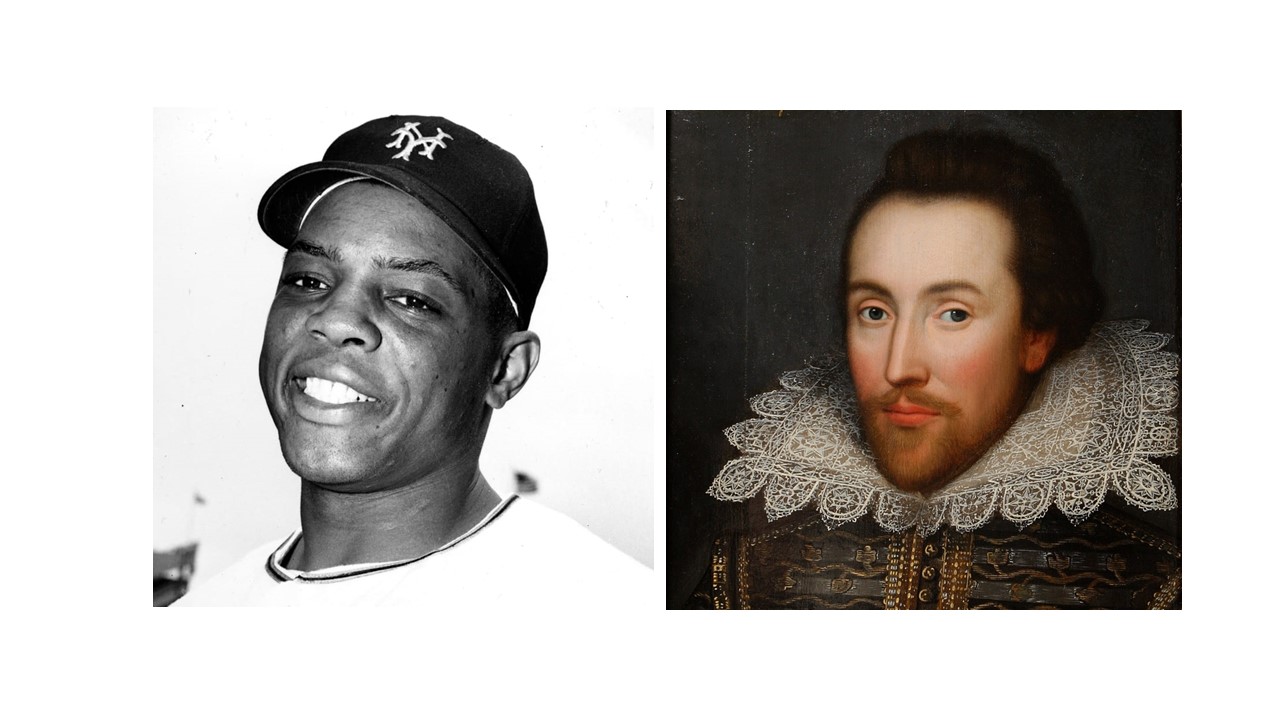
24: Life Stories and Lesson from the Say Hey Kid (2020) by Willie Mays and John Shea is a great memoir from a true sports hero. Broken into 24 chapters, Mays recounts stories about his father, “Cat” Mays, in Play Catch with Your Dad; recalls his days in the Negro Leagues with the Birmingham Black Barons in Remember your History; and much more. Mays, who grew up in segregated Alabama during Jim Crow, was no fool, but his life lesson was to Have Fun on the Job. Did anyone bring more joy to the game than the young Willie Mays? Did anyone provide fans with more joy his entire career? I profess to being biased, but Willie Mays is, simply, the greatest baseball player of all time.


Wishful Thinking: A Theological ABC (1973) by Frederick Buechner is filled with witty, slightly off kilter, and unconventional insights and asides. Buechner, who passed away in August, wrote this book — a “dictionary for doubters and restless believers” — from a desire to reconsider and return to the meaning of well-used words. It is equal parts thoughtful, spirited and entertaining. Although uneven, it is a very accessible book, that relates to the doubter and the restless believer…which encompasses most of us who are truly human.

More to come…

DJB


NOTE: To see which books I read in January, FebruaryMarch, April, MayJune, July, AugustSeptemberand October click on the links. You can also read my Ten tips for reading five books a month online.


This Friday edition of the Wednesday Weekly Reader features links to recent articles, blog posts, or books that grabbed my interest or tickled my fancy. I hope you find something that makes you laugh, think, or cry. 


Image of library from Pixabay.

Get up. Get dressed. Put your shoes on. Get ready.

This is why I continue to believe in the promise of America. This is why I love my country, even when voters are forced to vote again and again in “a vestige of the ugly side of our complicated American story.”

“Because we always have a path to make our country greater, against unspeakable odds, here we stand together.” Senator Raphael Warnock spoke truth last evening.

  • The four most powerful words in a democracy, “the people have spoken.” 
  • A vote is a kind of prayer for the world we desire for ourselves and for our children. 
  • A teenager growing up in Waycross, Georgia, my mother used to pick somebody else’s cotton and tobacco. Tonight, she helped pick her youngest son to be a United States senator.
  • Let me be clear. The fact that millions of Georgians endured hours in lines — and were willing to spend hours in line — lines that wrapped around buildings and went on for blocks, lines in the cold, lines in the rain, is most certainly not a sign voter suppression does not exist. Instead, it is proof that you, the people, will not allow your voices to be silenced. And I am proud to stand with you. 
  • I believe that democracy is the political enactment of a spiritual idea. The notion that each of us has within us a spark of the divine…We all have value. And if we have value, we ought to have a voice. 
  • We stand here tonight on broad shoulders. Our ballot is a blood-stained ballot. We stand here on the shoulders of the martyrs. Schwerner, Chaney, and Goodman, two Jews and an African American who lost their lives fighting for that great American right to vote. Viola Luizzo and James Reeb, white sister and the white brother who also lost their lives. Fannie Lou Hamer, that indominable Mississippi sharecropper. And my parishioner, God bless his memory, John Lewis.

Senator Raphael Warnock’s victory speech:

There’s a time to celebrate, then — as Senator Warnock’s father said every morning — it’s time to go back to work. The defense of democracy never ends.

More to come…

DJB

Help for the restless believer

Most of us have doubts. However, many of the questions where doubts arise have answers that are easily found. Will I’ll ever attain my trim college look of 150 pounds and a 32″ waist? I doubt it. The answer, however, is much clearer. That’s not going to happen. Period.

But you probably have harbored doubts about things that you can’t really know, yet suspect matter in the greater scheme of things. Questions such as the existence of God. You are not alone. “If you don’t have any doubts you are either kidding yourself or asleep. Doubts are the ants in the pants of faith. They keep it awake and moving.”

Not exactly stuffy theological reflection, there.

Wishful Thinking: A Theological ABC * (1973) by Frederick Buechner is filled with witty and unconventional insights and asides. Buechner, who passed away in August, wrote this book — a “dictionary for doubters and restless believers” — from his experience as school minister and theology teacher at the Phillips Exeter Academy. Wishful Thinking, he noted, arose from a desire to reconsider and return to the meaning of well-used words.

Words like doubt.

The frame is like that of a dictionary, starting at A (agnostic) and going through Z (Zaccheus). Some of the words he explores are expected. When considering grace, Buechner writes that while some religious words become shopworn and meaningless after centuries of handling and mishandling, that isn’t true of grace, for some reason. “Mysteriously, even derivatives like gracious and graceful still have some of the bloom left.”

Most of us know that grace is something you can only be given.

A good sleep is grace and so are good dreams. Most tears are grace. The smell of rain is grace. Somebody loving you is grace. Loving somebody is grace. Have you ever tried to love somebody?

Other chosen words are surprises for a book on theology. Take, for instance, feet.

“How beautiful upon the mountains are the feet of him who brings good tidings,” says Isaiah (52:7). Not how beautiful are the herald’s lips which proclaim the good tidings, or his eyes as he proclaims them, or even the good tidings themselves, but how beautiful are the feet — the feet without which he could never have made it up into the mountains, without which the good tidings would never have been proclaimed at all….

Generally speaking, if you want to know who you really are as distinct from who you like to think you are, keep an eye on where your feet take you.

Buechner is something of a quote machine. Here are a few examples:

  • Anger — Of the Seven Deadly Sins, anger is possibly the most fun. To lick your wounds, to smack your lips over grievances long past…The chief drawback is that what you are wolfing down is yourself.
  • Bible — To read the Bible as literature is like reading Moby Dick as a whaling manual or The Brothers Karamazov for its punctuation.
  • Children — Jesus was not playing Captain Kangaroo. He is saying that the people who get into Heaven are people who, like children, don’t worry about it too much.
  • Envy — Envy is the consuming desire to have everybody else as unsuccessful as you are.
  • Questions — On her deathbed, Gertrude Stein is said to have asked “What is the answer?” Then, after a long silence, “What is the question?” Don’t start looking in the Bible for the answers it gives. Start by listening for the questions it asks.
  • Sex — Contrary to Mrs. Grundy, sex is not sin. Contrary to Hugh Hefner, it’s not salvation either. Like nitroglycerin, it can be used either to blow up bridges or heal hearts.

Wishful Thinking is equal parts thoughtful, spirited and entertaining. My men’s book group just finished reading this work and found it uneven at best. Some got tired of Buechner’s attempts to create pithy sayings. The book also has a bit of its era imbedded throughout (as in the Captain Kangaroo and Hefner references). So, it is imperfect but can still be useful.

We live in a world today where a sizable minority from all different faith traditions wants us to believe that they have religion figured out, they know who is going to heaven (and they are always in that cohort), and — by God — they are going to make the rest of us follow their beliefs whether we like it or not. They don’t have any doubts.

Frederick Buechner (pronounced Beekner) has written this uneven yet generally accessible work for many of the rest of us: the doubters and the restless believers.

More to come…

DJB


*The books subtitle was changed in a later edition, so you may find it as Wishful Thinking: A Seeker’s ABC.


This Weekly Reader features links to recent articles, blog posts, or books that grabbed my interest or tickled my fancy. I hope you find something that makes you laugh, think, or cry. 


Image by Monika from Pixabay

Embrace the liminality in life

A friend was stepping down after a successful period of business leadership. In a note of appreciation, I encouraged her to embrace the liminal passages that she would inevitably go through at this moment, even as life moves forward around her. In the midst of our remarkable lives, it seems important to welcome those uncertain in-between places. They can create new connections which come alive when we least expect it.*

Embracing liminality is one subtext of a superb new memoir, a book that served as a reminder of why I enjoy exploring writers previously unknown to me. Every now and then you uncover a real gem.

Lost & Found: A Memoir (2022) by New Yorker staff writer Kathryn Schulz is one such gem. In the initial section, entitled Lost, Schulz admits she has “always disliked euphemisms for dying.” Words like “passed away,” and “no longer with us” seemed like a “verbal averting of the eyes.” But her father had barely been dead ten days when she heard herself utter the one exception to her rule: “I lost my father.”

That sets Schulz on a meditation about loss, from the trivial to the consequential, the abstract to the concrete, the cosmic to the personal. Isaac Schulz was clearly a force in his daughter’s life. When he was lost, she grappled with the enormity of the void and the myriad ways she would be forced to cope.

Schulz writes, “To be bereft is to live with the constant presence of absence,” and she carefully navigates us through her personal sense of that void. The emotion “confuses us by spinning us around to face backward, because memories are all we have left, but of course it isn’t the past we mourn when someone dies, it’s the future.”

The book’s second section — Found — suggests that one of the challenges of finding the right thing in this world is that we often simply do not know what we are looking for.

Schulz, a single woman in her early 40s at this point in the story, isn’t sure what she’s looking for as she contemplates committed relationships. Yet suddenly she is writing about finding her life partner in a totally unexpected moment after a mutual friend innocently suggests they meet for lunch. C. as Schulz identifies Casey Cep, the woman who will become her wife, stops by her Hudson River town for a meal. They are very different in fundamental ways: Schulz was raised in the relative wealth of Cleveland’s suburbs while C. is from working folk on Maryland’s rural Eastern shore; Schulz is a non-practicing Jew and C. is a Lutheran with a master’s degree in theology. Nonetheless, on their second date — which lasts nineteen days — Schulz realizes that she has met the woman she wants to marry.

Every love story “is a chronicle of finding, the private history of an extraordinary discovery.” And the characteristic emotion of the liminal passage of falling in love is amazement.

Schulz is most often moved to gratitude and tenderness and awe by those parts of C. that are least like her. “Love is so often written about analogically — ‘my luve is like a red, red, rose,” etc. — yet the point of the beloved, the whole reason you are in love with her is that she is like no one else on earth. That includes you: your beloved is not like you.”

C. and Isaac Schulz do get to meet, but within eighteen months he is gone. The transitions around losing the parent who raised and shaped you and finding the love of your life are almost universal experiences. The Lost and Found sections, therefore, often explore the ways we react to the liminality in our lives.

A third section, entitled And, considers the passage of time that takes place around the liminal transitions of lost and found. In our deepest grief, life goes on. As we experience the initial joys of love, life goes on.

Schulz is clearheaded in her exploration of the mixed experiences and motives we encounter.

The world is full of beauty and grandeur and also wretchedness and suffering; we know that people are kind and funny and brilliant and brave and also petty and irritating and horrifically cruel…. As Philip Roth once put it, ‘Life is and.'”

Our world is not either/or. We live with many things at once. Everything is connected to its opposite; everything is connected to everything.

This world rewards those who pay attention and Schulz pays attention in ways all exceptional writers do. As she moves through life, Schulz notes that her days are exceptional even when they are ordinary. “We live remarkable lives,” she writes, “because life itself is remarkable.”

This book itself is a rare find: a memoir by someone who is happy that is worth reading. It is a tender, searching meditation on love and loss and what it means to be human. Schulz, an exquisite writer, knows that there is both a wonder and fragility to life. While many feel small and powerless in the face of that reality, it is also easy to feel amazed and fortunate to be here.

On the whole…I take the side of amazement. I cannot look closely for any length of time at even so simple a thing as a pond and do otherwise….what serves us best, in the face of inexorable loss, is not our grief or our acquiescence but our attention. For now, at least, the world is ours to notice and to change, and that seems sufficient.

Schulz ends this generous and perceptive work by noting that disappearance reminds us to notice, transience to cherish, fragility to defend. “We are here to keep watch, not to keep.”

More to come…

DJB


*Liminality is a state of transition between one stage and the next, especially between major stages in one’s life or during a rite of passage. The concept of liminality was first developed and is used most often in the science of anthropology. In a general sense, liminality is an in-between period, typically marked by uncertainty.


Image of threshold from Pixabay.