Latest Posts

Celebrating Paul McCartney

As part of my lectures on National Trust Tours, I’ve occasionally asked fellow travelers to think with me about how old something needs to be before ― you know ― its old. How do we determine that it is historic? Then I ask this question: Please raise your hand if you can remember the first time you felt old?

I don’t know what your answer would be, but the day I first felt old was in the late 1990s when I heard that the British National Trust had acquired the boyhood home of Paul McCartney. A couple of years later they also acquired John Lennon’s childhood home. Whoa! How could this be…this wasn’t old, for that meant…that I was old!

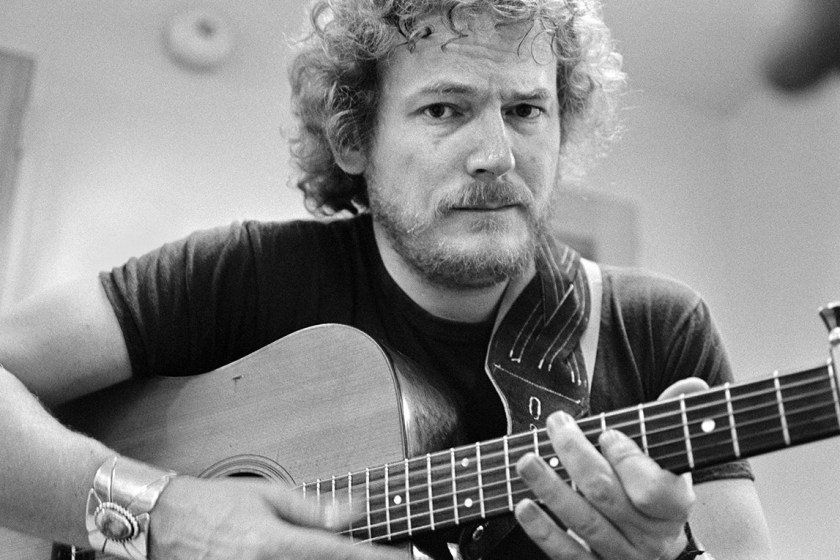
Paul McCartney (left) and John Lennon (right) practicing in the living room of McCartney’s boyhood home (credit Michael McCartney via the British National Trust)

I’ve always been one of those individuals who was a little sheepish about my feelings toward Lennon and McCartney. The cool kids suggested that John Lennon was the real creative genius behind the Beatles, and that McCartney was just a good salesman. But I was always drawn more to McCartney’s music and style. I tended to keep this perspective to myself…until I read Ian Leslie‘s magnificent essay from 2020 entitled 64 Reasons to Celebrate Paul McCartney.

Oh my!

Leslie has written a VERY long piece, and you may begin to flag well before you get to reason number 64. But I’ll tempt you with excerpts from a couple of his points and encourage you to go to the link at The Ruffian and read the entire post.

Here’s reason #3:

Perhaps this is a good moment to take a step back, the better to observe something astonishing: Paul McCartney has been writing and performing music more or less continuously since 1956. That’s sixty-four years. For the best part of a century, he has been creating songs that people sing in the shower and belt out in the car; songs to which people dance, run, cook, kiss and get married; songs we sing in crowds; songs we get stoned to; songs we sing with our kids; songs that wrap themselves around us when we’re down; songs that fill us to the brim with joy. His finest work is undoubtedly frontloaded by the miraculous accident of The Beatles, but there are gems scattered throughout his career, right up to the present day. For sheer fecundity, I can’t, with the exception of Bob Dylan, think of any other songwriter who comes close.

Reason #5 to celebrate this terrific artist:

McCartney’s reputation has never fully recovered from the shredding it took when The Beatles broke up. He is still compared unfavourably to his most important creative partner. Lennon is soulful, deep, and radical; McCartney is shallow, trivial and bourgeois. That dualism, which took hold in 1970 and was reinforced by Lennon’s horribly premature death, still holds sway. Probably if you asked most people who know a little about The Beatles to say who they found most interesting, John would be the most common answer. If you surveyed Beatles nerds I suspect they would be more likely to say Paul, since the more you learn about the band the more stunned you are by what he brought to it.

And while McCartney made an effort to present himself as ordinary, reason #12 punches a hole in that perception.

He is, of course, one of the most un-ordinary individuals in history. When people acknowledge McCartney’s talent they usually mean his songwriting, which is not surprising, since he is as great or greater than any songwriter who ever lived. But it means we overlook what is a positively freakish array of gifts. Imagine if Cole Porter also sang like Frank Sinatra and played clarinet like Benny Goodman. If McCartney had never written a song he would be one of the great singers; if he had never written or sung he would be one of the great bassists — and that’s before we get on to his guitar, his piano, his drumming and his studio innovation.

With that introduction, I want to celebrate the magic that is Paul McCartney’s music for today’s Saturday Soundtrack. To do so, I’ll take short snippets from Leslie’s piece and add in video to demonstrate his point.


Let’s start with the singing

It is among the most exciting moments in twentieth century music: Lennon tears through the opening verse of A Hard Day’s Night, then McCartney steps forward in the middle (“When I’m hooome…”). One of the crazy things about the Lennon-McCartney partnership was that they both had all-time great rock voices. If Lennon’s specialism was raw emotion, McCartney’s was a range of expression which verges on superhuman. Few can match him as a rock n’ roll screamer — listen to Long Tall Sally or Oh Darling.On Lady Madonna he does Presley crossed with Fats Waller. In his singing, as in his lyrics, he inhabits characters.

(McCartney) has a rare ability to glide through what classical singers call the passaggio — the transition between chest and head, which for most humans is a vocal speed-bump. Listen to Maybe I’m Amazed and marvel at that post-chorus glissando down from the heights.


Then there’s the songwriting

Monday, June 14, 1965. The Beatles didn’t get to Abbey Road until the afternoon. They set about recording three Paul songs, starting with I’ve Just Seen a Face (one of my favourites; I love the way it rollicks, lines tripping over themselves, enacting the breathlessness of love at first sight). They get it right after six takes, and move on to I’m Down, a bluesy screamer in the style of Little Richard. After seven takes, it’s done. The session ends, the Beatles disperse before returning in the evening, when Paul records a ballad called Yesterday, in two takes. Three songs, in wildly divergent, highly demanding styles, in one day. McCartney nails all of them for all time. By 10pm he and Jane Asher are at a bar on Cromwell Rd.


Then there’s McCartney the instrumentalist

Take the songwriting and the singing away and McCartney would still earn his place in the pantheon as one of the great bassists, despite, or maybe because, he didn’t want to be one. He joined the band as a guitarist, but when Stu Sutcliffe left, Lennon dragooned McCartney into playing bass. Bass-players, back then, were reticent creatures, happy to blend into a song without attempting anything flash. That was never going to be McCartney’s style, and his innovation started early. I Saw Her Standing There is powered by its driving bassline (that he can play this line on stage while singing the melody is a source of wonder and fury to bassists). Before the chorus, he halves the speed, playing half-notes under the run-up to the climactic moment of the song (So how could I dance with another…). Counter-intuitively that increases the tension and momentum. It makes you want to scream. Later on, and to a far greater extent than anyone had dared to before, he made the bass a melodic instrument, another voice, as on Michelle, Paperback Writer, Rain.

Like his piano playing, his acoustic guitar isn’t as revolutionary as his bass, but it’s entirely, distinctively him. Many people can play Blackbird, but nobody else can play McCartney’s Blackbird

The scalding lead guitar on the theme of Sgt. Pepper’s Lonely Hearts Club Band is McCartney. As well as the bass on Taxman, McCartney plays that angular, modernist, Indian-flavoured guitar solo, one of the best solos in all The Beatles’ work. It happens to be on a song by the group’s lead guitarist. Similarly, his drumming on Dear Prudence — he stepped in after Ringo walked out of the White Album sessions — is some of the best drumming on a Beatles track. No wonder the others could find him annoying.

And if you really want to go down the rabbit hole of Taxman.

McCartney really is in a league of his own, as he enters his ninth decade of life. Here’s one of my favorites from the McCartney canon:

Ian Leslie uses Reason #64 to let us know what he’d do if he bumped into Paul on the street.

If I do see Paul McCartney in the street, I think I know what I will say to him, actually, presuming I can get the words out. I will say thank you. I might even tell him that I love him.

To end, let’s return to those boyhood homes of Paul McCartney and John Lennon. They really were places of creativity. Yet what happens to those homes when no one remembers screaming to I Want to Hold Your Hand? Sir Paul turned 80 on June 18th this year. Many of his fans have passed that milestone as well.

Liverpool England in the 1950s was near one of the largest U.S. bases in the world, and the American influence on the area was enormous. U.S. soldiers at Burtonwood looked — among other pleasures — for music that sounded like home. Four musicians from the city were more than happy to oblige.

While the rest of England was stuck in the vaudeville era, Liverpudlians had a special advantage with access to American records — especially from African American artists — and a big financial incentive to master that music. The first song that the Beatles recorded was a Buddy Holly cover.

Yes, the Beatles made new music in their time and place. Their boyhood homes can continue to inspire that type of creativity in the future, if we don’t preserve them in amber. The British National Trust is taking just the right approach, having recently hosted an event for current musicians to play music inspired by Lennon and McCartney in the living room of Paul’s boyhood home. These places were not only significant in the 1950s and 60s, but they remain so now. We can still see these homes as places of creativity.

‘I have spent all my life trying to say thank you to the Beatles, who made succeeding generations believe that, yes, you can achieve your dreams. There were no trappings, no luxury in the young McCartneys’ home, in Forthlin Road. But there was music, and inspiration. They were saying…if we can make our dreams come true … so can you.’

Annie Nightingale CBE, from the National Trust article on the Forthlin Sessions

If we follow a conservation approach that allows what is living to stay alive and true to the place, McCartney’s genius will live on not only in his music but in his boyhood home.

More to come…

DJB

Image of Paul McCartney and inset of his boyhood home (credit National Trust for England, Wales, and Northern Ireland).

Observations from … November 2022

A summary of the posts on More to Come in the month of November 2022. If you receive my monthly email update, you can skip this post.

I hope you and yours had a wonderful Thanksgiving holiday. Ours was full of friends, food, love, and music (can it get any better?) and was part of a November that had more than its share of surprises.

  • On the national level, the midterm elections have come and (mostly) gone, and our democracy remains intact.
  • Personally, Mr. Covid came for a visit earlier this month.

Yes, after a return to my morning walk after a gap of ten days Carter and Barry, my street-dependent friends, expressed concern about my health. I told them I’d come down with a moderate case of Covid and they asked if I’d picked it up on our recent trip to Southeast Asia. I told them that, in fact, I’d caught the virus at a dinner party with some of Candice’s friends from grade school. As I told the story, Barry quipped that I should turn it into a t-shirt: “Covid: I survived the wet markets of Phnom Penh only to be ambushed by the crab shacks of Annapolis!”

Ah, the wisdom of the streets.


NO SURPRISES among the top posts of the month

Our family birthday dinner in Paris

It was not a surprise, however, that one of the top two posts of November on More to Come was the perennial favorite of family photographs: Our year in photos – 2022 . Fair warning, this is full of family pride and doesn’t attempt to be objective!

The other favorite among readers this month was my wrap-up from our Southeast Asia trip Observations from the Mekong River. Here you will find thoughts and pictures from the tour, along with links to the six (!) other posts from the trip which I shared with you last month.


THE BOOKS I’m reading

I’ve continued my quest to read five books each month and write about them on More to Come. Per usual, the summation of the books I read last month ― in this case The books I read in October 2022 ― was another reader favorite.

After returning from my trip to Southeast Asia where I was taking in the work of authors focused on that region, my reading habits returned to the more eclectic pattern that is my norm. If you check out the blog, you’ll find books ranging from China’s first foray into global leadership in the 14th century (The making of the modern world ) to a theological meditation on soul food and food justice (Race, faith, and food justice). There’s one about my childhood hero, Willie Mays (Giving thanks for childhood heroes) and a work by Olúfẹ́mi O. Táíwò  on how the powerful took over identity politics (and everything else) in The billionaire has no clothes.


THANKFULNESS

On Thanksgiving Day, in thinking about how difficult it can be to give thanks in challenging times, I posted some thoughts on gratefulness and thankfulness in An attitude of gratitude.

Of course, I’m always thankful for good music. During the month I posted two new entries to the Saturday Soundtrack series. The first ―Mountain soul ― featured a duet by Chris Stapleton and the country music legend Patty Loveless singing a live version of the poignant You’ll Never Leave Harlan Alive. The second ― Songs and solidarity ― introduced readers to a fantastic folk acapella group, Windborne. The group will be performing in the Washington region on December 2nd and we’ll be there!


THE KITCHEN SINK

I had some thoughts in response to the rise in antisemitism that builds off a meditation by a well-known peace advocate in Recognizing our inherent oneness. And in a post unrelated to anything except my weird sense of humor, you may wish to consider my take on pro wrestling holds in Thanksgiving and sports.

Finally, you may have noticed that we had a midterm election in the U.S. I have felt that the threat to democracy from a political party that tried to overturn a free-and-fair national election was too great a challenge to simply sit out. I’m not a political scientist or an expert (NOTE: you may want to read my disclaimer below), but I do like to look at current events through the lens of history. When some point of view or trend interests me, I read what I can and pull together thoughts from writers with experience in these topics. Over the first half of November, I aggregated material from a variety of sources into several different posts in order to consider the midterm elections and their impact on our democracy.

  • This series began with When you may be too paranoid for your own good, as I looked at “safety coffins” from the 18th and 19th centuries (who knew such a thing even existed?!) and thought about those who peddle paranoia today in order to hold onto power over others and to enrich their personal fortunes.
  • As I said in the post For those still living in the reality-based world, we have a party that will lie and then laugh about an attack on an 82-year-old grandfather that almost killed him just to maintain the pretense that they are relentlessly persecuted by progressives. When one looks at all the accomplishments of the Democrats and the Biden administration in the face of this unrelenting disinformation campaign, it is truly remarkable.
  • On the day following the midterms, I wrote History says we should not give up on democracy, suggesting how every generation has their challenges in maintaining our democracy, with examples from 1884 and 1918.
  • I dove deeper into the will of the electorate in The people speak, as I surveyed a number of ballot initiatives that passed in support of progressive priorities, even in deep-red states.
  • That was followed by Consider the source, a look at how a number of respected media critics and historians see the failure of our political press as being part of the problem in the threats to democracy.
  • The last (I promise) in this election-year series was Laughter is the best medicine, which also wrapped up my series of political cartoons from 2022.

CONCLUSION

In these especially difficult and unsettling times, remember to treat others with kindness, undertake some mindful walking every day, and recognize the incredible privilege that most of us have and think about how to put that to use for good. Women, people of color, LGBTQ individuals, immigrants, and others can feel especially vulnerable…because they are. It was the Roman philosopher Cicero who said, “Gratitude is not only the greatest of the virtues, but the parent of all others.” That’s a pithy proverb worth remembering for November. Finally, work hard for justice and democracy because the fight never ends.

More to come…

DJB


*DISCLAIMER FOR THE POLITICS-RELATED POSTS: While I have voted for Republicans in the past (e.g., Howard Baker was one of the first votes I cast for a U.S. Senator), I’m a lifelong registered Democrat who, following in the footsteps of my late father, has become increasingly progressive as I get older. I agree with President Biden that “the government isn’t some foreign force in a distant capital. No, it’s us, all of us, we the people.”  As such, government should work to better the lives of all the people, not just those with access to wealth and power. I believe we need to stop the war ON government and begin to fight FOR government.  I won’t apologize for the fact that I have called out the authoritarianism of one of our political parties, the Republicans, in these pieces. Their leaders have made their goals abundantly clear. If any of that makes you uncomfortable, then I encourage you to skip these posts.


You can follow More to Come by going to the small “Follow” box that is on the right-hand column of the site (on the desktop version) or at the bottom right on your mobile device. It is great to hear from readers, and if you like them feel free to share these posts on your own social media platforms. 


For the October 2022 summary, click here.


Image of fall by YES 😊 I Love the Nature 🌻💕 from Pixabay

The billionaire has no clothes

You have no doubt heard the story of the emperor who had no clothes. Hans Christian Andersen began the tale with the following:

Many years ago there was an Emperor so exceedingly fond of new clothes that he spent all his money on being well dressed. He cared nothing about reviewing his soldiers, going to the theatre, or going for a ride in his carriage, except to show off his new clothes.

Two swindlers, claiming to be weavers, came to town and said they could weave the most magnificent fabrics imaginable. They were not only colorful, but clothes made of this cloth had a wonderful way of becoming invisible to anyone who was unfit for his office, or who was unusually stupid.

The clothes hanger the emperor was handed held nothing at all, but that didn’t stop him from putting on the “garment” and walking around naked. Having heard that to point out the obvious would confirm one’s own incompetence and stupidity, none of his subjects dared to point out the obvious. The spell holds until a young child yells, “But he hasn’t got anything on.”

As I was reading a new book, this fable came to mind, but this time with new characters in each role.

Elite Capture: How the Powerful Took Over Identity Politics (And Everything Else) (2022) by Olúfẹ́mi O. Táíwò is a short but powerful work that examines the polarizing discourse of “identity politics” — from the campaign trail to the classroom — and how political, social, and economic elites have captured a phrase and political viewpoint for their own use. First articulated by radical Black feminists, identity politics was “grounded in their own position as Black lesbians with the explicit aim of building solidarity across lines of difference.” The elites, funded by billionaire libertarians, have weaponized the phrase “as a means of closing ranks around ever-narrower conceptions of group interests.”

In looking at how this capture and weaponization took place, Táíwò notes that the concept of elite capture originated in the study of developing countries to describe the way “socially advantaged people tend to gain control over financial benefits, especially foreign aid, meant for others.” The concept has also been “applied more generally to describe how political projects can be hijacked in principle or in effect by the well-positioned and resourced.” Táíwò notes that identity politics has come under the increasing domination of elite interests who control many aspects of our social system. Socially advantaged people “tend to gain control over benefits meant for everyone.” Often those who benefit the most are the ultra-wealthy, supported by enablers in politics and the media.

To respond, the author expresses a preference for outcomes over process.

We should respond to the problems of elite capture, and the racial capitalism that enables it, not with deference politics but with constructive politics. A constructive approach would focus on outcome over process: the pursuit of specific goals or results, rather than mere avoidance of “complicity” in injustice or promotion of purely moral or aesthetic principles.

The socially advantaged gain control not because they are necessarily smarter, but often because others refuse to call out the obvious, just like the emperor’s handlers and subjects. There are many examples that demonstrate why the fable fits so well in our current culture.

For instance, we have created a compensation system that has its foundations in the myth of America as a meritocracy and rewards the few at the cost of the many. Earlier this year, Apple’s shareholders approved a total compensation package that came to nearly $100 million for CEO Tim Cook. They did so despite a shareholder advisory firm recommending against the deal because it was so excessive.

Apple is certainly a thriving company, churning significant growth and rising shareholder value. Even so, it’s fair to ask whether Tim Cook was worth 1,447 times the median pay of Apple employees for that fiscal year, which is what he was ultimately awarded.

The short answer: he’s not.

As Amanda Marcotte wrote in Solon, perhaps we are finally beginning to see the negative impacts of such a corrupted belief system, getting the point that billionaires aren’t any smarter than other people and don’t deserve our praise. “Between Elon Musk, Sam Bankman-Fried, Donald Trump and Elizabeth Holmes,” she asks, “who still believes that money equals brains?” If you add in the false belief that money equals altruism, I will also name Rupert Murdock, Jeff Bezos, Peter Thiel, and a host of others.

Are we beginning to see that the billionaire has no clothes?

Marcotte writes that it has long been evident that Elon Musk is a moron, at least to those willing to see it. * “For those of us who always thought Trump was a dingleberry, it may not seem readily apparent how much he’s really gotten a boost from the widespread assumption that wealth comes attached to inherent smarts.” ** In the cases of Elizabeth Holmes and Sam Bankman-Fried “it should have been obvious that what they were selling to investors was pure nonsense.”

Even (Bill) Gates and (Steve) Jobs, who were unquestionably brilliant at developing and marketing innovative computer technology, have lost a little of their luster. Jobs, of course, died of cancer after convincing himself that he knew better than doctors how to treat it. Gates, meanwhile, blew up his marriage by acting like a garden variety jackass. Even genuinely smart people can be stupid sometimes. More importantly, a bunch of people who have tricked everyone into thinking that they’re geniuses are finally being revealed as the imposters they always were. 

Táíwò’s work explains the complex process of elite capture and helps us move beyond a binary of “class” vs. “race.” Reminding his readers that the point is to change it, he works through ways to read the room we’re in, find ways to ensure that the marginalized are in the room, and — ultimately — to build a new house completely. By rejecting elitist identity politics that benefits billionaires in favor of a constructive politics of radical solidarity, he advances the possibility of organizing across our differences in the urgent struggle for a better world.”

It is time to recognize that the billionaires, and other elites, have no clothes. It is time to focus on building and rebuilding the rooms of democracy. Táíwò notes that it takes planning to create these places. The question the constructive program asks is: Will the plans be theirs or ours?

More to come…

DJB


*On the day my piece was posted, commentator Oliver Willis sent out an essay that read I Think Elon Musk is Just…Dumb. I have to agree.


**Marcotte adds this delicious takedown of the myth of Trump: “To be clear, I don’t think Trump’s a total imbecile. He’s a skillful criminal with a certain low cunning. He’s just bad at all the things his defenders wanted to believe he was good at: Business, governance, literacy.”


This Weekly Reader features links to recent articles, blog posts, or books that grabbed my interest or tickled my fancy. I hope you find something that makes you laugh, think, or cry. 


The drawing of the Emperor by William A. Methven

Recognizing our inherent oneness

While recovering from my recent bout with Covid, I spent hours in bed or lying on the couch. In hopes of avoiding all the bad punditry about the election, I watched more sports television than is normal or healthy. There I came up against the sad saga of Brooklyn Nets guard Kyrie Irving tweeting support for an antisemitic movie and the resulting fallout.*

Antisemitism is on the rise in America and around the world, as it often is during periods of disruption and hardship. Too many times this hatred comes from people who claim to be religious. It is part of the work to find a scapegoat for the devastation that results when we forget our inherent oneness. Too much of what is deemed religious in today’s world disregards our relationships and our responsibilities for caring for others. In response to recent actions by political figures who claim to be good Catholics, evangelical leader Jim Wallis has written that “there is nothing faithful, and certainly nothing Catholic, about using people as political props.”

This is why a recent meditation from Richard Rohr’s Center for Action and Contemplation struck a nerve. The post was written almost twenty years ago by Jesuit peace activist Father John Dear on the nonviolent impact that interfaith cooperation can make. In noting that at the heart of each major religion is a “vision of peace, the ideal of a reconciled humanity, the way of compassion and love and justice, the fundamental truth of nonviolence,” Dear spoke to the groundbreaking work of Mahatma Gandhi.

When he moved to India, and saw again the deep hostility between Hindus and Muslims, he made interfaith nonviolence the core of his daily worship. Each day when his community gathered for prayer, they read excerpts from the Hindu and Muslim scriptures, from the Sermon on the Mount and the Hebrew Bible. Then, they sat in silence for forty-five minutes. They concluded usually with a hymn about the all-inclusive love that reconciles everyone, the love even for one’s enemies. Forty years of interfaith, contemplative prayer transformed him into a universal spirit, as all the major religious scriptures hope for all of us. . . .

Father Dear wrote that as we learn from each other’s religion, we will discover, as Gandhi did, how we can help each other deepen in the faith of our own personal tradition. Gandhi’s critique of organized Christianity — that it rejected the nonviolence of Jesus and has become an imperial religion based on the Roman empire — has helped innumerable Christians return to the core teachings of Jesus, beginning with the Sermon on the Mount. The American Civil Rights leader The Rev. Dr. Martin Luther King, Jr. was a Baptist who testified that the Hindu Gandhi helped him more than anyone else to follow Christ.

This past election showed a strong rejection of the imperial religion of the Christian right that wants to impose its beliefs on the rest of the country. People of many faiths and people of no faith came together to say that a minority should not be allowed, in a democratic society, to impose its will and beliefs on the country as a whole. Our founders were very wise in this regard, and we forget their admonitions at our peril.

Any serious consideration of life in America realizes how quickly the persecuted become the persecutors in this country. Puritans, who fled religious harassment in Europe, quickly moved to hang Quakers. Evangelical Christians who led the way for religious freedom early in our history have seen many of their leaders turn against it in our own time. Conservative Catholics, long vilified in America, are now working through the courts to place their religious views on a majority who disagree with their theology.

The powerful effort to demonize, marginalize, and persecute others who are not Christians “represents a disintegration of the basic compact that sustains religious freedom for everyone,” religious scholar Steven Waldman maintains. The lines of attack today against Muslims and Jews are strikingly similar to those used in the past against Baptists, Mormons, Catholics, Jehovah’s Witnesses, and Native Americans.

Father Dear end his meditation with the following:

This interfaith peacemaking sprang from the Civil Rights Movement, when Dr. King called religious leaders to march with him to Selma. The friendship modeled between Dr. King, Rabbi Abraham Heschel and Thich Nhat Hanh still bears good fruit in our world and exemplifies the journey we must all make.

As the world hangs on the brink of nuclear and environmental destruction, as we wage war in the name of religion, we need to explore the religious roots of nonviolence, just as Gandhi did. Perhaps then, we will hear the call to disarm, to embrace one another as sisters and brothers, and welcome the gift of peace that has been already given.

I keep returning to another meditation from Richard Rohr. “What could happen,” he asks, “if we embraced the idea of God as relationship — with ourselves, each other, and the world? Is salvation simply the willingness to remain in loving relationship with all creation?”

It is a compelling thought in a world struggling to come to grips with our oneness.

More to come…

DJB


For further reading on More to Come, check out:


*For those who have better things to do with their lives than follow the “free thinking” commentary of a multi-millionaire basketball player, click on the New York Times story for the details and read Kevin Blackistone‘s thoughtful column in the Washington Post on appropriate responses.


Image of the grave of Mahatma Gandhi in Delhi by DJB.

An attitude of gratitude

Thanksgiving arrived two years ago during a particularly difficult time in which to give thanks. Turmoil, hate, distrust, discord, suffering, loss, and much more was staring us in the face every single day. The pain seemed to be exacerbated that year well beyond what was normal for our lives.

It is easy to give thanks when everything is going well. It is in the most challenging of times, however, when it is so very important to be open to gratefulness and to remember to be thankful. Thanksgiving itself came from a time of violence. Abraham Lincoln’s famous Thanksgiving proclamation was issued in the midst of some of the worst times of the Civil War.

So, the question arises: how can we be thankful in difficult times?


From their own unique perspectives, several spiritual leaders have addressed that question through the years. Thomas Merton wrote that gratitude “takes nothing for granted, is never unresponsive, is constantly awakening to new wonder.” Lakota author and activist Doug Good Feather notes that “each and every morning offers us a chance to start anew, fresh, and to begin again. Each morning when we wake — should we choose to listen — is a message from the Creator to remember the privilege we were given of waking up.” Richard Rohr suggests that a pre-existent attitude of gratitude is necessary, a deliberate choice of love over fear, a desire to be positive instead of negative.

If we are not “radically grateful” every day, Rohr writes, resentment always takes over. That has been my experience. Fighting the power to blame others and see the worst in the world takes effort. Every single day.


We often use the terms gratitude, gratefulness, thankfulness, and generosity more or less interchangeably, and there’s nothing wrong with that approach. However, David Steindl-Rast, a Benedictine monk, makes the case that there is a difference between gratefulness and thankfulness which is worth knowing.

He describes the two in this fashion:

“Remember a night when you stood outdoors looking up at the stars, countless in the high, silent dome of the sky, and saw them as if for the first time. What happened? Eugene O’Neill puts it this way: ‘For a moment I lost myself – actually lost my life. I was set free! I dissolved in the…high dim-starred sky! I belonged, without past or future, within peace and unity and a wild joy, within something greater than my own life…to Life itself!’…”

Our thoughts may quickly turn to thankfulness for the opportunity to witness this beauty, but in the first few seconds Steindl-Rast notes we are in some other state.

Why do I call that wild joy of belonging “gratefulness”? Because it is our full appreciation of something altogether unearned, utterly gratuitous — life, existence, ultimate belonging – and this is the literal meaning of grate-full-ness. In a moment of gratefulness, you do not discriminate. You fully accept the whole of this given universe, as you are fully one with the whole.

In the very next moment, when the fullness of gratitude overflows into thanksgiving, the oneness you were experiencing is breaking up. Now you are beginning to think in terms of giver, gift, and receiver. Gratefulness turns into thankfulness. This is a different fullness. A moment ago you were fully aware; now you are thoughtful. Gratefulness is full awareness; thankfulness is thoughtfulness.

I like that distinction.  If we are fully aware, fully mindful, we will often be grateful when we see something that connects us to things beyond ourselves, to a sense of belonging.

Along similar lines, Good Feather notes that gratitude and generosity are similar virtues, “but they differ in that gratitude is an internal characteristic and generosity is our external expression of our sense of gratitude. Basically, gratitude is how we feel, and generosity is how we express that feeling out in the world.”

When we turn our minds to how to respond to those internal and external connections, then thoughtfulness becomes thankfulness. Gratitude can lead to generosity. In giving thanks we act out our kindness to others, notes Steindl-Rast. “Barter is an exchange in kind; thankfulness is an exchange in kindness.”


Helping hands (photo credit: James Chan from Pixabay)

We all count on the kindness of others: friends and strangers alike. The richness of the blessings surrounding us did not come about because of work that we initiated. Nonetheless, we can have an ongoing attitude of gratitude towards those blessings and extend them in a spirit of generosity to others. Rohr states it well when he suggests that “humility, gratitude, and loving service to others are probably the most appropriate responses we can make.” 

No one got to where they are by themselves, and that’s especially true in a year like 2020 and again here in 2022, as we continue to grapple with the violence and hatred that is all around us. Recognizing this basic fact of life is key to a deeper understanding of grace.


I am thankful for all I have to celebrate on this Thanksgiving and for all the wonder and joy in my life every day. Thank you to the many family members, friends, colleagues, and even strangers who have been there for me over the years. I am so appreciative of how you help me navigate each year with whatever grace I’m able to muster.

I count myself lucky to have crossed paths with so many people who have, in the words of Fred Rogers, loved me into being. You may, or may not, remember what you did to lift me up. But I remember.

Thank you all. Let’s continue to work to be radically grateful every day. And have a wonderful Thanksgiving.

More to come…

DJB


NOTE: Much of this blog post was originally written for Thanksgiving Day 2020. During a much more hopeful Thanksgiving season, I’ve brought that post together with other thoughts into a new post as a reminder of the importance of being grateful and giving thanks at all times.


Image of the initial JWST Deep Field Image from the James Webb telescope.

Thanksgiving and sports

For many Americans, the Thanksgiving holidays conjure up two memories: food and sports. We all know about the food. And the opportunities to watch sports this weekend are never-ending, with college and professional football, college and pro hoops, hockey, and this year, for the cherry on top, the World Cup. I always felt that one of the master strokes of those who invented baseball was the fact that it wasn’t played on Thanksgiving.

These days I don’t spend Thanksgiving watching sports contests on television, but something in the deep, dark recesses of my memory was jolted when I came across the following sentence, which included a link that I had to follow.

Jim Jordan and Marjorie Taylor Greene must have Kevin McCarthy in a “double chickenwing camel clutch” wrestling hold.

What in the world is a Double Chickenwing Camel Clutch wrestling hold, you ask? A Thanksgiving pseudo-sports memory from my childhood gave me a clue, so I followed the link to the website for professional wrestling holds (yes, such a thing exists) and found that answer. Along with a whole lot more.

A wrestler stands behind an opponent and applies a double chickenwing. The wrestler then forces the opponent face-down to the mat, sits on his back, and pulls backwards, stretching the opponent’s neck and upper body backwards.

Let’s be clear. Professional wrestling is not a sport. It is more cartoon performance art. And yes, people take the time to not only come up with these names, but then to apply them to the scripted moves that make professional wrestling what it is. There is the Leg Hook Camel Clutch and the Deathlock Octopus. Plus the Ring Rope Chinlock. Not to mention the Chickenwing over the Shoulder Crossface.

It is a whole ‘nother culture out there, folks.

As I wrote in a 2017 post that, to this day, explains the Trump presidency better than anything else I’ve seen, I grew up on the fringes of that pro wrestling culture in the South of the 1960s. I watched Tojo Yamamoto, Jackie Fargo, and other professional ‘rassling heels and stars on local television with my grandfather and cousins long before there was a WWE. Since we usually gathered at Mamaw and Papaw’s house for Thanksgiving, this holiday brings back those memories.

And this is, frankly, just another excuse to repeat my favorite pro wrestling story of all time.

Tojo Yamamoto
Tojo Yamamoto (credit: Wikipedia)

Tojo Yamamoto took his name from two World War II enemies and played up the evil foreigner to the hilt, especially throughout the South.

“Wrestling in Boaz, Alabama, Yamamoto gave one of the great performances in pro wrestling. Before the start of the matches, he asked to give a statement to the crowd, which booed and hissed and threw things. In broken English he said, “I wish make aporogy. Very sorry my country bomb Pear-uh Harbor.” And the crowd quiets, as he wipes away tears, and they awwww in sympathy. “It wrong thing to do, I wish not happen.” They begin to applaud. “Yes, I wish not happen, because instead I wish they BOMB BOAZ!!!” Needless to say, the arena erupted.”

Wikipedia

Maybe someone should use the Tilt-a-Whirl Headscissors Takedown on these crazy MAGA-types in Congress. I’d pay to see that!

More to come…

DJB

Image by OpenClipart-Vectors from Pixabay

With Willie at ATT Park

Giving thanks for childhood heroes

I’ve never hidden my admiration for the greatest player to ever play baseball, the Say Hey Kid Willie Mays. Don’t believe my assessment? Well, read a bit of what the great Joe Posnanski wrote about the #1 player in his magnum opus The Baseball 100.

First, Joe sets it up by talking about memories, such as the first time you are at a ballpark. “The smells overwhelm you — what is that? Beer? Hot dogs? Funnel cakes? Sweat? Yes. All of it. Baseball smells like an amusement park and a backyard barbecue and an afternoon at a movie theatre and recess at the playground all at once.” Then, at the end of a book highlighting 100 greats of the game where he says, perhaps, that we cannot know who the greatest player of all time is, Joe catches himself.

But wait! Of course we can know. More than that: We do know. We know the answers to all these questions and more because … well, because we know. See, all along, this journey has not been just about the greatest players in baseball history. It has been about us too: fans. It’s about the things we believe in, the myths we hold dear, the statistics we embrace, the memories we carry.

Who is the greatest player of all time? You know. Maybe your father told you. Maybe you read about him when you were young. Maybe you sat in the stands and saw him play. Maybe you bask in his statistics. The greatest baseball player is the one who lifts you higher and makes you feel exactly like you did when you fell in love with this crazy game in the first place.

The greatest player of all time is Willie Mays.

I say all of this to let you know why I bought yet another book on Willie Mays in October when I was at Books, Inc. in the Bay Area (naturally). And why you should not take anything I say about it too seriously.

24: Life Stories and Lesson from the Say Hey Kid (2020) by Willie Mays and John Shea is a great memoir from a true sports hero. My childhood and adult sports hero. Broken into 24 chapters (to correspond with Willie’s uniform number), Mays recounts stories about his father, “Cat” Mays in Play Catch with Your Dad; recalls his days in the Negro Leagues in Remember your History about the Birmingham Black Barons; explains why he had a unique and elegant style in Act Like You’ve Been There Before; and much more. Mays, who grew up in segregated Alabama during Jim Crow and the Depression, was no naive fool as he tells us in Why Life and Baseball Aren’t Fair. Yet, Willie’s life lesson was to Have Fun on the Job. Did anyone bring more joy to the game than the young Willie Mays? Did anyone provide fans with more joy his entire career? No.

Willie made impossible plays on the baseball diamond, none more impossible than the famous catch (the best in baseball history) and throw off a ball hit by Cleveland’s Vic Wertz in the 8th inning of Game 1 of the 1954 World Series, as recounted in the lesson Keep your Eye on the Ball. When that particular ball was hit, no one thought he would catch it. But Mays knew he would. And then the throw, which most people forget or treat as an afterthought, really made it sublime. Had Larry Dolby come around to score from second on that ball — a real possibility in the cavernous Polo Grounds — Cleveland would have taken the lead, likely won that first game, and could have won the series. Because of the throw, Dolby stopped at third, never scored, the Giants won in extra innings and proceeded to sweep the heavily favored Indians in four games.

My friend Ed Quattlebaum wrote to tell me that he’s “old enough to have seen, live on Bobby Beckenbaugh’s Sylvania TV down the street, Vic Wertz’s long, long drive, and Willie Mays’s jaw-dropping catch AND THROW.”

One story has it that Durocher had brought Don Liddle in to pitch to just one hitter, Vic Wertz.

And when Liddle came back to the dugout after Mays’s play, Liddle threw his glove down on the bench and said, “Well, I got my guy!”

People — famous people — seemed to know their place in the pecking order when it came to Willie Mays.

  • “There have only been two authentic geniuses in the world,” the actress Tallulah Bankhead said. “William Shakespeare and Willie Mays.”
  • Woody Allen, in the movie Manhattan, said Willie Mays was one of the things that made life worth living, right after Groucho Marx but before “those incredible apples and pears by Cezanne.” I don’t know that I’d put Groucho before Willie.
  • “If he could cook,” his first (and most beloved manager) Leo Durocher said, “I’d marry him.”
  • “Isn’t Willie Mays wonderful?” the first lady of American theater, Ethel Barrymore, asked.
  • Sportswriter Bob Stevens penned a classic line after Mays hit a game-winning triple in the eighth inning of the 1959 All-Star Game, which went, “Harvey Kuenn gave it honest pursuit, but the only center fielder in baseball who could have caught it hit it.”  

Some players are full of grace when they play. Joe DiMaggio comes to mind. But not Mays, as Posnanski reminds us. “No, Willie Mays going after a fly ball was cotton candy and a carousel and fireworks and a big band playing all at once. His athletic genius was in how every movement expressed sheer delight.”

Childhood heroes have a way of disappointing. But not so much with Mays. When you were young, you seemed to know that this was someone you should watch. Sportscaster Bob Costas, in the entertaining foreword to 24 writes of the first time his father took him to a Giants game at the Polo Grounds in New York City. Costas was five years old (it was 1957). The Giants are in the field, and his father says,

Look, Bobby, look at the player standing way out there in center field. No, not that guy, the one in the middle. That’s Willie Mays.” It was if he were pointing out the Statue of Liberty or the Empire State Building. As if he were saying, “Take note, son, that’s Willie Mays, you won’t forget the first time you saw him.” More than sixty years later, it’s still true.

Willie wasn’t perfect, as Posnanski wrote,

And then, for me, there’s the biggest part of all. There was the joy. It is true that as the years went on, Mays grew tired and occasionally cranky. The fans didn’t treat him too well when the Giants moved out to San Francisco. Candlestick Park, where he played 889 games, was a cold and windy and desolate place. He, like every black man of his day, endured nastiness and racism. He went through a hard divorce. He had money problems. People tried to take advantage of him.

And he finished his career with the Mets, to the horror of all, by falling down in the outfield.

The only thing Willie Mays could not do on a baseball diamond was stay young forever.

But he could play and build memories like no one else. Posnanski finishes his tribute with this gem:

But even to the end, he sparked joy. What do you love most about baseball? Mays did that. To watch him play, to read the stories about how he played, to look at his glorious statistics, to hear what people say about him is to be reminded why we love this odd and ancient game in the first place.

Yes, Willie Mays has always made kids feel like grown-ups and grown-ups feel like kids.

In the end, isn’t that the whole point of baseball?

Say Hey! The greatest ever.

More to come…

DJB


Of course I have written several stories about Mays over the years on More to Come. Check out:


This Weekly Reader features links to recent articles, blog posts, or books that grabbed my interest or tickled my fancy. I hope you find something that makes you laugh, think, or cry. 


Image: DJB outside Giants Stadium in San Francisco by the statue of Willie Mays (photo by Claire Brown)

Our year in photos – 2022

During this season of Thanksgiving, when so many are thinking of the love of family and friends, I continue my annual tradition of posting family photographs on More to Come. This practice began back in 2008* but has grown through the years so that the entire family now participates in the creation and curation of this particular entry.

As is often the case, we start with Andrew and Claire’s birthday celebration, when they began their final year as twentysomethings. We celebrated at one of our favorite area restaurants, Charleston.

Celebrating our 29th birthdays at Charleston

This winter was cold in the Washington region, but I still tried to get in that daily walk. Candice found this Maryland state flag-themed cap and scarf combination, which helped keep me warm and stylish. We also celebrated our 40th wedding anniversary as winter turned to spring with brunch at Washington’s Blue Duck Tavern. That was only the beginning as the celebration extended into June and a trip to Paris.

January in Silver Spring – sporting my new Maryland flag-designed scarf and cap
Celebrating our 40th wedding anniversary on March 20, 2022. It has been a wonderful adventure together.

Candice and I had a chance to hear Andrew sing some important new roles in his developing professional career. In March we traveled to Providence, Rhode Island, to hear him in his first Evangelist role in Bach’s St. John Passion, a magnificent performance. Then in April, Andrew — who began his career as a treble at the Washington National Cathedral (WNC) in Canon Michael McCarthy’s very first class in 2003 — sang tenor solos in WNC’s production of Mendelssohn’s Elijah, where three of the soloists (Christine Buras, Max Potter, and Andrew) were alumni of the boy/girl chorister program of the cathedral.

The soloists take a bow after the WNC performance of Elijah
Christine Buras, Max Potter, and Andrew (l to r) are alumni of the boy/girl chorister program of the cathedral under Canon Michael McCarthy (r). The group celebrates following the WNC production of Elijah

We made our first post-pandemic trip to Alameda to visit with Claire this spring. It was a gratifying time of exploration and catch-up. Our visit to hike through Muir Woods National Monument brought back memories of a 7th grade father-daughter spring break trip, where Claire and I visited the beautiful old-growth forests along the California coast.


For our initial National Trust Tours trip of 2022, I served as a study tour leader on a terrific May visit to Glasgow, the Scottish Highlands and islands, and the fiords of Norway. Candice and I visited a number of wonderful historic places, spent two weeks with some interesting and delightful fellow travelers, and felt we had rejoined the world after the pandemic shutdowns.

We were eager to see first-hand the places in Glasgow where architect Charles Rennie Mackintosh and his wife, the artist Margaret Macdonald, did some of their most important work for tearoom entrepreneur Kate Cranston. We found one of his earliest works at the Glasgow Art Club, and thanks to the kind doorman we were given the run of the gallery to explore.

In Glasgow we looked for the work of architect Charles Rennie Mackintosh

The fjords of Norway were spectacular, and among the many highlights was a trip on the Flam Railroad, a small, single-track train, to the top of one of the nearby mountains.

Candice and DJB alongside the majestic Kjosfossen
At Myrdal’s mountaintop station (credit: Christine Berwyn)

Since we were already in Europe (!), we had made plans after Scotland and Norway to travel on to Paris to celebrate our 40th wedding anniversary with Andrew and Claire. Because it was Paris, we filled our phones with pictures (see here, here, here, and here), ate terrific food and drank a good amount of wine, explored the city and surroundings, and generally had a spectacular 10 days together.

Candice and DJB in the City of Light celebrating 40 years together
Andrew and Claire enjoy their first toast together after arrival at Le Christine in Paris
The family in the famous Hall of Mirrors at Versailles
What’s Paris without a night at the opera? Andrew chose Rossini’s The Barber of Seville for his adventure in the city, and we thoroughly enjoyed the delightful, slapstick of Count Almaviva, Rosina, Bertha, and Figaro.
Curtain call for The Barber of Seville
Andrew in Paris

We used a visit to the gardens at Monet’s Giverny to capture some wonderful family photographs.

One evening, Andrew, Claire, and I walked from our apartment down to the Eifel Tower to capture this terrific image in nighttime Paris.


Celebrations and road trips seem to be in the family bloodstream. Claire is always up to celebrate with good friends, so her summer — in addition to the trip to Paris — included two weddings and several other adventures. Yes, our wonderful friend Ella Taranto once again makes our year in photos review!

Claire (r) at her good friend Hannah’s wedding this spring
Claire with Ella Taranto at Filoli
Birthday party road trip with Pomona friends Susan (l) and Ali (r)
Pomona friends at Ali’s wedding: Ali, Kyra, Jackie, Claire, Susan, and Jason (l to r)

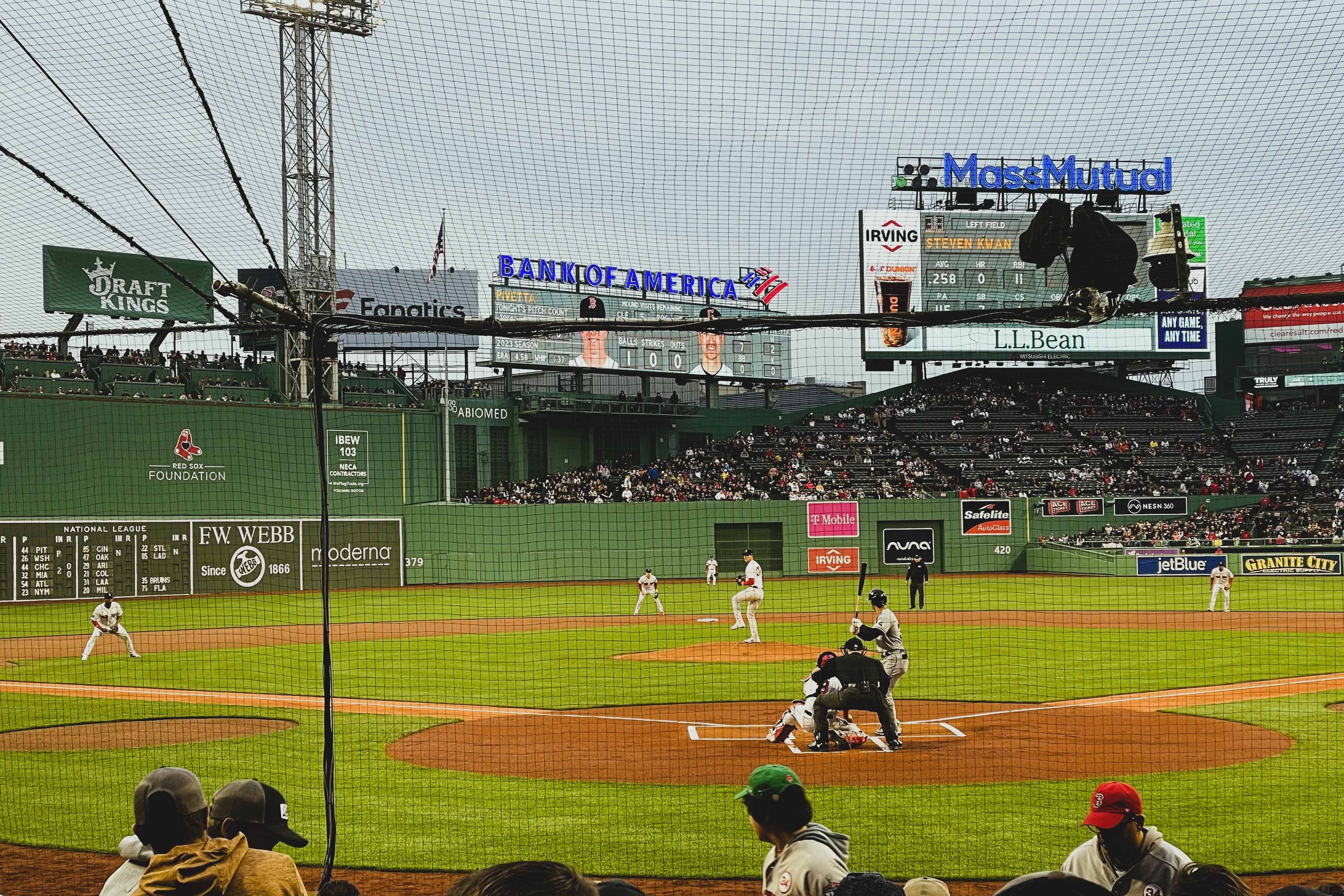
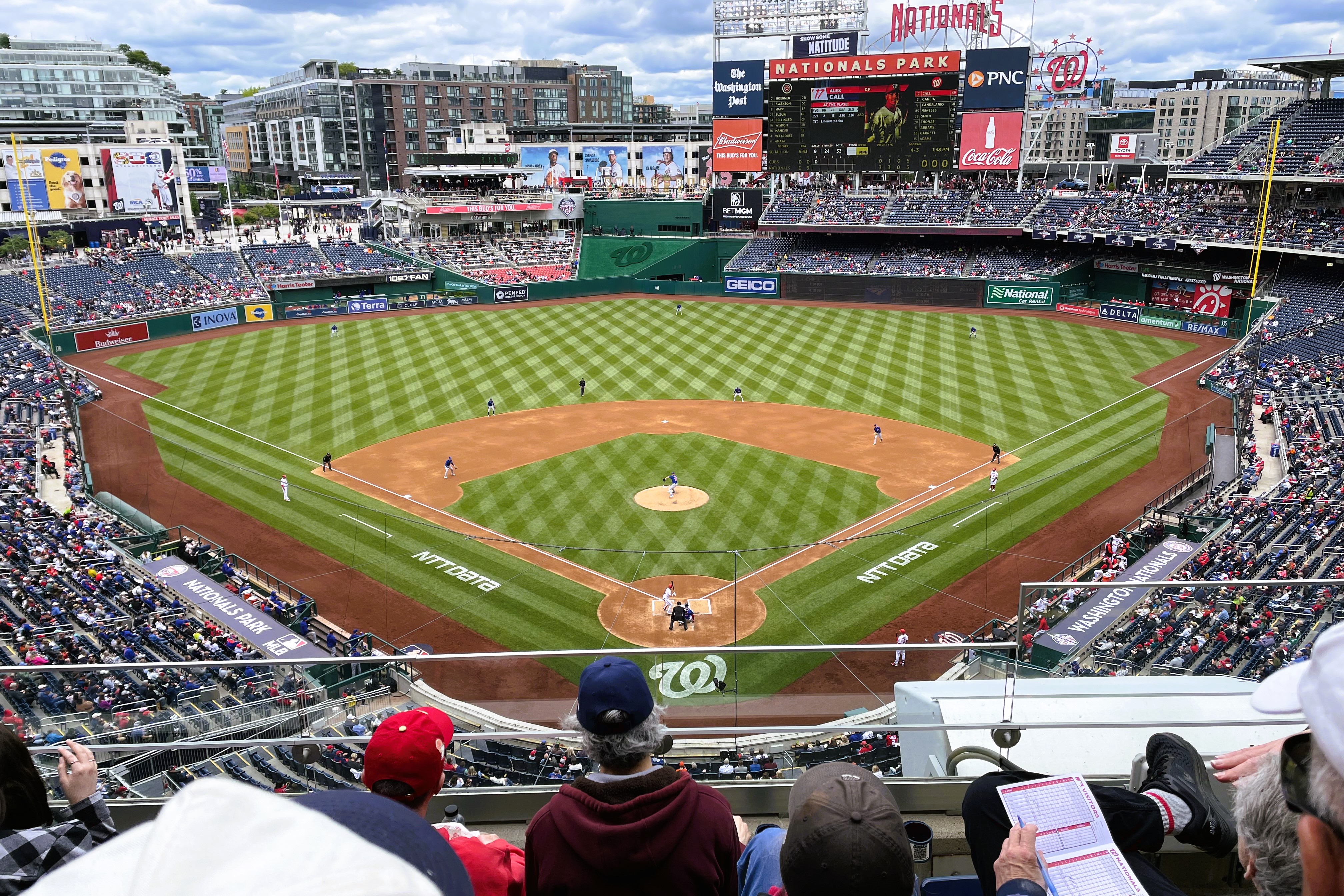
It was a tough year to be a Nationals fan, but the family still enjoyed getting to the ballpark for a few games.

Andrew and Keegan take in a Nats game over the July 4th weekend
Andrew’s version of a road trip: Sipping an iced Rooibos at Mercado San Miguel in Madrid while on a work gig (yes, seriously) singing through Portugal and Spain!

2022 was also a year of transitions. Of course, at the national level we had a midterm election, so I used the opportunity to encourage everyone to vote.

Vote in every election…even the primaries! DJB after voting in the July primary in Montgomery County, Maryland

On the professional front, after working for three years in two settings in the Bay Area, Claire passed her licensure test as a social worker. Here’s to one of California’s newest Licensed Clinical Social Workers, Claire Holsey Brown, LCSW!

California’s newest Licensed Clinical Social Worker: Claire Holsey Brown, LCSW

A consulting job took me to Dundee, Scotland, in early October. The city was a real surprise.

Outside the V&A Dundee Museum
A panel I moderated at INTO Dundee 2022. We had terrific presentations and insightful comments from (left to right in the picture above) DJB, Qin Zhang of the Ruan Yisan Heritage Foundation in China, Miquel Rafa of the Fundacio Catalunya La Pedrera in Spain, Ranald MacInnes of Historic Environment Scotland, and Evelyn Thompson of the Jamaica National Heritage Trust.

A fall trip to Alameda to visit with Claire included a day trip to the National Trust Historic Site Filoli.

Outside the main house at Filoli
Candice and DJB in the gardens at Filoli

Andrew’s first major opera production came in October, when he was cast in the role of the Stage Manager in the Boston University Opera Institute production of Ned Rorem’s Our Town. He made the promotional pieces, and then received strong reviews for the production.

A promotional piece for the production of Our Town.
Andrew as the Stage Manager in the Boston University Opera Institute production of Ned Rorem’s opera Our Town (photo credit: Jacob Chang-Rascle)
Andrew in the Boston University Opera Institute production of Our Town (photo credit: Jacob Chang-Rascle)

Our second National Trust Tours trip of the year came in October, as I served as a study tour leader while we cruised the Mekong River in Vietnam and Cambodia. It was a life-enriching experience in so many ways.

Returning from our Tuk-Tuk ride in Phnom Penh
Candice and DJB in the early morning light at the late 9th century Phnom Bakheng Temple in Greater Angkor.
Sunrise over Greater Angkor
Candice listening to a student practice her English at the English language school in Angkor Ban, Cambodia
Traveling around the moat at Angkor Thom via gondola (credit Sylvia Griffin)
Candice enjoying a Three Elephants drink at the Three Elephants Bar in the historic Greater Angkor Hotel
Dinner on our last evening in Cambodia with some of our traveling companions
With travelers on the Cruising the Mekong River trip in front of Angkor Wat
Settling in for our 15-hour flight from Singapore to Los Angeles. We found ourselves on a surprising number of planes in 2022

October turned into November, and the family remained busy.

Claire and Chai celebrate Halloween
We gather with the Hollywood Gang — Candice’s grade-school friends from Hollywood, FL and their spouses — for a dinner at an Annapolis crab shack.
Eating great seafood and enjoying even better company in Annapolis

We remain grateful for each of you and the friendships we share. Happy Thanksgiving to all!

More to come…

DJB

*For previous year’s posts, click here for: 2021, 202020192018201720162015201420132012201120102009, and 2008.

Songs and solidarity

I have always loved the acapella quartet. Four voices blending, chasing each other, coming together for a special moment of unity only to quickly depart to go their separate ways, and then to find their way back together to a special chord modulation that you just know has the singers silently smiling inside.

So, it stands to reason that New England’s Windborne is one of my new favorite groups. Comprised of singers Lauren Breunig, Jeremy Carter-Gordon, Lynn Rowan, and Will Rowan from Vermont and Massachusetts, the ensemble has been described as a “group of vocal chameleons.” Each grew up in musical families, “going to Shape Note singing parties, taking classical voice and instrumental lessons, and seeking out folk music in their communities and schools.” They clearly found their passion.

While a folk instrument makes an occasional entrance into their music, the acapella arrangements are where they really shine. La Vièlha, recorded earlier this year at Ear Trumpet Labs, gives the group a chance to showcase those vocal chops.

The group is coming to the Washington area on Friday, December 2nd, as part of the Institute of Musical Traditions fall showcase.

Windborne’s captivating show draws on the singers’ deep roots in traditions of vocal harmony, while the absolute uniqueness of their artistic approach brings old songs into the present. Known for the innovation of their arrangements, their harmonies are bold and anything but predictable. 

Some oldtimers know the Ewan MacColl tune The Terror Time from the Tannahill Weavers. Windborne’s arrangement is both traditional and refreshingly new, filmed in the refectory of Mont-Saint-Michel in France. As the video notes relay,

The political seeps in around the edges in this Ewan MacColl song about the coming of winter, or the “Terror Time,” as it was known by the Scottish Travelers he worked with while writing his 1964 album, The Traveling People. For us, it brings to mind for us all those who go without a permanent home.”

The lyrics are so evocative.

The heather will fade and the bracken will die | Streams will run cold and clear. | And the small birds will be going, | And it’s then that you will be knowing | That the Terror Time is near.

As one commentator noted, check out the gorgeous vocal slides by Lynn at 2:47 and 2:51.

The political is overt in much of their music. In The Chartist Anthem, they write about an early voting rights group in the U.K. and the group is joined mid-song in this live version from 2018 by other musicians to give it that true political-anthem feel.

In the 1830-40s in England, the Chartists rose up as a working class, grassroots movement calling for voting rights. The demands in The People’s Charter include tenets we now consider to be the foundation of modern democracy, such as the right to a secret ballot, and in a time before cars, telephones, and the internet, the Chartists delivered over a million signatures in support of their demands to Parliament in giant wagons. Their movement, however, was unsuccessful in its own time and most of the leaders died never having seen the things they fought for come to pass. Almost two centuries later, however, we take for granted that these rights are part of democracy.

The Song of the Lower Classes is “a timeless anthem for the lower classes: a living breathing resistance to injustice. Its messages today are as impactful and revolutionary as they were when Ernest Jones spent two years in solitary confinement for publicly expressing them in the 1840s.”

In January of 2017, Windborne took a video of the last verse in front of Trump Tower, and over a million people saw it on Facebook and YouTube. Windborne noted that it was the response to this video that took the group from touring a few weeks out of every year to a full-time occupation.

Here Windborne sings a powerful traditional setting of the Stabat Mater from the village of Nebbiu in southern Corsica. Listen to the bells ringing at the 3:00 mark at the end, as if building is adding an appropriate coda.

Two more tunes from Windborne, the first the beautiful Songs Stay Sung about how love stays loved and songs stay sung until the end of time. They are joined here by the U.K. folk singer Zoe Mulford. Listen for one of those gorgeous chords at the 1:45 mark. The second is the Quebecois folk song Les Tisserands.

With a 20-year background studying polyphonic music around the world, (the group) shares a vibrant energy onstage with a blending of voices that can only come from decades of friendship alongside dedicated practice. The ensemble shifts effortlessly between drastically different styles of music, drawing their audience along on a journey that spans continents and centuries, illuminating and expanding on the profound power and variation of the human voice. The singers educate as they entertain, sharing stories about their songs and explaining the context and characteristics of the styles in which they sing.

Because we are nearing the winter solstice, we’ll end with Windborne’s arrangement of John Renbourn’s Traveller’s Prayer.

Praise to the moon, bright queen of the skies, | Jewel of the black night, the light of our eyes, | Brighter than starlight, whiter than snow, | Look down on us in the darkness below.

The group performs Friday, December 2nd at IMT presents Windborne. The concert will be held at Saint Mark Presbyterian Church, 10701 Old Georgetown Rd, Rockville, MD 20852. It begins at 7.30pm and tickets are $20 in advance (+$2 service fee), $25 at the door (children and students w ID $15 / 20).

Enjoy!

More to come…

DJB

Photo of Windborne credit Windbornesingers.com

Laughter is the best medicine

Over the past twelve days, I’ve aggregated material from a variety of sources into five different posts in order to consider the midterm elections and their impact on our democracy. I won’t apologize for the fact that I have called out the authoritarianism of one of our political parties, the Republicans, in these pieces. Their leaders have made their goals abundantly clear.

  • As I said in the post For those still living in the reality-based world (November 4th) we have a party — and party leaders — that, in order to maintain the pretense that they are relentlessly persecuted by progressives, will lie and then laugh about an attack on an 82-year-old grandfather that almost killed him. When one looks at all the accomplishments of the Democrats and the Biden administration in the face of this unrelenting disinformation campaign, it is truly remarkable.
  • Monday’s post dove deeper into the will of the electorate. In The people speak (November 14th), I surveyed a number of ballot initiatives that passed in support of progressive priorities, even in deep-red states.
  • That was followed on Tuesday by Consider the source (November 15th), a look at how a number of respected media critics and historians see the failure of our political press as being part of the problem in the threats to democracy. Veteran journalist James Fallows calls for a time out for our political press while they find their way.

This morning’s post is the fifth and final piece in this series. The midterms are (mostly) behind us, but the political cartoonists are still having a field day, especially in highlighting how the red wave (or red tsunami as Ted “Cancun” Cruz predicted) crashed and burned. And now, with Trump’s “big announcement”, there is even more to satirize.

I have featured a series of posts highlighting political cartoons during this midterm election season. It seems appropriate to give the cartoonists (and a few other wags) the last word in considering what to make of the voters’ choices.

If you want to see the earlier editions of ‘toons from this political season, visit herehereherehere, and here.

Other than to point out that the political cartoonists seemed to be much more on top of the mood of the electorate than the political press, which fumbled badly during this season, not a lot of editorial commentary is necessary.


The missing red wave

By ignoring court orders and breaking the law in at least four states, the Republicans probably won just enough seats to take the House. Had those four states followed judges’ orders, the Democrats’ evening would have been even more historic.*


Veteran’s Day


The art of (no) self-reflection


The “historic” announcement (or, as Andy Borowitz framed it, Trump to Try for Historic Third Impeachment).

And takes from a few non-cartoonists


She might pull through


Let’s end with a non-political post (although it does include an elephant) just to make you laugh

Stay all the way to the end. AND NOTE: One family member laughed so hard they almost hurt themselves, so be careful!


Laughter is the best medicine. Have a good day.

More to come…

DJB


*Many factors made the difference for what’s guaranteed to be a very narrow GOP majority, but among the most consequential for democracy is that Republicans almost certainly owe their majority to gerrymandering.

In a landmark Supreme Court ruling in 2019, every GOP-appointed justice voted over the opposition of every Democratic appointee to prohibit federal courts from curtailing partisan gerrymandering. Chief Justice John Roberts disingenuously argued that judicial intervention wasn’t needed partly because Congress itself could end gerrymandering, at least federally. But following the 2020 elections, every Republican in Congress voted to block a bill supported by every Democrat to ban congressional gerrymandering nationwide, which failed when Democratic Sens. Kyrsten Sinema and Joe Manchin refused to also curtail the GOP’s filibuster to pass the measure.

Consequently, Republicans were able to draw roughly four out of every 10 congressional districts after the 2020 census—three times as many as Democrats drew.

After Republicans blocked Democrats from ending gerrymandering nationally, Democrats largely refused to disarm unilaterally and gerrymandered where they could, just as the GOP did. Republicans, however, had ma​​​​​​ny more opportunities, in large part because state courts struck down a map passed by New York Democrats and replaced it with a nonpartisan map.

By contrast, the Supreme Court and judges in Florida allowed GOP gerrymanders to remain in place for 2022 in four states even though lower courts found that they discriminated against Black voters as litigation continues. Had Republicans been required to redraw these maps to remedy their discrimination, Black Democrats would have been all but assured of winning four more seats, possibly enough to cost the GOP its majority on their own. And in Ohio, Republicans were able to keep using their map for 2022 even though the state Supreme Court ruled it was an illegal partisan gerrymander, potentially costing Democrats another two seats.

Stephen Wolf for Daily Kos elections, November 16, 2022

The image of the cartoonist’s desk is from The Comics Journal, which posted an essay excerpted from the introduction to Jeff Danziger’s book, The Conscience of a Cartoonist: Instructions, Observations, Criticisms, Enthusiasms