Syd Stapleton packs a lot of truth into his newest fictional tale of Frank Tomasini and the Molly B.
When last we met Frank Tomasini, he was living on an old wooden boat among the San Juan Islands working through an environmental disaster and cover-up wrapped in a whodunit. For the sequel our hero has traded the San Juans for the open ocean and a fishing troller for a barge, but the criminal behavior and Frank’s need to dig for the truth remain.
The Six Mile Circle: A Sea Story (2025) by Syd Stapleton continues the adventures of Frank Tomasini and the Molly B that we first met in Troubled Waters. Frank’s marine surveyor’s business has fallen on hard times because of the revenge exacted by one of the principals from the earlier story. To make ends meet, Frank has signed on as a deckhand and cook on ocean-going tugboats and barges making runs between the Pacific Northwest and Hawaii. These barges are loaded with freight along with some unexpected cargo. When one of the hulls is mysteriously pumped out in the middle of the ocean, a fellow deckhand gets sick and ultimately dies after contact. Frank knows he has to get to the bottom of this mystery.
Several of the characters from Stapleton’s first novel return for the sequel. Besides Frank we have his live-in lover Carol Bogdanich, as their relationship moves into a more mature period; Frank’s long-time friend Harlan Brown; and Harlan’s new companion Agnes Middleton. Harlan—who is Frank’s best friend—was the former owner of Frank’s 1937 wooden salmon troller the Molly B. He restored the boat and is now taking care of it while Frank’s away for the long trips across the Pacific.
As deckhand/cook, Frank would be alternating, month-on, month-off with Annie Karp, a small but vigorous woman. When they first meet she wants to make sure Frank understands that, unlike the Alaska runs he trained on with his new employer, there were no stops along the way between the Northwest and Hawaii. She also warns him that the mate on his coming trip—Steve Rosset—was “an a**hole.” That proved to be an understatement.
Annie is on a trip when she’s enlisted to help pump what the skipper said was water that had leaked into a compartment of the hull of one of the barges. It turns out it is some “kind of smelly, cloudy sh*t” that sprays on Annie when a hose breaks free. Long story short, she is kept on the tugboat and instead of flying her home to the mainland once they reach Hawaii, the company insists they bring her back on the return trip. A few days later she has died in the hospital and the shipping company—a relatively new LLC with somewhat mysterious ties to agribusiness—works to keep it under wraps. Rosset seems to be the only one in the know.
In 245 pages, Frank works with Carol, Harlan, Agnes, several of the deckhands, and some environmental government agents and academics to uncover the truth behind the scheme. An unexpected and fast paced ending brings some measure of justice, but it also speaks to the enormity of the challenge. As one reviewer notes, the environmental crime Frank uncovers “mixes fiction with uncomfortable fact.” Although this is a work of fiction, Stapleton notes, “the facts and figures related to agricultural and other chemicals have been carefully researched, and they are not, sadly, fiction.”
The Six Mile Circle packs a lot of truth into this tale of greed, political corruption, and the ongoing degradation of the only earth we have.
Thomas Paine’s “Common Sense” is an important reminder of why America rejected kings.
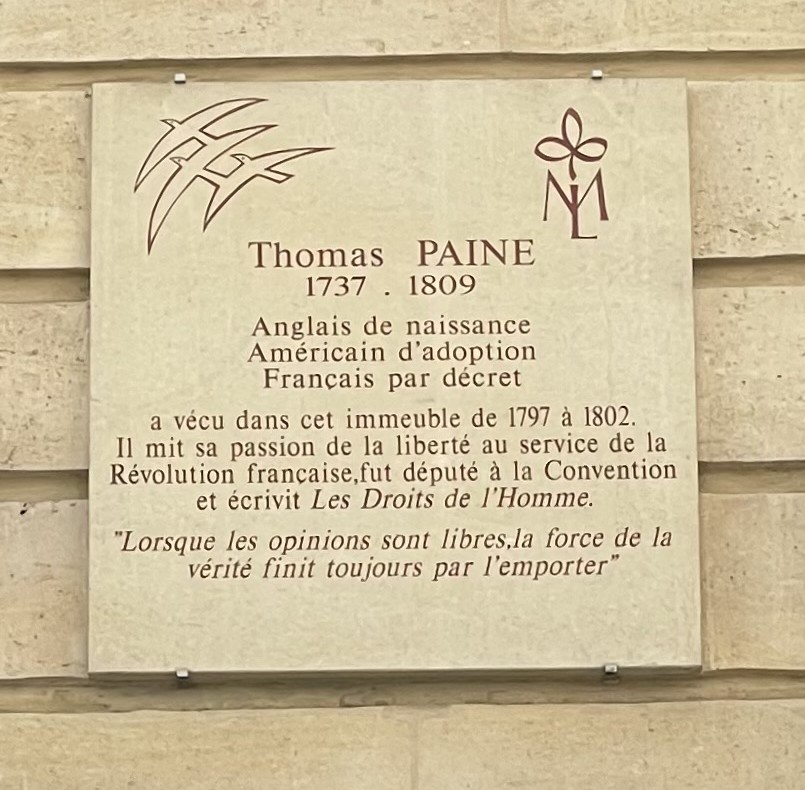
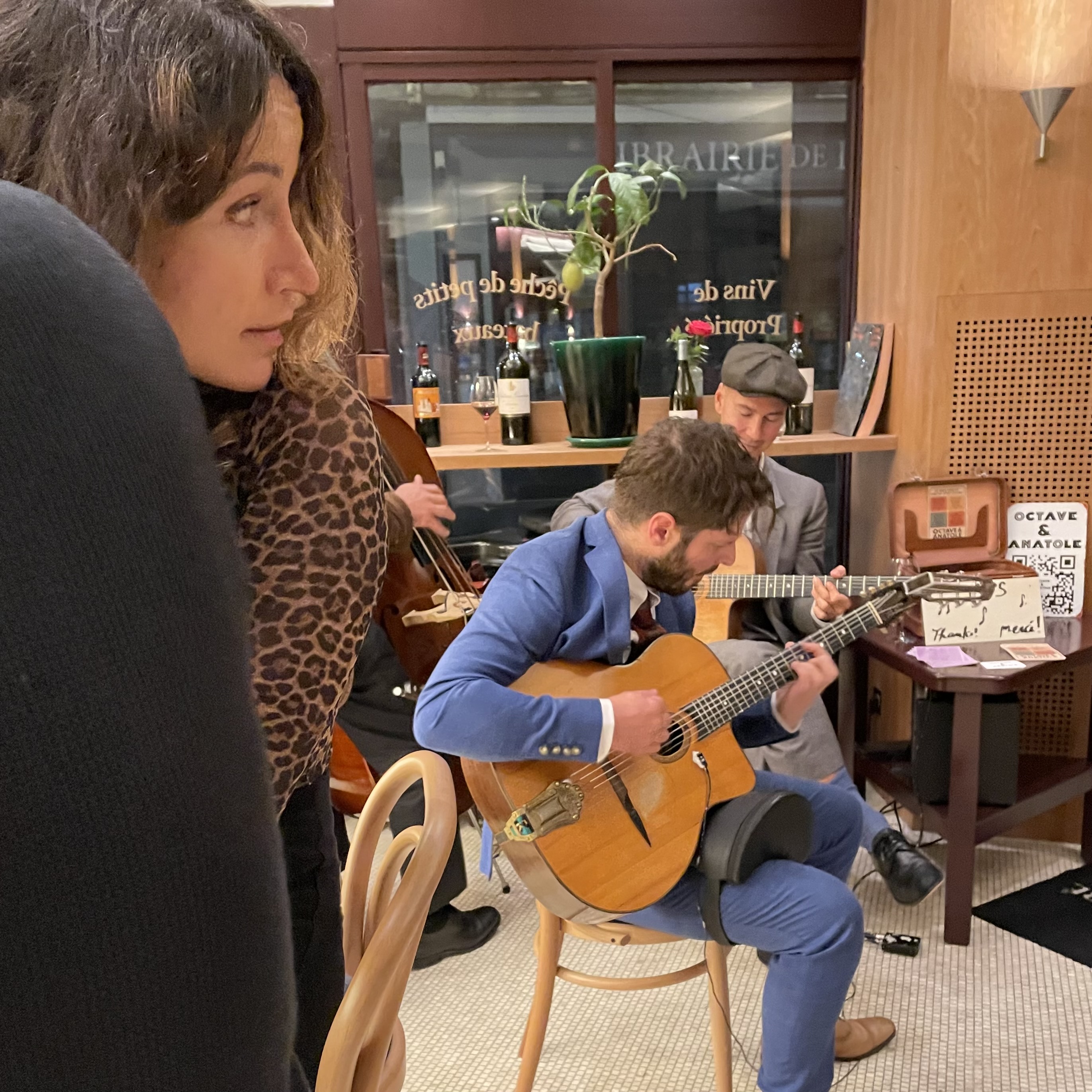
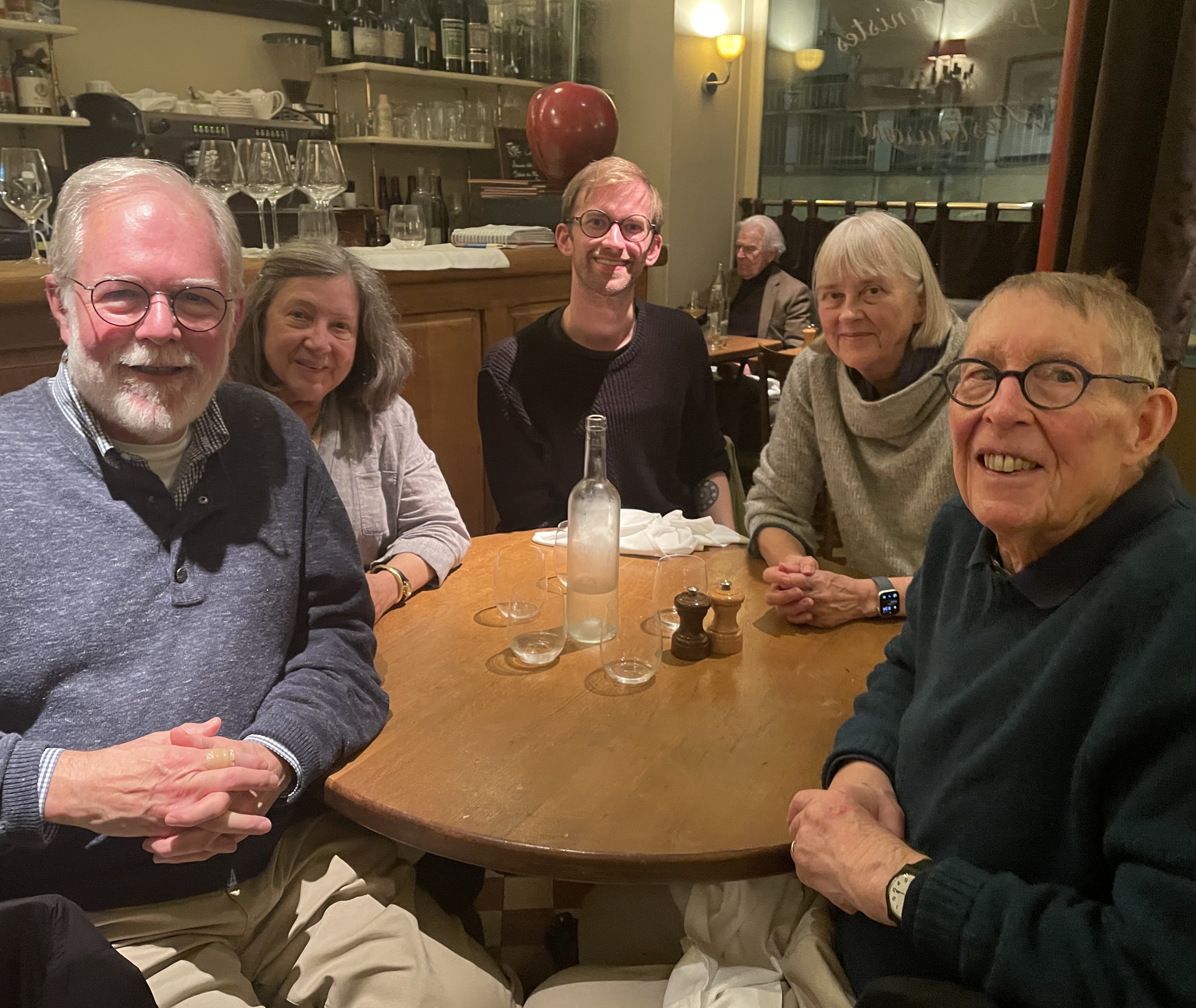
There was a confluence of events in recent weeks that led me to read—for the first time in years—one of the most important books in American history. While leaving a small restaurant in Paris in early October I looked back to see this plaque, only then discovering that we’d been in the building where Thomas Paine, the great American patriot, had lived during his time in the city.
Thomas Paine: English by birth, American by adoption, French by decree
Less than two weeks later, we were home for another reminder of the original fight against kings. Hearts and minds about where we currently stand—and what we stand for—as a country had begun to shift. Rebecca Solnit observed the difference in both words and actions of Americans, noting that something in the body politic changed over the last five weeks.
“It was manifested in the epic scale and fierce determination of the nationwide #nokings protests on October 18. The demonstrations and marches were in small towns and red counties as well as cities and blue states. But that was just a manifestation of the rejection of the cruelty and destructiveness of the Trump Administration and its nine months of mayhem.”
No Kings rally in Boston (from HCR)
Finally, I watched the recent Ken Burns documentary The American Revolution where we heard the words of patriots, loyalists, Native Americans, enslaved men and women, kings, and future presidents all speaking to us from history. Two voices resonated most deeply with me: Abigail Adams and Thomas Paine. Adams wrote perceptive letters over the years to a wide circle of family and friends. Burns ends the documentary with her words about what the revolution and the ratification of the Constitution offered to Americans, if only we were wise enough to avail ourselves of the opportunity.
“. . .our Government daily acquires strength and stability. The union is complete . . . nothing hinders our being a very happy and prosperous people provided we have wisdom rightly to estimate our Blessings, and Hearts to improve them.”
Thomas Paine spoke more prophetically, his stirring words calling for the people of the United Colonies to become active citizens of what he was the first to characterize as the United States. As the series ended, I began to read Paine’s most famous book.
Common Sense (1776) by Thomas Paine, published just six months before the Declaration of Independence, has been called the most influential polemic in all of American history. It is a fiery call for his adopted countrymen to throw off the yoke of British rule, and especially to revolt against the crown. Common Sense provided the vision of independence that would move millions in that fateful year to change their hearts and minds away from their deference and loyalty to Britain and the throne. Americans had never heard such words. The pamphlet sold 100,000 copies in the first three months, and perhaps as many as 250,000 in the first six months after publication. There is, simply, no other publication as important to an era when Americans were beginning to think there was a different way forward than the one their London-based government insisted was proper, righteous, and inevitable.
Fast forward 250 years and we now have an administration and a political party that wants us to believe they are unstoppable, righteous, and on the side of liberty. But one only has to read the words of Thomas Paine—that “the palaces of kings are built on the ruins of the bowers of paradise”—to see the similarities between King George III and our would-be autocrats who want to build a garish ballroom on the rubble of the historic East Wing of the People’s House.
Reading Common Sense is a revelation. We are aware of Paine’s easy to remember lines of the “Tyranny, like hell, is not easily conquered” variety. But in reading the entire pamphlet, I came away with greater appreciation for his direct and harsh attacks on kings. For his “suggestions” of a way forward such as with the call for a “manifesto” that revealed itself six months later in the Declaration of Independence. For the brilliance of his argument that putting off the inevitable split from England would only lead to a less satisfactory long-term outcome for “the continent,” a term he favors for America. For his recognition that “the time hath found us” and that it is “not in numbers but in unity that our great strength lies.”
“. . . in the presence of a marble portrait bust,” but meets instead a man “writing in what he knew to be ‘the undisguised language of the historical truth.’ To read Tom Paine is to encounter the high-minded philosophy of the eighteenth-century Enlightenment rendered in words simple enough to be readily understood.”
Instead of addressing the rich Paine “talks to ship chandlers and master mechanics, and in place of a learned treatise he substitutes the telling phrase and the memorable aphorism: ‘Those who expect to reap the blessings of freedom must, like men, undergo the fatigues of supporting it.’”
This edition is paired with an essay first published in December of 1776. Paine’s famous opening to The American Crisis, written during the hardships of Valley Forge, resonates today as much as it did when Washington’s small army was fighting for its life at Trenton and Princeton.
“These are the times that try men’s souls.The summer soldier and the sunshine patriot will, in this crisis, shrink from the service of their country; but he that stands by it now, deserves the love and thanks of man and woman. Tyranny, like hell, is not easily conquered; yet we have this consolation with us, that the harder the conflict, the more glorious the triumph. What we obtain too cheap, we esteem too lightly: it is dearness only that gives every thing its value.”
I paired my reading of Common Sense with another work to stir the soul in these days of trouble.
Thomas Paine: Enlightenment, Revolution, and the Birth of Modern Nations (2006) by Craig Nelson is an excellent biography of the man who though he was born in England, was truly a citizen of the Enlightenment world. Paine would write three of the bestsellers of the eighteenth century, topped only by the Bible. Common Sense cemented his reputation. Rights of Manhelped shape the French Revolution and—although it would take more than a century—inspire constitutional reform in Great Britain and foreshadow Franklin Roosevelt’s New Deal. The Age of Reason, a forceful call against organized religion, finds Paine sticking to his Enlightenment and deist values even at the expense of his public reputation. Paine’s mind was clearly a force of nature, and Nelson characterizes him as “the Enlightenment Mercury who sparked political common cause between men who worked for a living and empowered aristocrats across all three nations.”
One of Nelson’s great accomplishments is to explain Enlightenment thinking and values in a way which places Paine and his work in a well-constructed context. Paine certainly has his flaws as a person, but he is more easily understood when placed within the value system that drove so many of the leading philosophers and political leaders of the late eighteenth century. Nelson’s other important accomplishment is to showcase Paine’s incredible relevance today.
As I have said on several occasions, as we struggle through constitutional crises and threats to democracy, we would do well to rediscover one of our most important founding fathers. Paine’s writing just might be the tonic to point us towards democracy, yet again.
More to come . . .
DJB
Top Image: Laurent Dabos. “Portrait of Thomas Paine.” National Portrait Gallery.
Remembering the date that will live in infamy is as important now as it has ever been.
My father and aunt were coming out of a musical performance on the afternoon of December 7, 1941, when they—like the rest of the country—first heard of the devastating early morning attack by the Japanese on the American fleet at Pearl Harbor.
An attack that led to the U.S. entrance into World War II. A date that President Franklin D. Roosevelt memorably described as one “which will live in infamy.”
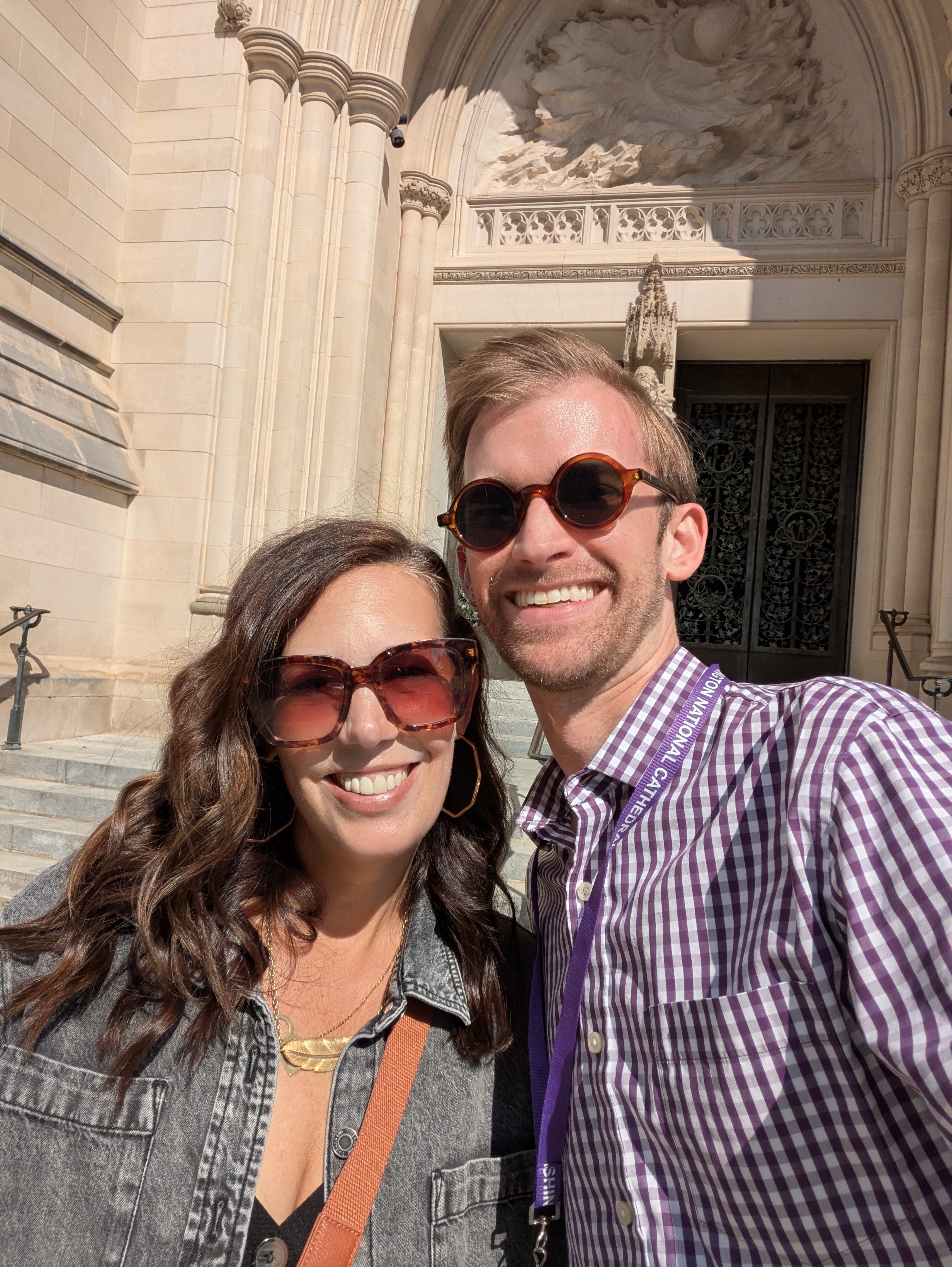
Fewer and fewer people are alive who have personal memories of the attack on Pearl Harbor. My father and his sister—my Aunt Mary Dixie—were at Peabody College in Nashville listening to a performance of Messiah. Candice and I will hear that same piece, with our son as the tenor soloist, later this afternoon at the Washington National Cathedral. But when my father and aunt came out, they learned about the attack at Pearl Harbor and their lives were changed forever. Both were WWII veterans. Both—like most in their generation—have passed. The men and women who fought and won this great conflict are now in their 90s or older; according to US Department of Veterans Affairs statistics, 45,418 of the 16.4 million Americans who served in World War II are alive as of 2025.
Historian Heather Cox Richardson reminds us that those 16 million men and women looked like America.
America fought World War II to defend democracy from fascism. And while fascism preserved hierarchies in society, democracy called on all men as equals. Of the more than 16 million Americans who served in the war, more than 1.2 million were African American men and women, 500,000 were Latinos, and more than 550,000 Jews were part of the military. Among the many ethnic groups who fought, Native Americans served at a higher percentage than any other ethnic group—more than a third of able-bodied men between the ages of 18 and 50 joined the service—and among those 25,000 soldiers were the men who developed the famous “Code Talk,” based in tribal languages, that codebreakers never cracked.
As it should, the memory of Pearl Harbor remains. On December 7, 2014, Tom Coffey, a staff editor in the New York Times sports department, suggested that fans skip that day’s football games and use the time to remember the importance of Pearl Harbor. I loved his last line:
“Sunday afternoon seems like a good time to think about the sacrifices made by the men and women who died that day, and to reflect upon the wisdom of a statement that originated with Marv Levy, the longtime Buffalo Bills coach, that is still uttered in the sports world, albeit far too infrequently: No game is a must-win. World War II was a must-win.“
Pearl Harbor remains both a place and a response that is fused in our collective national memories. As my friend and former colleague Tom Mayes writes in Why Old Places Matter, “The sense of identity provided by memory is largely what defines us as individuals and as a society.” Memories are often tied to place. And memories and identities are often contested, Tom notes, but “the fact that these arguments occur highlights the importance of the place. Regardless of conflicting points of view, the place itself transcends a specific interpretation. …The continued existence of the place permits the revision, reevaluation, and reinterpretation of memories over time.” As former New York Times architectural critic Herbert Muschamp has said, the essential feature of a landmark is not its design, but the place it holds in a community’s memory.
Memory is also essential to hope, which is grounded in our knowledge of what has gone before. Hope as a sense of uncertainty and coming to terms with the fact that we don’t know what will happen, but we have memories that show us that good things—powerful things—can happen. Pearl Harbor is not just a place, but it is a reminder of a national response, when the nation and all its people became much more important than the tribe, political party, religious affiliation, or individual. When country, a caring for humanity, and a desire to defeat fascism and bigotry took precedence over personal achievement, power, and greed.
Many things changed because of our involvement in World War II. For one, the members of the armed forces—of all races—returned to a country that still oppressed people of color. The pushback against the hypocrisy of fighting fascism abroad while maintaining a homegrown system of apartheid in much of the U.S. was such that over the next two decades, significant strides were made to grant full civil rights to all people. But as we know, that work is far from over.
Unfortunately, one of our political parties has aligned itself with a weak bully who wants to defeat democracy and put himself and his cronies in charge. Our memories of a strong and effective national response to fascism in 1941 not only provides hope for a better future, but also gives us the strength to work every day to make that future a reality in the face of the right’s authoritarian push.
We should never forget what happened at Pearl Harbor on December 7, 1941. And the memory of that date, that place, and our response should support us in the difficult times ahead, through the shared work of the imagination. to remake our democracy.
Guitar pieces of beauty, serenity, and tranquility.
I have always loved the sound of the acoustic and classical guitar. It is an instrument that can be played by children, and yet one that in certain hands can command the classical stage. Much like the piano, it is also an instrument that carries its own when played solo, providing melody, harmony, and the underlying bass.
Recently I came across several pieces of acoustic guitar music that helped me slow down and focus on the moment. I thought I would share them with you as an antidote in hurried or troubled times.
Guitarist Beatrix Kovács begins with the lovely Cada Mañana by Eduardo Díaz, which means “Every Morning.”
Vin Downes plays “music that will put you in a good place.” Like many acoustic guitarists today, he was influenced by the music of artists on Windham Hill Records in the late 1980’s, musicians like the fingerstyle masters Will Ackerman, Michael Hedges, Alex deGrassi, and David Cullen.
Many classical pieces have been transposed for guitar, creating new textures and sounds from familiar pieces. Some of those melodies are quite familiar, as when Sedona guitarist Michael Lucarelli plays Schubert’s Ave Maria.
The music of J.S. Bach is a favorite for guitarists. Here are two examples, the first being the sumptuous Cello Suite No. 1 performed by the young German crossover guitarist Julia Lange, and the second, for those who want to go down the rabbit hole, the challenging Goldberg Variations, originally written for harpsichord and performed here from an album released on October 31st by guitarists Thibaut Garcia and Antoine Morinière. Their “masterful arrangement highlights the intricate counterpoint and rich harmonies of Bach’s genius, transforming the familiar into something new and captivating.”
And finally, as night nears we can all use a peaceful nocturne. Ilona Skowrońska describes herself as a passionate guitarist with a Master’s degree in classical guitar performance from the Academy of Music in Kraków. Here she plays Chopin’s beautiful Nocturne op. 9 no. 2.
Five books. Every month. A variety of topics from different genres.
Here is the list from November 2025. Clicking on the title will direct you to the original post on MORE TO COME.
The Road to Wisdom: On Truth, Science, Faith, and Trust (2024) by Francis S. Collins combines philosophy, Christian theology, sociology, and some degree of self-help in his effort to promote a more civil society. In this thoughtful and ultimately optimistic book, Collins works to get us beyond societal divisions and back to the sources of wisdom. He sees four core sources of judgement and clear thinking: truth, science, faith, and trust. After an introductory chapter about the challenges of seeking wisdom in troubled times, Collins draws on his work from the Human Genome Project and heading the National Institutes of Health to dive into each of these elements. Collins believes that “building the ultimate path to wisdom will depend on individuals” and that path “runs right through our hearts and minds.” The thrust of that argument is that we need to do a better job of listening to one another. It is that simple and that difficult.
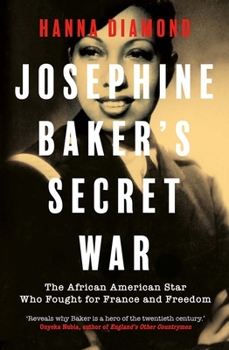
Josephine Baker’s Secret War: The African American Star Who Fought for France and Freedom (2025) by Hanna Diamond is an enlightening and thoroughly researched history of how one of the most famous celebrities of her time became a spy for the French Secret Services during World War II. Josephine Baker’s fame as a cabaret singer in the interwar years was well known. She also came to be recognized for her civil rights work in America and her humanitarian efforts globally in the 1950s and 60s. But drawing on contemporary sources, Diamond found that Baker was a valuable spy. A US wartime counter-intelligence officer said she served as “our No. 1 contact in French Morocco.” Her support of the allied mission “at great risk to her own life” included helping pass along information that proved crucial at key moments, such as after the allied landings in north Africa in 1942. Diamond’s important new account helps explain the motivation for Baker’s involvement and how her celebrity, rediscovery of her African American roots, and unusual social fluidity made her success as a spy possible while also shaping her post-war advocacy.
History Matters (2025) by David McCullough (edited by Dorie McCullough Lawson and Michael Hill) is a posthumous collection of thought-provoking essays—many never published before—by the Pulitzer Prize–winning historian and bestselling author. McCullough, who passed away in 2022, wrote eloquently and carefully about the American experience. He told us why American history mattered. David began an essay on the hard, essential work of being an American citizen with a few simple lessons from the past, the first being that “nothing of lasting value or importance in our way of life, none of our proudest attainments, has ever come without effort. America is an effort.” History is not dead in these pages; in fact, history is living and unfolding. And we are an important part of that history.
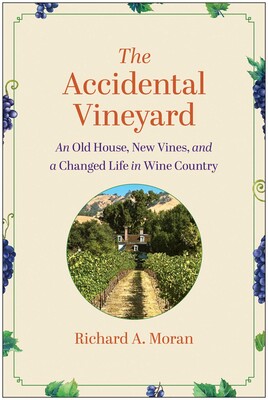
The Accidental Vineyard: An Old House, New Vines, and a Changed Life in Wine Country (2025) by Richard A. Moran is a heartfelt memoir that begins with a spontaneous drive into California wine country in an attempt to lull a fitful, crying son to sleep. On the drive Moran, his wife Carol, and their three children chance upon an old Victorian house for sale. They make the commitment to restore the house, even though it had challenges by the boatload and would disrupt Rich’s busy, corporate consulting business. Both of those facts turned out to be keys to finding the well-rounded life he didn’t know he was seeking as the journey began. Before he knows it, Rich and his family are also wine makers. Moran—in simple yet compelling language—happily lets us all in on the secrets he and his family uncovered in following their dreams. This is a memoir full of heart and humor, which I discuss with Rich in the 20th installment of my Author Q&A series.
A Good Natured Riot: The Birth of the Grand Ole Opry (1999) by Charles K. Wolfe is a highly readable yet thoroughly documented account of the early years of The Grand Ole Opry. What makes Wolfe’s book so compelling “is that it shows the intersection of the birth of the Opry with so many other important, and often overlooked, cultural moments.” In doing so, Wolfe examines the background and lives of the key performers on the early Opry to an audience that has largely forgotten Uncle Jimmy Thompson, Dr. Humphrey Bates, Uncle Dave Macon, DeFord Bailey, along with the radio fiddlers and hoedown bands of the era. It is a masterful work.
WHAT’S ON THE NIGHTSTAND FOR DECEMBER (SUBJECT TO CHANGE AT THE WHIMS OF THE READER)
God told Lane Kiffin to take the money and run. Kiffin is emblematic of much that’s wrong in today’s world.
You are blessed if you have no idea who Lane Kiffin is, or why you should care. But the saga of how one of sports most-traveled and most-reviled figures decided to give up on his team while they were preparing to play in the College Football Playoff to determine the national champion and instead run off to a rival in the same conference speaks volumes about what is totally screwed up in today’s sports world . . . and in our country at large.
Here are a few short snippets from reporters and commentators I follow that help explain my growing sense that the current regime is finally being called out for the corruption and lies (the first few sections) and my growing ambivalence to virtually all sports played where alleged adults are involved (the last three sections).
ENSURING THAT BILLIONAIRES ARE PRIORITIZED OVER REAL AMERICA
Americans are beginning to catch on . . . and the media is beginning to catch up . . . with the fact that the regime in place in Washington is focused on stealing what belongs to you and me and leaving the country high and dry.
In a sharp piece that explores this administration’s ties to the amoral billionaires of Silicon Valley, Marcy Wheeler noted that the New York Times recently published a 3,000-word profile of David Sacks. The Times story on Sacks describes “how his installment as the White House AI and crypto czar has led to a number of decisions that may not benefit the US, such as sharing AI technology with UAE in seeming exchange for personal gain for others, including Trump. The profile quotes Sacks’ own spokesperson explaining that poor David Sacks just ‘wants the entire American tech stack to win.’”
Wheeler, who is a dogged investigative journalist with a deep knowledge of the law, noted that the ferocity of the response by the “tech bros” is telling. “The closing paragraphs [in the Times report],” writes Wheeler, “nod to the significance of all this: that at a time when both crypto and AI need a bailout—a vastly bigger bailout than Silicon Valley Bank needed—David Sacks is there to ensure that gets prioritized over real America.” But in the end, Wheeler asserts that the Times story comes up short.
“None of this exposes the real underlying problem here, the degree to which the American economy has been hollowed out so these bro boys can attempt to divorce themselves from the physical reality of real people entirely.”
Follow the money.
YOUR FAILED STRATEGY IS SHOWING
It is difficult to keep a straight face about your strategy of fighting drugs when the Commander in Chief promises to pardon former Honduran President Juan Orlando Hernández, who actually did what Trump claims Venezuela’s leaders are doing, who was convicted of it, who was sentenced to decades in prison. Paul Krugman makes the link between this pardon and corruption within the administration.
“[W]hy pardon Hernández? What’s the connection to the crypto/tech broligarchy? It’s called Próspera.
Próspera is a for-profit city being built off Honduras’s coast. Its charter largely exempts the island from Honduran law. Instead, the city is run by a governing structure that for the most part gives control to a corporation, Honduras Próspera Inc., which is in turn funded by a familiar list of Silicon Valley billionaires including Thiel, Sam Altman and Marc Andreesen.
So while the city is being marketed as a libertarian paradise, it’s best seen as an autonomous oligarchy, government of, by and for billionaires.”
Wheeler thinks the trajectory of the last few weeks has been lost in the serial disclosures, so she helpfully summarizes them here. Her headings alone are enough to remind you that going into Venezuela under false pretenses is illegal.
Mark Kelly and five other Democrats made a video reminding service members they can refuse illegal orders
WaPo publishes the first double tap story
Trump promises to pardon Juan Orlando Hernández, destroying pretext for war
White House concedes the double tap but defends Hegseth
“This country goes through waves of anti-elitism: in 2011, Occupy Wall Street arose from the reaction to the 2008 crash; Franklin Roosevelt won on a wave of anti-elitism. Now Trump is sundowning in more ways than one and something deep is shifting. I don’t know exactly what or where it will take us. This does not mean everything is fine or anything is guaranteed; setting eyes on the destination does not mean you’ll make it there.
. . . [I]t will never be January 19, 2025 again. The end of Trump will either be the beginning of a national reconstruction/recovery project, or the point at which this country falls apart. How we go forward is improvisational, which is to say it’s up to us.
It always was.”
TAKE LANE KIFFIN . . . PLEASE!
Let’s now turn to Lane Kiffin and get him over with.
There’s a history with this guy. Oakland Raiders owner Al Davis, who was no paragon of virtue, fired Kiffin from his first head coaching job and “called him a ‘flat-out liar’ who ‘conned me, like he conned all you people.’ Davis fired Kiffin for cause, and an arbitrator denied Kiffin’s grievance in 2010.” Kiffin is the coach who “left Tennessee and caused a riot, the guy who got fired on the tarmac at USC and the dude who Nick Saban booted during a playoff run at Alabama because Kiffin couldn’t handle that job and his upcoming gig at Florida Atlantic. Joe Rexrode says Kiffin, 50, has earned permanent villain status.”
But the quote that I found most absurd was Kiffin’s description of how he made the decision to leave Ole Miss in a lurch and run off with a new love.
“But it just became time. I talked to God, and he told me it’s time to take a new step. It’s a new chapter.”
Seriously?
The Southern humorist and writer Lewis Grizzard had a lot to say about God and sports. First, he noted that “As best as I can tell, God was undefeated in all sports last year. Anybody who won thanked Him, and I never heard a single loser blame Him.” But Grizzard also opined that God had more important things to deal with than whether your team kicked that winning field goal. In that vein, she really doesn’t care whether Lane Kiffin stays at Ole Miss or goes to LSU.
That is, unless God has become the equivalent of $12 million/year plus bonuses. Which is what really spoke to Kiffin.
As Susan B. Anthony once said,
“I distrust those people who know so well what God wants them to do because I notice it always coincides with their own desires.”
When the governor of Louisiana got involved in the firing of LSU’s previous coach, Brian Kelly, in order to clear the field for Kiffin, it made me wonder if Louisiana is now such a paradise that the governor, like God (and someone else we know), doesn’t have anything better to do with his time than to meddle in sports.
“I wish LSU all the best with this guy. They’ve got an unlimited amount of football money down there in Baton Rouge, and winning is everything, and it doesn’t seem like character is a necessary trait for successful football coaches, so it might just work out.
I’m not a betting person. But I wouldn’t bet on it anyway.”
IT IS COLLEGE BOWL TIME. YIPPEE!
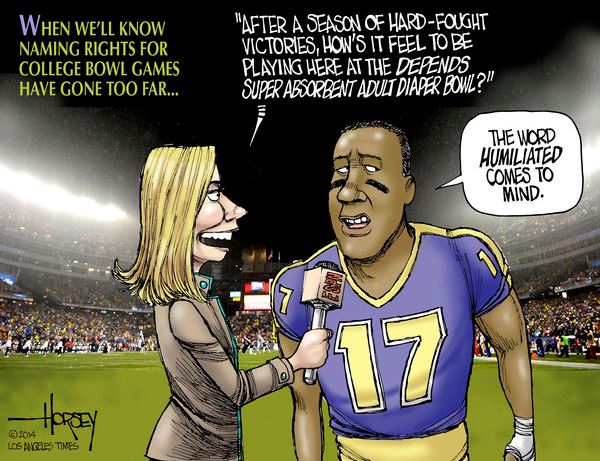
Credit: David Horsey, LA Times
As this oldie-but-goodie cartoon from 2014 by Pulitzer Prize winner David Horsey suggests, we’ve gone too far with naming rights for college bowl games. A Depends Super Absorbent Adult Diaper Bowl sounds all too plausible in this day and age. These bowl games really are not about football, but are one big advertising bonanza using the fan bases of the colleges involved and the sports/industrial complex. Once again, follow the money.
A BASEBALL LOCKOUT AND WORK STOPPAGE? SERIOUSLY?
Mere weeks after having produced a baseball postseason for the ages, the folks in charge are threatening a work stoppage and player lockout. The owners are printing money due to the links with the gambling industry, but heaven forbid they cut the players in on a significant piece of the action. I’ve said it before and I’ll say it again, as I quote my friend Robyn Ryle:
“Let me put it more plainly — the players want baseball to be good. The owners just want to make money. Period. End of story.“
In sports, as in life, when things go south you will seldom go wrong in finding out the problem if you follow the money.
Talking with Amy-Jill Levine about what foreshadows the familiar nativity stories of Advent.
There are times when stories become so familiar that we forget to stop and think about their roots. Their context. Their deeper meaning or perhaps their ambiguity. Maybe even their power.
A Jewish biblical scholar may seem an unlikely source for thinking about the roots, context, connections, and potency of the familiar story of the birth of Jesus. Those who may feel that way simply do not know Amy-Jill Levine.
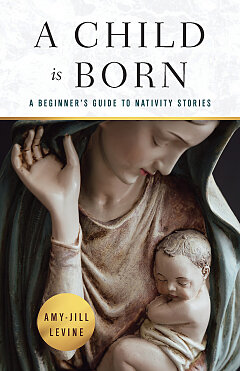
A Child is Born: A Beginner’s Guide to Nativity Stories (2025) by Amy-Jill Levine is a short but insightful book that examines the other nativity stories in the Hebrew Bible. Christians easily recall the narrative around the birth of Jesus: the annunciation of the angel to Mary; the birth of John the Baptizer to her cousin Elizabeth; Joseph and his pregnant wife’s trip to Bethlehem; the manger, shepherds, and heavenly hosts; the magi; the flight to Egypt. But how many know, much less think about, the nativity stories of Moses, Isaac and Ishmael, Samson, and Samuel. Just in time for Advent author AJ Levine has prepared a fascinating four-part study explaining the context that would have been basic knowledge for the faithful in the first century CE while showing the connections between these ancient stories and the one we now celebrate on December 25th.
AJ begins the introduction with the familiar, if not often remembered, Old Testament narrative around the birth of Moses in Egypt. She then quickly moves into the lives of Abraham, Sarah, and Hagar who are—she reminds us—not exactly role models. On the contrary, we should struggle with them. Throughout these stories she writes of displacement, of refugees and migrants, of pilgrimage, of making connections with relatives who live in different places, and of exploration. A Child is Born is a book full of insight and wisdom, and I was delighted when AJ agreed to chat with me in this newest installment of my Author Q&A series.
DJB:AJ, what can we learn by understanding the ties between nativity stories in the Old Testament and the nativity story of Jesus as told in the Gospels?
Amy-Jill Levine
AJ: Jesus, his first followers both Jews and gentiles, the Gospel writers, and their first audiences, did not have a “New Testament.” Their Scriptures were the Scriptures of Israel; Jesus and his first followers engaged the Hebrew text; Jews in the Diaspora and their gentile neighbors had the Greek translations. These Scriptures told of despair over infertility, angelic annunciations, miraculous births, children in danger, and the responsibility, heartbreak, and joy children bring. When we hear echoes of these stories in the Gospels, the Gospel narratives become more profound; they become part of the greater symphony that the Bible offers. The Gospel narratives provide recognition and comfort in the familiar; more, they provide surprise and delight in what is new. The Gospel nativities not only anchor Jesus, Mary, and Joseph into Jewish history, but they also show the ongoing, mysterious, miraculous, joyous, and sometimes difficult relationship between God and God’s people.
Did anything surprise you as you began to delve into the similarities and differences between the story of the birth of Jesus with those of Moses, Issac and Ishmael, Samson, and Samuel?
Although I have been studying, and enjoying, these stories for decades, I find that they continually surprise me. New insights are prompted by changes in my own life, and changes in the world. Of the numerous aspects that particularly impressed me as I was writing this book, here are three.
The first is reading the texts in light of infant mortality because of war, famine, lack of medical care, displacement, etc. I am struck by the often difficult decision to conceive and raise a child. Ishmael will be expelled; Isaac has an elderly mother (which raises questions about special needs); Moses is born in the context of genocide and Samson in a time of war; Samuel is placed by his mother in an adoptive home. The infant Jesus is, according to Matthew, targeted for assassination, a refugee in Egypt, and displaced from Bethlehem in Judea to Nazareth in the Galilee.
Second, a personal note: Despite the wishes parents and caregivers have for their children, these children make up their own minds and face their own futures. There is the bittersweet sense that they are no longer our babies, the sadness that we cannot protect them from all the difficulties ahead, the joy when they find their own way, and the pain when they do not.
Third, from the academic world comes greater knowledge of Jewish stories of miraculous births and of children who have some sort of divine status, such as Melchizedek according to the non-canonical text known as 2 Enoch. Jews at the time of Jesus, like their gentile neighbors, told stories of heavenly conceptions and humans who were in fact divine (here see Philo’s Life of Moses). Hence, I am increasingly convinced that Samson’s father may have been an angel (this is the Bible; such things can happen). Here we see how the biblical stories fit into their broader cultural settings, whether of Bronze age Mesopotamia or first-century Rome.
Your description of the biblical story as one of displacement, pilgrimage, and exploration struck a chord as I read this book. Why is that such an appropriate frame in describing what we find in all of these stories, and in scripture writ large?
Thank you in particular for this question. The biblical story reflects the situations of its numerous authors and, more broadly, of the human condition. We seek a home, and when we are not home, we try to create one. We look for anchors—to our past, to our land, to our traditions; at the same time, we seek to take our own place in the world, which usually requires leaving our parents’ home and deciding for ourselves which parts of our pasts to celebrate and which to question.
I wrote myself a note at the end of your chapter on the conception and birth of Samuel that I loved the story of Hannah. Others who have read this book had similar reactions. What do you think it is in Hannah’s story that resonates with today’s readers?
The story of Hannah (1 Samuel 1:1-2:10) is the Haftarah (Hebrew “ending” or “conclusion”) reading from the Nevi’im (the Prophets) on the first day of Rosh Hashanah (the Jewish new year). It “concludes” the readings of biblical passages, which start with the Torah reading, Genesis 21:1-34, the birth of Isaac. We might think of these set readings as the Jewish version of the Lectionary.
Both studying 1 Samuel as well as hearing it, annually, in a liturgical setting, I’d thought of Hannah not only as annoying but also as morally questionable. She struck me as passive-aggressive and unwilling to share her feelings with her husband Elkanah. I pitied the (less-loved) co-wife Peninah (as I pity Jacob’s less-loved co-wife Leah). I did not like Hannah’s bargaining with G-d (“If you do this for me, then I will do that for you”) or, what seemed to me, her acting out in the shrine at Shilo. Over the years, I have developed much deeper sympathy for her: the inability to express her deepest feelings even to her husband; the effects of despair on the body; the constant reminders of her infertility; the need to do whatever it takes to achieve one’s desires…. Hannah is a fully drawn character, both flawed and admirable, fearful and courageous, puzzling and obvious.
Finally, here’s something new to think about:
The two readings on Rosh Hashanah, the new year, also fit the liturgy, which describes the holiday as Hayom harat olam, usually translated “Today is the birthday of the world.” This year, as I was sitting in the synagogue, listening to these readings, and reflecting on the stories in A Child Is Born, here’s what I thought. The Hebrew term doesn’t actually mean “birthday”; harat means “pregnant” (it is the same word used in Isaiah 7:14 to describe the “pregnant young woman” whose child will be named “Emanuel”; this is the verse Matthew cites, but from the Greek translation, to describe the virginal conception of Jesus). Olam can mean “world,” but it also means “eternity.” We might rephrase: today is the day the world is pregnant and ready to give birth—in pain and in hope, in danger and with new life. We might rephrase, “today the world is eternally pregnant”—every day is a new birth, a new start. Or, since we find the phrase harat olam in Jeremiah 20:17, which offers the horrifying image of the corpse of a pregnant woman, and so a “womb eternally pregnant,” we become so much more aware of the dangers of childbirth, and the tragedy of not bringing life to fruition.
This is a book that rightly focuses on women’s stories, but you haven’t dismissed the men. In fact, you note that in rereading the stories in Genesis, Judges, 1 Samuel, and the Gospels one can recover the stories of the fathers. Why is that important, and what do we discover in that process?
My deeper appreciation of Hannah makes me appreciate all the more her husband Elkanah, who faces his wife’s depression with generosity and love. He does what he can, even as he comes to recognize that the love of a spouse cannot compensate for her desire for and love of a child.
The fathers in these stories come with their own concerns, and their own sometimes questionable, reactions: Abraham’s (appalling) willingness to expel Ishmael and then sacrifice Isaac (Genesis 22, the story of this near-sacrifice, gets a full chapter in the next Abingdon “Beginner’s Guide,” which looks at several stories in Genesis); the near-absence of Amram, the father of Moses, but the presence of Pharaoh, a father himself, whose edict to kill Hebrew babies is rejected by two women, Shifra and Puah; Manoah, the (adoptive?) father of Samson, who is not the smartest Danite in the Ancient Near East; and finally Joseph, whose life is turned upside down by Mary’s unexpected, miraculous pregnancy.
Finally AJ, your epilogue is entitled “Continuing the Story.” What do these stories have to tell us about our lives today and how we should live in the world?
Studying the Bible is a conversation between ancient text and present reader. The Greek philosopher Heraclitus stated, correctly, that we can never step into the same river twice since both we and the river are ever-changing. The same is true with biblical conversations. The text does not stay the same, since I am always re-translating from the Hebrew and the Greek, and my translations differ over time (we see the same process, for example, in the changes from the New Revised Standard Version to the New Revised Standard Version Updated Edition). Translation is more an art than a science. My impressions also change, whether based on what I read in the news that morning or in an article in a professional journal, or a challenge I faced, or a sermon I heard, or a chat I had….
In our conversations with the Bible, our response as readers should not be, “They are people in the Bible and therefore they must be admirable and be role models.” Our response is to engage with these characters, assess their motives (the Bible rarely makes motives explicit; it tends not to offer “thought bubbles”), determine what we would do under their circumstances, and figure out what insight we might gain. If we can then extend our conversation to others, at the dinner table (I’ve found that children and especially teen-agers find these stories fascinating: unexpected pregnancies, parental doubts, marital miscommunication, children in danger—the Bible is infinitely more interesting than the latest media offering), or in a Bible study group, so much the better.
Reading the Bible presents ever-new insights and so challenges. A Child is Born concerns matters that cross the centuries: of infertility and conception; of marital miscommunication and love; of fate and free will; of obstacles both personal and political; of the desire to protect one’s child and the knowledge that we cannot always do so; of conflicts between what the parent wants and what the child wills; of how we influence children—whether our biological children, adopted children, children in our communities— and how they influence us; of past and future. The conclusions we draw will necessarily be tentative—we and the river will keep changing—but the stories remain provocative, encouraging, even inspirational.
A summary of the November posts from the MORE TO COME newsletter.
November is full of opportunities for gratitude. We are surrounded by the bounty of the earth at our local farmers market and see the miraculous in the common. We walk among glorious explosions of fall colors with a sense of wonder. We join with family and friends over meals—some lavish, others as simple as bread and wine—relishing a lifetime of relationships.
But it isn’t always easy to give thanks. In difficult times such as these the Dutch theologian Henri J.M. Nouwen reminds us that discipline—making the decision to choose gratefulness—helps.
“Gratitude as a discipline involves a conscious choice. I can choose to be grateful even when my emotions and feelings are still steeped in hurt and resentment. It is amazing how many occasions present themselves in which I can choose gratitude instead of a complaint.”
As we celebrate Thanksgiving I want to consciously remind myself of all I have that makes my days exceptional even when they are ordinary. “The world is full of beauty and grandeur and also wretchedness and suffering; we know that people are kind and funny and brilliant and brave and also petty and irritating and horrifically cruel,” as Kathryn Schulz reminds us. Even in the midst of that, “we live remarkable lives because life itself is remarkable.”
I give thanks for my ordinary, exceptional days. For a wife who loves me in spite of my many foibles and increasingly eccentric habits. For a mind and body that still work. For healthy, curious, interesting children who are following their passions. For the unconditional love my parents showed to me. For the example they lived out through their lives. For the astonishing fact that my siblings—all of us about as different as five people can be—still love each other, talk with each other, and find ways to support each other.
For books. For walks. For the time this month to sit down over a meal with friends old and new—Christine, George, Two-Dollar Tom, Dolores, Judy, Kevin, Ted, Lucy, Bob, Deborah, Katie, Molly Jo, another Christine, Margaret, Oakley, Constance, Jim, Kate, Meg, Pete, Kay, Bizzy, and others—to share stories, challenges, fears, loves, and passions. For mentors, past and present. For good local coffee shops and independent bookstores. For a country where God knows we don’t always get it right, but enough people keep trying to give us hope. For the ability to visit new parts of the world and the ongoing interest in seeking new ways of looking at that world. For good bourbon. For a faith that deepens even in the midst of—or perhaps because of—mystery.
And for those who let me know that one or two things I’ve written here struck a chord. Thank you.
Now let’s see what caught my eye this month.
READER FAVORITES
November’s top post in terms of reader views is the same each year. I’ve been sharing family photos annually for 18 years, and you can find this year’s version at Our Year in Photos — 2025. Family vacations, gourmet meals, career growth, retirements, births, deaths . . . they are all there. And readers still keep checking out this post. Amazing!
Pull up a chair and let’s talk, featuring snippets from each of those conversations, is my celebration of this milestone. After reading these 20 books and following up to discuss them with their authors, I’ve learned so much about history, theology, historic preservation, planning, architecture, perspectives, social and environmental justice, the art of observation, the writing craft . . . and life.
HISTORY AND THE LOSS OF IGNORANCE
Two stories this month came at the question of history—what we know and how we know it—from different angles. Both were of interest to a number of readers.
As the anniversary of the assassination of President John F. Kennedy approached, I visited Parker J. Palmer’s essay on the topic in The world unravels always and has to be rewoven every day. November 22, 1963 was a day when many lost their innocence—or perhaps ignorance—about America. Palmer asserts that this “disillusionment is key to living a grounded life. To be ‘dis-illusioned’ means you’ve lost an illusion—and that means you have a chance to live a little closer to reality.”
SPORTS: THE GOOD, THE BAD, AND THE UGLY
Glued to the television in October and early November, I watched riveting baseball games played out over two countries that were full of drama, heartbreak and unexpected joy. A baseball postseason for the ages says it all in the title.
Besides Rich Moran’s wonderful tale of moving into a ramshackle old Victorian mansion, being gifted some grape vines, and finding life, I read some other important books in November.
An unlikely freedom fighter chronicles the exploits of Josephine Baker in the story of how one of the most famous celebrities of her time—who began life Black and poor in segregated St. Louis—became a French spy during WW II.
Lessons in history—and on the art of being human—from a posthumous collection of thought-provoking essays by David McCullough are captured in my post America is an effort.
Do one thing everyday that scares you is my review of the latest book from Dr. Francis Collins, a work which looks at four core sources of wisdom: truth, science, faith, and trust.
The Opry at 100 is a celebration of the 100th birthday of the Grand Ole Opry as seen through Charles Wolfe’s groundbreaking book on the early years of this American institution.
My favorite comment this month came from Brilliant Reader Margit, but it wasn’t posted online. Instead, it came via a hand-written card, in response to an earlier post on gratitude and thankfulness. It seems appropriate for this week.
“I enjoy most of your columns—exceptions being baseball and some of the country music 🙂
I particularly appreciated your most recent one on gratitude. I try and choose happiness / gratefulness / gratitude most of the time. It comes easy being outdoors for me, with family, and music to cover a few important things. Others, harder.
I am so grateful you have the energy to write these columns, and more than grateful to count you and Candice as friends.”
Merci.
DON’T POSTPONE JOY
Thanks, as always, for reading. Your friendship, support and feedback mean more than I can ever express.
As you travel life’s highways be open to love; thirst for wonder; undertake some mindful, transformative walking every day. Recognize the incredible privilege that most of us have and think about how to put that privilege to use for good. Women, people of color, LGBTQ+ individuals, immigrants, public servants, and others can feel especially vulnerable . . . because they are. Work hard for justice and democracy as the fight never ends.
But also keep some room in your heart for the unimaginable. Take time to dawdle and dream. Leave enough empty space to feel and experience life. Those gaps are where the magic begins. When times get rough, let your memories wander back to some wonderful place with remembrances of family and friends. But don’t be too hard on yourself if a few of the facts slip. Just get the poetry right.
Remember that “we are here to keep watch, not to keep.” Pay attention. Be astonished. Tell about it. And bash into some joy along the way.
You can subscribe to MORE TO COME by going to the small “Follow” box that is on the right-hand column of the site (on the desktop version) or at the bottom right on your mobile device. It is great to hear from readers, and if you like them feel free to share these posts on your own social media platforms.
Photos from another year around the sun full of growth, travel, family, friends, and love.
During this season of gratitude and thanksgiving, I continue—now for the 18th year—my annual tradition of posting family photographs on MORE TO COME.* I invite you to take a look at our world in 2025.
NOVEMBER — DECEMBER 2024
Last May I wrote about our support of the wonderful Arcadia project underway in Staunton, VA, through their “Sponsor a Marquee Quote” fundraiser. So imagine my surprise when we were in town over Thanksgiving and saw that my MTC essay was featured on a poster outside the theatre! We had to stop for a picture.
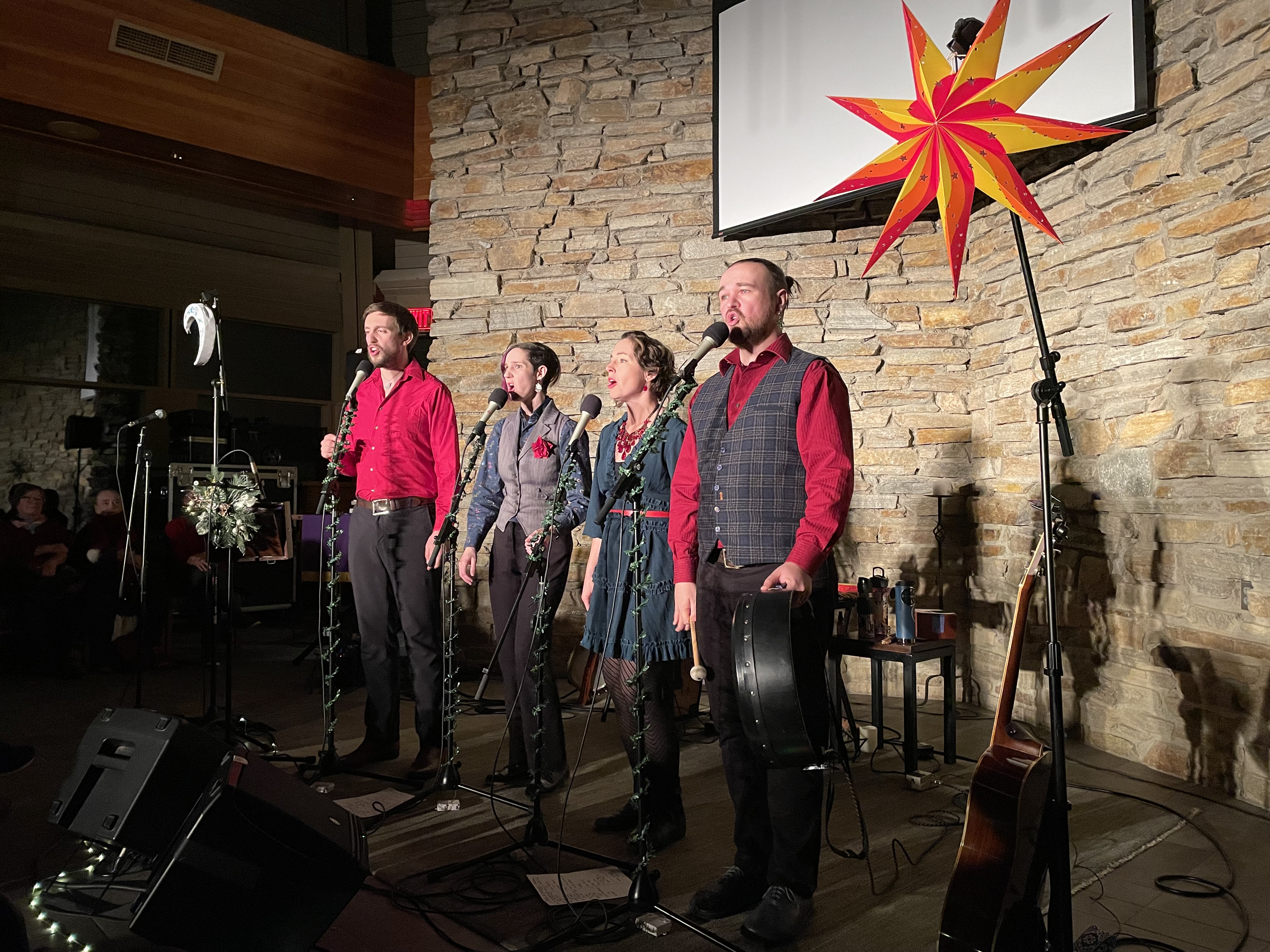
The Browns have a number of traditions during both Advent and throughout the twelve days of Christmas, events that continued as 2024 turned into 2025. Andrew was the tenor soloist for the Duke University Chapel’s performance of Messiah; Candice and I enjoyed a variety of music concerts, including one featuring the gorgeous acapella singing of Windborne; and we spent a delightful afternoon visiting shops and sampling a variety of hot chocolates at Main Street Takoma‘s “Cocoa Crawl.”
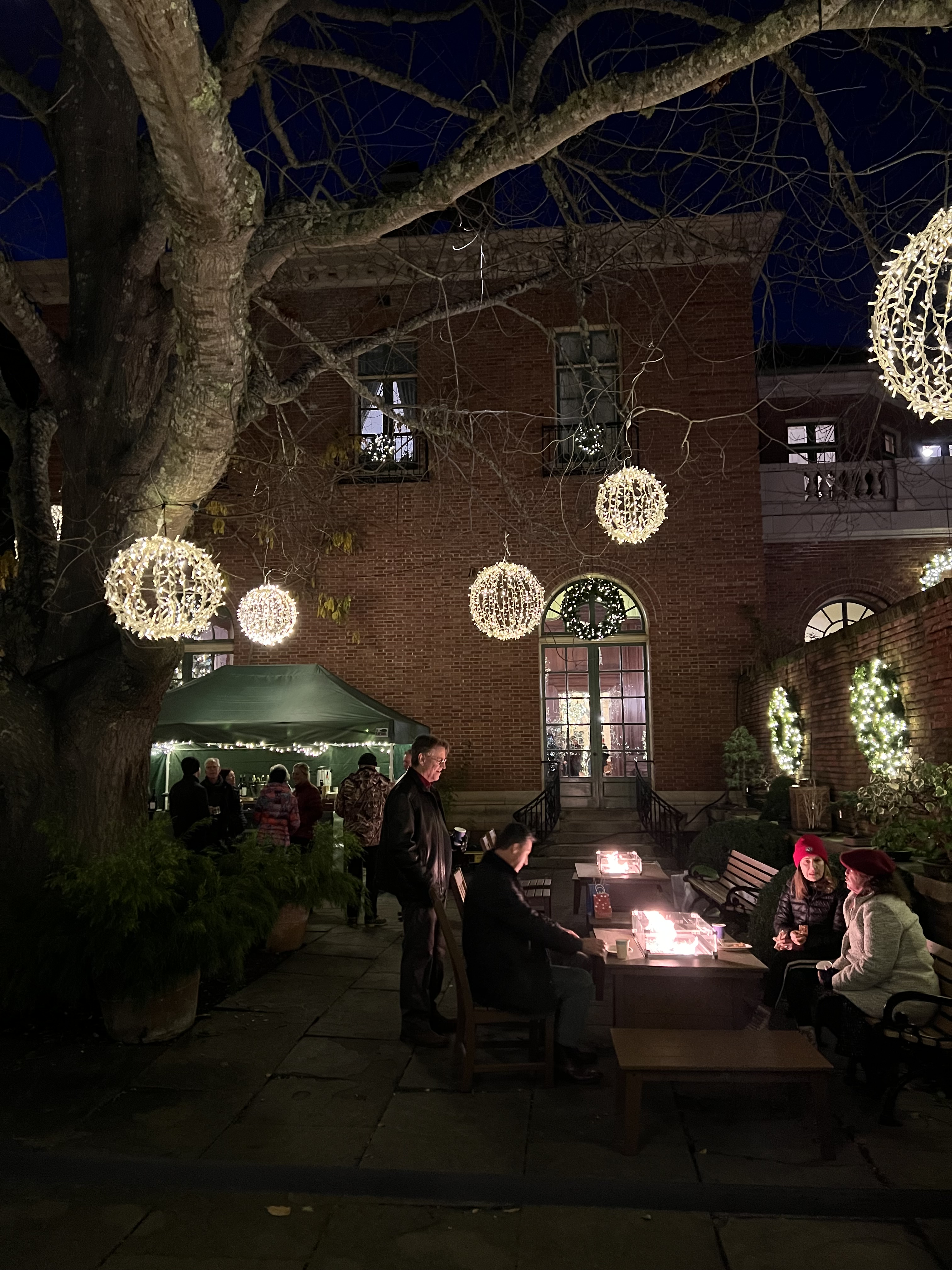
Claire’s traditions include a visit to Filoli—a historic house and world-class garden in California. With her expert photographer’s eye, she captured several breathtaking images during the Holidays at Filoli celebration, keeping the connection to a magical place where I once served on the board of directors.
Christmas decorations in the mansion at Filoli
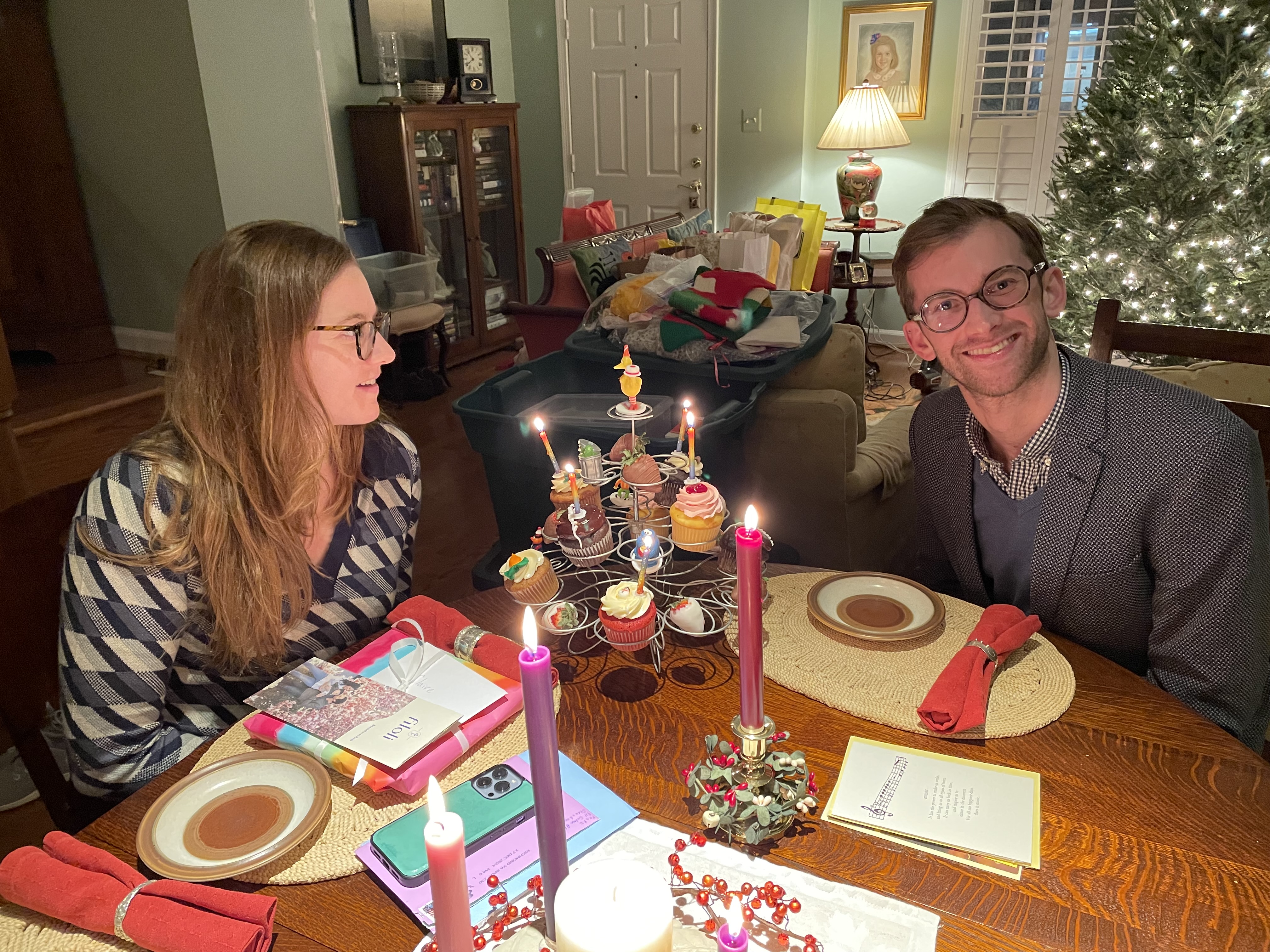
As the end of the year draws near, we celebrate Andrew and Claire’s birthday with the traditional cup cakes . . .
. . . along with the Twelve Days of Christmas, including some wonderful meals, both home-cooked and in great local restaurants.
Each year when the family gathers we usually pull out jigsaw puzzles and other games. As we lounged at the morning breakfast table in late December (the 27th to be exact), Andrew—one of our main puzzle enthusiasts—discovered that MORE TO COME made the New York Times Crossword Puzzle! How cool is that!! (I’m pretty sure this newsletter was what the puzzle master had in mind.)
JANUARY — FEBRUARY 2025
Andrew’s busy singing schedule continued into the New Year. In early January he sang at the state funeral of President Jimmy Carter, held at the Washington National Cathedral . . .
Irene Ann Colando—Candice’s dear mom, my mother-in-law, and Andrew and Claire’s grandmother—passed away peacefully at age 93 on January 25, 2025, after a long and fruitful life. Irene was a people person who delighted in her family and never wavered in her faith in God. We all miss her lively presence and love in our lives.
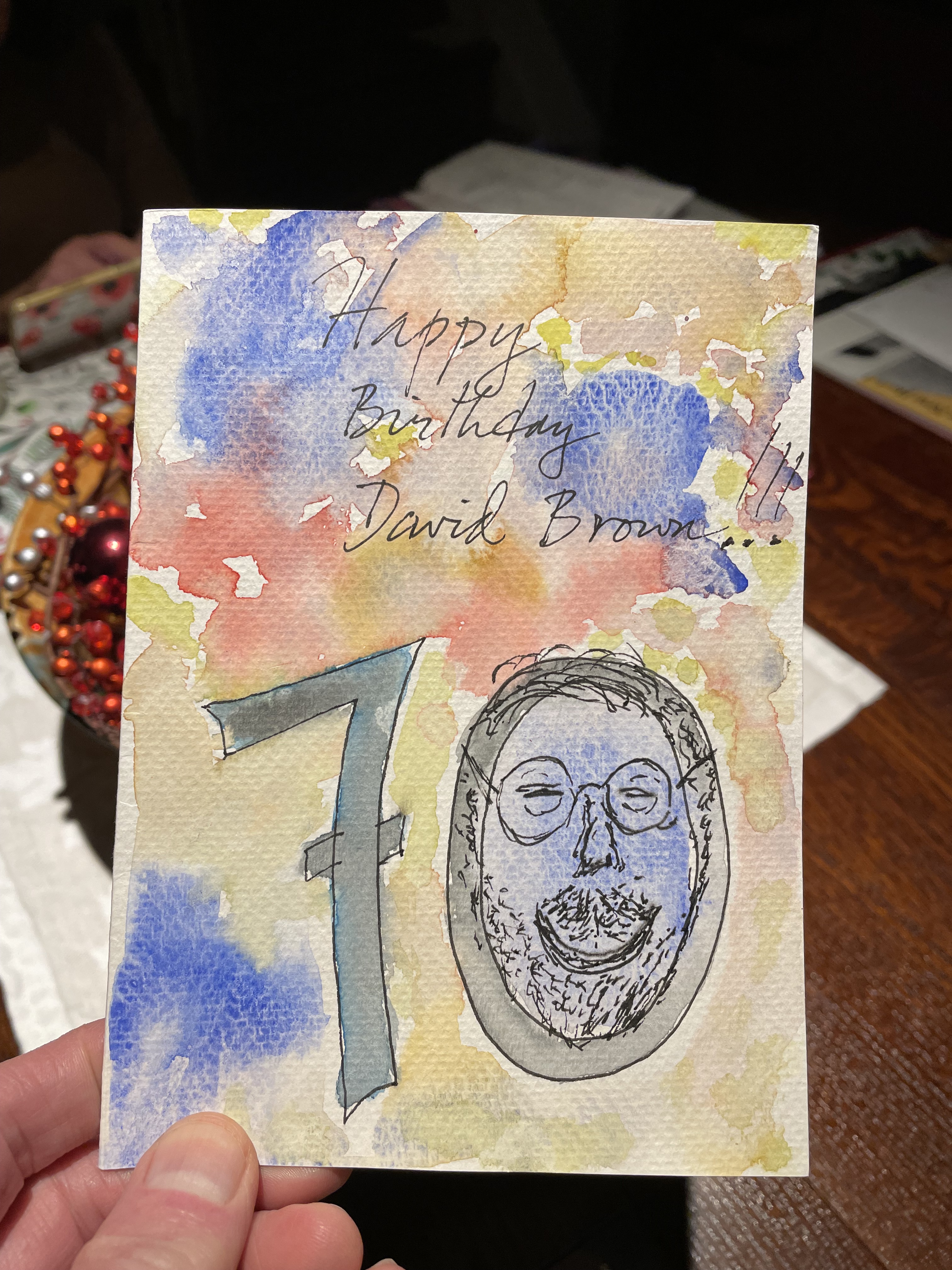
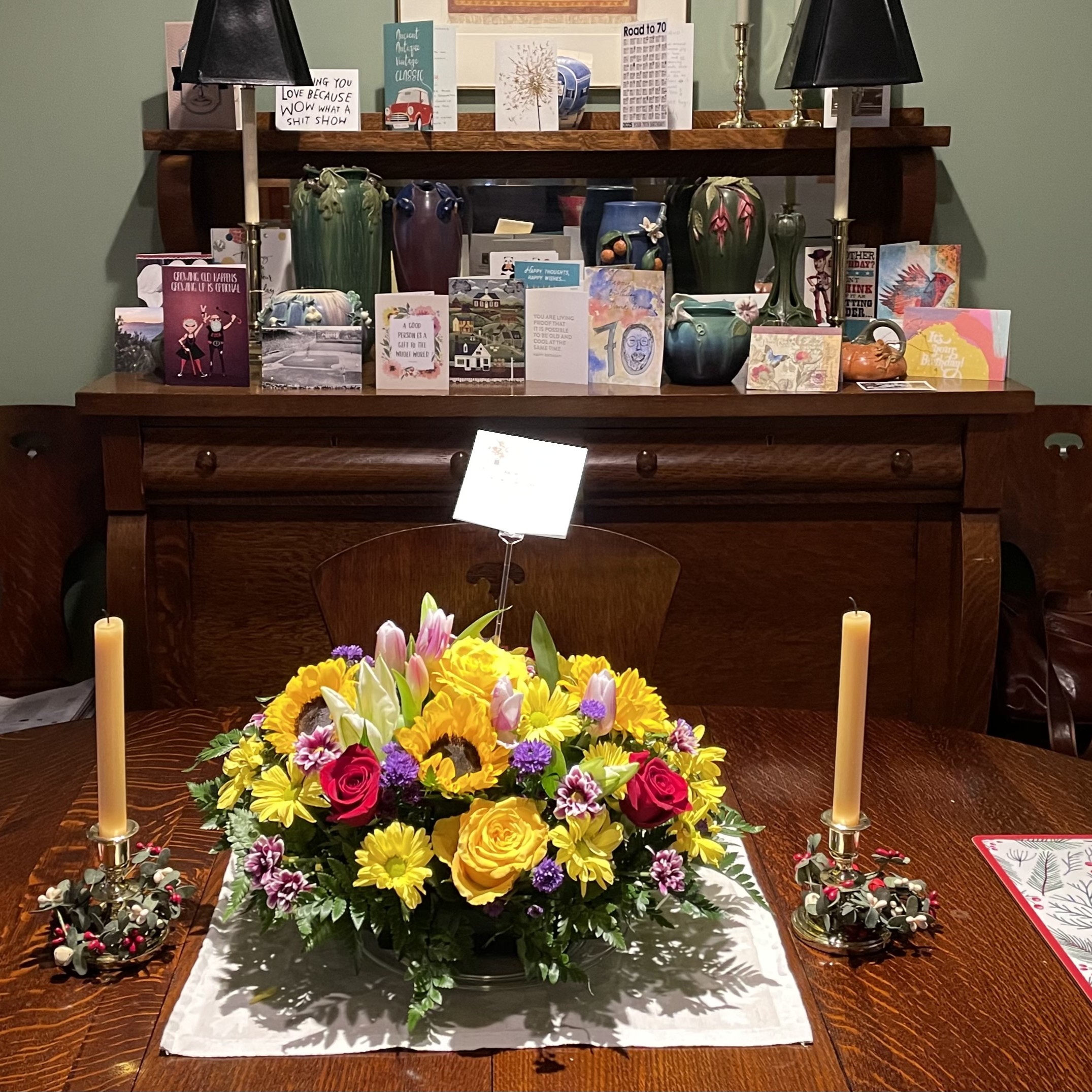
In addition to a wonderful dinner party with special friends, Candice also organized a surprise: more than 90 cards from friends all around the world showed up in our mailbox. I felt Rich (In a George Bailey kind of way).
March is also our anniversary month, so the celebrations continued.
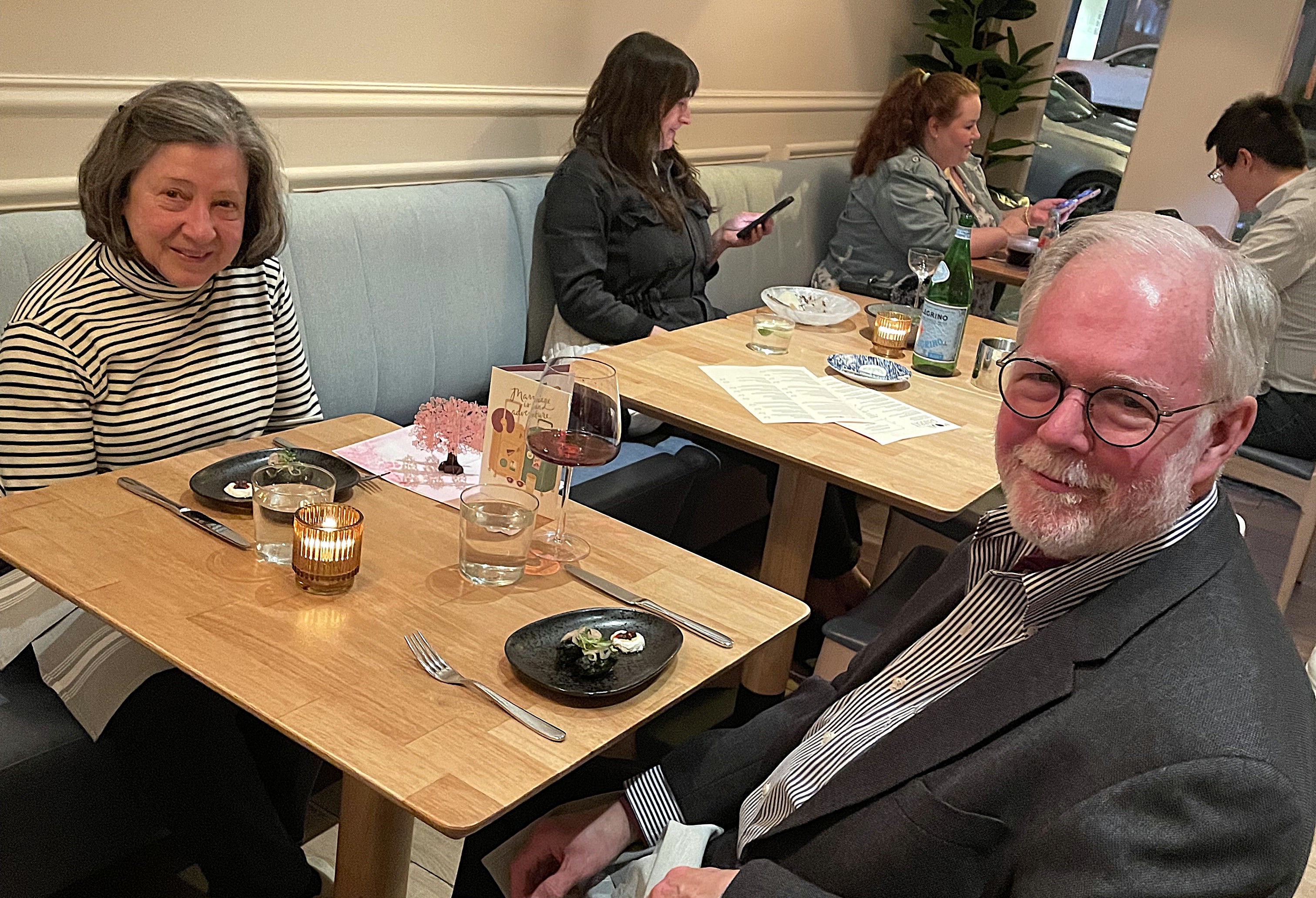
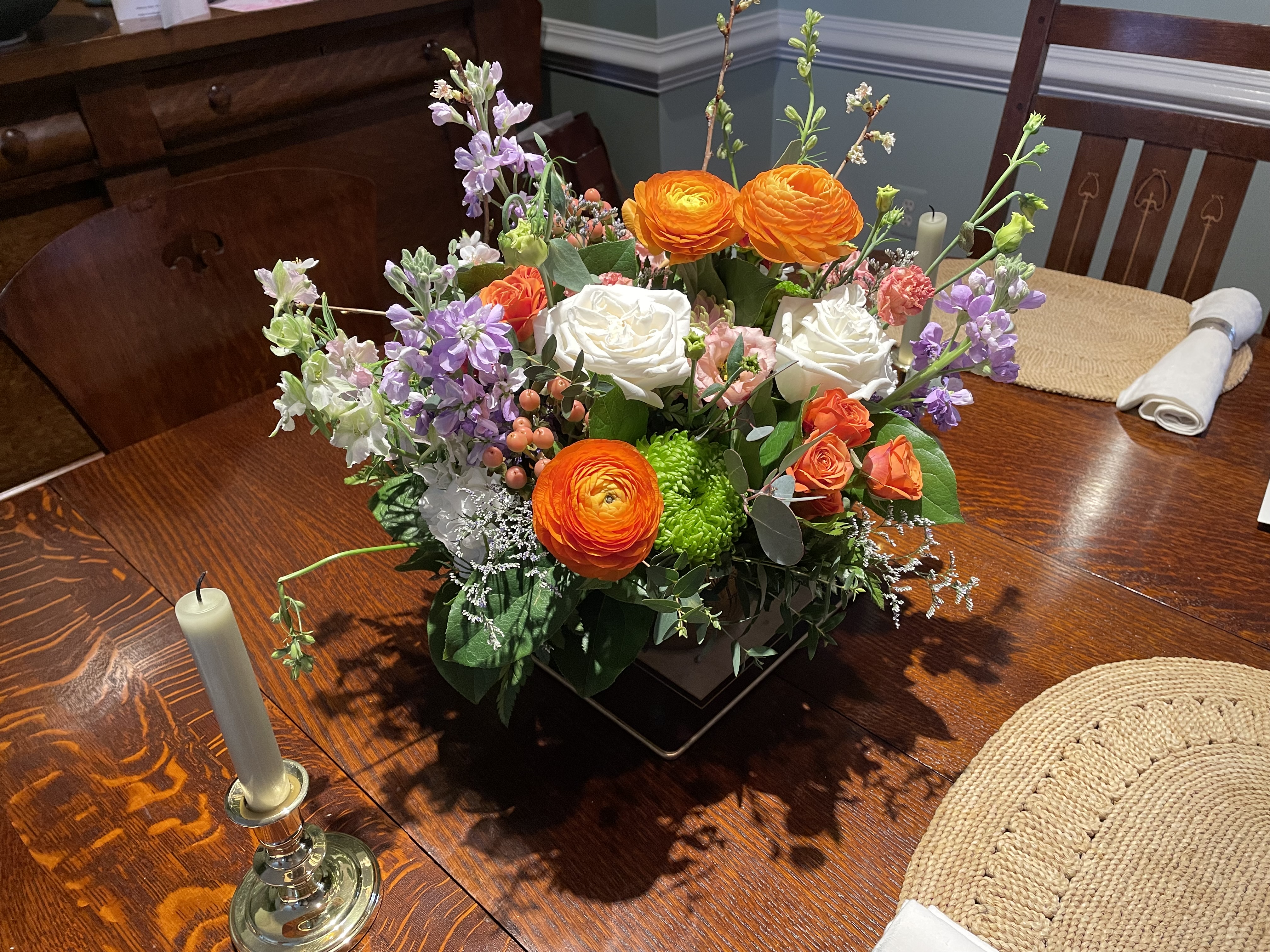
A delicious anniversary celebration—our 43rd—at DC’s Moon Rabbit by Kevin TienA Cherry Blossom triee anniversary cardAnniversary flowers
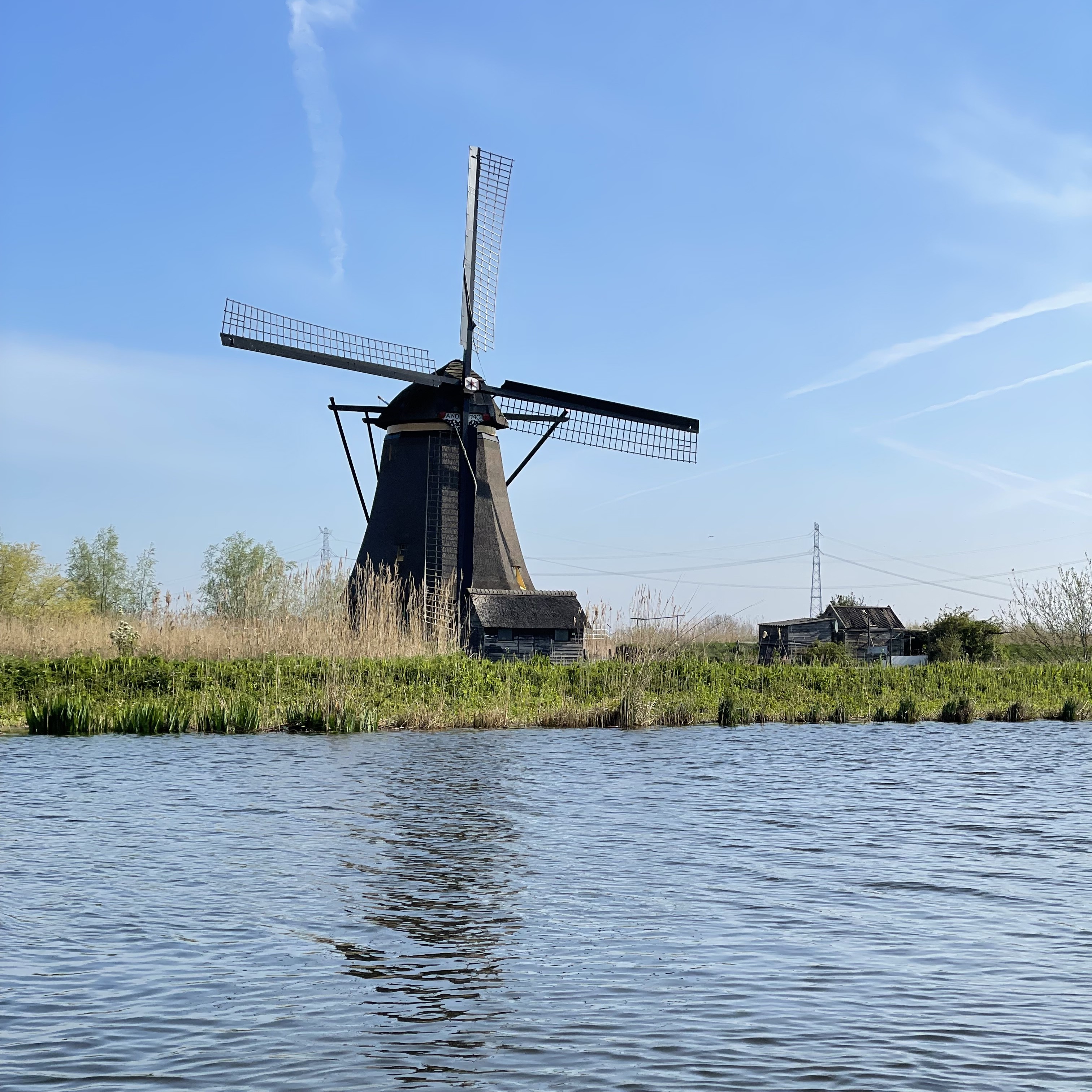
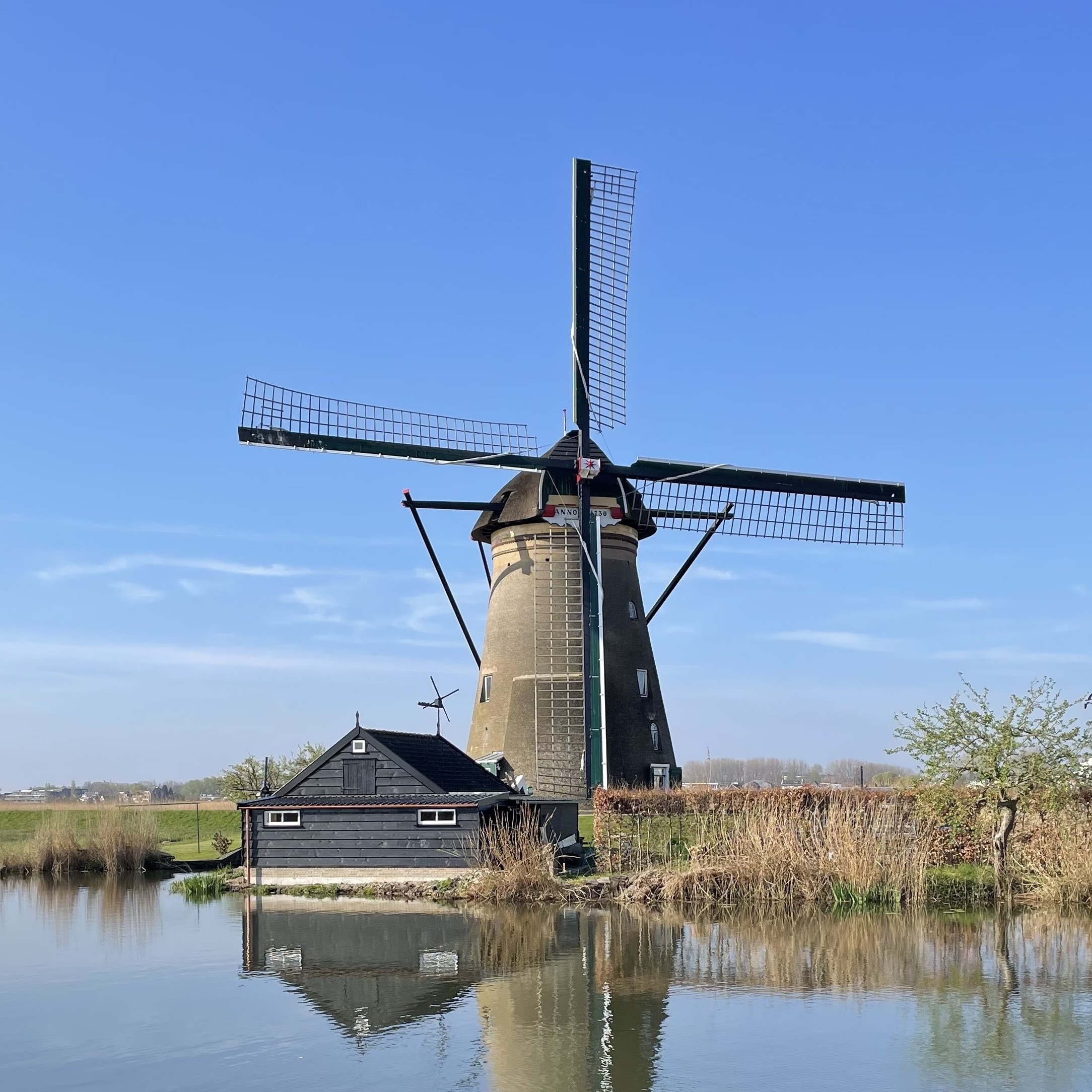
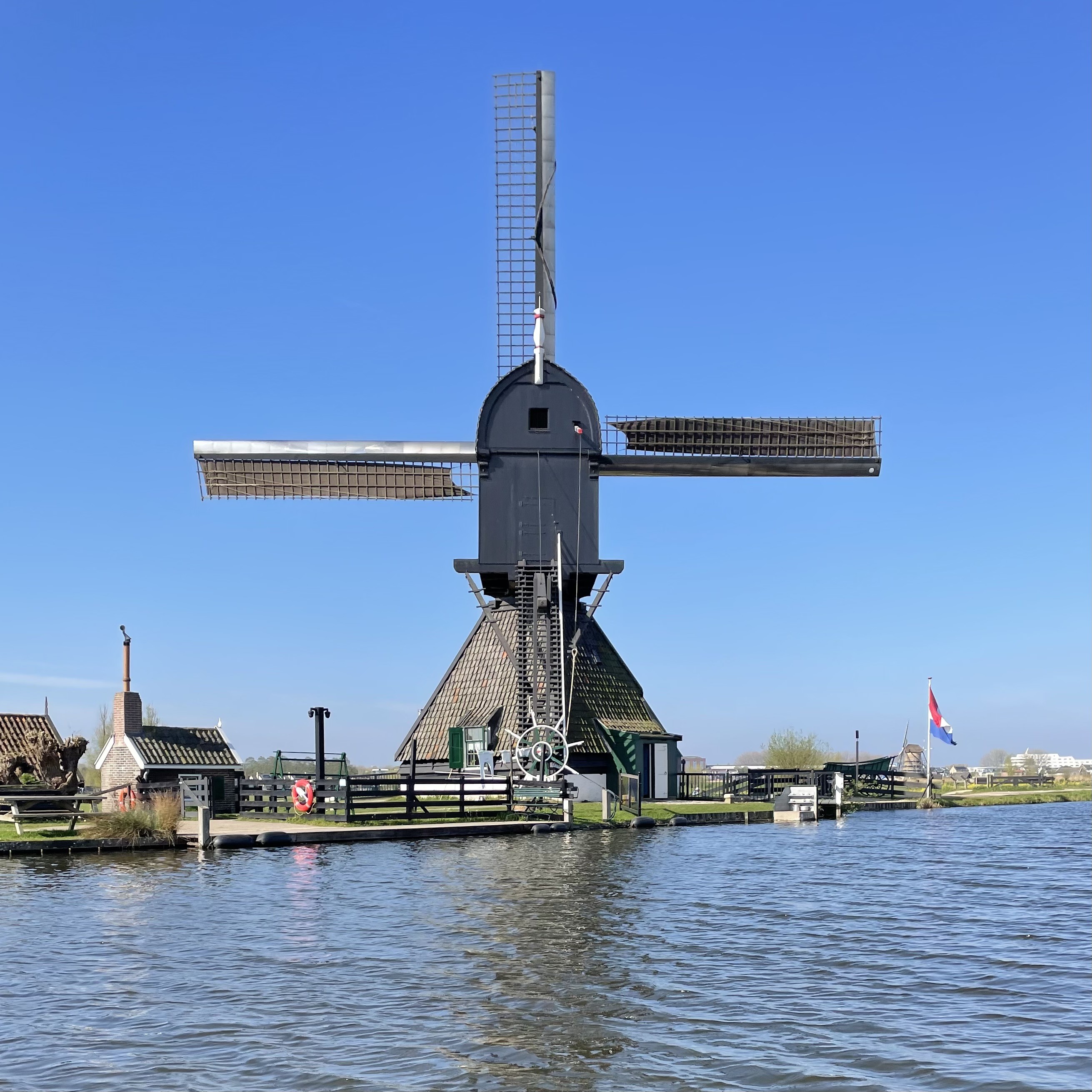
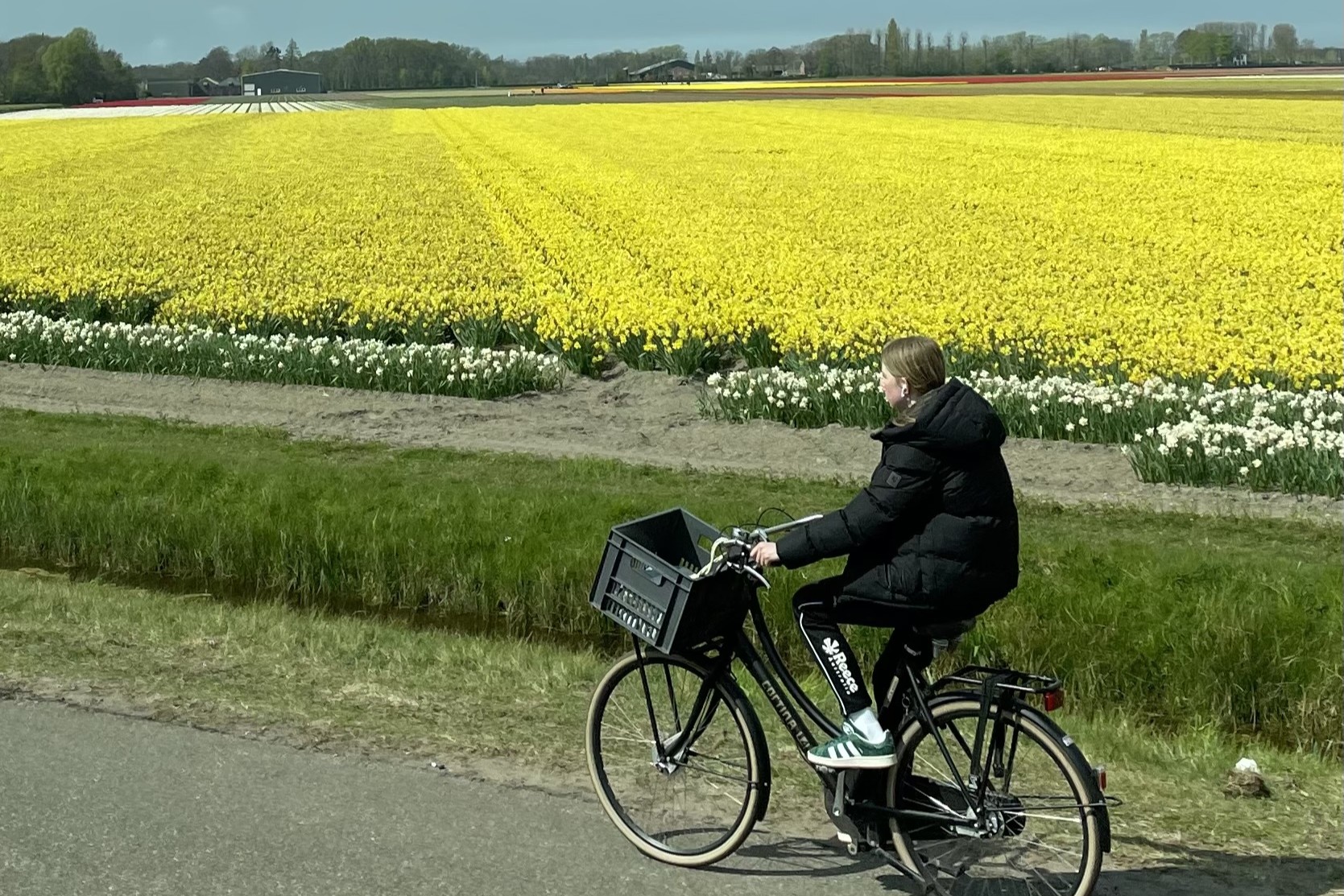
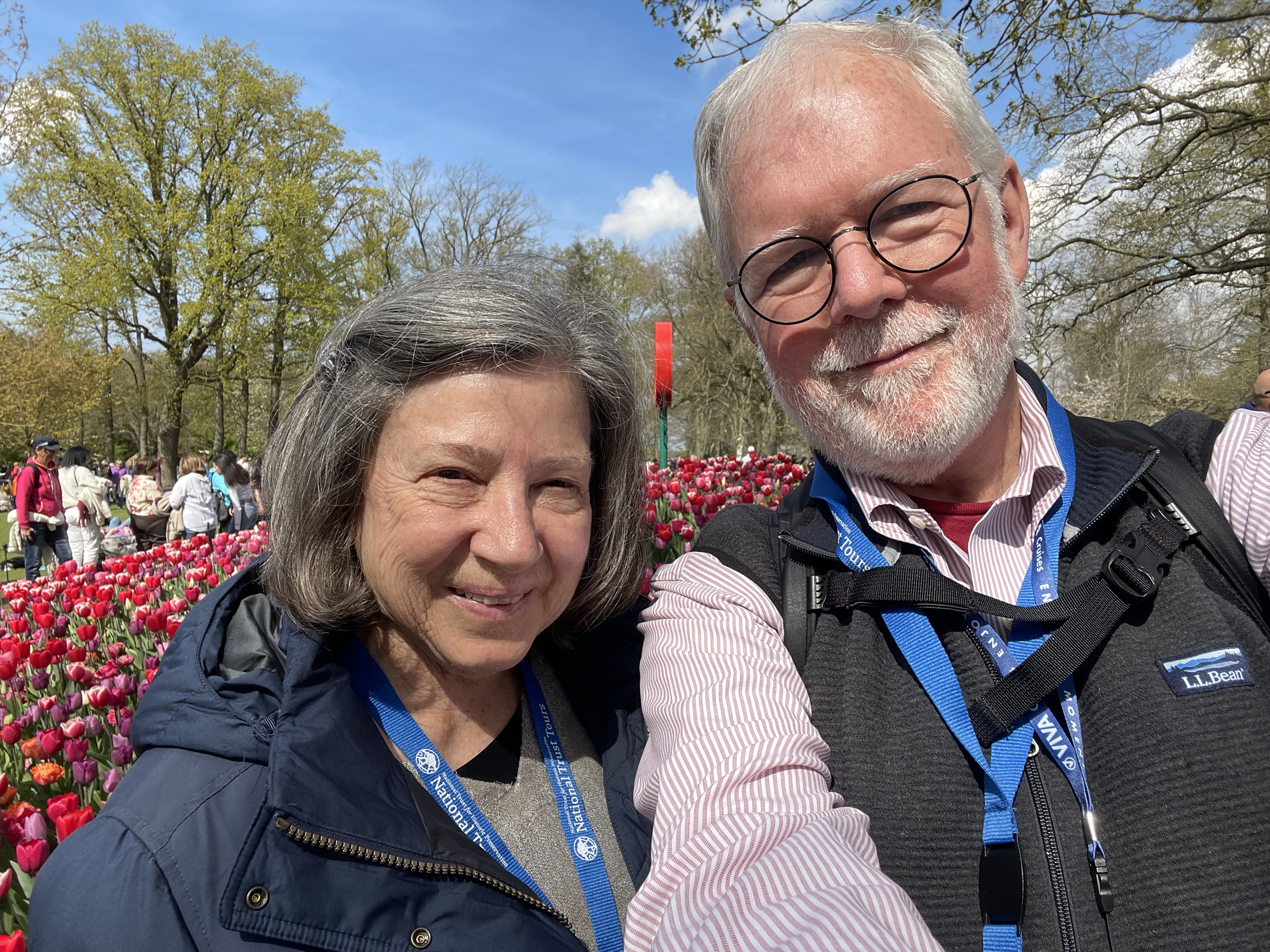
In early April we left for the first of three National Trust Tours this year. Exploring the Dutch Waterways provides an overview and links to other stories from this wonderful trip, timed to catch the tulips at the height of their glory.
Vinkeles in Amsterdam, where we enjoyed perhaps the best dinner I’ve ever had
The beautiful and moving Portuguese Synagogue in Amsterdam
Viva Enjoy Panorama, our home for this trip (photo by Charles Porter)
Ghent Altar Piece
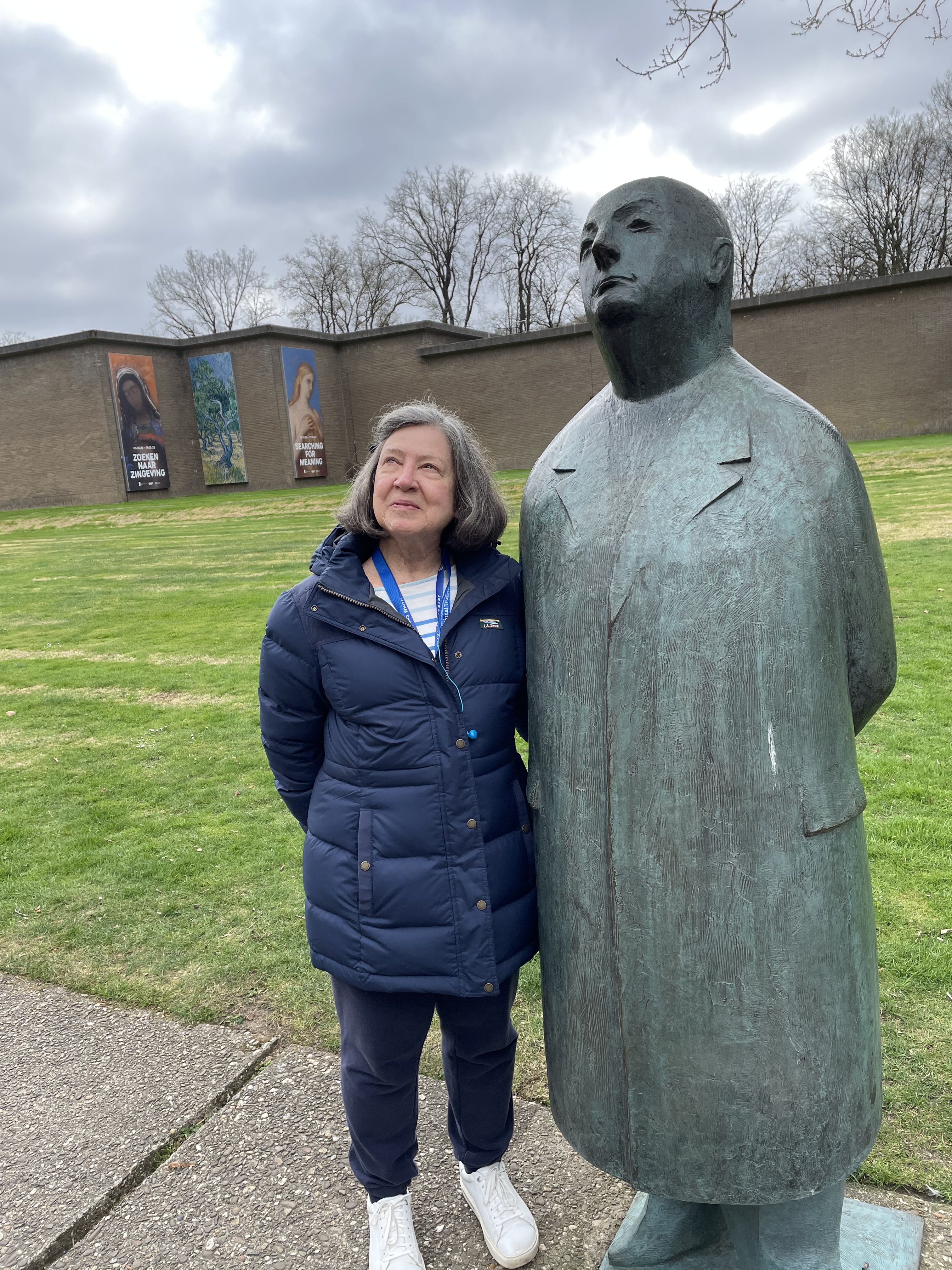
Candice joins Mister Jacques in his spot at the entrance to the Kröller-Müller Museum, as they gaze at the artwork.
DJB lecturing on the Viva Enjoy in Belgium (photo by Charles Porter)
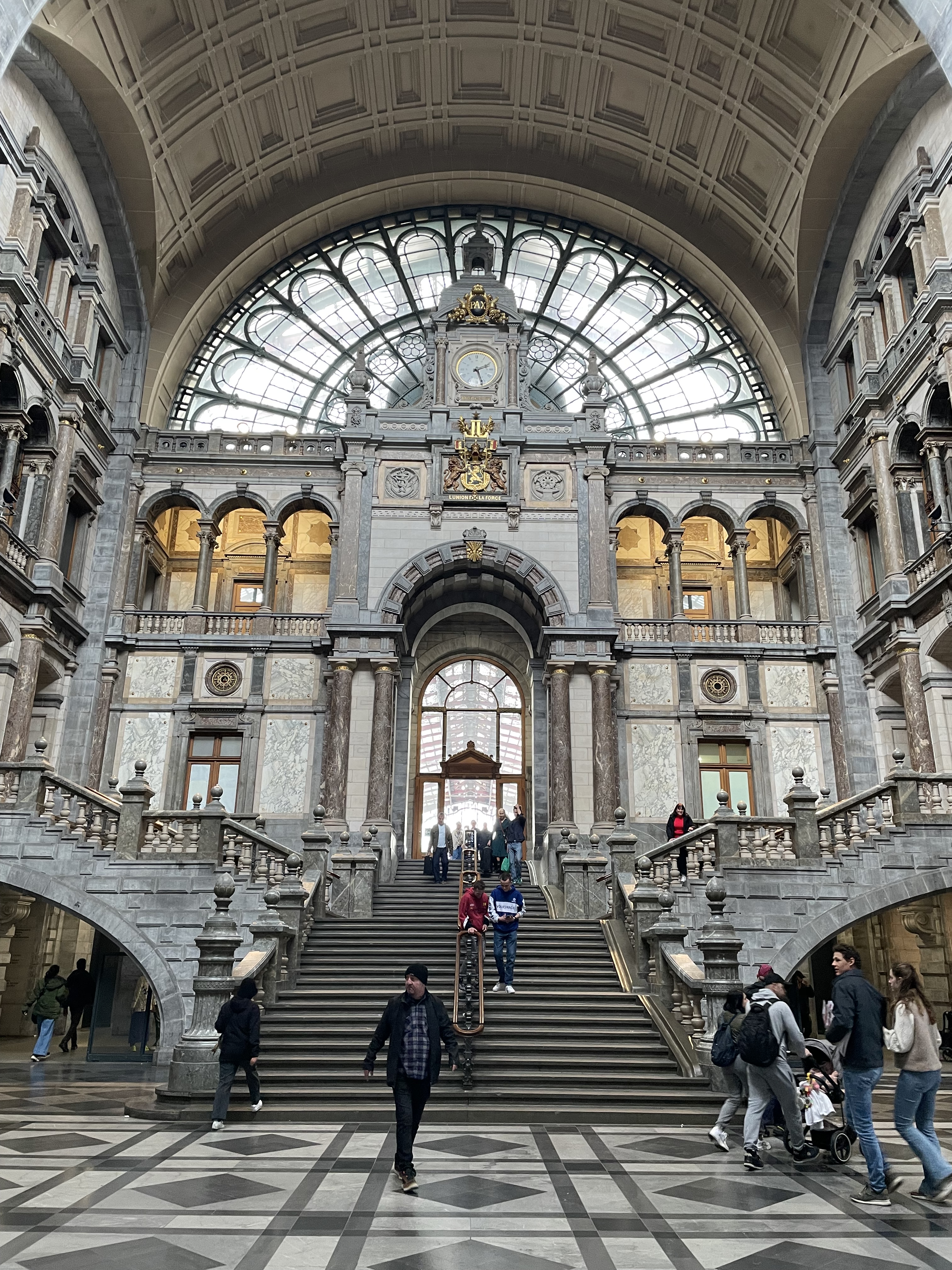
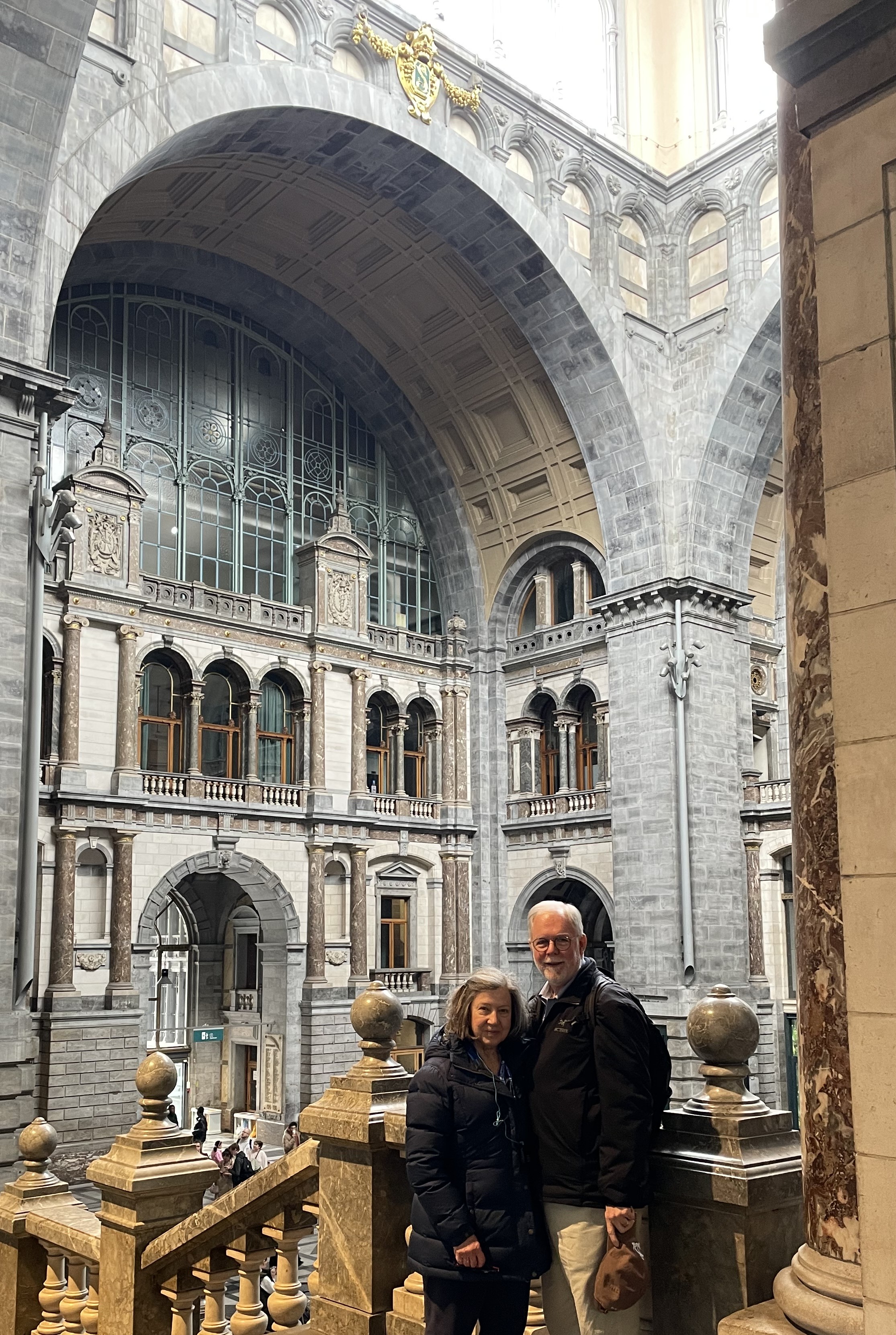
The train station in Antwerp is often listed among the most beautiful in the world. I would agree. Simply stunning.
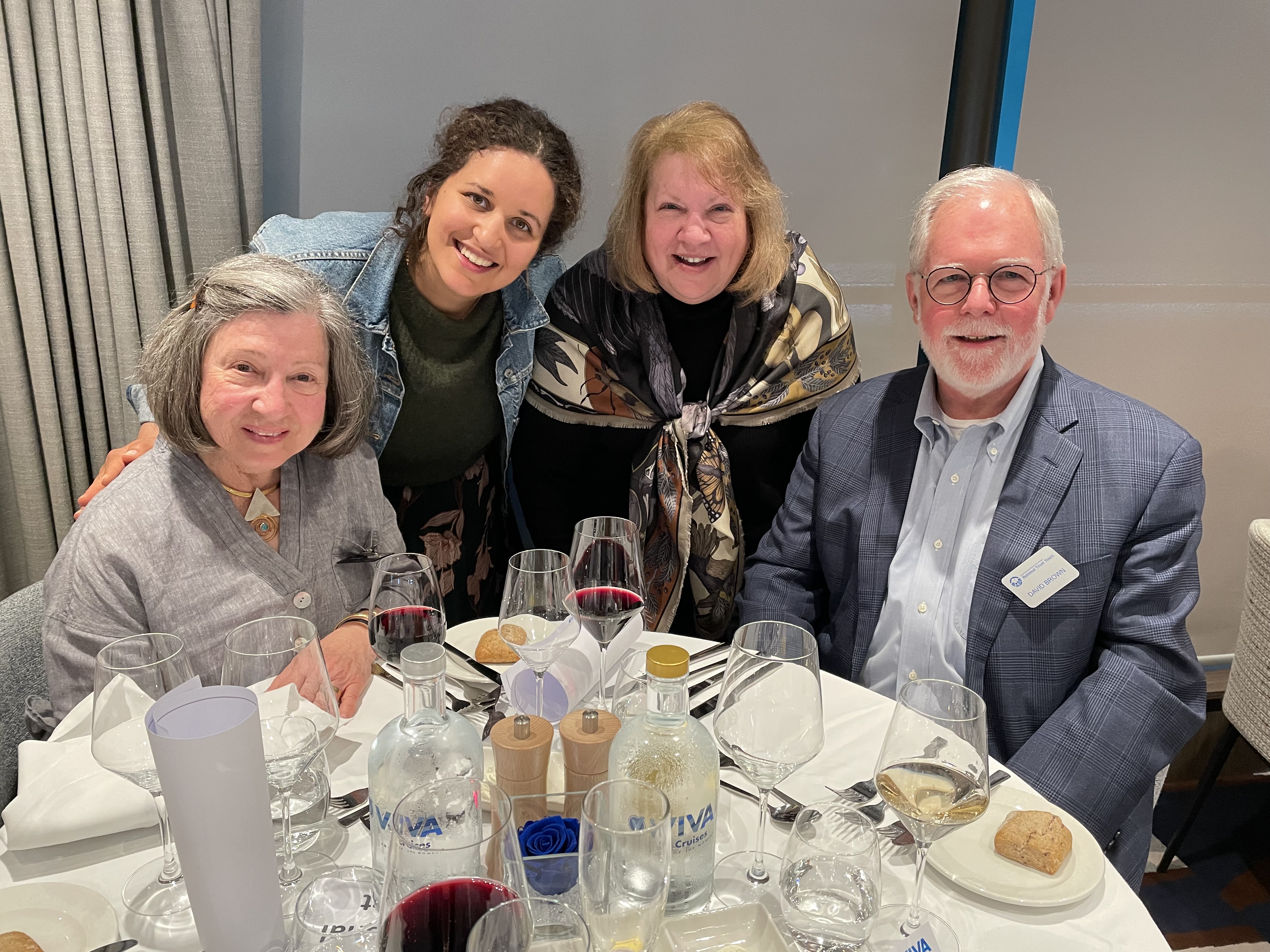
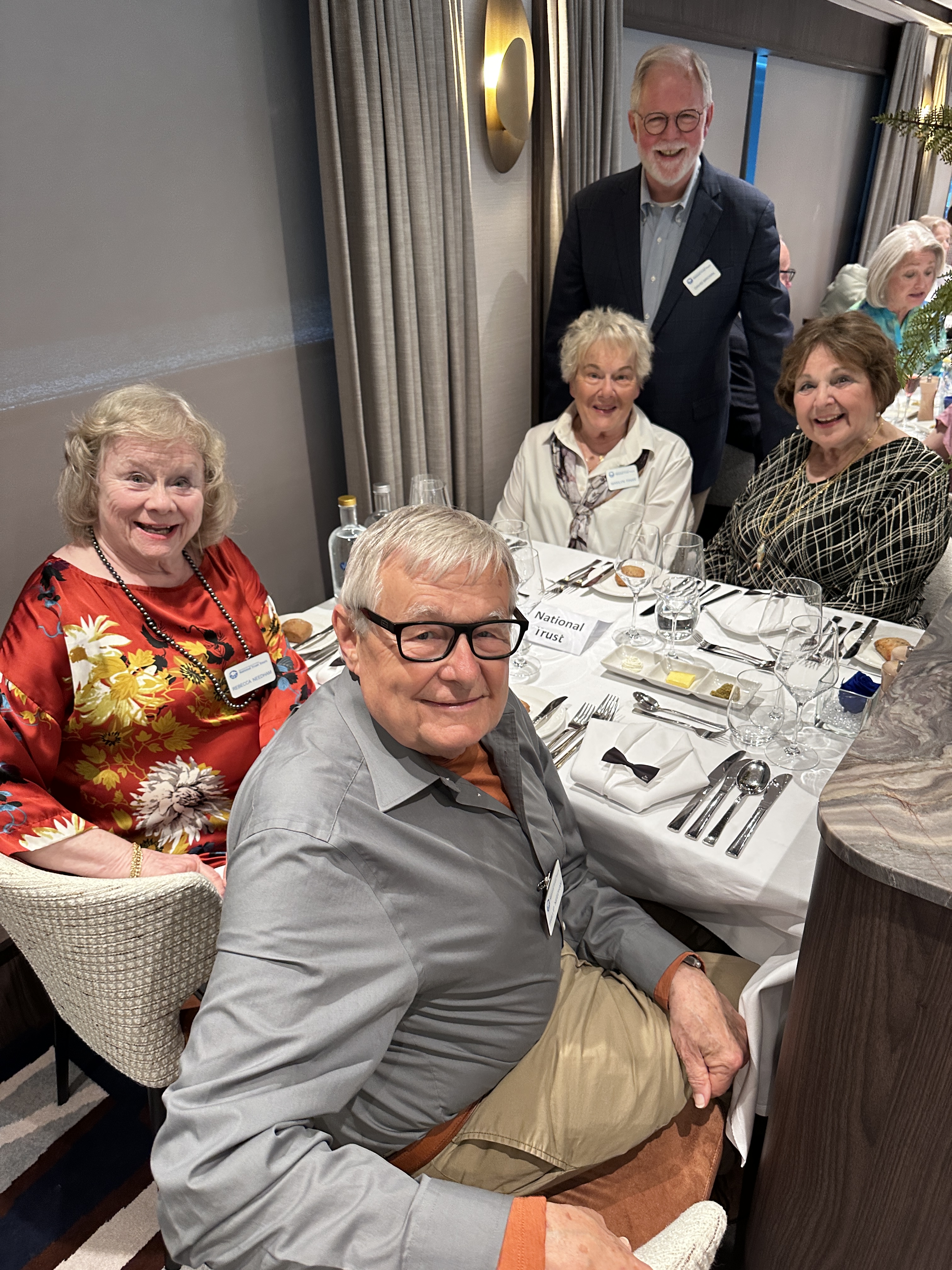
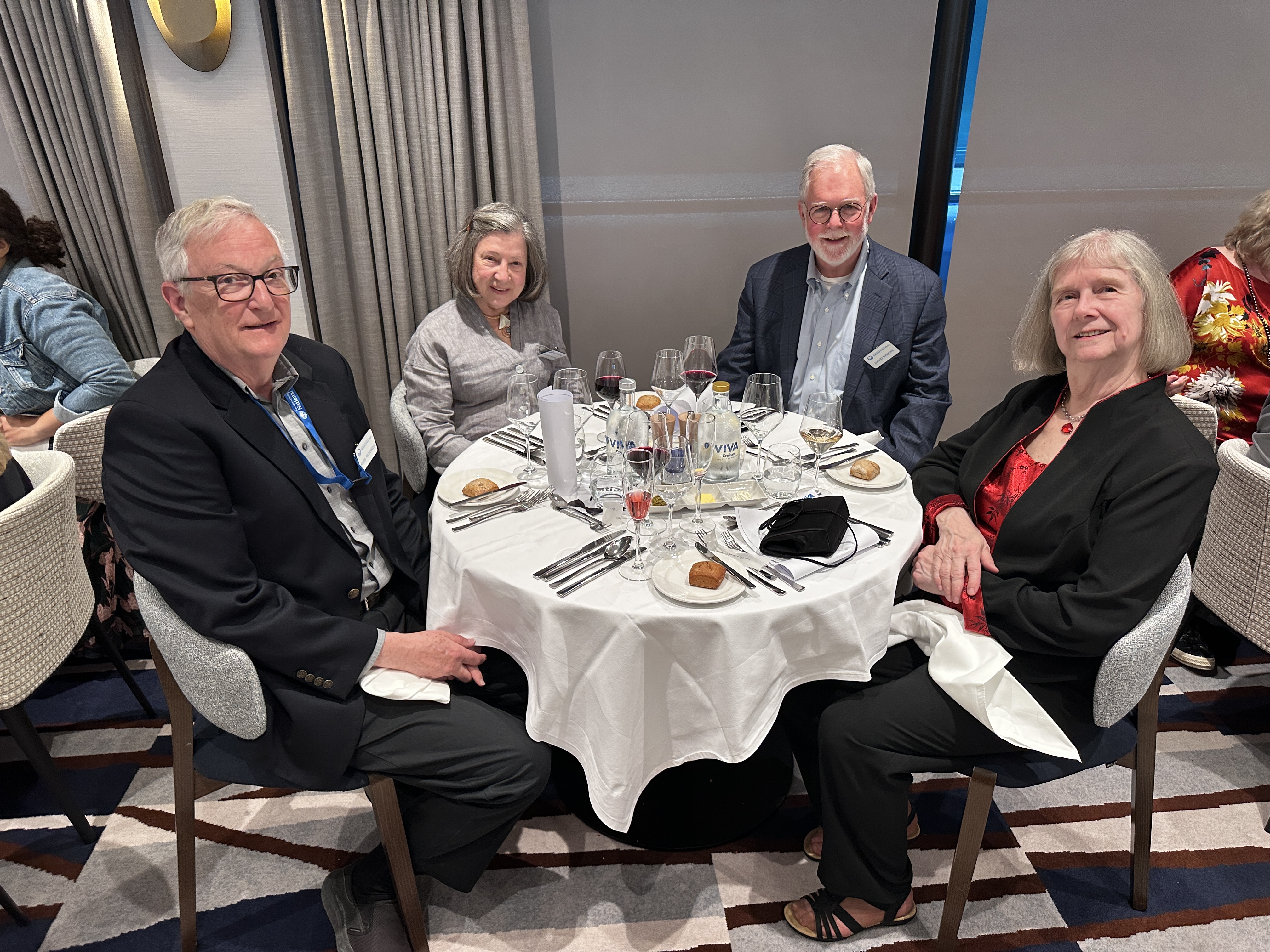
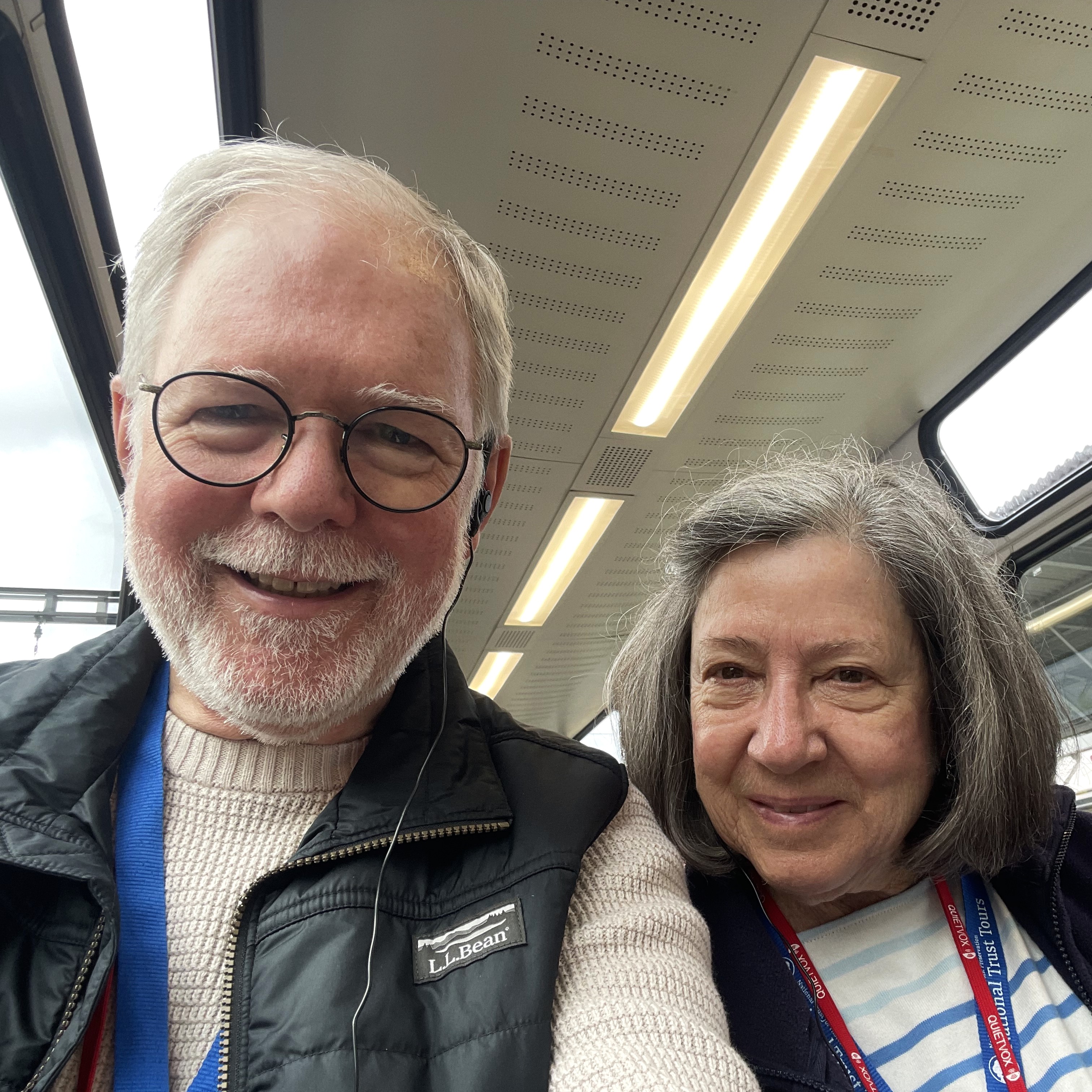
One of the best things about National Trust Tours is the wonderful people and new friends we meet on these journeys.
MAY — JUNE 2025
It was only as we were texting pictures of the Portuguese Synagogue to our children that we discovered Andrew was slated to sing the Song of Dedication concert for the 350th anniversary of the synagogue with the Washington Bach Consort in early May. We were delighted to make it back in time to hear this magical evening of song and celebration.
Andrew with (left to right) Genevieve McGahey (soprano), Lev DePaolo (soprano), Ian Pomerantz (bass-baritone), and Dušan Balarin (theorbo)
Andrew with Ian Pomerantz following the “A Song of Dedication” concert
May brought 10th year college reunions for both Claire and Andrew. Claire returned with some of her classmates to Pomona College, where she loved spending time with Susan, Kyra, and Jackie (l-r in top picture) over the weekend.
During his 10th year reunion at Brown University in Providence, Andrew spent part of the weekend soloing in the Bach Magnificat for the concert celebrating Fred Jordry’s tenure at the university.
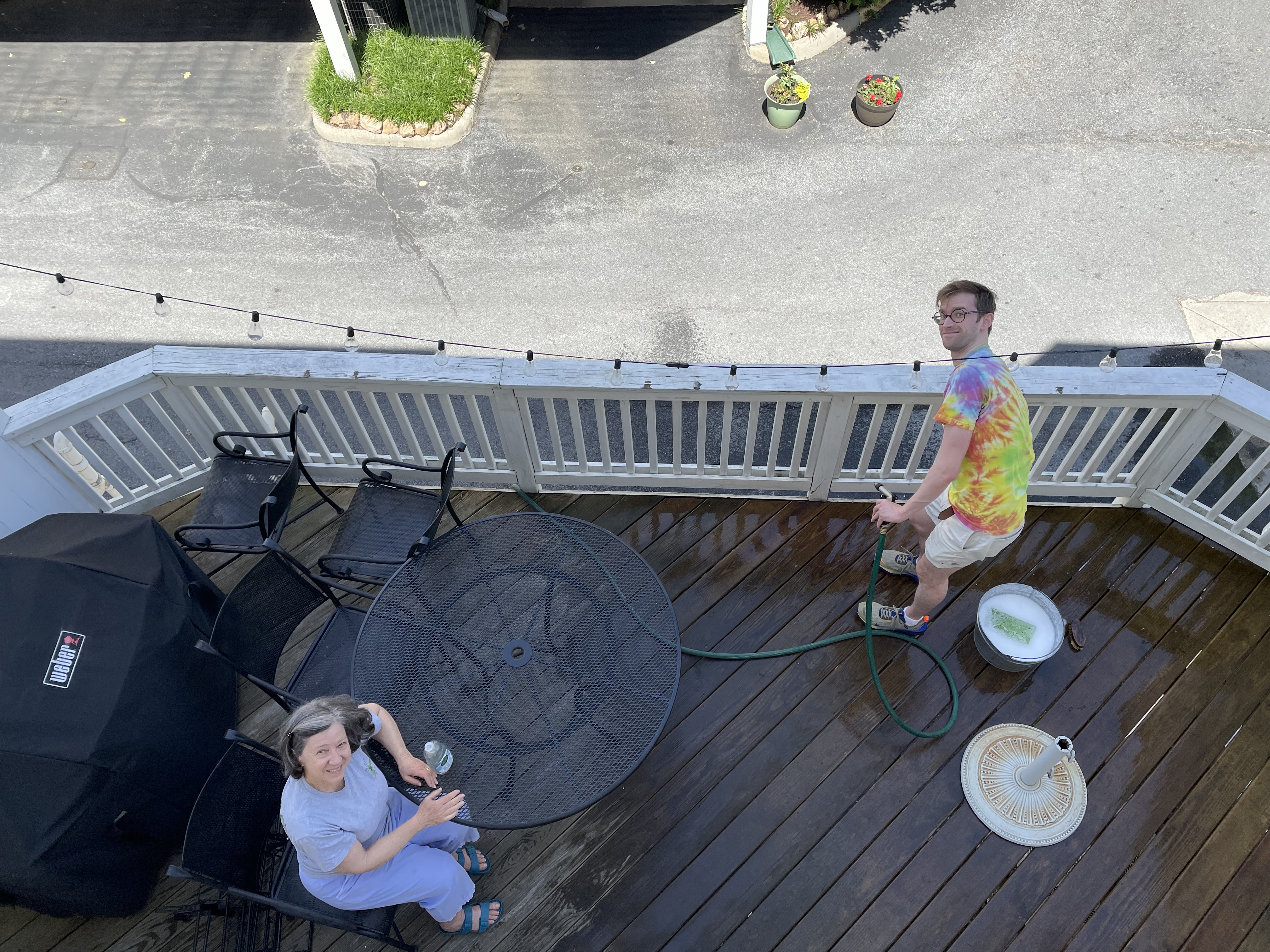
Candice, Andrew, and I spent one weekend in May engaged in the annual “cleaning the outside of the house” project, which I captured in this picture from our third-floor bedroom.
That same weekend Claire was not working to clean the house, but was instead enjoying a retreat at Lake Tahoe with friends from Christ Episcopal Church in Alameda. She got the better end of the deal!
2025 was the year of new headshots . . . both candid and professional.
The drawing of Andrew is from his covering the role of John Singer Sargent in last year’s premier of American Apollo at Des Moines Metro Opera, and the photo is his new professional headshot taken this summer at the Santa Fe Opera, where he was an Apprentice Artist.
Candice and I hit the road again for the second of our National Trust Tours. We began in Zurich, where we met up with Anita Canovas, a long-time friend and former NTHP colleague, and her husband Kevin Forjette at their home . . .
. . . and celebrated Candice’s birthday at IGNIV Zurich.
Celebrating Candice’s birthday in Zurich
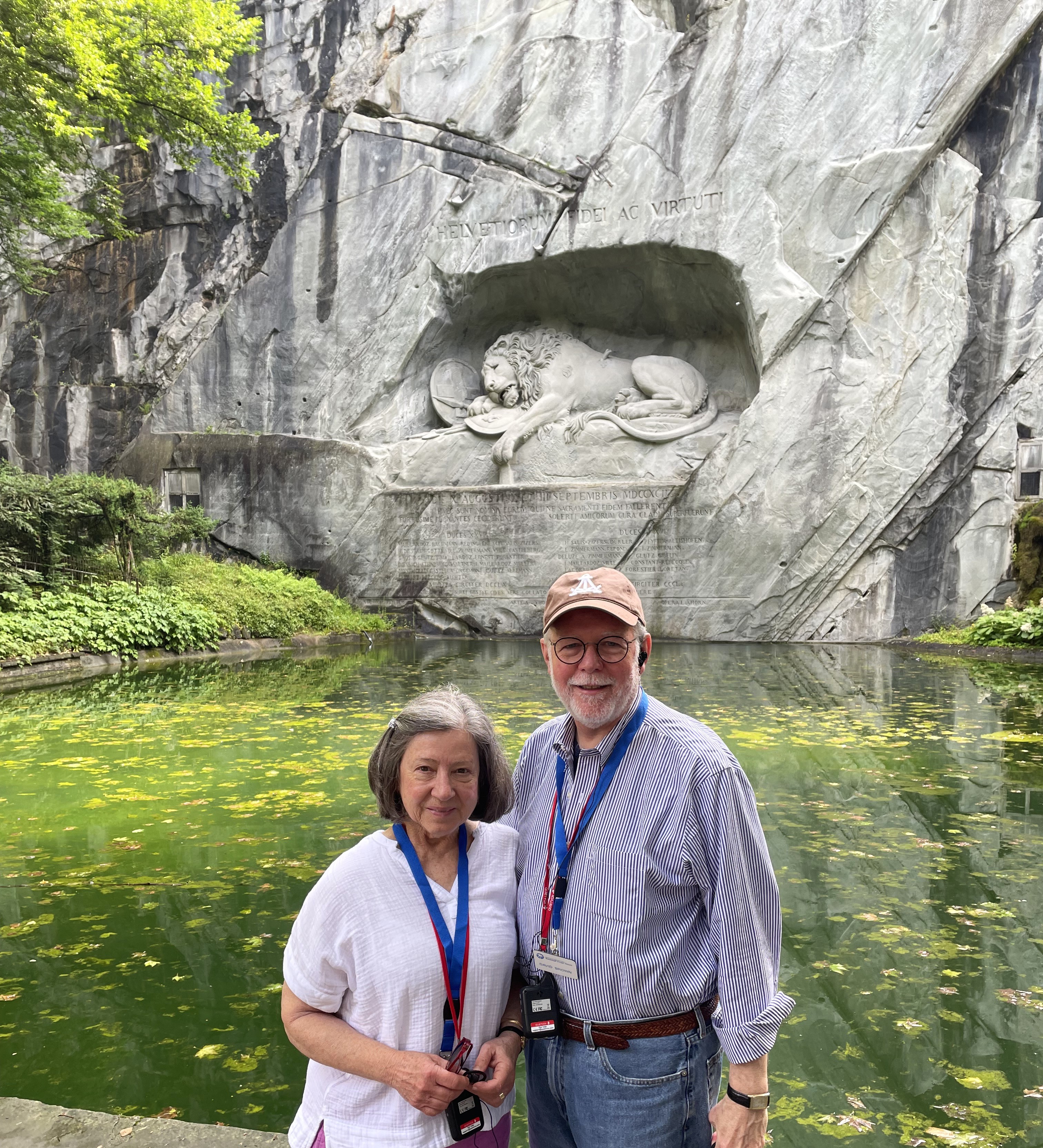
Our journey through Europe has highlights of this delightful and educational trip through Switzerland, France, Germany, and Holland (as well as links to other posts along the way). We found a few places for family photographs amidst all the amazing architecture and cultural landscapes.
With our National Trust Tour friends from the European Journey trip
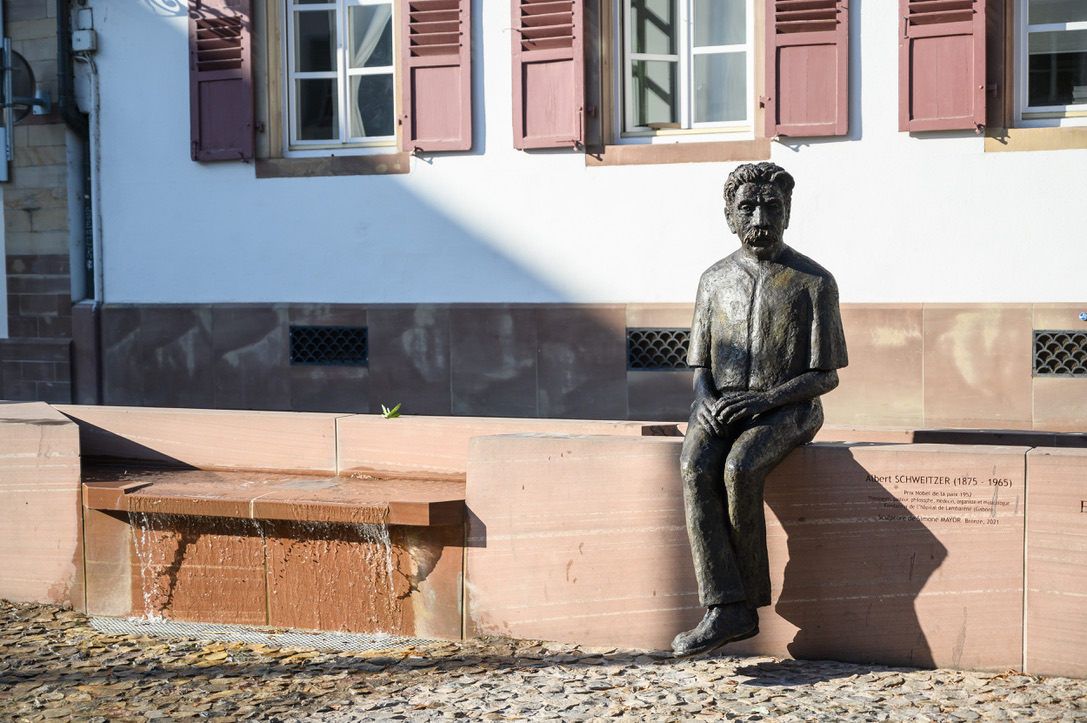
Lauterbrunnen, Engelberg, Lucerne, and Basel Switzerland each had their special charms, while Strasbourg allowed us to dip our toes into France . . . a country where we’d return later in the year.
Strasbourg
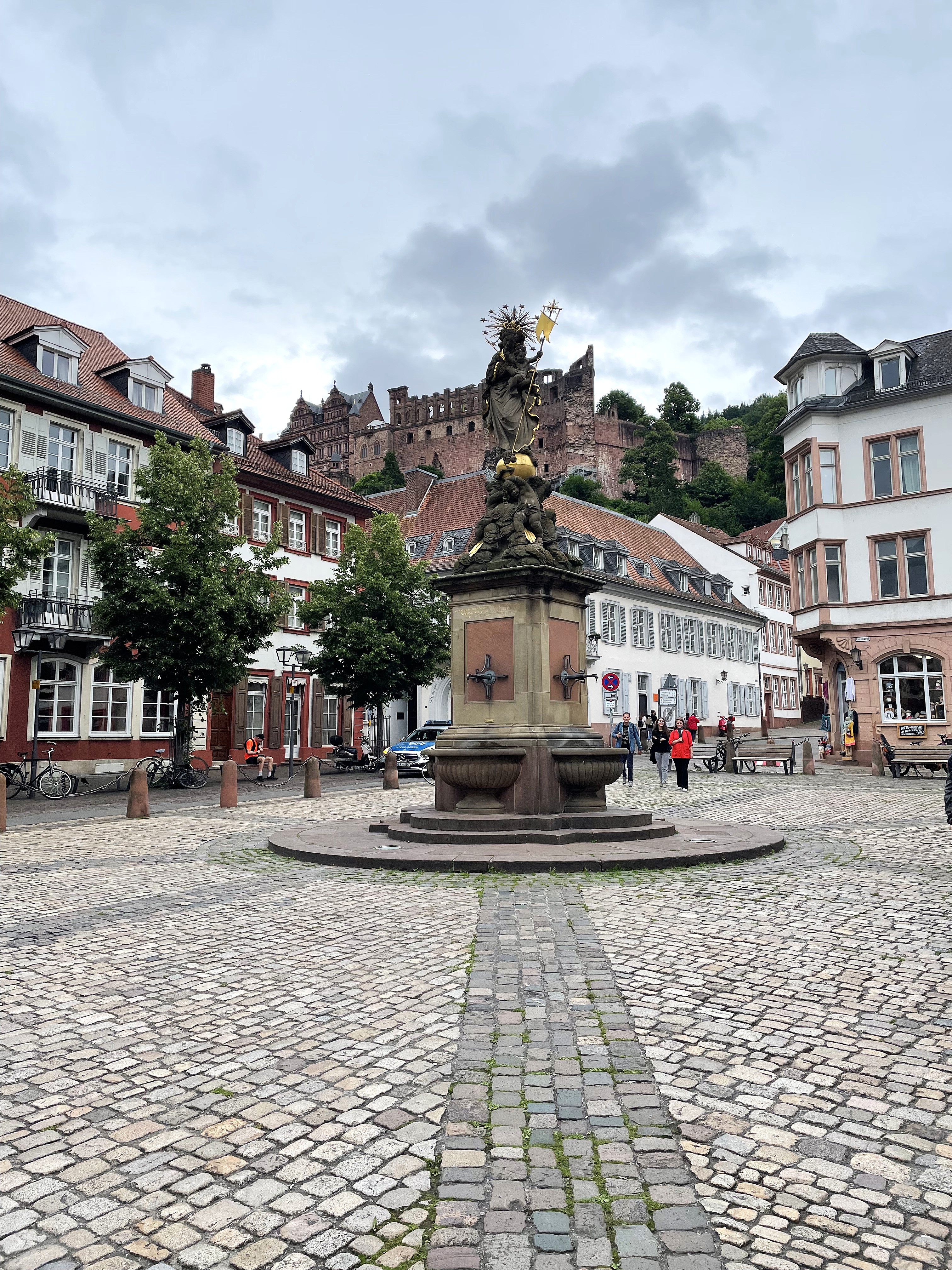
As we cruised the Rhine and Moselle rivers in Germany, we visited Heidelberg, Cochem, the castles of the Upper Rhine Valley, and Cologne.
Claire was also in Europe in June, traveling with our dear friend Ella Taranto and other Pomona College friends to Paris. This ensures that Ella once again makes the Brown’s “Year in Photos” collection (now for the fifth year in a row!)
JULY — AUGUST 2025
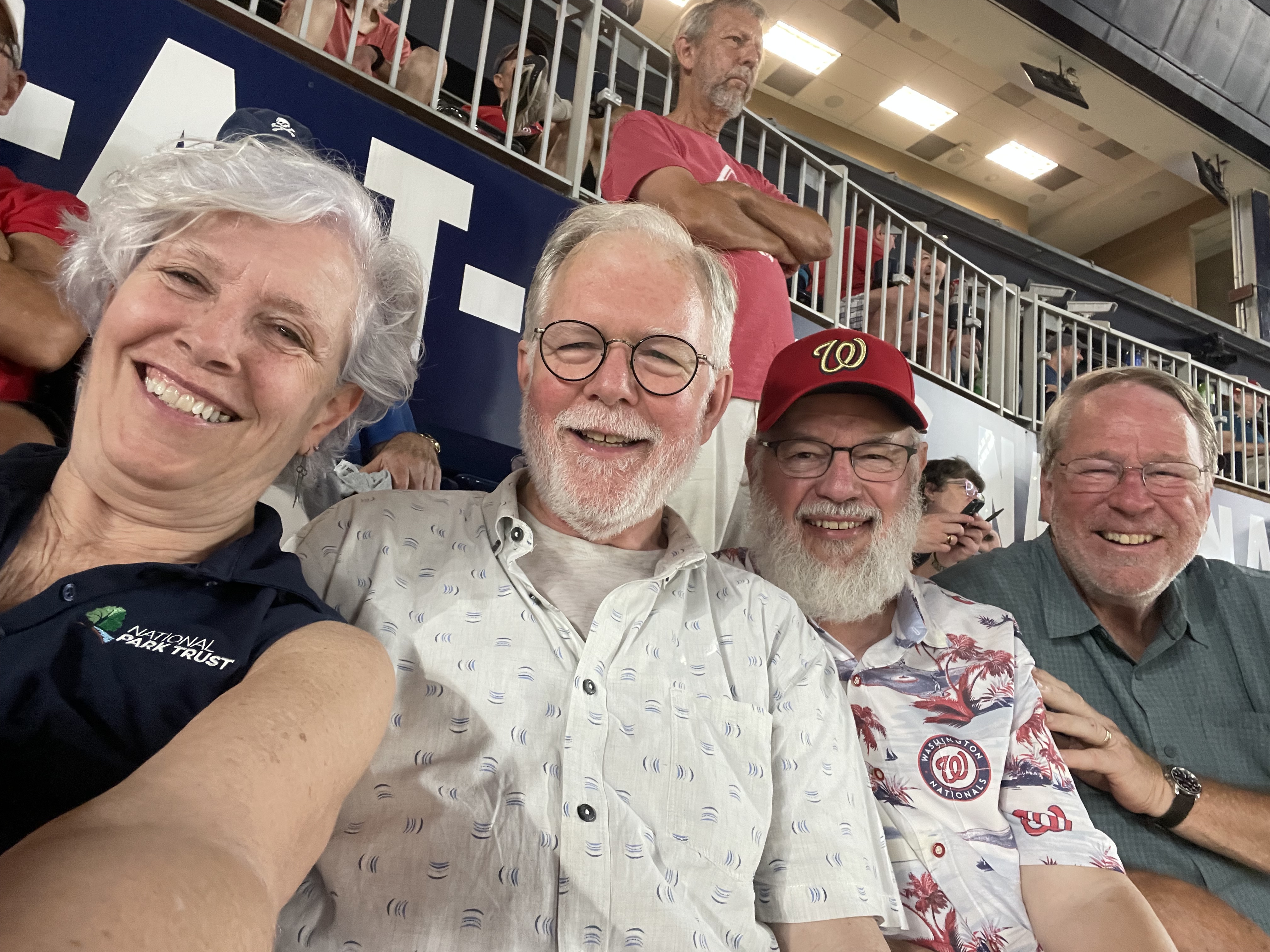
We were back in the States during July and August, where we watched some baseball (the company and the atmosphere are always better than our pitiful Nationals) . . .
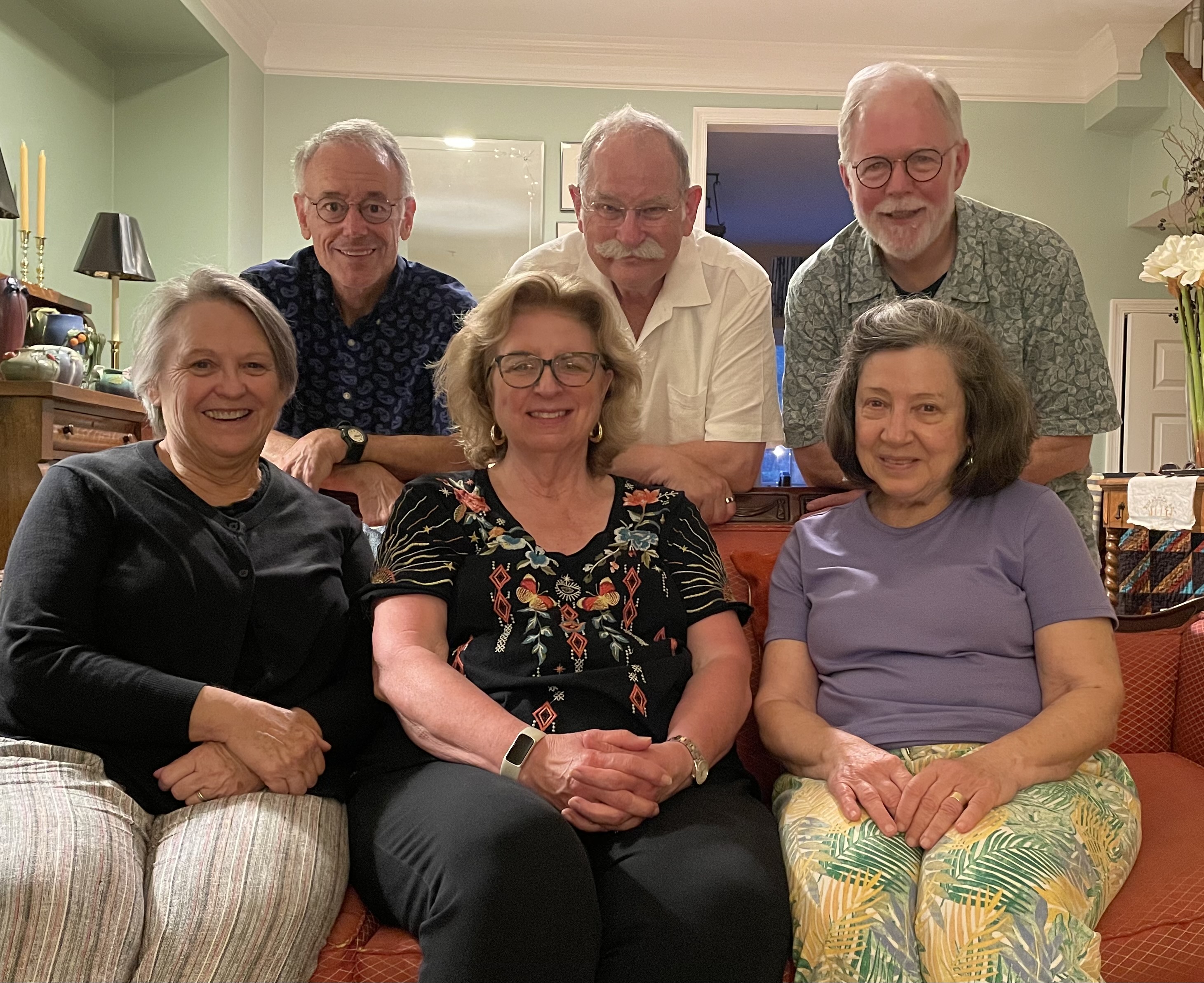
Dolores, DJB, Two-Dollar Tom, and Peter at Nats vs Tigers game in early July
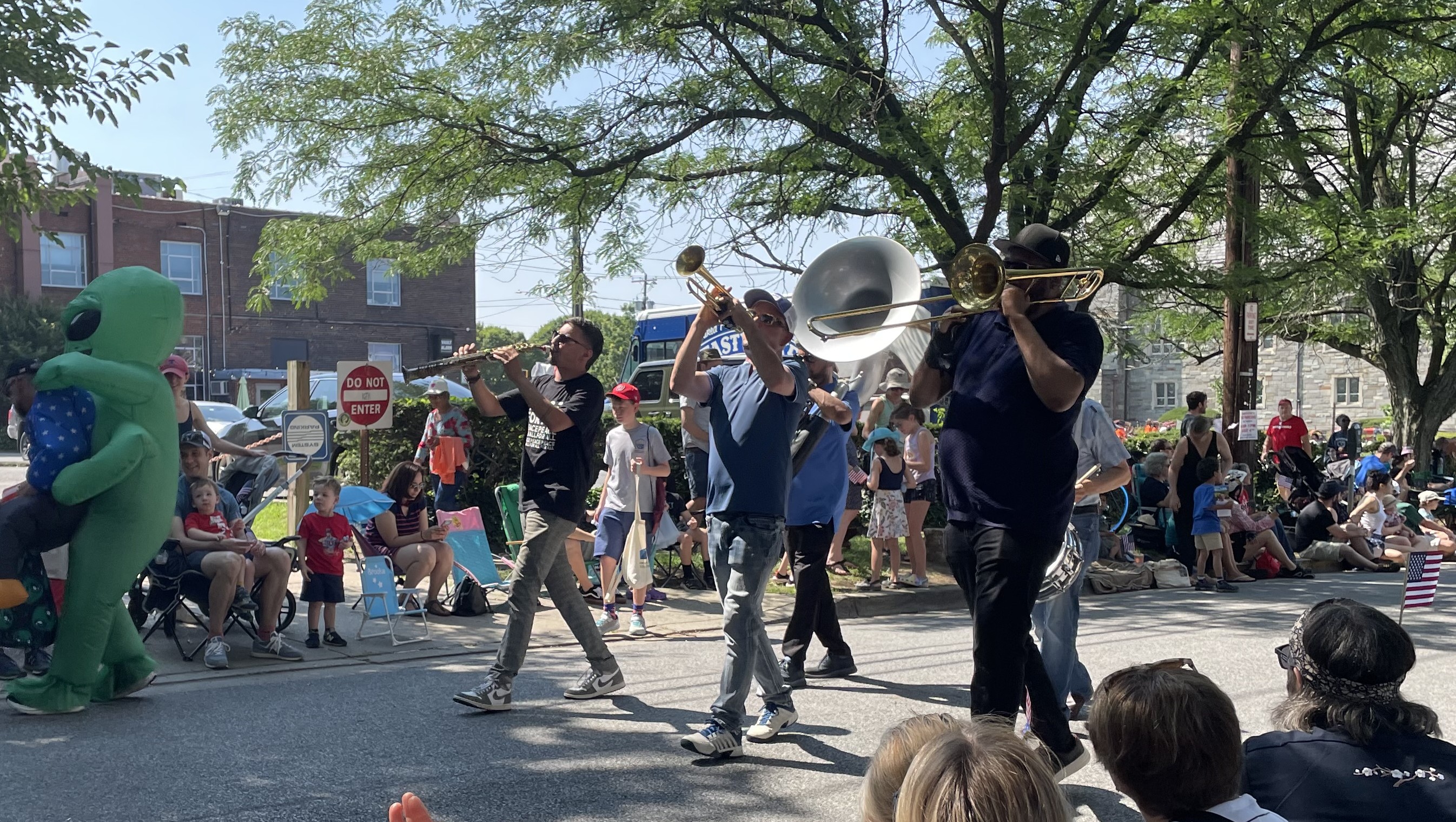
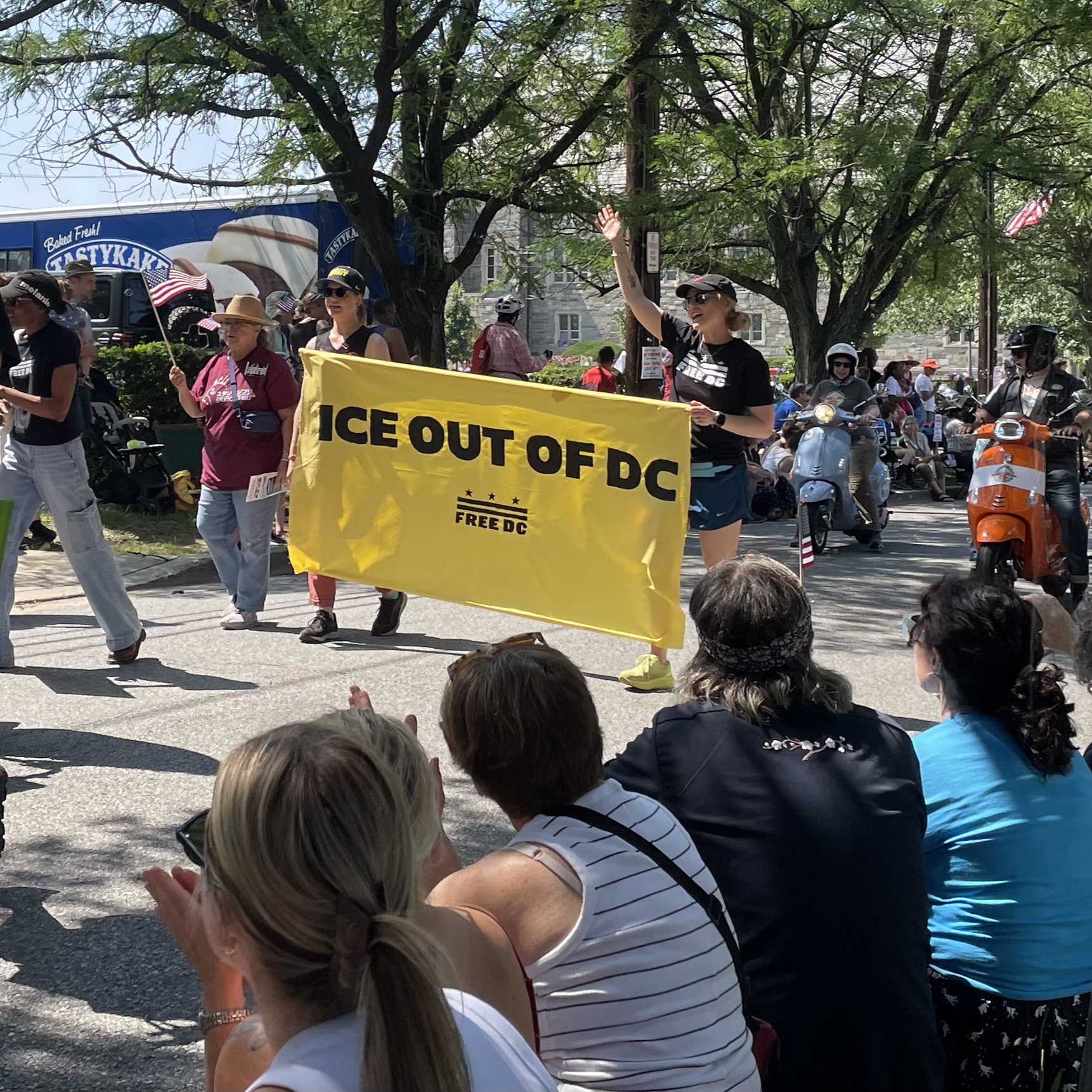
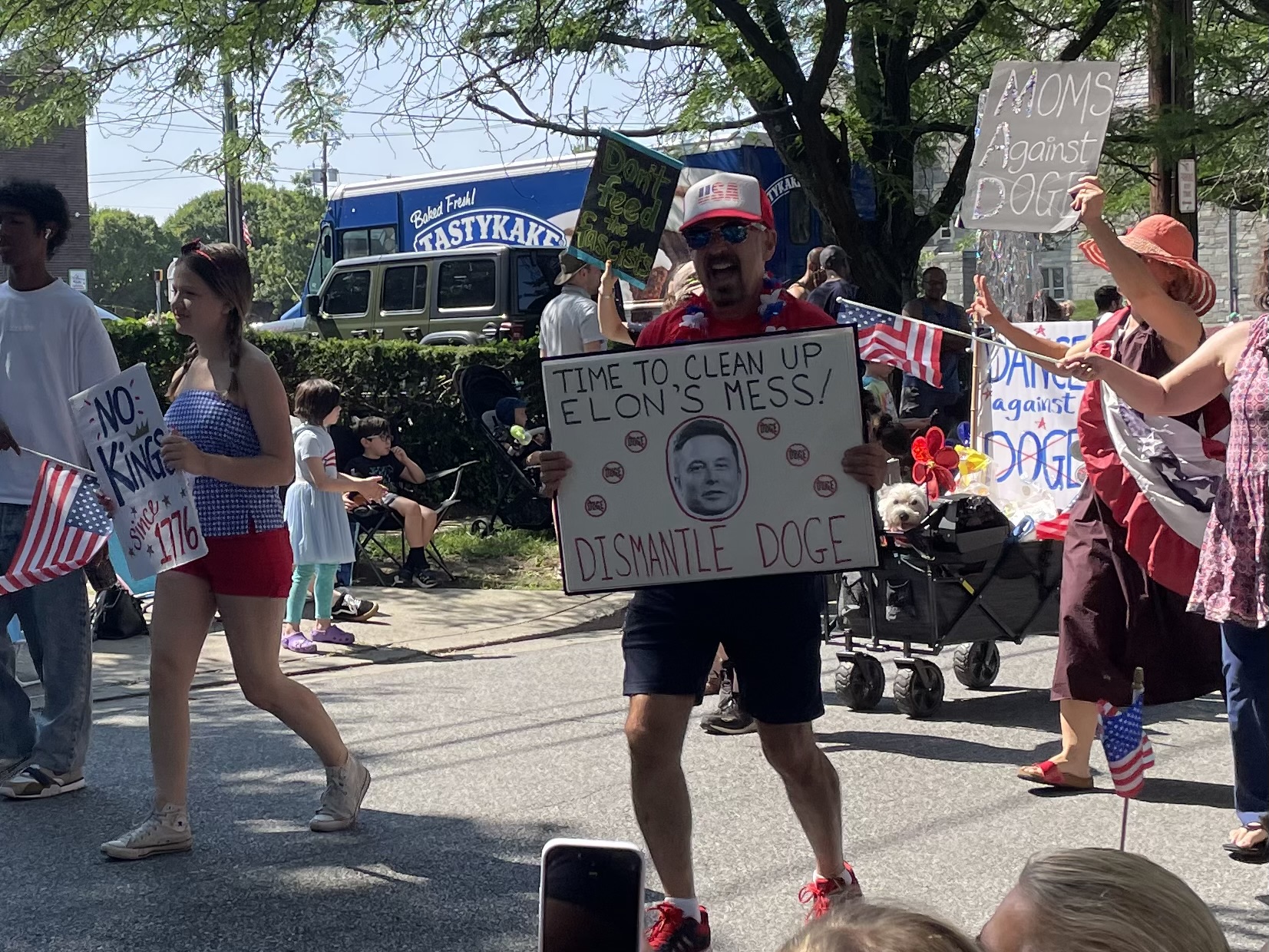
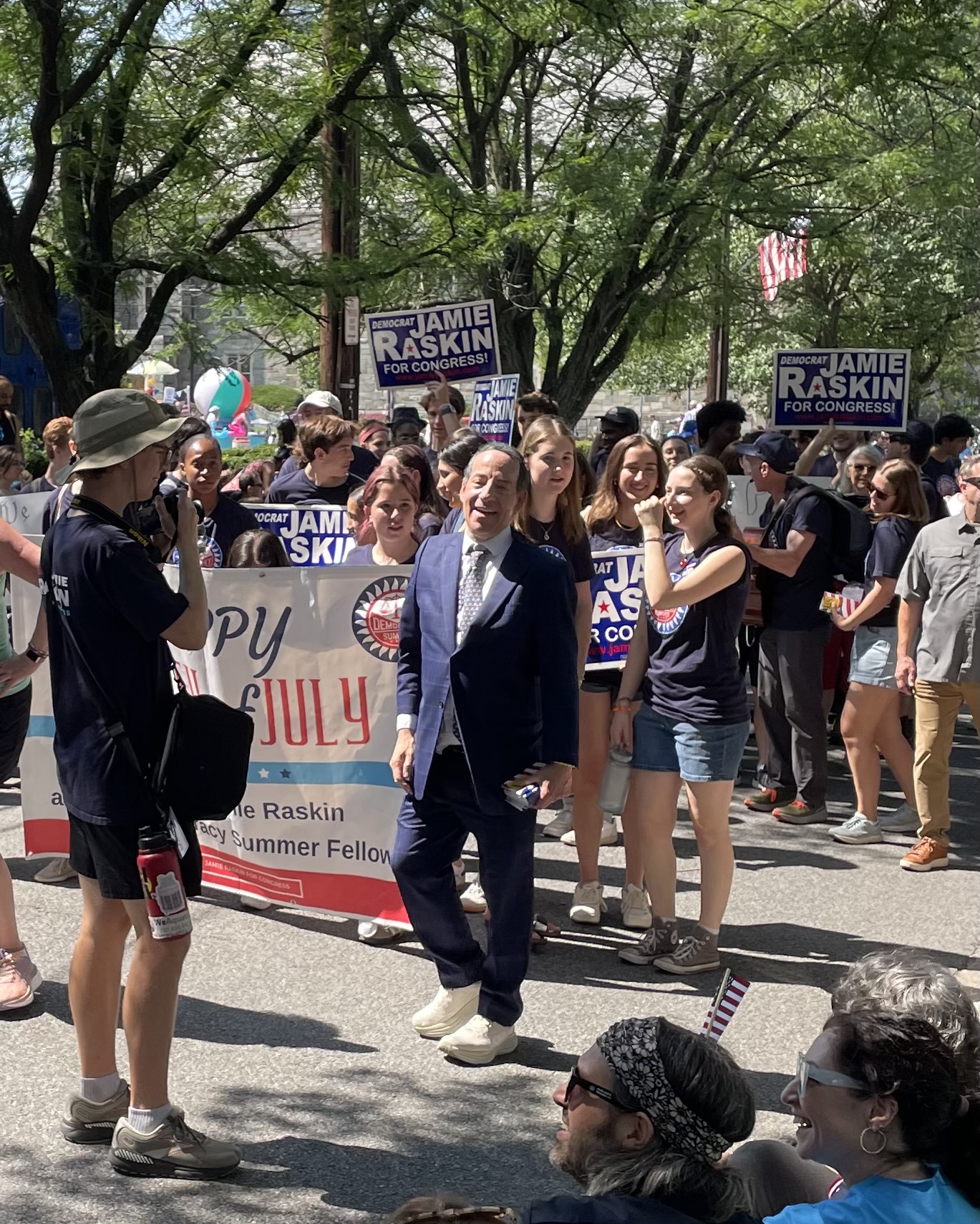
. . . and made our traditional visit to watch the July 4th parade in Takoma Park, home to our Congressman Jamie Raskin!
We don’t always do the traveling; sometimes we have visitors. When my childhood friend Pam Smotherman Kennedy and her husband Gibert stopped by for a few nights, we invited another childhood friend and her husband, Sara and Bill Overby, over for a summer meal. It was great to catch up with these friends I’ve known now for some 60 years.
Sara and Bill Overby; Pam and Gibert Kennedy with the Browns for an early July evening meal
Candice and I spent a week in Florida in late July to begin the process of cleaning out her mom’s house. Everyone in the family who was home helped out, and it was a nice time of remembrance.
Candice with her brothers Andy (left) and Adam (center)
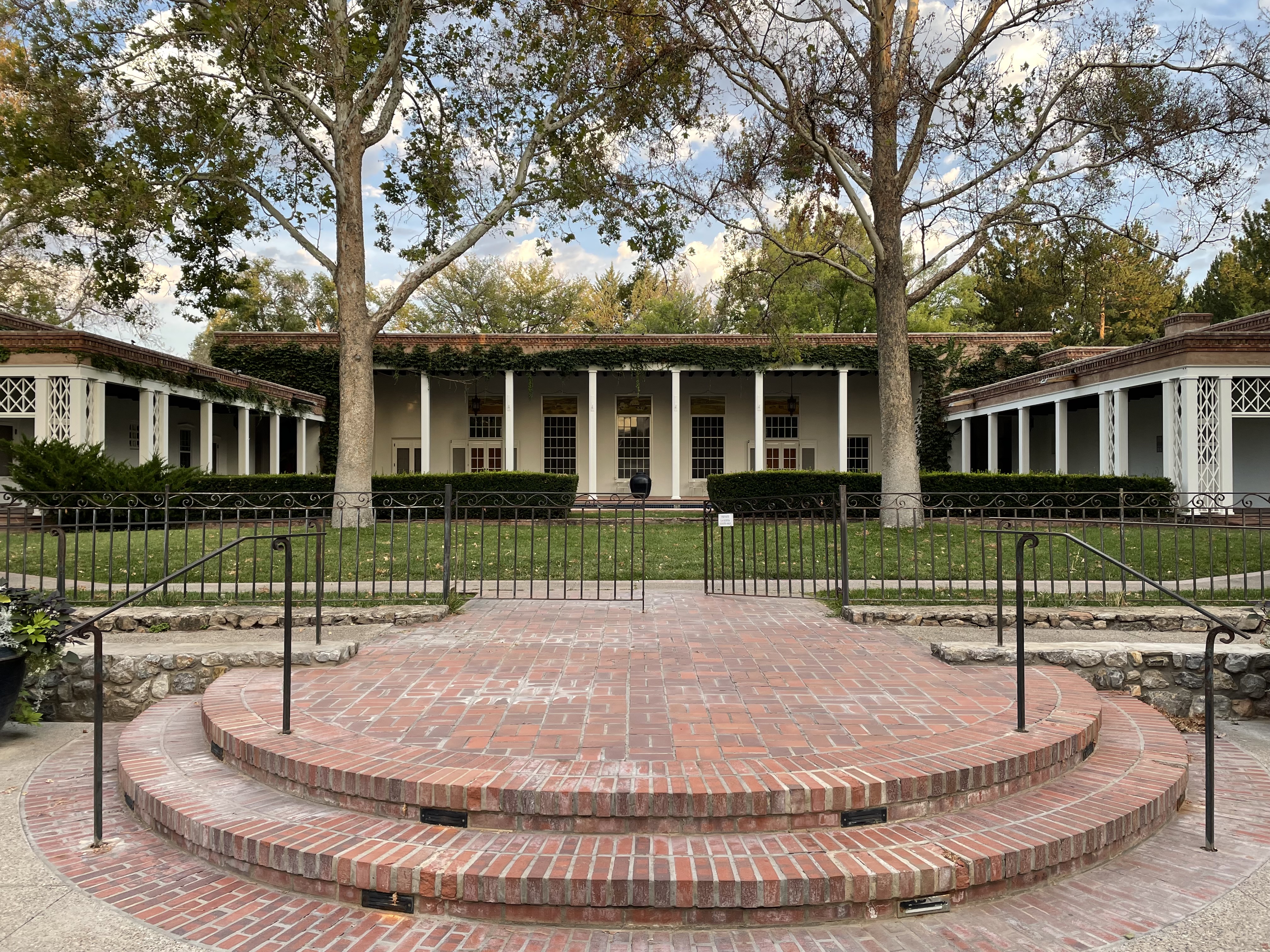
In August we headed out to New Mexico, first making a stop at Los Poblanos Historic Inn and Organic Farm outside Albuquerque, before heading north to Santa Fe.
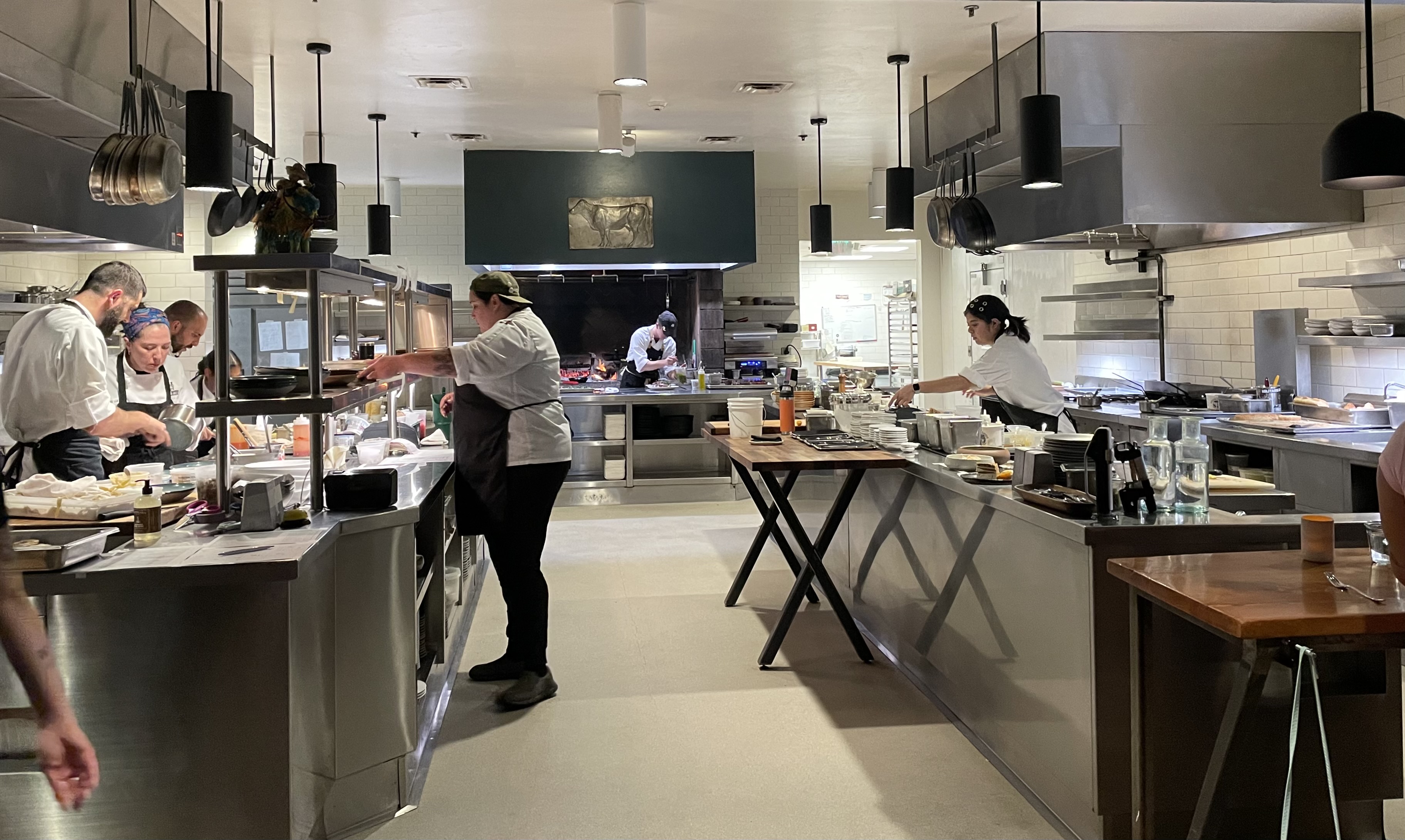
The staff hard at work in the kitchen at Campo at the Los Poblanos Historic Inn and Organic Farm.
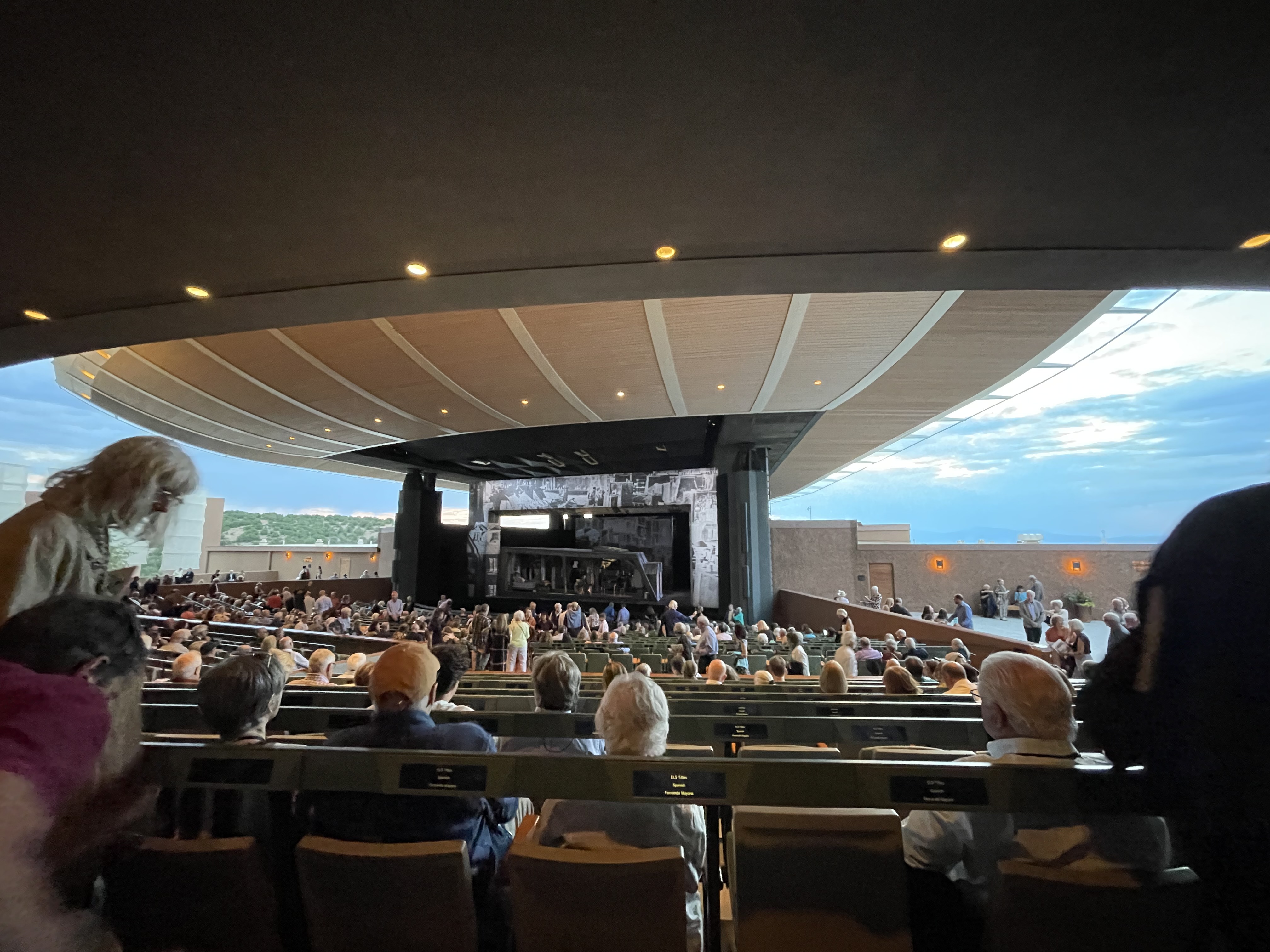
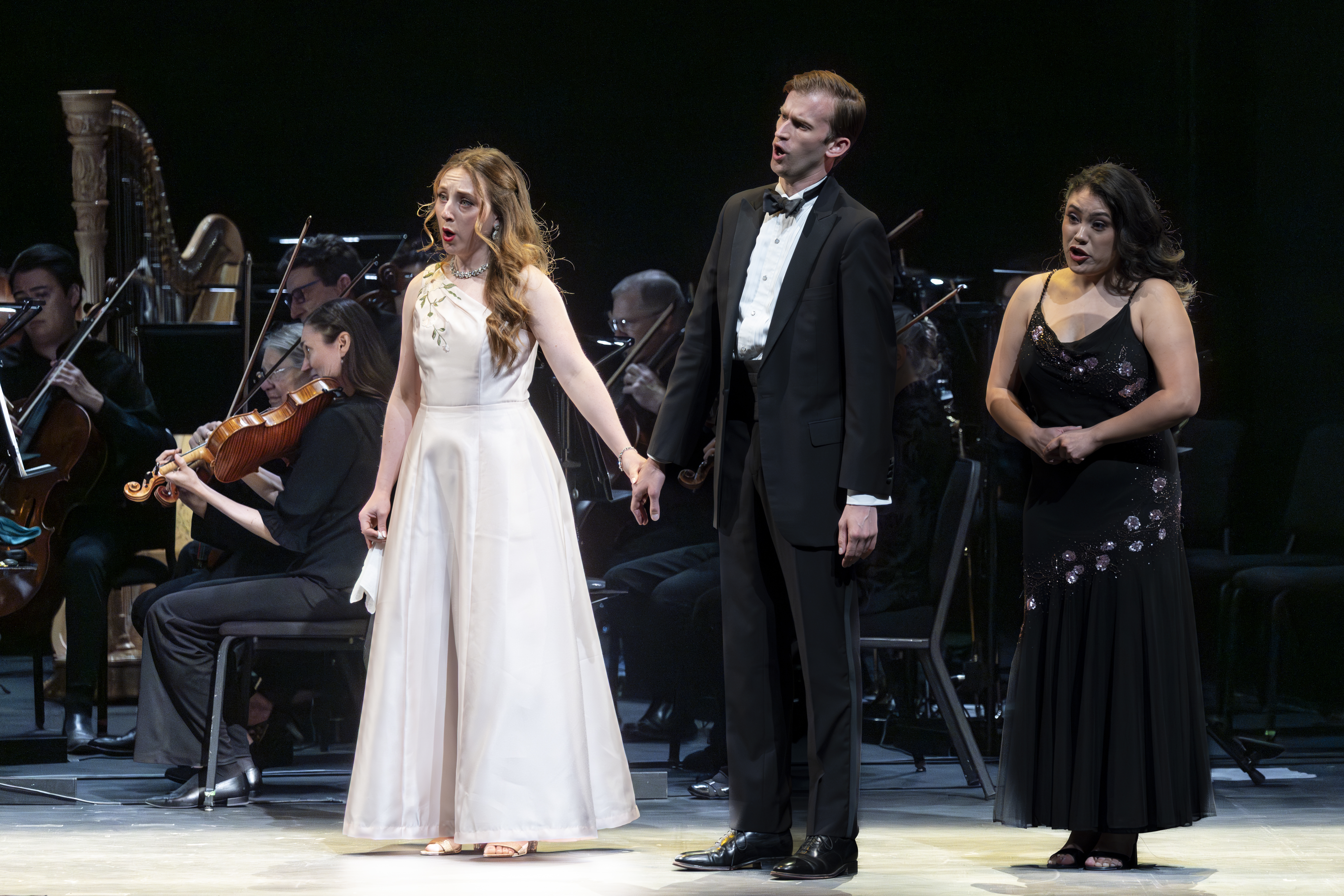
We were in Santa Fe to see three performances at the breathtaking open air opera house, where Andrew was part of the Apprentice Artists program at the Santa Fe Opera. It was a special treat.
A full house arrives to see the SFO performance of “The Marriage of Figaro”
Sunset as the show begins
With Andrew following his performance in “The Marriage of Figaro” at the Santa Fe Opera
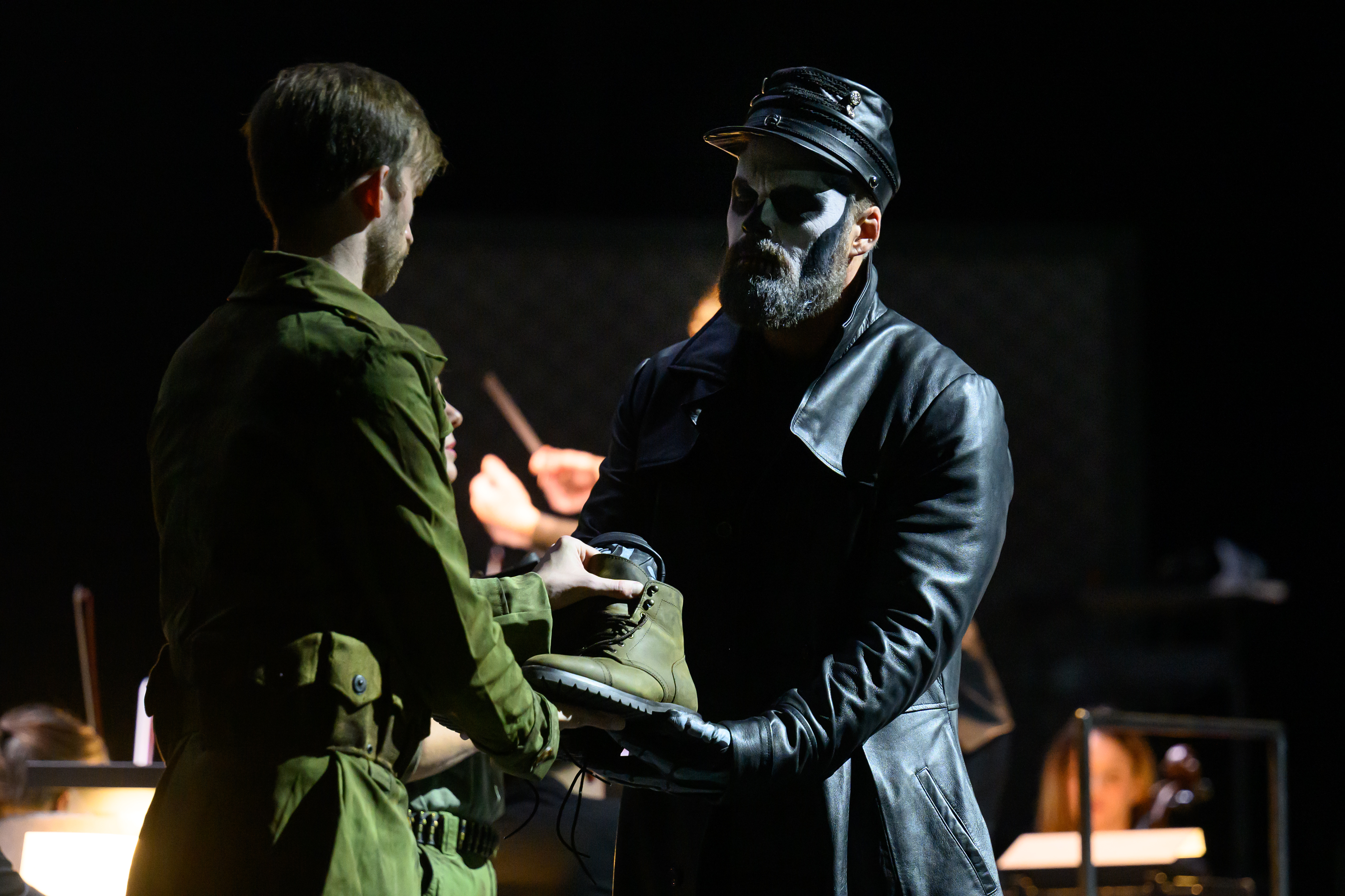
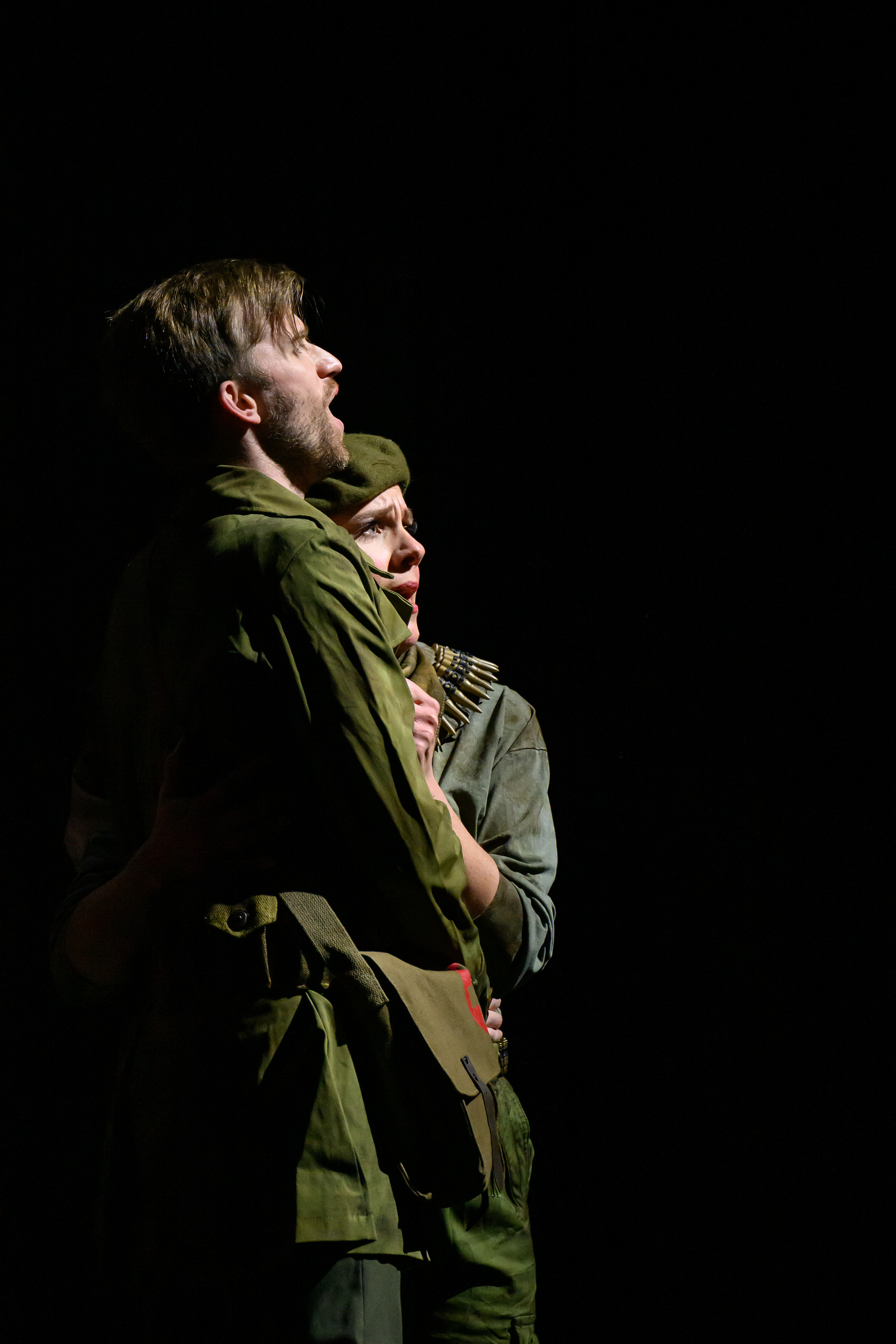
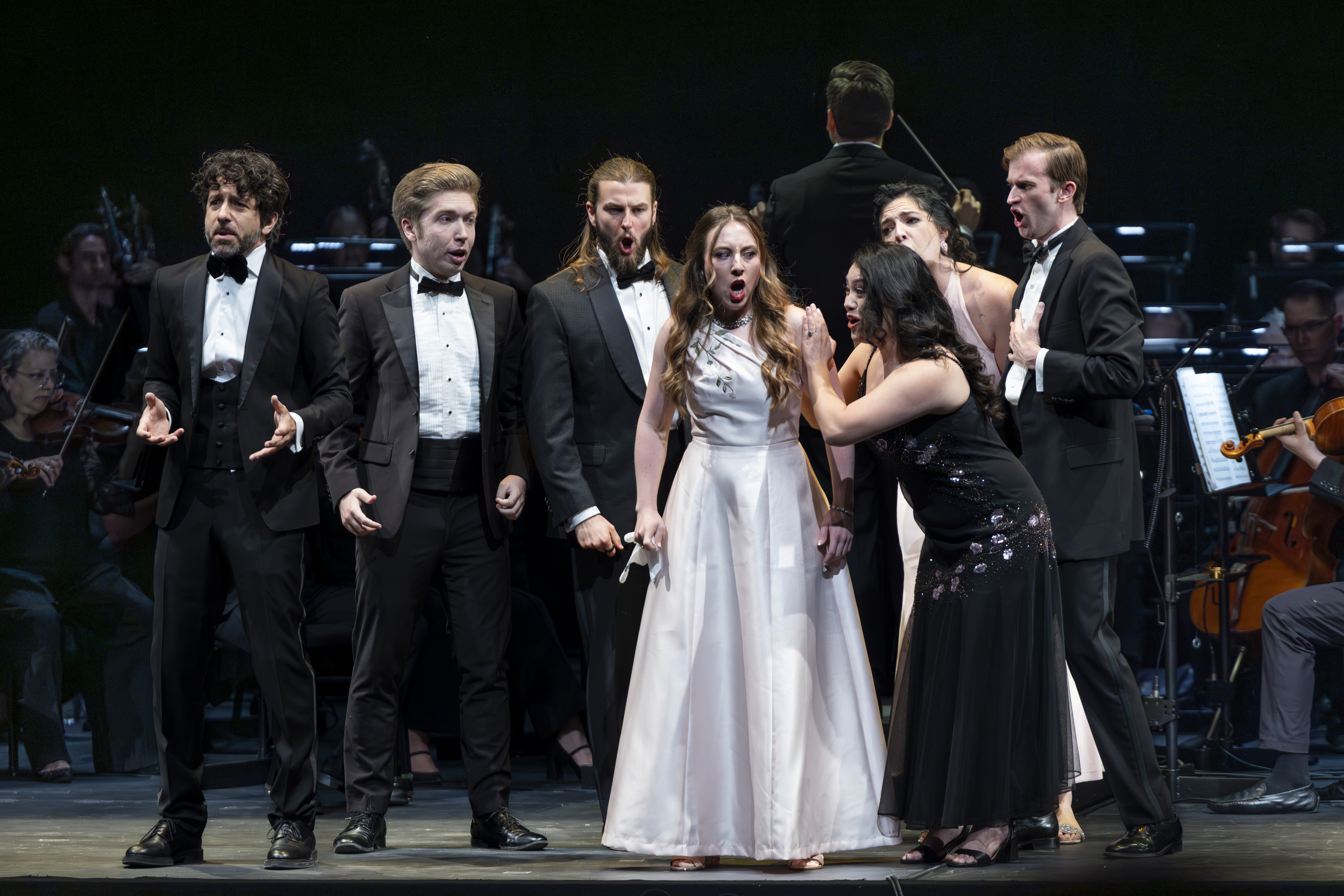
Santa Fe Opera Apprentice Singers in their concert presentation of the Act 1 Finale of Rossini’s L’Italiana in Algeri (photo credits: Tira Howard Photography)
While the Apprentice concert version of L’Italiana in Algeri is not available online, here’s a snippet from the opera to give you a sense of the confusion and chaos that ensues.
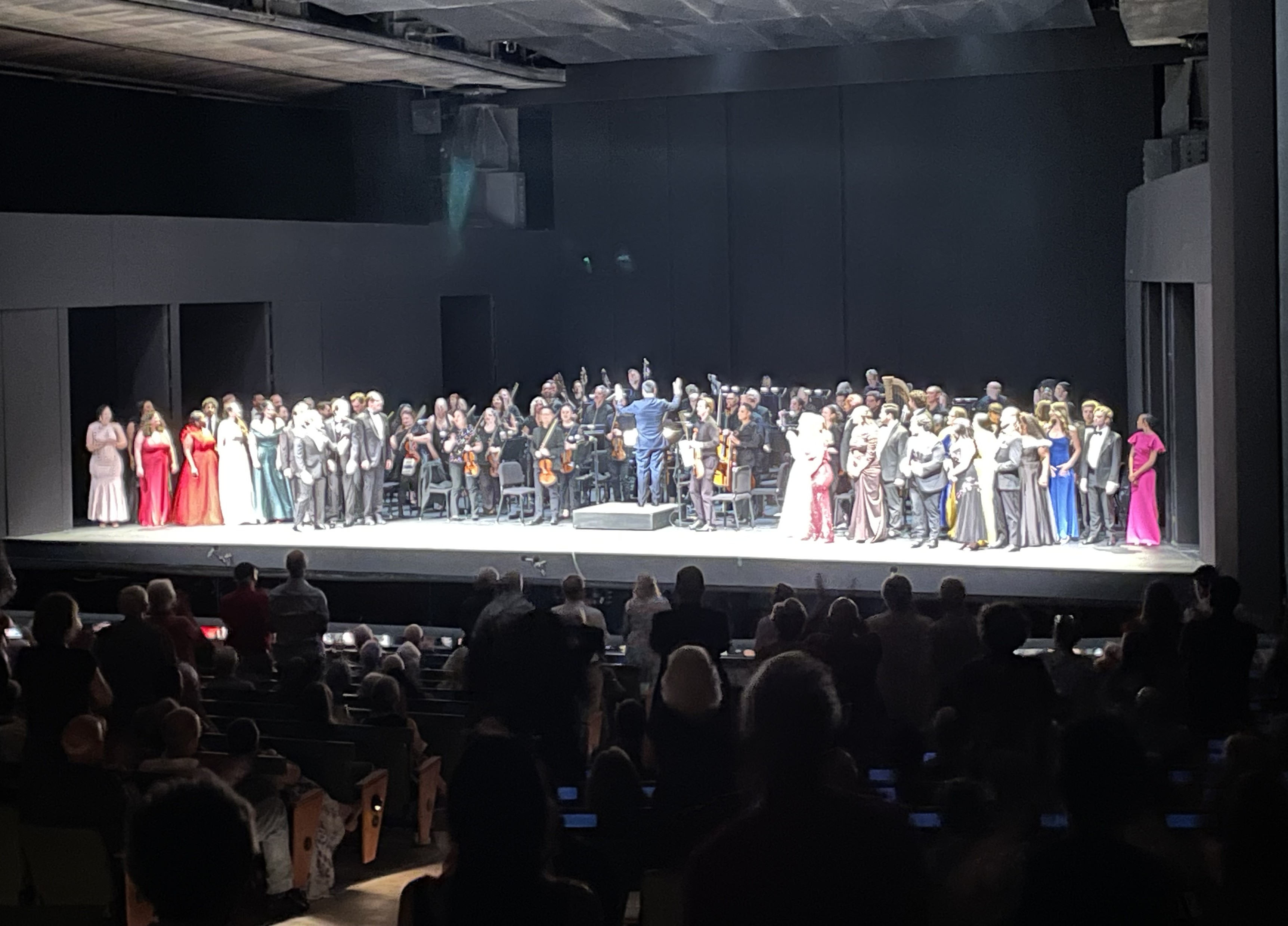
Andrew (third from right) with the other Santa Fe Opera Apprentice Singers following their concert presentation of the Act 1 Finale of Rossini’s L’Italiana in Algeri
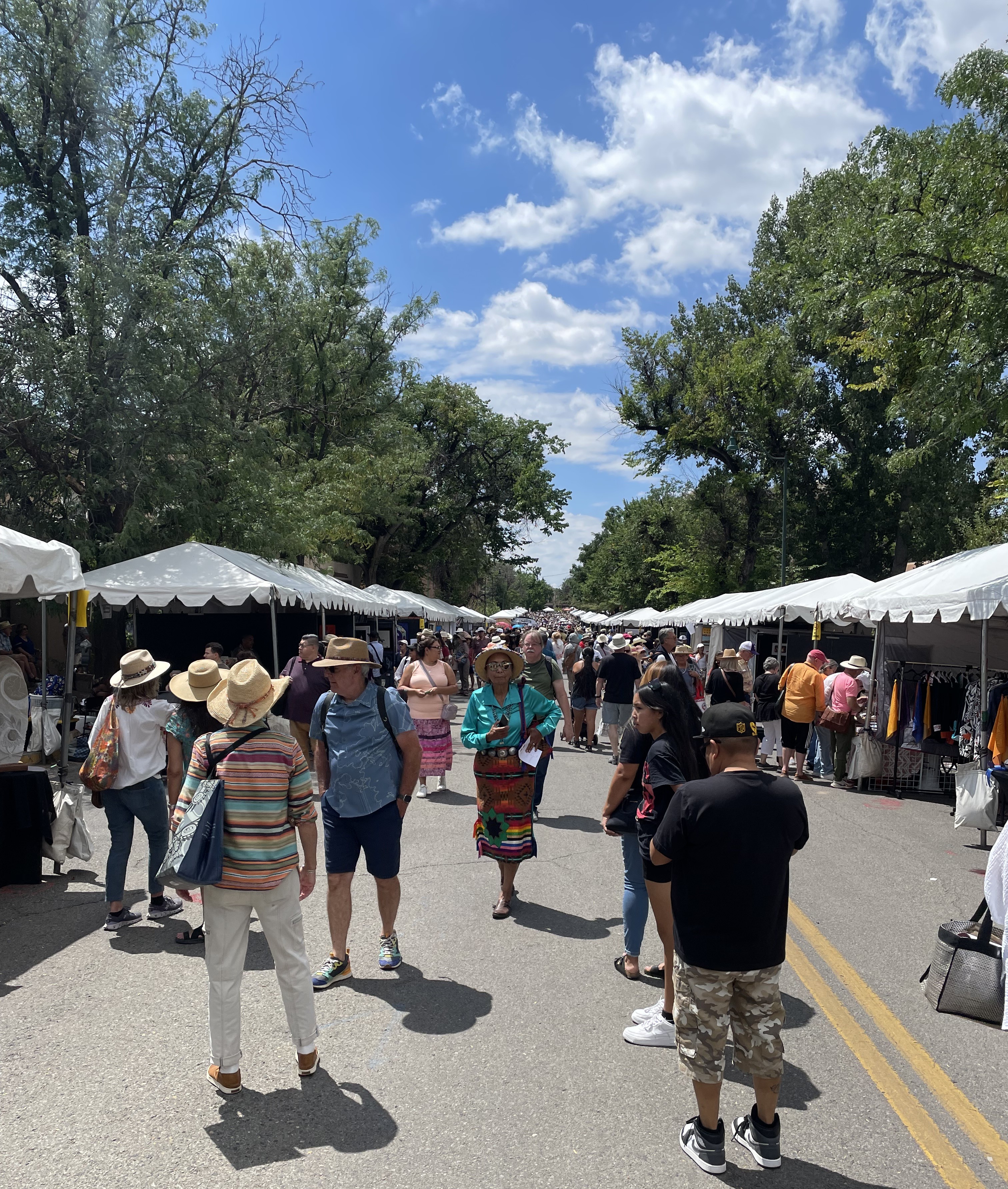
We also happened to be in Santa Fe with tens of thousands of others who were visiting the Indian Market, a New Mexico tradition.
With Paulette (a Hollywood Gang member from Candice’s Grade School Days) and Fred after a surprise meetup on the Streets of Santa Fe during the Indian Market
SEPTEMBER — NOVEMBER 2025
Andrew and Claire—like their parents—love to travel. Claire and her boyfriend Zack went to Ella’s wedding, where they thoroughly enjoyed the lobster . . .
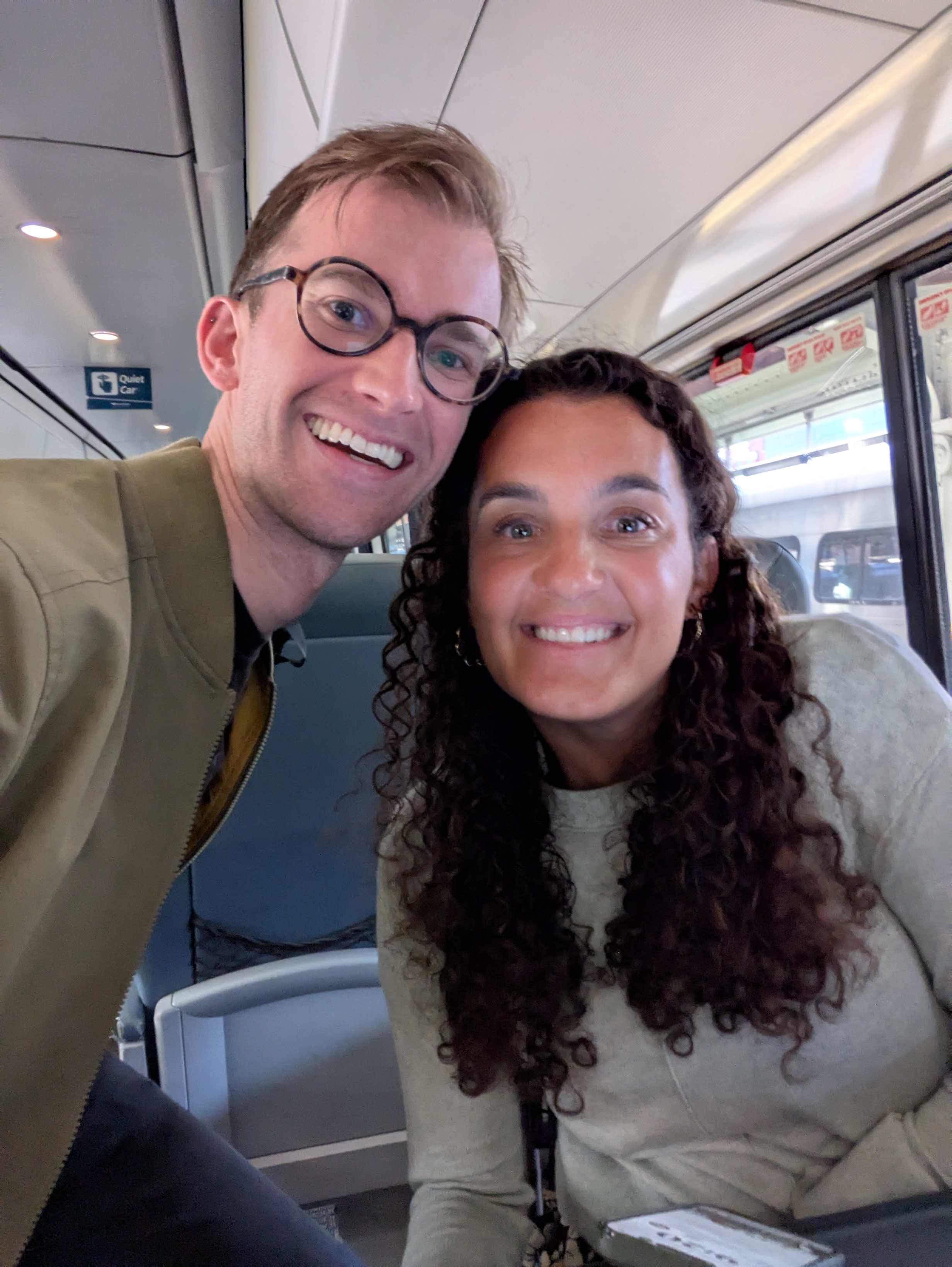
. . . while Andrew, on one of his many train rides up and down the East Coast, had a serendipitous meeting with his cousin Margot Keale, who lives and works in the DC area.
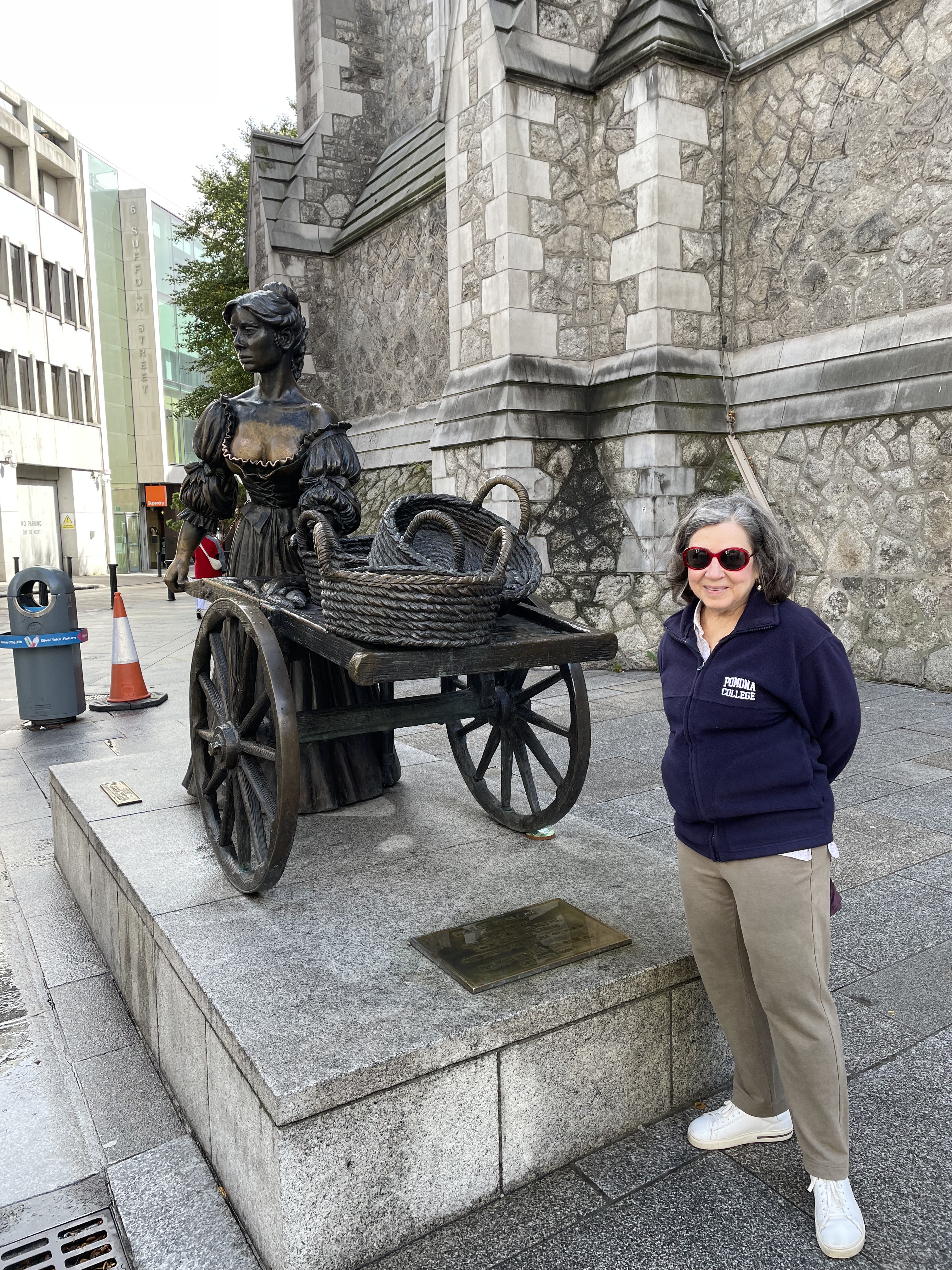
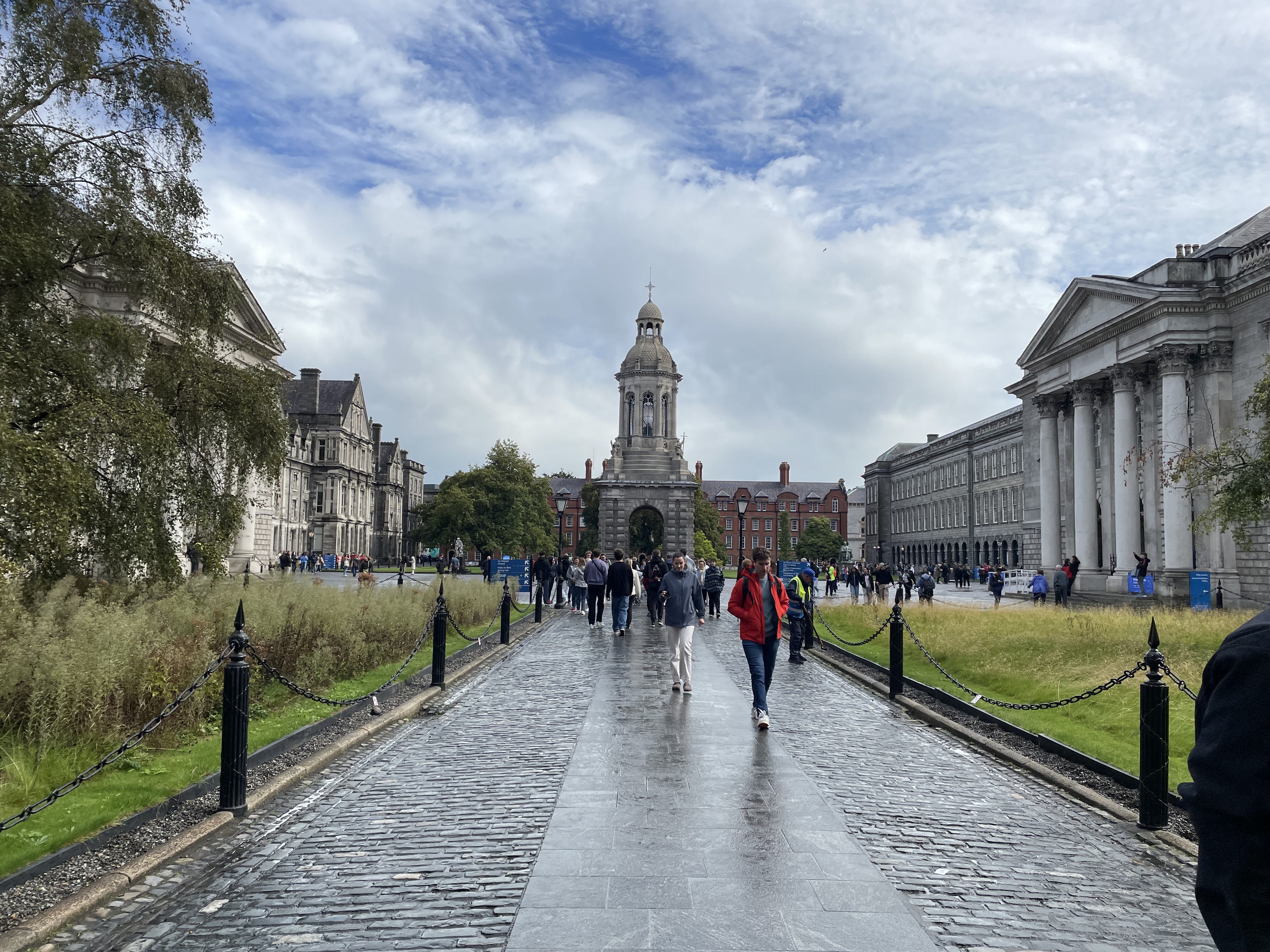
In the midst of a wonderful meal at Dublin’s Richmond restaurant
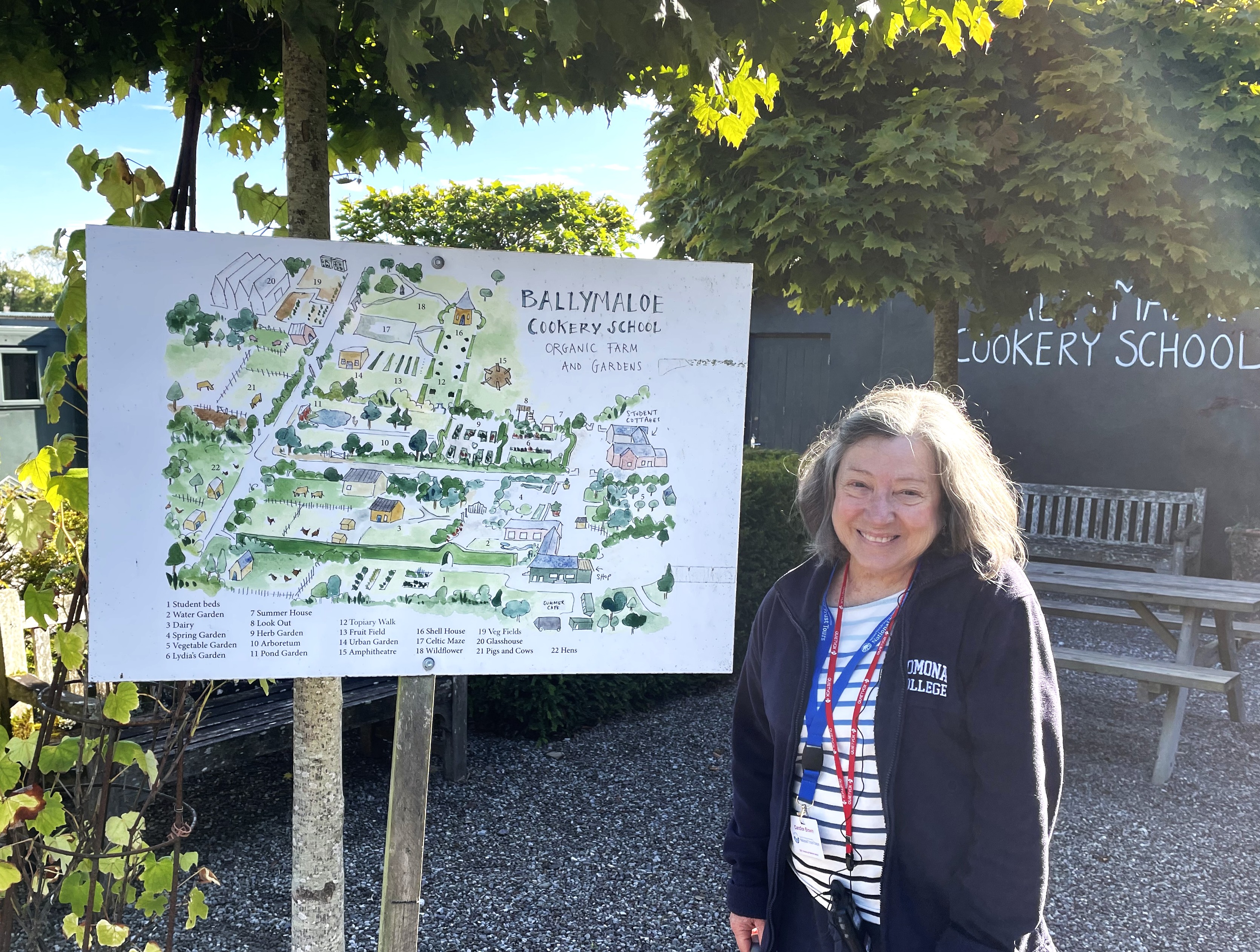
Candice was beyond excited to visit the world-famous Ballymaloe Cookery School
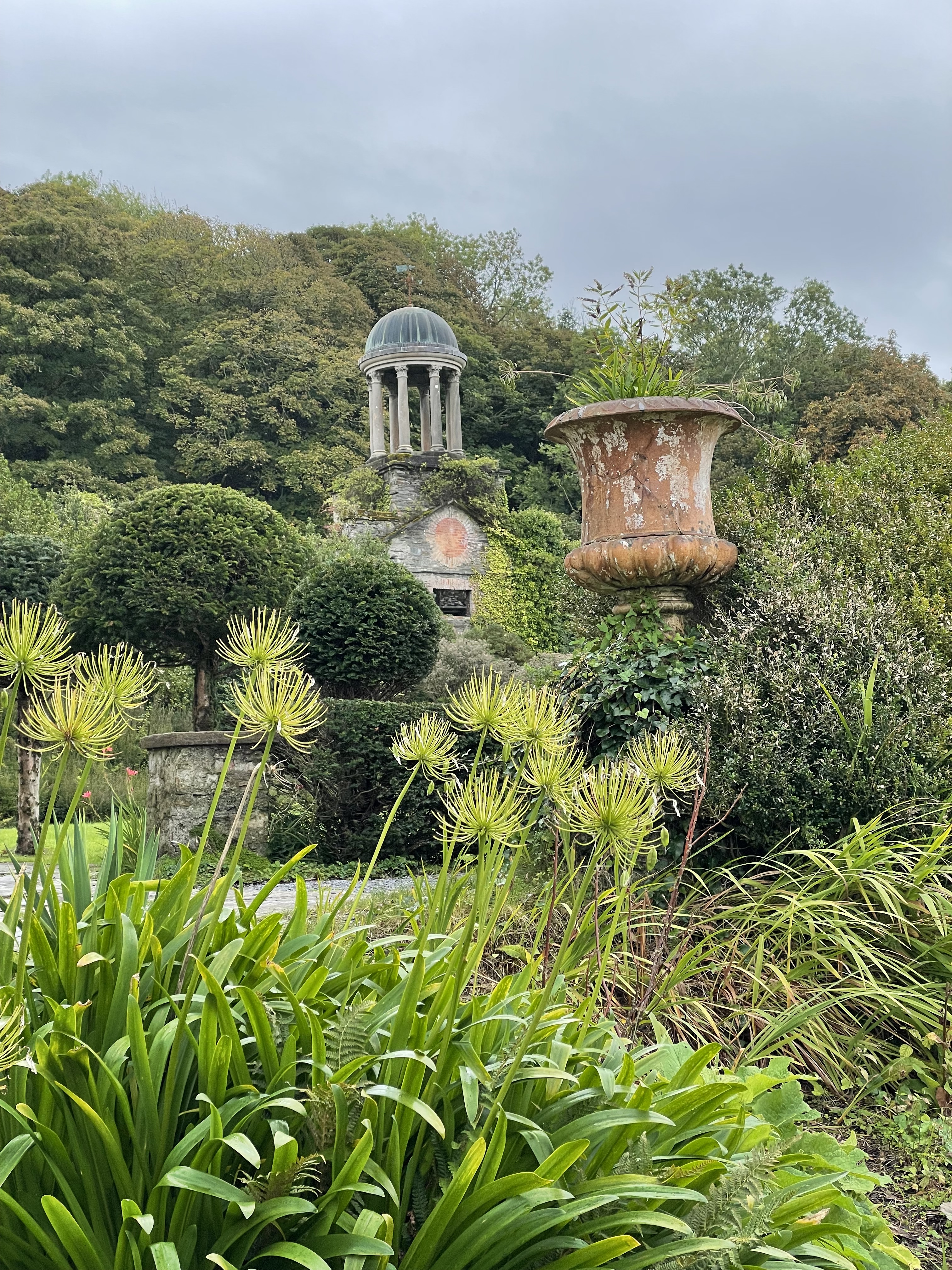
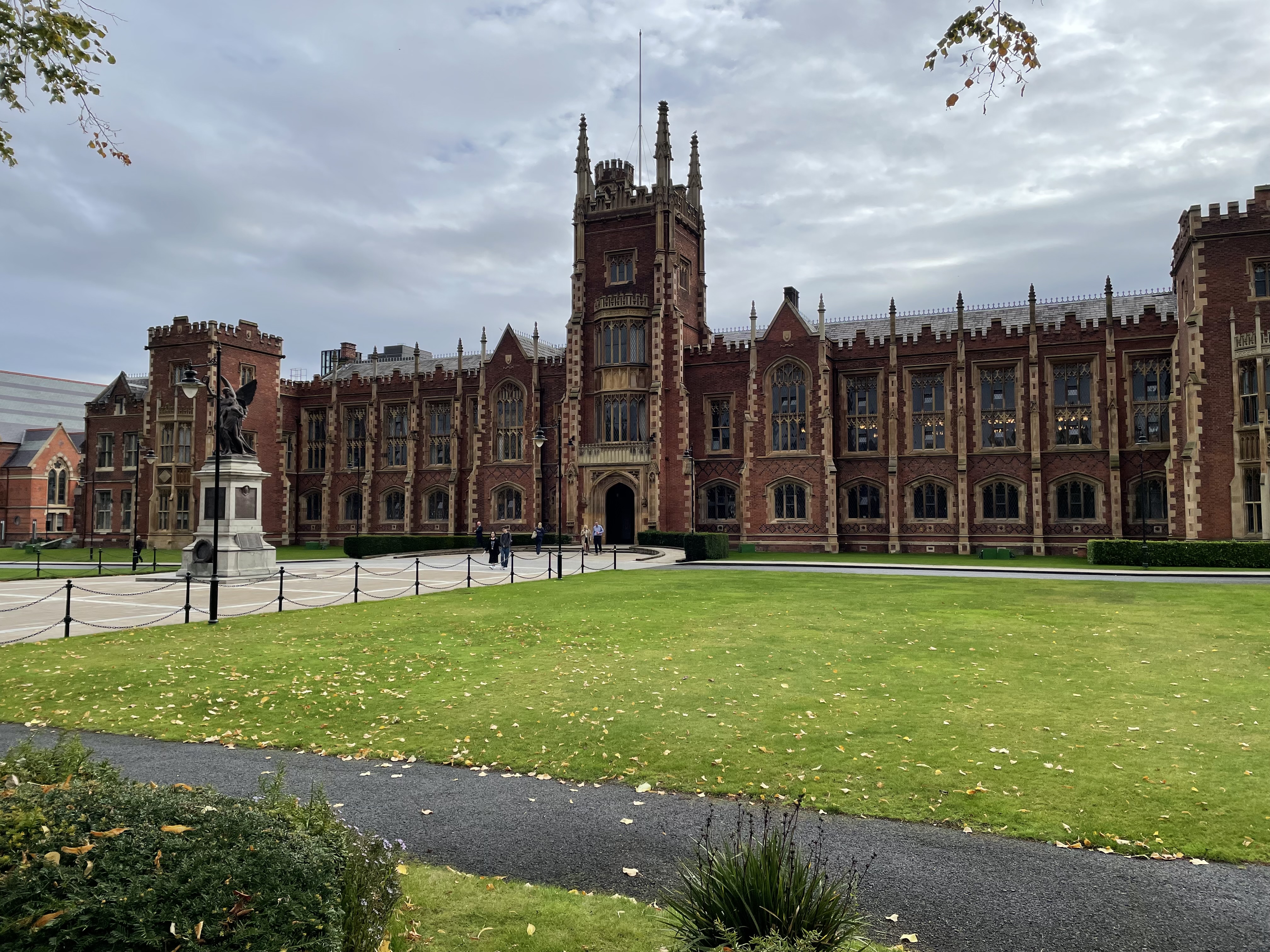
We traveled the Emerald Isle with a charming group of new friends, full of curiosity, eagerness to learn, and flexibility for the changing weather conditions (which threw off our tour schedule in major ways).
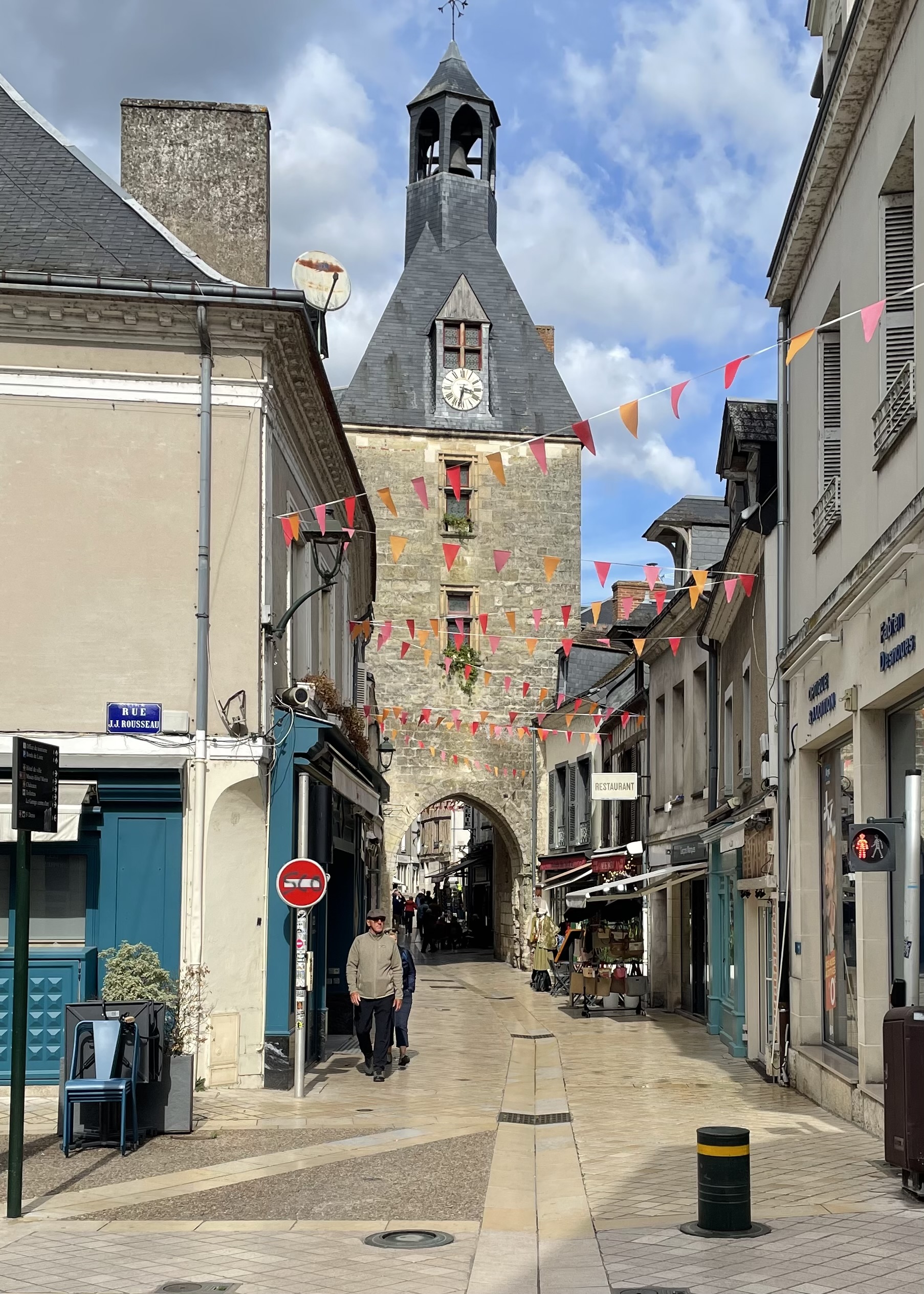
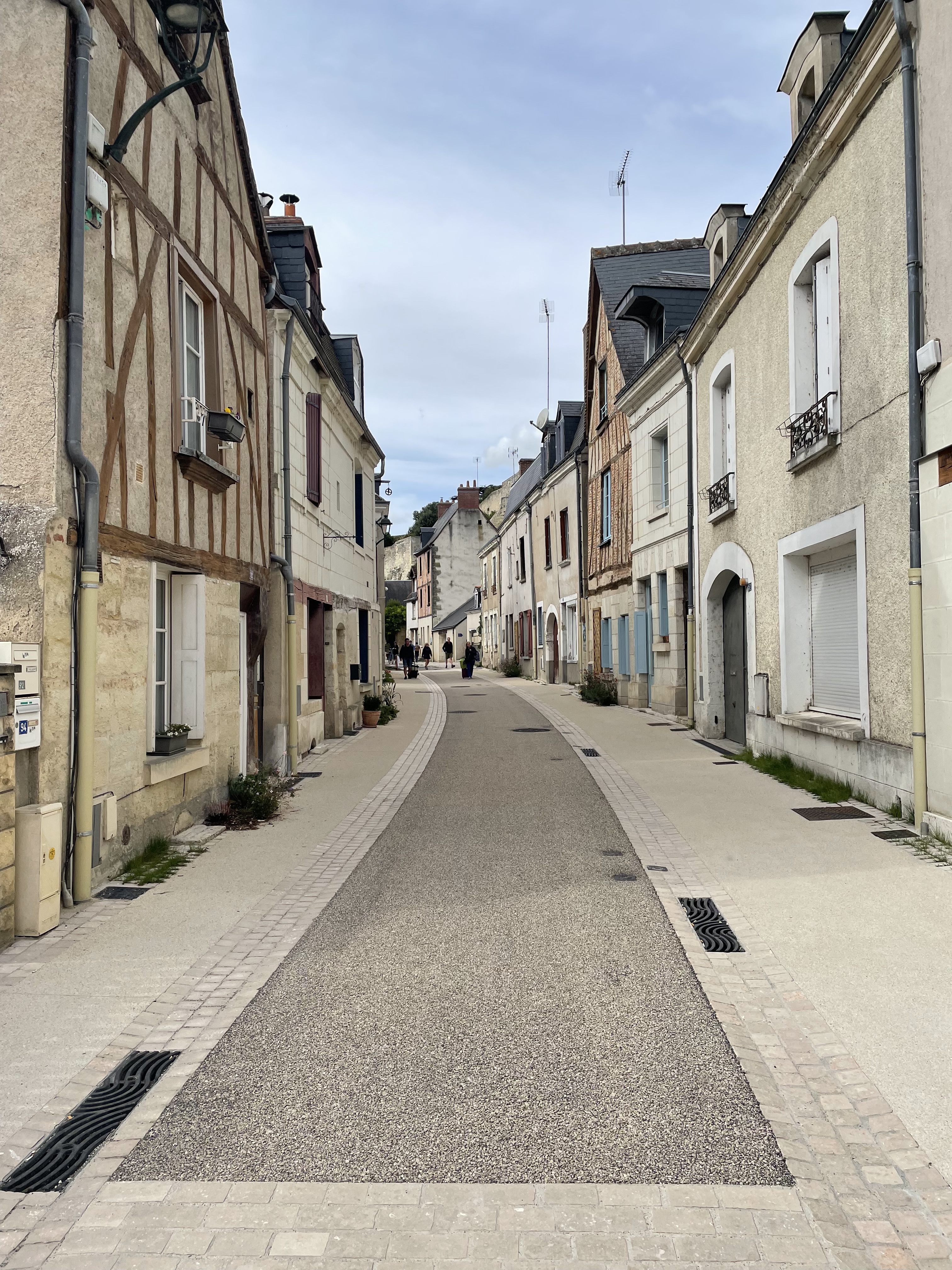
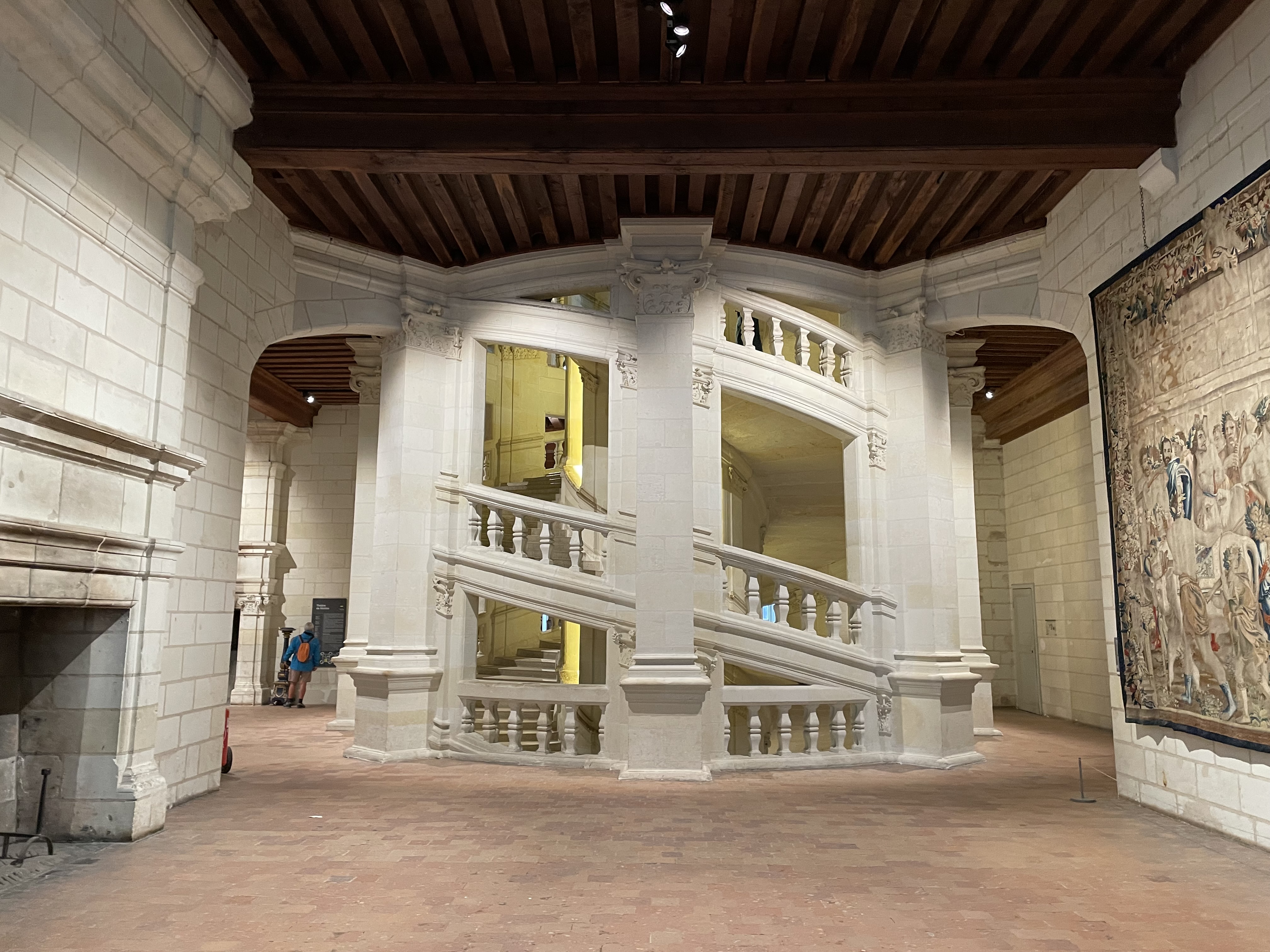
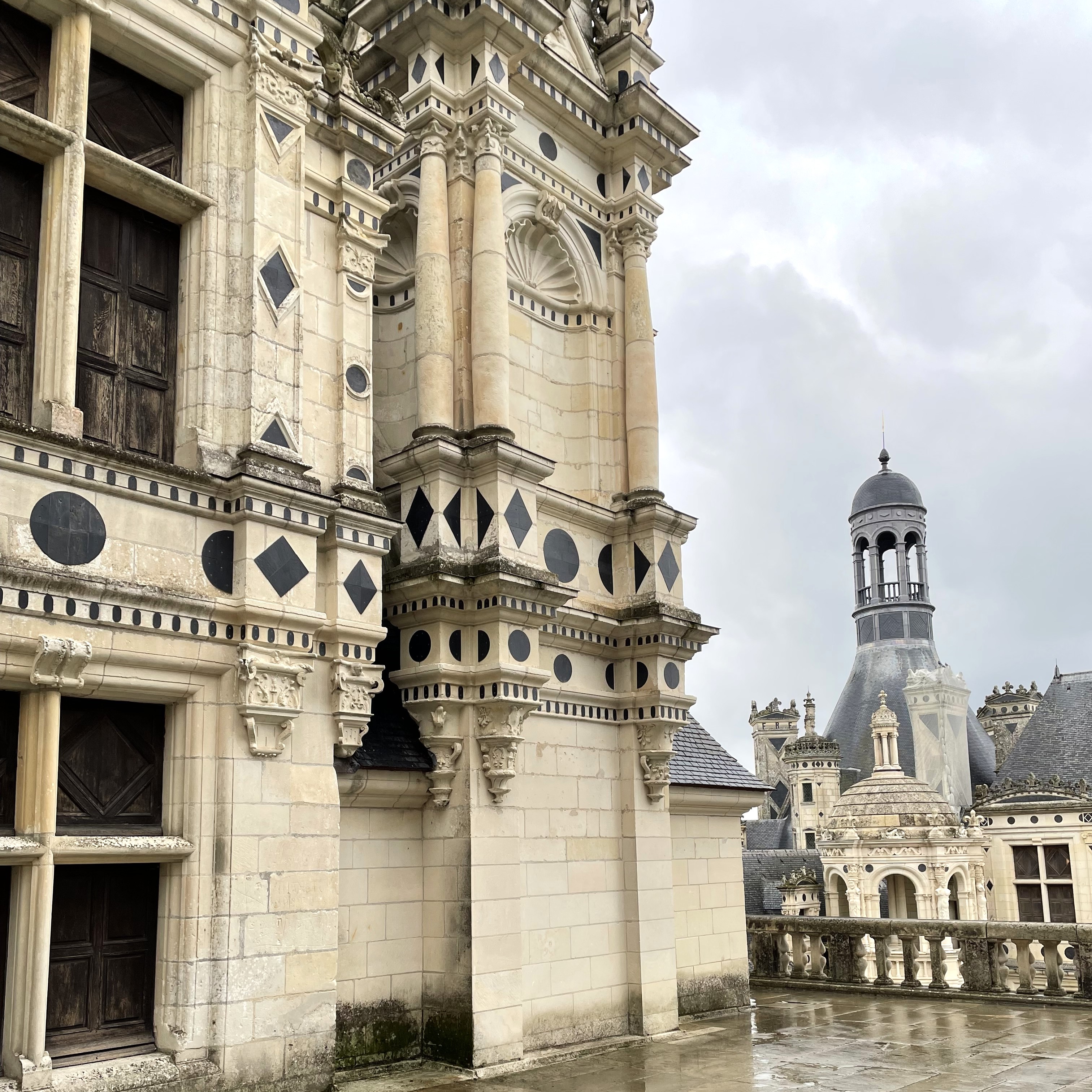
After leaving Dublin and the NTT tour, Candice and I spent a lovely week in the Loire Valley of France, as captured in Châteaux, cathedrals, cuisine, and charm.
During much of our travel, Andrew was also singing across the country for various events and groups. He landed in DC long enough to host his cousin (and our niece) Brittany Jackson, for a lovely weekend.
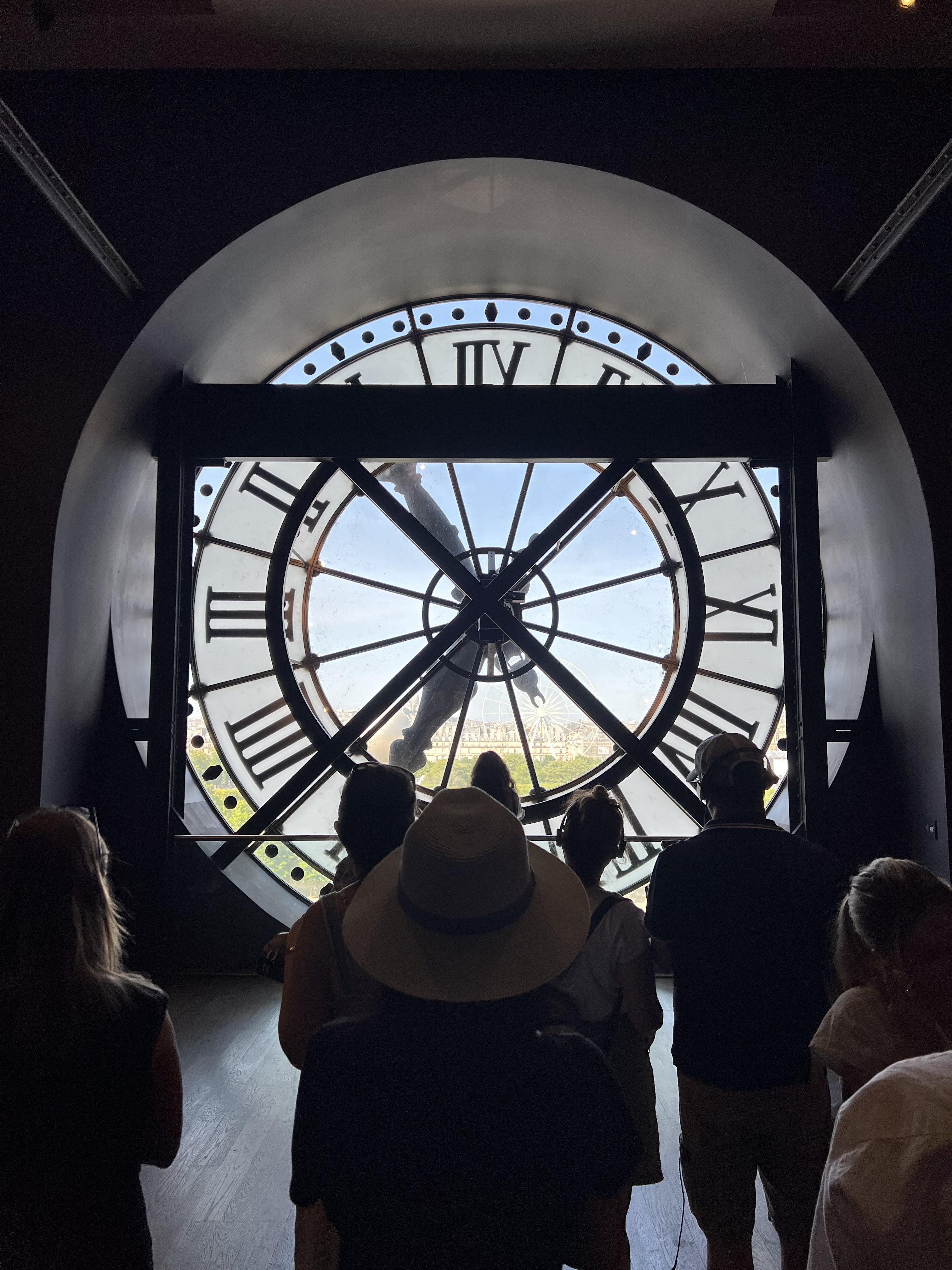
In late September the entire family gathered in Paris—city of the Sun King—for almost two weeks to celebrate my 70th year around the sun. Life in song captured our evening at the opera in Paris . . .
I had to include this one memorable photograph of the twins first day at kindergarten . . .
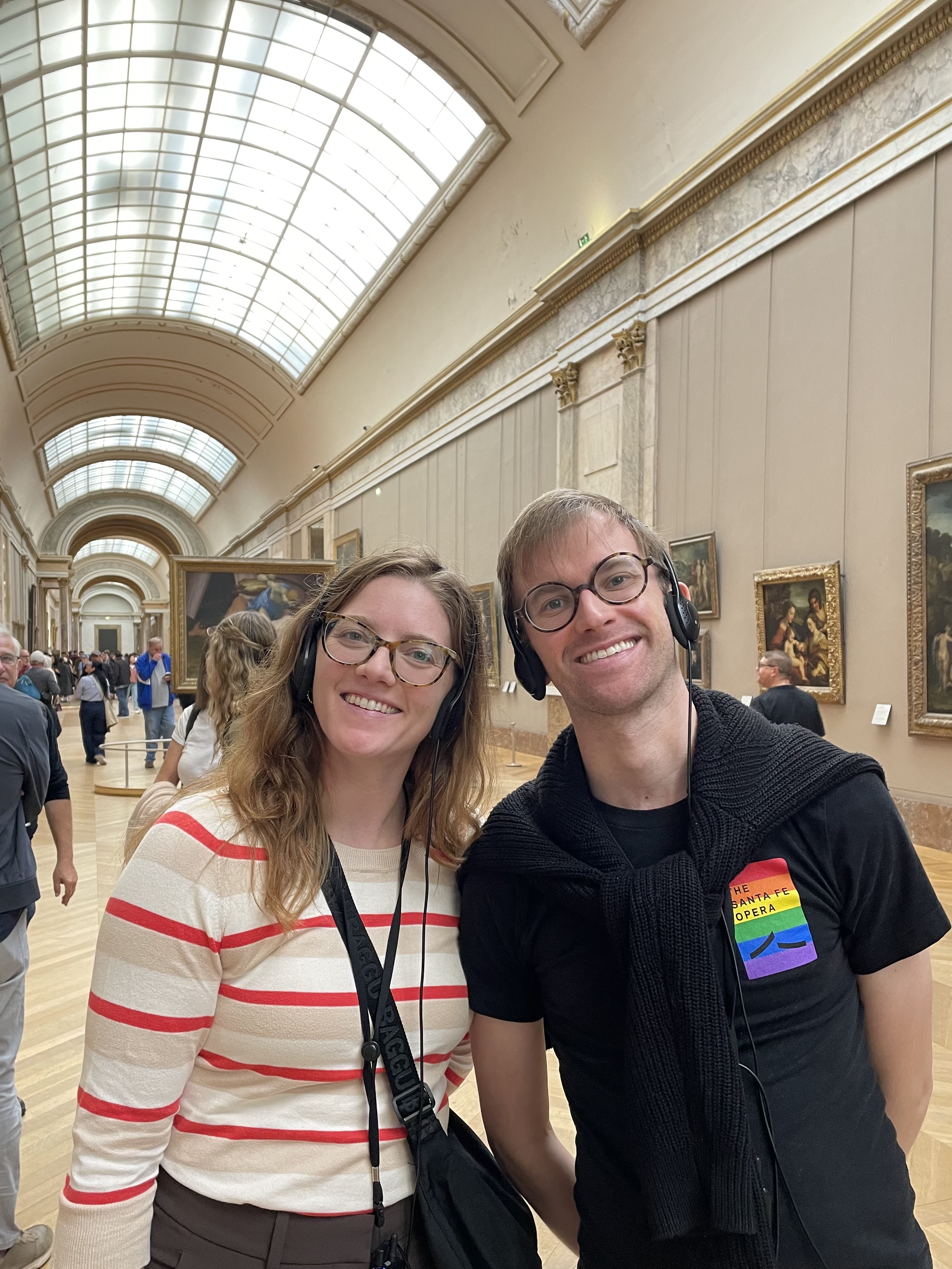
. . . to contrast it with this current photo of the two at the Louvre. As much as things change, they still remain curious and loving individuals.
In addition to meeting a former colleague randomly on the streets of Paris, we also were more intentional in gathering over meals with long-time friends. Janet Hulstrand lives in France much of the year, while one-time Staunton residents Peter and Janet Longnecker come to the City of Light several times a year. It was a delight to enjoy a meal and catch up with all three.
And the French vibe continued as we returned home. One of the joys of retirement is the opportunity to take leisurely lunches with dear friends. Here I am in our local French bistro La Piquette chatting with George Farr, one of the great gentlemen of DC and one of my favorite people.
As you can see, 2025—in spite of the upheaval in our country—has provided many remarkable memories for all the Browns. I give thanks every day for my beautiful, compassionate, curious, and thoughtful family, who love me into being in spite of my foibles.
I can’t wait to see what 2026 brings. Happy Thanksgiving to all!
The Grand Ole Opry turns 100 years old this month.
The story is one of legend.
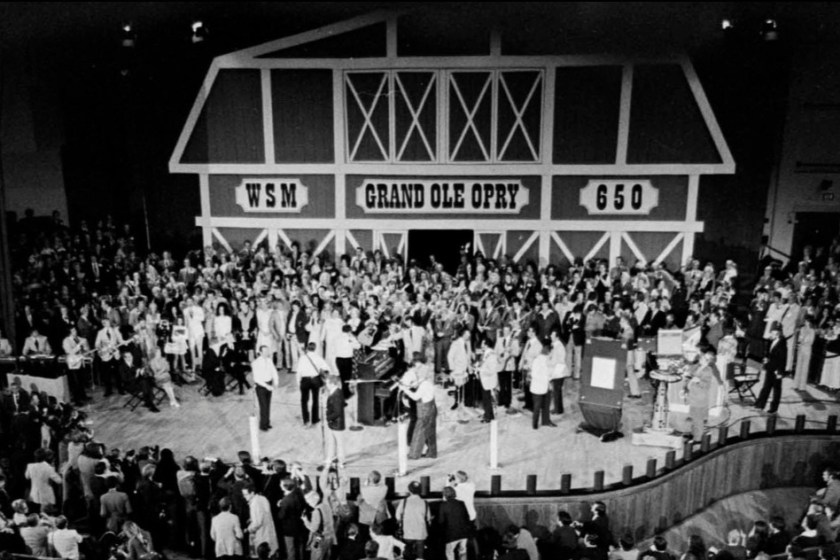
On November 28, 1925—100 years ago next Friday—station manager George D. Hay sits a white-bearded man before one of Nashville radio station WSM’s newfangled carbon microphones to let him play a few old-time fiddle tunes. WSM was owned by the National Life Insurance Company and the call letters stood for “We Shield Millions.”
The old man begins to play, and what happens next is magical.
“The switchboard lights up and telegrams pour in. The old man, Uncle Jimmy Thompson, plays for an hour, and across the country listeners scramble for the earphones to their old crystal radio sets. Hay gets an idea: why not have a regular weekly show of this sort of stuff? Soon he is besieged by pickers and fiddlers of every variety: ‘We soon had a good-natured riot on our hands,’ he recalled.”
From that single session, the Grand Ole Opry was born.
A Good Natured Riot: The Birth of the Grand Ole Opry (1999) by Charles K. Wolfe is a highly readable yet thoroughly documented account of the early years of The Grand Ole Opry. George D. Hay’s account of the birth of the Opry on that memorable November night is fairly accurate, but Wolfe contends that the actual story is even more dramatic and in more complicated ways. As one reviewer at the time of its publication noted, what makes Wolfe’s book so compelling “is that it shows the intersection of the birth of the Opry with so many other important, and often overlooked, cultural moments.” In doing so, Wolfe examines the background and lives of the key performers on the early Opry to an audience that has largely forgotten Uncle Jimmy Thompson, Dr. Humphrey Bates, Uncle Dave Macon, DeFord Bailey, along with the radio fiddlers and hoedown bands of the era. It is a masterful work that I reread in honor of the Opry’s anniversary and because of my personal ties to Charles Wolfe.
The Opry comes along at the dawn of radio, and several of the unique features of the pioneering stations are included in Wolfe’s account. The clarity of the airwaves in those days allowed WSM, on only 1,000 watts, to broadcast nearly coast-to-coast. Hays’ decision to present a program of what was then called “old time music” was in itself controversial, especially in the station’s home town. In the early decades of the 20th century, just after the infamous Scopes Trial in Dayton, Tennessee, the city of Nashville worked to assert its high-brow aura, branding itself “The Athens of the South.” Old time music seemed lowbrow, yet its popularity pushed the format forward. It is largely due to the Opry’s location there that Nashville is known today as the home of country music.
DeFord Bailey, the Harmonica Wizard
It may surprise many to know that the Opry was, in its early days, one of the few venues that featured both black and white musicians. “The folk roots of the early Opry’s music was nowhere more clearly demonstrated,” writes Wolfe, “than in the career of DeFord Bailey.” That black musicians fell out of country music is an aspect of the transition from old time to country, and one that Wolfe handles sensitively. One of Bailey’s most famous songs was the Pan American Blues, where he mimicked the sound of a passing train on his harmonica.
Another chapter features the story of Uncle Dave Macon, “with his chin whiskers, gold teeth, and open-backed Gibson banjo” who was the first real star of the Grand Ole Opry in addition to being one of the most colorful personalities in the history of the music. Known as “The Dixie Dewdrop,” Uncle Dave’s music is considered an important bridge between 19th-century American folk and vaudeville music and the phonograph and radio-based music of the early 20th-century, as Wolfe aptly documents. There are a few videos taken late in Uncle Dave’s career. My favorite is the following clip from the Grand Ole Opry Movie, with Uncle Dave and his son Dorris playing Take Me Back to My Old Carolina Home.
This book has personal memories for me.
When I was a young undergraduate student at Middle Tennessee in the late 1970s, there were two English professors who influenced my life in ways that I’m still only understanding. One was Ralph Hyde, who was serving as editor of the Tennessee Folklore Society Bulletin. Ralph published the first articles of mine in a professional journal or magazine, introduced me to the rich cultural traditions of the mid-South, and gave me my first bottle of moonshine. I still think all three are significant in shaping my life.
The other was Charles Wolfe, who taught English, succeeded Ralph as the editor of the TFS Bulletin, and—most importantly—brought scholarship and love to old time and bluegrass music. Charles was an avid collector, writer, and recorder of music from the mid-South, and I was lucky enough to be with him on occasions when he was recording or interviewing some of the area’s old-time musicians.
Charles and I were both featured as “talking heads” in a Nashville Public Television production entitled The Ryman: Mother Church of Country Music. Charles is one of the country music experts while I speak about the preservation issues along with other Nashville preservationists. And the story of the saving of the Ryman is worth noting.
Shortly before the Opry was moved from downtown Nashville’s Ryman Auditorium to the newly built Opry House in 1974 and plans were announced to raze the old building, John Hartford released Tear Down the Grand Ole Opry, a scathing commentary on the commercialization of country music.
“Right across from the wax museum |They used to line up around the block | From east Tennessee and back down home they came | All of a sudden there’s nothing to do where there once was an awful lot | Broad Street will never be the same.”
Hartford sings nostalgically on his legendary Aereo-Plain album. “Aereo-Plain,” as one reviewer noted, “is a song cycle which celebrates the rise and fall of the old time music subculture. Ironically, Hartford’s coda to bluegrass was premature, as ‘Aereo-Plain’ found a hip young audience. As a result, bluegrass began to morph into newgrass and progressive variations” that still continue to thrive today . . .
. . . as seen in bluegrass star Billy Strings’ appearance live at the Opry singing about drugs. Hartford, in the 70s, was also singing about the illicit drugs of the day, an update from songs about moonshine, I suppose.
Charles Wolfe was an institution, but he also had a great sense of humor. In the compilation The Bluegrass Reader, Charles had a wonderful article full of in-jokes entitled The Early Days of Bluegrass, Vol. 117 (Fiction). Here’s just one of my favorite tunes on this fictional album, which Charles notes (very tongue-in-cheek) as “peripheral influences on the development of bluegrass”
The Big Mouth Sacred Singers, “No Potholes in Heaven” (Backhoe 5440-B)
“This was apparently a family group headed by a self-styled preacher named Tyler Tyree, who was the founder of a sect called the Church of the Speckled Bird, which venerated wrens. They were fond of singing out of round-note songbooks in shape-note style, giving their music a striking diatonic effect. Their special significance to bluegrass stems from the fact that they moved to Rosine, Kentucky, in 1929; a few short weeks later young Bill Monroe left Rosine. So did several other people.”
The Bluegrass Situation has a long and informative feature on the Opry’s 100th anniversary and some of the current activities scheduled for this week and beyond, which I also commend for those wanting to go down a rabbit hole.












































































































 MORE TO COME...