Latest Posts

Observations from . . . December 2025

A summary of the December posts from the MORE TO COME newsletter.


The poet Friedrich Schlegel once famously noted that “the historian is a prophet facing backwards.” I claim no prophetic role, but I do tend to look at events in the world through the lens of history. Increasingly I work to draw inspiration from the critic Walter Benjamin’s vision of the true purpose of history: “to sort through the rubble of earlier eras in order to recover those buried shards of unrealized hope, to reclaim them, to redeem them.”

Today we say goodbye to a year that has been tumultuous, disruptive, violent, fearful; and we also say goodbye to a year that has been beautiful, enriching, wonder-filled, joyful. As Philip Roth once put it, “Life is and.” Good friends die. Children are born. Careers are crashed at the door of greed and new pathways with unexpected possibilities are opened. Things we once thought were essential fade away. New ways of perceiving the world spring to life.

All truth is a paradox. Life is a beautiful gift. At the same time it can be impossibly difficult. History tells us the next year will be both filled with uncertainty and opportunity. It will certainly be filled with loss and life.

The antidote to the loss of life is more life, embracing our time here on earth to the fullest. Recovering those shards of unrealized hope. Reclaiming them. Redeeming them. Heading into a new year we do best to follow E.B. White’s advice:  “Hang onto your hat. Hang onto your hope. And wind the clock, for tomorrow is another day.”

Let’s jump in and see what tickled my fancy in the last days of 2025.


READER FAVORITES

With our 20th MTC “author interview” in November we passed a milestone. This month we brought the next installment in the series to life (pun intended). Author Amy-Jill Levine—who is smart, witty, and generous—answered my questions about her newest book in Nativity stories that provoke, encourage, and perhaps even inspire. AJ is always a reader favorite. This month our conversation about the stories in Hebrew scripture that foreshadow the familiar nativity stories of Advent and Christmas topped the list of most-read posts as selected by our Brilliant Readers.


HISTORY, HOPE, MEMORY, PLACE

Historians and other smart commentators have suggested that recent events feel like the final, chaotic days of a political era. We’re not there yet, so we work to keep a spotlight on what’s going on, what we’ve lost, and what we can do to restore our democracy and civic spirit.

  • The philosopher Eric Hoffer famously said “rudeness is the weak man’s imitation of strength.” It may feel we’re being held hostage by six-year-old schoolyard bullies and that we don’t have much agency. But we have the power, the responsibility, the strength to push back, as I write in The road less taken.
  • On December 7th I always like to return to Pearl Harbor and the ongoing fight against fascism. Pearl Harbor remains both a place and a response that is fused in our collective national memories. Yes, memory is essential to hope. The memories at Pearl Harbor are a reminder of a national response when the nation and all its people became much more important than the tribe and political party.
  • Follow the money—the saga of one of sports most-traveled and most-reviled figures—speaks volumes about what is totally screwed up in today’s sports world. And in our country at large.

PASSAGES

How is it to live with eternity at your door? is my appreciation for the life of Henry Farrington. Henry was diagnosed in 2015 with ALS, given 3-5 years to live, and just passed away in early November of this year. “People who know death is near,” said one of my mentors at the service honoring and celebrating Henry’s life, “are dealing with the loss of everyone they hold dear. Not one but everyone. Dying is itself an experience of grief writ large. Yet the antidote to the loss of life is more life.” 


“BEST-OF” LISTS AND OTHER SUCH THINGS

December is the traditional month for lists that look backwards. Here are three of mine.

  • The year in books: 2025 is my annual listing of all the books I read. While it is a long piece, I encourage you to scan these short snippets and see what may pique your interest.
  • In recent years I’ve considered What our books reveal about us by looking for patterns in the books I read over the past 12 months. I was surprised to see how much fiction is now a part of my life. I’ve also accepted the fact that although I’m a planner by inclination and training (Masters in urban planning from Georgia Tech), that skill doesn’t carry over to my reading choices. And I’m okay with that.

AND STILL MORE BOOKS

  • Dark secrets looked at the first of Ruth Rendell’s famous Inspector Wexford mysteries.

CELEBRATING THE SEASON + COMMENTS I LOVED

Happy Christmas to you and yours is my traditional Christmas Day post, with this year’s focus on the wonder and meaning of the season. I also included three Saturday Soundtrack posts in December, including:

  • The Turning Year—I wish you the power to know just what to keep and what let go.

“I feel so fortunate that I have found someone who loves books and music as much as I do, perhaps more than I do. We are a “venn diagram” of our likes—they overlap, but perhaps I can introduce you to new things, and certainly you have exposed me to many new writers and music.”

The back-and-forth of introducing and learning about new writers and music with readers keeps me going.

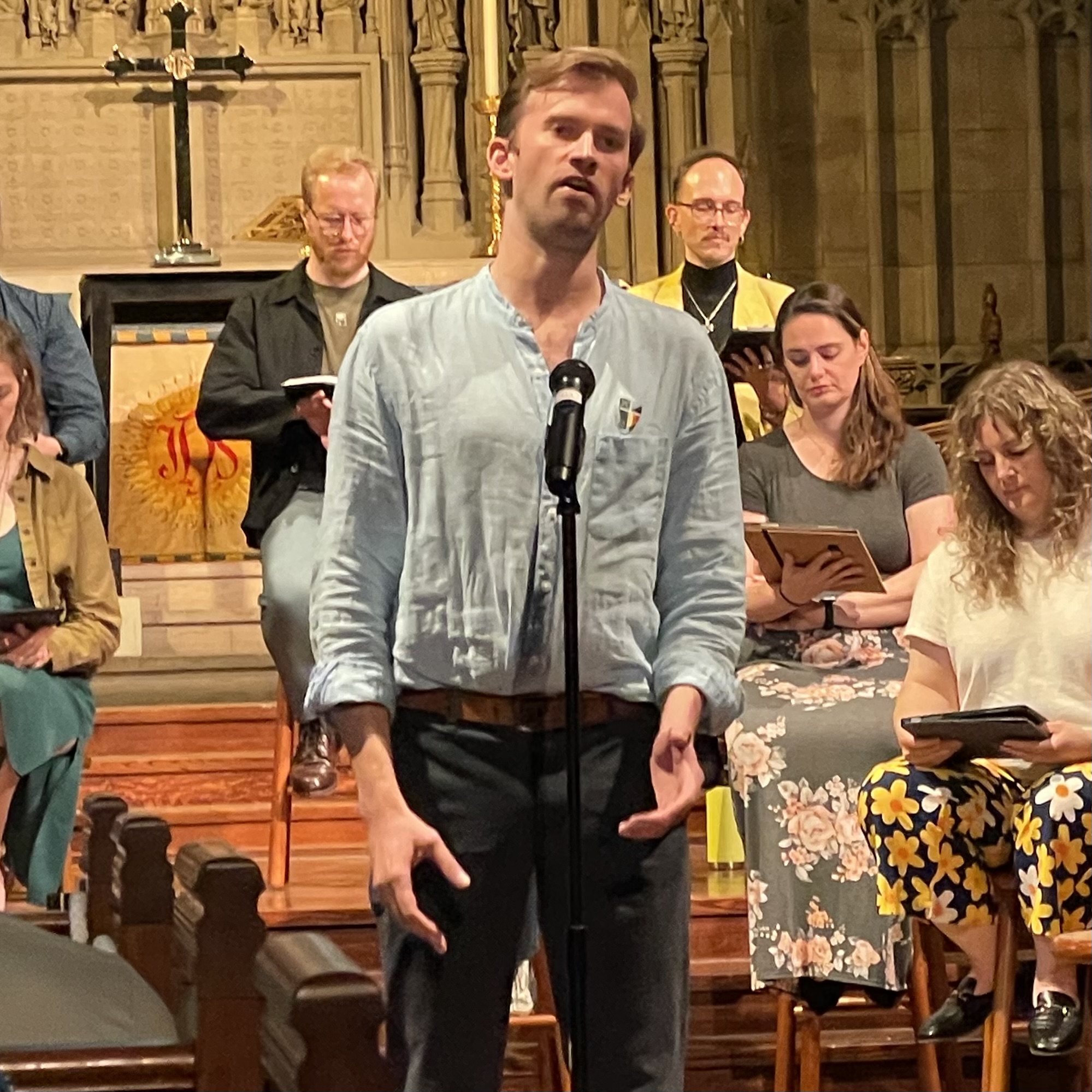
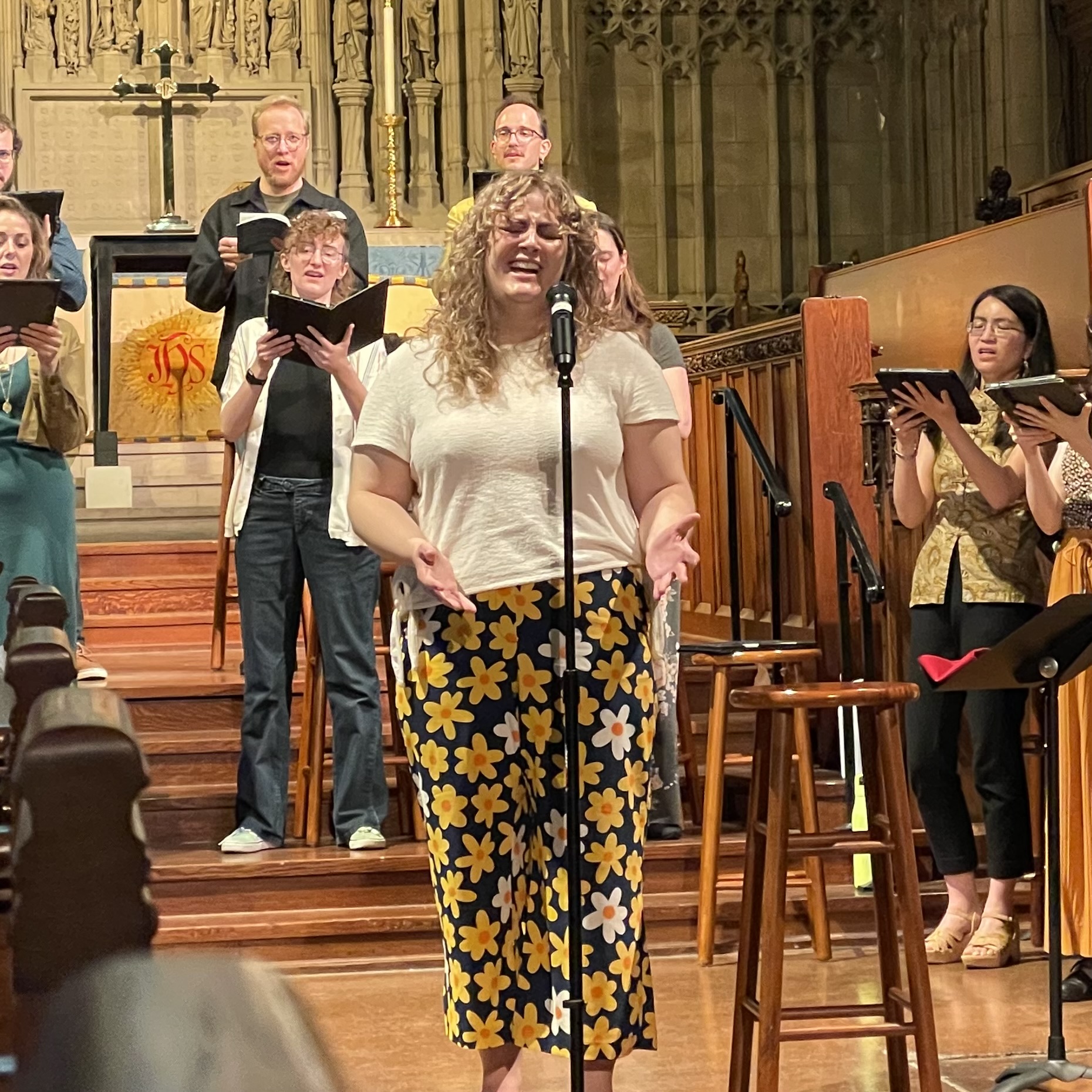
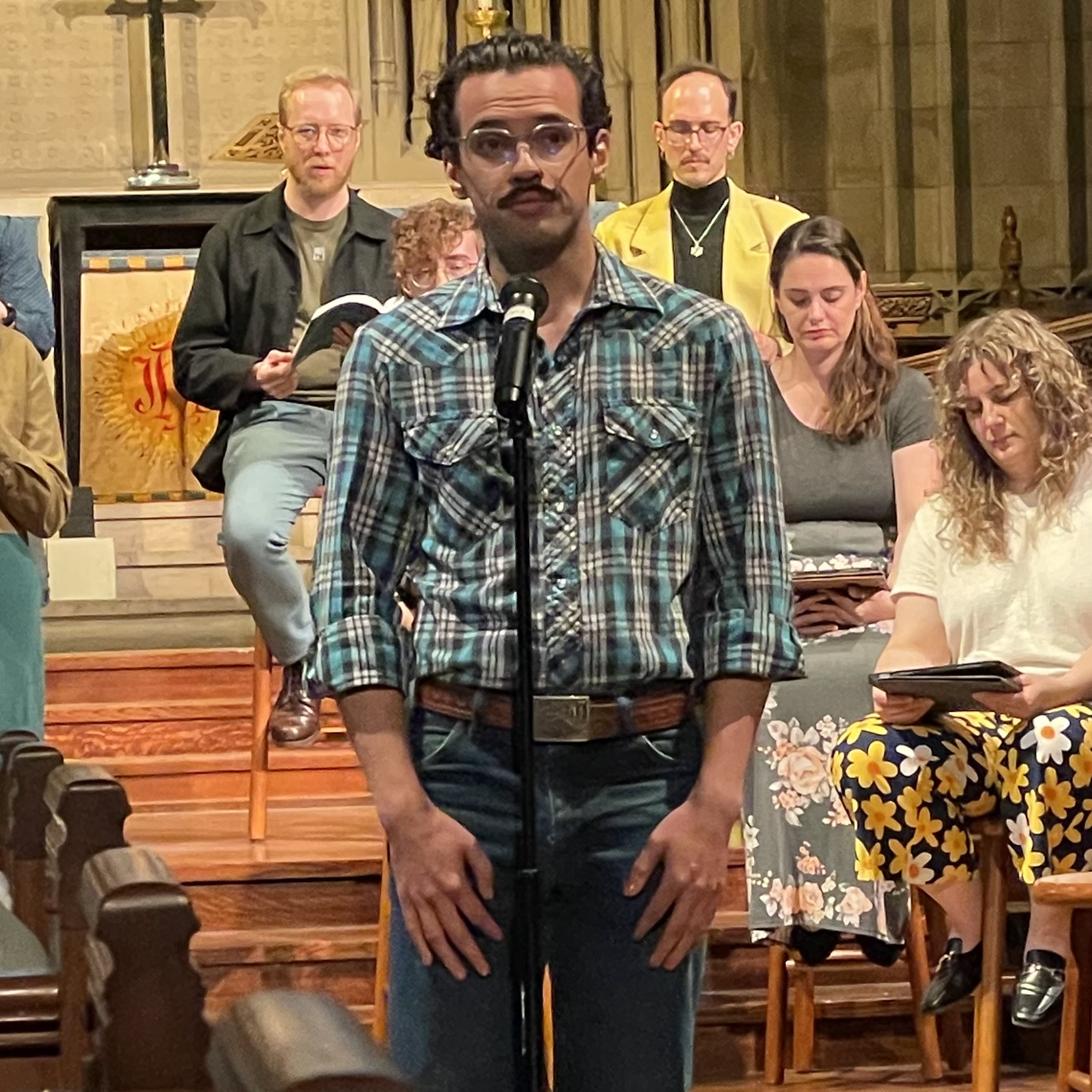
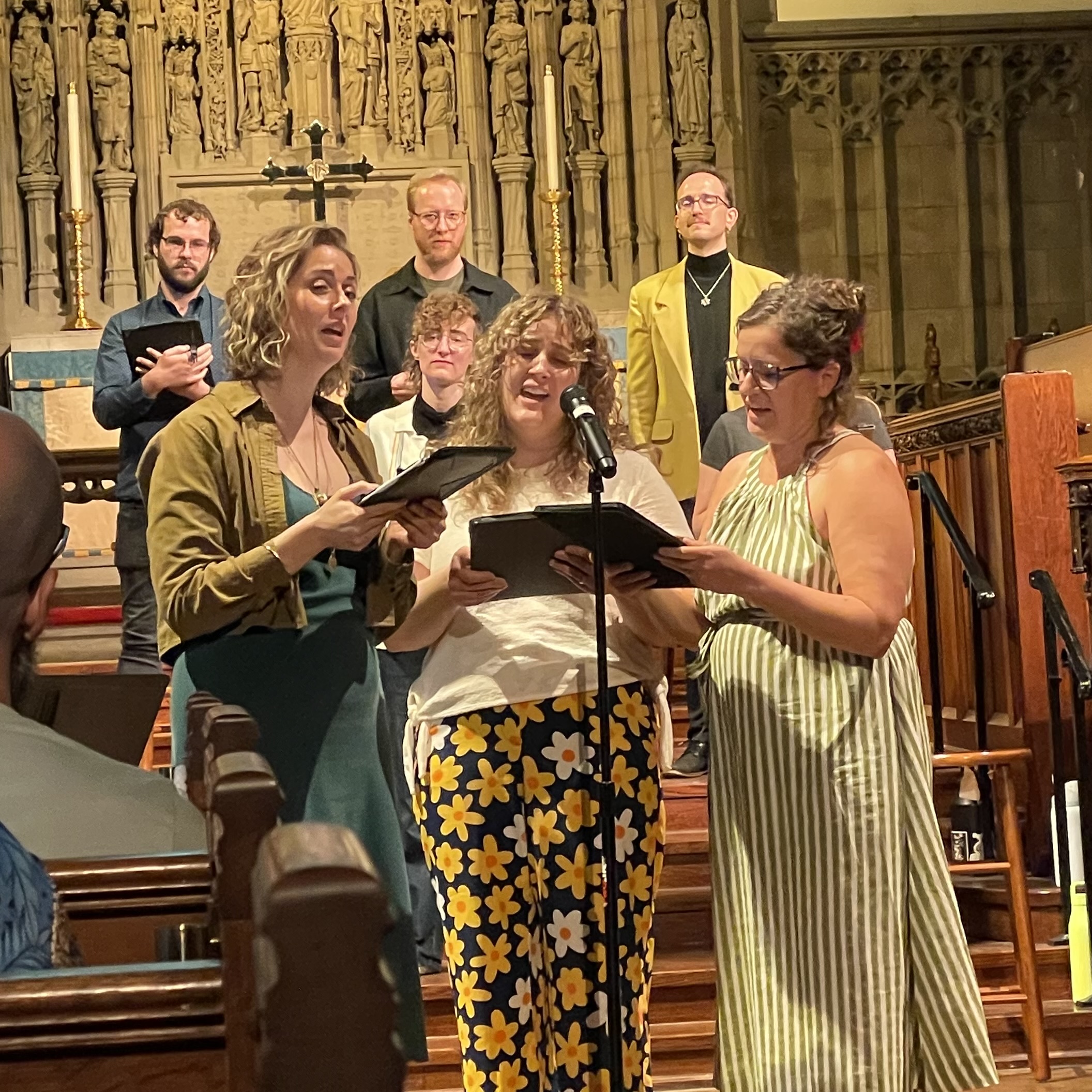
Andrew Bearden Brown’s curtain call, with other soloists and musicians, following the Washington National Cathedral’s 2025 production of Messiah.

A family friend wrote the following note to Candice after one performance of Messiah at the Washington National Cathedral in early December. I added it to the Fall 2025 post:

“What an absolute joy it was to be in the audience for last night’s Messiah. Not only the joy of hearing beloved music performed at the highest level, but to see a young man I’ve known for years transformed into a powerful artist. It was thrilling; if I felt that way, you must walking on air.”

We were. Andrew’s performances singing the tenor solos in this beloved piece were masterful. We were proud of course, and thankful, knowing of all the years of hard work by Andrew to build on his talent that went into that weekend’s performance.


DON’T POSTPONE JOY

Thanks, as always, for reading. Your friendship, support and feedback mean more than I can ever express.

As you travel life’s highways be open to love; thirst for wonder; undertake some mindful, transformative walking every day. Recognize the incredible privilege that most of us have and think about how to put that privilege to use for good. Women, people of color, LGBTQ+ individuals, immigrants, public servants, and others can feel especially vulnerable . . . because they are. Work hard for justice and democracy as the fight never ends.

But also keep some room in your heart for the unimaginable. Take time to dawdle and dream. Leave enough empty space to feel and experience life. Those gaps are where the magic begins. When times get rough, let your memories wander back to some wonderful place with remembrances of family and friends. But don’t be too hard on yourself if a few of the facts slip. Just get the poetry right.

Remember that “we are here to keep watch, not to keep.” Pay attention. Be astonished. Tell about it. And bash into some joy along the way.

Life is finite . . . love is not.

Try to be nice. Always be kind.

More to come . . .

DJB


For the November 2025 summary, click here.


You can subscribe to MORE TO COME by going to the small “Follow” box that is on the right-hand column of the site (on the desktop version) or at the bottom right on your mobile device. It is great to hear from readers, and if you like them feel free to share these posts on your own social media platforms.


Photo by Christian Lambert on Unsplash

Readers’ choice: The best of the 2025 MTC newsletter

Presenting the top MTC posts for 2025, based on reader views.


December is a month for “Best of” and “Top Ten” lists. I join in the fun with your selection, Brilliant Readers, of the top MORE TO COME posts for the year of 2025.

Readers keep checking in, providing feedback through their choices of what’s of interest, and for that I’m very grateful. We had a banner year, with more reader views than in any twelve month period since I started this endeavor back in 2008! Thank you!

The top stories, as chosen by readers, break down into:

  • Author interviews
  • Life’s passages
  • Thoughts on the times we live in
  • Family

Here’s a baker’s dozen of the top stories from the past year, as selected by the readers of MTC. And yes, you have to scroll almost to the bottom to see what’s #1.


AUTHORS TELL THEIR STORIES

Nine authors graciously engaged in a conversation with me during 2025 to discuss their new works in the Author Q&As series. Four of those conversations were among this list of top reader views and one of the books highlighted was just included in NPR’s list of top books for the year!

  • A love letter to small towns is my post about the new work, Sex of the Midwest: A Novel in Stories, an NPR “Best Book” of 2025 with a featured interview with Weekend Edition host Scott Simon. The residents of Lanier, Indiana (population 12,234) wake up to discover an email in their inbox inviting them to participate in a study of sexual practices. Author Robyn Ryle chats with me about her new work where “the e-mail opens up the secret (and not-so-secret) lives of one small town, and reveals the surprising complexity of sex (and life) in the Midwest.”
  • BONUS READ: Check out my 2023 interview with Robyn about her short story “Hemingway Goes on Book Tour” in the anthology Playing Authors.
  • Challenging a narrative of rupture between past and present looks at a richly illustrated book of the largely forgotten architectural work of Gustavo Giovannoni, an important early advocate for the conservation of historic cities. New Buildings in Old Cities is an impressive, wide-ranging, thoughtful, and relevant work. I was delighted when the editors agreed to answer my questions.
  • BONUS READ: I have a book review of this work coming out in an upcoming edition of the Journal of Architectural Education.
  • An environmental disaster and cover-up wrapped in a whodunit is the focus of Fiction as a pathway to the truth. The novel Troubled Waters is an engrossing read written by Syd Stapleton—who studied at Berkeley in the 1960s and became a leader of the Free Speech Movement; ran for Congress as a socialist in 1970 (and lost); and has been a former ferry captain, landing craft relief skipper, and tugboat worker. Syd graciously agreed to answer my questions about his first book.
  • BONUS READ: I just posted a review of the sequel earlier this month in MTC.
  • Many of us easily recall the narrative around the birth of Jesus. But how many know, much less think about, the nativity stories of Moses, Isaac and Ishmael, Samson, and Samuel. Nativity stories that provoke, encourage, and perhaps even inspire is my review of an insightful book that examines the other stories about birth in the Hebrew Bible: A Child is Born: A Beginner’s Guide to Nativity Stories. My wide-ranging conversation with author Amy-Jill Levine is full of her insight, wit, and wisdom.
  • BONUS READ: My earlier conversation with AJ, The transformational power of stories, topped last year’s list of reader views at MTC.

PASSAGES

Three of the top posts in terms of reader views touched on passages, death, and appreciation for lives well lived.

  • On the 100th anniversary of my father’s birth, I posted What constitutes a good life? Born on July 5, 1925 in Franklin, Tennessee, Daddy passed away just shy of his 91st birthday. Tom Brown was not a wealthy man in the eyes of the world, but he was rich in so many ways that count. In his faith. In love of his wife, children, and extended family. In friendships that stretched across the globe. In his insatiable curiosity. In a deep belief in community and a deep, deep love for people. Love was at the heart of a good life for Tom Brown.
  • Richard Moe: A personal appreciation is my tribute to a former boss and mentor, who passed away this year at the age of 88. The New York Times obituary is extensive in covering Dick’s legacy of public service. As others were remembering Richard Moe for this public life and legacy, I offered a more personal note in thanksgiving for all the support and guidance he gave to me. I will always treasure our work together.
  • Life is finite . . . love is not was written after I learned that a friend and former colleague passed away after a difficult battle with pancreatic cancer. In her last message sent just a few days before she passed, Nancy talks about drawing from a great reservoir of gratitude for the wonderful life she’s been given. She ends by saying, “Please take good care of yourself and remember to love the people you love every day.  Life is finite … love is not.”

THE TIMES WE LIVE IN

Two posts among the top reader views focused on our difficult times, when too many in our country have given in to bigotry, hate, power, and greed.

  • Rewriting the past to control the future is as old as history itself. Some attempts—such as state-sponsored erasure—are more malicious than others. Jason Stanley literally wrote the book on understanding fascism and in Erasing History: How Fascists Rewrite the Past to Control the Future he uses his family’s experience in 1930s Germany as a touchstone for a deeper dive into the tools of totalitarianism. 
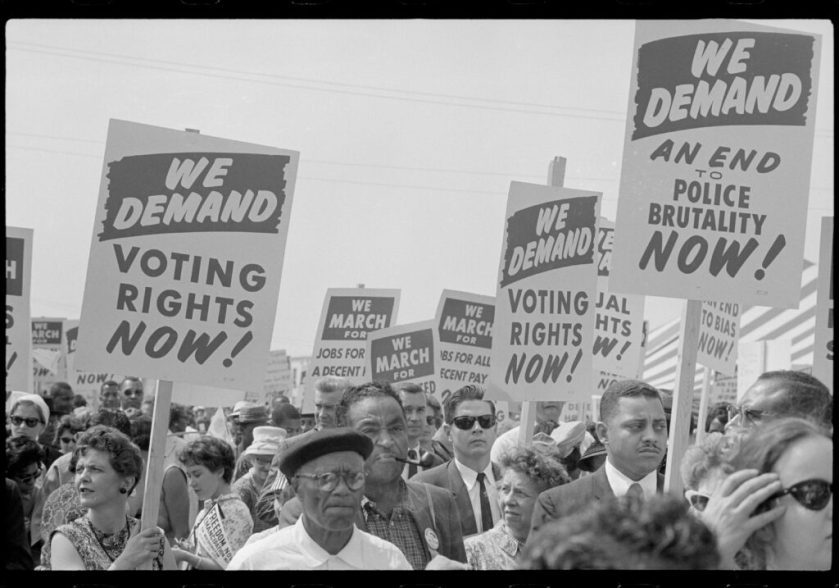
  • We think these are the worst of times. But history tells us we have seen chaos and disruption in the past. The next four years will be filled with upheaval and uncertainty . . . just look at our history considers disruptive and history-changing events in the first fifteen years of my life, going from Brown v. Board of Education to fear of nuclear annihilation, the Montgomery Bus boycotts, Little Rock, Castro’s revolution in Cuba, political assassinations, Vietnam, and more.

FAMILY

Three family-related posts were among the top reader views in 2025.

  • After a summer of singing opera in Santa Fe, our son—the tenor Andrew Bearden Brown—returned to the concert stage in New England, California, Florida, and Washington, DC. I highlighted his schedule in Fall 2025.
  • Candice and the twins had a surprise waiting for me on my 70th birthday: more than 90 cards from friends and family from all around the world. Rich (in a George Bailey kind of way) is my post on these wonderful notes and the beautiful thoughts they contained.

AND THE WINNER IS . . .

Yes, I completed my 70th trip around the sun in 2025 so it is appropriate that the top post from the year in terms of reader views was 70 lessons from 70 years. It begins with words of wisdom such as “The graveyard is full of folks who thought the world couldn’t get along without them” and ends with this reminder: “Savor every moment. They pass faster than you can ever imagine.”


BTW, I WAS RATHER FOND OF THESE AS WELL

While they didn’t make it into the top views this year, I was rather fond of these posts, which I recommend as well:

  • Pearl Harbor is not just a place, but it is a reminder of a national response. In Pearl Harbor and the ongoing fight against fascism I write about a time when country, a caring for humanity, and a desire to defeat fascism and bigotry took precedence over personal achievement, power, and greed.
  • Finally, three conversations—with a priest, a recovering lawyer, and a professor—about the quality of my writing here on MTC led to the post Writing a present.

Whatever you found to enjoy this year on MTC, thanks, as always, for reading!

More to come . . .

DJB


Last year’s listing of the top posts on MORE TO COME as selected by reader views can be seen by clicking on the link. You can also check below to find similar lists from:


Photo by Patrick Fore on Unsplash

The Turning Year


I wish you “the power to know just what to keep and what let go.”

This is a reposting of portions of a musical essay from last year. I hope you enjoy the encore.


The coming of the new year is a time for reflection and promise. I’ve long favored “turning of the year” to describe this time of change and was delighted to hear several musicians call upon this old phrase in song.

Jennifer Cutting is “a composer and bandleader by family tradition and a musician and ethnomusicologist by training.” Her grandfathers, “one from England and the other from Ireland, were the inspiration for her natural synthesis of British and Irish musical traditions.”

Cutting’s song The Turning Year (A New Year’s Toast), as performed by the acappela quartet Windborne on her video, begins with this verse:

“Oh, kind companions gathered here, all at the turning of the year,
The hour grows late, our hearts grow fond, in melody shall be our bond.
We live in hope, we pray for peace, we meet with joy the year’s new lease,
The falling snow, the icy moonlight shining clear,
SO LET US SING TO WELCOME IN THE TURNING YEAR.”

I love the sentiment that we take our battle-scarred selves into the new year with a sense that no matter the trouble, we can prevail.

Now Yule is past, the old year fades; time heals all wounds, or so they say.
Though battle-scarred, we will prevail; we hold the pen that writes the tale.
Do not regret the flow of years; for there is naught that disappears;
Our every kindness written large, among the stars;
SO LET US SING TO WELCOME IN THE TURNING YEAR.

And while we’re toasting the turning year, let’s remember to make amends to those we’ve hurt.

The tallest trees, the barest boughs, the callow choir of earnest vows.
Whatever boon we ask of life, we ask it here, we ask it now.
So let us toast to absent friends; to those we’ve hurt, let’s make amends;
And those we love, let’s set them free, yet hold them near,
SO LET US SING TO WELCOME IN THE TURNING YEAR.

“The minutes pass, the hour strikes, the mighty flares light up the night
Now let us raise a festive glass, that all we hope may come to pass.
I wish you joy, I wish you peace, I wish you health, but more than these
The power to know, just what to keep and what let go.
SO LET US SING TO WELCOME IN THE TURNING YEAR…
SO LET US SING TO WELCOME IN THE TURNING YEAR.”

Windborne at 2024 IMT Midwinter concert (photo by DJB)

On Jennifer Cutting’s Song of Solstice album, which included The Turning Year, she also has this poignant piece that reminds us that not all are as fortunate as we are in these difficult months of winter. Time to Remember the Poor is performed here by Cutting’s Ocean Orchestra along with the late acoustic guitar master Al Petteway.

For a slightly different take, Windborne also included a version of this song on their 2024 album To Warm the Winter Hearth.


Finally, I will end with Roger Eno, a British composer and musician, whose “distinctive style as a recording artist has attracted a cult following.”

In this video for the album The Turning Year’s title track, “Eno’s melodic solo piano is underscored by a beautiful string orchestration.” This was recorded at Berlin’s Teldex Studio.

Let’s all sing (and play) to welcome in the turning year.

More to come . . .

DJB

Photo of stars by Phil Botha on Unsplash

Happy Christmas to you and yours

Sending you and the ones you love wishes for a Happy Christmas.


“One of the most precious gifts of life is a sense of wonderment, a sense of awe, a sense of the holy.”

The Rev. Dr. Pauli Murray, December 25, 1977

In this season of celebration and merriment, taking the time to pause and reflect on the connected, precious, and sacred nature of life can be a gift we give ourselves. As the civil rights pioneer and Episcopal saint Pauli Murray said in a long-ago Christmas sermon,

The wonder of Christmas is that the greatest event in the history of humanity came silently in the night . . . The wonder of Christmas is that in the darkest hour of loneliness and despair, new hope is born if we have faith. . . .

The wonder of Christmas is that suffering and death are not the last word. Emmanuel—God—is with us in every human situation. The little unprotected baby in the manger and the desolate man on the cross revealed that where God is least expected, in the most unlikely times and places—whether at the beginning of life or in the emptiness of death—God is at hand! In every agony, every crisis we are not alone. The light of God’s eternal love shines in the darkness and we shall be safe.

There has been much to trouble our minds over the past year. But the wonder of Christmas, as Murray said, is that the suffering and death that is around us is not the last word. Instead of being crushed by suffering and death, we have been empowered by the Spirit of the Holy One to live the paradox of power and vulnerability in love.

It is a mystery on many levels, but to me the wonder of Christmas means that it is possible to see the connectedness of all creation. To see heaven—not the streets paved with gold stuff but what life is truly meant to be—on earth. And we see those connections and a glimpse of the true reality of life through love. The Rev. Sarah Taylor Miller eloquently suggested as much in a recent sermon at St. Alban’s Church in DC.

“Wherever we see acts of mercy, wherever we see true love witnessed in the paradox of power and vulnerability, in the feeding of the hungry, in the healing of the sick, in the welcoming of the stranger, we are seeing the image of the invisible God.”

“Life is a precious unfathomably beautiful gift,” writes Anne Lamott. And it can be impossibly difficult “here, on the incarnational side of things.” Because I believe all truth is a paradox, I love the thought that Christmas is about the paradox of power and vulnerability in love.

May this year’s season—in whatever way you celebrate—bring you happiness, help you treasure what is important in your life, and build hope for a future where love trumps hate.

Happy Christmas, and best wishes for 2026.

More to come . . .

DJB

Photo of Christmas Stars by Niklas Ohlrogge (niamoh.de) on Unsplash. Photo by DJB of the wreath on the Brown’s front door, created by Park Florist in Takoma Park.

What our books reveal about us

Seeing myself in the books I chose to read this year.


Picture in your mind all the books you read this year scattered all around, covers closed, titles on top. What do they say about the year just completed? Your state of mind? Your stage of life? Your desires? A couple of years ago, a writer posted an essay on Substack asking those very questions. I was intrigued and have thought of my responses each of the past two years.*

After posting short snippets about the 60 books I read in 2025, I’ve returned to the question of what my books reveal about me. Here are nine random and totally subjective observations.


  • I have found that in today’s world, fiction can sometimes be the best way to the truth — Twenty-four of the books I read—fully 40%—were works of fiction. Several years ago that number would have been in the single digits. Because the authors I read were not fully bound by true events (or perhaps even reality), their minds were able to explore truth in its many different dimensions. My newly-found fascination with mystery books and their inherent puzzle-solving nature has also contributed to the rise in this new area of focus. I have been genuinely moved and challenged by several works of fiction in the past few years and I expect this trend to continue into 2026.
  • I need help in shaping my personal resistance to totalitarianism — Three of my seven “top reads” this year focused on the challenges we face today as a nation. It is clear that a once great political party in America has been captured by the forces of bigotry, hatred, and greed. I looked for ways to respond directly as well as reminders that no straight road will take us there. We all need a compass, I suspect, for dealing with the uneven terrain we’re walking together.
  • “The past equips us to face the future; continuity of memory tells us we are both descendants and ancestors” — Even with my dive into fiction, I still read a lot of history and biography: 22 books in 2025 when you consider a broad definition of those terms. As a posthumous collection of thought-provoking essays by the Pulitzer Prize–winning historian and bestselling author David McCullough reminds us: history matters.
  • I’ve given up any thoughts of preparing a reading plan for the year — In the past I would sit down each January and put together a carefully constructed month-by-month plan of which books I already own I want to read. Then I make my first visit to an independent bookshop and the plan goes out the window! I now follow my instincts more than any prepared plan. Plus, I don’t seem constitutionally able to walk into a shop full of books and not find—and buy—at least one that looks intriguing. People’s Book in Takoma Park is my current go-to store, because it is so close and convenient. Plus the staff is interesting, knowledgeable, and helpful. By my count, at least 19 of the books I read this year just leapt out at me from the shelves of some bookstore.
  • I’m searching for different perspectives and voices — I continue my search to read and listen to more ethnically diverse voices, although I slipped from reading 10 such books in each of the past two years to six—or only a tenth—in 2025. This trend reminds me that it is important to occasionally be more intentional in some of my choices.
  • Tell me what books you think I’ll like, and I’m very likely to read them — Sixteen of the 60 books—or a little more than a quarter—were recommendations or gifts from friends and other readers. The dear friend and former colleague who recommended The Postcard—one of my top reads this year—called it “painful at a profound level, of course, and yet somehow resilient and inspiring.” Well chosen words for a book that is both timeless and so necessary in today’s world. Many other works recommended or loaned by readers are still sitting in my TBR pile. I’ll get to them eventually!
  • I get great pleasure in reading books written (or edited) by people I know — Writing well is hard. Writing a good book is really hard. Publishing a book that others will read is even harder. Putting a book into the world that makes NPR’s “Best Books” of 2025 list is even more amazing. At least nine people I know from different parts of my life published books in 2025 and won all types of accolades and good reviews. My series of Author Q&As are how I spread the word of their accomplishments.
  • Perhaps it is my age, but as I get older I have become increasingly fascinated with the stories people tell — Those who wrote the memoirs I read have a wide variety of life experiences. Some use styles that are genre-defying to tell their stories. No matter the experiences or the form, I find memoirs lead me to reflect more on how I’ve lived and who has touched and shaped me, perhaps nudging me to think more about finding ways to tell my own story.
  • Finally, I find myself reading about subjects that would never have attracted my attention during the first 65 years of life — In 2024 it was about sheep, the book that led my wife to ask with a puzzled look on her face, “who would write a book about sheep?” This year it was a book about nuclear physicists in the 1930s. It turns out that in recent years I’ve read books about beavers, eels, fungi, trees (lots of tree stories), coffee production, time travel, “wild-built” robots, mathematics, quantum physics, the horrors of Japanese slave labor camps, and more. Who knew? Perhaps I have become more adventuresome in my old age!

So I’ll ask again: What do the books you’ve read reveal about you?

More to come . . .

DJB


*You can see the books I read this year here. And click to see how I answered those questions for myself based on the books I read in 2023 and again in 2024.


Photo of book display by Sandy Ravaloniaina on Unsplash. Photo of book lovers sign by Tadeusz Zachwieja on Unsplash.

Celebrating the female voice and the Christmas season

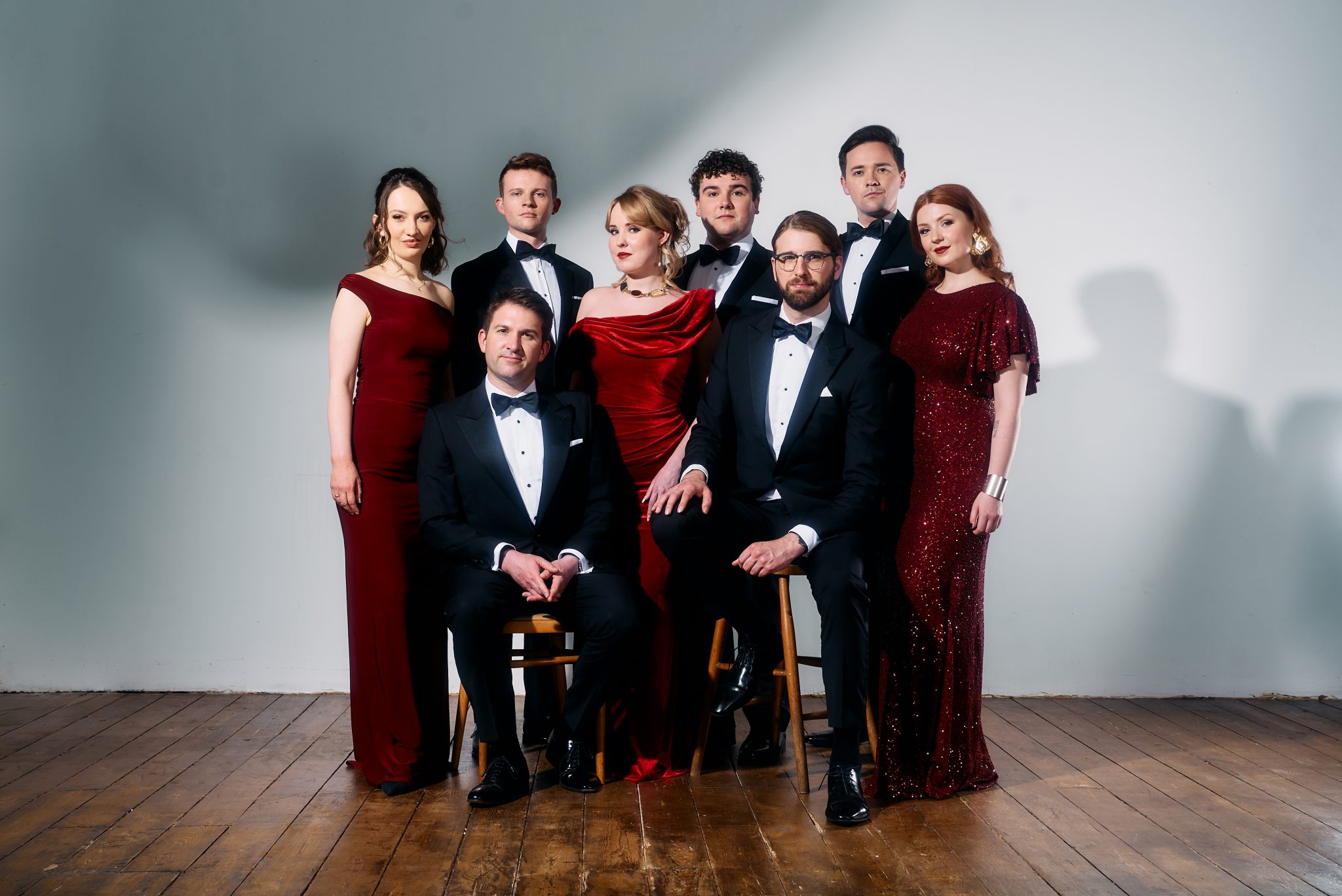
Ensemble Altera has just released a marvelous new album for Christmas.


Feminine Voices by the vocal group Ensemble Altera celebrates the female voice and the Christmas season with a kaleidoscopic selection made up of the Magnificat, Ave Maria, and carols, “each of which is more wonderful than the last.” The album has received major awards, including a 5-star review and the Christmas Choice designation from BBC Music Magazine in its December 2025 issue.

Gramophone notes that the group brings “calm clarity to frosty, wintry textures” while Europadisc adds that the new album’s capstone—Benjamin Britten’s Ceremony of Carols—is:

“Thrillingly directed, and expertly shaped and paced by Lowrey, it sets the cap on a Christmas disc of exceptional interest, standing out from the many that are released every year. Don’t miss it!”

With works composed by women including Hildegard von Bingen, Imogen Holst, Germaine Tailleferre, Cecilia McDowall, Joanna Marsh, Barbara Strozzi, Elizabeth Poston, and a world premiere by Kerensa Briggs, the female voices of Altera under the direction of Christopher Lowrey take the spotlight on this new release. Male composers are also included, with works by John Rutter and the aforementioned Benjamin Britten. His famous Ceremony of Carols is now generally performed by boys’ choirs but in the liner notes Lowrey explains that it was originally written for the women of the Fleet Street Choir. Altera and the harpist Li Shan Tan perform this magical and spellbinding music with delight.

Colin Clarke has a detailed review in the Classical Explorer.

“The first track spells out a key element here: lines, sung by multiple voices, are so together it feels almost impossible. Here’s the first number, which as a single line exemplifies this perfectly: Hildegard von Bingen’s mixolydian O Viridissima, Virga.”

Hymn to the Dawn from Choral Hymns from the Rig Veda, Op. 26, Third Group, by Gustav Holst showcases Li Shan Tan’s harp.

“Holst invokes the goddess of morning, the bringer of first light. Christmas tells a parallel story—a woman through whom daylight enters the world. Different traditions, same image: the dawn that makes everything possible.”

From the liner notes

Colin Clarke’s take is that “Christopher Lowrey paces [Hymn to the Dawn] superbly; the music just exudes spirituality, the harp adding a more mobile dimension, supporting and yet somehow parallel to the vocal activity.”

Adrian Peacock’s There is No Rose has been described as a “modern echo of Britten’s vision, carrying that same purity and wonder into the present.”

Clarke singles out Joanna Marsh’s Magnificat from St. Paul’s Service as “one of the highlights of the disk” . . .

. . . while I found Ian Shaw’s arrangement of I Sing of a Maiden a sparse yet arresting piece.

The lovely soprano voice of Eleonore Cockerham (one of my favorite singers) is featured in a setting of Coventry Carol written by Karensa Briggs expressly for Ensemble Altera.

The final selection I’ll feature from the new album is John Rutter’s familiar arrangement of Tomorrow Shall Be My Dancing Day.

The album Feminine Voices at Christmas is available from Alpha Classics.


To end with other pieces of traditional music one will hear at Christmas, I’ll feature the full complement of Ensemble Altera (with our son Andrew Bearden Brown as one of the tenors) singing “the S choruses: Surely, Stripes, and Sheep” from Handel’s Messiah. I especially love the quick pace of the group’s version of All We Like Sheep. Andrew is in New England this week—on his birthday (today) no less—singing this wonderful music with Altera. And note, for those in Florida, that the group is taking a southern tour in mid-February to Fort Lauderdale, Bradenton, and Naples singing the program A New Song: Psalms for the Soul.

Ensemble Altera (credit:
Janet Moscarello Photography 2021-2022 http://www.janetmoscarello.com)

Thank you, Ensemble Altera, for this wonderful gift. Happy Christmas, everyone!

More to come . . .

DJB

Photo by Annie Spratt on Unsplash

How is it to live with eternity at your door?

People who know death is near are dealing with the loss of everyone they hold dear.  Not one but everyone. Dying is itself an experience of grief writ large. Yet the antidote to the loss of life is more life.” 


In a powerful memoir-as-meditation Natalie Goldberg tells her story of a cancer diagnosis that forever changes the way she looks at life. And death. Her diagnosis brings new perceptions, such as in noticing subtle differences when friends come to visit.

“Yes, they had more energy, more mobility than I did. They were still busy in the world with the routines…But there was something much more subtle, something I don’t often catch until after they left: They don’t know they will die.”

In 2015 my friend Henry Farrington was diagnosed with Amyotrophic Lateral Sclerosis (ALS), often called Lou Gehrig’s disease after the baseball player who was diagnosed with it. Henry’s doctors estimated he had 3-5 years to live. Eternity was at his door. That’s true for all of us, but so often—assuming death is a “long distance call that will come in our eighties or nineties”—we push it out of our mind. Henry passed away on November 2nd of this year, more than beating the odds.

Friends and family gathered last Saturday to celebrate and give thanks for Henry’s life. Two of my mentors were part of the service. Their thoughtful remarks helped all of us see why Henry’s was a life worth celebrating.

Henry Farrington

Finding a path to set one foot in front of another, continuing to live even when the physical act of walking is impossible, was a theme those who spoke returned to again and again. A lifelong friend who first met Henry at South Kent School in Connecticut spoke of their time there and of Henry’s Army service during the Vietnam war. We heard about Henry’s career as a financial advisor and about his active volunteer work at St. Alban’s Parish, serving among other duties as an usher, which is where I first got to know him. Henry was also a member of the board of the Workers of St. Alban’s (WSA), which oversees our Opportunity Shop and administers a grant program, funded by the sales of the shop, that supports the work of a number of not-for-profit organizations in the DMV.

But that’s just the outline of his 78 years on earth. What so many wanted to discuss was the content of his character.

George Farr spoke of that character, beginning with the simple act of Henry’s welcoming George to the WSA board.

“It turned out that Henry was already a member of the Board and, as I entered the room to attend my first meeting, there he was, already seated at the table.  He turned, saw me, and smiled.  And then, pulling out the chair beside him, gestured for me to sit next to him. 

I was grateful for this welcome.  But—in retrospect—I came to realize that this simple, apparently spontaneous gesture was deeply characteristic of Henry: the outward expression of a person who always seemed conscious of what might make things easier or better for others and of how he could help them in whatever way—small or large—that was appropriate to the occasion.”

George also mentioned a trait which I came to see in my interactions with Henry: He was never afraid to ask a question.  “Often this would be the difficult question, the question that needed to be asked, or that might be hard to ask, or that others might be reluctant to ask.  But it moved the discussion to a more enlightened place.”

Henry enjoyed nonfiction which I discovered when he became a regular reader of this newsletter. When I would stop by his house in Georgetown, or correspond by email, or talk over the phone, Henry always had questions. He was insatiably curious about life and those around him. He would ask about a book I was reading, what I knew about the candidates for the vestry, about last week’s sermon, or about the current state of politics.

“Over the course of these conversations, it became clear that Henry was a man of strong, firmly formed opinions,” [George said of similar encounters] “but he was also open and generous in listening to an opinion that differed from his own. Henry was impatient with anyone who wasn’t a straight-shooter, who was “evasive” when confronted with a hard truth . . . He was curious and reflective. He had a wry, quizzical sense of humor and he enjoyed telling jokes.

As the years went on, I was frequently astonished, after a telephone conversation with Henry. And not just because he dramatically exceeded the medical expectations of his doctors. But because it seemed that, as his physical capacities were slowly and steadily deteriorating, there was, concurrently, an increase, a kind of efflorescence, of intellectual energy—an energy that was manifested in a desire to learn new things and to understand “more” about life, past and present.”

Frank Wade, the long-time and now retired rector at St. Alban’s Parish, gave the homily. As with all of Frank’s sermons it was short, eloquent in its style and simplicity, hit just the right theme and tone, and had a turn of phrase that stays in your mind for weeks . . . if not a lifetime . . . afterwards.

Frank, of course, spoke of hope, as one does at funerals. “People like us at times like this,” Frank reminded those in the pews, “have discovered that hopeful ground to be solid and the way steep but sure.” But he took that thought and brought a perspective that has rarely left me since hearing these words at Henry’s service. And as is his custom, Frank told us through a story.

“Many years ago a clergyman I knew was conducting a funeral for a child deep in the Appalachian Mountains. He assured the grieving mother of the promises of our faith just as we have done here. She replied, ‘Yes I know and believe those things but it is the miss of him.’ 

The miss of him. How do we deal with ‘the miss of him,’ the morning noon and night of him that seems so removed from the great promises of belief and hope?  It is a hard question that must be faced by all who grieve.

Fortunately we have a wonderful example of how to live with loss and grief. I refer to Henry Farrington himself. We keenly feel his loss and absence. But take a moment and be aware that people like Henry who know death is near are dealing with the loss of everyone they hold dear. Not one but everyone. Dying is itself an experience of grief writ large. 

How did Henry handle his grief? Frank spoke to his wife Toni and others who knew Henry well.

“The words they used to describe him are the words we would do well to have in mind as we deal with ‘the miss of him.’ As Henry faced his own death and the grief that went with it those who knew him best used these words to describe him: sense of humor…remained positive…accepted… grateful for all the help…close to family…kept reading and learning…maintained an interest in a broad range of topics…extraordinary patience… faith…courage…energy… grace. 

One of Henry Farrington’s parting gifts to us is a tutorial in how to deal with ‘the miss of him.’  He showed us that the antidote to the loss of life is more life, embracing life to the fullest. It is an incredible gift that will serve us all well in the days to come.”

Natalie Goldberg ends her meditation on this question by turning to a painting by Pierre Bonnard, who “silently grieves” about the emotional absence of human fulfillment through the medium of paint. The last piece he painted, a week before his death in 1947, was Almond Tree in Blossom. It is full of light.

“When Japanese Zen masters approach death, they write a poem to reveal their mind at the final moment. In this final painting, Bonnard does something similar, displays his lightening heart. Before the great question—How is it to live with eternity at your door?—Bonnard answers: In full bloom.”


Henry’s daughter Alex remembered that her father liked to smoke cigars. As a way of remembering that part of his life, Alex placed a cigar on the top of the urn holding Henry’s ashes, and it was buried with him in the columbarium beside the church.

Rest in peace, Henry Farrington. You showed us how to live life—even in the face of death—to the fullest. And I know you’ll enjoy that cigar.

More to come . . .

DJB

Image of almond blossoms by Beverly Buckley from Pixabay

The road less taken

“Rudeness is the weak man’s imitation of strength.”

Occasionally I write simply because I need to hear something. As I was putting the finishing touches on this piece, I came to understand that this was one of those times.


When those in positions of leadership respond like petty dictators to questions that make them uncomfortable or when they prove themselves incapable of showing empathy to fellow human beings in times of trouble, it sets a tone that some feel emboldened to follow or even to escalate into violence. Social media, talk radio, and cable news often thrive on conflict, reinforcing rudeness in politicians, athletes, and business leaders. Interruptions, mockery, and cries to “shut up”—all obvious forms of rudeness heard in recent weeks—make us feel like the world is being held hostage by six-year-old schoolyard bullies.

But it doesn’t have to be that way.

The philosopher Eric Hoffer famously said “rudeness is the weak man’s imitation of strength.” It may feel we’re being held hostage without much agency. But we have the power, the responsibility, the strength to push back.

Responding to rudeness with civility can be seen as a creative act. Lao Tzu wrote that “Kindness in words creates confidence. Kindness in thinking creates profoundness. Kindness in giving creates love.”

Taking a different path in the face of insolence, unseriousness, and rudeness doesn’t require us to surrender our rights, our values, or our dignity. We can still take strong stands in favor of those values we support. But it does ask us to consider our own role in perpetuating the tenor of today’s public discourse. We can begin by looking in the mirror. If we’re honest, we can all acknowledge that we’ve acted rudely, with a lack of civility to others, at various points in our own lives. I’m ashamed to say that I need more than one hand to count the times I’ve been guilty of acting out . . . and that’s only in the past month.

A writer who recognizes incivility in some of her actions says that she’s not rude because she dislikes people . . .

“I’m rude because I can’t always handle stress with grace. When I’m tired or anxious, my words tend to leave my mouth like they’re on fire. The poor person who happens to be in front of me; cashier, coworker, even family, gets singed. And the moment it happens, I know I’ve done it. That little wince on their face is like a mirror showing me at my worst.”

“. . . But a few minutes later you realize you’ve won nothing. You’ve only managed to make a stranger’s day worse and your own dignity a little smaller.”

In my core being I believe that answering rudeness or incivility in all its forms with a similar response is not the way to live a healthful life or build a more civil society. Yet why do I yell and shake my fist—even if I am in a closed car—when the driver behind me honks the millisecond the light changes? Perhaps a smile and a wave of the hand would be a better response. Perhaps that gesture might lead the other driver to reflect on the interaction and decide to be better in the future.

Some think that civility is simply being polite, and while that’s important it doesn’t go far enough. Civility is about respect. It is part of the glue that holds “trust, safety, and society together.” Civility is the act of showing regard for others. When we act out of a deep well of civility we are kind but we are also respectful, even if we do not agree with or even care for the person. The ethicist Aine Donovan writes that “civility [or a lack thereof] can be retraced to our language usage . . . From vulgarity to rudeness, words reflect values.” St. Paul in writing to the Galatians pointed to the values we should strive for as guides to life: Love, joy, peace, kindness, gentleness, self control.

I have options when stressed by something someone says, does, or doesn’t do. Through self control I have the ability to respond which—of course—is the basis for responsibility.  Thich Nhat Hanh reminded us that how we respond to unkindness by others is a practiced habit, resulting from well-worn pathways in our brains. We feel slighted and we generally retaliate immediately. We fight rudeness with more rudeness. However, we can change our minds and develop new habits, new ways of approaching life’s challenges. Something as simple as a pause before we respond gives us the opportunity “to bring more love and compassion into the world rather than more anger and suffering.”

Gandhi’s grave in New Delhi, India (photo by DJB)

Gentleness is powerful. Stillness is strength. Mahatma Gandhi was another who contrasted weakness and strength and found the ways of the world wanting.

“The weak can never forgive.  Forgiveness is the attribute of the strong.” 

Extremism and fear thrive where kindness is absent and rudeness prevails. “Leaders trade integrity for noise when there is an erosion of civility. True leadership means choosing respect over rage, even when it costs. Civility is not weakness; it’s the strength that sustains community.” 

Civility, interestingly, comes not only out of respect but also out of gratefulness. It is all too easy to give thanks when everything is going well, but paradoxically it is in these most challenging of times—with incivility and rudeness all around us and perhaps even directed towards us—when it is so very important to be open to gratefulness. Don’t forget that the Thanksgiving holiday itself came from a time of violence.

Thoughtfulness becomes thankfulness. Gratitude leads to generosity and kindness to others.

Civility may seem a small action. But as Mother Teresa reminds us, “I alone cannot change the world, but I can cast a stone across the waters to create many ripples.” The next time I feel the need to lash out, I’m hoping that I can pause to remind myself in the moment that “stress isn’t an excuse, and accept that rudeness is not strength, no matter how much it tries to wear the mask.”

More to come . . .

DJB


Seeking human kindness photo by Matt Collamer on Unsplash.

The year in books: 2025

My annual list of the books I’ve read over the past twelve months.

This post is long but is written to be skimmed. Scroll through and see what piques your interest. 


With the year drawing to a close, it is time to share my annual list of books I’ve (mostly) enjoyed over the past twelve months.* You’ll find these 60 books grouped into broad categories, to help in locating those of special interest.

  • The top reads (I’ll revisit these over the years)
  • Author interviews (talking with writers)
  • History and biography (and all that entails)
  • The places where we live (natural and man-made)
  • The times we live in (politics and civic life)
  • Fiction (novels, short stories, poetry)
  • Reading dangerously (AKA murder mysteries)
  • Sports (really just baseball)
  • Theology and more (thinking about purpose and mindfulness)
  • Outbursts of radical common sense and whatever else tickled my fancy (otherwise known as the miscellaneous section)

I hope you enjoy perusing the treasures I pulled from my reading shelf this past year. Clicking on the link under the book title will take you to my original review. After providing more detail in the first two categories, I begin each additional section with my top choice for the year followed by short blurbs for the others in that subject area, listed alphabetically by author. Please feel free to use the comments to tell me which books most touched you in 2025.

Now let’s jump in and see what was on the list.


THE TOP READS (I’ll revisit these over the years)

The Postcard (2021; translation from the French in 2023) by Anne Berest is a compelling and timeless work. In January of 2003 an anonymous postcard is delivered to the Berest family home, arriving alongside the usual holiday mail. On the front, a photo of the Opéra Garnier in Paris. The back contains only the first names of Anne Berest’s maternal great-grandparents and their children Noémie and Jacques. There were five members of the Rabinovitch family. These four were all killed at Auschwitz. The fifth—an older sister to Noémie and Jacques—is Myriam, Anne Berest’s grandmother, who never spoke about the loss of her family or acknowledged her Judaism. Although Myriam had a harrowing escape from the Nazis and then worked for the Resistance, she was traumatized; filled with guilt and grieving. The quest to uncover who sent the postcard and why leads Anne and her chain-smoking mother Lélia Picabia on a multi-year journey of discovery that is painful at a profound level and yet somehow resilient and inspiring.


James: A Novel (2024 and winner of the 2025 Pulitzer Prize for fiction) by Percival Everett is a brilliant reimagining of Mark Twain’s Adventures of Huckleberry Finn told from the perspective of Huck’s enslaved sidekick Jim. The first part of the book follows Twain’s general outline, but when Huck and Jim are separated Everett takes James down different paths. A masterful writer, Everett works through tales and scenes that move between gripping terror and laugh-out-loud humor, all while putting forth observations from his protagonist that cut to the bone. James is depicted with intelligence, compassion, and agency in a way seldom seen in American literature about slavery. Everett has said, “I hope that I have written the novel that Twain did not and also could not have written. I do not view the work as a corrective, but rather I see myself in conversation with Twain.” Do yourself a favor. Read this book.


Question 7 (2023) by Richard Flanagan is a genre-defying memoir that examines the choices we make and the resulting chain reactions that explode halfway around the world and decades into the future. The choices Flannagan considers begin with the love affair of H.G. Wells and Rebecca West. He then take the reader through the work of nuclear physicists in the 1930s, the horrors of Japanese slave labor camps near Hiroshima, the world-changing 1945 atomic bomb attack on that city, and the fear of a young man trapped in rapids on a wild river, unsure if he is to live or die. But to lay them out in this sequential order does a disservice to Flanagan’s extraordinary ability to meld dream, history, science, and memory in this masterpiece. Flanagan, as a friend of mine noted, “writes like a god.”


An Odyssey: A Father, A Son, and an Epic (2018) by Daniel Mendelsohn is a brilliant combination of memoir and literary exploration that begins when the author’s father, eighty-one-year-old Jay Mendelsohn, decides to enroll in the undergraduate Odyssey seminar his son teaches at Bard College. It is not surprising that early in the course the father and son have a public disagreement in class over the nature of Odysseus. Was he a hero or a self-pitying liar? It is the beauty and genius of this book that Daniel can hear his father’s disagreement; listen to how his seminar students react to father, son, and the text; and lead everyone to a far deeper understanding of the epic poem. Like Odysseus and perhaps most of us, Jay is polytropos: “many-sided” or “much-turning.” By examining their life together, Daniel is making his own peace with the past. It is a beautiful and thoughtful journey.


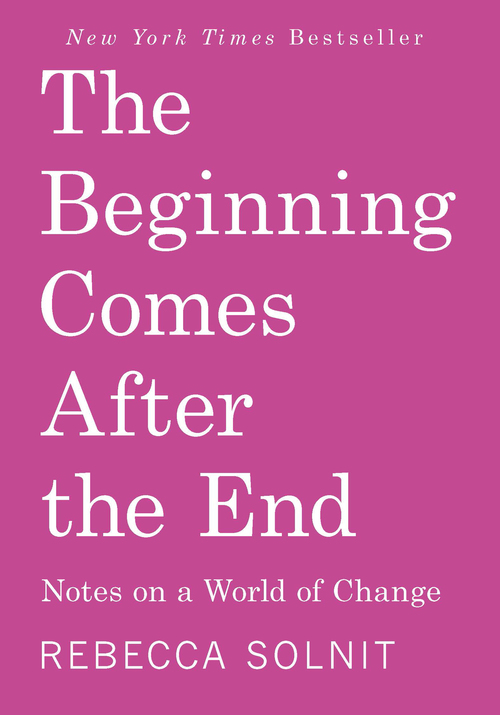
No Straight Road Takes You There: Essays for Uneven Terrain (2025) by Rebecca Solnit is a celebration of indirection. Focused on history, power, change, and possibility, Solnit writes in beautiful prose poetry to inspire hope in dark times. She builds this work on two terms she suggests we all adopt. One is “longsighted,” which she writes is “the capacity to see patterns unfold over time.” The other, as alternative to “inevitable,” is the rarely used adjective “evitable.” As she notes in the introduction, the “misremembering of the past (or not remembering the past at all) ill equips us to face the future.” In a series of essays Solnit uses her formidable storytelling skills to seek out examples of slowness, patience, endurance, and long-term vision as she helps us find “our powers and possibilities.”


Erasing History: How Fascists Rewrite the Past to Control the Future (2024) by Jason Stanley is a powerful and timely work. Stanley literally wrote the book on understanding fascism, and here he takes a deeper dive into the tools of totalitarianism. Stanley explains in urgent and crisp writing how critical examination of a nation’s history and traditions is discouraged in authoritarian countries. This has happened across the world for centuries and is now a feature of the new regime in Washington. That authoritarian regimes “often find history profoundly threatening” is a key lesson of the past century. By providing multiple perspectives on the past, a robust study of history undercuts one of autocracy’s key tools: the unquestioned voice of the leader. We lose those perspectives at our peril.


We Are Free to Change the World: Hannah Arendt’s Lessons in Love and Disobedience (2024) by Lyndsey Stonebridge is the book we need for these times: a compelling biography but also a primer for how to think if we want to be free. Arendt was not perfect and not always the easiest person to understand, as Stonebridge details, but she thought and cared deeply about humanity. Thanks to Stonebridge’s very accessible and thoughtful writing, readers are brought into Arendt’s world to see why she came to think the way she did. In doing so, Stonebridge takes us from fascist Germany to twenty-first century America. Arendt’s life and work is, in this masterful biography, in a dialogue with today’s turbulent times.


TWO TOP BOOKS I READ AGAIN IN 2025

A Wrinkle in Time

A Wrinkle in Time (1962) by Madeleine L’Engle is often described as a teenage or young adult novel, which does it a great disservice. From the opening scene it stretches the mind and expands the heart for readers of all ages. In the midst of a storm the teenaged Meg Murry; her small and brilliant brother Charles Wallace; and her beautiful mother, patiently waiting for her husband’s return after a long, mysterious absence, have come to the kitchen for a midnight snack. Suddenly they are interrupted by the arrival of Mrs. Whatsit, a most disturbing stranger bundled up in clothes, wrapped in scarves of assorted colors, with a man’s felt hat perched on top of her head. It seems that Charles Wallace has met Mrs. Whatsit—and her two friends Mrs. Who and Mrs. Which—before. As she prepares to leave, she says, “Let me be on my way. Speaking of way, by the way, there is such a thing as a tesseract.” And the magical story about time travel in the fifth dimension—along with the power of imagination, friendship, and love—begins.


Lost & Found: A Memoir (2022) by Kathryn Schulz is a tender, searching meditation on love and loss and what it means to be human that I returned to read during these troubled times. Schulz, an exquisite writer, knows that there is both a wonder and fragility to life. While many feel small and powerless in the face of that reality, it is also easy to feel amazed and fortunate to be here. Schulz is clearheaded in her exploration of the mixed experiences and motives we encounter. As she moves through life, Schulz notes that her days are exceptional even when they are ordinary. “We live remarkable lives,” she writes, “because life itself is remarkable.”


AUTHOR INTERVIEWS (talking with writers)

Paris: A Short History (2024) by Jeremy Black, MBE is a succinct and incisive look at how the city, founded in the first century BCE, was shaped by cultural circumstances and then grew to have impacts across the world. Black explains how a small Gallic capital was transformed into a flourishing medieval city and he brings the illustrious reigns of Louis XIV and XV—a time when Paris became one of the most beautiful and cosmopolitan capitals in the world—to life. I was delighted when Jeremy, emeritus professor of history at the University of Exeter and the author or editor of over 100 books, agreed to answer a few questions for my Author Q&A series.


The Civil War (2025) by European military historian Jeremy Black, MBE reorients readers to see what was extraordinary in the civil war of “the American colonies.” As Black states early in this work, the Civil War “was the most traumatic conflict, indeed event, in American history.” That holds true even when compared with the War of Independence, as the divisions within the country at the time of the revolution were not as long-lasting. The Civil War in America was not just a military struggle; it was also a political struggle. This concise new volume asks the reader to look at this watershed moment in world history with a broader international perspective, and Jeremy answered questions about this new work for my readers.


A Child is Born: A Beginner’s Guide to Nativity Stories (2025) by Amy-Jill Levine is a short but insightful book that examines the other nativity stories in the Hebrew Bible. Christians easily recall the narrative around the birth of Jesus, but how many know, much less think about, the nativity stories of Moses, Isaac and Ishmael, Samson, and Samuel. Just in time for Advent author AJ Levine has prepared a fascinating four-part study explaining the context that would have been basic knowledge for the faithful in the first century CE. She also shows the connections between these ancient stories of displacement, pilgrimage, and exploration and the one we now celebrate on December 25th.  A Child is Born is a book full of insight and wisdom, which I discuss with AJ in a delightful interview.


The Accidental Vineyard: An Old House, New Vines, and a Changed Life in Wine Country (2025) by Richard A. Moran is a heartfelt memoir that begins with a spontaneous drive into California wine country in an attempt to lull a fitful, crying son to sleep. On the drive Moran, his wife Carol, and their three children chance upon an old Victorian house for sale. They make the commitment to restore the house, even though it had challenges by the boatload and would disrupt Rich’s busy, corporate consulting business. Both of those facts turned out to be keys to finding the well-rounded life he didn’t know he was seeking as the journey began. Moran—in simple yet compelling language—happily lets us all in on the secrets he and his family uncovered in following their dreams. This is a memoir full of heart and humor, which I discuss with Rich in the 20th installment of my Author Q&A series.


Somewhere Toward Freedom: Sherman’s March and the Story of America’s Largest Emancipation (2025) by Bennett Parten makes the compelling case that this seminal event in the Civil War—when Sherman’s army cut a path through Georgia from Atlanta to Savannah—was a turning point in the history of American freedom. When as many as 20,000 formerly enslaved men, women, and children followed the army as war refugees, it was the largest emancipation event in our history. Sherman’s March was not only one of the last campaigns of the Civil War, but it was also an early battle of Reconstruction. We continue, here in the 21st century, to live with the consequences of this march toward freedom. Author Ben Parten discusses his new work with me for MTC readers.


Sex of the Midwest: A Novel in Stories (2025) by Robyn Ryle—an NPR “Best Book” of 2025—begins as the residents of Lanier, Indiana (population 12,234) wake up to discover an email in their inbox inviting them to participate in a study of sexual practices. The town is soon abuzz (as small towns often are) trying to figure out how Lanier was chosen and who wrote the email. A legendary basketball coach is convinced the e-mail and the epidemic of STDs at the junior high are both part of the moral decline of the town, and although he has to drag around an oxygen tank he sets out for action. The bartender at the Main Street Bar finds that the email brings back fear of a midlife crisis. A town employee who likes to follow the rules is surprised to find where life’s pathway takes her after receiving the email. Author Robyn Ryle chats with me about her new work where “the e-mail opens up the secret (and not-so-secret) lives of one small town, and reveals the surprising complexity of sex (and life) in the Midwest.”


It’s Not Even Past (2025) by Anna Scotti is a brilliantly conceived set of murder mysteries involving the librarian originally known as Lori Yarborough. Lori moves through several aliases, multiple locations across the U.S., and a variety of rather menial jobs in order to stay a step ahead of her ruthless ex and his cartel henchmen. In each place our protagonist has an uncanny ability to find herself in the midst of trouble and murder; her ingenuity in solving those crimes inevitably forces her to move on, often to a new city with a new WITSEC-provided identity. I reached out to Anna to see if she would answer a few questions on murder mysteries. She agreed and we had a delightful exchange. 


New Building in Old Cities: Writings by Gustavo Giovannoni on Architectural and Urban Conservation (2024) edited by Steven W. SemesFrancesco Siravo, and Jeff Cody is a highly relevant and richly illustrated book of the largely forgotten architectural work of an important early advocate for the conservation of historic cities. Because Giovannoni’s works had not been translated into English, his approach to architectural restoration and rehabilitation based on the “simultaneous consideration of the historical, technical, environmental, social, and aesthetic dimensions of ‘monuments’ and ordinary buildings” was not widely known internationally. In another installment of my Author Q&A series, I speak with the editors about this new work.


Troubled Waters: A Sea Story (2024) by Syd Stapleton is a tale about an environmental disaster and cover-up wrapped in a whodunit. Our hero, Frank Tomasini, is a 47-year-old marine surveyor who lives comfortably on the Molly B, a 1937 salmon troller. Frank is asked to unofficially survey the damage to an abandoned and adrift boat that belongs to Arthur Middleton, a “rich and holier-than-thou environmental warrior.” It turns out very few people, including Arthur’s brother, a high-powered Seattle business shark, seem too eager for Frank to find out what happened. In my post, Syd and I discuss this work of fiction packed with truth.


HISTORY AND BIOGRAPHY (and all that entails)

History Matters (2025) by David McCullough (edited by Dorie McCullough Lawson and Michael Hill) is a posthumous collection of thought-provoking essays by the Pulitzer Prize–winning historian and bestselling author. McCullough, who passed away in 2022, wrote eloquently and carefully about the American experience. He told us why American history mattered. David began an essay on the hard, essential work of being an American citizen with a few simple lessons from the past, the first being that “nothing of lasting value or importance in our way of life, none of our proudest attainments, has ever come without effort. America is an effort.” History is not dead in these pages; in fact, history is living and unfolding. And we are an important part of that history.


Josephine Baker’s Secret War: The African American Star Who Fought for France and Freedom (2025) by Hanna Diamond is an enlightening and thoroughly researched history of how the cabaret singer Josephine Baker—one of the most famous celebrities of her time—became a spy for the French Secret Services during World War II. Drawing on contemporary sources, Diamond explains the motivation for Baker’s involvement and how her celebrity, rediscovery of her African American roots, and unusual social fluidity made her success as a spy possible while also shaping her post-war advocacy.


The Memory Palace: True Short Stories of the Past (2024) by Nate DiMeo is a wonder-filled collection of stories from our past that looks into the lives of people, some of them famous but many forgotten by time, whose stories deserve to be known. DiMeo examines the places “between and beyond concrete facts and the well-worn language of familiar stories” to remind us that “life, in the present as in the past, is more complicated and more interesting and more beautiful and more improbable and more alive than we’d realized.”


On Juneteenth (2021) by Annette Gordon-Reed is a work of both history and memoir that explores the long road to the actual events of June 19, 1865, in Galveston, Texas, when Major General Gordon Granger announced the end of legalized slavery in the state. A native of Texas, Gordon-Reed examines her own life and mixes it with historical events from the state, nation, and world to shape a more truthful narrative around emancipation.


The Age of Acrimony: How Americans Fought to Fix Their Democracy, 1865—1915 (2021) by Jon Grinspan considers the economic and technological disruptions following the end of the Civil War and dives deeply into the aggressive tribal partisanship that grew to be a defining feature of that era. Democracy was seen to be in crisis, and the story of what it cost to cool our republic has lessons both positive and negative for today’s period of political crisis.


Every Valley: The Desperate Lives and Troubled Times that Made Handel’s Messiah (2024) by Charles King takes the reader on a compelling and vividly written journey through the lives of a set of characters living in the turbulent times of the early-to-mid 18th century. King shows how a “universe of pain” coupled with the lives of imperfect humans could come together “to make a musical monument to hope.”


Thomas Paine: Enlightenment, Revolution, and the Birth of Modern Nations (2006) by Craig Nelson is an excellent biography of the man who would write three of the bestsellers of the eighteenth century, topped only by the Bible. Nelson characterizes Paine as “the Enlightenment Mercury who sparked political common cause between men who worked for a living and empowered aristocrats across all three nations.”


Common Sense (1776) by Thomas Paine, published just six months before the Declaration of Independence, has been called the most influential polemic in all of American history. Paine’s work provided the vision of independence that would move millions to change their hearts and minds away from their deference and loyalty to Britain and the throne, It remains vitally important and relevant today.


A Good Natured Riot: The Birth of the Grand Ole Opry (1999) by Charles K. Wolfe—a highly readable yet thoroughly documented account of the early years of The Grand Ole Opry—“shows the intersection of the birth of the Opry with so many other important, and often overlooked, cultural moments.” In doing so Wolfe examines the background and lives of the key performers on the early Opry to an audience that has largely forgotten Uncle Jimmy Thompson, Dr. Humphrey Bates, Uncle Dave Macon, DeFord Bailey, along with the radio fiddlers and hoedown bands of the era.


THE PLACES WHERE WE LIVE (natural and man-made)

Amsterdam’s Canal District: Origins, Evolution, and Future Prospects (2020) edited by Jan Nijman moves beyond the typical focus on the iconic district’s creation in the country’s 17th century Golden Age to bring together an impressive list of scholars to highlight lessons learned from the district’s evolution. Working from a variety of disciplines, these scholars also bring varied perspectives to the study of contemporary debates facing this world class city. This work is a call for the outward appearance of the city’s architecture “to be linked with the identity of the people who created, used, and maintained it, and still inhabit it.” People are at the heart of this important work.


Civic Architecture Across America: Extraordinary Views (2025) by Thomas R. Schiff provides unexpected perspectives on America’s statehouses, city halls, county courthouses, monuments and more. Schiff’s use of a Hulcherama 360° panoramic camera provides a view that is at once in front, beside and behind the viewer, resulting in a striking and often stunning collection that speaks to the importance, beauty, and—some might add—fragility of the buildings that both serve and represent our American experiment in democracy.


Window Shopping with Helen Keller: Architecture and Disability in Modern Culture (2025) by David Serlin is an academic work from the University of Chicago Press that seeks to reassess modern architecture and urban culture when it comes to addressing the needs of people with disabilities. Serlin’s work too often takes the reader on a dense and winding path, but there is plenty here to capture the reader interested in the topic, either from the perspective of well-known historical figures such as Joseph Merrick (aka the “Elephant Man”) in London and Helen Keller in New York and Paris, or for those who want to study institutions and buildings that had outsized influence.


THE TIMES WE LIVE IN (politics and civic life)

The Tech Coup: How to Save Democracy from Silicon Valley (2024) by Marietje Schaake is an extraordinarily frightening and important new work on how the tech giants of Silicon Valley have become “too big to fail and thus too big to regulate, causing harm to all of us.” With a subject that is large and technically complex, Schaake has written a book that is both engaging and readable, even for the non-expert. Which is a good thing, because what she describes affects each one of us. The ultimate result of this coup is “the fundamental erosion of personal freedom and democratic norms” all for the benefit of American oligarchs.


Lawless: How the Supreme Court Runs on Conservative Grievance, Fringe Theories, and Bad Vibes (2025) by Leah Litman describes in fresh and accessible language how the combination of the court’s power and a poor understanding of its work by the public makes it a dangerous entity in today’s America. In this astute assessment of our condition today she asserts: “They’ve stolen a Court and they are practically daring anyone to challenge them. It’s time to call their bluff.”


FICTION (novels, short stories, poetry)

Their Eyes Were Watching God (1937) by Zora Neale Hurston is the story of Janie Crawford, a proud independent black woman who finds herself while navigating three marriages and a fair share of sorrow. Janie begins as a young girl, goes through a myriad of experiences in the Jim Crow South, and comes out a much wiser woman of 40. She learns that others—family, friends, lovers, busy-bodies—want to tell her how to live. Her Grandma reminds her that the black woman “is de mule of the world” and both white folks and black men will expect her to tote the heaviest load. But in the end Janie proclaims that she has done “two things everbody’s got tuh do fuh theyselves. They got tuh go tuh God, and they got tuh find out about livin’ fuh theyselves.” Hurston’s vivid writing and empathetic outlook towards Janie’s quest brings this story alive.


A Psalm for the Wild-Built (2021) by Becky Chambers—a lovely story for anyone who could use a break—takes place on a small moon called Panga, centuries after the Awakening at the end of the Factory Age, when the robots “employed” by humans decided they wanted to depart for the wilderness to observe “that which has no design.” They had long ago faded into myth and legend until Sibling Dex takes a turn off the paved road, heads into the wilderness, and meets Mosscap, a 7-foot tall, metal-plated, boxy-headed, wild-built robot who is on their own mission.


Greek Lessons: A Novel (2023) by Han Kang (translated by Deborah Smith and Emily Yae Won) is set in Seoul, South Korea, where a young woman watches her Greek language teacher at the blackboard. She tries to speak but has lost her voice; her teacher is drawn to the silent woman, for he is also moving into isolation as day by day he is losing his sight. Their shared suffering brings the man and the woman together in this work that is, as more than one reader has noted, a love letter to human intimacy and connection.


Death Strikes: The Emperor of Atlantis (2024) by Dave Maass and Patrick Lay, inspired by the Viktor Ullmann opera Der Kaiser von Atlantis, is a graphic novel that mixes “dystopian sci-fi, mythic fantasy, and zombie horror.” Atlantis did not sink in this alternative universe but instead became a technologically advanced tyranny where the power-mad buffoonish Emperor declares all-out war. Death, however, goes on a labor strike, “creating a hellscape where everyone fights, but no one dies.”


Tenth of December: Stories (2013) by George Saunders is a book of short stories with “hesitant, disappointed” protagonists where the reader is in their heads; language that is “exhilarating” and full of slang; and settings in “self-contained” suburbs or small towns. While Saunders has the skill of a satirist, he also brings in a generosity of spirit for his characters that is appealing.


Stoner (1965 and reprinted in several editions) by John Williams has been described as a novel in which nothing happens and everything happens. William Stoner is raised on a hardscrabble farm but takes a required class on English literature at university and in the experience embraces a scholar’s life. As the years pass in this career he loves, Stoner encounters a succession of disappointments. There is a universality to William Stoner that can be both comforting and very sad at the same time.


READING DANGEROUSLY (AKA murder mysteries)

Pietr the Latvian (1930) by Georges Simenon is the first installment in the legendary Inspector Maigret series. As the book begins Detective Chief Inspector Maigret receives notice from Interpol that Pietr the Latvian, an infamous con man, is on his way to Paris. Maigret rushes to intercept him at the train station but is confounded to find two men there who fit the description of the wanted man. One is alive, the other dead. So begins this thrilling tale where Maigret not only has to solve the murder but he must also search for the true identity of the victim.


The Black Swan Mystery (1960; English translation 2024) by Tetsuya Ayukawa (the pen name of Toru Nakagawa) is an alibi-deconstruction mystery of the first order. One morning railway workers find the body of a well-dressed, middle aged man—the much-hated owner of a local mill who is involved in a labor dispute—shot dead. Everyone in Gosuke Nishinohata’s orbit—including the labor union and a new religious sect—harbored ill feelings for the man, or worse, leading to the decision to bring in an expert, Inspector Onitsura, who has a special skill at unraveling difficult schemes.


The Searcher (2020) by Tana French begins as Cal Hooper, after twenty-five years in the Chicago police force, moves to a small rural Irish village seeking nothing more than a small fixer-upper, land to walk, time to think, and a good pub. But into his search for a new start walks Trey, a local kid whose brother is missing and no one seems to care. Slowly Trey comes to trust Cal and the former cop comes to care about finding answers in a village that likes to hide secrets.


A Refiner’s Fire: A Commissario Guido Brunetti Mystery (2024) by Donna Leon, the most recent in the Commissario Brunetti series, begins early on a spring morning when two teenage gangs are arrested after a violent fight in one of Venice’s squares. As is her style, Leon brings together contemporary issues with past ghosts of deceit and acts of official wrongdoing as she continues to call on us to strive for what is right, even in the midst of “the ambiguity between moral and legal justice.”


Baltimore Blues (1997) by Laura Lippman introduces us to Tess Monaghan, an out-of-work newspaper reporter who needs to solve the mystery surrounding the death of a prominent attorney in order to exonerate her good friend Darryl “Rock” Paxton. There are twists and turns as Tess navigates the many confusing and compromised relationships, but by the second half of this debut mystery novel Lippman has hit her stride and we move quickly through the pages to a very surprising conclusion.


The Death of Shame (2025) by Ambrose Parry is the most recent installment of the Raven and Fisher mystery series. Set in 1854 Edinburgh, Sarah Fisher—a young widow left with financial resources after the death of her husband—is helping fund Dr. Will Raven’s emerging medical practice in exchange for being secretly trained as a doctor. As the story progresses, Will and Sarah are drawn into an ever more confusing and dangerous web of treachery, blackmail, secrets, and murder among the city’s more sordid residents.


Still Life (2005) by Louise Penny is a traditional mystery set in the tiny hamlet of Three Pines south of Montreal. A beloved local fixture, Miss Jane Neal, has been found dead on Thanksgiving morning in what the locals think is a tragic hunting accident but Chief Inspector Armand Gamache fears is something much more sinister. In this first of a series that now stretches over 20 years, we see the Chief Inspector’s strength, integrity, and underlying compassion for the victim, the townspeople who mourn Jane Neal’s death, and for his own team as Penny sets up the longer series and the Chief Inspector’s continued involvement in the life—and deaths—of Three Pines. 


A Better Man (2019) by Louise Penny is the fifteenth work in the Canadian author’s long-running Chief Inspector Armand Gamache series. The former superintendent of the entire Sûreté du Québec, Gamache has returned after a controversial suspension and demotion and immediately faces devastating spring floods, relentless social media attacks, a law enforcement force that appears split on the question of whether he should have even been allowed to return, and a desperate father seeking help in finding his missing daughter. In the fast paced and multi-layered story, the Chief Inspector and many others are struggling to find their footing.


From Doon With Death (1964) by Ruth Rendell finds Margaret Parsons—a timid housewife devoted to her garden, her kitchen, and her husband in the Sussex village of Kingsmarkham—dead, brutally strangled, her body abandoned in the nearby woods. Chief Inspector Reg Wexford, the big, gruff rural detective, is intrigued by the seeming disconnect between her life and death, and in finding the truth he uncovers several dark secrets that those who knew Margaret Parsons want to keep quiet.


A Man’s Head (1931) by Georges Simenon begins when Joseph Heurtin—who awaits his fate on death row—escapes out of the High Surveillance wing of an infamous Paris prison. As he moves toward freedom, Heurtin is being watched by Inspector Maigret, the detective who convicted him but has come to believe that he convicted the wrong man. Through the twists and turns of the plot, Maigret realizes he has to contend with a criminal mastermind who has nothing to lose and believes he is the smartest person in the room.


Maigret’s Holiday (1948) by Georges Simenon begins as Maigret and his wife are on holiday in the seaside town of Les Sables d’Olonne. Madame Maigret is admitted to a hospital where a young woman in a nearby ward dies. Maigret is unable to resist investigating the circumstances of her death and eventually he uncovers the truth, even when some of the locals—including some very important men and women—do not want to accept it.


The Six Mile Circle: A Sea Story (2025) by Syd Stapleton continues the adventures of Frank Tomasini and the Molly B. Frank’s marine surveyor’s business has fallen on hard times so to make ends meet he signs on as a deckhand and cook on ocean-going tugboats and barges making runs between the Pacific Northwest and Hawaii. When one of the hulls is mysteriously pumped out in the middle of the ocean, a fellow deckhand gets sick and ultimately dies after contact. Frank knows he has to get to the bottom of this mystery.


Everyone on This Train is a Suspect (2024) by Benjamin Stevenson is a modern take on—or at least a big hat tip to—the classic Agatha Christie novel that is a (mostly) clever and always fun murder mystery. The set-up gives you a hint as to both the cleverness and devilishness that Stevenson has in mind: six authors are invited by the Australian Mystery Writers Society to their crime-writing festival aboard the Ghan, the famous train through the vast Australian desert. One of the six is murdered in this locked room (train) mystery, and the other five writers all turn into detectives.


SPORTS (really just baseball)

The Last Manager: How Earl Weaver tricked, tormented, and reinvented baseball (2025) by John W. Miller is a splendid new biography of one of the game’s great characters and innovators. Weaver—forward-looking genius, shrewd evaluator of talent, brilliant strategist, superb entertainer, part wizard—is deserving of the royal treatment. The Bismarck of Baltimore came into the game at the twilight of the age of the baseball manager. His uncanny skill at figuring out so many things about the game without the benefit of the computer probably hastened the age’s demise. Now they just program the machines to think like Earl. As Miller shows in this masterful new work, they broke the mold with Earl Weaver.


The Baseball 100 (2021) by Joe Posnanski is characterized by the publisher as “a magnum opus…an audacious, singular, and masterly book that took a lifetime to write.” The rankings are important—and instantly give the reader a chance to argue with Joe, which he encourages. But they serve the larger purpose of providing this talented writer and lifelong fan with a chance to explore baseball’s rich, deep, diverse, and at times challenging history.


THEOLOGY AND MORE (thinking about purpose and mindfulness)

Jesus and the Disinherited (1949) by Howard Thurman is the work that inspired The Rev. Dr. Martin Luther King, Jr. and countless other advocates for peace and justice. Rev. Otis Moss, III highlighted the uniqueness of Thurman’s book when he wrote, “No other publication in the twentieth century has upended antiquated theological notions, truncated political ideas, and socially constructed racial fallacies like Jesus and the Disinherited.” In this seminal work, Thurman stresses that Jesus “recognized fully that out of the heart are the issues of life and that no external force, however great and overwhelming, can at long last destroy a people if it does not first win that victory of the spirit against them.”


The Road to Wisdom: On Truth, Science, Faith, and Trust (2024) by Francis S. Collins combines philosophy, Christian theology, sociology, and some degree of self-help in his effort to promote a more civil society. In this thoughtful and ultimately optimistic book, Collins focuses on four core sources of judgement and clear thinking: truth, science, faith, and trust. “Building the ultimate path to wisdom will depend on individuals” Collins asserts, and that path “runs right through our hearts and minds.” We need to do a better job of listening to one another: it is that simple and that difficult.
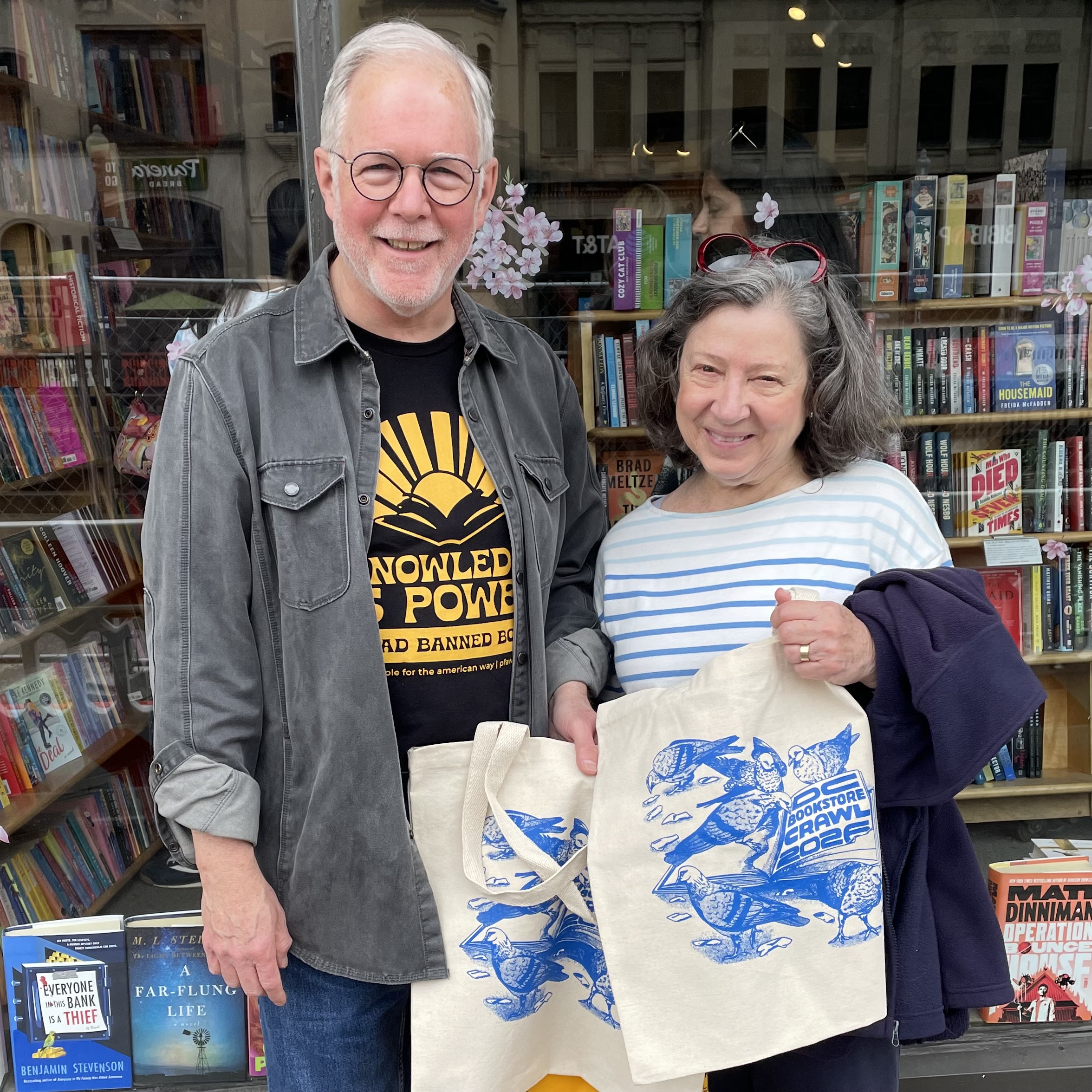

In the Beginning was the Spirit: Science, Religion, and Indigenous Spirituality (2012) by Diarmuid O’Murchu takes a broad look at what many know as the third member of the Christian Trinity. In place of anthropocentric traditional approaches to Christianity, O’Murchu wants us to look at the creative act described in Genesis and recognize the Spirit as that which breathed over the formless void, “the force behind the recurring words ‘Let there be . . .’”
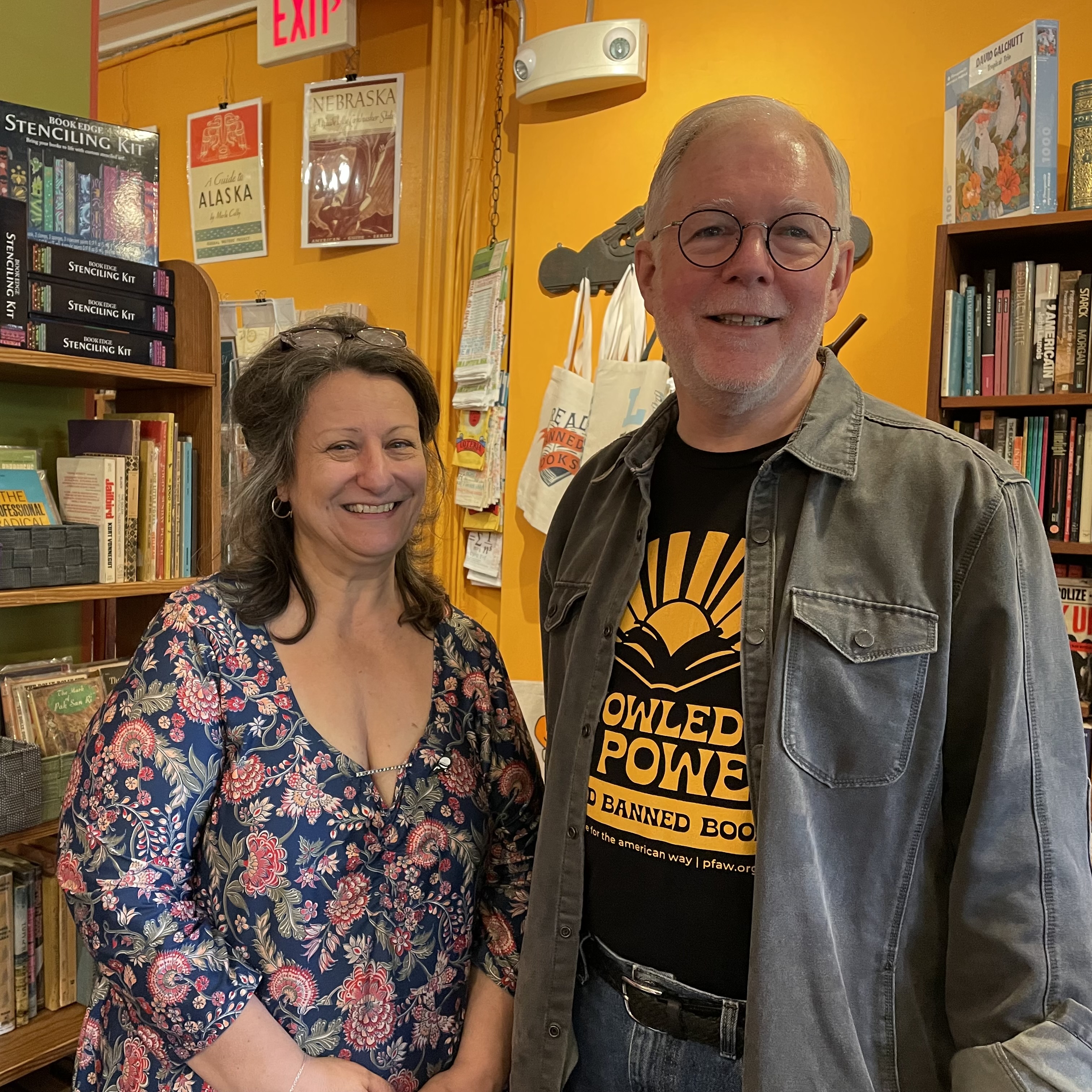

A Season for the Spirit (2004) by Martin L. Smith is a work of forty Lenten meditations in which Smith suggests that what we are called to give up in Lent is control itself. The paradox is that by relinquishing our efforts to control our lives we can begin to find the freedom “that is gained only through exposure to the truth.”


OUTBURSTS OF RADICAL COMMON SENSE AND WHATEVER ELSE TICKLED MY FANCY (otherwise known as the miscellaneous section)

Bird by Bird: Some Instructions on Writing and Life (1994; Vintage Books Edition 2019) by Anne Lamott is a funny, wise, at times cranky, and insightful work full of wisdom that can support the journey of any aspiring writer. Lamott encourages her readers and students to get off their duffs, look around, explore, and then write about it. Good writing is about telling the truth, Lamott asserts, and this work is full of truth telling for the aspiring writer.


Steering the Craft: A 21st Century Guide to Sailing the Sea of Story (1998) by Ursula K. Le Guin is a handbook on writing well. This master practitioner examines the fundamental components of narrative in this “deceptively simple” handbook that those wishing to communicate more effectively and skillfully through writing could return to again and again.


I Heard There Was a Secret Chord: Music as Medicine (2024) by Daniel J. Levitin explores the curative powers of music, describing ways in which it can be a beneficial part of recovery for patients. After an opening chapter on the neuroanatomy of music Levitin brings together the results of numerous studies, demonstrating time and time again “how music can contribute to the treatment of a host of ailments, from neurodegenerative diseases such as Parkinson’s and Alzheimer’s, to cognitive injury, depression, and pain.” 

Enjoy!

More to come…

DJB


*To check out previous lists, click here for the posts from

See also: Seeing myself in the books I read: 2024 observations.

Dark secrets

Reading the first of Ruth Rendell’s famous Inspector Wexford mysteries.


Before we get to the regularly scheduled programming I want to stop and take a moment to acknowledge that this is my 2,000th post on MORE TO COME since I began this newsletter as a way to capture photos and memories from a family vacation back in 2008. To see pieces I wrote for earlier milestones, check out 1500 and counting from 2023, and The top one percent from 2020, which I wrote on the occasion of the 1,000th post. I’m clearly picking up the pace in retirement! Thanks, as always, for reading.


Three short years ago my friend Oakley Pearson inadvertently put me on the path of reading dangerously (aka reading murder mysteries) when he gifted us a box of Agatha Christie mysteries. This past Thanksgiving he once again passed along a number of books, this time by the writer Ruth Rendell. In the spirit of the season, I opened the first of these gifts this month and began to read of a prim and proper wife whose unlikely and horrific death revealed a dark secret.

From Doon With Death (1964) by Ruth Rendell is the first of her twenty-four Inspector Wexford mysteries. Margaret Parsons is a timid housewife usually seen in plain dresses and sandals when she visits the nearby market or attends the local Methodist Church. Parsons is devoted to her garden, her kitchen, and her husband and they live a quiet and simple life in the Sussex village of Kingsmarkham. But now Margaret Parsons is dead, brutally strangled, her body abandoned in the nearby woods. Chief Inspector Reg Wexford, the big, gruff rural detective, is intrigued by the seeming disconnect between her life and death, and he works with his assistant and sidekick, Inspector Mike Burden, to uncover the truth. It turns out that the truth includes several dark secrets that those who knew Margaret Parsons want to keep quiet.

Rendell’s crisp writing and the description of Wexford and Burden’s often opposite but complementary investigative techniques moves the story forward. It is the nature of the death—the strangulation, but with no sexual or other physical assault—that pushes Wexford toward a fuller understanding of the victim and her murderer. When he discovers rare books in her attic, each passionately inscribed by a lover known only as Doon, Wexford has a key that begins to unlock the crime. A tube of lipstick, an unusual shade called Arctic Sable, leads him to connect the victim to some of the town’s wealthier citizens.

Rendell also has a sly sense of humor. Burden asks Wexford about the identity of Doon when they first encounter the name. The gruff Chief Inspector’s reply is pitch-perfect: “You’re supposed to be the detective. Well, detect!” When Wexford and Burden come across a young blonde girl at the home of a wealthy car dealer and his pretty, vivacious wife, he asks for her name and what she does for Mr. and Mrs. Missal.

“‘Inge Wolf'” [she replies]. “‘I am nanny for Dymphna and Priscilla.’

Dymphna! Burden thought, aghast. His own children were John and Pat.”

The ending does involve a number of twists and turns. I had figured out a key fact several chapters before Rendell has Wexford utter his discovery out loud. Nonetheless, the identity of the murderer is a surprise and a compelling end to this tale.

As I have found out in this dive into the murder mystery genre, there are many more writers, famous detectives, and plot twists than I ever could have imagined back in the day when my most difficult mystery to solve was with the occasional game of Clue as we worked to identify the killer, the place, and the weapon. “I suspect Colonel Mustard, in the library, with the candlestick” has come a long way.

More to come . . .

DJB 

Photo by Neffaa Adams on Unsplash