All posts filed under: Heritage Travel

Miho Museum entrance

I.M. Pei, Rest in Peace

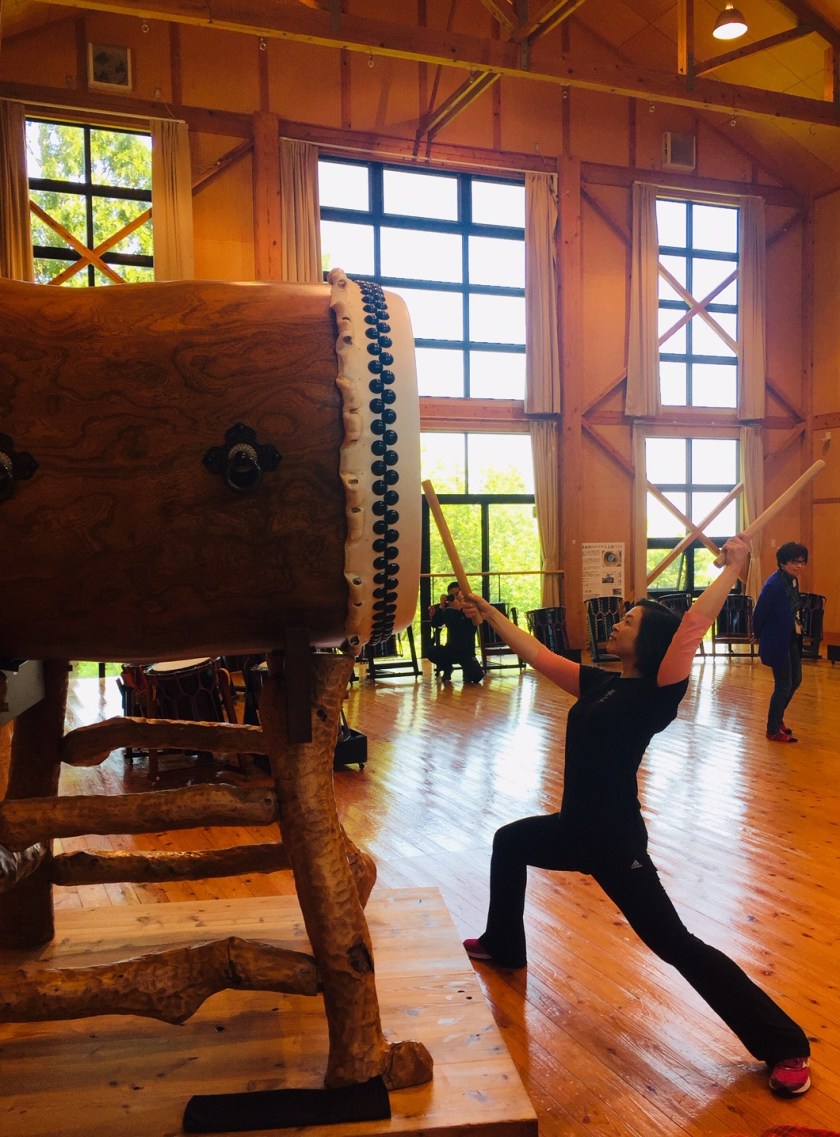
Eight days before the revered architect I.M. Pei passed away at 102 years of age, I had the opportunity to visit one of his last—and more remote—commissions:  the Miho Museum in Japan. Standing amidst the Shiga mountains in a protected nature preserve, Pei’s Miho Museum, which opened in 1997, fits in well with the other modern yet very accessible works of this master who left an indelible mark on the world before his passing on May 16th of this year. Pulitzer Prize-winning architectural historian and author Paul Goldberger wrote a lovely obituary for Pei in the New York Times, capturing  the architect’s expansive work and spirit.  When thinking of Pei, my mind naturally turns to the beautiful East Building of the National Gallery of Art in Washington, D.C., a museum I’ve visited many times.  One feature that always brings a smile to my face wasn’t exactly designed by Pei.  Etched into the stone is a listing of all those who made the East Building possible—politicians, National Gallery leadership, architects, and more.  At one point the beautiful …

Tensha-en garden

Gardens and gardeners

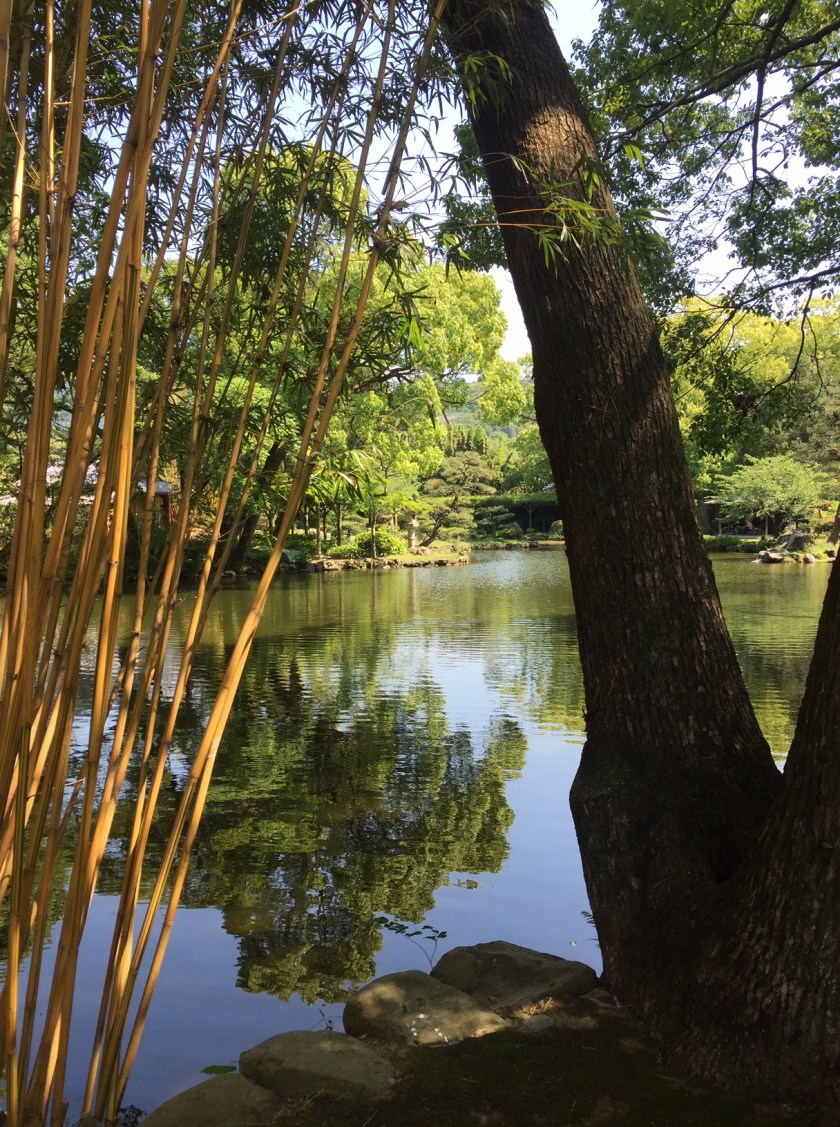
Linking the passions of America’s founding fathers with those of the ruling classes of Asia wasn’t on my agenda when I left for a two-week National Trust Tour of Japan and South Korea earlier this month. Sometimes serendipity just strikes. It was pure chance that I began reading Andrea Wulf’s Founding Gardeners: The Revolutionary Generation, Nature, and the Shaping of the American Nation as I was leaving for my first trip to Asia. I was absorbed in her illuminating study of the passion for gardening, agriculture, and botany of Washington, Adams, Jefferson, and Madison—America’s best-known founding fathers—as I was entering a world where exquisite gardens were the obsession of Japan’s ruling class. The juxtaposition was fascinating and delightful. I became acquainted with Wulf through one of my favorite books, her 2015 work The Invention of Nature, with its description of how Alexander von Humboldt radically reshaped the way we thought of our relationship to the natural world. Founding Gardeners, written in 2011, isn’t as consistently strong, but is an enlightening read in its own right. …

Hiroshima 1945 / 2019

Pearl Harbor. Normandy Beach. Hiroshima. Names, places, memories, and lessons we should never forget. Last week I was moved beyond words by time spent at the Hiroshima Peace Memorial Garden and Museum in Japan. In fundamental ways the experience mirrored my reactions during visits in recent years to Pearl Harbor and Normandy Beach. The world at the time of those earlier visits seemed more stable than it does in 2019. Just a few years ago we didn’t have out-of-control individuals in positions of immense power in the United States; individuals threatening to use nuclear weapons against other nations and people just because the capability exists. Instead, we had leaders who sought, at least at some fundamental levels, to try and unite us as a people and as a world. There seemed to be adults in charge who had the memories to understand the horror to humankind of nuclear war. As John Hersey, the author of the landmark 1946 piece on Hiroshima in The New Yorker, once wrote: What has kept the world safe from the …

Lone Cypress

Pacific Grove-by-God

For several years I’ve regularly traveled for work to Monterey, California, a small coastal city some two hours south of San Francisco. So when we went looking for a west coast destination for this year’s family vacation, I suggested we check out the Monterey Peninsula.  Now that we’ve wrapped up a week-long visit to Pacific Grove—next-door neighbor to the city of Monterey—we’re just coming to realize how much we’ve seen and explored in this new (to us) part of the world. Let’s begin with the coastline, the attraction to visitors for thousands of years.  I awoke every day shortly after 6 a.m. and went for walks of as much as two hours along the well-used (and well-loved) Monterey Bay Coastal Trail.  Pacific Grove’s portion of this 18-mile trail, which follows the path of the old Southern Pacific Railroad train tracks, hews close to the water and rock-strewn coastline, while Monterey’s comes inland a bit to incorporate Cannery Row, the Monterey Bay Aquarium, and Fisherman’s Wharf.  My walk often began before sunrise and was shrouded in …

Traffic School

What’s the rush?

Spring is a season when the pace quickens. To snap out of the winter doldrums, we feel the need to rush.  Projects are suddenly due.  Deadlines appear to be on top of us every day.  Travel demands increase. In the rushing rhythm of the days, I find it necessary to maintain my perspective if I’m going to keep my equilibrium.  Thankfully, I came across an essay which helped me put the pressure to rush in perspective. Robyn Ryle is a sociologist and writer who I first met when she spoke at our National Main Street conference.  Robyn lives in Madison, Indiana — one of the country’s great Main Street communities — where she teaches sociology, writes books on changing notions of gender, and blogs about place (among other topics) on the web site You Think Too Much.  There is wisdom in her tales of life away from the coasts.  As I read her essay on driving the speed limit, I immediately felt myself slow down. “Today I picked up my book of daily yoga and read, …

Tenement Museum

A war on whose Christmas?

On Tuesday I spent a good part of the day at the Tenement Museum, on New York’s Lower East Side.  I was there to meet with the museum’s new president, Kevin Jennings, and to tour their new Under One Roof exhibit with Annie Polland, the EVP for Programs and Interpretation.  An affiliate historic site of the National Trust, the Tenement Museum tells the full American story about how many have come together to make our nation today. Which brings me to the so-called War on Christmas. The day I arrived, Kevin had just published an op-ed in Newsweek entitled “A War on Christmas?  What Christmas Are You Talking About?”  Early in the piece he asks the key question: “In recent years, a new holiday tradition seems to have emerged in America. From pundits to Presidents, the airwaves fill each December with people decrying the so-called “War on Christmas.” As a historian and museum President, I find myself wanting to ask “War on whose Christmas?” Those bemoaning the “War on Christmas” harken back to a mythical …