All posts filed under: Monday Musings

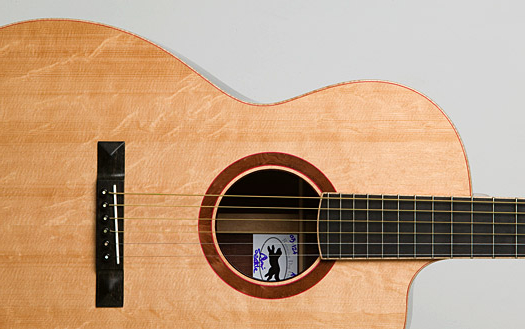
Running Dog Guitar Ought-3

Practicing

Over the holidays I returned to a book I first read some ten years ago.  Glenn Kurtz’s Practicing:  A Musician’s Return to Music is, in its simplest form, a memoir of a young child prodigy on the classical guitar who attends the prestigious New England Conservatory of Music and then quits playing in his early 20s when he realizes he won’t be the next Segovia.  Fifteen years and a career change later, Kurtz returns to the guitar and finds, in the process, a richer love for music. But like all good memoirs, Practicing is so much more than a simple life’s story. Kurtz has been practicing since he was eight years old, but it isn’t until he returns after his hiatus that he begins to understand all the richness of the various aspects of preparing for performance, or life. “Practicing is training; practicing is meditation and therapy. But before any of these, practicing is a story you tell yourself, a bildungsroman, a tale of education and self-realization. For the fingers as for the mind, practicing …

Responding to Anger

Our recent national conversations too often seem soaked in anger. I don’t know anyone who hasn’t become angry.  It is a trait we all seem to share.  What differs is how we respond to anger:  our own and others. Over the winter holiday, our family visited the National Museum of African American History and Culture.  Last Friday, our divisional management team toured the Mere Distinction of Colour exhibit at the National Trust Historic Site Montpelier.  Both cultural institutions showcased the many ways a people oppressed have responded to anger held against them by others as well as that held inside themselves. While at Montpelier, I picked up Michael Eric Dyson’s book Tears We Cannot Stop, a powerful call for recognition and redemption which brims with this Baptist preacher’s righteous anger. In her collection of essays No Time to Spare:  Thinking About What Matters, Ursula K. Le Guin has a two-part piece on anger. The first half looks at public anger, while the second focuses on our private anger.  I thought of the first in the …

I’m Afraid Every Day…and I Jump Anyway

A friend sent out a recent Tedx Pasadena Talk by a friend of hers entitled Making the Jump:  The Year of No Fear.  The speaker, Grace Killelea, begins with a very funny story of how — at age 52 and weighing 247 pounds — she decided to go skydiving to begin a “Year of No Fear.”  In spite of the fact that she was a Senior VP for a Fortune 50 company, she had decided she needed to undertake a personal “Year of No Fear” because she was “afraid she would always feel afraid.”  Research shows that she is not alone. Killelea goes on to ask, “What would a jump look like for you?”  Based on the comments to the video, fears range from personal relationships, to job and work satisfaction, to the current political climate.  Killelea’s point is that we all have our fears.  Facing our fears “doesn’t have to be big and bold, like jumping out of a plane.”  What’s important is that you “identify (your jump), and then decide what’s keeping you …

Resolutions

Several years ago I stopped making New Years’ resolutions.  A recent New York Times article on making and keeping resolutions noted that one-third of our resolutions don’t make it to the end of January, while another Times article suggested that only 10% of resolutions are fully met by year’s end.  I’m proud to say I’ve kept my particular resolution since 2014! What I did in 2014 was to set seven rules for how I wanted to live for the next third of my life, and I recently added an eighth.  Because they are part of my computer wallpaper, I look at them every day.  The one that generates the most comment is the last one, which is basically “Don’t be a grumpy old man.”  That may be a hard one for setting metrics (laughs per day?) but I basically know when I’m following this rule or when my crotchety index is on the rise. Many of us make resolutions or set rules for our lives, counting on our willpower to reinforce good habits or to …

Respect is a Decision

We are heading into a season when generations will mix together with more frequency than they may at other times of the year (around a dining table for a holiday meal, for instance.)  While we interact with people of a variety of ages at work, the differences in generations are often much wider when we move outside the office. I was thinking of the clashes that often arise during these gatherings as I was reading a new book of essays by the science fiction writer Ursula K. Le Guin entitled No Time to Spare:  Thinking About What Matters.  Le Guin is 88 and, in this delightful and insightful book, she is not shy about saying she is old.  In fact, don’t suggest otherwise.  As she notes, “Encouragement by denial, however well-meaning, backfires.  Fear is seldom wise and never kind.  Who is it you’re cheering up, anyhow?  Is it really the geezer?” But what got me to thinking about relationships between generations, and the importance respect plays in all of our dealings with each other, is …

History as an antidote to folly

Kurt Vonnegut has called him America’s greatest satirist, while others suggest he was born of Mark Twain and H.L. Mencken.  Lewis Lapham—editor emeritus of Harper’s Magazine, founding editor of Lapham’s Quarterly, and the object of those accolades—is a writer of great eloquence and “lethal wit.”  I was delighted to see that some of the best of Lapham’s essays from the past twenty-five years have now been collected into a new work, Age of Folly:  America Abandons Its Democracy. This is both a wonderful and important book. Lapham surveys the past twenty-five years to make the case that America’s imperial impulses have shaken our democratic principles.  You can agree or disagree with his premise, but his arguments are lucid, thoughtful, and often challenging. In the very first essay, from 1990, Lapham states his case succinctly and directly. “If the American system of government at present seems so patently at odds with its constitutional hopes and purposes, it is not because the practice of democracy no longer serves the interests of the presiding oligarchy (which it never …

Thanksgiving Pilgrims

Gratefulness and thankfulness

This is the time of year when we turn our thoughts to Thanksgiving.  I was taught from a very young age that it was very important to be thankful, as I often heard my grandmother admonish us to “always say ‘please’ and ‘thank you.’”  I won’t get into the “you’re welcome” vs. “no problem” debate, but you can probably guess, given my age, where I land on that topic! Some suggest we too often say “thank you” by rote. I find that to be true in my experience and began to wonder if we mistake other thoughts and emotions as thankfulness.  Fortunately, I came across a blog post that helped me sort through at least some of these thoughts.  The author, a Benedictine monk who holds retreats for groups from a variety of religious and non-religious traditions., makes the case that at least some of what we think of as thankfulness is actually gratefulness. He suggests it is important to understand the difference and then describes the two in this fashion: “Remember a night when …

We Shine a Light on the Past to Live more Abundantly Now

This week at the National Trust, we are preparing to host the 2017 PastForward national preservation conference in Chicago.  Long-time colleagues and new friends who care about the past and the places that bring that past into the present will gather from all across the country.  I suspect that we’ll share thoughts that challenge the conventional wisdom, offer support for a broader understanding of the American story, and come away with a new appreciation for the work that takes place by preservationists and by those who don’t (yet) identify as preservationists. Why do these people gathering this week in Chicago care about the past?  And what’s with that name, PastForward? In a recent conversation that included Pulitzer Prize-winning historian Annette Gordon-Reed, (The Hemingses of Monticello: An American Family), journalist and author Krista Tippett summed up the answer to those questions with her opening line:  “In life, in families, we shine a light on the past to live more abundantly now.” I think that’s a great summation of why so many of us will gather this …