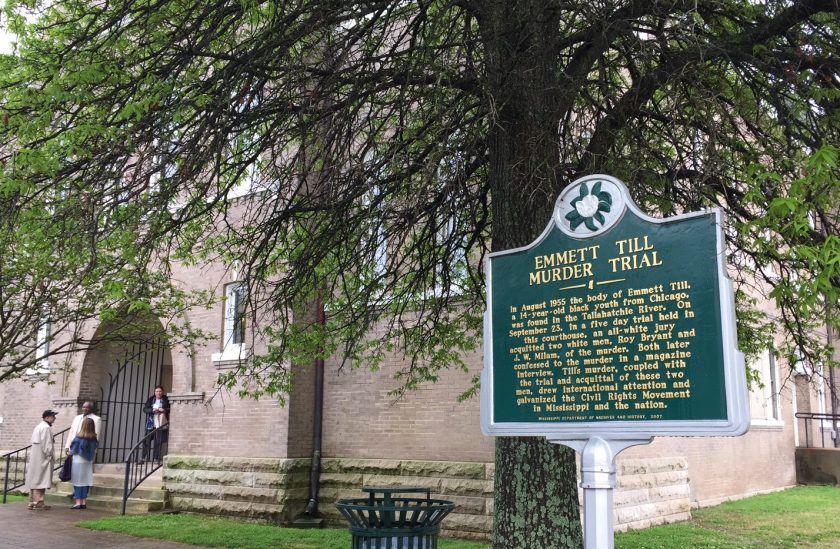
Raised on cornbread and recollections
A trip through Mississippi, where Bill Ferris quoted a relative who said “he was raised on cornbread and recollections.”
Thoughts to start off the work week
A trip through Mississippi, where Bill Ferris quoted a relative who said “he was raised on cornbread and recollections.”
A couple of weeks ago, I came across this little gem of a film entitled Have You Ever Really Seen the Moon? The premise of this three-minute video is simple: a guy wheels his telescope out into the streets and neighborhoods of Los Angeles and invites people to look at the moon. The reactions restore faith in our ability to be awed. “What is that, bro?” a guy on a bike asks. “It’s a telescope,” says Overstreet. “Do you want to check out the moon?” The offer is made over and over to a cross section of passersby in a cross section of places across greater L.A. And one by one, they put their eyes to the viewfinder and gaze upon what they’ve looked at a million times yet never seen. Interestingly, Overstreet and Gorosh show us very little of the actual moon. No, what holds your eyes, and lifts your soul is the way these different people in different neighborhoods all respond in precisely the same way — with gasps and shouts and whispers …

How often do we give advice when simply presence and acknowledgement is required?

During a 2013 vacation where each family member chose an activity close-to-home for us to share, my wife’s selection was a day at a local retreat center.* Upon arrival, I was pleased to see that the center had created a labyrinth in the woods. Labyrinths have come to have a special place in my heart. A dear friend of our family who died in his early 20s was memorialized with a labyrinth designed for people of all physical abilities. Andrew had spent the majority of his life in a wheelchair, but that never constrained his spirit. Back at the retreat center, “walking the labyrinth” became my activity for the morning. I was reminded of this recently while re-reading Rebecca Solnit’s wonderful book Wanderlust: A History of Walking. An early chapter is titled “Labyrinths and Cadillacs: Walking Into the Land of the Symbolic.” (I told you it was a wonderful book!) Solnit, who describes herself as “having been raised as nothing in particular by a lapsed Catholic and a nonpracticing Jew,” found herself walking the labyrinth …

“It’s hard to do a really good job on anything you don’t think about in the shower.”

Spring is a season when the pace quickens. To snap out of the winter doldrums, we feel the need to rush. Projects are suddenly due. Deadlines appear to be on top of us every day. Travel demands increase. In the rushing rhythm of the days, I find it necessary to maintain my perspective if I’m going to keep my equilibrium. Thankfully, I came across an essay which helped me put the pressure to rush in perspective. Robyn Ryle is a sociologist and writer who I first met when she spoke at our National Main Street conference. Robyn lives in Madison, Indiana — one of the country’s great Main Street communities — where she teaches sociology, writes books on changing notions of gender, and blogs about place (among other topics) on the web site You Think Too Much. There is wisdom in her tales of life away from the coasts. As I read her essay on driving the speed limit, I immediately felt myself slow down. “Today I picked up my book of daily yoga and read, …

By the time I first met John Buchanan, he had finished his eight terms in the U.S. Congress as a Republican representing Birmingham, Alabama. This third generation Baptist minister was long past the time when he was targeted for defeat in 1980 by the Moral Majority. He was even past his term as the founding chairman of the liberal lobbying group People for the American Way. When I met John and his wife Betty in the 1990s, they were the loving and selfless grandparents to a granddaughter who was in a youth group with our twins. However, their intellect, courage, sense of public service, and generous spirit were still very much in evidence in everything they touched. Betty died in 2011, and I was thinking about our connections and their lives after I heard the news of John’s passing on March 5th at the age of 89. John had the courage to change his mind, even at the cost of his political future. First elected in the Republican wave of 1964, following the passage of …
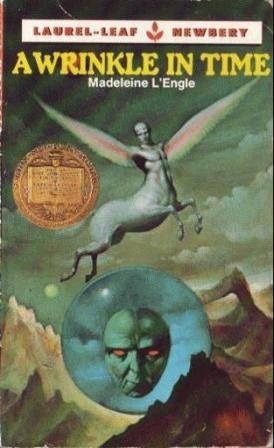
It was a big week in our household, as we acquired a new hip and celebrated a birthday.* As a small child, you may have received a new puppy on your special day. Others years may bring clothes for college or gifts for the new apartment. Later, you might rejoice with a new child or a special trip abroad. On occasion one might celebrate a birthday with a broken shoulder. Now that we’re in the new hip stage (for a second time), I’m comforted by this thought of the author Madeleine L’Engle: “I am still every age that I have been. Because I was once a child, I am always a child. Because I was once a searching adolescent, given to moods and ecstasies, these are still part of me, and always will be… This does not mean that I ought to be trapped or enclosed in any of these ages…the delayed adolescent, the childish adult, but that they are in me to be drawn on; to forget is a form of suicide… Far too …

I am a frustrated writer. Not the kind who needs to work on The Great American Novel (or TGAN)*. If I wanted to write fiction — great or otherwise — there are plenty of models to follow, such as Flannery O’Connor’s habit of three-hours of writing first thing every morning, or advice to be found in places like Annie Dillard’s eloquent The Writing Life and Cheryl Strayed’s direct and somewhat salty response (be forewarned) to a young aspiring writer. No, I want to be able to write essays, blog posts, magazine articles, reports, letters, and speeches that pull people in, make them care about the topic at hand, show a bit of my personality, and only say what needs to be said and nothing more. If you have similar aspirations, you may not want to take advice about writing from a computer programmer, but let me suggest that Paul Graham — a programmer, writer, and investor who helped co-found Y-Combinator, a new type of startup investment firm — should be the exception. In a tiny …
Passion is one universal key to what moves the world forward, yet our passions are the part of us that doesn’t require approval from others. In fact, the search for prestige through work often gets in the way of our passion. As Y-Combinator founder Paul Graham notes, “Prestige is like a powerful magnet that warps even your beliefs about what you enjoy. It causes you to work not on what you like, but what you’d like to like.” I think of passion as that which takes you out of your daily life, that lets you feel closest to your truest self. Graham describes it as “what doesn’t seem like work to you?” even if it is your life’s work. These insights led me to consider what we could learn about each other if we truly understood the passions that let us feel closest to our truest self. Passions may be simple things. I can wander around the desks in our part of the office and make guesses about the passions of my colleagues. Sports cut across …

