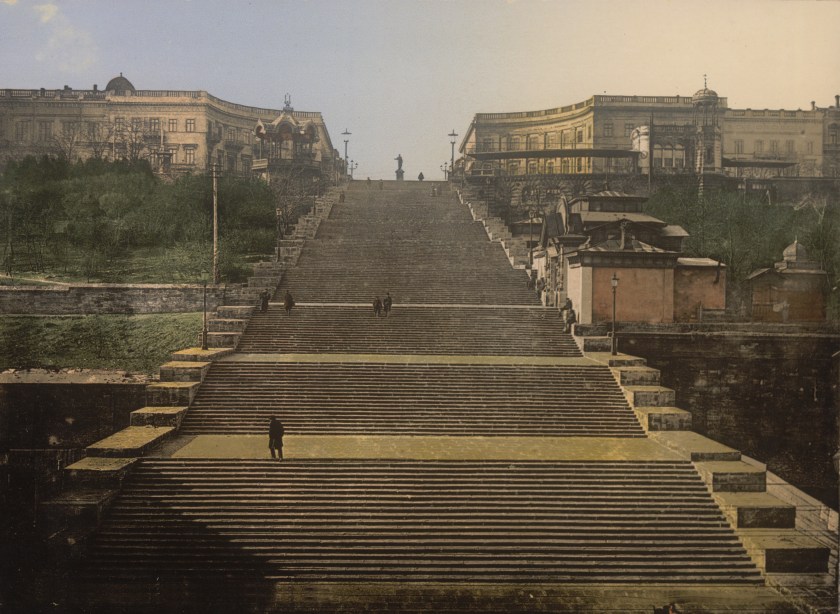
Charles King’s fascinating history of Odessa touches on both ancient and current challenges of cities and societies trying to balance everyday collisions that spark real genius with the stresses of cultural differences.
Installment #12 in my series on the region’s independent bookshops.
Twenty years ago this month I was on the Sea Cloud sailing the Black Sea with National Trust Tours. It was a lifetime ago in so many ways. One of the most memorable stops we made was in Odessa, the port city in Ukraine with a brief yet fascinating history that continues to unfold every day.
Odessa has been on my mind a great deal since February 23, 2022, when Russia invaded a peaceful country without provocation. Unbelievably that war still continues, in large measure because of the tenacity and fight of the Ukrainian people. So when I walked into a small shop in downtown Takoma Park earlier this year and found what is essentially a biography of the city, I felt it was another treasure discovered as a result of my year-long quest to visit all the Washington region’s independent bookshops.
Laurel Leaf is a collaborative, women-owned shop in the heart of Takoma Park. It features a collection of plants, used books, and vintage mid-century modern furniture and decor. As highlighted in a Washingtonian magazine feature, the store is a partnership between Orly Keiner of HouseMouse Books and Vintage, Heather Rowe of Cheeky’s Vintage, and Agnes Traynor of Indigro Plant Design.
“It was striking to me how similar our vision was,” says Keiner. “When I talked to Agnes, I was like, ‘Wouldn’t it be great if we could have a first floor boutique, and it could be really integrated, plants and books?’ And then I would talk to Heather and we would have the same conversation: ‘Wouldn’t it be great if we could do the vintage and the books?’ ”

On several visits to the store (it is located next to my favorite coffee shop) I have always found a well-curated set of books sure to interest the discerning reader, with titles from history, biography, sci-fi, and more. Most books are slightly used and the interested shopper can often find one or more that cry out from the shelf to be read. The staff is eager to help, and the furniture and plants that make up the inventory set the stage for what promises to be a delightful experience.
It was on one such visit that I came across a book by a writer whose most recent work on “the desperate lives and troubled times” that made Handel’s Messiah had me wanting more. And I was delighted to find that in an earlier book that same writer had explored the history of a place that had captivated me on that long-ago tour.
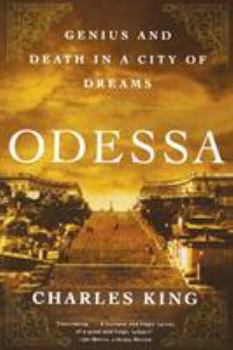
Odessa: Genius and Death in a City of Dreams (2011) by Charles King is the story of one of Europe’s most intriguing cities and its “descent into the heart of darkness” during the Holocaust. We discover that unlike many cities in the region, Odessa is relatively young, founded three years after Washington, DC. A wide range of fortune seekers, freedom fighters, Russian bureaucrats, traders, merchants, tavern keepers, poets, writers, and journalists came together to make up the mix of residents in one of Europe’s most cosmopolitan cities. With scholarly insight, wide-ranging biographical subjects, and crisp writing, King introduces us to the people who came together to shape the dream for a great seaport on the Black Sea, but who also put the city in a perpetual balance between greatness and suicide.
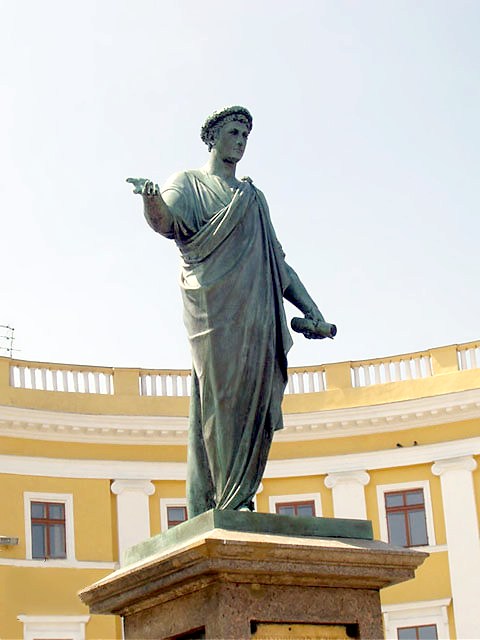
In King’s skillful hands we learn that Odessa’s founding was largely led by Catherine the Great and her personal and political partner Grigory Potemkin (the source of the derisory label “Potemkin villages”) after the area was conquered in a war with the Ottoman Empire. Growing up in the Age of Enlightenment, Odessa initially thrived as a haven for Russians, Jews, Ukrainians, Greeks, Italians, and others seeking fortune and adventure, a mix which did much to shape its future. The duc de Richelieu, member of the great family of French nobles, accelerated the growth of the city after Catherine’s death when Tsar Alexander named him city administrator, a position with wide ranging powers. Within a few years Richelieu had “built a theatre and public schools, including a gymnasium for merchants’ sons, a relative novelty in an empire where education was still a privilege of the upper classes.” A library, printing press, and landscaped parks and streets quickly followed.
But in 1812 a deadly epidemic swept through the port city, setting in motion a storyline we see again and again, one that could quickly swing from growth and prosperity to large scale death and destruction. This time it came from disease. Later it would come from war, pogroms, and ethnic violence. Over the course of almost 300 pages we learn about Alexander Pushkin and Isaac Babel, Zionist renegade Vladimir Jabotinsky and filmmaker Sergei Eisenstein, along with other writers, artists, and geniuses who helped shape Odessa both physically and in popular culture. The plagues common to seaports certainly had an impact on the city, but King makes the strong case that the mass murder of Jews carried out by Romanian occupation forces during the Second World War—where at least 220,000 Jews were killed and one of the least-known episodes of the Holocaust—essentially emptied Odessa of its Jewish population that had done so much to support its vitality and growth through the decades.
Part III of the book is a short but important exploration of the role of nostalgia and remembrance in Odessa’s story.
“Odessa was not quite a blank slate at the end of the Second World War, but it was something close: a city denuded of a major ethnic and religious community and with much of the rest of its population hunkering in cellars or dispersed to outlying towns and villages. The city was still reeling from artillery hits, aerial bombing, partisan raids, and the ravaging of its Jewish core . . . Barely 200,000 people remained in teh city city, perhaps a third of its prewar population.”
The end of Jewish Odessa produced a diaspora that helped fuel an understanding of the city based on nostalgia and remembrance. In a striking comparison, King writes that “Odessa became revered as the Soviet Union’s imaginary Mississippi Delta, a remarkable incubator for music and dreamy nostalgia, yet also a place whose creative power really became evident once people managed to escape it.” The imaginary city began to outshine the real one, fueled in part by the Soviet narrative of resistance.
Even after the demise of the Soviet Union, Odessa’s story was shaped by selective memories from its past. King wants the reader to understand that Odessa’s real history is fascinating: the story of a city that managed to create a local culture “woven from uneasiness, a way of living that may hold lessons about the creative and destructive power of being in-between.” I would welcome knowing more of King’s thoughts on Odessa in light of the last five years of Russian aggression in Ukraine.
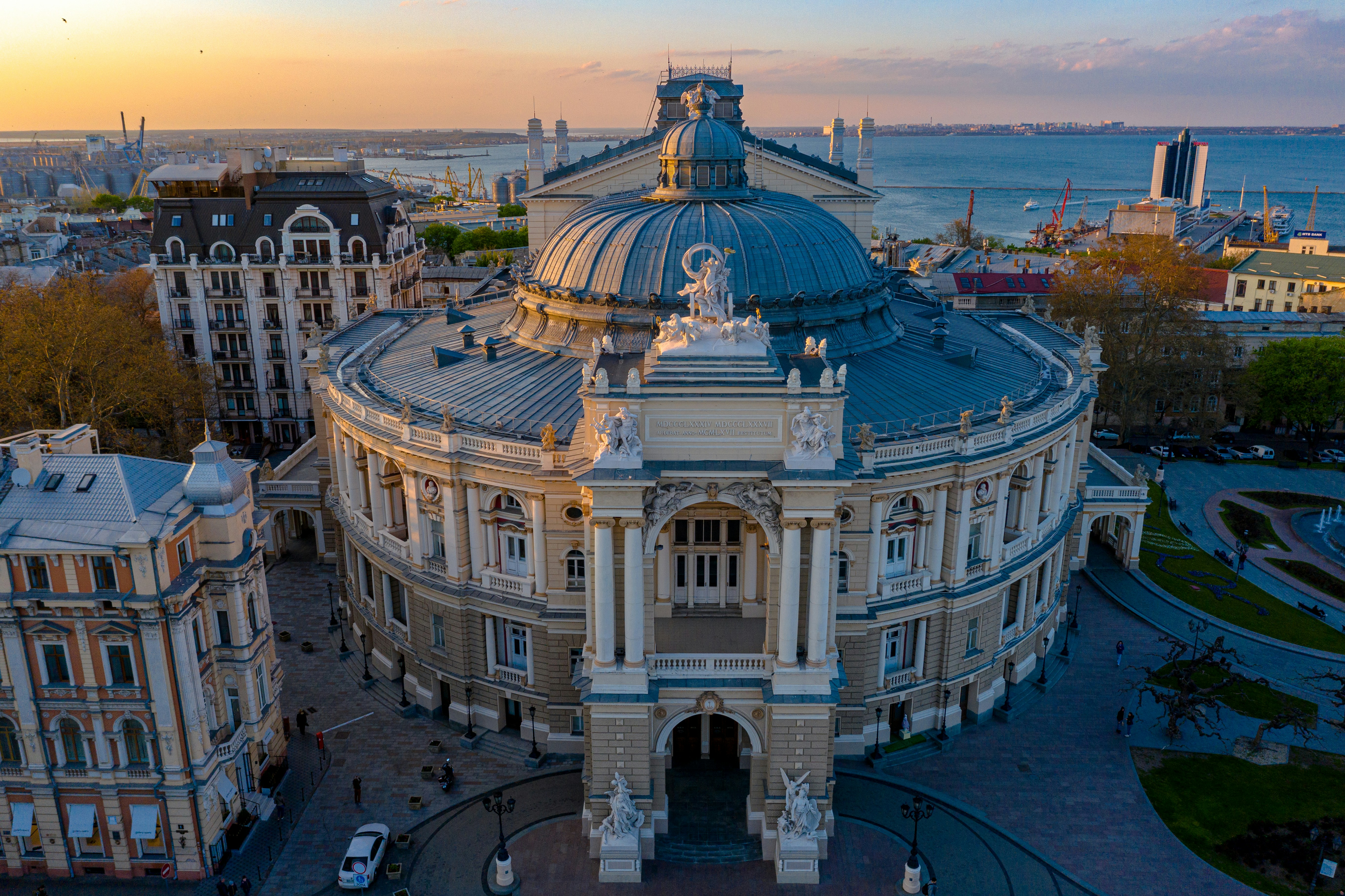
In reading King’s book, I discovered so much more about the city that captured my imagination twenty years ago. Odessa has been described as “an elegy for a vibrant, multicultural city as well as a celebration of the survival of Odessa’s dream in a diaspora reaching all the way to Israel and the United States.” The story is even more fascinating than I imagined.
More to come . . .
DJB
Photo of Potemkin or Odessa Stairs from between 1890 and 1900 via Wikimedia.


Pingback: Observations from . . . July 2026 | MORE TO COME...
Pingback: From the bookshelf: July 2026 | MORE TO COME...
Pingback: Exploring DC’s independent bookshops: A Labor Day update | MORE TO COME...