I was in college before I took my first airplane ride – a trip from Nashville to Philadelphia for (no surprise here) the 1976 National Trust Preservation Conference. It was probably another ten-to-fifteen years after that before I traveled outside the U.S.
Growing up in a large, middle-class family in Tennessee in the 1950s and 1960s, we didn’t just jump on an airplane when we felt the urge. My children find this difficult to comprehend, since they took their first flight at 6 months of age, and by the time they were in college the number of countries they had visited required both hands to count. When I tell them that my grandparents probably stayed in Tennessee their entire lifetimes, they begin to recognize the dramatic changes that take place from one generation to the next.
I’ve been working to make up for lost time when it comes to travel. Both personally and professionally, I have the opportunity and privilege to travel to many places both in the U.S. and around the world. I was thinking about this recently while listening to the writer Pico Iyer talk about travel and change. Like me, his grandparents “almost had their home in their community and their tribe and their religion handed to them at birth, whereas I felt that I could, in some ways, create my own.” In describing what to take from the opportunity to see so many wonderful places, Iyer writes,
“…anybody who travels knows that you’re not really doing so in order to move around – you’re traveling in order to be moved. And really what you’re seeing is not just the Grand Canyon or the Great Wall but some moods or intimations or places inside yourself that you never ordinarily see when you’re sleepwalking through your daily life….there’s this great undiscovered terrain that Henry David Thoreau and Thomas Merton and Emily Dickinson fearlessly investigated, and I want to follow in their footsteps.”
We really do sleepwalk through many phases of our life. The trick is not to require travel to open up our inner places, but to live more of our lives as we do when we “travel to be moved.” Or, as Marcel Proust once said, “The real voyage of discovery consists not in seeking new landscapes, but in having new eyes.”
Folks in Macon, Georgia, take their musical roots seriously. (Think Otis Redding, the Allman Brothers, Little Richard.) So on Friday morning when I was booked for an interview on WNEX, The Creek — a new Macon radio station featuring Southern roots music and local issues — I assumed it would be different from the local NPR stations where I normally find myself talking about preservation.
I was right. And (with the possible exception of my time on the Honolulu public radio station), it turned out to be much more fun than my average NPR radio interview!
We were in town to launch our National Treasures campaign for the Ocmulgee National Monument. Lands affiliated with the Ocmulgee National Monument have been home to Native Americans for more than 17,000 years. However, over recent decades the places with ties to the site have been threatened by urban sprawl, the subdivision of forested tracts, and ownership fragmentation. The National Trust and our partners are seeking to re-designate the monument as a historical park, expand the current boundaries, and study ways to protect related areas in the river corridor.
So I showed up at The Creek’s studio (which looked something like a well-loved fraternity house) on Friday morning with a colleague and the president of the Ocmulgee National Park & Preserve Initiative. We met Brad Evans, one of the owners, who asked a couple of questions to prep before we went on the air and indicated that they would play a tune halfway through the interview. It came out that I was a John Prine fan, and Brad said, “What would you like to hear?” I responded that I thought Paradise was a good cautionary tale for those who don’t take preservation seriously. So we go into the interview, have a great conversation about why this place matters, and then Brad queues up the song by asking if Paradise was a good tune? “Absolutely” I replied, and that familiar voice came across the speakers.
“When I was a child my family would travel, down to western Kentucky where my parents were born…”
While the song was playing, Brad asked what else we might discuss when we came back, and I suggested that we spend a bit of time talking about other National Treasure campaigns. I mentioned that I thought listeners to The Creek might enjoy our work on Nashville’s Studio A and Music Row.
Chris Stapleton – Traveller
So as John Prine wrapped up singing of Paradise being “five miles away from wherever I am,” we began to talk about the Music Row campaign on the air. I noted that Studio A was not only the place where hundreds of country music classics had been recorded, but that Chris Stapleton’s Grammy award-winning album Traveller was made there after the studio was saved. I suggested that had it been recorded anywhere else, this classic country album would have sounded different. When it comes to recording studios – as with much else in life – place matters.
Brad wrapped up the interview and then told his audience that he had some Chris Stapleton lined up next. I responded, “Man, you are good!” and he replied “I’m a pro – if you don’t believe me, just ask me.” We laughed, and then away went Chris Stapleton with “Nobody to Blame.”
Oh man…if I ever get to do a preservation interview again when I can call on John Prine and Chris Stapleton for help, then you’ll know for certain I’ve died and gone to heaven.
As the late fall weather arrives in Washington and the leaves cover the ground, my thoughts have turned to one of the best natural history/science books I’ve read in years.
The Forest Unseen
The Forest Unseen: A Year’s Watch in Nature by David George Haskell is both very modern and very old fashioned in its outlook. Haskell’s work is a meditation of a year’s worth of observation on a small patch of old growth forest — which he refers to as his mandala — near Sewanee, Tennessee.
Every few days Haskell visits this patch of land and captures his observations. The chapter for December 3rd is entitled “Litter,” as the forest floor is covered with leaves and other dying plants, similar to what we see along the C&O Canal, Rock Creek, or Sligo Creek here in Washington. The first half of the chapter is an explanation of the leaves, mushrooms, bugs, seeds, fungal strands, and the unseen microbial community in the soil of his mandala. But after noting that ecological science has yet to fully digest the discovery of the belowground network – as we still think of the forest as being ruled by relentless competition for light and nutrients – Haskell closes with a series of paragraphs that speak to the importance of cooperative action and roots.
“We need a new metaphor for the forest, one that helps us visualize plants both sharing and competing. Perhaps the world of human ideas is the closest parallel: thinkers are engaged in a personal struggle for wisdom, and sometimes fame, but they do so by feeding from a pool of shared resources that they enrich by their own work…Our minds are like trees — they are stunted if grown without the nourishing fungus of culture.”
Haskell speaks to the fact that “evolution’s engine is fired by genetic self-interest, but this manifests itself in cooperative action as well as solo selfishness.” And he wonders if his new ways of thinking about evolution and ecology are so new after all.
“Perhaps soil scientists are rediscovering and extending what our culture already knows and has embedded into our language. The more we learn about the life of the soil, the more apt our language’s symbols become: ‘roots,’ ‘groundedness.’ These words reflect not only a physical connection to place, but reciprocity with the environment, mutual dependence with other members of the community, and the positive effects of roots on the rest of their home. All these relationships are embedded in a history so deep that individuality has started to dissolve and uprootedness is impossible.”
Haskell’s work over his year in the forest is an attempt to “put down scientific tools and to listen: to come to nature without a hypothesis, without a scheme for data extraction, with a lesson plan to convey answers to students, without machines and probes.” Listening moves us all past what we know and into the deeper knowledge to be found when we tap into the roots of nature and humanity.
During a year when our country has seen much distrust, hatred, and focus on the worst aspects of our common life, we – like so many of you – are working hard to recognize the many blessings we have shared individually, as a family, and within our communities. Not everyone in our families and in our group of friends agrees with our outlook on life. But no matter where one stands on the political divide, it is clear that we have a profoundly broken country at the moment. Our family will try and be advocates for a loving, inclusive country that recognizes the gifts of all and the bounty available if we will only embrace the “we” as well as the “me” in our communities. I know we have to do more.
Last December, I gathered with all my brothers and sisters in Murfreesboro, Tennessee. Not only was it a time when the family could come together to grieve the loss of Carol’s husband Raouf, but it was also the last time I would see my father – although I didn’t realize it at the time.
DJB with his brothers and sisters: Debbie, Steve, Carol, and JoeWith my father, Tom Brown, and brother Steve in December 2015
December is also the time when we celebrate Andrew and Claire’s birthdays. Now that they are adults, it is always fun to enjoy a nice dinner (with wine pairings!) at wonderful restaurants such as the Iron Gate.
Celebrating 23rd birthdays at Iron Gate Restaurant on December 20, 2015
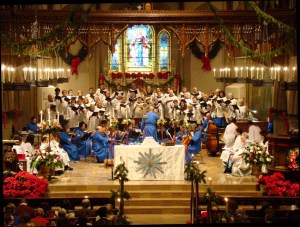
Andrew sings with the Cathedral Choir of Men and Boys
With the children grown, Candice is able to travel with me for work on occasion. In late February I had a speaking engagement in Bedford, New York, and we took the opportunity to spend time at the Marcel Breuer House on the grounds at Kykuit, a National Trust Historic Site.
Candice enjoys a morning coffee at the Marcel Breuer House, a National Trust Historic Site
My home away from home – the Chiaraviglio Apartments at the American Academy in Rome
Claire’s visit was early in our stay, and we used the occasion to explore Tuscany, as well as some of the very familiar sites in Rome.
Candice and DJB in San GimignanoClaire and Candice in San GimignanoAt the top of Florence: proof that we made it!Claire on her first day in Rome
We were lucky to be able to celebrate our 34th wedding anniversary during my time on sabbatical. The evening brought back many memories.
Celebrating our 34th wedding anniversary at Ditirambo in Rome
In addition to wonderful food and wine, Rome was full of beautiful architecture and new adventures (for us), such as Holy Week in the Eternal City.
The Pantheon ceiling and lightThe priest leads the Palm Sunday procession at the Basilica di San Pancrazio
Andrew arrived in Italy after Easter, and we took advantage of his visit to travel to Venice. What an incredible city.
Andrew goes bonkers after catching a glimpse of the magnificent cutaway model of the basilicaMore to come as the journey continuesBridge of Sighs in VeniceEnjoying lunch with Andrew and Candice in Murano
All of us made like Italians and drank caffe at every chance we could get.
Andrew at Sant Eustachio il Caffe
Throughout my visit, I posted pictures and observations from some of the most beautiful places in the city. The Protestant Cemetery and Borromini’s San Carlo alle Quattro Fontane were among my (many) favorites.
Angel of Grief by W.W. StoryDome of San Carlo alle Quattro Fontane
We returned to the states in late April, in time for me to welcome musician Ben Folds to the National Trust’s headquarters in Washington.
With Ben Folds at the Washington Offices of the National Trust
In May, we said good-bye to the most wonderful father, father-in-law, grandfather that one could hope for. Daddy passed away as he was nearing his 91st birthday. It was a joyous celebration with hundreds of friends and family members.
Tom BrownRemembering Tom Brown
2016 was a good year for baseball in the Brown household. I checked off two more stadiums from my bucket list, including Anaheim Stadium with Claire, and Candice joined me to cheer for the National League Eastern Division Champion Nationals as they closed in on the division title in September.
Connecting with Claire…over a baseball gameCandice with her “Half Smoke All the Way” at Nats Park earlier this season.
Our summer was filled with celebrations and time with friends. In June we all descended on Philadelphia for the wedding of Julia Pentz and Barry Katz. Candice and I also joined friends Oakley and Margaret Pearson at the 2016 Red Wing Music Festival in the beautiful Shenandoah Valley.
Claire and Andrew ready for the weddingSierra Hull with Justin Moore at Red Wing 2016
Claire wrapped up her year with the Episcopal Urban Intern Program in Los Angeles, but stayed in Pasadena to work for a second year at Hillsides Educational Center. Her EUIP experience was fulfilling and life changing.
Claire with her housemates from the Episcopal Urban Intern Program in Los Angeles
August took us to Maine for the second part of my sabbatical, and then to Murfreesboro, where Andrew and I brought back a truck of furniture, books, and other memories from Daddy’s house.
Thunder Hole at Acadia National ParkAndrew and Aunt Debbie prepare Daddy’s furniture and keepsakes for the ride to our homeAndrew (and his Beyonce shirt) have a foot in Tennessee and a foot in Virginia on Bristol’s famous State Street
I was lucky to take a second trip to Italy in 2016, this time to Milan and Lake Como with the International National Trusts Organisation (INTO).
Villa del Balbianello on Lake ComoThe Last Supper
This fall has seen Claire and Andrew stretching their wings. Claire has been exploring Southern California, and took a hike up Mt. Baldy on the day the Supermoon was at its height. Andrew was on a plane to Norway that evening, to join a singing ensemble, Trondheim Vokalensemble, for a tour of the country. We lived their adventures through their photographs!
Claire on Mount BaldyClaire and friends climb Mount Baldy in California with the Super Moon in the backgroundTrondheim – home base for Andrew’s Norwegian choral tour in NovemberRoros, NorwayAndrew in Norway
As you can see, it has been a busy and fulfilling year. During this Thanksgiving season, we give thanks for you, our wonderful friends.
With Candice, Andrew, and Claire (clockwise from bottom left) as we wrapped up our time in Philadelphia
Have a terrific Thanksgiving holiday with friends and families.
More to come…
DJB
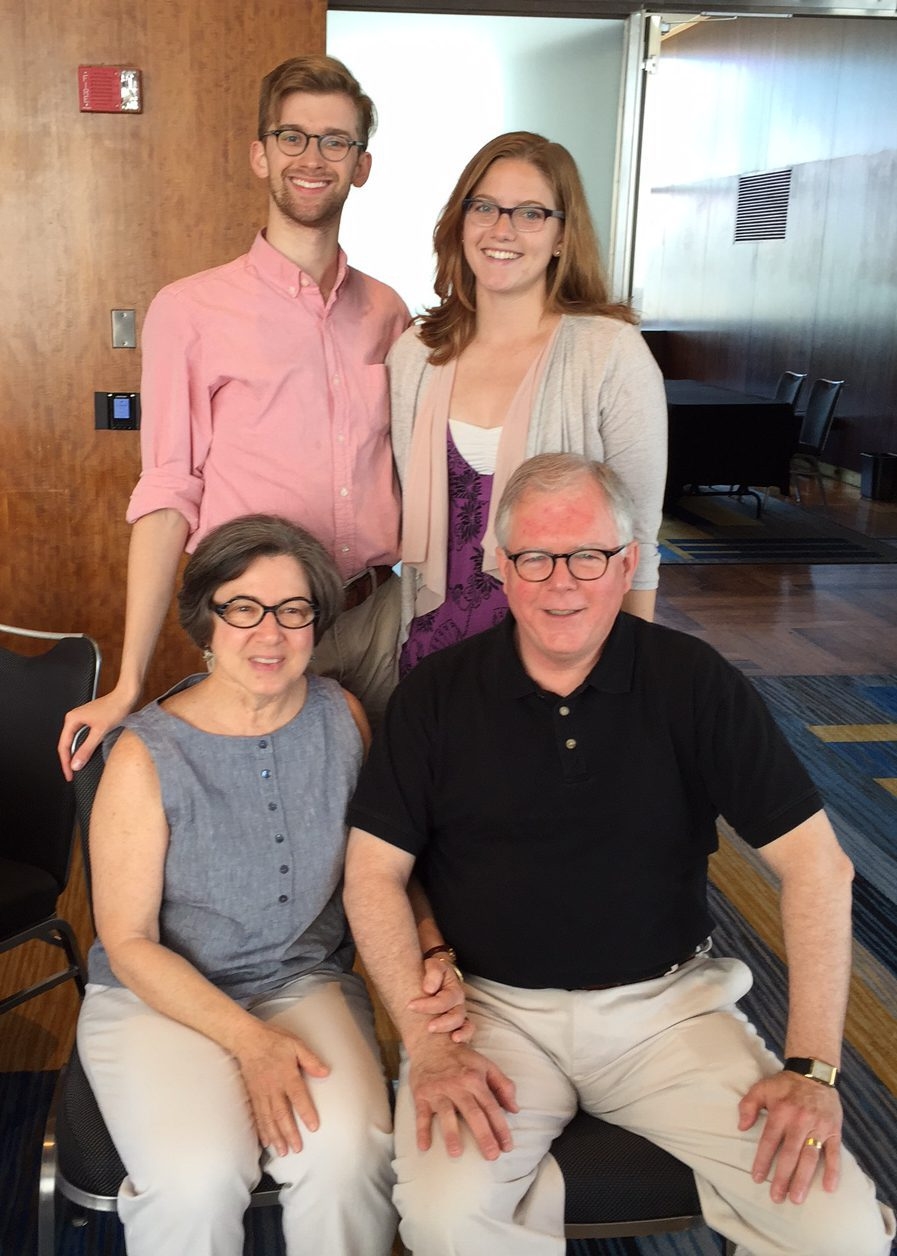
Image: Andrew, Candice, Claire and DJB on December 20, 2015 (Photo by John Thorne)
Ants marching (photo credit: PSG of Mercer County)
The Next City website had a recent post by a physicist, Laurie Winkless, entitled 7 Things I Learned While Trying to Figure Out How Cities Work. Number 3 jumped out at me, and I’ll quote it here:
“We’ve all been caught up in phantom traffic jams, where for no discernible reason, traffic builds up and then eases. These traffic shockwaves are officially known as “jamitons,” and they can arise even if everyone is driving perfectly. But ants don’t have the same issue: Even when their highways are packed, they don’t get gridlocked. It seems that it’s because ants self-organize into lanes, and give each other a lot of headway, which buys them more time to react to any incidents up ahead … maybe a lesson in there for us all.”
Maybe a lesson indeed! I looked up from my book on a recent commute on the Metro, when I felt several people rush by my seat. What was the hurry? It turns out that they had entered at Gallery Place and were all pushing to get to the door closest to the escalators when the train arrived at their transfer point at Metro Center. Of course, by bunching together the door became blocked, those who were going past the Metro Center stop were suddenly crushed, and no one had given anyone else any headway (much less consideration and courtesy).
Living and working together has its challenges. Especially in these times of heated political divisions. But the next time I’m in one of those phantom traffic jams – in a car (perhaps heading out for the Thanksgiving holiday this week) or in some other realm of life – I’m going to try to think about the ants and provide a bit more headway.
Have a good week, safe travels (if you are visiting others), and Happy Thanksgiving.
In February 1990, Václav Havel – the great Czech playwright, intellectual, and dissident – made an address to the United States Congress. Havel had been president of Czechoslovakia for only two months when he made his speech. However, he had a lifetime of experience in living through, and responding to, different political systems.
Among his thoughts that day was the following:
“…the salvation of this human world lies nowhere else than in the human heart, in the human power to reflect, in human meekness, and in human responsibility.”
Dr. John Finley speaking at the Annual Meeting of Historic Savannah Foundation
My father stayed in touch with people all over the world. But I was still surprised earlier this week when the Senior Minister of First Baptist Church in Savannah, Georgia – where I was speaking – quickly made the association between me and my hyper-connected father.
Historic Savannah Foundation invited me to be the guest speaker at their annual meeting, which was being held in the historic sanctuary of First Baptist Church. In a bit of chit-chat before the meeting began with their senior minister, Dr. John Finley, I mentioned that I grew up attending First Baptist Church in Murfreesboro, Tennessee.
That’s when Dr. Finley looked at me and asked, “Are you Tom’s son?”
I must have looked pretty dumb-founded, because he quickly added, “My first job out of college at Vanderbilt was as a youth minister in First Baptist in Murfreesboro.” Dr. Finley was there in the mid-1970s for three months, and became friends with my mom and dad, as well as the staff and others. Daddy kept in touch and even visited Savannah in 2000, when First Baptist hosted a Baptist History conference. We chatted about many connections (including Dr. Eugene Cotey, my pastor growing up), and I left that evening with a copy of Pilgrims through the Years, the excellent history of First Baptist written by George H. Shriver.
“The First Baptist Church of Savannah, Georgia, was chartered on November 26, 1800, and soon thereafter the first meeting house was built on Franklin Square. The cornerstone of the present church on Chippewa Square was laid on February 2, 1831, and the building was completed in 1833. This Greek Revival structure is Savannah’s oldest standing house of worship.”
HSF Annual Meeting 2016
When I returned to my hotel room, I texted some of my brothers and sisters to see if they remembered Dr. Finley. It turns out my sister Debbie was in a newlyweds class with the Finleys, and my brother Joe was in his youth group. Joe wrote back and said,
“If I’m not mistaken, he was the first youth minister ever hired by FBC. I think Claude King was the next one. I always said I drove Claude out of youth work!”
When I responded that he drove Dr. Finley out as well, because he told me that those three months in Murfreesboro convinced him he never wanted to do youth ministry again, Joe responded with “It’s a gift!”
As fate would have it, I was reading about “Six Degrees of Separation and Three Degrees of Influence” in Jonathan F.P. Rose’s new book The Well Tempered City on the plane ride to Savannah. Rose writes that if a city wants to promote positive behaviors, “the most effective strategy is to target people who are at the center of social clusters and have them reach out to those who are less connected.”
While he wouldn’t have named it this way, Tom Brown was definitely a force of nature when it came to social clusters.
I love seeing lists of books recommended by people from all walks of life. As the son of a children’s librarian and the husband of a children’s reading specialist, books have always been a part of my life. This enthusiasm was brought home to me again when I recently saw a list of recommended readings from President Obama (or, as Inc.com called him, the “Bookworm-in-Chief.”) It seemed appropriate – the day before the election – to recall all the good things President Obama has brought our way, including an intellectual curiosity about the world.
Writer Rebecca Solnit has said, “I disappeared into books when I was very young, disappeared into them like someone running into the woods.” I know that feeling. A couple of years ago, in thinking about a lifetime (so far) of reading, I put together my own list of twelve books (plus some bonus reads) that had influenced me. If you click through, you’ll see that the initial one on my list is the first I remember from my childhood. I suspect you’ll understand a bit more about me when you see that the title is If Everybody Did.
To reach a younger demographic, I often ask my 23-year-old twins what books influenced them, and they recently responded with a range of works, including Americanahby Chimamanda Ngozi Adichie (recommended by both and which is on my list); The Defining Decade: Why Your Twenties Matterby Meg Jay (perhaps I’m a bit past focusing on this); The Death and Life of Great American Citiesby Jane Jacobs (from my urban studies-loving son); A Wrinkle in Timeby Madeleine L’Engle (a classic); Nickel and Dimed by Barbara Ehrenreich and The New Jim Crow by Michelle Alexander (both in my book bag to be read); and the Harry Potter series (have read them all myself).
To end, I’ll circle back to President Obama. I have read two of the books on his list of books that shaped his thinking, and would recommend both: the remarkable Thinking, Fast and Slowas well as Taylor Branch’s thorough and thoughtful history of the civil rights movement, Parting the Waters : America in the King Years 1954-63. I’ve also read two from the President’s vacation reading list: Between the World and Me and All the Light We Cannot See. Both are powerful books, in very different ways. Let me know what you would recommend, and when I have enough I’ll share a new “colleagues and friends” list.
Last evening’s Commemoration of All Faithful Departed service at our church was beautiful and personally meaningful. I had it marked on my calendar for some time, as I wanted to attend to remember my father, who passed away earlier this year.
The choir’s music was beautiful, with Mozart’s Requiem interspersed between the readings. The first of those readings is from the Book of Wisdom and begins, “The souls of the righteous are in the hand of God, and no torment shall ever touch them.”
We put the names of loved ones departed into a basket, and during the prayers of the people each name was read while members of the congregation could come forward and light a candle. (As an aside, I loved hearing baseball legend Monte Irvin remembered among the departed.)
Lovely. Thoughtful. Deeply moving.
And when I saw that The Rev. Emily Griffin was the evening’s preacher, I knew all three of those feelings would continue. We have three very insightful and thoughtful priests who enlighten us each in their own way with powerful words.
Emily began her sermon by saying, “There are other ways we could be doing this,” and continued by recounting various ways we remember our loved ones. That’s when my mind took off.
For earlier on Saturday, Andrew and I had our own special “Commemoration of All Faithful Departed” for Daddy/Granddaddy.
When we brought furniture home from his house in August, I threw in his DVD player, knowing ours was on the fritz. It took me until yesterday to check it out and plug it in. Andrew was helping me, and after we had it connected, I said, “Let’s see if this thing works.” We turned it on and out popped a disk. Andrew picked it up and started laughing.
My father loved the broad humor of Mel Brooks, and we both immediately doubled over in laughter at the thought of my 90-year-old father laughing at such lines as:
Mongo only pawn in game of life.
Hello handsome, is that a ten gallon hat or are you just enjoying the show.
[Jim the Waco Kid to Bart, the African-American sheriff, after the old woman insults him] What did you expect? “Welcome, sonny?” “Make yourself at home?” “Marry my daughter?” You’ve got to remember that these are just simple farmers. These are people of the land. The common clay of the New West. You know…morons.
So what was our commemoration? Why we sat down and watched the entire movie, and Candice said the laughter could be heard throughout the house. Andrew texted his sister and some of the cousins with the news of our find and Claire wrote back, “I wouldn’t have expected anything less of Granddaddy.”
It was a glorious celebration.
So thanks to St. Alban’s Church for the lovely and meaningful service. And thanks to you, Daddy, for having such a wonderful (and wise) sense of humor.
Chiggers (photo by Don Williams)
R.I.P.
More to come…
DJB
Image: St. Albans in Washington, ready for the Commemoration of All Faithful Departed by DJB
We are made by what would break us. In every life, inexplicable things happen.
It is difficult to respond to these challenges, but I’ve noted before that we learn to walk by falling down. The beginning of wisdom often results from “the dramatic and more ordinary moments where what has gone wrong becomes an opening to more of yourself and part of your gift to the world.”
Those words were written by Krista Tippett, the Peabody Award-winning broadcaster of On Being and a 2014 recipient of the National Humanities Medal from President Obama. She has published a new work based in part on her years of conversation with poets, scientists, philosophers, theologians, and activists. Becoming Wise: An Inquiry into the Mystery and Art of Living, is a thoughtful book, full of insight. Tippett indicates she wrote about wisdom because “one of its qualities…is about joining inner life with our outer presence in the world. The litmus test of wisdom is the imprint it makes on the world around it…”
In this new work, Tippett writes about one perhaps surprising aspect of a wise life.
“I have yet to meet a wise person who doesn’t know how to find some joy even in the midst of what is hard, and to smile and laugh easily, including at oneself. A sense of humor is high on my list of virtues, in interplay with humility and compassion and a capacity to change when that is the right thing to do. It’s one of those virtues that softens us for all the others….There is a science helping us to see a sense of humor in the brain as an expression of creativity, making unlikely connections, and leaning into them with joy.”
I like the idea of making unlikely connections in the brain, and then “leaning into them with joy.” A sense of humor doesn’t always revolve around a back-slapping joke, although I enjoy those as much as anyone. But a wise sense of humor can be as complex as delighting in paradox and as simple as a smile in the voice. It is not cynical, but instead might be described as generous or nourishing. I am certainly nurtured by those colleagues and friends who are wise. Consider reaching out and telling someone with a generous sense of humor how much you appreciate their wisdom! You’ll both have a good week.