Latest Posts

Spring 2026

The musical performances of our son, the tenor Andrew Bearden Brown, set for this spring.


Coming off of a very busy fall schedule highlighted by his work as the tenor soloist in the Washington National Cathedral’s performance of Messiah, our son—Andrew Bearden Brown—returns to the concert stage this spring. His travels take him from coast to coast as he performs both solo and in ensemble settings.

Performing “Comfort Ye/Every Valley” from “Messiah” from the nave of the Washington National Cathedral, December 2025

Here’s the full listing of Andrew’s scheduled performances (ticket information available on his website):

  • A New Song (Ensemble Member)—“Ensemble Altera in its short history has already been identified as ‘a leading ensemble on the American choral scene’” (Scherzo Magazine). Performances February 13th, 14th, and 15th in Fort Lauderdale, Bradenton, and Naples, FL.
  • Considering Matthew Shepard (Soloist)—Musica Atlantica performs this transformative work, which reaches beyond the tragedy of Shepard’s death as it searches for peace, understanding and unity. It has been heralded as a “modern-day Passion.” Performance March 13th in Savannah, GA.
  • St. John Passion (Evangelist)—Bach’s Passions were written for the Good Friday Services of the two principal churches in Leipzig early in Bach’s tenure, and were revised and performed numerous times in Bach’s life. “This collaborative concert brings together two of the favorite ensembles of Museum Concerts, Schola Cantorum and Providence Baroque Orchestra and features the rising young Tenor, Andrew Bearden Brown who made his debut as Evangelist with these groups in 2020. The John Passion shows Bach at his most dramatic with introspective Arias alternating with stirring choral movements for the crowd scenes.” Performance March 1st in Providence, RI.

Andrew Brown sings with ‘a carefully balanced interpretation of the Evangelist with deep expression and gravitas’”

The Boston Musical Intelligencer
  • Gabriel Jackson: The Passion of Our Lord (Soloist)—Emmanuel Episcopal Church will host a performance of Jackson’s innovative and compelling setting of The Passion, winner of the 2020 BBC Music Magazine Choral Award. The work “tells a familiar story with extraordinary emotional depth and intrigue. The composer masterfully weaves together texts from all four biblical gospels, Latin hymns, and the powerful writings of Edmund Blunden and T.S. Eliot, bringing Christ’s journey to the cross vividly to life through richly textured choral writing and imaginative instrumentation.” Performance March 22nd in Baltimore, MD.
  • Cantata BWV 150 (Ensemble Member)—Now entering its 37th season, the Washington Bach Consort’s Noontime Cantata Series continues its mission of bringing the music of Johann Sebastian Bach to the Washington community. Performances April 13th and 14th in Washington, DC.
  • The Dream of Gerontius (Gerontius)—The Chorus of Westerly will present this choral masterwork in a special weekend of performances under the baton of David Hill, conductor of the Bach Choir of London, England. Gerontius is not often heard in the U.S., but it is often performed in the U.K., and it was featured in the recent film The Choral. Performances April 18th and 19th in Providence, RI.
  • Mass in B Minor (Ensemble Member)—The Washington Bach Consort‘s season finale “is arguably among the greatest musical compositions in any tradition. Through this work, Bach has given us a reservoir of comfort and healing for the soul.” Performances April 25th and 26th in Washington, DC.
  • O Last Dream of Love (Ensemble Member)—Aeternum, California’s professional vocal ensemble, performs works from the groups first professional album recording. This concert marks a milestone in the group’s journey, celebrating the beauty of love through music. Performances May 15th and 17th in Napa and Moraga, CA.

When he is not performing on the road, Andrew is a member of the professional choir at Christ Church, Georgetown, which has a rich musical tradition under the direction of Organist and Choirmaster Thomas P. Smith. This spring, the Liturgical Choral Music Schedule includes Choral Evensong for the Sunday of the Passion: Palm Sunday on March 29th, and Choral Evensong for the Sunday of the Resurrection: Easter Day on April 5th.

And for a sampling of Andrew’s music enjoy his performance of Mozart’s Ich baue ganz, recorded from the stage of the Santa Fe Opera.

More to come . . .

DJB

Disengage with your misery machine: Vol. II

Imagine if we stopped spending so much time online and focused more of our time on making life better: New thoughts that build on those made in my September post entitled “Disengage with your misery machine.”


Two posts that arrived the morning after the Super Bowl brought me up short. Both were written by writers I admire and follow. Both were not really takes on the game but instead used this ubiquitous American “holiday” as a starting point to push us to question what’s really important. One was written by a sociologist and writer. The other was from a sportswriter.


I DID NOT WATCH THE SUPER BOWL

The first that showed up was Robyn Ryle‘s post I did not watch the Super Bowl. Careful readers will recognize Robyn as the author of Sex of the Midwest: A Novel in Stories, one of my favorite books of 2025. Just the title of Robyn’s most recent post caught me off guard because I’ve written for years that I don’t watch the Super Bowl. But for some inexplicable reason I watched it this year. (And no, I’m not blaming Candice for the fact that she wanted to put together a Super Bowl spread . . . I’m really not. I am responsible for my own actions.) Andrew cares even less than Candice about football but he wanted to watch the Bad Bunny halftime show. I’m glad he was there to act as my cultural references translator. (God, getting old is tough.)

But I digress. Robyn’s post wasn’t so much about the Super Bowl as it was the fact that she’s done with being a person on the internet. She begins by pointing out that she just doesn’t care anymore.

“I didn’t want to see people critiquing the commercials or the music or winding it all up into this never-ending narrative about the state of our current world. I’m exhausted by it all. Really, I’m so, so f**king exhausted. I’m over it. I just do not care anymore.”

Then she notes that it isn’t that she really doesn’t care, it is just that she wants to care about different things.

“Not the Super Bowl. Not what happens on social media. Not the creator economy.

I do still read some good and useful things on the internet, among them this series from Adam Mastroianni at Experimental History about underrated ways to change the world. These are the kinds of things I want to care about. Quiet, simple, underrated ways to make the world a better place. Note that most but not all of these take place someplace that is not online.”

Robyn’s piece was still buzzing around my brain when the second post popped up.


THE UBIQUITY (AND WONDER) OF HOT TAKES

Joe Posnanski, a self-described “writer of sports and other nonsense” and author of one of my all-time favorite books, The Baseball 100, took a different route to raise similar points as Robyn in his post The Ubiquity (and Wonder) of Hot Takes.

“That was the best Super Bowl Halftime Show ever, better even than Prince’s Halftime Show, which I was in the stadium to see. I didn’t even know Bad Bunny’s songs, but it didn’t matter because the vibe was so joyful, so thrilling, there was an actual wedding in it, there were so many fun guest appearances (Ronald Acuña Jr.!), and there was so much love for community and family and all the Americas, North and South. It warmed my heart.

Unless you think it was actually a political statement, and Super Bowl Halftime Shows should be in English, and I’m too brainwashed to understand that.

Let’s fight about it.”

Joe provides six similar examples to let us know that he “hates hot takes.”

“Hot takes break us apart over things that don’t matter at all. Do I really care if the Super Bowl was a dog or a classic? Nope. Do I actually have strong feelings about how anyone else should feel about the Bad Bunny halftime show? Nope. Do I stay awake at night thinking about celebrities promoting gambling? Nope. Do I feel strongly that people should agree with me about my half-baked thoughts on Lindsey Vonn or our nationwide obsession with PEDs? Not really.

But once we go down those roads—once we start fighting—screaming enters, anger enters, bitterness enters, ego enters, pride enters. And suddenly we find ourselves on opposite sides of things, and find ourselves wondering how we grew so far apart.

It would be nice to be on the same side more often.”


As I said in the earlier post, when it comes to algorithmic manipulation we do not have to be passive victims. We each have the power to do what our phones—a device historian of American political rhetoric Jennifer Mercieca calls a misery machine—won’t do on their own: lead us to hopeful news. Good news. We have the ability to choose differently. 

Robyn and Joe both pushed me to think about the things I read on the internet, why I read those things, and what other things I could be focused on instead to make this a better world. It strikes me as a much more enriching and productive way to spend a Sunday . . . or a life . . . rather than watching the Super Bowl and getting upset about the halftime show or what others think about the halftime show.

More to come . . .

DJB


P.S.: In a similar vein you might also be interested in 2020’s Connect and Care and in 2024’s Step away from the exhausting digital chatter.


P.P.S.: Those who know me would not be surprised that I really enjoyed this post-Super Bowl editorial cartoon:


Photo by Annie Spratt on Unsplash

There would be neither slaves nor masters

In honor of the 16th president’s birthday later this week: An intimate study of Abraham Lincoln’s powerful vision of democracy


We like to believe our troubles are unique. That our age is different. Yet so many of our current frustrations with democracy were encountered more than a century and a half ago by Abraham Lincoln.

According to historian David Reynolds, Lincoln has been the subject of more than 16,000 books. That’s around two a week, on average, since the end of the American Civil War. Historian Eric Foner notes that almost every possible Lincoln can be found in the historical literature,

“. . . including the moralist who hated slavery, the pragmatic politician driven solely by ambition, the tyrant who ran roughshod over the Constitution, and the indecisive leader buffeted by events he could not control. Conservatives, communists, civil rights activists, and segregationists have claimed him as their own. Esquire magazine once ran a list of ‘rules every man should know.’ Rule 115: ‘There is nothing that can be marketed that cannot be marketed better using the likeness of Honest Abe Lincoln.'”

In a short, compelling work published just before the 2024 election, one of the Great Emancipator’s most distinguished biographers—one who probably never thought about how to market Honest Abe—looks at the ideas and beliefs about democracy that helped carry Lincoln, and the nation, through the horror of civil war.

We would do well to consider them again. In our time.

Our Ancient Faith: Lincoln, Democracy, and the American Experiment (2024) by Allen Guelzo is written for those “who have despaired of the future or whose lives have been ruined by the failures of the present.” Lincoln came along in his time to rescue our democracy on its last gasp. His was an intervention “so unlooked for as to defy hope.” Guelzo, who is a lover of democracy “as only the descendant of immigrants can love it,” focuses on Lincoln’s principles with both the skill and passion of someone who yearns that “this last, best hope of earth may yet have a new birth of freedom.” This is a story that, as one reviewer notes, is for those short on hope and—just as important and just as troubling—perspective. Guelzo reminds us, as all good historians do, that while we live in difficult, uncertain times and have worries about our future, so it has nearly always been.

In nine chapters framed by an introduction on the disposition of democracy and an epilogue that asks what if Lincoln had survived Booth’s assassination attempt, Guelzo walks the reader through different aspects of our democratic system and how Lincoln was shaped, and then helped shape, those attributes and elements. Early on he reminds us that in tyrannies, governments rule; in liberal democracies, governments represent. People are judged competent to direct their own lives in democracies without the “paternal tyranny” of aristocrats, monarchs, and oligarchs. But Guelzo doesn’t shy away from democracy’s deficits. Assuming that the majority is always right and good and therefore has a license to rule is a fundamental weakness. But in his opening chapter he speaks to the tools by which democracies protect the balance between majority and minority rights: citizenship, elections, and forums for discussion (traditionally, in America, the newspaper and political party).

Even though Lincoln was born while Thomas Jefferson was still president and George III was still king, a new liberal economic world was already being born. In examining what Lincoln had to say about democracy in these fluid times, Guelzo notes that for Lincoln this was personal. He was a “poor man’s son” who was personally transformed by democracy and its reliance on laws and reason. Human liberty, he believed, was nourished best in a democracy because it relies on the consent of the governed. Lincoln was fond of pointing out that if slavery was such a good thing (as its apologists kept maintaining), why was it that no man ever sought the good for himself! He was also a believer that passion was at the root of ideological bullying, such as seen throughout the South, and he worked to dissuade northern Republicans from responding in kind.

Several of Guelzo’s chapters stand out, beginning with his examination of democratic culture: the laws and mores that underpinned America. Of the four mores that had particular force for Lincoln—property ownership, religious morality, toleration, and electioneering—he both lived within them and shaped them. Lincoln, Guelzo writes, had a “cagey relationship with American religion.” He never embraced his family’s Calvinism or anyone else’s religious beliefs. He could converse in the language of American church-goers, but “by the time he wrote his second inaugural address, Lincoln was prepared to turn that speech into something that walked at a tremendous distance from the religious cliches that permeated the inaugurals of previous presidents.” The chapter on civil liberties also opens up important insights into Lincoln’s character.

“[Lincoln] never used the term obedience to the law, but always reverence, seeming to regard that term higher and more comprehensive than the other . . . I remember very distinctly [wrote the reporter William H. Smith] that he spoke of this reverence for the law as the ‘palladium of our liberties, our shield, buckler and high tower.’ For all that we today laud Abraham Lincoln for his other virtues, it is this fundamental hesitation to quash law and democratic liberties which is the most important gift we inherit from him. As he was not a slave, so he was not a master.”

After working through chapters on democracy, race, and emancipation, Guelzo ends with a speculative chapter: “What If Lincoln Had Lived?” I am generally not a fan of these types of “what ifs” because they usually don’t acknowledge that the individual’s legacy is, in part, shaped by his or her early and sometimes tragic death. For me, Lincoln’s place in resetting democracy to rest upon the Declaration of Independence—best exemplified through the Gettysburg Address and the call to bring about a new birth of freedom—was strengthened and ensured because he, too, gave “the last full measure of devotion” at the very end of the conflict. Just like those who “gave their lives that that nation might live,” Lincoln also made the ultimate sacrifice and quickly belonged to the ages in a way that would have been impossible had he been forced to slog through four hard years of Reconstruction. To his credit, Guelzo handles this deftly and sensitively.

He makes the point that although Lincoln had skills superior to Andrew Johnson in almost every way, the results may not have been much more different even if he’d lived. And with this point, he brings Lincoln’s time and our own together, even making reference to the problems of the Supreme Court in the 19th century and our own day.

“Democracies tend to wait until a situation gets completely out of hand, and only then gather their full strength for a solution, and that puts them in danger from autocracies and dictators that can strike quickly and forcefully. Yet, remarkably, they possess a resilience which allows them to spring back from catastrophes in ways totalitarians have shown over and over again that they cannot.”

Guelzo ends this important work by speculating on the characteristics of a Lincolnian future in today’s world: a recovery of consent, an embrace of equality, a democracy in which citizen is the highest title it can bestow.

And to make sure we have fully understood his point, Guelzo concludes that, in a Lincolnian future, “there will be neither slaves, nor masters.”

More to come . . .

DJB

Photo of Lincoln Memorial from Pixabay.

Trains, tremors, trolls, and turkeys

Snippets . . . and some musical fun . . . from a quick weekend trip to the Bay Area


Last weekend we escaped the more than half-foot of snow and ice that covered the Washington region and flew to the Bay Area for a long weekend with our daughter. It was a wonderful respite in so many ways. On the sublime side of the ledger we spent time in the grandeur of the western landscape, amidst the soaring towers of San Francisco, and walking at the speed of life through the human-scale of small town Alameda. We saw friends old and new over delicious meals and in gatherings festive and celebratory. And we were reminded, in a moving Sunday service that closed with a blessing written by The Rev. William Sloane Coffin, of what grace—if we seek and accept it—can bring us in today’s world.

“May God give you the grace to never sell yourself short; Grace to risk something big for something good; and Grace to remember the world is now too dangerous for anything but the truth and too small for anything but love . . .”

Grace, if you will, to remember that we can do hard things.

And since the sublime is often coupled with the ridiculous, I’ll note that my poor dry and cracked hands and knuckles—a result of days without end of sub-freezing temperatures—were miraculously healed in the California sunshine.

Yes, it was a weekend full of grace and wonder, bringing joy and happiness in the heart of winter. Here are a few visual memories, with some musical interludes thrown in for fun.


WINTER WONDERS AT FILOLI

Front of Filoli Estate (credit: Filoli)

Filoli is a stunning Georgian Revival estate that reflects a bygone era of luxury living, a magnificent 16-acre English-Renaissance style garden, and always changing natural lands of more than 650 acres surrounded by more than 23,000 acres of the protected Peninsula watershed south of San Francisco. We’ve been members for a number of years and our daughter is also a member, taking the short drive to Woodside several times a year to experience the many sides and stories of this beautiful piece of California’s past, present, and future.

The name comes from combining the first two letters from the key words of the first owner’s personal credo: Fight for a just cause. Love your fellow Man. Live a Good Life. On a picture perfect Saturday, we took in all three aspects—historic house, garden masterpiece, restorative woodlands—of Filoli.

The house was being prepared for the upcoming celebration of the Lunar New Year. The Year of the Horse begins on February 17th, and the displays, including the Chinese porcelains, were embracing the theme.

Visitor engagement is a growing part of all aspects of the site, and we saw a few small examples in the house, where young and old were encouraged to help complete a jigsaw puzzle in the library or tarry for a game of Mahjong.

We spent a couple of hours in the gardens soaking in the sunshine and being transfixed by the beauty of the winter blossoms.

In our weekend of grace and wonder, we were delighted to find that artist and activist Thomas Dambo‘s brand new troll sculpture Rose Wonders now has a permanent home in the Filoli Redwoods. Built from reclaimed materials, Rose delighted visitors the day of our visit. We joined guests of all ages who were mesmerized by the size, detailing, and—especially—the inherent joy found in this work of art.

One of the features of the landscape visitors can experience at Filoli is the chance to walk across the San Andreas Fault which separates the Northern American and Pacific tectonic plates. Really! The shift in this fault line was the cause of the famous 1906 San Francisco earthquake. It is a reminder of the fragile nature of our earth, one of several places on the site that call one to stop for reflection. And our visit on Saturday wouldn’t be the last experience we had with seismic shifts in the Golden State.

The San Andreas Fault

Claire visited Filoli last fall and came back marveling at Thistlewyck Village. In the new year, Thistlewyck has become Railroad in the Redwoods, a magical village of trains and fairy houses.

Trains are always a good time for a musical interlude. When it comes to train songs my thoughts turn to Jerry Douglas, his monster instrumental chops, and that idiosyncratic singing voice covering the Tom Waits tune 2:19. (As in “my baby’s leaving on the 2:19.”)

Waits is a California boy—born in beautiful Pomona near Claire’s alma mater—so it fits the West Coast theme. Plus, how can you not love a tune with the verse:

“On the train you get smaller, as you get farther away
The roar covers everything you wanted to say
Was that a raindrop or a tear in your eye?
Were you drying your nails or waving goodbye?”


SPRING IS ON THE WAY

Sunday was February 1st, which is celebrated as St. Brigid’s Day in Ireland, throughout the Catholic Church . . . and at Christ Episcopal Church in Alameda. St. Brigid of Kildare’s feast day traditionally falls in the middle of the winter solstice and the spring equinox, signaling that the period of wintering is passing and the new life of spring is on the way.

Christ Church celebrates by welcoming the saint (a role performed by our daughter the last three years) who arrives with a crown of flowers. The young women of the parish also wear flowered wreaths in their hair.

Candice has a close encounter with St. Brigid

The children’s sermon focused on the saint’s many miracles (the adults seemed to especially enjoy the turning a bathtub of water into beer) and on her kindness for all people and animals. Brigid is a patron saint of Ireland, dairymaids, cattle, midwives, Irish nuns, and newborn babies. The children joined St. Brigid around the altar, making for a festive eucharist.

As we look to the ending of dark times, let’s listen to two ancient Celtic Songs celebrating the Spring Turning of Imbolc better known in Ireland as Féile Bhride (St Brigid’s Day). The two featured tunes are Rosc Aimhirgín (Song of Amergin) and Gabhaim Molta Bhríde (In Praise of Brigid) attributed to Tomás Ó Flannghaile (1846-1916).

Claire was also recognized on Sunday as she rotated off the vestry (the church’s lay leadership council) and from her position as Junior Warden. We were deeply touched to see the very real love this congregation has shared with and for our wonderful and talented daughter.

Plaques recognizing the lay leadership at Christ Episcopal Church in Alameda

AMONG THE URBAN REDWOODS

Later that Sunday, the three of us took the ferry to San Francisco, docking at the historic Ferry Building. In the city we sat and relaxed in the redwood grove at the base of the Transamerica Tower, immersed ourselves in the recently opened time capsule exhibition in the tower’s museum, and returned to waterside to enjoy Hog Island Oysters as a full moon rose over the Bay Bridge.


TREMORS, TURKEYS, AND TIME TO LEAVE

Monday morning I was up early (my inner clock hadn’t fully adjusted), sitting at a desk in the Airbnb. All of a sudden I felt the house lift up . . . and then settle back down. As many times as I’ve visited the state over the years, it was my first California earthquake!

I knew exactly what had happened, having lived through the August 23, 2011, East Coast earthquake that damaged the National Cathedral, among other major buildings in Washington.

Last Monday, at 7:01 a.m. Pacific Time, there had been a 4.2 magnitude earthquake in San Ramon, with tremors felt as far away as Santa Rosa, Modesto and Santa Cruz. The area has experienced a swarm of earthquakes (a new term for me) over the past few weeks and months.

Two songs immediately came to mind! Carole King’s wonderful I Feel the Earth Move is one of my favorite pop songs from the early 70s and that churning piano lick kicked off her amazing (and amazingly successful) Tapestry album.

The other tune was the Seldom Scene‘s California Earthquake, written by Rodney Crowell and featuring backing vocals by none other than Linda Ronstadt. “We’ll build ourselves another town | so you can tear it down again” is a line that says a lot, in ways both good and bad, about the human spirit.

Already shaken (pun intended) by the morning’s events, I wasn’t fully prepared to see this sight as I took a walk to get my morning coffee at the wonderful and welcoming Julie’s Coffee and Tea Garden.

We had been warned that Alameda had a flock of wild turkeys, and we actually saw three saunter (that’s the only word for it) across a busy street holding up traffic the day before. But here were two, big as life, blocking my path.

I didn’t want to get too close, because they looked tough and mean. After a couple of quick photos, I gave these birds a wide berth.

And there’s no better music to celebrate wild turkeys in Alameda than the old fiddle tune Turkey in the Straw. I found two incredible versions, the first featuring mandolin masters Sam Bush and Sierra Hull having way too much fun . . .

. . . followed by a wild version by that old country music star Liberace (he says with tongue firmly planted in cheek).

I took the tremors and turkeys as a sign that it was time to head out of California and return to the land of snow and ice, where winter still resides and my poor dry, cracked skin has reappeared. The ending of the dark times (literally and figuratively) still seems much too far in the future. Nonetheless, I’ll think of a weekend full of grace and wonder and keep reminding myself that winter is not the death of the life cycle, but its crucible.

More to come . . .

DJB

Full moon over the Bay Bridge by DJB. All other photos, except where noted, by DJB or Claire Brown.

The love of money

One of the world’s richest men can’t find the pocket change it would take for him to keep a strong, functioning newspaper alive in the nation’s capital.


Ashley Parker, writing in The Atlantic, put it most succinctly.

“We’re witnessing a murder.”

Yesterday one of the richest men in the world took one more step in the evisceration of our once proud hometown newspaper, The Washington Post. Perhaps, to be generous, Jeff Bezos—the billionaire owner of the Post—isn’t smart enough to figure out how to hire the right people to run a newspaper in this day and age. A more likely explanation comes from what we’ve seen in the past year and knowing what we’ve known about Bezos for some time. The destruction is the plan.

Joe Posnanski reminds us that . . .

“[T]he man who began his run to gajillionaire by selling books is also shutting down the book section. I mean, why not? Irony is dead at this point.”

Yes, irony is indeed dead.

Posnanski, a sportswriter, was covering the layoff of some 300 journalists yesterday because Jeff Bezos, in all his wisdom, “just killed one of the greatest sports sections in American history.”

“As I wrote the other day, the Washington Post sports section—the section of Wilbon, Kornheiser, Povich, Boswell, Jenkins, Solomon, Feinstein, Kindred, Culpepper, Leavy, Clarke, Svrluga, Sheinin on and on and on and on—was the best of the best. It was an inspiration for every kid who ever got into this crazy business.

To shut it down over money?

When all you have is money?”

I’ve long had a visceral reaction to Jeff Bezos and Amazon.

If our family had a dollar for every time I said, “I’m not going to give Jeff Bezos my money!” we still wouldn’t threaten his title as one of the world’s richest individuals but our nest egg would get a nice boost. I repeated that line a couple of years ago in my review of Danny Caine’s How to Resist Amazon and Why, a book which makes the case for pushing back against what at times seems to be the takeover of the world by this corporate behemoth. Caine—who co-owns the Raven Book Store (with his employees) in Lawrence, Kansas — has provided a wealth of strongly sourced information about how “big tech monopolies, especially Amazon, are bad for communities, small businesses, the planet, consumers, and workers.”

What is wrong with Bezos and Amazon? This is a company with a 150% turnover rate whose workers face inhuman schedules and are literally dying on the job. Their business model relies on preying on local businesses and even their own vendors. Bezos, Amazon’s founder and long-time CEO, is one of the richest individuals in the world “while his workers make low wages with impossible quotas.” They use their considerable weight ruthlessly when others try to stop those destructive practices.

And now, as we’ve been seeing here in DC, Jeff Bezos is bad for the Washington Post.

There are so many instances one can point to where it seems obvious to the objective viewer that Jeff Bezos loves his money more than anything else. Certainly more than democracy. Most examples have to do with his obsequiousness to the current administration. Abruptly squelching a Kamala Harris endorsement by the Post in the days before the 2024 election and then decreeing that the paper would only publish pro-market opinions was an ominous sign. Following the election he has made increasingly large donations to support the inauguration, to fund the illegal demolition of the East Wing of the White House for the building of a ballroom, and to underwrite a fawning documentary of the First Lady that led one reviewer to comment that “to say [the film] is a hagiography would be an insult to hagiographies.”

St. Paul never said money is the root of all evil, as he is often quoted to have said. He says, “the love of money is the root of all evils” (1 Timothy 6:10). This is a major difference.

Richard Rohr of the Center for Action and Contemplation notes that “money becomes evil when rights are not balanced by responsibilities, and responsibilities are not balanced by rights. When these are balanced, money can do a great deal of good—both for the giver and the receiver, and hopefully for others. There’s surely nothing bad about that!”

I would suggest that Jeff Bezos is looking for all the rights and none of the responsibilities that go along with having, as the saying goes, more money than God.

In a review of the book The Tech Coup, Brian Gardiner writes in the MIT Technology Review that the group of men (and they are almost all men) who are pilfering our public square are “seemingly incapable of serious self-reflection—men who believe unequivocally in their own greatness and who are comfortable making decisions on behalf of hundreds of millions of people who did not elect them, and who do not necessarily share their values.” How do you deal with them? “You regulate them, of course. Or at least you regulate the companies they run and fund.”

That may seem like a hopeless task in today’s world, but fortunately, history shows that there are ways we can stand up for our rights.

Let’s end this rant by returning to Posnanski, who in his Joe Pos kind-of-way gets at what’s wrong with so many billionaires, like Bezos. Why have that much money if you aren’t going to use it for good?

“I just don’t get it. I really don’t. I don’t long for billions of dollars, but I do sometimes think about it, and do you know what I’d do besides all the obvious philanthropic stuff?

  • I’d buy Sports Illustrated and return it to glory.
  • I’d buy the Washington Post and build one helluva sports section.
  • I’d pick a different town every week and make takeout food free for a day.
  • I’d pay off every library fine in America.
  • I’d buy scorecards and those awesome little pencils for every ballpark in America.
  • I’d pay off all ticketing fees.
  • I’d make coffee free at airports before 10 a.m.
  • I’d buy every closed down movie theater in America, refurbish them, and make them single screen temples — with special events too.
  • I’d make every national park free. And Mason Via’s wonderful “See it While You Can”* would be my official song.
  • I’d make sure that every kid at their first big league ballgame got a ball, a program, a hat and an autograph.

Now that’s a good use of money!

More to come . . .

DJB


UPDATES: I clearly wrote this quickly as a “laugh at Jeff Bezos to keep from crying” type of piece. Yes, the sports section was amazing, as Sally Jenkins also noted in a great essay in The Atlantic (where a lot of the Post’s writers now live). But I was remiss to note that the Post also cut much of its international staff, so there are now no reporters in places like Ukraine and the Middle East. What a travesty. I should also have noted that I dropped my decades-long Post subscription months ago when they refused to run an editorial cartoon by Ann Telnaes that mocked Bezos. I’ve just added a subscription to The Atlantic.


*While a bit off topic “See It While You Can” is a wonderful paean to our National Parks and against the greed of the billionaires who want to run America. Give it a listen.

“When short sighted men, in all of their greed
They take more than they need
They auction off the holler
Just to make a dollar
Every single acre
Of our lovely mother nature
they clearcut the forest
Lie and say that its good for us
They’ll mine and they’ll drill
And they never get their fill
And leave nothing for our kids
Sell it off to the highest bids
Yes, this great complexity
May be marred eternally
By the rich and the few
Who want to steal it from me and you
. . .

From the peaks of Denali to the Gulf of Mexico
From Acadia Maine to Arizona’s Saguaro
There’s a beauty in this world that some don’t understand
So Folks you better see it while you can”


Photo of money by SK from Pixabay

From the bookshelf: January 2026

Five books. Every month. A variety of topics from different genres. Here is the list from January 2026.


Here we are, five days away (and counting) from the start of Spring Training.

Spring Training
Credit: SpringTrainingCountdown.com

“People ask me what I do in winter when there’s no baseball. I’ll tell you what I do. I stare out the window and wait for spring.”

Rogers Hornsby

Yep, Washington has had what for us seems an interminably long run of winter here for the last couple of weeks. We even went away for five days and the snow and ice were still around when we returned. It just never left. But unlike the great Rogers Hornsby, I’ve been using this time of winter, of snowfall, of general yuckiness (that’s a technical meteorological term) to read. Here are the five books I read in January.


Every Day I Read: 53 Ways to Get Closer to Books (2025 for the first English translation) by Hwang Bo-Reum is a collection of short essays where the young South Korean author considers what living a life immersed in reading means. It is a book about books, but it is also much more than that. Bo-Reum is asking her readers to contemplate their lives, and how we should live in a world where we are bombarded by commercialism and the loss of community. She asks why we read, has thoughts on ways to read through a reading slump, and suggests we think more deeply about how we read. Bo-Reum approvingly quotes Patrick Süskind in suggesting that reading isn’t about remembrance but the change that can come when a book truly moves us.


Clear (2024) by Carys Davies is a historical novel that brings a great deal of power, intelligence, and empathy into a few short pages. The story, told from three different perspectives, is set in the 19th century when two somewhat related and truly seismic events were shaking Scotland: the establishment of the Free Church of Scotland and the infamous Scottish Clearances. In this setting we meet John Ferguson, an impoverished Scottish Free Church minister who has accepted a job to help clear land for one of those landowners; John’s wife Mary who is apprehensive about her husband’s trip; and Ivar, the lone remaining occupant of an island north of Scotland. Davies says only what is necessary to bring the reader into this loving look at a vanished way of life, a magnificent but harsh landscape, and the building of human relationships against all odds. The different perspectives provided by John, Mary, and Ivar give us new and unexpected ways of looking at a story that is about finding life amidst loss.


The Correspondent: A Novel (2025) by Virginia Evans revolves around a lifetime of written correspondence to and from Sybil Van Antwerp. A mother, grandmother, wife, divorcee, distinguished lawyer, retiree . . . Sybil has lived a very full life. For much of it she has used letters to make sense of that life. Letters, usually written in a clear hand, go to her brother; to her best friend; to the president of the University of Maryland who will not allow her to audit a class; to Joan Didion, Ann Patchett, and Larry McMurtry to tell them what she thinks of their latest books; to a young son of a former colleague who is brilliant but troubled. Those individuals usually respond. It is what one would call a “rich” correspondence, although some would say it chronicles a small life. And that’s the wonder of this book. In capturing one woman’s life—the joys, sorrows, births, deaths, pain experienced, pain hidden, pain finally explored—Evans has produced a vibrant work that envelops and moves the reader.


A Great Deliverance (1988) by Elizabeth George introduces us to Inspector Thomas Lynley, the eighth earl of Asherton, and his unconventional working-class partner, Detective Sergeant Barbara Havers. Lynley and Havers are assigned to investigate a gruesome murder in the Yorkshire Moors. The unlovely Roberta Teys has been found in her best dress, an axe in her lap, seated in the old stone barn beside her father’s headless corpse. Her first and last words were “I did it. And I’m not sorry.” Scotland Yard Superintendent Malcolm Webberly has sent two unconventional detectives into the situation knowing they will be met with several old external and internal grievances, but believing that their pairing can break through a difficult case. Fans of detective fiction have been singing the praises of Elizabeth George since the arrival of this, her first novel, speaking of the beauty of her writing and the depth of her characters. As one friend wrote, “I am so envious that you have the entire Lynley-Havers universe still ahead of you!”


Oh, the Places You’ll Go! (1990) by Dr. Seuss is the beloved and well-known children’s book that is a favorite for graduates of all ages, as well as for those exploring life’s ups and downs. In colorful and playful poetry it reminds us that we have agency: “You have brains in your head | You have feet in your shoes | You can steer yourself | any direction you choose.” But I was also reminded in re-reading this classic that Dr. Seuss doesn’t sugarcoat life. Early in the story the reader is flying high, leading the whole gang, topping all the rest. “Except when you don’t. | Because, sometimes, you won’t. | I’m sorry to say so | but, sadly, it’s true | that Bang-ups | and Hang-ups | can happen to you.” But that’s how we grow as humans. “And when things start to happen | don’t worry. Don’t stew. | Just go right along. | You’ll start happening too.” A well-deserved classic.


WHAT’S ON THE NIGHTSTAND FOR FEBRUARY (SUBJECT TO CHANGE AT THE WHIMS OF THE READER)

Keep reading!

More to come . . .

DJB


NOTE: Click to see the books I read in December of 2025 and to see the books I read in 2025.


Photo of books and lamp by Jez Timms on Unsplash

Waiting for peace

In the third installment of the Inspector Maigret series, Georges Simenon writes of a crime where everything seems false. I found this work—like several other Simenon novels I’ve read—at the venerable Bridge Street Books in Georgetown.


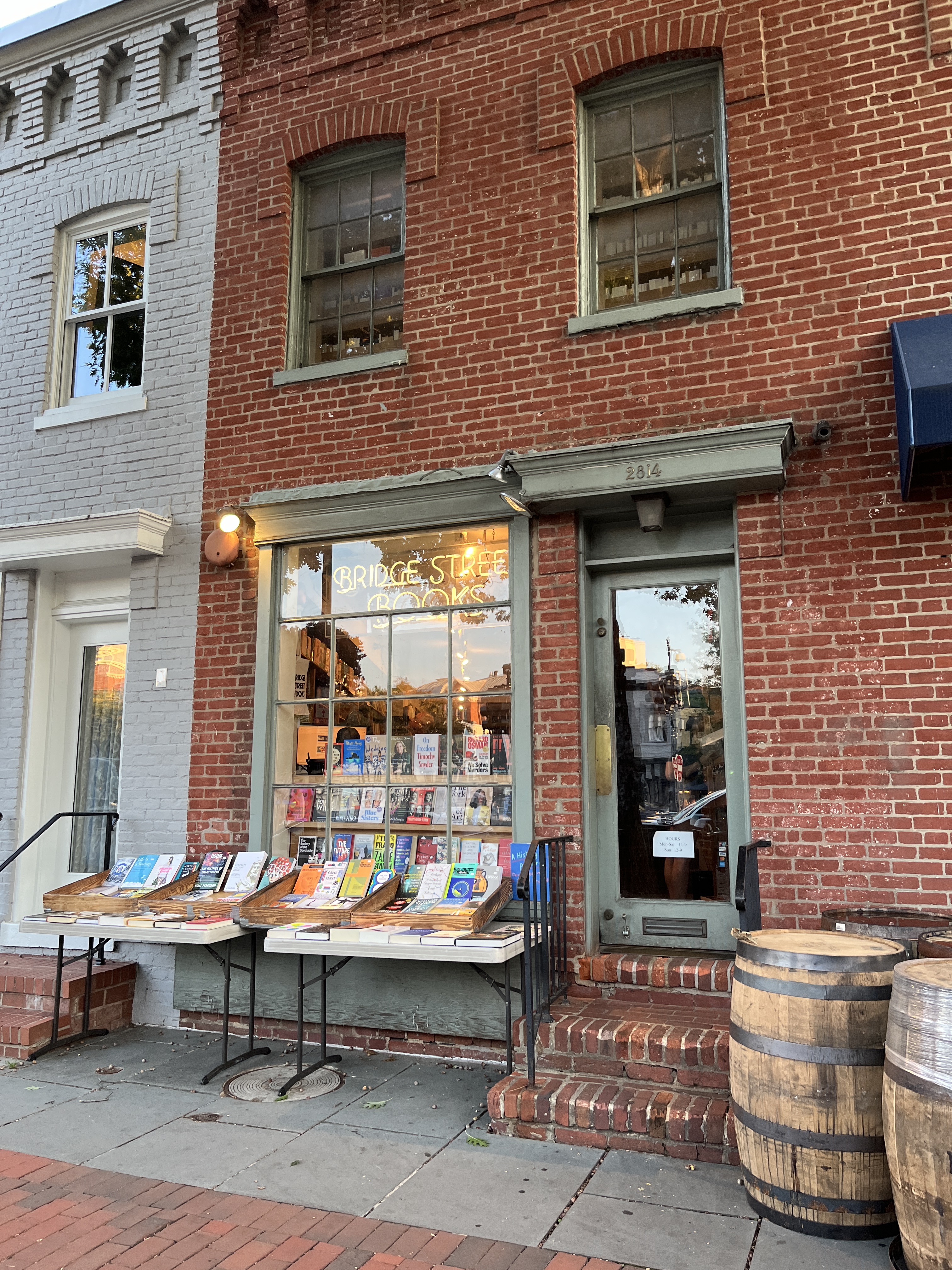
When I walk into Bridge Street Books, just past the Four Seasons Hotel in Georgetown, I occasionally get no farther than the shelves inside the front door. That’s where the detective fiction is displayed. Once I discovered they had a good selection of Simenon’s Maigret novels I was hooked on this quirky little hole-in-the-wall.

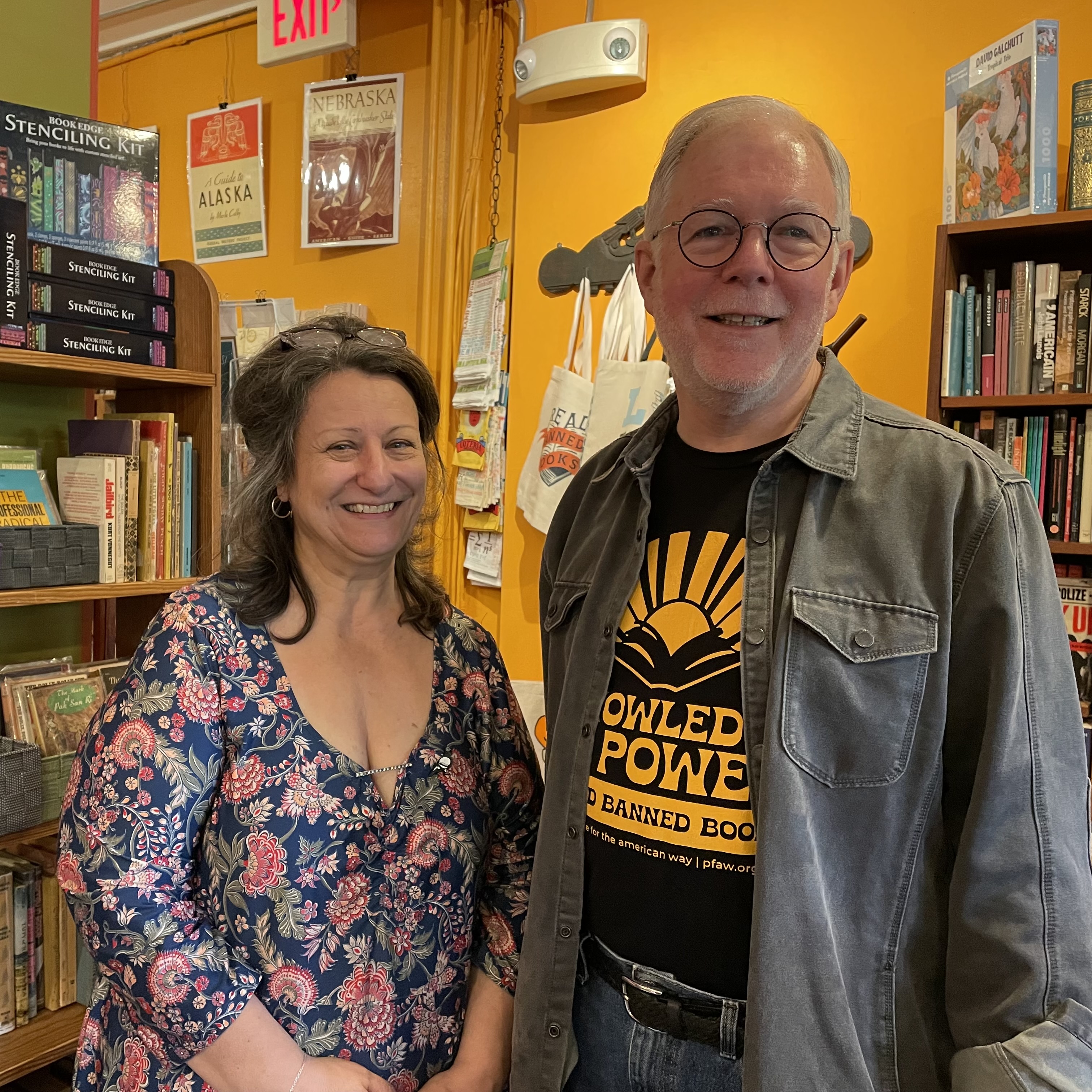
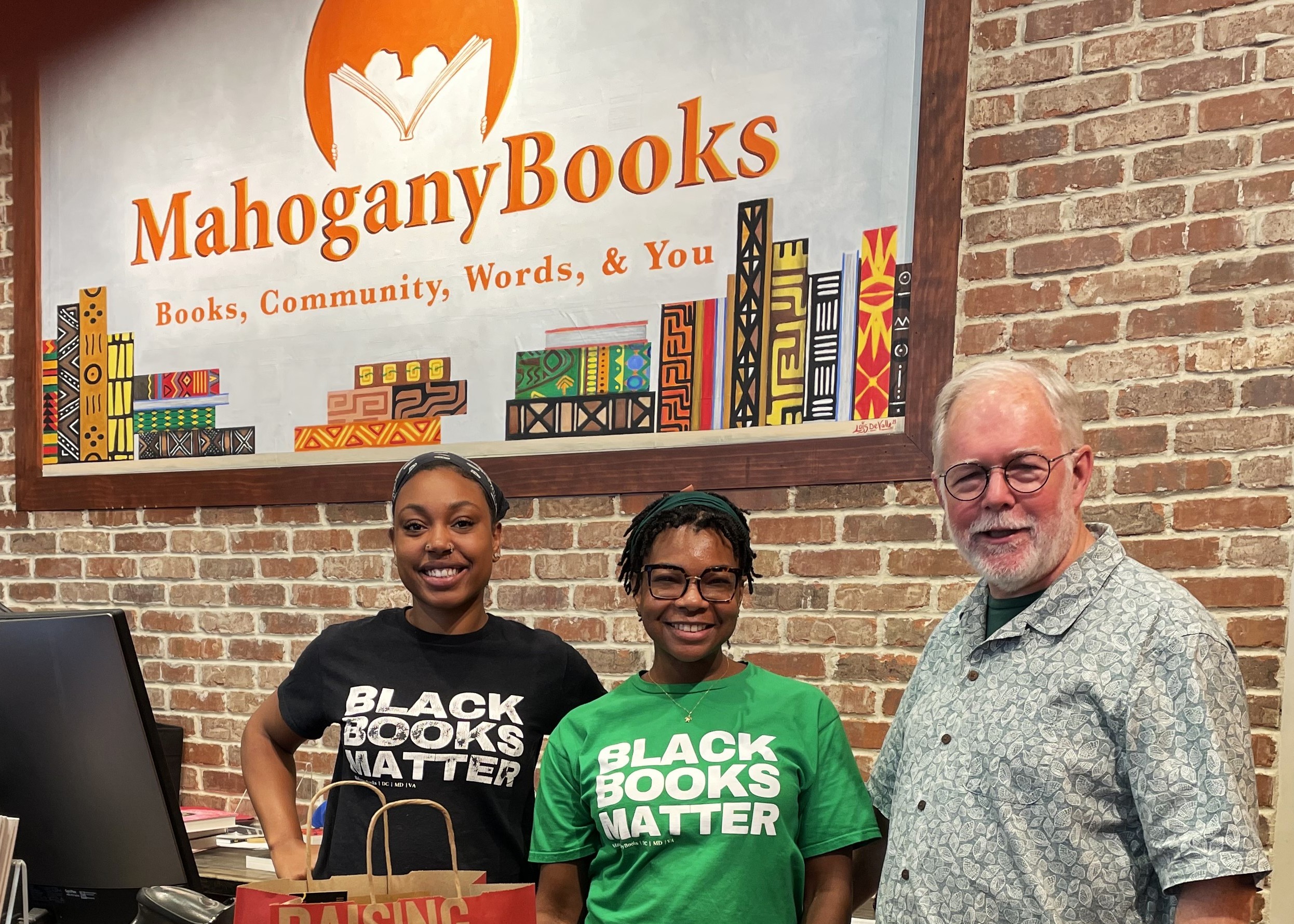
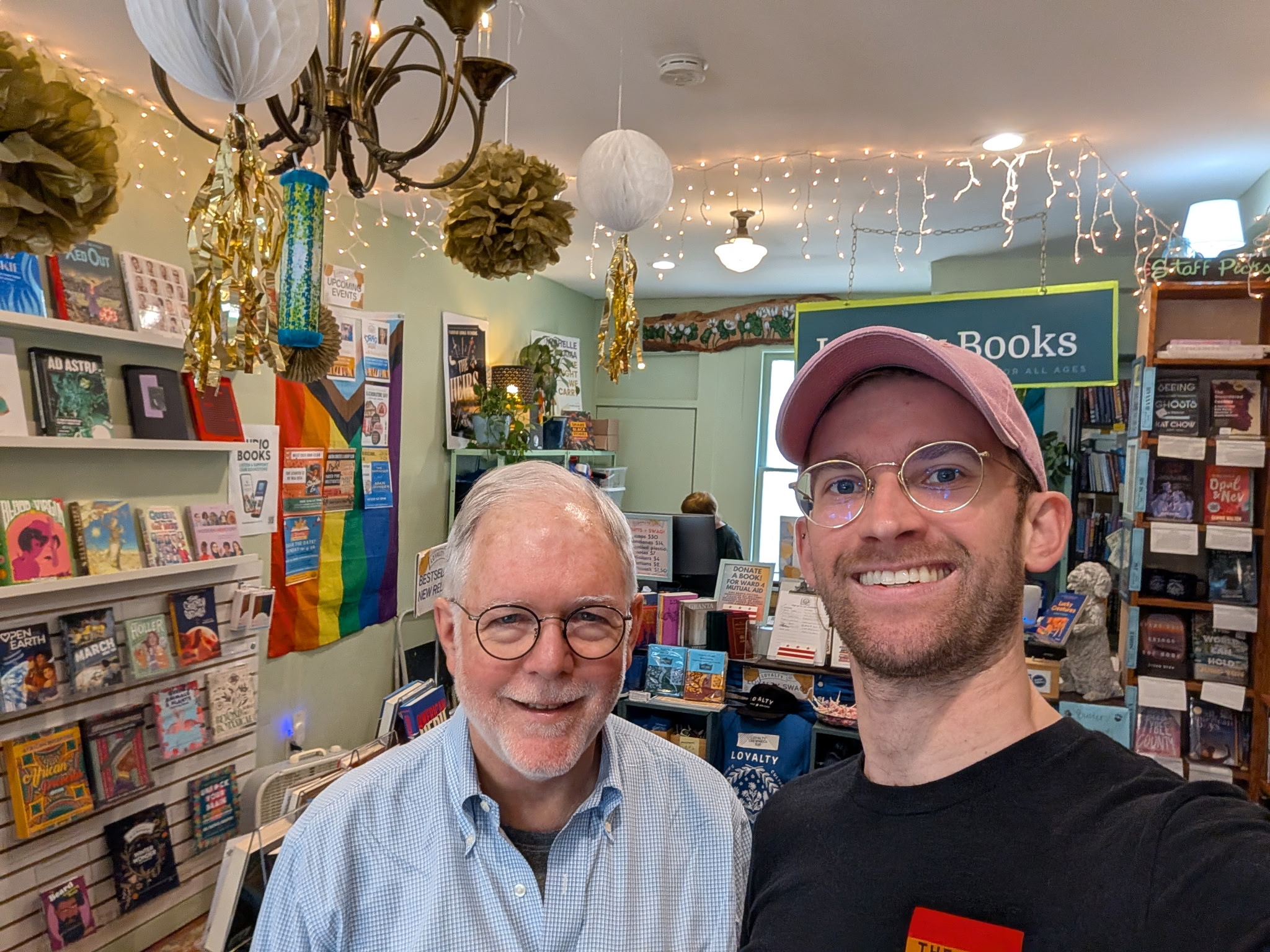
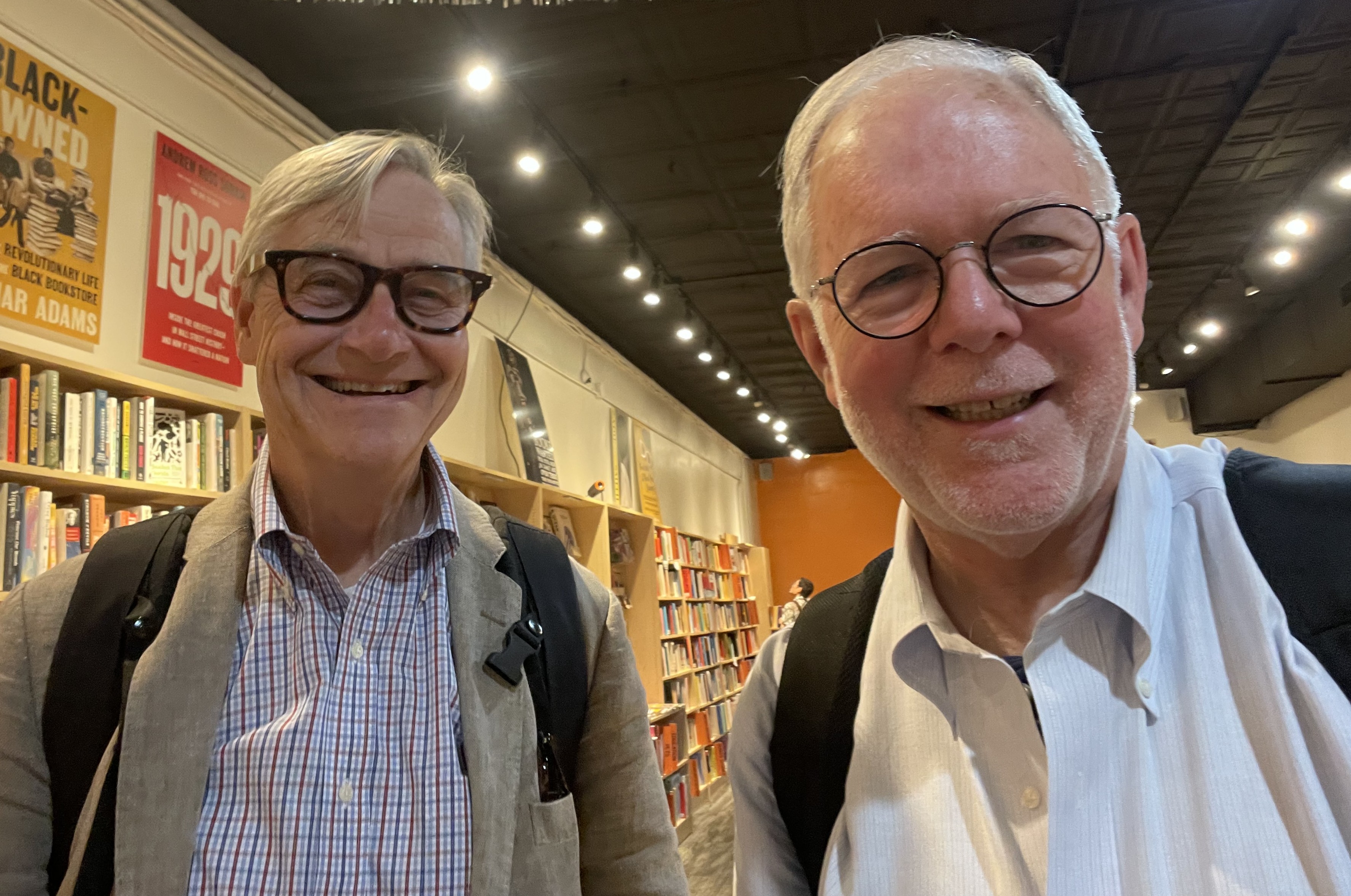
In this third installment * of my year of visiting the DMV’s Independent Bookshops, let me tell you a bit more than what’s just inside the cover, so to speak, before I get to the book at hand.

Bridge Street Books (via Wikimedia)

Founded in 1980 by Philip Levy, Bridge Street Books stocks a wide selection of trade, university, and small press publications. Climb the steps into this small two-story shop and one feels like you’ve entered the crowded apartment of a very interesting bibliophile, an individual who stocks works that interests them and displays their passions through the artwork and photos of Virginia’s Chesterfield Nationals baseball team that line the staircase wall.

Levy passed away in 2017, and the shop has since been run by a nonprofit. Regulars and reviewers most often cite the poetry, philosophy, and history selections as being especially diverse and rich. Two tables usually sit outside the front door filled with bargains to entice those walking by to stop and browse. When I’ve moved beyond the detective fiction, I’ve found an eclectic selection that certainly reflects the Georgetown neighborhood’s tastes and interests. And I usually find something that calls out to me to be purchased and read.

Bridge Street Books is a small, individualized gem in a city and an industry that have become depressingly homogenized with chains (the city) and online options (the industry) over time. Do yourself a favor and give them a visit.


Third installments seem to be the theme of this post, as on a recent visit to Bridge Street I picked up the third work in the Maigret Series. One of the first things that struck Chief Inspector Maigret was how strangely indifferent the wife and son behave when he investigates the death of a Monsieur Gallet in a small town outside Paris. Their attitudes just add to the puzzle of a crime where everything seems false.

The Late Monsieur Gallet (1931) by Georges Simenon, an early work in the Inspector Maigret series, is a tale of misdirection, betrayal, and misfortune. Called to the crime scene in a small hotel outside Paris, Maigret is immediately struck by the fact that so much about the case seems fake. The grieving relatives don’t exactly grieve. The dead man used an alias and had not worked at his stated place of business for 18 years. He traveled extensively throughout the country although his health was poor. Monsieur Gallet had been shot in the head, but it was a knife stabbed in the heart, administered almost immediately after the gun wound, that killed him. And was the dead man right or left-handed?

Because the book is an early one in this long-running series, the reader is still learning about the Chief Inspector’s methods, quirks, and history. Madame Maigret makes only a nominal appearance and except for the brilliant and methodical forensic specialist Joseph Moers—who loses part of an ear when he is shot examining the evidence—few of the other officers from the series are included in this story. Maigret delves into the contradictions that are all around him, trying desperately to sort out the facts from fiction. Using all of his skills, the inspector works to uncover the true crime at the heart of this story.

As I have been delving into Simenon’s Maigret canon, I have also become intrigued with the different approaches to portraying the detective on television. A new Masterpiece release on PBS updates the story to modern times, with a somewhat unconventional Maigret (he carries his father’s pipe around, but never smokes it); a striking and smart Madame Maigret, who is very much the inspector’s equal; and a diverse cast of supporting officers. I was familiar with the first story in this new season (The Lazy Burglar) and was able to see that the original story outline is faint but nonetheless provides a useful frame on which the writers and producers can add a variety of subplots.

It generally works. Even with those changes I enjoyed the new adaptation and am eager to see if the producers continue with future seasons. Simenon’s Maigret series is ripe for both reading (and re-reading) of the originals while also adapting the stories and characters for a modern audience.

A hallmark of Maigret as a detective is his empathy and insight into human behavior. At the end of this novel, the inspector no longer had the dead man’s picture, but he has something better: an understanding of what drove his final actions.

“His right cheek was all red . . . blood was flowing. He was standing there staring at the same place, as if he was waiting for something.

Peace, for heaven’s sake, that’s what he was waiting for, growled Maigret . . .”

More to come . . .

DJB

*To see the most recent installment in my year of visiting the DMV’s independent bookshops, click here. Three down, twenty-two to go!

Observations from . . . January 2026

A summary of the January posts from the MORE TO COME newsletter.


It can appear that the world—or at least our country—has lost its mind. The brilliant Canadian cartoonist Michael de Adder* recently posted a new work that spoke volumes. As a man clearly three-sheets-to-the-wind downs a liter of booze, his wife observes: “You should have avoided the news if you wanted a Dry January.”

The classicist Elizabeth Bobrick loves to tell her readers the old stories and invite them to think about what these classics can tell us today. “Hubris was a legal term in 5th century Athens,” Elizabeth recently wrote on her wonderfully titled Substack This Won’t End Well: On Loving Greek Tragedy. “Crimes of hubris included intimidation, assault and battery, rape, and public humiliation of enemies just for fun. Remind you of anyone?”

Like my friend Elizabeth, I’m a great believer in the power of stories and myth to help us make sense of our world. In January I used the turning of the year, language from a civil rights hero, and stories—including two brilliant works of fiction—to contemplate our path forward as individuals, community, and a nation.

In thinking and writing about what the past has to tell today’s world, I found myself agreeing with the writer John Sarvay, leaning into his assertion that meaning survives at the human scale. In a world increasingly dominated by the voices of social media and AI, we need to find ways to build and protect the smaller narratives, local and human-scaled, that might still hold meaning across political divides. “In rooms you can stand in, voices you can hear, systems you can touch.”

People are good for you. Connecting with other people and learning their stories—instead of listening to a news system dominated by angry voices or imbibing in a bottle of whiskey, no matter how smooth—has always been the way forward.

Let’s jump in and see how those thoughts played out on MORE TO COME this month.


READER FAVORITES

A thoughtful and intimate novel—reviewed in my post The stuff of life—topped the list of reader views on MTC in January. The Correspondent by Virginia Evans packs a subtle yet powerful message: we can grow and change even when change seems impossible. Consisting of letters written and received by Sybil Van Antwerp—a mother, grandmother, wife, divorcee, distinguished lawyer, retiree—it is also a testament to the power of the written word. In capturing one woman’s life—the joys, sorrows, births, deaths, pain experienced, pain hidden, pain finally explored—Evans has produced a vibrant work that envelops and moves the reader.

Another reader favorite was my annual New Year’s Day post: The beginning of awe is wonder. The beginning of wisdom is awe. In that essay I consider eight life learnings that guide me as opposed to a reliance on constantly changing resolutions. The language I used in 2013 in crafting these rules for the road of life tends to focus on actions: walking, eating, spending, committing, laughing, caring. We can’t simply think our way into being the person we are meant to be, we have to act out of our commitments. These guidelines have helped me take steps forward in my quest to be open to love and wonder.


LOOKING AT AMERICA’S STORIES

  • A moment like this is my reflection after watching the public swearing-in of New York City Mayor Zohran Mamdani. There have been other moments in our history when the time was ripe for change, when a political base changed sides, when the country faced vital decisions that could become part of Dr. King’s long arc of the moral universe that bends toward justice. Mamdani—in a powerful speech that spoke to our moment—looked back while also looking forward. 
  • Two of my posts revolved around the Martin Luther King, Jr. holiday. The Times They Are A-Changin’ examines some of the music that was an especially powerful part of the push for civil rights in the 1950s and 60s. America remains a work-in-progress is my reflection about the work before us today. Abraham Lincoln called to the better angels of our nature from one of the darkest periods in our history. Dr. King showed us what that can look like in Selma, Birmingham, Atlanta, and Memphis. The fight for democracy never ends. And our legacy—what we do in this moment—lives on past our time on this earth.
  • All good stories ask us to consider past and present. Eden and Birmingham and Minneapolis. Our beliefs are meant to be held up to scrutiny, not covered up with lies as I write in Stories and myths. We should all seek to understand when different perspectives and stories are being used for enlightenment and, conversely, when an alternative narrative is being used to hide the truth.
  • Times that try men’s souls reminds us that we can do hard things. The beginnings of the anti-slavery movement were actually “puny.” Female abolitionists sold crafts at fairs to make enough money to bring men like Frederick Douglas to speak at events. “Who the hell thinks they are going to sell pin cushions to bring down a powerful institution?” asks writer and activist Rebecca Solnit. “Except they did.” People think they are only one person. What can they do? Historian Heather Cox Richardson responds: “Make a damn pin cushion.” Those of us who don’t know what to do in the face of tyranny can ask a simple question. What is my pin cushion?

BOOK REVIEWS

In addition to my review of the new novel by Virginia Evans, I also highlighted four other books in this month’s newsletter.

  • What binds us together is my take on Clear by Carys Davies, a historical novel that brings a great deal of power, intelligence, and empathy into a few short pages. It was recommended by Brilliant Reader Sara, who says that it is “one of the rare books that I care about keeping in my library no matter how many times I have to cull out for moving or just for extra room.” Amen.
  • The first Elizabeth George novel A Great Deliverance was the treasure I uncovered on a recent visit to The Lantern Bookshop, the first stop in my 2026 quest to visit all 25 independent bookshops in the DMV. I write about both in A jewel of a novel.
  • Last year we followed the advice of the great travel director Dr. Seuss and took off—with brains in our head and feet in our shoes—to explore great places. And the wonderfully wise children’s classic was a perfect place to kick off this exploration of the “places we saw” in 2025, as I write in Oh, the places we’ve seen!

COMMENTS I LOVED

In response to the post on Zohran Mamdani’s speech as mayor of New York City, Brilliant Reader Jane wrote:

“I can’t imagine the conversations around the dinner table at your house, not to mention breakfast and lunch.

Thank you for this uplifting piece.

I hope we don’t squander this opportunity. The consequences are dire.”

I wrote back that those conversations are probably not as riveting as she might imagine, but sometimes we do get in pretty deep. Dinner table conversations, especially with multiple generations involved, sometimes lead to magic.


DON’T POSTPONE JOY

Thanks, as always, for reading. Your friendship, support and feedback mean more than I can ever express.

As you travel life’s highways be open to love; thirst for wonder; undertake some mindful, transformative walking every day. Recognize the incredible privilege that most of us have and think about how to put that privilege to use for good. Women, people of color, LGBTQ+ individuals, immigrants, public servants, and others can feel especially vulnerable . . . because they are. Work hard for justice and democracy as the fight never ends.

But also keep some room in your heart for the unimaginable. Take time to dawdle and dream. Leave enough empty space to feel and experience life. Those gaps are where the magic begins. When times get rough, let your memories wander back to some wonderful place with remembrances of family and friends. But don’t be too hard on yourself if a few of the facts slip. Just get the poetry right.

Remember that “we are here to keep watch, not to keep.” Pay attention. Be astonished. Tell about it. And bash into some joy along the way.

Life is finite . . . love is not.

Try to be nice. Always be kind.

More to come . . .

DJB


*A winner of the 2020 Herblock award


For the December 2025 summary, click here.


You can subscribe to MORE TO COME by going to the small “Follow” box that is on the right-hand column of the site (on the desktop version) or at the bottom right on your mobile device. It is great to hear from readers, and if you like them feel free to share these posts on your own social media platforms.


Photo of winter by Adam Chang on Unsplash.

Times that try men’s souls

The work will remain the work. To heal old wounds. To not make new ones.


In the midst of a bitter winter storm of discontent—both literal and figurative—it is useful to recall the famous first lines of Thomas Paine’s American Crisis, originally published in a bleak, dark winter 250 years ago.

“THESE are the times that try men’s souls. The summer soldier and the sunshine patriot will, in this crisis, shrink from the service of their country; but he that stands by it now, deserves the love and thanks of man and woman. Tyranny, like hell, is not easily conquered; yet we have this consolation with us, that the harder the conflict, the more glorious the triumph. What we obtain too cheap, we esteem too lightly: it is dearness only that gives every thing its value.”

Few sentences in American history better describe the challenges we have faced and conquered and that we must still face and continue to conquer. We’ve been through difficult times before. But the actions of those who fought against tyranny—in the dismal winter of 1776, on the rolling farmland of Gettysburg, on the beaches at Normandy, on the streets of Birmingham, and in so many instances throughout our history—provide hope and a roadmap.


WHAT IS YOUR PIN CUSHION

In a 2023 conversation between Rebecca Solnit and Heather Cox Richardson these historians remind us that we’ve been here before. We’ve faced challenges with bleak prospects. At the 16:50 mark of the video, Richardson shares this example:

“In 1853, elite enslavers controlled the presidency, Supreme Court, and the Senate and were making inroads into the House. Those who believed that a few elite white men should rule over others looked to expand their vision. In 1854 they get Congress to pass a law that makes enslavement across the country possible. Abolitionists and those who sought democracy looked defeated. Yet by the mid-1850s, a new political party was formed that called for freedom and the right to rise of the lower and middle classes. By 1859 they had recruited a young lawyer to help articulate their vision. In 1860, that lawyer—Abraham Lincoln—was elected to the presidency. In 1862 he had drafted the Emancipation Proclamation and in November of 1863 he delivered the Gettysburg Address, dedicating the nation to a new birth of freedom based in the Declaration of Independence.”

In ten short years, the entire course of history was changed.

Solnit replies that the beginnings of the anti-slavery movement were actually “puny.” Female abolitionists sold crafts at fairs to make enough money to bring men like Frederick Douglas to speak at events.

“Who the hell thinks they are going to sell pin cushions to bring down a powerful institution? Except they did.”

Richardson’s excited response is, “I love that.” People think they are only one person. What can they do?

“Make a damn pin cushion.”

In this place and time each of us faces a similar question. What is our pin cushion?

We can do hard things.

More to come . . .

DJB

Winter photo by Keith Polischuk on Unsplash

Read when you’re happy, when you’re anxious, and in the moments in between

Ways to get closer to books . . . a work found, appropriately, at my favorite go-to independent bookshop.


A friend I’ve known since grade school once asked how I read five books each month. My response was Ten tips for reading five books a month and I have referenced that post at the end of my monthly reading summaries ever since. Fours years in I thought it might be time for an update and, thankfully, I found the perfect book—written by an author from a younger generation—to provide a different perspective in answer to the question.

Not surprisingly, I discovered this work at my go-to local independent bookshop: People’s Book in Takoma Park. This post is the second installment recounting my 2026 quest to visit all the local independent bookstores in the DMV, and it involves what I would describe as my hometown shop. A quick one-stop ride on the metro and a short walk through Takoma’s Main Street district takes me to the welcoming confines of a store with helpful, friendly, book-loving staffers. You can easily find most major releases plus one can always order any book which isn’t in stock. More importantly, People’s reflects the progressive sensibilities of the Washington area’s only nuclear free zone, and that outlook on life is evident on the bookshelves. Truth-be-told, probably a third to a half of my reading selections this year will come to me via People’s Book.

Founded by a former educator who “always had a passion for finding the right book, for the right kid, at the right time,” People’s is an important part of my civic life, a place where I can hear interesting authors, meet fellow readers in book groups, and just browse with a cup of coffee to my heart’s content . . . knowing that 9 days out of 10 I’ll find something to pique my interest. Such as this new work by someone halfway around the world who shares a similar passion for reading and letting others know about the treasures we’ve uncovered.

For those keeping score, this is two bookshops down, twenty-three more to go! *


Every Day I Read: 53 Ways to Get Closer to Books (2025 for the first English translation) by Hwang Bo-Reum is a collection of short essays where the young South Korean author considers what living a life immersed in reading means. It is a book about books, but it is also much more than that. Bo-Reum is asking her readers to contemplate their lives, and how we should live in a world where we are bombarded by commercialism and the loss of community. She asks why we read, has thoughts on ways to read through a reading slump, and suggests we think more deeply about how we read.
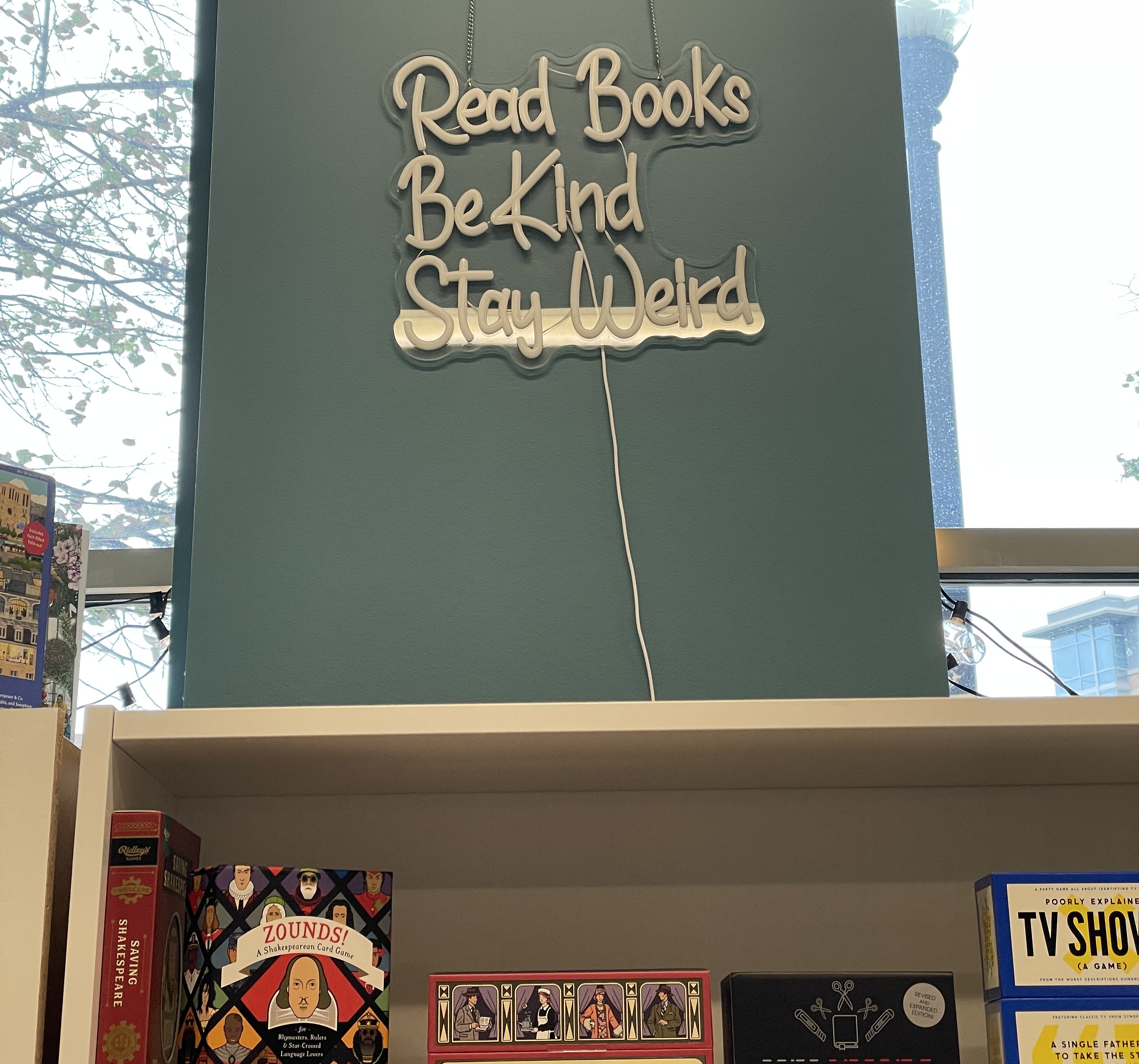

Many of the chapter titles—the “headlines” for this book—are easily understood and are simple enough to help readers take steps to immerse themselves more fully in the reading life. Here are ten as examples. If some don’t resonate for you she has more to consider:

  • Read on the train
  • Read small books
  • Always have a book with you
  • Choose books, not the internet
  • You don’t always have to finish it
  • Read to seek answers
  • Read widely, then deeply
  • Keep a reading list
  • Read to overcome despair

And my favorite:

  • Read when you’re happy, when you’re anxious, and in the moments in between

Any bibliophile could come up with a similar list. But there were several things about this book that touched me. The first is the author’s age. This is a young woman who has thought deeply about the life she wants to live. So deeply, in fact, that she quit her job in a highly regimented society to pursue a life of reading and writing.

And then there are the quotes. Bo-Reum is a good writer and she’s drawn to good writing.

I was also taken by the cultural reminders found throughout Every Day I Read. Hwang Bo-Reum references a number of classics from the western canon, but she also makes numerous comments about Korean books. After about the tenth time I realized that I was being shown another whole existence outside my little literary cocoon. It was a good reminder. The world is a big place and we know so little of it. That’s another good reason to read.

Bo-Reum recommends you turn to a short read in those moments you find yourself getting discouraged when reading. They only take an hour or two and then you can bask in the satisfaction of having finished a book. I know the feeling. But she adds this additional reason for turning to the quick read: “Small books have become my go-to whenever my mind is cluttered or when I’m having a bad day.”

I’m going to try that approach.

One book she references is Patrick Süskind’s Three Stories and a Reflection. In the last story, “Amnesia in Litteris,” he describes how “despite reading voraciously for more than three decades, he barely remembers the details of any book.

“Süskind says: ‘If we don’t even retain a shadow of memory, despite having read it only recently, then why do we read?’ He mulls the question over and arrives at the conclusion that reading isn’t about remembrance but the change that can come from reading a book.

You can transform your life.

Two suggestions Bo-Reum makes are ones I’m taking into the new year. First, she reminds us that you don’t always have to finish books you’ve started. She compares books with people. We connect more deeply with some people and some books. If we’re no longer curious about the book or what happens next, close the book. Don’t try and salvage a failed relationship.

Second, while she used to think that reading one book at a time was the way to go, “I’ve discovered a different way to love, and there’s no turning back. The question now isn’t one versus multiple, but how many I can read at once.” My limit is much lower than the author’s, but I’m going to employ this strategy to work through some of the big books I have in the TBR pile.

Each essay ranges from two to four pages, so they are easily read during a quick break.  They cover how to read more widely, ways and opportunities to sneak in more reading time, reading based on emotion, and fun ways to read such as book bars. Getting a drink and a snack and then settling in among others to read without interruption sounds very alluring.

Late in the book Bo-Reum suggests we ask friends for suggestions. “The question ‘What have you been reading?’ seems to have the power to open a latch in our hearts.”

On days when you don’t know what to do, sit down and read. Annie Dillard in The Writing Life reminds us that our life is divided into days. We can always start afresh. Each day.

“How we spend our days is, of course, how we spend our lives.”

This work can help you discover that there is a joy in reading, a thrill in coming across a quote that resonates, a deep satisfaction in having found reflective moments taken with introspection.

Just do it.

More to come . . .

DJB


*See the first installment of my independent bookshop quest here.


Photo by Christin Hume on Unsplash