Think twice before booking that dream vacation to the English countryside.
My friend and Brilliant Reader Sandy gave me this wonderful little book. With my love of murder mysteries and travel, I think she was warning me!
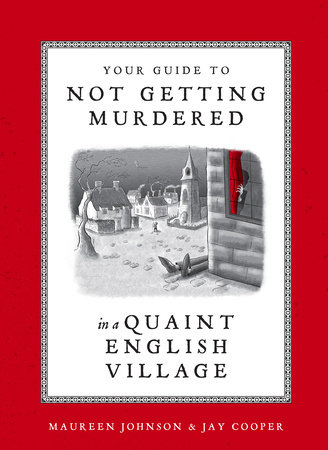
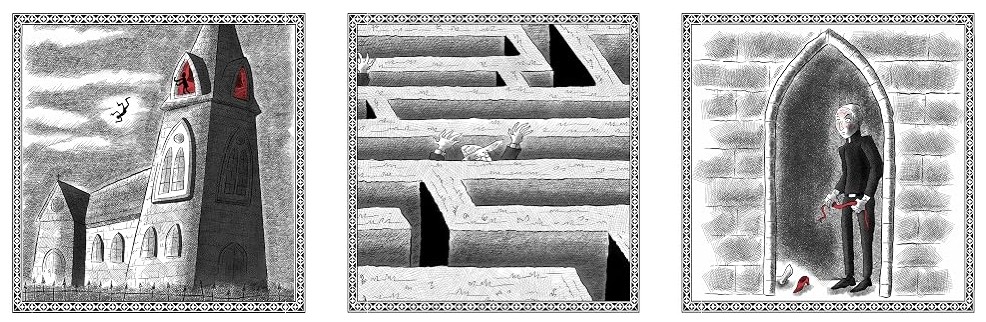
Your Guide to Not Getting Murdered in a Quaint English Village (2021) by Maureen Johnson and Jay Cooper is a tongue-in-cheek send-up of the classic English murder mystery where the most dangerous place to visit is the narrow old lanes, the manor house, and the church in a small rural village. The authors begin with a “note to the gentle reader” that makes every attempt to keep you from booking that dream vacation. However, knowing that you will probably go ahead and pursue that trip, they are prepared—with witty writing and Gorey-esque drawings—to point out all the horrors you will face.
Places to avoid seem obvious: the village church (tall towers to fall from), the pub (beware the mineral-rich aftertaste of the ale), and the manor house (where each floor has its own traps). Things to avoid may prove challenging: the garden maze (you’ll never get out), and the village fete (the sponge cakes are full of glass).
And then there are the people who, if you see them coming, you should run the other way: the oldest resident (they are the hardest to kill), anyone who leaves a message (all messages in an English murder village are bad news), the vicar (just run), and anyone who looks out windows (it’s curtains for you).
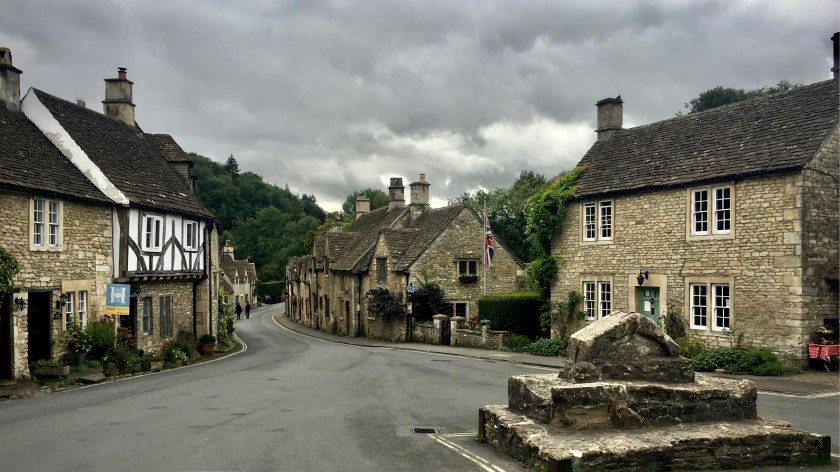
A weekend “roaming narrow old lanes, touring the faded glories of a country manor, and quaffing pints in the pub” sounds very charming. That is, unless you have the misfortune of finding yourself in an English Murder Village.
Let’s celebrate bad opening sentences one more time.
One year ago Scott Rice, the founder of TheBulwer-Lytton Fiction Contest, announced that the four-decade effort would, alas, come to an end. As noted on the website, the Bulwer-Lytton Fiction Contest challenged entrants to compose opening sentences to the worst of all possible novels.
The BLFC was “the misbegotten brainchild of Professor Scott Rice. Sentenced to write a seminar paper on a minor Victorian novelist, he chose the man with the funny hyphenated name, Edward George Bulwer-Lytton.” Although Bulwer-Lytton is perhaps best known for The Last Days of Pompeii, it was his novel Paul Clifford that began “with the famous opener that has been plagiarized repeatedly by the cartoon beagle, Snoopy.”
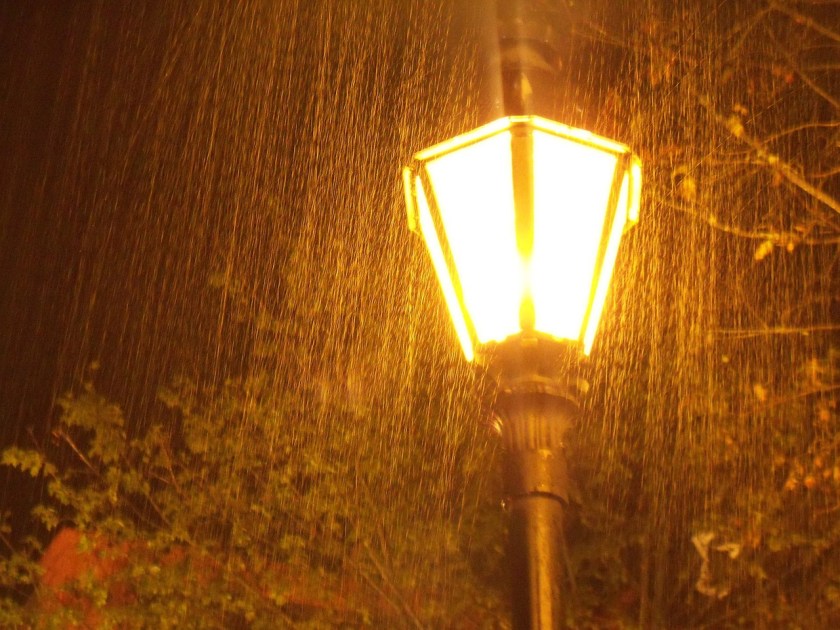
“It was a dark and stormy night; the rain fell in torrents—except at occasional intervals, when it was checked by a violent gust of wind which swept up the streets (for it is in London that our scene lies), rattling along the housetops, and fiercely agitating the scanty flame of the lamps that struggled against the darkness.”
Through the years the contest was covered by all the major news outlets including the New York Times. I’ll admit that MORE TO COME was late to the game, but I did have posts on the final two contests, in 2023 and 2024.
So in this farewell nod to the skillful use of words in pursuit of bad writing, here are a few favorites of mine pulled from the BLFC archives.
Let’s begin with the Grand Prize winner from the very first Bulwer-Lytton contest:
2020 produced a short but sweet, pandemic-fueled Grand Prize winner:
“Her Dear John missive flapped unambiguously in the windy breeze, hanging like a pizza menu on the doorknob of my mind.”
Lisa Kluber, San Francisco, CA
And the final grand prize in 2024 went to this gem of wretched writing:
“She had a body that reached out and slapped my face like a five-pound ham-hock tossed from a speeding truck.”
Lawrence Person, Austin, TX
The “Adventure” category was always sure to please. First the 1999 winner . . .
“The woods held danger at every dark, haunting corner, and Indiana Jones decided it was too risky to continue; he had already been attacked by a mound of fire ants, had a brush with poison ivy, and faced a terrifying encounter with the Forest Ranger’s vicious beagle, Muffin.”
Christine Sullivan, Melbourne, FL
. . . and the winner from 2023 . . .
“The man squinted his eyes as the blistering cold winds battered his rugged face, his eyes darting about, desperately hoping, daring to dream that amidst the frozen wasteland, he would find the last Klondike Bar that he had hidden in his freezer.”
Oliver Mauser, Jacksonville, FL
. . . and finally this really bad Dishonorable Mention winner from 2020:
“Sally loved Geoff so deeply that if he were a pirate on a dread pirate ship (and not an insurance adjuster), snarling and drinking, murdering and raping his way across the Caribbean (well, maybe not raping, it was the sentiment that counted) and he had a peg leg, she would have gladly sawed her own leg off and sewed it to his stump with silken threads, so he could dance again, holding her up since she was now a sudden amputee.”
David Lourne, Waterloo, Ontario, Canada
The “Crime and Detective” category was made for this contest. Here’s the winner from 2020:
“When she walked into my office on that bleak December day, she was like a breath of fresh air in a coal mine; she made my canary sing.”
Yale Abrams, Santa Rosa, CA
. . . another winner, this one from 2017 . . .
“Detective Sam Steel stood at the crime scene staring puzzled at the chalk outline of Ms. Mulgrave’s body which was really just a stick figure with a dress, curly hair, boobs, and a smiley face because the police chalk guy had the day off.”
Doug Self, Brunswick, ME
. . . and a final one for this category from 2013:
“It was such a beautiful night; the bright moonlight illuminated the sky, the thick clouds floated leisurely by just above the silhouette of tall, majestic trees, and I was viewing it all from the front row seat of the bullet hole in my car trunk.”
Tonya Lavel, Barbados, West Indies
Let’s close the books on the sorely missed BLFC with a few winning “Vile Puns” category entries, beginning with that amazing year of 2020 . . .
“As the passing of Keith Richards was announced on the evening news, just as had been done with Mick Jagger, Charlie Watts, and Ronnie Wood before him, Jorge gazed at the television in his Tijuana home and felt a sickening knot form in his stomach, for he realized that finally, after all the albums, concert tours, and era-defining cultural impact, the Rolling Stones would gather no más.”
Aaron Cabe, Hillsboro, OR
. . . followed by the 2013 winner . . .
“What the Highway Department’s chief IT guy for the new computerized roadway hated most was listening to the ‘smart’ components complain about being mixed with asphalt instead of silicon and made into speed bumps instead of graceful vases, like the one today from chip J176: ‘I coulda had glass; I coulda been a container; I coulda been some bottle, instead of a bump, which is what I am.’”
Brian Brandt, Lansdale, PA
. . . with the final word going to this 2007 winner:
“I was in a back alley in Fiji, fighting desperately and silently for my life, fighting desperately for oxygen, clawing at the calm and almost gentle pressure of the fabric held over my face by implacable, ebony thighs when I realized — he was killing me softly with his sarong.”
Karl Scott, Brisbane, Australia
Farewell, Bulwer-Lytton Fiction Contest. You’ve given us plenty of laughs through the years.
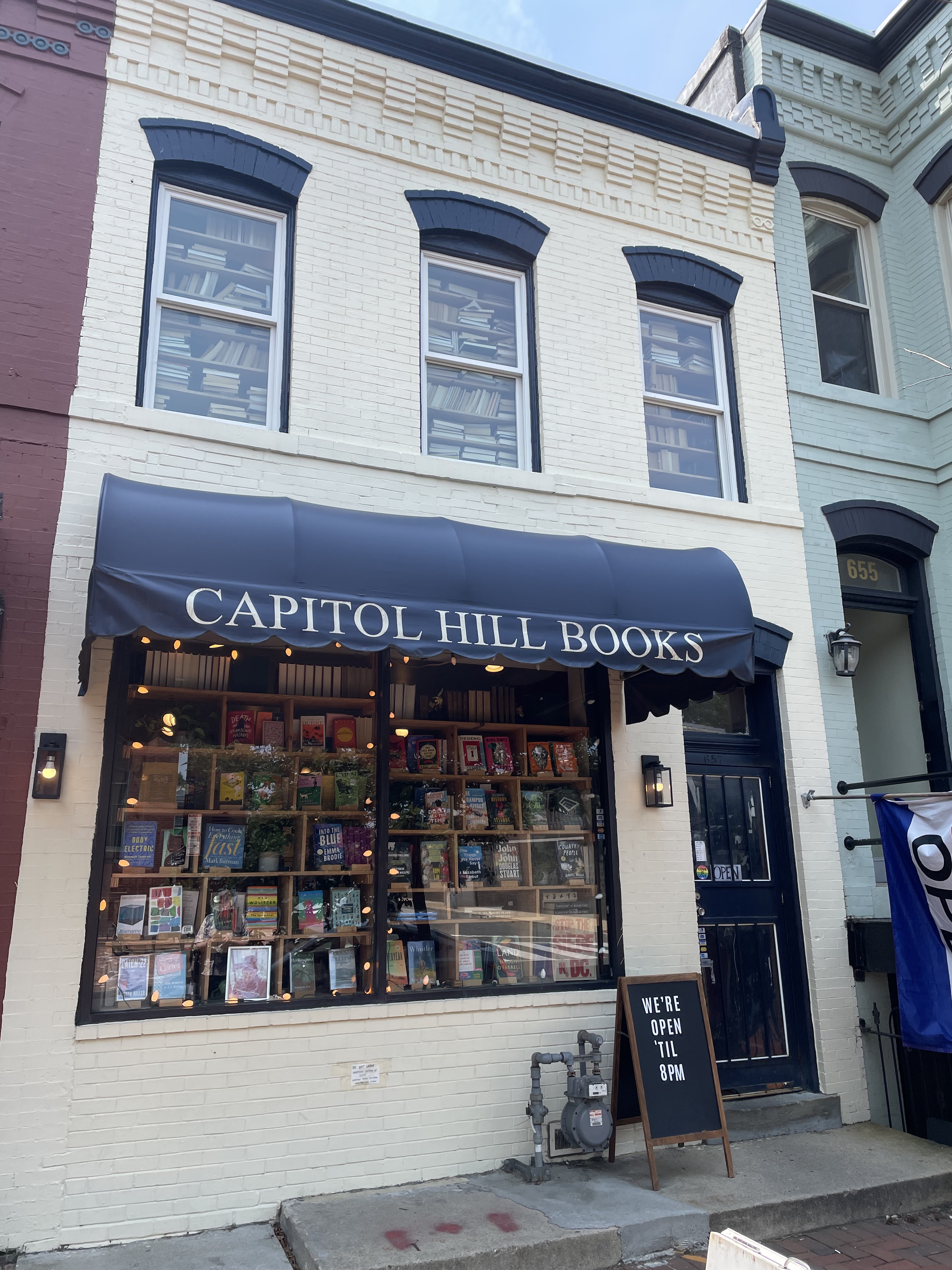
Elizabeth Buchanan’s look at why despots over the centuries have tried—and failed—to own Greenland was an unexpected discovery found amidst the treasure trove that is Capitol Hill Books.
Installment #16 in my series on the region’s independent bookshops.
You have to love a bookstore that advises potential customers with this come on:
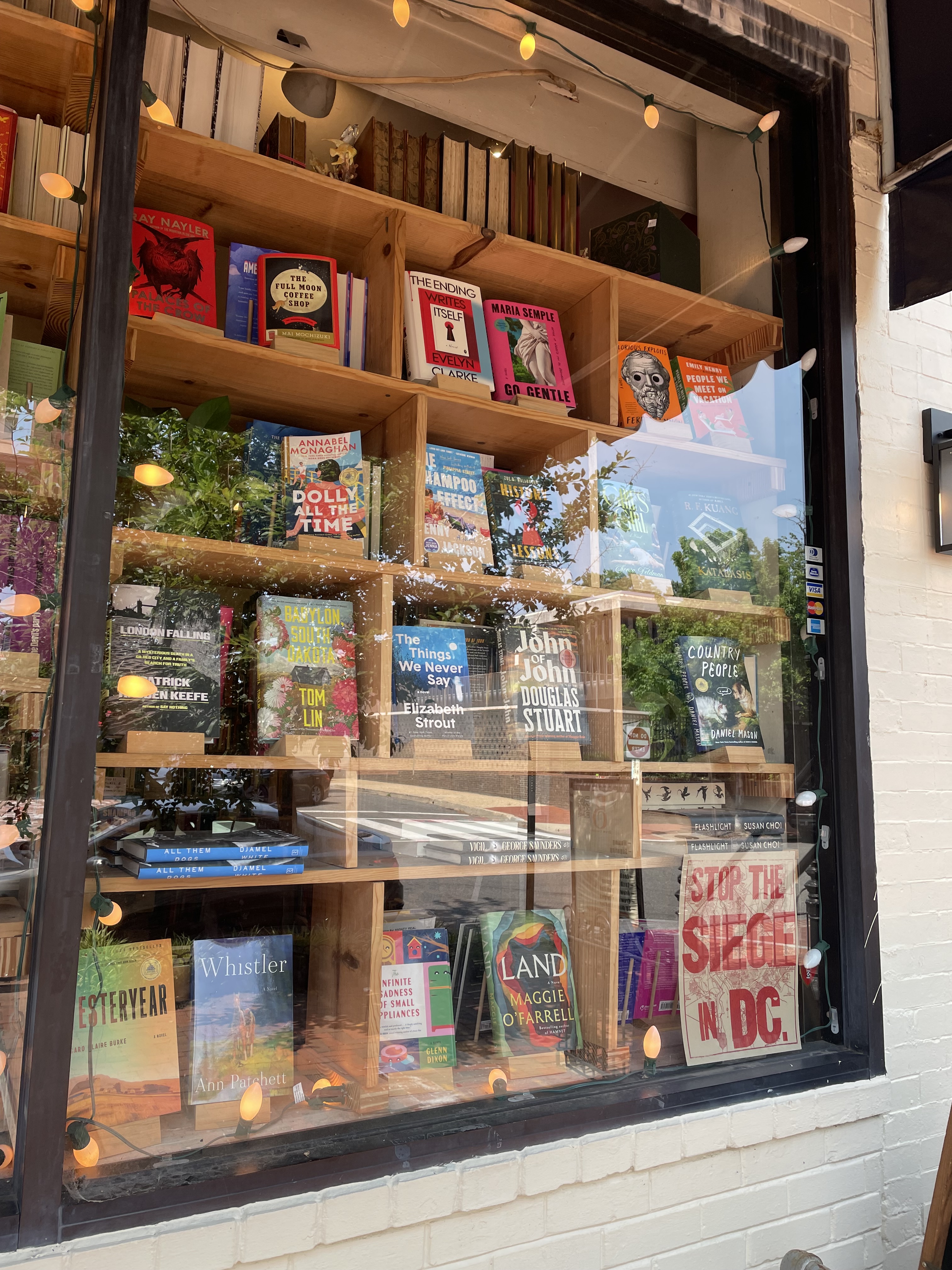
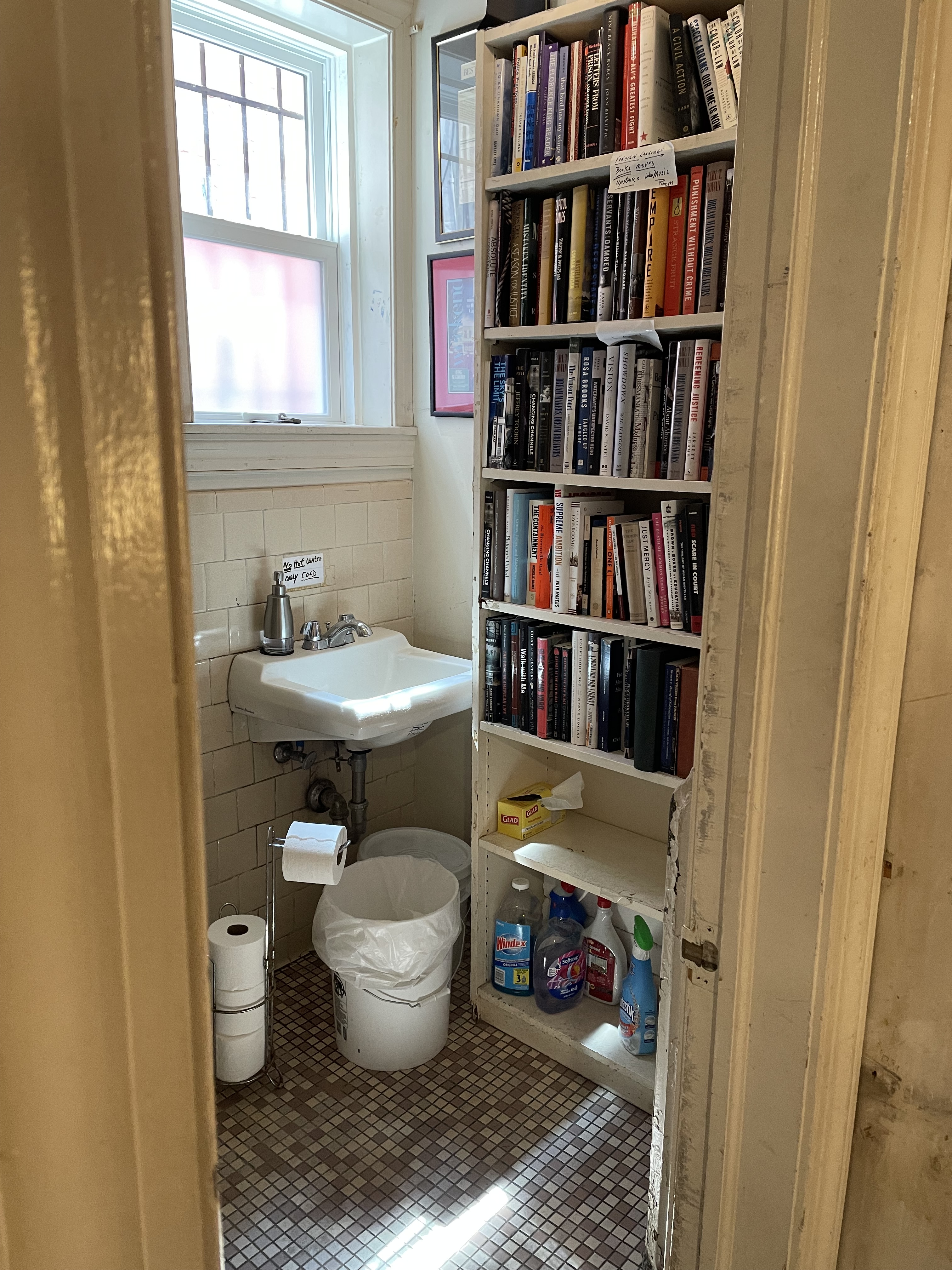
“We have many, many more books in the store than are listed on our website. To get a real taste of everything we have to offer, we recommend that you come in for a visit. We have fiction books in the Fiction Room, mystery books in the Mystery Room, foreign language books in the bathroom, cookbooks in the kitchen on the kitchen sink, business books in the Business Closet, and a Weird Section for those who like witches, dreams, and things that go bump in the night. We also have books on history, philosophy, travel, Washington DC, theology, psychology, politics (of course), art and more.”
I can attest that Capitol Hill Booksdoes have books in the bathroom. And everywhere else it can find empty space to add a shelf.
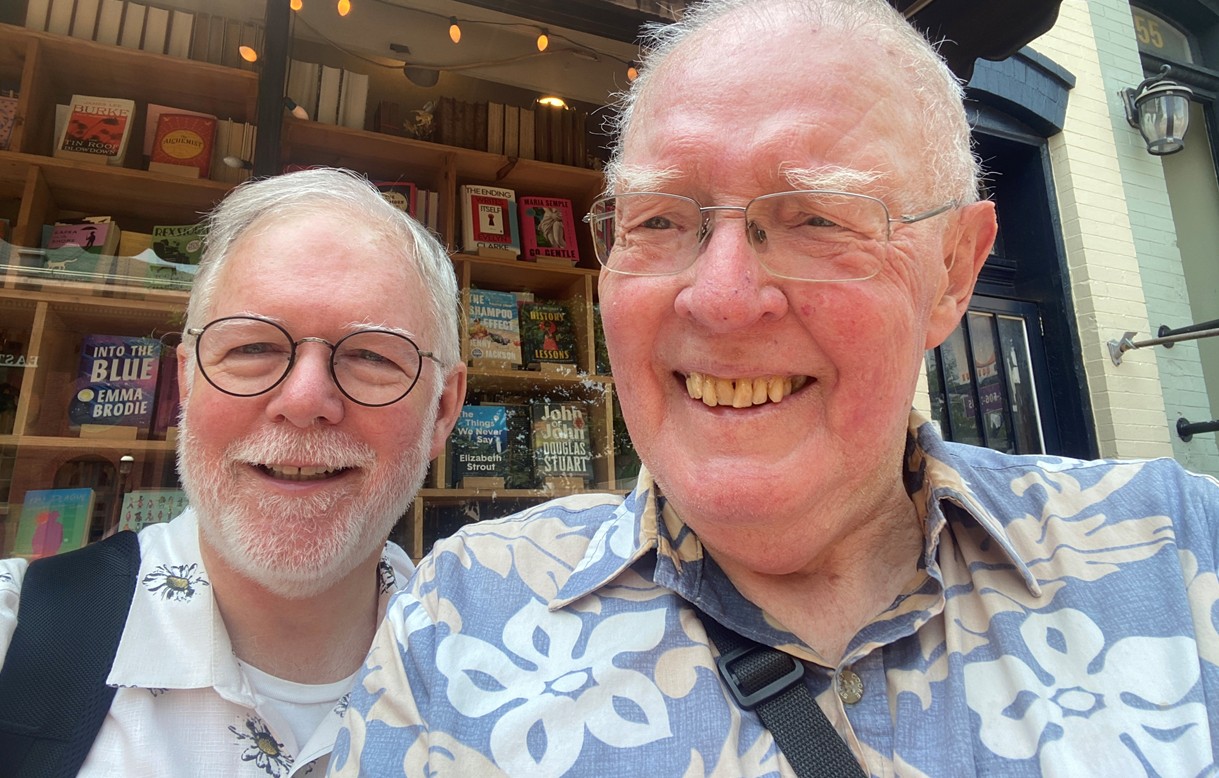
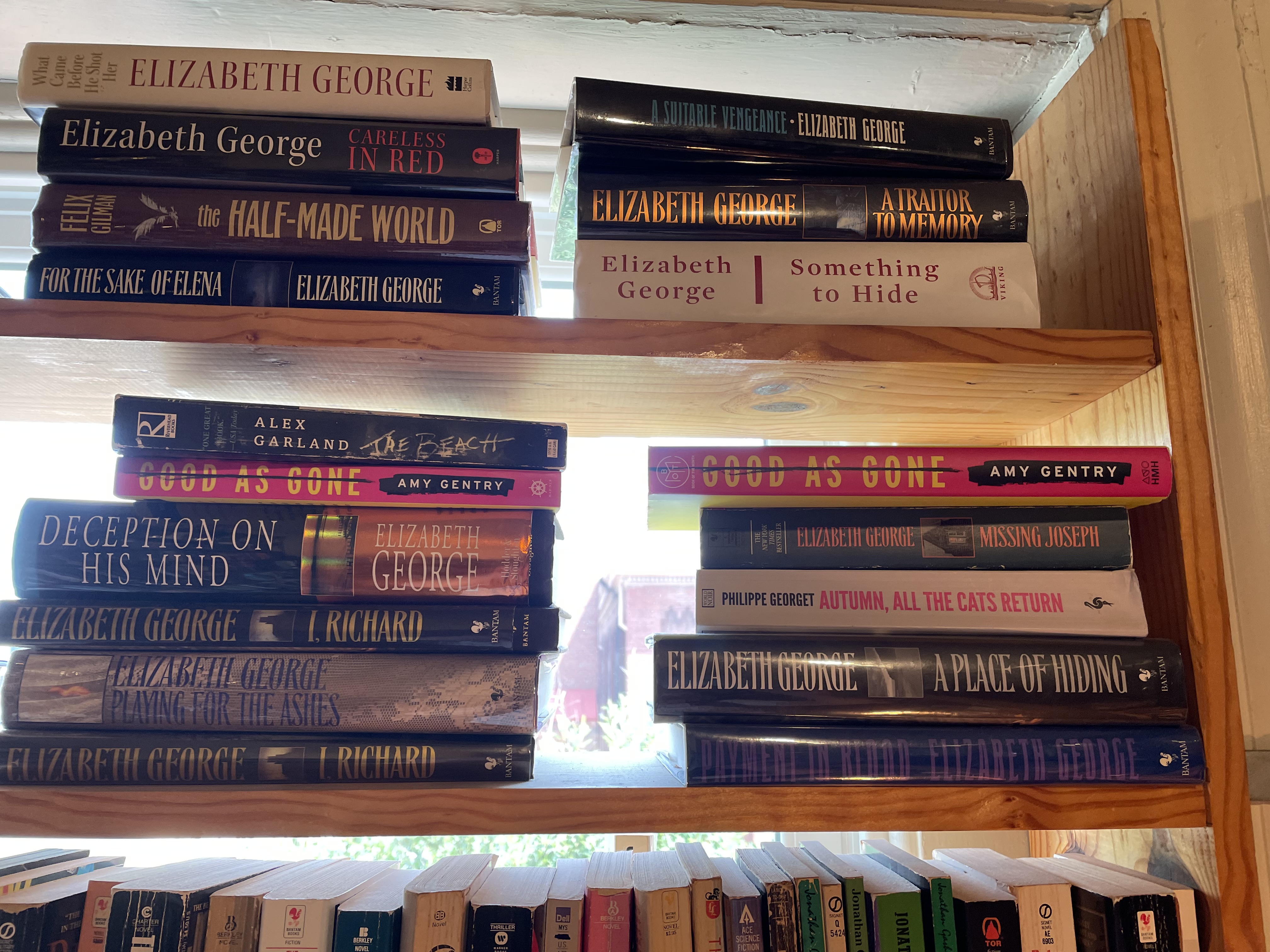
My friend and Brilliant Reader Bob Witten joined me on a warm July day to visit this shop in the heart of the Capitol Hill neighborhood. Founded in 1991, it is located just steps from Eastern Market, the Capitol, the Library of Congress, and the Supreme Court. I told the young and friendly staffer at the front desk of my bucket list journey to visit all 30 DC-area independent bookshops and she was quick to offer assistance, pointing me in the right direction so we could work our way through the maze of shelves and stacks of books. When I needed a step ladder to reach the Elizabeth George mysteries they quickly found one to suit my needs.
Suffice it to say that one could easily spend the better part of a day looking through the collection of used books, first editions, collectables, and the occasional new release in Capitol Hill Books. Bob and I didn’t stay that long, but in the time we were there I did discover a cleverly written new work by a polar geopolitics expert (who even knew they existed!). This timely analysis provided an “indispensable guide to Greenland” and how it could become the next global flashpoint. The title alone had me reaching for my wallet.
So You Want to Own Greenland? Lessons from the Vikings to Trump (2025) by Elizabeth Buchanan is an easy-to-read overview of Greenland’s history and current state of play in both reality and in Donald Trump’s mind. (Those two things often differ.) Beginning with its discovery by Erik the Red and his Viking band around 982 CE and the migration from North America of the Inuit population around 1200, Greenland has been disputed space. The Vikings were meat eaters who tended to settle in one place while the Inuits were a nomadic people dependent on the fish and the sea. When the Danish-Norwegian missionary Hans Egede arrived in 1721 hoping to find a Viking welcome, the descendants of Erik the Red had mysteriously vanished. Not to be deterred, Egede set about sharing the Lutheran faith with the Inuit. “And share the Word he did,” writes Buchanan, as “today over 90 percent of Greenlanders [identify themselves as Inuit and] belong to the Lutheran Church.” All 57,000 of them.
From the auspicious beginning of a lost colony of Vikings we are taken through the upheavals of the Napoleonic Wars, hostilities between Sweden and Denmark, the first U.S. arrival in 1867 when Secretary of State William Seward tried to buy Greenland after his successful purchase of Alaska, the gradual breaking free of Greenland from its Danish colonial chains, the important role of the island in both world wars, President Harry Truman’s offer to buy Greenland for the U.S. (there’s a pattern here), Cold War disputes, and more. Suffice it to say that the world’s largest island has had an intriguing and disputed history from its discovery to the present day.
Buchanan is writing for a general audience, no doubt timing this work to the renewed interest arising from Trump’s obsession with obtaining Greenland for the United States. She writes in a breezy style that is mostly enjoyable, sometimes inducing a chuckle and other times going a bit too far with the attempts at humor. Here’s an early example:
“Now, picture Ed Sheeran‘s head with a lush siren-red full beard, atop André the Giant‘s body. Meet Erik the Red. What we know of Erik the Red is like much of the Viking fables, or sagas, written hundreds of years after the fact. So, details are often sketchy. Vikings were known for their pillaging, warring, and general raiding or plundering social activities.”
Her take on Erik’s demise is similar in style.
“According to most historical accounts, things remained peachy for our Viking friends for quite some time.
Not so much for Erik. Erik the Red died in about AD 1003, from something unbefitting a man of his stature or reputation—he simply fell off a horse. Or caught a virus from new Viking settlers. Both stories feature in the history books.”
No matter one’s opinion of her writing style, Buchanan has produced a work that gives the general reader who wants to stay current on global affairs a good overview of this strategic flashpoint. She notes precedents that could be helpful in today’s world, such as the fact that the U.S. has bought islands from Denmark in the past. In 1917 Denmark sold the Americans what was then the Danish West Indies. We now know them as the U.S. Virgin Islands. Buchanan finds it strange that contemporary U.S. strategic discussions don’t consider the considerable implications of the Viking legacy in Greenland. And she firmly believes any country seriously considering Greenland’s future needs to not only have a Plan A, but also a Plan B and plans C to Z as well. As we know, that type of strategic analysis is not, ahem, the strong point of the current administration.
Buchanan wants her reader to understand that Greenland has a long and complicated history in international affairs, which is important in today’s context of a changing international power balance, fears of China’s rise, and growing global resource insecurity. She sees the Trump administration’s approach, with brazen soundbites to “annex” Greenland by force, as undermining the policy efforts to strengthen ties between the U.S. and Greenland. “A colossal own goal,” she writes, “for future historians to argue about later.”
Buchanan’s work ends with four possible scenarios. She admits that the strategic interests of the U.S. are plainly threatened and Washington has the opportunity and perhaps leverage “to secure itself by strengthening Greenland.” Whether the real estate mindset of the current administration can move beyond “owning” Greenland is clearly part of the calculations about, and future of, this important if often overlooked part of the world.
In the latest installment in my Author Q&A series, I talk with Wright Thompson—author of the national bestseller and award-winning book “The Barn: The Secret History of a Murder in Mississippi”—about deep history and inherited sin, heroes,William Faulkner and Charley Patton and Muddy Waters, the effects of the erasure of history, and more.
The martyrs of the modern Civil Rights movement were living, breathing individuals, each going about their ordinary, extraordinary lives until that life was snatched away from them in an act of violence.
Most are anonymous. They are the African American men, women, and children of the Jim Crow era who were raped, whipped, lynched, burned, murdered, and thrown in the river never to be found again.
Others became martyrs knowing they were walking into dangerous territory and continuing nonetheless. Today, August 14th, is the feast day of one of those who knowingly stepped forward to stop oppression: Jonathan Myrick Daniels. An Episcopal seminarian and civil rights activist, Daniels was killed in August of 1965 by a shotgun blast fired by Tom Coleman, a highway worker and part-time deputy sheriff, in Hayneville, Alabama. When he was murdered, Daniels was in the act of shielding 17-year-old Ruby Sales from Coleman’s racist attack.
Ten years earlier, on a hot August Delta day in 1955, fourteen year old Emmett Till of Chicago became an unintentional martyr. Till was abducted, tortured, and murdered while visiting relatives in Mississippi. His mother’s insistence on a public funeral and open casket, so others could see how the murderers had beaten and mutilated her son, focused attention on America’s racism and violent caste system as few events up to that time had done.
Two years ago, a native son of the Delta revisited Till’s murder, producing a searing, powerful work—an incredible piece of writing, reporting, and reflection—that reminds us of what is at stake in the current attempt to erase difficult histories from the national narrative.
The Barn: The Secret History of a Murder in Mississippi (2024) by Wright Thompson is a shocking, deep, historical, and yet fresh account of one of the most consequential murders of the twentieth century. When young Emmett Till was abducted, tortured, and killed in Mississippi in 1955 for allegedly whistling at a white woman, the nation began to awaken to the pervasive racism of the South. It gave powerful fuel to the civil rights movement. The local cover-up of what really happened began almost immediately, however, and continues to this day. Thompson, a native of the Delta born in 1976, didn’t learn about Till’s murder and its place in the nation’s history until he left the state to go to college. He has returned to live in his homeland and—through this very personal yet universal work—to seek to understand the centuries of economic history, exploitation, and lies that brought young Emmett Till and as many as eight white residents of the Delta to a barn owned by one of the killers for a night of horrific torture and murder. A misleading confession created confusion about where the long night of terror took place and who was involved.
In a riveting account Thompson weaves together the tapestry that in his mind is the defining idea of the Delta: “one of overlap, of echo”—from the graves of the bluesmen to the famous Highway 61, where Bob Dylan sang about God wanting his killing done. A long section entitled Destinies provides deep background on how a barn came to be located in a former cypress swamp. He writes about the lies of the “Lost Cause.” Thompson also recognizes those who have been important in different ways to the work to get the narrative right, educate the public about Till’s murder and its aftermath, and to memorialize the places where it happened so that people can confront the realities of 1955 and pursue reconciliation and repair. People like Till’s cousin Wheeler Parker who rode on the train with Emmett to Mississippi. The Sturdivant family, who once owned the land where the barn was located and who donated the river site where Till’s body was found for use as a park. And a small but dedicated group at the Emmett Till Interpretive Center founded by the groundbreaking Black politician Jerome Little and now led by Executive Director Patrick Weems. Thompson also returns time and again to uphold the determined mothers, who refused to let the state limit their children.
After a 2018 trip to the Delta I wrote that the most meaningful and moving part of the trip was the 90 minutes we spent at the courthouse in Sumner, where the Emmett Till murder trial took place. Steps have been taken to recognize and apologize for the miscarriage of justice, and the courthouse has been restored to its 1955 appearance so that this historic site can tell the story of Emmett Till in order to move people forward.
Thompson’s work is another critical piece in that never-ending work, moving our understanding of Till’s murder and its ongoing impact forward in innumerable ways. Named Time’s#1 Nonfiction Book of the Year, The Barn was also cited as a Best Book of the Year by The Washington Post, Slate, Vanity Fair, Buzzfeed, Smithsonian, BookPage, KCUR, Kirkus, and the Boston Globe.
I was pleased when Wright—whose day job is as a writer for ESPN—agreed to chat with me about the book for MORE TO COME. We began by discussing how he went from writing about bourbon to taking on the horrors and repercussions of the Till murder, and worked our way through to the ongoing challenges we face as a nation from our long history of violence and racial injustice.
DJB: Wright, the murder of Emmett Till would not be the obvious choice for your next book after completing Pappyland, the beautiful and warm reflection on how Julian Van Winkle III saved the bourbon business his grandfather had founded. What about the horrific events surrounding Till’s murder―which happened 71 years ago this month and helped ignite the modern Civil Rights movement―compelled you as a writer and a native of the Mississippi Delta to take up this piece of history in “The Barn”?
Wright Thompson (credit: Evan France)
WT: I think all books must be the almost accidental byproduct of an obsession, and in that way, there is very little difference between Pappylandand The Barn, at least in terms of what pulled me into the story. With PappylandI wanted to really explore the idea of inheritance, and I’d argue that inheritance is also a central, driving theme of The Barn, perhaps the most important thing. What do we inherit? What do we pass down?
There are two other related things that come to mind in this context.
One, I have always been aware that all of my journalism was me learning the tools, both technically and metaphysically, to really understand my own home, and to try and shade in some of the contours of that home to other people. The Barn felt, in that regard, like both the end of a long project and the start of a new one, like the first inning of a game, to steal a metaphor from my day job.
But hovering above all that—I spoke to Marvel Parker yesterday, and am serving on the Wheeler Parker Foundation board—was the deep love I developed for Emmett Till’s family, not as symbols of this country’s worst, or even as beacons of its best, but as people, as fellow human beings, men and women of towering faith whose relationship to God actually fundamentally changed my own. I love them, and in many ways, I feel like the book was the tax I paid to get to meet them, to know them, to have them be part of my life.
A large portion of the book is devoted to a section entitled Destinies. In there you explore history that goes back hundreds of years and circles the globe. Why is that backstory so important to understanding Emmett Till’s murder and its continuing place in the American story?
The best histories to me are all deep histories, rooted in a kind of Gabriel Garcia Marquez long view of the mystic qualities of inherited sin and what lingers in the dirt as psychic atoms even after the history has been turned to simulacra and simulation, to steal a title. The dirt carries our true story if we care to excavate. I think the Mississippi Delta is one of those places where the membrane between the past and present, and therefore between the past and future, is so thin you can see through it, except in the places where it’s so thin it almost doesn’t exist at all. Those places are the ones where we can cut through the noise and really see ourselves, not just our past but our future, too.
The first draft of The Barn was 287,000 words. It ran at, I believe, 107,000. I cut almost two full books and much of it was out of “Destinies.” I think in many ways I won’t ever have the chops to fully land the portrait of the place in the way I sense it and feel it in a place beyond language, but “Destinies” was my best attempt. And the cornerstone in the argument I’m making about the murder of Emmett Till, and about my homeland, and where we all go from here.
Your description of the web of families in the Delta who, through intermarriage and inbreeding, are all related is one key to understanding how Emmett Till’s murderers are exonerated even though their identities were known and some even confessed. So too is the central role of politicians who would spend 200 years telling one group of Americans born into decline who to blame. Who are the heroes in this story, both at the time of the murder and in today’s world?
The heroes are the Parkers. The heroes are the Sturdivants. The heroes are Patrick Weems, and Jerome Little, and everyone who is living with the weight of the past and not being crushed by it. The heroes are the enemies of tribalism and the congregants of civilization.
The book is named “The Barn,” and yet until recently the role of this isolated agricultural building in Till’s torture and murder was virtually unknown. Why was the barn erased from history, and why is it central to the story you work to bring forward in this book?
The barn was erased because it was a relic of an economic world, and a global commodity chain, that extracted its profit margins from Mississippi from 1818 to 1923, and when it died and moved on, it took history with it, so that it was as if a people were born, suddenly awake, into a deep existential conflict with their neighbors, a caste system upheld by violence, in which the people on both sides of that violence were trapped by unnamed forces that nobody in their lives could accurately understand much less explain—with the exception of a few Mississippians like William Faulkner and Charley Patton and Muddy Waters, who understood it all perfectly, and tried to communicate that understanding—and all these people, bound to each other in the attempt to stay separate, had been cut off from the holy tools and knowledge required to fix their culture, their civilization. The Barn holds answers to questions that we have been taught never to ask, because once that thread is pulled …
It is now almost two years since The Barn was published. It has received extensive and well-deserved praise, including selection as TIME’s #1 Non-Fiction Book of the Year in 2024. The year before President Joe Biden signed legislation establishing the Emmett Till and Mamie Till-Mobley National Monument, covering three historic sites in Mississippi and Chicago.
Yet here we are, in August of 2026, and 400 masked white supremacists rode public transportation before marching through the nation’s capital with Confederate flags on the 250th anniversary of the creation of the United States. The administration released a report on that same day which attacked the Smithsonian Museum of American History for “ideological capture” of the “nation’s heritage.” Wright, are we as a nation condemned to repeat the mistakes of the past? Is the past, in the words of another famous Mississippi writer, even past? How do you want your contribution to the story of what really happened in a barn in the Mississippi Delta in 1955 to be remembered today and in the future?
We are already repeating the mistakes of the past. The sins of the past. The wages of erasure is reenactment. It is 1955 again. And we will never escape the gravitational pull of 1955 if we do not expose the blood in the dirt to the air.
I am grateful to Wright for his work and for taking the time to have this conversation. In the immortal words of James Weldon Johnson, we can never forget the tears and the blood spilled over the years if we are ever to escape the gravitational pull of our racist past.
“We have come over a way that with tears has been watered
We have come, treading our path through the blood of the slaughtered“
Photo of Emmett Till at Christmas 1954 via Wikimedia; photos of the barn and the bulletproof sign at Graball Landing, near where Till’s body was recovered, via the Emmett Till Interpretation Center; picture of the Tallahatchie County Courthouse in Sumner, site of the Emmett Till murder trial, by DJB
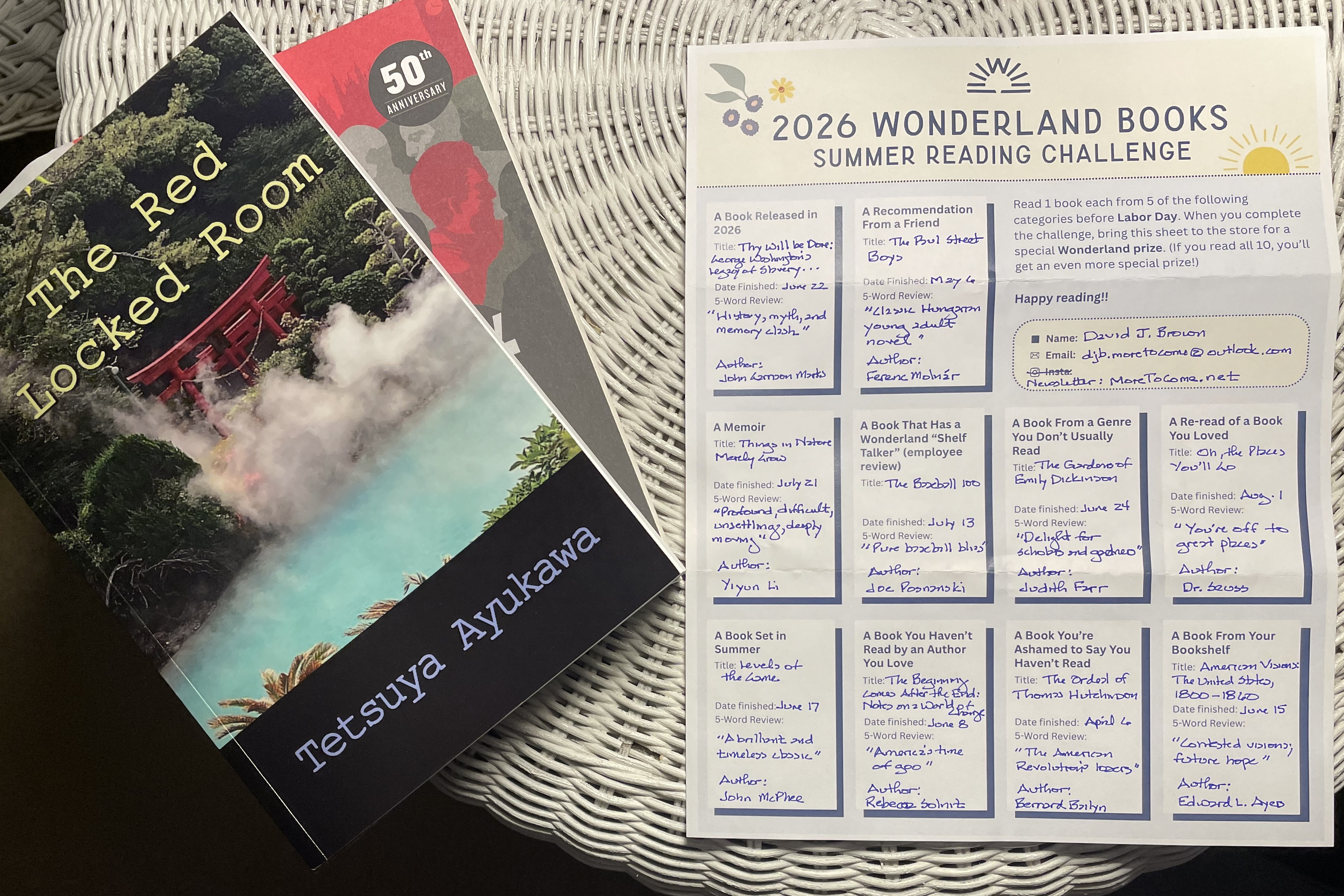
Although it was a late addition in my year of reading challenges, the good folks at Wonderland Books provided some structure for my summer reads.
After deciding I was going to visit all 30 independent bookshops in the DC region and taking on the 2026 Reading Challenge from Chapter One Book Store in Hamilton, MT, I then made the decision to add a summer challenge, this one from Wonderland Books in Bethesda. Why not?!
As of yesterday I’ve just completed this third reading mission of the year and turned in my form with plenty of time before the Labor Day deadline.
My completed form, with a couple of books from the TBR pile . . . waiting for the next challenge!
Truth be told, the real challenge for me in Wonderland’s contest was to limit myself to a five word review. Phew! I’ve never been known as terse, so that was tough. You’ll find those offerings in the bullet point under each title.
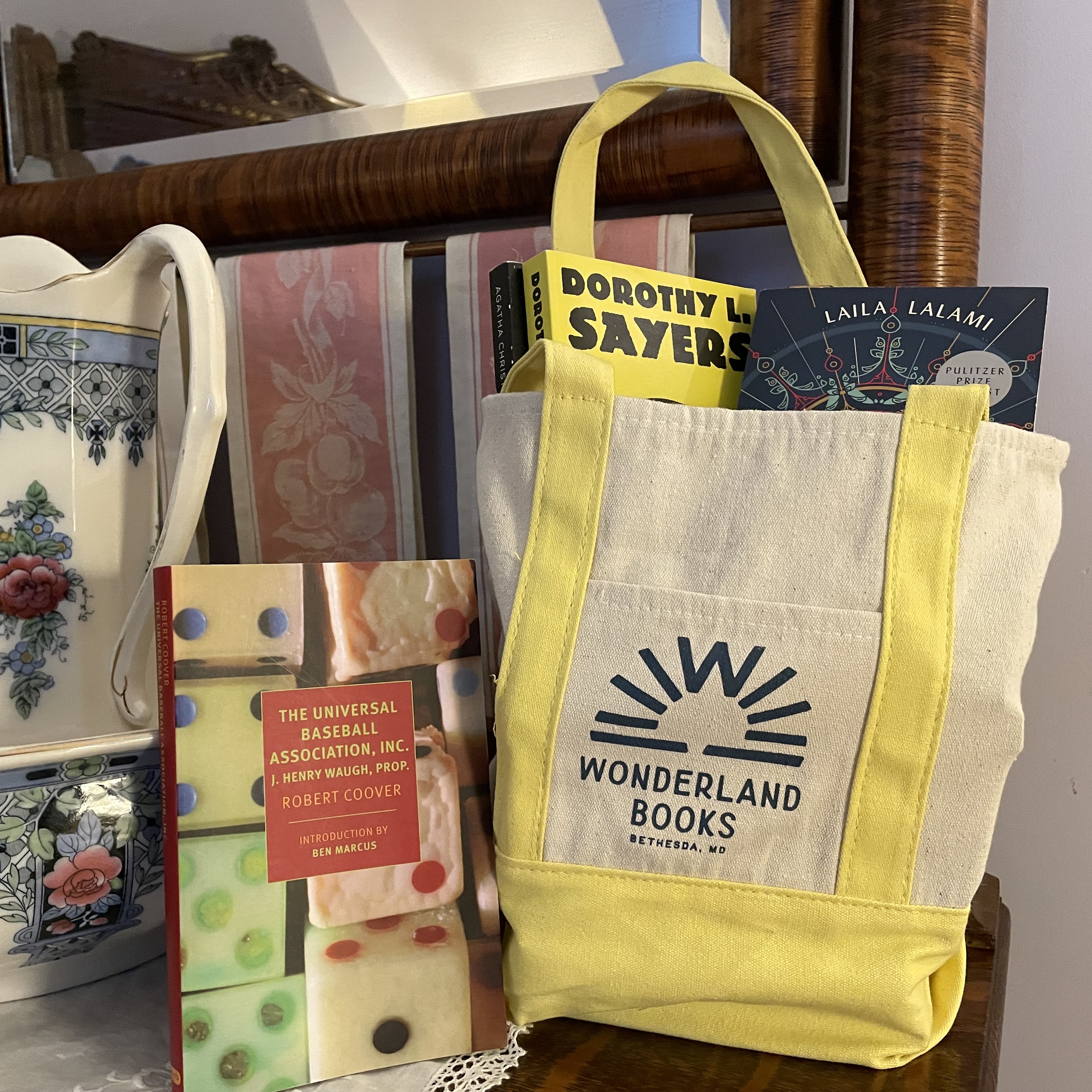
And now I have the snazzy mini tote, one of the prizes given to those readers who complete all ten categories. It is perfect for loading up some good beach books!
Thanks to Wonderland my summer reading had some variety. Ten murder mysteries would have been fun, but not exactly the balanced diet I need.
More to come . . .
DJB
Photo of beach reading by s-o-c-i-a-l-c-u-t on Unsplash
Reading Mary Oliver’s poetry handbook, viewing a beautiful documentary on the poet’s life, and browsing in one of Washington’s premier independent bookstores: not a bad way to spend a day.
Installment #15 in my series on the region’s independent bookshops.
On a recent day in Washington an unexpected Mary Oliver trifecta landed right in my lap.
I had planned the third and final encounter with one of America’s most significant and well-loved poets, but the other two were pure serendipity. Thankfully, I was paying attention.
Let me begin at the end.
Candice and I saw the new documentary film Mary Oliver: Saved by the Beauty of the World last Wednesday evening at the historic Avalon Theater. The main house was sold out for what was to be the only showing, prompting the Avalon to add more viewings through this coming Thursday. To put it simply, we both loved it. The movie trailer gives a hint of the grace and beauty of this work. Oliver, who passed away in 2019, “has a seemingly universal appeal that transcends age, gender, and politics: everyone seems to think she is speaking directly to the concerns of their soul,” notes one reviewer. I have appreciated her work and written about both her poetry (here, here, and here) and her essays (here) on MORE TO COME. Candice has been a long-time admirer and often reads one of Oliver’s poems as part of her morning meditation.
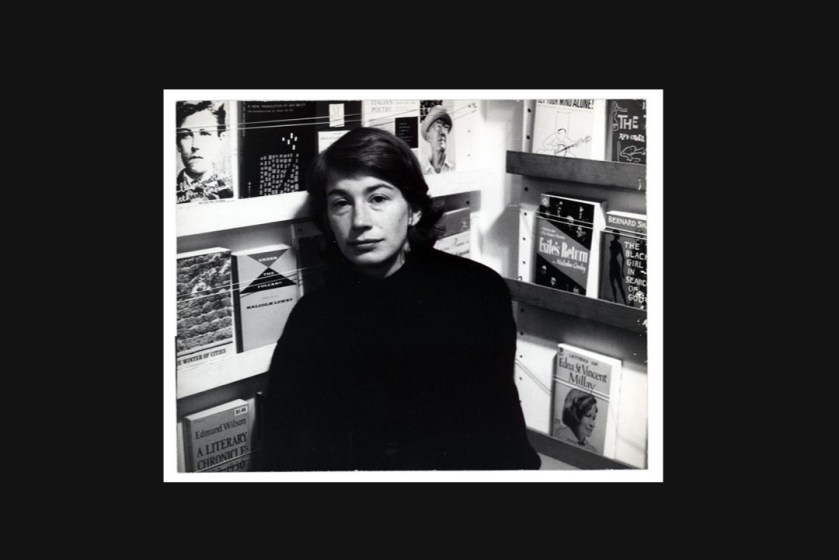
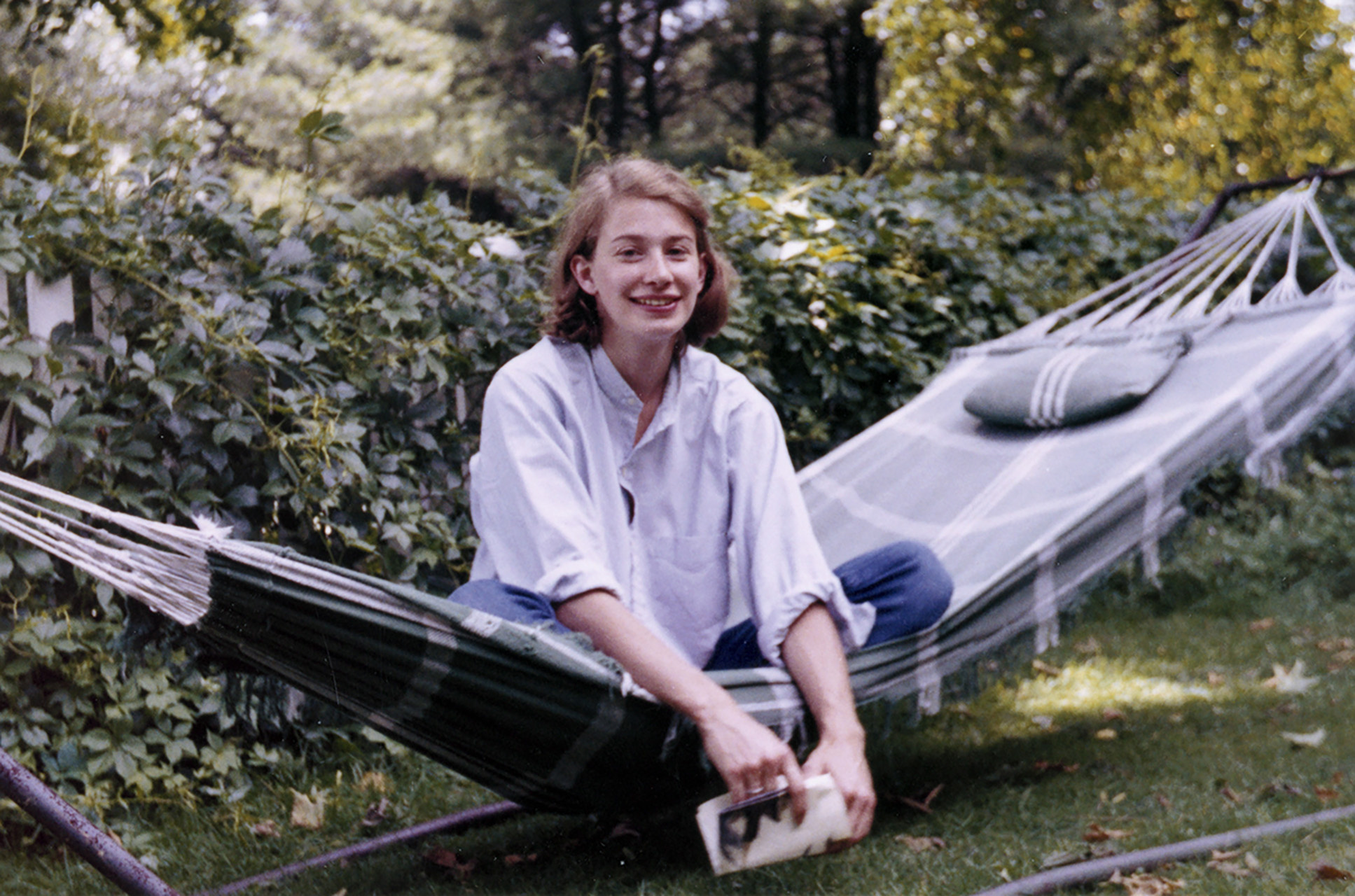
Mary Oliver at Steepletop (credit: Kino Lorber films)
The feature-length film was released this summer and it will make its streaming premiere in the fall as part of PBS’s American Masters series. But the documentary was only the third and last of my three Oliver-related connections that day.
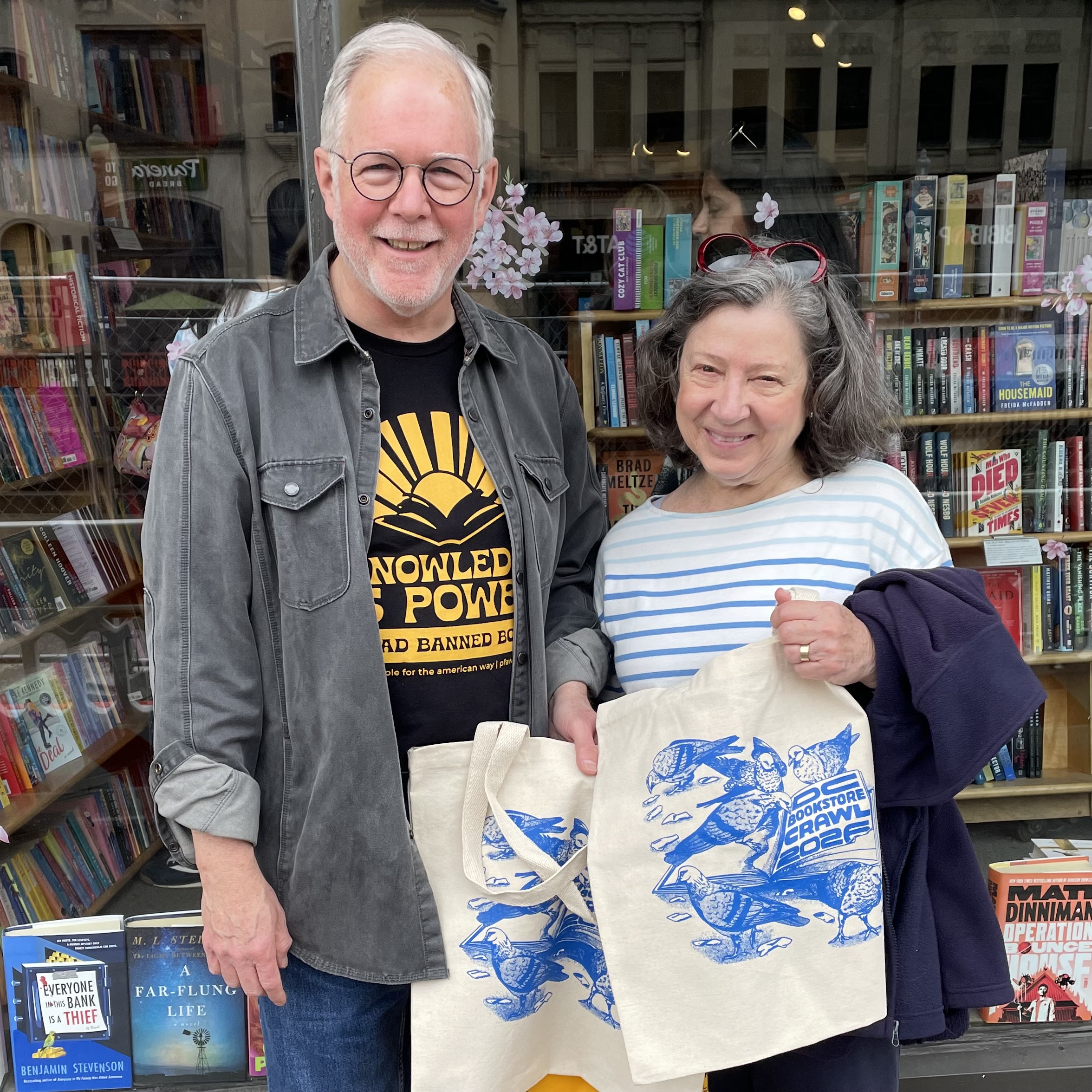
Earlier I had traveled to Dupont Circle to pick up an order at JF Books, one of the independent bookshops I’ve reviewed as part of my journey to visit all 30 in the DC region. The store, however, didn’t open until 11 a.m. and I suddenly had 40 minutes free to browse through Kramers, which is literally next door on Connecticut Avenue. Kramers is a DC institution, now celebrating its 50th year in Dupont Circle. During the years I worked in the neighborhood I was a frequent visitor (and shopper). My most recent trip had been in April, when Kramers was our 6th and final stop on the 2026 Independent Bookstore Crawl.
Last Wednesday I found myself checking out sections of the store that were all but inaccessible on that crowded Saturday last spring. Kramers has a good selection on a wide variety of topics. This is one of those bookshops which features an author’s older works as well as the latest releases. As expected in a neighborhood like Dupont Circle, there is a strong emphasis on diversity and empathy. A range of voices are featured.
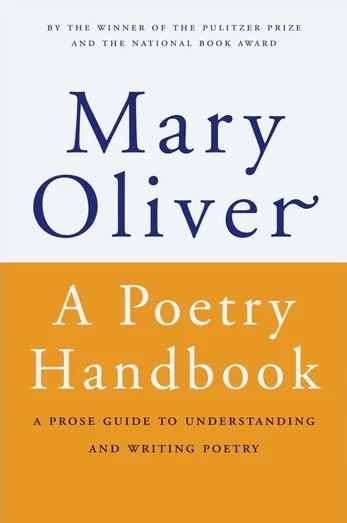
As I was browsing on this quiet morning I stumbled across the literary criticism and poetry section. There I found a book that was written for those wanting to write poetry, and for those of us who simply want to be better, more understanding readers.
Yes, it was a classic from Mary Oliver: my first encounter of the day. I made my purchases at Kramers, picked up my order at JF Books next door, and found a nearby coffee shop to begin reading Oliver’s handbook: my second encounter. I was quickly drawn into the mind and craft of this beloved poet.
A Poetry Handbook: A Prose Guide to Understanding and Writing Poetry (1994) by Mary Oliver was written with writers in mind, but it is also a welcoming space for readers of poetry to gain insights into the “thoughtful machinery” of the poem. Oliver asks her readers to be mindful about each part of the process of creating “a type of love affair between something like the heart (that courageous but also shy factory of emotion) and the learned skills of the conscious mind.” To write well and memorably, she reminds us, “it is entirely necessary to read widely and deeply. Good poems are the best teachers.” Even those who love and write contemporary poetry should understand that the truly creative force is something “that is built out of the past, but with a difference.” Through an introduction, twelve chapters, and a conclusion, Oliver takes the reader through the various parts of a poem. She begins with sound, for to make a poem we must make sounds.
To illustrate her point, she helps the reader see why a “rock” is not a “stone.” There is, or can be she writes, “a correlation between the meaning, connotation, and actual sound” of a word. The amount and type of silence at the end of a word has an effect on our understanding. If you say the two words out loud, you will understand her point. “In my mind’s eye I see the weather softened roundness of stone, the juts and angled edges of rock.”
Language is rich, and malleable, Oliver notes in another passage.
“It is a living, vibrant material, and every part of a poem works in conjunction with every other part—the content, the pace, the diction, the rhythm, the tone—as well as the very sliding, floating, thumping, rapping sounds of it.”
Throughout this slim but rich volume, Oliver draws on the works of other poets—Walt Whitman (one of her favorites), Robert Frost, Ezra Pound, Emily Dickinson, William Carlos Williams, and more—to help us see how to read, write, and understand poetry. With only an occasional connection to this form of literature, I found A Poetry Handbook to be accessible yet full of insight from a master practitioner.
So in one very ordinary yet extraordinary day, I found a guide from an experienced teacher while searching through so many possibilities at Kramers. I began to read and learn what Oliver herself had written about the wonders of poetry. And then I heard and saw one filmmaker’s take on this individual whose work will stay with us long past her time on earth.
Mary Oliver (credit: Kino Lorber films)
Like the documentary, I’ll end with this passage from Oliver’s collection of essays Upstream:
“Teach the children. We don’t matter so much, but the children do. Show them daisies and the pale hepatica. Teach them the taste of sassafras and wintergreen. The lives of the blue sailors, mallow, sunbursts, the moccasin flowers. And the frisky ones—inkberry, lamb’s-quarters, blueberries. And the aromatic ones—rosemary, oregano. Give them peppermint to put in their pockets as they go to school. Give them the fields and the woods and the possibility of the world salvaged from the lords of profit. Stand them in the stream, head them upstream, rejoice as they learn to love this green space they live in, its sticks and leaves and then the silent, beautiful blossoms.
Attention is the beginning of devotion.”
Indeed.
More to come . . .
DJB
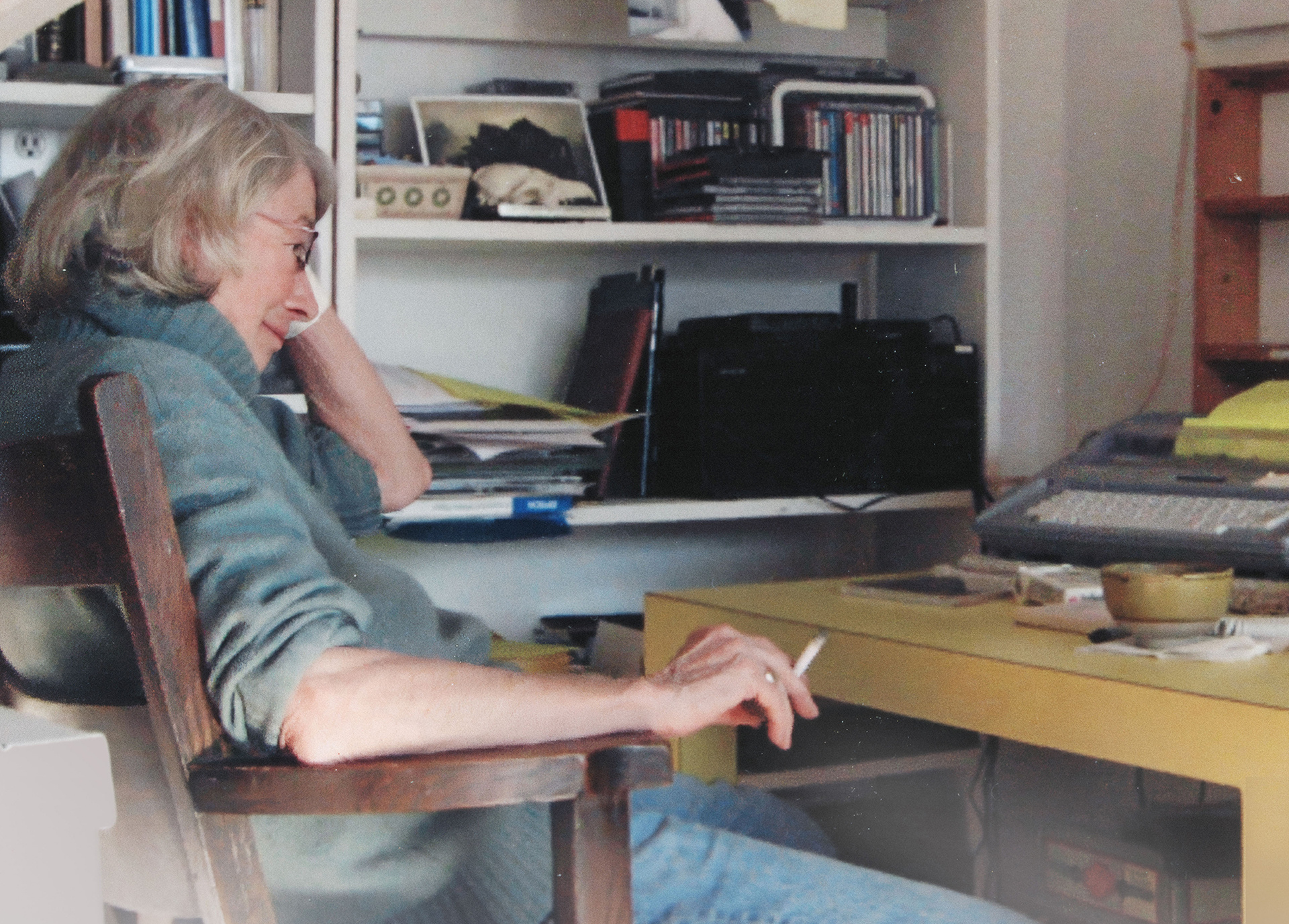
Photo of Mary Oliver from the documentary Mary Oliver: Saved by the Beauty of the World (credit: Kino Lorber films)
Glen Hansard “gathered people together, lifted those who had fallen on hard days, and through his way showed that kindness is its own kind of song.”
Irish singer-songwriter and actor Glen Hansard passed away on July 29, 2026 at the age of 56 following a motorcycle accident.
Hansard began his musical career busking on the streets of Dublin. In 1990 he co-founded the Irish rock band The Frames, a group which went on to have four albums reach the top ten of the Irish Music Charts. Later he was a member of The Swell Season, a folk-rock duo with Markéta Irglová, and beginning in 2012 he released solo albums that drew acclaim and fans.
Cuts from the first of those solo effort, Rhythm and Repose, were included in a NPR Tiny Desk Concert from the period.
His second solo album, Didn’t He Ramble (2015), was nominated for the Grammy Award for Best Folk Album. Grace Beneath the Pines is the opening track, heard here in a live version.
While primarily known as a musician, Hansard also acted. He is best known for starring in the 2007 film Once, which “earned awards including the Academy Award for Best Original Song for Falling Slowly, with Markéta Irglová,” the co-writer of the song and the co-founder of The Swell Season duo.
Building on the fame of Once, CBS Sunday Morning had a feature on Hansard and his busking days which originally ran on March 17, 2013.
Hansard performed When Your Mind’s Made Up at NPR’s All Songs Considered’s Sweet Sixteen party in 2016.
One of my LinkedIn connections, Wendy O’Sullivan, the Superintendent of Gateway Communities, wrote a lovely remembrance that captures how many feel about Hansard, his work, and his impact on others.
“There are some people who seem to belong not only to their own family or country, but to all of us. Glen Hansard was one of those rare souls.
I never met him, I only know a few of his songs, I never had the chance to see him play live. Yet his passing has settled heavy on my heart as though I’ve lost a dear old friend.
The Irish have a way of saying that some people leave a light behind them.
Following all the outpouring of condolences, I have come to understand this week that Glen’s light wasn’t only in his music. It was in the way he gathered people together, lifted those who had fallen on hard days, and through his way showed that kindness is its own kind of song.
In remembering Glen, it feels as if a great collective remembering of something we’ve been forgetting is happening. That our purpose isn’t simply to make a living, but to make a life of compassion, courage, creativity, art, generosity, kindness and joy.
Glen, thank you for leaving the world a little kinder and reminding us to raise our hopeful voices. We have a choice!”
The Parting Glass is an especially poignant song given Glen’s passing.
“So fill to me the parting glass Good night and joy be to you all”
Hansard said that Bob Dylan was at the center of his family’s folk music trinity when he was a child. So it was fitting that his funeral at St. Patrick’s Cathedral in Dublin ended with a rousing rendition of the Dylan classic Forever Young.
As one commentator noted, the Irish sure know how to do funerals. More of them should end with standing ovations.
Claire Keegan’s triptych of stories about women and men is a potent and insightful work. Capitol Hill’s East City Book Shop, a place where one can “dive into any one of a thousand realities” and connect with others who appreciate the written word, had Keegan’s newest work in stock. As a bonus, I read “Foster,” an earlier Claire Keegan short story, and found the slim book packed a strong emotional punch.
Installment #14 in my series on the region’s independent bookshops.
The diversity of the Washington region’s independent bookshops is one of the great discoveries I’ve made in my 2026 bucket list quest to visit all thirty. On the same day I spent time in a used bookstore packed to the gills and a niche shop with fascinating but limited offerings, it was a pleasure to discover a third neighborhood store with new works and a welcoming space to sit, read, talk, and revel in community.
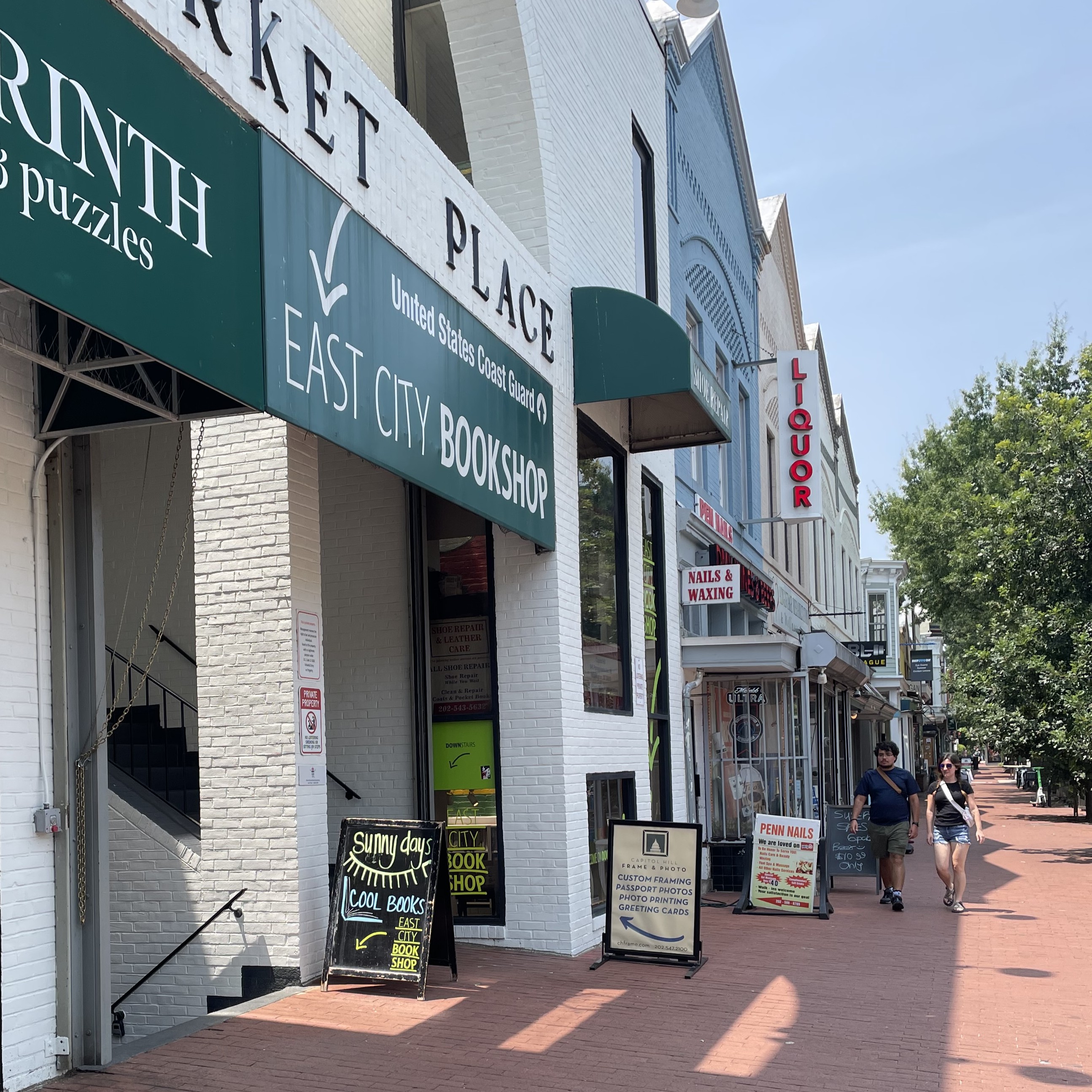
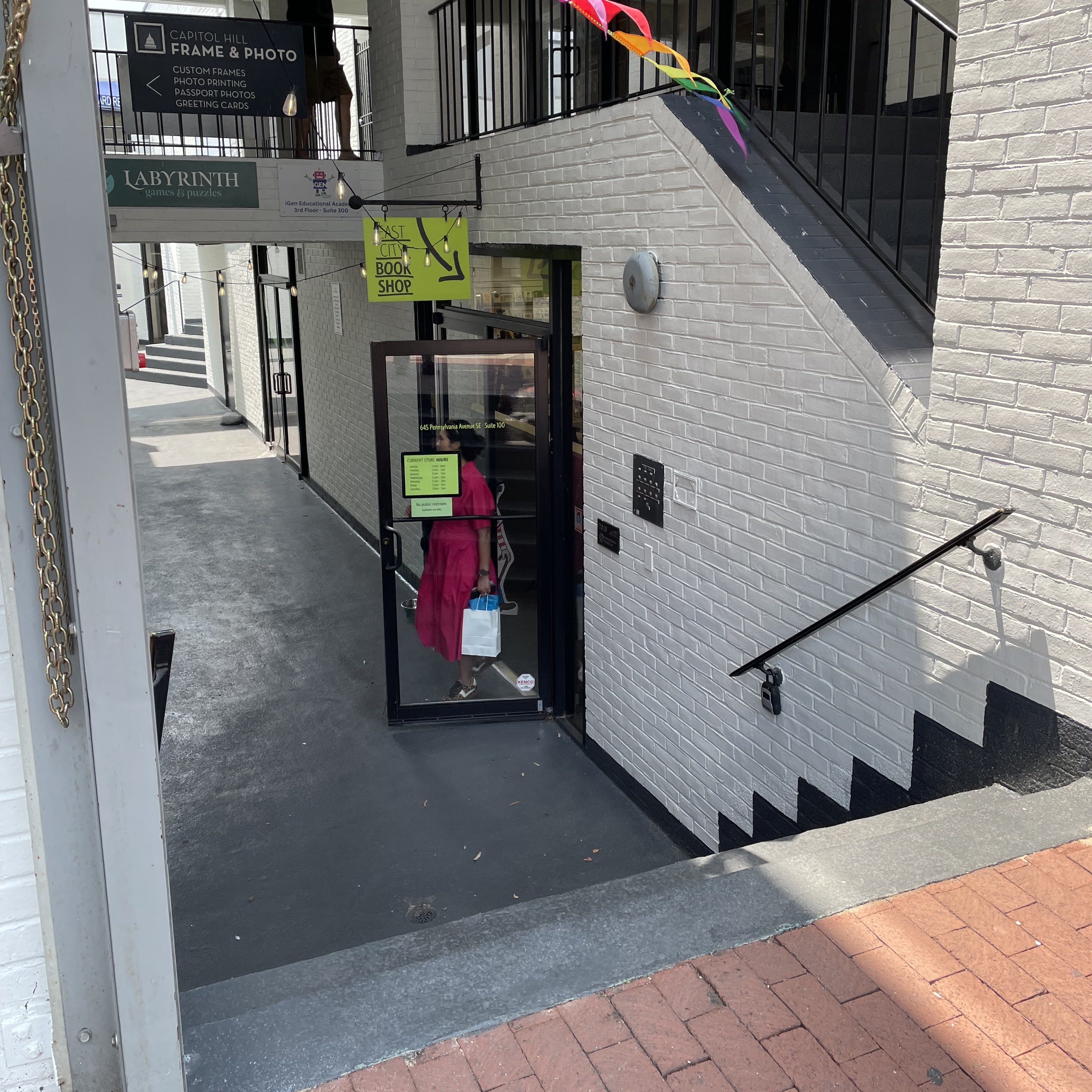
East City Book Shop located on Pennsylvania Avenue, SE in Capitol Hill was founded a decade ago to fill a gap left by the earlier closing of a beloved neighborhood bookstore. I walked down a few steps from the sidewalk and walked in to a light filled and airy space designed for people and books. Owner Laurie Gillman wanted to create a gathering space for book lovers of all ages in a neighborhood full of smart and curious people, and she has made that dream come true.
After entering a small space of new arrivals I was greeted by a friendly East City staff member. After describing my quest (and getting a few queries about which stores I most enjoyed), she directed me to the larger downstairs area which was filled with bookcases of new and newish releases from a variety of genres. A generous children’s section brightened part of that level and there was space throughout the store to stop, sit, read, and think about how wonderful the world is when filled with books.
I had very much enjoyed Claire Keegan’s Small Things Like These, a short, powerful, gem of a novel that was shortlisted for the Booker Prize. Her most recent book of stories, therefore, was high on my acquisition list. East City had the work in stock, and I left, thrilled to have found the specific book I was looking for (which isn’t always the case) and a new shop to explore on my occasional trips to Capitol Hill and the Eastern Market neighborhood.
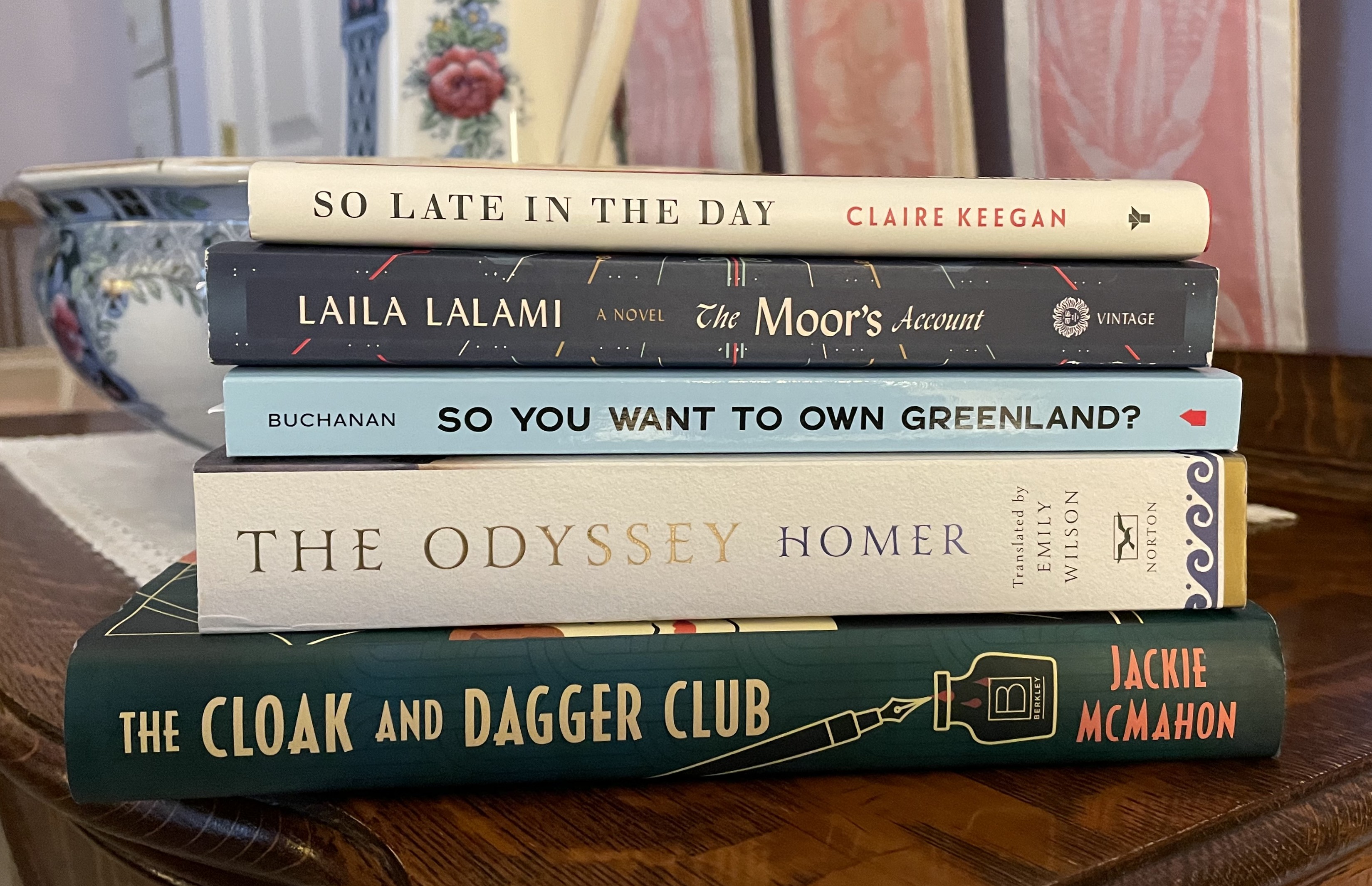
So Late in the Day: Stories of Women and Men (2023) by Claire Keegan features three recently expanded works that explore gender dynamics through the lens of love, betrayal, lack of generosity, lust, and the weight of expectations. Keegan is a brilliant writer who brings simplicity and power together in a way that calls you to return to re-read passages and stories to unlock their mystery and savor her observations. These are not simple and easy works of romance. Conflict is at the heart of each story and it is clear where Keegan places much of the blame. As a NPR reviewer wrote at the time of the book’s publication, “when the title story was published in France earlier this year, it was called, ‘Misogynie.'” In this piece we find an office worker named Cathal heading home late on a Friday. He cannot get his former fiancé off his mind. As Keegan explores his thoughts and reimagines the conversations that led to the breakup, the reader can better understand that French title.
A second work features a successful woman and a man—a professor—who cannot find it in himself to be happy for her success. Finally, the third story in So Late in the Day is the most disturbing, with a foreboding “woman in peril” feeling right from the beginning as a married woman wants to discover what it would be like to sleep with another man.
Not all readers will find this collection appealing or even fair. One reviewer called it “mean.” But I found, upon first reading and a subsequent rereading of key segments, that Keegan’s book resonated with me as a very thoughtful and challenging work with depths of emotion that one might not expect with such clear, simple writing. And as a member of the gender that shoulders the brunt of the criticism in her writing, I can see much, unfortunately, that rings true.
Only The Long and Painful Death, the second of the three stories, has what one would consider a happy ending, yet even then I was frustrated by the actions of the envious male professor. As I find myself saying more and more these days, those of us born on third base need to wake up and admit the unearned privilege that put us there.
Foster (2010, 2022) by Claire Keegan was a perfect introduction for, and complement to, her more recent work. I had purchased Foster—recently published as a standalone book—earlier in the year and decided to dive into this simple but emotionally compelling story after finishing So Late in the Day. Set in rural Ireland it tells the story of a young girl who is taken by her father to live with relatives on a nearby farm while her mother is having a baby. The nameless narrator has no idea when, or if, she will return to her own home. It is clear that the girl’s family is overwhelmed, while the relatives, Mr. and Mrs. Kinsella, are affectionate and clearly intent on providing loving care to a person whose day-to-day existence has been rough and chaotic. The Kinsella farm is orderly and provides a steady foundation for the young girl to grow and blossom. Yet the Kinsellas are hiding something. At the same time the young girl’s mother and father are working hard to keep their secrets of poverty, drinking, and depression from others in the village. But these secrets are not far from the surface as the story progresses.
Keegan’s writing “is sparse but not lacking in depth” notes one reviewer, an observation I would echo. When a neighbor describes the girl as “quiet,” Kinsella responds with “she says what she has to say, and no more.” As this reviewer notes, “That is the perfect way to describe Claire Keegan’s writing. It tells us what we need to know and understands when to stay quiet . . . There is so much to be found in what we aren’t told and the silences.”
“You don’t have to say anything [Kinsella tells the young girl] . . . Always remember that as a thing you need never do. Many’s the man lost much just because he missed a perfect opportunity to say nothing.”
NPR’s Heller McAlpin captured the essence of this book perfectly. Fosteris a heartbreaking story of childhood, loss, and how “painful unaccustomed love and tenderness can be, because they accentuate what’s been lacking.” It breaks one’s heart, but then also offers up hope out of the loss.
“More than most books four times its size, Foster does several of the things we ask of great literature: It expands our world, diverting our attention outward, and it opens up our hearts and minds. This is a small book with a miraculously outsized impact.”
Five books at a minimum. Every month. A variety of topics from different genres. Here is the list from July 2026.
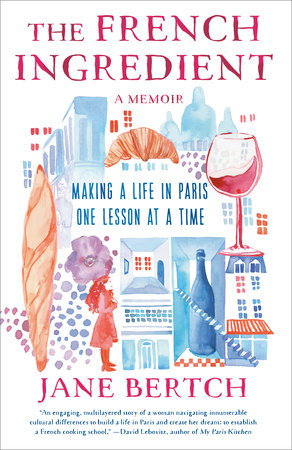
The French Ingredient: Making a Life in Paris One Lesson at a Time; A Memoir (2025) by Jane Bertch is a story of reinvention, resilience, and resolve. At the age of seventeen Bertch and her mother travel from their home in Chicago to Paris on a graduation trip, where Jane’s high school French is met with derision and scorn. She vows never to return. Yet ten years later she finds herself back in Paris after a stint in London working for an American bank. She has been transferred and thrown into the deep water of the French financial world. Then as Jane realizes that she can make it in French banking she leaves in 2009 to open—of all things—a cooking school in Paris! Non! This just cannot be done. Except The French Ingredient—through delightful storytelling, astute observational skills, and a willingness to share doubts and failures—shows that not only can it be done, but our author/entrepreneur can thrive in the process.
Odessa: Genius and Death in a City of Dreams (2011) by Charles King is the story of one of Europe’s most intriguing cities and its “descent into the heart of darkness” during the Holocaust. We discover that unlike many cities in the region, Odessa is relatively young, founded three years after Washington, DC. A wide range of fortune seekers, freedom fighters, Russian bureaucrats, traders, merchants, tavern keepers, poets, writers, and journalists came together to make up the mix of residents in one of Europe’s most cosmopolitan cities. With scholarly insight, wide-ranging biographical subjects, and crisp writing, King introduces us to the people who came together to shape the dream for a great seaport on the Black Sea, but who also put the city in a perpetual balance between greatness and suicide.
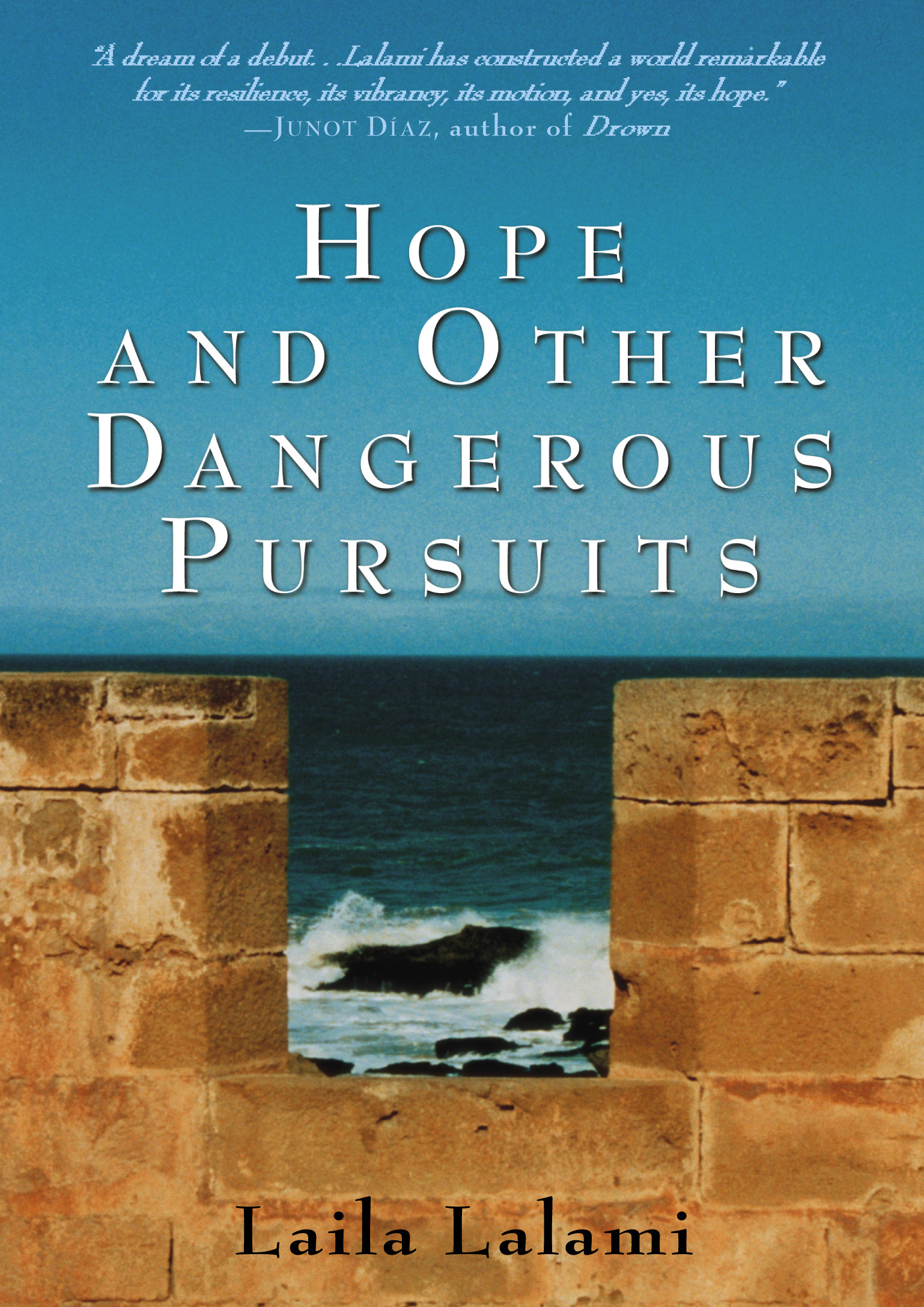
Hope and Other Dangerous Pursuits (2005) by Laila Lalami is a story of dreams, determination, displacement, heartbreak, and perseverance. It captivates the reader and leads us to care about these four characters who find themselves on a small, inflatable boat headed for Spain. With spare prose, sharp insight, and a sympathetic gaze, Lalami begins with the harrowing crossing of the Mediterranean by illegal migrants. Crowded into the boat, they are taken only to where they could swim to shore before being deposited in the rough waters to fend for themselves. Lalami then returns to the time before the trip, to help us see what would drive them to such desperate measures. The book’s second half picks up their journey after they reach the Spanish coast. There is a vibrancy and a sympathetic ear in Lalami’s storytelling. She has provided us with a thoughtful, timely, and empathetic look into people—not very different from you and me except for the circumstances of their birth—who dared to hope. These characters have stayed with me even after I finished this impressive debut novel.
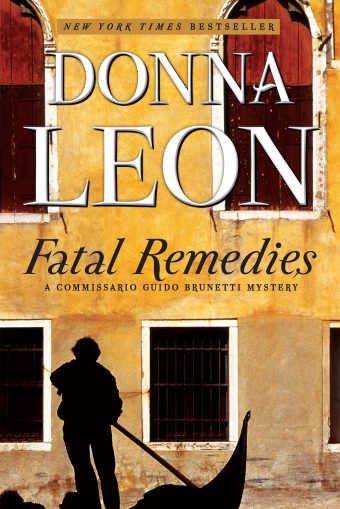
Fatal Remedies (1999) by Donna Leon is the eighth in what is now a 33-installment series about the Venetian detective Commissario Guido Brunetti. A late night call alerts the Commissario to a sudden act of vandalism. Brunetti soon learns that the culprit who may be arrested is a member of his family. A travel agency has been targeted for the vandalism, he discovers, because of possible involvement in sex tourism and pedophilia. The press learns soon enough of Brunetti’s delicate situation, other officers in the force who do not like the Commissario are circling, and his difficult superior has been pressuring him to solve a daring robbery with a link to a suspicious accidental death. Such things in Italy always suggest possible Mafia involvement. It is a thorny and winding path that Brunetti must follow to get to the ultimate truth.
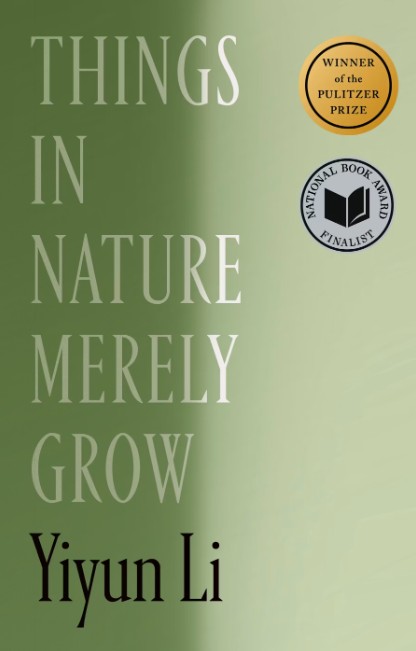
Things in Nature Merely Grow (2025) by Yiyun Li, winner of the 2026 Pulitzer Prize for Memoir or Autobiography, is one of the most difficult, unsettling, and yet moving books I have ever read. “There is no good way to say this,” Yiyun Li writes at the beginning of this book. “There is no good way to state these facts, which must be acknowledged . . . My husband and I had two children and lost them both: Vincent in 2017, at sixteen, James in 2024, at nineteen. Both chose suicide, and both died not far from home.” After that straightforward, painful opening, Li continues in austere and unsparing prose through what one reviewer correctly names a meditation on living and radical acceptance. “The death of a child realigns time and space,” she notes. “If an abyss is where I shall be for the rest of my life, the abyss is my habitat. One should not waste energy fighting one’s habitat.” Yet life grows alongside the scars. Children die and parents go on living. Yiyun Li’s words are not comforting, but they open a way of approaching life and death and life with honesty. Things in nature merely grow until it’s time for them to die.
The Baseball 100 (2021) by Joe Posnanski—the self-described “writer of sports and other nonsense”—is characterized by the publisher as “a magnum opus . . . an audacious, singular, and masterly book that took a lifetime to write.” It is pure baseball bliss. Posnanski originally wrote this over a 100-day stretch for the web pages of The Athletic. But the compendium is much more satisfying. First, the rankings are important—and instantly give the reader a chance to argue with Joe, which he encourages. But they serve the larger purpose of providing this talented writer and lifelong fan with a chance to explore baseball’s rich, deep, diverse, and at times challenging history. A history that—like all history—is under construction. I’ve been re-reading this work on what is, in some instances, my fourth pass through this work. It is a gift that keeps on giving.
WHAT’S ON THE NIGHTSTAND FOR AUGUST (Subject to change at the whims of the reader)
Jackie McMahon’s engaging new murder mystery came at me from an unexpected source: DC’s first romance bookstore.
Installment #13 in my series on the region’s independent bookshops.
One of the things I love about independent bookshops is that you’ll invariably find a staff member who knows and loves their specific collection of books. You can walk in clueless and, with the skillful guidance of staff, come out delighted that you found an insightful biography, a well-crafted novel, or an engaging and entertaining murder mystery.
Which is exactly what happened recently in my quest to visit all 30 of the DC region’s independent bookstores.
Truth be told, Friends to Lovers—the DC area’s only romance book store—wasn’t high on my list. I wasn’t sure I could find a work of real interest. Yet I explored their website before heading to Old Town in Alexandria on a beautiful summer day and found a few promising leads.
I shouldn’t have worried.
The sign and cozy storefront let me know that while the genre might be outside my normal choices, I was among fellow bibliophiles. On a Thursday morning the store was busy with three or four generations of readers checking out the selections. I looked through parts of the store, perused the helpful “staff picks” section, but was still getting my bearings amidst the unfamiliar titles and writers.
A friendly staff person saw my disorientation and walked over to see if she could be helpful.
I explained my independent bookstore project (“Oh, how fun!”) and then admitted that I didn’t read romance novels so I was worried about being able to find something I would feel good about purchasing. “Not to worry” said Andi, as she showed me the “Romance Adjacent” section to get me started. Then I mentioned I had seen a detective mystery offering on the website, and that might be a possibility.
“I have a great one for you,” she said. “It is brand new and the romance aspect is applied with a light touch.” Which is how I came to read a delightful murder mystery set in 1930s London featuring a club of successful mystery writers. I left Friends to Lovers Bookstore with great appreciation for Andi and all the hardworking staff at independent bookshops along with anticipation that led me to quickly jump into this new mystery.
The Cloak and Dagger Club (2026) by Jackie McMahon introduces us to the smart, up-and-coming detective heroine Lucy Hubbard. Her first mystery has been published to strong sales and glowing reviews and she finds herself swept up in the literary world of Britain’s best-known detective novelist, Horace Hazelmoor, President of The Cloak and Dagger Club. She attends her first meeting in the Marie Antoinette Suite at The Ritz Hotel and is dazzled by the assembled talent of the writers. However, when her former fiancé, Frank Murray—a rising star in Britain’s detective fiction scene—comes through the door with Horace she is slightly unnerved and works to keep their former relationship secret from the others. She also struggles to keep her feelings for Frank in check as the novel progresses.
Horace, who is bombastic and a bully, has too much to drink and quickly throws everyone off stride by starting an argument with one of the club members. A fight ensues and Horace is carried to his room at the hotel to sleep it off. Two days later, after the hotel staff has not heard from him, Horace is found dead, stabbed in the back. Frank, who was threatening to overtake Horace as Britain’s favorite crime writer, is the prime suspect. Lucy has convinced herself that she no longer has feelings for her childhood friend turned former lover, but she knows that he could never have killed Horace. Since who knows better how to unravel a crime than a mystery writer, she and Frank begin their own side investigation to find the real murderer.
McMahon’s debut novel introduces the reader to an intriguing cast of characters. Besides Horace, Frank, and Lucy we meet Graham, the former Scotland Yard detective turned mystery writer and his secretary Jonathan. The Countess Andrassy, whose husband is a drunkard and whose past is a bit cloudy. Christine Wong writes mysteries about a loveable vicar in a small English village, a subject that doesn’t appear to fit her personality. Sergeant Badgers provides Frank with tidbits about police work to help him make his books more realistic. The shifty Inspector Naughton seems to know Graham from his earlier life and cannot be trusted. Marcel Bettencourt is the faithful attendant of the club at the Ritz.
Each of them has a secret they don’t want the others to learn. The puzzle that is devised is clever, and McMahon’s writing is sharp and easy to digest. The romance aspect is very evident, yet lightly applied and fitting within the story. As in any good piece of detective fiction, the reader turns page after page, continuing to read late into the night.
Interspersed among the chapters are short snippets from the works of each of the members of the club. These both introduce us to the fictional detectives each writer has created and help the story progress. In one of these snippets—from Hazelmoor’s Carlyle Bragington’s series—Horace has his hero tell how one kills a powerful adversary.
“There’s only one way to kill the powerful, Sergeant.
A cloud of grey smoke trickled out of Bragington’s mouth and danced toward the ceiling, seductive like a lover. ‘When they don’t see it coming.'”
When I walked into Friends to Lovers, I’ll admit that I didn’t see a novel evoking the Golden Age of British mystery writing in my future. However, McMahon has created characters and a story we can enjoy, believe, and care about in spite of preconceived notions of what will interest us. The Cloak and Dagger Club is a worthy debut, and a fitting introduction to me not only of a talented writer, but of the unexpected joys of Friends to Lovers.















 MORE TO COME...