Today is National Religious Freedom Day in the United States. It was on January 16, 1786, that the Virginia State Assembly adopted Thomas Jefferson’s Virginia Statute for Religious Freedom, the Church of England in Virginia was disestablished, and people of different faiths were granted freedom of religion. The Virginia statute became the basis for the First Amendment of the U.S. Constitution.
What is often forgotten in the celebrations is that everyone has the right to manifest belief or religion, change religions, or not to follow any religion. Yes, the day celebrates freedom of religion. The First Amendment, as confirmed over and over again by the courts, also protects freedom from religion, although we have always had some Supreme Court justices who have trouble understanding this issue.
The Constitution doesn’t protect people who have different religious beliefs from criticism. If an individual wants to celebrate the work of an evangelical group working to eradicate deadly disease in Africa or criticize a conservative charismatic Catholic group for suggesting that women should be subordinate to their husbands, that’s their right. Likewise, if someone wants to celebrate the support for Black Lives Matter by Unitarian Universalists or criticize the Episcopal church’s support for same-sex marriage, that’s their right. What the Constitution does is to bar courts and governments from preferring one set of religious views over any other set — or over nonreligious views.
And that is important to know because any serious study of religious life in America uncovers how quickly the persecuted become the persecutors in this country.
Conservatives on the court too often rule as if they only want to protect one particular set of religious interests: those of other conservative Christians. There is less support for the rights of the progressive person of faith who favors equality because it aligns with their religious beliefs. And if your views are decidedly nonreligious, you may have trouble breaking into the conversation. As with most rights, maintaining religious freedom is an ongoing struggle.
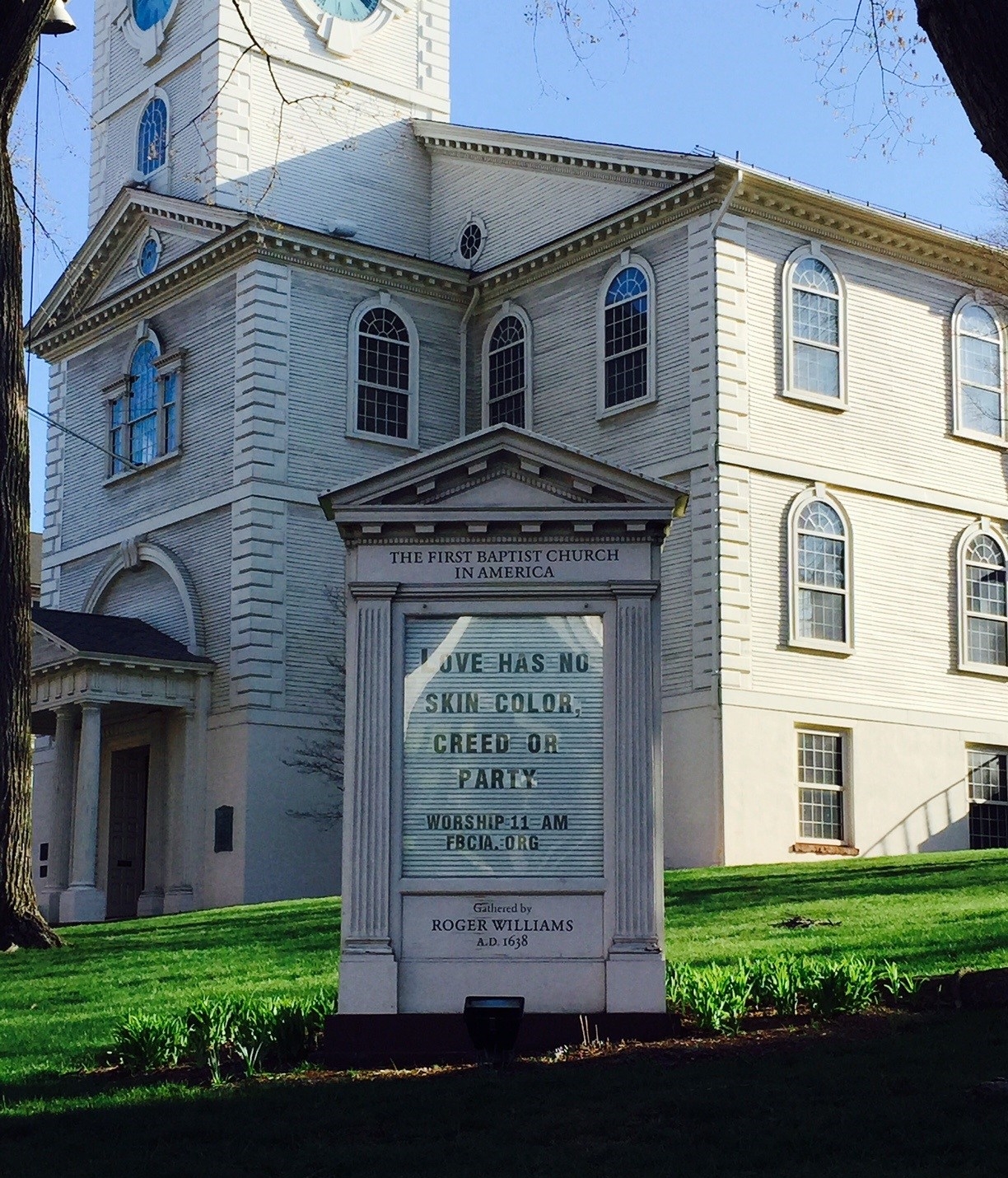
The First Baptist Church in America, in Providence, RI – a key landmark for religious liberty and the separation of church and state
Over the years I’ve written about the history and places associated with freedom of religion. In honor of National Religious Freedom Day 2022, here are a few of interest.
Let’s take a road trip to help understand the history behind religious liberty (2020) — As a preservationist, I wrote this rather long piece on place as the Supreme Court was debating religious liberty and the civic duties of a county clerk in Kentucky. The reader will visit Providence and Newport in Rhode Island, as well as James Madison’s Montpelier in Virginia, and Mount Taylor in New Mexico.
Religious liberty and the founding myths (2016) — This post looks at two important works on religious liberty. Historian John Barry’s 2012 work Roger Williams and The Creation of the American Soul details the life of a founding father who believed it “’monstrous’ to compel another person to believe what he or anyone else believed, or to compel conformity to his or anyone else’s belief.” Historian Kevin Kruse’s One Nation Under God: How Corporate American Invented Christian Americalooks into the obliteration of the separation of church and state at the hands of anti-New Deal corporate CEOs.
The Chosen One(2019) — Finally, when outgoing Energy Secretary Rick Perry tells Fox & Friends that he saw Donald Trump as “God’s Chosen One”, no better example exists as to why we need a true and robust understanding of religious freedom. You’ll find a few things to make you laugh (or cry) in this one.
Happy National Religious Freedom Day!
More to come…
DJB
NOTE: As the country celebrates the Martin Luther King, Jr. holiday, my posts this week focus on various aspects of understanding, justice, tolerance, love, and reconciliation with the hope they may be useful as we each take our own journeys to create the beloved community.
When a musical group carries the torch for justice and love over decades, it goes without saying that they have seen and persevered through life challenges that would have stopped the less hopeful and determined along the way. That Sweet Honey in the Rock has existed for that long as a performance ensemble rooted in African American history and culture makes their work especially appropriate to showcase through the Saturday Soundtrack on the Martin Luther King, Jr. weekend here in the U.S.
Many of us came to know and be inspired by the group in the 1970s, but they are still active and singing to contemporary audiences in 2022. Check out their song IDK, But I’m LOL!
I was talking with a friend who mentioned that the group’s founder, Dr. Bernice Johnson-Reagon, lived near her in D.C., and she saw her on occasion. Dr. Johnson-Reagon dates her work as an organizer from her time as a student leader in her hometown of Albany, Georgia, in the early 1960s, where she was one of the Freedom Singers and a field secretary for SNCC (the Student Nonviolent Coordinating Committee). Sweet Honey in the Rock was formed by Dr. Johnson-Reagon in 1973 in Washington, and it has been making music and changing lives ever since. Johnson-Reagon led and performed with the group for more than 30 years, retiring in 2004 to pursue other work. Old Ship of Zion was the last tune she performed with the group on February 1, 2004. *
Sweet Honey in the Rock has carried on with some of the early traditions while also exploring new, contemporary music. “They have created positive, loving, and socially conscious message music that matters as it pertains to spiritual fortification, and consistently taken an activist stance toward making this planet a better place for all in which to live.” Their music remains grounded in African American history and culture, as heard in the spirituals Wade in the Water and In the Morning When I Rise.
The group also honors the elders, people like Ella Baker (the “Ella” of Ella’s Song). Baker was a very powerful activist/organizer/orator among young people working for racial justice. The lyrics are taken from a speech she gave.
One of the group’s most recent albums, #LoveInEvolution is their most contemporary to date. Many of the songs are taken from today’s headlines.
The album’s stark second single, “Second Line Blues”, with its cryptic snare drum cadence, roll calls the names of innocent people such as Tamir Rice, Sandra Bland and the children of Sandy Hook Elementary School that have fallen victim to murder at the hands of anyone from deranged civilians to police abusing their license to kill. Carol Maillard (a founding member, along with Louise Robinson) states, “Since we started writing this piece, we’ve had to keep adding names…and sadly, we’ll be adding more before things change.” The group released a music video to accompany this haunting in your face reminder of why reforms are necessary for people’s rights to bear arms and the need for more stringent screenings for people placed in positions to police communities.
Fredara Mareva Hadley, Visiting Assistant Professor of Musicology, Oberlin College, has written an insightful and timely piece calling it past time to recognize Sweet Honey in the Rock for their essential contributions to American music.
The first and most essential instrument is the voice. While this instrument is something humans carry inside, it also reaches and resonates beyond our own bodies and beyond our individual lives. This is an important reminder when discussing the impact of the a cappella ensemble Sweet Honey in the Rock.
Their music speaks to our soul, and — as Dr. Hadley notes — this “isn’t just music of resistance — it’s music of insistence.”
Sweet Honey in the Rock is no calcified relic. While they provide glimpses of what the contemplative heterophony of Negro Spirituals such as “Wade in the Water” and “Come by Hear” sounded like on American plantations, Sweet Honey in the Rock still surveys the present moment and responds to contemporary calls for love and justice.
As part of their mission statement, Sweet Honey in the Rock puts their belief right up front:
In prayer we trust/ By hope we live/ On truth we stand/ From our hearts we give/ Love.
Sweet Honey in the Rock plays the Birchmere in Alexandria on January 26th.
Parable of the Sower is a triumphant, mesmerizing work of rare power and beauty that illuminates deep insights on gender, race, and the future of human civilization.
This fully-staged opera brings together over 30 original anthems drawn from 200 years of black music to recreate (Octavia) Butler’s sci-fi, Afrofuturist masterpiece live on stage.
With music and lyrics by Toshi Reagon and Bernice Johnson Reagon, this compelling work gives life to Butler’s acclaimed science fiction novel of the same name.
More to come…
DJB
NOTE: As the country celebrates the Martin Luther King, Jr. holiday, the posts over that period focus on various aspects of understanding, justice, tolerance, love, and reconciliation with the hope they may be useful as we each take our own journeys to create the beloved community.
*You can watch a video of the live concert at Dr. Johnson-Reagon’s website.
Image: Celebrating the Holy Days album cover from Sweet Honey in the Rock
Dr. Richardson is one of our country’s most articulate connectors of events and themes to set today’s political landscape in its broader historical context. In this 2020 book, Richardson breaks down the myth that the Civil War ended oligarchy and cleansed the nation of our founding sin of slavery. She traces the story of the American paradox (the competing claims of equality and subordination) and its corollary (the belief that universal equality will reduce white men to subservience) beginning with the nation’s founding to the growth of the influence of the West. From there she covers the joining of political forces and oligarchs in the South and West leading to today’s fight to overthrow our democracy. The corollary allows oligarchs to tap into the extraordinary strength of the ideology of American freedom, as perpetuated in myths such as the western cowboy, while undermining freedom and liberty for anyone who is not white and male. A key figure of this resistance to democracy is Barry Goldwater.
In Goldwater’s time, “people claiming to be embattled holdouts defending American liberty called themselves ‘Movement Conservatives.’ A century before,” Richardson notes, “their predecessors had called themselves ‘Confederates.'”
Martin Luther King Jr., like many other African Americans, believed that Goldwater was a threat to democracy and to the black freedom struggle in the South. In King’s estimation, Goldwater gave “aid and comfort to the racists.” King warned that Goldwater’s campaign was “obviously an attempt to appeal to all of the fearful, the insecure, prejudiced people in our society.”
How the South Won the Civil War is full of surprises, wisdom, and insight. We live in a world where individual states and communities will regularly overturn the will of the majority on issues such as voting rights, pandemic response, and the treatment of women and people of color unless the federal government intervenes. Richardson’s work helps us understand how we went from John C. Calhoun to Donald Trump. Highly recommended.
If this topic piqued your interest, find more to consider in these MTC posts:
Towards a more perfect union (2020) — Historian Eric Foner’s work on the “second founding” of the country examines why “key issues confronting American society today are in some ways Reconstruction questions.”
The abandonment of democracy (2020) — I was reading Nancy MacLean’s compelling Democracy in Chains at the end of 2020 while watching the attempted coup that took the attempt by the billionaire-backed radical right to undo democratic governance to its logical conclusion. Utterly chilling.
History is a teacher (2019) — Historian Joanne B. Freeman’s The Field of Blood: Violence in Congress and the Road to the Civil War is the riveting tale of mortal threats, canings, flipped desks, and all-out slugfests…and that’s just on the floor of Congress! Freeman shows that it is only when we stand up to those who would divide us and push for a true reckoning of what we are as a nation, that we break through the polarization.
Telling the full story (2017) — The Half Has Never Been Told: Slavery and the Making of American Capitalismis a troubling and ultimately persuasive 2014 book by historian Edward E. Baptist. Slavery was not some pre-modern institution on the verge of extinction but was, instead, essential to American development and, indeed, “to the violent construction of the capitalist world in which we live.”
More to come…
DJB
NOTE: As the country celebrates the Martin Luther King, Jr. holiday, the posts over the next eight days focus on various aspects of understanding, justice, tolerance, love, and reconciliation with the hope they may be useful as we each take our own journeys to create the beloved community.
The Weekly Reader series features links to recent books and articles that grabbed my interest or tickled my fancy.
My love for the short and to-the-point adage comes from my grandmother. Known to favor sayings such as, “Don’t believe what you hear and only half of what you read,” Grandmother Brown could have been a social media influencer with a large twitter following … if only the internet had been around in the early 20th century. The admonition I heard most frequently — “Make yourself useful as well as ornamental” — suggests, however, that she wouldn’t have had time for such frivolity.
Late in 2019, a series of pithy proverbs — those bursts of truth in 20 words or so — debuted on the blog and were brought together in a post entitled More to Consider. * Three years later I’m still at it, so let’s look at I love the pithy proverb — Volume 5 to see what made it to More to Consider over the past six months.
Get your shot!
Because we continue to have to deal with a health crisis due to the fact that so many people have spent the last two years denying there’s a health crisis, this anonymous quote, which Grandmother would have approved, seems appropriate:
“I guess we should retire the phrase ‘avoid it like the plague’ given how little effort people put into avoiding an actual plague.”
Anonymous
Grandmother was not a feminist, but I suspect she would have agreed with Susan B. Anthony’s take on those who always seem to know God’s will.
“I distrust those people who know so well what God wants them to do because I notice it always coincides with their own desires.”
Susan B. Anthony
Like her son and grandson, both voracious readers of biographies, she also would have been right in line with Robert Caro’s sentiments.
“Power doesn’t corrupt, it reveals.”
Robert Caro
This quote stretches the boundaries of pithiness, yet I appreciated its take on the need — first and foremost — to be human to successfully navigate the future.
“What we need to do is to hold fast to the gifts we have, and to develop them together. What we need to be is human. The future will always be uncharted, but it is made by those active enough to explore it, with the stamina and imagination not to give up on themselves or each other.”
“We lay there and looked up at the night sky and she told me about stars called blue squares and red swirls and I told her I’d never heard of them. Of course not, she said, the really important stuff they never tell you. You have to imagine it on your own.”
Brian Andreas
Some people demand certainty. For them, robo-umpires to call the balls and strikes in baseball make perfect sense. Some things, however, are better with a bit of ambiguity. Joe Torre, the former Yankees manager, has argued against the robots. “It’s an imperfect game and has always felt perfect to me,” he said, in a pithy summation of his own take on the game. I thought this quote from a New Yorker article entitled Invasion of the Robot Umpire was another perfect description.
“The strike zone is a fretless bass. Historically, a certain discretion has been appreciated.”
Zach Helfand in a New Yorker article on robo-umpires
These two quotes seem to fit together, reminding us to not be so serious!
“Look at one of your industrious fellows for a moment, I beseech you. He sows hurry and reaps indigestion; he puts a vast deal of activity out to interest and receives a large measure of nervous derangement in return.”
Robert Louis Stevenson in “An Apology for Idlers”
“The Church says: The body is a sin. Science says: The body is a machine. Advertising says: The body is a business. The body says: I am a fiesta.“
Eduardo Galeano
I’d been reading a book on fungi when this observation from Alexander von Humboldt found its way into my consciousness.
“Each step that we make in the more intimate knowledge of nature leads us to the entrance of new labyrinths.”
Alexander von Humboldt
Brené Brown hosted a recent podcast, and I was taken with this observation of her guest, Dr. Maya Shankar.
“The reason we often have so much discomfort in the face of change is because it threatens our identity and sense of self.”
Dr. Maya Shankar
Lots of words have been written and said about the times we live in. Here are two short sentiments I find thoughtful.
“The assault on 2024 is a crock-pot coup, simmering low and slow, under cover, breaking down the fibers of our electoral system, until one day democracy itself is cooked.“
Anand Giridharadas
“If you rip away everything, oppression is the business of not respecting one’s personhood.”
The Rev. Dr. Pauli Murray
On December 19, 1776, Thomas Paine published The American Crisis in Philadelphia. It began with the famous words “These are the times that try men’s souls” and it came at a very low point in the history of our country. It was good to read those words again this past December.
“Tyranny, like hell, is not easily conquered. Yet we have this consolation with us, that the harder the conflict, the more glorious the triumph. What we obtain too cheap, we esteem too lightly: it is dearness only that gives every thing its value.”
Thomas Paine
To bring this back to my grandmother, she would have recognized the classical rhythm and language found in the Stoic philosophers and appreciated their to-the-point advice.
“That which isn’t good for the hive, isn’t good for the bee.”
Marcus Aurelius
“Silence is a lesson learned from the many sufferings of life.”
Seneca
Finally, while truth telling is in short supply today, Grandmother was always a stickler for being honest and true to your word. Mark Twain is often cited as the source of quotes he never uttered, so I went to the Mark Twain House to ensure the accuracy of this one, which I posted on his birthday: November 30th.
“If you tell the truth you don’t have to remember anything.”
Mark Twain
Feel free to borrow any one of these and drop a short dollop of wisdom on your friends this week.
More to come…
DJB
*To capture some of my favorite sayings without having to write an entire blog post, I created a feature on More to Come that I labeled “More to Consider.” I update these quick bursts of truth every couple of weeks. After the initial post pulling together the first ones I highlight, I brought out Volume 2: A plethora of pithy proverbs followed with Volume 3: A profusion of pithy proverbs and Volume 4: A plentitude of pithy proverbs. I finally turned to the Super Bowl system (minus the pretentious Roman numerals).
Image: My grandmother and grandfather, Mary Dixie Bearden Brown and George A. Brown, Sr.
The late Tony Rice influenced multiple generations of acoustic and bluegrass musicians with his exceptional instrumental skills, warm voice, and wide-ranging musical interests. When he passed away on Christmas Day 2020, many felt it as a personal loss. To some, like me, he was a hero. To the five exceptional musicians who make up the Punch Brothers, he was not only a hero, but a friend.
And that’s how the band’s Hell on Church Street tribute album to Tony Rice, to be released on Friday January 14th, came to fruition: five musicians wanting to honor a friend. Before we dive into the background on this project, let’s begin this Saturday Soundtrack with a bit of a teaser, as the Punch Brothers play their version of the title track.
The Bluegrass Situation provides some basic background on how the record came into existence.
Recorded at Nashville’s Blackbird Studio in November 2020, during a time of great uncertainty, Hell on Church Street is the band’s reimagining of, and homage to, the late bluegrass great Tony Rice’s landmark solo album, Church Street Blues. The record features a collection of songs by Bob Dylan, Gordon Lightfoot, Bill Monroe, and others. It was intended as both its own work of art and a gift to Rice, who died that Christmas.
Church Street Blues is a tune by Norman Blake that came from his equally influential Whiskey Before Breakfast album. Blake is right up there with Rice on the Mount Rushmore of acoustic roots guitarists, and this album is one reason why. Released in 1976, it is a compilation of traditional fiddle tunes and Blake originals. Church Street Blues was, to many ears, the best of the latter category.
Rice always covered a much wider range of music than was typical for bluegrass musicians of his era, but Blake’s tune was pretty close-to-home. In fact, Rice and Blake famously produced two duo records together, the subtle and yet powerful in its own way Blake & Rice in 1987, and the 1990 follow-up Norman Blake & Tony Rice 2, which featured guest appearances by Doc Watson. Their wonderful take on New River Train from the first album shows the appreciation these two masters clearly had for each other.
For Church Street Blues, Tony took this simple down-on-your-luck song, backed up his unique vocals with flawless solo guitar, and made it his own. I love this video, because it provides closeups of the incredible right-hand and left-hand technique that made Tony such an original.
Other musicians have been inspired by Tony’s take on the tune. Mandolinist Sierra Hull shows her guitar chops with a recently released straightforward rendition, while Billy Strings and Bela Fleck put their own unique stamp on the Blake classic.
Hell on Church Street is more than just the title tune. With this album, the Punch Brothers covered all the songs on Rice’s seminal work.
“No record (or musician) has had a greater impact on us, and we felt compelled to cover it in its entirety, with the objective of interacting with it in the same spirit of respect-fueled adventure that Tony brought to each of its pre-existing songs.”
Punch Brothers
On the band’s website, each member discusses the impact of the record on their formative years. Here are comments from banjoist Noam Pikelny and mandolinist (and band leader) Chris Thile.
Pikelny cites the importance of “Tony’s direct performance. On the song, ‘Church Street Blues,’ what he’s playing is so complicated, but it doesn’t feel that way, it feels elemental … like falling off a log.” During Thile’s younger years as a member of Nickel Creek, folk music legend Alison Krauss sat him and his bandmates down, turned on Church Street Blues, and said, “‘This is how you make a record.’ Every time I make a record I think of Church Street Blues.”
As of today, only a few of the tracks have been pre-released. Until Friday we’ll have to be content to listen to how the band reimagines the old Jimmie Rodgers classic Any Old Time as a honky-tonk tune while playing Cattle in the Cane as a straight-ahead fiddle tune.
To close — and circle back around to the master — I always found Rice’s rendition of the Bill Monroe/Kenny Baker classic Jerusalem Ridge to be otherworldly. While there are multiple YouTube versions of Rice playing this tune solo and in a band configuration, my favorite is still the one from the Church Street Blues album.
Thanks to Tony and the Punch Brothers for bringing this wonderful album to life.
Enjoy!
More to come…
DJB
Image of Punch Brothers from Merlefest 2012 by DJB.
Upon hearing I was knee-deep in a book on fungi, most friends offered up a quizzical look. However, there were a select few who would quickly exclaim about the wonder, the ubiquity, the essentialness of fungi.
Who knew?
I certainly didn’t until I had finished Merlin Sheldrake’s magical first book, 2020’s Entangled Life: How fungi make our worlds, change our minds & shape our futures. As his name suggests, this Merlin can conjure up delightful prose and mind-blowing connections that educate, charm, enlighten, and broaden the reader’s understanding of this indispensable part of life on earth. The book reads like a page-turning adventure story right from the beginning, and the wonder underpinning his examinations never ends.
The prologue sets the stage, as we find Sheldrake on his knees in the midst of a jungle, tapping the ground with a stick for snakes. He scares up a tarantula, while a toucan flaps above. He finds a root to a large tree and follows it down into a mass of spongy debris. Working with hands and a trowel, he loosens up the topsoil to follow the tangle of root until it became thinner and intertwined with its neighbors. For hours he holds his head down in the small trench he’s made, sniffing at the spicy resinous smell to make sure he hadn’t lost the thread. A few rootlets that have branched off are followed until they end burrowed into fragments of rotting leaves or twigs. Their surface is covered with a filmy layer that appeared fresh and sticky.
From these roots, the fungal network laced out into the soil and around the roots of nearby trees. Without this fungal web my tree would not exist. Without similar fungal webs no plant would exist anywhere. All life on land, including my own, depended on these networks. I tugged lightly on my root and felt the ground move.
Entangled Life is a vibrant and vision-changing book. I stopped to marvel at, and then mark, sentence after sentence throughout its short 200-plus pages as I considered the basic question of why we should care about fungi.
As you read these words, fungi are changing the way that life happens, as they have done for more than a billion years. They are eating rock, making soil, digesting pollutants, nourishing and killing plants, surviving in space, inducing visions, producing food, making medicines, manipulating animal behavior, and influencing the composition of Earth’s atmosphere. Fungi provide a key to understanding the planet on which we live, and the ways that we think, feel, and behave. Yet they live their lives largely hidden from view, and over ninety percent of their species remain undocumented. The more we learn about fungi, the less makes sense without them.
On the rare times I thought of fungi before reading Sheldrake’s book, mushrooms were what came to mind. I suspect many come to this work with the same knowledge base. Sheldrake doesn’t diminish this lack of scientific proficiency; he builds upon it. Mushrooms and truffles feature prominently in the early chapters. He is also fascinated by symbiosis: the close relationships that form between unrelated organisms. The history of life, in Sheldrake’s telling, turns out to be full of intimate collaborations.
There is a lesson in there for humans, if only we’ll learn it.
Science — and writing about scientific topics — is at its best when imbued with a sense of wonder. Sheldrake is full of wonder. He doesn’t pretend to know all the answers, but he has a great many questions asked in intriguing ways to a range of fascinating friends. Like David Abrams, the philosopher and former house magician at Alice’s Restaurant in Massachusetts (made famous by the Arlo Guthrie song). Abrams tells the story of how patrons who came to see his magic act returned to report that the sky outside had appeared shockingly blue with large and vivid clouds. Had he spiked their drinks?
No, the magic tricks were changing the way people experienced the world. As explained by Abrams through Sheldrake, our perceptions work in large part by expectation, because it takes less cognitive effort. It is in those preconceptions that magicians do their work. As they loosen our grip on our expectations, then we begin to see other things around us differently. “Tricked out of our expectations, we fall back on our senses.”
Fungi, too, trick us out of our preconceptions with lives and behaviors that are startling. This is where Sheldrake — who is an enthusiastic student, listener, and guide — takes over. Along the way the reader learns about the living labyrinths of mycelium, and how slime mold helps planners design efficient transportation networks. We find out why lichens are stabilized networks that never stop lichenizing; they are verbs as well as nouns. Queer theory for lichens helps us get past our binary view of life. Sheldrake’s own experiences with mind-altering fungi in clinical drug-testing labs lead us through a fascinating look at magical mushrooms — beginning with the 15th-century writings of Spanish friars in Mexico about the “flesh of the gods” and the changes in perceptions that they bring. The reader learns about yeast, the fungi that share the most intimate history with humans, and why we should begin to think of organisms (which grow) and not machines (which have to be maintained) when considering solutions to a variety of challenges.
I chose Entangled Life on a whim while on a recent visit to Asheville. It was recommended by the staff at Malaprop’sBookstore, and it turned out to be the appropriate antidote to the books on politics that had overtaken my bookshelves.
This is a wondrous book, in every sense of that word. Merlin Sheldrake has managed to inject a sense of wonder — and more importantly, a wonder-filled joy — into his study. We are all the richer for it.
If you found this piece to be of interest, you may want to check out these earlier posts on More to Come:
The importance of roots, a 2013 review (reposted in 2016) of one of the best natural history/science books I’ve read in years: The Forest Unseen: A Year’s Watch in Nature by David George Haskell. Both very modern and very old fashioned in its outlook, Haskell’s work is a meditation of a year’s worth of observation on a small patch of old growth forest near Sewanee, Tennessee.
Eleven ways of smelling a tree references another work by Haskell, an article of the same name at Emergence Magazine which is a collaborative effort, with musician Katherine Lehman and art by Studio Airport.
Perspective is a 2017 post that touches on Andrea Wulf’s book on Alexander von Humboldt, an oft-forgotten German naturalist who changed the way we all see the natural world. His perspective was radically different than his scientific contemporaries of the late 18th and early 19th century because he conceived of nature as a complex and interconnected global force.
Greetings and best wishes for the happiest of new year’s.
As 2022 arrives, we stand on the threshold of a time of major transition, unsure as to the direction our individual and collective lives will take. This past year brought satisfaction, personal growth, and joy for many. There are hundreds of stories about significant work that has changed people’s lives for the better.
Yet the light in our lives is too often drowned out by forecasts of gloom and cries of lost hope. Relationships and institutions are strained and the breaks at times seem irreparable. We have yet to fully mourn the people we have lost and to absorb the impact of the widescale abandonment of our civic ideals. To those who have given up on the dream of reaching those ideals, the steps we have to take seem too steep. The road ahead too difficult. The journey wearying.
We who have lived lives of privilege often miss this basic fact of history. Even individuals who study the past and seek the broader perspective it can bring find it too easy to forget that we know the outcome of major events such as the Civil War, World War II, or the civil rights era, and overlook that those living in 1862, 1942 or 1955 did not realize when the end of their journey would occur or how it would be resolved. People who have lived with oppression and others who have been marginalized often see the reality of the challenges posed by life much more clearly. They recognize that darkness always co-habits with light. With that perspective, it may be easier to see the wonder that is all around us and to be more appreciative of the good news that is a part of our lives. *
There is wisdom and inspiration to be found in the work of a long line of people who have asked and been denied basic rights, but who see a future full of possibilities and have not given up. Who do their work with joy and hope; with forgiveness and grace.
One of the curses of history is that we cannot go back and change the course leading to disasters, no matter how much we might wish to. The past has its own terrible inevitability. But it is never too late to change the future.
These are liminal times that require clear vision to understand the challenges we face. Historians remind us that the past two decades have shown the end game of an attempt to destroy our democracy.
These times also require hope. It is easy to look at the strength of the forces that would cripple our civic compact for their own profit and give up hope. That’s what those who gain from the end of democracy want. “Your opponents would love you to believe that it’s hopeless, that you have no power, that there’s no reason to act, that you can’t win.” But you don’t have to surrender. Hope — a power you don’t have to throw away — is in love with success. But it also demands action.
Congressman John Lewis gave us our marching orders. “Democracy is not a state,” he wrote before his death in 2020. “It is an act, and each generation must do its part.”
When I look at 2022, I do so with a hope that “locates itself in the premises that we don’t know what will happen and that in the spaciousness of uncertainty is room to act.” Hope that is “an embrace of the unknown.”
Hatred, smears, and “othering” often come from a place of fear, with myths often used to protect those fears. The power of myths is not in facts, but in stories. “The new stories we need to tell are not just corrections of the old stories, they are visions.”
As we work, it is important to remember that “essential contradictions run wild in each of us and are real, too, in whoever our ‘others’ have become. There is a terrible but also a beautiful, and potentially redemptive, complexity at play whenever human beings are involved.”
We all strive. We all fall short. We are all full of contradictions.
And we are all in this together.
If you need a resolution for 2022 to help guide you through times of pandemic and insurrection, one could do much worse than this:
We here highly resolve that these dead shall not have died in vain — that this nation, under God, shall have a new birth of freedom — and that government of the people, by the people, for the people, shall not perish from the earth.
Abraham Lincoln, November 19, 1863
Here’s wishing you a hopeful, purposeful, and joyful 2022. Happy New Year!
More to come…
DJB
*There is plenty of good news as we head into 2022. Collectively, our national economy is strong, and the administration has proven that democracy can work for ordinary citizens, even in extraordinary times. The biggest story by far is the COVID-19 vaccines, where “nine billion doses were administered across 184 countries, and almost 60% of the planet has received at least one dose (in four months it’ll be 75%)”, making this, by far, the most successful global health initiative ever undertaken.
Notes: The quote that begins with the curses of history is from Heather Cox Richardson‘s Letter from an American, December 28, 2021. As always, my thoughts on hope are heavily informed by the writings of Rebecca Solnit. When I look forward with hope, the guidelines I’ve set for how I want to live help direct my actions. The words around our contradictions came from Krista Tippet.
Saturday Soundtrack began as a diversion. Or perhaps therapy. But it has become a real labor of love. *
2021 was the second full year of my commitment to focus more on the music in my life and share those explorations with the readers of More to Come. This was another strange year for music and musicians. Not as bad as 2020, yet still confining and restrictive. Thankfully, there was a tremendous amount of creativity and energy that exploded in 2021, as if the music couldn’t be held back forever. I hope you’ve experienced some of that artistry along the way.
At this time of reflection and “best of” lists, we are going to turn to see what you — the readers and listeners — enjoyed by highlighting the ten posts with the most views from this year’s Saturday Soundtrackseries, beginning with….
February is always the longest month of the year. As we rounded out a year of loss and lockdown, the 28 days of February in 2021 just seemed extra cruel.
The great Johnny Cash was one of the singers I featured in this post on being alone. He turns in his version of the Hank Williams’ hit I’m So Lonesome I Could Cry in a duet with rocker Nick Cave. This is Cash near the end of his life, so the voice isn’t as strong as it once was, but it aches and fits the tune perfectly, as only he can.
Then there are the times when loneliness isn’t the worst alternative. Jack White, joined here by country singer Margo Price channeling Dolly Parton, sings the White Stripes song I’m Lonely (But I Ain’t That Lonely Yet).
The plaintive yet hopeful American folk tune Wayfaring Stranger has long been a personal favorite. In this particular Soundtrack, I explored the interpretation of the song by some 18 different musicians or groups. Each one is unique, but in many ways the definitive version for me will always be EmmylouHarrisfrom her Roses in the Snow album. I also very much treasure Rhiannon Giddensand her interpretation. Giddens performed WayfaringStranger, with the remarkable Phil Cunningham on the accordion, as part of a BBC Northern Ireland program.
This wonderful tribute band, formed by Jerry Douglas in 2013 with five of his friends who love the music of Lester Flatt and Earl Scruggs, plays the classic music of the Foggy Mountain Boys pretty much straight up and with a real affection for these pioneers of bluegrass. I used to listen to Flatt and Scruggs in the mornings on WSM radio as we were getting ready to go to school, so this helps me recapture my past.
I’m Gonna Sleep with One Eye Open, as Douglas explains in the intro, was famously banned by the Grand Ole Opry after Flatt and Scruggs played it one Saturday evening.
Canadian Elise LeGrow has a wonderfully raspy voice that makes any tune she sings distinctive and unforgettable. She explained it this way to American Songwriter.
“I’m told that I have a lot of ‘sound.’ One of the challenges that I’ve encountered again and again is finding the right sound for the song. Ultimately, the song is the most important thing to me. It’s more important than the production, it’s more important than the show — it’s all about the song. So, for me, the vocal tone is there to serve the song. It’s one of many tools that tells the story. So, my vocal tone on this song (Evan) is really broken up, and I think that fits the sentiment of the song. Whereas, some of the other songs on the record have a completely different vibe, so you’re going to hear a lot of different tones coming out of me in the future. They’re all a little raspy! But, this song was much more intimate, it has a more intimate tone than you’ll hear on other songs of mine.
Her first full-length debut album, Playing Chess, was drawn entirely from the catalog of Chicago’s iconic Chess label, home to Muddy Waters, Etta James, Bo Diddley, Chuck Berry and so many more. You can hear her style on the acoustic version of You Never Can Tell.
In our second year of a Holy Week overlaid with the heartache of a worldwide pandemic, a Saturday Soundtrack with lamentations felt right for the season and the readers seemed to agree. Our son, Andrew Bearden Brown, was part of the program Lamentations: Music and Reflections for Holy Week from St. John’s Lafayette Square in Washington, DC.
The 38-minute program alternates between reflections by priests in the church on life in a year in quarantine and beautiful music by Tallis, Tomkins, and other beloved composers and arrangers.
Reflection | Rev. Robert W. Fisher
The Lamentations of Jeremiah I — Thomas Tallis (5:34)
Reflection | Rev. Savannah Ponder
When David Heard — Thomas Tomkins (18:49)
Reflection | Rev. William Morris
There is a Balm in Gilead — arr. William Dawson (26:40) **
Sometimes I Feel Like a Motherless Chile — arr. Carl Haywood (31:14)
This Little Light of Mine — arr. William Bradley Roberts (33:53)
For #5 of the countdown (he says, channeling his inner Casey Kasem), we find an old friend. The Steeldrivers‘ catalog shows how the band has made a living exploring the heartbreak of broken affairs (or what Dolly Parton calls “sad ass” songs.) In spite of personnel changes, they are still “Drinking dark whiskey, tellin’ white lies ” because “One leads to another, on a Saturday night” and you just know you’ll get a good song out of it.
Bad For You, the band’s fifth album, arrived in 2020 after a period of adaptation and change. The title track, shown here in a live video, opens the album. It sounds like a classic Steeldriver song, full of desperation and danger, with the harmonies and skill you’d expect from Nashville professionals.
John Lingan‘s appreciation for Yasmin Williams and her music in the Washington Post led me to explore more of the work of this 24-year-old bold acoustic innovator. Williams grew up in Northern Virginia and she recorded her most recent album, Urban Driftwood, at studios in Kensington, Silver Spring and Takoma Park, Maryland. As Lingan notes,
Anyone who approaches the acoustic guitar with a thumb pick or their bare fingers in suburban Maryland inevitably invites comparisons to Takoma Park’s John Fahey, whose experiments with country blues made his name in the 1960s and ’70s. After inventing the term “American primitive” to describe his spare style, Fahey founded Takoma Records, which released solo guitar records by such similar visionaries as Leo Kottke and Robbie Basho and influenced generations of younger players, including Jack Rose and William Tyler.
But her music doesn’t sound like Fahey’s, and it is certainly not primitive. She has “an unorthodox, modern style of playing,” notes her website bio. “Her music has been commonly described as refreshing, relaxing, and unique and has been called some of the most imaginative guitar music out today.” This live version of Restless Heart is a stellar example of her artistry.
After the insurrection at the Capitol on January 6th — in which there was a riot incited by the sitting president — there was great despair for our country. Despair and concern that is appropriate.
In considering what to feature on that week’s Saturday Soundtrack, a simple country refrain from a gospel song written by the great Ralph Stanley in 1960 kept playing on a loop in my head. The first line of the chorus is pure country poetry: The darkest hour is just before dawn.
One doesn’t have to believe in the gospel context of the song to understand and appreciate the meaning of trial, loss, and rebirth. That week we all saw the inevitable culmination of our trial of four years; a period of lies, hatred, and division. As we came face-to-face with the fact of the fragility of the American ideal, our loss was clear. But in the special elections in Georgia, in the coming back of Congress after the insurrection to certify the will of the people, and in the beginning of the difficult discussions around what American democracy means, we see the glimmer of dawn and rebirth.
The definitive version of The Darkest Hour is undoubtedly by Emmylou Harris, with Ricky Skaggs singing harmony, from her 1980 Roses in the Snow album. When Skaggs comes in at the 2:00 mark to take the lead, it sends chills down your back.
One of the joys of writing Saturday Soundtrack is the discovery of new musicians and new bands that pop up unexpectedly in the research. I came across Low Lily in the fall of 2020 while catching up on the music of Matt Flinner.
In the “Gifts of new favorites” Soundtrack earlier this month, I focused on Low Lily’s vocal work. Yet the band is made up of strong instrumentalists, which you can hear on their tune The Good Part. That is followed by one of their signature vocal tunes, Nobody Knows.
Nobody told me that the road would be easy…but it is nice to have such beautiful music to take us along the path.
And now, for the top-rated post in the 2021 Saturday Soundtrack series…
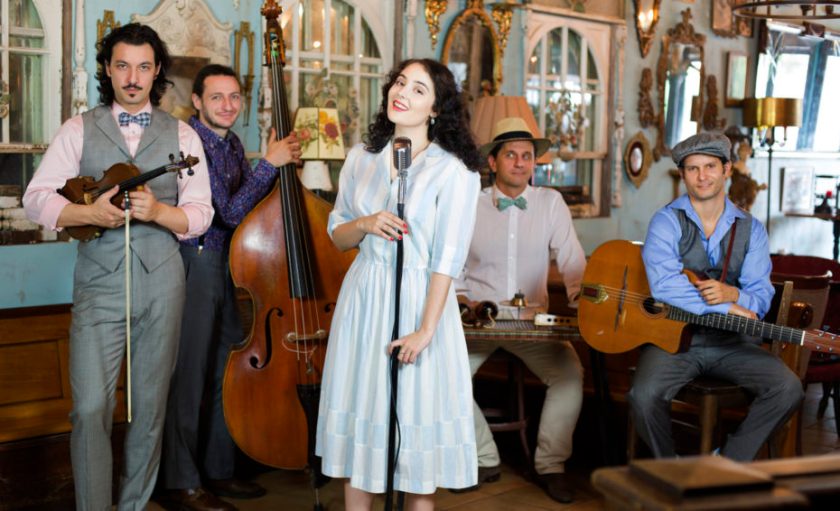
I could tell by the number of times this title showed up in the “trending posts” list that it had a good chance to take the top spot this year. And I love that! I’ve been a long-time fan of gypsy swing (as you will read about in the post) and the Avalon Jazz Band, fronted by the ebullient and talented Tatiana Eva-Marie, plays in a style that comes across as both carefree and highly polished. (Yes, I am a believer in the power of paradox.)
Avalon Jazz Band
Besides the vocals of Eva-Marie, another key element of the Avalon Jazz Band sound is the violin, played in most of the recordings in the post by co-founder Adrien Chevalier. Let’s end this collection from the year with several pieces of hot and sassy swing!
Thanks, as always, for reading and commenting on the musicians and music that pops up each week on the Saturday Soundtrack.
I can’t wait to see what you choose in 2022!
More to come…
DJB
*I enjoy all types of music but realized in 2019 as More to Come passed the ten-year mark that I was seldom finding time to really listen to new music, much less highlight musicians I loved through the blog. Announcing a weekly commitment to showcase some of the work of those who caught my ear was a way to push me out of the realm of posts around politics, work, life lessons, or leadership. The reaction? Well, I have one family member who confesses to “never reading the music posts.” Others — friends, business colleagues, and family members — regularly comment or send emails with thoughts and suggestions only about the Soundtrack features. Suffice it to say that enough people read them that I’ll continue to feed my soul though these explorations and highlights.
**If you are having trouble picking him out under the masks, Andrew begins this piece with the tenor solo.
What follows is your selection of the top posts for the year, and I want to begin by simply thanking you for reading this eclectic mix of observations. I write about experiences, people, and things I enjoy; issues that are important to me; and topics I need to hear. Not exactly your single-focus blog. However, readers keep checking in, providing feedback through the choices of what’s of interest to you. The list of your 2021 favorites includes one music post from the Saturday Soundtrackseries; pieces on history, preservation, and art; updates on family celebrations; and in-the-moment responses to the dramatic events of January 2021. And yes, you have to go all the way to the end to see what’s #1 (and to find a small bonus)!
Music and miscellany
The hot and sassy swing of the Avalon Jazz Band — Because I featured this post in both the New Favorites and Top Saturday Soundtracks of 2021 lists (the latter to come at the end of this week), I’ll be brief. We are in a period of time where we can use some happiness. As lead singer Tatiana Eva-Marie explains, that’s why this music was created in the first place and why it has such resonance today. See if you don’t find some happiness in Sunshine.
Pay your doctor bills / throw away his pills / you can cure your ills / with sunshine.
Digital declutter — Well before pandemic-forced quarantines, much of my time was spent in voluntary self-seclusion. How? By staring at my phone or tablet instead of making real connections with people. Cal Newport‘s 2019 book Digital Minimalism: Choosing a Focused Life in a Noisy World was recommended by a friend and former colleague, and it immediately resonated with work I’d been doing during 2020 to address the love/hate relationship with my smartphone. It was time to make permanent the digital declutter I’d struggled to adopt throughout the year. Many of the MTC readers evidently agreed.
History, art and architecture
Grove Arcade in Asheville, NC
Architecture, art, and craft in Asheville — As more people begin to put their toes in the water to travel this fall, National Trust Tours brought twenty-five hearty souls to western North Carolina in October. As the educational expert for the exploration of this small gem of a city, I suggested our travelers look for three key elements as they toured: stories, vision, and action. Why? Great communities don’t stay that way by chance. Those that survive connect people with place, know where they want to go, and work tirelessly to make it happen. My edited remarks to the group were captured in this popular post.
Les Colombes installation at the Washington National Cathedral
Les Colombes — My May post from the nave of the Washington National Cathedral — where Candice, Andrew, and I were fully enthralled with Les Colombes, the multimedia art installation of German artist Michael Pendry — was a big hit this year. Andrew and I captured photos of the exhibit from several perspectives and in different light. It was a night for optimism and hope in a new year.
An October view of Lake Mohonk and the Mohonk Mountain House
For beauty, nourishment, and the celebration of life, Mohonk is one of our special places — This last post in the history, art, and architecture section is a nice segue to pieces celebrating family. Our entire family — including partners — spent the Indigenous Peoples Day weekend at one of the great places on earth: Mohonk Mountain House. We gathered for the celebration of a significant birthday, and I wrote about the experience and posted pictures from family members in this October post. It continues to draw views at the end of the year. To put it simply, I love Mohonk.
Family celebrations
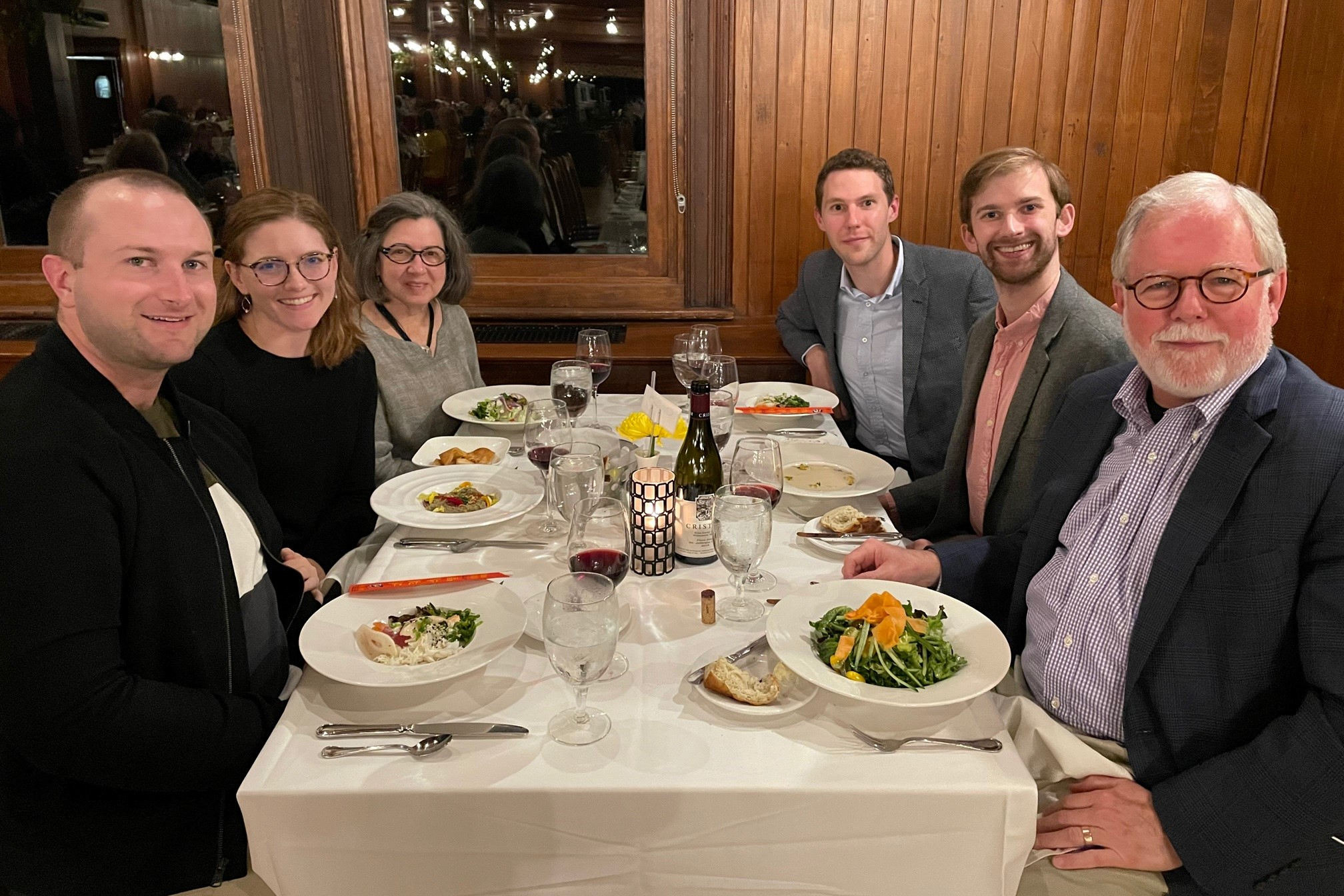
The family enjoys a birthday celebration dinner at Mohonk Mountain House
Our year in photos – 2021 — During the Thanksgiving season, when so many are thinking of the love of family and friends, I continued my annual tradition of posting family photographs on More to Come. This practice began back in 2008 but has grown through the years so that the entire family now participates in the creation and curation of this particular entry. This is shameless family promotion, so you’ve been warned!
Reminders — Personal reminders of what matters can help as we seek to regain our equilibrium. My list shows up on the computer screen each morning. We were all looking for our way through and beyond the difficulties of 2020 and I found that I had written — in one way or another — about each of my personal reminders, or life rules, over the previous twelve months. This post featured eight of those stories from More to Come, given in the hope that they would help readers think about cardinal rules. It was a very popular read.
Tending the heart — The last weekend in May, our family celebrated what I called a “significant” birthday for my wife. When Andrew, Claire, and I began to think of ways to recognize this milestone, we settled on something called a Boombox. Through the wonders of the internet, we invited others to join us in sending best wishes. More than 100 of Candice’s friends and family members responded with cards, notes, poems, photos, newspaper clippings, and anecdotes. This post captured some of those well-wishes, and only something pretty momentous was going to knock it out of the top spot for views this year. As one commentator simply said, “Wow!”
The times we live in
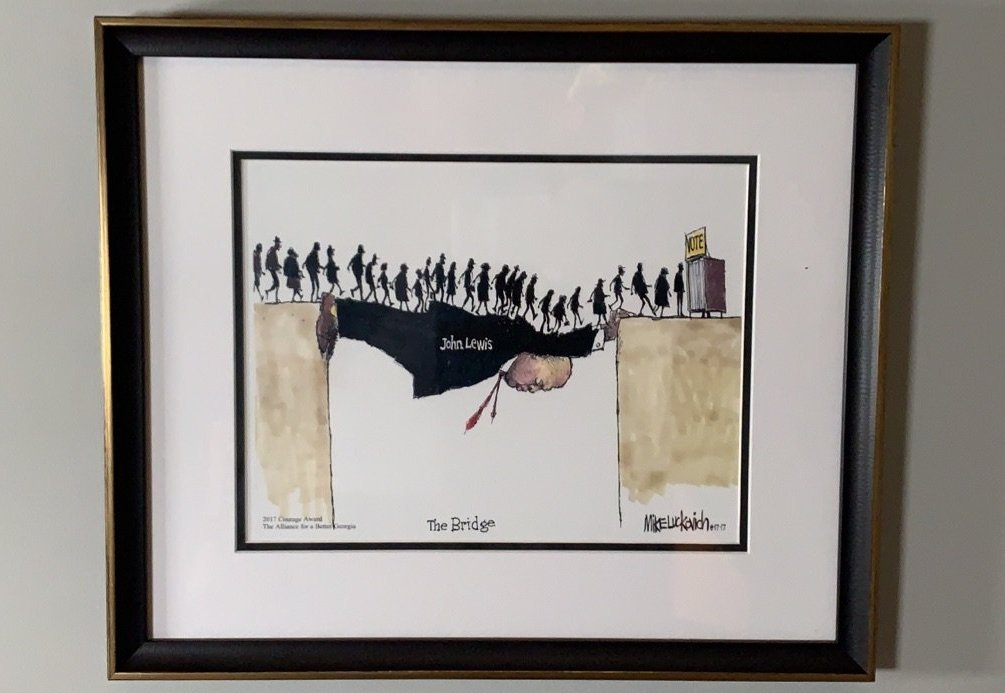
“The Bridge” cartoon by Mike Luckovich that hangs in the office of Senator-elect Jon Ossoff
Heartbreaking and galvanizing — Our emotions were whipsawed in early January between heartbreak and elation. Our country is still making the choices that will help decide which one wins. Two things happened that week, both of historic proportions. On Tuesday night, January 5th, during a special election, Raphael Warnock was chosen by the voters of Georgia to be the first African-American to represent the state in the U.S. Senate and the first African-American Democrat elected to a senate seat by a former state of the Confederacy. His victory was shared with Jon Ossoff, who became the first Jewish Senator elected from Georgia. The wins by Warnock and Ossoff meant that with a 50-50 tie in the Senate, Vice President-elect Kamala Harris’s vote gave Democrats the effective majority. It was an uplifting moment for democracy after a bitter 2020 election season. On Wednesday, a mob of white supporters of Donald Trump, incited by the sitting president, marched and overran the U.S. Capitol in an attempt to disrupt government and overturn the certification of the presidential election by Congress. It was a terrible moment for democracy in this country. I wrote about both of those things, shortly after they occurred, in this post.
The Hill We Climb — And the top post of the year was another “in the moment” piece of writing. In an inaugural ceremony full of wonderful moments and historic firsts, Amanda Gorman’s recitation of her six-minute poem The Hill We Climb was among the best. I snatched a video and some text and had it up online. The post quickly outpaced all other pieces on MTC for the year.
“History has its eyes on us,” as Gorman said. But as she ended her powerful call, it requires bravery for “our people diverse and beautiful” to “emerge battered and beautiful.”
“The new dawn blooms as we free it
for there is always light
if only we’re brave enough to see it,
if only we’re brave enough to be it.“
Bonus: The wisdom of fathers
The two posts which fell just outside the top ten in views both had to do with the wisdom that can come from our fathers. In Lessons Jamie Raskin learned from his father (February 16th), I turn to the eulogy our Congressman, Jamie Raskin, gave at the funeral for his father, the remarkable Marcus Raskin. In The practice of breakfast (May 3rd), I write about how my father’s morning practice of centering, and then cheerfully making breakfast, was the example I needed all along. I hope you enjoy them both.
Thanks again for reading.
More to come…
DJB
Image: Mohonk Mountain House as an October day turns to evening by Claire Brown.
With this Saturday Soundtrackfalling on Christmas Day, it seems only appropriate to send some gifts your way of well-loved Yuletide tunes by acoustic, folk, and roots musicians. We’ll begin with performances of four of my favorite tunes of the season — Carol of the Bells, In the Bleak Midwinter,Star in the East, and The Wexford Carol — followed by holiday sets from some roots and acoustic musicians I treasure.
In the Bleak Midwinter — based on a poem by Christina Rossetti— is one of Candice’s most beloved songs of the season. I also cherish the combination of words and music speaking to hope and life springing from the darkness. Two years ago, I featured a post on the forward-looking folk stylings of Kate Rusby. Included among the tunes from her new (at that time) Christmas album was Bleak Mid-Winter (Yorkshire).
Ken Kolodner, Elke Baker, and Robin Bullock played a version of the tune on their newest album On a Cold Winter’s Day and they performed it live at the IMT Celtic Christmas concert earlier this month.
Acoustic guitarist Doyle Dykes has a lovely version of In the Bleak Midwinter. He is followed by one of the pioneers of the English folk revival, Scottish musician Bert Jansch, with a rendition — filmed through the haze of cigarette smoke — from 1975. Finally, I include a nice arrangement by Tall Heights, an electrofolk duo based in Boston.
Star in the East
The Southern Harmony shape-note tune Star in the East is one of those Yuletide songs not heard as frequently as it deserves, yet it has always been a personal favorite, with the lyrics pointing to what’s really important.
Vainly we offer each ample oblation, / Vainly with gifts we his favor secure; / Richer by far is the heart’s adoration, / Nearer to God are the prayers of the poor.
We’ll begin with a traditional version, sung by one of the country’s premier early music groups, The Rose Ensemble from St. Paul. Their rendition is followed by folk singer John McCutcheon’s arrangement from 1984.
A long-time IMT favorite is the duo of Al Petteway and Amy White. I hope you’ll enjoy Al and Amy’s take on Star in the East, which they pair as part of a medley with Born in Bethney.
It is one of the oldest surviving carols in the European tradition. Dating back to the 12th century the Wexford Carol is also known by its first line “Good people, all this Christmas time.”
I’m going to give top billing for this tune to the trio Síle: Lizzy Hewitt on vocals, Olivia Barrett on fiddle, and Ellen Gibling on harp. Síle “blends fiddle, harp, and voice in delicate, thoughtful arrangements of Irish traditional and folk music.” Their beautiful rendition of this carol was released last December.
The other vocal version of The Wexford Carol I’ve included features the much more famous Alison Krauss, Yo-Yo Ma, and Natalie MacMaster in a 2009 video that’s been viewed more than 4 million times. The arrangement and the musicianship, as one would expect, are sublime. That is followed by an instrumental version by the group Nightnoise.
Nightnoise
Shifting to sets of tunes by some of my favorite acoustic artists playing songs from the winter solstice and Yuletide, we’ll continue with the music of Nightnoise, an ensemble “active from 1984 to 1997. Their original blend of Irish traditional music, Celtic music, jazz, and classical chamber music inspired a generation of Irish musicians.”
The seasonal Snow on High Ground is a favorite I hope you’ll enjoy. I’ve also included their version of another chestnut, The Holly and the Ivy, which is featured in different renditions later in this post as well.
Al Petteway and Amy White
These YouTube videos of Al and Amy’s Yultide tunes give you a chance to see them play live as we have at IMT: the medley Joy to the World/The Gift and the festive Breakin’ Up Christmas.
Al and Amy also have a beautiful arrangement of The Holly and the Ivy…
…which leads me into the work of the next musician.
Alex De Grassie
Fingerstyle guitar master and composer Alex De Grassie also plays a notable arrangement of The Holly and the Ivy. The video that follows is the audio of a Christmas medley by De Grassie, beginning with Jesus Christ the Apple Tree, followed by Once in Royal David’s City. In a slightly different mode, De Grassie and west coast Americana group The Real Sarahs have also just released their arrangement of the traditional Dona Nobis Pacem.
Custer LaRue and the Baltimore Consort
And this Christmas Day post will end with three tunes from my friend Custer LaRuewith the BaltimoreConsort from their 2009 Bright Day Star album. One music critic rightly described it as “One of the finest Christmas recordings ever made…” We begin with the traditional Cherry Tree Carol, followed by the sprightly instrumental A Christmas Jig, and end with the delightful Hey for Christmas! written by John Playford.