Today, December 7th, is the 80th anniversary of the 1941 attack on Pearl Harbor. An attack that led to the U.S. entrance into World War II. A date that President Franklin D. Roosevelt memorably described as one “which will live in infamy.”
(An earlier version of this post originated on More to Come on December 6, 2020. I am reposting an updated version today to honor the 80th anniversary.)
Fewer and fewer people are alive who have personal memories of the attack on Pearl Harbor. My father and his sister — my Aunt Mary Dixie — were at Peabody College in Nashville listening to a performance of Messiah. When they came out, they learned about the attack at Pearl Harbor and their lives were changed forever. Both were WWII veterans. Both — like most in their generation — have passed. The Veteran’s Administration calculates that 240,329 of the 16 million Americans who served in World War II are alive in 2021. That number was more than 325,000 just last year.
Historian Heather Cox Richardson reminds us that those 16 million men and women looked like America.
America fought World War II to defend democracy from fascism. And while fascism preserved hierarchies in society, democracy called on all men as equals. Of the more than 16 million Americans who served in the war, more than 1.2 million were African American men and women, 500,000 were Latinos, and more than 550,000 Jews were part of the military. Among the many ethnic groups who fought, Native Americans served at a higher percentage than any other ethnic group—more than a third of able-bodied men between the ages of 18 and 50 joined the service—and among those 25,000 soldiers were the men who developed the famous “Code Talk,” based in tribal languages, that codebreakers never cracked.
The memory of Pearl Harbor remains. On December 7, 2014, Tom Coffey, a staff editor in the New York Times sports department, suggested that fans skip that day’s football games and use the time to remember the importance of Pearl Harbor. I loved his last line:
“Sunday afternoon seems like a good time to think about the sacrifices made by the men and women who died that day, and to reflect upon the wisdom of a statement that originated with Marv Levy, the longtime Buffalo Bills coach, that is still uttered in the sports world, albeit far too infrequently: No game is a must-win. World War II was a must-win.“
Pearl Harbor remains both a place and a response that is fused in our collective national memories. As my friend and former colleague Tom Mayes writes in Why Old Places Matter, “The sense of identity provided by memory is largely what defines us as individuals and as a society.” Memories are often tied to place. And memories and identities are often contested, Tom notes, but “the fact that these arguments occur highlights the importance of the place. Regardless of conflicting points of view, the place itself transcends a specific interpretation. …The continued existence of the place permits the revision, reevaluation, and reinterpretation of memories over time.” As former New York Times architectural critic Herbert Muschamp has said, the essential feature of a landmark is not its design, but the place it holds in a community’s memory.
Memory is also essential to hope, which is grounded in our knowledge of what has gone before. Hope as a sense of uncertainty and coming to terms with the fact that we don’t know what will happen, but we have memories that show us that good things — powerful things — can happen. Pearl Harbor is not just a place, but it is a reminder of a national response, when the nation and all its people became much more important than the tribe, political party, religious affiliation, or individual. When country, a caring for humanity, and a desire to defeat fascism and bigotry took precedence over personal achievement, power, and greed.
Many things changed because of our involvement in World War II. For one, the members of the armed forces — of all races — returned to a country that still oppressed people of color. The pushback against the hypocrisy of fighting fascism abroad while maintaining a homegrown system of apartheid in much of the U.S. was such that over the next two decades, significant strides were made to grant full civil rights to all people. But as we know, that work is far from over.
Last year at this time I noted that 88% of the Republican members of Congress were either cowed by or purposely aligned with a weak and defeated bully. I spoke to the need for those memories of a strong and effective national response to not only hope for a better future, but to give us the strength to work every day to make that future a reality. And the right’s turn to authoritarianism has only gotten worse over the past 12 months.
We should never forget what happened at Pearl Harbor on December 7, 1941. And the memory of that date, that place, and our response should support us in the difficult times ahead, through the shared work of the imagination. to remake our democracy.
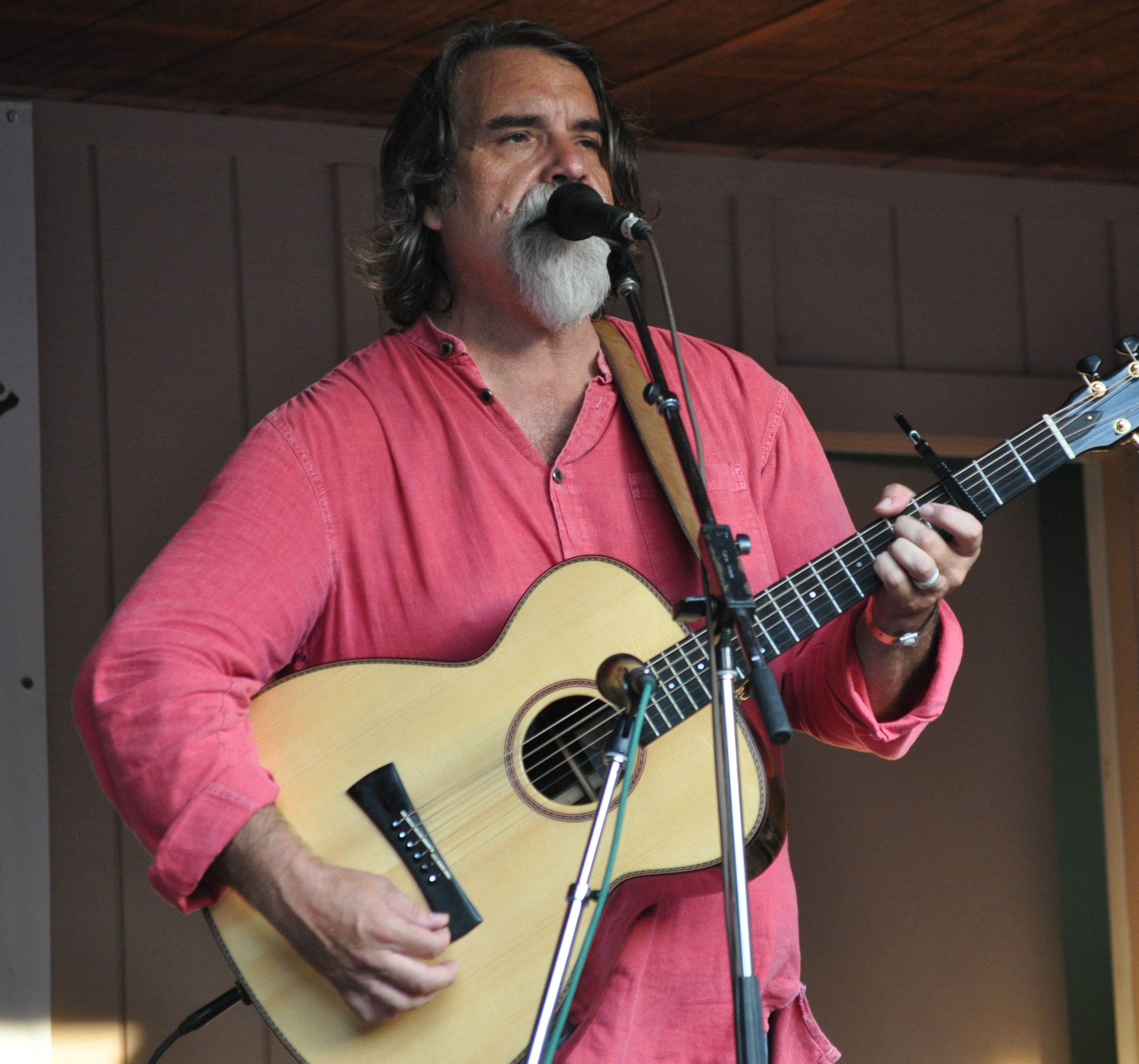
Bill Staines, one of the most beloved folksingers of his generation, passed away on December 5th after a battle with cancer. While it has been a number of years, I was fortunate to see Staines perform live several times, most recently at the Oak Grove Folk Music Festival outside Staunton, Virginia. The small, compact setting in the midst of a group of trees, was perfect for the man described as “the master of intimate concerts.”
Nanci Griffith, who also passed earlier this year, described Staines as the “Woody Guthrie of my generation” and the man who inspired her to begin writing and performing her own work. She recorded Bill’s beautiful tune RosevilleFair on her live album in 1988.
Staines was left-handed and played a right-handed guitar upside-down, with the bass strings on the bottom. Consequently, he developed his own unique fingerings and picking style.
I have three personal favorites from his catalog, and I’ll include them all here. The first is Roseville Fair, heard in a 2010 house concert. As you can see, his audiences always knew the words and sang along.
A Place in the Choir — heard here from the album version — was another crowd favorite.
Finally, the shows I saw by Staines generally ended with the beautiful tune River. I can’t think of a better version than this one with the Mystic Chorale.
The whistling ways of my younger days Too quickly have faded on by But all of their memories linger on Like the light in a fading sky
River, take me along in your sunshine, sing me a song Ever moving and winding and free You rolling old river, you changing old river Let’s you and me, river, run down to the sea
Roll on, river, down to the sea. Rest in peace, Bill Staines.
Following a sabbatical in 2016 I made it a priority to regularly read books from a wide variety of authors, a practice which has continued into my third stage of life. With 2021 drawing to a close, it is time to share my annual reading list here on More to Come. * As is true each year, I’ve been challenged and enlightened by the writing of some very smart people.
Few readers will be fascinated by every one of my areas of interest, so I’ve grouped these 26 books into broad categories. Scroll down to discover:
The top five (I’ll return to these works again and again)
History and biography (learning from the past)
The times we live in(politics, civic life, and more)
Memoir and story (tell me about yourself)
The third stage (thinking about purpose and mindfulness)
Sports (really just baseball)
Outbursts of radical common sense (and whatever else tickled my fancy…otherwise known as the miscellaneous section)
I hope you enjoy learning about the treasures I pulled from my shelf in 2021. Clicking on the link under the book title will take you to my original review on More to Come.
THE TOP FIVE (I’ll return to these works again and again)
Let’s begin with a look at five works, three of which were published this year and two others that are often quoted and have developed devoted followings among their readers in the years since they were first released. Each touched and taught me in special ways.
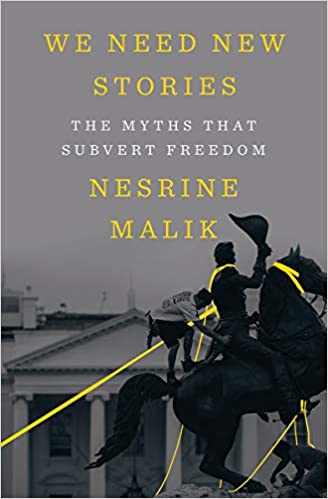
We Need New Stories: The Myths that Subvert Freedom (2021), the powerful first book of award-winning journalist Nesrine Malik, addresses the fact that while we are living in confusing times, there are ways to sort through the fog. She suggests that clarity will come if we look deeply at the stories and myths we tell ourselves. As Malik writes in the prologue to the U.S. edition, a malignant thread — made of myths that divide us — has been running through Anglo-American history. These are stories where “history, race, gender, and classical liberal values are being leveraged to halt any disruption of a centuries-old hierarchy that is paying dividends for fewer and fewer people.” The strength of the myths is not in facts, but in the narratives, so it is impossible to fight fake facts with other facts. What is needed, Malik asserts, are new stories that are not just the correction of old stories but are visions that assert that “for societies to evolve, an old order must change.” For me, We Need New Stories was challenging, thought-provoking, expansive, and, ultimately, affirming and instructive.
Robert E. Lee and Me: A Southerner’s Reckoning with the Myth of the Lost Cause (2021) was a reminder that we all have myths in our personal pastthat should be faced. Ty Seidule, Emeritus Professor of History at West Point, has written a fearless and direct book that is part memoir, part history, and part call-to-action. Seidule walks the reader through each step of his youthful indoctrination of the myth of the greatness and perfection of Robert E. Lee. He hears this while growing up and attending school in Virginia and Georgia and as an army officer stationed at bases named for Confederate traitors. It is at West Point, however, where Seidule had his “a-ha” moment and recognized that what he learned his entire life was a lie. Southerners and all Americans can benefit from the lessons taken from Seidule’s journey
The Sum of Us: What Racism Costs Everyone and How We Can Prosper Together (2021) is a vital and hopeful book by Heather McGhee. She begins by addressing the argument that whites today have not benefited from historical inequalities. “The advantages white people had accumulated were free and usually invisible and so conferred an elevated status that seemed natural and almost innate.” Programs from the Homestead Act to insured mortgages to the G.I. Bill had worked — spectacularly well in many cases — to build a strong white middle class. But when faced with sharing those benefits and the same treatment from the government with people of color, white Americans — to use an old adage — decided to cut off their nose to spite their face. By advancing a zero-sum economic model — where if you win, then I lose — those with power and wealth have hollowed out public goods and denigrated government programs that were once supported by wide majorities of Americans.
On Tyranny: Twenty Lessons from the Twentieth Century (2017) begins with the thought, “History does not repeat, but it does instruct.” Timothy Snyder— a historian of the Holocaust who teaches at Yale — has written a slim yet indispensable guide to resisting tyranny that provides present-day advice. For guidance, he turns to the work of the Founding Fathers when they sought to build a governmental system of checks and balances that would be resistant to the tyranny that overcame ancient democracy. Snyder’s lessons and writings are very accessible, but that doesn’t make them less compelling. He notes that history, “Gives us the company of those who have done and suffered more than we have. …To make history, young Americans will have to know some.” This book is a good place to start.
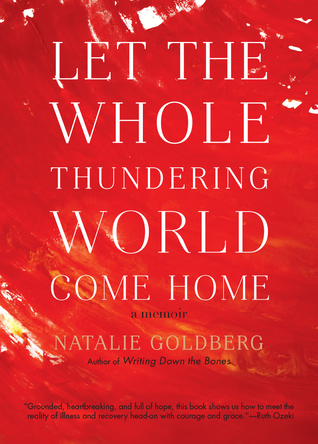
Let the Whole Thundering World Come Home (2018) is Natalie Goldberg‘s short but gripping memoir of her battle with cancer. The Stoics suggest that we meditate on our mortality every day, and Goldberg’s Zen training helped, in a similar fashion, because it “harped on death.” Goldberg shows us how she and her partner — who along the way is diagnosed with breast cancer — grapple with their battles (with the cancers, with their bodies, with the cancer-industrial complex, with their emotions) separately and together. The cancer twins, she calls them. They both have to face the unknown, the void. Cancer forces that type of focus. This is a beautiful meditation on finding a path, finding a place, “to set one foot after another. To come inside out; to show your guts, everything that you are made of.”
Why the New Deal Matters (2021) is an engaging new work by historianEric Rauchway in the Yale University Press Why X Matters series. Rauchway has not sugar-coated the failings of Franklin Roosevelt’s effort to pull the country out of the Great Depression. But he understands why it meant so much to America at the time and why it still has resonance today. “The New Deal mattered then, at the cusp of spring in 1933, because it gave Americans permission to believe in a common purpose that was not war.”
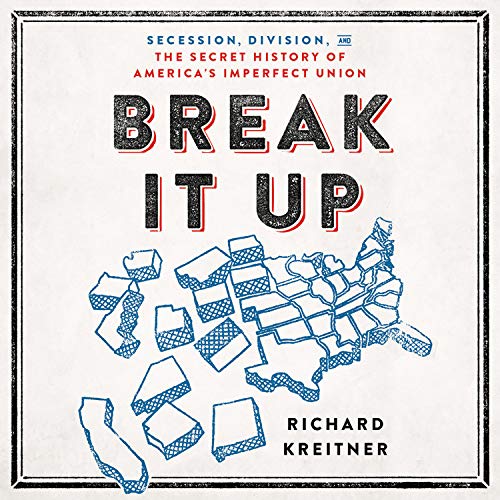
Break It Up: Secession, Division, and the Secret History of America’s Imperfect Union (2020), Richard Kreitner’s fascinating book, begins by reminding us that the passengers on the Mayflower were not the Pilgrims of myth, but Separatists who wanted to break off from the Church of England. Once they landed in the New World they began doing what they did best, separating into multiple sects and small, isolated communities. Americans have been fighting the urge to break apart ever since. Kreitner’s thesis — supported with in-depth accounts of the backstory to this history — is that the compromise we have accepted to keep the country unified in name if not in spirit, predicated on marginalization of and often violence against people of color, is a compromise too far.
The Outlier (2021) argues that Jimmy Carter attempted to take on our vexing national issues in a highly consequential — and unfinished — presidency.Kai Bird, in this important new presidential biography, states upfront that Carter’s “distinctive southern sensibilities and his Southern Baptist religiosity” made possible the “revelation that America was hobbled by its myths.” He saw an America that was in need of serious healing. But Americans like to portray themselves as “drenched” with a sense of destiny and exceptionalism. We hang on to the myths to avoid the truth. Carter’s presidency, writes Bird, was ahead of its time with its hopes for reconciliation and healing.
THE TIMES WE LIVE IN(politics, civic life, and more)
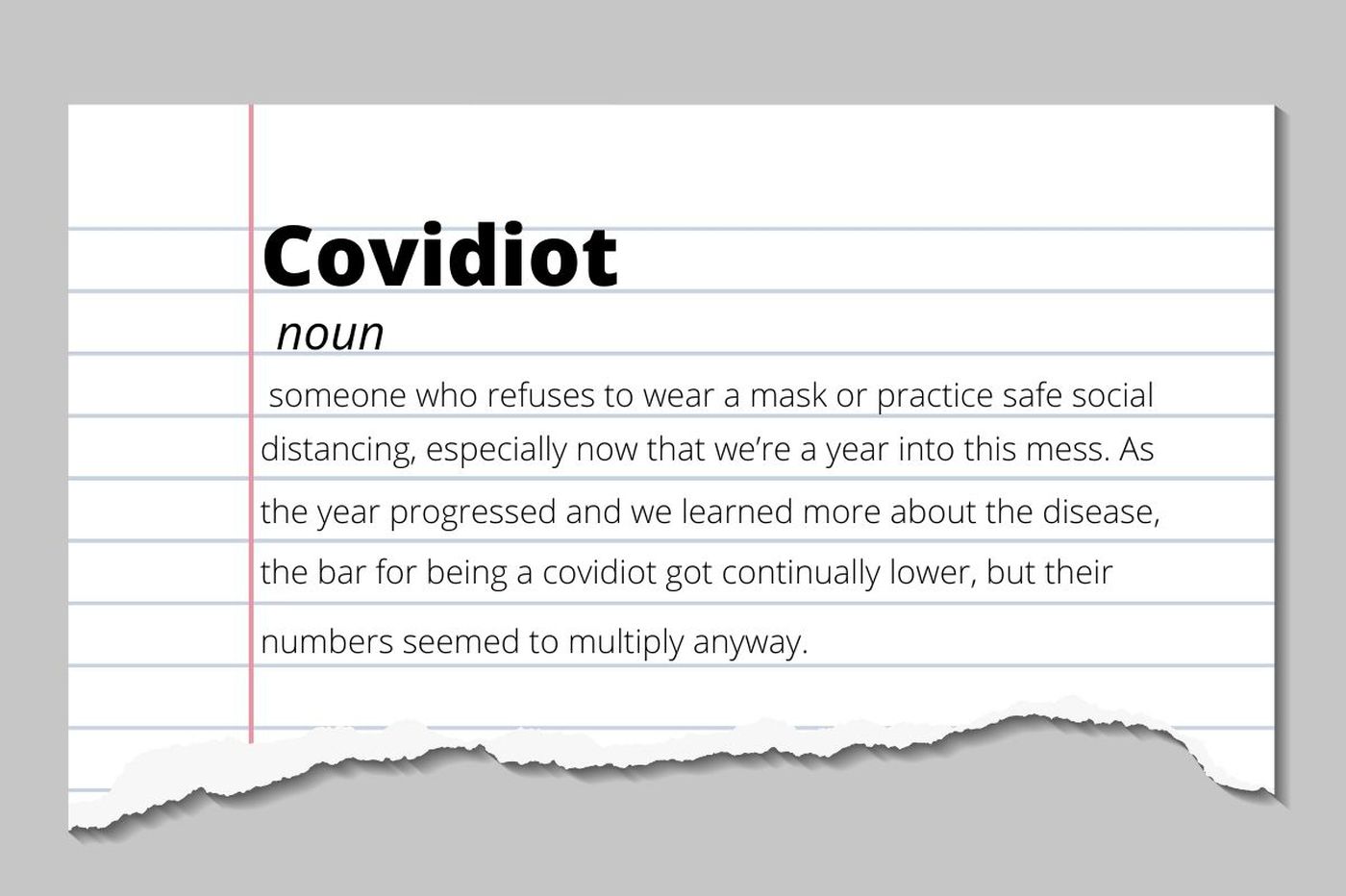
Definition of covidiot. Credit: Philadelphia Inquirer.
Trust (2020), by former South Bend mayor and current Secretary of Transportation Pete Buttigieg, suggests that this value is foundational to the success of American democracy. It is important to remember in this time of political discord and paranoid thinking how much we lose when we give up on trust. “Trust is indispensable for a healthy, functioning society,” Buttigieg writes, and in its absence, nothing that works can work well.
Long Time Coming (2020), written after the murder of George Floyd on May 25, 2020, is a series of letters from author Michael Eric Dyson to other black martyrs murdered at the hands of white Americans: Elijah McClain, Emmett Till, Eric Garner, Breonna Taylor, Hadiya Pendleton, Sandra Bland, and the Rev. Clementa Pinckney. In each chapter, Dyson looks at the genealogy of anti-Blackness and its impact on America today. He ends — in his letter to the Rev. Clementa Pinckney — with hope joined by their shared heritage as ministers.
White Evangelical Racism: The Politics of Morality in America (2021), by historian, associate professor of religious studies at the University of Pennsylvania, and commentator Anthea Butler, is a valuable and timely book full of powerful truths we need to hear today. This is part history, part personal reflection, part call to action all wrapped together in a vital sermon that pulls no punches. Butler provides a concise history of the evangelical movement, but more importantly she focuses on “the racist and racial elements that imbue its beliefs, practices, and social and political activism.” Butler writes to trouble us and sear our souls, but finally she asks us to be hopeful, understanding that there is time. That time is now.
Uncharted: How to Navigate the Future(2020) could have easily been limited to issues of business management and leadership, given the background and widely popular You Tube videos of author Margaret Heffernan. But as I read Heffernan, I was struck by how much her thoughts on what we need to do — and what we needto be — to navigate the future were focused on the personal. She calls for us to recognize that we all inhabit complex systems, only parts of which we can see or influence, so we need to think like an artist, with a mind that is “febrile, alert, receptive.” She points to “cathedral projects” as those containing experimentation to navigate uncertainty, but also a clear vision of what one wants to achieve. If we are to navigate the future, we must be able to live with paradox and “reconcile opposites — efficiency and robustness, adaptability and long-term focus, just-in-time and just-in-case.”
MEMOIR AND STORY (tell me about yourself)
Pauli Murray House before restoration (2015) and after exterior work (2016) (Photo credit: Pauli Murray Project)
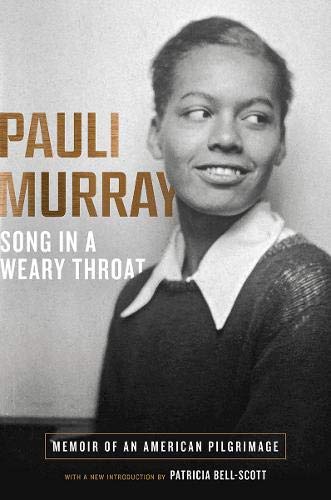
Song in a Weary Throat (1987) by Pauli Murray — one of the most consequential and hopeful of 20th century Americans — is a powerful memoir, told with wit and energy. Murray’s memories of her parents are thin because her beloved mother died when she was four, and she went to segregated Durham, North Carolina, to live with her Aunt Pauline. It moves through her life as a self-described “rebel, instigator, and survivor, at times a nettle in the body politic, an opener-of-doors, and always a devout child of God and friend of mankind.” Murray notes that moments of despair were offset with the sustaining knowledge “that the quest for human dignity is part of a continuous movement through time and history linked to a higher force.” As The Rev. Dr. Martin Luther King, Jr., expressed it, in the struggle for justice one has “cosmic companionship.”
Three Simple Lines: A Writer’s Pilgrimage into the Heart and Homeland of Haiku (2020) is the second of three Natalie Goldberg books on this list. Part poetry, part history lesson, part travelogue, Three Simple Lines is mostly memoir of a writer’s pilgrimage to explore this shortest of all creative writing forms. Goldberg is a masterful storyteller, and she has produced a thoughtful and illuminating book.
THE THIRD STAGE (thinking about purpose and mindfulness)
Purposeful Retirement: How to Bring Happiness and Meaning to Your Retirement (2017) by Hyrum W. Smith is the first book selected when a small group of friends gathered during the pandemic to discuss various paths into the next stage of life. I’m afraid to report that it will not be mistaken for one of the great works of literature. There are, however, bits and pieces that are insightful, and Smith’s stories are usually humorous and illustrative in their own way.
Digital Minimalism: Choosing a Focused Life in a Noisy World (2019) by Cal Newport was recommended by a friend and former colleague, and it immediately resonated with work I’d been doing during 2020 to address the love/hate relationship with my smartphone. It was time to make permanent the digital declutter I’d struggled to adopt throughout the year. Today’s technology mixes harm with benefits in a way that sucks one into overuse and manipulated addiction unless you step back and consider “what tools you should use and how you should use them.” Equally important, says Newport, such an approach “enables you to confidently ignore everything else.”
Listening: How to Increase Awareness of Your Inner Guide (1989) is a small book that was gifted to me this year at a time when I was having trouble because I was “thinking while male.” The book’s author,Lee Coit, presents ways to train yourself to listen to what he describes as the divine voice that is inside us all.
The Four Agreements (1997), published more than twenty years ago but still relevant today, is author Don Miguel Ruiz‘s treatise that everything we do is based on thousands of agreements we have made — agreements “with other people, with God, with life” and, most importantly, with ourselves. But to live into who we really are, we have to stop living our lives trying to satisfy the dictates of other people.
Broken Signposts (2020) by Anglican theologian N.T. Wright, looks at seven signposts integral to every worldview, including justice, beauty, freedom, and truth. When we do not live up to our ideals in those areas, Wright suggests, our societies and our individual lives become unbalanced. The contrast between destructive and uplifting uses of power came to mind while reading this work. Many of Wright’s observations from the Gospel of John bring to mind parallels of life today, especially Wright’s telling of the well-known New Testament story of Jesus before Pilate, in a different political arena in a different time.
The Daily Stoic: 366 Meditations on Wisdom, Perseverance, and the Art of Living (2016) is a year’s worth of wisdom centered on the Stoic virtues of justice, prudence, self-control, and courage; virtues which have been described as the “perennial desires of the wise.” Through the regular practice of reading and reflection, The Daily Stoic and author Ryan Holidayasks us to think more deeply about how we live, how we navigate the challenges of life, and how we change our actions in response to those challenges. “Acceptance isn’t passive,” Holiday asserts. “It’s the first step in an active process toward self-improvement.”
SPORTS (really just baseball)
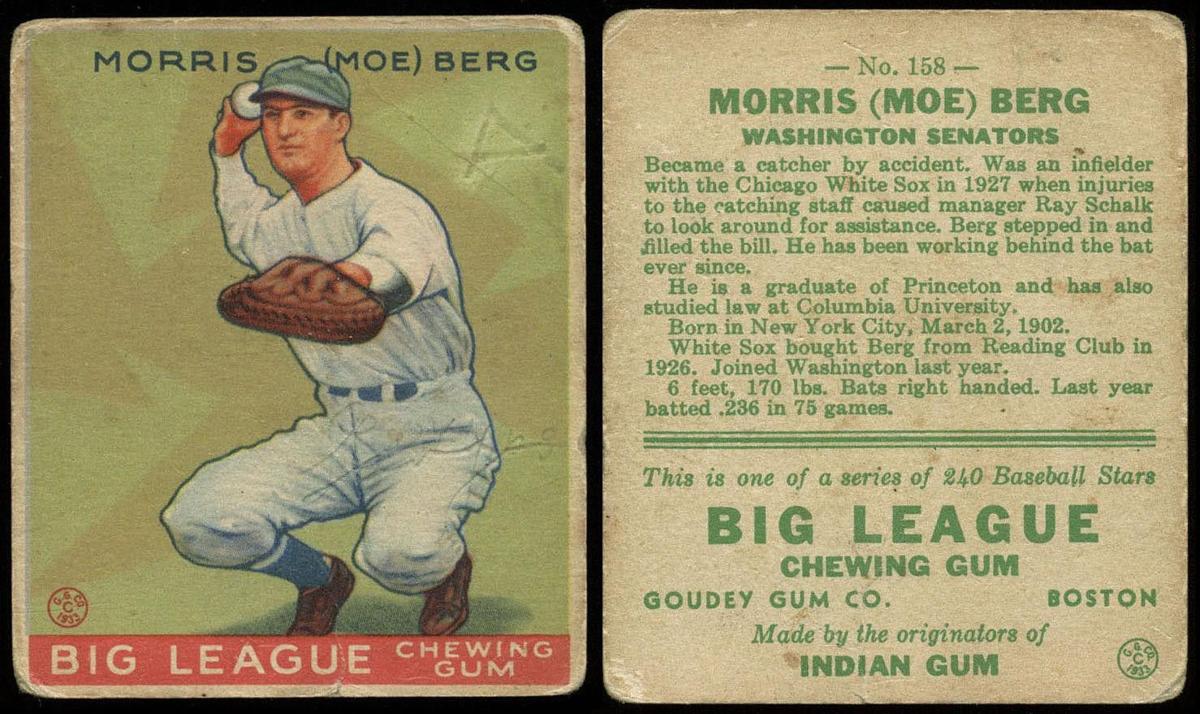
The Catcher Was a Spy: The Mysterious Life of Moe Berg (1994) is Nicholas Dawidoff‘s page turner, where I learned that only one man has his professional baseball cards in the CIA museum in Langley, Virginia. Following his 15-year career with five different major league teams, the Princeton-educated Berg served as a highly successful Office of Strategic Services (OSS) operative during World War II. Moe Berg was seen as different from any other baseball player even during his playing career. Legendary manager Casey Stengel described Berg as “the strangest man ever to play baseball”. Following his baseball years, Berg — like many bright young men of the day — entered the war to fight the Nazis. Dawidoff’s delightful book was a great introduction to someone who was among the few who found a way to live an original life.
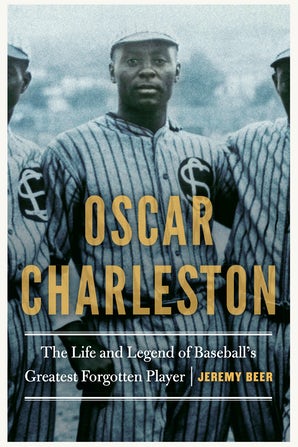
Oscar Charleston: The Life and Legend of Baseball’s Greatest Forgotten Player (2019) is a recent and fascinating biography by Jeremy Beer. According to the stats that Bill James (the father of baseball analytics) uses to rank player value from different eras, only Babe Ruth, Honus Wagner, and Willie Mays were greater than Charleston, who was slotted just above Ty Cobb. Oscar Charleston — to put it bluntly — is the best baseball player you’ve never heard of. He was an outstanding athlete and fascinating individual. Charleston put together an other-worldly career in the Negro and Cuban leagues decades before white major league baseball decided to integrate. A centerfielder with the range and smarts of Willie Mays, a hitter with as fearsome a stroke as Babe Ruth, and a baserunner built like a linebacker with the fast fearlessness of Ty Cobb, Charleston was the whole package. Beer has brought forward the forgotten history of a man who, although he was the best-known player of the Negro Leagues, was identified by the occupation “baggage handler” on his death certificate.
OUTBURSTS OF RADICAL COMMON SENSE (and whatever else tickled my fancy)
The 99% Invisible City: A Field Guide to the Hidden World of Everyday Design (2020) includes the motto to “always read the plaque” — a mantra for Roman Mars and the folks who produce the podcast 99% Invisible, and one that infuses this 2020 book by Mars and Kurt Kohlstedt. According to this informative and entertaining book, we should be “constantly on the lookout for stories embedded in our built environments,” as they do here, with a focus on problem-solving, historical constraints, and human drama.
How to Apologize (2021), by David LaRochelle and illustrated by Mike Wohnoutka, is a simple children’s book that I read after reading an interview with Wohnoutka by a blogger from my hometown. “Wouldn’t the world be a better place if everyone knew how to apologize? Luckily, this humorous guidebook is full of practical tips about when, why, and how to say you’re sorry. From a porcupine who accidentally popped his friend’s balloon to a snail who was running so fast he stepped on a sloth’s toes, hilarious examples and sweet illustrations abound.”
Rites of Our Passage: Reflections Through a Christian Year (2002) is a collection of the sermons of The Rev. Dr. Francis H. Wade. In all the sermons I’ve heard through the years from a number of exceptional priests, pastors, and mentors, I never heard a more consistent preacher week-in-and-week-out than Frank Wade. Other priests have been known to say, “All his sermons are, at least, very good, and many of them are astonishingly good.” In returning to re-read the entire collection, I learned anew that Frank’s timeless and clear-headed observations — about the dangers that occur when isolated minds create dead hearts, about the need to give forgiveness a chance in a world riven by violence, and how hope and joy require the action of belief if we want to live as if something good were true — are building blocks for personal growth.
Writing Down the Bones: Freeing the Writer Within(1986), the classic writing manual by Natalie Goldberg, suggests that writing is 90% listening. “If you want to become a good writer, you need to do three things,” she advises. “Read a lot, listen well and deeply, and write a lot.” And, she adds, don’t think too much. Goldberg speaks of how to uneducate yourself from what you’ve been taught and immerse yourself in writing what’s in front of your nose.
I hope you find one or more books here to pique your interest. In pulling this year’s list together, I realized that I slipped and did not read any fiction in 2021. That will be corrected in the coming year, as I have already identified a couple of novels on my “to be read” shelves that have moved up in priority. Let me know what you’ve discovered and enjoyed in your books this year and happy — and productive — reading in 2022!
More to come…
DJB
*To check out previous lists, click here for the posts from 2020, 2019, and 2018.
Born in Potomac, Maryland, and a graduate of Georgetown Visitation in the District, the Nashville based singer-songwriter Maggie Rose has been making a name for herself in rock-and-roll, soul, folk, funk, and R&B for several years. A gifted vocalist, Rose has worked with a wide variety of some of the top names in the field. With the release of her third solo album, Have a Seat, she has stepped out further into the spotlight.
A friend and regular More to Come reader is a big fan, and he suggested I consider taking a look at Rose’s music through the Saturday Soundtrack.
We’ll begin with What Are We Fighting For which opens her newest album. Heard here in a live performance, there’s a classic sound that spans eras in this song. It speaks to the need for loving solidarity that infuses her recent work.
Saint, as described by Rose’s website bio, “unfolds as a delicate refusal to succumb to the expectations of others.” Rose says, “That song’s about admitting to not being perfect and being okay with that. It’s something we should stop expecting of women—because women are many things, and saintly is not a requirement.”
“I’ve got a cloud over my head when I wake up / I bet I seem perfect on paper / Couldn’t be further away / Feels like there’s a crowd of people that I’ve disappointed / The places that I’ve been avoiding / Full of hearts I left on the way
I’m only human, I’ve made my mistakes / It’s hard to feel high when you’re falling from grace, but I’ll keep falling, I’ll keep falling”
In this live version of Are We There Yet, Rose ventures into pop to speak about the tortures of ambition, while What Makes You Tick is an exploration of funk. Rose pulls it all off with style.
“For Rose, the charmed experience of recording in Muscle Shoals has catalyzed the start of a thrilling new era in her musical evolution. ‘Working with musicians of that caliber and knowing they were giving my music so much attention definitely made me thrive,’ she says. ‘I felt so safe going deep into the emotional places within the songs, and I think you can feel that love and camaraderie when you listen to the record.’ At the same time, Have a Seat is undeniably the sound of an artist fully coming into her own, without concession or compromise. ‘I’ve worked in this industry for over a decade, and I feel like I’ve finally carved out a lane that’s genre-bending and all my own,’ she says. ‘I had to really fight to find that space for myself, and this record is my way of staking my claim.’”
We’ll end with a recent live concert from Paste Studio in Nashville, recorded in September during the Americana festival. Rose kicks it into high gear with Do It and takes off from there. It is followed (after a bit of a conversation) with one of her recent singles, For Your Consideration.
Maggie Rose returns home to play the Birchmere on December 10th.
Enjoy!
More to come…
DJB
Image of Maggie Rose (credit: maggierosemusic.com)
“Stoic” is shorthand for emotionless. Add the fact that “the mere mention of philosophy makes most nervous or bored,” writes author Ryan Holiday, and “‘Stoic philosophy’ on the surface sounds like the last thing anyone would want to learn about, let alone urgently need in the course of daily life.”
Holiday is on a mission to change that.
The Daily Stoic: 366 Meditations on Wisdom, Perseverance, and the Art of Living has been sitting on the bed stand most of this year. Each day I read a short reflection by Holiday and co-author Stephen Hanselman that drives home their belief in stoicism as a “tool in the pursuit of self-mastery, perseverance, and wisdom.”
The ancients who built the foundations of Stoic philosophy counted Roman emperors, former slaves, playwrights, political advisors, and prosperous merchants among their number. Along the road of history, figures as different as George Washington, Walt Whitman, Frederick the Great, Immanuel Kant, William Alexander Percy, and Ralph Waldo Emerson all read, studied, quoted, or admired the Stoics.
To provide readers with a daily meditation, the authors organize the year around the disciplines of perception, action, and will. The months are grouped by themes. A short quote from an ancient philosopher is followed by a few paragraphs with accessible examples. The discipline of perception begins with the theme of clarity and the January 1st topic of control and choice. The quote is from the slave turned philosopher Epictetus.
“The chief task in life is simply this: to identify and separate matters so that I can say clearly to myself which are externals not under my control, and which have to do with the choices I actually control. Where then do I look for good and evil? Not to uncontrollable externals, but within myself to the choices that are my own …”
Stoicism encourages us to focus on what we can control and how we control ourselves. “Acceptance isn’t passive,” Holiday asserts. “It’s the first step in an active process toward self-improvement.”
Many of us blame outside events for our circumstances. But we truly grow when we move beyond the event and focus on the response. Bad, unexpected, and unwanted things will happen to each of us. In our response we have to act to change. If one carries on as before, “eventually you won’t even notice your mistake and will begin to rationalize your behavior.”
Responsibility simply means we have the ability to respond. We can choose to get angry, unfocused, and negative when something happens — be it a political race that doesn’t go our way, an unexpected illness, the latest U.N. report on the coming climate catastrophe, or the death of a close family member. We can also accept that it has happened and then take the action — setting the standard through our works — that hope demands.
The Stoic virtues articulated by emperor Marcus Aurelius — justice, prudence, self-control, and courage — have been described as the “perennial desires of the wise.” Through the regular practice of reading and reflection, The Daily Stoic prompts us to think more deeply about how we live, how we navigate the challenges of life, and how we change our actions in response to those challenges.
History does not repeat, but it can be instructive.
During a recent 8-hour speech* on the evening before the House of Representatives approved President Biden’s Build Back Better Act, Minority Leader Kevin McCarthy commented that “Nobody elected Joe Biden to be FDR.”
Congresswoman Alexandria Ocasio-Cortez shouted, “I did!” followed by other shouts of “me too!” Four grandchildren of FDR, his vice president, and two cabinet members just stood up and also said, “we voted for Biden to be FDR.”
I did too, and here’s why.
The New Deal gave Americans the chance to believe in a common purpose, and we need that focus again.
Outside of war, one of the last times Americans had a common purpose came in the 1930s. The country bonded in rejection of the austere economic policies of the Hoover administration and in overwhelming support of Franklin Delano Roosevelt’s New Deal. In the grip of an economic collapse, the country’s labor force was facing massive unemployment. Many of the most vulnerable citizens in America lived in abject poverty.
Speaking in March of 1933, FDR told the American people that their country was about more than just business and money, and it was time to “apply social values more noble than mere monetary profit. … The country must pull together and realize as we have never realized before our interdependence.”
“The New Deal mattered then, at the cusp of spring in 1933, because it gave Americans permission to believe in a common purpose that was not war. Neither before nor since have Americans so rallied around an essentially peaceable form of patriotism.”
provided a social safety net for ordinary Americans, providing unemployment and disability insurance, as well as aid to widows, orphans, and the elderly;
supported labor and regulated business, banking, and the stock market; and
provided electricity to rural areas.
“When World War II broke out, the new system enabled the United States to defend the country against fascists. … (It) undercut fascism at home, too, where its adherents had been growing strong, and reminded Americans that when the government supported ordinary people, they could build a strong new future.”
The New Deal built the country’s first true middle class.
The scale of the New Deal was proportionate to the challenges the country faced in 1933. We face challenges of an equal or greater magnitude in 2021.
A (literal) sign of hope in my neighborhood
In the 1930s, the U.S. was fighting a global economic depression and the rise of fascism. Today, the U.S. is dealing with a global health crisis, the impacts of unremitting climate change, the rise of authoritarian oligarchs fueled by government-supported income inequality, and a coordinated and well-funded attack on democracy from both outside and inside our country. In the spring of 2020 millions of people lost their jobs, incomes plummeted, and spending fell to miniscule levels.
If ever we needed the country to recognize our essential interdependence and come together in a common purpose — a peaceable form of patriotism — it is right now.
Misinformation and obstruction are as old as the program itself.
Politicians backed by monied interests have fought the New Deal since its inception. Ronald Reagan’s administration began a systematic and decades-long effort to unwind its gains. Some free-market historians have tried to rewrite the history of the weak economic response of Herbert Hoover. The people overwhelmingly saw Hoover’s response for what it was in 1932 when they voted him out of office, even if the academicians in libertarian think tanks can’t see it now.
In 2020, with a Republican in the White House, the Democrats in Congress worked across the aisle and helped pass two bipartisan aid packages.
Then, after Biden took office, the Democrats passed the $1.9 trillion American Rescue Plan in March of 2021 over Republican obstruction. These bills put more than $3 trillion into the economy, raising incomes and enabling individuals to put money into savings. They were designed, at their core, to protect the demand side of the economy.
Earlier this month, Congress passed a $1.2 trillion bipartisan infrastructure bill that President Biden signed into law on November 15th. While some Republicans supported the bill, they were attacked as traitors to the party by others.
Build Back Better is the third of three critical pieces of legislation that will help reduce income inequality, one of the great — yet often unseen — threats to democracy. It is the centerpiece of the administration’s plan to have the country invest in Main Street and ordinary people rather than Wall Street. Republicans are working to block passage of the bill.
The response of the Democrats to our challenges is working.
Like the New Deal, the administration’s plan is working and is popular with Americans. With more than 5.5 million new jobs created in ten months, unemployment claims are the lowest they have been since 1969. The stock market has hit new highs, as did Black Friday sales this past weekend. Two-thirds of Americans are content with their household’s financial situation.
While a ferocious campaign of misinformation and lying by a committed political opposition has helped build a disconnect between the popularity of Biden’s policies and the president’s low approval numbers at the moment, journalist Magdi Semrau suggests that the media bears some of the responsibility for the disconnect as well.
The press talks about the cost of Biden’s signature measures without specifying what’s in them. It has focused on negative information and ignores the fact that Republicans have refused to participate in any lawmaking, choosing instead simply to be obstructionist. In my view, the press has two standards when reporting on the two parties. It is content to hammer Democrats for working hard to fix difficult problems while largely giving the Republicans a pass when they don’t even try.
Building things is hard, but it is time to get to work.
As Semrau puts it:
“Democrats want to fix bridges, provide childcare and lower drug costs. Republicans don’t. These are political facts and voters should be aware of them.”
The monied interests are attacking Build Back Better with misinformation and scare tactics as they have done since the 1930s.
It is time to recognize the obstructionism for what it is and move past the small, mean vision that is today’s Trump-dominated Republican Party. It is time to work from a bigger, more generous vision that recognizes our interdependence and invests in ordinary Americans. It is time to believe in a common purpose.
More to come…
DJB
Image: Early Oregon Civilian Conservation Corps camps, which employed young black and white men in the same jobs and same housing quarters. Credit: National Forest Service via Oregon Public Broadcasting.
*In calling it a speech, I’m being charitable … and I’ll just leave it at that.
With the arrival of cold weather, we all have thoughts of snuggling under a warm quilt, perhaps sharing the covers with someone we love.
In a recent post, I highlighted a different type of cover. Sharing the Covers is a collection of songs written and originally performed by the musicians who influenced the bluegrass band Chatham County Line. Songs such as Watching the Wheels by John Lennon or The Last Time by the Rolling Stones.
Covers of songs written and made famous by others are a dime a dozen, and most are not very good. But I do enjoy hearing some of the excellent musicians from the roots and Americana fields interpret their favorite bands and songwriters. This Saturday Soundtrack is my compilation of unexpected covers from unanticipated sources.
Nickel Creek plays Charlottesville, VA on their 2014 reunion tour (photo by DJB)
The always adventuresome NickelCreek is up first. Many years ago, when my daughter Claire and I were at Merlefest, Chris Thile stepped to the microphone and said, “I know it is the third day and we’ve heard a lot of great music, but I’m afraid no one has played any Brittney Spears.”
Claire’s head jerked around as Nickel Creek began the most outrageous cover of Toxic. The playful video below of the band doing the same tune is from their 2014 reunion tour at the Pick-a-Thon festival. You have to watch it for no other reason than to see if Sara Watkins is going to poke Chris’ eye out with her bow while he’s prancing around. Priceless!
This band will cover anyone, and that includes the Canadian indie rock band Mother,Motherwith the frenetic Hayloft, also from their 2014 reunion tour. It was as wild live in Charlottesville as it is on this video from their Nashville concert.
The late Nanci Griffith, appearing on a 1991 Austin City Limits songwriter showcase with the Indigo Girls, Mary Chapin Carpenter and Julie Gold, tears into an energetic cover of No Expectations from the Rolling Stones‘ 1968 album Beggars Banquet. Everyone loves covering the Stones!
The Gibson Brothers (credit: GibsonBrothers.com)
The Gibson Brothers also get in on the act of covering classic Stones material, this time with It’s All Over Now from 1964. On their most recent album, the brothers perform a cover of R.E.M.’s Everybody Hurts.
Billy Strings, that wizard of the guitar, played a Halloween night concert this year in Asheville, NC. What’s a wizard to do on Halloween but come out with his band dressed as Dorothy and her three friends from Oz? (Strings is dressed as the Scarecrow. The banjo player is a ridiculous-looking Dorothy.)
The entire concert can be purchased from the You Tube channel, and the preview clip includes a good bit of Strings and his band opening that show with a bluegrass cover of the Rolling Stones‘ You Can’t Always Get What You Want. Given the strangeness of the evening, it also made sense to travel the strange road of The Grateful Dead, with a cover of Samson and Delilah.
MonaLisa Twins live at the Cavern Club (credit monalisa-twins.com)
The MonaLisa Twins, with real-life twins Mona and Lisa Wagner fronting the band, are from Austria and seem to be strange ambassadors for the music of the Swinging Sixties. They were 16 when they released their first album (well after the 60s were in the rear-view mirror), yet the connections to groups like The Beatles is clear. In fact, as you look on their online shop, they have released a number of albums of Beatles covers. They are not really roots or Americana artists, but they often perform these covers using instruments one finds in those genres.
Take, for instance, I’m Looking Through You from Rubber Soul, which they posted earlier this month. It may be the only version of this song where the banjo (actually a banjo-guitar) takes George Harrison’s iconic lick (played along with an organ on the original) and makes it work. From an earlier time, the Twins play another of my Beatles’ favorites, Drive My Car, also from Rubber Soul.
Be careful, these young ladies can drive you down the You Tube rabbit hole if you aren’t careful (says the voice of experience).
Other singers from the Americana and roots fold have found much to like in the Beatles songbook. Emmylou Harris had a delicious version of Here, There and Everywhere on her Elite Hotel album.
In 2008, the talented singer, songwriter, and guitarist Darrell Scott released a full album covering those who had served as his musical influences. On Modern Hymns, you’ll find covers — as only Scott can do them — of songs by Paul Simon, Kris Kristofferson, Leonard Cohen, and others. I am fond of his interpretation of Gordon Lightfoot’s All the Lovely Ladies, and I also recommend his take on Adam Mitchell’s Out Among the Stars.
Sarah Jarosz at the 2014 Red Wing Roots Music Festival
Bob Dylan’s songs have to be among the most covered works in the songbook. But not everyone does them justice. Besides being a terrific songwriter, Sarah Jarosz is a wonderful song interpreter. Here she delivers a masterful performance of Dylan’sRing Them Bells.
Frank Solivan and Dirty Kitchen — who describe themselves as “the gateway drug to bluegrass” — are well known for their rock covers, several of which I highlighted on an earlier Soundtrack. Here’s the band doing the old Roy Orbison hit Pretty Woman, with banjo player Mike Munford going out of his mind. For music out of left field, you may also be interested in their version of the old Box Tops tune The Letter.
And to end with something completely different. Earlier this month I happened to turn on the CMA Awards just as Chris Stapletonand Jennifer Hudsonbegan their duet tribute to Aretha Franklin of the Willie Nelsonsong (famously covered by Aretha) Night Life. Oh. My. Goodness. They throw in a cover of You Are My Sunshine for good measure (which, of course, was also covered by Franklin on the 1997 Aretha Arrivesalbum). Stapleton continues to bring so many great artists and genres into country music, which is desperately in need of help today.
Enjoy! And remember to share the covers!
More to come…
DJB
Image: MonaLisa Twins at Abbey Road credit monalisa-twins.com
P.S. — For those who may have been confused and clicked here with the expectation of sharing quilt patterns, I’ve included a photo of my prized cathedral window quilt, made by Grandmother Brown and shown on one of the family beds in our house.
In the midst of turmoil and disruption, it is easy to forget the good in the world, to forget to make time for gratitude.
That would be a mistake.
A recent interview with Rebecca Solnit — a writer, historian, and activist who has long been a personal favorite — focused on the need to take time for pleasure. That interview is featured in this edition of the Weekly Reader.
Solnit sat down with Salon’s senior politics reporter Amanda Marcotte. Their topic was why George Orwell, the great prophet of totalitarianism and someone renowned for facing unpleasant facts, took time out to plant roses. The occasion was the publication of Orwell’s Roses, Solnit’s “unconventional new biography of the author of 1984and Animal Farm. Solnit uses Orwell’s lifelong love of gardening to ask deeper questions.” Questions about the value of pleasure in our politics and the human relationship to the natural world.
Orwell has had something of a renaissance. As Marcotte writes, “He, more than anyone, nailed what it looks like to live in a world of national gaslighting, of propaganda, of how much authoritarianism is not just authoritarianism over the economy, the law, human rights, but over consciousness, culture, language, representation.” With the 2016 election, Orwell became very relevant.
Solnit came to this topic from a life-long fascination with the author. Knowing of the times he lived in, when totalitarianism and fascism were on the rise, she thought, “What the hell was he doing planting roses?”
That question allowed her to think about a lot of things beyond Orwell himself. Solnit thought about pleasure, meaning, and joy, as they relate to politics, and aesthetics versus ethics. Those things, she noted, “we need to do that may look trivial, or bourgeois, luxurious that might be essential to doing the really important work we’re here to do.”
One of the things that struck Solnit is “that the world of sensory perception is a kind of immediate, empirical reality that can counter the reality of propaganda and lies.” Finding things that give one pleasure, finding those times of delight, helps us counter the evil around us and do the work we are put here to do.
“I think everyone has this impression of Orwell as this very grim, stern, pessimistic, austere guy,” says Solnit, “and to just find out how much he enjoyed himself, how passionately he gardened, how much pleasure he took in his chickens and goats and roses and crops, and grazing those goats on the public common, really gave me a different Orwell than the one I always been told was who he was. And that led me to look at his writing again. The writing had shown that all along, but we hadn’t seen it.“
We all have work to do. We also all need to stop and smell the roses. “It’s okay if we bake a cake, or go on a nice run, or plant a garden,” Solnit says. Orwell did all that and it was not just compatible, but very necessary.
Whatever your life’s work, take the time to revel in what’s around you. Take the time to smell the roses.
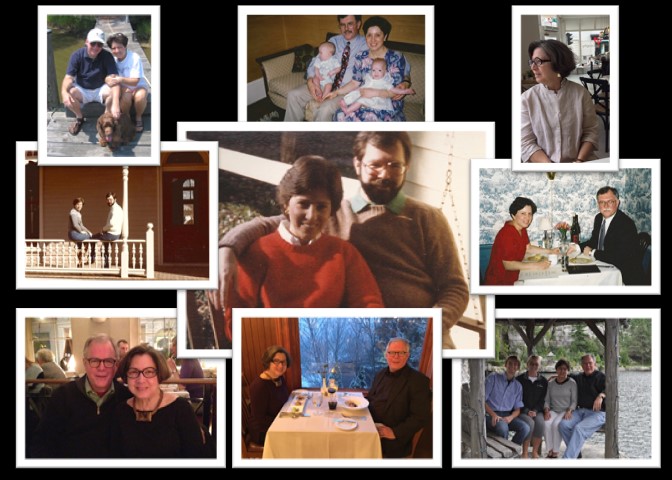
During this season of Thanksgiving, when so many are thinking of the love of family and friends, I continue my annual tradition of posting family photographs on More to Come. This practice began back in 2008* but has grown through the years so that the entire family now participates in the creation and curation of this particular entry.
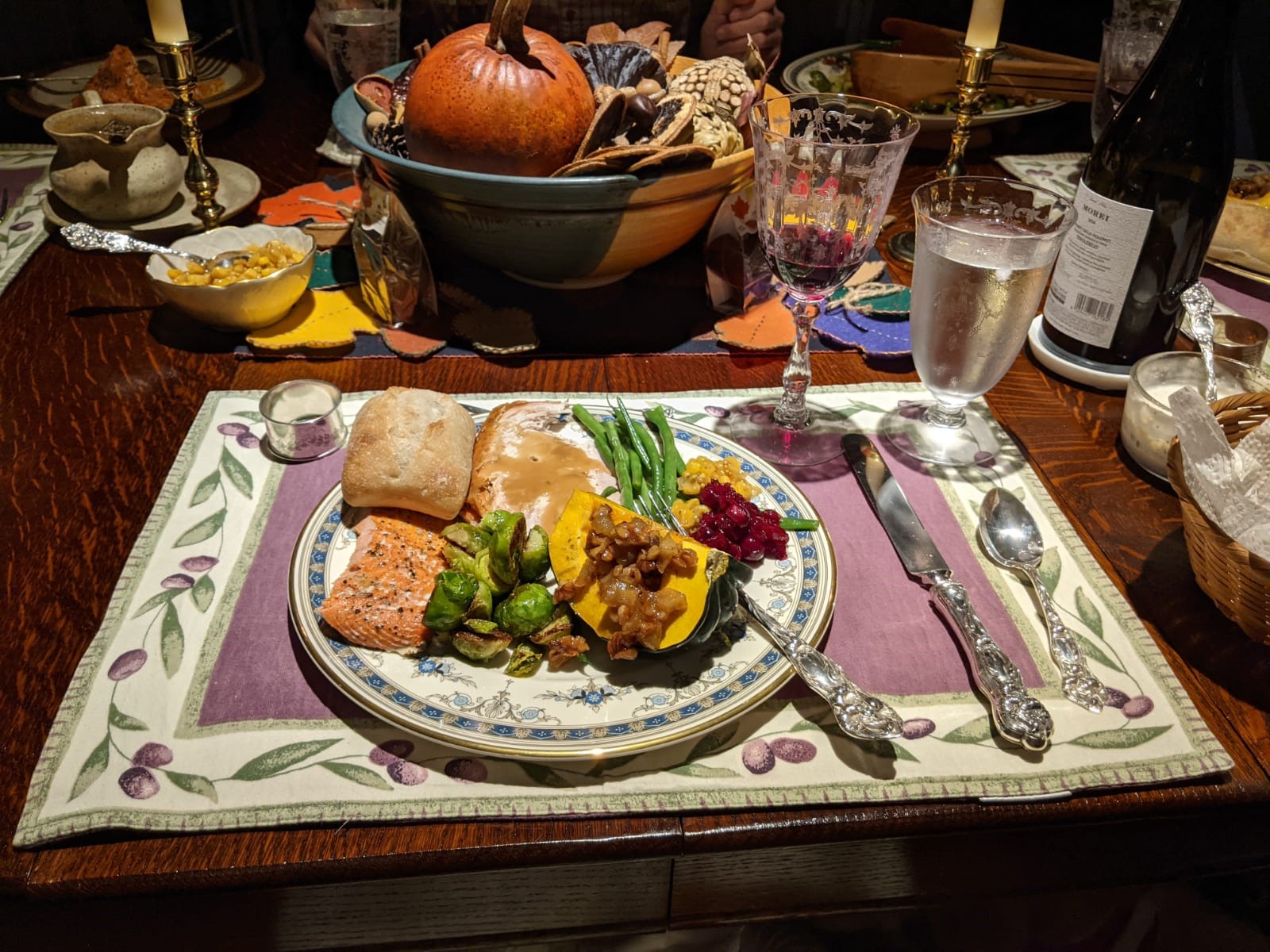
Last year at this time we were in the middle of quarantine during a worldwide pandemic. Many were anxious and separated. Instead of our usual trip to the Shenandoah Valley for the Thanksgiving holiday, we had Andrew and his partner Mark Bailey — both in our quarantine bubble — over for a succulent meal at home.
While we decorated as if it were a normal year, Christmas 2020 was anything but. The tree was up and presents were scattered around, but we were missing Claire and unable to travel to see families far away. It was bittersweet.
Ready for Christmas Eve
A new fruit juicer was under the tree for Candice!
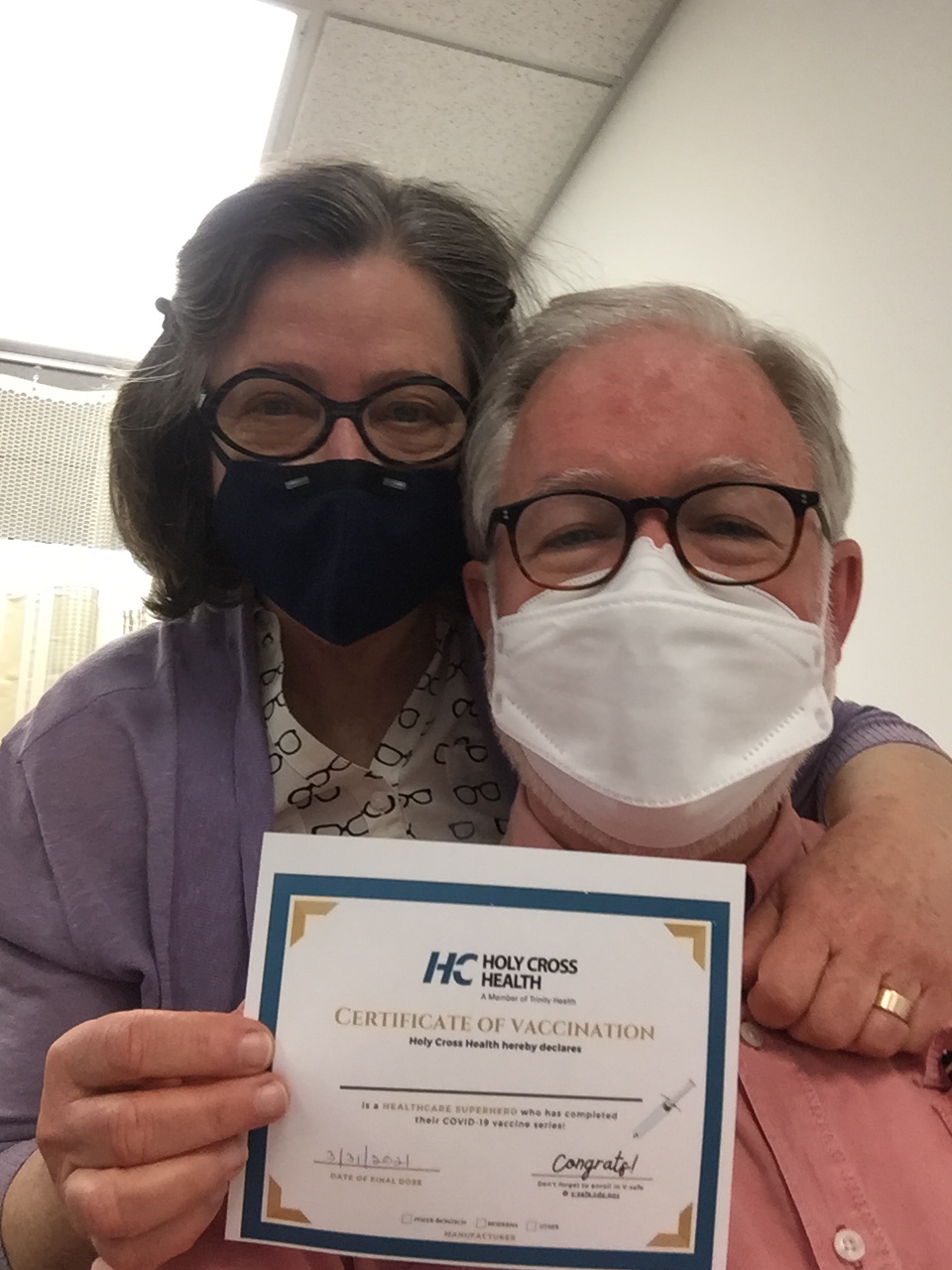
As an essential worker teaching in a school, Claire was the first in the family to get the Covid vaccine in 2021. We all soon followed, so that by the time Andrew completed his shots early in April we felt a great sense of personal relief. With those jabs, traveling felt a bit safer and Claire came to visit over Easter, the first gathering of the four of us in quite some time.
We got the jabs (and we’ve had the booster)!
An Easter toast…the first time all the family had been together in many months
An Easter Monday hike at Brookside Gardens with Andrew and Claire
May brought even more gatherings and celebrations. Andrew and David took Candice out for Mother’s Day, and approximately a week later we were at the National Cathedral to see the Les Colombes art installation. It was stunning and a piece of inspiration in tough times.
Les Colombes at the Washington National Cathedra
At the end of the month, we celebrated Candice’s significant birthday with a coast-to-coast Zoom party. Best wishes arrived via Boombox from friends and family around the world. Claire and Blair looked in from California, while Andrew and David did the local hosting honors. It was great fun as Candice read the notes and looked through the pictures people sent or that we had prepared. Several days later we were thrilled when our long-time friend Bizzy Lane stopped by for a visit and helped extend the celebration.
Celebrating a significant birthday via Boombox, with Claire and Blair joining in from California
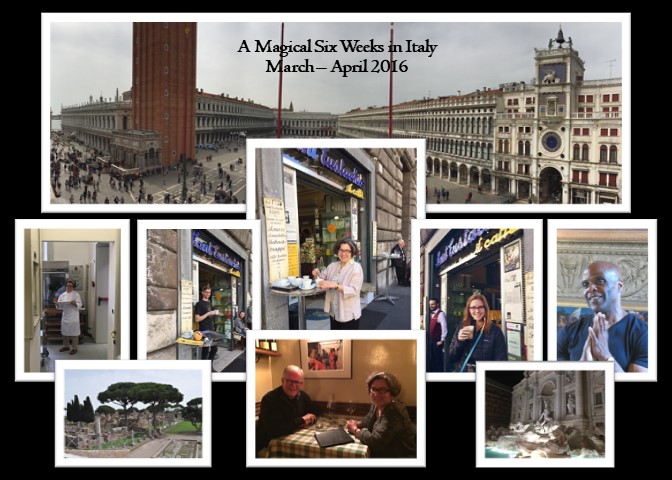
We had a great time pulling together pictures and stories from Candice’s life for her Boombox gift, such as this collection of photos from our 2016 sabbatical in Italy.
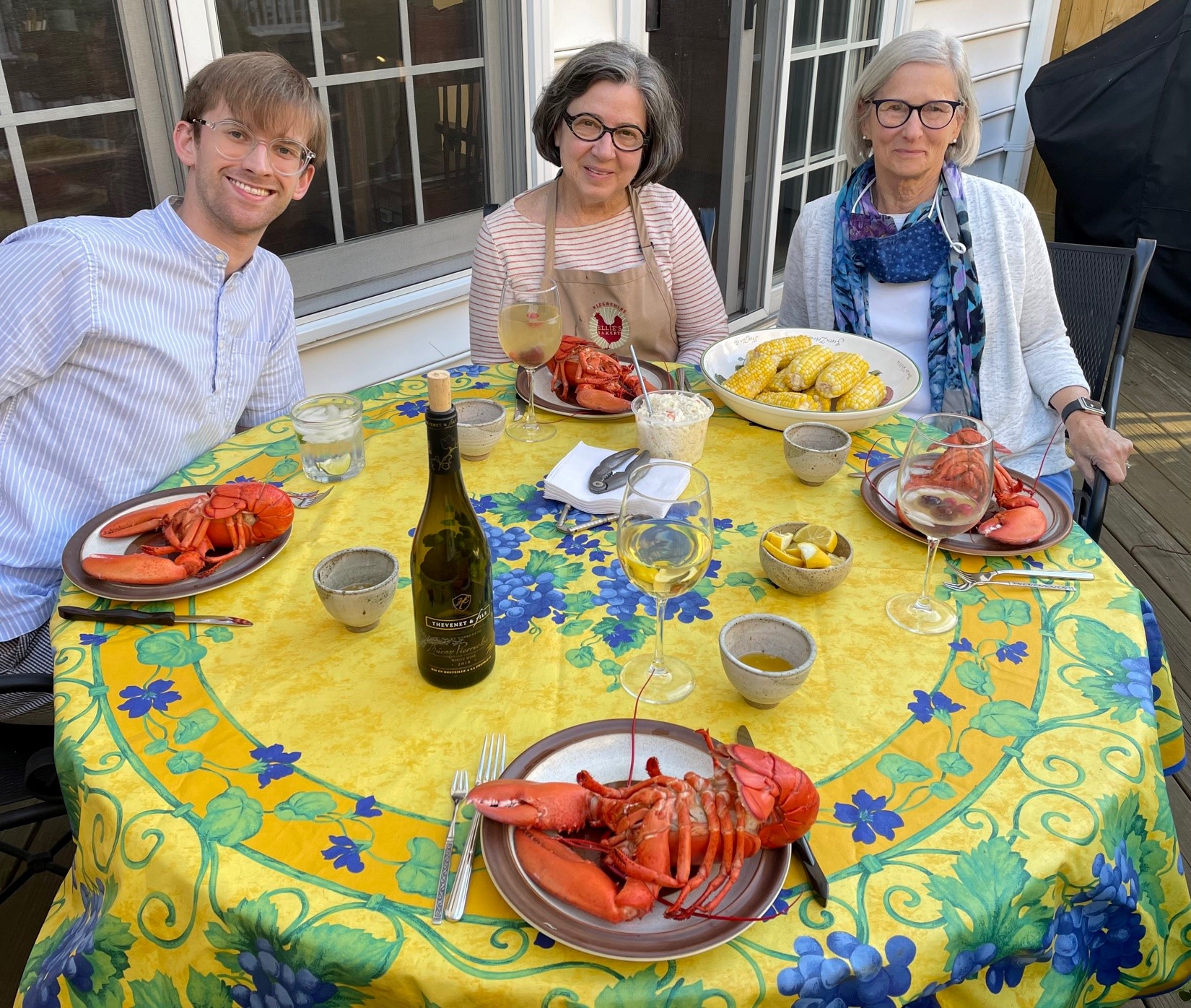
Enjoying a lobster feast on the deck with our dear friend Bizzy Lane
June brought Father’s Day, which Andrew joined us in celebrating in person this year.
The Brown family beards…2021 style
David enjoys a Fathers’ Day Weekend burger
In June, Andrew was honored to sing a solo at the Washington National Cathedral for the funeral of U.S. Senator John Warner, accompanied by the U.S. Marine Corps Chamber orchestra. It was sublime.
Into the summer and early fall we all began to feel more comfortable going out for drinks, meals with friends (usually outside), birthday celebrations, baseball games, weddings, and — in Claire’s case — road trips!
Venturing out to our favorite spot for drinks and oysters – Republic in Takoma Park
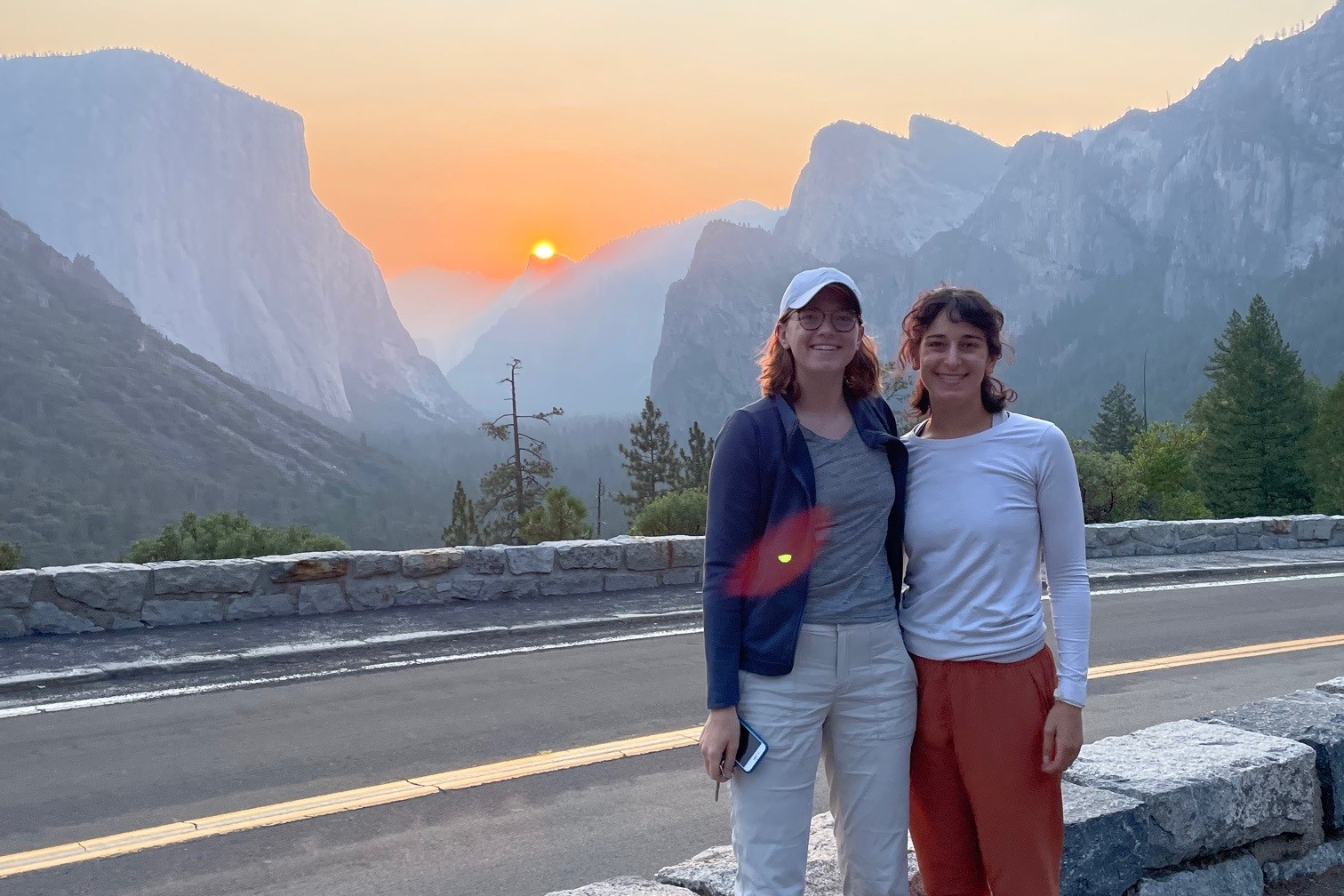
Claire and Ella Taranto on their west coast road trip (Ella made last year’s pictures with Andrew in London!)
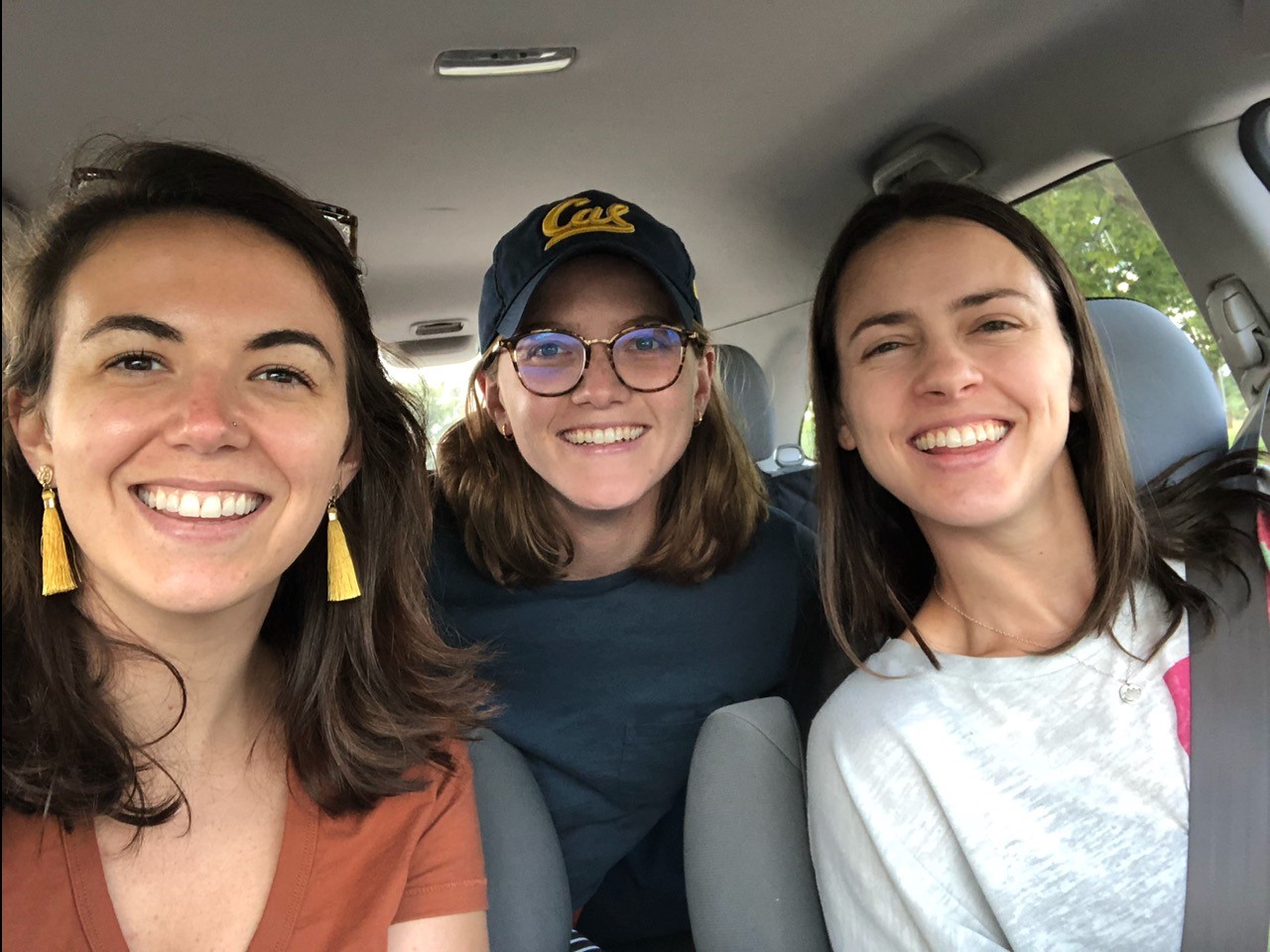
Claire, with her Episcopal Urban Intern friends Caroline and Graycie during a Tennessee trip to Monteagle
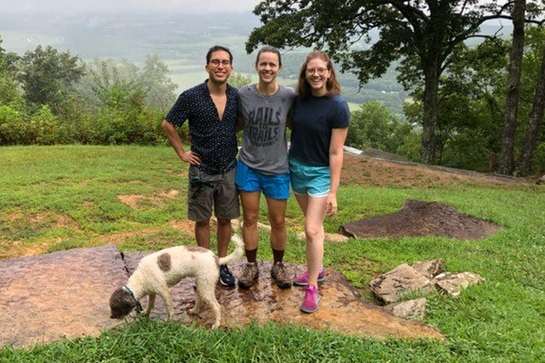
Hiking at Monteagle with Edgar and Graycie
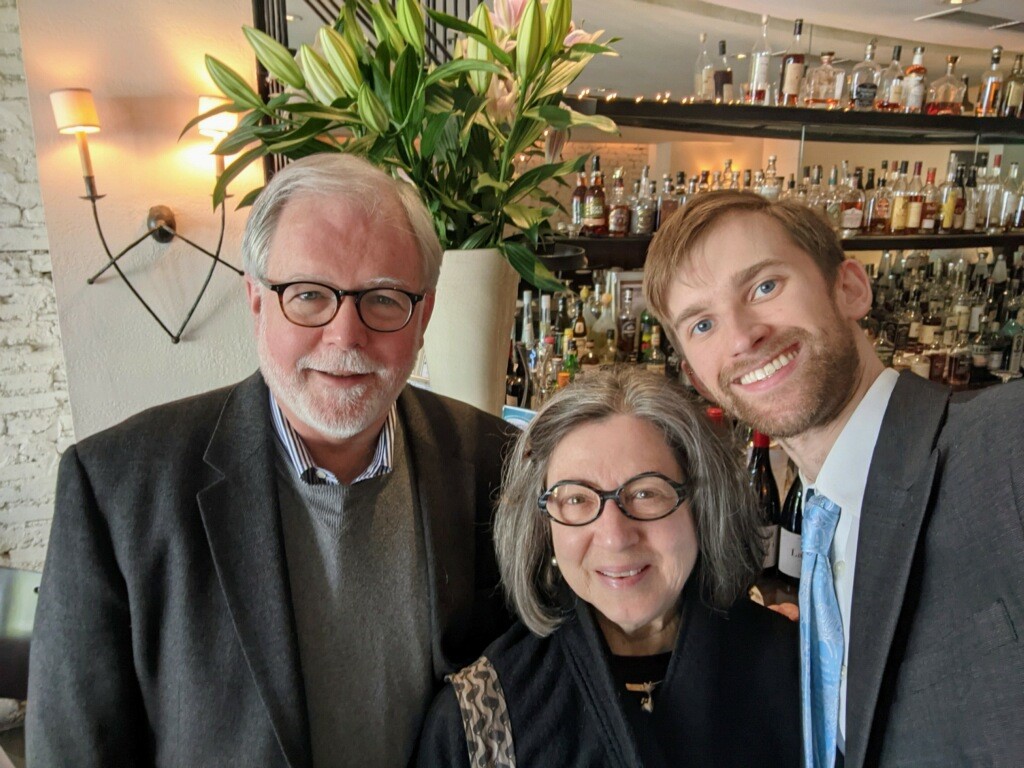
Celebrating Mark’s birthday at our new favorite Baltimore restaurant, Charleston
Even in the midst of a losing season when the team traded off most of its stars, David still found reasons to go watch the Nationals…such as picture-perfect days in September, when he can take in a day game!
Blair and Claire in Colorado, attending a friend’s wedding
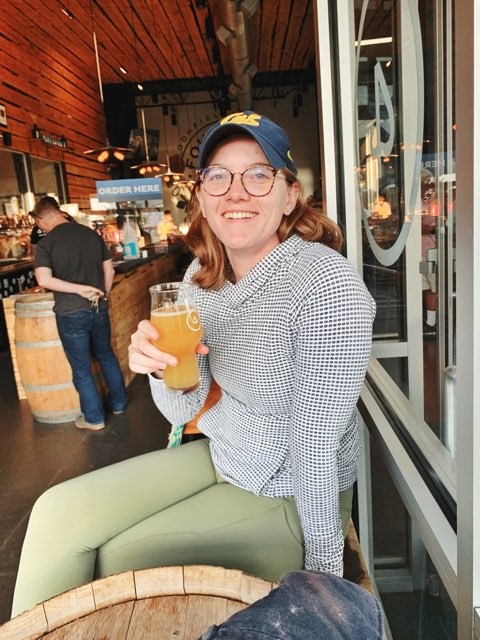
Claire relaxing with a Colorado IPA
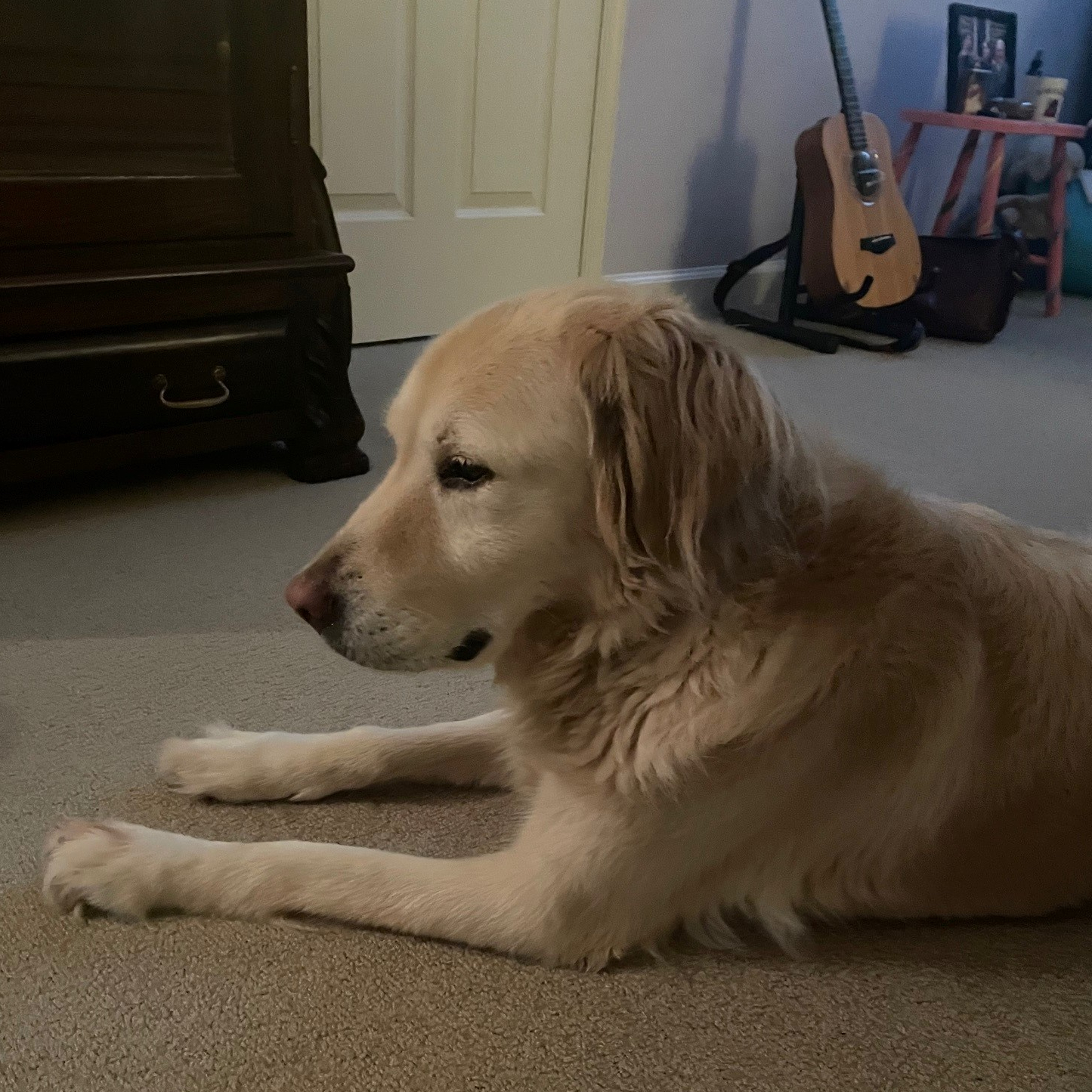
Chai waits at a friend’s house for Claire and Blair to return from their travels
While Candice was in Florida and Andrew and Mark were moving from Baltimore to DC, Flour came to keep David company. Here she patiently waits for her morning walk until he finishes his morning stretch.
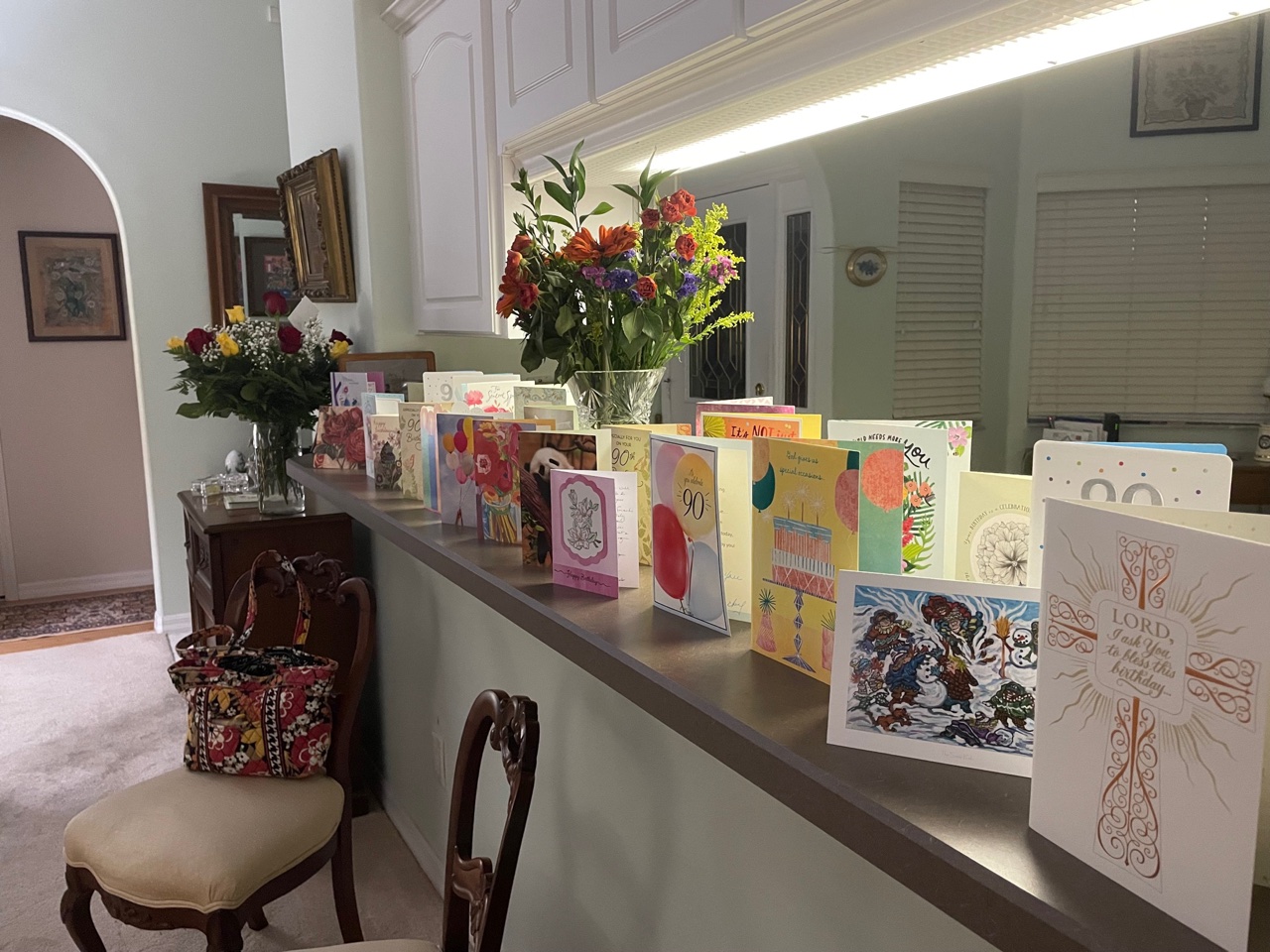
Candice traveled to Florida in September to join family in celebrating her mother’s 90th birthday. The rest of us joined in by Zoom on the special day.
A birthday meal for mom, with (r to l) Andy’s wife Robin, Candice’s brother Adam, and Adam’s partner Janice
90th birthday wishes from near and far!
When you live in Washington, you can bump into folks you don’t expect. Following an Evensong at the Cathedral, we were stopped by David’s cousin Brian Rose and his family for an impromptu visit. As we exited, we also saw our long-time friend Mariah, from our Franklin Knolls pool days, who was in the neighborhood. Washington is really a small town.
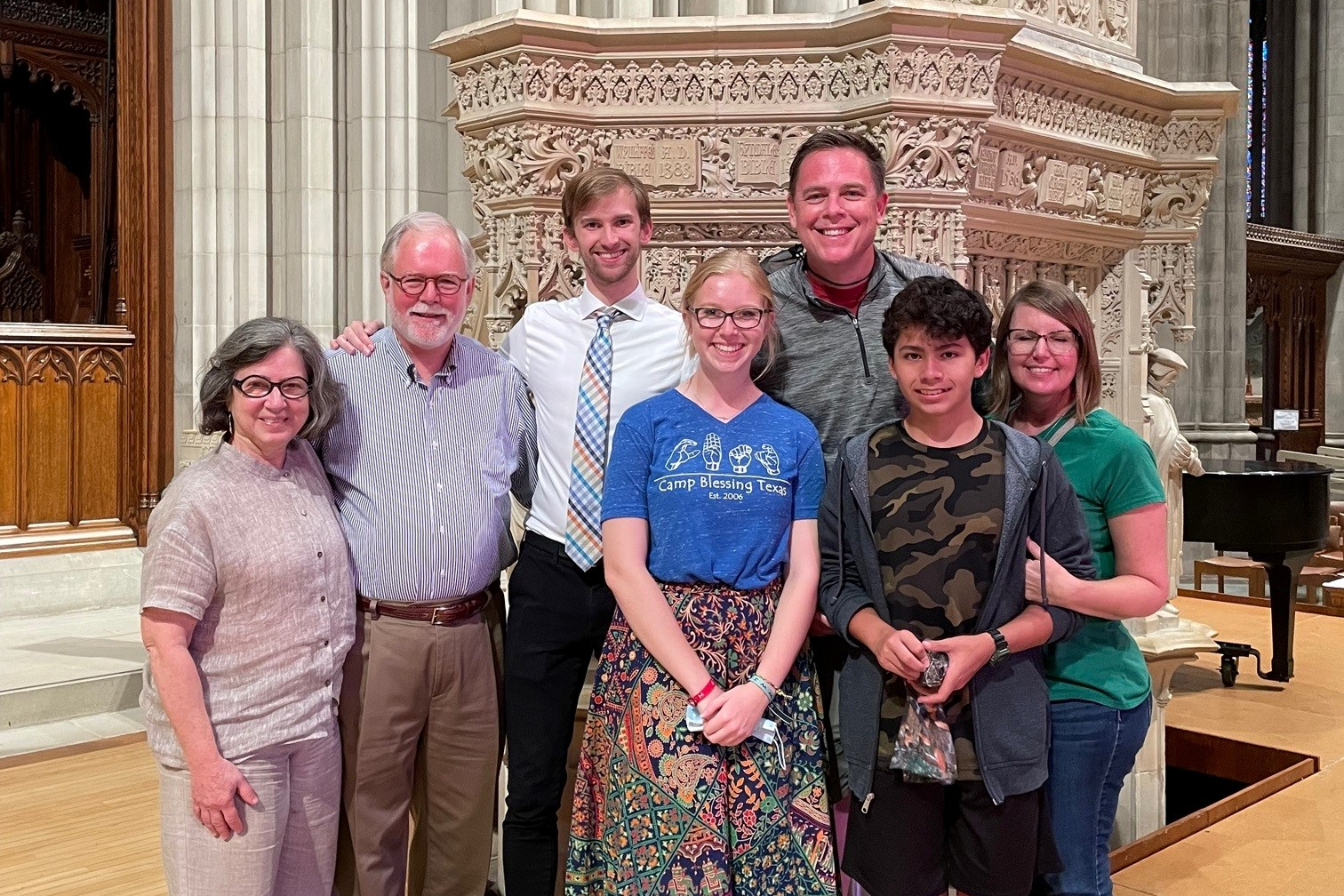
Bumping into David’s cousin Brian Rose (third from r), his wife Kelly (r), daughter Marcy (center), and son Matthew (second from r) at the Washington National Cathedral after a serendipitous visit following an Evensong
Andrew meets up with Mariah, our long-time Franklin Knolls pool friend, outside the Cathedral
Because we were unable to all gather in May for Candice’s birthday, we pushed the full celebration back to October for a long weekend at Mohonk Mountain House, one of our favorite places on earth.
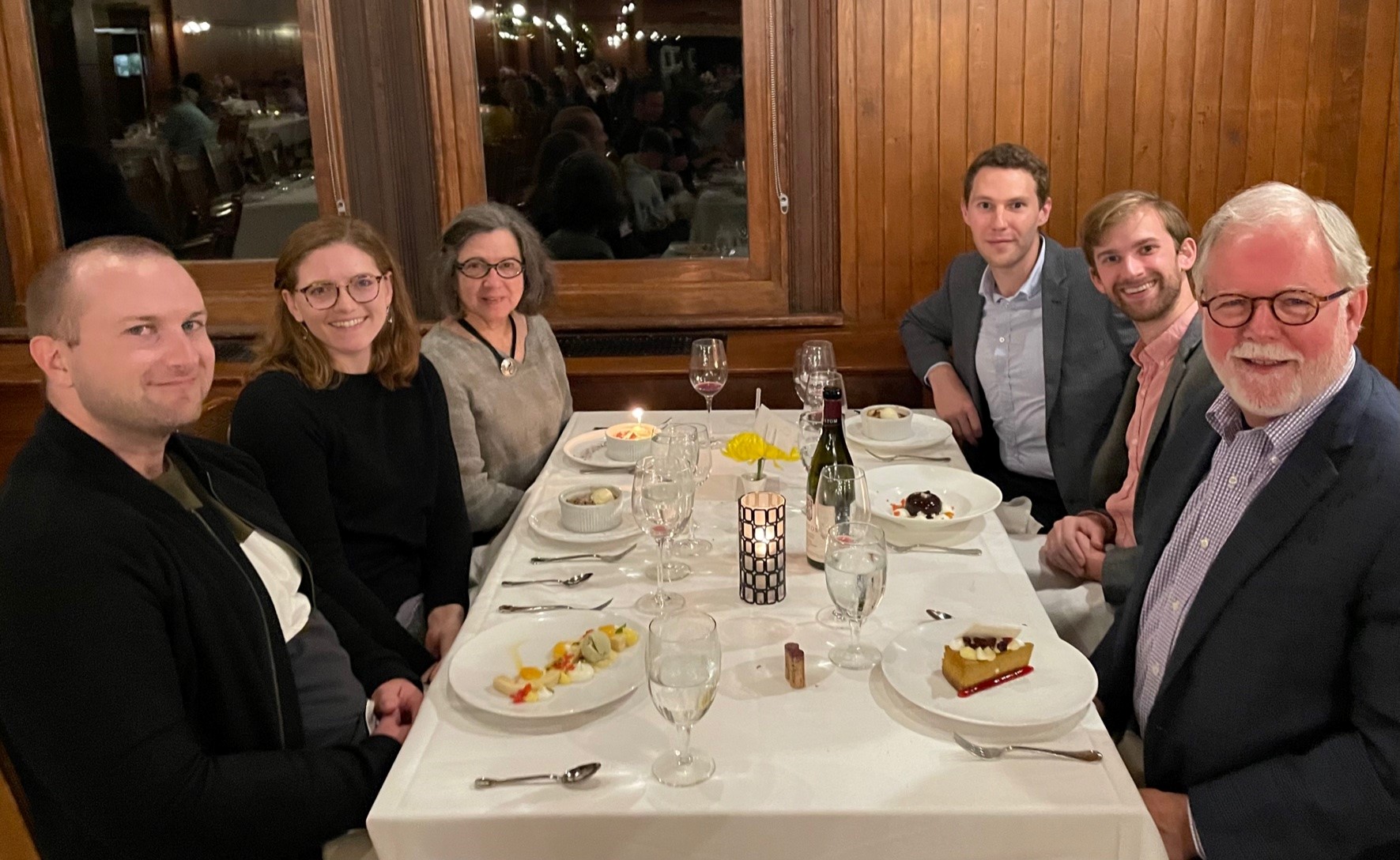
Birthday desserts at Mohonk Mountain house with (l to r) Blair Kittle, Claire, Candice, Mark Bailey, Andrew, and DJB
Claire and Blair in Mohonk Mountain House
Andrew coming up the rock scramble…
…followed by Claire and Blair
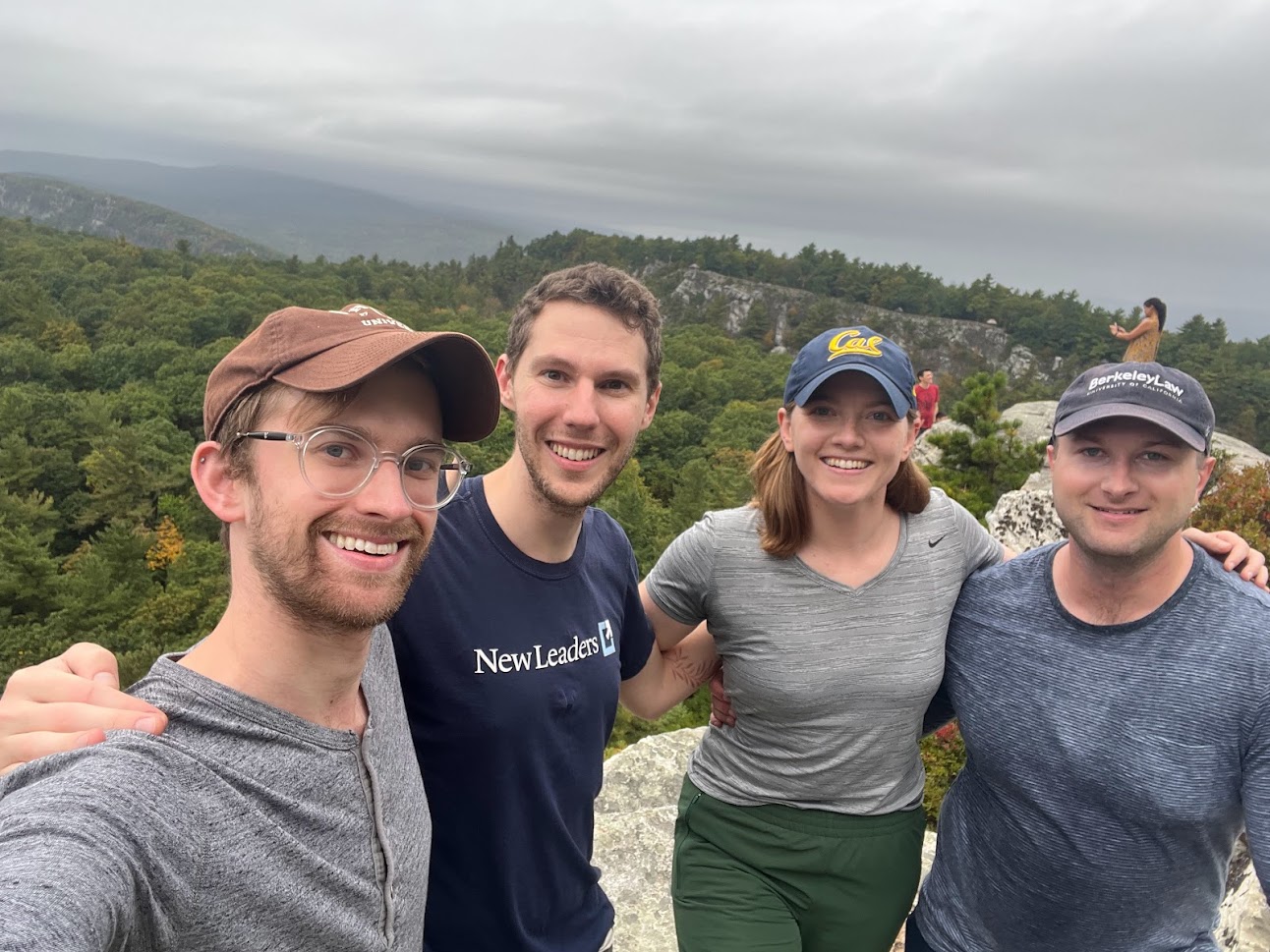
Everyone celebrates at the top. (DJB and CCB did not join in the “fun”)
Mark and Andrew take a paddle boat out for a spin on Lake Mohonk
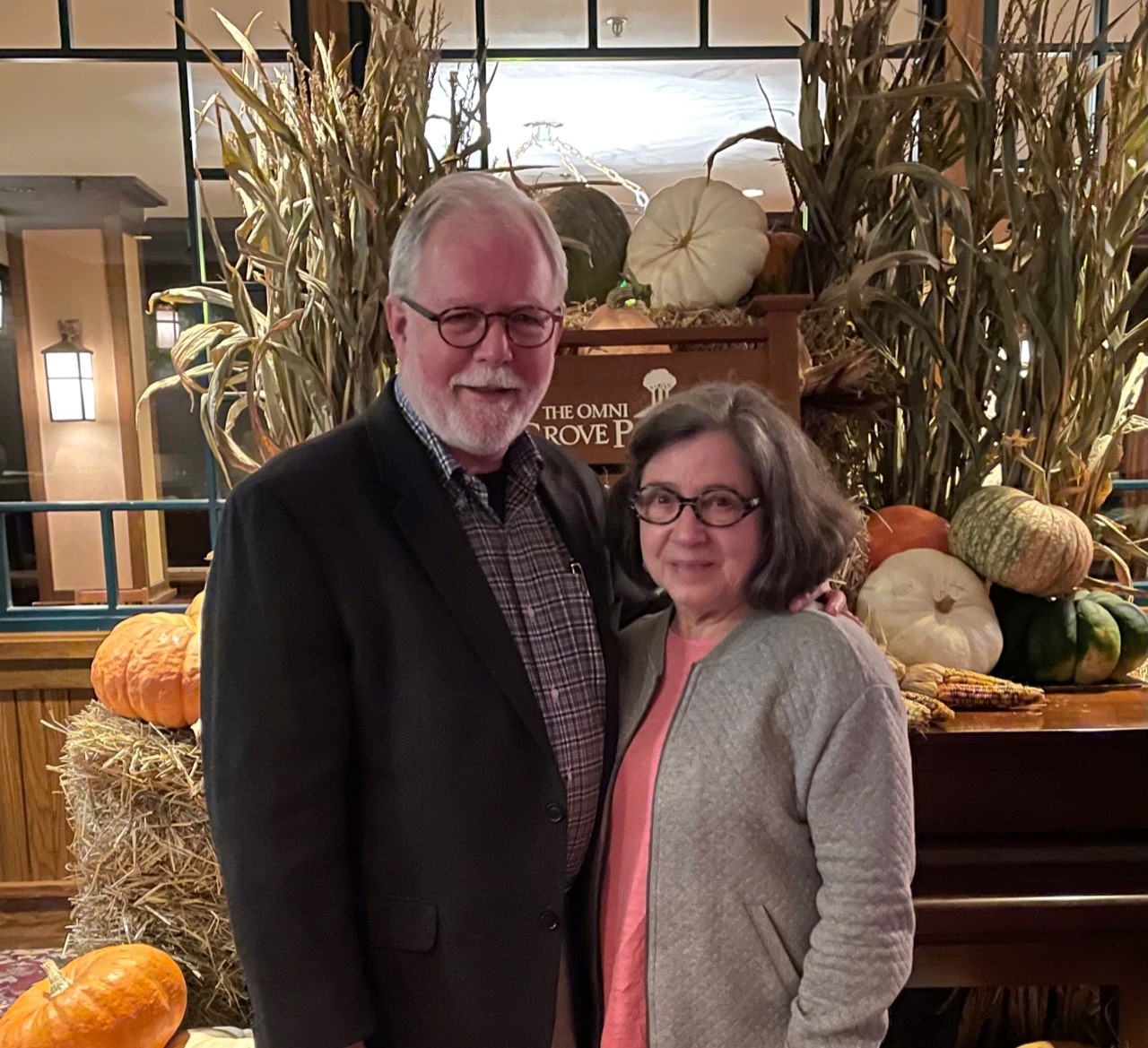
At the Grove Park Inn during a National Trust Tours visit to Asheville
Touring the Biltmore Estate in Asheville on a beautiful October morning
David at the top of a windy and cool Craggy Pinnacle overlook shortly after sunrise
Craggy Pinnacle along the Blue Ridge Drive, part of our visit to Asheville with National Trust Tours
Exploring the Grove Arcade and other wonderful Asheville architecture was a real treat
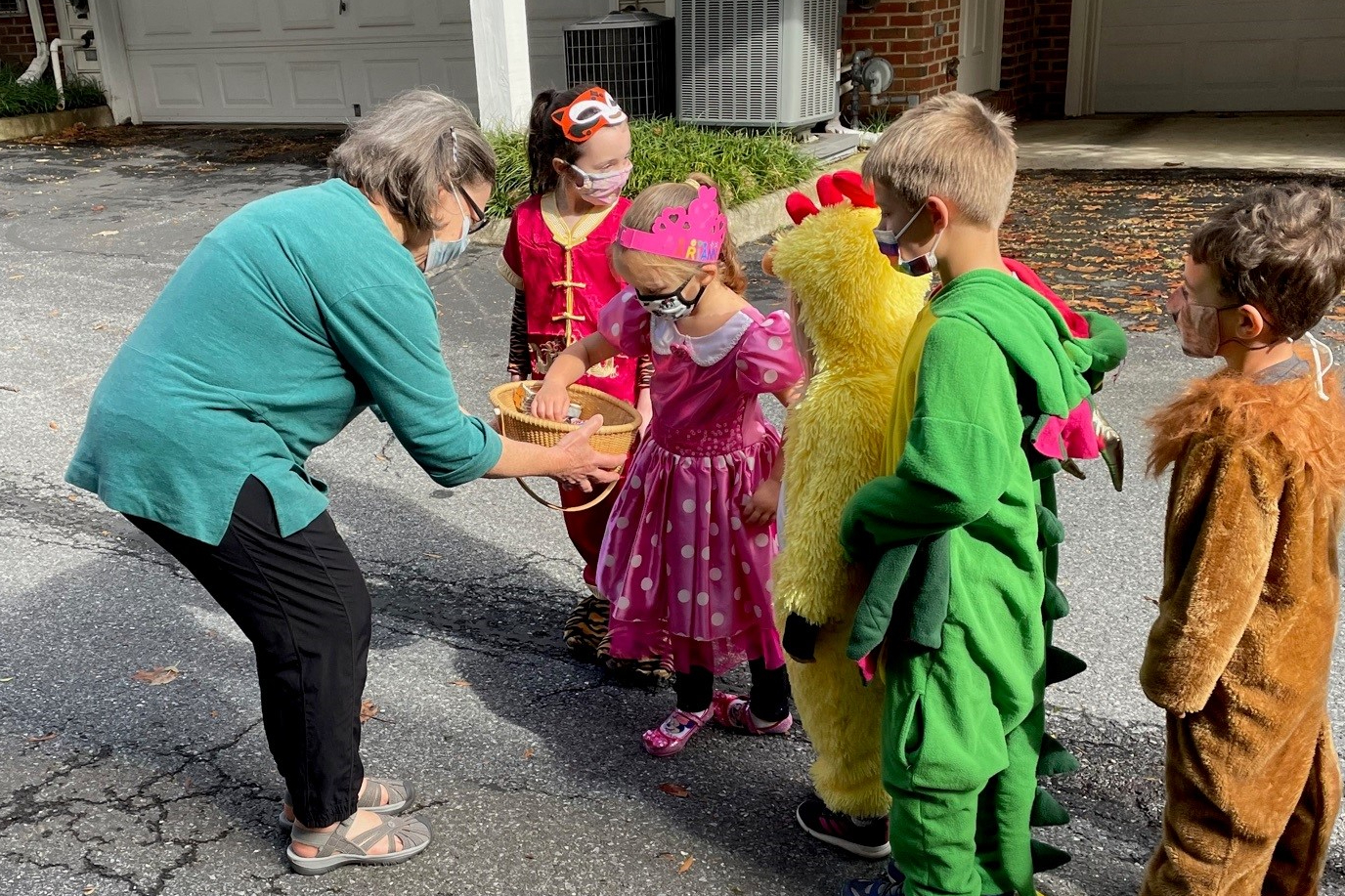
With the coming of fall, thoughts turned to ghosts and goblins. As was the case last year, our townhouse community hosted a backdoor parade so the children could trick-or-treat together safely and residents wouldn’t worry about opening their front doors to unmasked visitors.
Candice provides Halloween treats to the children in our townhouse community
Silver Spring is one of the most diverse cities in America, and when you attend the annual Thanksgiving parade — as we did last Saturday — all the beauty and joy of that diversity comes through. We are thankful to live in a community where we can learn from and celebrate so many different perspectives and cultures.
Candice and David at the 2021 Thanksgiving Parade
We remain grateful for each of you and the friendships we share. Happy Thanksgiving to all.
More to come…
DJB
The family through the years: one of the “Boombox” collages we prepared for Candice’s significant birthday
The plaintive yet hopeful American folk tune Wayfaring Stranger, which we explore in this week’s Saturday Soundtrack, has long been a personal favorite. The Bluegrass Situation notes that some historians “have traced its genesis to the 1780s, others, the early 1800s. Depending on who you’re talking to the song may be a reworked Black spiritual, a lifted native hymn, or even a creation of nomadic Portuguese settlers from the southern Appalachian region.”
I’m just a poor wayfaring stranger / a-traveling through this world of woe, / and there’s no sickness, toil or danger / in that bright world to which I go. / I’m going there to see my Father, / I’m going there no more to roam; / I’m just going over Jordan, / I’m just going over home;
At one level Wayfaring Stranger is clearly a gospel song. You will occasionally hear it in churches, with this arrangement for choral group by Alice Parker — sung here by the choir at St. Alban’s parish in Washington — near the top of my list. It is also a standard in churches that use shape note singing, as heard below at the second Ireland Sacred Harp convention, in March 2012. *
But the song has lasted and reached so many because the more secular roots music world has taken it — and the story of walking through the trials of this world — for its own. For many, the definitive rendition is from the Roses in the Snow album by Emmylou Harris.
Emmylou’s aching vocals juxtaposed against the late Tony Rice‘s jazz-like guitar stylings and the wails of Jerry Douglas’ dobro all come together for a marvelous offering that has stood the test of time.
Others have also put their stamp on this classic. Let’s begin with some icons.
Johnny Cash’s recording of the song came out in his late period, when his voice was even more ragged yet in many ways more poignant. BGS says, “This song, which appears on Cash’s 2000 album American III: Solitary Man, perfectly captures the mortality that infused much of the Man In Black’s latter period recordings” and I agree.
Doc Watson‘s interpretation contains a few touches that clearly make it Doc’s music (like the southern pronunciation of Jordan and a reworking of some of the standard lyrics). This was just released on Life’s Work: A Retrospective, the new 101 track collection that celebrates the life, music and enduring influence of the iconic guitar virtuoso.”
The tune takes on a different texture when performed with old-time banjo.
For my money, Rhiannon Giddenshas one of the best interpretations of Wayfaring Stranger. She performed this, with the remarkable Phil Cunningham on the accordion, as part of a BBC Northern Ireland program. Note how she stays on one chord throughout. This is one of what Giddens calls “the old songs.”
BGS has two choices among their top-twenty versions with old-time banjo accompaniment: Natalie Merchant and David Eugene Edwards.
“Former 10,000 Maniacs’ vocalist Natalie Merchant unfurled a hypnotic version of ‘Wayfaring Stranger’ on her 2003 traditionals album The House Carpenter’s Daughter.”
“16 Horsepower/Wovenhand singer David Eugene Edwards has made ‘Wayfaring Stranger’ one of his signature songs, with a version of the track appearing on the 16 Horsepower album Secret South as well as the 2003 Jim White documentary-adventure Searching ForThe Wrong-Eyed Jesus.“
Jack White of the White Stripes also takes an old-time approach with the song.
I know dark clouds will gather over me, / I know my way is rough and steep; / yet beauteous fields lie just before me / where souls redeemed their vigils keep. / I’m going there to see my Mother, / she said she’d meet me when I come; / I’m only going over Jordan, / I’m only going over home.
Folk musicians, beginning with Burl Ives and Joan Baez, have long included the song in their set lists.
Tiff Merritt has an aching rendition stripped down to the simplicity of just her guitar. I especially like the calling out of each word when she gets to the phrase “meet me when I come.”
Once again, from BGS:
“Knowing the tragic story of American singer Eva Cassidy’s short life adds a sad edge to this mellifluous rendition from the Eva By Heart album which was released after her death in 1996.“
I want to wear a crown of glory, / when I get home to that bright land; / I want to shout salvation’s story / in concert with that heavenly band. / I’m going there to see my Savior, / to sing his praise forever more; / I’m going over Jordan, / I’m only going over home.
The song also appears on the big screen.
Two recent films featured heartbreaking versions of the song: The Broken Circle Breakdownand 1917. Both capture the weariness and trials of the lyrics that have made this song so memorable.
In addition, the 2000 film Songcatcherincludes Wayfaring Stranger in its soundtrack. Cowpunk singer Maria McKee — who interpreted the song on the soundtrack — performs it here in an absolutely stunning performance on David Letterman, with Stuart Duncan playing the mournful fiddle fills.
Finally, the tune has always lent itself to instrumental improvisation.
Sam Bush, Bobby Hicks, and Alison Brown play a lovely instrumental arrangement in a concert at Harvard, Alison Brown’s alma mater. Hicks plays a soulful fiddle that cries and aches, Brown finds new tempos and chord changes as only a jazz-influenced banjo player can, and Bush … well he’s just Sammy. Amazing as always.
We’ll end with the guitar player who opened this Soundtrack. Fronting his own band, Tony Rice takes the introduction into places where no one has gone before. Then he is joined by his bandmates who explore the musical possibilities associated with traveling through this world of woe.
While listening to these different interpretations of Wayfaring Stranger, I kept thinking about the phrase that ends each chorus, which is some version of “I’m just going over home.” In that simple, poetic line, the song speaks to that belief I have that death is not the end but just a passage. I suspect that same hope for many — no matter one’s religious beliefs — helps keeps the song fresh to this day.
*As noted in the comments to another shape note singing, “the first time through is sung using solfege. Each voice part is singing not the words but rather the names of the scale, la, sol, do. Even more important is that the music they are reading from is written using shape notes. Each tone of the scale has a corresponding note head shape. (re = cup, mi = diamond, fa = flag etc.) A person can see the shape of the note and know what note to sing based on the shape. Since you learned the notes on the first read thru because you sang the solfege, now in the second time thru you can sing the words!”