All posts filed under: Heritage Travel

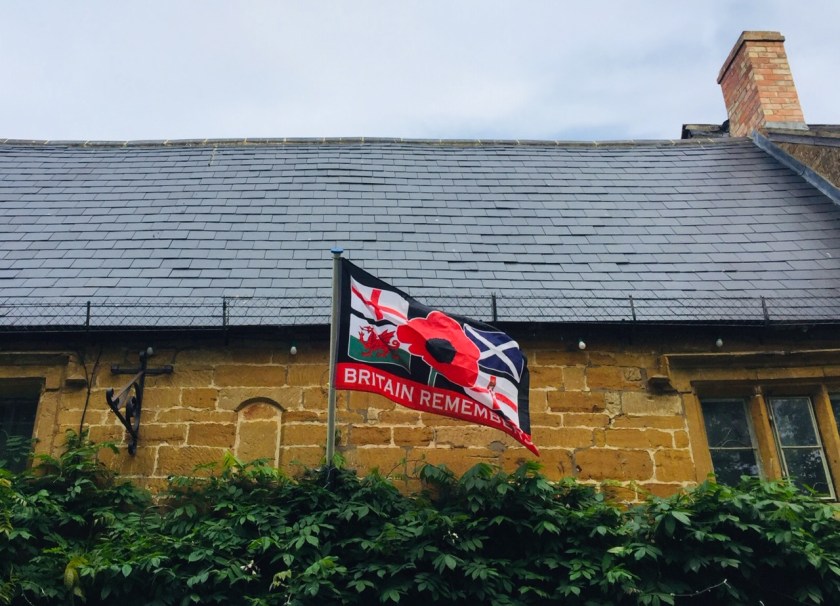
Britain remembers flag

Remembering D-Day

Seventy-five years ago today, almost 160,000 troops from the United Kingdom, Canada, and the United States — including smaller contingents from Australia, Belgium, Czechoslovakia, Denmark, France, Greece, the Netherlands, New Zealand, Norway and Poland — invaded Nazi-occupied Europe on the beaches of Normandy.  Over the next three months of fighting, 209,000 Allied troops would die before the Nazis were pushed back across the Seine. June 6, 1944 — D-Day — should never be forgotten. It was a time when the countries of the world came together to combat bigotry, racism, and hatred.  Many men and women made the ultimate sacrifice in that fight. To be in Britain for the 75th anniversary is a reminder of our better natures.  We began to see the remembrances of the anniversary as we stepped off the bus in the small Cotswald village of Chipping Campden last week.  There, in the center of this beautiful High Street, was a small World War I memorial covered with poppies, the now almost-universal symbol of remembrance for those killed in war. This week, …

Our Country is Like a Really Old House

With instant communication and connections, one can travel the globe and still face issues from home.  We may try to block them out, but they come up in conversations in other countries. In feeds on social media. During sermons.* Even in a toy display in a store window! I’ve been reminded again during my travels that in today’s global world, there are many national issues with international ramifications. Thomas Fingar — the Shorenstein APARC Fellow in the Freeman Spogli Institute for International Studies at Stanford University, former chairman of the National Intelligence Council, and former Assistant Secretary of State — lectured on the Japan / Korea / China / United States relationships during the Asian portion of my current trip.  Fingar provided a realistic and sometimes sobering assessment of future difficulties (many self-inflicted) as we were visiting sites of great beauty and centuries-old history. A few days later I arrived in the U.K. as Prime Minister Theresa May was resigning and the airways were filled with commentary (some from the current resident of the White …

Lanterns at Bulguksa Temple

Life-long learners

Some of the most interesting travelers are life-long learners. While taking in the wonders of place, people, and culture on recent trips to Japan, South Korea, and the United Kingdom, I’ve spent time observing my fellow travelers. The reasons for travel vary widely. Some individuals finally have the time and resources to venture to new horizons while others are serious compilers—and completers—of bucket lists.  The reasons are almost as endless as the people joining me in visiting the temples, shrines, gardens, mountains, priories, theatres, museums, and much more along the way. Life-long learners take a special approach to travel, just as they do in life.  They are curious, to be certain, but most are also risk takers.  In The Leadership Machine, authors Michael Lombardo and Robert Eichinger suggest that learners are “willing to feel and look stupid” because they can admit what they don’t know and are eager to move forward to learn. In the working world they are often the ones willing to “go against the grain of what they know how to do and …

Miho Museum entrance

I.M. Pei, Rest in Peace

Eight days before the revered architect I.M. Pei passed away at 102 years of age, I had the opportunity to visit one of his last—and more remote—commissions:  the Miho Museum in Japan. Standing amidst the Shiga mountains in a protected nature preserve, Pei’s Miho Museum, which opened in 1997, fits in well with the other modern yet very accessible works of this master who left an indelible mark on the world before his passing on May 16th of this year. Pulitzer Prize-winning architectural historian and author Paul Goldberger wrote a lovely obituary for Pei in the New York Times, capturing  the architect’s expansive work and spirit.  When thinking of Pei, my mind naturally turns to the beautiful East Building of the National Gallery of Art in Washington, D.C., a museum I’ve visited many times.  One feature that always brings a smile to my face wasn’t exactly designed by Pei.  Etched into the stone is a listing of all those who made the East Building possible—politicians, National Gallery leadership, architects, and more.  At one point the beautiful …

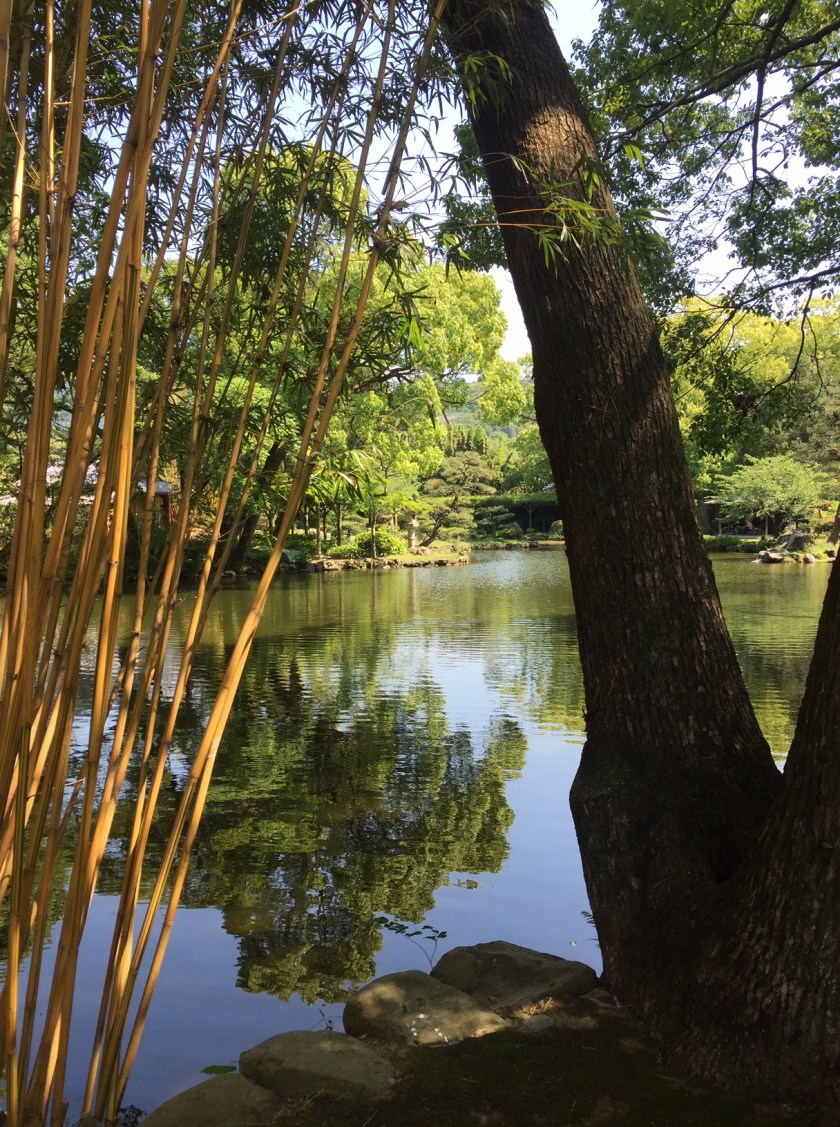
Tensha-en garden

Gardens and gardeners

Linking the passions of America’s founding fathers with those of the ruling classes of Asia wasn’t on my agenda when I left for a two-week National Trust Tour of Japan and South Korea earlier this month. Sometimes serendipity just strikes. It was pure chance that I began reading Andrea Wulf’s Founding Gardeners: The Revolutionary Generation, Nature, and the Shaping of the American Nation as I was leaving for my first trip to Asia. I was absorbed in her illuminating study of the passion for gardening, agriculture, and botany of Washington, Adams, Jefferson, and Madison—America’s best-known founding fathers—as I was entering a world where exquisite gardens were the obsession of Japan’s ruling class. The juxtaposition was fascinating and delightful. I became acquainted with Wulf through one of my favorite books, her 2015 work The Invention of Nature, with its description of how Alexander von Humboldt radically reshaped the way we thought of our relationship to the natural world. Founding Gardeners, written in 2011, isn’t as consistently strong, but is an enlightening read in its own right. …

Hiroshima 1945 / 2019

Pearl Harbor. Normandy Beach. Hiroshima. Names, places, memories, and lessons we should never forget. Last week I was moved beyond words by time spent at the Hiroshima Peace Memorial Garden and Museum in Japan. In fundamental ways the experience mirrored my reactions during visits in recent years to Pearl Harbor and Normandy Beach. The world at the time of those earlier visits seemed more stable than it does in 2019. Just a few years ago we didn’t have out-of-control individuals in positions of immense power in the United States; individuals threatening to use nuclear weapons against other nations and people just because the capability exists. Instead, we had leaders who sought, at least at some fundamental levels, to try and unite us as a people and as a world. There seemed to be adults in charge who had the memories to understand the horror to humankind of nuclear war. As John Hersey, the author of the landmark 1946 piece on Hiroshima in The New Yorker, once wrote: What has kept the world safe from the …