Follow your passions
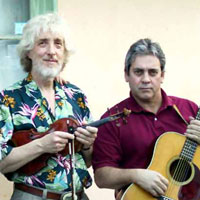
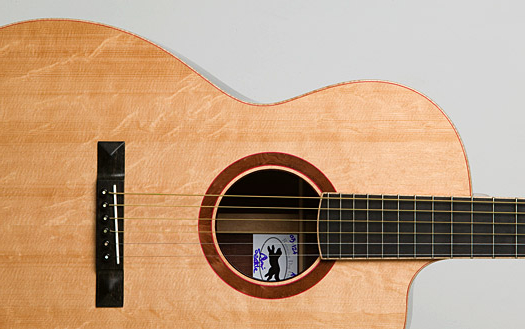
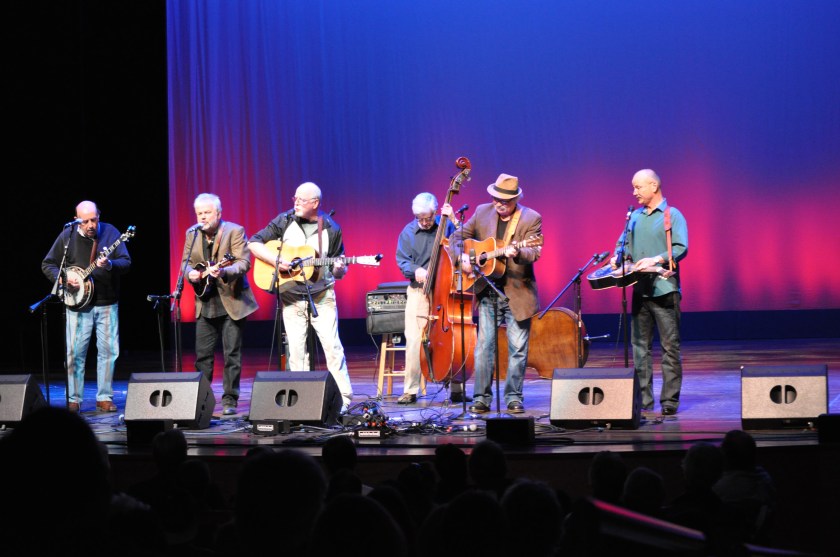
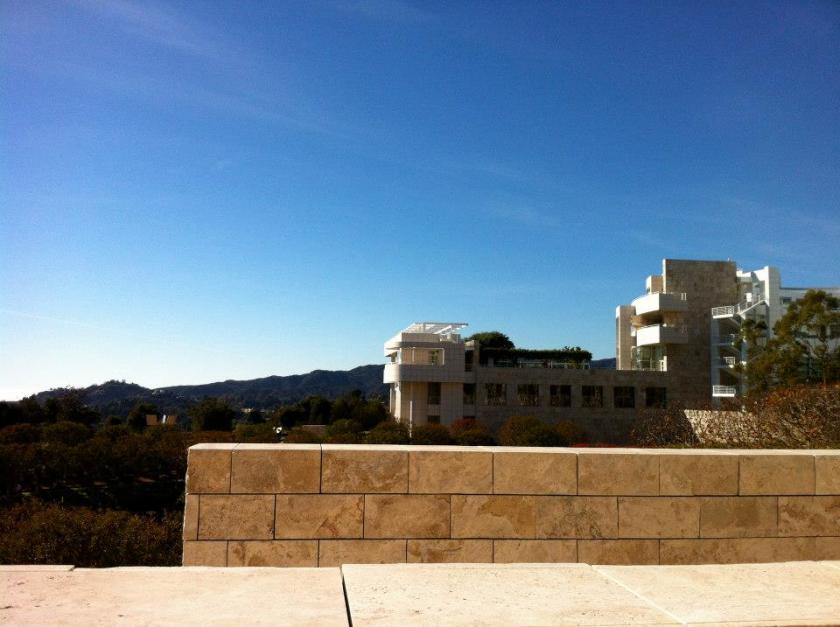
The Getty Center and McCabe’s Guitar Shop allowed us to follow our passions in Southern California.
James Nash once gave some good advice to aspiring guitarists: Rule #1 for learning to play fast: don’t practice while watching the ball game. Well, tonight…I’m guilty. Two hours after starting, I’ve finally put the last instrument back on its stand. I was watching baseball the entire time. However, I suspect that the San Francisco-based Nash would approve of my choice of ballgame, as the hometown Giants are in the World Series against the Detroit Tigers. And while I didn’t get any real practice in tonight, it sure was fun to multitask around two things that I love. (Note to regular readers: Candice, who has become a baseball fan this year with the emergence of the Nats, is out-of-town. I wasn’t ignoring her.) I grew up as a Giants fan. The Braves hadn’t moved to Atlanta, so we didn’t have a MLB team in the South. And Willie Mays is, to my mind, the most complete player in the history of the game. He was so much fun to watch as a young kid in …
I hadn’t planned to buy another guitar. Seriously. But sometimes good things happen when you least expect it. I HAD planned to try to meet the maker of my Running Dog guitar on my next trip to Seattle. Since I bought it used from a guitar shop in Amherst, Massachusetts, I didn’t know Rick Davis, the builder who made my parlor style instrument back in 2001. But after playing it for a couple of years, I wanted to meet the guy who built such wonderful small guitars with the beautiful tone. A recent trip to the west coast gave me the opportunity to stop by Rick’s shop in the Fremont neighborhood of Seattle (aka, The Center of the Universe). Rick shares his shop with his partner, Cat Fox, and they couldn’t have been more welcoming. Rick told me the provenance of my 2001 Parlor guitar. I learned he was the subject of Tim Brooke’s 2005 book Guitar: An American Life. And I played a beautiful 2011 Ought-3 model. (I also noodled on a baritone guitar, …
Washington, DC can be a tough place. But from the opening chords of Shady Grove to the final notes of Working on a Building, The Steel Wheels had the enthusiastic crowd at The Hamilton in the palm of their hands on Thursday evening in downtown Washington. I first heard this band live at Merlefest 25 in April, and was blown away by their musicianship, tight vocals, and energy. All of that and more was on display last evening in the intimate and beautiful music venue The Hamilton. Singer Trent Wagler has a very distinctive voice and a writing style that continues to grow and mature as you listen to the band’s offerings on CD. He also fires up the energy that is a hallmark of this group. Jay Lapp on mandolin and guitar along with Eric Brubaker on fiddle played off Wagler and each other perfectly throughout the show. Their rhythmic dancing and bobbing reminded me more than once of the Soggy Bottom Boys performance on stage in O Brother, Where Art Thou? – and …
Doc Watson, who passed away today at age 89, was among the most authentic, talented, and influential musicians to emerge from the 60s folk music revival. He was also the reason I play guitar, attempting to flatpick fiddle tunes or pick out a lead note or two on traditional bluegrass and country songs. Of course, I have to get in line behind tens of thousands — if not more — guitarists who would make the same claim. So read the New York Times story I’ve linked at the top of the post if you are looking for Doc’s history, background, and influence. This is a personal post. I was in high school in the early 70s, learning to play guitar and noodling around with music by singer songwriters and their ilk. Then one day I brought home this funny looking album — Will the Circle Be Unbroken — and my life was changed forever. Here’s how I described that moment in a More to Come… post in 2009: “In fact, I suspect that the first …
A week ago I was sitting under the North Carolina moon listening to Sam Bush, Derek Trucks, and a host of talented musicians at the 25th anniversary of the Americana music festival Merlefest. Today was back to reality. At 6:30 this morning I posted the following status on my Facebook page: “What kind of airline doesn’t know where their planes are? Waiting at a United gate for a flight to Chicago that was to leave 10 minutes ago. The gate agents say a plane is being towed from the hangar. I just heard the pilot calling someone asking, “Can you tell me where our plane is? The gate agents don’t seem to know.” Welcome to the Third World.“ I made my meetings in Chicago (in spite of the plane in hiding) and came back to DC without incident, but tonight seemed to be a very good time to breathe deeply, take it easy, and reflect on Merlefest 2012. This year was my fifth Merlefest, and it was – by a good measure – the best …
Sunday is “Go to Meeting” day in the South, so it figures that the final day at Merlefest has a heavy gospel flavor. But because it is Merlefest – and therefore eclectic – you have your choice of shape-note singing, bluegrass gospel, Sunday blues (which should appeal to the non-believers and sinners alike), and black gospel. I opted for the black gospel sound this year, mostly by default. (Not surprisingly, I was “late” for church because I slept in after a night of the blues with the Tedeschi Trucks Band.) But the Lord moves in mysterious ways. And with the Benedict College Gospel Choir (photo at top of post) the Lord definitely moves! By the time I arrived, the choir had an enthusiastic crowd at the Watson Stage swaying and singing to that gospel standard Oh Happy Day! There was testifying by some of the best voices of the weekend (and that’s saying a lot). It was the perfect way to kick off Day Four – the final day – of Merlefest 25. The only …
Sometimes the best gifts come in small packages. That’s how it felt for me on the opening evening of the 25th anniversary of Merlefest – the Americana music festival tucked away in the hills of North Carolina. Opening day at Merlefest is the easiest to navigate, because virtually all the music is centered around the main “Watson Stage” – named for the blind guitarist Doc Watson from nearby Deep Gap and his late son and musical partner Merle. (It was Merle’s tragic passing on October 23, 1985 that led to the first festival twenty-five years ago in 1988.) Juggling between the 14 venues and making tough decisions about which acts to see and which acts to miss only happens later in the weekend. So I arrived after my drive from Silver Spring in time to catch the first of the main acts on the Watson Stage – The Boxcars. Coming together after stints with Alison Krauss + Union Station, J.D. Crowe, and Blue Moon, this is a “new” band with a lot of experience. Even …
Earl. That’s the only name you had to say in bluegrass circles and everyone immediately knew the subject. Jimmy Martin could open the seminal Will the Circle Be Unbroken album by saying “Earl never did do that,” and you knew exactly what he meant. Few people define an instrument and a musical style so completely as Earl Scruggs, who passed away today at age 88, did for bluegrass banjo. Bill Monroe will forever be known as the Father of Bluegrass, but it wasn’t until he brought a young Earl Scruggs on the stage of the Ryman Auditorium for a Grand Ole Opry show in 1945 that the full sound of bluegrass was realized. I’ll let Richard Smith, author of Can’t You Hear Me Calling: The Life of Bill Monroe, pick up the story from here. “For Earl’s first night on the Opry, Monroe picked out a fast number that would show off the newcomer’s dazzling style — “White House Blues,” an old song recounting the 1901 William McKinley assassination. It was a perfect selection. Scruggs …
Many of my younger (read “hipper”) Facebook friends have regular status updates that read, “Joe Cool is listening to Still Sound by Toro Y Moi on Spotify.” Or something similar. I’m behind the times (what else is new), so somehow I haven’t gotten around to letting everyone know what I’m listening to at any time. Plus, my children would be mortified. They run from the room when my iPod is in the dock. But every now and then I listen to something and want to tell someone. I have to do it the old-fashioned way: through my blog. I don’t usually drive in to work, but today was different. And so instead of the iPod, I picked up a couple of CDs (you remember them) – Norman Blake’s Live at McCabe’s (which I’ve written about before) and the Tony Rice/Norman Blake duet album. These are two beautifully simple albums that are anything but simple musically. Blake and Rice are in the upper pantheon of acoustic country/bluegrass/newgrass guitarists. They’ve both played on seminal albums that set …