Advent wins my award for the least understood season of the Christian Church year. It probably doesn’t even come up on the radar screen of nonbelievers, since it can be rather obscure. To many who are not familiar with the liturgical tradition, Advent is nothing more than the countdown to Christmas, sort of an “only 12 more shopping days left” reminder to focus on what really matters: buying those gifts!
Even for individuals who work to honor the season, it can be difficult. For starters, the liturgical music for Advent pales in comparison to those beautiful Christmas carols. Seriously, after O Come, O Come Emmanuel, what is there?
Then there are those prophets featured in the season’s liturgical readings. Oh my!
While Isaiah can paint beautiful portraits, if you read carefully you find yourself asking, “We’re supposed to do what to help ensure the Peaceable Kingdom?” As my friend and mentor Frank Wade once said in response to Isaiah, “Our job is not just patching up the victims of violence and developing elaborate systems to keep anger at bay. Our job is eliminating violence and danger, replacing them with harmony and trust.” No small task there.
And, of course, John the Baptist can be an especially tough pill to shallow. He’s the original fire-and-brimstone preacher. Again, Frank has a good description of this righteous and angry man who was “keenly disappointed in the ways of the world and the habits of people. Like many before and after him he was sure that God felt the same way.” So, John the Baptist — as we get to read during these Sundays in Advent — proclaims the anger of God “in chilling, axe-whacking, chaff-burning, fruit-rotting terms.”*
Even though John the Baptist was essentially wrong, it can all seem too hard to take, so we grab another cup of eggnog and get primed for the 25th.
Fortunately, there are many good resources to help us walk this season, and we’ve been using one in our family this year. Night Visions: Searching the Shadows of Advent and Christmas (1998) by Jan L. Richardson is a series of daily meditations and blessings for the Advent and Christmas seasons. The author’s original artwork, reflections, poetry, and prayers accompany the reader from the beginning of Advent through the Day of Epiphany which celebrates the arrival of the Magi, inviting us to encounter the God who dwells in darkness as well as in daylight. Richardson writes that Advent is a season when something is on the horizon, but it is easy to miss, especially as we live our lives comfortably ensconced within the lines of our limited vision. In her meditations, she encourages us. Stay. Sit. Linger. Tarry. Ponder. Wait. Behold. Wonder.
Advent is about patience.
The quickening night and winter shadows lend themselves to these types of responses. Richardson writes in a meditation entitled Shadow Goddess that we are…
…taught to know a God who lives in a blaze of glory, a deity so dazzling that humans who dare to gaze upon the firey presence rarely live to tell the tale. There is something startling about a deity who dwells also in shadow, who chooses and creates the night again and again, who hallows the waning hours. I want to know her, this presence who goes with us as day gives way to darkness.
The blessing that follows the meditation The Moon is Always Whole continues to focus on shadow and darkness.
God of the two lights, I love the sun, its revealing brilliance, its lingering warmth; but in the dark of night, let me learn the wisdom of the moon, how it waxes and wanes but does not die, how it gives itself to shadow, knowing it will emerge whole once more.
For the last week of Advent, Richardson writes that we see the signs,
…but cannot always divine their meanings. You call us to move forward not always knowing whether what we grasp in our hands will prove to be a seed of hope or a thorn in our flesh. Train our fingers, that what brings life we may with persistence hold, and that which wastes our souls we may with grace release.
Look in the shadows of winter, where we find ourselves now, to discover that which brings us life.
More to come…
DJB
NOTE: Richardson is an artist, writer, and ordained Methodist minister. She has attracted an international audience “drawn to the spaces of welcome, imagination, and solace that she creates in both word and image.” Candice gives especially high praise to another of Richardson’s books, The Sanctuary of Women, that draws from women’s wisdom through the ages.
*Frank can really turn a phrase!
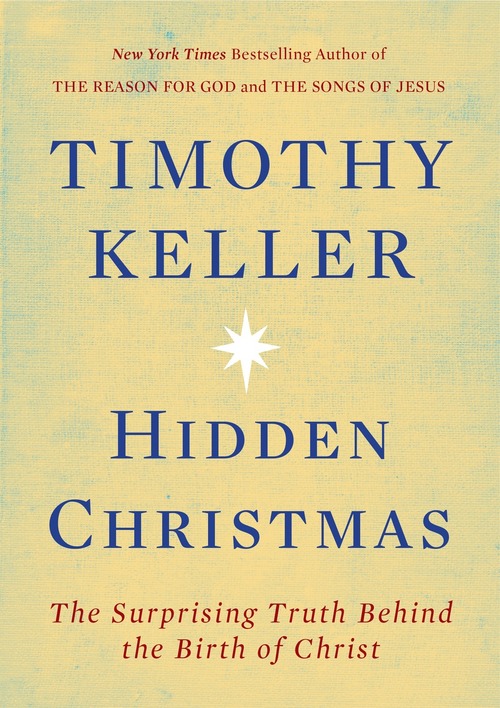
I also read Hidden Christmas: The Surprising Truth Behind the Birth of Christ (2016) by Timothy Keller as part of my Advent devotionals this year. Keller is a best-selling author and Presbyterian minister with fans that very much love his work. However, I found his book to come from a very moralistic perspective. Keller spends a great deal of time telling us that we are not people who can pull ourselves together and live a moral and good life…so we need to follow his interpretation of the Gospel. It is very Presbyterian in that sense. I prefer James Alison’s look at the non-moralistic nature of Christianity, myself.
Many of the musicians featured in the Saturday Soundtrack posts are like old friends who have been in my life for a long time. As part of the series, I have also committed to discovering music that I didn’t follow when I was young, highlighting musicians brought to my attention by friends, readers, and music newsletters. Those new discoveries are gifts, if you will.
Since we are in the gift-giving season, I want to revisit a few of those “new favorites” that may be well known to some of you, but that I just discovered (or rediscovered) in 2021 and 2022.*
John Reischman
Reischman, whose music we explored early this year, writes melodic mandolin tunes that have become classics. Here, with his longtime collaborators the Jaybirds, John leads the group on a lovely version of Lancaster Sound.
Windborne
Perhaps my favorite discovery of 2022 is Windborne. We heard this group of amazing acapella singers in concert earlier this month and have become new fans. I’ve chosen three songs to feature: Huddie Ledbetter’s Bring a Little Water, Silvie, recorded several years ago; along with a beautiful arrangement of Bread and Roses. The band’s humor really came through live, and you can capture a bit of that magic in How We Do It — a visual and musical display of the way they create the arrangements for their songs.
Yasmin Williams
I continue to be amazed by the musicianship and creativity of Yasmin Williams, whose music I discovered in 2021. Her sound and style stand as a “challenge to widespread preconceptions about the music made by young Black people or acoustic guitarists. It’s Williams’s achievement that she makes that challenge sound so calming and beautiful.” Take a listen to Through the Woods, recorded at Washington’s Dumbarton Oaks for the New York Guitar Festival sessions.
Low Lily
The folk trio Low Lily was another find from 2021 that I return to again and again. The band has a new album, Angels in the Wreckage, coming out in 2023, and they’ve released a video of the first single from that project, Shawn Colvin’s Round of Blues.
Kyshona
A self-proclaimed “music therapist gone rogue,” Kyshona blends a powerful voice with a healing message. She has been touring throughout 2022, releasing new music, and collaborating with a wide group of amazing musicians. I love this recent video of My Own Grave, filmed in Nashville’s replica of the Parthenon.
Tatiana Eva-Marie and the Avalon Jazz Band
Seldom a day passes when at least one reader doesn’t stop by to check in on the 2021 post featuring Tatiana Eva-Marie and the Avalon Jazz Band. It is easy to see why, once you listen to Eva-Marie’s captivating voice and see her hot and sassy style of interpreting 1930s jazz. She has a new project in the works, celebrating the music of guitarist Django Reinhardt, the inventor of Gypsy Jazz. Give a listen to her sing a beautiful arrangement of Autumn Leaves.
Next week on Saturday Soundtrack, we’ll highlight music of the Yuletide seasons. In two weeks, look for the top ten posts from 2022 in this series, based on readers’ views. It is a great list!
My experience of loss during the holiday season is no doubt similar to many others. Mother’s cancer had returned in the fall and she went into hospice care. Our twins were turning five in December, we had just sold our house, and we were moving to Washington at the end of January. It was an exciting and busy time in our household. Nonetheless, over the holidays I made the trip to see her one final time, even though we lived 12-hours away. Candice and the twins stayed in Staunton. At the end of a two-day visit, I gave her a kiss, said my last goodbyes, sat in the driveway and cried, and then drove the 12 hours back to Virginia on New Year’s Eve. My brain was a jumble of thoughts and emotions.
Mom, who had turned 68 in December, died early in the morning on New Year’s Day, 1998. Even now, 25 years later, I’ve never celebrated the new year quite the same.
For many, the holiday season is full of anticipation and joy. Others face the season coping with loss and grief. The remembrance of the death of a parent, spouse, lover, sibling, child, or friend can bring back difficult memories. Those facing life after divorce or separation, coping with the loss of a job, or living with a disease that puts a question mark over the future may also be grieving in ways seen and unseen.
Regrets and grief can plague us at any time of the year. But for some, the holidays are a time when regrets are easy to recall and often hard to dismiss. At this time when those around us appear happy and full of joy, grief can suddenly take over our souls.
For too many, the darkness of the coming winter — perhaps evoking the “mad midnight moments” — takes on personal overtones.
In her generous and perceptive memoir Lost & Found, author Kathryn Schulz briefly mentions the book where the “mad midnight” quote is found. Written by a well-known twentieth-century scholar and author, it doesn’t garner the attention of many of his most popular works, perhaps because of its unflinching honesty around loss of faith during times of grief. Spurred by Schulz’s comment, I was reading it within a week.
A Grief Observed (1961) by C.S. Lewis is a transcript of his journal from the time following the death of his wife, the American poet Helen Joy Davidman. It is brief, poignant, and honest. Lewis, the well-known Christian apologist and writer of the celebrated Chronicles of Narnia, works through his grief, the loss of meaning and faith, and his efforts to regain his footing in this world. It is highly personal, so much so that author Madeleine L’Engle writes in a thoughtful foreword that Lewis helped her understand that each experience of grief is unique. Still, there is a universality to it as well, as what Lewis describes feels so much like what so many have gone through in our period of mass death worldwide. A Grief Observed is focused on one man and woman and — at the same time — all men and women.
“No one ever told me that grief felt so like fear,” Lewis writes as his journal opens. However, because these journals were hand-written notes, Lewis will make a statement only to circle back a few pages later to approach the issue anew. He returns to the feeling of fear to say in a latter passage that it is less that he is afraid, but that he feels as though he has been left in suspense of something, giving life “a permanently provisional feeling.”
Like Schulz, Lewis has no time for euphemisms and mushy thinking. “She died. She is dead. Is the word so difficult to learn?” And he reminds his readers not to speak about the “consolations of religion or I shall suspect that you don’t understand.”
Unless, of course, you can literally believe all that stuff about family reunions ‘on the further shore,’ pictured in entirely earthly terms. But that is all unscriptural, all out of bad hymns and lithographs. There’s not a word of it in the Bible. And it rings false. We know it couldn’t be like that. Reality never repeats.
No one can say what happens to the dead but, as L’Engle notes, “The important thing is that we do not know. It is not in the realm of proof. It is in the realm of love.”
If each grieving experience is unique, they are all nonetheless processes. Feelings and thought patterns emerge to be sorted through and reconsidered again and again. Lewis, in one such instance, notes, “You are presented with exactly the same sort of country you thought you had left miles behind.” There is an exhaustion to the process.
Lewis eventually works out his thoughts on faith and death, but he stops writing in the end only because he has run out of fresh notebooks and refuses to buy any more for this project. Grief can last a lifetime, changing shape and form but always present. Lewis makes the case, however, that it is only by facing grief head on that we can move forward.
The darkness of night leads to dawn and a new day, where new possibilities await. It will be a day different from the one just completed. And we can begin anew.
Reading A Grief Observed, notes L’Engle, “is to share not only in C.S. Lewis’s grief, but in his understanding of love, and that is richness indeed.”
More to come…
DJB
This Weekly Reader features links to recent articles, blog posts, or books that grabbed my interest or tickled my fancy. I hope you find something that makes you laugh, think, or cry.
Lifelong learners spend the days between birth and death working through what they know, what they don’t know, what they want to know, and — to quote the great philosopher Satchel Paige — what they know that just ain’t so.
Mindfulness falls somewhere within that mix for me.
Several family members and friends practice meditation. I admire their ability to focus mind and breath into a deeper calmness, but for me it doesn’t come easily.
Each day I include yoga as part of a morning practice, but I am easily distracted. At the one meditation retreat I attended, I fell asleep, which I am pretty sure was not the teacher’s goal. When awake, my mind has a constant observer firmly in place. I may be doing one thing, but chances are very good that I have one or more additional activities taking place in my head.
As a historian and planner by training and inclination, I wantto understand the past and consider the future, often at the same time. Unfortunately, that sometimes happens while I’m involved in some third activity where I should be fully present. Such as washing the dishes. (Did I really just chip that crystal glass?)
Living fully in the moment is a difficult practice for me in part because I find value in mind-wandering.
Mindfulness is often promoted as the preferred state of being in today’s focused, driven world. Daydreaming, on the other hand, has a less-than-stellar reputation. My meager attempt to change that dynamic — I was trying to daydream but my mind kept wandering — asserts that not all daydreaming is bad. Cognitive scientists suggest that like it or not, we are programmed to alternate between mind-wandering and paying attention. The late scientist and author Michael C. Corballis argues that mind-wandering is both constructive and necessary.
It includes mental time travel — the wandering back and forth through time, not only to plan our futures based on past experience, but also to generate a continuous sense of who we are. Mind-wandering allows us to inhabit the minds of others, increasing empathy and understanding. Through mind-wandering we invent, tell stories, expand our mental horizons. Mind-wandering underwrites creativity, whether as a Wordsworth wandering lonely as a cloud, or an Einstein imagining himself travelling on a beam of light.
E.B. White once wrote, “The curse of flight is speed. Or, rather, the curse of flight is that no opportunity exists for dawdling.”
I do some of my best dawdling and daydreaming — wandering and wondering — while I walk, a practice that in my eyes is mindful. Yet the traditional view of mindful walking involves “not thinking about the future, not thinking of the past, just enjoying the present moment.” There is certainly value in that type of meditation. I have walks where I am very focused, but my default is to let my mind wander.
Kathryn Schulz has written that our world is not either/or. In considering mindfulness and mind-wandering, I feel the need to shed my carefully constructed conceptions, as one writer phrased it, “like so many old snakeskins.” I’m seeking to understand when it is important to live completely in the moment, when I need to wander, and when those two things can take place at the same time — which may be much more frequently than I currently comprehend. I don’t know. To help, I recently turned to a book on the mindful life from a renowned spiritual leader.
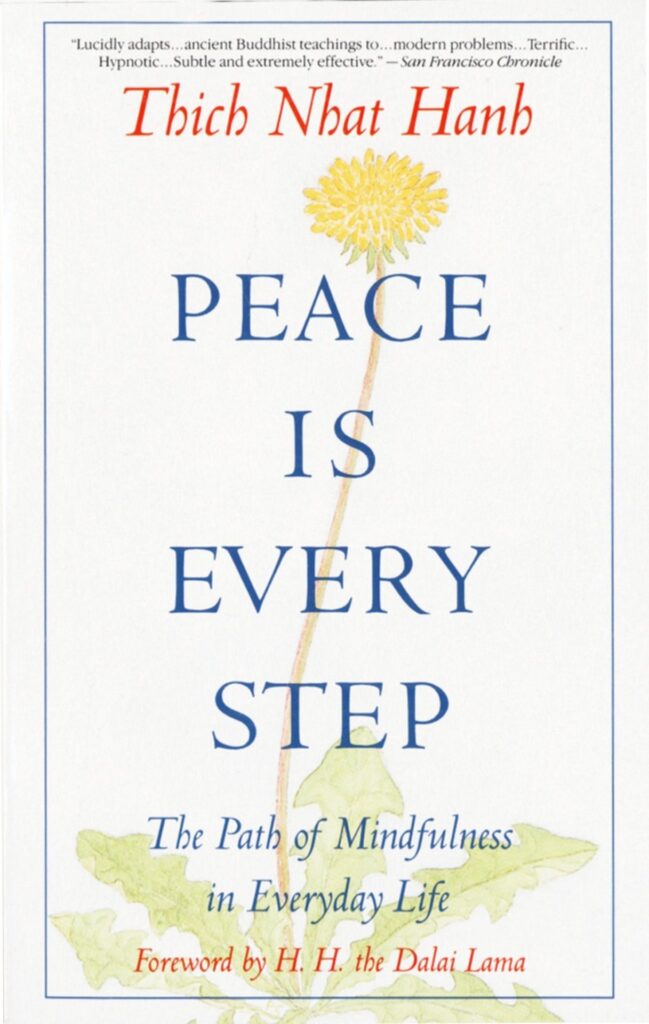
Peace Is Every Step: The Path of Mindfulness in Everyday Life (1991) by Thich Nhat Hanh shows us how to make positive use of the situations that usually pressure and antagonize us. This series of meditations, reflections, and stories from Nhat Hanh’s experiences as a peace activist, teacher, and community leader begins with simple techniques around basic human actions such as breathing, smiling, and walking. “The source of a true smile is an awakened mind,” he writes. Forming a smile on our face can relax hundreds of muscles in our body — Nhat Hanh calls it “mouth yoga” — and it has a peaceful effect.
Nhat Hanh brings the essence of these ancient Buddhist meditations forward so they can be applied to the challenges of our times. But beyond these basic tasks, Nhat Hanh asks us to consider how to use mindfulness for transformation, reorienting ourselves to the relationships around us.
In working to differentiate between the mindless, the mindful, and the mind-wandering in my life, I see my decisions around relationships are too often made out of mindlessness. The destruction that can arise from that choice is clear. However, that still leaves me pondering the relative value of mindfulness and mind-wandering.
Alan Watts, a twentieth-century philosopher of Eastern religions, writes that belief clings, but faith let’s go. Our job is not to try and figure it all out, but to move out of the certainty of our boxes and into what author Debie Thomas terms “holy bewilderment.” Out of familiar territory, we move “into a lifetime of pondering, wondering, questioning, and wrestling.”
I’ve moved the mindfulness versus mind-wandering construct into the “What I know that just ain’t so” category. And I’m letting it go in order to consider the life-enriching connections and contradictions of mindfulness and mind-wandering.
Each month my goal is to read five books on a variety of topics and from different genres. Here are the books I read in November 2022. If you click on the title, you’ll go to the longer post on More to Come. Enjoy!
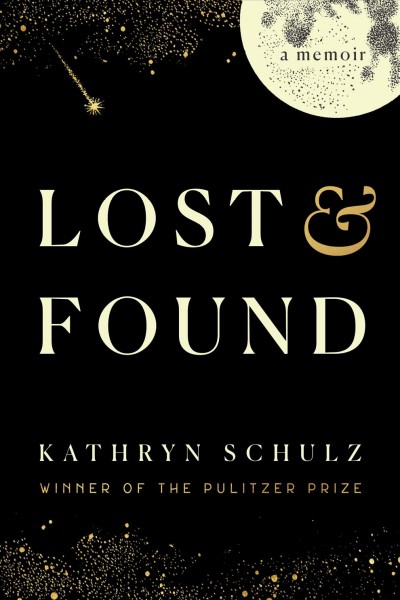
Lost & Found: A Memoir (2022) by New Yorker staff writer Kathryn Schulz is a gem of a book; the rare memoir written by someone who is happy that is worth reading. Schulz knows that there is both a wonder and fragility to living in this world, but she is constantly amazed by life. Lost & Found is a meditation on loss and love in three parts. She considers loss from the trivial to the consequential. While Schulz is losing her father, she is also finding her life partner. Every love story, “is a chronicle of finding, the private history of an extraordinary discovery.” The final section considers how in the midst of the transitions of losing and finding, life goes on. Schulz ends this generous and perceptive meditation by noting that disappearance reminds us to notice, transience to cherish, fragility to defend. “We are here to keep watch, not to keep.”
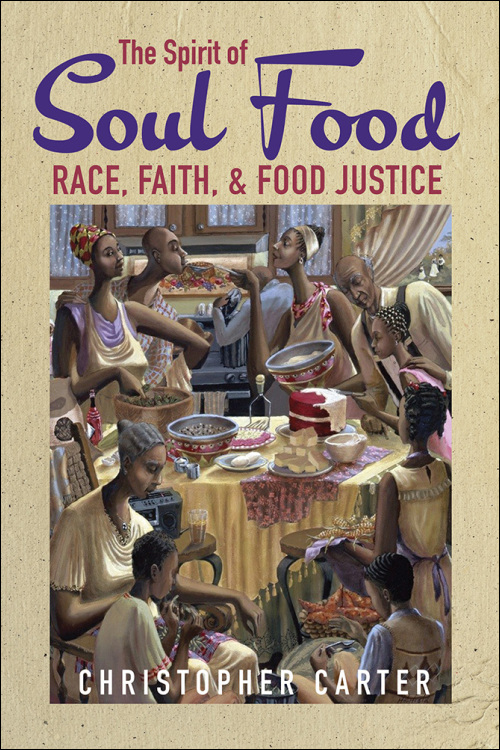
The Spirit of Soul Food: Race, faith, and food justice (2021), byThe Rev. Christopher Carter, PhD is a revelation from a minister and scholar who has thought deeply about race, food, and nonhuman animals. “Our foodways are an expression of our identity…our foodways are personal and communal, emotional and habitual.” Carter notes that in order to be taken seriously, he needed “to wrestle the culinary deity that soul food has become.” Central to his struggle is the question, “Given the harm that our food production system inflicts upon Black people, what should soul food look like today?” This work is part history lesson, part spiritual meditation, and part call to action to address the often-oppressive underpinnings of our broken food system.
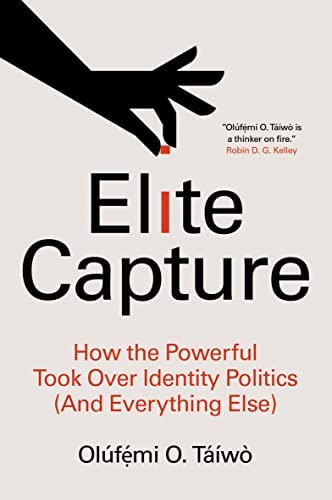
Elite Capture: How the Powerful Took Over Identity Politics (And Everything Else) (2022) by Olúfẹ́mi O. Táíwò is a short but powerful work that examines the polarizing discourse of “identity politics” and how political, social, and economic elites have captured a phrase and political viewpoint for their own use. Táíwò’s work explains the complex process of elite capture and helps us move beyond a binary of “class” vs. “race.” Reminding his readers that the point is to change it, he works through ways to read the room we’re in, find ways to ensure that the marginalized are in the room, and — ultimately — to build a new house completely.
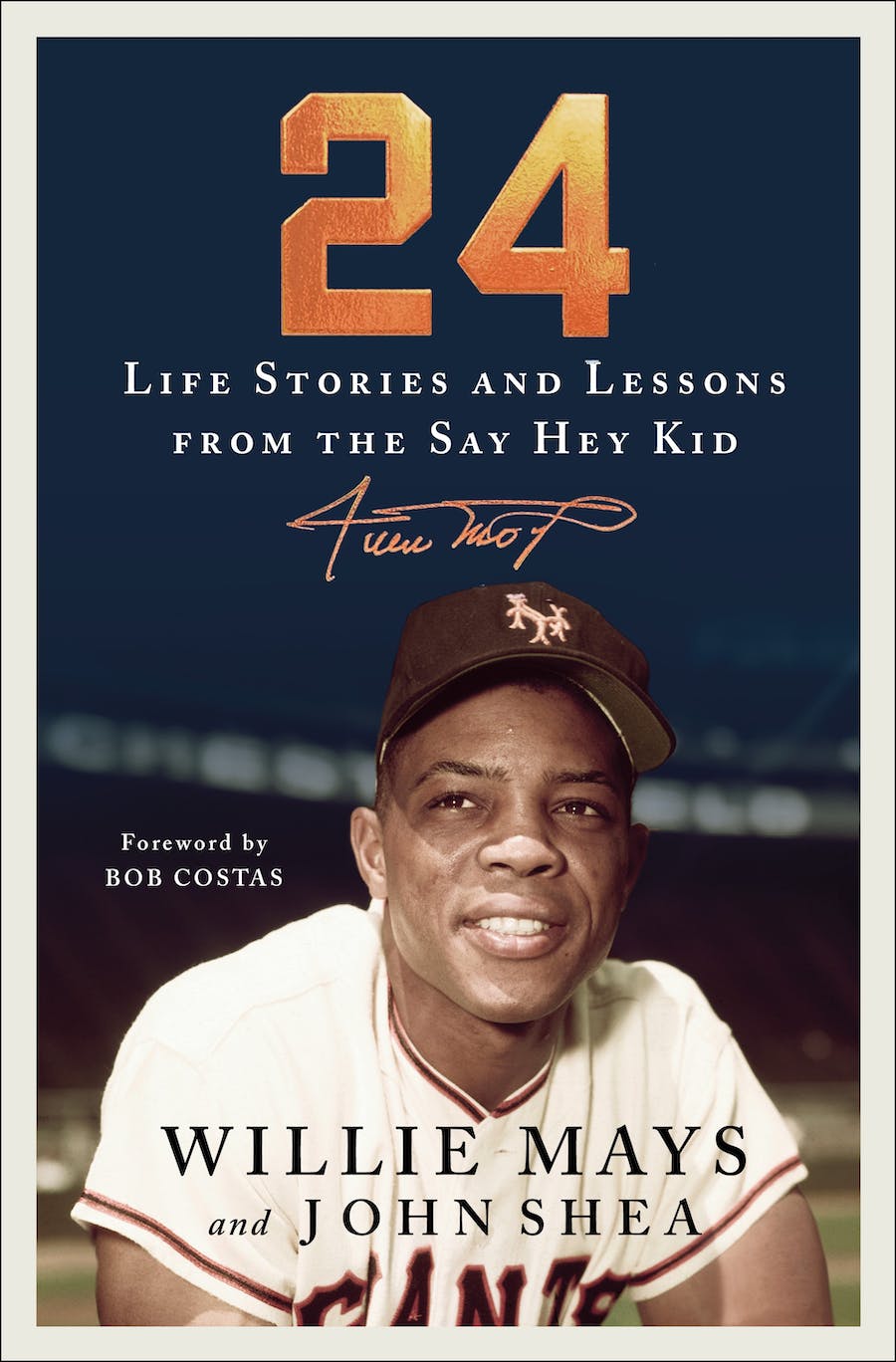
24: Life Stories and Lesson from the Say Hey Kid (2020) by Willie Mays and John Shea is a great memoir from a true sports hero. Broken into 24 chapters, Mays recounts stories about his father, “Cat” Mays, in Play Catch with Your Dad; recalls his days in the Negro Leagues with the Birmingham Black Barons in Remember your History; and much more. Mays, who grew up in segregated Alabama during Jim Crow, was no fool, but his life lesson was to Have Fun on the Job. Did anyone bring more joy to the game than the young Willie Mays? Did anyone provide fans with more joy his entire career? I profess to being biased, but Willie Mays is, simply, the greatest baseball player of all time.
Wishful Thinking: A Theological ABC (1973) by Frederick Buechner is filled with witty, slightly off kilter, and unconventional insights and asides. Buechner, who passed away in August, wrote this book — a “dictionary for doubters and restless believers” — from a desire to reconsider and return to the meaning of well-used words. Itis equal parts thoughtful, spirited and entertaining. Although uneven, it is a very accessible book, that relates to the doubter and the restless believer…which encompasses most of us who are truly human.
This Friday edition of the Wednesday Weekly Reader features links to recent articles, blog posts, or books that grabbed my interest or tickled my fancy. I hope you find something that makes you laugh, think, or cry.
“Because we always have a path to make our country greater, against unspeakable odds, here we stand together.” Senator Raphael Warnock spoke truth last evening.
The four most powerful words in a democracy, “the people have spoken.”
A vote is a kind of prayer for the world we desire for ourselves and for our children.
A teenager growing up in Waycross, Georgia, my mother used to pick somebody else’s cotton and tobacco. Tonight, she helped pick her youngest son to be a United States senator.
Let me be clear. The fact that millions of Georgians endured hours in lines — and were willing to spend hours in line — lines that wrapped around buildings and went on for blocks, lines in the cold, lines in the rain, is most certainly not a sign voter suppression does not exist. Instead, it is proof that you, the people, will not allow your voices to be silenced. And I am proud to stand with you.
I believe that democracy is the political enactment of a spiritual idea. The notion that each of us has within us a spark of the divine…We all have value. And if we have value, we ought to have a voice.
We stand here tonight on broad shoulders. Our ballot is a blood-stained ballot. We stand here on the shoulders of the martyrs. Schwerner, Chaney, and Goodman, two Jews and an African American who lost their lives fighting for that great American right to vote. Viola Luizzo and James Reeb, white sister and the white brother who also lost their lives. Fannie Lou Hamer, that indominable Mississippi sharecropper. And my parishioner, God bless his memory, John Lewis.
Senator Raphael Warnock’s victory speech:
There’s a time to celebrate, then — as Senator Warnock’s father said every morning — it’s time to go back to work. The defense of democracy never ends.
Most of us have doubts. However, many of the questions where doubts arise have answers that are easily found. Will I’ll ever attain my trim college look of 150 pounds and a 32″ waist? I doubt it. The answer, however, is much clearer. That’s not going to happen. Period.
But you probably have harbored doubts about things that you can’t really know, yet suspect matter in the greater scheme of things. Questions such as the existence of God. You are not alone. “If you don’t have any doubts you are either kidding yourself or asleep. Doubts are the ants in the pants of faith. They keep it awake and moving.”
Not exactly stuffy theological reflection, there.
Wishful Thinking: A Theological ABC * (1973) by Frederick Buechner is filled with witty and unconventional insights and asides. Buechner, who passed away in August, wrote this book — a “dictionary for doubters and restless believers” — from his experience as school minister and theology teacher at the Phillips Exeter Academy. Wishful Thinking, he noted, arose from a desire to reconsider and return to the meaning of well-used words.
Words like doubt.
The frame is like that of a dictionary, starting at A (agnostic) and going through Z (Zaccheus). Some of the words he explores are expected. When considering grace, Buechner writes that while some religious words become shopworn and meaningless after centuries of handling and mishandling, that isn’t true of grace, for some reason. “Mysteriously, even derivatives like gracious and graceful still have some of the bloom left.”
Most of us know that grace is something you can only be given.
A good sleep is grace and so are good dreams. Most tears are grace. The smell of rain is grace. Somebody loving you is grace. Loving somebody is grace. Have you ever tried to love somebody?
Other chosen words are surprises for a book on theology. Take, for instance, feet.
“How beautiful upon the mountains are the feet of him who brings good tidings,” says Isaiah (52:7). Not how beautiful are the herald’s lips which proclaim the good tidings, or his eyes as he proclaims them, or even the good tidings themselves, but how beautiful are the feet — the feet without which he could never have made it up into the mountains, without which the good tidings would never have been proclaimed at all….
Generally speaking, if you want to know who you really are as distinct from who you like to think you are, keep an eye on where your feet take you.
Buechner is something of a quote machine. Here are a few examples:
Anger — Of the Seven Deadly Sins, anger is possibly the most fun. To lick your wounds, to smack your lips over grievances long past…The chief drawback is that what you are wolfing down is yourself.
Bible — To read the Bible as literature is like reading Moby Dick as a whaling manual or The Brothers Karamazov for its punctuation.
Children — Jesus was not playing Captain Kangaroo. He is saying that the people who get into Heaven are people who, like children, don’t worry about it too much.
Envy — Envy is the consuming desire to have everybody else as unsuccessful as you are.
Questions — On her deathbed, Gertrude Stein is said to have asked “What is the answer?” Then, after a long silence, “What is the question?” Don’t start looking in the Bible for the answers it gives. Start by listening for the questions it asks.
Sex — Contrary to Mrs. Grundy, sex is not sin. Contrary to Hugh Hefner, it’s not salvation either. Like nitroglycerin, it can be used either to blow up bridges or heal hearts.
Wishful Thinking is equal parts thoughtful, spirited and entertaining. My men’s book group just finished reading this work and found it uneven at best. Some got tired of Buechner’s attempts to create pithy sayings. The book also has a bit of its era imbedded throughout (as in the Captain Kangaroo and Hefner references). So, it is imperfect but can still be useful.
We live in a world today where a sizable minority from all different faith traditions wants us to believe that they have religion figured out, they know who is going to heaven (and they are always in that cohort), and — by God — they are going to make the rest of us follow their beliefs whether we like it or not. They don’t have any doubts.
Frederick Buechner (pronounced Beekner) has written this uneven yet generally accessible work for many of the rest of us: the doubters and the restless believers.
More to come…
DJB
*The books subtitle was changed in a later edition, so you may find it as Wishful Thinking: A Seeker’s ABC.
This Weekly Reader features links to recent articles, blog posts, or books that grabbed my interest or tickled my fancy. I hope you find something that makes you laugh, think, or cry.
A friend was stepping down after a successful period of business leadership. In a note of appreciation, I encouraged her to embrace the liminal passages that she would inevitably go through at this moment, even as life moves forward around her. In the midst of our remarkable lives, it seems important to welcome those uncertain in-between places. They can create new connections which come alive when we least expect it.*
Embracing liminality is one subtext of a superb new memoir, a book that served as a reminder of why I enjoy exploring writers previously unknown to me. Every now and then you uncover a real gem.
Lost & Found: A Memoir (2022) by New Yorker staff writer Kathryn Schulz is one such gem. In the initial section, entitled Lost, Schulz admits she has “always disliked euphemisms for dying.” Words like “passed away,” and “no longer with us” seemed like a “verbal averting of the eyes.” But her father had barely been dead ten days when she heard herself utter the one exception to her rule: “I lost my father.”
That sets Schulz on a meditation about loss, from the trivial to the consequential, the abstract to the concrete, the cosmic to the personal. Isaac Schulz was clearly a force in his daughter’s life. When he was lost, she grappled with the enormity of the void and the myriad ways she would be forced to cope.
Schulz writes, “To be bereft is to live with the constant presence of absence,” and she carefully navigates us through her personal sense of that void. The emotion “confuses us by spinning us around to face backward, because memories are all we have left, but of course it isn’t the past we mourn when someone dies, it’s the future.”
The book’s second section — Found — suggests that one of the challenges of finding the right thing in this world is that we often simply do not know what we are looking for.
Schulz, a single woman in her early 40s at this point in the story, isn’t sure what she’s looking for as she contemplates committed relationships. Yet suddenly she is writing about finding her life partner in a totally unexpected moment after a mutual friend innocently suggests they meet for lunch. C. as Schulz identifies Casey Cep, the woman who will become her wife, stops by her Hudson River town for a meal. They are very different in fundamental ways: Schulz was raised in the relative wealth of Cleveland’s suburbs while C. is from working folk on Maryland’s rural Eastern shore; Schulz is a non-practicing Jew and C. is a Lutheran with a master’s degree in theology. Nonetheless, on their second date — which lasts nineteen days — Schulz realizes that she has met the woman she wants to marry.
Every love story “is a chronicle of finding, the private history of an extraordinary discovery.” And the characteristic emotion of the liminal passage of falling in love is amazement.
Schulz is most often moved to gratitude and tenderness and awe by those parts of C. that are least like her. “Love is so often written about analogically — ‘my luve is like a red, red, rose,” etc. — yet the point of the beloved, the whole reason you are in love with her is that she is like no one else on earth. That includes you: your beloved is not like you.”
C. and Isaac Schulz do get to meet, but within eighteen months he is gone. The transitions around losing the parent who raised and shaped you and finding the love of your life are almost universal experiences. The Lost and Found sections, therefore, often explore the ways we react to the liminality in our lives.
A third section, entitled And, considers the passage of time that takes place around the liminal transitions of lost and found. In our deepest grief, life goes on. As we experience the initial joys of love, life goes on.
Schulz is clearheaded in her exploration of the mixed experiences and motives we encounter.
The world is full of beauty and grandeur and also wretchedness and suffering; we know that people are kind and funny and brilliant and brave and also petty and irritating and horrifically cruel…. As Philip Roth once put it, ‘Life is and.'”
Our world is not either/or. We live with many things at once. Everything is connected to its opposite; everything is connected to everything.
This world rewards those who pay attention and Schulz pays attention in ways all exceptional writers do. As she moves through life, Schulz notes that her days are exceptional even when they are ordinary. “We live remarkable lives,” she writes, “because life itself is remarkable.”
This book itself is a rare find: a memoir by someone who is happy that is worth reading. It is a tender, searching meditation on love and loss and what it means to be human. Schulz, an exquisite writer, knows that there is both a wonder and fragility to life. While many feel small and powerless in the face of that reality, it is also easy to feel amazed and fortunate to be here.
On the whole…I take the side of amazement. I cannot look closely for any length of time at even so simple a thing as a pond and do otherwise….what serves us best, in the face of inexorable loss, is not our grief or our acquiescence but our attention. For now, at least, the world is ours to notice and to change, and that seems sufficient.
Schulz ends this generous and perceptive work by noting that disappearance reminds us to notice, transience to cherish, fragility to defend. “We are here to keep watch, not to keep.”
More to come…
DJB
*Liminality is a state of transition between one stage and the next, especially between major stages in one’s life or during a rite of passage. The concept of liminality was first developed and is used most often in the science of anthropology. In a general sense, liminality is an in-between period, typically marked by uncertainty.
As part of my lectures on National Trust Tours, I’ve occasionally asked fellow travelers to think with me about how old something needs to be before ― you know ― its old. How do we determine that it is historic? Then I ask this question: Please raise your hand if you can remember the first time you felt old?
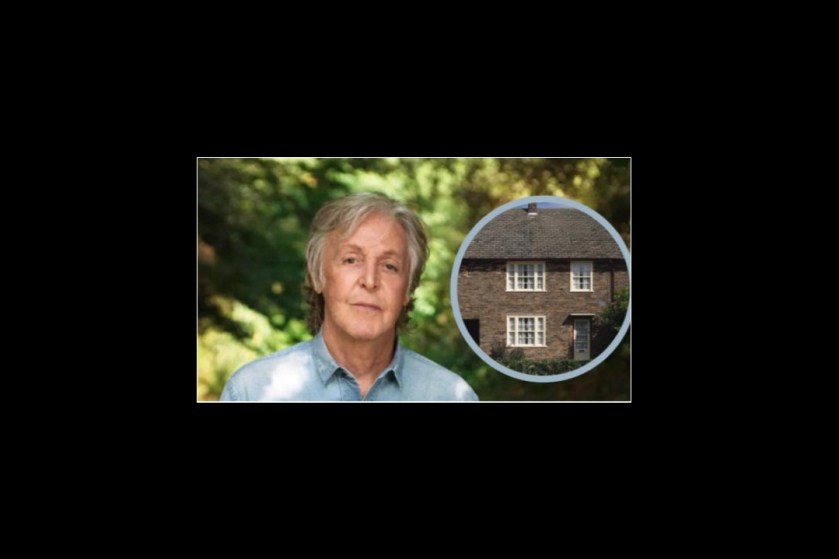
I don’t know what your answer would be, but the day I first felt old was in the late 1990s when I heard that the British National Trust had acquired the boyhood home of Paul McCartney. A couple of years later they also acquired John Lennon’s childhood home. Whoa! How could this be…this wasn’t old, for that meant…that I was old!
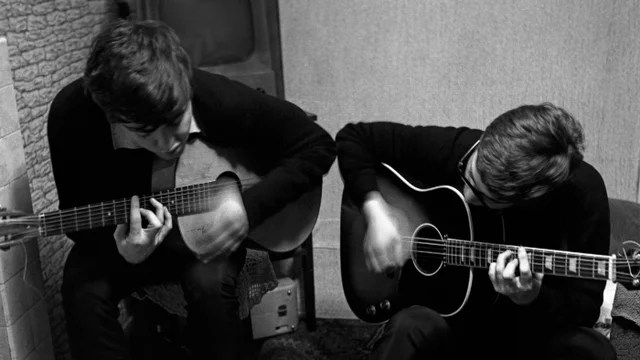
Paul McCartney (left) and John Lennon (right) practicing in the living room of McCartney’s boyhood home (credit Michael McCartney via the British National Trust)
I’ve always been one of those individuals who was a little sheepish about my feelings toward Lennon and McCartney. The cool kids suggested that John Lennon was the real creative genius behind the Beatles, and that McCartney was just a good salesman. But I was always drawn more to McCartney’s music and style. I tended to keep this perspective to myself…until I read Ian Leslie‘s magnificent essay from 2020 entitled 64 Reasons to Celebrate Paul McCartney.
Oh my!
Leslie has written a VERY long piece, and you may begin to flag well before you get to reason number 64. But I’ll tempt you with excerpts from a couple of his points and encourage you to go to the link at The Ruffian and read the entire post.
Here’s reason #3:
Perhaps this is a good moment to take a step back, the better to observe something astonishing: Paul McCartney has been writing and performing music more or less continuously since 1956. That’s sixty-four years. For the best part of a century, he has been creating songs that people sing in the shower and belt out in the car; songs to which people dance, run, cook, kiss and get married; songs we sing in crowds; songs we get stoned to; songs we sing with our kids; songs that wrap themselves around us when we’re down; songs that fill us to the brim with joy. His finest work is undoubtedly frontloaded by the miraculous accident of The Beatles, but there are gems scattered throughout his career, right up to the present day. For sheer fecundity, I can’t, with the exception of Bob Dylan, think of any other songwriter who comes close.…
Reason #5 to celebrate this terrific artist:
McCartney’s reputation has never fully recovered from the shredding it took when The Beatles broke up. He is still compared unfavourably to his most important creative partner. Lennon is soulful, deep, and radical; McCartney is shallow, trivial and bourgeois. That dualism, which took hold in 1970 and was reinforced by Lennon’s horribly premature death, still holds sway. Probably if you asked most people who know a little about The Beatles to say who they found most interesting, John would be the most common answer. If you surveyed Beatles nerds I suspect they would be more likely to say Paul, since the more you learn about the band the more stunned you are by what he brought to it.
And while McCartney made an effort to present himself as ordinary, reason #12 punches a hole in that perception.
He is, of course, one of the most un-ordinary individuals in history. When people acknowledge McCartney’s talent they usually mean his songwriting, which is not surprising, since he is as great or greater than any songwriter who ever lived. But it means we overlook what is a positively freakish array of gifts. Imagine if Cole Porter also sang like Frank Sinatra and played clarinet like Benny Goodman. If McCartney had never written a song he would be one of the great singers; if he had never written or sung he would be one of the great bassists — and that’s before we get on to his guitar, his piano, his drumming and his studio innovation.
With that introduction, I want to celebrate the magic that is Paul McCartney’s music for today’s Saturday Soundtrack. To do so, I’ll take short snippets from Leslie’s piece and add in video to demonstrate his point.
Let’s start with the singing
It is among the most exciting moments in twentieth century music: Lennon tears through the opening verse of A Hard Day’s Night, then McCartney steps forward in the middle (“When I’m hooome…”). One of the crazy things about the Lennon-McCartney partnership was that they both had all-time great rock voices. If Lennon’s specialism was raw emotion, McCartney’s was a range of expression which verges on superhuman.Few can match him as a rock n’ roll screamer — listen to Long Tall Sally or Oh Darling.…On Lady Madonna he does Presley crossed with Fats Waller. In his singing, as in his lyrics, he inhabits characters.
(McCartney) has a rare ability to glide through what classical singers call the passaggio — the transition between chest and head, which for most humans is a vocal speed-bump. Listen to Maybe I’m Amazed and marvel at that post-chorus glissando down from the heights.
Then there’s the songwriting
Monday, June 14, 1965. The Beatles didn’t get to Abbey Road until the afternoon. They set about recording three Paul songs, starting with I’ve Just Seen a Face (one of my favourites; I love the way it rollicks, lines tripping over themselves, enacting the breathlessness of love at first sight). They get it right after six takes, and move on to I’m Down, a bluesy screamer in the style of Little Richard. After seven takes, it’s done. The session ends, the Beatles disperse before returning in the evening, when Paul records a ballad called Yesterday, in two takes. Three songs, in wildly divergent, highly demanding styles, in one day. McCartney nails all of them for all time. By 10pm he and Jane Asher are at a bar on Cromwell Rd.
Then there’s McCartney the instrumentalist
Take the songwriting and the singing away and McCartney would still earn his place in the pantheon as one of the great bassists, despite, or maybe because, he didn’t want to be one. He joined the band as a guitarist, but when Stu Sutcliffe left, Lennon dragooned McCartney into playing bass. Bass-players, back then, were reticent creatures, happy to blend into a song without attempting anything flash. That was never going to be McCartney’s style, and his innovation started early. I Saw Her Standing There is powered by its driving bassline (that he can play this line on stage while singing the melody is a source of wonder and fury to bassists). Before the chorus, he halves the speed, playing half-notes under the run-up to the climactic moment of the song (So how could I dance with another…). Counter-intuitively that increases the tension and momentum. It makes you want to scream. Later on, and to a far greater extent than anyone had dared to before, he made the bass a melodic instrument, another voice, as on Michelle, Paperback Writer, Rain.
Like his piano playing, his acoustic guitar isn’t as revolutionary as his bass, but it’s entirely, distinctively him. Many people can play Blackbird, but nobody else can play McCartney’s Blackbird.
The scalding lead guitar on the theme of Sgt. Pepper’s Lonely Hearts Club Band is McCartney. As well as the bass on Taxman, McCartney plays that angular, modernist, Indian-flavoured guitar solo, one of the best solos in all The Beatles’ work. It happens to be on a song by the group’s lead guitarist. Similarly, his drumming on Dear Prudence — he stepped in after Ringo walked out of the White Album sessions — is some of the best drumming on a Beatles track. No wonder the others could find him annoying.
And if you really want to go down the rabbit hole of Taxman.
McCartney really is in a league of his own, as he enters his ninth decade of life. Here’s one of my favorites from the McCartney canon:
Ian Leslie uses Reason #64 to let us know what he’d do if he bumped into Paul on the street.
If I do see Paul McCartney in the street, I think I know what I will say to him, actually, presuming I can get the words out. I will say thank you. I might even tell him that I love him.
To end, let’s return to those boyhood homes of Paul McCartney and John Lennon. They really were places of creativity. Yet what happens to those homes when no one remembers screaming to I Want to Hold Your Hand? Sir Paul turned 80 on June 18th this year. Many of his fans have passed that milestone as well.
Liverpool England in the 1950s was near one of the largest U.S. bases in the world, and the American influence on the area was enormous. U.S. soldiers at Burtonwood looked — among other pleasures — for music that sounded like home. Four musicians from the city were more than happy to oblige.
While the rest of England was stuck in the vaudeville era, Liverpudlians had a special advantage with access to American records — especially from African American artists — and a big financial incentive to master that music. The first song that the Beatles recorded was a Buddy Holly cover.
‘I have spent all my life trying to say thank you to the Beatles, who made succeeding generations believe that, yes, you can achieve your dreams. There were no trappings, no luxury in the young McCartneys’ home, in Forthlin Road. But there was music, and inspiration. They were saying…if we can make our dreams come true … so can you.’
Annie Nightingale CBE, from the National Trust article on the Forthlin Sessions
If we follow a conservation approach that allows what is living to stay alive and true to the place, McCartney’s genius will live on not only in his music but in his boyhood home.
More to come…
DJB
Image of Paul McCartney and inset of his boyhood home (credit National Trust for England, Wales, and Northern Ireland).
A summary of the posts on More to Come in the month of November 2022. If you receive my monthly email update, you can skip this post.
I hope you and yours had a wonderful Thanksgiving holiday. Ours was full of friends, food, love, and music (can it get any better?) and was part of a November that had more than its share of surprises.
On the national level, the midterm elections have come and (mostly) gone, and our democracy remains intact.
Personally, Mr. Covid came for a visit earlier this month.
Yes, after a return to my morning walk after a gap of ten days Carter and Barry, my street-dependent friends, expressed concern about my health. I told them I’d come down with a moderate case of Covid and they asked if I’d picked it up on our recent trip to Southeast Asia. I told them that, in fact, I’d caught the virus at a dinner party with some of Candice’s friends from grade school. As I told the story, Barry quipped that I should turn it into a t-shirt: “Covid: I survived the wet markets of Phnom Penh only to be ambushed by the crab shacks of Annapolis!”
Ah, the wisdom of the streets.
NO SURPRISES among the top posts of the month
Our family birthday dinner in Paris
It was not a surprise, however, that one of the top two posts of November on More to Come was the perennial favorite of family photographs: Our year in photos – 2022 . Fair warning, this is full of family pride and doesn’t attempt to be objective!
The other favorite among readers this month was my wrap-up from our Southeast Asia trip Observations from the Mekong River. Here you will find thoughts and pictures from the tour, along with links to the six (!) other posts from the trip which I shared with you last month.
THE BOOKS I’m reading
I’ve continued my quest to read five books each month and write about them on More to Come. Per usual, the summation of the books I read last month ― in this case The books I read in October 2022― was another reader favorite.
After returning from my trip to Southeast Asia where I was taking in the work of authors focused on that region, my reading habits returned to the more eclectic pattern that is my norm. If you check out the blog, you’ll find books ranging from China’s first foray into global leadership in the 14th century (The making of the modern world) to a theological meditation on soul food and food justice (Race, faith, and food justice). There’s one about my childhood hero, Willie Mays (Giving thanks for childhood heroes) and a work by Olúfẹ́mi O. Táíwò on how the powerful took over identity politics (and everything else) in The billionaire has no clothes.
THANKFULNESS
On Thanksgiving Day, in thinking about how difficult it can be to give thanks in challenging times, I posted some thoughts on gratefulness and thankfulness in An attitude of gratitude.
Of course, I’m always thankful for good music. During the month I posted two new entries to the Saturday Soundtrack series. The first ―Mountain soul ― featured a duet by Chris Stapleton and the country music legend Patty Loveless singing a live version of the poignant You’ll Never Leave Harlan Alive. The second ― Songs and solidarity ― introduced readers to a fantastic folk acapella group, Windborne. The group will be performing in the Washington region on December 2nd and we’ll be there!
THE KITCHEN SINK
I had some thoughts in response to the rise in antisemitism that builds off a meditation by a well-known peace advocate in Recognizing our inherent oneness. And in a post unrelatedto anything except my weird sense of humor, you may wish to consider my take on pro wrestling holds in Thanksgiving and sports.
Finally, you may have noticed that we had a midterm election in the U.S. I have felt that the threat to democracy from a political party that tried to overturn a free-and-fair national election was too great a challenge to simply sit out. I’m not a political scientist or an expert (NOTE: you may want to read my disclaimer below), but I do like to look at current events through the lens of history. When some point of view or trend interests me, I read what I can and pull together thoughts from writers with experience in these topics. Over the first half of November, I aggregated material from a variety of sources into several different posts in order to consider the midterm elections and their impact on our democracy.
This series began with When you may be too paranoid for your own good, as I looked at “safety coffins” from the 18th and 19th centuries (who knew such a thing even existed?!) and thought about those who peddle paranoia today in order to hold onto power over others and to enrich their personal fortunes.
As I said in the post For those still living in the reality-based world, we have a party that will lie and then laugh about an attack on an 82-year-old grandfather that almost killed him just to maintain the pretense that they are relentlessly persecuted by progressives. When one looks at all the accomplishments of the Democrats and the Biden administration in the face of this unrelenting disinformation campaign, it is truly remarkable.
On the day following the midterms, I wrote History says we should not give up on democracy, suggesting how every generation has their challenges in maintaining our democracy, with examples from 1884 and 1918.
I dove deeper into the will of the electorate in The people speak, as I surveyed a number of ballot initiatives that passed in support of progressive priorities, even in deep-red states.
That was followed by Consider the source, a look at how a number of respected media critics and historians see the failure of our political press as being part of the problem in the threats to democracy.
The last (I promise) in this election-year series was Laughter is the best medicine, which also wrapped up my series of political cartoons from 2022.
CONCLUSION
In these especially difficult and unsettling times, remember to treat others with kindness, undertake some mindful walking every day, and recognize the incredible privilege that most of us have and think about how to put that to use for good. Women, people of color, LGBTQ individuals, immigrants, and others can feel especially vulnerable…because they are. It was the Roman philosopher Cicero who said, “Gratitude is not only the greatest of the virtues, but the parent of all others.” That’s a pithy proverb worth remembering for November. Finally, work hard for justice and democracy because the fight never ends.
More to come…
DJB
*DISCLAIMER FOR THE POLITICS-RELATED POSTS: While I have voted for Republicans in the past (e.g., Howard Baker was one of the first votes I cast for a U.S. Senator), I’m a lifelong registered Democrat who, following in the footsteps of my late father, has become increasingly progressive as I get older. I agree with President Biden that “the government isn’t some foreign force in a distant capital. No, it’s us, all of us, we the people.” As such, government should work to better the lives of all the people, not just those with access to wealth and power. I believe we need to stop the war ON government and begin to fight FOR government. I won’t apologize for the fact that I have called out the authoritarianism of one of our political parties, the Republicans, in these pieces. Their leaders have made their goals abundantly clear. If any of that makes you uncomfortable, then I encourage you to skip these posts.
You can follow More to Come by going to the small “Follow” box that is on the right-hand column of the site (on the desktop version) or at the bottom right on your mobile device. It is great to hear from readers, and if you like them feel free to share these posts on your own social media platforms.