Latest Posts

The books I read in July 2022

David McCullough, who passed away last Sunday, encouraged the 1994 graduates of Union College in Schenectady, New York, with the following:

Read books. Try to understand the reason things happen, why they are as they are. If you see only the surface phenomena, then the world becomes extremely confusing, ever more unsettling. But if the reasons are understood there’s a kind of simplicity that emerges.

Four years later, he gave the graduates at the University of Massachusetts similar advice.

Read for pleasure. Read to enlarge your lives. Read history, read biography, learn from the lives of others. Read Marcus Aurelius and Yeats. Read Cervantes and soon; don’t wait until you’re past fifty as I did. Read Emerson and Willa Cather, Flannery O’Connor and Langston Hughes….Whatever your life work, take it seriously and enjoy it.

In that spirit, each month my goal is to read five books from different genres that cover a variety of topics. I read in order to learn and to start conversations with those I encounter along the way. Here are the books I read in July 2022. If you click on the title, you’ll go to the longer post on More to Come. Enjoy!

The Lincoln Highway (2021), the third novel by Amor Towles, is a self-described “multilayered tale of misadventure and self-discovery.” Set in ten days in 1954, it begins when eighteen-year-old Emmett Watson returns from the juvenile work farm in Salina, Kansas, where he has just served fifteen months for involuntary manslaughter. Emmett and his precocious eight-year-old brother Billy set out on the road with the intention of going to California. But other characters quickly insert themselves and the small band ends up going in the opposite direction. Throughout the twists and turns, Towles explores how “evil can be offset by decency and kindness on any rung of the socio-economic ladder.” We learn how a single wrong turn on the highway of life can set you off course, but the misdirection doesn’t have to be forever. Finally, balancing accounts can be a messy business. Because Towles writes the final sentence in a chapter better than anyone, you are compelled to turn the page in this terrific read.


There is Nothing for You Here: Finding Opportunity in the 21st Century (2021) is a remarkable memoir by foreign policy and national security expert Fiona Hill. This is her very personal story of growing up in England’s coal mining country as part of the wrong class, in the wrong region, with the wrong accent and nonetheless working her way through St. Andrews and Harvard to the Council on Foreign Relations, Brookings, and service in the White House. Hill uses her story as both backdrop and cautionary tale. Her upbringing in a region that was forgotten in the 1980s certainly shapes her worldview and her empathy for the forgotten areas in the U.S. and the U.K. Modern Russia, which she has spent most of her career closely studying, is another cautionary tale. “Russia is America’s Ghost of Christmas Future,” she writes, “a harbinger of things to come if we can’t adjust course and heal our political polarization.” Finally, her time on the National Security Council led her to see that “In some respects the crises of 2020 would mark the final reckoning with the revolutionary reforms of Thatcher and Reagan in the 1980s.” In the book’s final section, Dr. Hill lays out the issues we face in straightforward language and then provides prescriptions for the sick patient because our left-behind citizens deserve better. We will all do better if we recognize that life is a team sport.


Carlos Lozada‘s What Were We Thinking: A Brief Intellectual History of the Trump Era (2020) is the Trump book you didn’t know you needed to read. As the nonfiction book critic of the Washington Post since 2015, Lozada read upwards of 150 works on “the Trump era” — a period “suffused with conflict, crudeness, and mistrust” — and then created this wide-ranging, sobering, at times funny, and always insightful work focused not so much on Donald J. Trump, but on how we see ourselves in this moment. He leads us on his literary journey through ten chapters, with titles such as See Some I.D., The Chaos Chronicles, and Russian Lit. In each he considers 10-15 books that address a common theme, helpfully identifying books that “challenge entrenched assumptions and shift our vantage points….” The most important “enable and ennoble a national reexamination … They are the books that show how our current conflicts fit into the nation’s story, that hold fast to the American tradition of always seeing ourselves anew.”


Holes (1998), a novel by Louis Sachar, takes the reader on a darkly humorous trip as Stanley Yelnats reckons with his cursed past and his misplaced present. Because of a curse put on his no-good-dirty-rotten-pig-stealing great-great-grandfather, Stanley always finds himself in the wrong place at the wrong time. Which is how he ends up at Camp Green Lake digging very large holes, because the adults have told him it will build character. Of course, Camp Green Lake is not a camp. It is not green. It doesn’t have a lake. And the holes Stanley digs are not always literal. Written with pre-teens in mind, Holes has won the prestigious Newbery Medal. Two decades after its publication the book continues to delight pre-teens, teenagers, and adults alike. As I stayed up late reading, laughing out loud while appreciating the lessons about perseverance, companionship, and overcoming both cruelty and personal history that shine through in Holes, I was glad it came my way as a recommended choice for summer reading.


Hokusai Pop-Ups (2016) by Courtney Watson McCarthy, a paper engineer and graphic designer from New York, is a moveable book featuring the work of Japanese artist Hokusai. We discovered the book at Giverny, the home of impressionist painter Claude Monet. Hokusai Pop-Ups contains, of course, information on the artist but the scene stealers are McCarthy’s dazzling pop-ups of Hokusai’s art. The reader is told of his early apprenticeships where Hokusai learned woodblock printmaking, along with his frequent name changes (up to 30 over his lifetime) that often accompanied job and artistic shifts. Hokusai wanted to live well into his second century in order to master his craft. He did not quite make it, but his impact is nonetheless impressive, most especially on painters such as Monet and architects and designers in both Europe and the United States.

More to come…

DJB

NOTE: To see which books I read in January, FebruaryMarch, April, May, and June, click on the links. You can also read my Ten tips for reading five books a month online.

I will have a fuller appreciation of David McCullough in next Monday’s post.

Image by Prettysleepy from Pixabay
We either build hope together or lose hope separately

As the Declaration of Independence was signed in 1776, Benjamin Franklin is purported to have said, “We must all hang together, or … surely we shall all hang separately.” Almost 250 years later, an English-born naturalized American citizen nears the end of her remarkable story that began in the coal house and took her to the White House with similar thoughts about the absolute necessity of working together.

She sees too many people born into similar circumstances in the generations after her who did not have the same opportunities she was given. “Deprived and disadvantaged, they will continue to be preyed upon by unscrupulous politicians who offer them a promise of opportunity in return for their votes.”

Those who are left-behind deserve better, however. Their problems are everyone’s.

They are our fellow Americans and fellow Brits, in some cases our family members and friends. Helping them will not be purely a selfless act. Because as long as they feel that there is no hope for them, there will be no hope for the rest of us. There will be nothing for us, anywhere.

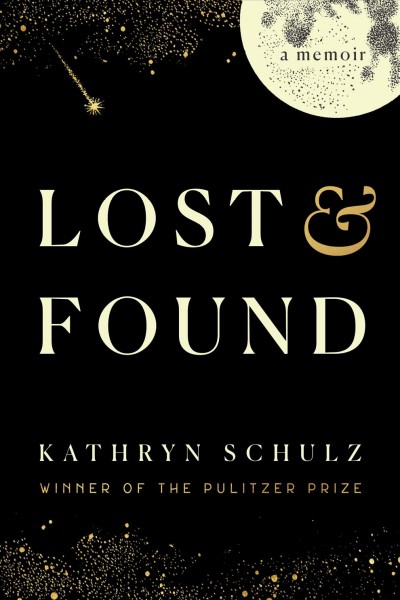
There is Nothing for You Here: Finding Opportunity in the 21st Century is a remarkable memoir by foreign policy and national security expert Fiona Hill. How she ends up with that conclusion comes out of her very personal story of growing up in England’s North East — coal mining country — the wrong class, in the wrong region, with the wrong accent and nonetheless working her way through St. Andrews and Harvard to the Council on Foreign Relations, Brookings, and service in the White House. That last stop is where most of us first came to know her as a key witness in the first impeachment trial of President Donald Trump.

Her years as a nonpartisan national security analyst in the Trump White House come in the middle of the book and are told in her direct, honest manner. Hill doesn’t spend excessive time on wild Trump tales, with the exception of her disbelief at how much the former president wanted the main purpose of his first state visit to England to be the introduction of one dynasty (his) to another (the Queen’s family) and not a celebration of U.S.-U.K. ties. Her reaction to this narcissistic statecraft — which was visible to all who watched that visit with open eyes — is fully understandable. She does, however, focus on the challenges of working in a dysfunctional work environment and the impact that approach to governance, combined with Trump’s “autocrat envy” worldview, has on serious policy needs. Outside of the prologue and a few pages at the end of her description of the White House years, Hill’s participation in the impeachment trial gets very little play in this book.

Instead, in much of the book she focuses in an empathetic and understanding way on her upbringing in coal mining country as seismic shifts in global economics combined with Margaret Thatcher’s brutal and de-humanizing policies of the 1980s closed opportunity after opportunity for the region’s citizens. Her father, a former coal miner who ended up working as a hospital porter, encouraged her to leave England’s North East, saying “there’s nothing for you here, pet.” She was one of the fortunate ones who still had enough support systems, contacts, access to government assistance, and personal motivation to work her way out. But early on she notes that “opportunity does not materialize from thin air and no one does anything alone.”

At age 13, Hill was on a school exchange in Germany when she first heard the three questions that would follow her from childhood to adulthood, “all in the following order:”

  1. “So, where are you from, then?
  2. What does your father do? (there was no follow up about my mother), and
  3. What school do you go to?”

These were not “get to know you” questions in England. “This was a highly determinative trifecta of questions — the beginning of a socioeconomic class sorting exercise. Depending on how you answered, you could be either accepted or written off.”

Hill uses her story as both backdrop and cautionary tale. Her upbringing in a region that was forgotten in the 1980s, a key turning point when “Margaret Thatcher and Ronald Reagan helped to drive the nail into the coffin of twentieth-century industry while ensuring that those trapped inside the casket would find it practically impossible to pry the lid off” certainly shapes her perspective and her empathy for the forgotten regions in the U.S. and the U.K. Modern Russia, which she has spent most of her career closely studying, is another cautionary tale. “Russia is America’s Ghost of Christmas Future,” she writes, “a harbinger of things to come if we can’t adjust course and heal our political polarization.” Finally, her time as a national security analyst on Donald Trump’s National Security Council led her to see that “In some respects the crises of 2020 would mark the final reckoning with the revolutionary reforms of Thatcher and Reagan in the 1980s.”

What moves There is Nothing for You Here from absorbing memoir to an even more compelling call to action is the book’s final section: Our House. In those 80 pages, which some reviewers criticize as a boring Brookings paper but which I found persuasive, Dr. Hill lays out the issues in straightforward language, and then provides prescriptions for the sick patient in useful detail. It is set up in the chapter that ends the previous section — The Horrible Year — which chronicles 2020. Hill is struck with how much the U.S., the U.K., and Russia began to resemble each other, not only in the disastrous response to the pandemic but in their separate but intertwined marches toward authoritarianism with populist leaders primarily focused on gaining power and riches.

All three had faced the challenges of managing major economic and technological shifts and had had to deal with the political consequences of post-industrial decline. Prime among those political consequences: governments seemingly without the interest or ability to solve the deadly serious challenges of the twenty-first century (emphasis added).

But we don’t have to follow the Russian model here in the U.S.

Education was key to Hill’s survival and advancement, and she strongly believes that we have to provide modern, 21st century education for children, young people, and adults to survive and thrive in the new world we now face. She also makes the strong case that where class is the determinative factor in how one is accepted in England, that key factor is race in the United States. Here in the U.S., we have “wasted human capital on an enormous scale over the last forty years by constraining social mobility for millions of people.” The problems the U.S. faces have “festered since the 1980s” so fixing them will take time. Nonetheless, she is optimistic that we can do so.

(O)n the national level, it will require a major policy effort to create the kind of comprehensive antipoverty, education reform, and jobs-creation programs for the United States to succeed in creating a new infrastructure of opportunity for all Americans in the twenty-first century. One-off initiatives and temporary interventions are insufficient.

The work also has to be place-based. In a very compelling chapter entitled No More Forgotten Places, that follows a similar chapter on working to remember and support forgotten people, Hill writes:

In the final reckoning, in both the United Kingdom and the United States, there should be no such thing as the wrong place to live.

Building opportunity that is spread more evenly across America’s vast landscape and its population is key to addressing our partisan polarization and fragmentation.

Dr. Hill provides examples that can be taken to scale, changes in policy that would benefit wide swaths of Americans, and specific steps each of us can take to help build forward together to create opportunity in the 21st century.

If you are a CEO or an executive of a corporation or other large organization, she shows how you can help break down barriers and even the playing field. In a similar fashion she has ideas for those who are retired and have free time, an experienced working professional, a young professional, a college professor or administrator, a college student, or a teacher. These go from simple and practical (volunteer as a mentor); to more challenging (set aggressive hiring targets for women, minorities, and underrepresented groups); to significant policy changes (pulling together and streamlining existing government and philanthropic funds and setting clear development goals). They are people-based and place-based.

Fiona Hill’s call to action may seem improbable. However, no less than the Financial Times applied that descriptor to Hill after she stepped before the country to effectively speak truth to power. She has seen firsthand where we are headed without a major change in direction, one that recognizes that our left-behind citizens deserve better in part because we will all do better — we will all build hope together — if we recognize that life is a team sport.

More to come…

DJB

Image: Historic photo of Newton Cap Road Bridge in Bishop Aukland, England.

Joni Jam

As the entire world now knows, Joni Mitchell performed at the 2022 Newport Folk Festival for her first public performance since suffering a debilitating brain aneurysm in 2015. Thanks to the power of the internet, millions who were not there in person have seen this legendary performance.

Singer Brandi Carlile was “the force behind Mitchell’s return to the stage. The crowd was beyond elated as the voice behind classics like ‘Both Sides Now’ graced Fort Adams for the first time since an evening appearance there in 1969.” Carlile’s full introduction to the surprised and delighted crowd is worth watching…

…as she acknowledges the power of congregation and radical love. “To power structures, folk music is — and always has been — utterly fucking destructive… It’s a truth teller and a power killer.”

As Sheila Weller writes in Next Tribe, the “performance of the two icons singing at the Newport Folk Festival is a bit of soothing sunshine in a dark year for women.”

There are many articles highlighting the show and some of the top videos from the evening’s performance. I’ll refer you to this one at The Bluegrass Situation, as well as this one at NPR. And here are three of my favorites.

Summertime — according to some insiders, one of the first songs Mitchell took up as she recovered from her illness. I love the deep timbre of her voice.

Big Yellow Taxi — party time at the Joni Jam. And Mitchell changes the lyrics to be, “They took all the trees and put ’em in a tree museum. And they charged all the people an arm and a leg just to see ‘em”. This was a song that was often used to open preservation and Main Street conferences back in the day.

Finally, Both Sides Now — Written when she was 23, it was meant to be sung by Mitchell at 78. As one commentator wrote, “This has got to be one of the most imperfectly perfect performance ever.” I bet, like Wynonna, you won’t be able to get through this one without crying.

Mysterious. Lovely. Touching. Beautiful. Thank you, Brandi Carlile, for helping make this happen. And thank you, Joni Mitchell, for being you.

More to come…

DJB

Image of Joni Mitchell and Brandi Carlile at Newport Folk Festival 2022 credit jonimitchell.com

Remember this fact: Baseball owners just want to make money

John Feinstein, one of the deans of sports writing in Washington, isn’t always right. But he sure was spot on Tuesday evening when he wrote the following for the Washington Post:

Here’s a pretty general rule when it comes to running a sports franchise: You don’t trade away a generational player. You especially don’t trade one when he’s 23 and hasn’t even reached what should be his best years.

Even if his agent is baseball’s answer to Lord Voldemort, Scott Boras.

Juan Soto, late of the Washington Nationals

The Washington Nationals had just committed the unforgivable sin of trading their generational talent — Juan Soto — just a year after gutting a World Series-winning team and trading stars such as Max Scherzer and Trea Turner. Just four years after letting another mega superstar in Bryce Harper get away. And the reason is generally because the team’s owners — the Lerner family, who made their money in commercial real estate — think that home-grown talent should give them, the billionaires, a local discount when negotiating salaries. Juan Soto is worth $500 million in this market, but the Lerners tried to get him for a mere $440 million.

This from an ownership group that bought the franchise for $450 million some 16 years ago and is now looking to sell it “for north of $2 billion.” That’s more than four-times its original value. The Lerners are not small-market owners. Washington is not Kansas City. This is a team where the city put up a lot of money to build a stadium (almost $1 billion when you factor in interest) and took a great deal of grief for that decision. This is a team in the nation’s capital that has proven to be a strong draw with a wealthy and knowledgeable fan base drawn from a two-state area (plus the District of Columbia).

A fan base that just got kicked in the teeth — again — by owners who have proven they are only in it for the money.

Feinstein, again.

What should they have done rather than trade Soto? Simple: Say to Boras, “Okay, Scott, you win; what’s the number we need to get a new deal with Juan?” If Boras answered that Soto wasn’t going to sign regardless of what the Lerners offered, say that publicly. Out Boras for who he is, again — and still don’t trade Soto. Hand him over to the new owners for the two years until he can become a free agent and let them deal with the migraine that is Boras.

The Lerners owed that to their fan base, not a potentially empty promise that things will be better in a couple of years.

A number of sportswriters and commentators have pointed out that especially in the trades of Trea Turner and now Soto, the Nationals owners have shown that they really don’t care about the fan base. The Nationals are “the team that loses perennial all-stars.” Players that the locals have supported with their emotions and money.

The Lerners are among baseball’s richest owners. But they have lost all those great stars because they have “chosen” not to pay them.

Kevin Blackistone, another nationally recognized Washington Post columnist, took the forceful case directly to the Lerners. “We enriched the Lerners through taxes to build the stadium and this season by shelling out $279.30 on average for a family of four to watch the worst team in the game”, wrote Blackistone. The owners promised last year that they were rebuilding — quickly — around Juan Soto when they traded off the core of their 2019 World Series championship team. Then they broke that promise earlier this week. Their “stewardship” of the team (and I use that term loosely) has led to what may be the fastest fall of a World Series champion in history.

As they traded away stars like Scherzer (a sure-fire first-ballot Hall of Famer), Turner, and Kyle Schwarber, while also losing Anthony Rendon and Harper, they raised season ticket prices — 21% in 2022 alone. TWENTY-ONE PERCENT for what is essentially a AAA minor-league team. I know. I’m a season ticket holder in a group with some other friends.

For now.

Baseball business types have and will continue to argue that what the team is doing is smart business, and “just the way the game is” these days. However, the Dodgers, Yankees, Braves, Red Sox, and other perennial winners don’t tear down their teams at the drop of a hat and force their fan base to sit through at least five years of terrible baseball before they have the promise of a decent team. No, this stewardship by the Lerners is veering into Peter Angelos and Daniel Snyder territory (to mix sports). Both the Orioles and the Washington Football Team have eroded decades of fan loyalty as their owners pursued the almighty dollar (not to mention the stroking of their insatiable egos).

Robyn Ryle hit the nail on the head last March when she wrote about inequality and baseball. I linked to it on More to Come but you should go read Robyn’s piece. It is well worth the time. She writes of how some commentators will scream about the salaries of MLB players, such as Mike Trout and Juan Soto (once he reaches $500 million…which he will). But she paraphrases Chris Rock to note that Trout and Soto are rich, while the owners are wealthy. “There’s a big difference between the two.” The owners, CEOs, and other capitalists want you to yell about labor, conveniently forgetting that the Lerners have enough money to pay $500 million and the salaries of the other 25 Nationals. IF they choose to do so.

I last saw Soto play at Nats Park last Saturday evening. Like all fans, I want to see a good product. So do the players. The owners? Not so much. Robyn framed the problem in a way that most of us can understand.

Let me put it more plainly — the players want baseball to be good. The owners just want to make money. Period. End of story.

The Lerner family can’t sell the Nationals fast enough for me.

More to come…

DJB

NOTE: In a comment to my March post, my fellow season ticket holder Tom wrote about the giant tax elephant in the room and what is probably the real reason the Lerners are selling: the roster depletion allowance (RDA).

The RDA is a tax escape hatch baseball owners enjoy for 15 years in which they can write off the massive salaries they pay their players. The Lerners bought the team in 2006. Their RDA expired in 2021 or 2022. So they can’t write off the $400 million-plus Juan Soto wants now or enjoy the $200 million annual estimated write-offs they’ve enjoyed for years. A new owner certainly will….It’s a tiny bit about baseball and a ton about taxes.

Tom then quoted a law school professor on federal income tax who said on the 1st day of class: “If you see unusual behavior, it is often due to the tax code.”

Image of money by S.K. from Pixabay.

A feast for the eyes in this moveable book

The influence of Japanese art is everywhere at Claude Monet‘s home in Giverny. From the Japanese water lily garden to the artwork in his bedroom to the impressionist masterworks that were featured in the studio, it was clear that Monet called upon the inspiration of Japanese artists as he worked and where he lived.

Monet’s water lily pond (credit: Candice Brown)

Perhaps none was more important to Monet than Katsushika Hokusai, a Japanese ukiyo-e artist of the Edo period, active as a painter and printmaker. Born in 1760, his legacy remains, some 150 years after his death, as important as ever.

He is best known for the woodblock print series Thirty-Six Views of Mount Fuji, which includes the iconic print The Great Wave off Kanagawa. Hokusai was instrumental in developing ukiyo-e from a style of portraiture largely focused on courtesans and actors into a much broader style of art that focused on landscapes, plants, and animals.

The Great Wave from the movable book Hokusai Pop-Ups

Although Hokusai lived during the time when the isolationist policy of sakoku in Japan was rigorously enforced on penalty of death, he nonetheless came in contact with western art and influences, which led him to shape his work into a new and unique style that influenced Impressionism and Art Nouveau and a range of contemporary artists working today.

The basics on Hokusai’s life and work are included in the short but gratifying book Hokusai Pop-Ups (2016) by Courtney Watson McCarthy, a paper engineer and graphic designer from New York. It contains, of course, information on the artist but the scene stealers are McCarthy’s dazzling pop-ups of Hokusai’s art. The reader is told of his early apprenticeships where Hokusai learned woodblock printmaking, along with his frequent name changes (up to 30 over his lifetime) that often accompanied job and artistic shifts. Hokusai wanted to live well into his second century in order to master his craft. He did not quite make it, but his impact is nonetheless impressive. A quote from the artist Vincent van Gogh included in Hokusai Pop-Ups captures this spirit and passion.

If you study Japanese art you see a man who is undoubtedly wise, philosophic and intelligent, who spends his time how? In studying the distance between the earth and the moon? No. In studying the policy of Bismarck? No. He studies a single blade of grass. But this blade of grass leads him to draw every plant and then the seasons, the wide aspects of the countryside, then animals, then the human figure. So he passes his life, and life is too short to do the whole.

This delightful movable book is, to put it simply, a feast for the eyes.

Hokusai’s art, notes McCarthy, was “realized in jewel-like colors.” The more modern focus of his work on landscapes, simple views of everyday scenes in Japan, and common folk — coupled with “his sense of balance and harmony, and his highly stylized but ever-changing techniques — seem to capture the spirit and traditions of his homeland.” It is through McCarthy’s intricately engineered pop-ups — one of the more recent in a long and impressive history of movable books that has delighted and informed children and adults alike through the ages — that Hokusai’s art “comes to life” in a new and exciting fashion.

Kirifuri Waterfall at Kurokami Mountain

Many of Hokusai’s best-known works, such as Ejiri in Suruga ProvinceChrysanthemums and HorseflyPhoenixKirifuri Waterfall at Kurokami Mountain in Shimotsuke, The Poem of Ariwara no Narihira, and the iconic The Great Wave are included, each accompanied by explanatory text and complementary quotes from writers and artists.

Phoenix

The author’s backstory is also interesting.

With a degree in theatrical scenic design, (McCarthy) worked as a model builder and designer in a variety of fields before discovering the magic of movable books. From the time she dissected her first pop-up book, determined to solve the riddle of how it worked, she was hooked. After experimenting with cards and other small projects, she went on to design and engineer Eye Magic, M.C. Escher Pop-Ups, New York Times—acclaimed Gaudí Pop-Ups, Pop-Up Numbers, Dalié Pop-Ups, and Hokusai Pop-Ups.

Monet’s bedroom at Giverny

Monet came to Hokusai’s work in 1867, when he visited the Japanese pavilion at the Exposition Universelle in Paris. There he saw a wealth of ukiyo-e prints, including many by Hokusai, an artist who had died in 1849 and whose works were unknown to him. The chance encounter changed the direction of Monet’s art, “leading him to create a Japanese-inspired garden in the grounds of his home and fill it with waterlilies he obtained from the pioneering nursery of Joseph Bory Latour-Marliac, himself gripped in the love of Japanese art.”

Water lily garden (Credit: Andrew Brown)

Japanese art and Hokusai not only influenced impressionists like Monet, but many of the pioneering architects and designers of the late 19th and early 20th century also fell under its spell — individuals such as the Scottish architect Charles Rennie Mackintosh and his wife, the artist Margaret Macdonald, as well as the American architect Frank Lloyd Wright.

Now, thanks to the moveable book artistry of Courtney Watson McCarthy, we have also been led to a deeper appreciation of this great Japanese artist.

More to come…

DJB

UPDATE: My friend Jeff Cody sent a note (included in the comments) that I want to point readers to: Regarding Hokusai, Jeff said, I think you’d find this commentary by Jason Farago (NY Times) pretty cool.


For other More to Come posts on Japan, art, gardens, and architecture, click on the links below:

Image: Japanese water lily pond at Giverny by Claire Brown

Five reasons I’m not on Twitter

Knowing of my interest in politics and public policy, my decision not to be on Twitter may come as a surprise. But it is actually pretty simple. A modicum of self-awareness helped me make that choice and this past week is illustrative of why abstinence is a good idea.

Let me explain.

I began this post with a plan to provide you with all the reasons I don’t participate in the online site preferred by political junkies and former presidents (until they are kicked off). However, I only had time to highlight five because I went down the Twitter rabbit hole, scrolling through feeds and finding examples to illustrate each point (he says with a sheepish smile).

So let’s take a look at those five.


Reason #1: In this day and age, we should choose places to express our political beliefs where we can have more meaningful conversations. Reason #1A: I don’t believe in having online political fights with people I don’t know.

This past week was full of political sound and fury. Also, lots of good news. Heck, Ian Millhiser of Vox said (on Twitter, of course) that he “may be coming down with a case of The Hope.”

I suspected that this week was going to be consequential after Liz Cheney’s comment at the last January 6th hearing that “the dam was breaking.” We need to focus on what is happening in our country. We also need to have real conversations to work through our political differences. When doing research for this post, I saw how easily I was drawn into the tribal nature of the Twitterverse.

Personally, I am not too worried about my ability to stay out of the comments section of online political fights, which since the Trump era now happen with great frequency. Years of working in the nonprofit/nonpartisan world taught me how to apply restraint on my political discussions in public settings. Others clearly have not learned that lesson, as Tjeerd Royaards and Alen Lauzan’s cartoons (on Twitter) suggests.

But in the end, I am of the belief that we should have our serious political discussions in places where we are not always trying to score points. (See: Cruz, Ted during the confirmation hearings for Supreme Court nominee (now Justice) Ketanji Brown Jackson. Cruz was more interested in checking his Twitter mentions than in listening to Senate colleagues and the nominee.)

Bottom line: Twitter isn’t a good place to have meaningful discussions.


Reason #2: Twitter is designed to make you feel bad, about yourself and others.

There are carefully considered pieces online about why one should avoid Twitter, such as this Cinelle Barnes essay. As someone who once worked inside social media, Barnes reminds us:

The web, my tech friends agree, is designed to exploit our digital, social, and psychic vulnerabilities. Algorithms and systems change all the time, and they do so for one reason: to make it seem like you’ve failed and must do more, get more, be more, be faster. You must run, fight.

I get it. If I were on Twitter, I’d be following Soledad O’Brien‘s every word and thinking about how smart she is and how she captures the essence of the news in fewer words than seems possible. And then — forgetting that she’s a journalist and professional — I would reflect that she can do it, with such seeming ease, in far fewer words than I regularly use, and I would probably be thankful for her but also feel that somehow, I’ve failed.

In under 280 characters in this tweet, she goes right for the jugular and calls out John Robert’s legacy of division and destruction. The same thing goes for Michelle Goldberg‘s feed, writing about just about anything, and Paul Krugman‘s postings on Twitter and his debunking of bad economic myths.

As much as I like pithy proverbs, I’m not very good at pithy observations. Especially when others are going to read them. I tend to be of the “curiously long posts” school of online thought.

Similarly, I would see snappy comments on the Big Lie or other trending topis and feel bad that I didn’t think of them first. Oh, I would delude myself that if I were on Twitter, these earth-shattering insights would just come naturally to me.

But it would be a delusion.


Reason #3: I like my friends. Why should I always be in your face online?

As Robyn Ryle adds in her always insightful and humorous style, why does anyone care what I think? I’ve often said that opinions are like noses … everybody has them. What if we kept more of our thoughts to ourselves?

Still, sometimes multiple times a day, I have a thought. Well, okay, I have more thoughts than that, but not all of them are Tweet-worthy. “Oh, yeah, this is hilarious,” I think to myself. Or deep. Or revelatory. Whatever. This thought must be shared.

But, really, must it? What if I kept more of my thoughts to myself? Especially given that there are only about five people on Twitter who pay attention to anything I tweet. When did I become convinced that my insights or jokes or basic functioning as a human being is wasted unless it’s spread across the interwebs? How would it be to stop feeling that way? How would it feel to keep more of my thoughts to myself? Would it make any difference to my success as a writer? To my happiness as a person?

If Robyn has only five people who care about what she thinks, my number would honestly be one or two. I stay off Twitter because I want to keep the friends I have. I know that I couldn’t wait to retweet, and then share with you, the readers of More to Come, all the terrific political cartoons of the day. Yes, if I were on Twitter, I would be following all types of cartoonists. I love a good political cartoon. And you, dear readers, would be subjected to them all.

To prove my point, here is a sampling of what I ran across today in my “research.” This first one, by the way, is perfect!

And then there are the political cartoons that fit perfectly with other tweets and news stories.


Reason #4: I’m doing a pretty good job managing my blood pressure these days, and I’d like to keep it that way.

Image by Peter Holmes from Pixabay. This is not my blood pressure reading! I’m doing much better.

Oh, and here is another good reason for me to stay off Twitter. I look at some of these reports online and my mind immediately goes to the question “How evil can you be and still get elected in America!” Yes. my blood boils.

Unbelievable. The evil in certain places knows no bottom.

What filmmaker and activist Barbara Malmet leaves out of her tweet is the fact that the Republicans blocked this legislation — which had previously passed the Senate with 84 very bi-partisan votes — for spite, because they were upset that Senator Joe Manchin negotiated with the majority leader of his own party to do something about climate change and taxes. The next day, historian Heather Cox Richardson reported on the widespread outrage Republicans are facing as a result of their hissy fit (my word, not hers). Susan Collins went there as well on Thursday, which is not a good look for a woman who has damaged all her credibility time-and-time again.

And then Rep. Tim Ryan called out his House Republican colleagues for a similar stunt on the CHIPS bill, which their party had previously supported.

Yep, I need to prioritize my blood pressure.


Reason #5: Life’s too short.

Staying off Twitter for me is part of a pattern. Almost a decade ago I deleted my Facebook account and never looked back. Some readers have suggested since then that I become active on Instagram or Twitter to keep up with breaking news and to promote the pieces from More to Come. I have never seriously felt the urge to join that online time suck.

And the last three words of that previous sentence just told you the primary reason why I’m not on Twitter.

I know myself (there’s that morsel of self-awareness again). I don’t have the discipline to turn down French fries for crying out loud, so why would I think I could avoid going down the Twitter rabbit hole. Once on that platform, there is a better than 50-50 chance that I would not come up for air for several hours.

So, yes, the fear of being sucked into useless and unhealthy habits is the major reason I stay completely away.


Bonus reason: I am willing to miss the fun for the greater good (of my mental health)

Don’t look for me on Twitter anytime soon, even though I expect I’m missing some fun. I know myself and understand that in this case at least, if I were in for a penny, I’d be in for a pound.

And I’m not going there.

More to come…

DJB

P.S. – Careful readers will note that I used 20 Tweets to talk about why I’m not on Twitter…which makes my point. If I were on that platform, you would likely see multiple Tweets in every one of my posts…and I really don’t want to go there, for your sake and mine.

For other More to Come posts on digital clutter, check out:

Image by Gerd Altmann from Pixabay.

Narratives designed to unite rather than divide

Every generation has to fight to retain our democracy. Every single one. Yes, our country is seriously divided at the moment. But we too often forget the history and believe our situation is the worst America has ever faced. That’s seldom the case.

On Monday, I considered the need to have both smart and accurate narratives if we were going to move beyond this current period of division. We can all contribute to building better stories based on facts and reality, stories that have a compelling, moral, inclusive vision for the future. Similarly, we can all call out the harmful and bad narratives for what they are: attempts to sow discord and divide our country.

That last point is critical. Unscrupulous individuals, seeking to retain power and halt changes toward a more equitable future, are working overtime to tear our country apart with bad stories. Others unknowingly fall into their trap by repeating their lies. In 2018 Steve Almond wrote about this issue and the individuals who embrace these stories. Many have “an unwillingness to take reality seriously.” If bad stories become pervasive enough, “they create a new and darker reality.”

Today, I look at what other writers are saying about the harmful narratives the American public is being fed at this crucial moment in our history, specifically around the topics of:

  • building a narrative to reach a preconceived outcome,
  • narratives that focus on the wrong issues,
  • ignorance of history,
  • the intention to sow discord, and
  • the need for optimism.

(If one of these topics interests you more than the other, be my guest and skip down to that headline.)


An outcome in search of a narrative

John Stoehr‘s recent writing at The Editorial Board pushed me to think in depth about the state of our political narratives. It began when Stoehr discussed “teleological storytelling” — predicting the outcome of a future event, then reading everything happening now through the lens of that prediction. (*)

In this case, that future event is the coming congressional elections. Due to consistent patterns in political history, it’s widely believed among journalists and editors that the Democrats are heading for a wipe-out … So everything happening now — and I mean everything — is being reported through the lens of that prediction of the future.

In Do they get paid when they are wrong? I wrote of the night last November when Democrats actually outperformed the normal expectations for off-year elections in New Jersey and Virginia based upon the historical pattern. Because it didn’t fit the baked-in press narrative, we didn’t hear that perspective but instead heard a story of the Democrats’ “surprise losses.” The losses were only a surprise to those who didn’t know their history.


Too many narratives focus on the wrong issues and unwittingly undermine democracy

I don’t reflexively bash Democrats, but some among the party too often trip over the varied policy positions of supporters in our big tent and are unable, as a result, to craft a compelling, outward-focused narrative. Stoehr looked at this problem in The Democrats’ progressives need a new story. He wrote about the outrage focused on West Virginia Senator Joe Manchin and the narrative among progressives that “The Democrats would win more elections, and therefore contain the fascism arising from the Republican Party, if the Democrats were more progressive.” Things that fit are included in “The Narrative”. Things that don’t aren’t.

When conservative Democratic Senator Joe Manchin recently put the kibosh on the president’s climate change bill (he has a virtual veto due to the filibuster rule), the progressives said that once again the party’s centrist instincts undermine action on planetary apocalypse. 

But when Manchin greenlit a bill that would lower prescription drug costs, by allowing Medicare to negotiate with drugmakers directly, and extend Obamacare tax credits, thus stopping an anticipated spike in insurance premiums, The Narrative ran out of room. 

And like many stories that are only partially true (e.g., see Republican redemption after four years of complicity in enabling Donald Trump), this narrative has dangerous consequences. Stoehr writes…

I would guess that the young people most invested in progressive politics don’t know about all the progress being made in this Congress on account of the progressives in the Congress not telling them about all the progress being made. These same young people, however, know all about centrist saboteurs like Joe Manchin. The Narrative about Do-Nothing Democrats — who are in fact doing a lot — generates its own gravity pulling Joe Biden’s ratings downward.


Speaking of those approval ratings, bad stories often forget or ignore our history

Take the bad stories about President Joe Biden’s “historically low” approval ratings. In Today’s Edition, Robert Hubbell notes that the press is being disingenuous or sloppy when it simply follows right-wing talking points.

Yes, President Biden’s favorability ratings are at “historic lows” . . . but only if “historic” refers only to the time between Biden’s election and now. As to the history of presidential approval ratings before Biden’s election, see these two sites: Ballotpedia, Comparison of Opinion Polling during the Trump and Biden Administration, and Wikipedia, United States presidential approval rating.

you have to go all the way back to John Kennedy to find a president who did not have lower approval rating (at some point in their presidency) than Joe Biden’s lowest rating. (emphasis added)

That doesn’t sound like historically low approval ratings to me.

In History has its eyes on us, I wrote that President Biden and the Democrats have had many accomplishments to celebrate, especially in the face of constant political opposition. But that’s not the narrative that the Republicans, the press, and some Democrats want to use. Instead, the “disastrous” pullout from the endless war in Afghanistan — which wasn’t disastrous — was the point at which the press began its intensely negative coverage of President Biden. As Dan Froomkin wrote last November, Biden’s low approval ratings have a lot to do with media failures.

One is the coverage of the Afghanistan pullout, especially by the visual media, that overhyped the tragic elements of the withdrawal and made Biden look like a loser, when history will record the ending of the Forever Wars as a huge win for the United States and the world.


Stories intended to sow discord, to blunt our moral imaginations, to warp our fears into loathing and our mercy into vengeance

I have long been incredulous that so many Republican voters can see the dangers to democracy and our country that Donald Trump and his ilk hold, yet they can’t imagine working alongside, much less voting for, a Democrat because of socialism, communism, or some such “ism” that is never well defined. As one writer noted, they don’t even have communists in China anymore! What gives?!

The world’s richest men have so completely taken over our right-wing media and messaging platforms that they can drive outrageous narratives of threats we face from our neighbors and friends — people we know — without much effort. Of course, low taxes on the rich and lax-to-non-existent regulations on business are their goals, but to build a large enough minority block to get their way they have to appeal to single-issue voters and pretend to fight against all these “isms” with unsupported narratives about Christian nationalism, control over women’s bodies, and the appropriateness of armed insurrection.

Paul Krugman, writing in the New York Times, called out this bad story about America’s supposed drift towards socialism or worse, which he backs up with facts and data.

Desensitization is an amazing thing. At this point most political observers simply accept it as a fact of life that an overwhelming majority of Republicans accept the Big Lie that the 2020 election was stolen — a claim with nothing to support it, not even plausible anecdotes.

What I don’t think is fully appreciated, however, is that the Big Lie is embedded in an even bigger lie: the claim that the Democratic Party is controlled by radical leftists aiming to destroy America as we know it. And this lie in turn derives a lot of its persuasiveness from a grotesquely distorted view of what life is like in blue America.

Krugman states his very persuasive case, then ends by noting:

The fact is that a large segment of the U.S. electorate has bought into an apocalyptic vision of America that bears no relationship to the reality of how the other half thinks, behaves or lives. We don’t have to speculate about whether this dystopian fantasy might lead to political violence and attempts to overthrow democracy; it already has. 

We need more Republicans and former Republicans to put forward narratives that call on their colleagues to work with Democrats to save democracy and upend that apocalyptic vision. We need them to make the strong case for a truly reformed Republican Party, like the op-ed recently in the Washington Post by Max Boot, who stood up and said the quiet part out loud.

(G)iven that the GOP has become “authoritarian to its core,” there are two main ways to save America: Either reform the Republican Party or ensure that it never wields power again. But a MAGA-fied GOP is likely to gain control of at least one chamber of Congress in the fall and could win complete power in 2024.


A place for optimism

Boot may be too much of a doomsayer for some, although I feel he is simply being clear-eyed. Nonetheless, Robert Hubbell ended his newsletter yesterday linking to an article by Jane Coaston in the New York Times entitled Try to Resist the Call of the Doomers. In it, Coaston considers the relative merits of “doomsaying” vs. “optimism” as a way of motivating people.

If you want people to do something, they need to be motivated — and impending doom doesn’t seem to do it. Yes, it seems like it would be the equivalent of setting someone’s couch on fire to get them to move, but doomerism seems to have the same effect as depression, bringing about a loss of interest in taking action.

It makes sense. If you believe that your fate is sealed by climate change or the Supreme Court or the Republican Party, well, why would you do anything about it? [D]oomerism causes people to be “led down a path of disengagement.”

We cannot motivate people, Hubbell notes, if our only message is that “the end of democracy is upon us.” He adds:

Yes, we are in perilous times and the fate of democracy hangs in the balance — as it does for every generation. We must be realistic and steely-eyed about the challenges we face, but we have a surfeit of Cassandras who excel at spotting the challenges we face. That is the easy part. Identifying solutions and motivating people to pursue those solutions is the hard part — especially when people criticize you for maintaining your optimism. Ignore them. Do the hard work of defending democracy. Somebody has to. It may as well be us!

We have a role in creating the future. That’s the good story.

More to come…

DJB

*If you want to predict something, Republican votes today are good predictors of how the party will rule if it returns to power. We can look at Republican votes in the current Congress (helpfully supplied by Congressman Bill Pascrell, Jr. of New Jersey) and understand where they will attempt to take us the next time they control the government.

Citations: HR 7688; HR 5376; HR 1319; HR 1319; HR 1; HR 4; HR 350; HR 8373; HR 8; HR 7790; HR 1620; HR 3967; HR 8404; Roll Call 11 (1/7/21)

Image by Gerd Altmann from Pixabay.

Thinking about narratives

Last week’s prime time hearing of the House Select Committee to Investigate the January 6th Attack on the U.S. Capitol has me thinking about narratives.

Those watching have identified multiple narratives at play in the presentations of the committee as well as in the testimony of the witnesses. A majority of Americans believe that the members of the committee have succeeded in setting a narrative that clearly lays the responsibility for the attempted coup d’état at the feet of the former president and his enablers. Likewise, many of the witnesses have told effective stories about the events of that day, none more so than former Mark Meadows aide Cassidy Hutchinson.

But as Michelle Goldberg wrote in Friday’s New York Times, there is a difference between “a smart narrative and an accurate one.” Like many narratives in today’s political culture, the ones we heard last week are crafted with a specific audience and a specific purpose in mind. In addition to making the case for former President Trump’s leadership of the insurrection, many of the stories, as Goldberg notes, are also designed to pave a path for Republican redemption.

This raises several questions. To save democracy, how important is it that our political narratives be both smart and accurate? And what’s the difference?

Nesrine Malik, who wrote about narratives and myths in We Need New Stories, seems to think both are very important. As to the difference, she argues that while we need new stories to overcome the harmful myths that subvert freedom, facts alone only go so far. The strength of myths is not in facts, but in the narratives. That makes it impossible to fight fake facts solely with other facts. We need the compelling narrative to go along with those facts. Smart and accurate, in other words.

Myths that divide and create a sense of superiority over others “work hard to prevent change from happening. They are powerful. But they are not all-powerful.” Much of the Republican redemption narrative we are hearing in the January 6th hearings is an attempt to prevent real change from happening.


The right questions

Goldberg and others are asking the right questions. In going after Donald Trump’s culpability in the attempted overthrow of our democracy, have the narratives given too much room for others who enabled him for almost four years to evade their responsibility? There is no doubt that Trump is an existential threat to the United States, someone who would destroy our government of the people, by the people, for the people in order to get his way. But he could not have made it as far as he did without the support of the Republican Party and their divisive narratives. For example, when Trump needed Russia to uphold his narrative denying the reality of Russian interference in the 2016 election, the Republican Party was there to support that lie.*

We need to look at Donald Trump’s culpability. But we also need to go beyond that narrow focus to think about the narratives that keep driving political divisions and press coverage in the real world, often to the detriment of our democracy.

What is needed are new stories that are not just the correction of old stories but are visions that assert that “for societies to evolve, an old order must change.”

So much of what passes for political narrative now is far from the truth and focused on issues that are not critical to our future. They are undermining our democracy. Let me give you an example. In the midst of a full-blown constitutional crisis, the press is simply pushing Republican talking points that Joe Biden is a failed president. They are saying this of a president who has righted the ship after taking over from his predecessor who spent four years destroying democratic norms and gathering power into his own hands. Biden presided over an 86% drop in Covid deaths, the creation of almost 10 million new jobs and an unemployment rate of 3.6%, Medicare bulk purchasing to help lower drug costs, passage of the nation’s largest-ever infrastructure bill … and the list goes on.

The press may be beyond hope at the moment, but commentators like John Stoehr at The Editorial Board says he does expect better narratives from progressives who say they are trying to save democracy. I would go a step further and say that I expect more from all clear-thinking politicians — Democrats and whatever is left of the “Rational Republicans” alike who are fighting the fascists trying to destroy our democracy and our way of life. They need to tell a different story. As it is, the majority of their narratives are more about them than it is about democracy.


So, what do we do?

Franklin Roosevelt may have been the master at setting a compelling, forward-looking narrative. He wasn’t afraid to take on the challenges of his day, asking Americans “to judge me by the enemies I have made.”

But he also found the courage to look boldly ahead. “Courage is not the absence of fear,” FDR said, “but rather the assessment that something else is more important than fear.” And that something?

The test of our progress is not whether we add more to the abundance of those who have much; it is whether we provide enough for those who have too little.

There is a moral purpose to FDR’s vision, just as there was to Abraham Lincoln’s.

Congressman Jamie Raskin at the 2022 Takoma Park July 4th Parade

My Congressman, Jamie Raskin, sent out an email recently that does a great job of framing a forward-looking message. He wrote:

The most important political epiphany I ever had was on the day I announced my first campaign for public office, when I was running for the Maryland State Senate many years ago.

I made a speech setting forth everything I wanted to accomplish: abolish the death penalty in our state, increase the minimum wage, decriminalize marijuana, ban the sale of military-style assault weapons, launch the National Popular Vote interstate compact, and pass marriage equality for our LGBTQ community.

A woman came up to me and said, “Great speech, but one thing — take out everything you have in there about gay marriage. It’s not going to happen, and even gay candidates don’t talk about it. It makes you sound really extreme, like you’re not in the political center.”

I paused because I didn’t want to offend her, but my kids were with me watching, and so I said this:

“Thank you so much for saying that to me, because it makes me realize that it is not my ambition to be in the political center, which blows around with the wind. It is my ambition to be in the moral center. That is why I’m a Democrat and that is why I’m a progressive.”

Historian Heather Cox Richardson in her Letter from an American, says that when people write to her feeling hopeless about the future,

I always answer that we change the future by changing the way people think, and that we change the way people think by changing the way we talk about things. To that end, I have encouraged people to speak up about what they think is important, to take up oxygen that otherwise feeds the hatred and division that have had far too much influence in our country of late. (emphasis added)

Better stories, based on facts and reality, that have a compelling, moral, inclusive vision for the future. We can all contribute to those stories. We can do this.

More to come…

DJB

NOTE 1: The narratives around the January 6th hearings are not the only ones that need to be examined. I’ll go into more detail on narratives by the press, the Republicans, and the Democrats in Wednesday’s Weekly Reader.

*NOTE 2: From Greg Miller’s book The Apprentice, as recounted in What Were We Thinking by Carlos Lozado.

Image of sunrise by franz roos from Pixabay

Molly and Flux play Bluegrass like the founders intended
There is so much wonderful interplay these days between the established legends of progressive bluegrass and its young practitioners who are setting amazing new standards of musical excellence. Banjo master Bela Fleck, to give just one example, continues to tour with his Bluegrass Heart project that features a host of graybeards like Sam Bush and Jerry Douglas playing incredible music along with young titans of the genre like Billy Strings and Sierra Hull. (*)

In that same spirit, it has been a thrill to hear the recent music of Molly Tuttle & Golden Highway as the band has spent this year releasing new music and touring the country. Tuttle’s newest album, Crooked Tree, was recorded live at Nashville’s Oceanway Studios. The album “simultaneously honors the bluegrass tradition and pushes the genre into new directions, particularly in its lyrical content.”

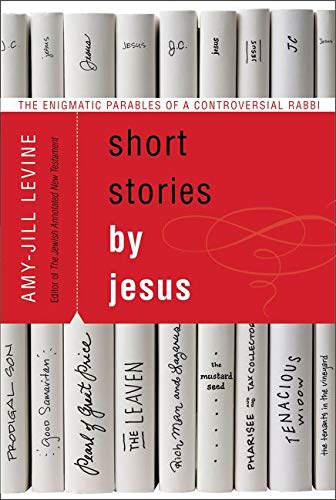
I’ve featured the inventive guitarist Molly Tuttle and dobro king Jerry “Flux” Douglas individually in previous Soundtracks, but today I’m bringing them together because of a wonderful Paste Studio video of their three-song set this past May at Del McCoury’s Cumberland, Maryland music festival DelFest.

Here’s how The Bluegrass Situation described this gem:

In May, (Tuttle & Golden Highway) were joined at DelFest by none other than Dobro hero Jerry Douglas, who is also the co-producer of their new album. Douglas, Tuttle, and company give not only rip-roaring renditions of Golden Highway’s new songs in this performance for Paste Studio on the Road, but also an interesting and enlightening interview with a Paste host. The songs are presented as the founders of bluegrass intended: the band surrounding one microphone, weaving in and out of one another’s space to be heard. In between the interview portions, the band plays three songs from Golden Highway’s new album, Crooked Tree. For those of us who couldn’t get to DelFest this year, this video is a great way to feel like you didn’t completely miss out.

Yep, just like the founders of bluegrass intended…if they could have envisioned a 29-year-old female guitar phenom leading a band of top-notch pickers with the best dobro player on the planet.

Enjoy!

More to come…

DJB

*Just to be clear, all the graybeards are about my age, plus-or-minus five years. The younger set can be anywhere from teenagers to those musicians in their 40s.

Image: Jerry Douglas, Molly Tuttle, and Shelby Means (l to r) playing for Paste Studio on the Road at DelFest

Working your way out of the holes in life

Because of a curse put on his no-good-dirty-rotten-pig-stealing great-great-grandfather, Stanley Yelnats always finds himself in the wrong place at the wrong time. Which is how he ends up at Camp Green Lake digging very large holes, because the adults have told him it will build character and teach him how to be a good citizen.

Oh, and Camp Green Lake is not a camp. It is not green. It doesn’t have a lake. And the holes Stanley digs are not always literal. After he finds something significant in one particular spot, Stanley also digs that hole into his memory. 

We learn the backstory at the beginning of Holes, a 1998 novel by Louis Sachar which takes the reader on a darkly humorous trip as Stanley reckons with his cursed past and his misplaced present. Wrongly accused of stealing the sneakers of Clyde “Sweet Feet” Livingston, a famous baseball player who got his name from having a foot fungus that made his feet smell bad, the overweight and bullied Stanley is sent to a juvenile detention center in the middle of the Texas desert. There he meets the other boys in his group — X-Ray, Squid, Armpit, Magnet, Zigzag, and Zero. Stanley is quickly given the nickname Caveman. And then there are the adults — Mr. Pendanski, a helping type who the boys call Mom, the perpetually grumpy Mr. Sir, and the Warden. Mr. Pendanski helpfully tells Stanley there is really only one rule at Camp Green Lake.

That rule? “Don’t upset the Warden.”

Written with pre-teens in mind, Holes has won the prestigious Newbery Medal, among more than 30 worldwide awards. It was made into a movie starring Sigourney Weaver as the Warden, Jon Voight as Mr. Sir, and Tim Blake Nelson as Mr. Pendanski. The book was banned by at least one school district, which only increases its cred among young readers. And more than twenty years after its publication, the book continues to delight pre-teens, teenagers, and adults. Family members had read Holes and recommended it as a good selection for my 2022 summer reading list.

Sachar’s story shifts between past and present, and the two are clearly intertwined. It becomes obvious early in the book that the Warden has the boys digging holes for reasons other than building character. She is desperate to find something — desperate enough to have her charges dig five-by-five-by-five-foot holes across a dry desert lake. Stanley decides he wants to know the secret as well. The edgy mystery unfolds in a way that is full of plot twists and danger.

We learn about racist violence in the past and the revenge of outlaw Kissin’ Kate Barlow. There is also cruelty and violence in the present, adding to the suspense. Coincidences between family history and current events keep popping up. A young boy named Zero, who everyone but Stanley dismisses as dumb, is key to unlocking the twisted tale. There’s nail polish made with rattlesnake venom; yellow-spotted lizards that can leap from the bottom of five-foot holes to devour a tarantula; stolen treasure; enough delightfully devilish nicknames to fill up a Barf Bag (yes, that’s the nickname of the boy who left just before Stanley arrives); and stinky feet.

What else could a young reader ask for!

Sachar’s way with words and his inventive storytelling skills captivated me right from the start. In the opening paragraphs he tells the reader that it is ninety-five degrees in the shade at Camp Green Lake. The only shade, however, comes from two old oak trees on the eastern edge of the “lake” that have a hammock stretched between them. The shade and the hammock are owned by the Warden and campers are forbidden to lie in the hammock. We can only imagine what might happen if a camper took that risk.

Rattlesnakes and scorpions are abundant, but “usually” you won’t die if one bites you. No, the worst thing that can happen to you at Camp Green Lake is to be bitten by a yellow-spotted lizard.

That’s the worst thing that can happen to you. You will die a slow and painful death.

Always.

If you get bitten by a yellow-spotted lizard, you might as well go into the shade of the oak trees and lie in the hammock.

There is nothing anyone can do to you anymore.

I stayed up late reading this book, laughed out loud when Zero makes an observation that leaves even the Warden speechless, and appreciated the lessons about perseverance, companionship, and overcoming both cruelty and personal history that shine through in Holes. The treasure chest of justice doesn’t always reveal itself easily, but Stanley finds it in the end.

A delightful read … for any age!

More to come…

DJB

Image by Marion from Pixabay