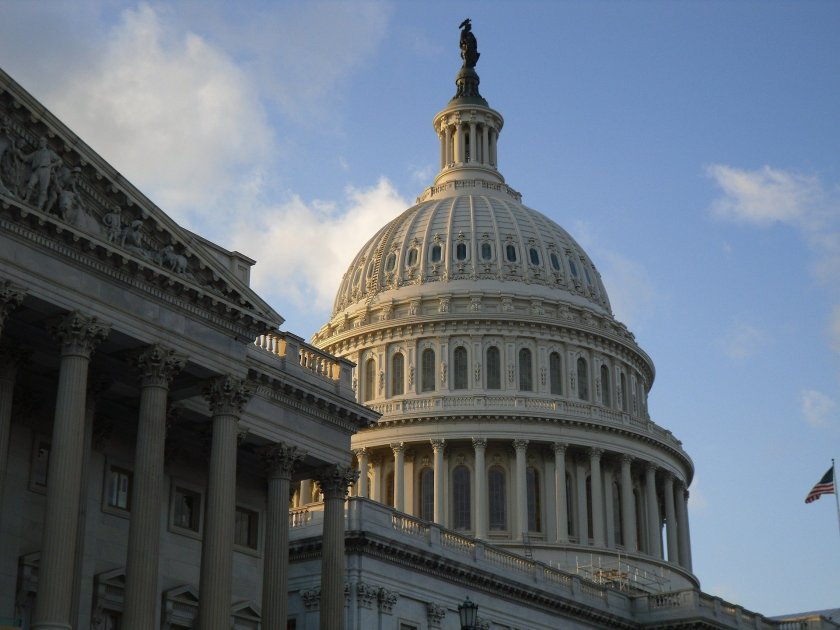
History is a teacher
Joanne B. Freeman writes that slavery, and its future in America, was the key issue that led to bullying, fighting, and total breakdown of civil discourse in Congress prior to the Civil War.
Joanne B. Freeman writes that slavery, and its future in America, was the key issue that led to bullying, fighting, and total breakdown of civil discourse in Congress prior to the Civil War.
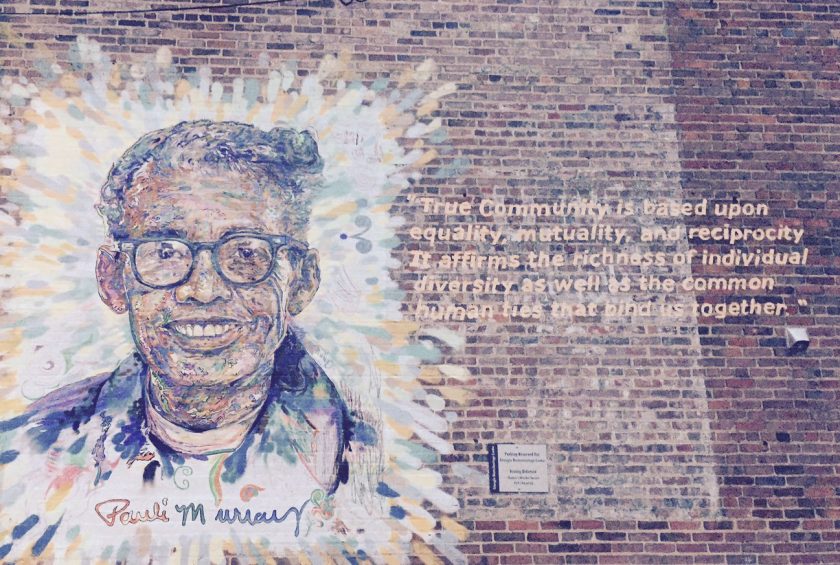
I’ve been thinking recently about “where I’m from” and its impact on my life and work.
(NOTE: My appreciation of the life and legacy of William J. Murtagh was first published on the Preservation Forum Blog on November 2, 2018.) Bill Murtagh, who passed away on October 28 at age 95, was among the most visible and effective preservation leaders in the middle of the 20th century, when the movement was expanding its focus from historic sites, museums, and teaching to the emphasis on people and community that we recognize today. To those of us who came to preservation in the 1970s and ’80s, Bill was seemingly in the middle of everything. He served two stints at the National Trust for Historic Preservation, first as President Richard Howland’s assistant in 1958, later returning for several years as vice president for Preservation Services. He was a member of the committee that outlined the principles at the core of the 1966 National Historic Preservation Act. He was a key figure in the establishment and growth of preservation education programs from Columbia University to the University of Hawai‘i. His “Keeping Time: The History and …

In the midst of one of the most turbulent weeks in our recent civic life, I attended the play Lincolnesque last Saturday at Washington’s Keegan Theatre. First released in 2009, this new production couldn’t have come at a better time. Here’s the synopsis: “Leo has more on his plate than he can handle. He is a speechwriter for an endangered mediocre Congressman, in the final month before a do-or-die mid-term election. His new boss Carla is a dominating message maven who has been brought in from the corporate world to try and save the campaign. And his brother Francis is a psychiatric outpatient recently released from St. Elizabeth’s Hospital, despite having a powerful delusion that he is Abraham Lincoln. Desperate for inspiration, Leo turns to Francis for help writing “Lincolnesque” speeches, hoping that Lincoln’s transformative oratory will revive his boss’s career.” Playwright John Strand uses humor and plot twists to bring Leo and Carla to the point of stealing Francis’ “Lincolnesque” citations for the final campaign speech that puts the Congressman over the top. The …
Congressman John Lewis is a hero to many. A hero whose skull was cracked more than fifty years ago while working for justice. So in June when he sent out the following on his twitter account, it was a message worth hearing that day and every day: “Do not get lost in a sea of despair. Be hopeful, be optimistic. Our struggle is not the struggle of a day, a week, a month, or a year, it is the struggle of a lifetime. Never, ever be afraid to make some noise and get in good trouble, necessary trouble.” Lewis wasn’t calling for a “don’t worry, be happy” type of response to the issues of our times. Instead he knows—from more than five decades in the trenches—that despair creates apathy, and apathy destroys activism. One activist who was in Lewis’ training camps in Mississippi in 1964 notes that “Giving in to despair is lazy surrender.” A few years ago, when the National Trust conference was held in Nashville, John Lewis challenged us to believe in the …
NOTE: My op-ed for the National Trust for Historic Preservation on the future of Music Row ran in today’s Nashville Tennessean. You can see the original here. Balance. Harmony. Character. These are essential elements of any great song or musical composition. They are also essential to any great neighborhood. Unfortunately for Nashville, the Music Row neighborhood is out of balance right now. In the last five years alone, 43 historic buildings that housed music related businesses – the lifeblood of Music Row – have been demolished. Only one single threatened building – the venerable RCA Studio A – has been saved from demolition. And that “save” was achieved not by public policy or by city initiative, but solely through the efforts of private citizens intent on preserving irreplaceable heritage. Forty-three to one is not balance. High-rise residential condominiums in a neighborhood of small-scale business is not harmony. Demolishing five more historic buildings in the heart of Music Row is not the way to protect neighborhood character. It is definitely not the way to celebrate the unique and extraordinary cultural heritage that …

For several years I’ve regularly traveled for work to Monterey, California, a small coastal city some two hours south of San Francisco. So when we went looking for a west coast destination for this year’s family vacation, I suggested we check out the Monterey Peninsula. Now that we’ve wrapped up a week-long visit to Pacific Grove—next-door neighbor to the city of Monterey—we’re just coming to realize how much we’ve seen and explored in this new (to us) part of the world. Let’s begin with the coastline, the attraction to visitors for thousands of years. I awoke every day shortly after 6 a.m. and went for walks of as much as two hours along the well-used (and well-loved) Monterey Bay Coastal Trail. Pacific Grove’s portion of this 18-mile trail, which follows the path of the old Southern Pacific Railroad train tracks, hews close to the water and rock-strewn coastline, while Monterey’s comes inland a bit to incorporate Cannery Row, the Monterey Bay Aquarium, and Fisherman’s Wharf. My walk often began before sunrise and was shrouded in …

You’ll never know that one of your guitar heroes is sitting in the seat next to you if you don’t take your head out of your phone or computer.
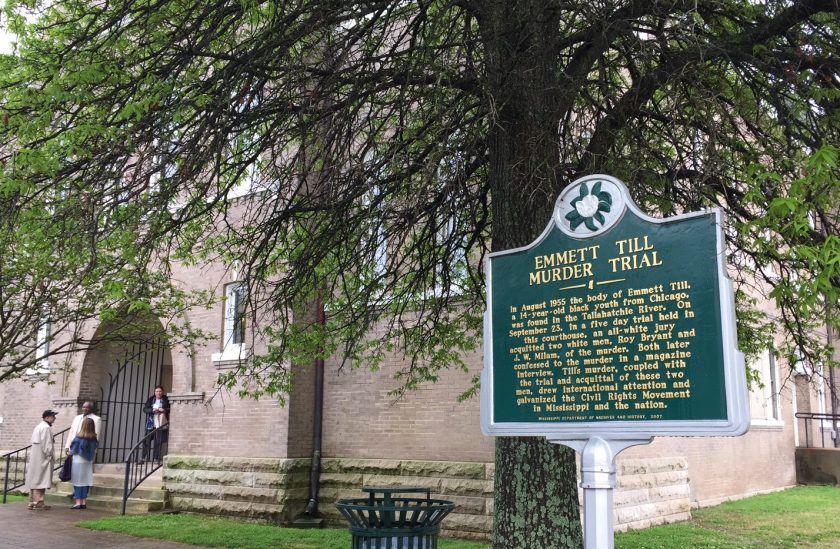
A trip through Mississippi, where Bill Ferris quoted a relative who said “he was raised on cornbread and recollections.”

How often do we give advice when simply presence and acknowledgement is required?
 MORE TO COME...