Writer, editor, writing coach, France aficionado, and family friend Janet Hulstrand produced a delightful little book earlier this year entitled Demystifying the French: How to Love Them and Make Them Love You. Having just finished this advice manual for travelers and others interested in living more successfully with the French, I found Janet’s take on how to understand these sometimes curious, somewhat frustrating, occasionally mystifying, but always interesting people to be delightful, informative, and useful all at once.
“Demystifying the French” by Janet Hulstrand
I also found that Janet had—either on purpose or unwittingly, I’m not sure which—captured some wonderful life lessons from her observations about the country she’s now observed and come to love as a visitor and resident for some 40 years.
The book is written as if you are sitting by the fireplace with a wonderful French wine and a good friend who is giving you a crash course before you venture out on your first trip to France. Janet’s writing is clear and, as one reviewer put it, “breezy and digestible.” She begins with five essential tips for “even brief encounters” that start with the all important, “Instead of smiling, say bonjour.” Say bonjour before you say anything else. Janet notes that she lived in France for years before she figured this out, and admits that she still will occasionally forget her own #1 tip to getting along with the French.
Following the five top tips, she moves into ten chapters to help understand the French mentality. Here you’ll learn about the country’s passion for complication as well as the (relative) unimportance of money. As with the tips, Janet provides background to flesh out her observations, often with hilarious asides and anecdotes. I certainly laughed out loud at the descriptions of which swear words Americans should avoid saying in France, even though the French will use them liberally in their conversation.
As I was reading this delightful guide, I found myself agreeing with a number of the ways in which the French have decided to live their lives. And while Janet may mention her feelings on specific topics with a comment such as “I think Americans could do with a little bit more of that kind of approach to life,” she doesn’t try to force the reader to accept that the French way is better. Rather, she simply wants us to understand the rationale behind what we may initially see as inexplicable behavior.
But stopping to seriously consider why we do what we do can be life altering. Why not take an approach to living that, upon reflection, seems not only perfectly reasonable, but better for us, for our communities, and for our planet? The following came to mind as I read Janet’s “demystifying” manual:
Why not greet each and every person with a kind word and leave them with a cheerful au revoir (until we see each other again)?
Why not throw out our assumption that everyone speaks our language and is just like us? Why not replace that assumption with a question that asks if they speak English before barging ahead in our native tongue (but not theirs)? Why not, in other words, treat strangers as we would want to be treated?
Why not expect and support beauty in both our civic spaces and life?
Why not lower our voice instead of speaking at a decibel level that ensures that everyone within 100 feet hears our conversation?
Why not take our time? What’s the rush?
Why not, instead of being self-absorbed or all wrapped up in what we do, work on simply being interesting?
This last one comes out of the chapter entitled “The Importance of Being Interesting,” and Janet begins it with this short story.
“Years ago, a friend of mine had a dalliance with a Frenchwoman. When they went their separate ways, neither of them was truly terribly upset—it was a casual affair, and it was over. But she did make certain to tell him before going on her way, that to her, he and his friends were ‘not interesting.’ (‘I know many peoples who are more interesting zan you!’ were her precise words.)”
Janet goes into some depth about the ways and whys of being interesting, noting that the French have a general respect “for education, for intellect, and for the importance of learning how to think rationally.” They don’t talk about their work and tie their self-esteem up in their jobs. Instead, they build on the philosophy courses that are a staple of all French high school curricula in order to produce “enlightened citizens capable of intelligent criticism.”
As I’m listening to what passes for political and rational thought by today’s Trump-dominated Republican party, all I can say is, “What a concept.”
Demystifying the French makes a great stocking stuffer this Christmas season for those who have gap year students traveling to France, who know friends or family heading to Paris, who enjoy good French food and want to find out more about the people behind those wonderful creations, or who simply would find unexpected life lessons in a small, delightful read a real treasure.
‘Tis the season to begin thinking about finding and supporting some excellent holiday music, which we’ll do in this edition of the Saturday Soundtrack. When you tire of the endless, dreary Christmas muzak, I suggest you set up a winter solstice playlist or take in a concert by Robin Bullock to alleviate your pain.
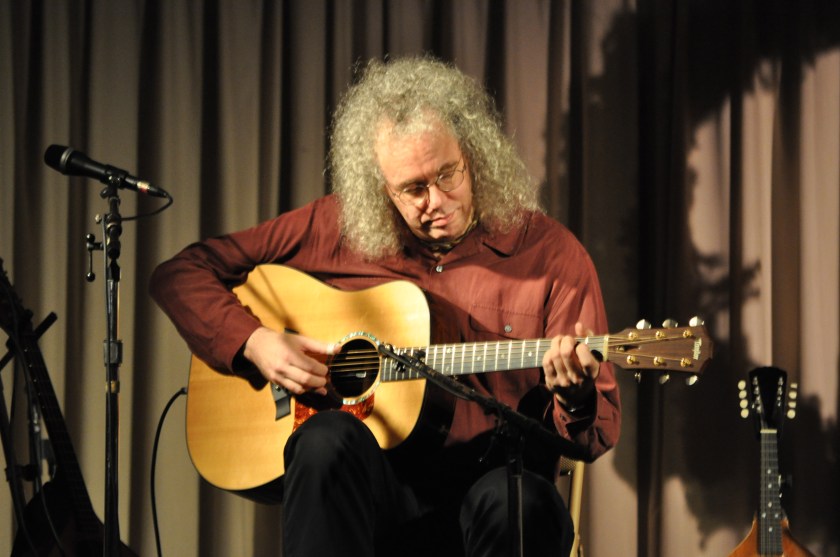
Robin Bullock (on guitar) with fiddlers Elke Baker and Ken Kolodner (also on hammered dulcimer) at the 2012 IMT Celtic Holiday Concert
For years I’ve been a regular at Bullock’s Celtic Holiday Concert sponsored by the Institute of Musical Traditions, and I’ll be there again next week for the 2019 performance. Set for Monday, December 9th at St. Mark’s in Rockville, the concert also includes, besides Bullock, the world-class folk instrumentalist Ken Kolodner on fiddle and hammered dulcimer, along with U.S. National Scottish Fiddle Champion Elke Baker.
Bullock is a master of the acoustic guitar, cittern, and mandolin, where he blends
“…the ancient melodies of the Celtic lands, their vigorous American descendants, and the masterworks of the Baroque and Renaissance eras into one powerful musical vision. The 17th-century harp tunes of legendary Irish bard Turlough O’Carolan, the spirited jigs and reels of rural Ireland, the haunting ballads of the southern Appalachians and the timeless compositions of Bach, Dowland and Francesco da Milano all find a musical common ground in Robin’s music, where lightning-fast fingerwork one moment is perfectly balanced with tender, quiet intimacy the next.”
There’s a great deal of Robin’s music on You Tube, but this year—given all that the country has endured—I thought it would be especially appropriate to hear his lovely arrangement of the Ukrainian tune Carol of the Bells. Composed by Mykola Leontovych—an internationally recognized choral conductor, teacher, and composer who was assassinated by a Soviet state security agent in 1921—this beautiful tune comes alive in Robin’s hands.
Robin was based in the Washington area in the 1990s, before moving to France and then to Black Mountain, North Carolina, his current home. Along with Kolodner and one of the founders of the Baltimore Consort, Chris Norman (flutes, whistles & smallpipes), Bullock was a founding member of the acoustic world-music trio Helicon, which still gathers annually for a Winter Solstice concert. This year the group has three DC/Baltimore-area concerts scheduled for Saturday December 14th and the following Saturday, December 21st. North Carolina friends can see Bullock at the Swannanoa Solstice in Asheville on the 22nd.
Enjoy the music of the solstice this year.
More to come…
DJB
Image: Robin Bullock performing at the 2012 IMT Celtic Holiday Concert by DJB
Last evening a sold-out Georgetown crowd was treated to a sumptuous musical feast of the season by the English-based VOCES8 ensemble. The “impeccable quality of tone and balance” that has been recognized by Gramophone and many others was on full display in the splendid acoustics of historic St. John’s Episcopal Church.
The program was varied, reaching back to the music of Tómas Luis de Victoria, Michael Praetorius, Giovanni Pierluigi da Palestrina, and Benjamin Britten, while also reaching forward to contemporary composers Jonathan Rathbone, Jonathan Dove, and David Pickthall, among others.
For me, the evening’s highlight was the moving Philip Stopford setting of the Coventry Carol, the traditional English carol dating from the 16th century. Stopford’s Lully, Lulla, Lullay—filmed by VOCES8 earlier this year in St. Stephen’s Walbrook Church, London—is as haunting and beautiful on film as it was in the live performance last evening. Soprano Eleonore Cockerham‘s soft, clear, yet ethereal voice is a treasure.
The subject of the carol—the massacre of the innocent male children of Bethlehem by King Herod’s army following the birth of Jesus, as depicted in the Gospel of Matthew—is remembered in the church as the Feast of the Holy Innocents. While scholars widely agree that it never happened, it remains an important part of the retelling of the nativity for a variety of reasons. One does not have to look far today—from the southern border of the U.S., to Palestine, to South Sudan, to North Korea, to all around the globe—to see how war, violence, and greed impacts the youngest and most vulnerable among us. When I hear Lully, Lulla, Lullay, I place it as much in today’s world as in the historical context of Bethlehem.
Washington was the first stop in a nine-city U.S. holiday tour that continues tonight in Baltimore and then moves to Texas, Alabama, and New York. This is a hard-working ensemble which had just completed performances of Handel’s Messiah with the Academy of Ancient Music prior to leaving for the U.S. tour. Full Disclosure: Our son Andrew sang with VOCES8 and the Choir of the VOCES8 Foundation last Tuesday evening, December 3rd, at the Messiah concert at Trinity College Chapel in Cambridge. It was refreshing to meet the singers last evening and have them give eyewitness reports from the U.K. that “Andrew is doing well” and is a delight to have as part of the larger ensemble for these concerts. Andrew was privileged to be one of the tenor soloists for the Bach St. John Passion performed by VOCES8, the VOCES8 Scholars, Apollo5, and the Academy of Ancient Music at the VOCES8 International Music Festival at Milton Abbey this past summer. (Shameless parental promotion: to hear him sing, check out the tenor aria Ach mein Sinn at the 31:00 minute mark of the video.)
Many thanks to our long-time friend, the Rev. Gini Gerbasi, Rector of St. John’s Georgetown, for her hospitality last evening. Do yourself a favor if you live in the Washington area and take in one or more of the remaining musical delights of this season’s Georgetown Concert Series. You’ll thank me for it!
More to come…
DJB
Image: VOCES8 (Photo credit: Kaupo Kikkas courtesy of voces8.com)
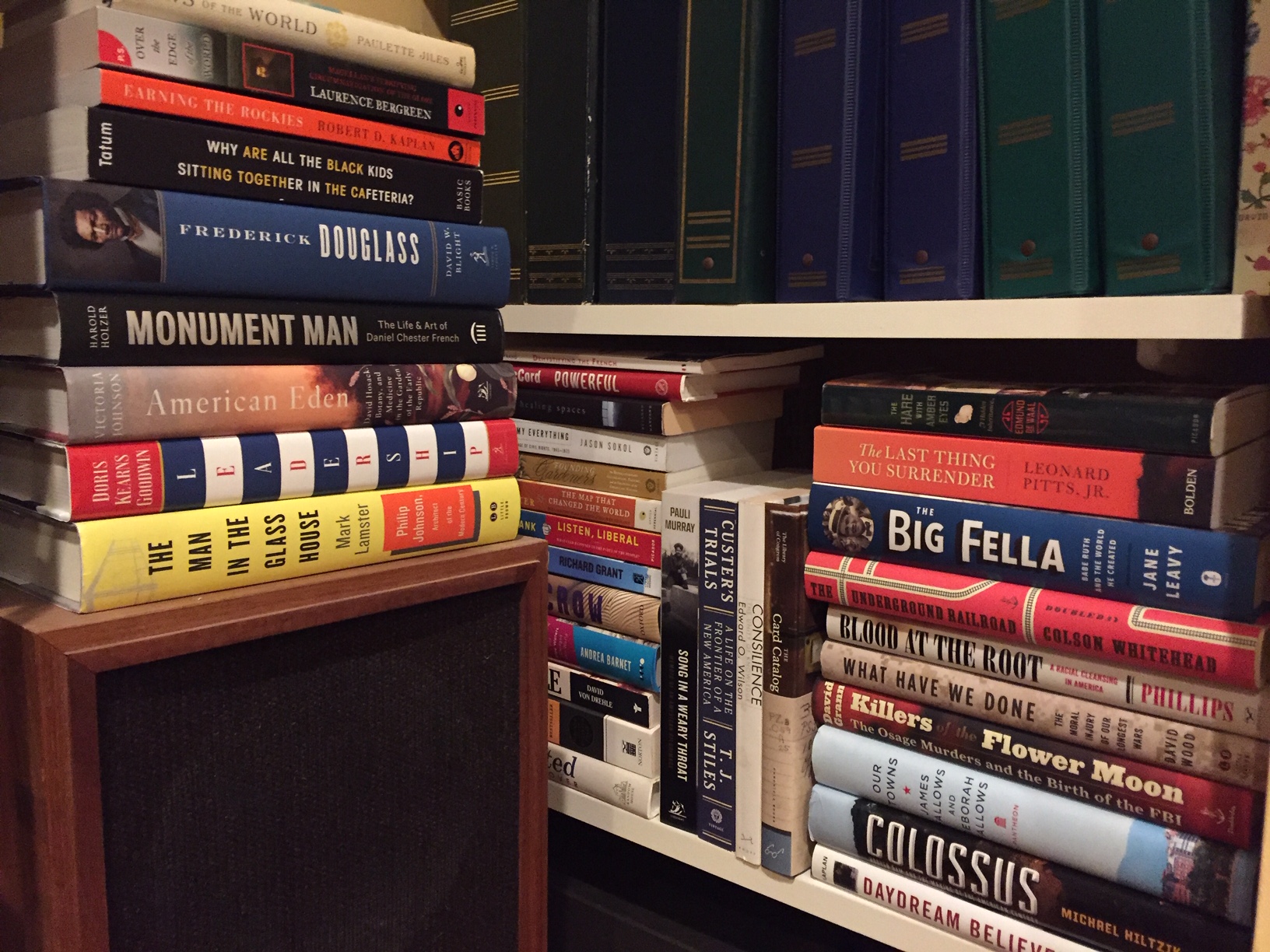
Anticipating the Politics and Prose Holiday Member Sale and assorted bookstore sales events across the country this weekend, I thought that—like me—you may enjoy a peak at books others are recommending before you rush out to make your purchases.
As I look through this list from The Guardian, I note that I’ve read eight of their selections and have four more in my reading pile; a pile that, by the way, reminds me of the always overflowing pasta bowl in Tomie dePaola’s beloved children’s book Strega Nona: it threatens to bury our house, if not the whole village. But I quickly found at least a dozen more in this list that I thought I’d like to add to that pile. And then, of course, a former colleague sent me an email recently and said, “I was thinking of you and wondered if you’ve read this book?” . . . and then proceeded to reference Maryanne Wolf’s 2008 Proust and the Squid, which sounds like another absolutely fascinating work.
Let’s see…will I be able to wait at leastuntil thestart of the Politics and Prosesale?!
After taking dePaolo’s cautionary tale of Big Anthony seriously, perhaps I’ll work on being a bit more prudent and only pick up 3-4 new works…at least until that pile is reduced a bit more.
But no matter the size of my reading pile, I’d still be excited to hear about what’s on your “best of” list.
We all have our phobias and fears. For much of my life, that personal horror was stage fright. I’m surprised when people tell me they have never experienced the sensation of walking to a podium or settling in with their musical instrument and, suddenly, being gripped by a paralyzing fear. That dread just came naturally to me.
Working through my stage fright in order to speak from the pulpit at the Ryman Auditorium: The Mother Church of Country Music
Stage fright—or performance anxiety, as it is also known—is a condition that affects many people who have to talk for a living or want to perform for others. I’ve experienced it in both speaking publicly—say, for television interviews—and in playing music in any space other than my living room. If you don’t address your fears, the feeling saps your confidence and energy in ways that seem to make poor performance a self-fulfilling prophecy. With work and experience, I overcame at least a part of my anxiety through the years and came to enjoy public speaking and conversation.
A little bit of online research will turn up 21.5 million results (I Googled it) around ways to combat stage fright. There are multiple TED Talks on the topic, including one by a folk singer who ended up writing a song about stage fright to help him overcome his performance anxiety. But one remedy that doesn’t appear in TED Talks, Web.MD or Psychology Today came instead from a touching story told recently by Margaret Renkl, one of my new favorites among the roster of New York Times opinion writers.
Renkl, who grew up in Alabama and now lives in Nashville, recently wrote of facing a book tour unsure as to how to cope with her life-long stage fright. Knowing that her usual collection of pocket-size security blankets—her buckeye, sea shell, or worry stone—would not pull her through, she “thought of the family wedding rings.”
Renkl had come into possession of several family wedding rings over the past few years, but she had never thought to wear them, and certainly not all at once. But in a lovely tale, she relays the meaning of each ring to her life and how the women who originally wore them—her mother, grandmother, great-grandmother, and mother-in-law—taught and inspired her. She felt they would give her strength for the tour, so she “took out the wedding rings of all my treasured forebears and put them on.”
And just as she felt that simply thinking to wear five wedding rings in the first place was a miracle, she recounts,
“In what might be another minor miracle, for we are clearly in the realm of magical thinking here, it worked. I stood in front of microphone after microphone, spinning the thin bands around my fingers, and I looked out upon all those strangers, and, lo, I was not afraid.
Full disclosure: It’s possible that menopause, which has fostered an “Oh, who in hell really cares?” attitude in me for some time now, may have dispensed with my lifelong stage fright, too, and I just never noticed, having been on no stages in recent years. But I prefer to think the family matriarchy saved me, that my beloved elders closed ranks around me, my mother and mother-in-law on one flank, my grandmother and great-grandmother on the other, to shore me up and give me strength.”
I’m taking the side of the family matriarchy over menopause in this one, because I know the power of personal stories that remind us of hope in the face of suffering and hardship.
We all have stories in our past that can provide hope for the future, if we do the work to dig them out. Renkl recounts several, including how her grandmother taught school in a two-room country schoolhouse because her grandfather’s farm never quite made enough income to pay the bills. In my life, I can look at a watch that my grandfather used as a conductor on the Franklin to Nashville Interurban rail line and recall that he worked multiple jobs to help get his family through the Depression. Because he was occasionally between jobs, my grandmother also ran a boarding house in their home, serving meals to workers and travelers, to make ends meet.
Hope is grounded in memory. Hope as a sense of uncertainty and coming to terms with the fact that we don’t know what will happen, but we have memories that show us that good things—powerful things—can happen. Stories from our personal pasts can point towards a resilience and strength we need today.
Near the end of her story, Renkl builds on the thought of hope being grounded in memory. She writes, “Perhaps these family histories, small as they might be and utterly invisible to the world, hold the key to facing our larger worries, too, and showing the way through.”
Like Renkl, I do believe these family stories and histories provide hope that is key to facing larger worries. Which is why I’ll take the family matriarchy story line every time.
Quick quiz: Which recent news story generated the following online comments?
God must have a wicked sense of humor.
God also chose to use locusts, plague, and floods in the past to make a point.
Perhaps it is time to reconsider the whole “omniscient” thing.
God set this up as a test for the American people. Are we as smart, honest and ethical as God hopes we are? The answer of course, was many, many people did not pass that test. God is really disappointed and pretty well flabbergasted that the test went so spectacularly wrong.
After the break: God sues Rick Perry for slander.
“What does the Lord require of you? To act justly and to love mercy and to walk humbly with your God.” Micah 6:8. Perhaps Rick Perry didn’t read that far in his Bible.
Asked for a response, God said “oops.”
Does God have a return address?
The smart glasses. They do nothing.
If you guessed that these comments were in response to recent news reports of outgoing Energy Secretary Rick Perry telling a Fox & Friends host that he saw Donald Trump as “God’s Chosen One,” then you would be correct!
For your prize, let’s talk about separation of church and state and how that relates to religion in the public square, one of my favorite subjects.
First, let’s recall that the President and the Secretary were not always singing from the same hymnal, so to speak. This is the same Donald Trump who once told supporters that the former Texas governor “put glasses on so people will think he’s smart,” and that it “just doesn’t work.” And it is the same Rick Perry who, in response to that public put-down in 2015, replied that Trump was a “cancer on conservatism” that “cannot be pacified or ignored,” and instead must be “clearly diagnosed, excised, and discarded.”
Let the record show that I agree with both assessments.
Second, let’s also remember the (less than stellar) religious grounding of our current president. This is the same Donald Trump who — when pressed to name his favorite book in the Bible — replied that it was Two Corinthians (as in “Two Corinthians walk into a bar?”). He also struggled to come up with a favorite Bible verse, until he remembered “an eye for an eye” — which the conservative Washington Times noted at that juncture in the campaign (before the white evangelical right went all in for Trump) that this was one ofthe few Mosaic laws thatJesus specifically repudiated in his Sermon on the Mount. (Check out Matthew 5: 38-42 if you don’t believe me; but remember, I grew up Southern Baptist and attended a lot of Bible study classes in my youth!)
Finally, let’s take one quick look into what could be a days-long review of the character of this particular “Chosen One.” This is the same Donald Trump who told approximately 13,500 lies in his first 1000 days in office. (If you think that’s no big deal, check out Proverbs 6:16-19 which includes “a lying tongue, hands that shed innocent blood, a heart that devises wicked plans, feet that make haste to run to evil, and a false witness who breathes out lies” as among the traits that are an abomination to God.)
It is tempting to just use humor to get yourself through these situations; and, thankfully, the responses to Perry’s observation write themselves—at least to those who find it difficult to believe that God chose such an imperfect vessel to enact her purpose. However, I think this comment warrants a more serious look at religion in the public square and our ever-evolving debate over the separation of church and state.
Let’s return and look at the larger context of Perry’s quote:
“I’m a big believer that the God of our universe is still very active in the details of the day-to-day lives of government. You know, Barack Obama doesn’t get to be the President of the United States without being ordained by God. Neither did Donald Trump.”
There’s a lot to unpack in those three sentences. First, Perry is expressing a worldview that it is God who has the ultimate authority in choosing the individual to lead the U.S. If Donald Trump and Barack Obama aren’t ordained by God, then—to Perry’s thinking—they won’t be president. If that’s the case, I guess we can just do away with that pesky democracy thing, which gives the people the right to choose their own leaders, and return to the “divine right of kings.” That always turned out so well in the past. Again, to be fair, there will be a great many evangelicals who would endorse the gist of this worldview, citing Romans 13:1 (although many—for some strange reason—pulled up short at treating Barack Obama as divinely ordained.) In fact, a heavenly host of problems arise with this approach. A simple one is, who decides what God is thinking about leadership? Rick Perry? Donald Trump? William Barr? Mitch McConnell? When the people decide they want a Democratic governor in Wisconsin or North Carolina or Kentucky, do the God-fearing Republicans in the state legislature have the moral right to take steps to undermine the will of the people?
But even being generous and taking Perry’s other point that God has “used imperfect people all through history” to carry out her will—and, by the way, doesn’t the Judeo-Christian tradition assert that all humans are fallen and imperfect (just saying)—it still strikes me as strange that the person in charge of our nuclear arsenal has now written a memorandum to, and about, the person with the power to use that arsenal, comparing Trump to Old Testament kings Saul, David, and Solomon.
The right wing in America seems to have a soft spot for kings and other authoritarian leaders these days. You know, the kind of rulers we fought a revolution to overthrow. (Again, if you don’t believe me, look beyond the famous first three lines of the Declaration of Independence and read the bulk of that document, which is a bill of particulars against King George III specifically, and kings in general.)
The First Baptist Church, Providence, RI – one of the landmarks of religious freedom and America’s founding upon the principle of the separation of church and state
All of this comes at an interesting time in our national conversation. Steven Waldman has just published an excellent history of the progress and setbacks in the cause of religious freedom in the U.S. Ezra Klein also had a review at Vox this week on how religious conservatives see themselves as under attack by a secularism that, in their view, wants to destroy them. In that article, Klein focuses on two recent speeches by Attorney General William Barr. Speaking at Notre Dame University in October, Barr makes the argument that,
“America was built atop the insight that ‘free government was only suitable and sustainable for a religious people.’ But ‘over the past 50 years religion has been under increasing attack,’ driven from the public square by ‘the growing ascendancy of secularism and the doctrine of moral relativism.'”
In response, I find much of Barr’s public career to be at odds with his sudden discovery of religion as a basis for doing what he wants to do to cover-up presidential misdeeds and accumulate power. As my grandmother use to say about dubious statements, “Consider the source.”
I am the first to admit that I don’t hold to the evangelical right’s theology and the assertion that the United States is a Christian nation. What I can believe in is that an imperfect human is capable of carrying out work in the civic square that follows the precepts of the religious life. Abraham Lincoln immediately comes to mind. Donald Trump does not.
As covered by Phillips, Kruse, and many other authors, historians, and commentators, the so-called Christian right has sold whatever soul it might have had for power. Perry’s comment — which, again to be fair, came in response to Trump callinghimself God’s Chosen One— is just one more example of this decades-long trend. As one African American commentator noted, “Rick Perry, Jerry Falwell Jr., Franklin Graham and the Trump-supporting white evangelicals are always willing to forgive and absolve the rich racist white guy in the White House but rarely extend that grace to the black and brown people he torments.”
That torment comes out of the heightened emphasis on Old Testament vengeance among the right wing, along with a decreased focus on the “turning of the other cheek” words in the Sermon on the Mount. This is an administration, for goodness sake, that tried (but failed) to criminalize the actions of a modern-day Good Samaritan. This is an administration that set up a fake university to convince some immigrant students wanting to study in the U.S. that it was real so that our government can bust them. “Then you convince other students that they should help you recruit still other students for your university. Then you bust this second group of students and the people you entrapped to entrap them. Lovely.”
As Pulitzer Prize-winning columnist Leonard Pitts, Jr., writes, the evil being done in our name “rebukes both the gospels as well as simple human decency.”
And that work happens under the direction of Bill Barr — who claims to have the power to discern what is moral and right without being questioned — and Donald Trump, who simply doesn’t want to be questioned at all.
This is very serious business, and the religious fundamentalists — who generally are not acting out of Christ-like principles — feel they can claim power even when they cannot win their arguments through the ballot box. They are egged on by a broad right-wing media and infotainment network that profits by this chaos.
Thankfully, there are serious Christian voices, such as The Rev. Dr. William J. Barber, II and John Pavlovitz, who speak out from a faith-based perspective to point the lie to Barr’s claims that only the right has the power to define our religious heritage. There are other serious voices coming from non-Christian religious traditions as well. These courageous individuals point out that what the right is looking to do is to weaponize Christianity in order to, among other things, control women, maintain prejudices against LGBTQ communities and people of color, and to legislate theology.
In many traditions, much is asked of those who are chosen by God (see Micah 6:8 reference above.) These are generally the type of requests (or commands, depending on your point of view) that I cannot see Donald Trump or many on the religious right taking seriously.
And for no better reason other than I like the song, I’ll give the last word to Bob Dylan:
Oh, God said to Abraham, “Kill me a son.” Abe said, “Man, you must be puttin’ me on.” God said, “No.” Abe say, “What?” God say, “You can do what you want, Abe, but The next time you see me comin’, you better run.” Well, Abe said, “Where d’you want this killin’ done?” God said, “Out on Highway 61.”
God moves in mysterious ways, so be careful what you ask for.
More to come…
DJB
Image: Leonardo da Vinci’s painting “The Last Supper” in Milan, Italy. Photo by DJB.
Roots music. The name suggests an adherence to tradition and a reverence for the elders.
While there is much truth in that characterization, roots genres such as old time, blues, bluegrass and Americana are continually refreshed with exciting and talented young performers. These are musicians who show a mastery of the traditional styles that goes well beyond their years while also probing the opportunities beyond the traditions.
Thinking of musicians I have long admired, Ricky Skaggs, Jerry Douglas, Tony Rice, Alison Krauss, and Bryan Sutton all were—at one point—young bluegrass whippersnappers who pushed those boundaries and set new standards of excellence. Heck, Chris Thile—at the ripe old age of 38 who has been playing like, forever, and is the host of public radio’s Live From Here—long ago graduated from the amazing kid mandolinist stage of his life to being just the amazingly talented musician who has unbelievable chops and musical ears.
Thankfully, gifted young roots music performers keep turning up. People like Molly Tuttle, the exceptionally talented 26-year-old guitar flatpicker who has recently released a debut album, When You’re Ready, that shows the breadth of her influences and the depth of her musical and songwriting skills. After being taught by her father—the well-known Bay Area musician and teacher Jack Tuttle—she is already the two-time winner of the International Bluegrass Music Association’s Guitar Player of the Year award, the first woman to win that accolade. I was first introduced to this part of her musical life through her lighting-fast version of Townes Van Zandt’s White Freightliner Blues, as heard here with the incomparable Tommy Emmanuel and recorded live at the Historic Franklin Theatre.*
When You’re Ready explores new musical territory for Tuttle. In a recent Fretboard Journal article, the artist listed her influences and preferences as ranging from the ones you’d expect (Rice, Gillian Welch, Dave Rawlings, Clarence White) to a number that would be surprising to traditionalists (The National, Perfume Genius, SZA, and, yes, 2Pac). The album includes a very personal and brave tune, Sleepwalking, in which Tuttle’s Alopecia comes forward in the official music video. Tuttle lost all her hair to this autoimmune disease at age three, and has lived most of her life wearing a wig. The openness of this music and its beautiful maker is arresting.
“If I drove into the sea Float away with the fear Be my anchor, please ‘Cause your voice is all I need
Keep talking Now we’re sleepwalking Though a world that disappeared Bad habits Burn like TV static But you’re comin’ in clear”
Molly Tuttle is playing a series of dates with Ketch Secor of the Old Crow Medicine Show in Tennessee and Virginia in December, before touring the west and south this winter, arriving at Zankel Hall at Carnegie Hall in New York City for an April performance.
Enjoy.
More to come…
DJB
*As I’ve written several times, my father use to sell tickets and work as the back-up projectionist at the Franklin Theatre. It has a special place in our family’s history.
As we enter this season of Thanksgiving, I continue my annual tradition of posting family photographs from the past year on More to Come. Despite all the turmoil in our country and throughout the world, so many of us still have much for which to be thankful in 2019.
Each December is a special time in our family, as we celebrate Andrew and Claire’s birthdays followed quickly by the holidays. Andrew did a bit of singing and celebrating with friends while in London, but both of the twins returned to Washington in late December 2018 during breaks in their school years. We were delighted to have everyone together again, if only for a few days, under one roof. The twins turned 26 last December, and less than two weeks later rolled off the family health care plan! I think that’s the new 21st century milestone for adulthood.
Andrew and our family friend Ella Taranto celebrate the 2018 holiday season with Lessons and Carols at St. Paul’s Cathedral in LondonThe Browns celebrate the 12 Days of Christmas in Washington…Mexican style!
As he pursues his Masters in Vocal Performance at the Royal College of Music (RCM) in London, Andrew has maintained a busy singing schedule. Early in 2019 he was in a RCM production of Offenbach’s opera Robinson Crusoe, and then he sang the role of the Evangelist in Bach’s St. Matthew Passion in Buckinghamshire. Andrew’s partner Mark Bailey traveled to the U.K. in the late winter/early spring, where he joined Andrew for some sightseeing.
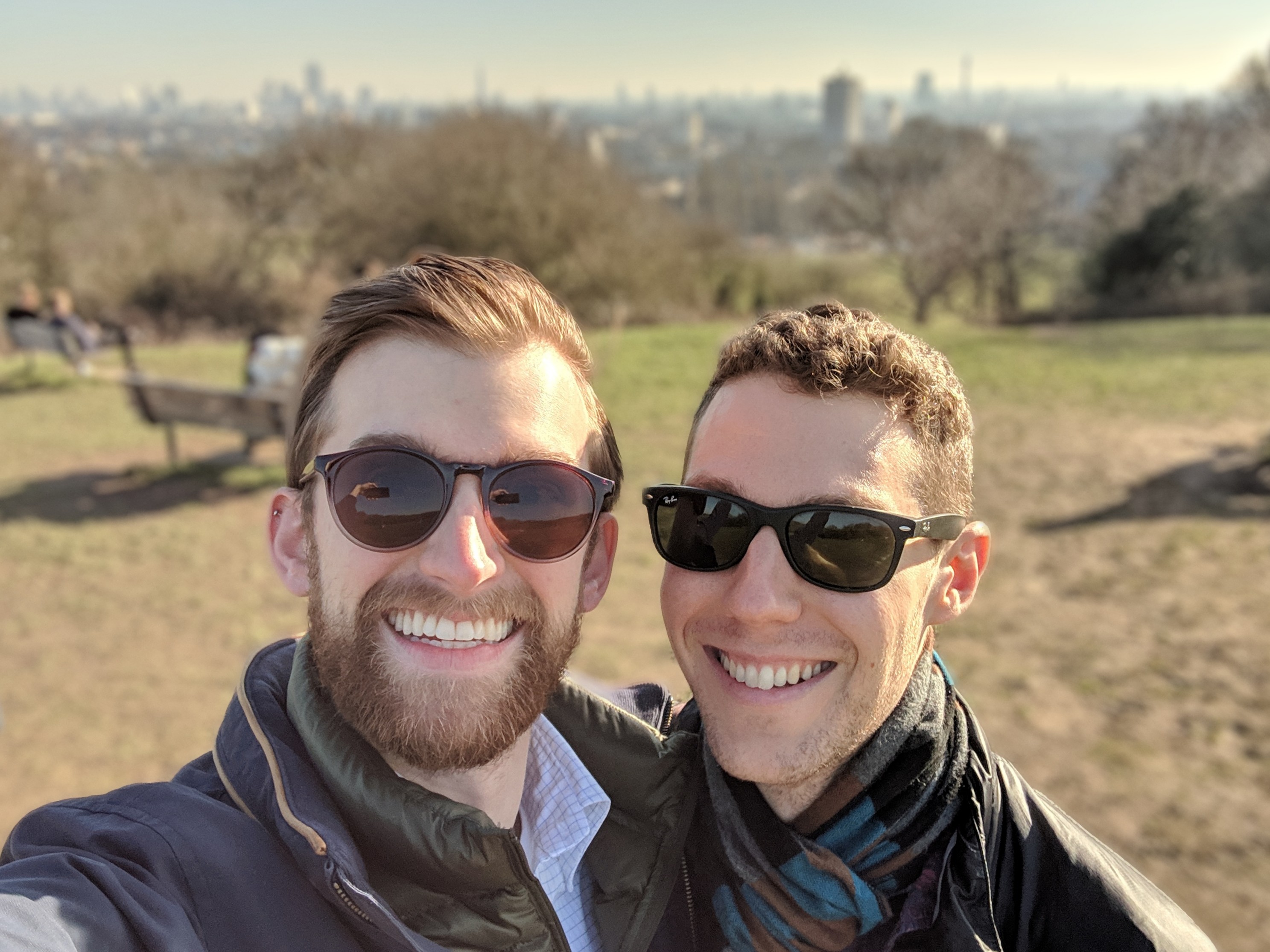
Andrew in his Act II costume for RCM’s production of Offenbach’s Robinson CrusoeAndrew singing the Evangelist in Bach’s St. Matthew Passion in BuckinghamshireAndrew and his partner Mark in Hampstead Heath
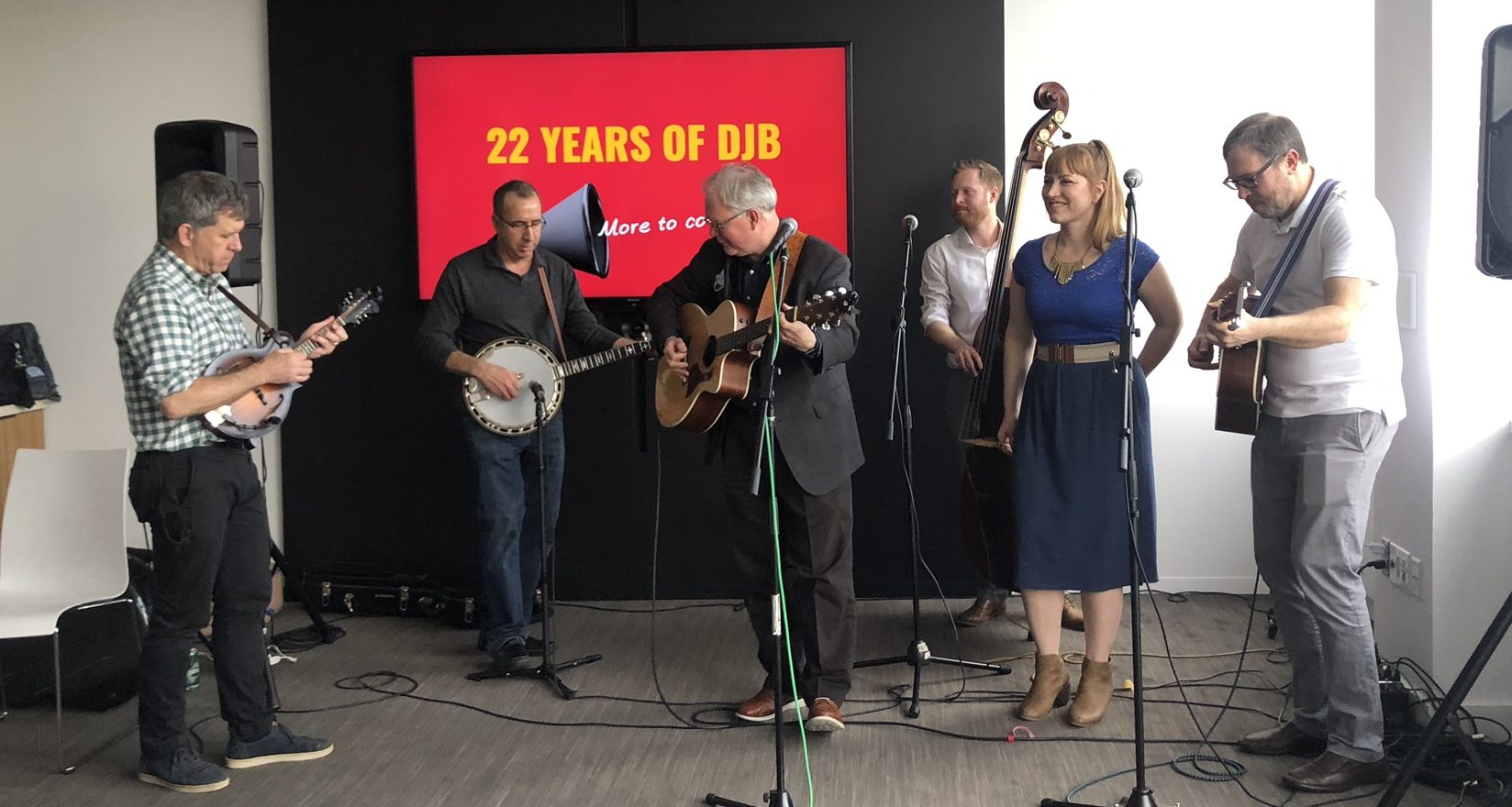
This was a year of milestones, perhaps most notably my departure after 22 years at the National Trust for Historic Preservation and my semi-retirement into a gap year. It was bittersweet, after more than two decades with the Trust and 40 years in the preservation field, but I felt it was time to step aside for others. My Trust colleagues gave me a great send-off, complete with a chance to play some live bluegrass! It was already too late to follow the amateur musician’s admonition to “not give up your day job,” so I just let it rip—singing that old bluegrass chestnut “I’m Sitting On Top of the World”—and had a fantastic time.
Playing Bluegrass with the By-and-By Band. DJB is the one in the jacket!
April, May and June were months of travel for the Brown family, beginning with Candice’s visit to Savannah in April to be with the “Hollywood Gang,” a group of friends from her grade-school days in Hollywood, Florida. In May, I was privileged to attend a two-week tour of Japan on behalf of the National Trust. It was my first trip to Asia, and the experiences were as exhilarating as they were diverse.
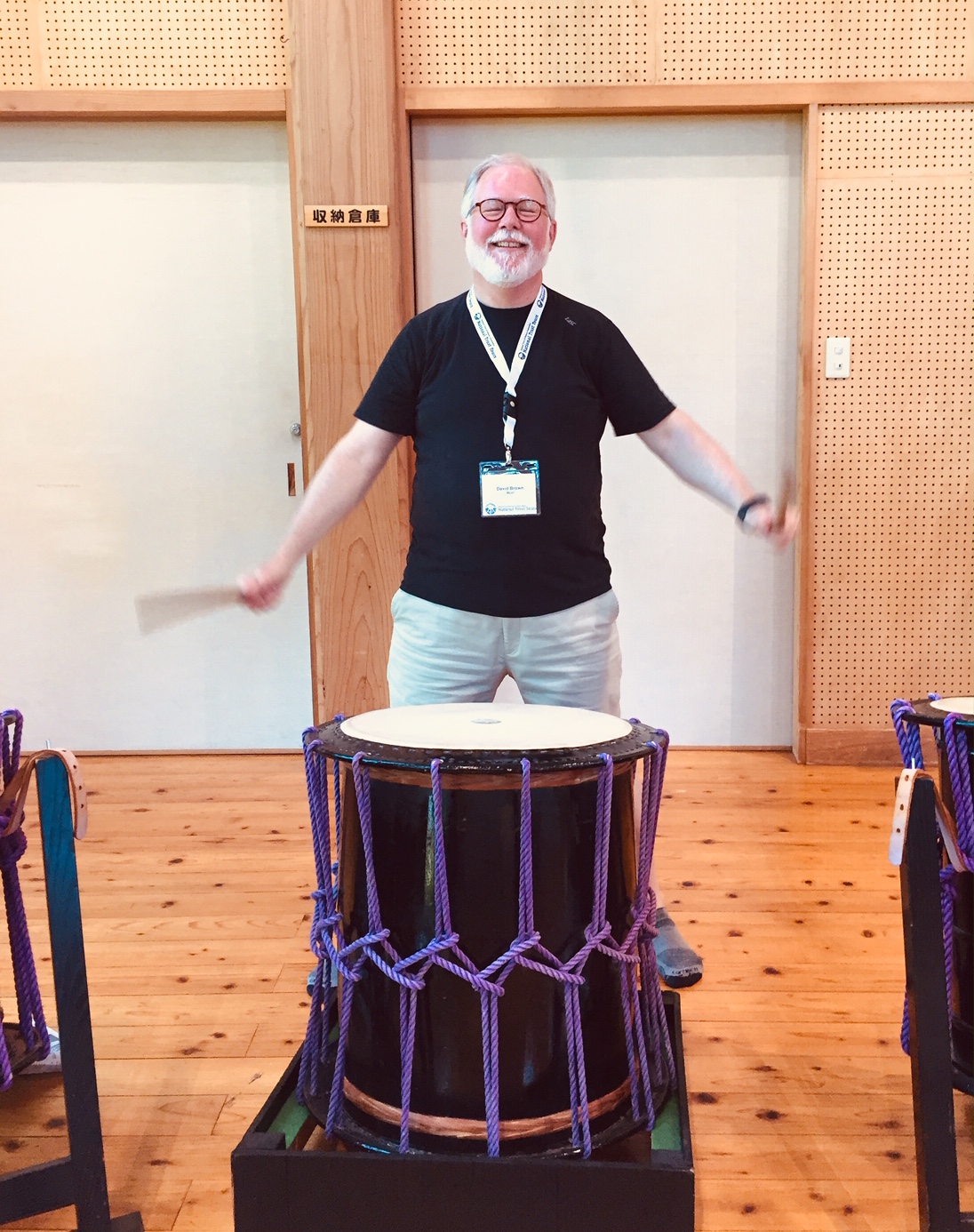
Candice with members of the “Hollywood Gang” – friends from grade school days – in Savannah for their annual gathering in 2019A child of the drum: David learns the art of traditional Japanese drumming (photo credit: Melissa Blunt)
Candice and I then met up on the west coast to celebrate Claire’s graduation, with her Masters in Social Work, from the University of California at Berkeley. We loved our three days together where we could congratulate Claire on this milestone in her life.
Our wonderful Claire, now with her MSW degree from the University of California, Berkeley
To keep up the whirlwind pace, the three Browns boarded a plane for London, to connect with Andrew and spend almost three weeks in the United Kingdom. We had a chance to hear Andrew sing twice—once in Mozart’s Così Fan Tutte and then a few days later for his first-year RCM recital. We also used the time to explore and play, including a High Tea to celebrate Mother’s Day and Candice’s birthday.
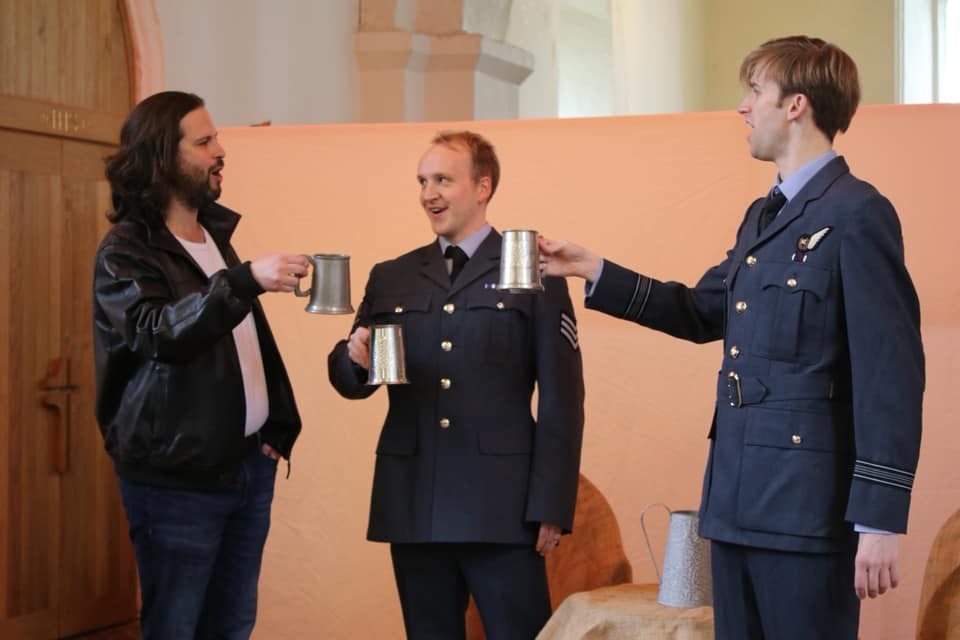
Don Alfonso, Guglielmo and Ferrando (l-to-r) – in a 1950s setting of Cosi Fan Tutte – plot to test the faithfulness of their fiancés.Celebrating Mom/Candice at High Tea in London
Our explorations took us not only to London, but to the Cotswolds and Hampshire. We were in the U.K. during the 75th anniversary of D-Day, which was celebrated in cities, towns, and villages throughout the country. We also used the time to visit with friends, be guests at a wonderful Emmanuel College High Table, connect with National Trust colleagues in the U.K., and take in our second opera of the trip at The Grange Festival. A wonderful time was had by all.
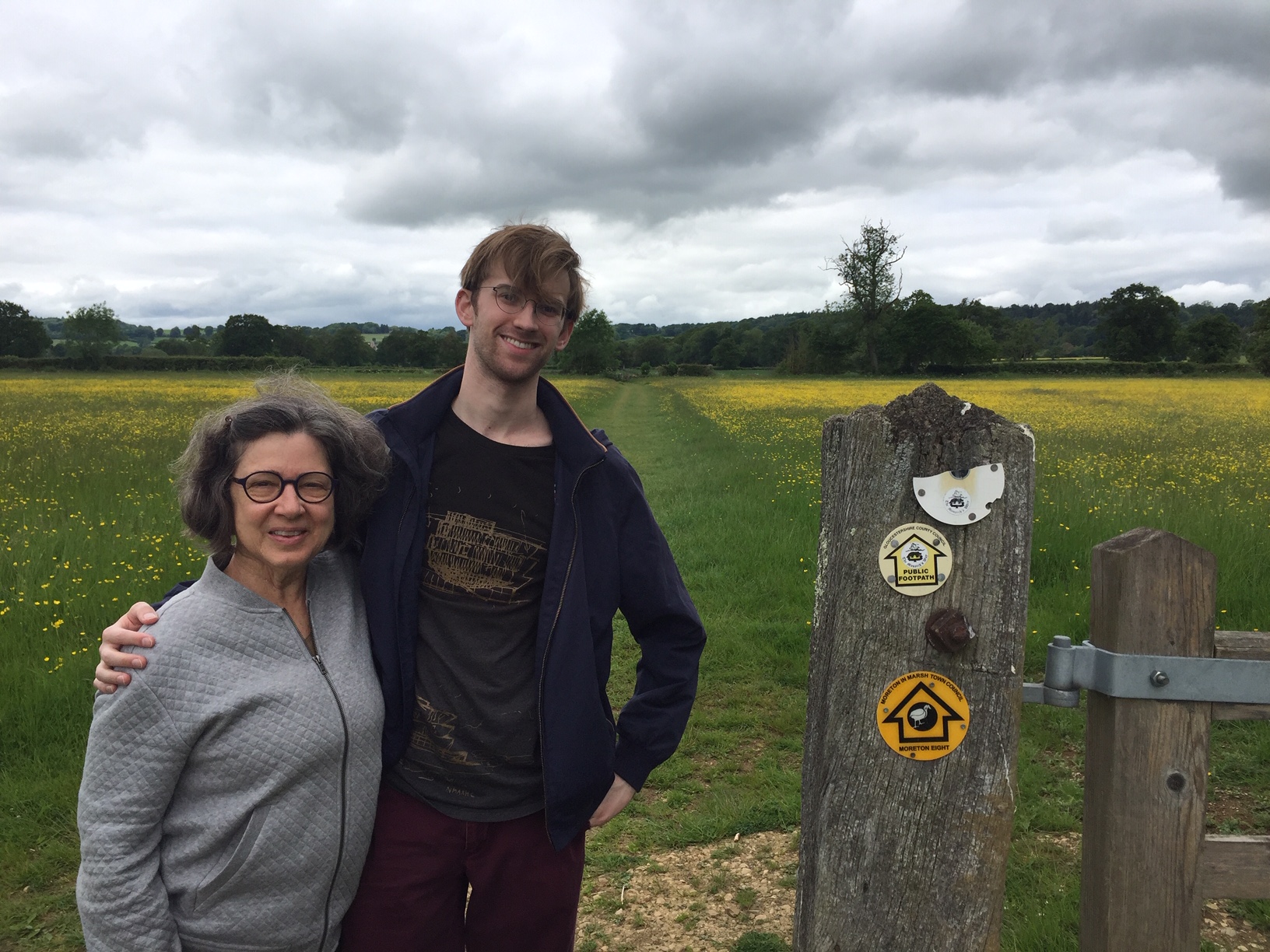
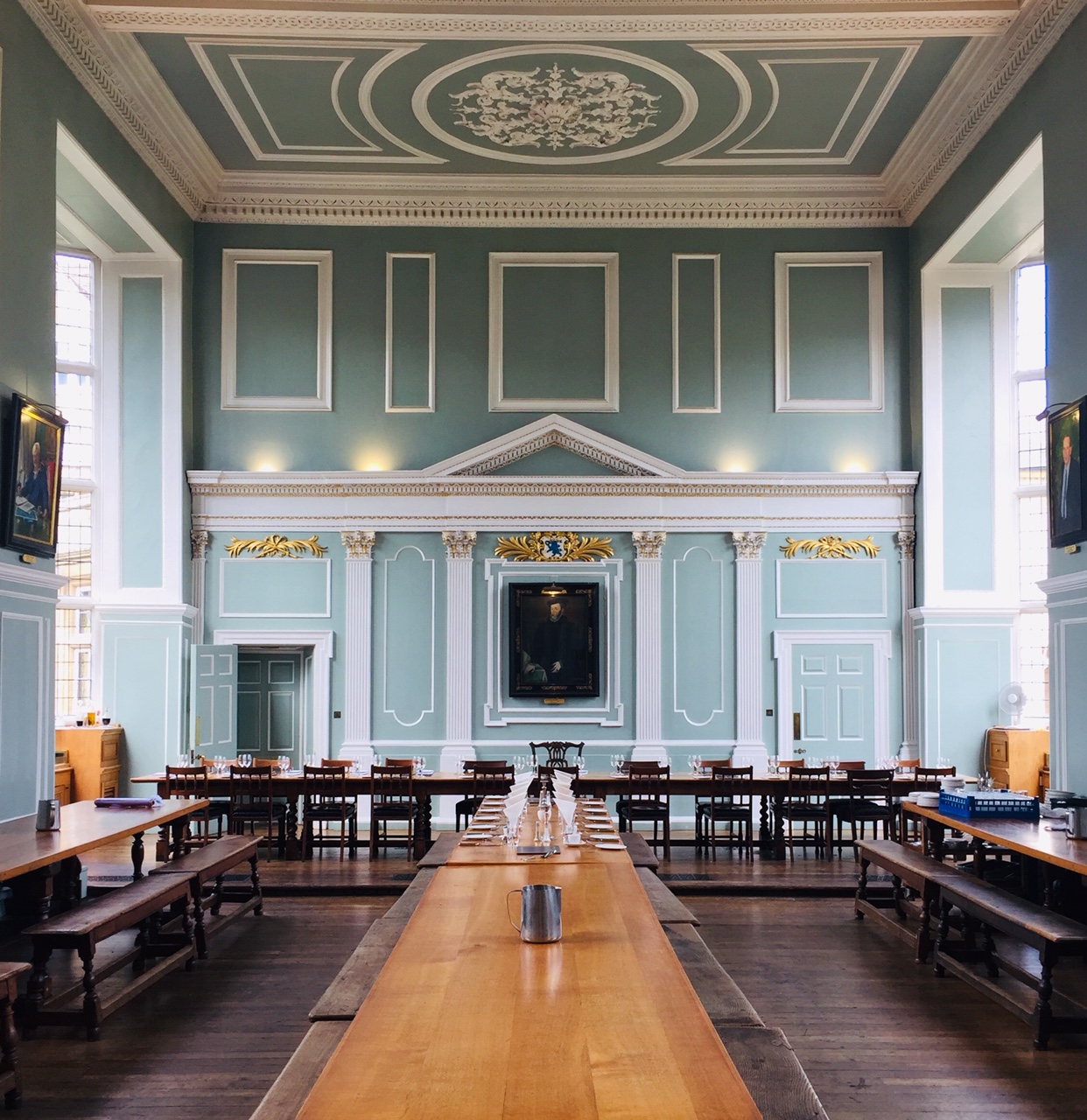
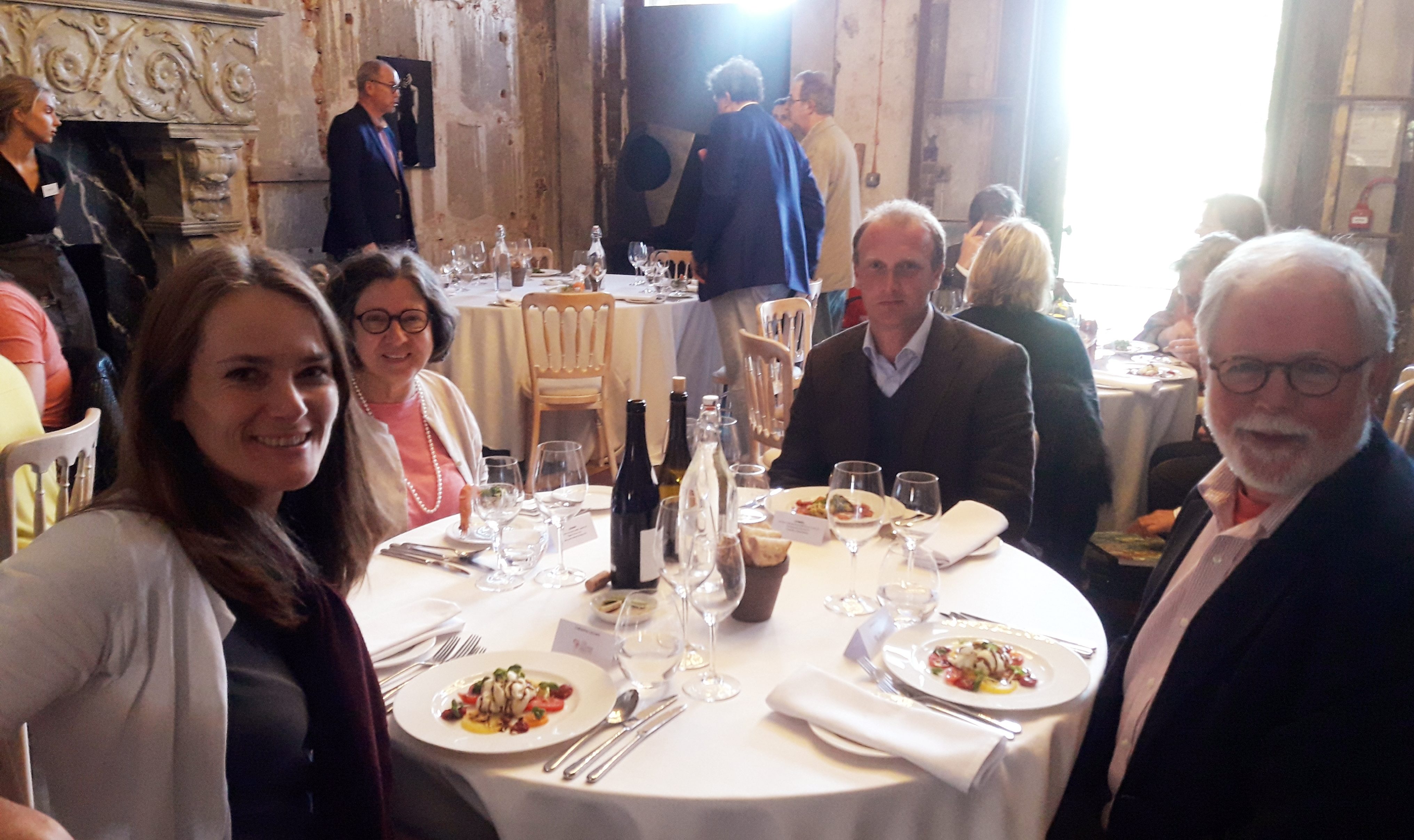
Britain remembers its fallen troops on the 75th anniversary of D-Day: one of many flags along the streets in the Cotswolds town of Moreton-in-MarshThe photographer (ahem, Andrew) enjoyed the juxtaposition of the signs and people here as we set off for a ramble in the CotswoldsCandice and Andrew on one of our Cotswolds ramblesThe Emmanuel College dining hall, set for High TableDinner at The Grange in Hampshire with Catherine Leonard and Ben Wright
Life returned to our new normal in mid-June, as Candice and I settled into my gap year in Washington; Claire and her partner Blair Kittle adjusted to Claire’s first full-time job, as a therapist in an Oakland public middle school, by acquiring a new member of the family; and Andrew traveled and sang in wonderful venues around the U.S. and Europe.
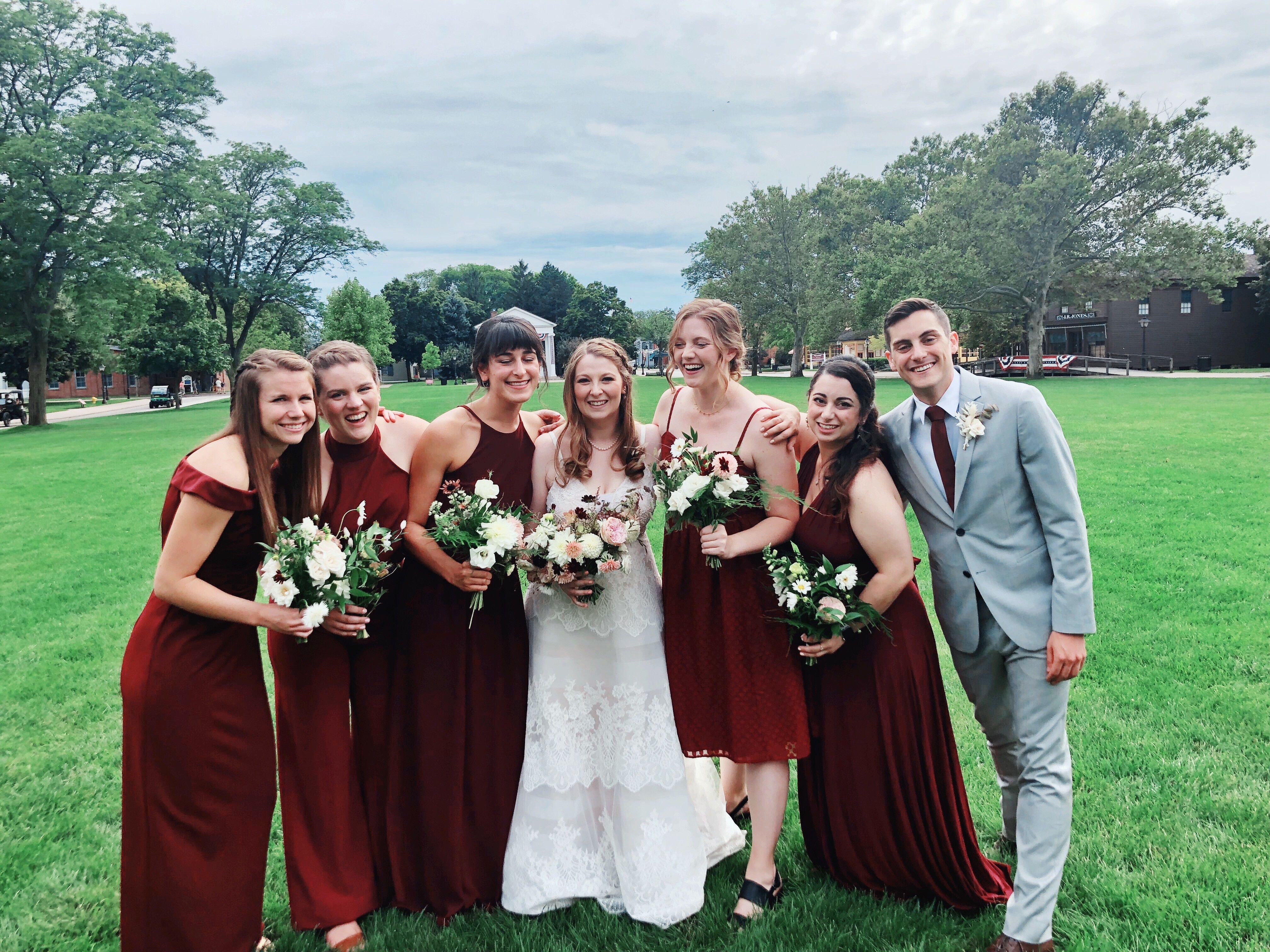
Chai – Claire and Blair’s Siberian Forest cat and the newest member of our family. His name is short for Tchaikovsky, since his ancestors are from Russia.Claire joins the Pomona College bridesmaids (and one bridesman) at classmate Susan Nussbaum’s summer wedding to Ryan Dodson.Tis the season for weddings, as Blair and Claire celebrate with friends.Milton Abbey, where Andrew sang the St. John Passion with Academy of Ancient Music and Voces8Andrew in the gardens around Glyndebourne before seeing Handel’s RinaldoAndrew and Ana (a soprano at RCM) in Châteauneuf-de-Grasse, France
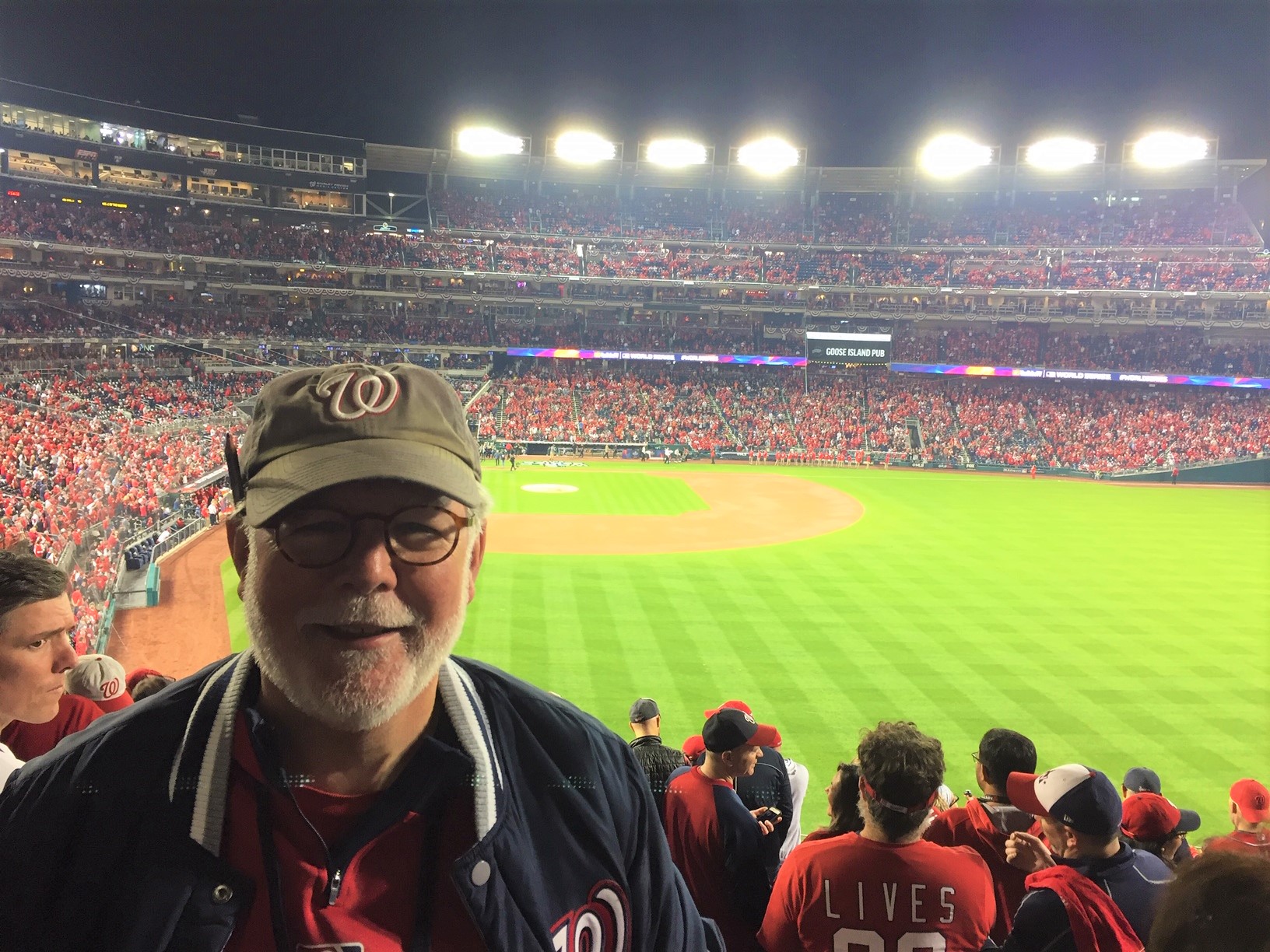
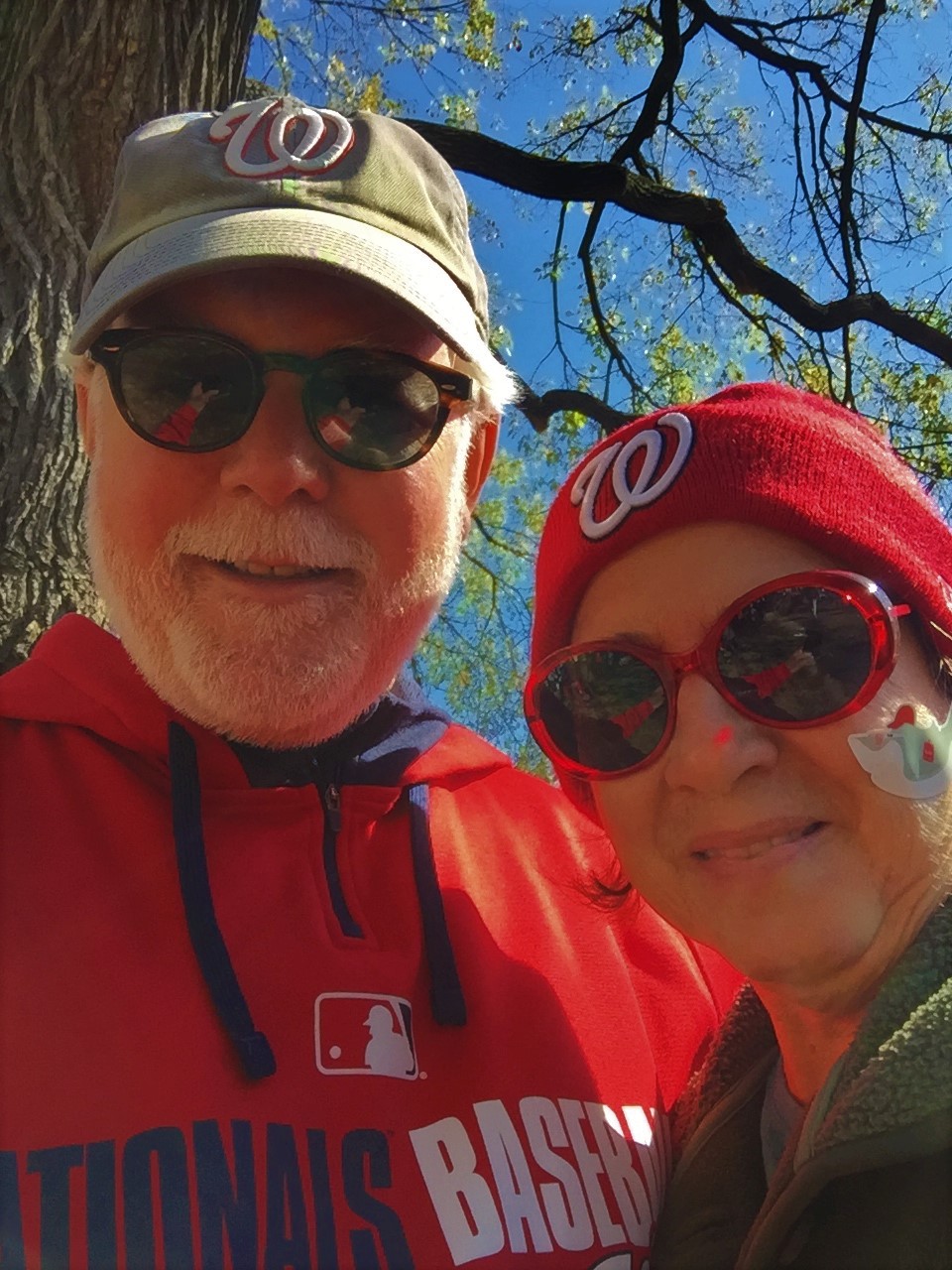
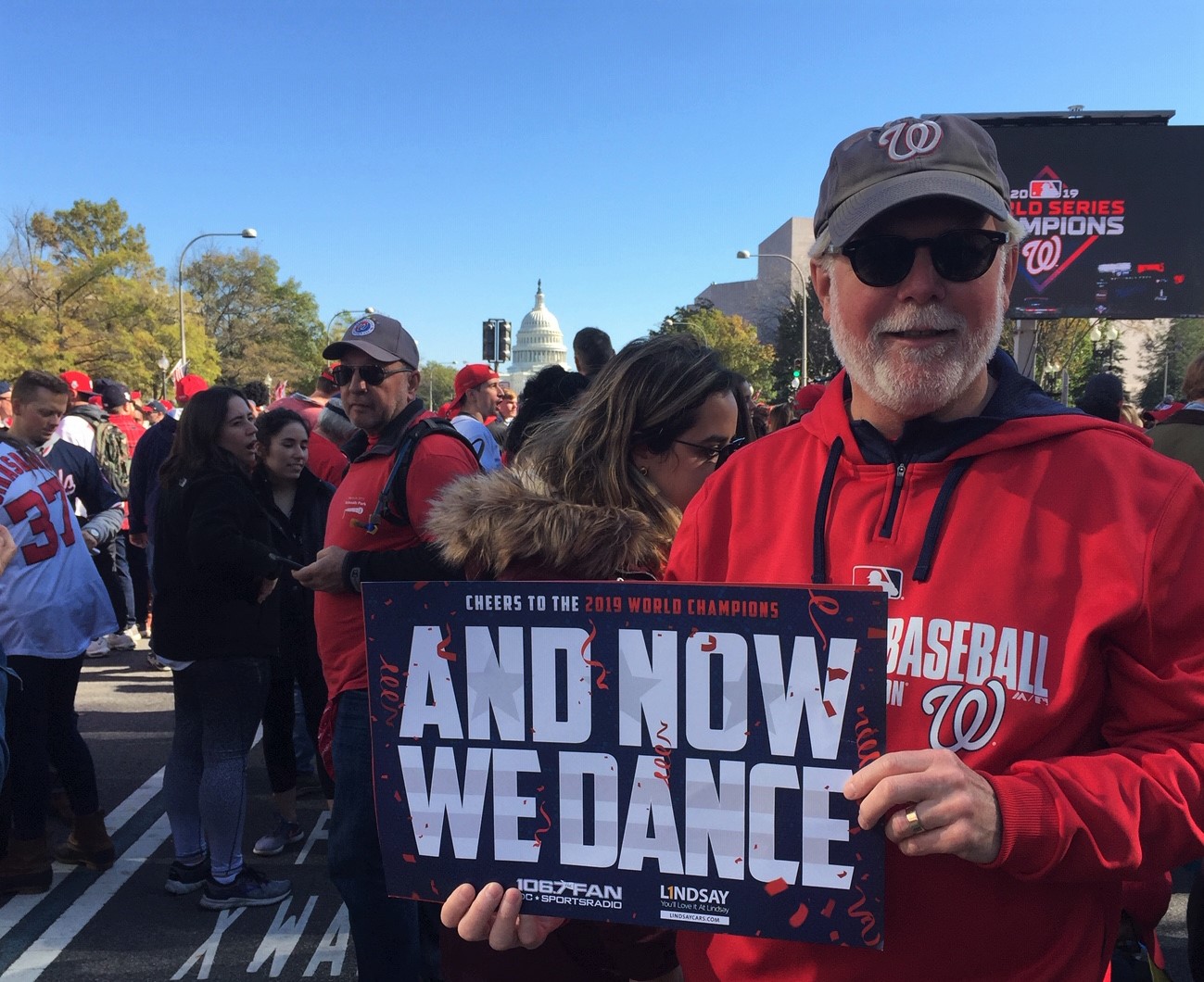
And then October arrived…and have you heard that the Washington National’s are World Series Champions!?! It was a great month of baseball, capped by my first trip to a World Series game. The Nats had a magical run that brought the entire city together, and we enjoyed every minute of it. I was pretty thankful that I didn’t have to get up and go to work the morning after each big Nationals game. What a way to spend a gap year!
View from my seat at Game 3 of the 2019 World Series. Note the pencil behind my ear…yes, of course I scored the biggest game of my life!Celebrating our World Series Champion Washington Nationals at DC’s parade: DJB with Candice and her Baby Shark decalAnd Now We DanceClaire and Blair at a Mondovi event this fall
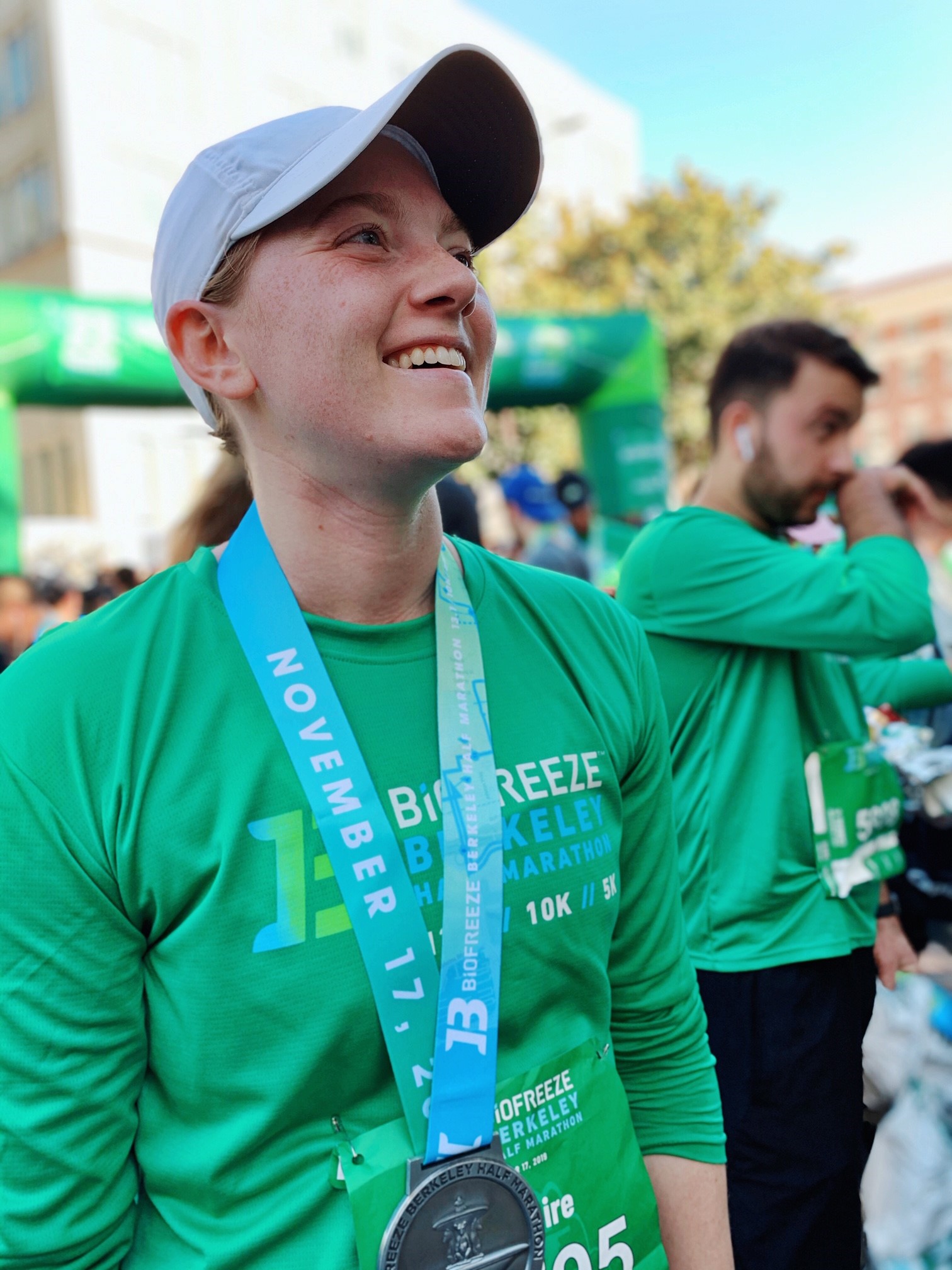
November brought us back to California, as we came to support Claire’s first run in a half marathon. She did a great job, and we were so glad we could be there and cheer her on. It was a beautiful weekend, with time spent not only at the race, but with Claire, Blair, and Blair’s parents, Tracy and Logan, over a wine tasting. Very California!
Claire runs through the Cal campus as part of the Berkeley Half MarathonA great sense of satisfactionCelebrating with BlairThe Browns (photo credit: John Thorne)
Our family continues to be blessed, and for that we are incredibly thankful. We remain grateful for each of you and the friendships we share. Happy Thanksgiving to all.
More to come… DJB
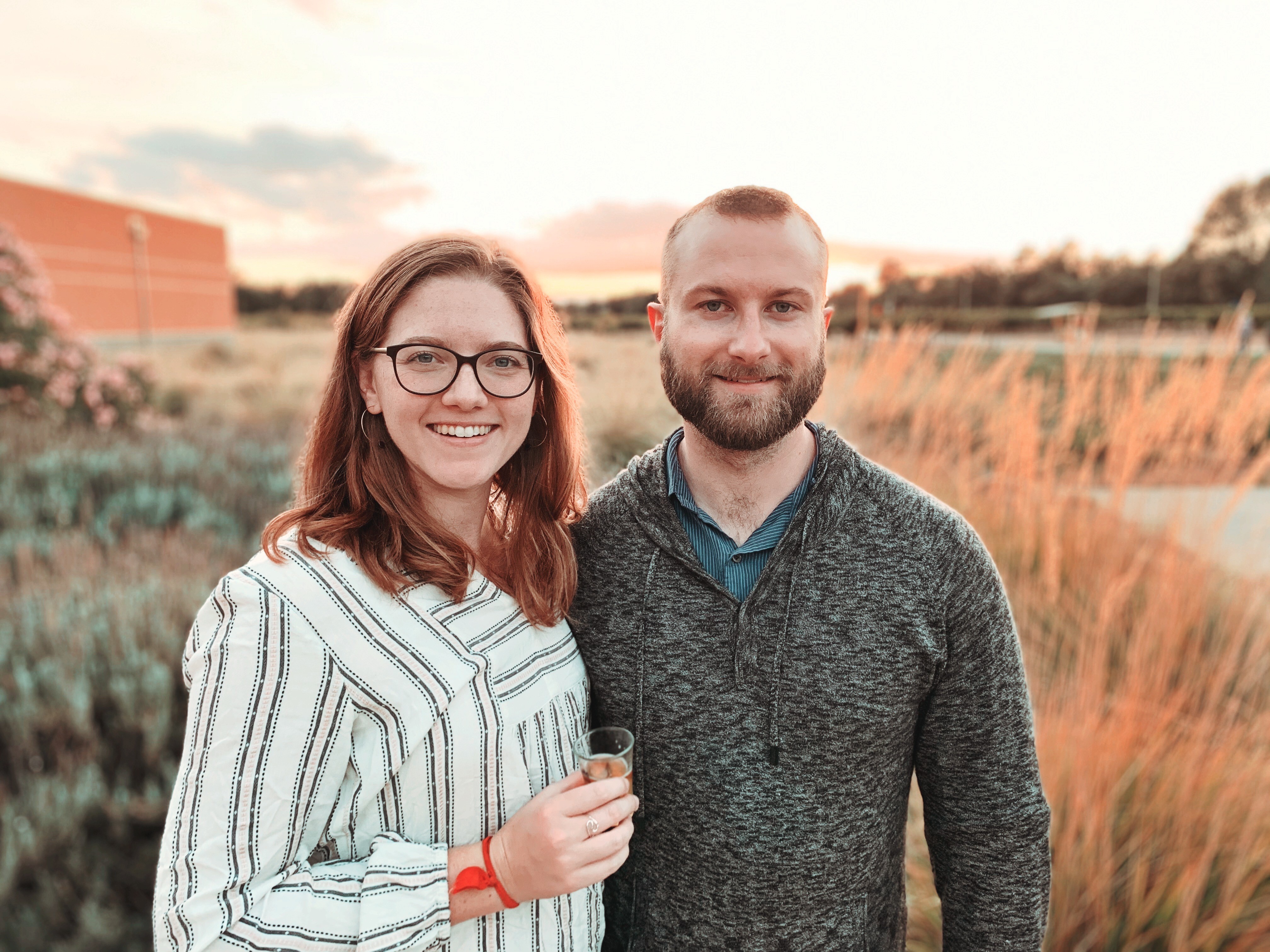
Top photo:The Browns – Together in December 2018 and looking forward to the year ahead! (photo credit: John Thorne)
We all saw the same thing. Yet, what we saw differs sharply in our mind’s eye, and in our retelling of the story.
Over the past two weeks, all Americans had access to the same impeachment inquiry hearings. We all saw the same witnesses testifying. We all heard the same Members of Congress asking the same questions (or making the same speeches).
And yet, taken individually, what we saw and heard during those hearings differed widely.
Why is there this contradiction if we all saw and heard the same testimony presented to the same Congressional committee? One answer to that conundrum may lie in the increasingly narrow ways in which we identify ourselves.
It just so happened that I was reading Francis Fukuyama’s smart and insightful 2018 book Identity: The Demand for Dignity and the Politics of Resentmentduring the hearings. A Japanese-American political scientist, Fukuyama’s thoughtful take on how our nation, and how much of the world, came to a place where we are identifying ourselves with a series of smaller and smaller tribes while also expanding our resentments into larger and larger grievances, is timely. I found it to be, ultimately, hopeful as well.
As he notes in his preface, this book would not have been written without Donald Trump’s election as president in 2016. But Fukuyama sees the challenges we are facing as pre-dating Trump’s election. American institutions such as the rule of law and democratic accountability “were decaying as the state was progressively captured by powerful interest groups and locked into a rigid structure that was unable to reform itself.”
According to the author, populism and nationalism—both forces behind Trump’s election—are not necessarily bad ideas. It is just that in Trump’s hands, as in the hands of authoritarians around the world, all the wrong instincts and prejudices come forward.
In examining what encourages people to make harmful turns toward populism and nationalism, Fukuyama takes the position that the sense of being dismissed, being invisible to others, drives human affairs much more than does economic interests. New York Times columnist Timothy Egan made a similar point recently, in a column on how the “insufferably woke” help Trump. Fukuyama writes that, “To be poor is to be invisible to your fellow human beings, and the indignity of invisibility is often worse than the lack of resources.” He also points to the invisibility that comes in the form of racism, which sees people of color as somehow less human. This diminution of inherent value happens on the individual level, but it can also be found in nations and their leaders. Russia, Hungary and China all have rulers who are driven by past national humiliations. Fukuyama notes that Osama bin Laden was driven by the treatment of Palestinians. And, in a sentiment that helps explain some of the last two weeks of hearings in the Congress, many on the right, while claiming to loathe identity politics, are driven by their own perception of being dismissed. In each of these instances, the dismissed are demanding—in their own, often destructive ways—to be recognized, to be heard, and to have power.
In setting out his thesis and describing the modern concept of identity, Fukuyama dives into the weeds in his first few chapters. But his work took off for me when he stated, “The broadening and universalization of dignity turns the private quest for self into a political project.” There are numerous and varied examples, from the right and the left and from all around the globe, to describe the disasters that have arisen from resentment of our fellow citizens and, globally, our fellow humans. Yet the final section of the book is hopeful. It turns when we realize that the “protection of ever narrower group identities ultimately threatens the possibility of communication and collective action.” It finds the remedy not in abandoning the idea of identity, but “to define larger and more integrative national identities that take account of the de facto diversity of existing liberal democratic societies.”
The larger national identities begin “with a shared belief in the legitimacy of the country’s political system,” and also extend into the realm of culture and value. Fukuyama argues that national identities shouldn’t be built around “narrow, ethnically based, intolerant, aggressive, and deeply illiberal forms,” but instead around “liberal and democratic political values, and the common experiences that provide connective tissue around which diverse communities can thrive.” Out of the crucible of the Civil War, the U.S. began to live up to its promise as a creedal nation. Fukuyama first asserts that it needs to return to reemphasizing that proposition, but he also maintains that it is necessary that we gain “an understanding of positive virtues, not bound to particular groups, that are needed to make democracy work.”
The final chapter lays out what is to be done to achieve this new sense of national identity. He has strategies pointed toward the left and the right, and toward how to assimilate immigrants to a country’s creedal identity. While the U.S. benefits from diversity, Fukuyama maintains that we cannot build our national identity “around diversity as such. Identity has to be related to substantive ideas such as constitutionalism, rule of law, and human equality.”
Last Thursday I saw this play out in real life as Dr. Fiona Hill, a naturalized U.S. citizen, took a stand for the primacy of the constitution and the rule of law. She did so throughout her testimony, as John Cassidy writes in TheNew Yorker, by “making a broader point about the need to defend the stated values of her adopted country, and the threats it faces—internal as well as external.”
Fukuyama ends his book with a similar look forward.
“Identity is the theme that underlies many political phenomena today, from new populist nationalist movements, to Islamist fighters, to the controversies taking place on university campuses. We will not escape from thinking about ourselves and our society in identity terms. But we need to remember that the identities dwelling deep inside us are neither fixed nor necessarily given to us by our accidents of birth. Identity can be used to divide, but it can and has also been used to integrate. That in the end will be the remedy for the populist politics of the present.”
Our leaders that help heal this time of division in the country must work to articulate, and then live by example, the core belief—stated so eloquently by Lewis Lapham—that what joins Americans one to another “is not a common nationality, language, race, or ancestry” but rather our “complicity in a shared work of the imagination.” We need to get back to imagining the type of country that matches our ideals.
One thing I miss in my gap year is the morning commute. That may sound strange, but I do miss the interactions with fellow travelers. I miss the friendly conversation around music, politics, and coffee during my stop at Filter coffeehouse. I miss the 30 minute routine I established twice each day to sit on the train and read.
And I miss the opportunity to hear street musicians—or buskers—on a daily basis.
These performers put themselves out there for all to see and hear amidst all types of weather. The 30-to-90 seconds (or occasionally more) I was typically within earshot invariably brightened my day.
As noted in Wikipedia, the term busking was first used “in the English language around the middle 1860s in Great Britain. The verb to busk, from the word busker, comes from the Spanish root word buscar, with the meaning ‘to seek.’ It was used for many street acts, and title of a famous Spanish book about one of them, El Buscón.”
Thankfully, I still see buskers some days in Silver Spring and on my less frequent forays into the heart of the District. In the past few weeks, I came upon three of my favorites, and wanted to share their music with you.
Emma G (photo credit: emmagmusic.com)
When she’s playing inside the entranceway to a metro station, Emma G‘s voice—which is powerful in its own right—takes on superhuman qualities. She rocks, she wails, she sings in so many styles and with so much style. Named by the Washingtonian magazine as one of the city’s top buskers, she regularly performs in concert halls and venues around the city and around the world, and she has videos of her original music on the web. But it is always great to catch her on the street to hear her sing from the heart and to have the chance to interact with her friendly and welcoming personality.
Our brass band buskers in Silver Spring
My second favorite busker is not a specific musician, but a type: the brass band and its subset, the all-trombone band. When these cats are playing, you can hear them for miles, and—unless you are an uptight DC law firm—they will bring a smile to your face. New Orleans’ Rebirth Brass Band is one of the most famous of these groups, but there are a number of DC-based bands who can bring the heat. We’re fortunate to have one regularly playing in downtown Silver Spring at lunch as well as by our local metro station in the afternoon.
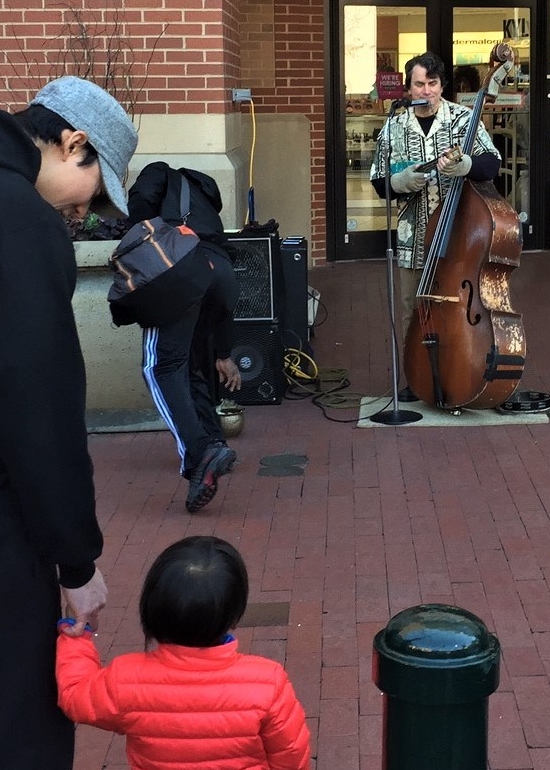
Moe, busking at the Silver Spring Farmers Market, to the delight of a young fan
Finally, the one-man band has always been a favorite, and we have a great one in Silver Spring in Moe Nelson. A marine biologist with NOAA for his day job, Moe often plays Saturdays at the Silver Spring Farmers Market and—along with our regular juggler—is a guaranteed kid magnet. With his string bass, harmonica, and ukulele, he shifts effortlessly between various styles, which is understandable given that’s he has played bass with nationally-known performers such as Bill Kirchen (King of Dieselbilly), Dan Hicks (swing songwriter), Maryann Price (jazz vocalist), Johnny Gimble (western swing fiddler), Jethro Burns (swing mandolinist), and Big Walter Horton (blues harmonica). In addition to his wonderful one-man-band work, he also plays with several D.C.-area groups, including the Hula Monsters, Grandsons, and King Teddy.
Be on the lookout for your neighborhood street musician. And always remember: tip the busker!