Latest Posts

Laughter is the best medicine

Over the past twelve days, I’ve aggregated material from a variety of sources into five different posts in order to consider the midterm elections and their impact on our democracy. I won’t apologize for the fact that I have called out the authoritarianism of one of our political parties, the Republicans, in these pieces. Their leaders have made their goals abundantly clear.

  • As I said in the post For those still living in the reality-based world (November 4th) we have a party — and party leaders — that, in order to maintain the pretense that they are relentlessly persecuted by progressives, will lie and then laugh about an attack on an 82-year-old grandfather that almost killed him. When one looks at all the accomplishments of the Democrats and the Biden administration in the face of this unrelenting disinformation campaign, it is truly remarkable.
  • Monday’s post dove deeper into the will of the electorate. In The people speak (November 14th), I surveyed a number of ballot initiatives that passed in support of progressive priorities, even in deep-red states.
  • That was followed on Tuesday by Consider the source (November 15th), a look at how a number of respected media critics and historians see the failure of our political press as being part of the problem in the threats to democracy. Veteran journalist James Fallows calls for a time out for our political press while they find their way.

This morning’s post is the fifth and final piece in this series. The midterms are (mostly) behind us, but the political cartoonists are still having a field day, especially in highlighting how the red wave (or red tsunami as Ted “Cancun” Cruz predicted) crashed and burned. And now, with Trump’s “big announcement”, there is even more to satirize.

I have featured a series of posts highlighting political cartoons during this midterm election season. It seems appropriate to give the cartoonists (and a few other wags) the last word in considering what to make of the voters’ choices.

If you want to see the earlier editions of ‘toons from this political season, visit herehereherehere, and here.

Other than to point out that the political cartoonists seemed to be much more on top of the mood of the electorate than the political press, which fumbled badly during this season, not a lot of editorial commentary is necessary.


The missing red wave

By ignoring court orders and breaking the law in at least four states, the Republicans probably won just enough seats to take the House. Had those four states followed judges’ orders, the Democrats’ evening would have been even more historic.*


Veteran’s Day


The art of (no) self-reflection


The “historic” announcement (or, as Andy Borowitz framed it, Trump to Try for Historic Third Impeachment).

And takes from a few non-cartoonists


She might pull through


Let’s end with a non-political post (although it does include an elephant) just to make you laugh

Stay all the way to the end. AND NOTE: One family member laughed so hard they almost hurt themselves, so be careful!


Laughter is the best medicine. Have a good day.

More to come…

DJB


*Many factors made the difference for what’s guaranteed to be a very narrow GOP majority, but among the most consequential for democracy is that Republicans almost certainly owe their majority to gerrymandering.

In a landmark Supreme Court ruling in 2019, every GOP-appointed justice voted over the opposition of every Democratic appointee to prohibit federal courts from curtailing partisan gerrymandering. Chief Justice John Roberts disingenuously argued that judicial intervention wasn’t needed partly because Congress itself could end gerrymandering, at least federally. But following the 2020 elections, every Republican in Congress voted to block a bill supported by every Democrat to ban congressional gerrymandering nationwide, which failed when Democratic Sens. Kyrsten Sinema and Joe Manchin refused to also curtail the GOP’s filibuster to pass the measure.

Consequently, Republicans were able to draw roughly four out of every 10 congressional districts after the 2020 census—three times as many as Democrats drew.

After Republicans blocked Democrats from ending gerrymandering nationally, Democrats largely refused to disarm unilaterally and gerrymandered where they could, just as the GOP did. Republicans, however, had ma​​​​​​ny more opportunities, in large part because state courts struck down a map passed by New York Democrats and replaced it with a nonpartisan map.

By contrast, the Supreme Court and judges in Florida allowed GOP gerrymanders to remain in place for 2022 in four states even though lower courts found that they discriminated against Black voters as litigation continues. Had Republicans been required to redraw these maps to remedy their discrimination, Black Democrats would have been all but assured of winning four more seats, possibly enough to cost the GOP its majority on their own. And in Ohio, Republicans were able to keep using their map for 2022 even though the state Supreme Court ruled it was an illegal partisan gerrymander, potentially costing Democrats another two seats.

Stephen Wolf for Daily Kos elections, November 16, 2022

The image of the cartoonist’s desk is from The Comics Journal, which posted an essay excerpted from the introduction to Jeff Danziger’s book, The Conscience of a Cartoonist: Instructions, Observations, Criticisms, Enthusiasms

Race, faith, and food justice

While our food production system has been broken for a long time, many of us have only touched the surface of the problem and seldom in ways that reach across racial and class lines to address systemic issues. My understanding of food justice efforts falls woefully short of where it should be. Thankfully, this lack of comprehension about an ethical response to food injustice and the impact of our broken production system on communities of color was brought home to me in a recent book with an unlikely name.

The Spirit of Soul Food: Race, faith, and food justice (2021), by The Rev. Christopher Carter, PhD was a revelation. Carter, an ordained Methodist minister with a doctorate in Religion from Claremont School of Theology, has thought deeply about race, food, and nonhuman animals. Out of that soul searching he has written a book that covers a lot of ground but never loses the point. Focused on Black Christians but encompassing all of us, Carter’s work speaks to the clear, Christian ethical basis for a new system of food justice.

In a personal preface, Carter explains why he did not want to write this book. “Our foodways are an expression of our identity, a way of maintaining connections to our ancestors and our ancestral homelands; our foodways are personal and communal, emotional and habitual.” Carter notes that in order to be taken seriously, he needed “to wrestle the culinary deity that soul food has become.” Central to his struggle is the question, “Given the harm that our food production system inflicts upon Black people, what should soul food look like today?”

Many of us who grew up in the 70s explosion of Black American awareness probably understand some aspect of the centrality of soul food to the African American community, but I suspect that most whites have an understanding of its importance that approximates the tiniest tip of the iceberg. Carter helps enlighten us as he considers how people of color can find new ways of eating that reflect their cultural identities while remaining true to the principles of compassion, love, justice, and solidarity with the marginalized. It is a question with larger ramifications.

“Black churches and Black Christians especially, but all Christians in general,” he argues, “should view food justice as an essential aspect of Christian social justice practice.” We do this, in part, by how we go about practicing being human.

Carter’s work owes a debt to the pioneering theologian Howard Thurman, who wrote in the landmark Jesus and the Disinherited that the religion of Jesus is often at odds with the ways Christianity is practiced today. Following Thurman, Carter suggests that the “religion of Jesus” is best understood as a spiritual path of radical compassion.

Whitney Plantation

Carter first takes the reader on an agricultural and culinary history from Africa to America that expands our knowledge of food, oppression, and justice. Visting Whitney Plantation in southern Louisiana, Carter explains how what became known as soul food has a long history that began in Africa and came over with the trans-Atlantic slave trade. He wants the reader to understand that what the dominant culture has taught about food, from its Eurocentric point of view, requires critical examination.

That leads to a chapter on our oppressive and broken food system. Carter reminds the reader that food and farmworker justice are relevant to Black foodways and food justice because Black Americans are in this country due to a system of enslavement for forced agricultural labor. Anyone who has thought about our food systems knows some of what Carter covers as he examines how the New Deal shifted away from concerns for the small farmer to support for larger farm businesses, especially those controlled by whites. That U.S. farm policy move was later cemented in the 1950s and 1970s with shifts of focus by the USDA toward agribusinesses. Today, communities of color continue to bear the burden of maintaining our food supply, but it isn’t a system designed to help them in significant ways.

Carter suggests that how we practice being human is the way toward a more equitable food system and society. He draws upon feminist and liberation theologians to note that “decolonizing Western Christianity’s assumptions of the human requires us to view ‘being human’ as praxis, a process of learning, unlearning, applying, and realizing our humanness in antioppressive ways.” That practice for Carter, a vegan, involves soulfull eating — where “African American Christians reflect upon their past and the collective culinary wisdom of our ancestors in order to forge a new future of soul food.” Being human also involves a practice of seeking justice for food workers as one way of addressing racialized economic exploitation. Finally, Carter calls for a practice of caring for the earth — cultivating a better relationship with the land. Each practice is focused towards African Americans but speaks to all Christians and in fact all humans who care about food justice.

Christopher Carter has written an important book that is part history lesson, part spiritual meditation, and part call to action. As we enter a season of culinary excess in many homes across America, it is also a timely reminder of the often-oppressive underpinnings of our broken food system.

More to come…

DJB

This Weekly Reader features links to recent articles, blog posts, or books that grabbed my interest or tickled my fancy. I hope you find something that makes you laugh, think, or cry. 

Photo by Anya Bell on Unsplash

Consider the source

Friday’s Washington Post showed up on our doorstep (well, technically, by the garage door) with this front-page headline:

GOP hopes stymied by infighting, Trump, flawed candidates.

No one asked me, but even while dealing with a lack of energy because of a recent bout with Covid, I could quickly come up with more compelling reasons that GOP hopes were stymied.* Such as:

  • The Republicans stripped more than 50 percent of Americans of their hard-earned rights, promised to do more if elected, and Americans believed them.
  • The Republicans supported a coup on January 6th in an attempt to overthrow a free-and-fair election, promised more-of-the-same if elected, and Americans believed them.

Americans aren’t buying what Republicans are selling.

  • The Republicans campaigned on the evils of inflation even though they had no plan to deal with it other than lowering taxes on the rich (which would cause inflation to increase). Many of the candidates and party leaders said their real platform was to simply hold onto power.
  • The Republicans ran a fear campaign around crime when major crime is down overall and it is highest in states run by Republicans. Many saw through the charade that the party’s messaging on crime is a proxy for “black.”
  • The Republicans have turned their party over to a lifelong grifter and con man who kills everything he touches and tried to convince us he was “The Chosen One” of God. Americans are tired of having the former president constantly in their thoughts 24/7.

Even without the assistance of the political press, Americans rejected extremism.

The Post story is an example of how Americans are not getting the facts that help set the context for, and the consequences of, their political decisions. Instead, they get reports on tactics and horserace updates. Commentator Robert Hubbell urged his readers not to “fall into the media trap of reducing our most sacred political tradition into a ‘horse race’ where the only question is, ‘Who is the frontrunner?’ The real question is, ‘Who is most qualified to lead our nation?’” 

Grandmother Brown used to say, “Don’t believe what you hear and only half of what you read.”  Were she alive today with the internet, Grandmother might have to adjust the ratio of how much to trust what you read. Another favorite saying of hers, “Consider the source,” went hand-in-glove with the first.


Considering the source, I can confidently predict that the political press will fail us again today, and tomorrow, and so forth through 2024.

The political press failed the country miserably in reporting on the midterms. Donald Trump is likely to announce today that he’s running again for president, setting up a nomination battle with Florida governor Ron DeSantis. The political press will be all over it like white on rice.

What they won’t be covering is what matters.

  • When polled independently, Americans overwhelmingly approve of the agenda that President Joe Biden and the Democrats are pursuing, from sensible gun laws to support for climate change legislation, to expanded rights for women and minorities, to the overall economic plans of the Democrats (supported by two-thirds of Americans). As I wrote yesterday, when given a chance to vote on these and other issues, Americans support the agenda put forward by Democrats.
  • The Republican economic model is broken and doesn’t work for the American people. Regardless of the economic measure used — economic growth, employment, job creation, income and productivity — the U.S. economy performs better under Democratic presidents than under Republican administrations. This has been true since the Great Depression. This is true even though many Democratic administrations come into office having to clean up Republican messes, as was the case with Joe Biden.
  • The outcome of the election had huge implications for foreign policy. As yesterday’s column by conservative columnist Max Boot of the Washington Post notes, “Republicans lost the election — and so did [Russian president Vladimir] Putin, MBS [Saudi crown prince Mohammed bin Salman], and [former/incoming Israeli prime minister Benjamin] Netanyahu.” Autocrats liked Trump. Biden advances a foreign policy based on democratic values. As Heather Cox Richardson noted yesterday, that foreign policy is having major and positive implications around the world.

These are three of many important facts that help set the context on the ground for voters.

Yet how often do you hear of these facts in political journalism? The disinformation that dominates much of the rightwing media and political talking points often overwhelms the truth. Disinformation is designed to obstruct and restrict constructive conversations between citizens with different points of view, conversations which should be the basis for democracy. The challenge in sorting through all we hear in our dangerously divided times to winnow out the bad and misleading information is more difficult — and more important — than ever.

As Robert Hubbell notes,

The story is not that the GOP has two “frontrunners” for the 2024 nomination. The real story is that the leading GOP contenders include a twice-impeached, coup-plotting ex-president who stole defense secrets and a governor whose reckless policies during the pandemic killed tens of thousands of Floridians. Neither man is fit to hold any public office, much less the presidency. 

In this atmosphere, the job of winnowing out the bad and misleading information is a primary job for our national political press. Yet as the Revolving Door Project noted, many of them fell into the traps of

(P)resumed savviness, too much faith in conventional wisdom — desperation, as John Maynard Keynes would tell us, for some certainty in a terrifyingly uncertain world. Let it be a welcome lesson to us about the dangers of being too certain about prognostications.”


More and more commentators are calling out the failure of the political journalists to move beyond horserace reporting into more substantive discussions of the policies that affect people’s lives. Veteran journalist James Fallows called for a time-out for the political press, writing in his Breaking the News newsletter:

There is so much to explore, learn about, and share in our world. Speculating about what’s going to happen in the next election is about the least useful insight to add.

I thought of this when I saw the first stories about “why Biden faces trouble in the midterms” stories 18 months ago. I will think about it tomorrow when I read the next “How this shapes the 2024 field” speculation-fest.

No one knows what is going to happen. Least of all — it seems — the political “experts.” So let’s waste less time pretending to know, and invest more in looking into, sharing, and learning from what is actually going on.

Former Washington Post media critic Margaret Sullivan has just written a new memoir which looks at how the press should be covering openly anti-democratic politicians. Hint: it isn’t the way they are doing it now.

Dana Milbank of the Washington Post wrote a scathing column last week about how the media was the biggest loser in Tuesday’s election. He points to column-after-column trumpeting a big GOP win. And then he notes that after the election, some columnists might deign to write a modest mini-correction to their wildly off-track predictions.

As you might expect, Dan Froomkin at Press Watch: An intervention for political journalism is relentless in his criticism of the coverage and the overall direction of today’s corporate media.

By treating a major Republican victory in 2022 as a foregone conclusion, the media didn’t just get it wrong, it created a permission structure allowing normal people to seriously consider voting for an extremist, nativist, anti-governance party. It’s kind of a miracle we survived.

…this was not some sort of fluke. This was not just a function of the political media’s predilection to predict results rather than write about voters and policy.

This laid bare the rot of the current political-media industry.


History tells us what happens when a free press turns a blind eye to the people it is supposed to serve, focusing instead on corporate or political masters. In his book On Tyranny, historian of the Holocaust Timothy Snyder writes about the need to “believe in truth” which is the responsibility of journalists in a free society. He adds the chilling reminder that “post-truth is pre-fascism.”

Historian Heather Cox Richardson has written about the four-decade effort to undermine democracy in America, often with either an unengaged, or worse, a complicit press. Free market capitalism became conflated with democracy, and the press bought into that corporate Republican framing. This has stacked our political system in favor of Republicans so that the vast majority of Americans cannot get the actions from their government they so desperately want.


If today’s journalists do not state the obvious truth about the Republican Party as it has devolved under Trump — and tell readers and viewers that the problem won’t be resolved when Trump finally exists the stage — then they have moved into post-truth territory.

We should keep pushing for our press to step back from choosing the winner in the horse race, look at the impact of the policies of those running, and say the obvious.

More to come…

DJB


*Yes, Covid finally caught up with me. I’ve said that I survived the wet market in Phnom Penh only to catch the virus in a crab shack in Annapolis! Thankfully, I’ve had both vaccines and all three boosters, so my symptoms — while uncomfortable — are tolerable. I’m on the mend.


Image of newspaper and computer by usa from Pixabay.

The people speak

You probably recall some of the history of direct democracy from your middle-school history class. New England villages in the 17th century passed their laws in annual town hall meetings but, as populations grew across the country, that type of direct democracy gave way to representative democracy. In time, control of the levers of power fell to fewer and fewer wealthy white men. American politics became more democratic in the 19th and 20th centuries, however, and initiatives and referendums became increasingly common tools used by citizens in exercising their political voice.

Ballot initiatives continue to thrive today, and they can tell us a great deal about what’s on the minds of our fellow citizens.


How does today’s political system work against representative democracy?

Political commentators and historians alike express concern over the impacts to democracy by the gaming of the system to select our representatives. With fewer competitive seats due to gerrymandering and voter suppression, politicians tend to become more extreme rather than represent a broader range of the public.

Awash in money from special interests, too many politicians focus on the needs of their wealthy donors. For instance, NPR reported in late October that outside groups had spent almost a billion dollars on the campaigns of Republican Senate candidates, hoping to take control of that body and therefore, the judiciary, “where the right wing has entrenched itself as it has become increasingly extreme and unpopular.” 

Thankfully, the Democrats will continue control of the Senate for the remainder of Joe Biden’s first term, allowing him to continue to shape the judiciary in ways that will help the American people. But as the views of corporations and the wealthy continue to be prioritized by politicians, members of the public are increasingly turning to ballot initiatives to make their voices heard.


Initiatives can help identify the general support for a political agenda.

Ballot initiatives are interesting but imperfect tools. Initiatives are generally placed on a ballot when enough voters sign a petition of support. When well-crafted and fully explained, they give voters a chance to take a stand on specific issues that may have proven difficult for legislators to address in deeply partisan or divided states.

In certain instances — such as with the requirement voted in by the people of Michigan that a nonpartisan commission handle the congressional districting process — these initiatives are often strongly opposed by politicians who fear losing power.* They can also be problematic. One of the difficulties in our Citizens United world is that many are supported or challenged by powerful special interests whose involvement and financial interests are often hidden. This is especially true in a state like California, where ballot initiatives have grown like wildfire since the success in 1978 of Proposition 13.

Nonetheless, ballot initiatives give us a snapshot of how much the voters actually support the agendas of the two political parties. Many commentators have said that the policies of President Joe Biden and the Democrats are very popular nationally, although that is not reflected in the current climate of political reporting.


What did we learn in 2022?

In looking through election data from the midterms, some interesting examples surfaced where we had a chance to test the hypothesis of the popularity of the Democrats agenda in states that range from deep blue progressive to deep red conservative.**

Here’s a short list of issues and places where the people had a direct say on a policy issue. Pay special attention to where these ballot initiatives took place, for that’s instructive.

  • Americans support a woman’s right to choose and make decisions about her own body and health care.
    • Since Roe v. Wade was overturned in June, Americans have had six chances to vote directly on laws that would affect their access to abortion — once last summer in Kansas (deep red) and five in this year’s midterm elections. Every single time, voters have pushed for abortion rights. Abortion measures were on the midterm ballots in five states: California (blue), Kentucky (red), Michigan (swing state turned blue), Montana (deep red), and Vermont (deep blue). Preliminary results show that, in all five, voters sought to either maintain or strengthen abortion access in their state.
  • Americans don’t want politicians and far-right zealots making decisions about — and criminalizing — their gender identity.
    • By popular vote, Nevada (swing state that trends blue) added protections for sexual orientation and gender identity into its constitution.
  • Americans want to expand Medicaid to provide more affordable health care to the poorest among us.
    • Voters in South Dakota (deep red) approved an expansion of Medicaid under the Affordable Care Act, providing tens of thousands of impoverished people with access to health care, dismissing state GOP attempts to sink the effort.
  • Americans want to give the least among us a helping hand and ensure that the rich pay their fair share in taxes to support the common good.
    • Voters in Colorado (blue) approved a ballot measure to provide free meals for all public school students. The measure will help schools pay for the meals by raising $100 million a year by increasing taxes on the state’s richest residents.
    • In addition to the Colorado initiative, voters in Massachusetts (blue) approved an amendment to the state constitution to increase taxes on those earning over $1 million a year.
  • Americans support public education.
    • After a political fight that stretches back more than a decade, voters in New Mexico (blue) approved a ballot measure that would make the Southwestern state the first in the country to guarantee a constitutional right to early childhood education.
  • Americans want businesses and corporations to pay a fair and living wage.
    • Voters in Nebraska (deep red) approved a ballot measure raising the state’s minimum wage to $15 an hour by 2026.
  • Americans want easy and fair elections.
    • In Michigan (swing state that has trended blue), sixty percent of the voters approved Proposal 2, which establishes nine days of early in-person voting, creates new mandates for townships to set up ballot drop boxes, and supplies state-funded postage to vote by mail. 
    • Nevada voters (swing state that trends blue) approved a measure that will have the state join Alaska and Maine in ramping down the partisanship through ranked-choice voting in statewide and congressional races.
    • When given a choice, at least six swing states that decided 2020 won’t have election-denying governors or secretaries of state. Though not a ballot initiative, election deniers were defeated at the polls in Arizona, Georgia, Michigan, Nevada, Pennsylvania, and Wisconsin (all swing states by definition).

I’m no professional analyst, but when I look at this sample of how voters in states all across the political spectrum spoke when they had a specific choice and a clear opportunity, I see an America that increasingly

  • is tired of extremism,
  • wants fair elections that are run in a nonpartisan manner,
  • believes that all of us should be able to make decisions about our body and our future,
  • wants to treat those who are less fortunate fairly and give them a hand-up,
  • understands that education is a key to growing an active and engaged citizenry,
  • is ready to deal on some level with our long history of racial discord, and
  • wants everyone — especially the rich — to pay their fair share. As Justice Oliver Wendell Holmes, Jr. phrased it, “Taxes are the price we pay for civilization.”

That list, plus sensible gun control and climate action, summarizes the Democratic platform, an agenda that is popular across the political spectrum when addressed outside the rightwing disinformation network.

Much to think about for the next two years.

More to come…

DJB


*For decades the Republicans who controlled the Michigan legislature had drawn heavily gerrymandered districts, the most recent so extreme that in 2019, federal judges called them a “political gerrymander of historical proportions.” Voters amended the state constitution to require an independent, nonpartisan panel of 13 citizens to redraw the maps. While political competitiveness was not central to the criteria they used, it was the result. 

Heather Cox Richardson, Letters from an American, November 9, 2022

**In looking at this data, it is helpful to note that defying the political narrative, the Democratic coalition remains broad, much more reflective of the nation as a whole than their counterparts across the aisle. Black voters (about 85 percent), a majority of Asian (about 63 percent), and a majority of Latino voters (60 percent) backed Democrats in 2022. The party also won sizable numbers of white voters (40 percent) and even white voters without college degrees (32 percent). Liberal voters (90 percent), of course, preferred Democrats, but so did moderates (55 percent)


Image by OpenClipart-Vectors from Pixabay

Mountain soul

Each year at the Country Music Association awards show, Chris Stapleton finds a way to remind the CMA of all that its missing with the paint-by-numbers approach of the latest radio-tested fad.

This year, he did it again in a wonderful duet with the country music legend Patty Loveless on the mournful You’ll Never Leave Harlan Alive.

Loveless came out of retirement to sing the song with Stapleton at a concert earlier this year for flood relief in their native state of Kentucky. This version last Sunday quieted the CMA party audience as a real master of the music was recognized and honored by one of the industry’s biggest current stars.

Here’s a take on the performance from The Bluegrass Situation.

Patty Loveless reminded us why she’s still a hero to traditional country and bluegrass fans during a rare performance with Chris Stapleton at the CMA Awards on Wednesday night. Loveless included the poignant composition on her landmark 2001 album, Mountain Soul, an acclaimed record that still holds up. Look closer and you’ll see that Darrell Scott, who wrote the song, is playing Dobro on this performance, along with Deanie Richardson on fiddle and Morgane Stapleton on harmony.

Stapleton deservedly won the CMA Award for Male Vocalist during the show, but his greatest accomplishment of the night may be been placing a six-minute Appalachian ballad in the middle of a mainstream country show, not to mention inviting Loveless back into the spotlight. She’s no stranger to the CMA Awards, of course, having won back-to-back Female Vocalist trophies in 1995 and 1996, in addition to Album of the Year honors for 1994’s When Fallen Angels Fly. She later collected another one for 1997’s “You Don’t Seem to Miss Me,” which she recorded with one of her own heroes, George Jones. It’s a touching moment to now see Stapleton paying homage to an artist who has made her own mark on country music throughout the decades. And it goes without saying that any time that Patty Loveless wants to make another album, we’re here for it.

And Rolling Stone had a nice feature as well, noting that…

The performance began quietly, with only hushed instrumentation before Loveless’ powerful voice took hold. As the song swelled volume, so did the urgency in her voice, giving the narrative about the economic struggles and human costs of coal mining communities a heavy, mournful feeling. Stapleton howled and growled here and there, but mostly ceded the spotlight to a true country legend.

Stapleton once fronted the bluegrass band The Steeldrivers, so this was not unfamiliar territory for him. However, these CMA special performances that include Stapleton often feature unexpected pairings, beginning in 2015 with the first, a still-talked-about feature of Tennessee Whiskey/Drink You Away with Justin Timberlake.

In 2018, Stapleton and Maren Morris join the incomparable Mavis Staples in singing Friendship (written for Pops Staples) and I’ll Take You There. Stapleton is playing one of Pops’ guitars for this performance. I’ve said it before and I’ll say it again: Mavis Staples is an American icon and national treasure.

In 2021, Stapleton and Jennifer Hudson took us all to the black Baptist church. Good Gawd!

I generally don’t listen to commercial country music and I don’t watch the CMA awards. Yet I’m always pleased to discover, in the days following the show, what Chris Stapleton and the producers have pulled off to surprise us. While these are performances that remind us of how much commercial country music is missing the boat, thankfully this cross-genre collaboration happens all the time in small clubs and in live performances when you have talented musicians willing to push the boundaries. I hope Chris Stapleton keeps on pushing them.

Enjoy!

More to come…

DJB

Image of Chris Stapleton, Patty Loveless, and Morgane Stapleton (credit: ABC)

History says we should not give up on democracy

Election Day 2022 was a good day for democracy. The worst of those who want to deny Americans the ability to choose our own leaders lost. There was little or no violence and no credible calls of fraud. From my perspective, the American people voted pretty emphatically that they were not going to tolerate a party that tried to fix all the elections so that only Republicans can win.

President Joe Biden spoke to the nation yesterday and noted that the Democrats had the best midterm elections for governors since 1986 and lost fewer House seats than they have in any Democratic president’s first midterm in 40 years. Once again, I suspect, that remarkable performance against the historical standard will go underreported. Pundits and political reporters had a really bad day on Tuesday, but I have lost what faith I had in their ability at introspection. They still get paid when they are wrong, and they will continue to write out of their biases, facts be damned.*

There is still a great deal of work to be done. Florida, for example, is a mess, and Marco Rubio’s 17%-point victory over the very competent Representative Val Demings stands as exhibit number one. Rubio is not a serious person. I suspect there is a combination of a flood of new MAGA residents, voting restrictions and intimidations, DeSantis denying the Justice Department access to the polling stations, a flawed state Democratic party, and more at play.

There is also work to be done around illegal gerrymandering. After years of the state legislature drawing maps that favored Republicans, the people of Michigan rose up to amend the state constitution, requiring an independent, nonpartisan panel of 13 citizens to redraw the maps. Guess what? Political competitiveness broke out all over! Michigan Republicans challenged the new map, but yesterday the Supreme Court dismissed their appeal. However, not every state is as fortunate. Four states controlled by Republicans — who control 10% of the seats in the House of Representatives — have simply refused to follow the orders of their state supreme courts to change blatantly partisan maps. In Alabama, Georgia, Louisiana, and Ohio, heavily gerrymandered maps stayed in place despite state court decisions that they were unconstitutional. Work to change the maps, and demand consequences when lawmakers openly flout the law, is needed.

History tells us there is always work to be done.

As the elections neared, I read of two periods in our past in which democracy hung in the balance. Neither one is as well-known as the Joe McCarthy fiasco of the 1950s. In both cases, people chose to fight. That fight took years and sometimes decades, but in the end, America emerged a stronger democracy.

The first was the momentous election of 1884, recalled by historian Heather Cox Richardson.

In that year the Republican Party had become so extremist that many of its members, disparagingly called “Mugwumps” by party loyalists, jumped ship to vote for a reformer, Democrat Grover Cleveland. It was a chaotic and consequential election, for it showed those Republicans who stayed with the party that they must moderate their stances or become a permanent minority.

Younger Republicans like Henry Cabot Lodge of Massachusetts, Robert La Follette of Wisconsin, and Theodore Roosevelt of New York took notice and turned their party back toward its roots, protecting the rights of individuals rather than of corporations. By the end of the century, they had captured the imagination of the nation. Once in office, they ushered in the Progressive Era.

But on Election Day, 1884, all anyone could know was that there were currents and crosscurrents. What would come from any of them would not be clear for another decade or more. In that tense election the main point was that there was voting at all, for the right to choose our lawmakers was what made America, America.

The second period includes the years between the nation’s entry into World War I and the onset of the Roaring Twenties, as captured by Mother Jones co-founder Adam Hochschild.

This was “the Trumpiest time in our history.” It was defined by extraordinary repression, persecution, racist violence, and surveillance.

In Lincoln, Nebraska, a mafia boss named Tom Dennison orchestrated attacks on white women by white men in blackface to unseat a progressive mayor. Black World War I veterans were beaten and lynched. So were German Americans and those suspected of being Communists. Newspapers and magazines were censored and shut down by the postmaster general. Zealous military officials built a surveillance network to spy on resisters in the Philippines, then deployed them against dissenting Americans.

If you were on the receiving end of that vengeful repression, it would have been easy to conclude that the fight for democracy and human rights was lost forever.

But within a few short years, women would gain the right to vote. Within decades segregation would become illegal. That device in your pocket now permits you to spread information without worrying about the postmaster general.

Every generation has its challenges, because the oligarchs and their politicians don’t want democracy. They want to choose their own voters rather than the other way around. They have deep pockets and they never stop in their stealth bid to reverse-engineer all of America, at both the state and the national levels, back to the political economy and oligarchic governance of midcentury Virginia, minus the segregation.

But as women and young people showed on Tuesday, once people have rights, they don’t like for some oligarch, judge, or politician to try and rip them away.

The fight continues.

More to come…

DJB

*Markos Moulitsas, the founder of The Daily Kos, summed up the media approach pretty well.

When my daughter was a toddler, she’d drop a glass of water or juice and say “Uh oh, the glass fell!” The passive voice implying she had no responsibility in the accident. That’s what the @nytimes is doing here, pretending that they weren’t a major driver of The Narrative.

Image of the polling station from Pixabay.

The books I read in October 2022

Each month my goal is to read five books on a variety of topics and from different genres. I read in order to learn and to start conversations with readers and others I encounter along the way. Here are the books I read in October 2022. If you click on the title, you’ll go to the longer post on More to Come. Enjoy!

The Architecture of Suspense: The built world in the films of Alfred Hitchcock (2022) by Christine Madrid French is the rare book from an academic publisher (the University of Virginia Press) that is academically sound in its field (architectural history), insightful in its conclusions, instructive in its suggestions as to how her findings can be applied in the real world (through historic preservation), and — perhaps best-of-all — a page-turner that a reader simply cannot put down. Chris looks at how Alfred Hitchcock made buildings characters in his films, including the mid-century modernist house as the new villain’s lair, the urban honeycombs of apartments and skyscrapers, and, of course, the famous dilapidated mansion and roadside motel. A spooky good read!


Lemon (2021) is the first novel translated into English by the Korean writer Kwon Yeo-sun. The story revolves around the murder years earlier of a beautiful 18-year-old woman and how the case turns cold when the two prime suspects cannot be convicted. Yet the murdered woman’s sister begins her own journey to find the truth, a journey that intersects with the lives and fears of two other women also haunted by the incident. The whodunnit style is merely a device to have the reader consider issues of fear, guilt, grief, and trauma. It is also, as more than one review has noted, a “shrewd diagnosis of a culture that disempowers women — commodifying and consuming them, one after another, until their appeal wears out.” Yeo-sun’s writing is taut, pulling the reader along page-after-page to follow the unfolding, complicated, and contradictory paths each of the women take.


The Baseball 100 (2021) by Joe Posnanski — the self-described “writer of sports and other nonsense” — is characterized by the publisher as “a magnum opus…an audacious, singular, and masterly book that took a lifetime to write.” This is Joe’s intimate and very personal look at baseball history through the lives of the 100 greatest players of all time. The rankings are important, and Posnanski explains how his rankings came to take the form they have in this book. There is a fairly intricate formula he uses to set the rankings, and then some of his personal quirks intrude that set the players in certain places (e.g., #56 for Joe DiMaggio for his historic 56-game hitting streak; #42 for Jackie Robinson for his uniform number, the most famous in baseball). But mostly he wants these rankings to “give this book shape and spark a few feelings.” And they do. I happen to strongly agree with his number 1 ranking, but I know others who would disagree. The Baseball 100 is pure baseball bliss.


Survivor: The triumph of an ordinary man in the Khmer Rouge Genocide (2012), is by Chum Mey, one of seven survivors of the S-21 Khmer Rouge prison. As Mey tells in his captivating book, he was fortunate. His life was spared because, as a mechanic, he was able to fix a broken typewriter for his captors, who then kept him alive in order to work on other machinery at the site. The book, told in the first person, is a raw and moving story of a poor Cambodian peasant whose parents died when he was young. His dream to be a car mechanic led him to learn the trade, and then to go to Phnom Penh after the Khmer Rouge takeover because that was where the buses and cars were located. Like many in Cambodia, he was arrested under false pretenses and sent to Tuol Sleng, the name for the S-21 prison and torture center. The story of his resilience and impact is inspiring.


1368: China and the Making of the Modern World (2022) by Ali Humayun Akhtar makes a compelling case that China’s “first modern global age” began in 1368 with the establishment of the Ming dynasty and lasted until the abdication of the last Qing emperor in 1912. In Akhtar’s capable hands, we learn of the series of diplomatic missions that went out from the Ming rulers to various parts of the world. Though it may come as a surprise to many, Portuguese, Spanish, Dutch and English traders maintained an unusually peaceful relationship with China until the 19th century. “Finished textiles flowed from Safavid Persia and South Asia to Japan; silver bullion from Japan to China; and tea, ceramics and silk from China to Europe.” The Opium Wars, where Britain and later France brutally defended their right to import opium into China, signaled the ending of China’s first great global era. Both China and Japan were humbled by Western military superiority of the 19th century, and reformers in both countries pushed for a western-style industrialized empire. That they succeeded has generated a new set of problems along with enduring questions for the west, questions where history can be a guide to China’s current global aspirations.

More to come…

DJB

NOTE: To see which books I read in January, FebruaryMarch, April, MayJune, July, August, and September, click on the links. You can also read my Ten tips for reading five books a month online.


This Weekly Reader features links to recent articles, blog posts, or books that grabbed my interest or tickled my fancy. I hope you find something that makes you laugh, think, or cry. 

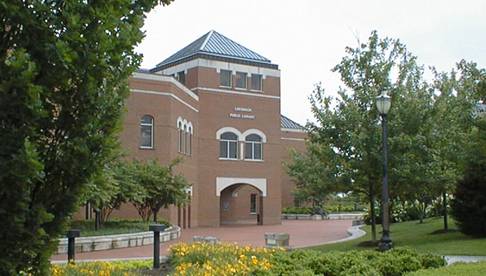
Photo of Thomas Hughes Memorial Library in Rugby, Tennessee, by DJB

Observations from the Mekong River

It was a thing of beauty.

Standing on the bank of the Siem Reap River near the Terrace of the Leper King in Angkor Thom, Cambodia, the young man cast his fishing net much as his ancestors had done over the centuries. My camera froze that moment, but it was the timelessness I wanted to capture.

The practice of heritage conservation works within a world touched by the passage of hours, days, years, decades, and centuries. Landmarks, you see, are not created by architects and builders alone. What really makes a site a landmark is the place it holds in a community’s memory. Memories are created over time. Memories are poets, not historians. Memories can be deeply spiritual.

The spirit of place comes alive not just in the ways a site is conserved and presented and not just through memories, but in the way it is used and valued by people, the way a community animates the space today. How a place is animated by its community gives it meaning. Part of what gives that temple at Angkor meaning is the casting of that fishing net. The placing of flowers in veneration. The thousands of little actions by the people who live near what are still sacred places — taken time and time again — over the centuries.

There were many occasions during the past two weeks in Vietnam and Cambodia to confront the fact that the cyclical understanding of time, found in civilizations that are much older than ours in the West, is ever present in this most fascinating of places. Each day the sun rises and sets, the seasons follow one another, the heavenly bodies revolve around us, people grow old and die, but their children reconstitute the process. Cyclical time is not a scarce commodity. There seems to always be an unlimited supply of it just around the next bend.

And scholars who work in heritage conservation in Southeast Asia suggest that the cyclical nature of time contributes to the authenticity of these places. Authenticity comes not only from the physical structure, but from the history, traditions, memories, myths, associations, and continuity of meaning connected with people and use over time; what’s known as the intangible heritage of a site.

The past two weeks were an extraordinary journey into the intangible heritage of Southeast Asia.


Exploring the traditions and cultures of the world

Angkor Wat, Siem Reap, Cambodia

One of the joys of this time in my life is to serve as a study tour leader/educational expert for National Trust Tours. * For over 50 years, National Trust Tours has been offering life enriching programs that explore the traditions and cultures of the world, placing a special emphasis on the roles of art and architecture. It was because of National Trust Tours that I was in Vietnam and Cambodia along with Candice and some 21 other travelers, cruising the Mekong River, from October 17th – 30th.

This was such an extraordinary experience that I have already placed six posts on More to Come examining different aspects of what we encountered and highlighting specific regions of these two countries. Throughout this wrap-up of the trip, I’ll reference those posts and provide links. This overview is filled with pictures and is organized using my traditional Observations from… format, which entails pulling together a series of random observations into one post.

Feel free to jump around to find the headlines and sections that interest you the most.


First, the logistics of getting from HCMC to Seim Reap

Our group gathered in Ho Chi Minh City (which is often abbreviated HCMC and was formerly known as Saigon). For two days we explored sites within the city as well as nearby landmarks, such as the Cu Chi Tunnels. In the post Body and Soul, one can see more images from those days as well as read excerpts from my first talk on the differences between conservation practice in East and West.

Old Post Office interior in Ho Chi Minh City

On Thursday the 20th, we embarked on the Mekong Princess for a seven-day cruise up the Mekong River.

Mekong Princess

Photos from the cruise can be found in the posts Scenes along the Mekong and Exploring the traditions of Angkor Ban.

Building a traditional sampan

The final three days were spent in the carefully restored historic Grand Hotel Angkor in the beautiful city of Siem Reap.

Grand Hotel Angkor, our home as we visited the temples of Angkor Wat
The famous Three Elephants Bar in the Grand Hotel Angkor

This was our home while the group explored the wonders of the temples of Angkor. Two posts that cover this portion of the trip are Sunrise over Greater Angkor and The appealing mysteries of Ta Prohm.

Sunrise over the Greater Angkor landscape

The Mekong is a busy — and threatened — river

The Mekong at morning outside Phnom Penh in Cambodia

Life never seems to stop along the Mekong River. It is beautiful. It is polluted. It is the lifeblood of the traditional communities that still line its banks. It is being choked at one end by the massive dams being built by the Chinese as part of their Belt and Road Initiative and it is being killed at the other when those dams result in hydrological changes that push brackish water back up the river. It supports a wide range of boats day and night, from traditional fishing vessels to weekend party boats around the major cities. It hosts floating markets.

It is endlessly mesmerizing.

Ferries are everywhere along the Mekong, although we saw a number of new bridges — usually built by other countries as reparations for war — along the route as well. This ferry seemed to specialize in motorbikes.
A traditional wooden boat for transporting fish. The eyes on the front of the boat are also a traditional touch.
Vietnam has built this dam and catchment area to stop brackish water from traveling further upstream and killing the fish and wildlife along the river.
One of literally hundreds of barges and boats we saw carrying goods along the river.

Speaking of transportation

This Vietnamese woman riding a bicycle on one of the island roads along the river was something of an anomaly.

The traditional bicycle which so many of us associate with Southeast Asia is being replaced by the motorcycle. Traffic in Ho Chi Minh City and Phnom Penh reminded me of the controlled chaos that is Delhi. Seim Reap — as befits its tourist-oriented focus near the Angkor temples — was more subdued.

A very typical street scene, full of motorcycles, in Ho Chi Minh City
It was difficult to find a place in HCMC that was not served by motorcycles
Motorcycles were everywhere, even in the most remote of villages

Candice and I (and our fellow travelers) took just about every mode of transportation imaginable over these two weeks.

Our Tuk-Tuk in Phnom Penh (credit to our Tuk Tuk driver)
Rider’s view from the Tuk-Tuk
Traveling around the moat at Angkor Thom via gondola (credit Sylvia Griffin)
A typical traditional boat to move off the ship and travel up the small waterways around the islands.
The launch point for our ship-to-island ferry.
Traveling by sampan in Ben Tre
And this historic mode of transportation was the way to our rooms in Seim Reip

These markets are not your typical Whole Foods

Part of the wet market in Phnom Penh’s Central Market

I included a number of pictures of the famous floating markets in an earlier post. But we saw markets everywhere, selling anything and everything.

Our group visits the floating Cai Rang market in Vietnam
Saigon’s Central Market (above) seemed crowded and chaotic…until we saw the Central Market in Phnom Penh. After that experience, this seemed rather orderly.
The Phnom Penh market had endless rows of clothing, including many brand-name outfits! (Including clothes where two well-known brand names were prominently featured, just to let you know it was quality!)
The central hall of the market in Phnom Penh. If you need a watch, you can get it here!
Flowers for sale beside the Buddhist temple in Siem Reap
Flower detail in Seim Reap

The museums were not always up to western standards, but they more than delivered in terms of educational enlightenment and emotional impact

Skulls from those who lost their lives at the Killing Fields in Phnom Penh

As I wrote in Understanding and honoring difficult history, our tour did not shy away from visiting the places and hearing the stories of horror and inhumanity. You are invited to click on the link to see more photos of places like the S-21 torture center and the Killing Fields. Throughout our visit, we were challenged again and again to look at the region’s history from fresh perspectives.

The photo exhibition at the War Remnants Museum in Ho Chi Minh City was especially powerful
Stark reminders of inhumanity at the War Remnants Museum
Cambodia’s national museum
Part of the collection at the national museum
Interior courtyard at the national museum
Detailing on the national museum
Khmer classical dance theatre in Seim Rep

The many islands held endless fascination

River scene on a Vietnamese island

We visited a number of small villages and islands throughout the trip. There was something new to see and experience around every bend.

Traditional house at Angkor Ban
Some traditional scenes — such as the pens for these roosters, kept separated to help train them for cock fighting — challenged our sensibilities
We saw numerous instances of single craftspeople working to create traditional and handmade pieces of clothing or items for use in the home
Family-owned coconut candy factory in Vietnam

Given our personal interests, we encountered local food and heard traditional music everywhere we turned

Our Cambodian meal one evening in Siem Reap

Candice and I both enjoy exploring the food of the countries we visit, and we had some excellent meals in both Vietnam and Cambodia. There was also a great deal of street food that looked exotic, but that would not have settled in well on our western digestive systems. We chose to simply capture those parts of the culinary experience via pictures.

Meat skewers — sometimes with feet and head attached — were very popular with the locals
The food in this small Vietnamese market was typical of what we saw on the street
This view of a family taking food from the floating market to use and/or resell is one of my favorite images of food from the entire trip
Flattening rice using traditional tools (but with an electric generator to supply the energy for the pounding mechanism)
Countless markets such as this one lined the roads in Vietnam and Cambodia

One of the street foods that our Cambodian guide swore tasted great…but did not entice us given our western sensibilities…was the 21-day-old egg. Yes, you can guess what emerges when one is cracked open.

Street vender selling the 21-day-old egg
Tek, our Cambodian guide, eats one of the eggs as we all declined his offer to join in
Fruit was everywhere we looked
Many of our travelers joined Candice in enjoying a Three Elephants drink at the Grand Hotel Angkor
Gathering for the trip’s final dinner together before we head home

Traditional music, also a deep interest of mine, could be found everywhere, but especially in the temples and on the streets. We heard a great deal of Khmer music once we reached Cambodia.

Traditional musicians playing in a Phnom Penh temple
Traditional dancing was always accompanied by a small group of musicians playing Khmer music on traditional instruments

Greater Angkor lives up to its reputation as a bucket list heritage site

The temples in the Greater Angkor area near Siem Reap, a UNESCO World Heritage Area and the largest religious monuments in the world, are not to be missed. We spent two days there and could have spent two weeks.

Angkor Wat
Hallway and carvings at Angkor Wat
Lotus flower in the moat around Angkor Thom
Our approach to Bayon Temple
Bayon Temple…note the faces in the towers

The carvings at Bayon Temple are simply extraordinary.

Marker for the Terrace of the Leper King
Terrace of the Leper King

Both Vietnam and Cambodia are one-party countries ruled by authoritarian leaders, and the wealth inequality is staggering

Presidential Palace in Phnom Penh

Everywhere we turned on this trip, we could see disparities of wealth. The amount of outside investment, especially from the Chinese, Japanese, Koreans, and some Middle Eastern oil countries, was huge and unrelenting.

Old and new architecture juxtaposed in Phnom Penh
New construction was everywhere in Phnom Penh

Unfortunately, along with the shiny new buildings, the sustenance living of so many of those we saw on the streets and in the villages was also extensive and unforgettable. Western style investment and development has not been the tide that lifts all boats…a fact that we see in our country as well.

This Vietnamese woman cooking with rudimentary utensils in an open-air kitchen was an all-too-typical scene on the islands along the Mekong
Farm animals live side-by-side with families in Angkor Ban
Children in Angkor Ban were enthusiastic learners, even though they had to use sub-standard reading materials in their English classes
Children in Angkor Ban wish us well at the end of the school day
Residents at a Phnom Penh orphanage that is supported by the owners of the Mekong Princess entertained us with traditional music and dancing. The impacts of war, poverty, and policies to encourage Western-style development can be hard on the country’s youngest citizens.

All of the cities had their special charms and attractions

The entrance to the Old Post Office in Ho Chi Minh City, bringing to mind the French colonial past
The presidential palace in Ho Chi Minh City as seen from our bus. Unfortunately, the building was off limits for parts of our stay, due to a state visit by the President of Singapore
One of the networks of parks in Ho Chi Minh City, as seen as we drove past on our bus
The independence monument in Phnom Penh
Cambodia has a history associated with drumming. This drum is part of one of the main temples in Phnom Penh
View in the heart of Phnom Penh

Siem Reap had the best bridges.

And who even knew that a fish pedicure even existed!?

With thanks to the young lady who gave me permission to photograph her feet swimming with the fishes

I’ll end where I began…

Our group of travelers in front of Angkor Wat

National Trust Tours can be a life enriching experience. Come and join us.

More to come…

DJB


*As a staff member serving as a representative for the National Trust for Historic Preservation, I took my first NTT trip in 1998 to Northern Ireland. Over my more than two-decade career with the Trust, I joined tours stretching from the Black Sea to the Gardens of the Caribbean, from the coastal civilizations of Europe and the beaches at Normandy to Japan.

Presenting one of my lectures aboard the Mekong Princess (credit Candice Brown)

After my retirement from full-time service at the Trust in 2019, the NTT staff asked me to join them in this role of study tour leader, sharing my expertise and experience in historic preservation and international heritage conservation through lectures and other presentations on several trips each year. While the pandemic scuttled the first couple of tours, we were finally able to begin this new journey in 2021 with a tour to explore the architecture, art, and craft of Asheville. That was followed earlier this year with our tour of Glasgow, the Scottish Highlands and islands, and the fiords of Norway.

In 2023, I am scheduled to serve as one of the study tour leaders/educational experts for two tours: Alaska’s Glaciers and the Inside Passage (July 13 – 20) and Antiquities of the Red Sea & Aegean Seas including Suez Canal (October 31 – November 13). I’d love to see you on one of these journeys.


All images by DJB unless otherwise noted in the captions

For those still living in the reality-based world

UPDATE: I realized that I missed the lede when I posted this yesterday. Here’s what I should have highlighted much earlier in the post:

(T)he speed and ferocity of the disinformation surrounding the attack (on House Speaker Nancy Pelosi’s 82-year-old husband Paul) was remarkable. Within hours, there were wild conspiracies being shared on fringe sites. After a few more hours, those conspiracies had gone mainstream via GOP lawmakers like Ted Cruz and figures like Donald Trump Jr., and ultimately, Donald Trump himself. It just shows how willing Republicans and all the people in that orbit are to dismiss reality and accept something that is obviously and easily debunked, but helps push their own narrative, demonizing their opposition. 

What was so shocking was the conspiracies were almost immediately matched with jokes. Donald Trump Jr. and others were posting pictures of a Halloween costume with a hammer and a pair of underwear. At a campaign event this week, Kari Lake made a joke about the attack and it got the biggest laugh of the night. The callousness of that is quite terrifying. It’s startling to see mainstream politicians being so callous and inhumane when an 82-year-old man is attacked in his home with a hammer and almost dies.

VICE News’ David Gilbert

As Jonathan Chait noted,

This obfuscation (around what clearly happened to Paul Pelosi) serves two purposes. First, it avoids a disruption in the right’s meta-narrative of victimization. The story told by conservative media is one in which innocent conservatives are relentlessly persecuted by an all-powerful progressive cabal. This persecution justifies the right’s increasingly illiberal methods, which they present as a necessary defensive response to stave off political annihilation. If they were to acknowledge even one episode of a violent maniac attacking their enemy, it would mean contemplating a reality in which evil and blame are more complex.

Second, deflecting this reality allows them to avoid having to confront a faction within their own coalition. If they conceded DePape was on the political right, they would concede that ideas like Trump’s stolen-election lie or QAnon contained at least the potential to inspire violence and criminality. Their denial grew out of an impulse to close ranks. They might be able to afford cutting DePape loose, but they could not afford to alienate those who shared his most important beliefs.

That’s the big lede going into the elections. We have a party — and party leaders — that, in order to maintain the pretense that they are relentlessly persecuted by progressives, will lie and then laugh about an attack on an 82-year-old grandfather that almost killed him.

That’s where we are today. So put that up against all that the Democrats are doing to help all Americans…not just members of their own party.


We are just a few short days away from the 2022 mid-term elections and apparently the Republican candidate for the U.S. Senate in Georgia, Herschel Walker, suggested that voters in that state should compare his resume with that of former president Barack Obama. Stephen Colbert was glad to oblige.

For those who still reside in the reality-based world, it is time to stop obsessing about the polls (which are all over the place and include more than a healthy number of partisan polls flooding the zone in order to throw off the media narrative). Instead, do what Herschel Walker suggested: look at the resumes and the facts. And then work to get out the vote.

An overflow of facts

John Stoehr at the Editorial Board has written an excellent summary of everything the Democrats have done over the past two years. I include the high points but suggest you read the full article for yourself. As he says, no smoke and mirrors are required, just an overflow of facts.

Here’s the reality as Stoehr lays it out:

  • Jobs: Achieved the greatest single year of job creation in American history, more than 6 million in 2021, a decrease of 16 million receiving unemployment benefits, and the biggest drop in the unemployment rate in history.
  • Manufacturing jobs: The biggest yearly increase in US manufacturing jobs in nearly 30 years. Democrats’ new incentives for key industries have already led to announcements of thousands of new manufacturing jobs.
  • Healthcare: Democrats’ new tax credits drove a record 14.5 million Americans signing up through the ACA, including 5.8 million new people getting coverage. They forced drug companies to negotiate prices for the elderly and capped costs at $2,000 per year. This will save elders thousands annually.
  • Poverty: The Dems’ child tax credit created the largest-ever one-year decrease in childhood poverty in American history, about 3 million kids. Households saying they didn’t have enough to eat dropped by a third.
  • Safety: Passed the biggest anti-violence measure in decades, including the Gun Safety bill and strengthening the Violence Against Women Act.
  • Covid: Biden executed the most successful American vaccination program in history – from under 1 percent of adults fully vaccinated to over 75 percent, with over 500 million shots administered – and from less than half of schools open to almost all of them.
  • Roads, bridges, energy: the bipartisan infrastructure bill will finally fix America’s infrastructure. In 2022 alone, repairs are starting on 65,000 miles of roads and 1,500 bridges, with thousands of jobs created.
  • Protecting America and our allies: Biden kept the NATO alliance together in support of Ukraine following the Russian invasion, brought in two new countries and took out the world’s number one terrorist, Ayman al-Zawahri.
  • Climate: The Inflation Reduction Act includes the largest investment in history to address global warming. Biden rejoined the Paris Climate Accords and the EPA established strong new fuel economy standards.
  • Diversity, equality: Democrats made lynching a federal hate crime, made Juneteenth a federal holiday and Biden appointed more Black women to the US Court of Appeals in one year than any president in history.
  • Budget: The Inflation Reduction Act reduces the deficit by $300 billion.

But of course you won’t hear this in the fear-mongering ads from the party which has been taken over by a far right-wing element. It has become a party that seems perfectly fine looking the other way when an 82-year-old grandfather has his skull fractured with a hammer wielded by an intruder who has spent months soaking in the lies of the right-wing media.

Today’s Republicans like to play make-believe, so they scream about…

  • Inflation (without noting that Democrats did not cause this and Republican plans, such as they are, will make it worse.)
  • They want us to be scared of rising crime (when, in fact, major crimes, including murders and shootings, are down across America, and crime rates are higher in Republican-run states).
  • And they play the race-based immigration card (although immigration is up because of the rising number of jobs we have, many of which only immigrants will take).

Focus on the crucial story of the moment

The critical political story of our time is that one of our political parties backed an unsuccessful coup d’etat in 2020 and is working hard at all levels now to wrest power in 2022 and 2024 from legitimately elected officials. I don’t expect the national media to back one political party over another. I do expect national media to be pro-democracy. Unfortunately, as media critic Margaret Sullivan has noted in her recent book, much of mainstream journalism is not up to the task.

Which, unfortunately, is as it has often been.

I have no idea how next Tuesday’s elections will turn out, and I doubt many people making confident predictions do either. I do know that whatever happens, our country will not collapse.

Building, and keeping, a democracy is slow, hard work.

There are steps forward and backward in this process. Powerful forces in the U.S. and around the world don’t want us to be a democracy for all. Sometimes those forces win, and sometimes those looking out for the broader public good are successful. No matter what happens on Tuesday, we have to continue to push for a world that is better for all.

We succeed as a country only when we all thrive. There are wise observers who know all too well where we are headed without a major change in direction, one that recognizes that our left-behind citizens deserve better in part because we will all do better — we will all build hope together — if we recognize that life is a team sport.

More to come…

DJB

Image of virtual reality by Gerd Altmann from Pixabay

Observations from … October 2022

NOTE: For more than three years, I’ve been sending an email to several hundred friends and readers to summarize the posts on More to Come. These usually go out on the last day of the month and as I craft these messages I work to pull these posts together into a story. It struck me after sending out the October update that I could easily post this to the blog as well, in case someone who isn’t on the email list comes by for a visit and wants to check out what’s going on. So I’m trying it out to see how it goes. If you receive the email, you can skip this. Nothing’s changed. If absolutely no one opens it after a month or two, I’ll probably drop the experiment. But perhaps someone will find it of use.

Between trips to Scotland, California, Vietnam, and Cambodia, I spent a grand total of five days at home during October. * Taking advantage of the privilege of travel, I posted observations from around the world on More to Come…  As I’ve been challenged by travel to, in Pico Iyer’s words, “think about moods or intimations or places inside yourself that you never ordinarily see,” I’ve come to better understand the wisdom in the Richard Rohr quote that “life is about discovering the right questions more than having the right answers.” Seeing different perspectives helps us discover those questions.

One of the amazing houses in the Gold Coast neighborhood of Alameda, California. Note the cool water tank in the rear of the house.

In praise of the local walking tour ― the favorite October post in terms of reader views ― is typical of many from this month. While focusing on a specific place, it uses what I’m seeing as a jumping off point to make observations around a variety of subjects that I hope you’ll find interesting. The architectural walking tour in question is for one of the historic neighborhoods of Alameda, a veritable gold mine of architectural styles. The homes are gems that point to the creativity of the architects in California in the late 19th and early 20th centuries. The tour itself is also first rate, which points to the care for community of those residents who have become stewards of the past for the benefit of future generations.

This month the blog showcases the breadth of my tag line: Observations, recollections, and occasional bursts of radical common sense about places that matter, books worth reading, roots music to nourish the soul, the times we live in, and whatever else tickles my fancy. You’ll find some of each this month. In a break from my regular monthly update, I’m grouping these posts by location, providing a bit of a travelogue feel. I’ll catch up on all the “whatever else tickles my fancy” posts at the end. This update is longer than most, but I hope you’ll find several things to tickle your fancy as well.


So let’s go to the place that may not have invented orange marmalade, but certainly made it commercially available

I traveled to Scotland the first week of the month in order to attend INTO Dundee 2022, the conference of the International National Trusts Organisation (INTO). I’ve been attending INTO conferences for two decades, first as a representative of the National Trust for Historic Preservation and an INTO board member, and more recently as a consultant for INTO. It was my second trip to Scotland this year, but the first to Dundee, which is northeast of Edinburgh. Dundee was a revelation on so many fronts, including the inventiveness of the local residents that came up with the formulas for making commercially-available orange marmalade and the adhesive postage stamp, among other things.

  • Working for a better future is a recap of the week, with notes about the city, some highlights of the conference, thoughts on seeing dear friends again for the first time since before the pandemic, and a tasty morsal of Scottish music from the Battlefield Band. The panel I moderated ― to highlight the work of colleagues from China, Spain, Scotland, and Jamacia ― gives a sense of the diversity of participants and perspectives.
  • While on this trip, I also made stops in Edinburgh, where I attended my first INTO conference in 2003. The city is a marvel that was teeming with residents and visitors alike, a fact I discovered as I walked the neighborhoods around my hotel. On one of these walks I saw a good example of how Scotland has chosen to recognize the difficult history behind one of its early leaders. This caught my eye as I am often asked in my work to comment on the issue of disputed history and how we recognize and honor those who are often marginalized. History and heritage is a post I wrote after visiting St. Andrew’s Square and seeing the new plaque being prepared for the massive Melville monument. This is a plaque to 1) explain Henry Dundas, 1st Viscount, Lord Melville’s history; 2) acknowledge his significant role in delaying the abolition of the trans-Atlantic slave trade; and 3) rededicate the square to the memory of more than 500,000 Africans who were enslaved as a direct result of Henry Dundas’s actions. Photos from around Edinburgh are included here as well, as I came to realize I was running out of time to prepare another post before moving along to my next trip.
  • Finally, the world did not stop during my time in Scotland, so I included a short piece about Ukraine, Russia, and the threat of nuclear war entitled Observations from abroad: It’s not all about us. Timothy Snyder is one of the top historians of authoritarianism and the Holocaust, and while I was in Dundee he posted a piece on his Thinking About newsletter on how the Russo-Ukrainian war might plausibly end. He also made the strong point that those of us in the US need to get past the notion that the war, and the threat of nuclear weapons, is all about us. As I worked my way around the world this month, I came to see time and time again that we would benefit in the U.S. by getting over the notion that it is all about us. Travel and getting out of the country can do that for you.

Go west, young man!

Coming home just long enough so I could wash clothes and repack, we then headed out to Alameda, California, for a visit with our daughter Claire. A bit of family bragging is in order: successfully completing her work and exams, Claire was recently certified as a Licensed Clinical Social Worker (LCSW) in California. We are so proud of her and the important work she does, and we celebrated Claire’s licensure together over dinner and drinks. We also took the time to see some of the wonders of the Bay Area before heading to Southeast Asia. As you saw above, our Saturday afternoon was spent on a walking tour of Claire’s neighborhood. But there were a few other things we took in as well.

  • Alameda has a great independent bookstore downtown that was within walking distance of our Vrbo rental, so we visited on Friday morning. Naturally, I bought a couple of books. One was a short crime novel Lemon, the first translated into English by the Korean writer Kwon Yeo-sun, and I had finished it before dinner that evening. Living with life’s wrongs is my short review of a book where the whodunnit style is merely a device to have the reader consider issues of fear, guilt, and grief. It is, in the end, a work to consider how we cope and eventually go on after trauma. It is a good read.
  • Blue Gold at Filoli is the post I wrote after spending Sunday afternoon with Claire and Candice at the National Trust Historic Site Filoli in Woodside, California. Filoli’s new interpretive exhibit looking at the power and privilege of water helps set the context for the site, and I applaud my friend and colleague Kara Newport’s leadership in working with staff, board, and stakeholders in putting this exhibit together.
  • A collaboration for the ages is a quick Saturday Soundtrack post I wrote while in Alameda featuring the musical collaboration of two beloved area musicians: David Grisman and the late Jerry Garcia. A little peace, love, and bluegrass from the Bay Area.
  • Finally, Alameda REALLY likes to decorate for Halloween. So while we were there, I filled up my camera with pictures and posted some of the best of the decorations last Saturday as Celebrating ghosts, goblins, and other things that go bump in the night. Check out the skeleton doing the cannonball dive into the swimming pool, the Haunted Broadway extravaganza, and the clever 2022 Baseball Playoffs graveyard. That last one was clearly the work of a displaced Phillies fan.

Cruising the Mekong River

Fishing in Cambodia

When I return home and allow my brain and body to catch up with the time zone there will be more to come from the terrific National Trust Tours trip to Vietnam and Cambodia. But here’s what I was able to post in October:

  • Body and soul was the title of my first lecture on the tour. In addition to some excerpts from that talk, I include images from the first few days in Vietnam on our Mekong River tour. Scenes along the Mekong is a post primarily of pictures from rural Vietnam and the first day in Phnom Penh.
  • Understanding and honoring difficult history was written after our group had visited the Cu Chi tunnels in Vietnam as well as the infamous S-21 torture center and the nearby Killing Fields in Phnom Penh. In my second lecture, I spoke about how history is always under construction and why seeking to confront difficult history is important in building just and ethical memories. This post delves into those questions and includes a review of a book by a survivor of S-21, who we were privileged to meet at the prison site. These were very emotional days which I expect to take a lifetime to fully process.
  • Exploring the traditions of Angkor Ban is a look at a small, traditional Khmer village that was one of the few not destroyed by the Khmer Rouge in the 1970s. Our visit was full of surprises, including a tour of a traditional Mekong River home set high on stilts and time with a group of children at the village’s English language school.
  • Sunrise over Greater Angkor shows the photographs I took on a beautiful Cambodian morning as the sun rose over the landscape surrounding the famous Angkor Wat temple. It was awe inspiring. In a similar vein, The appealing mysteries of Ta Prohm captures the atmospheric look of Ta Prohm, among the most famous of Angkor temples due to the intertwined large trees and temple ruins. Very compelling.
  • Many of you know that I’ve been reading Vietnamese-American writers in preparation for the trip. One of the most celebrated is Ocean Vuong, and I reviewed two of his most recent works in Listening to new voicesThe always popular The books I read in September 2022 looked at the five books I read and reviewed that month, which included the Vuong books, two others by Vietnamese-American writers, and one on debunking myths around history.

Everything else that tickled my fancy

I did keep up my reading habits this month, and two of the books I read that were not about Southeast Asia were, in a word, terrific.

  • Knowing that I was going to miss most of the baseball playoffs due to travel, I took along Joe Posnanski‘s magnum opus, The Baseball 100. It is “an audacious, singular, and masterly book that took a lifetime to write” and my fawning review (**) can be found in An intimate tour of baseball history.
  • My former National Trust colleague, Christine Madrid French, has written a new book on the built world in the films of Alfred Hitchcock that is spooky good! Just in time for Halloween helps the reader understand why the lairs of villains switched from haunted castles to sleek modernist masterpieces under Hitchcock’s eye. The reader also learns why our minds immediately go to a famous bathtub murder scene in the movies when a picture of an old Victorian mansion with a 1930s motel in the front yard is shown. Chris explains how this setting came to carry such a potent and disturbing message for a mid-century movie-going audience. Hitchcock understood the moment and set up the scene so that moviegoers just knew that Janet Leigh was making the wrong decision when she pulled into that motel parking lot. Hey, it’s a horror movie. Making poor decisions is what you do. (***)

As noted above, the world did not stop spinning just because I was out of town. So two posts were focused on the times we live in.

  • In case you needed a reminder, I provided this helpful Monday morning rant entitled Capitalism is not democracy. Wall Street is not the economy. Care for the common good is not socialism. If you can remember those three things while watching the horrible commercials during this election season, you’ll be better informed than 45% of the American public. This post begins with a story told by the late John Bogle, founder of the Vanguard Group, to the MBA graduates at Georgetown one year. “At a party given by a billionaire on Shelter Island,” Bogle noted, “the late Kurt Vonnegut informs his pal, the author Joseph Heller, that their host, a hedge fund manager, had made more money in a single day than Heller had earned from his wildly popular novel Catch 22 over its whole history. Heller responds, ‘Yes, but I have something he will never have . . . Enough.’” You can probably guess where this is going.

Finally, I did not forget the music!

  • Most of my Saturday Soundtracks this month are included in various parts of the notes above. But the good folks at the Tenement Museum (a National Trust Historic Site) in New York City hosted a live-streamed wake for Irish musician Mick Moloney that I was delighted to include. You’ll find it at Mind Yourself: A musical wake for Mick Moloney.

In these especially difficult and unsettling times, remember to treat others with kindness, undertake some mindful walking every day, and recognize the incredible privilege that most of us have and think about how to put that to use for good. Women, people of color, LGBTQ individuals, immigrants, and others can feel especially vulnerable…because they are. Finally, work hard for justice and democracy by voting this month as if your life depends on it…because it does.

More to come…

DJB


*What’s the best song to use for this type of travelogue? Why Johnny Cash singing I’ve Been Everywhere, of course!

**At least I’m self-aware.

***In case you want to watch that Geico commercial.


You can follow More to Come by going to the small “Follow” box that is on the right hand column of the site (on the desktop version) or at the bottom right on your mobile device. It is great to hear from readers, and if you like them feel free to share these posts on your own social media platforms.