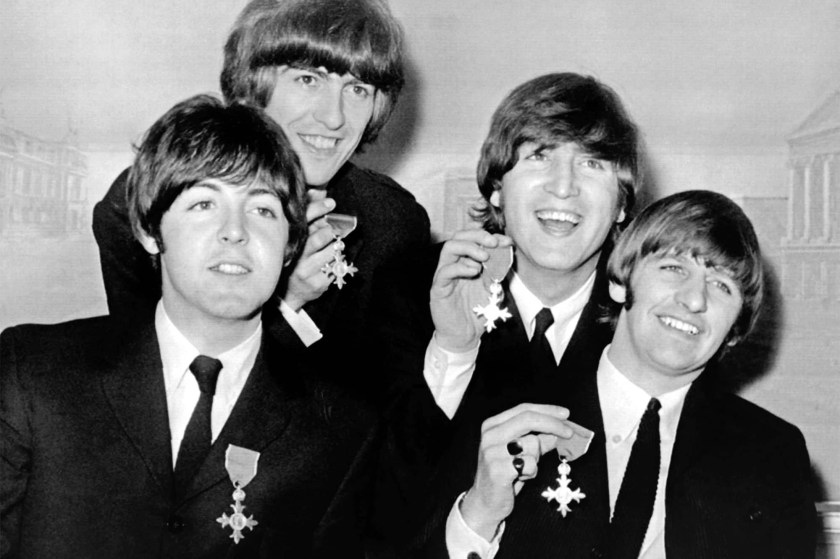
The Beatles‘ accomplishments didn’t go unnoticed by the royal family after the better part of two years as Britain’s greatest musical ambassadors. On Oct. 26, 1965, all four members went to Buckingham Palace to receive their Member of the Most Excellent Order of the British Empire medals from Queen Elizabeth II.
Queen Elizabeth wasn’t at the performance itself, but the Queen Mother was and her reaction to John’s comment at the 15 second mark is priceless.
Twist and Shout had nothing to do with the royal family, but the little snippet that Paul McCartney titled Her Majesty, found at the end of the Abbey Road album, was about Elizabeth II, one of several Beatles tunes to reference the Queen. The others include Penny Lane, Mean Mr. Mustard, and For You Blue.
McCartney did sing Her Majesty for the Queen at the “Party at the Palace” concert in 2002 celebrating her Golden Jubilee.
In 2002, McCartney was due to headline the ‘Party At The Palace’ concert celebrating the Queen’s Golden Jubilee. Before the band came on, Paul appeared alone with an acoustic guitar and played Her Majesty. It had rarely been performed before so this was a surprising, if somewhat fitting, occasion. “I’m sorry, but I just had to do it” he said, addressing the Queen from stage.
And apparently, McCartney and the Queen got along very well.
Macca and the Queen have met several times and seem to have a good rapport. During one of their meets, the Queen famously once said “We have many Beatles records at home.” Paul responded “That’s great! I have many Queen records at home too!” The Queen laughed quite heartily at this.
In August, I posted The ‘toons, a selection of political cartoons on issues of the day. I have been a long-time consumer of political cartoons, those 1-4 panel commentaries which touch a more visceral spot in the brain. As I said at the time, during this political season I’ll occasionally post a few of my favorites to help keep my sanity.
In that spirit, here are selections from the past 2-3 weeks under the imaginatively titled More ‘toons. I suspect they will make you laugh, think, and/or cry.
Each month my goal is to read five books on a variety of topics and from different genres. I read in order to learn and to start conversations with readers and others I encounter along the way. Here are the books I read in August 2022. If you click on the title, you’ll go to the longer post on More to Come. Enjoy!
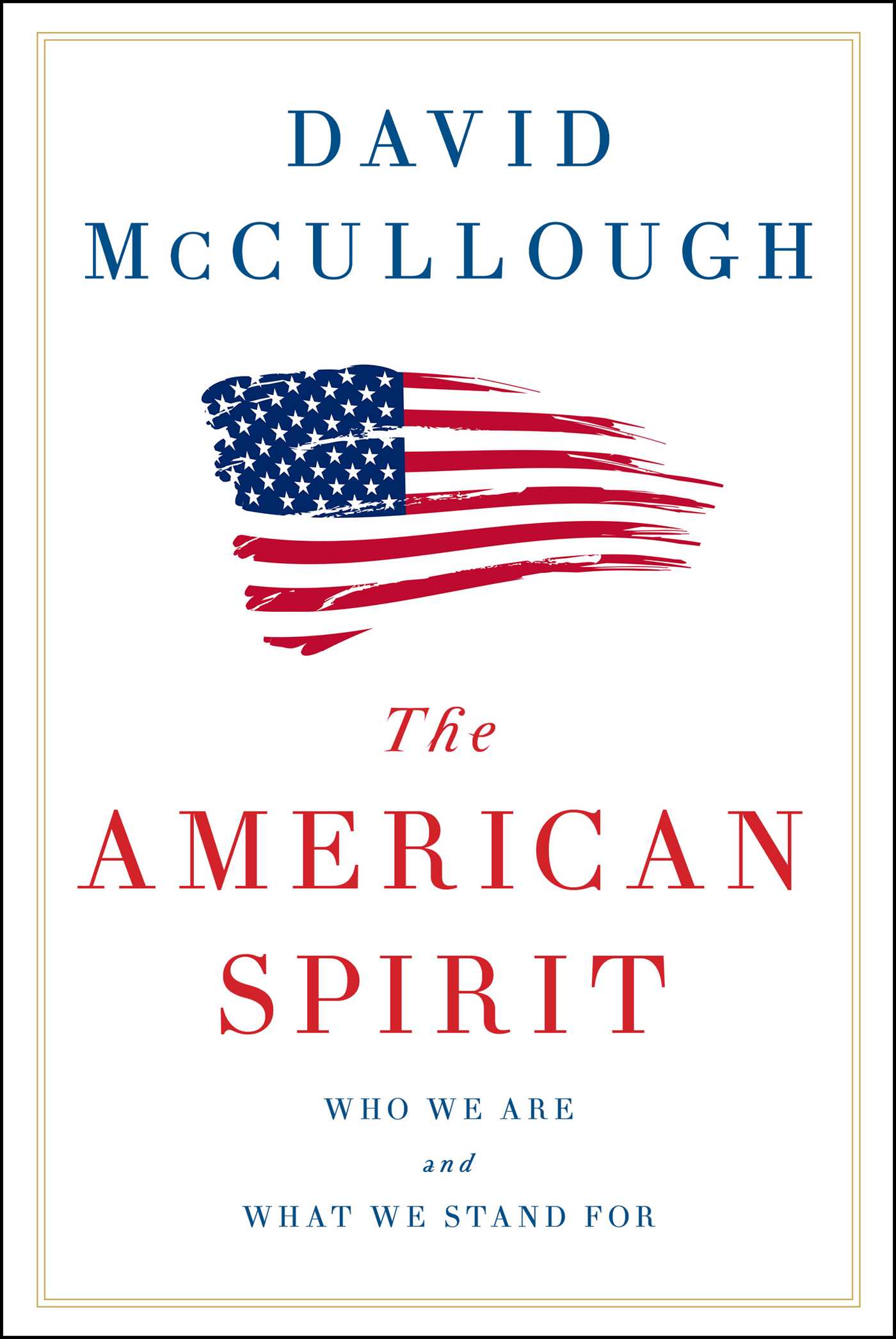
The American Spirit (2017) is a collection of fifteen speeches given by David McCullough over twenty-five years. There are a number of commencement speeches, a talk made before Congress, and a July 4th naturalization speech given at Monticello, among others. I returned to reread this volume after hearing of McCullough’s passing on August 7th, as I was reminded of a speech he made in October 2001 and of one of the most memorable personal interactions I had with the late historian, at an especially difficult time in our country’s history. A sense of history, he wrote, “is an antidote to self-pity and self-importance…history is a lesson in proportions.”
The Great Passion (2022) by James Runcie, is “a meditation on grief and music” as imagined through the writing of one of the greatest masterpieces of Baroque sacred music, J.S. Bach’s St. Matthew Passion. The narrator of this historical novel set in 1726-27 is thirteen-year-old Stefan Silbermann, who is sent away to school in Leipzig after the death of his mother. Following a few rough initial weeks, young Silbermann is taken under the wing of the school’s cantor, Johann Sebastian Bach, and his life changes forever. Runcie uses the voices and thoughts of Silbermann, Bach, and his family to teach us how music speaks to grief while capturing, in a very imaginative way, what it must have been like to “sing, play, and hear Bach’s music for the very first time.”
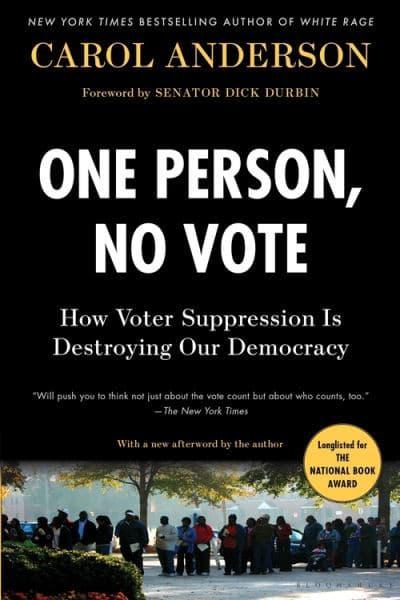
One Person, No Vote: How Voter Suppression Is Destroying Our Democracy (2018) by historian Carol Anderson is a ringing condemnation of the rollbacks to Black and Brown Americans’ participation in the vote both before and especially since the 2013 Shelby County vs. Holder Supreme Court decision that eviscerated the Voting Rights Act of 1965. In the 2016 election’s most “misunderstood story,” Anderson shows how “Republican legislatures and governors systemically blocked millions of African Americans, Hispanics, and Asian Americans from the polls.” Faced with demographics that were quickly shrinking the party to permanent minority status, “the Republicans opted to disfranchise rather than reform.”
Eat Your Words: A Fascinating Look at the Language of Food (1999) by Charlotte Foltz Jones was just the recipe for a short, delightful romp through the world of language and food. “Because food is necessary for survival, our entire culture is based on it.” writes Jones in this work suitable for pre-teens through adults. “It’s in our laws, our money, our superstitions, our celebrations, and especially our language.” Calling on her favorite anecdotes, Jones has created a fun-filled and informative book about the history of food-related words and phrases.
Vietnam: The Essential Guide to Customs and Culture (2020) by Geoffrey Murray is a work I read in preparation for an upcoming trip to Southeast Asia. Murray’s smart and concise overview pushed me to recognize how much I had to learn and encouraged me to explore different paths, such as the perspective of the Vietnamese to the Vietnam War as well as the eastern approach to time, where people see it much differently than westerners.
This Weekly Reader features links to recent articles, blog posts, or books that grabbed my interest or tickled my fancy. I hope you find something that makes you laugh, think, or cry.
A short quiz for your reading pleasure about labor, the Labor Day holiday, and other assorted items currently in the news. Scroll to the bottom for the answers.
Questions
Question #1: Which U.S. Secretary of Labor was also the first female member of the cabinet?
A. Elaine Chao; B. Hilda Solis; C. Frances Perkins; D. Madeleine Albright
Question #2: What major disaster led to a changing of labor laws in the early 20th century?
A. Hurricane Hugo; B. Triangle Shirtwaist Factory Fire; C. Great Mississippi River flood of 1927; D. Eruption of Mt. Vesuvius
Question #3: Who brought America weekends, the 8-hour workday, a living wage, and five-day 40-hour work weeks?
A. Henry Ford; B. Theodore Roosevelt; C. Labor Unions; D. Jeff Bezos
Question #4: When and where was the observance of Labor Day started?
A. 1882 in New York City; B. 1895 in Chicago; C. 1902 in Portland, Oregon; D. 1925 in Jackson, Mississippi.
Question #5: What planned community has strong ties to the nation’s first African American Labor Union?
A. Charleston, SC; B. Gary, IN; C. Pullman, IL; D. Oak Ridge, TN
Question #6: Which Secretary of Labor is also a saint in the Episcopal Church?
A. Elizabeth Dole; B. George Schultz; C. Frances Perkins; D. Pauli Murray
Question #7: The U.S. Department of Labor was created on my birthday, March 4th, in the last hours of this president’s term. Who was the president that created the Labor Department?
A. William Howard Taft; B. Franklin Roosevelt; C. U.S. Grant; D. Harry Truman
And now, for two bonus questions dealing with recent events.
Bonus Question: A recent op-ed in a major paper suggested that the classified documents obtained during the search of Mar-a-Lago as shown in the Department of Justice’s explosive photo were just props, because stacks of paper make Trump feel important. Who undercut that argument before the day was out?
A. Former Attorney General William Barr; B. Current Attorney General Merick Garland; C. Former President Donald Trump; D. Senator Lindsey Graham.
Bonus Extra-Credit Question: Who said the following about the former president?
Donald Trump is a demagogue and a con man. He’s a bully who can never unite America. A race-baiting, xenophobic bigot. He’s a narcissist at a level the country has never seen before. A pathological liar who is utterly amoral. He’s a terrible human being whose statements are simply indefensible and disgusting. His behavior is atrocious and his actions are totally wrong.
A. President Joe Biden in last Thursday’s prime time speech about the threat to democracy; B. Melania Trump; C. Roy Cohn; D. Current Republican members of the U.S. House of Representatives and the U.S. Senate.
Answers
Question #1 – C: Frances Perkins
The driving force behind the Social Security Act was FDR’s Secretary of Labor, Frances Perkins, the first woman to hold a position in the U.S. Cabinet and still the record holder for having the longest tenure in that job. She lasted from 1933 to 1945. While Chao and Solis did hold the position of Labor Secretary, they came many decades after Perkins. Albright was the first female Secretary of State.
Question #2 –B: Triangle Shirtwaist Factory Fire
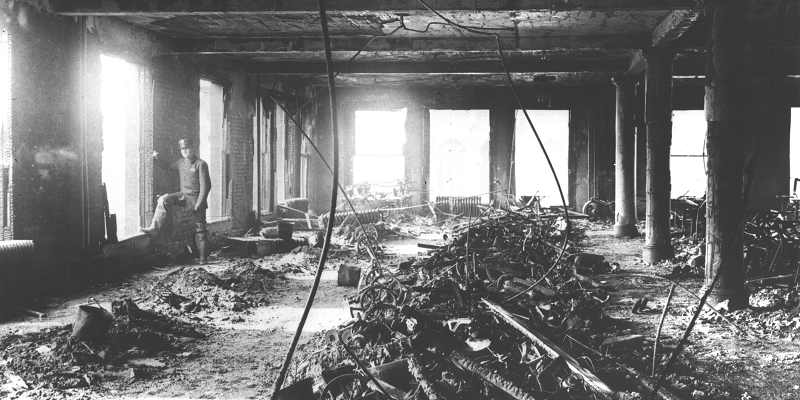
Shirtwaists, the fashion a la mode (at the turn of the century), were cotton blouses, requiring no corset or hoops. The demand for the Triangle shirtwaists among working women in New York and beyond was enormous. In the factory, the foremen did everything they could to keep the women sewing to prevent “the interruption of work.”
Triangle Shirtwaist Factory interior after the fire (credit: Department of Labor)
But a horrible fire there on March 25, 1911, killed 146 people — at least 125 of them were immigrant women. Some as young as 15, these seamstresses worked seven days a week, in 13-hour shifts with only a 30-minute lunch period, all for a paltry $6 a week. More than 350,000 people marched in the funeral procession for the Triangle victims. In the next couple of years, New York passed dozens of laws to address the issues that led to the fire. “Many of these reforms — all proposed to protect the health and safety of the American worker — were swept into federal law during the New Deal. “
Question #3 – C: Labor Unions
While Henry Ford, rather than unions, sometimes gets credit for creating the eight-hour workday and the 40-hour work week, Politifact shows that labor unions were working on this issue long before the establishment of the Ford Motor Company. Theodore Roosevelt was a progressive for his time, but…
It took President Franklin D. Roosevelt’s signing of the Fair Labor Standards Act in 1938 for all workers to see limits on working hours — initially 44 hours a week, then phased to 42 and eventually 40 by 1940. “When the FLSA was passed in 1938, Saturday working hours were still common. … Saturday noon was the most frequent ‘payday’ time.”
Given this history, (Henry) Ford is best described as an early adopter of today’s familiar working hours.
Credit: Jewish Women’s Archives
And by the way, Jeff Bezos is working overtime to end all of those things (e.g., the weekend, forty-hour work weeks) for American laborers. This is what happens when you put the oligarchs in charge.
Question #4 – A: 1882 in New York City
According to the Department of Labor, the first Labor Day holiday was celebrated on Tuesday, September 5, 1882, in New York City, “in accordance with the plans of the Central Labor Union. The Central Labor Union held its second Labor Day holiday just a year later, on September 5, 1883.”
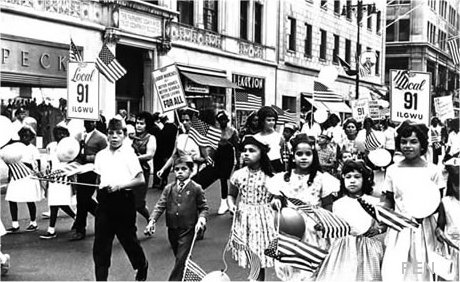
Before it was a federal holiday, Labor Day was recognized by labor activists and individual states. After municipal ordinances were passed in 1885 and 1886, a movement developed to secure state legislation. New York was the first state to introduce a bill, but Oregon was the first to pass a law recognizing Labor Day, on February 21, 1887. During 1887, four more states — Colorado, Massachusetts, New Jersey and New York — passed laws creating a Labor Day holiday. By the end of the decade Connecticut, Nebraska and Pennsylvania had followed suit. By 1894, 23 more states had adopted the holiday, and on June 28, 1894, Congress passed an act making the first Monday in September of each year a legal holiday.
Children march in the 1963 NYC Labor Day Parade (credit: Postal Employees Netowrk)
Question #5 – C: Pullman, IL
Pullman is a remarkably intact industrial town of historic buildings and landscapes. Located 13 miles south of downtown Chicago, it was built by industrialist George Pullman and through all the change that has taken place in this small community, it stands today as representative of the heart of the American Labor movement. President Obama designated it as a National Monument in 2015.
Strikes that began in Pullman in 1893 and spread across the country led — in the long arc of history — to the establishment of Labor Day, a 40-hour work week, the weekend, overtime pay, safe workplace conditions, and the right to organize for higher wages and better opportunities. The first African American Union — the Brotherhood of Sleeping Car Porters — had ties to Pullman. The men and women who worked and labored in Pullman — white and black — helped create the American middle class.
Pullman (Photo Credit: Cynthia Lynn via National Trust for Historic Preservation)
Question #6 – C: Frances Perkins
Yes, not only was Frances Perkins the first woman to serve in the U.S. Cabinet, but she is also a saint in the Episcopal Church, which celebrates the feast of Frances Perkins, Public Servant and Prophetic Witness, on May 13.
A biographical note about Perkins appears with the proper for this feast in Holy Women, Holy Men: Celebrating the Saints (Church Publishing, 2010). This brief note mentions that Perkins depended on “her faith, her life of prayer, and the guidance of her church for the support she needed to assist the United States and its leadership to face the enormous problems” then challenging the country. While Secretary of Labor, Perkins made a monthly retreat at an Episcopal convent.
Pauli Murray is also an Episcopal saint, but she never served as Secretary of Labor.
Question #7 – A: William Howard Taft
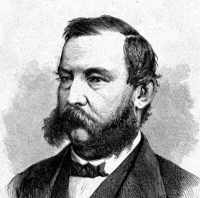
President William Howard Taft signed the act creating the U.S. Department of Labor in his final hours as president on March 4, 1913. For much of the nation’s history, March 4th — which is my birthday — was also inauguration day. With the passage of the 20th amendment in 1933, the date was moved to January 20th.
President William Howard Taft (credit: White House Historical Association)
Shortly afterward, Trump tore the ground out from under that argument — and most of the others his supporters were trying to make — by posting a complaint on his Truth Social network about the FBI photo documenting the stolen classified documents. “There seems to be confusion as to the ‘picture’ where documents were sloppily thrown on the floor and then released photographically for the world to see, as if that’s what the FBI found when they broke into my home. Wrong! They took them out of cartons and spread them around on the carpet….”
Lawyers point out that this is an admission that he had the documents and knew it.
Bonus Extra Credit Question – D: Current Republican members of the U.S. House of Representatives and the U.S. Senate.
None of those things about the former president came from President Joe Biden’s speech on Thursday evening. Those are the statements of Republicans in the House and Senate, who are now engaged in heavy-duty pearl clutching and pulling out the fainting couches to show how they take deep, deep umbrage at Biden pointing out a threat they recognized five years ago.
One wag on Twitter nailed it.
Harry Truman's famous line fits perfectly for Pres Biden's speech on MAGA: “I never did give them hell. I just told the truth, and they thought it was hell.”
The Labor Day weekend is a traditional time for the end-of-summer picnic and perhaps one last dip in the pool before it is buttoned up for the winter. School begins, and even the nature of the food we eat changes as we head into fall. Looking ahead we have football parties and tailgates, Octoberfest events, and, of course, Thanksgiving and Christmas feasts on the horizon.
This seasonal transition in culinary habits seemed like a good time to think about the things we eat. And how we talk about food.
Eat Your Words: A Fascinating Look at the Language of Food (1999) by Charlotte Foltz Jones was just the recipe for a short, delightful romp through the world of language and food. “Because food is necessary for survival,” writes Jones, “our entire culture is based on it. It’s in our laws, our money, our superstitions, our celebrations, and especially our language.” Calling on her favorite anecdotes, Jones has created a fun-filled and informative book about the history of food-related words and phrases.
It’s not about nutrition, cooking, recipes, or kitchen safety. It’s a shopping list of curious food etymology, and a menu of the origins of funny-sounding food.
The whimsical illustrations by John O’Brien are aptly described as the dessert.
In seven chapters that satisfy your craving for history, geography, biography, and wordplay, Jones provides her readers with fun-filled-fact after fun-filled-fact. Here’s a smattering to whet your appetite. Did you know that…
Caesar salad was originally called aviator salad, because the restaurant where it was first created was near an airfield in Tijuana, Mexico. Later the salad’s creator changed the name to Caesar salad after his brother, who owned the restaurant.
Melba toast and Peach Melba were both named in honor of Dame Nellie Melba, an opera singer from Australia.
In Gary, Indiana, it is against the law to ride a bus or attend a theatre within four hours after eating garlic.
There’s plenty of food on the map: Bacon, Georgia; Cherry, Nebraska; Rice, Minnesota; Hominy, Oklahoma, and more Oranges (Florida, Indiana, and Texas) than you can shake off a tree.
Bread and butter pickles are not actually made from bread and butter. These sweet pickles were first created around 1900, and the homemaker who created them sold them at a roadside stand to get money to provide her family with bread and butter.
A peanut is not a pea and it’s not a nut. It’s a legume — a bean.
Near the end of the book, Jones has a chapter entitled Talking Turkey, which looks at the origins of our favorite terms and sayings and begins with this delightful introduction:
Friends usually get along like two peas in a pod, making life a bowl of cherries. They’re as sweet as honey and act nuttier than a fruitcake. Then one goes bananas and drops the other like a hot potato. They both walk on eggshells and act as cool as a cucumber as long as one has a bone to pick. But once they sit down to chew the fat or talk turkey, things are keen as mustard once again.
While most of these terms came into the language gradually, that’s not always the case. Consider “couch potato” — a person who spends a lot of time watching television — for example. According to Jones, Tom Iacino from California coined the term in 1976. “Couch potato” was then trademarked. “A club was formed, a newsletter was published, and merchandise (such as T-shirts and dolls) was sold.”
As you think of the feasts on your schedule this fall, be sure to “put your money where your mouth is.” Should you be moving to a new home, carry in salt first to ensure wealth. Eating bread crusts will make your hair curly.
As your head hits the pillow tonight and you want to dream in color, eat three almonds before you go to sleep. Should you want those dreams to be of your future spouse, sleep with a piece of wedding cake under your pillow. (Just don’t call on me to clean up your mess.)
And, of course, take all of this with a grain of salt.
One of the treats of attending bluegrass and acoustic music festivals is when groups of musicians who don’t play together on a regular basis gather on stage to make music. It isn’t always pretty, but sometimes magic happens.
Last year I wrote about some of these special moments in the post Festival Favorites. Now, with the summer festival season winding down, I thought it would be fun to take in some jams — most from 2022 but one or two older gems — at festivals and other acoustic music venues.
Of course, it would be too easy in these collaborations to just play standard material, as so many of these talented musicians would ask, “Where’s the fun in that?!” That’s one reason these jams regularly feature music from genres other than the standard bluegrass fare. The finales at eTown, for instance, are always a mash-up of the musical guests playing on that week’s show and the music is often unexpected, as whenMolly Tuttle and The Infamous Stringdusters join hosts Nick and Helen Forster for this unique take on the Eurythmics‘ hit song Sweet Dreams (Are Made of This).
Chris Thile from Punch Brothers, can play just about anything, so it isn’t a surprise when Thile, Sarah Jarosz, and Nathaniel Smith from Watchhouse on cello cover of The BeatlesDrive My Car, from the August 5, 2022, concert at the Mountain Winery in Saratoga, California.
That clip came from the American Acoustic Tour featuring Watchhouse (fka Mandolin Orange), Punch Brothers, and Jarosz. From that same tour is a beautiful cover of Bobby Charles‘ I Must Be in a Good Place Now.
Those two bands plus Jarosz play a lovely version of the Watchhouse tune Wildfire from the same tour. As I wrote in 2020, Wildfire is a tune that fits in our troubled times.
Civil war came and civil war went Brother fought brother, the south was spent But its true demise was hatred passed down through the years And it should have been different, it could have been easy But pride has a way of holding too firm to history Then it burns like wildfire
Merlefest has always been a festival where one can see great collections of amazing musicians doing their thing together. This video was recorded on April 30, 2022, at the Creekside Stage at Merlefest, where Sam Bush led friends of the blind guitarist Doc Watson and his son Merle in a set called “Memories of the Watson Family.” Sam’s introduction to Nashville Blues describes how he learned to manage a “cluster jam” from Doc.
Fast forward some thirty years and Bela Fleck’s My Bluegrass Heart tour is featuring some of those same elder statesmen, along with many of the best young players in the business. Featured is a rip-roaring version of the old Jimmy Martin hit Tennessee, with a spirited lead by the incomparable Billy Strings.
Grey Fox is another of the country’s top-notch bluegrass festivals, and I’ve included a jam from 2019 with Billy Strings and Molly Tuttle doing one of my favorites, Sittin’ On Top of the World.
To end this post, I’m going back to a gem from 2012 at the 25th anniversary of Merlefest. Sam Bush and the Sam Bush Band had a great opening set, but when they brought out Derek Trucks, his wife Susan Tedeschi, John Cowan, and Bela Fleck it was magical. Luckily, there’s a great video of the entire set of three tunes on You Tube. Take a look at Sam Bush’s face at about 2:06 when Trucks plays an amazing lick. That’s how everyone felt.
Have a great Labor Day weekend and enjoy some music!
More to come…
DJB
Image: Sam Bush and his band jam with Derek Trucks and Susan Tedeschi at Merlefest 2012.
The former president missed the day in high school civics class when so many learned that “(w)ithout the preservation of the records of government, and without access to them, you can’t have an informed population, and without an informed population, you lack one of the basic tools to preserving democracy.” The former president and his supporters have attacked the National Archives and its staff as part of the “partisan witch hunt” against him. Nothing could be further from the truth. A Washington Post story on August 27th looked at the unprecedent attacks on this national treasure.
Trump’s recent actions have whipped his followers into a fervor against the Archives, and he has empowered some of his most politically combative allies to represent him in negotiations with the agency. Former presidents’ representatives have typically been lawyers, historians or family members without clear political agendas. The representatives usually deal with issues such as negotiating privilege claims, setting up presidential libraries or researching presidential memoirs.…But this was yet another norm that Trump broke.
The affidavit showed very clearly, even in redacted form, that the former President was stonewalling the requests stretching over seven months from the National Archives to return highly sensitive materials and all the materials that belong to the U.S. government. As Richardson wrote in her August 26th Letters from an American,
On February 9, 2022, the National Archives and Records Administration (what did I say about archivists?) told the DOJ that after seven months of negotiations, on January 18 it had received 15 boxes of material that former president Trump had held at Mar-a-Lago. Those boxes contained “highly classified documents,” including some at the very most secret level of our intelligence: those involving our spies and informants.
In those initial 15 boxes, FBI personnel found 184 classified documents. Sixty-seven were labeled CONFIDENTIAL, 92 were SECRET, 25 were TOP SECRET. Some were marked SCS, FISA, ORCON, NOFORN, and SI, the very highest levels of security, involving human intelligence, foreign surveillance, intelligence that cannot be shared with foreign governments, and intelligence that is compartmented to make sure no one has full knowledge of what is in it. The former president had made notes on “several” of the documents.
When someone you know says that student loan debt forgiveness is unconstitutional or some similar malarky, just point them to the history
President Biden’s decision to forgive student loan debts was a special favorite of the right-wing noise machine, and one brimming with hypocrisy and bad history. Unfortunately, many in the media went along with the Republican talking points.
Zachary D. Carter, writing in Slate, has an excellent article on the long history of loan forgiveness in the U.S., for those looking for the history.
In 1920, the world’s most famous economist, John Maynard Keynes, was digging through old books on the economy of the ancient world, when he discovered something startling. All his life he had been taught that civilization depended on ironclad financial certainty. Without a stable currency and dependable debt contracts, commerce could not exist. Governments that meddled in such matters were thought to be asking for social chaos.
But the documents he perused on Ancient Greece, Rome, Babylon, Assyria, and Persia showed him something else entirely. Throughout history, political leaders had abolished debts and managed the value of their currencies—another way to revise debts—as routine matters of government policy. Keynes was electrified.
And Carter ends with the following:
Biden’s student debt relief initiative is no wild, unprecedented idea. Governments pay for education and eliminate unsustainable debts. That is how the world has worked for centuries.
While the Post’s objection is technically true, it is also true for the following subsidies and credits: Trump’s 2017 tax cut for millionaires, oil company subsidies, export subsidies for US manufacturers, auto industry subsidies, lower tax rates for hedge fund managers (“carried interest deduction”), 100% deductibility for yachts purchased for “business purposes,” and deduction for 100% of the future depreciation for private jets in their first year of service.
All of the above subsidies, credits, and deductions are regressive because—as the Post notes—“the broader tax base is mostly made up of workers” who are not millionaires, who do not manage hedge funds, who do not own oil wells, and who do not purchase yachts or private jets. And yet, the Post and others reserve peevish indignation for a program that helps middle- and lower-income earners who took a chance by investing in their futures and themselves.
A friend of mine emailed me about this New York Times article by Jonathan Weisman and Maggie Astor. He was furious that it made the glib assumption that people in “roles that do not require college degrees” represent a constituency opposed to student loan relief.
Those roles “are filled with people who have college degrees or, more to the point, began attending college, racked up debt, and had to drop out to work to pay off their loans,” my friend wrote.
The article cited two prominent labor unions, but my friend noted that it “didn’t mention whether the union has a position on the bill.”
So I did some digging. And lo and behold:
Looking for Democratic constituencies who oppose student loan relief, the Times reporters “namecheck two unions…who strongly support it.” Whoops!
Biden’s calling out of today’s radical Republicans mirrors the moment on June 21, 1856, when Representative Anson Burlingame of Massachusetts, a member of the newly formed Republican Party, stood up in Congress to announce that northerners were willing to take to the battlefield to defend their way of life against the southerners who were trying to destroy it. Less than a month before, Burlingame’s Massachusetts colleague Senator Charles Sumner had been brutally beaten by a southern representative for disparaging slavery, and Burlingame was sick and tired of buying sectional peace by letting southerners abuse the North. Enough, he said, was enough. The North was superior to the South in its morality, loyalty to the government, fidelity to the Constitution, and economy, and northerners were willing to defend their system, if necessary, with guns.
Richardson ended her letter by noting that although Burlingame’s speech is now forgotten, it “was once widely considered one of the most important speeches in American history. It marked the moment when northerners shocked southerners by calling them out for what they were, and northerners rallied to Burlingame’s call.”
I know from experience that when I went to college (one year at a private university, the other three at a public institution), the government covered much more of the cost of higher education than is the case today. Where we once all supported education through our taxes as a value to the country as a whole, now — thanks to the anti-tax fervor of the billionaire-backed Republican party — the financial burden falls directly on the student, even though we still benefit as a country from having an educated populace.
Winter is coming (for authoritarians)
Things appear to be changing across several fronts. And don’t forget that the January 6th committee will reconvene in September.
Forget Tom Cruise and "Maverick," the summer blockbuster of 2022 is "The January 6th Commitee"… Must-see truth-telling https://t.co/kMFCjgZe5m via @seattletimes
Finally, I encourage you to take the time to watch this beer commercial. Yes, I said beer commercial. It may be the best four minutes you’ll spend this week.
Have a good Labor Day weekend.
More to come…
DJB
This Weekly Reader features links to recent articles, blog posts, or books that grabbed my interest or tickled my fancy. I hope you find something that makes you laugh, think, or cry.
Image: Rotunda of the National Archives in Washington, D.C., credit National Archives.
Today is the first day of school, a memory that returns even when one is no longer in school or has children of that age. It is part of the cycle of life.
I’ve been thinking about this cyclical nature of life recently. Last week six things happened that reminded me in especially personal ways of the wonder, challenge, opportunity, excitement, and fragility of everyday life.
During our regular visit to the Silver Spring farmers market on the Saturday before last, we were given a birth announcement for Laura Jade, the beautiful first-born child of young Mennonite farmers from Pennsylvania we’ve enjoyed getting to know over the past couple of years. Jacob and Brenda wanted to share their joy with us, and we could not be happier for them.
Tuesday saw me at the first of several catchup visits with my doctors, after a bit of a pandemic hiatus, which will inevitably include follow-ups to address this or that issue they uncover. A good reminder of the value of those annual checkups came when a family member had some minor surgery mid-week for the successful removal of what was left of a small mole that had made a recent appearance.
On Thursday, six of us gathered over lunch in a light-filled Washington home to welcome a dear friend’s return from a three-month sabbatical, a much-needed break of international travel, study, and quiet retreat which refreshed her spirit and expanded her horizons for the future.
That same day our son returned for an at-home rest before he’s off for his next adventure at Boston University’s Opera Institute. We also used this week to have a long conversation with our daughter, who is busy studying for the licensed clinical social worker exam in California. Both are navigating exciting passages in their lives. We were also able to work in a belated Father’s Day celebration.
And then Saturday arrived. We joined hundreds in a packed church to celebrate the life and to say goodbye to a dear physician, wife, mother, daughter, sister, proud Howard University graduate, holder of a Ph.D. in Biomedical Engineering from Johns Hopkins University and a M.D. from Duke University School of Medicine, Clinical Team Leader and Assistant Director at the Office of Compliance at the Food and Drug Administration, and — last but not least — friend. Kim died much too suddenly and much too early at the age of 53.
The cycle of life became abundantly clear yesterday morning, when less than 24 hours after that funeral I was back in the same church with a large group of friends and fellow parishioners for the baptism of Julia Dodds — a beautiful girl full of the joy of her first year of life and the daughter of a new family in our parish.
In one week, I experienced the wonder of new birth and childhood; the excitement of new beginnings; the opportunity of study, travel, and sabbath rest; the challenges of aging in the covid era; and the fragility of departures that happen much too early. All are part of the cycle of life.
The highs and the lows come when we engage with life in all its fullness and messiness. For the fortunate ones, we can engage and grow at every stage along the way, realizing the incredible amount we learn “between our birthday and our last day” as Ursula K. Le Guin phrased it, while maintaining the seeking, trusting capacity for learning and loving that we had as a two-year-old.
As I saw so clearly this past week, time is not the rushed, linear path that most of us see as Americans. We think time is money, a precious and scarce commodity. For so many of us, the past is over, but the present you can seize, parcel and package and make it work for you in the immediate future. Americans talk about wasting, spending, budgeting and saving time.
But there are other ways of thinking about time. In reading works such as Vietnam: The Essential Guide to Customs and Culture (2020) by Geoffrey Murray as I prepare for an upcoming trip to Southeast Asia, I see more of the eastern approach, where people don’t attempt to control time. “Time is viewed neither as linear nor event–relationship related, but as cyclical. Each day the sun rises and sets, the seasons follow one another, the heavenly bodies revolve around us, people grow old and die, but their children reconstitute the process. Cyclical time is not a scarce commodity. There seems always to be an unlimited supply of it just around the next bend.”
As they say in the East, when God made time, she made plenty of it.
There may be plenty of time in the cosmic sense and I am certain that our time is not bound — on either end — just by our birthdays and our last days. But that doesn’t mean that we should sleepwalk through the time we have on earth. Travel is certainly one way to expand what we know, along with using the power of books to reach new depths of understanding. Most importantly, engaging — really connecting — with the people we see every day helps open up our inner places. As Marcel Proust once said, “The real voyage of discovery consists not in seeking new landscapes, but in having new eyes.”
The cycle of life is there before us to see and appreciate, living fully into the human, natural, and spiritual connections that are around us, behind us, and before us.
More to come…
DJB
Image from the James Webb Space Telescope (credit: NASA, ESA, CSA, and STScI.)
The Declaration of Independence made it clear what the founders were seeking to build in 1776: a government that derived its powers from the consent of the governed. That dream has never been fully realized, yet it is nonetheless our guide star and what has made us unique as a country for almost 250 years.
We hold these truths to be self-evident, that all men are created equal, that they are endowed by their Creator with certain unalienable Rights, that among these are Life, Liberty and the pursuit of Happiness. That to secure these rights, Governments are instituted among Men, deriving their just powers from the consent of the governed.
The last sentence often gets left by the wayside.
Writer and social critic Lewis Lapham has written that “What joins the Americans one to another is not a common nationality, language, race, or ancestry…but rather their complicity in a shared work of the imagination.” And yet from our founding, a strong minority has pushed back against giving all citizens a voice and has tried to define America by race and ancestry. They have worked to disruptthe idea of a full democracy with equal representation.
Deliberately breaking things apart
August 24th, it turns out, is an inauspicious date for disruption. On this day in 1814, British forces captured Washington, D.C. and burned the White House and other landmarks in an attempt to destroy America’s democratic government and return the country to the control of the British monarchy. (*)
Violence is a key part of the effort to disrupt democracy while physical landmarks remain highly symbolic to the work of disrupters. Legal landmarks, however, are the new targets as disrupters work to make sure millions of our fellow citizens do not have the opportunity to cast a meaningful vote in our elections. This is a long-standing American tradition with violence as part of that effort throughout our history. But columnist Charles P. Pierce notes that in the 21st century, those who seek to suppress voters are “not going to use white sheets to keep away black voters. Today they’re using spreadsheets.”
Pierce’s quote is included in One Person, No Vote: How Voter Suppression Is Destroying Our Democracy (2018) by historian Carol Anderson. This book is a ringing condemnation of the rollbacks to Black and Brown Americans’ participation in the vote both before and especially since the 2013 Supreme Court decision that eviscerated the Voting Rights Act of 1965. If you care at all about fairness and believe that voting is a citizen’s right and not some privilege parceled out by rich oligarchs trying to cling to their money and conniving politicians trying to cling to power, then the first half of Anderson’s book will have you reaching for your ACE inhibitors to lower a soaring blood pressure. The second half will perhaps inspire you to sign up to help the warriors fighting the disfranchisement measures that are the worst since the beginning of the Jim Crow era.
Anderson is the Charles Howard Candler Professor of African American Studies at Emory University and author of White Rage: The Unspoken Truth of Our Racial Divide, a National Book Critics Circle Award winner. In this book on voter suppression her writing moves along at a steady clip, fearlessly skewering lies and liars as well as bogus barriers placed in front of the work for equal representation by fraudulent politicians. Carlos Lozado, who named One Person, No Vote one of the best books for understanding the Trump era, called out one of the biggest lies when he wrote, “Anderson underscores the ‘feigned legal innocence’ that always accompanies voter suppression, as its architects cloak their designs in benign-sounding justifications, especially the always popular crusade to prevent alleged (and largely nonexistent) voter fraud.”
A long history
In the first chapter, Anderson sets the stage for her work by noting that the drop-off in the number of Black and Brown voters in 2016 was not because minority voters refused to show up following historic wins for Barack Obama. Instead, in the 2016 election’s most “misunderstood story,” Anderson shows how “Republican legislatures and governors systemically blocked African Americans, Hispanics, and Asian Americans from the polls.” Faced with demographics that were quickly shrinking the party to permanent minority status, “the Republicans opted to disfranchise rather than reform.”
Anderson walks the reader through a crisp history of disfranchisement from the country’s founding to Jim Crow, from the response to the Voting Rights Act (VRA) to the most cynical Supreme Court voter suppression decision of our time, led by a chief justice who had spent his entire career working to destroy the “most effective legislation ever passed by Congress.”
Anderson places her well-researched arguments for that claim directly in the lap of Chief Justice John Roberts. This is a Chief Justice who has been worried about his legacy almost from the day he stepped onto the stage at the nation’s highest court. Yet, as Anderson powerfully demonstrates, when Roberts’ legacy is determined by history, the key architect of the 2013 Shelby County vs. Holder decision gutting the VRA along with the 2010 Citizens United decision allowing unlimited dark money by corporations to influence elections will be seen as the Chief Justice Roger B. Taney of the 21st century, forever on the wrong side when it comes to protecting the country’s democracy. Roberts, like his mentor Chief Justice William Rehnquist, said he was not in favor of “giving” rights to minorities. Note, as Anderson does, that the framing used is “giving” instead of simply recognizing that minorities have rights.
Voting is a right, not a privilege.
In the chapters that follow, Anderson takes the reader through the most effective and insidious techniques to keep Black and Brown voters from the polls following the Holder ruling:
Requirements for voter IDs (where most forms are not readily accessible to minorities and the poor);
Voter roll purges (so much so that in the two years before the 2016 election, sixteen million voters were wiped off the rolls); and
The rigging of the rules through gerrymandering (using those spreadsheets Charles Pierce mentioned) and other equally effective techniques.
She is direct and not afraid to call out the most powerful who have supported this work. Her examples cut to the very heart of fairness and equal representation. In Texas, Anderson notes, whites are 45 percent of the state’s population but control 70 percent of the congressional districts. State-after-state is called out for reducing voting places in minority communities, making some as far as 20 miles away for people without cars and public transportation. She also has no patience for the games played by Justices Antonin Scalia (he of the “judicial coup d’etat” of the 2000 election) and Neil Gorsuch (“who owed his very seat to the rules Senate Majority Leader Mitch McConnell bent, rigged, and contorted”).
We are going to “Warrior Up“
In the book’s last chapters, Anderson turns to how those most affected — the nation’s African American, Hispanic, Asian American, and Indigenous citizens — have fought back. She highlights the under-the-radar resistance shown in Alabama to keep the racist and serial pedophile Roy Moore out of the U.S. Senate. She looks at how communities traditionally kept from voting fought back against the Trump administration and its Department of Justice. Anderson calls out the tactics of voter suppression warriors like Brian Kemp in Georgia and Kris Kobach in Kansas.
In the end, she sees progress but understands that the road to equal representation is long and success is not guaranteed. At the book’s conclusion she writes of where things stand in 2018:
Voter suppression has made the U.S. House of Representatives wholly unrepresentative. It has placed in the presidency a man who is anything but presidential. It has already reshaped the U.S. Supreme Court . . . and as a slew of Trump’s unqualified nominees to the federal bench get greenlighted by a compromised Senate, it threatens to undermine the judiciary for decades to come.”
“In short, we’re in trouble.”
If you are puzzled about how a country with a growing minority population can continue to move down a path of white supremacy with drop-offs in the number of Black and Brown voters, you are in good company. Polling expert Nate Silver had the same reaction in 2016. But Anderson, notes:
It’s puzzling only if you don’t understand how the various methods of voter suppression actually work.
Anderson has written an important work for our time and a wake-up call for all who care about democracy.
Other writers are showing that the threat to democracy brought about by John Roberts’ 2010 Citizens United decision was front and center in this week’s news
In her August 22, 2022, Letters from an American newsletter, Heather Cox Richardson leads with the eye-popping $1.6 billion donation to a right-wing nonprofit organized in May 2020. The largest known single donation made to a political influence organization, this is …
… an example of so-called “dark money”: funds donated for political advocacy to nonprofits that do not have to disclose their donors. In the 2010 Citizens United v. Federal Election Commission (FEC) decision, the Supreme Court said that limiting the ability of corporations and other entities to advertise their political preferences violates their First Amendment right to free speech. This was a new interpretation: until the 1970s, the Supreme Court did not agree that companies had free speech protections.
And on August 23rd, Robert Reich wrote on his Substack newsletter, Why CNN Cancelled Brian Stelter. Stelter was a fierce critic of Donald Trump and his enablers at Fox News. As Reich shows, the CEO of CNN’s parent company, Warner Bros. Discovery, Inc. is David Zaslav who was motivated to act by his billionaire owner.
The leading shareholder in Warner Bros. Discovery is John Malone, a multi-billionaire cable magnate. (Malone was a chief architect in the merger of Discovery and CNN.) Malone describes himself as a “libertarian” although he travels in rightwing Republican circles. In 2005, he held 32 percent of the shares of Rupert Murdoch’s News Corporation. He is on the board of directors of the Cato Institute. In 2017, he donated $250,000 to Trump’s inauguration. (**)
Follow the money. Since the country’s founding, it leads to not just the disruption, but the destruction of democracy. We will all have to “Warrior Up” to keep it.
More to come…
DJB
*The Visigoths also sacked Rome on this date in 410, a historical disruption of the first order.
**The CEO of CNN called Reich the next day to dispute the allegations. Reich reports on this in a follow-up newsletter.
This Weekly Reader features links to recent articles, blog posts, or books that grabbed my interest or tickled my fancy. I hope you find something that makes you laugh, think, or cry.
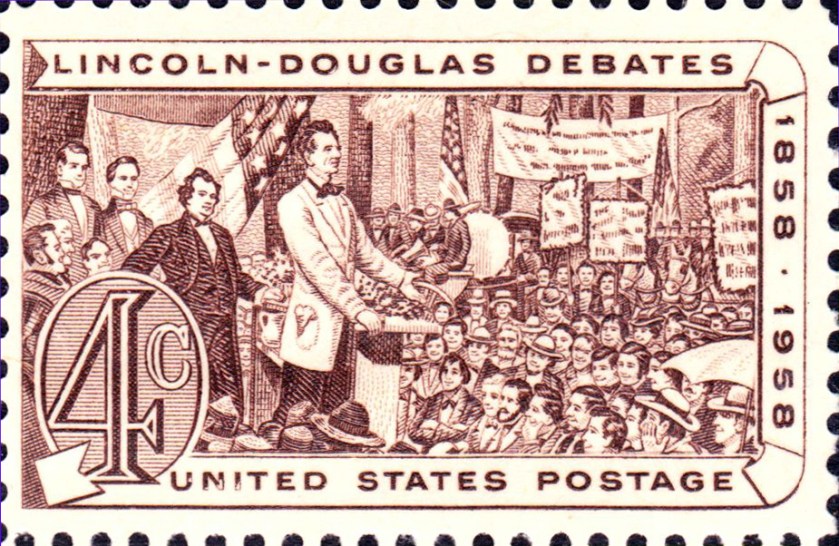
On this day in 1858, Abraham Lincoln and U.S. Senator Stephen A. Douglas met before more than 10,000 people in Ottawa, Illinois. It was the first of seven such meetings in what would become known as the Lincoln-Douglas Debates. As we near the conclusion of the 2022 primaries to select candidates for the fall midterm elections, I want to honor that event by revisiting an issue — the search for wise leaders — that I first considered in August of 2019.
How do we know that someone is wise?
I began thinking anew about wisdom in 2019 after hearing The Rev. Emily Griffin speak on how those who are wise stay afloat in a figurative sea of rising waters, which is a pretty fair description of our life today. Emily, along with other writers, suggests that wisdom includes meaningful self-knowledge as well as an important outward-facing impact.
Defining wisdom as “knowledge translated into action,” rang true in my mind. We all know people who are full of information and who have an answer for everything. But are these people wise? Emily’s thoughts about the fruit of wisdom being in the “works of our hands” suggest perhaps not:
. . . wisdom is less about mastering floods of information; it’s more about riding the waves so they don’t drown or paralyze us. . . . Wisdom is what helps us to set direction and move together to get there.
But it’s not all about knowing the terrain in advance. Wisdom also helps us to handle new situations that we’ve neither predicted nor prepared for. . . . Wisdom isn’t about intellectual feats of strength; it has to do with what we learn from our elders and from our own experience — and how that comes out in the works of our hands, in the ways we treat each other, in our capacity to respond with calm and grace when anger and judgment are so much easier.
In her 2016 book Becoming Wise: An Inquiry into the Mystery and Art of Living, Krista Tippett also speaks to the idea of translating knowledge into action. She notes that one of the qualities of wisdom “is about joining inner life with our outer presence in the world. The litmus test of wisdom is the imprint it makes on the world around it.”
Instead, we have a political party basing its campaigns on the Big Lie that former president Trump won the 2020 election. Its adherents are currently engaged in the attempt to make sure that they can rig elections going forward, establishing a one-party state.
Wisdom is not built upon a lie.
Historian Heather Cox Richardson, wrote just last week of the observation of Edward Luce of the Financial Times. “I’ve covered extremism and violent ideologies around the world over my career,” Luce noted. “Have never come across a political force more nihilistic, dangerous & contemptible than today’s Republicans. Nothing close.”’
Shocking though that observation was, it was nothing compared to what came next. General Michael Hayden, former director of the Central Intelligence Agency under presidents George W. Bush and Barack Obama, retweeted Luce and commented: “I agree. And I was the CIA Director[.]”
Nihilism, the rejection of moral principles in a belief that life is meaningless, is the opposite of a wisdom that translates into action for the public good. Far too many of us head into the critical fall elections without taking into account the wisdom — of lack thereof — of those who are asking to lead our government. Far too many are certainly not facing the consequences of nihilistic behavior to our country. As we consider critical decisions about what type of country we expect to be, our political and media culture seem hard-pressed to develop and sustain a process to help us sort through the noise to choose a wise leader.
When Abraham Lincoln and Stephen A. Douglas debated in 1858, largely on the question of expansion of slavery into the territories, one candidate spoke for 60 minutes, then the other candidate spoke for 90 minutes, and then the first candidate was allowed a 30-minute rejoinder. The candidates alternated speaking first. Although Lincoln lost that race in the legislature (after winning a plurality of the votes), his fame rose because of the wisdom that came through the coverage of the original debates and a publication of the texts from those events. In the 1860 presidential election that mattered, the people clearly had some sense of the wisdom that could lead the country through its most existential crisis to date.
I know that there are candidates for Congress (and many other offices across the country) who have the ability to be wise leaders, to help us “handle new situations that we’ve neither predicted nor prepared for.” But will we demand that our political parties and the media give us the opportunity to find them? We already know the response of the Republican party to that question. The party and its candidates are moving to do away with debates and cut off access to any members of the media that do not toe the party line.
As we argue for a new type of political coverage, I believe we have to support those conversations and forums that give us the chance to weigh, over time, the wisdom of the candidates. Conversely, we have to take our eyes and ears away from those platforms that simply want to turn our politics into another version of The Bachelorette. We have lots of information but precious little knowledge or wisdom.
One final, and perhaps hopeful note: the text Emily used from the Book of Proverbs, found in the Hebrew Bible and the Christian Old Testament, defines Wisdom as a “she” who exists at the dawn of creation. She has been here, and remains here, to guide us. It helps us, as Emily notes, to “sense the fullness of what it means to be created in the image of God.”
Something to think about in interesting times.
More to come…
DJB
Image: Lincoln Douglas Debates commemorative stamp from 1958 (Credit: U.S. Government, Post Office Department – U.S. Post Office Hi-res scan of postage stamp by Gwillhickers., Public Domain)