Latest Posts

Don’t mess with the archivists and librarians

It has been an interesting week. If you follow the news and are interested in

  • the key role of archivists and librarians in protecting our democracy,
  • the real history of debt relief (and how student loan relief fits right in with what governments have been doing for centuries), and
  • President Biden’s speech calling out the very clear fascism of today’s Republicans,

then read on to see what a number of historians and legal commentators have been saying.

Also, scroll to the end to see a short video that gives hope for our future, through engagement. It may be the best four minutes you’ll spend today.


Librarians and archivists don’t mess around

As historian Heather Cox Richardson and a host of others have pointed out, you don’t mess with archivists and librarians.

The former president missed the day in high school civics class when so many learned that “(w)ithout the preservation of the records of government, and without access to them, you can’t have an informed population, and without an informed population, you lack one of the basic tools to preserving democracy.” The former president and his supporters have attacked the National Archives and its staff as part of the “partisan witch hunt” against him. Nothing could be further from the truth. A Washington Post story on August 27th looked at the unprecedent attacks on this national treasure.

Trump’s recent actions have whipped his followers into a fervor against the Archives, and he has empowered some of his most politically combative allies to represent him in negotiations with the agency. Former presidents’ representatives have typically been lawyers, historians or family members without clear political agendas. The representatives usually deal with issues such as negotiating privilege claims, setting up presidential libraries or researching presidential memoirs.But this was yet another norm that Trump broke. 


The affidavit showed very clearly, even in redacted form, that the former President was stonewalling the requests stretching over seven months from the National Archives to return highly sensitive materials and all the materials that belong to the U.S. government. As Richardson wrote in her August 26th Letters from an American,

On February 9, 2022, the National Archives and Records Administration (what did I say about archivists?) told the DOJ that after seven months of negotiations, on January 18 it had received 15 boxes of material that former president Trump had held at Mar-a-Lago. Those boxes contained “highly classified documents,” including some at the very most secret level of our intelligence: those involving our spies and informants. 

In those initial 15 boxes, FBI personnel found 184 classified documents. Sixty-seven were labeled CONFIDENTIAL, 92 were SECRET, 25 were TOP SECRET. Some were marked SCS, FISA, ORCON, NOFORN, and SI, the very highest levels of security, involving human intelligence, foreign surveillance, intelligence that cannot be shared with foreign governments, and intelligence that is compartmented to make sure no one has full knowledge of what is in it. The former president had made notes on “several” of the documents.

Trump is in serious trouble, writes Richardson, “…and so are the rest of us.” 


When one fake meltdown doesn’t work, try another (the Fauci and debt editions)

But if one faux outrage doesn’t end the focus on Trump’s troubles, then Republicans have plenty of others they will call upon.


When someone you know says that student loan debt forgiveness is unconstitutional or some similar malarky, just point them to the history

President Biden’s decision to forgive student loan debts was a special favorite of the right-wing noise machine, and one brimming with hypocrisy and bad history. Unfortunately, many in the media went along with the Republican talking points.

Zachary D. Carter, writing in Slate, has an excellent article on the long history of loan forgiveness in the U.S., for those looking for the history.

In 1920, the world’s most famous economist, John Maynard Keynes, was digging through old books on the economy of the ancient world, when he discovered something startling. All his life he had been taught that civilization depended on ironclad financial certainty. Without a stable currency and dependable debt contracts, commerce could not exist. Governments that meddled in such matters were thought to be asking for social chaos.

But the documents he perused on Ancient Greece, Rome, Babylon, Assyria, and Persia showed him something else entirely. Throughout history, political leaders had abolished debts and managed the value of their currencies—another way to revise debts—as routine matters of government policy. Keynes was electrified. 

And Carter ends with the following:

Biden’s student debt relief initiative is no wild, unprecedented idea. Governments pay for education and eliminate unsustainable debts. That is how the world has worked for centuries.


Robert Hubbell wrote on his August 25th Today’s Edition newsletter about what’s missing in those attacks.

The Editorial Board of the Washington Post seemed to take personal offense over the plan in an editorial entitled, Biden’s student loan forgiveness is an expensive, regressive mistake….

While the Post’s objection is technically true, it is also true for the following subsidies and credits: Trump’s 2017 tax cut for millionaires, oil company subsidies, export subsidies for US manufacturers, auto industry subsidies, lower tax rates for hedge fund managers (“carried interest deduction”), 100% deductibility for yachts purchased for “business purposes,” and deduction for 100% of the future depreciation for private jets in their first year of service.

All of the above subsidies, credits, and deductions are regressive because—as the Post notes—“the broader tax base is mostly made up of workers” who are not millionaires, who do not manage hedge funds, who do not own oil wells, and who do not purchase yachts or private jets. And yet, the Post and others reserve peevish indignation for a program that helps middle- and lower-income earners who took a chance by investing in their futures and themselves.

But Dan Fromkin at Press Watch was ready, as he wrote on his blog on August 26th:

A friend of mine emailed me about this New York Times article by Jonathan Weisman and Maggie Astor. He was furious that it made the glib assumption that people in “roles that do not require college degrees” represent a constituency opposed to student loan relief.

Those roles “are filled with people who have college degrees or, more to the point, began attending college, racked up debt, and had to drop out to work to pay off their loans,” my friend wrote.

The article cited two prominent labor unions, but my friend noted that it “didn’t mention whether the union has a position on the bill.”

So I did some digging. And lo and behold:

Looking for Democratic constituencies who oppose student loan relief, the Times reporters “namecheck two unions…who strongly support it.” Whoops!


Biden and the White House were prepared as well. Biden gave a fiery speech defending the program, while the White House Twitter account named names.

In her August 27th Letters from an American, Richardson wrote that

Biden’s calling out of today’s radical Republicans mirrors the moment on June 21, 1856, when Representative Anson Burlingame of Massachusetts, a member of the newly formed Republican Party, stood up in Congress to announce that northerners were willing to take to the battlefield to defend their way of life against the southerners who were trying to destroy it. Less than a month before, Burlingame’s Massachusetts colleague Senator Charles Sumner had been brutally beaten by a southern representative for disparaging slavery, and Burlingame was sick and tired of buying sectional peace by letting southerners abuse the North. Enough, he said, was enough. The North was superior to the South in its morality, loyalty to the government, fidelity to the Constitution, and economy, and northerners were willing to defend their system, if necessary, with guns.

Richardson ended her letter by noting that although Burlingame’s speech is now forgotten, it “was once widely considered one of the most important speeches in American history. It marked the moment when northerners shocked southerners by calling them out for what they were, and northerners rallied to Burlingame’s call.”


I know from experience that when I went to college (one year at a private university, the other three at a public institution), the government covered much more of the cost of higher education than is the case today. Where we once all supported education through our taxes as a value to the country as a whole, now — thanks to the anti-tax fervor of the billionaire-backed Republican party — the financial burden falls directly on the student, even though we still benefit as a country from having an educated populace.


Winter is coming (for authoritarians)

Things appear to be changing across several fronts. And don’t forget that the January 6th committee will reconvene in September.


Finally, I encourage you to take the time to watch this beer commercial. Yes, I said beer commercial. It may be the best four minutes you’ll spend this week.


Have a good Labor Day weekend.

More to come…

DJB

This Weekly Reader features links to recent articles, blog posts, or books that grabbed my interest or tickled my fancy. I hope you find something that makes you laugh, think, or cry. 


Image: Rotunda of the National Archives in Washington, D.C., credit National Archives.

The cyclical nature of life and time

Today is the first day of school, a memory that returns even when one is no longer in school or has children of that age. It is part of the cycle of life.

I’ve been thinking about this cyclical nature of life recently. Last week six things happened that reminded me in especially personal ways of the wonder, challenge, opportunity, excitement, and fragility of everyday life.

During our regular visit to the Silver Spring farmers market on the Saturday before last, we were given a birth announcement for Laura Jade, the beautiful first-born child of young Mennonite farmers from Pennsylvania we’ve enjoyed getting to know over the past couple of years. Jacob and Brenda wanted to share their joy with us, and we could not be happier for them.

Tuesday saw me at the first of several catchup visits with my doctors, after a bit of a pandemic hiatus, which will inevitably include follow-ups to address this or that issue they uncover. A good reminder of the value of those annual checkups came when a family member had some minor surgery mid-week for the successful removal of what was left of a small mole that had made a recent appearance.

On Thursday, six of us gathered over lunch in a light-filled Washington home to welcome a dear friend’s return from a three-month sabbatical, a much-needed break of international travel, study, and quiet retreat which refreshed her spirit and expanded her horizons for the future.

That same day our son returned for an at-home rest before he’s off for his next adventure at Boston University’s Opera Institute. We also used this week to have a long conversation with our daughter, who is busy studying for the licensed clinical social worker exam in California. Both are navigating exciting passages in their lives. We were also able to work in a belated Father’s Day celebration.

And then Saturday arrived. We joined hundreds in a packed church to celebrate the life and to say goodbye to a dear physician, wife, mother, daughter, sister, proud Howard University graduate, holder of a Ph.D. in Biomedical Engineering from Johns Hopkins University and a M.D. from Duke University School of Medicine, Clinical Team Leader and Assistant Director at the Office of Compliance at the Food and Drug Administration, and — last but not least — friend. Kim died much too suddenly and much too early at the age of 53.

The cycle of life became abundantly clear yesterday morning, when less than 24 hours after that funeral I was back in the same church with a large group of friends and fellow parishioners for the baptism of Julia Dodds — a beautiful girl full of the joy of her first year of life and the daughter of a new family in our parish.

In one week, I experienced the wonder of new birth and childhood; the excitement of new beginnings; the opportunity of study, travel, and sabbath rest; the challenges of aging in the covid era; and the fragility of departures that happen much too early. All are part of the cycle of life.

The highs and the lows come when we engage with life in all its fullness and messiness. For the fortunate ones, we can engage and grow at every stage along the way, realizing the incredible amount we learn “between our birthday and our last day” as Ursula K. Le Guin phrased it, while maintaining the seeking, trusting capacity for learning and loving that we had as a two-year-old.

As I saw so clearly this past week, time is not the rushed, linear path that most of us see as Americans. We think time is money, a precious and scarce commodity. For so many of us, the past is over, but the present you can seize, parcel and package and make it work for you in the immediate future. Americans talk about wasting, spending, budgeting and saving time.

But there are other ways of thinking about time. In reading works such as Vietnam: The Essential Guide to Customs and Culture (2020) by Geoffrey Murray as I prepare for an upcoming trip to Southeast Asia, I see more of the eastern approach, where people don’t attempt to control time. “Time is viewed neither as linear nor event–relationship related, but as cyclical. Each day the sun rises and sets, the seasons follow one another, the heavenly bodies revolve around us, people grow old and die, but their children reconstitute the process. Cyclical time is not a scarce commodity. There seems always to be an unlimited supply of it just around the next bend.”

As they say in the East, when God made time, she made plenty of it.

There may be plenty of time in the cosmic sense and I am certain that our time is not bound — on either end — just by our birthdays and our last days. But that doesn’t mean that we should sleepwalk through the time we have on earth. Travel is certainly one way to expand what we know, along with using the power of books to reach new depths of understanding. Most importantly, engaging — really connecting — with the people we see every day helps open up our inner places. As Marcel Proust once said, “The real voyage of discovery consists not in seeking new landscapes, but in having new eyes.”

The cycle of life is there before us to see and appreciate, living fully into the human, natural, and spiritual connections that are around us, behind us, and before us.

More to come…

DJB

Image from the James Webb Space Telescope (credit: NASA, ESA, CSA, and STScI.)

A right, not a privilege

The Declaration of Independence made it clear what the founders were seeking to build in 1776: a government that derived its powers from the consent of the governed. That dream has never been fully realized, yet it is nonetheless our guide star and what has made us unique as a country for almost 250 years.

We hold these truths to be self-evident, that all men are created equal, that they are endowed by their Creator with certain unalienable Rights, that among these are Life, Liberty and the pursuit of Happiness. That to secure these rights, Governments are instituted among Men, deriving their just powers from the consent of the governed.

The last sentence often gets left by the wayside.

Writer and social critic Lewis Lapham has written that “What joins the Americans one to another is not a common nationality, language, race, or ancestry…but rather their complicity in a shared work of the imagination.” And yet from our founding, a strong minority has pushed back against giving all citizens a voice and has tried to define America by race and ancestry. They have worked to disrupt the idea of a full democracy with equal representation.


Deliberately breaking things apart

August 24th, it turns out, is an inauspicious date for disruption. On this day in 1814, British forces captured Washington, D.C. and burned the White House and other landmarks in an attempt to destroy America’s democratic government and return the country to the control of the British monarchy. (*)

1814 wasn’t the last time someone tried to disrupt our form of government through violence and attacks on our institutions, however. Those efforts continue today and involve attempt-after-attempt by the billionaire-backed radical right to undo democratic governance.

Violence is a key part of the effort to disrupt democracy while physical landmarks remain highly symbolic to the work of disrupters. Legal landmarks, however, are the new targets as disrupters work to make sure millions of our fellow citizens do not have the opportunity to cast a meaningful vote in our elections. This is a long-standing American tradition with violence as part of that effort throughout our history. But columnist Charles P. Pierce notes that in the 21st century, those who seek to suppress voters are “not going to use white sheets to keep away black voters. Today they’re using spreadsheets.”

Pierce’s quote is included in One Person, No Vote: How Voter Suppression Is Destroying Our Democracy (2018) by historian Carol Anderson. This book is a ringing condemnation of the rollbacks to Black and Brown Americans’ participation in the vote both before and especially since the 2013 Supreme Court decision that eviscerated the Voting Rights Act of 1965. If you care at all about fairness and believe that voting is a citizen’s right and not some privilege parceled out by rich oligarchs trying to cling to their money and conniving politicians trying to cling to power, then the first half of Anderson’s book will have you reaching for your ACE inhibitors to lower a soaring blood pressure. The second half will perhaps inspire you to sign up to help the warriors fighting the disfranchisement measures that are the worst since the beginning of the Jim Crow era.

Anderson is the Charles Howard Candler Professor of African American Studies at Emory University and author of White Rage: The Unspoken Truth of Our Racial Divide, a National Book Critics Circle Award winner. In this book on voter suppression her writing moves along at a steady clip, fearlessly skewering lies and liars as well as bogus barriers placed in front of the work for equal representation by fraudulent politicians. Carlos Lozado, who named One Person, No Vote one of the best books for understanding the Trump era, called out one of the biggest lies when he wrote, “Anderson underscores the ‘feigned legal innocence’ that always accompanies voter suppression, as its architects cloak their designs in benign-sounding justifications, especially the always popular crusade to prevent alleged (and largely nonexistent) voter fraud.”


A long history

In the first chapter, Anderson sets the stage for her work by noting that the drop-off in the number of Black and Brown voters in 2016 was not because minority voters refused to show up following historic wins for Barack Obama. Instead, in the 2016 election’s most “misunderstood story,” Anderson shows how “Republican legislatures and governors systemically blocked African Americans, Hispanics, and Asian Americans from the polls.” Faced with demographics that were quickly shrinking the party to permanent minority status, “the Republicans opted to disfranchise rather than reform.”

Anderson walks the reader through a crisp history of disfranchisement from the country’s founding to Jim Crow, from the response to the Voting Rights Act (VRA) to the most cynical Supreme Court voter suppression decision of our time, led by a chief justice who had spent his entire career working to destroy the “most effective legislation ever passed by Congress.”

Anderson places her well-researched arguments for that claim directly in the lap of Chief Justice John Roberts. This is a Chief Justice who has been worried about his legacy almost from the day he stepped onto the stage at the nation’s highest court. Yet, as Anderson powerfully demonstrates, when Roberts’ legacy is determined by history, the key architect of the 2013 Shelby County vs. Holder decision gutting the VRA along with the 2010 Citizens United decision allowing unlimited dark money by corporations to influence elections will be seen as the Chief Justice Roger B. Taney of the 21st century, forever on the wrong side when it comes to protecting the country’s democracy. Roberts, like his mentor Chief Justice William Rehnquist, said he was not in favor of “giving” rights to minorities. Note, as Anderson does, that the framing used is “giving” instead of simply recognizing that minorities have rights.

Voting is a right, not a privilege.

In the chapters that follow, Anderson takes the reader through the most effective and insidious techniques to keep Black and Brown voters from the polls following the Holder ruling:

  • Requirements for voter IDs (where most forms are not readily accessible to minorities and the poor);
  • Voter roll purges (so much so that in the two years before the 2016 election, sixteen million voters were wiped off the rolls); and
  • The rigging of the rules through gerrymandering (using those spreadsheets Charles Pierce mentioned) and other equally effective techniques.

She is direct and not afraid to call out the most powerful who have supported this work. Her examples cut to the very heart of fairness and equal representation. In Texas, Anderson notes, whites are 45 percent of the state’s population but control 70 percent of the congressional districts. State-after-state is called out for reducing voting places in minority communities, making some as far as 20 miles away for people without cars and public transportation. She also has no patience for the games played by Justices Antonin Scalia (he of the “judicial coup d’etat” of the 2000 election) and Neil Gorsuch (“who owed his very seat to the rules Senate Majority Leader Mitch McConnell bent, rigged, and contorted”).


We are going to “Warrior Up

In the book’s last chapters, Anderson turns to how those most affected — the nation’s African American, Hispanic, Asian American, and Indigenous citizens — have fought back. She highlights the under-the-radar resistance shown in Alabama to keep the racist and serial pedophile Roy Moore out of the U.S. Senate. She looks at how communities traditionally kept from voting fought back against the Trump administration and its Department of Justice. Anderson calls out the tactics of voter suppression warriors like Brian Kemp in Georgia and Kris Kobach in Kansas.

In the end, she sees progress but understands that the road to equal representation is long and success is not guaranteed. At the book’s conclusion she writes of where things stand in 2018:

Voter suppression has made the U.S. House of Representatives wholly unrepresentative. It has placed in the presidency a man who is anything but presidential. It has already reshaped the U.S. Supreme Court . . . and as a slew of Trump’s unqualified nominees to the federal bench get greenlighted by a compromised Senate, it threatens to undermine the judiciary for decades to come.”

“In short, we’re in trouble.”

If you are puzzled about how a country with a growing minority population can continue to move down a path of white supremacy with drop-offs in the number of Black and Brown voters, you are in good company. Polling expert Nate Silver had the same reaction in 2016. But Anderson, notes:

It’s puzzling only if you don’t understand how the various methods of voter suppression actually work.

Anderson has written an important work for our time and a wake-up call for all who care about democracy.


Other writers are showing that the threat to democracy brought about by John Roberts’ 2010 Citizens United decision was front and center in this week’s news

In her August 22, 2022, Letters from an American newsletter, Heather Cox Richardson leads with the eye-popping $1.6 billion donation to a right-wing nonprofit organized in May 2020. The largest known single donation made to a political influence organization, this is …

… an example of so-called “dark money”: funds donated for political advocacy to nonprofits that do not have to disclose their donors. In the 2010 Citizens United v. Federal Election Commission (FEC) decision, the Supreme Court said that limiting the ability of corporations and other entities to advertise their political preferences violates their First Amendment right to free speech. This was a new interpretation: until the 1970s, the Supreme Court did not agree that companies had free speech protections.


And on August 23rd, Robert Reich wrote on his Substack newsletter, Why CNN Cancelled Brian Stelter. Stelter was a fierce critic of Donald Trump and his enablers at Fox News. As Reich shows, the CEO of CNN’s parent company, Warner Bros. Discovery, Inc. is David Zaslav who was motivated to act by his billionaire owner.

The leading shareholder in Warner Bros. Discovery is John Malone, a multi-billionaire cable magnate. (Malone was a chief architect in the merger of Discovery and CNN.) Malone describes himself as a “libertarian” although he travels in rightwing Republican circles. In 2005, he held 32 percent of the shares of Rupert Murdoch’s News Corporation. He is on the board of directors of the Cato Institute. In 2017, he donated $250,000 to Trump’s inauguration. (**)

Follow the money. Since the country’s founding, it leads to not just the disruption, but the destruction of democracy. We will all have to “Warrior Up” to keep it.

More to come…

DJB


*The Visigoths also sacked Rome on this date in 410, a historical disruption of the first order.


**The CEO of CNN called Reich the next day to dispute the allegations. Reich reports on this in a follow-up newsletter.


This Weekly Reader features links to recent articles, blog posts, or books that grabbed my interest or tickled my fancy. I hope you find something that makes you laugh, think, or cry. 


Image of polling station from Pixabay.

Lincoln Douglas Debate

Wisdom and leadership

On this day in 1858, Abraham Lincoln and U.S. Senator Stephen A. Douglas met before more than 10,000 people in Ottawa, Illinois. It was the first of seven such meetings in what would become known as the Lincoln-Douglas Debates. As we near the conclusion of the 2022 primaries to select candidates for the fall midterm elections, I want to honor that event by revisiting an issue — the search for wise leaders — that I first considered in August of 2019.

How do we know that someone is wise?

I began thinking anew about wisdom in 2019 after hearing The Rev. Emily Griffin speak on how those who are wise stay afloat in a figurative sea of rising waters, which is a pretty fair description of our life today. Emily, along with other writers, suggests that wisdom includes meaningful self-knowledge as well as an important outward-facing impact.

Defining wisdom as “knowledge translated into action,” rang true in my mind. We all know people who are full of information and who have an answer for everything. But are these people wise? Emily’s thoughts about the fruit of wisdom being in the “works of our hands” suggest perhaps not:

. . . wisdom is less about mastering floods of information; it’s more about riding the waves so they don’t drown or paralyze us. . . . Wisdom is what helps us to set direction and move together to get there.

But it’s not all about knowing the terrain in advance. Wisdom also helps us to handle new situations that we’ve neither predicted nor prepared for. . . . Wisdom isn’t about intellectual feats of strength; it has to do with what we learn from our elders and from our own experience — and how that comes out in the works of our hands, in the ways we treat each other, in our capacity to respond with calm and grace when anger and judgment are so much easier.

In her 2016 book Becoming Wise: An Inquiry into the Mystery and Art of LivingKrista Tippett also speaks to the idea of translating knowledge into action. She notes that one of the qualities of wisdom “is about joining inner life with our outer presence in the world. The litmus test of wisdom is the imprint it makes on the world around it.”

We have all known individuals who take the wisdom of their inner life and use it to shape a better world. Unfortunately, we have also seen far too many individuals run and win their primary battles in 2022 without ever mentioning the public good or their part in shaping a better world. Without, frankly, showing many signs of wisdom.

Instead, we have a political party basing its campaigns on the Big Lie that former president Trump won the 2020 election. Its adherents are currently engaged in the attempt to make sure that they can rig elections going forward, establishing a one-party state.

Wisdom is not built upon a lie.

Historian Heather Cox Richardson, wrote just last week of the observation of Edward Luce of the Financial Times. “I’ve covered extremism and violent ideologies around the world over my career,” Luce noted. “Have never come across a political force more nihilistic, dangerous & contemptible than today’s Republicans. Nothing close.”’

Shocking though that observation was, it was nothing compared to what came next. General Michael Hayden, former director of the Central Intelligence Agency under presidents George W. Bush and Barack Obama, retweeted Luce and commented: “I agree. And I was the CIA Director[.]”

Nihilism, the rejection of moral principles in a belief that life is meaningless, is the opposite of a wisdom that translates into action for the public good. Far too many of us head into the critical fall elections without taking into account the wisdom — of lack thereof — of those who are asking to lead our government. Far too many are certainly not facing the consequences of nihilistic behavior to our country. As we consider critical decisions about what type of country we expect to be, our political and media culture seem hard-pressed to develop and sustain a process to help us sort through the noise to choose a wise leader.

When Abraham Lincoln and Stephen A. Douglas debated in 1858, largely on the question of expansion of slavery into the territories, one candidate spoke for 60 minutes, then the other candidate spoke for 90 minutes, and then the first candidate was allowed a 30-minute rejoinder. The candidates alternated speaking first. Although Lincoln lost that race in the legislature (after winning a plurality of the votes), his fame rose because of the wisdom that came through the coverage of the original debates and a publication of the texts from those events. In the 1860 presidential election that mattered, the people clearly had some sense of the wisdom that could lead the country through its most existential crisis to date.

In 2020, facing another crisis of our democracy, we had four “debates” in the Democratic primary that asked for 60-, 30-, and 15-second responses to complicated questions that will not be decided in less than two minutes. Critical issues were left uncovered. Instead, what we saw in 2020 — and what we continue to see in much of the mainstream media — is politics as reality TV. As veteran journalist James Fallows recently pointed out in response to a New York Times story that Trump still overshadows everything else, stories are “framed” by reporters and editors in a way that diminishes President Biden’s accomplishments and do not offer knowledge — much less wisdom — about issues that most Americans care about.

I know that there are candidates for Congress (and many other offices across the country) who have the ability to be wise leaders, to help us “handle new situations that we’ve neither predicted nor prepared for.” But will we demand that our political parties and the media give us the opportunity to find them? We already know the response of the Republican party to that question. The party and its candidates are moving to do away with debates and cut off access to any members of the media that do not toe the party line.

As we argue for a new type of political coverage, I believe we have to support those conversations and forums that give us the chance to weigh, over time, the wisdom of the candidates. Conversely, we have to take our eyes and ears away from those platforms that simply want to turn our politics into another version of The Bachelorette. We have lots of information but precious little knowledge or wisdom.

One final, and perhaps hopeful note: the text Emily used from the Book of Proverbs, found in the Hebrew Bible and the Christian Old Testament, defines Wisdom as a “she” who exists at the dawn of creation. She has been here, and remains here, to guide us. It helps us, as Emily notes, to “sense the fullness of what it means to be created in the image of God.”

Something to think about in interesting times.

More to come…

DJB

Image: Lincoln Douglas Debates commemorative stamp from 1958 (Credit: U.S. Government, Post Office Department – U.S. Post Office Hi-res scan of postage stamp by Gwillhickers., Public Domain)

A timeless meditation on grief and music

Few things meet us in our heartbreak the way music can. Music “is a way of escaping the world and rising above it”, letting the words and notes “float on the air before coming back down to rest.” We need music at all times, but especially in times of grief and sorrow. Music can be our lament, our prayer. And music can also bring us back to renewal.

The Great Passion (2022) by James Runcie, is “a meditation on grief and music” as imagined through the writing of one of the greatest masterpieces of Baroque sacred music, J.S. Bach’s St. Matthew Passion. The narrator of this historical novel set in 1726-27 is thirteen-year-old Stefan Silbermann, who is sent away to school in Leipzig by his father — an organ-builder — after the death of his mother. Silbermann’s initial weeks at the school are difficult, as he constantly thinks of his mother while fending off the bullies among his classmates. But when he is taken under the wing of the school’s cantor, Johann Sebastian Bach, his life changes permanently.

Over the course of the next several months, and under Bach’s careful tutelage, Stefan’s musical skill progresses, and he is allowed to work as a copyist for Bach’s many musical works. But mainly, drawn into Bach’s family life and away from the cruelty in the dorms and the lonely hours of his mourning, Stefan begins to feel at home. When another tragedy strikes, this time in the Bach family, Stefan bears witness to the depths of grief, the horrors of death, the solace of religion, and the beauty that can spring from even the most profound losses.

Throughout this deeply moving book, Runcie uses the voices and thoughts of J.S. Bach; his second wife, the singer Anna Magdalena; the always attentive Silbermann; and Bach’s daughter Catharina, three years Silbermann’s senior who also lost her mother — Bach’s first wife — when she was young. In their own way, each teaches us how music speaks to grief. Everyone, in every age, experiences loss. But the immediacy of what we can lose is especially present in this eighteenth century setting where mortality is as close as the latest plague or bout of fever.

Over the course of the book, which includes pages of insightful and often delightful dialogue (*), Runcie builds to a crescendo in the final chapters. Bach immerses himself in his work to first create a stunning masterpiece and then to teach it to his musicians at St. Thomas Church in Leipzig. We see how each of the main characters uses music as a way to work through grief. And Runcie, an award-winning filmmaker, playwright and literary curator best known as the author of the seven books in the Grantchester Mysteries series that served as the basis for the PBS Masterpiece series, has captured in a very imaginative way, what it must have been like to “sing, play, and hear Bach’s music for the very first time.”

That music has, of course, lasted through the centuries, and I want to share two arias with you that speak of the power of this work. Stefan’s role in the Matthew Passion is to sing the soprano solo Ich will dir mein Herze schenken, which is sung in the video below by soprano soloist Griet de Geyter with the Netherland Bach Society.

Ich will dir mein Herze schenken, / Senke dich, mein Heil, hinein! / Ich will mich in dir versenken; / Ist dir gleich die Welt zu klein, / Ei, so sollst du mir allein / Mehr als Welt und Himmel sein.

I will give you my heart; / sink within, my Savior! / I will sink into you; / although the world is too small for you, / ah, you alone shall be for me / more than heaven and earth.

The NBS site describes the Matthew Passion, the story of the last days of Jesus, in this way.

He (Jesus) is betrayed, tried, crucified and buried. The lyrics were compiled by Picander (the pseudonym of Christian Friedrich Henrici), probably in close consultation with Bach himself. For their theme, they took the story as told by St Matthew the Evangelist. As different groups or people have their say, the singers get different roles — Christ, Judas, Peter, a slave girl, the pupils, the high priests, the people and the soldiers, etc. At key moments in the story, Bach and Picander added chorales and arias as a reflection of the biblical story. The action is suspended and the events are placed in the theological context of Bach’s day. The chorale lyrics and melodies come from the Lutheran hymn book and were well known to the congregation in Leipzig. Even though Bach’s harmonies were new, everyone would have recognized the melody and the words. The lyrics for the opening and closing choruses and the arias were brand new, however. Both the arias and the chorales often link up seamlessly with the evangelical words.

Erbarme dich, mein Gott is another of the great arias from the Matthew Passion. The Listeners’ Club blog describes it as follows:

We’ll start in one of the most sublime and powerful corners of J.S. Bach’s St. Matthew Passion: the alto aria, Erbarme dich, mein Gott (“Have mercy Lord, My God, for the sake of my tears”). In the drama, this aria reflects Peter’s solitary heartache in the garden after he denies knowing Jesus three times. It’s set in a lilting 12/8 time, suggesting the baroque dance rhythm of the siciliano.

Aching beauty and profound sadness coexist in this music, along with a mix of other emotions which transcend description and literal meaning. The Polish poet and novelist Adam Zagajewski has called Erbarme Dich “the center and the synthesis of western music.” The violinist Yehudi Menuhin called the aria’s lamenting solo violin obligato “the most beautiful piece of music ever written for the violin.” 

My son pointed me to the Erbarme dich “for the gravitas. It hits you like a ton of bricks.” This video, also by the Netherland Bach Society, features an amazing counter tenor soloist, Tim Mead, along with Shunske Sato on the violin, from the All of Bach performances.

The Great Passion is a deeply moving and thoughtful book built around one of the masterpieces of western music. Many thanks to my friend (and regular reader) Phil Kopper at Posterity Press for the recommendation.

Enjoy!

More to come…

DJB

*There is a wonderful bit of playful dialogue between Bach (the Cantor) and Stefan about the key of music they live their lives in.

Sometimes, I look at people and wonder what key they live their lives in. If you think of your friend, Monsieur Gleditsch, he is all B flat major: cheerful, loving, filled with hope and aspiration. But if you take a man like Stolle, he is B major: emotion and impetuosity and passion. His wife, Sophia, is G sharp minor, the corresponding key. The richer lives are played in different keys, while the plainer stay the same. Think of our rector, Ernesti, forever stuck in D sharp minor, all gloom and anxiety, despite the hope of heaven. If you had a key of your own, Monsieur Silbermann, what do you think it would be?

I don’t know. What would your daughter be?

Catharina? She is B minor, the key of patience, like her mother. If you want to compliment her musically, which is, I think, what you are asking me, you would have to stretch to the triumph and rejoicing of D major, but that seems a little bold for you in your current position. Perhaps you might prefer something calmer, such as E flat major, but then you would probably need to find a partner in C minor. It’s a nice game, don’t you think? When you sing, which key makes you feel most at home?

I’m not sure I ever feel at home.

Then you must try to find your home, Monsieur Silbermann.


Image of St. Thomas Church in Leipzig by lapping from Pixabay

The ‘toons

I really appreciate — and enjoy — political cartoons. And can I say that I really miss Tom Toles? Since he retired as cartoonist for the Washington Post the old rag has never been the same.

To help get me through this political season, I’ll occasionally post a few of my favorite ‘toons. I suspect they will make you laugh, think, and/or cry. Or get mad. As Toles said in a final NPR interview,

(T)he nature of political cartooning is — the thing that differentiates it from other commentary is the image for sure. And the image is part of its strength — a great deal of its strength, actually. And it’s something that touches a more visceral spot in the brain of the viewer or the reader. And so it’s volatile. It’s almost a dangerous, combustible combination of meaning and imagery.

Editors have never been in love with cartoonists because cartoonists are trouble. And it takes a certain kind of editor that will put up with somebody that’s causing his inbox to fill up with things he doesn’t want to deal with. 

I think John Lewis would call that making “good trouble.”


For my money, Mike Luckovich is the best of the current crop, day in and day out.


Here are a couple of the latest from the current Washington Post editorial cartoonist, Ann Telnaes.


And I’ll end with a vintage Toles from 2020:

Enjoy!

More to come…

DJB

The image of the cartoonist’s desk is from The Comics Journal, which posted an essay excerpted from the introduction to Jeff Danziger’s book, The Conscience of a Cartoonist: Instructions, Observations, Criticisms, Enthusiasms

Declassifying my online newsletters (with an update)

We are drowning in misinformation and half-truths masquerading as facts and history. Politicians whose policies are at odds with large majorities of the American public attempt to confuse and obfuscate in order to stay in power. A large percentage of the leadership and members of one of our political parties has supported overthrowing a lawfully elected government. That party is working overtime to institute minority rule across the country. In this setting, words take on Orwellian meaning.

In wading through the sea of malarky, I find myself looking for analysts who cut through the laziness and both-siderisms of too many corporate-funded mainstream pundits. I want to see what’s possible once you push away the irrelevant “noise.” I have found at least one answer, and I want to pass along those suggestions to you. (*)


Online newsletters are becoming an important source for independent thought and information

Except for the occasional op-ed (such as the one below from The Hill) I don’t see the types of stories and analyses I’m searching for in the always escalating battle over money, clicks, and eyeballs. To compensate, I find myself turning more and more to newsletters published by a group of thoughtful journalists, historians, and other observers on the Substack platform, where writers can share their works for free or for the price of a subscription.

To pass along what I’ve found of interest on Substack for this edition of the Weekly Reader, I want to highlight a few of the writers I regularly read to expand my perspectives (and not always around the news).


But first, let’s consider the challenge that arises when corporate-funded media does not focus on the key news of the day

Over and over again I find that what I am given by the mainstream media misses what’s truly important in people’s lives. The new Inflation Reduction Act, just signed into law by President Biden, represents a generational investment in climate and healthcare. 

(Unfortunately) “only 41% of Americans are even “moderately aware” of the provisions of the bill. But when asked about specific provisions of the IRA, Americans overwhelmingly support the specific programs included in the bill. For example, per Ipsos, Americans support authorizing Medicare to negotiate drug prices by 71%, support renewable energy initiatives by 65%, and support extending subsidies for ACA by 64%.

Here’s another example. I happen to think that the grandson of Franklin and Eleanor Roosevelt, along with other descendants of the leaders of the New Deal, are on to something that’s being missed in all the hoopla over the misdeeds (which are very serious) of the former president.

Democrats are on the verge of a huge legislative accomplishment, to significantly reduce energy and health care costs and tax inequality. This moment reminds us of President Franklin D. Roosevelt and the historic 1934 midterm elections. There, the Democrats saw electoral gains instead of losses — generally a rare occurrence for the party in power.  

We, the descendants of FDR and his New Deal cabinet, believe FDR and Democrats in Congress saw gains in 1934 in large part because they weren’t afraid to propose and pass ambitious pieces of legislation known collectively as the New Deal. In 1933 and 1934, FDR and the 73rd Congress enacted a slew of historic legislation that stabilized the economy by providing jobs for millions of unemployed, rescued the banking system, held major corporations and the wealthiest more accountable, and invested heavily in basic infrastructure and the sustainability of our natural resources.  […] 

We think FDR would be mightily impressed — but also hyper-vigilant about the risks still lying ahead — from the health of our economy to our basic freedoms to our democracy.  

President Biden and the Democrats are having an exceptional term in office delivering for the American people, a fact which is almost totally missed by a media focused on horse race politics, reliance on past norms, escalation of conflict, and the interests of their billionaire-backed owners.

UPDATE: Almost on cue, the New York Times ran an article with the headline “Even on Biden’s Big Day, He’s Still in Trump’s Long Shadow.” Veteran journalist James Fallows (see list below) immediately pointed out that the story is “framed” by the author and editor in a way that diminishes Biden’s accomplishments while:

  • presenting as neutral, observable fact what is in reality the writer’s or editor’s judgment and assessment;
  • using a “news analysis” of why Trump gets so much attention, thus giving him more attention; and
  • relying on the instinctive reduction of public life to politics, which most reporters find fascinating, as opposed to the way public decisions affect households and communities, which most people care about much more.

The New York Times is one of the worst at framing news to meet the interests of their corporate backers, editors, and reporters without owning that fact and recognizing their role in shaping public opinion with what should be factual news stories. To recognize the problem, the author and editor of this particular article need to look in the mirror.


In terms of the newsletters I read, it will be no surprise who tops the list

At least once a week I quote historian Heather Cox Richardson and her Substack newsletter Letters from an American. These insightful writings show up in my email inbox (usually around 2:30 a.m.!) six days a week. Her pieces, often taking the news of the day and placing it in a broader historical context, are must-reading for me.

As an example of what you will find, check out her August 13, 2022, letter on the importance of Social Security:

By the time most of you will read this, it will be August 14, and on this day in 1935, President Franklin Delano Roosevelt signed the Social Security Act into law. While FDR’s New Deal had put in place new measures to regulate business and banking and had provided temporary work relief to combat the Depression, this law permanently changed the nature of the American government.

The Social Security Act is known for its payments to older Americans, but it did far more than that. It established unemployment insurance; aid to homeless, dependent, and neglected children; funds to promote maternal and child welfare; and public health services. It was a sweeping reworking of the relationship between the government and its citizens, using the power of taxation to pool funds to provide a basic social safety net.

The driving force behind the law was FDR’s Secretary of Labor, Frances Perkins. 

It is a compelling piece of scholarship as well as a great piece of biography on the nation’s first female cabinet member. Richardson reminds us of how far we’ve come as a nation, and how much we have to lose if Social Security is ended, as proposed by the current crop of billionaire-funded Republicans in Congress.


Because this is a long list, let me simply share the names and links of the other writers I read on a regular basis, with one or two sentences of explanation

Here’s some of what is currently on my Substack Library list in alphabetical order (I’ve left off a few that are probably only of interest to me):

I encourage you to check them out…and to send me recommendations on Substack newsletters you enjoy.


And now for the humor

Apropos of nothing in the post above, I wanted to share two bits of humor: one a political cartoon and the other a comment from an internet site.

The cartoon — by the two-time Pulitzer Prize winner Mike Luckovich — is the best I’ve seen about how Trump supposedly “declassified” everything that left the Oval Office.

This second is a comment on the same topic made by an anonymous (to me) commentator:

Declassifying is what Trump does every time he walks into a room. 

Enjoy reading!

More to come…

DJB

*Thus, I’m “declassifying” my list for all to see. The use of the word is just a little joke with no Orwellian meaning intended.


This Weekly Reader features links to recent articles, blog posts, or books that grabbed my interest or tickled my fancy. I hope you find something that makes you laugh, think, or cry. 


Image of laptop by Free Photos from Pixabay

An unparalleled chronicler of the American spirit

David McCullough, who passed away on August 7th at the age of 89, always made you feel part of something larger than yourself. It fit with his belief that history “is a larger way of looking at life,” a source of strength and inspiration. At a time in our country when fake populists are attacking history and historians, we need to hear McCullough’s voice. A sense of history, he wrote, “is an antidote to self-pity and self-importance…history is a lesson in proportions.”

Many of the tributes following his passing describe McCullough as the dean of America’s historians. The statement from the National Trust, where he served as a Trustee and an Honorary Trustee, spoke to his extensive efforts and eloquent voice on behalf of historic preservation. Those observations are certainly true. But what I saw most frequently in McCullough’s life and work was someone who believed in, and spent a lifetime chronicling, the unique American spirit.

In my more than two decades with the National Trust, I was fortunate to engage with David McCullough at various functions and hear him speak multiple times. If I remember the story correctly, David and the CEO who recruited me to the Trust, Richard Moe, had become close friends going back to Dick’s time in the Carter White House. McCullough’s The Path Between the Seas — the National Book Award–winning epic chronicle of the creation of the Panama Canal — was “required reading,” as Dick would phrase it, during the administration’s negotiations over the future of the canal. 

When I heard of McCullough’s passing, I pulled out one of his more recent works, a slender volume I have reread over the past few days. Although I reviewed the book soon after it was published, I wanted to revisit it again. It reminds me of why he was such a forward-looking storyteller of the American experience, examining the past to help explain the present. As McCullough said in a 2004 speech at Ohio University, “History is both now and then, today and yesterday…. No one lived in the past, only the present.”

The book also reminds me of one of the most memorable personal interactions I had with David McCullough, at an especially difficult time in our country’s history.

The American Spirit

The American Spirit (2017) is a collection of fifteen speeches given by the author over twenty-five years. There are a number of commencement speeches, a talk made before Congress, and a July 4th naturalization speech given at Monticello, among others.

And there is also a speech David McCullough made just weeks after the attacks of 9/11. I remember it like it was yesterday, because I was there, sitting next to him before he rose to speak.

On October 20, 2001, McCullough gave the keynote address at the Trust conference in Providence, Rhode Island, gracing us with the memorable speech included in The American Spirit. Providence is a city, as its name suggests, that celebrates its religious history. Few communities carry off having a “Steeple” street with the historical understanding that Providence brings to its houses of worship. And the most important of those sacred places in the country’s fight for religious freedom is The First Baptist Church, Providence, which was the very first Baptist church that was established in America. It was also where the opening session of our 2001 national conference was held.

I was staffing McCullough backstage before he went out to remind us of who we are and what we believe as Americans. He could have said he needed this time to collect his thoughts. Instead, he wanted to talk. I mentioned that while I had difficulty selecting a favorite from among his many works, my father had no such problem. An engineer, Tom Brown loved his book on the building of the Brooklyn Bridge, a fact which delighted David to no end. He told me that it was one of his favorite books to write. As the New York Times noted in its obituary, “The Great Bridge (1972), his exhaustive account of the technology, personalities and politics involved in building the Brooklyn Bridge, was hailed as a monument in its own right.” That day in Providence we discussed the Brooklyn Bridge as well as his recent study of John Adams, and he offered to sign a copy of the former for my father and the latter for me, a generous gift I will always treasure.

A prized note from a memorable occasion

Afterwards, I sat on those hard, wooden pews as mesmerized as any young college student at the feet of a beloved professor while David McCullough made the case for “the importance of history as an aid to navigation in such troubled, uncertain times,” as he says in this book’s introduction.

The time after 9/11 was a period of great uncertainty. But it was also a time when he could use the scholarship from his recently published masterwork on John Adams to remind us — once again — that we have worked through difficulties before in this country.

We think we live in difficult uncertain times. We think we have worries. We think our leaders face difficult decisions. But so it has nearly always been….It is said that everything has changed. But everything has not changed….We have resources beyond imagining, and the greatest of these is our brainpower….And we have a further, all-important, inexhaustible source of strength.  And that source of strength is our story, our history, who we are, how we got to be where we are, and all we have been through, what we have achieved.”

Speaking in 1994 at Union College, McCullough touched on a similar theme when he said,

I think what most of us want — as most people everywhere want more than anything — is to be useful. This and to feel we belong to something larger than ourselves. What is needed now…is a common understanding of what that larger something can be. What we Americans need above all is leadership to define the national ambition.

Writer and social critic Lewis Lapham has written that “What joins the Americans one to another is not a common nationality, language, race, or ancestry…but rather their complicity in a shared work of the imagination.” David McCullough, whose work was often pointing back to the Declaration of Independence and its formative role in shaping the ideals of America, spoke of the same guidestar. “Beware the purists, the doctrinaires,” he cautioned. “It has been by the empirical method largely, by way of trial and error, that we have come so far. America itself is an experiment and we must bear that always in mind.”

Protecting history was a trait we saw at the Trust, where he chose his battles over contemporary political and preservation issues carefully. But when he engaged, his skills were formidable. And his insights were right on target.

“At some point in his life,” C-SPAN founder Brian Lamb told historian Douglas Brinkley, “McCullough decided to tell the world that American history mattered.”

It was his mantra. He was the nation’s schoolteacher. I love all of his books. But McCullough was also about his persona; he was the whole package of writing skill, resonant voice and grand presence.

This is a good time to remember the importance of history and the power of history. The power of story. David McCullough often quoted a letter Abigail Adams wrote to her son, the future president John Quincy Adams, when he was eleven years old and protesting that he did not want to make the hard voyage across the Atlantic with his father. She wasn’t having it.

These are the times in which a genius would wish to live. It is not in the still calm of life or the repose of a pacific station that great characters are formed. The habits of a vigorous mind are formed in contending with difficulties. Great necessities call out great virtues. When a mind is raised and animated by scenes that engage the heart, then those qualities which would otherwise lay dormant wake into life and form the character of the hero and the statesman.

As McCullough goes on to point out, “the mind itself isn’t enough. You have to have the heart.”

Today, we are contending with difficulties. But so it has nearly always been. That makes this an especially good time to work to ensure that the story — of who we are and all that we have been through to reach our achievements as people and as a nation — is not lost in the uncertainty, fog, and upheaval of the present day. If we don’t, we will have forgotten the legacy of David McCullough at our peril.

More to come…

DJB

Image of David McCullough at work from his Facebook page.

Classified

For some unknown reason, this seemed like a very good day to highlight the song Classified by James Booker, the man none other than Dr. John described as “the best black, gay, one-eyed junkie piano genius New Orleans has ever produced.” 

Known as the “Piano Prince of New Orleans,” the eye-patch-wearing, flamboyantly dressed entertainer who walked with a limp from a childhood injury was among the most colorful characters in the Crescent City during his lifetime. At the age of ten, Booker was given morphine after being struck by a speeding ambulance and from then on suffered from mental health disorders and drug addictions. The life of one of the city’s most gifted musicians ended tragically early when he passsed away at age forty-three.

James Booker

A child prodigy, he was the son of a piano-playing Baptist minister and had extensive classical training, mastering works by Frédéric Chopin and Johann Sebastian Bach in his early teens. No recordings of his “straight” classical interpretations have surfaced, but Booker’s adaptations of Chopin (“Black Minute Waltz”) and Ernesto Lecuona (“Malaguena” and “Gitanerias”) still circulate.

Not exactly sure why this seems so appropriate at the end of this crazy week…but enjoy, nonetheless.

More to come…

DJB

Image by Tayeb MEZAHDIA from Pixabay
The books I read in July 2022

David McCullough, who passed away last Sunday, encouraged the 1994 graduates of Union College in Schenectady, New York, with the following:

Read books. Try to understand the reason things happen, why they are as they are. If you see only the surface phenomena, then the world becomes extremely confusing, ever more unsettling. But if the reasons are understood there’s a kind of simplicity that emerges.

Four years later, he gave the graduates at the University of Massachusetts similar advice.

Read for pleasure. Read to enlarge your lives. Read history, read biography, learn from the lives of others. Read Marcus Aurelius and Yeats. Read Cervantes and soon; don’t wait until you’re past fifty as I did. Read Emerson and Willa Cather, Flannery O’Connor and Langston Hughes….Whatever your life work, take it seriously and enjoy it.

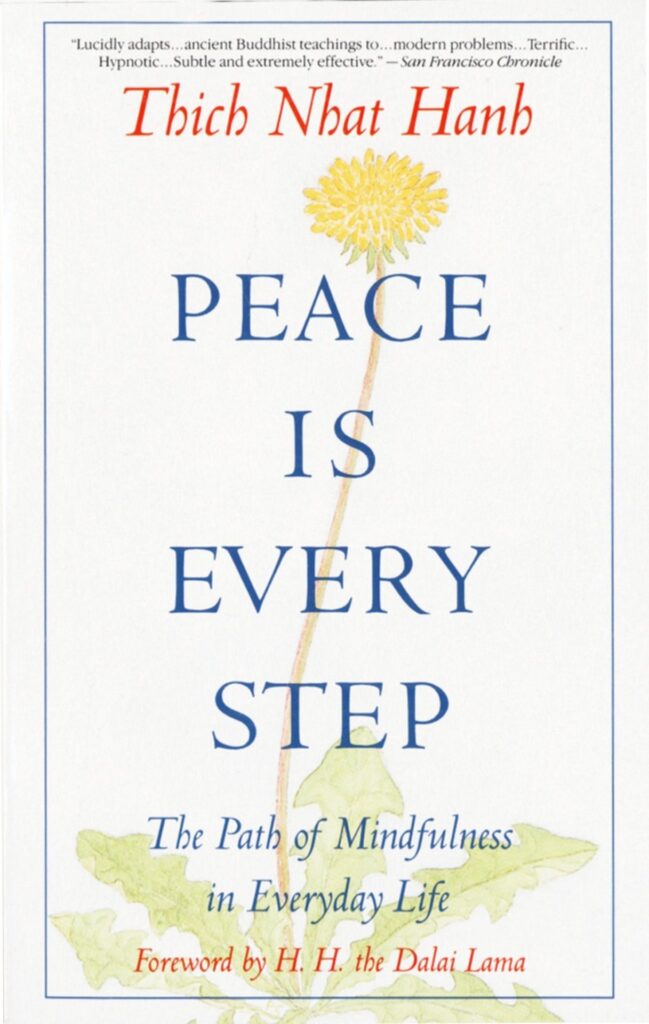
In that spirit, each month my goal is to read five books from different genres that cover a variety of topics. I read in order to learn and to start conversations with those I encounter along the way. Here are the books I read in July 2022. If you click on the title, you’ll go to the longer post on More to Come. Enjoy!

The Lincoln Highway (2021), the third novel by Amor Towles, is a self-described “multilayered tale of misadventure and self-discovery.” Set in ten days in 1954, it begins when eighteen-year-old Emmett Watson returns from the juvenile work farm in Salina, Kansas, where he has just served fifteen months for involuntary manslaughter. Emmett and his precocious eight-year-old brother Billy set out on the road with the intention of going to California. But other characters quickly insert themselves and the small band ends up going in the opposite direction. Throughout the twists and turns, Towles explores how “evil can be offset by decency and kindness on any rung of the socio-economic ladder.” We learn how a single wrong turn on the highway of life can set you off course, but the misdirection doesn’t have to be forever. Finally, balancing accounts can be a messy business. Because Towles writes the final sentence in a chapter better than anyone, you are compelled to turn the page in this terrific read.


There is Nothing for You Here: Finding Opportunity in the 21st Century (2021) is a remarkable memoir by foreign policy and national security expert Fiona Hill. This is her very personal story of growing up in England’s coal mining country as part of the wrong class, in the wrong region, with the wrong accent and nonetheless working her way through St. Andrews and Harvard to the Council on Foreign Relations, Brookings, and service in the White House. Hill uses her story as both backdrop and cautionary tale. Her upbringing in a region that was forgotten in the 1980s certainly shapes her worldview and her empathy for the forgotten areas in the U.S. and the U.K. Modern Russia, which she has spent most of her career closely studying, is another cautionary tale. “Russia is America’s Ghost of Christmas Future,” she writes, “a harbinger of things to come if we can’t adjust course and heal our political polarization.” Finally, her time on the National Security Council led her to see that “In some respects the crises of 2020 would mark the final reckoning with the revolutionary reforms of Thatcher and Reagan in the 1980s.” In the book’s final section, Dr. Hill lays out the issues we face in straightforward language and then provides prescriptions for the sick patient because our left-behind citizens deserve better. We will all do better if we recognize that life is a team sport.


Carlos Lozada‘s What Were We Thinking: A Brief Intellectual History of the Trump Era (2020) is the Trump book you didn’t know you needed to read. As the nonfiction book critic of the Washington Post since 2015, Lozada read upwards of 150 works on “the Trump era” — a period “suffused with conflict, crudeness, and mistrust” — and then created this wide-ranging, sobering, at times funny, and always insightful work focused not so much on Donald J. Trump, but on how we see ourselves in this moment. He leads us on his literary journey through ten chapters, with titles such as See Some I.D., The Chaos Chronicles, and Russian Lit. In each he considers 10-15 books that address a common theme, helpfully identifying books that “challenge entrenched assumptions and shift our vantage points….” The most important “enable and ennoble a national reexamination … They are the books that show how our current conflicts fit into the nation’s story, that hold fast to the American tradition of always seeing ourselves anew.”


Holes (1998), a novel by Louis Sachar, takes the reader on a darkly humorous trip as Stanley Yelnats reckons with his cursed past and his misplaced present. Because of a curse put on his no-good-dirty-rotten-pig-stealing great-great-grandfather, Stanley always finds himself in the wrong place at the wrong time. Which is how he ends up at Camp Green Lake digging very large holes, because the adults have told him it will build character. Of course, Camp Green Lake is not a camp. It is not green. It doesn’t have a lake. And the holes Stanley digs are not always literal. Written with pre-teens in mind, Holes has won the prestigious Newbery Medal. Two decades after its publication the book continues to delight pre-teens, teenagers, and adults alike. As I stayed up late reading, laughing out loud while appreciating the lessons about perseverance, companionship, and overcoming both cruelty and personal history that shine through in Holes, I was glad it came my way as a recommended choice for summer reading.


Hokusai Pop-Ups (2016) by Courtney Watson McCarthy, a paper engineer and graphic designer from New York, is a moveable book featuring the work of Japanese artist Hokusai. We discovered the book at Giverny, the home of impressionist painter Claude Monet. Hokusai Pop-Ups contains, of course, information on the artist but the scene stealers are McCarthy’s dazzling pop-ups of Hokusai’s art. The reader is told of his early apprenticeships where Hokusai learned woodblock printmaking, along with his frequent name changes (up to 30 over his lifetime) that often accompanied job and artistic shifts. Hokusai wanted to live well into his second century in order to master his craft. He did not quite make it, but his impact is nonetheless impressive, most especially on painters such as Monet and architects and designers in both Europe and the United States.

More to come…

DJB

NOTE: To see which books I read in January, FebruaryMarch, April, May, and June, click on the links. You can also read my Ten tips for reading five books a month online.

I will have a fuller appreciation of David McCullough in next Monday’s post.

Image by Prettysleepy from Pixabay