Latest Posts

Mark O’Connor improvising toward democracy

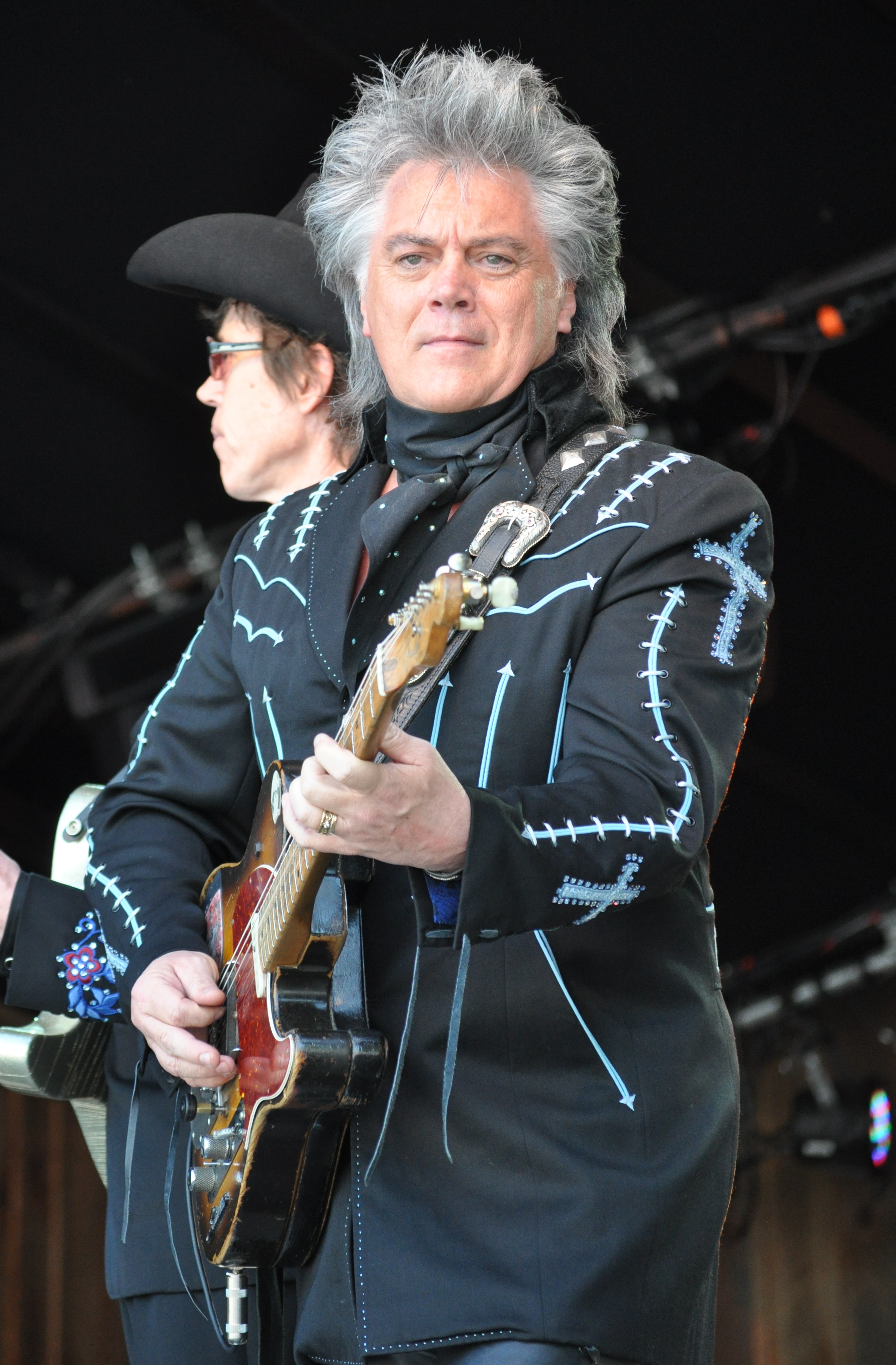
The 15th anniversary issue of Fretboard Journal* landed in my mailbox this week, just in time to reacquaint me with an old friend: Mark O’Connor.

It was a welcome reunion. First, because I discovered that O’Connor — one of the most inventive string musicians of this era — has returned to playing guitar, after a twenty year break that was required by the pain of bursitis and tendonitis. Then I also found his Improvising Toward Democracy solo fiddle pieces on the internet. As he tell his listeners,

“I am recording an improvisation on my violin each day, until our country is safe from the clutches of Trumpism, Cultism, Conspiratorialism, Racism and Authoritarianism. I will record a new violin improvisation each day as a form of a sincere musical prayer until Biden/Harris are voted in to the White House ensuring that Americans will retain our hard-fought democracy. I have been given a musical gift, so I will use this in service to my country and our Republic each day now. When I improvise in this manner on the violin, it is a spiritual devotion. The power of inspired music-making must be called upon now.”

We each have to do what we can to save our democracy. But I’m getting ahead of myself.

O’Connor, who will turn 60 next year, has been playing a wide array of roots, jazz, and classical music since his early teens. His first lessons came from American fiddling legend Benny Thomasson, and he quickly began studying the iconic French jazz violinist Stéphane Grappelli, with whom he toured as a teenager. At age thirteen, O’Connor became the youngest person to sign a recording contract with the roots music company Rounder Records and I first became aware of O’Connor’s music through his early Rounder offerings, such as Pickin’ In The Wind and the amazing guitar album Markology. Always a versatile virtuoso, he was winning fiddle, mandolin, and guitar competitions well before he was twenty.

As an 18-year-old, O’Connor took over the guitar chair in the seminal David Grisman Quintet from none other than Tony Rice, followed by a short stint as the violinist in another important instrumental group, The Dregs. A stint as a top-flight studio musician in Nashville was next, where in the early 1990s he headed up the house band on The Nashville Network’s American Music Shop show and signed with Warner Brothers records. The deal led to best-selling albums such as New Nashville Cats and Heroes, the latter a series of tunes cut with his fiddle heroes, ranging from Jean Luc-Ponty to Johnny Gimble, Carlie Daniels to Grappelli, Vassar Clements to Pinchas Zukerman (on a delicious twin fiddle version of Ashokan Farewell), and everybody in between. O’Connor is a composer, has been atop the classical charts with albums where he teams up with Yo-Yo Ma and Edgar Meyer, and…oh hell, he’s played everything with everybody. Go check them all out on his Wikipedia page if you’re interested. I just want to get into some music!

Much of his early fame came in the bluegrass/newgrass genre, so let’s jump right in the fire with this incendiary version of Bela Fleck’s Whitewater from a live Merlefest concert that features newgrass royalty: Fleck (banjo), Rice (guitar), Jerry Douglas (dobro), Sam Bush (mandolin), O’Connor (fiddle), and Mark Schatz (bass). O’Connor was not the fiddler on the recorded version of this song, but here he helps the band take the tune to new heights.

To give you a sense of the type of music played during the David Grisman Quintet days, I have two options for your listening pleasure. The first is from a 1980s Austin City Limits show with O’Connor on guitar, Grisman and Mike Marshall on mandolins, Darol Anger on fiddle, and the late Rob Wasserman on bass. For a period of 18 months from 1979—1980, this line up of DGQ toured the U.S. and released an album on Warner Bros. Records called Quintet 80.

O’Connor’s incredible musicianship as seen in the video may require some explanation:

Notice at 6:37, as O’Connor begins his guitar solo, his string snaps and one can hear this audibly. The high E string of the guitar came lose from the end pin and dropped all the way down to where it was flopping. You can see O’Connor attempting to figure out what to do as he continued his solo on national television. Beginning on the lower strings, he mutes some with his right hand, then gestured towards David Grisman as if he was going to give his solo back to him. Grisman does not respond and continues to play rhythm not really knowing what happened. Then O’Connor turns away from the mic and within a period of three seconds (from 7:01 to 7:04) the high E string is perfectly back in tune for the remainder of the solo. This very moment back in 1980 helped solidify O’Connor’s reputation as a young star whose ability as a great young musician was growing. These few seconds were the talk of the show to many guitar players watching at the time.

The second video is a live version of the Dawg 90 album tune Pupville, featuring Grisman, O’Connor (on fiddle), Rice, and dobro master Jerry Douglas from the American Music Shop show. Check out Grisman’s eye rolls watching O’Connor’s solo about the 0:45 second mark.

Since we’re now into his Nashville days, let’s check out O’Connor playing Pick It Apart with the New Nashville Cats and then as one of the super pickers with Vince Gill, Ricky Skaggs and Steve Wariner on Restless.

O’Connor’s Heroes album is a treat for the ears and a place where one can find the many influences that have come together to make up his music. The first video is a compilation of some behind-the-scenes footage of the making of the album, while the second is the aforementioned Ashokan Farewell. Stay with it all the way to the end…those last notes are sublime.

Also in the 90s, O’Connor began writing and recording folk-inspired classical music. One of the best known is Appalachia Waltz, recorded with cellist Yo-Yo Ma and MacArthur genius grant recipient Edgar Meyer.

“What Bach did was, he took all these dances from all the known world around him and put them in suite form. Old dances, new dances, courtly dances, peasant dances. And what Mark did was, he took this piece that is somewhat based on the Norwegian fiddling style, with the drone and that, wrote it in Santa Fe, and called it `Appalachia Waltz.’ It’s just so moving. It’s traditional. It is new. It comes from many different places, but it’s authentic. So after a long Bach evening, rather than play more Bach, this is the perfect thing.”

Yo-Yo Ma

O’Connor’s Thirty Year Retrospective album, recorded live at Vanderbilt in 2003 with mandolinist Chris Thile (another MacArthur genius grant recipient), innovative guitar flatpicker Bryan Sutton, and bassist Byron House, was a new take on the wide ranging scope of the musician’s early work. In the liner notes, O’Connor wrote that Thile and Sutton were the two players who most captured his sound and spirit on their respective instruments, and by this time O’Connor had stopped playing both due to his wrist issues. Here’s the group’s wonderful version of Granny White Special. O’Connor, Sutton, and Thile set the woods on fire with this one.

For a five-year period beginning in 2000, O’Connor joined with  jazz musicians Frank Vignola and Jon Burr for a trilogy of Hot Swing Trio albums dedicated to his mentor Stephane Grappelli. I heard this trio play a complete acoustic concert, with no microphones, in the beautiful Strathmore Music Hall just outside of D.C. and it was magical. To get a sense of how these cats swing, check out Limehouse Blues. The solos by all three are other-worldly.

The most recent project of this prolific musician may be his most personal: the Mark O’Connor Band. This is a family band with his wife Maggie O’Connor on fiddle, son Forrest O’Connor on mandolin and vocals, and daughter-in-law Kate Lee on fiddle and vocals. Rounding out the band is National Flatpick Guitar Champion Joe Smart. 

The Fretboard Journal story was about Mark’s return to guitar after a 20-year hiatus, and it is so rewarding to see him playing the old six-string again in this setting. The next video is a mashup of two shows (with changes of clothes and sunlight) where the band plays his New Nashville Cats hit Restless. This one features some more of Mark’s guitar work, along with Darrell Scott playing some tasty electric guitar in the background. The final video of this set is of the Bill Monroe classic Jerusalem Ridge, which was featured on the Heroes album.

I want to end with the most recent meditation from his Improvising Toward Democracy solo violin series, this one No. 16 that was posted yesterday.

As you can see, the man is prolific and jaw-droppingly amazing. You can find more videos at O’Connor’s website.

Enjoy!

More to come…

DJB

*Long-time readers will know that I have a deep love affair with Fretboard Journal, which chronicles musicians and the instruments they play in luscious detail. I generally refer to the magazine as guitar porn, but it is so much more to those of us deep into the music played on that most accessible yet difficult of instruments.

Listening

Listen in order to move out of your comfort zone

For some unknown reason (he smiles), I had the urge — following last evening’s debate of vice presidential candidates Kamala Harris and Mike Pence — to return and read two of my previous posts* on listening.

I had a special need to reconnect with my pleas for white men in power to stop talking and listen.

Of course, if you follow the news or watched any of the debate, you know why this subject needs addressing. Vice President Pence talked all over the two women on the stage: Senator Harris and the moderator Susan Page. News reports suggest that he interrupted Harris twice as much as she interrupted him, and he repeatedly went over his time limit, ignoring the pleas of the moderator. Yes, he was marginally more “polite” than President Trump was in last week’s debate. But I personally find the Vice President to be very passive aggressive — standing as both victim and condescending persecutor — and he used that persona last evening to act as if the rules didn’t apply to him. He refused to answer the moderator’s queries while he tried to get Harris to answer his own “gotcha” questions. From my perspective, it was another sad example of the lack of true, empathetic, and competent leadership in the current administration.

Mike Pence and Donald Trump come from an age where white men, through unearned privilege, had the entire stage to themselves. Both are very reluctant to give up that privilege.

I know the situation well because I have been in the same position, largely as a result of the accident of being born white and male. Yet because of the guidance provided by my parents and several female mentors in my life, I came to realize the imbalance of this power dynamic and the loss we all suffer when women are not allowed to speak.

I’ve written about this on several occasions as a reminder to be my better self. Yes, old habits can certainly be very hard to break, as seen in my difficulty in breaking out of the mold of being a stereotypical male. And I’m reminded of this far too often and in many different ways. One of the more consistent occurrences involves listening. Or, to be more accurate, not listening.

The stereotype is that men are encouraged, and even trained, to be the center of attention. It is a stereotype, in this case, because it is usually true. Studies show that boys are called on more in school, that boys grow up to become men who talk more in meetings, and that we interrupt women more than we interrupt men.

Most of the time I fall into this pattern of interruption because I’m not thinking. But a few times I do it knowingly and with the best of intentions. That was the case when I found myself last year talking over a friend to “help her” explain something that I thought might be difficult to articulate. Not because she isn’t a smart, articulate person, but because I perceived it could be an emotionally difficult subject.

Bad decision.

I interrupted her attempt to talk to me. Later, when I was home and reflecting on the conversation, I realized that I didn’t really know how she felt, because I had spoken over her and inserted my perceptions over hers. The next time we spoke I apologized. And then I asked if she would talk while I promised to be quiet and listen. But the moment had passed and she couldn’t remember, or didn’t want to return, to the topic.

So both my friend and I lost out by my decision to talk instead of listen.

Men Explain Things
Men Explain Things to Me by Rebecca Solnit

Regular readers know that I often refer back to a thoughtful collection of essays by the writer Rebecca Solnit.  Titled after the first in the collection and her best-known essay — Men Explain Things to Me — these nine pieces written between 2008 and 2014 explore multiple topics including the gender wars and male privilege, the use of violence as a way of silencing speech, abuse of power, a new twist on marriage equality, and more.  Through them all, Solnit pushes the reader to consider perspectives that are likely to be outside their comfort zone.

Men Explain Things to Me begins with the comic scene of a man explaining Solnit’s most recent book to her — even though he never read anything more of her work than the New York Times book review. Even after he is told that he is talking to the author, he doesn’t stop, but explains what her own book — which, again, he has never read — means.

Yes, it is a comic scene, but she ends this piece on a serious note, “because the ultimate problem is the silencing of women who have something to say, including those saying things like, ‘He’s trying to kill me!’” Each essay in this collection has something important to say and I strongly recommend them all.  Solnit is a clear thinker and talented writer. 

Listening is an act of love. However, as much as I try to act out of love for others, this is obviously a part of my practice in life that needs more work. Recognition is only part of the solution. Active, intentional listening requires more.

Men who are privileged (virtually all white males) and who have power often complain or push back about being made to feel uncomfortable. Solnit, in another set of essays, makes the point that,

“Comfort is often a code word for the right to be unaware, the right to have no twinges of one’s conscience, no reminders of suffering, the right to be a ‘we’ whose benefits are not limited by the needs and rights of any of ‘them.’”

Solnit suggests that, “The world is an uneven surface, with plenty to trip on and room to reinvent.” But she has this equal parts hopeful and challenging observation: “This country has room for everybody who believes that there’s room for everybody. For those who don’t — well, that’s why there’s a battle about whose story it is to tell.”

In thinking back, and then looking forward, to my conversations, I’m trying to listen with love. To push myself out of the need to feel comfortable. And, even, to reinvent my world to be a more inclusive place.

Now wouldn’t that be wonderful for everyone involved?

More to come…

DJB

*While I have sections from two different posts, you can read the one from 2016 and the second from 2019 by clicking on the links.

Honoring Fannie Lou Hamer

Fannie Lou Hamer, who was born on this date in 1917, was a voting, women’s, and civil rights advocate from Mississippi who shared more wisdom, in fewer words, than just about anyone I have ever studied. Her bio is full of leadership roles and “firsts”: co-founder and vice-chair of the Freedom Democratic Party, which she represented at the 1964 Democratic National Convention, organizer of the Mississippi Freedom Summer along with the Student Nonviolent Coordinating Committee (SNCC), and a co-founder of the National Women’s Political Caucus, an organization created to recruit, train, and support women of all races who wish to seek election to government office.

These are exceptional achievements for anyone, but Hamer had to overcome steep odds all her life. She was the 20th and last child of sharecroppers Lou Ella and James Townsend, growing up in poverty. At age six Hamer joined her family picking cotton; by age 12, she left school to work. She married Perry Hamer in 1944 and the couple worked on the Mississippi plantation owned by B.D. Marlowe until 1962. Because Hamer was the only worker who could read and write, she also served as plantation timekeeper.

The National Women’s History Museum website picks up the story there.

“In 1961, Hamer received a hysterectomy by a white doctor without her consent while undergoing surgery to remove a uterine tumor. Such forced sterilization of Black women, as a way to reduce the Black population, was so widespread it was dubbed a ‘Mississippi appendectomy.’ Unable to have children of their own, the Hamers adopted two daughters.”

She began organizing voters after attending a SNCC workshop in the summer of 1961. The next year, after unsuccessfully attempting to register 17 volunteers to vote at the Indianola, Mississippi Courthouse due to an unfair literacy test, the group was “harassed on their way home, when police stopped their bus and fined them $100 for the trumped-up charge that the bus was too yellow.”

Hamer was someone who never gave up. As a result, the impact of her work is far-reaching. In perhaps the best known event from her life, she went to the Democratic National Convention in 1964 in an attempt to have the racially mixed Mississippi Freedom Democratic Party (MFDP) recognized as the official party for the state. She failed, but her work that year and beyond was so effective that by 1968 Hamer’s vision for racial parity in delegations had become a reality and she was a member of Mississippi’s first integrated delegation.

When I visited her grave site several years ago on a trip to the Mississippi Delta, I was reminded once again of the wisdom that came from her heart and soul. Hamer’s tombstone epitaph reads simply,

“I am sick and tired of being sick and tired.” 

Throughout her life she had so many important and memorable things to say. Such as:

“Righteousness exalts a nation. Hate just makes people miserable.”

“Never to forget where we came from and always praise the bridges that carried us over.”

“That’s why I want to change Mississippi. You don’t run away from problems — you just face them.”

“With the people, for the people, by the people. I crack up when I hear it; I say, with the handful, for the handful, by the handful, cause that’s what really happens.”

And probably her best known quote, which rings as true in 2020 as it did the day she first uttered it:

“Nobody’s free until everybody’s free.”

With thanksgiving, on the anniversary of her birth, for the life and work of Fannie Lou Hamer.

More to come…

DJB

Let’s stop celebrating a past that never existed. Instead, let’s understand and honor the one that did.

I first stood at Jamestown as a history-enthralled 11-year-old. The picture of the 17th century ruin of the church tower, abutted to the 1907 Memorial Church, is seared in my mind. I also remember the water lapping at the nearby shore, serving as a reminder that the people at Jamestown had the most tenuous of toeholds on this continent in those early years.

While I didn’t know it at the time, the narratives of life in early 17th century Virginia — told by the guides, the plaques that lined the walls of the 1907 church, and the books I devoured — were incomplete and sometimes egregiously false. White Christian Europeans were the focus. If they were mentioned at all, Native Americans, along with the enslaved African Americans who began arriving against their will at Jamestown in 1619, were small, dependent actors; impediments, if you will, to the greater story of the colonists and settlers and the shaping of what it meant to be an “American.”

Those Europeans were not home. They were the outsiders. Yet we are still fighting over how to interpret their presence in what would become Virginia.

Fifty-four years after I visited Jamestown, the President of the United States stood in the National Archives Museum and called for a “restoration” of “patriotic education” in our schools. A project designed to reverse what some conservatives have seen as a growing emphasis in American public schools on themes of civil rights at the expense of more traditional historical narratives, mainly those revolving around white men. Patriotic education would fit right in with those 1966 interpretations.

Today, thanks to the scholarship of historians, works like the 1619 Project, the explorations of archaeologists, and the education efforts of groups like Preservation Virginia, the interpretations at Jamestown are more richly textured, recognizing the various layers that make up this iconic place in American history. Something worth understanding happened there in the early 17th century. There are stories worth telling and people worth remembering in part for the significance they bring to our lives today. But because history is not what happened, it is a story about what happened, we need to be thoughtful and as truthful as possible in how we craft our narratives of remembrance.

Our recollections need a reckoning and a reimagining. A reckoning with the history that did happen and a reimagining through recovered stories with hope for our collective future.

It may seem strange that someone who has spent more than four decades working to preserve the places and stories from our past finds strength in the belief that America is focused on the work of the imagination, a word that speaks not of past facts but to hope for the future. The writer and social critic Lewis Lapham captures my beliefs about the country’s soul when he writes,

“What joins the Americans one to another is not a common nationality, language, race, or ancestry (all of which testify to the burdens of the past) but rather their complicity in a shared work of the imagination.”

Stories about the past and the places of our lives always seem to be much more on our mind in my native South. Our celebrations and troubles often appear in starker relief. They are imbued in our writing and infused throughout our music. Some are even true. Yet Southerners are not alone in commemorating a past that never existed, while ignoring the one that did.

Marie Howe has said, “Memory is a poet, not a historian.” Neurologists have been saying the same thing now for decades, just not as eloquently. Psychologist and professor Michael C. Corballis notes that our memory…

“was clearly not designed by nature to be a faithful record of the past. Rather, it supplies us with information — some true, some false, and always incomplete — that we use to construct stories. We may well be what we remember, at least in part, but our memories, like clothes, can be selected and modified to create what we want to be, rather than what we actually are.”

In a recent conversation with distinguished Southern historian Edward Ayers, director of the New American History project, he suggested to me that history is not always what it looks like because part of what you are preserving is the memory of what has happened. Stories built on memory can be good, bad, accurate, or wildly false, as Corballis notes. I agree with Ed’s thesis, and with his suggestion that we need to learn how to preserve the “change” that is so much a part of our lives. Preservation at its best should not wallow in nostalgia. Instead, we should work to preserve and honor the stories from our individual and collective memories, seeking the truth through an understanding of how they connect over a continuum of time to help build our personal and national identities.

Many scholars, preservationists, and history lovers — individuals who also love America and its ideals — are working to better understand those stories and memories and tell the truth about our nation’s past. As Ayers considers the half-century of sustained right-wing assaults on historical scholarship, he writes that the charges concern and puzzle him.

“…because they suggest I have been obtuse and perhaps even deluded. As it turns out, I have practiced history for most of the half-century in which these wars over history have been waged — and I have yet to meet anyone who works to destroy the United States. It makes me wonder whether I have been going to the wrong conferences and reading the wrong books…

If this critique had merit, I should have been in the room when the plans were hatched. After all, I sought out the subjects often attacked as the nest of dangerous ideas. I have written books about crime and punishment in the South, about the rise of segregation and disfranchisement, about the Civil War and Reconstruction. Those topics deal with Black people, enslaved and free. They wrestle with lynching and chain gangs. They confront secession and the waging of war against the United States.”

Over a four-decade career in preservation, often facing difficult histories at places ranging from lovingly preserved plantations to the battlefields of great conflicts to formerly unrecognized slave markets, I have yet to find among those pushing for a fuller, deeper understanding of history someone who “hates America.”

We all face choices as to how we express love for one another and for our country. Some come to a point of view and steadfastly defend it, seeking support in those who share that worldview while condemning individuals on a different path.

Others choose to believe that seeking the truth and finding clarity about the events in our past takes work and requires deep listening to those who do not look like us, read the same books, attend the same schools, or share our life experiences.

Patriotism as I envision it involves a willingness to examine, rather than paper over, the troubles in our past. My stories of the places from my history — coming from my very privileged status in the South as a straight, white, Christian, male — celebrate both triumphs and difficulties. But I write them out of a spirit of hope. Hope that is grounded in memory. Hope that is a part of — when I am at my best — a never-ending education and ongoing effort to seek the truth.

When we make the choice to hope, refuse to paper over our troubles, and go down into our figurative basements to work on the often hidden issues that divide us as a country, perhaps then we can move beyond a celebration of a past that never existed and begin understanding and honoring the past that did.

(NOTE: During October, I am writing articles on how history and the places where history happened can help us understand the issues we are facing as a country and a democracy. Besides this story of revealed history, you can find posts on the use of misinformationwrongful imprisonment and racial violencereligious liberty, and voter suppression, in addition to a book review on how democracies die by clicking on the links.)

More to come…

DJB

Image: Jamestown Memorial Church (credit: Preservation Virginia)

Saturday Soundtrack: Matt Flinner

Matt Flinner is the top-shelf mandolinist and composer not enough people know. At least not in the way that music fans know that force of nature Chris Thile, or the Energizer Bunny clone Sam Bush, or the genre-bending trail-blazer David Grisman. But musicians have long been aware of this quiet master, who, in the words of the Associated Press, “blurs the lines between jazz and bluegrass, traditional and avant-garde” with the best of them.

Flinner’s website bio showcases just how in-demand he is as a musician.

“Multi-instrumentalist Matt Flinner has made a career out of playing acoustic music in new ways. Starting out as a banjo prodigy who was playing bluegrass festivals before he entered his teens, Flinner later took up the mandolin, won the National Banjo Contest at Winfield Kansas in 1990, and took the mandolin award there the following year. Since then, he has become recognized as one of the premiere mandolinists as well as one of the finest new acoustic/roots music composers today. He has toured and recorded with a wide variety of bluegrass, new acoustic, classical and jazz artists, including Tim O’Brien, Frank Vignola, Steve Martin, Darrell Scott, the Modern Mandolin Quartet, Dave Douglas, Leftover Salmon, Alison Brown, The Ying Quartet, Tony Trischka, Darol Anger, and the Nashville Chamber Orchestra. He has also recorded two Compass Records CDs and toured as part of Phillips, Grier and Flinner with bassist Todd Phillips and guitarist David Grier. His two solo CDs (also on Compass), “The View from Here” and “Latitude,” are now widely considered classics in the new acoustic/modern bluegrass style. His current group, the Matt Flinner Trio (with guitarist Ross Martin and bassist Eric Thorin), has forged new pathways in acoustic string band music with their two ground-breaking CDs, “Music du Jour” and “Winter Harvest” 

Since he began in bluegrass, we’ll start our exploration there as well, with this tasteful version of Bill Monroe’s Tennessee Blues by Phillips, Grier and Flinner. Stick around for the second mandolin and guitar breaks because both are worth it. David Grier and Todd Phillips — long-recognized masters in the acoustic music world — are no slouches on the guitar and bass, respectively. And the entire band has beards which would make any Stanley Cup-chasing hockey team proud.

I first focused on Flinner’s music because of his Music du Jour project and album. As the mandolinist explains in this short video, each member of the trio writes a song each day while the band is on tour. They then perform those tunes that evening. It made for quite the creative challenge, and some wonderful music.

Inferno Reel, which kicks off the Music du Jour album, is a pretty standard bluegrass romp (if you are a top-notch player). It is also great fun.

Stomp Hat, from the same session, heads off into more jazzy territory.

The tunes can come from anywhere and often reflect the mood of the composer on that particular day. In a blog post, Flinner noted that the inspiration for Raji’s Romp came from…

“an interception and touchdown run by B.J. Raji of the Green Bay Packers a couple of years ago, which helped the Packers go on to the Superbowl by defeating the Chicago Bears.  I finally got around to writing my tune of the day after the game was over, and being a Packers fan, I was in a good mood.”

The tune was written on Jan 23, 2011, for a show at Avogadro’s Number in Ft. Collins, Colorado, and is featured on the Winter Harvest album.

Here’s a beautiful two-mandolin arrangement of Flinner’s tune A View From Here, with an extra dollop of St. Anne’s Reel thrown in for good measure. Performed by Matt and Flynn Cohen (of Low Lily) on December 18, 2019, this concert took place at The Parlour Room in Northampton, Massachusetts.

I have heard Flinner live at both Merlefest and Red Wing Roots Music Festival, often playing as a sideman. He’s quiet, so you might miss him unless you pay attention. Flinner is one of the innovative artists found on Compass Records. When live music returns, I recommend you take in a show if he’s in your area. Until then, take the time to get to know him and his adventuresome music.

Enjoy!

DJB

Photo courtesy of MattFlinner.com

Happy Birthday, Jimmy Carter!

President Jimmy Carter turned 96 years old today, and that’s worth a celebration! It also brings back some personal memories.

The 1976 campaign, when former Georgia Governor Jimmy Carter took on the incumbent Gerald Ford, was the first time I was eligible to vote for president. A few weeks before Election Day, I was in Philadelphia as a young college student studying history and historic preservation, attending the National Trust Annual Preservation Conference — the first of 41 I attended over my career.

Philadelphia in 1976 moved me. I loved exploring a real city, a gritty city at the time, with my friends and classmates. It was so different than Murfreesboro or even Nashville. We ate food that had never before passed my Southern lips and heard strange accents that sounded foreign to my ears. I was able to see and touch Independence Hall and Carpenters Hall, iconic places that I had explored only in books as my interest in the past expanded and deepened. Being in the room where the delegates debated concepts such as the self-evident truths of life, liberty and the pursuit of happiness made it all come alive.

And the real-time relevance of history and place exploded in my face during that trip. I was there near the end of the presidential campaign, the first time the people would have a voice after the upheavals of Watergate. Jimmy Carter was scheduled for a massive downtown rally late in the week. Several classmates and I wedged our way into the tens of thousands of people who filled four streets that came together at the intersection where the candidate would speak. My heart raced as I heard the roars for that now-familiar Southern lilt coming from a man who in a few short days would be president-elect. My mind thrilled as I realized that here I was, in the city where the concept of a government, deriving powers from the consent of the governed, had its most powerful realization. Somehow, I also understood that, in casting my first vote for president, which went to President Carter, I would soon be a part of what Abraham Lincoln noted was the ongoing fight to see if a nation dedicated to the proposition that “all men are created equal” can long endure.

Two years later I was living in Americus, Georgia, just ten miles from Carter’s hometown of Plains. I was the first historic preservation planner in a joint program between what were then called Area Planning and Development Commissions and the state historic preservation office. I had moved to a place with a complex history, as histories usually are. Beside the stories of racial injustice and Jim Crow terror, I found the existence of the interracial Koinonia Farm, which began on land outside Americus in the 1940s. The commitment to racial equality, pacifism, and economic sharing brought “bullets, bombs and a boycott” — to quote the farm’s own history — as the Ku Klux Klan and others attempted to force closure of this radically intentional Christian community in the 1950s. They failed, and it is still in existence, as it was when Jimmy Carter was elected president and I arrived in town.

There was a pride in Carter’s life and accomplishment along with a desire to showcase the best the area had to offer. That was one reason I was there, as the rich, layered, and sometimes troubled history was being considered worthy of preservation. I had the opportunity to recognize the places in Plains that were integral to Jimmy Carter’s development, and on one trip to the small town I had the chance to meet Mrs. Carter and tell her of our work. I helped in the early efforts to resurrect one of the triumphs of Americus, the community’s iconic Victorian-era Windsor Hotel, with its mix of tower and turret, balconies, and a three-story open atrium lobby. Joining a small group of local preservationists, we also worked with the city to begin a community development project to preserve and upgrade the simple vernacular homes of the city’s black citizens. Those were great times that I treasure.

Carter’s legacy and impact as president has grown through the years, although he was voted out in the Reagan revolution of 1980. Among the great ironies is that Jimmy Carter, who is universally recognized for the way he lives out his Christian faith on a personal and public level, was targeted for defeat by none other than the Moral Majority founded by the father of the now infamous Jerry Falwell, Jr.. I noted recently in another post that Former President Carter has had what many believe is the most successful post-presidential career in history*, all built around service to others.  His work empowers those who didn’t have the privilege that he enjoyed as a white, male Southerner growing up in the 20th century.  

Wonkette had a wonderful and touching tribute to President Carter today that included the following:

“A spokesperson for the Carter Center in Atlanta said the former president would be celebrating his birthday at home in Plains with his wife, Rosalyn….Back in July, the Carters released a photo reminding folks to wear face masks and to keep each other safe. In March, as the pandemic spread, the Carters sent a message to donors asking them to forgo their next planned donation to the Carter Center and instead give to local groups helping out with the pandemic, because that’s the kind of people they’ve always been: believers in community, and in the power of people to help each other — not just through individual giving, but through making government work for everyone, too.” (my emphasis)

The story also included this skit from SNL, which has some laugh out loud moments and captures a snippet of the craziness of life in the 1970s:

As the Wonkette story notes, Carter was also invoked in the lede of a Washington Post story Monday, following the big New York Times exposé “revealing Donald Trump just plain doesn’t pay income tax.

“In 1977, President Jimmy Carter had a problem, according to presidential tax historian Joseph Thorndike. Carter’s federal tax burden for 1976 had been zeroed out by a massive investment tax credit he earned for purchasing equipment and buildings related to his peanut farm.

Carter was upset, as he told The Washington Post at the time, because he had a “strong feeling” that wealthy people like him should pay at least some taxes. So he voluntarily paid the Treasury Department $6,000, the equivalent to 15 percent of his adjusted gross income and slightly more than the 14 percent paid by average taxpayers that year.”

God do we miss that type of leadership and character in these troubled times.

Happy birthday, Mr. President! Yours has been a life well-lived. May you continue to live comfortably while you inspire us all.

More to come…

DJB

*Others may argue for John Quincy Adams, who served 17 years in the House of Representatives after losing his presidential re-election bid to Andrew Jackson.  Adams, a fervent anti-slavery Congressman, is credited for the effort that did away with the “gag rule,” which automatically nullified anti-slavery legislation.  Adams suffered a stroke on the floor of the House in 1848 and died two days later.

Photo courtesy of The Carter Center via Twitter.

Dinos on the Montana Landscape

UPDATED: How can I miss you if you won’t go away?

Editors Note: Originally posted on May 5, 2019, here we are on September 30, 2020, the day after the first presidential “debate”, and this is the “egg on my face” update. Who knew that good old 77-year old Joe Biden would be JUST what the country needed in 2020 to face down a bullying, narcissist, misogynistic, racist con man? Apparently a lot of older, female, and/or black voters who understood that basic decency, competence, and a long career of public service would be an effective counterweight to Donald Trump. So I take back the concerns I was feeling because Biden wouldn’t step aside for the next generation and salute him for his courage and stamina. I feel he’s taking one for the country. While I still think the basic premise of this post holds, I will admit to both exceptions to the rule and errors on my part.

Sometimes it’s hard to say good-bye.

Last week, former Vice President Joe Biden—at 76 years of age and counting—became the twentieth announced Democratic candidate for President.  As many have noted, he’s not even the oldest aspirant in the field. That would be 77 year old Senator Bernie Sanders, running again after coming in second to Hillary Clinton in the Democratic primary in 2016.  Both white males are vying to replace another white male, 72 year old Donald Trump.

So much for the generational change with diverse candidates who look more like America that was to occur when the 47 year old Barack Obama assumed the presidency in 2009.  Not to mention the glass ceiling, which remains very much in place.

Knowing how and when to step aside for a more diverse, younger generation of leaders is very much front page news for the Democratic Party as the nation heads into another presidential election cycle. A recent Suzanna Danuta Walters op-ed in the Washington Post argues that male politicians “have a responsibility—if they really do want a more gender-equitable world—to lean out, work actively to disavow their privilege and pitch in to get a woman elected president.”  A Democratic primary focused on the women and younger, more diverse male candidates would provide choices among those who have experience in executive and legislative leadership, voting rights, criminal and social justice work, consumer protection, financial sector reform, health care, environmental protection, immigration, LGBTQ rights, Hispanic and African American empowerment, local government, the role of the military in today’s world, and international relations.  All are issues of importance to a wide range of Americans.

Politicians have a history of sticking around when others have long moved on to retirement (think Strom Thurmond, for goodness sake) and they certainly have motivations which differ significantly from so many of their fellow citizens.  Nonetheless, suffice it to say there is no “right” answer here.  Looking outside of politics, the preponderance of evidence has led me to believe that the privileged who are aware** of the special standing they have been given because of their gender, race, or circumstances of birth have a responsibility to think carefully about how to support those who do not have those same entitlements.  Even when we believe we have unique qualifications to lead—perhaps especially if we believe we have unique leadership qualifications—we need to consider the benefits of giving others, who bring a different perspective, their opportunity.

I considered appropriate ways to turn over my responsibilities before stepping down from a nonprofit leadership post earlier this year.  Over time, I came to believe that the baby boomers had made our mark on the historic preservation field and should find ways to pass the movement’s future to younger and more diverse generations and their points of view.  As this thought grew, the face in the mirror looked back at me with that, “Well, what are you going to do about it?” look.  Was I good at what I did?  Yes, I believed I was.  Were my perspectives, gained over decades of experience, of value to the field?  Yes, I felt so.  Was I indispensable? Ha! My grandmother’s admonition that, “The graveyard is full of folks who thought the world couldn’t get along without them” was always too fresh in my ears.

Stepping aside to encourage leadership roles for people of different generations, genders, and ethnicities doesn’t mean crawling into a retirement shell and slowly dying.  Mentoring new generations—both before and after transitions—will always be important.  Former President Jimmy Carter has had what many believe is the most successful post-presidential career in history***, all built around service to others.  His work empowers those who didn’t have the privilege that he enjoyed as a white, male Southerner growing up in the 20th century.  It is a model many of us could emulate, no matter our field of expertise.

There’s an old song that goes, “How Can I Miss You If You Won’t Go Away?”  It is a sentiment that is good to keep in mind when considering how to effectively, and gracefully, step aside before becoming a dinosaur.

Have a good week.

More to come…

DJB

*Perhaps some should say good-bye before extinction arrives (Dinosaurs on the Montana landscape* – photo by Claire Brown). One of the great things about traveling cross country is the wacky art you find along the way, such as the dinosaur sculpture garden just outside of Glasgow, Montana.

**I am very much aware that there are many individuals who do not see how their privilege has set them up for success.  They were born on third base and yet wake up and think they hit a triple.

***Others may argue for John Quincy Adams, who served 17 years in the House of Representatives after losing his presidential re-election bid to Andrew Jackson.  Adams, a fervent anti-slavery Congressman, is credited for the effort that did away with the “gag rule,” which automatically nullified anti-slavery legislation.  Adams suffered a stroke on the floor of the House in 1848 and died two days later.

Installment #2 in The Gap Year Chronicles

Defining our democracy

“The good things in our nation did not come about by chance, and they will not be preserved by indifference.”

The Rev. Dr. Deborah Meister

I’ve said it before, and I’ll say it again: Keeping a democracy takes work.

Disuse of democracy by a careless majority is cause enough for worry in a world of constant struggle between tyranny and freedom. But when that indifference is coupled with a deliberate effort by a wealthy minority to undermine the public good for private gain, we find ourselves at a point where Americans are in danger of having government by the people smothered by an oligarchy focused on the enrichment of the few and the repression of those who disagree with them.

America as an idea is a work in progress, with an eye on the prospects for the future. At our best, we are always growing, always becoming, as we move toward that more perfect union. But we are not always at our best. The history that really happened, as opposed to the history we’ve told ourselves for much of our existence, is that we have not always had the full flowering of democracy that we so proudly celebrate here in America.*

That’s true in part because the presiding oligarchy has never wanted one and has worked to align their personal goals with false definitions of what government by and for the people entails. Those who favor authoritarianism and hierarchy — who favor an America that privileges only those who support their point of view, be it economic or theological — have certainly been working overtime for more than 400 years to institute their vision. If we are to keep government by the people alive in this country, it is important to understand how that minority defines and frames issues as they work to undermine pluralistic democratic rule.

When we think of what use to be called the commonweal, or the good of the people, our mind conjures up liberty, freedom, rights, the public good, and truth. Yet in recent decades, each of those words and phrases has been redefined in ways that denigrate the core concept of community obligations and beliefs so critical to the American experiment.

Let’s begin with liberty.

In a comment to last week’s post, my friend Deborah Meister suggested that, “’Liberty’ used to mean ‘liberty for… [something]’ —- something like, freedom to develop one’s gifts and then to offer them in helping to shape a society.” But today, after a long effort by the oligarchy to move beyond the concept of a common good, liberty is generally understood in our culture as “‘freedom of choice’ (by which its proponents mean freedom of consumer choice) and freedom from constraint. There is a world of difference,” Deborah adds, “between liberty to choose one’s obligations and liberty to ignore them all in favor of an existence centered on self or, at most, on self and family.”

Which leads us to rights.

In a true pluralistic democracy, rights come with responsibilities and are generally practiced with some sense of empathy for fellow travelers in the world. At the very least, rights with responsibilities are seen as the price of citizenship. But with a selfish world-view focused on anti-science, racism, and patriarchy, many of those fortunate enough to live at the top of the pyramid, generally through an unearned privilege such as the accident of birth or race, do not see it as their responsibility to use their rights to show empathy and concern for others. Hierarchy, in this case, suits their purposes just fine.

Some wonder why evangelicals and other conservative Christians support the wealthy oligarchy so passionately. Part of the reason is that evangelicals often believe in a hierarchy of 1) God, 2) man, 3) woman, and 4) child in that order. Some who hold such beliefs easily fall into the trap of believing that giving rights to “others” such as women, people of color, or LGBTQ individuals, takes away their rights and position on the pyramid. This is why those religious communities don’t have any problem with Donald Trump. His enemies are their enemies. His hatred is a feature, not a bug.

That point-of-view clearly confuses the general population. Most of us believe that to be Christian is to “love your neighbor as yourself” with a broad — some would say Christ-like — definition of neighbor. Having grown up in a region where neighbor, for many Christians, had a much more narrow focus, I am here to tell you that what most of us know just ain’t so. Religious rights are seen by these groups as theirs to define, along with the ability to interpret how “others” fit into that worldview.

From a distortion of religious rights, it is a short jump to the contortions around religious freedom.

Similar to the redefinition of “rights”, some evangelical Christians have also reshaped the concept of “freedom” to fit their purposes. When White Evangelical Christians talk about becoming a minority, they believe it creates a universe where there is more for “the others” or “them” and less for “us.” So they talk about Donald Trump restoring their “freedom.” Writing on Religion Dispatches, John Stoehr rightly calls out that type of thinking for what it truly is: utter nonsense.

“What they’re really saying is that the president will prevent people lower down the order of power from achieving more freedom and equality, ‘violating’ their ‘freedom.’ He must do that by any means, even if he confiscates kids from their mothers, bans a world religion, or commits treason. None of that matters as much as maintaining the supremacy of a religious identity…”

Oligarchs and their supporters have also worked to twist the meaning of public and private.

Writing in 2015 about the huge growth in wealth inequality that the gaming of the system has permitted over the past 40 years, social critic Lewis Lapham asks his readers to consider…

“…reversal over the past half century of the meaning within the words ‘public’ and ‘private.’ In the 1950s, the word ‘public’ connoted an inherent good (public health, public school, public service, public spirit); ‘private’ was a synonym for selfishness and greed (plutocrats in top hats, pigs at troughs). The connotations traded places in the 1980s. ‘Private’ now implies all things bright and beautiful (private trainer, private school, private plane), ‘public’ becomes a synonym for all things ugly and dangerous (public housing, public welfare, public toilet).”

This use of words to shape a viewpoint that is authoritarian and against a pluralistic democracy brings us to truth.

We find ourselves at the end of September 2020. Slightly more than a month out from the election. The day before the first presidential debate. A day after details from the president’s long-withheld tax returns came out in a front-page story in the New York Times. And a week after the death of Justice Ruth Bader Ginsburg and Trump’s nomination of Amy Coney Barrett to fill her seat.

With all of that before us, it is well to remember how the oligarchy attempts to define right and wrong, true and false. It is important, I suggest, to take back the words and narrative of democracy.

The Senate Majority Leader could barely wait an hour after Justice Ginsburg’s death before assuring us all that his lying would ensure that he would attempt to rush through a nomination for a new justice before the end of the Senate’s term on January 3rd and perhaps before the election. And Donald Trump, who has his own issues with the truth, promised to put forward a nomination immediately, which he has now done for Judge Barrett.

It was predictable that Trump and McConnell would move forward with barely disguised glee. They both have long track records proving they don’t truly believe in democracy, only power for the powerful. And they twist words to fit their lies. To understand our true position in this fight, we need to resist against charges of fake news and the manipulation of facts.

One way to take back the narrative is to remind ourselves that the Majority Leader is not so much a hypocrite but rather a bald-faced liar. He is hiding the truth behind his motives. What he really wanted four years ago was to keep President Obama from nominating a third Supreme Court justice, so he made up some bogus argument — twisted words defining a new Senate “tradition,” if you will — to lie about his true intentions. What he really wants in the next two months is for the Republicans to select their third justice to the court in a little under four years, so he makes up another bogus argument to lie about his true intensions. He isn’t being hypocritical as much as he is lying with words whose meaning he changes to fit his purpose of covering up what he really wants to do.

And here at the end of September, we can look at how words are changed to fit a political purpose by considering the president’s twisted explanations and logic around election security. When you are down an average of more than 7% in the national polls, want people to stop talking about your disastrous pandemic response, are captured on tape lying to Americans about the virus, saw the majority of your party in the House of Representatives disappear in a blue wave in 2018, and have driven unemployment to Great Depression levels, what do you do to change the conversation from all your losing?

You do what Donald Trump has done his entire life. You “create a fiction: You tell the world that you are not losing, the other side is cheating, and you will not allow it.” Trump is working, by changing the meaning of words and concepts we all understand, to hijack the conversation. So many gullible Americans bought into his fiction that he was a rich, successful businessman when the first details of his tax return tell us otherwise. And he wants Americans to believe he can strongarm his way into staying in office indefintely.

And that, dear readers, puts us in a very difficult place as the oligarchs who now control a once-great party are seeking to smother democracy.

The response to Donald Trump’s fictional strongman routine or the nonsense of the religious right is not to run around with your hair on fire or to get depressed and not vote. No, the response is to see clearly what Trump, McConnell, and their supporters in the government, right wing media, white evangelical community, and Russia are trying to do. And then you get to work, doing whatever is within your power, to help keep our democracy.

More to come…

DJB

*Yes, I know the difference between a republic, a pure democracy, and a representative democracy.

Image by UnratedStudio from Pixabay.

The warm, intimate, and compelling music of Watchhouse (fka: Mandolin Orange)

UPDATE: On April 21, 2021, Mandolin Orange sent out an email to their fans to let everyone know that the band’s name had changed to Watchhouse. It is a thoughtful report on how a year in pandemic led to introspection as to where they were as a band and where they were going.

I first heard the North Carolina folk duo Mandolin Orange at the 2014 Red Wing Roots Music Festival and was instantly smitten. I wrote then that singer-songwriter Andrew Marlin and multi-instrumentalist Emily Frantz “crafted songs that were  simple yet compelling.” Over the years the band has continued to produce warm, intimate music even as they became more widely known and played larger venues such as Red Rocks in Colorado and The Ryman in Nashville. Their most recent studio project, Tides of a Teardrop, debuted at #1 on four different Billboard charts ( Heatseekers, Folk / Americana, Current Country Albums and Bluegrass) with Top 10 entries on 5 additional charts. Clearly, Mandolin Orange has a passionate following.

When asked about the band’s unusual name, Emily told an interviewer in 2015, “It’s basically a play on Mandarin Orange, but when we first started playing, Andrew had this little beater, a mandolin that was orange, and I think one day we just sort of thought of that and it stuck.”

Let’s begin our look at their music from those earlier years with the 2014 video of Hey Adam, from the album This Side of Jordan, filmed amidst the evocative artwork and spaces at MassMOCA in North Adams, Massachusetts.

That Wrecking Ball is from the band’s second album on Yep Roc Records, Such Jubilee, released in 2015. For two musicians so young (they are both 32), it is a thoughtful tune about aging and the push back against the ravages of time.

“I’ve just seen that rock of ages
I’ve just held my savior’s hand
We danced on the water with my head on her shoulder
She swore to never let me fall
And wouldn’t time seem so kindly
if every bright eyed girl could be more like you
and shelter me from that wrecking ball
That wrecking ball

Andrew and Emily played a well-received Tiny Desk Concert last year, with songs from their two most recent studio recordings. Golden Embers and The Wolves are from 2019’s Tides of a Teardrop while Wildfire is from 2016’s Blindfaller. By the time this was recorded, they had been playing together for ten years, recorded six albums, gotten married, and started a family. As Bob Bollen wrote on the Tiny Desk posting, ” “The Wolves is a story song that, for me, tells a tale on an older woman’s life, the “hard road” she’s taken and that feeling of wanting to howl at the moon when all is finally right.” To me, the song and lyrics of Wildfire seem just so right for our times of troubled racial injustice.

“Civil war came and civil war went
Brother fought brother, the south was spent
But its true demise was hatred passed down through the years
And it should have been different, it could have been easy
But pride has a way of holding too firm to history
Then it burns like wildfire”

In their cover of Bob Dylan’s Boots of Spanish Leather, they show the beauty of simplicity. I love their version of this Dylan masterpiece.

While the band has been on a touring hiatus given the pandemic, they released a live album of a February 2020 recording from Austin City Limits earlier this summer. So we’ll end with Hey Stranger from that album, which has, once again, a message for our troubled times.

“Hey stranger, if ever you decide
Giving in to the bottom will ease your worried mind and heavy heart
You’ll see in time
There’s no burden greater in life”

Mandolin Orange is live streaming from their home base on a regular basis, so if you like what you hear in their music, check them out.

Enjoy!

More to come…

DJB

Keeping a democracy takes work

Author, educator, and lawyer Teri Kanefield writes very smart posts about the law, books, and politics on her Teri Kanefield blog.* This morning she posted thoughts on why those who believe in democracy need to educate themselves on what it takes to keep that system of government. To use one of my favorite baseball metaphors, she hits it out of the park.

I’m working on a post that looks at different aspects of our history, but that makes essentially the same point as Kanefield:

Many liberals and Trump critics have the idea that the United States has always been a liberal democracy — and then along came Trump, pulling the wool over his followers’ eyes and battering our democratic institutions.

In fact, America didn’t start to move toward a true liberal democracy until Brown v. Board, the 1954 Supreme Court case that declared racial segregation unconstitutional. Brown sparked the modern Civil Rights Movement, which in turn gave rise to the women’s rights movement. Liberals cheered these changes. Many did not.

Trump is riding the backlash from those changes.

For most of U.S. history, Americans lived in a hierarchy. Think of slavery, Jim Crow, and women’s place in the home. Until the modern Civil Rights movement, what we now call voter suppression was legal. For most of our history, only white men voted.

A person on Twitter told me, “Things have never been this bad.” People who think, “Things have never been this bad,” have probably never imagined what life was like for an African American woman in 1850. She didn’t even own her own body. Literally. So yeah, for a lot of Americans, things have been much, much worse.”

Kanefield’s entire post builds on the “what you know that just ain’t so” point of view of American history…but she aims her fire for those who believe in democracy. As she says so eloquently, what many see as an arc of history that is always rising, is instead, as illustrated above, a much more “two steps forward, one step back” arc.

Just go read her post. And if you are worried about the peaceful transfer of power next January, I also recommend her take on that issue in The Strongman Con.

Kanefield’s writing ties in well with what journalist and social critic Lewis Lapham wrote back in 1990:

“If the American system of government at present seems so patently at odds with its constitutional hopes and purposes, it is not because the practice of democracy no longer serves the interests of the presiding oligarchy (which it never did), but because the promise of democracy no longer inspires or exalts the citizenry lucky enough to have been born under its star.  It isn’t so much that liberty stands at bay but, rather, that it has fallen into disuse, regarded as insufficient by both its enemies and its nominal friends.  What is the use of free expression to people so frightened of the future that they prefer the comforts of the authoritative lie?”

More to come…

DJB

*Kanefield notes that for the past few decades, “I’ve mostly written for two audiences: Appellate justices and young readers (middle to high school). Most recently I’ve written political and legal commentary for NBC Think Blog, CNN, Slate Magazine…and  a six-book series of biographies (middle grade)….Writing for young readers is much like writing for appellate justices. I know that sounds a joke, but appellate justices want everything broken down and digestible. I won’t carry the comparison too far: Ninth graders are usually more open minded than appellate justices, and a lot more fun.