A friend sent out a recent Tedx PasadenaTalk by a friend of hers entitled Making the Jump: The Year of No Fear. The speaker, Grace Killelea, begins with a very funny story of how — at age 52 and weighing 247 pounds — she decided to go skydiving to begin a “Year of No Fear.” In spite of the fact that she was a Senior VP for a Fortune 50 company, she had decided she needed to undertake a personal “Year of No Fear” because she was “afraid she would always feel afraid.” Research shows that she is not alone.
Killelea goes on to ask, “What would a jump look like for you?” Based on the comments to the video, fears range from personal relationships, to job and work satisfaction, to the current political climate. Killelea’s point is that we all have our fears. Facing our fears “doesn’t have to be big and bold, like jumping out of a plane.” What’s important is that you “identify (your jump), and then decide what’s keeping you from doing it.” As she notes, she hasn’t always succeeded, but her “superpower is that I’m afraid every day…and I jump anyway.” She plans her actions — she didn’t jump out of the plane without a parachute, for instance — but continues on to say, “What matters is that you take action. Jumping requires that you do something.”
The talk ends with her lessons learned from the year of no fear. “It’s okay to be afraid…jump anyway” is the first lesson learned. The next two would be spoilers for her talk, so I’ll skip over those. But her last lesson learned is that “You only regret the jumps that you don’t make.”
“So remember,” she ends, “good things come to those who jump.”
Several years ago I stopped making New Years’ resolutions. A recent New York Times article on making and keeping resolutions noted that one-third of our resolutions don’t make it to the end of January, while another Times article suggested that only 10% of resolutions are fully met by year’s end. I’m proud to say I’ve kept my particular resolution since 2014!
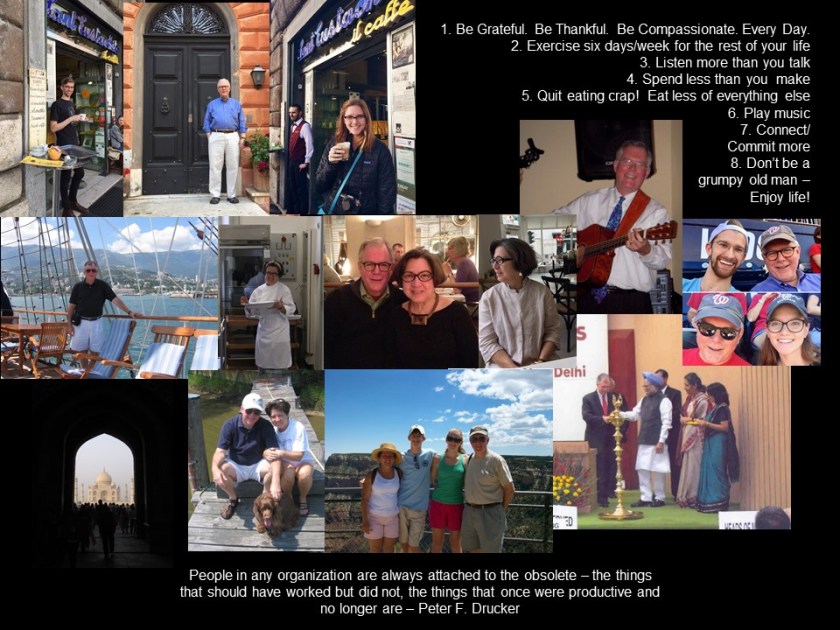
What I did in 2014 was to set seven rules for how I wanted to live for the next third of my life, and I recently added an eighth. Because they are part of my computer wallpaper, I look at them every day. The one that generates the most comment is the last one, which is basically “Don’t be a grumpy old man.” That may be a hard one for setting metrics (laughs per day?) but I basically know when I’m following this rule or when my crotchety index is on the rise.
My computer wallpaper with David’s Rules
Many of us make resolutions or set rules for our lives, counting on our willpower to reinforce good habits or to change bad habits we’ve allowed to fester over time. I’ve written before about how habits are not destiny, and suggested the work of Charles Duhigg if you are interested in changing them. However, an excellent New York Times op-ed reminds us that willpower isn’t the only path to success. In fact, author David DeSento suggests that willpower is the wrong way to keep resolutions. He asks why, after decades of a self-help industry that promotes willpower, little has changed in many of our lives.
“The answer, I contend, is that this view of self-control is wrong. In choosing to rely on rational analysis and willpower to stick to our goals, we’re disadvantaging ourselves. We’re using tools that aren’t only weak; they’re also potentially harmful. If using willpower to keep your nose to the grindstone feels like a struggle, that’s because it is. Your mind is fighting against itself. It’s trying to convince, cajole and, if that fails, suppress a desire for immediate pleasure. Given self-control’s importance for success, it seems as if evolution should have provided us with a tool for it that was less excruciating to use.
I believe it did; we’re just ignoring it. That tool is our social emotions. These are the emotions — things like gratitude and compassion — that support the positive aspects of social life. For years I’ve been studying the effects of these emotions on decision-making and behavior, and I’ve found that unlike reason and willpower, they naturally incline us to be patient and persevere. When you are experiencing these emotions, self-control is no longer a battle, for they work not by squashing our desires for pleasure in the moment but by increasing how much we value the future.”
DeSento, a professor of psychology at Northeastern University, wraps up his article by noting,
“Cultivating the social emotions maximizes both our “résumé virtues” (those that underlie professional success) and our “eulogy virtues” (those for which we want to be remembered). In nudging the mind to be more patient and more selfless, they benefit everyone whom our decisions impact, including our own future selves. In short, they give us not only grit but also grace.”
My journals, where I track progress against my life rules
Happy New Year with special wishes for progress against whatever resolutions or life rules you have set for yourself.
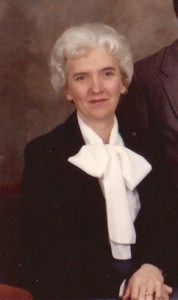
For the past two decades, New Year’s Day has had memories of loss mixed in with the anticipation of the coming year. Mother passed away on January 1, 1998, and while a day doesn’t go by when I don’t think of her, the memories are especially poignant on New Year’s Day.
Thankfully, mother’s life left many legacies in her family, her church, and her community. Mom’s love of family never changed and was unconditional. She loved each one of us as individuals who had unique gifts and ways to serve. The lives lived by her children, grandchildren, great-grandchildren (who she never met) and in-laws are part of her legacy. Her commitment to her faith and her church was just as strong. She was a life-long reader (as was my father) and she shared that love through her decades of service at church libraries in Tennessee. She also believed in the power of women in the church, and became the first female deacon at First Baptist in Murfreesboro. Mom served her communities in so many ways, from PTA president to her years as the children’s librarian for the city. Mom’s commitment to reading and education was one reason the Helen Brown Scholarship Fund was established by her family at First Baptist Church. For two decades now it has helped young people attend college. Most of them never knew Mom, but they are blessed by her life and legacy.
As we look ahead to 2018, I’m reminded of a few of Mom’s many strengths which will help me face this new year with confidence in the future.
Treat everyone with respect. This seems old-fashioned after the year of taunts, lies, and slander we’ve endured. However, it still has meaning today, and Mom lived this value through good times and bad. She was the PTA president the year our school in Cookeville was desegregated. Very difficult times. Mom went through that year with her values leading the way, but with an understanding of the challenges she faced. I later heard her say that there were never any problems with the children in desegregating the schools, only with the parents. I am often reminded of that when I speak about others who are different from me.
Be the person you were meant to be. From their understanding of faith, Mother and Daddy gave us a blessing of unconditional love, unconditional acceptance, release to be the person God intends for us to be, and affirmation and support as we work out our understanding of who we are meant to be. They both said it out loud, and through their lives. Their unconditional acceptance also seems old-fashioned in a world where too many are frightened by those who are different, but to me it seems so necessary for our life as family and community.
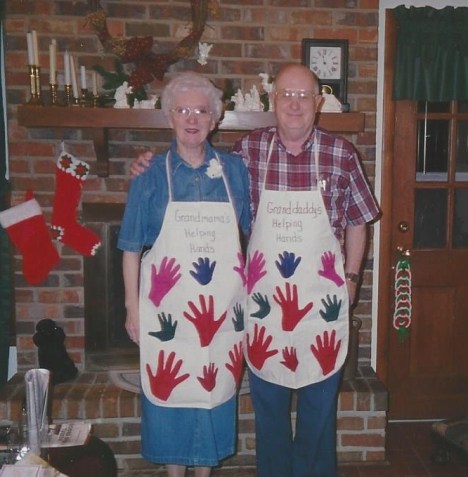
Mom and Dad, with their “Helping Hands” aprons made by their grandchildren
Money can’t buy happiness. Mother and Daddy were never rich in money, but as Mom phrased it, they were rich in love. Mom would relate to a note from my Dad about money:
MONEY CAN BUY . . .
a bed, but not sleep
books, but not brains
food, but not appetite
finery, but not beauty
medicine, but not health
luxuries, but not culture
amusement, but not happiness
flattery, but not respect
a house, but not a home
companions, but not friends.
No woman of quality has ever preferred football to baseball. My mom never said this. The line actually comes from Thomas Boswell’s Why Is Baseball So Much Better Than Football? But Mom lived this. She would watch football and basketball, but she loved baseball. She told stories of going to old Sulphur Dell park with her father to watch the Nashville Vols. I’ve acquired her love of baseball and have passed it along to my daughter Claire (another woman of quality). Looking ahead to 2018, she would join me in my optimism for the Nats!
Memories live on. I once asked the singer-songwriter Claire Lynch if she ever played her tune These Flowers — about remembering a parent who has passed on — in concert. It was during a mid-set break, and I was hoping to hear this tune, which meant so much to me, live. She replied that she didn’t play it live because it was too emotional for her. I told her I understood, and added that I would probably start crying out in the audience. So when These Flowers came up on my playlist yesterday as I was driving home from dropping Claire (Brown) off at the airport, I — true to form — started crying.
We all gathered round, and stared in the ground,
While the heavens were weeping with rain.
We smiled. We cried. We said good-bye.
And the children made handsome bouquets,
From flowers that lay on your grave.
And on the long ride home, in their warm little hands.
The blossoms were withering fast.
So we wrapped them in paper and tucked them in books,
And prayed that the memory would last.
With these flowers.
Though time marches on and memories fade,
And flowers surrender their youth.
It’s funny how old pedals pressed on a page,
Brings everything back into view.
I still picture you there, in your favorite chair,
With grand-babies held on your knee.
And its hard to believe you’re really gone.
It’s as if we have all been asleep.
What we find when we wake from the dream…
Are these flowers. These flowers.
Twenty years later, the memories do fade. But then something…like New Year’s Day…comes around and everything comes back into view. Miss you mom. Love. David
An Age of Folly Indeed! The cover photo of Lewis Lapham’s newest book on how America Abandoned Its Democracy
I was so discouraged with our country’s direction at the end of 2016, that I missed what had become an annual More to Come… year-end update. Many commentators described 2017 as a “dumpster fire of a year.” Even Dave Barry had a hard time coming up with outrageous examples that exceeded our twisted reality. The title of this year’s review by Barry says it all: “2017: Did that really happen?”
My optimism for our country’s future hasn’t fully recovered in part because I find myself agreeing with Lewis Lapham when he writes:
“If the American system of government at present seems so patently at odds with its constitutional hopes and purposes, it is not because the practice of democracy no longer serves the interests of the presiding oligarchy (which it never did), but because the promise of democracy no longer inspires or exalts the citizenry lucky enough to have been born under its star. It isn’t so much that liberty stands at bay but, rather, that it has fallen into disuse, regarded as insufficient by both its enemies and its nominal friends. What is the use of free expression to people so frightened of the future that they prefer the comforts of the authoritative lie?”
Frightened by the future…that could be a theme of so much of 2017 in America.
It didn’t always seem this way. In my 2013 year-end post, I outlined seven rules for the next third of my life, with an optimism that I could live a long and fruitful life. For four years I’ve looked at them on my computer wallpaper as I’ve logged on in the morning. Colleagues have seen them and made comments. The family has been supportive. But in thinking recently about my difficulties in keeping up with my life goals in 2017, I realized that I had lost some faith in the future. My primary goal is to regain that faith in 2018.
Celebrating 25 years of Claire and Andrew – one of the great achievements of 2017!
At work and in our family life, 2017 was a year of progress and celebration, of which I am proud and which gives me hope for the future. But careful readers know that I can demonstrate some of the lighter symptoms of SAD (Seasonal Affective Disorder), which a quick trip to sunnier climates (think the Pomona College Family Weekend in February) usually fixes. 2017 felt like a year when SAD-like symptoms (or perhaps TAD-like symptoms, and you can fill in the “T”) came and went throughout the year.
Reading a recent article by David DeSento helped me focus on what may have been missing from my 2017: that sense of gratitude for what I have been given. A psychologist, DeSento argues that social emotions — not willpower — helps us achieve our life goals.
“What these findings show is that pride (not arrogance, but pride in the skills one has), gratitude and compassion, whether we consciously realize it or not, reduce the human mind’s tendency to discount the value of the future. In so doing, they push us not only to cooperate with other people but also to help our own future selves. Feeling pride or compassion has been shown to increase perseverance on difficult tasks by over 30 percent. Likewise, gratitude and compassion have been tied to better academic performance, a greater willingness to exercise and eat healthily, and lower levels of consumerism, impulsivity and tobacco and alcohol use.
If using willpower causes stress, using these emotions actually heals: They slow heart rate, lower blood pressure and reduce feelings of anxiety and depression. By making us value the future more, they ease the way to patience and perseverance.”
I had recently been thinking about gratefulness and thankfulness. Putting all this together, I realized that I needed to add an eighth life rule for 2018 and beyond. So…here’s a quick look at that new rule plus some thoughts on how I did in 2017 with the original seven.
1. Be Grateful. Be Thankful. Be Compassionate. Every Day. Several years ago I made it a habit to say thank you to one person each day. Even in 2017, I managed to maintain that habit. Moving forward with this new rule, I want to expand that habit to being intentional about gratefulness, thankfulness, and compassion.
2. Exercise six days a week for the rest of your life. I had a good pattern of daily exercise through 2016, resulting in weight stabilization. Unfortunately, that didn’t continue in 2017, and my weight returned. For 2018, I want to look with gratitude at the health I’ve had through six decades of life, and find ways to build on that outlook to maintain it. I’m also going to keep the cartoon in mind where the doctor asks his middle-aged male patient, “Which is more inconvenient for you? 1 hour a day of exercise or 24 hours a day of dead?”
3. Listen more than you talk. It is always a challenge when I find myself in a place of some authority (either at work or home) not to grab the bully pulpit. While David Isay, the founder of Story Corps, says listening is hard, he also notes that listening is an act of love…and act that one never regrets. Both thoughts are worth remembering.
4. Spend less than you make. 2017 was another year when I didn’t buy any new guitars! (Although I can say that I gave it some serious thought.) I’m continuing to adjust some of my expectations in order to live with much less regular income in the not-too-distant future. I’m also thinking more about what to give away and how to do that to support those who have less.
5. Quit eating crap! Eat less of everything else. Candice, Andrew, and Claire all support me in this effort, but I know I turned to comfort food more than I should have in 2017. Like the rule about spending, I want to think about how eating less is an act of gratitude that what I have is enough.
6. Play music. The world is a better place when I play music. My music is better when I play with others. That’s the goal for 2018.
7. Connect and commit. Over the years since I set these rules, we made real progress in gathering people together on a regular basis. That slipped some in 2017. In the list Candice and I are assembling of 50 things we want to do in 2018, we already have a number of connections identified.
8. Don’t be a Grumpy Old Man. Enjoy life! I tried very hard not to let my SAD or TAD symptoms show through to others…in part, because this is probably the life rule I remember every day. But there is still progress to be made…and in addition to Ursula Le Guin’s recent book of essays on growing old, I enjoyed reading yesterday’s New York Times article entitled, Want to Be Happy? Think Like an Old Person. I laughed. I smiled. I saw some traits I recognized. I saw some things to work on.
On Tuesday I spent a good part of the day at the Tenement Museum, on New York’s Lower East Side. I was there to meet with the museum’s new president, Kevin Jennings, and to tour their new Under One Roof exhibit with Annie Polland, the EVP for Programs and Interpretation. An affiliate historic site of the National Trust, the Tenement Museum tells the full American story about how many have come together to make our nation today.
Which brings me to the so-called War on Christmas.
“In recent years, a new holiday tradition seems to have emerged in America. From pundits to Presidents, the airwaves fill each December with people decrying the so-called “War on Christmas.”
As a historian and museum President, I find myself wanting to ask “War on whose Christmas?”
Those bemoaning the “War on Christmas” harken back to a mythical past in which our nation all came together to celebrate the holiday in the same way. I’ve got bad news for these folks: those times never existed.”
The entire piece is worth the read, because Kevin uses the three families highlighted in the Under One Roof exhibit— the Epsteins, who were Holocast survivors, the Wongs, and the Velez family, who migrated from Puerto Rico—to show how the holidays were celebrated in many ways in just one building in New York City.
The changing faces, and diversity, of 103 Orchard Street (photo credit: Tenement Museum)
From the lessons learned from the exhibit, Kevin ends with a strong call for inclusion.
“By rewriting the past to reduce the multiple ways Americans celebrated the holidays to a single unitary “Christmas,” those in the present can cast suspicion on difference and project a future where we are all uniform: no room for different traditions, no room for new ideas brought by immigrants, no diversity in our nation.
Such a rewriting of history is not based in historical fact but in politics, and is not only disrespectful to our ancestors but dangerous for current and future Americans who don’t fit some prescribed “norm.”
Rather than celebrate a past that never existed, we should honor the past that did — one in which a diversity of holiday traditions were observed.
Diversity is what makes America America, and the different ways we celebrate the holidays is a wonderful and affirming reminder of the richness of our culture.”
Let’s celebrate our inclusive and real American story, not something that a certain news network has decided is a way to divide our country into Americans and others. And let’s stop letting those pundits and politicians weaponize “Merry Christmas.”
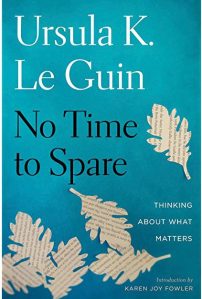
No Time to Spare: Thinking About What Matters by Ursula K. Le Guin
We are heading into a season when generations will mix together with more frequency than they may at other times of the year (around a dining table for a holiday meal, for instance.) While we interact with people of a variety of ages at work, the differences in generations are often much wider when we move outside the office. I was thinking of the clashes that often arise during these gatherings as I was reading a new book of essays by the science fiction writer Ursula K. Le Guin entitled No Time to Spare: Thinking About What Matters.
Le Guin is 88 and, in this delightful and insightful book, she is not shy about saying she is old. In fact, don’t suggest otherwise. As she notes, “Encouragement by denial, however well-meaning, backfires. Fear is seldom wise and never kind. Who is it you’re cheering up, anyhow? Is it really the geezer?”
But what got me to thinking about relationships between generations, and the importance respect plays in all of our dealings with each other, is when Le Guin states that kids “who haven’t lived with geezers don’t know what they are.” They don’t see you. And if generations do encounter each other, it is often with indifference, distrust, and animosity. This is where the importance of respect comes into play.
Le Guin writes that showing respect is a decision, not an opinion.
“Respect has often been overenforced and almost universally misplaced (the poor must respect the rich, all women must respect all men, etc.). But when applied in moderation and with judgment, the social requirement of respectful behavior to others, by repressing aggression and requiring self-control, makes room for understanding. It creates a space where appreciation and affection can grow.
Opinion all too often leaves no room for anything but itself.
People whose society doesn’t teach them respect for childhood are lucky if they learn to understand, or value, or even like their own children. Children who aren’t taught respect for old age are likely to fear it, and to discover understanding and affection for old people only by luck, by chance.
I think the tradition of respecting age in itself has some justification. Just coping with daily life, doing stuff that was always so easy you didn’t notice it, gets harder in old age, till it may take real courage to do it at all. Old age generally involves pain and danger and inevitably ends in death. The acceptance of that takes courage. Courage deserves respect.”
Respect for others can be hard, and it is often easy to only respect those who share our interests and opinions. But I like Le Guin’s suggestion that respect “creates a space where appreciation and affection can grow.”
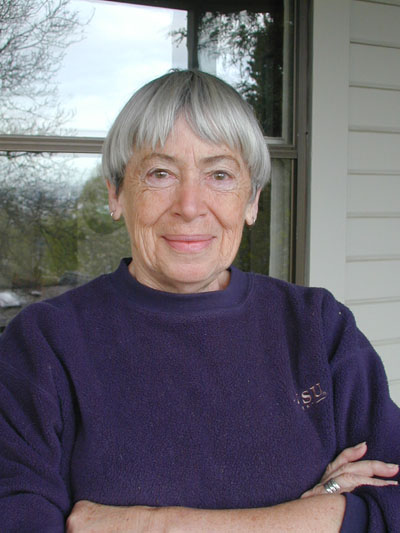
Ursula K. Le Guin photo by Eileen Gunn
I hope you have a wonderful holiday season, however you chose to celebrate. If we’re lucky, we’ll have kids, geezers, and everything in between together over the next two weeks sharing times of understanding, appreciation, and, yes, even affection.
How we look at the things around us — our mental viewing of the interrelation of a specific subject or its parts — is critical to shaping our point of view.
The Invention of Nature by Andrea Wulf
I just finished a fascinating book, Andrea Wulf’s The Invention of Nature: Alexander von Humboldt’s New World, that tells the story of how one visionary and now oft-forgotten German naturalist changed the way we see the natural world. His perspective was radically different than his scientific contemporaries of the late 18th and early 19th century because he conceived of nature as a complex and interconnected global force. A force that did not exist for humans alone. He came to this conclusion after extensive and exhaustive research, observation, travel, and scholarship before he reached the age of 33.
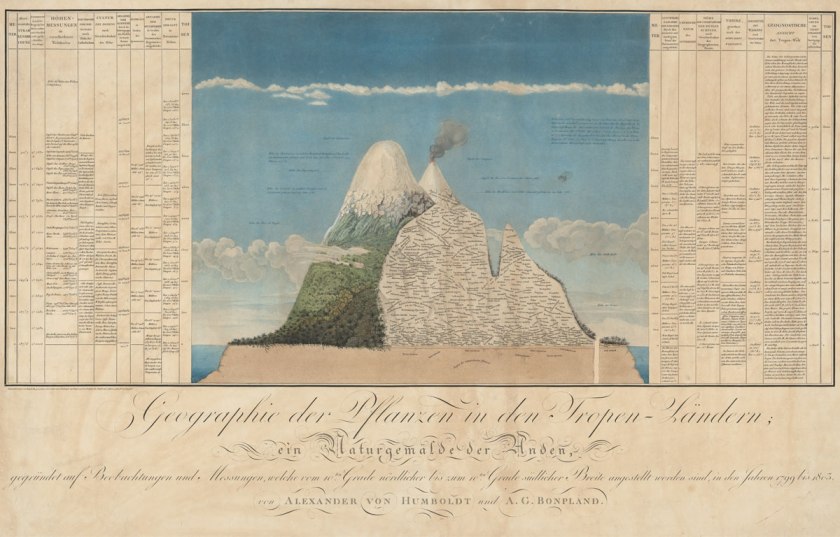
Alexander von Humboldt’s visit to the inactive volcano Chimborazo in the Andes, made during a five-year journey to South America at the beginning of the 19th century, led him to take all this knowledge and this new point of view and express it in one drawing: his Naturgemälde (which Wulf describes as an untranslatable German term than can mean a “painting of nature”, but which also implies a sense of unity or wholeness.) That new perspective — and the scores of books he wrote over his 89 years — led Humboldt to become the most famous scientist of his age, influencing individuals as wide ranging as Goethe, Wordsworth, Thomas Jefferson, Darwin, Thoreau, the artist Ernst Haeckel, and the environmentalists John Muir, and Rachel Carson. On the 100th anniversary of his birth in 1869, celebrations were held all across the globe, including in most major U.S. cities. (25,000 gathered in New York City alone and President Grant led the celebration in Philadelphia.) Humboldt is honored with more place names around the world than any other individual in history. Little did I know until I looked it up that little Humboldt, Tennessee — near my hometown — was named for a German naturalist whose work predated and, in many ways, envisioned Darwin’s theory of evolution, identified man-made climate change as a serious issue, and called for environmental protection decades before John Muir.
Humboldt embraced observation. It changed his perspective and he was able to change the world. When he died, a contemporary called him “the greatest man since the Deluge.”
This story about observation and perspective reminded me of a wonderful line in the Holly Morris film The Babushkas of Chernobyl. Holly was a TrustLive speaker at our recent PastForward conference in Chicago, where she told the story of these babushkas (or grandmothers) who came back to their homes following the Chernobyl nuclear disaster, and have now outlived their contemporaries who were evacuated. There is one scene where one of the ladies (and I’m paraphrasing here) said, “When some people come to a puddle, all they see is the puddle. Others look down and just see themselves. And others look down and see the sky.” I love that line. My perspective is that when you can see beyond the problem (the puddle) or yourself, you can see the world, its connections, and its possibilities.
How we observe our world and how we choose to connect the parts of what we see is so important to every part of our lives.
(UPDATE: Many of you have found this post after reading of the death on September 28, 2024 of Kris Kristofferson. Welcome. I hope you find some comfort in this short essay from 2017. You may also want to check out my appreciation of Kristofferson written after his passing: The gold standard of being a dude: Kris Kristofferson, R.I.P.—DJB)
There are weeks when the news contains stories that force you to shake your head in disbelief. However, this isn’t all there is. Newscasts don’t lead with “Another plane took off from National Airport this morning.” Bad news sells, and the loss of civility and the misbehavior of powerful individuals are serious issues today.
But there are kindnesses and civility all around us as well, if we’ll look for them.
As I’ve been thinking of how I can move more intentionally to respond to our times, a song has been stuck in my head. Kris Kristofferson wrote the song, which was inspired by the lunch counter scene in Chapter 15 of John Steinbeck’s Dust Bowl novel Grapes of Wrath. Kristofferson was born in Texas during the 1930s, and mentioned that he read Steinbeck’s book in high school or college (probably the latter, since he was a Pomona College graduate, just like our Claire!) Years later, he was reminded of the scene and wrote this work which Johnny Cash, who also made a recording of it, said might be his favorite song by any writer of our time.
In the intro to this video, Kristofferson says, “I kind of wrote it with John Steinbeck…only he was dead at the time.”
It is a simple song, with the following lyrics:
The scene was a small roadside café The waitress was sweeping the floor Two truck drivers drinking their coffee And two Okie kids by the door
“How much are them candies?” They asked her “How much have you got?” She replied “We’ve only a penny between us” “Them’s two for a penny,” She lied.
Chorus And the daylight grew heavy with thunder With the smell of rain on the wind Ain’t it just like a human Here comes that rainbow again
One truck driver called to the waitress After the kids went outside “Them candies ain’t two for a penny” “So what’s it to you,” she replied
In silence they finished their coffee And got up and nodded goodbye She called, “Hey, you left too much money” “So what’s it to you,” they replied
And the daylight…(Chorus)
Let’s do our best, in these times, to be good to one another.
For whatever reason, I’ve been plowing through books this fall. Perhaps that is what a great deal of time on planes and trains does for one’s reading habits. In any event, this has been my first chance to stop and reflect on these recent readings for the blog, so I’m seizing the moment.
One of the two I’ve included here is a very important work, significantly moving the scholarship forward in its field. The other is a small, family story that nonetheless captures the heart as it tells of a charming, privileged woman who struggled to live as a lesbian in the South of the jazz age. Both, now a couple of years old, are recommended.
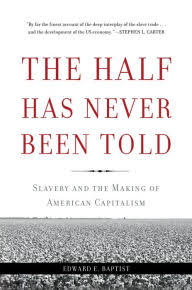
“The Half Has Never Been Told: Slavery and the Making of American Capitalism” by Edward E. Baptist
Edward Baptist’s The Half Has Never Been Told: Slavery and the Making of American Capitalism is a troubling and ultimately persuasive 2014 book by historian Edward E. Baptist. In this ambitious work, Baptist sets out to to demonstrate, in great detail, that slavery was not the pre-modern institution on the verge of extinction with paternalistic slave-owners as claimed by so many historians and southern apologists alike. Instead, in the eight decades prior to the Civil War, slavery expanded into a continental cotton empire that “drove the evolution and modernization of the United States.” Baptist writes that “the 3.2 million people enslaved in the United States had a market value of $1.3 billion in 1850—one-fifth of the nation’s wealth and almost equal to the entire gross national product.” This empire and wealth, Baptists asserts, was the reason the U.S. grew into a modern industrial and capitalist economy.
While some of Baptist’s techniques (such as naming chapters for different parts of the body) are not successful in and of themselves, the work as a whole is very persuasive and unsettling. He describes a system that is very efficient at sorting out slaves to get those who are most productive, and the brutality that made that efficiency possible. Not one to mince words, Baptist names the violence that led to increased productivity “the whipping machine.” When, in the 1830s, the term “fancy girl” began to appear in descriptions of young women who fetched high prices because of their physical attractiveness, Baptist writes that “Slavery’s frontier was a white man’s sexual playground.” His clear writing and extensive documentation takes the reader into the many horrors of the slave system in the United States. To Baptist, this was out-and-out torture. However,
“Perhaps one unspoken reason why many have been so reluctant to apply the term ‘torture’ to slavery is that even though they denied slavery’s economic dynamism, they knew that slavery on the cotton frontier made a lot of product. No one was willing, in other words, to admit that they lived in an economy whose bottom gear was torture.”
“It is hardly a secret that slavery is deeply embedded in our nation’s history. But many Americans still see it as essentially a footnote, an exception to a dominant narrative of the expansion of liberty on this continent. If the various elements of ‘The Half Has Never Been Told’ are not entirely pulled together, its underlying argument is persuasive: Slavery was essential to American development and, indeed, to the violent construction of the capitalist world in which we live.”
To understand the many challenges we face today as a nation, one could do much worse than to add Edward Baptist’s The Half Has Never Been Told to your nightstand reading pile.
“Irrepressible: The Jazz Age Life of Henrietta Bingham” by Emily Bingham
A much-less ambitious work, Emily Bingham’s Irrepressible: The Jazz Age Life of Henrietta Bingham is nonetheless a worthy read. I learned of this book while meeting the author in her home in Louisville. (Full disclosure, I have known and worked with Emily’s mother Edie on preservation projects for decades.)
Henrietta was Emily’s great-aunt, and was born into Southern privilege at the beginning of the 20th century. As the author notes in the prologue, “The surest way to make a child curious about an ancestor is never to discuss her.” It wasn’t until Emily and her husband named their newborn daughter for her great-aunt did family members come forward with stories of embarrassment, but also remembrances and photographs—especially of the early Henrietta—that spoke of a remarkable, unconventional, and ultimately tragic life lived by someone who dared to push the norms of Southern (certainly) and even American life.
Henrietta’s story really begins when—at age twelve—her mother dies in a horrific train and automobile accident that she witnesses. Three years later her father marries the richest woman in America, the widow of Henry M. Flagler, the Standard Oil baron and Palm Beach developer, who—as explained by the New York Times reviewer—”promptly died under murky, Michael Jacksonesque circumstances involving a shady doctor and copious narcotics. ‘Bing’ later bought The Courier-Journal and The Louisville Times, jump-starting the family’s media empire.”
Emily Bingham then unfolds a story of a woman of enormous wealth who “spent much of her twenties and thirties ripping through the Jazz Age like a character in an F. Scott Fitzgerald novel.”
“There were parties, music, great quantities of alcohol, and, on both sides of the Atlantic, lovers—lots of them, men and women, but far more women than men. In Henrietta’s time that took courage. Later there would be mental breakdowns, scandals, and a decline no one talked about.”
Sometimes it is hard to keep up with Henrietta’s affairs recounted in Irrepressible, but it is clear that while she had some famous male lovers, including the producer and actor John Houseman, she loved women far more — the tennis star Helen Jacobs (described as the Martina Navratilova of the 1930s), her Smith professor Mina Kirstein, the painter Dora Carrington, and the actress Hope Williams. While she did serve, essentially, as her father’s social secretary when he was ambassador to the United Kingdom in F.D.R.’s first term, Henrietta lived quite independently and well on her father’s money.
The early flings are interesting prelude to the long affair with Jacobs. One gets the sense that in today’s world, Henrietta Bingham and Jacobs would have settled down and lived normal—for wealthy and famous individuals—lives. But that wasn’t possible in the South, especially after World War II and the coming of the repressive McCarthy era. So Henrietta turned even more to alcohol to push away the world which would not let her love the person (or people) she clearly cared for the most.
Having grown up in the South, I have seen older gays and lesbians who have struggled—with varying degrees of success—through the challenges of navigating Southern mores about sexuality, religion, family, propriety, hierarchy, judgement, and gender in an age before Civil Rights and sexual freedoms. It is a very sad story that was all too familiar for beloved professors, musicians, offspring of the town’s patriarchs, and more. So while Henrietta Bingham did not, in the end, change much in her world, the way that world ultimately changed her is a story worth hearing. When we force people to live according to our precepts, judging them to satisfy our interpretations of values, both those who are repressed and those who administer the acceptable code of conduct, suffer in the end.
Kurt Vonnegut has called him America’s greatest satirist, while others suggest he was born of Mark Twain and H.L. Mencken. Lewis Lapham—editor emeritus of Harper’s Magazine, founding editor of Lapham’s Quarterly, and the object of those accolades—is a writer of great eloquence and “lethal wit.” I was delighted to see that some of the best of Lapham’s essays from the past twenty-five years have now been collected into a new work, Age of Folly: America Abandons Its Democracy.
This is both a wonderful and important book. Lapham surveys the past twenty-five years to make the case that America’s imperial impulses have shaken our democratic principles. You can agree or disagree with his premise, but his arguments are lucid, thoughtful, and often challenging.
In the very first essay, from 1990, Lapham states his case succinctly and directly.
“If the American system of government at present seems so patently at odds with its constitutional hopes and purposes, it is not because the practice of democracy no longer serves the interests of the presiding oligarchy (which it never did), but because the promise of democracy no longer inspires or exalts the citizenry lucky enough to have been born under its star. It isn’t so much that liberty stands at bay but, rather, that it has fallen into disuse, regarded as insufficient by both its enemies and its nominal friends. What is the use of free expression to people so frightened of the future that they prefer the comforts of the authoritative lie?”
Lapham also explores the change in our concepts of public and private and its affect on our society, noting that “the familiar story (democracy smothered by oligarchy) has often been told” but that
“…it is nowhere better illustrated than by the reversal over the past half century of the meaning within the words ‘public’ and ‘private.’ In the 1950s the word ‘public’ connoted an inherent good (public health, public school, public service, public spirit); ‘private’ was a synonym for selfishness and greed (plutocrats in top hats, pigs at troughs). The connotations traded places in the 1980s. ‘Private’ now implies all things bright and beautiful (private trainer, private school, private plane), ‘public’ becomes a synonym for all things ugly and dangerous (public housing, public welfare, public toilet).”
This book was published prior to Donald Trump’s election as president, but Lapham sees it coming and is not surprised.
There are many themes addressed throughout Age of Folly. But to make his overall case, Lapham turns to history, calling it an “antidote to folly.”
That theme runs throughout the book, but is summed up in the final essay, dating from 2014 and entitled “The World in Time.” This essay begins with a quote from Cicero—“Not to know what happened before one was born is always to be a child”—and then discusses Arthur M. Schlesinger Jr.’s last word on the reading and writing of history. “It is useful to remember” he quotes Schlesinger,
“…that history is to the nation as memory is to the individual. As persons deprived of memory become disoriented and lost, not knowing where they have been or where they are going, so a nation denied a conception of the past will be disabled in dealing with its present and its future.”
Just as we have tried at the National Trust for Historic Preservation (where I work) to tell the full American story and break out of the mold of house museums preserved in amber, Lapham notes that history is “constant writing and rewriting, as opposed to a museum-quality sculpture in milk-white marble….History is not what happened two hundred or two thousand years ago; it is a story about what happened two hundred or two thousand years ago. The stories change, as do the sight lines available to the tellers of the tales.” In this particular essay, Lapham looks at the writings of Tom Paine, one of two founding fathers he especially admires (the other being Roger Williams), because Paine’s writings are “like the sound of water in the desert” in these days. They speak not to the rich and privileged, but to the common man. Paine uses memorable aphorisms such as “The mind once enlightened cannot again become dark” and “Those who expect to reap the blessings of freedom must, like men, undergo the fatigues of supporting it.”
Lapham closes this essay, and this book, by noting that “None of us dies in the country in which he or she was born.” History is made every day. Our country changes. It always has. It always will.
“Sensing the approach of maybe something terrible…the guardians at the gate look for salvation to technologies as yet undreamed of by man or machine. My guess is that they are looking in the wrong direction. An acquaintance with history doesn’t pay the rent or predict the outcome of a November election, but it is the fund of energy and hope that makes possible the revolt against what G.K. Chesterton once called ‘the small and arrogant oligarchy of those who merely happen to be walking about.’”
History as an antidote to folly. As we challenge ourselves to hear, understand, and honor the full American story, this rings true.