I am on a writing break and have been taking the time to share some of my favorites from the More to Come archives. However, this new post — which consists of a few words and some pictures — is of a personal nature that I wanted to share in a timely fashion.
Providence, Rhode Island, is one of the country’s underappreciated gems. We arrived by train last evening in order to hear our son, Andrew Bearden Brown, sing the role of the Evangelist tomorrow afternoon in the St. John Passion with the Schola Cantorum of Boston and the Providence Baroque Orchestra. Very cool!
UPDATE: Andrew did a fantastic job and received a rousing ovation at the end of the concert!
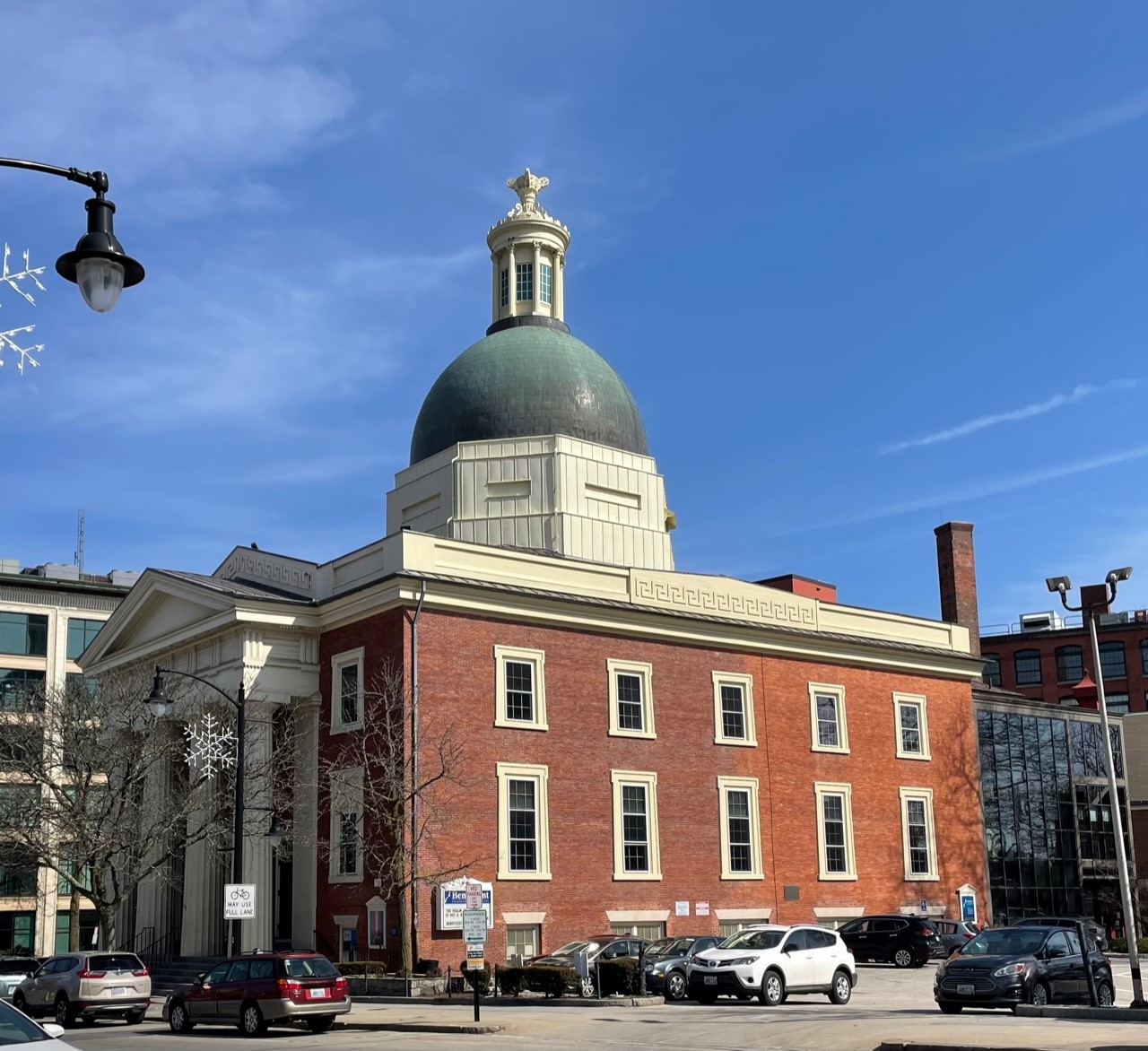
As is my habit in the morning, I woke up early, stretched, and then took to the streets of downtown Providence. The city is very walkable — Candice and I walked from the train station to our hotel last evening — with great architecture all around. Thanks to the work of preservationists, city government, business leaders, and others, downtown has had a renaissance. On this trip I saw more early-morning dog walkers, which suggests that downtown living is growing in popularity, and some of the empty parking lots have been filled in with new infill construction. Updated with more pictures after we took a self-guided walking tour of downtown mid-day.
The historic arcade in the early morning hours before shoppers have stirredProvidence has a wealth of wonderful architectureThe historic Hotel Providence, our location for the weekend.
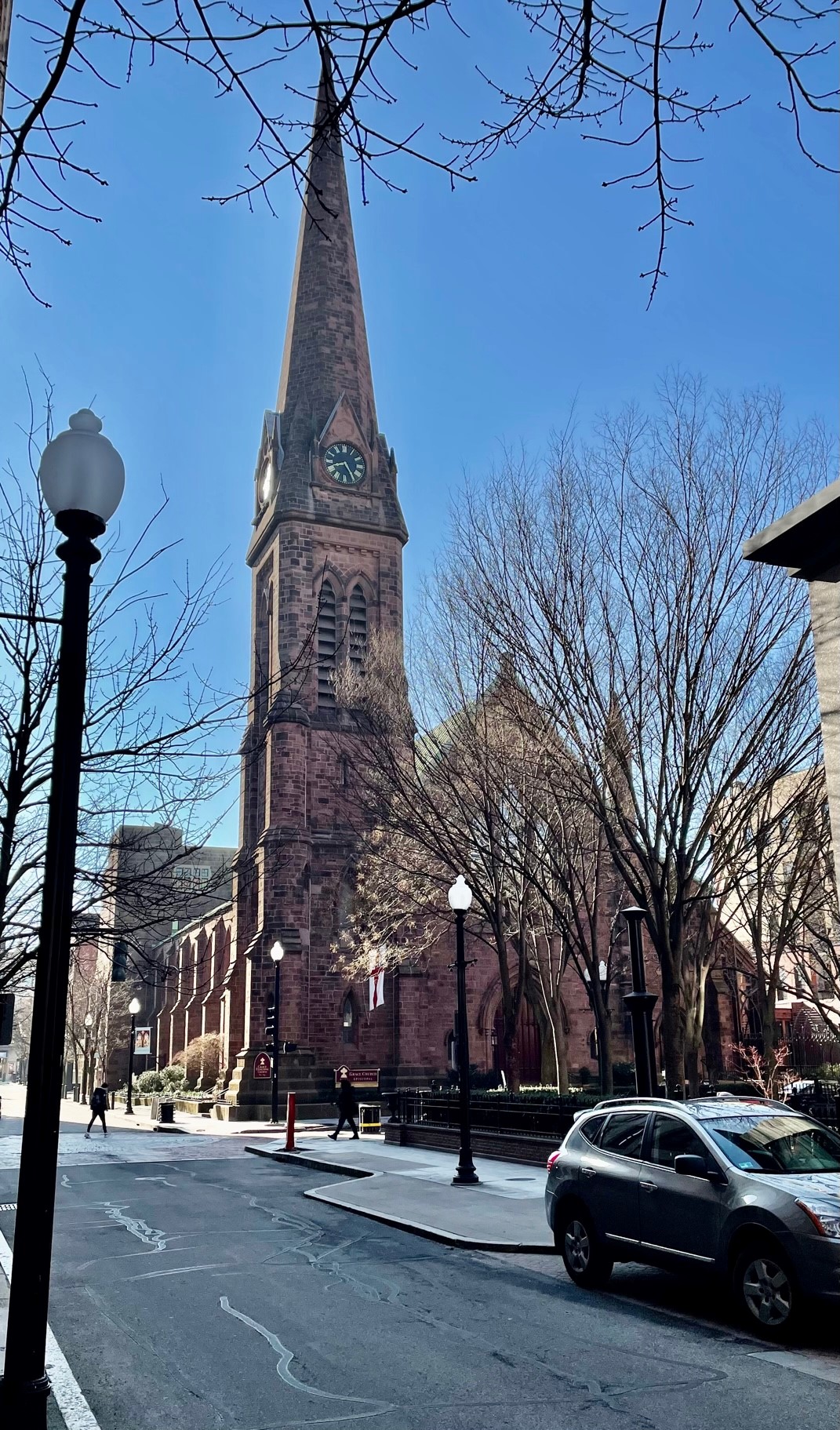
Grace Episcopal Church, the venue for the St. John Passion…and mere steps from our hotel
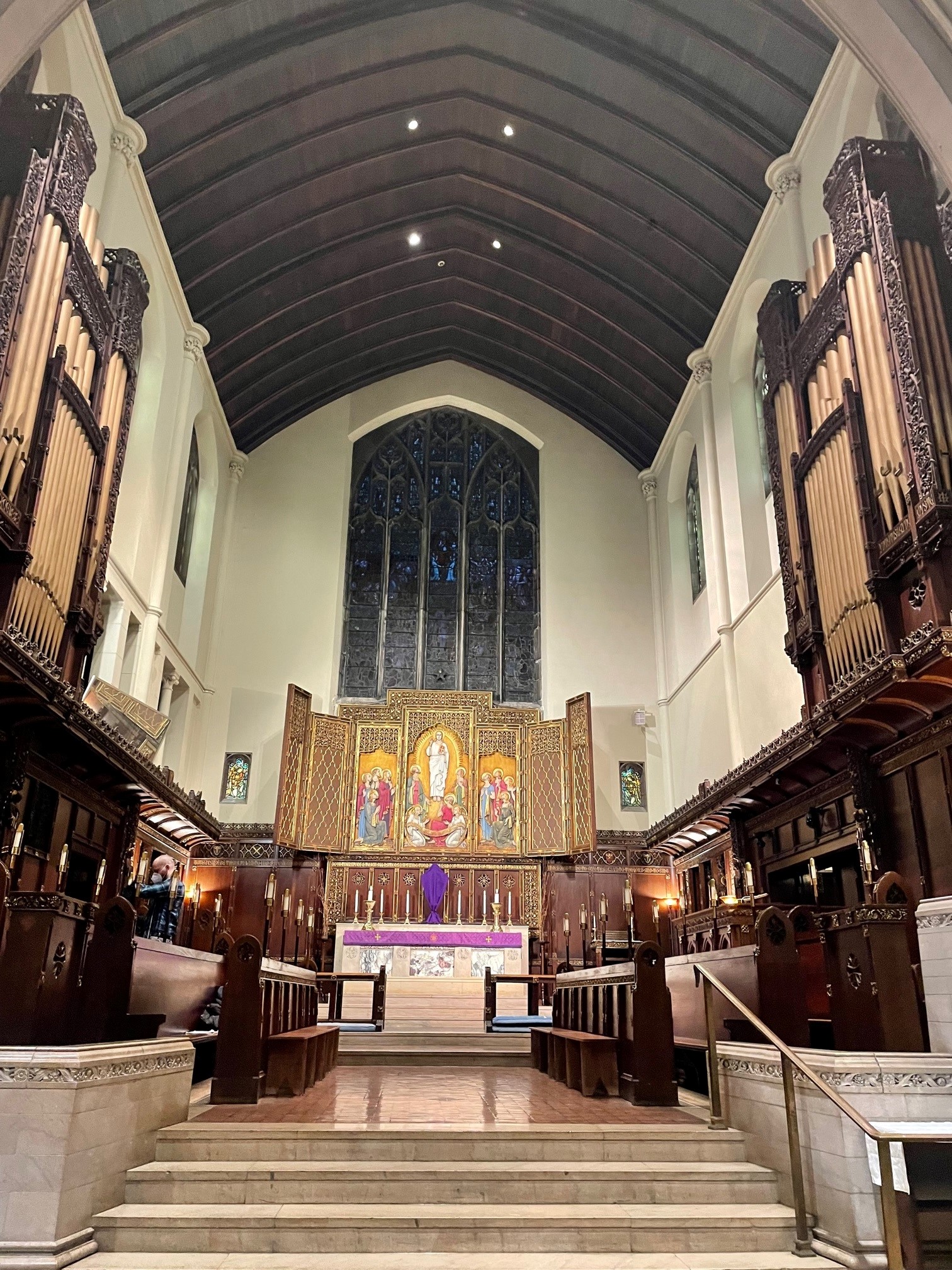
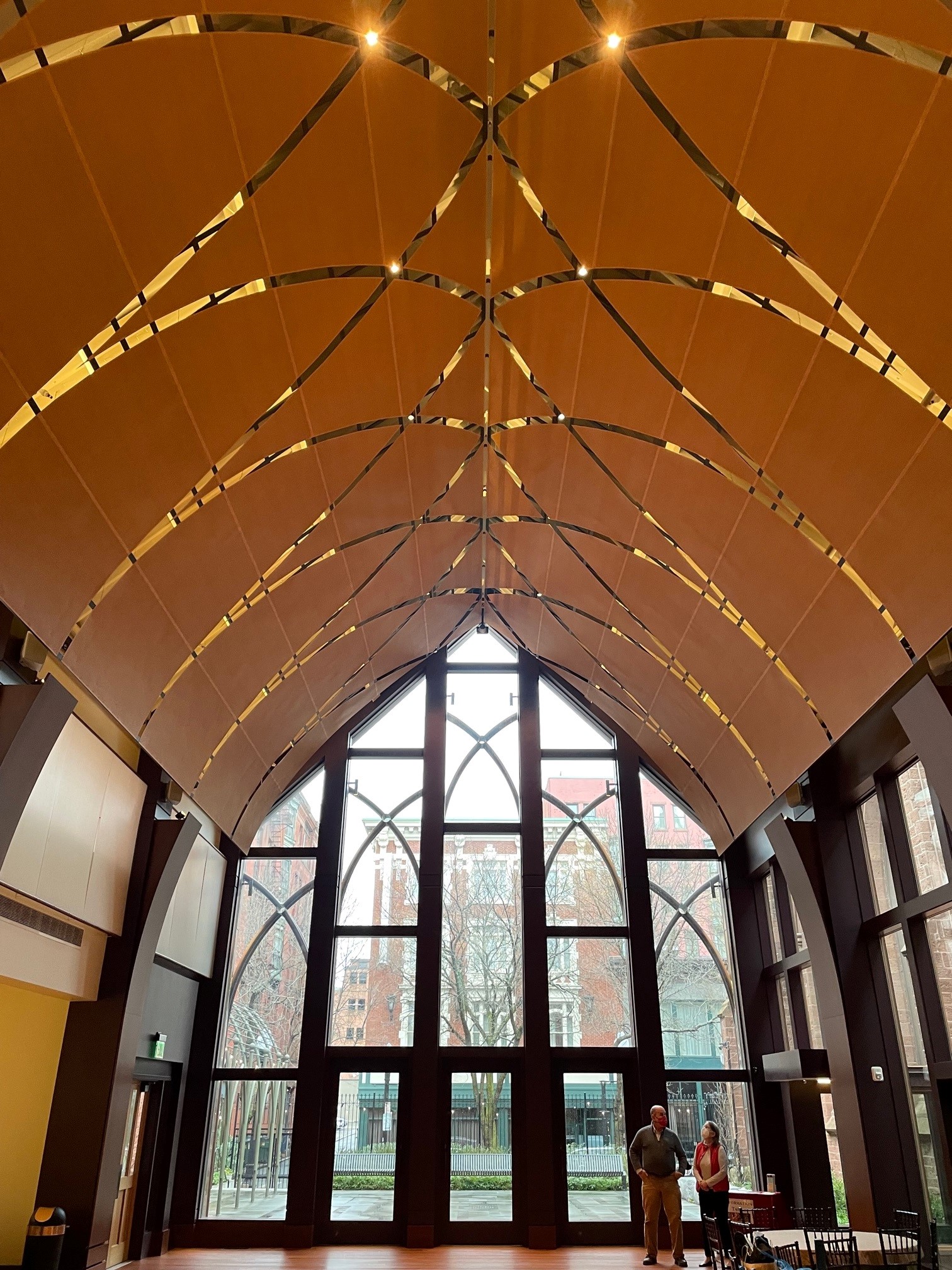
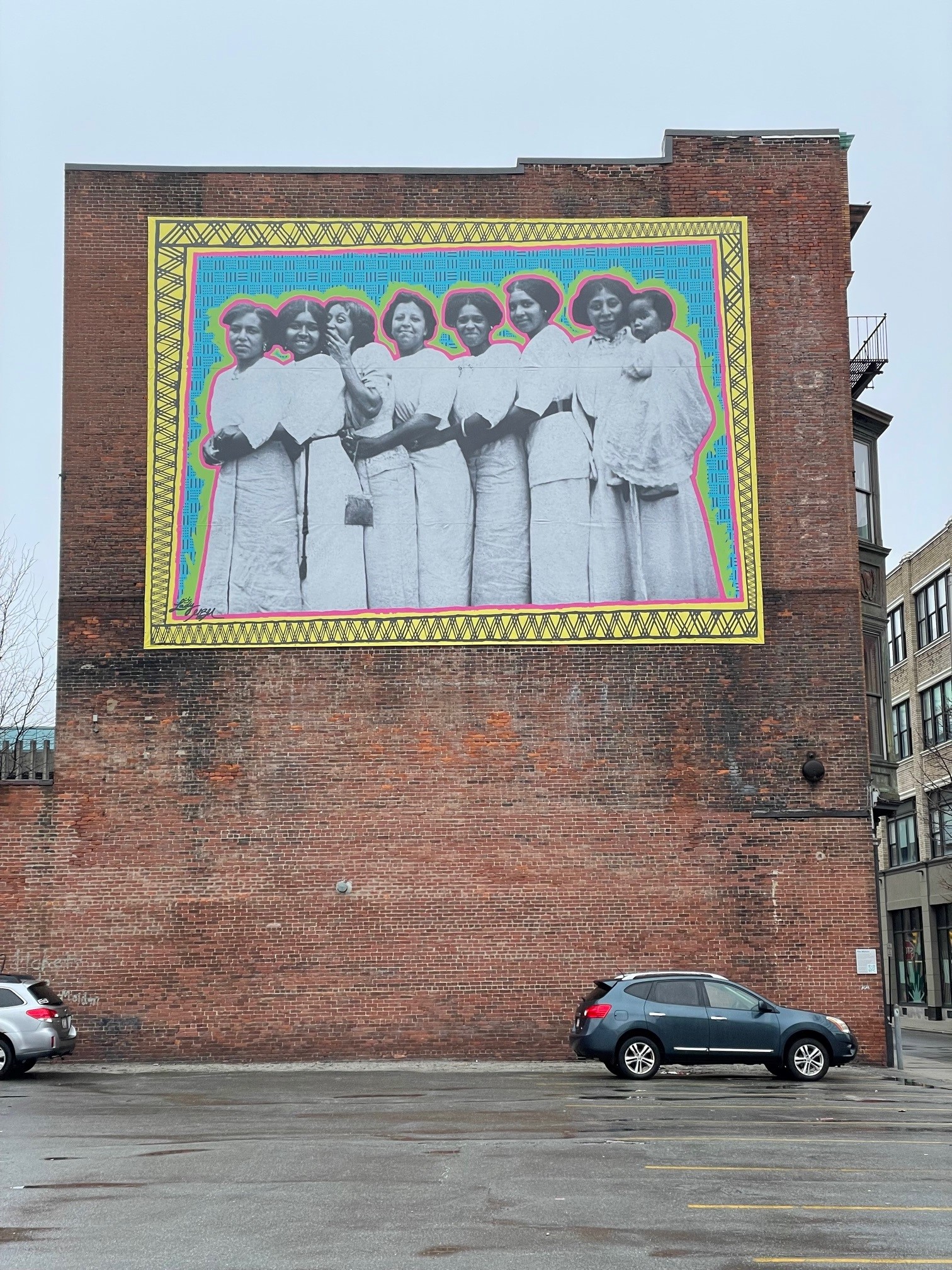
Grace Church (Episcopal) interiorGrace Church (Episcopal) rear organModern addition to Grace Church (Episcopal) looking out“The Women” mural in downtown ProvidenceSkylight in the Emery Majestic Theatre – now home to Trinity RepDetail on the Turks Head BuildingThe Providence Public Library – one of the gems of the cityBeneficent ChurchA good reminder…Westminster StreetAmbrose Burnside – who is better remembered for his facial hair (and giving the world the word “sideburns”) than his military exploits.
And did I mention that Providence is one of the great food cities in America? Forbes magazine once called it the country’s best food city per capita, and we agree. In our first 15 hours in town, we’ll have eaten two great meals (at North and at Ellie’s) and tonight we have reservations at one of our favorite Providence restaurants, Gracie’s.
While on a writing break, I’m taking the time to share some of my favorites from the More to Come archives. Isolated minds. Dead hearts. — which is used in a portion of the following piece — was originally posted on November 23, 2020.
Author, philosopher, theologian, educator, and civil rights leader Howard Thurman begins the powerful chapter on hate in his seminal work Jesus and the Disinherited with a vivid image of hate relentlessly pursuing the hated, crushing down on those who have been cast off and repudiated.
Hate is another of the hounds of hell that dog the footsteps of the disinherited…
Famously known as “the text that Martin Luther King Jr. sought inspiration from in the days leading up to the Montgomery bus boycott,” Thurman’s work both shaped the civil rights movement and changed our nation’s history. It is a short, but profound read which will stay with me for a long time.
As Vincent Harding writes in the Foreword, Jesus and the Disinherited “was the centerpiece of the Black prophet-mystic’s lifelong attempt to bring the harrowing beauty of the African American experience into deep engagement with what he called ‘the religion of Jesus.'” In chapters on fear, deception, hate, and love, Thurman “demonstrates how the gospel may be read as a manual of resistance for the poor and disenfranchised.” Nowhere is that more evident than in the moving chapter on hate, where he focuses on the conspiracy of silence around the function and meaning of hatred, and how it has an especially severe impact on the disenfranchised.
Hatred often begins in situations where there is “contact without fellowship,” writes Thurman. There are no overtures of warmth and genuineness. It is easy, he asserts, “to have fellowship on your own terms,” something that any one of us who grew up in the segregated, Jim Crow South can easily see. It is unsympathetic understanding breeding ill will. Hatred becomes a source of validation for us and for our personalities.
While hatred has the ability to bring us much satisfaction, Thurman writes that Jesus knew that ultimately hatred destroys “the core of the life of the hater.” It guarantees an isolation from one’s fellow humans.
Hatred cannot be controlled once it is put in motion.
A mentor wrote about evil and hatred following the attacks of 9/11. “This past week has shown two of the ways that evil can affect human beings,” he said. “It isolates the mind and kills the heart.” Thurman saw that in the Jim Crow South. We’ve seen it not only in 9/11, but in events as recent as the horrific murder of George Floyd. We have long since reached the point in our civic lives where we can be easily overwhelmed by evil and hatred. It is all around us.
Thurman pivots from hate to love by writing that “Jesus rejected hatred.”
It was not because he lacked the vitality or the strength. It was not because he lacked the incentive. Jesus rejected hatred because he saw that hatred meant death to the mind, death to the spirit, death to communion with his Father. He affirmed life; and hatred was the great denial.
We need to nurture empathy so that we are better equipped to appreciate the challenges others face. It is difficult to remain stubborn when you bring in your heart and are empathetic to the needs of others. According to recent neuroscience,empathy is hardwired into all mammals. Our default — our authentic self — is to have the courage and strength to help others. But the forces that want to isolate our minds and kill our hearts is very strong. Those forces are working on us to suppress our authentic selves in the hope that we will only focus on our needs and our grievances. That force is pushing us to hate others.
Thurman writes that we have to move toward love in action rooted in concrete experience. “No amount of good feeling for people in general, no amount of simple desiring, is an adequate substitute.” Once we have defined our neighbor, “then the moral obligation is clear.” In the story of the Good Samaraitan, Jesus uses
… sure artistry and great power to depict what happens when a man responds directly to human need across the barriers of class, race, and condition. Every man is potentially every other man’s neighbor. Neighborliness is nonspatial; it is qualitative. A man must love his neighbor directly, clearly, permitting no barriers between.
Love your neighbor as yourself. It was no easier in Palestine 2000 years ago than it is today in a polarized America with the world reeling from an immoral war. Yet we must try.
For every man there is a necessity to establish as securely as possible the lines along which he proposes to live his life.
As Martin Luther King demonstrated, Jesus and the Disinherited can be a life-changing book.
More to come…
DJB
NOTE: Here are other posts on More to Come examining hatred and love.
While on a writing break, I’m taking the time to share some of my favorites from the More to Come archives. Where the journey begins — which is used in a portion of the following piece — was originally posted on June 29, 2020.
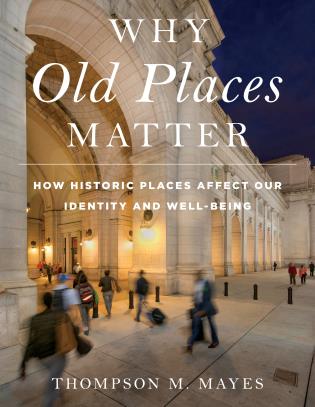
As I was preparing to give a talk to a preservation planning seminar at the University of Virginia late last month, I took the time to reread Why Old Places Matter: How historic places affect our identity and well-beingby my long-time friend and former colleague Thompson M. (Tom) Mayes. I returned to Tom’s book because it is a great place to consider and understand the variety of factors that come into play as we save old places.
A key reason for me is that old places help us feel that we belong.
In writing the 14 essays in Why Old Places Matter, Tom spent time on some of the more practical motivations and outcomes, such as sustainability, economics, and community. But the ideas that most intrigued him, and that seemed to get to the heart of why these places seem to matter so much to people, were captured in a cluster of the essays that were about memory, continuity, and identity. These ideas are fundamental.
Memory. Old places help tell our stories.
Continuity. Old places give us a chance to feel a connection to the broad community of human experience, a community that exists across time.
Identity. Old places help us understand that our lives are not insignificant — that what we do will have an impact on the future.
Memory, continuity, and identity are deeply important to people, positioning the importance of old places in people’s lives in a much more fundamental fashion than the ways in which we often talk about the past and in the way we design our preservation laws. It was that point of view that I wanted to share with the students. As I did so, I placed it in the context of my personal journey and the stories that matter to me. Such as my origin story, which takes place at Union Station in Nashville.
Union Station is a Nashville landmark. As one approaches on Broadway, it looms alone on the landscape, like Mount Monadnock or a butte in Monument Valley. It is a beautiful old pile of a building in what is known as the Romanesque Revival style. The lobby is designed to showcase the power and opulence of the railroads at the turn-of-the-twentieth century.
The building’s history as a key Louisville & Nashville Railroad station is worth remembering. Its architectural and decorative features add to what makes it important. Yet all of that wasn’t enough. By the early 1980s, the building was threatened with demolition. Abandoned and deteriorating, Union Station was just another eyesore from a bygone era.
Places with imposing presence, with designs built for the ages, places that once served noble purposes, are — from my perspective — worth the effort to find a new use in today’s world. But for some, what is seen as the push for progress is worth the loss of the buildings and landscapes that provide continuity with the past. No, Union Station wasn’t going to be saved because of its railroad history and grand architecture alone. It became a landmark in so many minds — providing the motivation behind the effort to save it from the wrecking ball — because of the building’s innumerable, varied, and deeply personal connections to people in Middle Tennessee.
Former New York Times architectural critic Herbert Muschamp states it succinctly when he wrote that “the essential feature of a landmark is not its design, but the place it holds in a city’s memory.”
Emotions, stories, and memories flow through Union Station like so many trains. Emotions, stories, and memories like mine.
Union Station was incredibly busy in the years before the advent of the automobile, taking men, women, and children to places near and far, creating memories on a daily basis. Many were traveling for pleasure. But others — like African Americans riding in segregated cars during the Great Migration of the 20th century — were looking for a better life or, at least, a different life from the stifling restrictions of the Jim Crow South.
My father had an early encounter with Union Station when he joined the Navy during World War II. The station was never as busy as it was in those years, shipping young men and women like Tom Brown to bases and ultimately battlefields all across the globe.
My parents were part of the post-World War II marriage boom that begat the well-documented baby boom. Both were from the small town of Franklin, a rural farming and commercial center south of Nashville that grew in the early 20th century thanks to the connections made possible by the Interurban Railway, where Granddaddy Brown served a stint as a conductor. My father had just graduated with his engineering degree from Vanderbilt and was enrolled in a training program that led to his life-long career with the Tennessee Valley Authority. Mom, then a couple of years beyond her high school graduation, married my father on June 30, 1950, in downtown Franklin’s First Baptist Church just blocks away from their family homes. Before moving first to Columbia and soon thereafter to Cookeville for my father’s first major position with TVA, Tom and Helen Brown had a honeymoon to take.
Luckily for them, my father’s sister lived in Chicago. That meant that my parents came to Union Station — like so many honeymooners, soldiers, professionals, laborers, and families before them — and boarded a train bound for the Windy City. There’s a signboard behind the hotel check-in desk today that is from this era. I look up and see the same schedule that my parents saw as excited newlyweds, ready to begin their life’s journey together. The same schedule with those evocative Southern train names: The Azalean, The Humming Bird, Pan-American, The Georgian, Dixie Flyer.
One day in 2015 while at lunch (at Murfreesboro’s City Cafe, naturally), my father started talking about that train ride again, and he told me that he and mom left at midnight on “The Georgian.” When my father was last in Union Station, he took a picture of the train schedule. Sure enough, plain as day, you can see that the Georgian leaves Nashville at 11:59 p.m. on its way to Chicago.
Historic Train Schedule from Nashville’s Union Station
I’ve heard stories my entire life about the theatre shows they saw in the city, the food they ate at the ethnic restaurants that was so foreign to their Southern palates, and their visit to Comiskey Park to see the White Sox. The facts from the trip have been filled in through the years, but the memories always originate with that train ride from Union Station. It is what makes it such a vivid part of my origin story.
Old places matter because their materials and appearances connect with human souls through emotions and memories. For some, those places may be mountains or streams. For others, buildings, neighborhoods, and streetscapes are involved.
The story of the saving of Union Station, like similar accounts of preservation successes in communities big and small, has thousands upon thousands of personal stories intertwined with the brick, stone, marble, and mortar. Stories and memories hold these places up, literally and figuratively, embedding the connections from the past into our lives today and in the future.
Everyone has an origin story, and many revolve around places. Because of the power of stories, Union Station remains today as a touchstone for innumerable individuals and families.
Emotions and stories flow through places, like the train leaving Union Station with two newlyweds bound for Chicago and a life unimagined ahead.
More to come…
DJB
NOTE: Here are other posts on More to Come examining why old places matter.
I am on a writing break and have been taking the time to share some of my favorites from the More to Come archives. However, this new post — which comes entirely from the work of a historian I admire — arrived in my email inbox on March 4th, my birthday. I felt it was a gift I wanted to share with my readers.
Historian Heather Cox Richardson writes a daily newsletter entitled Letters from an American. It usually arrives in the early morning hours, calmly summarizing major events from the day’s news and placing them in the context of American history. In something of a surprise, she quickly became one of the most successful individual authors of a paid publication on the newsletter platform Substack. She is the opposite of the right-wing and mainstream media journalist, working at the level of conversation, not soundbite. Her followers and subscribers (including me) are devoted.
Every day, people write to me and say they feel helpless to change the direction of our future.
I always answer that we change the future by changing the way people think, and that we change the way people think by changing the way we talk about things. To that end, I have encouraged people to speak up about what they think is important, to take up oxygen that otherwise feeds the hatred and division that have had far too much influence in our country of late.
Have any of your efforts mattered?
Well, apparently some people think they have. Last week, President Biden’s team reached out to ask if I would like some time with him to have a conversation to share with you all.
On Friday, February 25, I sat down with the president in the China Room of the White House to talk about American democracy and the struggles we face.
Dr. Richardson noted that it was an “amazing time to be able to talk to the President.” Vladimir Putin had just attacked Ukraine, the president was preparing to give his first State of the Union address, and Biden “had just made the historic announcement of the nomination of Judge Ketanji Brown Jackson for a seat on the Supreme Court.”
In this thoughtful 30-minute conversation, held before a crackling fire in the White House, Richardson and Biden focus on how the president “thinks about America in this pivotal moment, to put the specifics of what he does in a larger context.” There are many wonderful segments, one of which involves the president telling how historian Jon Meacham came to help pick the portraits for use in the Oval Office.
Historians offering guidance to a president. What a wonderful thought.
In my books, (Richardson writes) I have argued that throughout our history, America has swung between the defense of equality outlined in the Declaration of Independence and the defense of private property outlined in the Constitution.
Our peculiar history of racism has meant that every time it seems we are approaching equality before the law, those determined to prevent that equality have turned people against it by insisting that government protection of equality will cost tax dollars, thus amounting to a redistribution of wealth from those with property to those without. That is, if Black and Brown Americans, and poor people, are permitted to vote, they will demand roads and schools and hospitals, and those can be paid for only by taxes on people with money. In this argument, an equal say in our government for all people amounts to socialism.
With this argument, those defending their property turn ordinary Americans against each other and take control of our political system. Once in power, they rig the system for their own benefit. Money flows upward until there is a dramatic split between ordinary people and those very few wealthy Americans who, by then, control the economy, the government, and society.
This point in the cycle came about in the 1850s, the 1890s, the 1920s, and now, again, in our present.
In the past, just when it seemed we were approaching the end of democracy and replacing it with oligarchy — and in each of these periods, elites literally talked about how they alone should lead the country — the American people turned to leaders who helped them reclaim democracy.
We know these leaders from our history. Presidents Abraham Lincoln, Theodore Roosevelt, and Franklin Delano Roosevelt all have entered the pantheon of our leaders because of their defense of democracy in the face of entrenched power. But all of those presidents became who they were because they rose to the challenge of the pivotal moments in which they lived. They worked to reflect the increasingly loud voices of the majority of the American people.
James Buchanan, William McKinley, Herbert Hoover, and Donald Trump did not.
And now President Biden stands at another pivotal moment in our history. What he does in this moment will reflect what the American people demand from hisleadership.
Thank you, Heather Cox Richardson and President Joe Biden, for such a wonderful conversation. As one commentator wrote, Richardson’s “letter is my nightly north star. So happy to see you recognized by President Biden for the invaluable and trusted role you are playing as you interpret our living history.”
And she did it while wearing sensible shoes to the White House!
More to come…
DJB
*I have copied much of Heather Cox Richardson’s letter into this blog, because she always encourages her readers to share the information. But I encourage you to go to her site, read it there, and subscribe.
While on a writing break, I’m taking the time to share some of my favorites from the More to Come archives. Ideas. Relationships. Adventure. — which is used in a portion of the following piece — was originally posted on June 26, 2017.
I love to read. Avon — the small snail in Avi’s children’s fable The End of the Beginning: Being the Adventures of a Small Snail (and an Even Smaller Ant) — also reads every day. He is a kindred spirit. Books tell him “All about the things that creatures did when they went on adventures.” Having never been on an adventure, Avon decides that he needs adventures in order to be happy. When a passing newt hears his sigh, he encourages Avon to “go out and seek some adventures.”
Avon replies that he doesn’t know how.
“Remember lad,” said the newt, “if it’s going to be tomorrow, it might as well be today. And if it is today, it could have been yesterday. If it was yesterday, then you’re over and done with it, and can write your own book. Think about that.”
This delightful children’s book takes the reader through the multiple adventures — and occasionally snappy wordplay — of Avon and his friend Edward, the ant. They explore parts of their world, such as the end of the branch where Avon lives, that they had never visited before. They meet many different creatures. And they decide that even tiny adventures can broaden one’s worldview.
We are too often tied to our own branch, trapped in our own limited perspective.
If I were restricted to three words in any commencement speech, they would be: Ideas, Relationships, and Adventure. Ideas are the basis for change, for re-invention, for, yes, intellectual capital. Relationships have to do with outstanding people working in harmony and openness, where everyone feels empowered, where all members feel included and at the center of things, where they feel competent and significant. And Adventure has to do with risk, with a bias towards action, with curiosity and courage.
The challenge for organizations and their leaders is, as Bennis states it, to “create the social architecture where ideas, relationships, and adventure can flourish.” That isn’t easy, especially in light of challenges facing us today, but those who “choose to succeed must have the strength to persist in the face of setbacks, even failures.”
Think about how this idea fits in with the fable of the snail and the ant. Avon had the idea that he wanted to travel and see the world. Avon and Edward built a good relationship. They had success and failure, but they stuck to it. Together they had adventures untold (for a snail and an ant).
So don’t just sit there and read about others. Create your own adventures. Explore!
More to come…
DJB
NOTE: Here are other posts on More to Come examining the joy and wonder of adventure.
While on a writing break, I’m taking the time to share some of my favorites from the More to Come archives. I am still every age that I have been — a longer version of this piece — was originally posted on March 5, 2018. With a birthday coming in just a few days, this story is a good personal reminder that we can always call upon the joy and wonder we experienced as children, because we’re still that age.
I’ve recently taken to reading several children’s books, a trend that began a few years ago when I reread the classic A Wrinkle in Timeby Madeleine L’Engle. I was drawn back to that particular book at a time when our family was dealing with hip replacements, birthdays, and other challenges of adding years to our lives. With those changes, I was comforted by L’Engle’s thoughts on how we should age:
“I am still every age that I have been. Because I was once a child, I am always a child. Because I was once a searching adolescent, given to moods and ecstasies, these are still part of me, and always will be… This does not mean that I ought to be trapped or enclosed in any of these ages…the delayed adolescent, the childish adult, but that they are in me to be drawn on; to forget is a form of suicide… Far too many people misunderstand what ‘putting away childish things’ means, and think that forgetting what it is like to think and feel and touch and smell and taste and see and hear like a three-year-old or a thirteen-year-old or a twenty-three-year-old means being grownup. When I’m with these people I, like the kids, feel that if this is what it means to be a grown-up, then I don’t ever want to be one. Instead of which, if I can retain a child’s awareness and joy, and ‘be’ fifty-one, then I will really learn what it means to be grownup.”
Living through what you know and who you have been from the years of life is a way to understand current circumstances and embrace new possibilities. The quote popped into my head as I was thinking of L’Engle and the buzz about the A Wrinkle in Time movie that was being released about the same time. The folding of space and time is at the core of the story, as is the power of love over evil.
My children both read the book when they were young, and it remains among the most influential of their lives. My wife took a week-long writing class led by L’Engle almost 30 years ago and returned with a copy of “Wrinkle” signed by the author to me. I pulled it out one weekend when a colleague said she had been encouraged by my earlier note to “read when it is inconvenient” and — in the midst of a busy week of board meetings — I began to re-read the book before the movie’s launch.
A prized copy of “A Wrinkle in Time”
As we face the years ahead, I’ve taken to thinking anew about what it means to be three, thirteen, twenty-five, forty, and (ahem) more all at the same time. L’Engle’s push to retain a child’s awareness and joy seems like a great place for all of us to begin. There’s no time like the present.
More to come…
DJB
NOTE: Here are other posts on More to Come examining joy, wonder, and a childlike awareness of what is around us.
While on a writing break, I’m taking the time to share some of my favorites from the More to Come archives. Hopefully you’ll find a new insight or something that you may have missed.
Most communities have a place that even in technology-obsessed, anti-intellectual 21st-century America remains a surprisingly relevant bellwether institution: the public library.
Our Towns: A 100,000 Mile Journey into the Heart of America by James and Deborah Fallows provides a good example of why public libraries are both relevant and important. Our Towns is the story of a five year journey across the country — most of it undertaken at low altitude in a little propeller airplane — where the Fallows saw small and mid-sized towns that, in spite of hardship, also exhibited “the emerging pattern of American reinvention.”
One of the first places they stopped in each town to gather local information and to gauge the character of the community was the public library. *
James and Deborah Fallows found librarians in America’s public libraries committed to their communities, to reading, to learning, to public service, to the people who use their services, and to innovation. Librarians who are committed to books and what they can tell us beyond the crisis du jour of cable news networks and your Facebook feed.
People who are probably very much like my mother, a life-long reader who served for decades as the children’s librarian in our hometown.
Yes, my mother was known throughout our community as “Queen Helen, the Storytime Queen”. She knew all the children who used the library and their parents as well, and she was adored and appreciated. Mom was eager to point child and parent alike to a book that fit the need in that family at that moment. Her commitment to reading and education was one reason our family established the Helen Brown Scholarship Fund at First Baptist Church in Murfreesboro after her too-early death from cancer. For more than two decades, it has helped young people attend college. My sister Carol followed in her footsteps and now serves as the branch librarian at the same public library where Mom spent so many years.
Public Library in Staunton, Virginia
A 2020 article in the Washington Post entitled “The pandemic took away our family’s second home: the public library” brought back those memories and more. Writer Maggie Smith notes that while she misses a wide variety of places where she used to visit, “One of the places my kids and I miss most is the public library.”
When our children were young, my wife and the twins would go to the Staunton Public Library — located downtown in a repurposed and restored historic school building — on a regular basis. There they attended story-time and special events, or just read books that piqued their interest. At the end of each visit they would pick out a dozen or more treasures to bring home in our book box. I would tag along when work allowed, and the cycle repeated itself every week for several years. Smith tells a similar story as she and her children would visit their public library in Bexley, Ohio, once or twice a week. And just like as in Staunton,
“The children’s section is on the basement level, where you can look through the windows and see people’s shoes as they walk in the small courtyard outside. We’d descend the stairs together — or take the elevator when one of the kids was still in a stroller — and round the corner into a wonderland of books, puzzles and toys.”
Our children acquired a life-long passion for reading and writing, and they fit into a family pattern. Mother and Daddy loved to read and write, and my sister Carol and I acquired that same gene. Smith suggests that we “become readers before we discover we’re writers, and we become readers by being exposed to literature early and often.” It is our public libraries that make this exposure possible, free of charge. “Public libraries,” she adds, “are where readers — and, therefore, writers — are born.”
New York Public Library
Dr. Vartan Gregorian, the savior of the New York Public Library, talked eloquently about the importance of these places when he made the case for saving that city’s library system.
“The New York Public Library is a New York and national treasure,’”he said. “The branch libraries have made lives and saved lives. The New York Public Library is not a luxury. It is an integral part of New York’s social fabric, its culture, its institutions, its media and its scholarly, artistic and ethnic communities. It deserves the city’s respect, appreciation and support. No, the library is not a cost center! It is an investment in the city’s past and future!”
In the first two decades of the 21st century, libraries have reinvented themselves to serve a public that has very different needs from those of the first two decades of the 20th century or even the 1960s and 1970s of my youth. But they have done so in style, and have remained incredibly relevant, to the point that two journalists, flying across America in a small plane to get a sense of how the country is handling all this change, wouldn’t think of starting their search without a stop at the local public library.
I am on a writing break and have been taking the time to share some of my favorites from the More to Come archives. However, this new post — which consists of a few words and some pictures — wouldn’t stay inside me.
I woke up early this morning with Ukraine on my mind. President Joe Biden addressed the nation last evening and updated us on the threat of Russia’s launching another invasion of Ukraine. (See updates below.)
He emphasized that we and our allies stand behind Ukraine and pledge to continue diplomatic efforts to prevent a war, and yet will deliver “massive costs on Russia should it choose further conflict.” He urged Russia “to de-escalate and return to the negotiating table.”
Political scientist and journalist David Rothkopf tweeted that Biden is speaking as the leader of the free world. “It has been a long time since a U.S. president filled that role. His remarks were concise and pointed…and underscored Western resolve. But the headline: He is convinced [that] Putin has decided… to invade.”
The 42 million people of Ukraine will bear a heavy cost for Putin’s efforts to shore up his support in Russia while continuing to destabilize the west. In the words of Chris Hedges, a war in Ukraine will be a “mythic” war, where those involved will seek to imbue events with meanings they do not have.
In 2006, I visited the country, saw several places that have stayed with me ever since, and talked to Ukrainians as people with real hopes and dreams. A friend and former colleague did her Peace Corps stint in the country, leading us to talk on occasion about this special place, struggling to become a democracy as it is situated in an especially dangerous and strategic area.
Americans may not know much about Ukraine and even less about why we should care if Putin invades, but it matters for a host of reasons. As in all wars, loss of life, injury, and displacement top the list of terrible impacts. Cultural patrimony and beauty are also among the elements at risk.
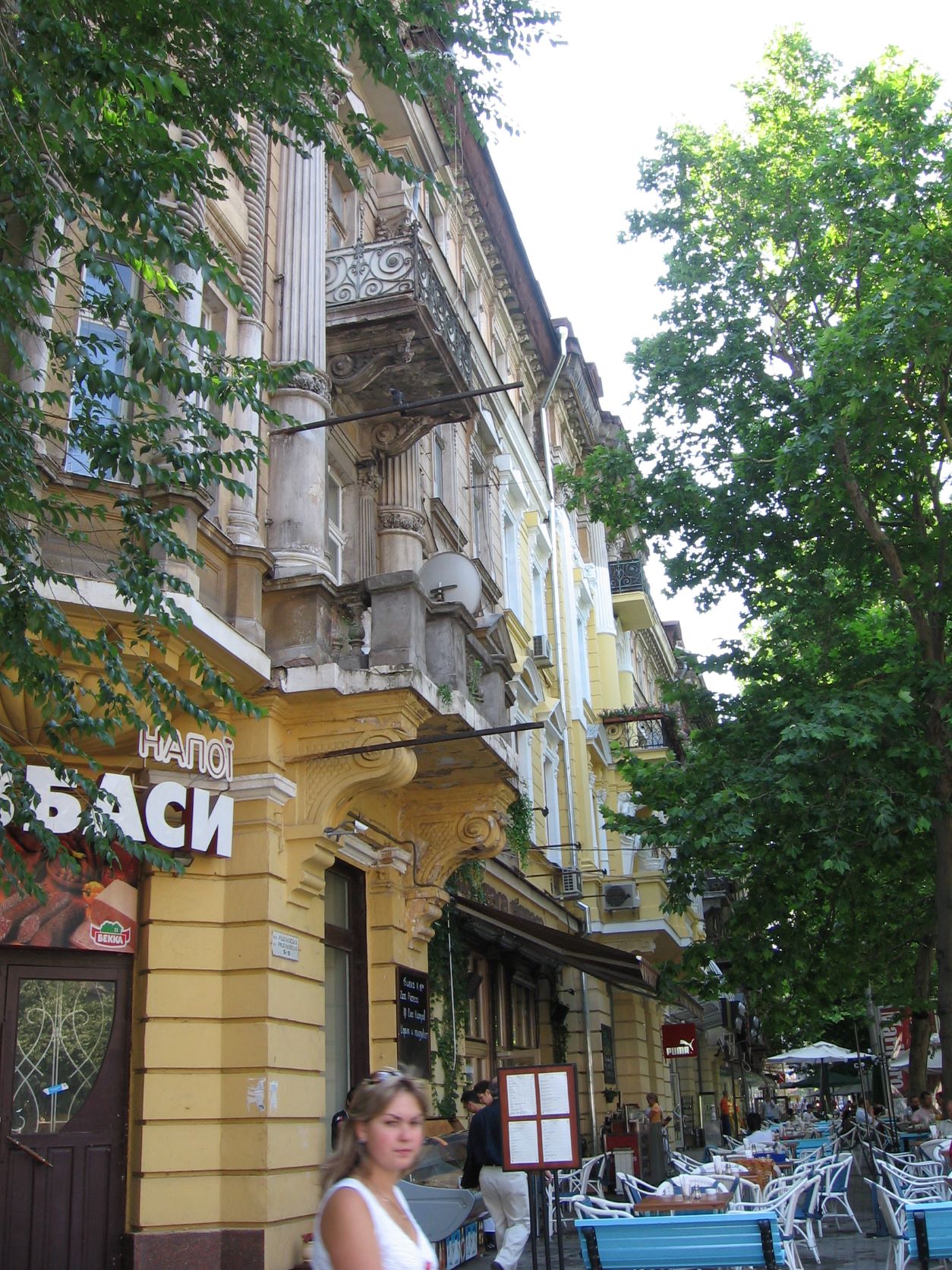
The port city of Odessa on the Black Sea in southern Ukraine is full of charm. It’s known for its beaches and 19th-century architecture, including the Odessa Opera and Ballet Theater.
A street scene in Odessa
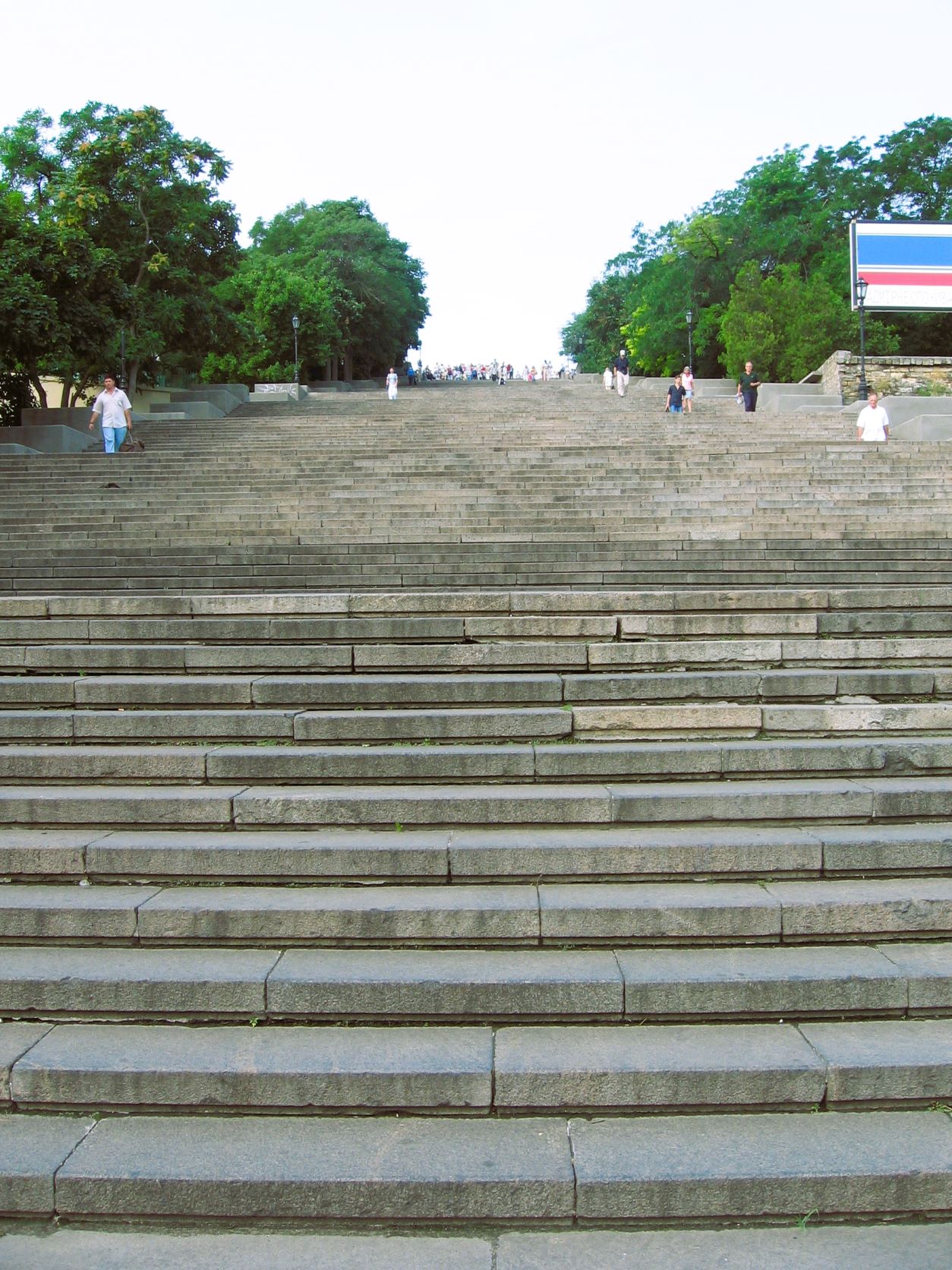
Odessa’s monumental Potemkin Stairs, immortalized in the 1925 silent Soviet-era film The Battleship Potemkin, lead down to the waterfront with its Vorontsov Lighthouse.
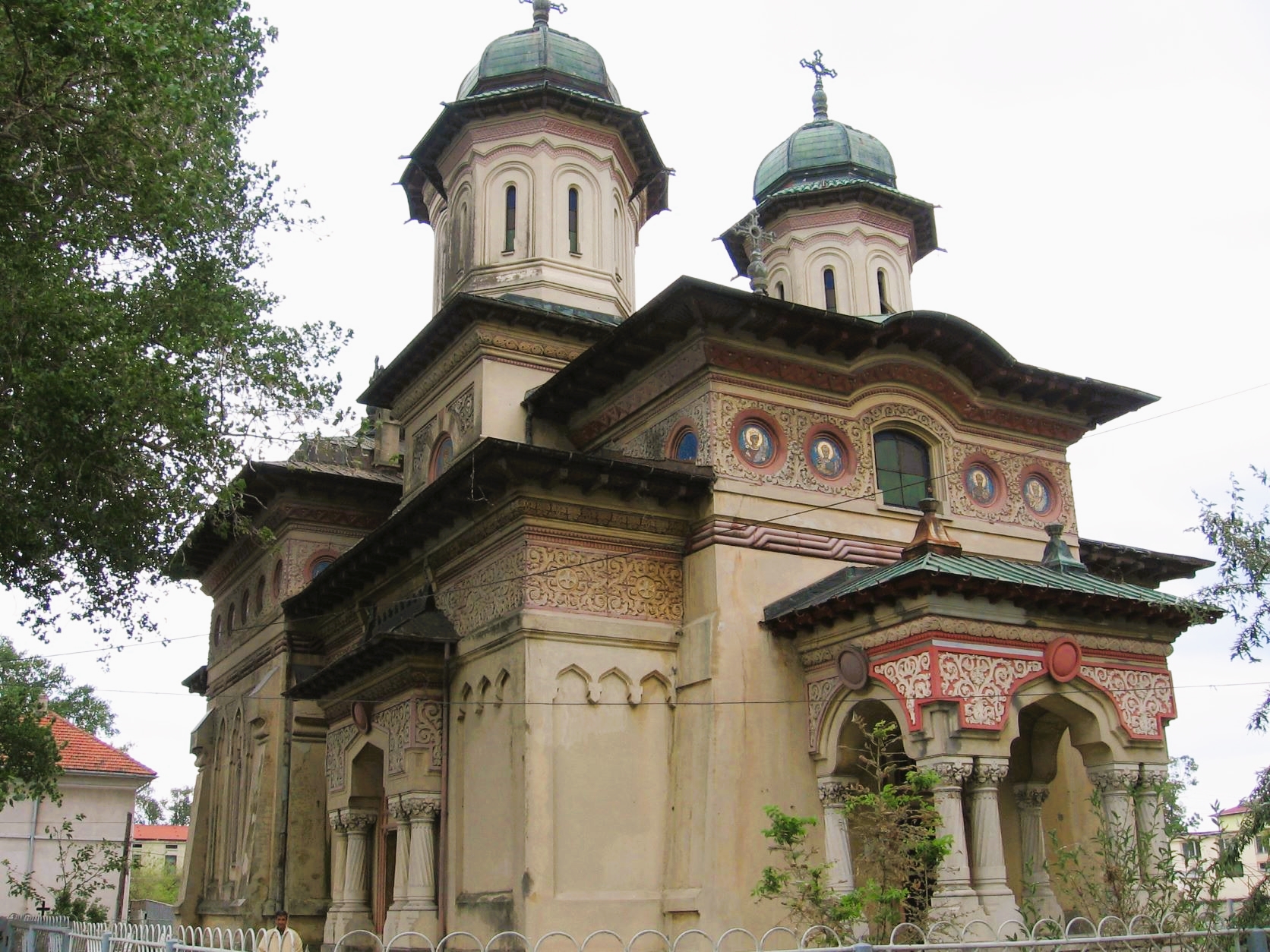
Beautiful mosaics on an Odessa church
Sevastopol — along with the rest of Crimea — is internationally recognized as part of Ukraine. However, de facto it is administered by Russia, which illegally annexed Crimea in 2014. The city’s population has an ethnic Russian majority, with a substantial minority of Ukrainians.
Ruins of an ancient theatre in Sevastopol
Saint Vladimir Cathedral, a Neo-Byzantine Russian Orthodox cathedral, in Sevastopol
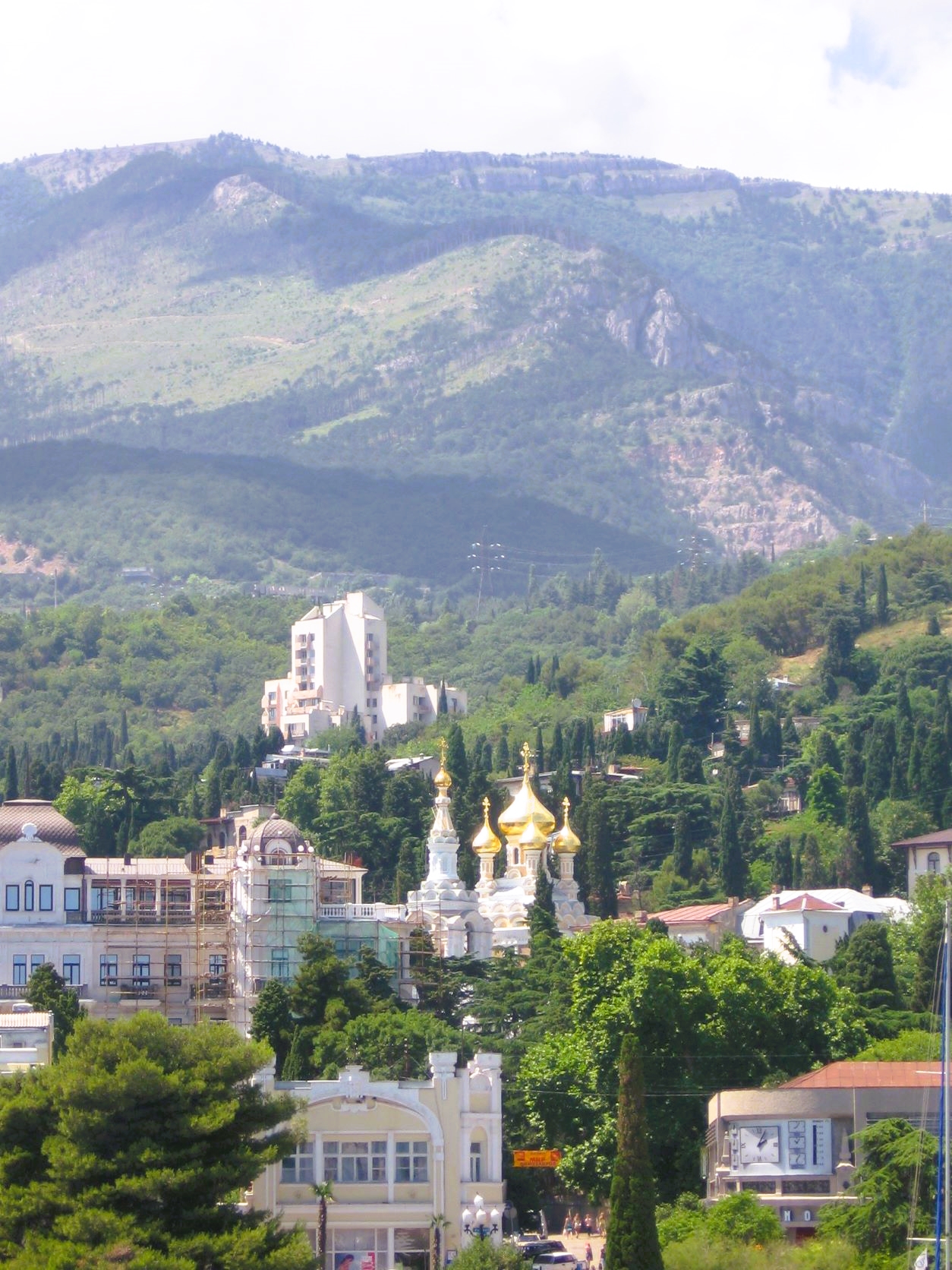
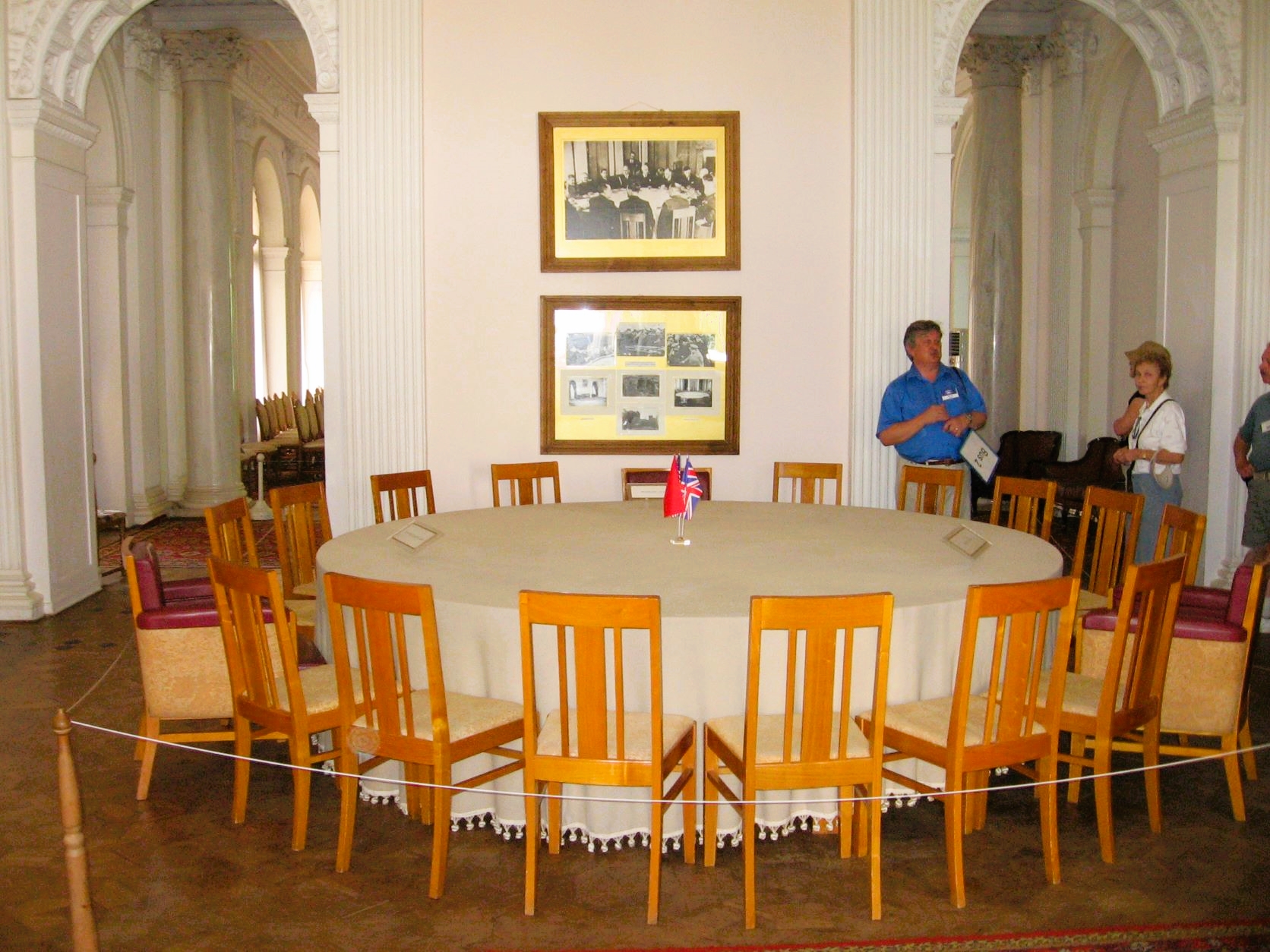
Yalta is another of the cities in the disputed territory of Crimea. If Americans know it at all, it is because of the famous Yalta Conference of 1945, where FDR, Churchill, and Stalin came together to discuss the postwar peace.
Sailing into Yalta
Site of the 1945 Yalta conference
Yalta Conference Museum
Of all the wonders of Ukraine I saw on that trip, it was when we left the grand coastal resort cities and visited a small, rural village that the people of the country became much more to me than just workers in the hospitality/tourism industry. The images and memory of this small village are what remain most vividly in my mind today.
Scenes from a Ukrainian village
Houses, garden plots, fields, and boats for navigating the waterways.
The view of a typical village compound
As Russia moved toward an invasion, I returned to read Chris Hedges’ important 2003 book War is a Force That Gives Us Meaning. Hedges “has seen war, and its effect upon those who wage it, at close range.” And in this book, he brings “fifteen years of experience reporting from the front lines to bear on the very nature of war itself, its causes and consequences, and the physical, emotional, and moral devastation it leaves in its wake.” Hedges writes that while humility, love, and compassion are the only chances for the human race, war is hard to shake.
That is not only true for authoritarian regimes like Putin’s, but also for large segments of our citizenry.
War is both a deadly addiction — a drug that offers an unmatchable intoxication, the thrill of being released from the moral strictures of everyday life — and a unifying force that provides a sense of meaning, purpose, and self-sacrifice that can wash away life’s trivial concerns. But the meaningfulness of combat depends upon the myth of war. In reality, no matter what grand cause it is supposed to support, war is simply the basest form of aggression: “organized murder.” Once war begins, the moral universe collapses and every manner of atrocity can be justified in the eyes of those who wage it, because the cause is just, the enemy is inhuman, and only war can restore balance to the world.
There is a hollowness in such thinking, yet that is what is behind Putin’s call for war in Ukraine, and — unfortunately — it is also what drives the response for many who both support and oppose him. That war will have real consequences on the people and places that deserve better.
More to come…
DJB
UPDATE: At 10:58 p.m. Eastern Time on February 23, 2022, Russia invaded a peaceful country, without provocation. As Heather Cox Richardson wrote on that day, the “invasion of democratic Ukraine by authoritarian Putin is important. It not only has broken a long period of peace in Europe, it has brought into the open that authoritarians are indeed trying to destroy democracy.” As of Saturday evening, February 26th, Ukrainians are still fighting and defending their country from this unprovoked and illegal assault, and Vladimir Putin is being increasingly isolated. Three days later, here is the historian’s further update.
Image: Ukranian villager gathering reeds in the waterways near his home to use on his thatched roof (by DJB).
While on a winter break, I’ll revisit some of my favorite stories and book reviews from More to Come. Hopefully you’ll find a new insight or something that you may have missed.
We’ve recently talked a great deal about kindness in our family, so I looked for something in the archives that would resonate. A longer version of this story about the kindnesses I received upon announcing my retirement was originally posted on January 14, 2019, under the title Kindness. I also link to three additional posts on kindness and gratitude at the end. Valentine’s Day seems to be an especially appropriate time to remember the lessons found in these posts.
I expected to hear from a number of people after announcing that I was retiring. Two decades with the same organization gave me innumerable opportunities to connect and work with people across the country and around the world. I wasn’t quite ready, however, for the nature of the notes, emails, phone calls, hallway conversations, and comments that came my way. I felt a bit like a man who wakes up in the casket at his own funeral and decides to lie there for a while just to hear people say nice things about him.
The overwhelming kindness of the remarks truly caught me off guard. That led me to think about the nature and effects of kindness. I also found quotes about kindness — sappy, inspirational, nonsensical, insightful, and more — for every occasion. My favorite, from the poet Mary Oliver, reads:
I believe in kindness. Also in mischief. Also in singing, especially when singing is not necessarily prescribed.
Kindness — like good-natured mischief and spontaneous singing — can touch our souls in unexpected ways.
I also thought not just about the nature of the notes but also about the different types of responses I received. These include:
The “pithy and poignant” note. A new friend who prepared copy for our appeal letters sent an 11-word note that spoke volumes. Messages of kindness can be very short and to the point while carrying extraordinary power.
The “playing against type” note. One famously cranky preservationist sent me a very gracious and thoughtful note. In my response I told this long-time friend that it was clear that his email account had been hacked and that the hacker was saying nice things about me. I suggested that if he didn’t regain control of his account quickly, I was afraid his curmudgeonly reputation would soon be in tatters.
The “voice from the past” note. People that I’ve known professionally over the past four decades reached out to me, some of whom I had not heard from in years. I was reminded that you can never lose touch, and a voice from the past can add context and richness to a time that can be bittersweet at best.
The “small acts of kindness” note. There is a whole inspirational industry built up around “small acts of kindness.” Small acts have ripple effects that we can’t even imagine. You never know who is watching your actions and where the ripples will reach.
Kindness often gets a bad rap for being soft. My experience is that it is possible to be kind and yet make the very difficult decisions required as we move through work and life. Unfortunately, many people value so-called leaders who are never kind, granting a type of permission to bully those with whom they disagree. John Steinbeck noted these contradictions when he said,
“It has always seemed strange to me… the things we admire in men, kindness and generosity, openness, honesty, understanding and feeling, are the concomitants of failure in our system. And those traits we detest, sharpness, greed, acquisitiveness, meanness, egotism and self-interest, are the traits of success. And while men admire the quality of the first they love the produce of the second.”
As we deal with turbulent times, I am reminded that history has leaders who can show us a better way forward. Through the Great Depression and World War II, few dealt with more challenges than Franklin Delano Roosevelt. Yet he recognized what mattered when he said, “Human kindness has never weakened the stamina or softened the fiber of a free people. A nation does not have to be cruel to be tough.”
I am very grateful for the many kindnesses shown to me over the years. Having been the recipient of extraordinary kindnesses as I retired, I know the positive effect kind words and gestures can have on an individual. Be kind to one another. It matters.
More to come…
DJB
NOTE: I have always found that kindness and gratitude are linked. Those who practice one tend to also practice the other. If you are interested in exploring further, here are other More to Come posts examining kindness and gratitude that you may find of interest.
While on a winter break, I’ll revisit some of my favorite stories and book reviews from More to Come. Hopefully you’ll find a new insight or something that you may have missed. This book review about setting limits in order to be great was originally shared here on November 5, 2018, as Boundaries.
Understanding the reality you face is often the first step toward personal and organizational growth.
Consider the oft-heard complaint about our lack of time in this period of ubiquitous technology. While most of us think of this as the “Information Age,” the reality may be that it would be better characterized as the Age of Attention. In an age of information abundance, the scare resource is attention. Technology companies make money when they monopolize our time. Netflix’s CEO has made this clear in noting that the company “is competing for our customers’ time, so our competitors include Snapchat, YouTube, sleep, etc.”
Let that last one sink in a bit…your sleep is seen as a competitor by Netflix. If you had any idea that technology companies were looking out for your best interests, this should dissuade you of that notion.
Stand Out of Our Light by James Williams
I’m currently readingStand Out of Our Light, a book written by a former Google strategist turned Oxford-trained philosopher. James Williams’ career arc was enough to get me to buy the book, but I was equally intrigued to read his take on how “technologies compete to capture and exploit our attention, rather than supporting the true goals we have for our lives.” From endless games of solitaire to never-ending clickbait to Facebook news feeds to YouTube recommendations that entice us to watch just one more video…we’ve all seen how digital technology eats up our time by capturing more and more of our attention.
Williams believes that the goals of technology companies don’t match our best interests (individually and as citizens), making it imperative that we set our own boundaries. He quotes the German writer and poet Johann Wolfgang von Goethe who said, “Who will be great, must be able to limit himself.” Williams is focused on the capacities that enable us to “want what we want to want,” capacities such as “reflection, memory, prediction, leisure, reasoning, and goal-setting.” We have to apply boundaries in order to “channel our activities toward our higher goals.”
While technology could help us deal with these challenges, that’s not the way of life in our current age. As you reflect on that, realize that,
“…notifications or addictive mobile apps may fill up those little moments in the day during which a person might have otherwise reflected on their goals and priorities. Users check their phones an average of 150 times per day (and touch them over 2,600 times per day), so that would add up to a lot of potential reflection going unrealized.”
There is much we can do in response, and the book looks at steps we should take individually and collectively. I decided some time ago not to use notifications with my technology, believing that leaving on the email notification feature is like letting the post office rush in and drop a letter on your desk every time you receive an email or text. Start with the mindset that your email in-box – and essentially all technology – should be for your use, and then work from there. Such a perspective may help you see the reality a bit more clearly and spend more time on what you want to want.
Have a good week.
More to come…
DJB
NOTE: I realize that by providing you with additional links, I could be accused of directing your thinking and asking for additional time similar to YouTube. So, I simply note — with absolutely no pressure — that should you want additional perspectives on this topic, feel free to take a look at the following from More to Come…